Death metal
Death metal is an extreme metal genre with growled vocals, blast beats and down-tuned riffs, formed in the mid-1980s in California, Florida and the UK.
Florida, 1984
Metal family
Born
1984
Florida
Subgenres
26
Documented branches
Links
45
Genres it drew on or shaped
Tempo
150-250 BPMLineage
Family tree
Grew out of
Derived from
- First wave of black metal
Derived from
Influenced by
Florida, 1984
Death metal
Led to (26)
Timeline
Era by era
From the first sparks to today. Select a dot to read the story behind it.
- Bay Area and Florida garages
1983 to 1988
- Tampa, Stockholm and the Earache years
1989 to 1993
- Melody, technique and crossover
1994 to 2005
- Old-school revival and long careers
2006 to today
Eras
Moments
- 1 Bay Area and Florida garages, 1983 to 1988
- 2 Tampa, Stockholm and the Earache years, 1989 to 1993
- 3 Melody, technique and crossover, 1994 to 2005
- 4 Old-school revival and long careers, 2006 to today
1983
Bay Area and Florida garages
Thrash bands in San Francisco and Orlando push toward darker, growled music. Possessed, Death and Slayer set the template via demos and first albums on Combat.
- 1984Possessed record the Death Metal demoThe Bay Area band gives the style its name.
- 1985Possessed release Seven ChurchesCombat issues the debut in October; its closing track is called Death Metal.
- 1986Slayer release Reign in BloodSlayer's speed and dark themes become a key reference for early death metal bands.
- 1986Death record the Mutilation demoChuck Schuldiner and Chris Reifert tape the demo that wins a Combat deal.
- 1987Death release Scream Bloody GoreRecorded in California with producer Randy Burns after Combat scrapped Orlando sessions.
- 1987Napalm Death release ScumEarache's early grindcore hit shows the UK extreme scene growing in parallel.
- 1987Nihilist form in StockholmThe band later becomes Entombed and anchors Swedish death metal.
- 1988Cannibal Corpse form in BuffaloThe band later leads death metal's gore-themed commercial wave.
1989
Tampa, Stockholm and the Earache years
Morrisound in Tampa and Sunlight in Stockholm define two regional sounds while Earache, Roadrunner and Metal Blade sign the first wave.
- 1989Morbid Angel release Altars of MadnessEarache issues the Tampa debut recorded at Morrisound in December 1988.
- 1989Obituary release Slowly We RotRoadrunner signs the Tampa band, whose slow, heavy style defines Florida death metal.
- 1989Autopsy release Severed SurvivalPeaceville issues the debut, recorded in four days.
- 1990Entombed release Left Hand PathEarache issues the Swedish debut with the HM-2 chainsaw tone.
- 1991Dismember release Like an Everflowing StreamNuclear Blast issues a Sunlight-recorded Swedish classic in May.
- 1992Cannibal Corpse release Tomb of the MutilatedMetal Blade issues the album in September.
- 1992A UK court clears Dismember's distributor of an obscenity chargeThe case concerned the song Skin Her Alive.
- 1993Carcass release HeartworkEarache issues the album in October; it is often called a first melodic death metal record.
1994
Melody, technique and crossover
Gothenburg melody, technical and brutal branches and prog fusions spread the genre as the original Florida wave fades.
- 1994Cannibal Corpse appear in Ace Ventura: Pet DetectiveA club-band cameo gives Hammer Smashed Face worldwide exposure.
- 1995At the Gates release Slaughter of the SoulEarache issues the Gothenburg landmark in November.
- 2001Opeth release Blackwater ParkMusic for Nations issues the Steven Wilson-produced album in March.
- 2001Chuck Schuldiner diesDeath's leader dies of a brain tumour on 13 December at age 34.
2006
Old-school revival and long careers
Reunions such as Possessed in 2007 and a new generation of old-school bands keep the genre going, with festivals and reissues feeding fan interest.
- 2007Possessed returnThe band reforms after Jeff Becerra guests with Sadistic Intent.
- 2026Combat Records is relaunched under new ownershipA new Germany-based team announces a relaunch of the early death metal label.
Listening path
Anthems
The records that built the sound, grouped by the part they played. Thumbnails come from YouTube; the player loads only when you press play.
- 01
Possessed, 1985 · Combat Records
Closing track of Seven Churches, widely cited as the moment the phrase and the style first met on record.
Origin - 02
Death, 1987 · Combat Records
Opening riffs of Scream Bloody Gore: Schuldiner and Reifert pushed thrash into growled, gore-themed territory that crystallised the genre.
Start hereOrigin - 03
Cannibal Corpse, 1992 · Metal Blade
Reached a worldwide audience when the band performed it in the 1994 film Ace Ventura: Pet Detective, making Cannibal Corpse death metal's best-known name.
Start hereBreakthrough - 04
Morbid Angel, 1989 · Earache
Altars of Madness raised the speed and technical bar and opened Tampa's run of defining records.
Anthem - 05
Obituary, 1989 · Roadrunner
Obituary's slow, heavy title track shows the groove-and-growl style that came to mean Florida death metal.
Anthem - 06
Autopsy, 1989 · Peaceville Records
Chris Reifert's Bay Area band cut a debut in four days that sits between death metal and doom.
Anthem - 07
Entombed, 1990 · Earache
The Boss HM-2 buzzsaw tone on this track set the Sunlight Studio sound and Swedish death metal.
Start hereAnthem - 08
Dismember, 1991 · Nuclear Blast
Opening track of Like an Everflowing Stream, a Swedish death metal landmark with a melodic streak.
Anthem - 09
Death, 1995 · Roadrunner
Symbolic-era Death shows Schuldiner's shift to melodic, progressive songwriting that kept the genre moving.
Anthem - 10
At the Gates, 1995 · Earache
Slaughter of the Soul fused fast death metal riffs with Gothenburg melody and fed metalcore in the 2000s.
Anthem - 11
Carcass, 1993 · Earache
Carcass slowed down and added melody, an early blueprint for melodic death metal.
Crossover - 12
Opeth, 2001 · Music for Nations
Death growls met prog rock in a long, dynamic title track that brought the style to prog and rock audiences.
Crossover
Facts
| Family | Metal |
| Origin | Florida, United States |
| Emerged | Mid-1980s |
| Status | Active |
| Tempo | 150 to 250 BPM |
| Meter | Varies: abrupt tempo and time-signature changes within songs |
| Grew out of | Thrash metal, First wave of black metal |
| Subgenres | 23 |
Death metal is extreme metal built on down-tuned guitars, tremolo-picked riffs, blast beats and growled vocals, with lyrics about death, horror and violence. It took shape in the mid-1980s, in California, Florida and the UK, out of thrash metal’s speed and darkness.
Origins
It started with thrash bands that wanted to sound darker. In 1984 the Bay Area band Possessed recorded a demo called Death Metal, which gave the style its name. In October 1985 Combat released their debut, Seven Churches, whose closing track is also called Death Metal. The album is often called the first true death metal record.
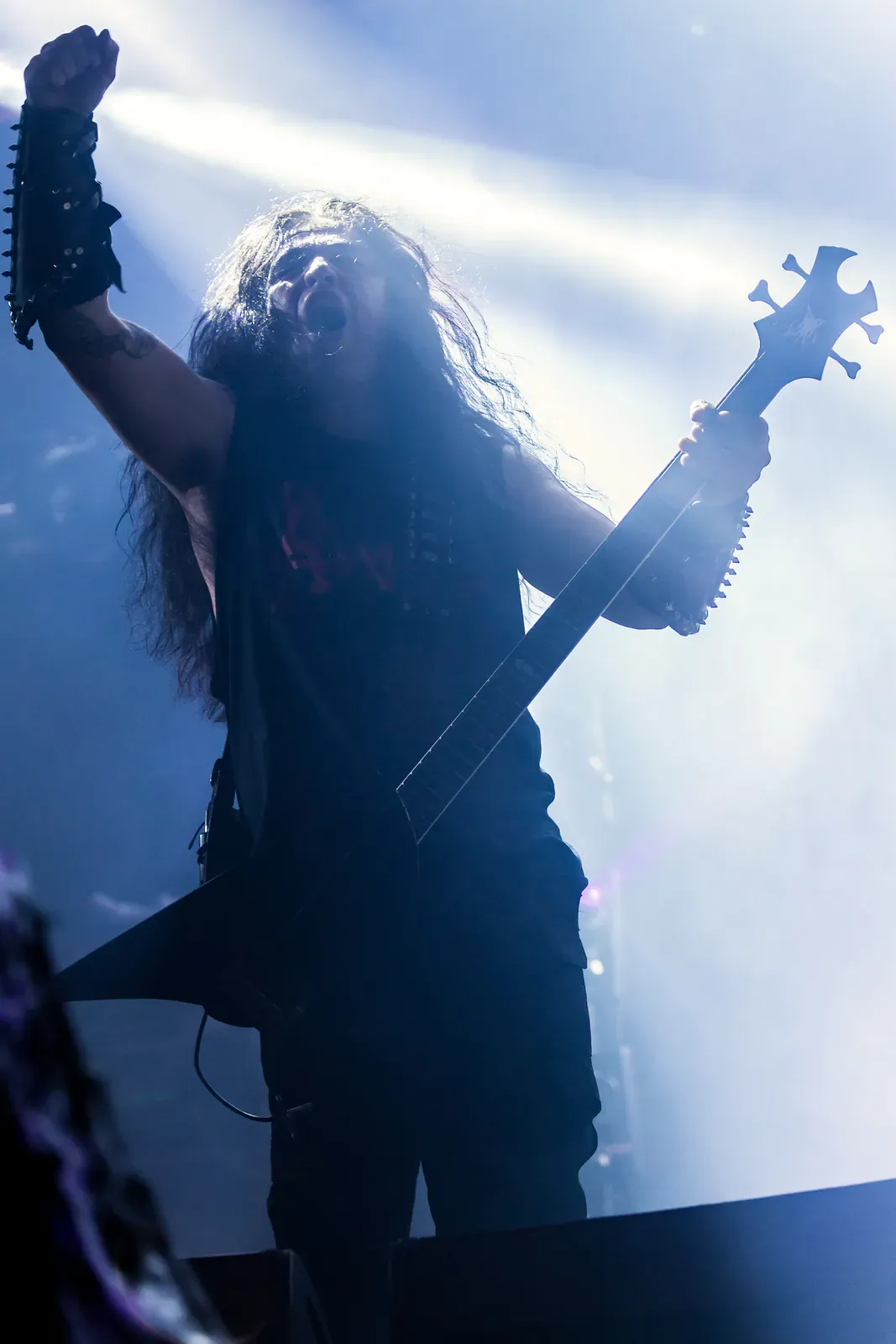
Slayer’s Reign in Blood arrived in 1986 on Def Jam, and its speed and dark themes became a reference point for the young bands that followed. In Orlando, Chuck Schuldiner and Chris Reifert taped the Mutilation demo that same year as Death, and it won a Combat deal. The label scrapped the Orlando sessions, so Scream Bloody Gore was recorded in California with producer Randy Burns and released in 1987. Its growled vocals and gore themes on a thrash base crystallised the genre.
In the UK a parallel scene was growing. Napalm Death released Scum in 1987 on Earache, an early grindcore landmark. In 1987 Nihilist formed in Stockholm and later became Entombed, and in 1988 Cannibal Corpse formed in Buffalo. By the end of the decade the pieces were in place.
Bay Area and Florida garages (1983 to 1988)
The first era was a tape-trading era. Fans and bands swapped cassette demos, which carried the style around the world before any label would sign it. The scenes were small and local: San Francisco gave the genre Possessed and Autopsy, and Orlando was where Death began.
The sound itself came from thrash. Guitars were tuned lower, palm-muted chugs and tremolo-picked runs replaced melodic leads, and the drummer leaned on double bass drums and blast beats. The singer stopped singing and growled, which is why the lyrics are so hard to parse. Combat Records carried the first records, and in 2026 a new Germany-based team relaunched it.
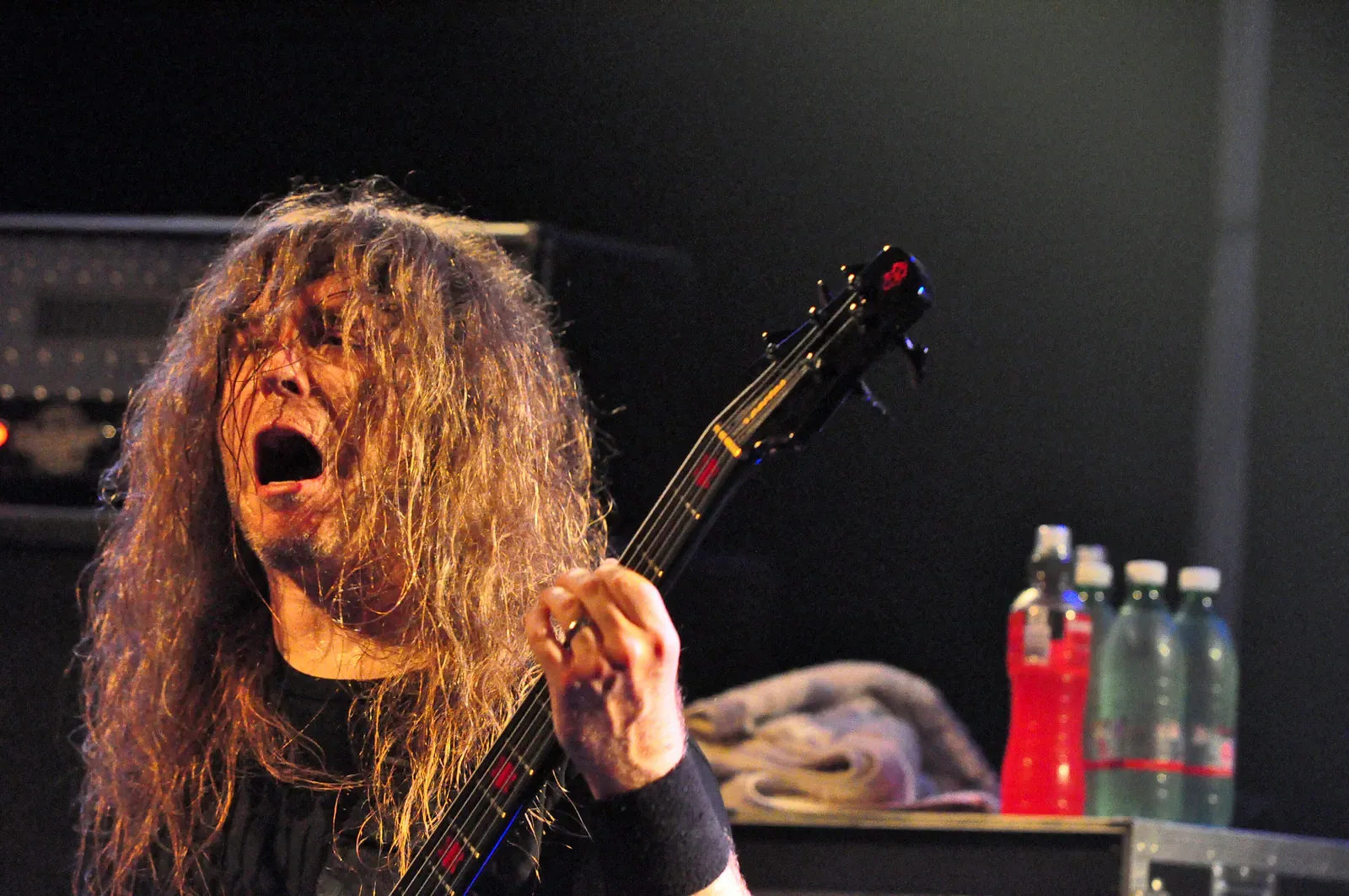
Tampa, Stockholm and the Earache years (1989 to 1993)
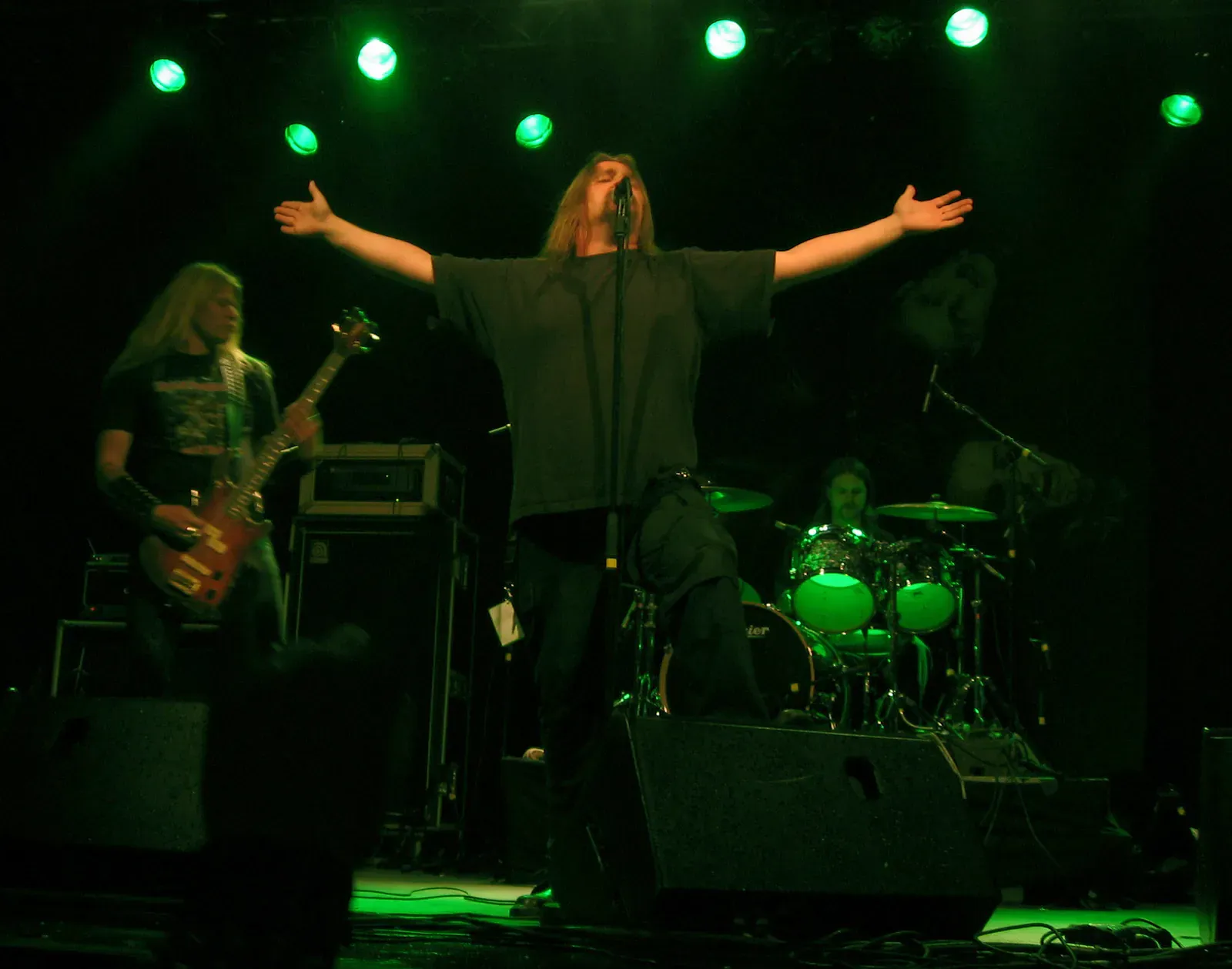
In 1989 the story moved to Tampa. Morbid Angel’s Altars of Madness, recorded at Morrisound Recording and issued by Earache, raised the speed and technical level of the whole genre. Obituary’s Slowly We Rot came out on Roadrunner, and its slow, heavy, groove-driven approach came to define Florida death metal. The same year Autopsy cut Severed Survival in four days for Peaceville, joining death metal to doom pacing and morbid humour.
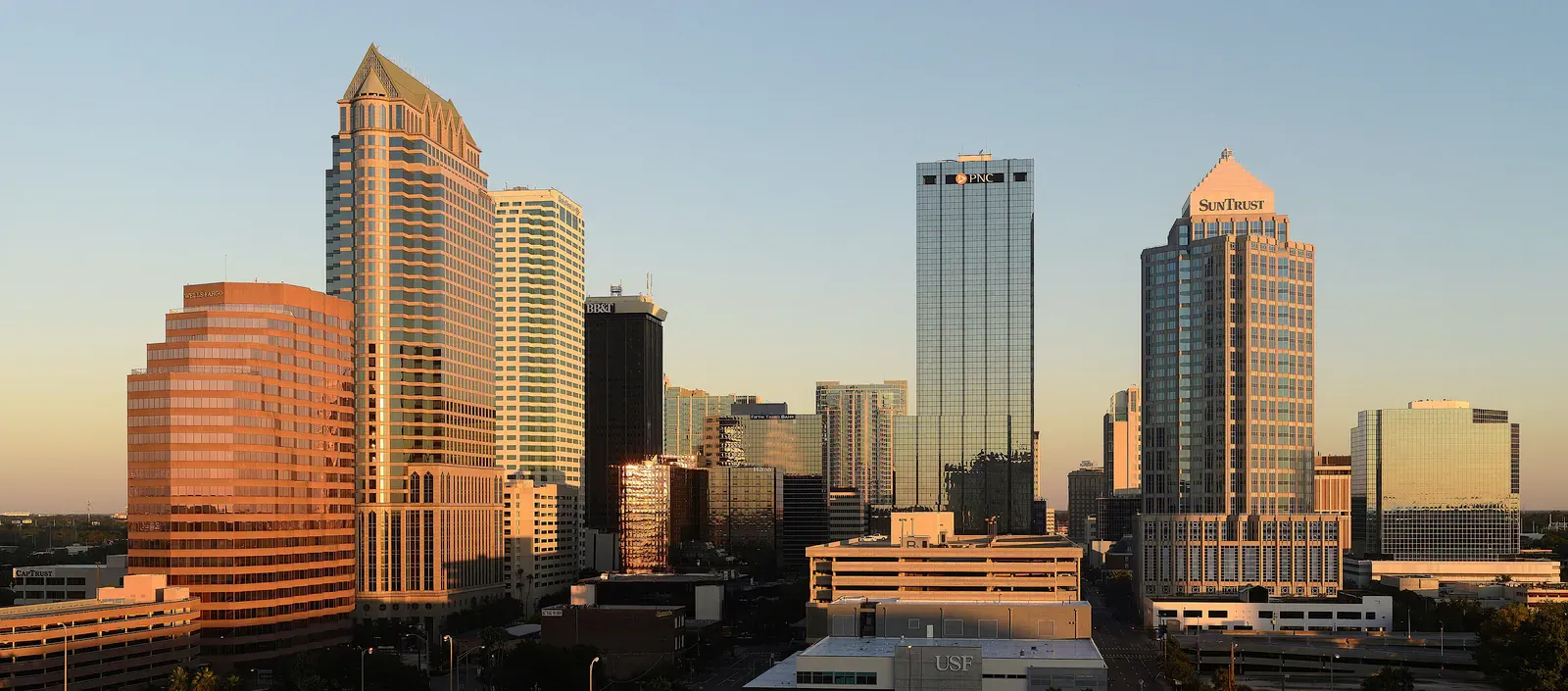
Stockholm got its own sound a year later. Entombed recorded Left Hand Path at Sunlight Studio in late 1989, with a Boss HM-2 pedal pushed to extreme settings. Boss had released the pedal in 1983, and the resulting chainsaw tone became a template. Dismember recorded Like an Everflowing Stream there too, issued by Nuclear Blast in May 1991.
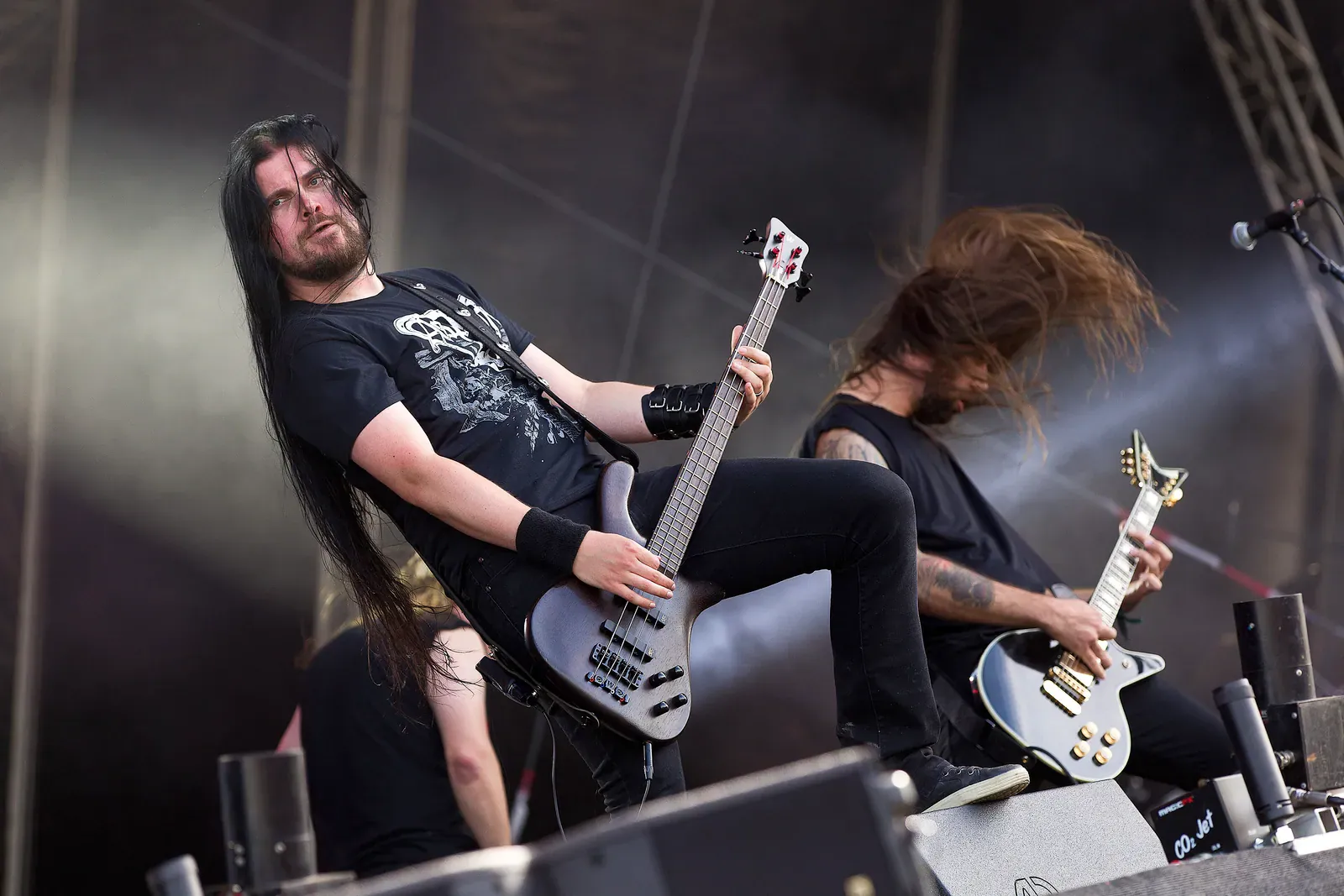
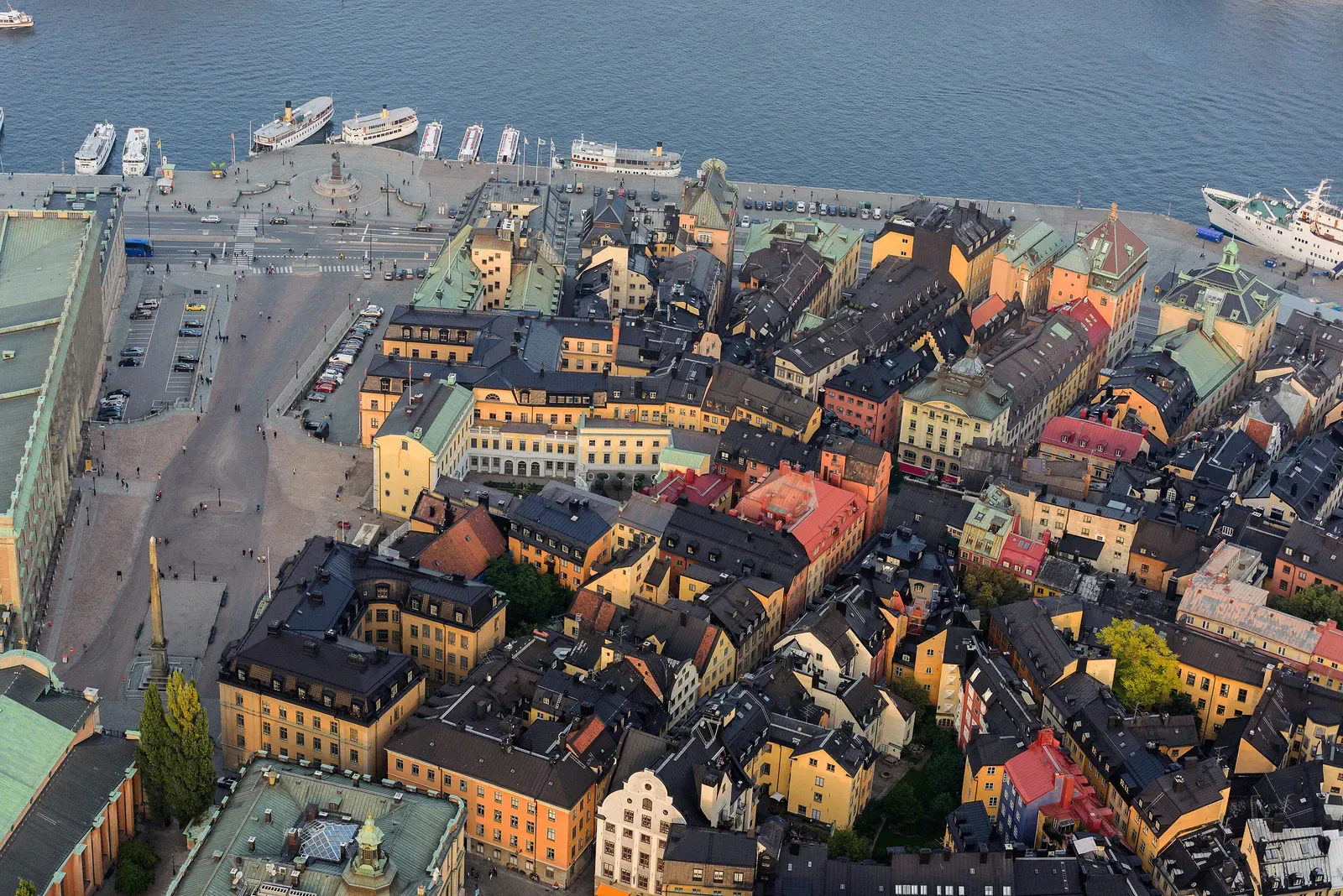
Not every record sounded alike. Cannibal Corpse released Tomb of the Mutilated on Metal Blade in September 1992, cementing the genre’s extreme image and commercial reach. That image brought trouble: in 1992 a UK court cleared Dismember’s distributor of an obscenity charge over the song Skin Her Alive.
Melody, technique and crossover (1994 to 2005)
After 1993 the genre split. Carcass moved from grindcore to melody and released Heartwork on Earache in October 1993, often called a first melodic death metal record. They had come from Liverpool, and the album became an early blueprint for the style.
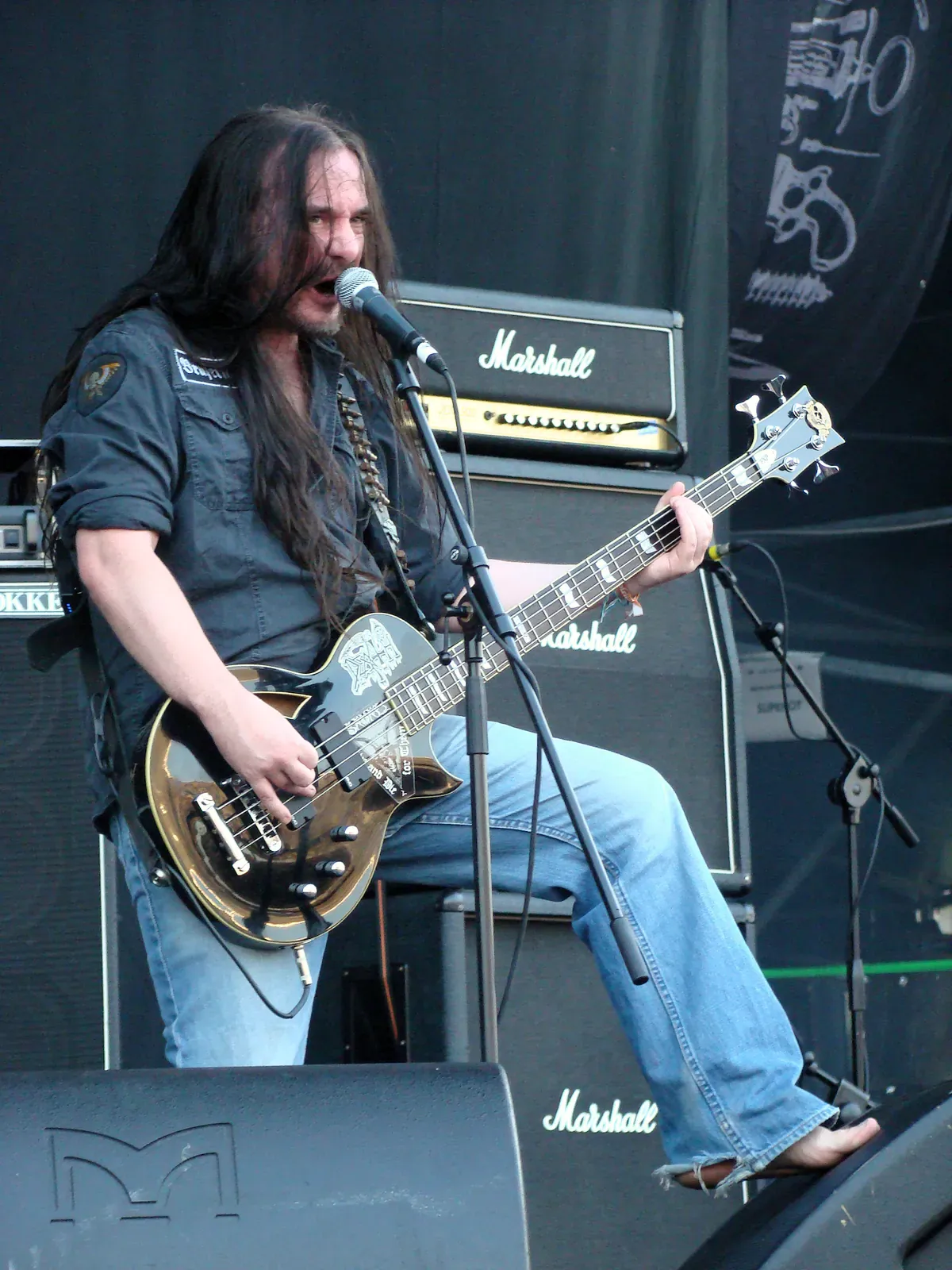
In 1994 Cannibal Corpse appeared in the film Ace Ventura: Pet Detective, playing a club band, and Hammer Smashed Face reached a worldwide audience. The film made the band death metal’s best-known name.
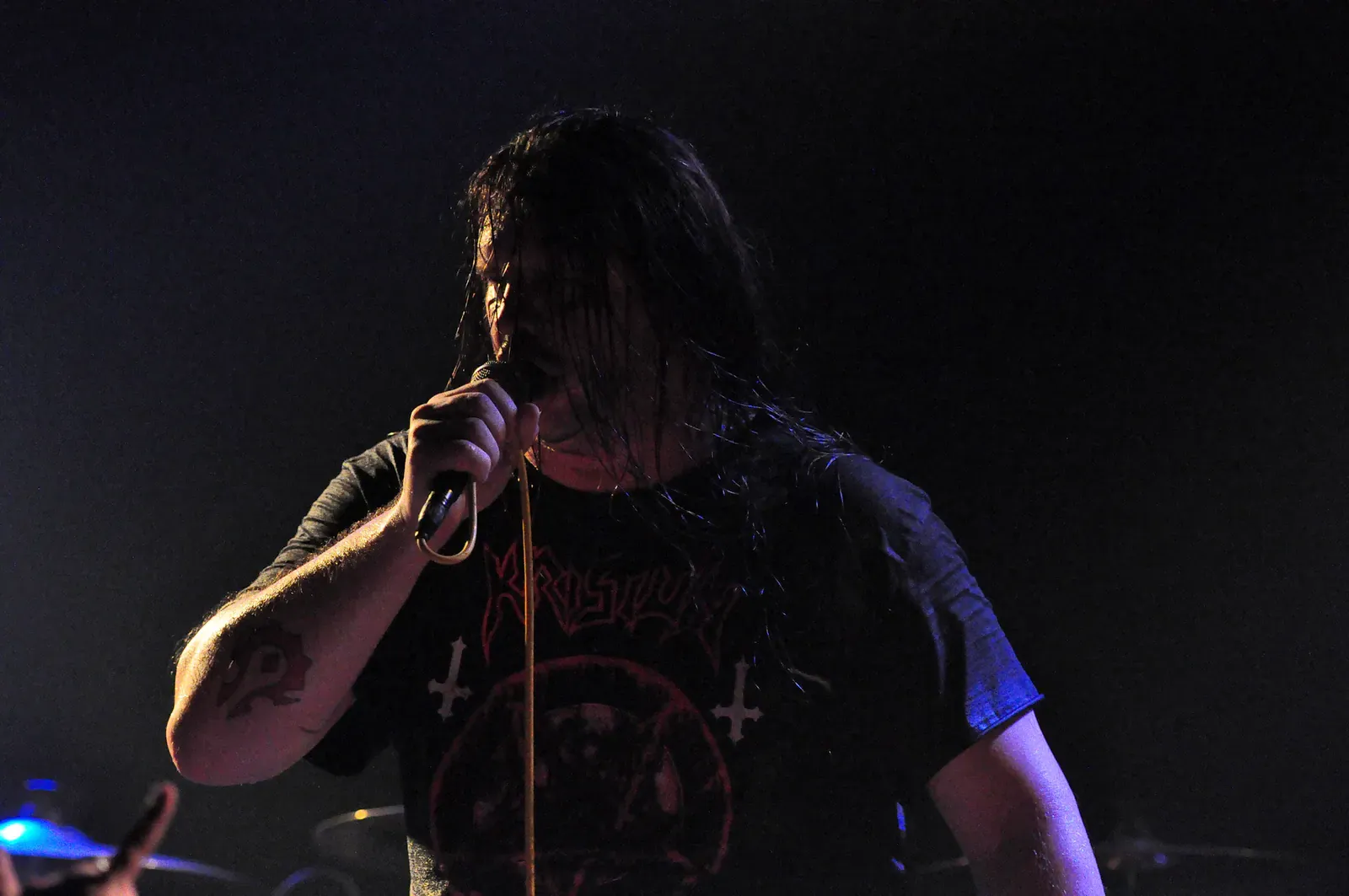
Then At the Gates released Slaughter of the Soul in 1995, recorded at Studio Fredman in Gothenburg, and it became the template for the Gothenburg sound and later for metalcore.
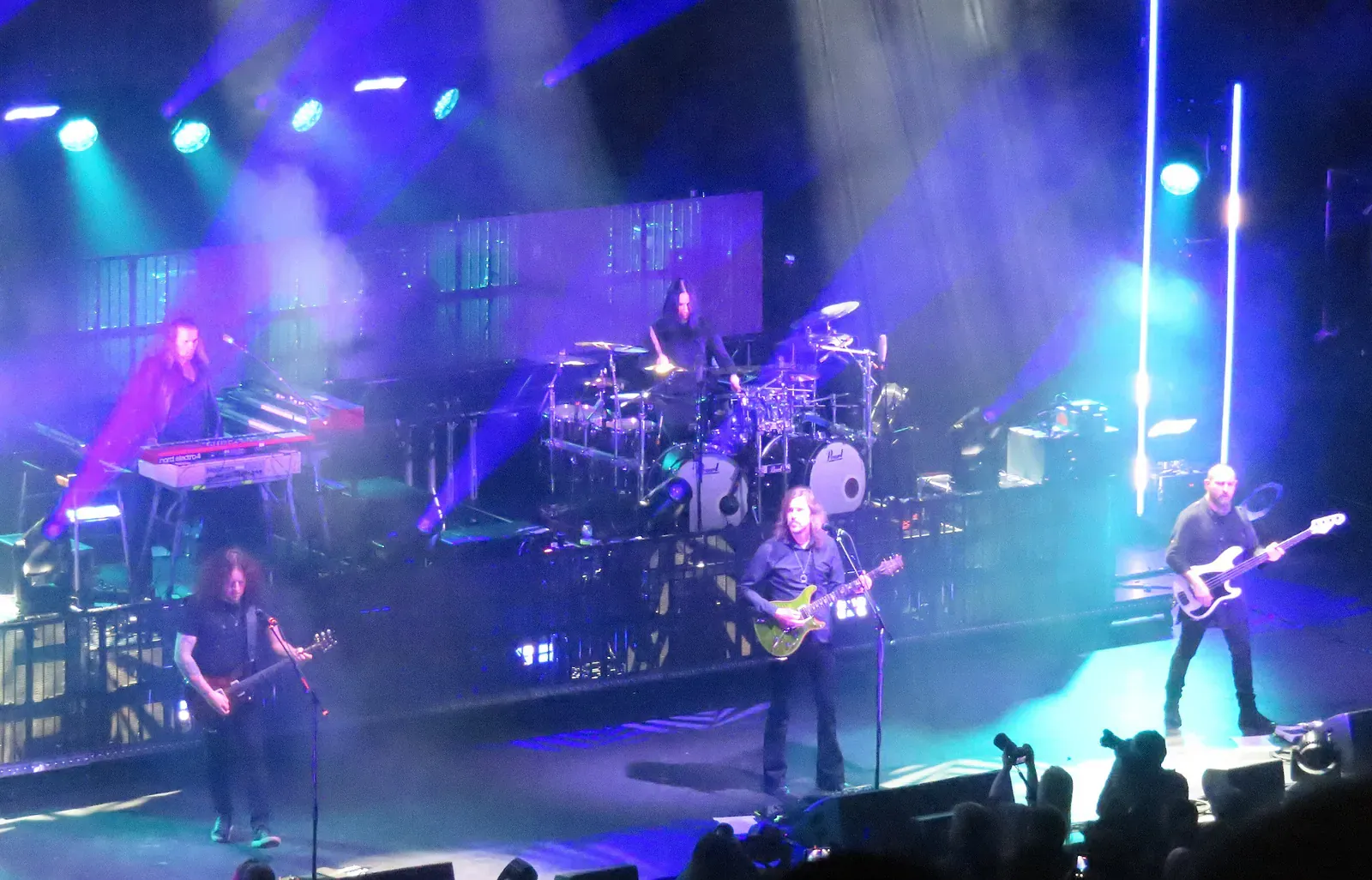
Death metal also met prog. Opeth’s Blackwater Park came out in March 2001 on Music for Nations, produced by Steven Wilson, and brought death growls into prog rock territory. Schuldiner had taken Death the same way, towards melodic, progressive songwriting, on 1995’s Symbolic. He died of a brain tumour on 13 December 2001, aged 34.
Old-school revival and long careers (2006 onwards)
The genre did not fade. Possessed reformed in 2007 after Jeff Becerra guested with Sadistic Intent, and a new generation of old-school bands kept the Florida and Swedish templates alive. Reunions, reissues and festivals fed a steady fan base.
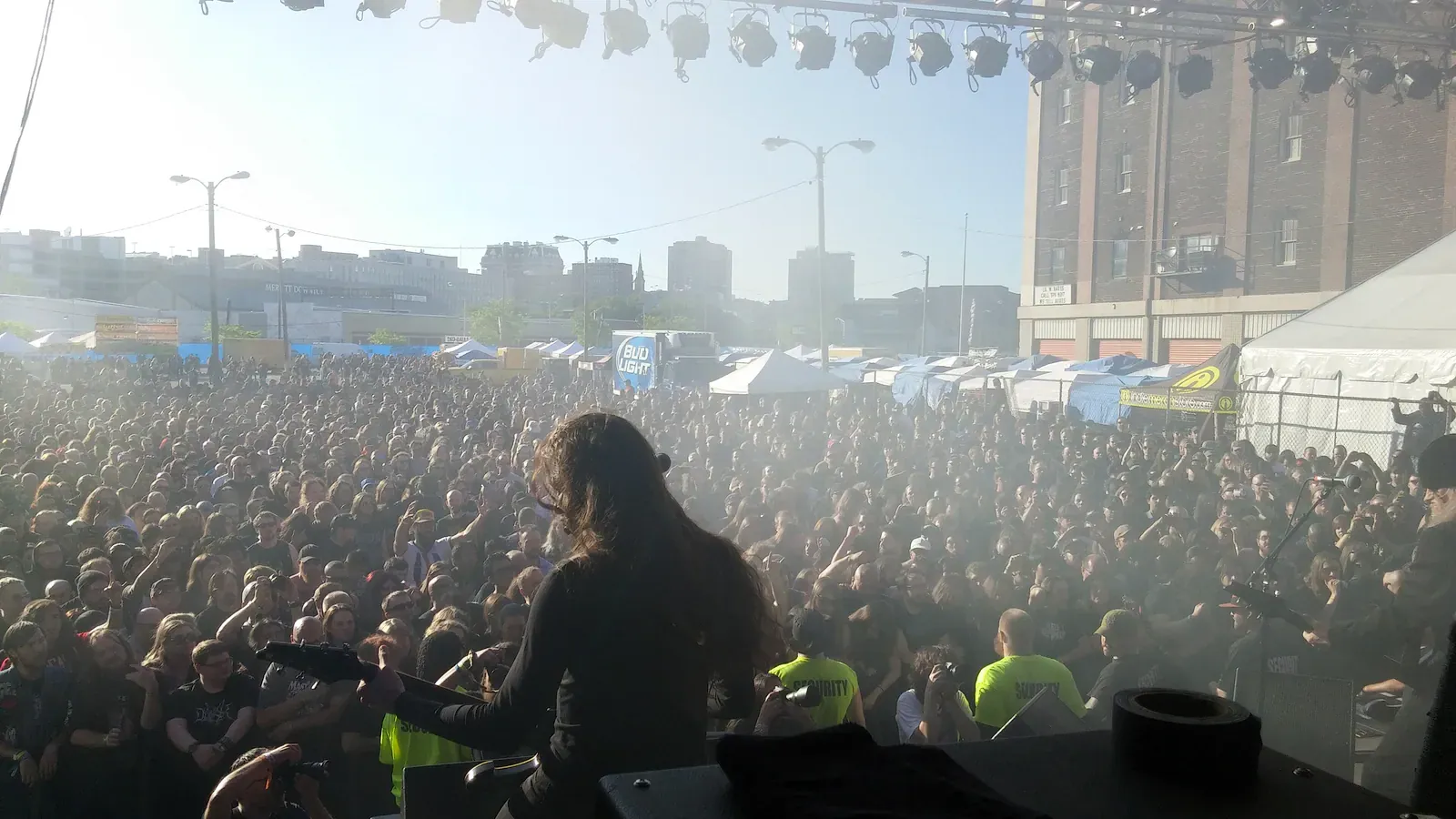
Festivals became the genre’s meeting places. Maryland Deathfest, in Baltimore since 2003, is devoted to extreme metal. Wacken Open Air in Germany gives extreme bands a big European audience.
Characteristics
Songs rely on chromatic, dissonant riffs, abrupt changes of tempo and meter, and vocals that are growled rather than sung. Lyrics deal with death, horror, gore and the occult. Subgenres later pushed the formula towards melody, technicality, brutality or doom pacing.
Instruments and production
The genre depends on low-tuned, heavily distorted guitars, fast double-kick drumming and a dense, bass-heavy mix. Studio choices shaped regional identities: Morrisound in Tampa and Sunlight in Stockholm each gave a recognisable tone, and the Boss HM-2 pedal became the signature of the Swedish scene.
Mainstream success
Death metal never became a pop genre. It spread through tape trading, then through signings: Earache, Roadrunner, Metal Blade and Nuclear Blast all picked up the first wave. The one true mass-media moment was the 1994 Ace Ventura cameo. Beyond that, the genre fed other music: Gothenburg melody into metalcore, Opeth’s growls into prog, Carcass’s Heartwork into melodic death metal. Backlash came mostly from the law, as in the UK case over Dismember, rather than from the charts.
Notable recordings
“Zombie Ritual” opens Scream Bloody Gore. Schuldiner and Reifert had already won a Combat deal on the strength of a demo, then watched the label scrap the Orlando sessions. The record that came out of California in 1987 is the one people point to when they say the genre crystallised.
“Left Hand Path” is a lesson in gear. The Sunlight tone came from a Boss HM-2 pedal pushed to extreme settings in a Stockholm studio, and Swedish bands built a template on it.
“Hammer Smashed Face” shows how a niche band reaches a mass audience. Cannibal Corpse performed it on screen, and a song from a 1992 album on Metal Blade became known around the world two years later.
Culture
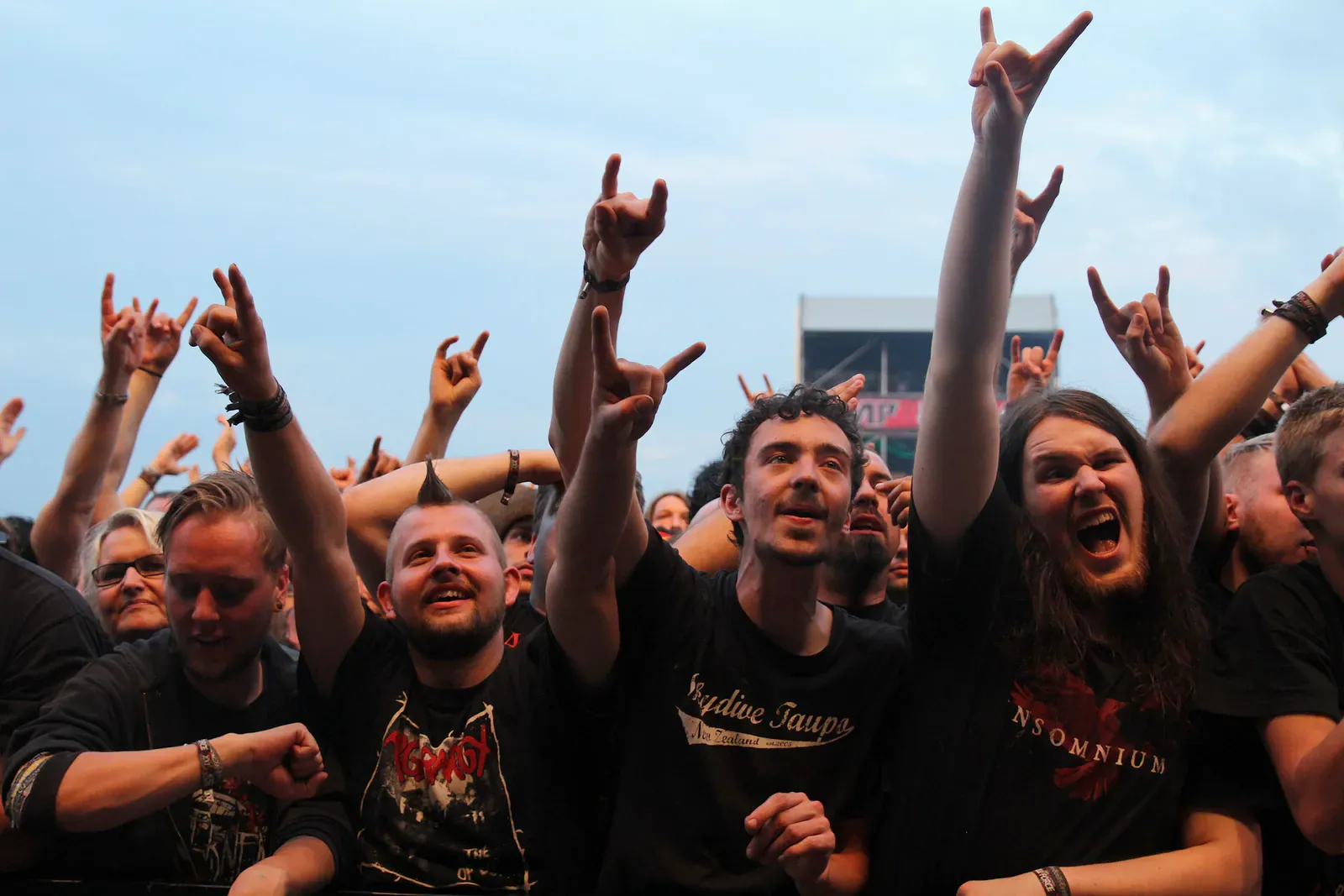
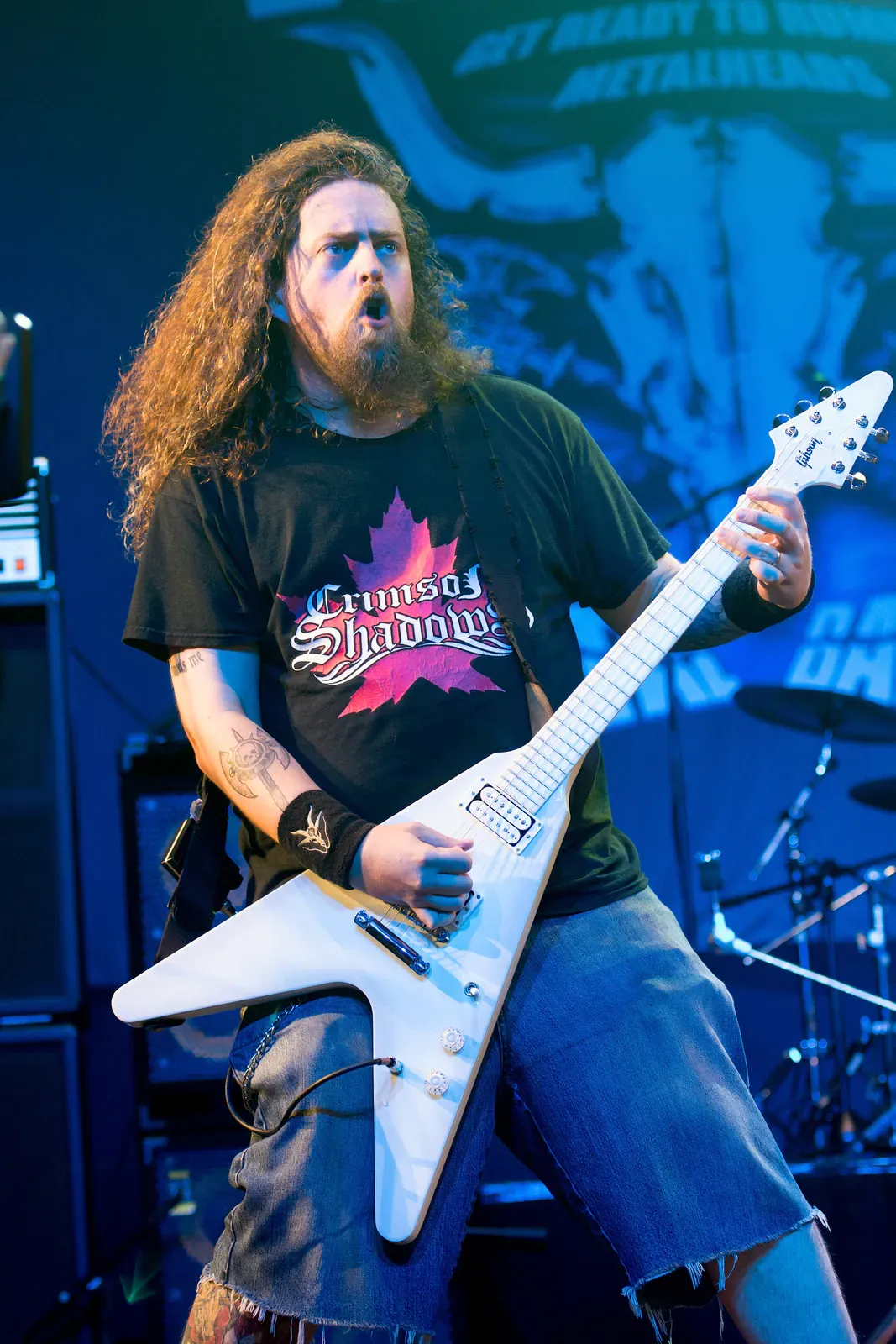
Gore album covers became a calling card, especially on Cannibal Corpse releases. Fans wear black band shirts with spiky, hard-to-read logos. Moshing and headbanging carry on the tradition of thrash crowds, and tape trading was the ritual that built the scene before the labels arrived.
Legacy
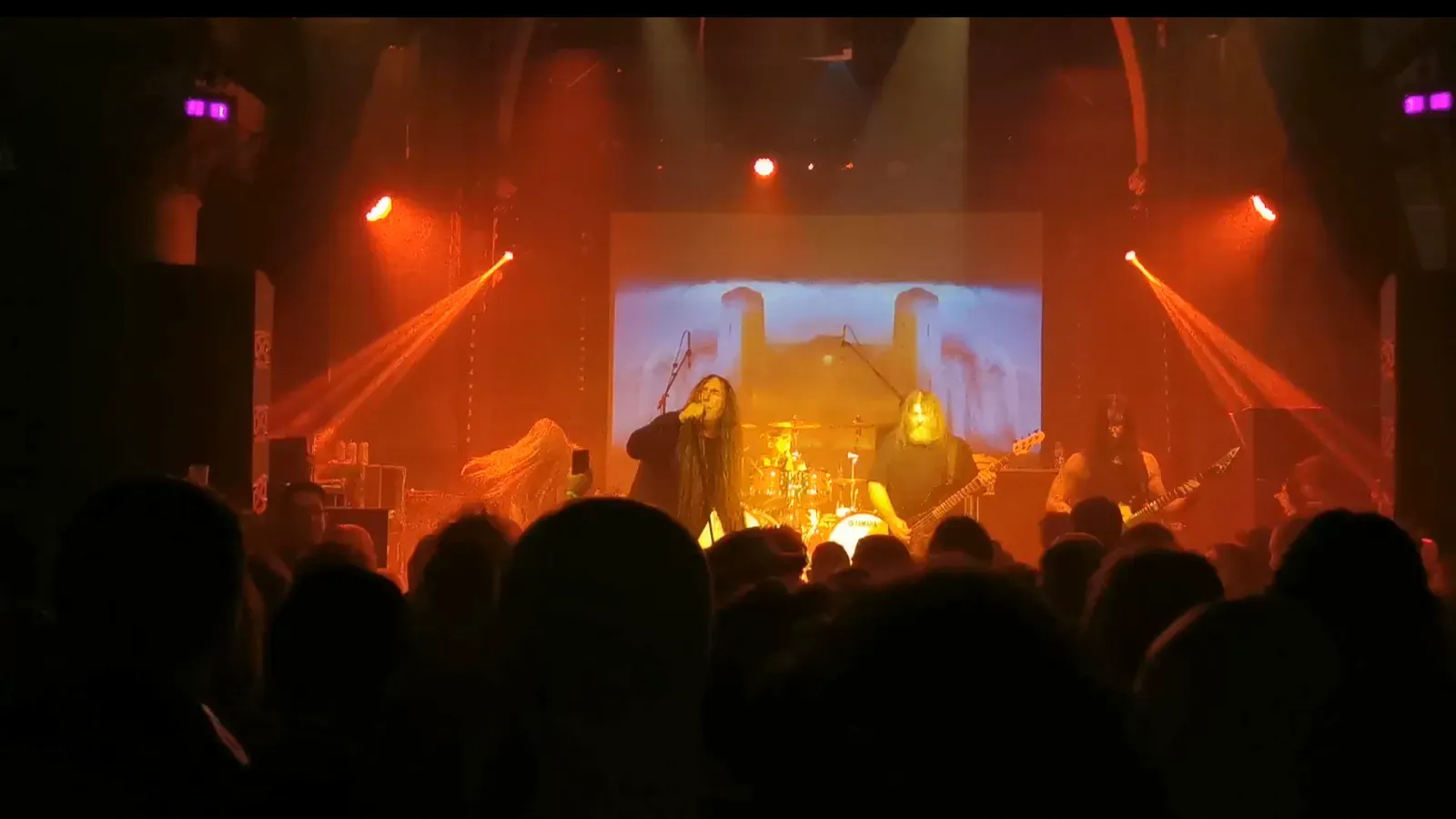
Death metal supplied the vocabulary for later extreme styles: Gothenburg melody fed metalcore, Opeth’s growls reached prog rock audiences, and the Florida and Swedish templates remain the reference for old-school bands.
Misconceptions
It is just noise and shouting. The growl is a technique, and under it sit tight riffs, tempo changes and a typical song plan of verse, riff, bridge and solo. Death’s Symbolic and Opeth’s Blackwater Park are full of melody and dynamics.
It is one sound. Tampa, Stockholm and Gothenburg each produced a different one: Obituary’s slow groove, Entombed’s HM-2 buzzsaw, At the Gates’ fast melody. The studio and the pedals mattered as much as the band.
Death metal fans are dangerous. The genre’s lyrical violence is horror-film imagery, and a UK court cleared Dismember’s distributor of an obscenity charge in 1992. The scene itself is built on tape trading, demos and live shows.
Frequently asked questions
Who invented death metal?
No single band did. Possessed gave the style its name with a 1984 demo and the 1985 album Seven Churches, while Death’s 1987 Scream Bloody Gore fixed its sound. Bands in the Bay Area, Florida and the UK were working on the same idea at about the same time.
What does death metal sound like?
Death metal is built on down-tuned, palm-muted riffs, tremolo picking, blast beats and double-kick drumming, with growled vocals instead of singing. Songs change tempo abruptly and often include a guitar solo.
What is the difference between Tampa and Swedish death metal?
Tampa death metal, as heard on Obituary and Morbid Angel, tends towards slower groove or high technical speed. Swedish death metal, as heard on Entombed and Dismember, is defined by the Sunlight Studio buzzsaw guitar tone from a Boss HM-2 pedal.
Which death metal songs are considered landmarks?
Death’s “Zombie Ritual”, Entombed’s “Left Hand Path” and Cannibal Corpse’s “Hammer Smashed Face” are landmark tracks, alongside Obituary’s “Slowly We Rot”. For the wider story, read about the metal family.
Sound
Sound sheet
Anatomy of a track
| # | Part | Bars |
|---|---|---|
| 1 | Intro riff | 8 |
| 2 | Verse (blast beat or double-kick) | 16 |
| 3 | Chorus or breakdown riff | 8 |
| 4 | Verse two | 16 |
| 5 | Tempo-change bridge | 16 |
| 6 | Guitar solo | 8 |
| 7 | Final riff and outro | 8 |
Signature sounds
- Down-tuned palm-muted chugs
- Tremolo-picked riffs
- Blast beats and double-kick drumming
- Guttural growled vocals
- Abrupt tempo changes
Techniques
- Tremolo picking
- Palm muting
- Blast beat
Keys and modes
Chromatic, atonal riffing. Riffs lean on minor seconds and the tritone around a low root, favouring dissonance over scale-based writing.
Tuning
B standard and other low tunings
Vocals
Death growl: deep, guttural, often unintelligible roars in place of melodic singing.
Scenes
Where it happened
Where and when the sound lived: one bar per city on a shared timeline.
North America
Europe
Active scenes
Peak 6, 1990
Morrisound Recording hosted Altars of Madness and Slowly We Rot, making Florida a death metal capital.
Bay Area thrash scene produced Possessed and Autopsy.
Chuck Schuldiner's early Death years began here.
Entombed, Dismember and Sunlight Studio produced the Swedish death metal sound.
At the Gates and Studio Fredman shaped melodic death metal.
Cannibal Corpse formed here and built their reputation touring.
Carcass moved from grindcore to melodic death metal.
Venues and places
Tampa, 1988 to today. Studio where Altars of Madness and Slowly We Rot were recorded.
Stockholm, 1989 to today. Entombed recorded Left Hand Path here, and Dismember recorded their debut in 1991.
Gothenburg, 1995 to today. Recorded Slaughter of the Soul in 1995 and Opeth's Blackwater Park in 2000.
Wacken, 1990 to today. Large metal festival where extreme bands reach a big European audience.
Baltimore, 2003 to today. Annual festival devoted to extreme metal and death metal.
Culture
Culture markers
- Gore album covers
Graphic horror art became a calling card, especially on Cannibal Corpse releases.
Artwork - Tape trading and demos
Fans and bands swapped cassette demos, which carried the style before labels signed it.
Ritual - Moshing and headbanging
Pits at death metal shows carry on the thrash crowd tradition.
Dance - Black band shirts with tangled logos
Band logos with spiky, hard-to-read lettering became part of the look.
Fashion
Media
Key media
- 1994Ace Ventura: Pet Detective
by Tom Shadyac. A Cannibal Corpse club-scene cameo introduced the band to a mass audience.
Film - 2004Choosing Death: The Improbable History of Death Metal and Grindcore
by Albert Mudrian. Standard English-language history of the genre.
Book - 2004Decibel
by Decibel magazine. Extreme metal magazine whose Hall of Fame series covers classic death metal albums.
Zine - 2008Swedish Death Metal
by Daniel Ekeroth. Detailed history of the Swedish scene.
Book
Glossary
Terms on this page
Very fast drum pattern that alternates kick, snare and cymbal at high speed.
Lyrical and artwork theme of graphic horror violence, central to bands like Cannibal Corpse.
A low, throaty vocal style used instead of melodic singing.
Resting the picking hand on the strings for a tight, chugging tone.
The buzzsaw guitar tone from Sunlight Studio in Stockholm, built on an HM-2 pedal.
Rapid alternate picking of a single note to create a buzzing riff.
Metal family