Grindcore
Grindcore is an extreme fusion of hardcore punk and metal that emerged in mid-1980s Britain, built on blast beats, down-tuned guitars and very short songs.
Birmingham, 1985
Metal family
Born
1985
Birmingham
Subgenres
13
Documented branches
Links
32
Genres it drew on or shaped
Tempo
180-250 BPMLineage
Family tree
Grew out of
Derived from
- Crust punk
Derived from
- Thrashcore
Derived from
Derived from
Influenced by
Birmingham, 1985
Grindcore
Led to (14)
Timeline
Era by era
From the first sparks to today. Select a dot to read the story behind it.
- Anarcho-punk roots and first blasts
1981 to 1986
- Earache and the British wave
1987 to 1991
- American and European grind
1990 to 1999
- Underground since 2000
2000 to today
Eras
Moments
- 1 Anarcho-punk roots and first blasts, 1981 to 1986
- 2 Earache and the British wave, 1987 to 1991
- 3 American and European grind, 1990 to 1999
- 4 Underground since 2000, 2000 to today
1981
Anarcho-punk roots and first blasts
Napalm Death grew out of Birmingham anarcho-punk, Repulsion recorded Horrified in Flint, and tape trading carried the demos between both scenes.
- 1981Napalm Death formsNic Bullen and Miles Ratledge start the band in Meriden in May as an anarcho-punk group.
- 1984Repulsion founded in FlintScott Carlson and Matt Olivo start the band that later records Horrified.
- 1985Earache Records foundedDigby Pearson starts the Nottingham label that issues early grindcore and death metal.
- 1985Mick Harris joins Napalm DeathA local fan becomes drummer in December and pushes the band toward hyper-speed playing.
- 1986Horrified recorded for US$300Repulsion tape the album in three to four days in June; it circulates as a demo before release.
1987
Earache and the British wave
Scum, Reek of Putrefaction and Horrified's official release made grindcore a named style, with Extreme Noise Terror and Sore Throat alongside.
- 1987Scum releasedNapalm Death's debut appears on Earache on 1 July, with two lineups split across its sides.
- 1988Reek of PutrefactionCarcass's debut, out 28 July, is regarded as the first goregrind release.
- 1988NME cover storyNew Musical Express puts Napalm Death on its cover as the fastest band in the world.
- 1989World DownfallTerrorizer's Los Angeles debut, with Pete Sandoval on drums, becomes an early American grind landmark.
1990
American and European grind
Brutal Truth, Assuck and Anal Cunt in the US, Agathocles and Cripple Bastards in Europe, and Relapse Records gave the style a second base.
- 1990Brutal Truth and Relapse startDan Lilker forms Brutal Truth in New York; Relapse Records is founded the same year.
2000
Underground since 2000
Nasum and Pig Destroyer made it more listenable, cybergrind and deathgrind spun off, and Wormrot carried it to Singapore.
- 2001Shortest music video recordBrutal Truth's four-second Collateral Damage clip earns a Guinness record; Napalm Death's You Suffer clip beats it in 2007.
- 2004Nasum's Mieszko Talarczyk diesThe frontman is killed in the December Indian Ocean tsunami and the Swedish band ends.
Listening path
Start listening
A short path from an easy way in to the deep end. Thumbnails come from YouTube; the player loads only when you press play.
- 01
Napalm Death, 1987
A microsong from Scum whose video set the shortest-clip record in 2007.
- 02
Carcass, 1989
Gore-themed grind from Symphonies of Sickness.
- 03
Terrorizer, 1989
Pete Sandoval's drumming on the American landmark World Downfall.
- 04
Brutal Truth, 1992
A four-second microsong from the Earache debut.
- 05
Brutal Truth, 1994
A fuller-length track from Need to Control, showing the style's range.
Facts
| Family | Metal |
| Origin | Birmingham, United Kingdom |
| Emerged | Mid-1980s |
| Status | Active |
| Tempo | 180 to 250 BPM |
| Grew out of | Hardcore punk, Crust punk, Thrashcore, Thrash metal |
| Subgenres | 13 |
Grindcore is an extreme fusion of hardcore punk and heavy metal that took shape in the mid-1980s, with Napalm Death of Birmingham, England, laying the groundwork.
It combines blast beats, heavily distorted down-tuned guitars, overdriven bass and vocals that move between growls and high shrieks, in songs that are often only seconds long. Lyrics range from social and political protest to gore and black humor, and the style remains an underground one.
Origins
The early scene ran on an international network of tape trading and DIY production. The most widely acknowledged precursors are Siege, a hardcore band from Weymouth, Massachusetts, who set out to play faster than any punk band they could find, and Repulsion, an early death metal outfit from Flint, Michigan. Repulsion recorded their album Horrified in three to four days in June 1986 for about 300 US dollars, circulated it as a demo, and saw it released officially only in 1989. It is sometimes credited with the classic grind blast beat, played at about 190 beats per minute, and with the style’s distinctive bass tone.
In Britain the story starts with anarcho-punk. Napalm Death formed in the village of Meriden in 1981, moved in the Crass circle, and by 1985 had settled in Birmingham with guitarist Justin Broadrick and, from December, drummer Mick Harris. The group described its sound as Siege with Celtic Frost riffs, and the new drummer’s speed left audiences unsure whether the band was still serious. The name grindcore is credited by one account to Harris, who said it came from “grind” as a word for the band Swans and the speed of the new hardcore scene. Other accounts credit bassist Shane Embury, and Earache founder Digby Pearson says it was coined for the guitars, heavy, downtuned and harsh, which grind.
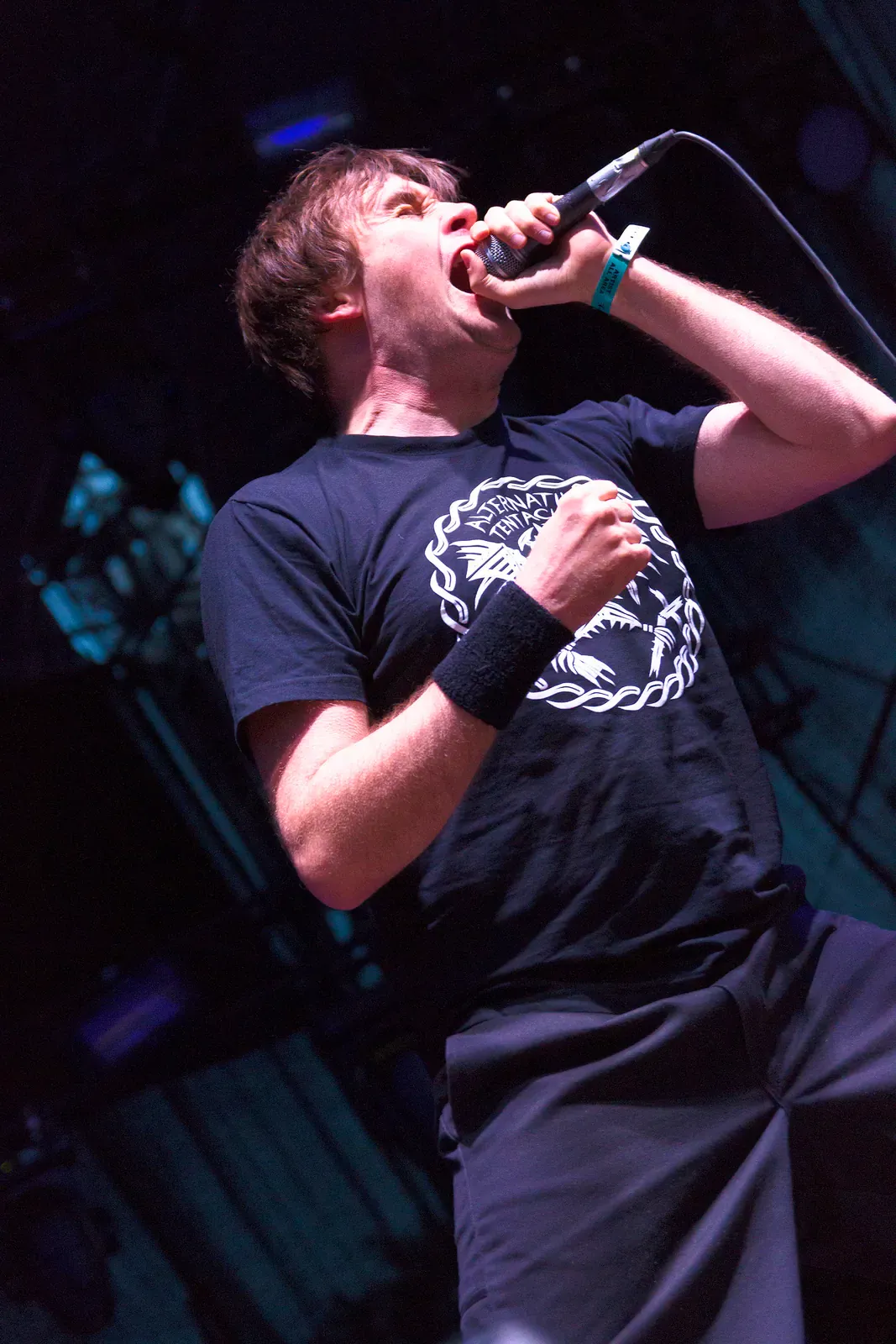
Birmingham and Earache, 1985-1991
The Mermaid, a pub in Sparkhill, was the band’s regular local venue, and a July 1985 show there reunited the group before the new line-up formed. In 1986 Napalm Death recorded sessions at Rich Bitch Studio in Birmingham, at night to keep costs down, and those tracks became the first side of Scum. Digby Pearson had just founded Earache Records in Nottingham, bought the 1986 master tape and signed the group in March 1987. The second side was recorded in May 1987 by a different line-up, so the album is essentially a split LP between two lineups, with Mick Harris the only constant. Scum came out on 1 July 1987, sold more than 10,000 copies in its first year and reached number four on the UK indie chart.
Carcass followed with Reek of Putrefaction, released on Earache on 28 July 1988. Its gore-focused lyrics and sleeve art led to the goregrind branch, and the album has 22 tracks averaging 1 minute 48 seconds. It was named John Peel’s favourite album of the year despite its poor production. In 1988 New Musical Express put Napalm Death on its cover as the fastest band in the world. Extreme Noise Terror of Ipswich, who took Harris from Napalm Death in 1987, and Sore Throat were other British names of the period. Extreme Noise Terror’s guitarist later insisted the band was hardcore punk, not grindcore, and Napalm Death’s Lee Dorrian said the style was plagiarised until it lost originality.
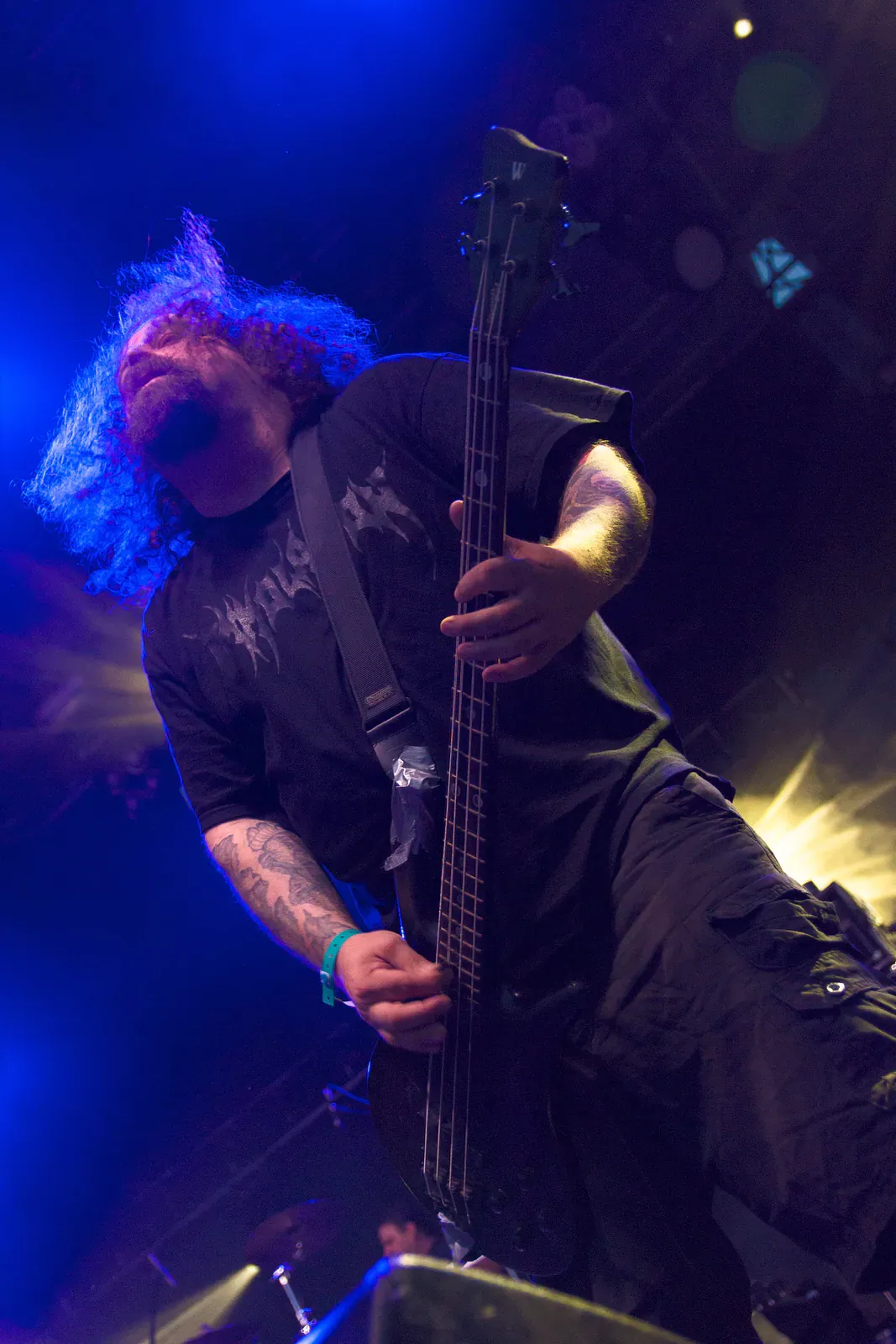
American and European grind, 1989-1999
American grind of the 1990s drew on British grindcore, the American precursors and death metal, and often used riffs from crossover thrash. Terrorizer, formed in Los Angeles around drummer Pete Sandoval, released World Downfall in 1989, and Assuck and Anal Cunt were other early American names. Anal Cunt lacked a bass player and took a very dissonant approach, while Discordance Axis played with a more technical style.
Brutal Truth, formed in New York City in 1990 by bassist Dan Lilker, became a leading group of the American scene, although one member said they drew more from the thrash metal of Dark Angel than from the British bands. Their Extreme Conditions Demand Extreme Responses appeared on Earache in 1992. Relapse Records, founded the same year Brutal Truth formed, later became a main American home for the style, with Pig Destroyer, formed in Alexandria, Virginia in 1997, and later Nasum among its artists. Continental Europe had its own early practitioners: Agathocles in Belgium, Patareni in Croatia, Fear of God in Switzerland, and Cripple Bastards in Italy. In Europe the style was called death-thrashcore for a time before the name grindcore arrived from Britain.
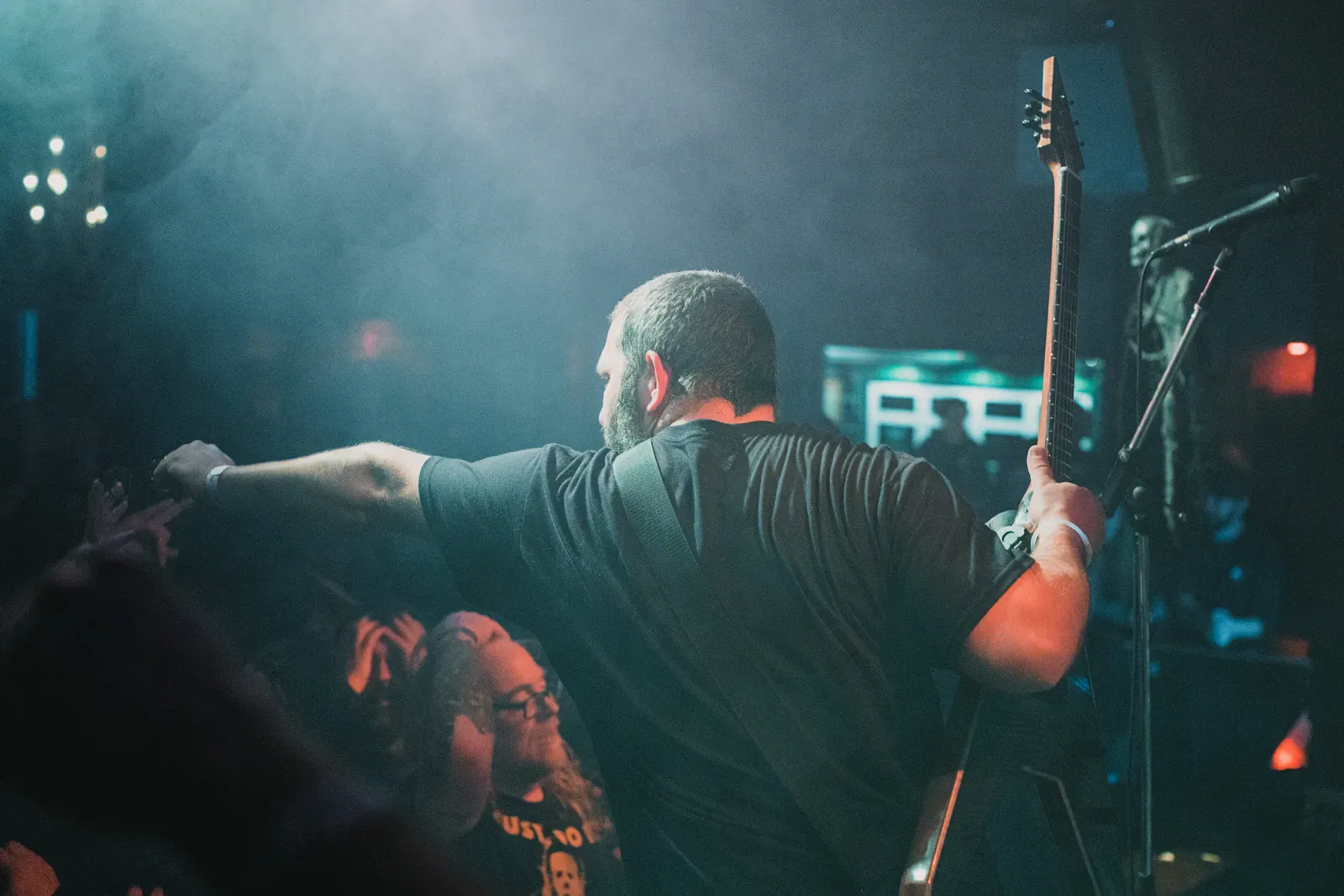
Characteristics
Grindcore uses the instrumentation of hardcore punk: electric guitar, bass and drums, but alters song structure and tone. Guitars are tuned low and played mostly with downstrokes, power chords and heavy distortion. On Scum the first side is in E-flat and the second in C, while From Enslavement to Obliteration was tuned to C-sharp. Bolt Thrower went much lower, to A.
The blast beat, a sixteenth-note figure shared between kick, snare and a cymbal, defines the drumming. It was used before the genre existed, with Asocial, DRI, Sepultura and Repulsion cited among earlier users, though Napalm Death is credited with coining the term. Modern blast beats run from about 180 to as much as 250 beats per minute, and early ones were slower and less precise.
Songs are short, and a microsong lasts only seconds. In 2001 Brutal Truth were awarded a Guinness record for the shortest music video, the four-second Collateral Damage, and in 2007 Napalm Death’s You Suffer clip took it at 1.3 seconds. Albums are often 15 to 20 minutes long despite long track lists.
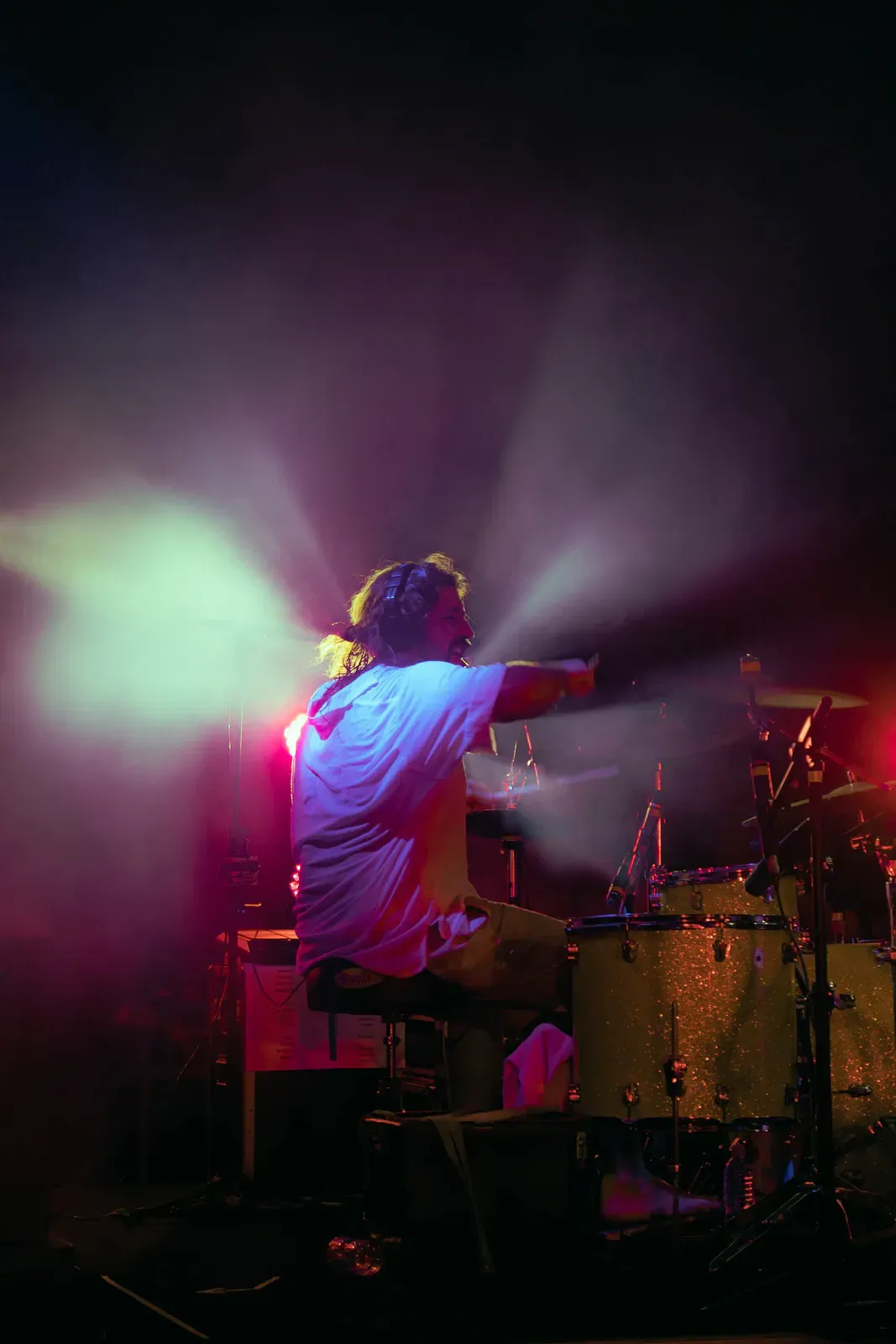
Culture
Lyrics lean to the far left, in line with the punk roots. Napalm Death addressed anti-racism, feminism, anti-militarism and anti-capitalism, and early groups including Napalm Death, Agathocles and Carcass made animal rights a main theme. Carcass’s focus on gore and anatomical decay, in lyrics and sleeves, is the root of goregrind, while bands that turned to sexual subject matter, such as Gut, are sometimes called pornogrind. Seth Putnam’s lyrics are known for black comedy.
Grind also reached commercial audiences in a limited way. Nielsen Soundscan counted 367,654 Napalm Death units sold between May 1991 and November 2003 and 220,374 for Carcass, and Napalm Death’s “Twist the Knife (Slowly)” appeared on the Mortal Kombat soundtrack, which reached the top 10 of the Billboard 200 and went platinum in under a year.
Legacy
Grindcore spread into several branches. Deathgrind joins death metal technicality to grindcore intensity, with Assuck credited as one of the earliest acts. Cybergrind, led by Agoraphobic Nosebleed and Gigantic Brain, adds sampling and programmed drums, and The Berzerker used distorted Roland TR-909 kicks borrowed from gabber. Powerviolence, which took inspiration from Napalm Death but avoids heavy metal elements, grew in parallel. In 2010 Singapore’s Wormrot signed with Earache.
Sweden’s Nasum, from Örebro and formed in 1992, made the style easier to listen to by tackling political topics from a personal angle; the band ended after singer Mieszko Talarczyk was killed in the December 2004 Indian Ocean tsunami. Justin Broadrick later moved into industrial metal with Godflesh, and Mick Harris explored industrial and electronic styles with Scorn, signs of the industrial and noise influences that ran through the early scene. The style is related to hardcore punk and to death metal, and sits within metal.
Misconceptions
Grindcore is sometimes treated as heavy metal with faster drums. Earache’s Digby Pearson said the term was not only about drum speed, and described it as coined for the heavy, down-tuned guitars. It is also assumed that all of it is about gore, but the style started in anarcho-punk politics and many bands stayed political. A third idea is that Napalm Death invented the blast beat; others played it before them, and the group is credited with the name for it and with making it central.
Frequently asked questions
What is grindcore?
Grindcore is a fusion of hardcore punk and extreme metal from the mid-1980s, defined by blast beats, down-tuned guitars, growled and shrieked vocals and very short songs.
Who started grindcore?
Napalm Death of Birmingham are credited with laying the groundwork, with Repulsion and Siege as acknowledged precursors.
How fast is a grindcore blast beat?
A blast beat is usually between 180 and 250 beats per minute in sixteenth notes, though early ones were slower.
What is a microsong?
A microsong is a grindcore track lasting only a few seconds, such as Brutal Truth’s four-second Collateral Damage.
Sound
Sound sheet
Anatomy of a track
| # | Part |
|---|---|
| 1 | Microsong, seconds long |
| 2 | Typical track, one to two minutes |
| 3 | Album, 15 to 20 minutes with many tracks |
Signature sounds
- Blast beats
- Growl and shriek vocal trade-offs
- Down-tuned buzzing guitars
- Overdriven bass
Techniques
- Blast beat
- Downpicking
- Microsong
- Growl and shriek trade-offs
Tuning
Down-tuned: Scum used E-flat and C, From Enslavement to Obliteration C-sharp; Bolt Thrower dropped to A.
Vocals
Low growls and barks traded with high shrieks; lyrics are sometimes absent, and the voice may serve as an effect.
Scenes
Where it happened
Where and when the sound lived: one bar per city on a shared timeline.
North America
Europe
Active scenes
Peak 4, 1992-2025
Napalm Death played the pubs here and recorded both Scum sessions at Rich Bitch Studio.
Home of Repulsion, whose basement-recorded Horrified predated Scum's release.
Terrorizer's base, mixing grind with death metal.
Nasum formed here out of the Swedish death metal scene.
Venues and places
Birmingham, 1985 to today. Sparkhill pub where Napalm Death played regularly from 1985.
Birmingham, 1986 to today. Overnight sessions here yielded both sides of Scum.
Culture
Culture markers
- Microsong
A track lasting only seconds, such as Brutal Truth's four-second Collateral Damage.
Slang - Anatomical gore sleeves
Carcass's lyrics and sleeve art on gore and decay gave rise to goregrind.
Artwork - Tape trading and DIY
Early grind spread through an international network of tape trading and DIY production.
Ritual
Glossary
Terms on this page
Very fast drum pattern of repeated sixteenth notes shared between kick, snare and cymbal.
Grind that adds sampling and programmed drums.
Fusion of death metal technicality with grindcore intensity.
Branch built on bodily, gory lyrics, traced to Carcass.
A grindcore track lasting only seconds.
Related hardcore style with sudden tempo changes that avoids metal elements.
Metal family