Metal
Metal is loud, riff-based rock built on distorted guitar. It began in Birmingham in 1968 and split into thrash, doom, death, black, power and other styles.
252 genres
Since 1968
Genres
252
In this family
Branches
53
Main subgenres
Since
1968
Birmingham
Timeline
Era by era
From the first sparks to today. Select a dot to read the story behind it.
- Blues, volume and doom
1968 to 1974
- Classic metal and the NWOBHM
1975 to 1981
- Thrash and glam
1982 to 1986
- Extreme metal splinters
1987 to 1994
- Groove, nu metal and festivals
1992 to 2004
- Streaming and global scenes
2005 to 2026
Eras
Moments
- 1 Blues, volume and doom, 1968 to 1974
- 2 Classic metal and the NWOBHM, 1975 to 1981
- 3 Thrash and glam, 1982 to 1986
- 4 Extreme metal splinters, 1987 to 1994
- 5 Groove, nu metal and festivals, 1992 to 2004
- 6 Streaming and global scenes, 2005 to 2026
1968
Blues, volume and doom
Blues rock and psychedelia turn heavier in Birmingham, London and the US. Black Sabbath's detuned, minor-key riffs and Led Zeppelin and Deep Purple's volume set the template.
- 1968Black Sabbath form in BirminghamThe band begins as Earth before renaming itself Black Sabbath in 1969.
- 1969Led Zeppelin's debut albumHeavy blues rock with huge volume becomes a template for early metal.
- 1970Black Sabbath release their debut albumDetuned guitars and a doom-laden title track introduce the sound.
- 1970Paranoid is releasedThe title single brings the new heavy sound to the UK charts.
- 1974Judas Priest release Rocka RollaThe band that later defines metal's leather-and-studs look debuts.
1975
Classic metal and the NWOBHM
Judas Priest, Motorhead and Iron Maiden tighten the sound into leather-clad, fast, twin-guitar songs. Small British labels and the 'new wave of British heavy metal' feed an international tape and record market.
- 1975Motorhead form in LondonLemmy's band blends punk speed with metal volume.
- 1979The NWOBHM is namedJournalist Geoff Barton of Sounds helps popularize the phrase 'new wave of British heavy metal'.
- 1980British Steel and Ace of SpadesJudas Priest and Motorhead release defining records in the same year.
- 1980Iron Maiden release their debut albumThe London band begins a run that sells over 100 million records.
- 1981Metallica form in Los AngelesLars Ulrich answers a classified ad from James Hetfield.
- 1981Venom release Welcome to HellNeat Records puts out the debut of the band whose 1982 album Black Metal later names the style.
1982
Thrash and glam
In Los Angeles and the Bay Area, Metallica, Slayer and Megadeth fuse metal with hardcore speed, while Sunset Strip glam metal goes to MTV. The underground and the mainstream split in two.
- 1982Metal Massacre compilationBrian Slagel's Metal Blade compilation includes an early Metallica track.
- 1983Kill 'Em All and Show No MercyMetallica and Slayer release thrash debuts within months of each other.
- 1985PMRC Senate hearingUS parents' groups attack heavy metal lyrics, and the controversy boosts the genre's rebel image.
- 1985Possessed release Seven ChurchesThe Bay Area album is often cited as an early death metal record.
- 1986Master of Puppets and Reign in BloodMetallica and Slayer set the standard for technical and extreme thrash.
1987
Extreme metal splinters
Death metal in Florida, grindcore in Birmingham and a Norwegian black metal scene push speed, noise and darkness further. Nirvana's rise in 1991 ends the glam boom.
- 1987Napalm Death release ScumThe Birmingham band's debut for Earache establishes grindcore.
- 1990Deathlike Silence Productions issues its first recordEuronymous of Mayhem puts out Merciless's The Awakening; his Helvete shop in Oslo opens in 1991.
- 1991Nirvana's Nevermind arrivesGrunge's breakthrough ends the glam metal commercial boom.
1992
Groove, nu metal and festivals
Pantera's groove, Sepultura's Brazilian roots and then nu metal bring heavy music to arenas and Ozzfest. Melodic death metal, power metal and symphonic metal grow in Europe at the same time.
- 1992Norwegian church burnings beginArson attacks mark the darker side of the second-wave black metal scene.
- 1992Pantera release Vulgar Display of PowerGroove metal reaches a mass audience.
- 1993Euronymous is killedThe Mayhem guitarist's murder becomes a defining event in black metal's notoriety.
- 1994Mayhem's De Mysteriis Dom SathanasThe album is released after Euronymous's death and becomes a black metal landmark.
- 1996Ozzfest beginsOzzy and Sharon Osbourne launch a touring festival that sustains a new wave of heavy bands.
- 1996Sepultura release RootsThe Brazilian band folds tribal percussion into groove metal.
- 1999Slipknot release their debut albumNu metal peaks and Roadrunner earns platinum sales.
- 2004Dimebag Darrell is killedThe former Pantera guitarist is shot on stage in Columbus, Ohio.
2005
Streaming and global scenes
Metalcore, deathcore, djent and festival culture thrive online, and scenes from Finland to Indonesia reach listeners directly. The founding bands retire as a new generation fills the headliner slots.
- 2015Motorhead end after Lemmy's deathThe band stops after the death of founder Lemmy in December 2015.
- 2019Slayer play their farewell showThe thrash pioneers end their final tour at the Forum in Inglewood, California.
- 2025Black Sabbath's farewell concertBack to the Beginning in Birmingham is followed by Ozzy Osbourne's death weeks later.
Roots
Roots and offspring
Grew out of
Derived from
Derived from
Derived from
Derived from
Influenced by
Birmingham, 1968
Metal
Facts
| Genres in the family | 252 |
| Main branches | 53 |
| Emerged | Late 1960s |
| Key places | Birmingham, London, Los Angeles, New York City |
| Tempo | 65 to 225 BPM |
Metal, also called heavy metal, is a family of loud, riff-based music built on distorted electric guitar, power chords and emphatic drumming.
It formed in the late 1960s in Birmingham, England, and the United States out of blues rock, psychedelic rock and hard rock, and split into dozens of melodic and extreme styles. A subculture of fans, festivals and small independent labels has sustained it for more than fifty years in almost every country.
Origins: Birmingham, 1968-1974
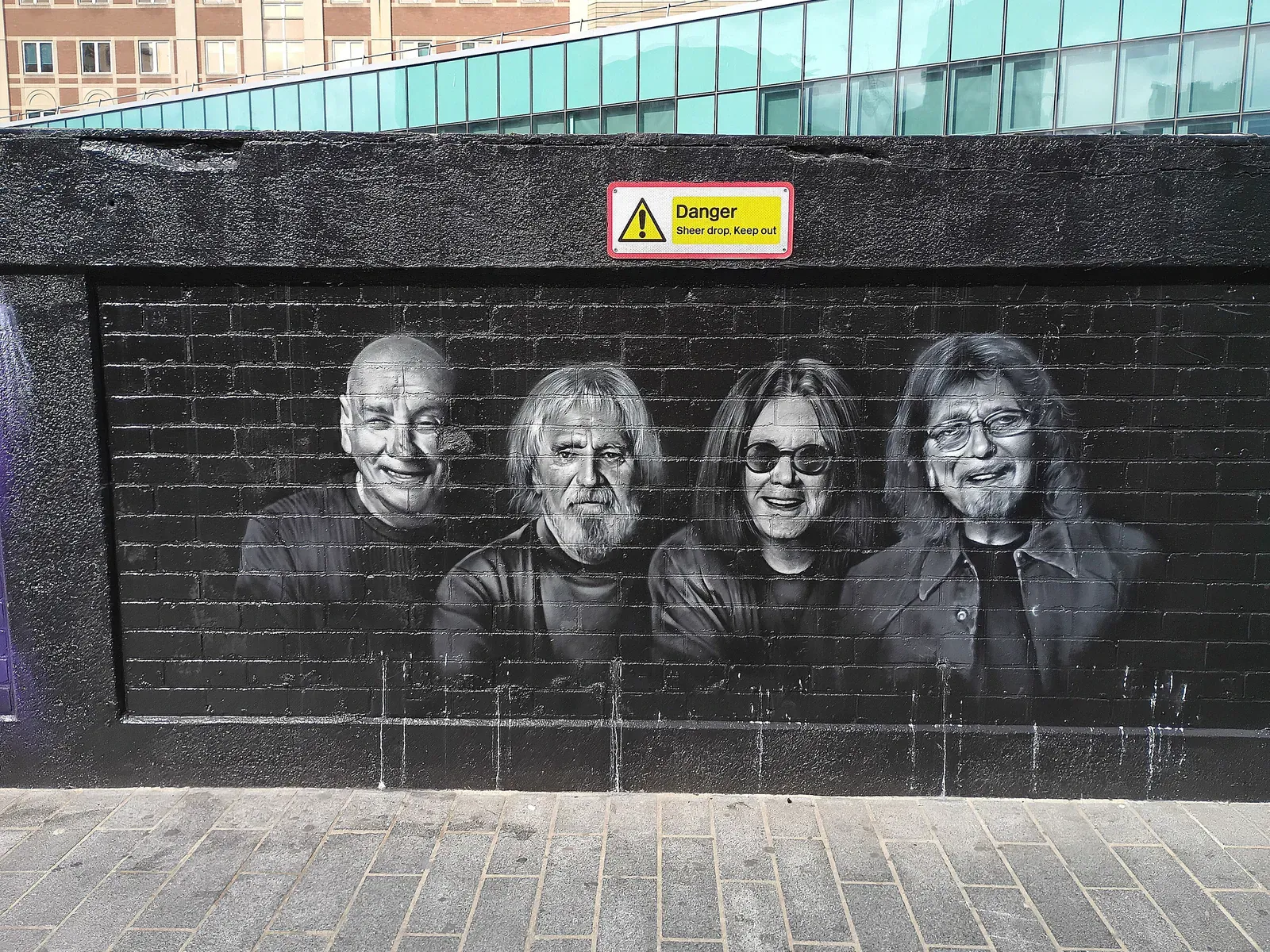
Birmingham in the late 1960s was an industrial city of foundries and factories, and the band that became Black Sabbath came out of its working-class districts. They formed in 1968 as Earth and took the Black Sabbath name in 1969. The sound had a physical cause. Tony Iommi lost the tips of two fingers of his fretting hand in a sheet metal factory accident at 17. He made thimbles from a melted plastic bottle, switched to lighter strings because he could not bend heavy ones, and tuned down as far as three semitones, which made his chords thicker and darker.
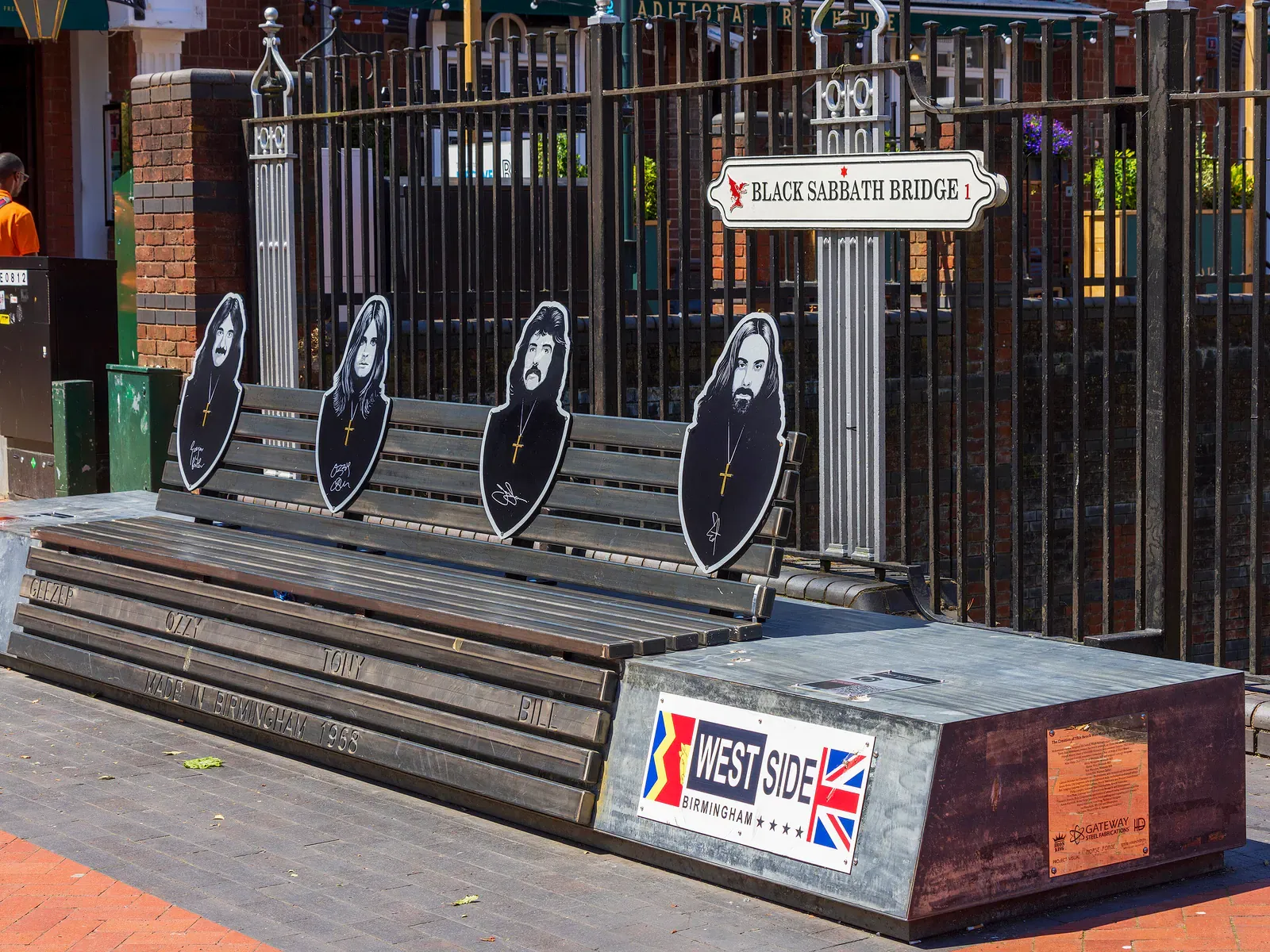
The band recorded its debut at Regent Sound in London in a single 12-hour session in October 1969, and it came out on Friday 13 February 1970. It reached number 8 in the UK. “Paranoid” followed in September 1970 and went to number 1 on the UK albums chart. Its title single brought the sound to the radio in under three minutes.
They were not alone. Led Zeppelin’s 1969 debut and Deep Purple’s records of the early 1970s showed what a blues band could do with a stack of amplifiers and nothing to hold it back. Jim Marshall’s JTM45, first built in 1962, supplied the overdriven British tone that all of them chased. What set Sabbath apart was the mood. Where Zeppelin leaned on the blues and Purple on virtuosity, Sabbath wrote about war, paranoia and fear, and put it over a riff that barely moved.
Classic metal and the NWOBHM, 1975-1981
The next step was discipline. Judas Priest, another Birmingham-area band, released Rocka Rolla in 1974 and found its focus by 1980, when British Steel packed hooks into short, hard songs. Singer Rob Halford took the leather-and-studs look from leather subculture, a source he described in a 1998 interview, and wore leather on stage by 1978 around the Hell Bent for Leather album. Metal now had a uniform.
Lemmy formed Motorhead in London in 1975 and played a distorted Rickenbacker bass like a lead guitar. His band took punk’s speed into metal, and “Ace of Spades” (1980) proved that the two crowds could share a record. The other side of that bridge is punk rock.
Then came a movement. In May 1979 the weekly paper Sounds ran a review of a London gig headlined by Angel Witch, with Iron Maiden and Samson, under a headline that named a new wave of British heavy metal. Editor Alan Lewis is usually credited with the phrase, and writer Geoff Barton became its champion. Disco nights such as the Heavy Metal Soundhouse in a Kingsbury pub put young bands on a chart before any label signed them. Iron Maiden’s debut arrived in 1980, and The Number of the Beast, with new singer Bruce Dickinson, followed in 1982. In Wallsend, near Newcastle, Neat Records signed Venom, whose 1981 debut Welcome to Hell was rawer than anything in London.
Thrash and glam, 1982-1986
In Los Angeles the underground ran on tape trading and compilations. Brian Slagel founded Metal Blade in 1982 and issued the Metal Massacre compilation, which carried an early Metallica track. The band had formed a year earlier when Lars Ulrich answered a classified ad placed by James Hetfield. Metallica’s Kill ’Em All and Slayer’s Show No Mercy both came out in 1983, fusing metal riffs with hardcore speed. The Bay Area, with Exodus and Testament, became the other centre.
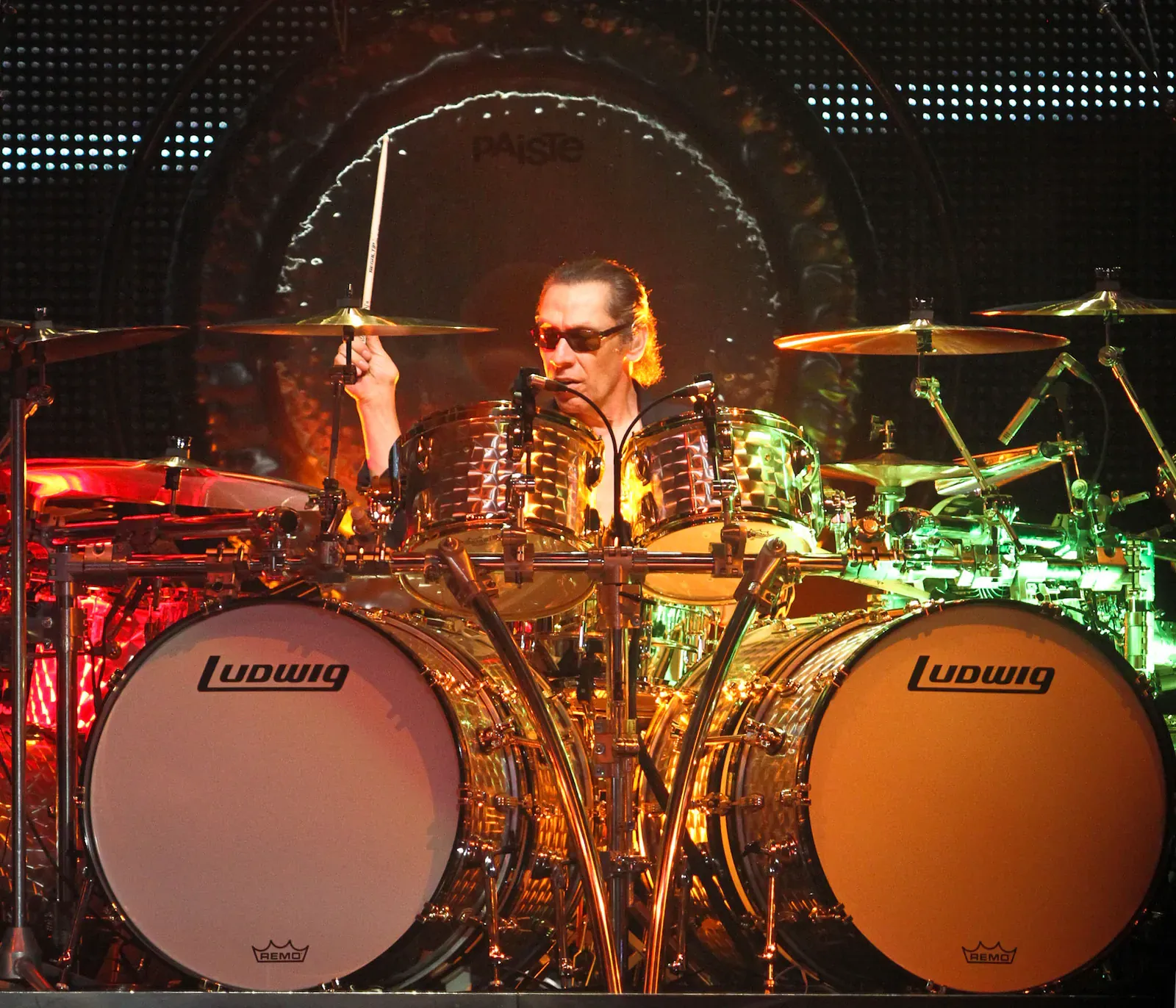
The change in drumming was physical. Two kick drums, or a double pedal, let a drummer fire a rolling gallop under a riff, and speed became a goal in itself.
Meanwhile the Sunset Strip took a different road. Glam metal bands wore hairspray and made videos, and MTV carried them into living rooms. The split between underground and mainstream defined the decade. By 1986 both had their masterpieces: Metallica’s Master of Puppets and Slayer’s Reign in Blood, which runs under 30 minutes.
The mainstream also drew fire. On 19 September 1985 the US Senate heard from the Parents Music Resource Center, which had listed 15 songs it found objectionable. The list included tracks by Judas Priest, Black Sabbath and Venom. Dee Snider of Twisted Sister testified alongside Frank Zappa and John Denver. The recording industry later agreed to warning stickers on some albums, and the controversy gave metal exactly the rebel image it had been cultivating.
Extreme metal, 1987-1994
Extremity became the point. In Birmingham, Napalm Death’s Scum (1987) used blast beats and songs of seconds to launch grindcore, on Earache, the Nottingham label founded by Digby Pearson in 1985. In the Bay Area, Possessed released Seven Churches in 1985, and in Florida Death’s Scream Bloody Gore (1987) became one of the first full death metal albums. Death’s leader, Chuck Schuldiner, later pushed the style toward complex song forms.
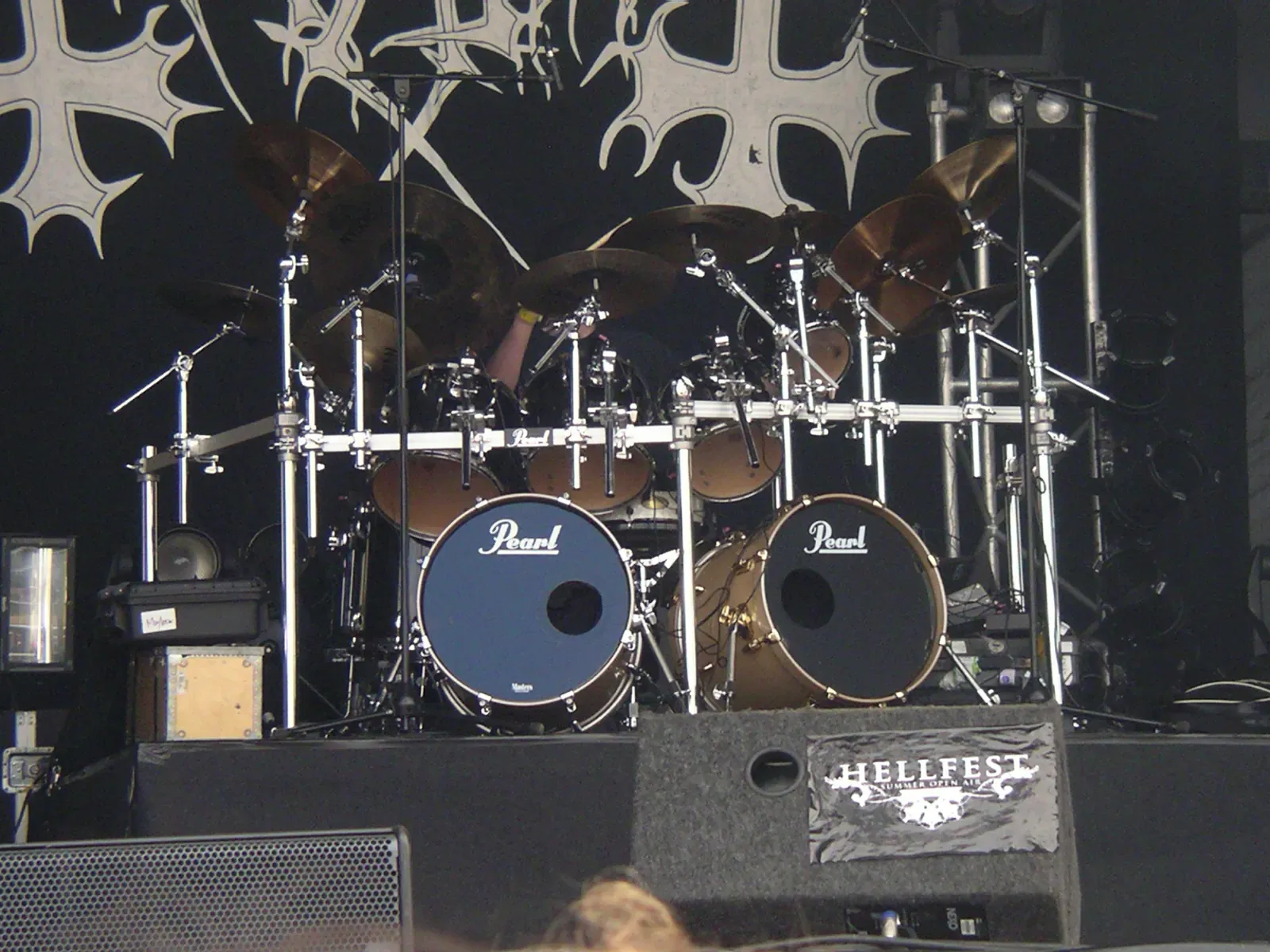
Studios shaped regional sounds. Entombed recorded Left Hand Path at Sunlight Studio in Stockholm in December 1989, with the knobs of a Boss HM-2 pedal turned to ten. The resulting buzzsaw tone became the signature of Swedish death metal. The mainstream hit a wall in 1991, when Nirvana’s Nevermind pushed glam metal off the radio.
Norway took darkness literally. Venom’s 1982 album Black Metal had named the style, and in 1991 Mayhem’s Euronymous opened the Helvete record shop in Oslo and ran the label Deathlike Silence Productions, founded in 1987, from it. Arson attacks on churches began in 1992. On 10 August 1993 Euronymous was murdered by fellow musician Varg Vikernes, who was later convicted. Mayhem’s De Mysteriis Dom Sathanas appeared in 1994, and its icy sound became the reference for the whole genre.
Groove, nu metal and festivals, 1992-2004
While extremity grew, American metal slowed down and got heavier. Pantera’s Vulgar Display of Power (1992) built groove metal on syncopated riffs. Sepultura went the other way: its 1996 album Roots was partly recorded with the Xavante people in Mato Grosso, Brazil, with producer Ross Robinson, who had just made Korn’s debut, and percussionist Carlinhos Brown. Singer Max Cavalera left the band at the end of that year.
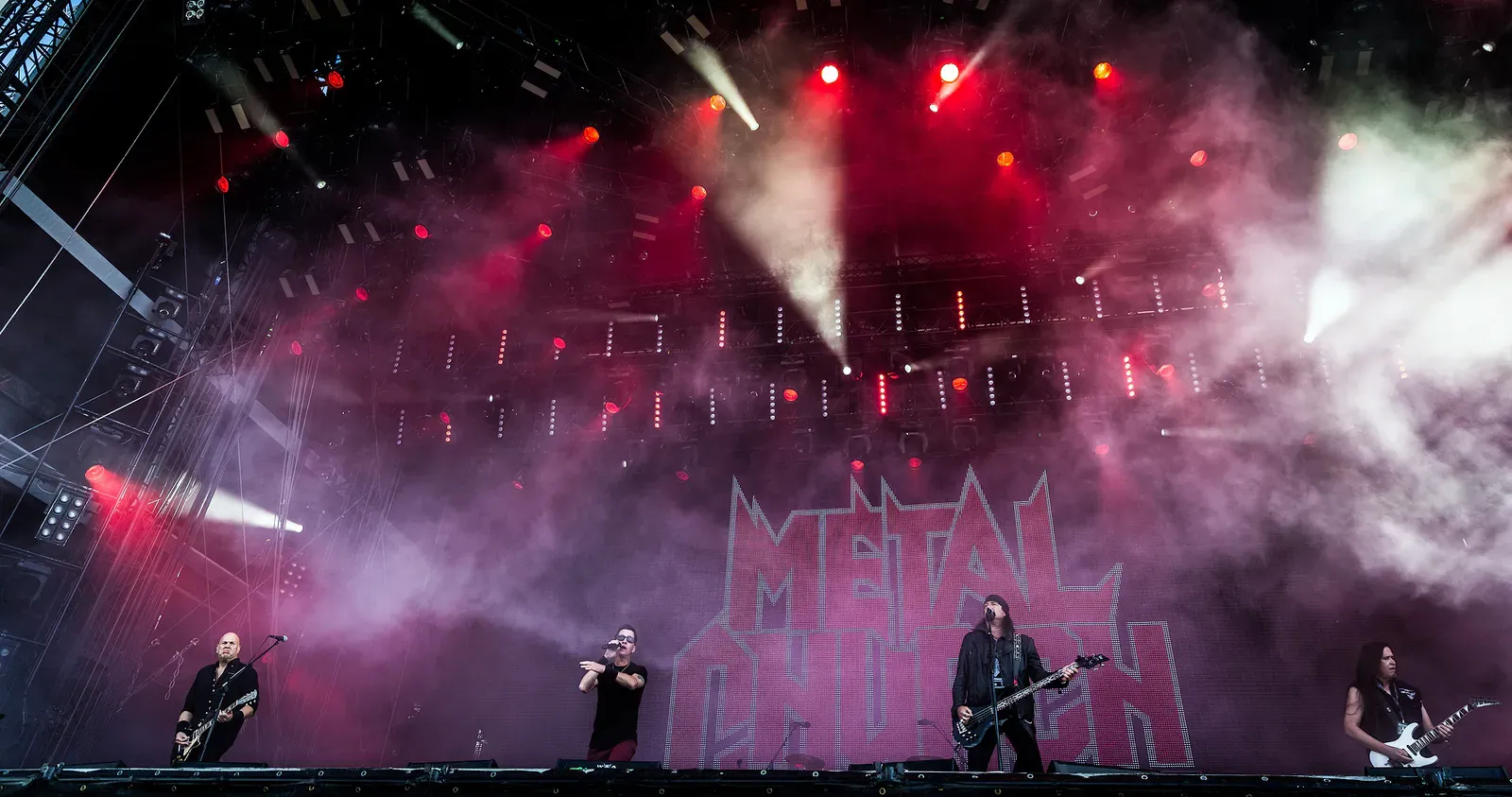
Ozzy and Sharon Osbourne launched Ozzfest in 1996, a touring festival that gave nu metal a platform, and Slipknot’s 1999 debut on Roadrunner went platinum in 2000. In Europe at the same time, Gothenburg bands built melodic death metal, while power metal and symphonic metal grew on festival stages across Germany and Scandinavia.
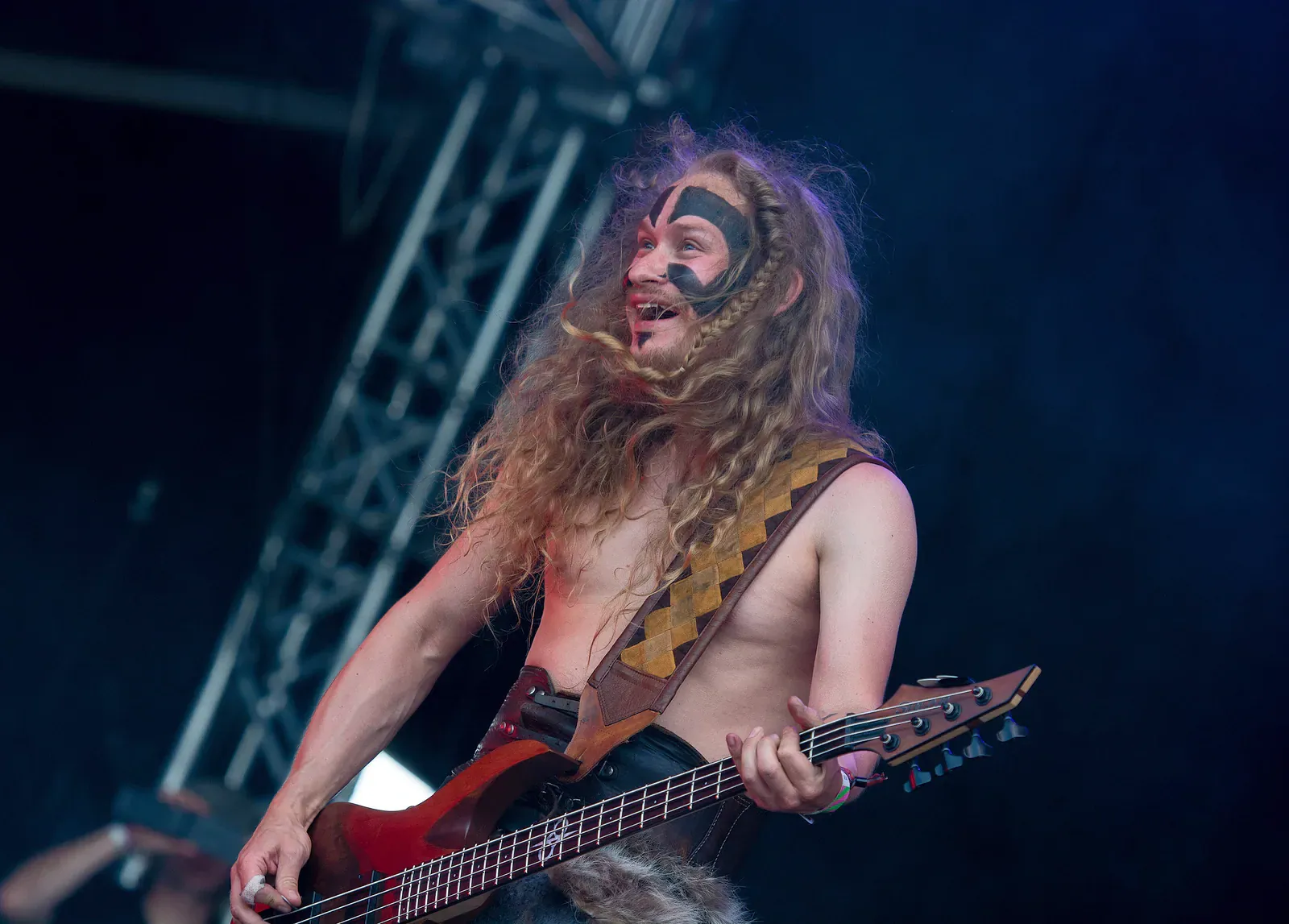
The era ended with a death. On 8 December 2004 former Pantera guitarist Dimebag Darrell was shot on stage in Columbus, Ohio, a violent end that the scene took personally.
Characteristics
Metal riffs mostly sit in minor-key modes, chiefly Aeolian and Phrygian, with the tritone and chromatic runs prominent in thrash and extreme styles. Guitarists favour power chords, palm muting and fast alternate or tremolo picking, and the drums range from slow doom tempos to blast beats. Vocals run from clean singing and high wails to growls and screams. Tempo is the clearest dividing line between styles, and the sound sheet lists it for the main ones.
Instruments and production
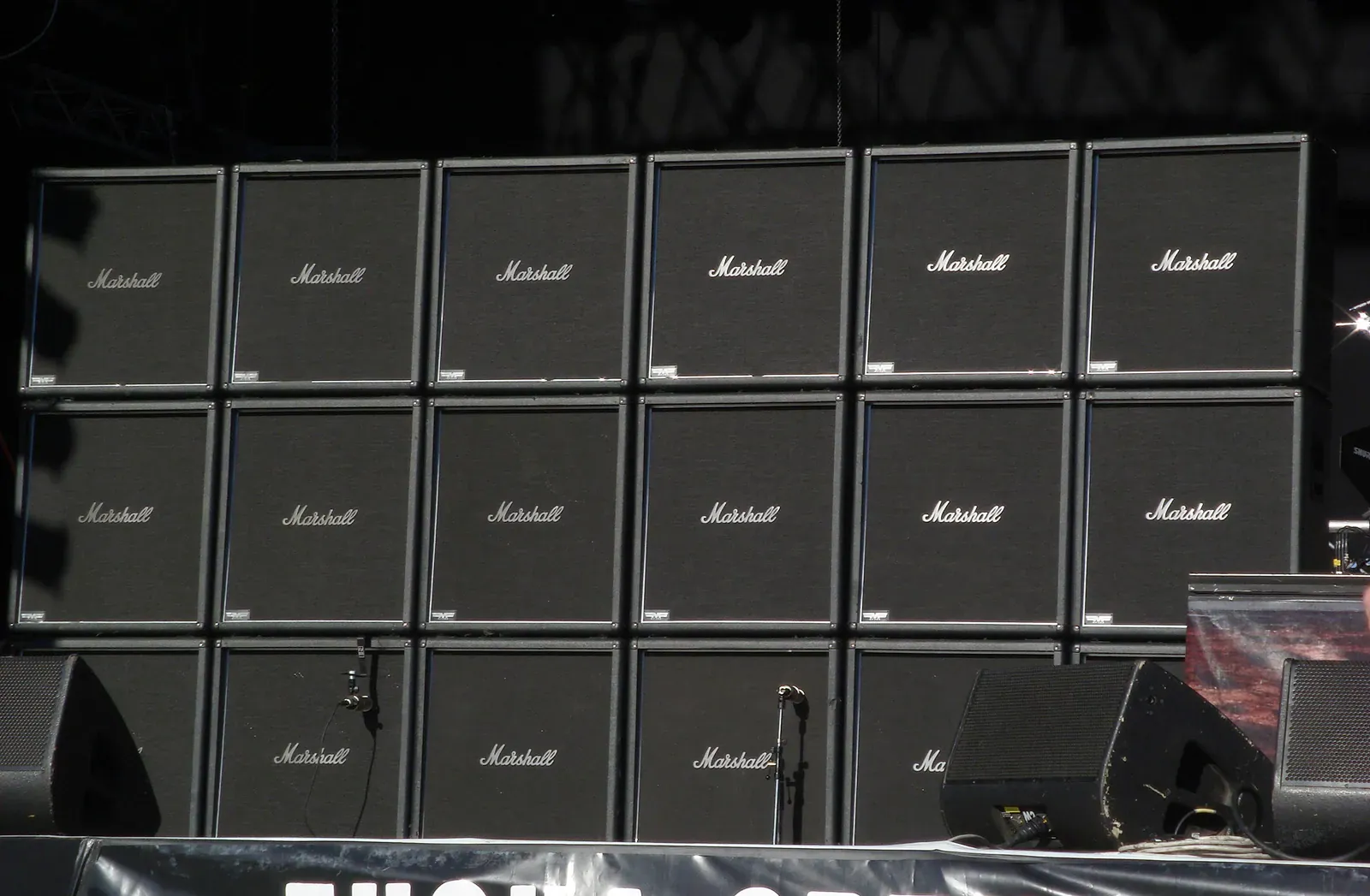
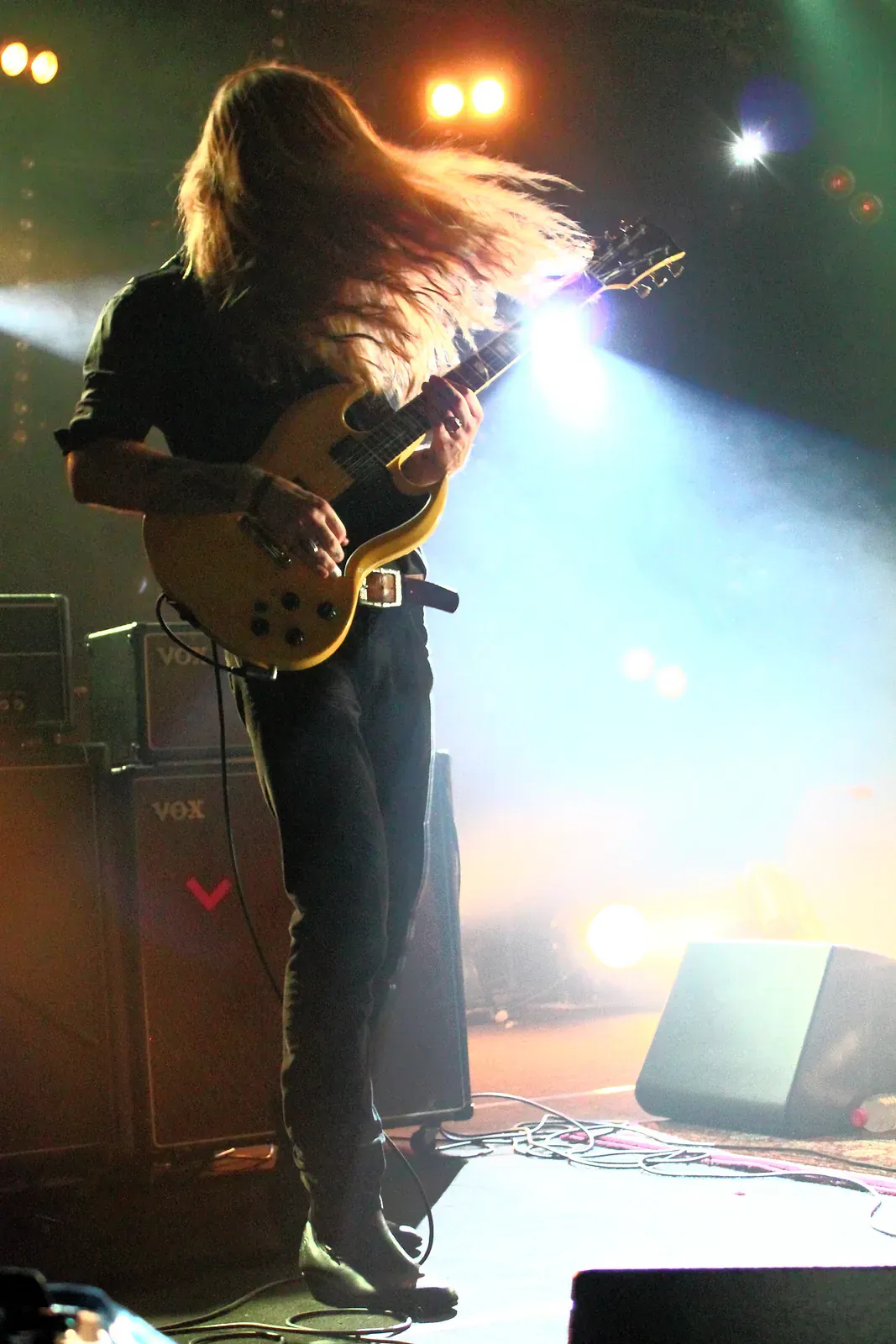
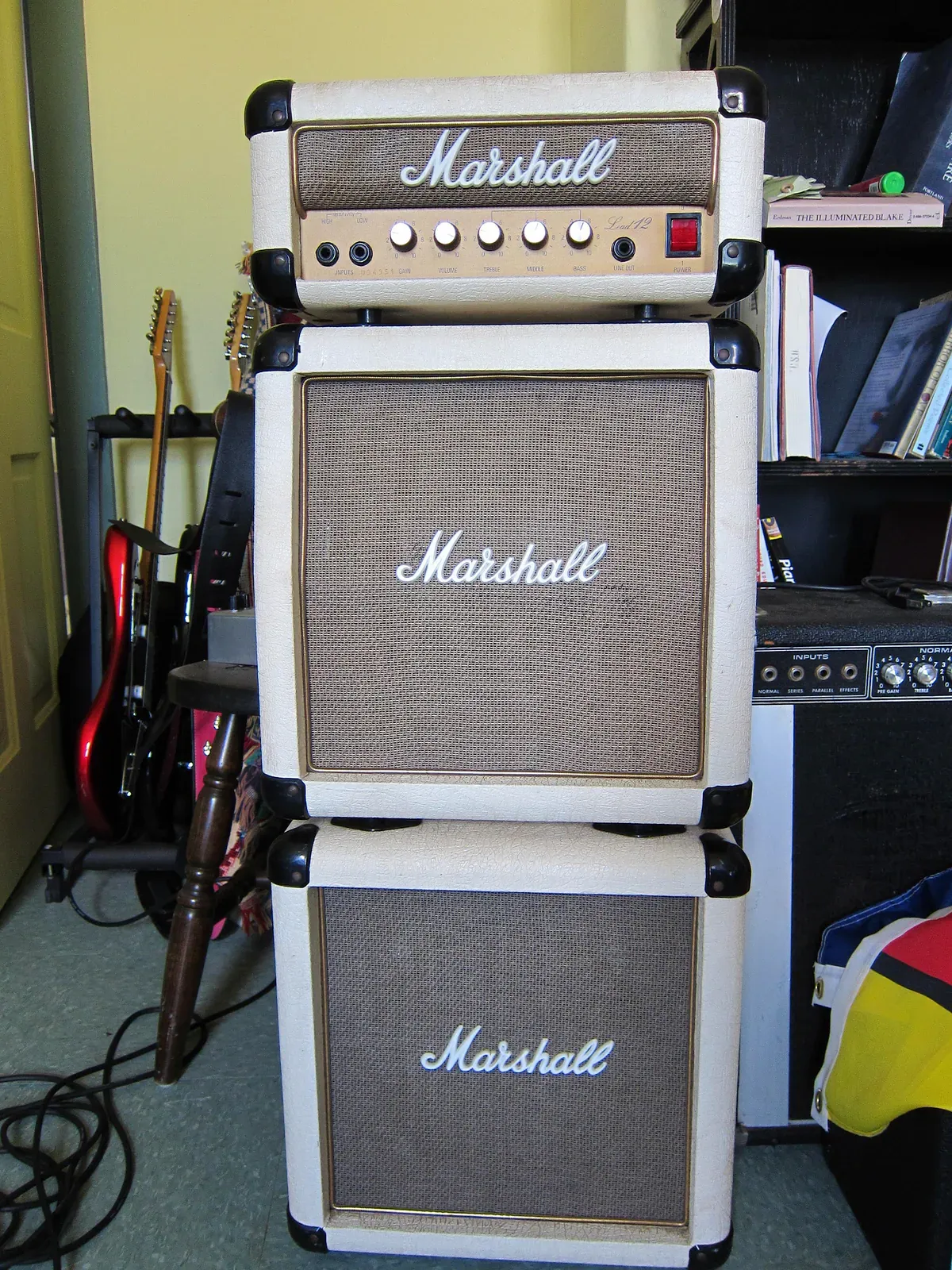
The core is distorted electric guitar through a cranked tube amplifier such as a Marshall stack, with bass, a drum kit and vocals. Gibson SG and Les Paul guitars shaped the early sound, a locking Floyd Rose tremolo allowed dive bombs, and double bass drums or a double pedal powered thrash and death metal. Production followed the technology: the Boss HM-2 pedal gave Swedish death metal its buzzsaw tone, and later Pro Tools-era editing made drums and guitars as precise as a machine. Seven-string guitars and lower tunings serve nu metal, djent and metalcore.
Streaming and global scenes, 2005-present
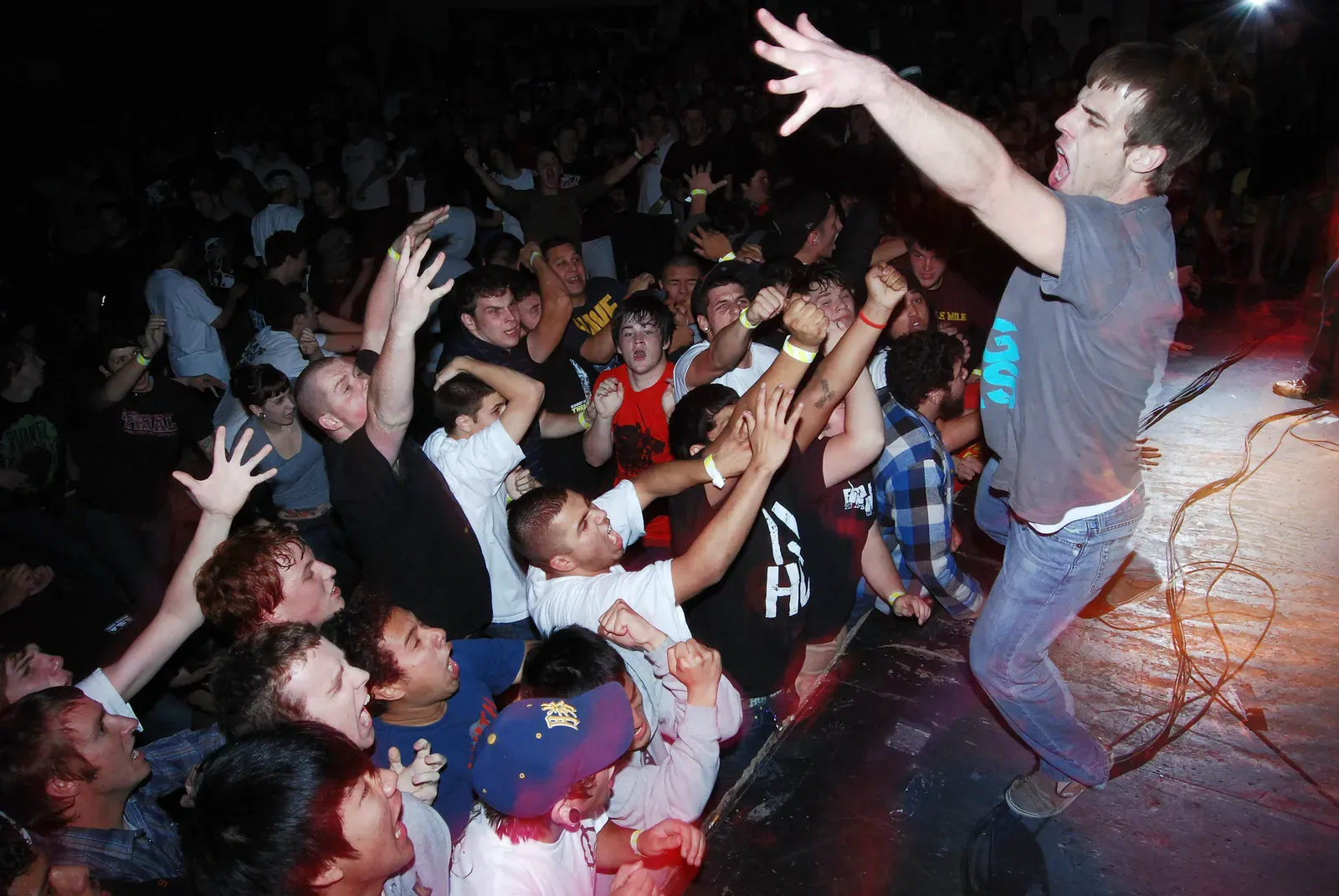
The internet changed the economics. Bandcamp, launched in 2008, let small bands sell directly without a label, while Pro Tools-era production made drums and guitars as precise as a machine, a path that electronic music shared. Metalcore, deathcore and djent grew mainly online. Scenes from Finland to Indonesia reached listeners directly.
Legacy
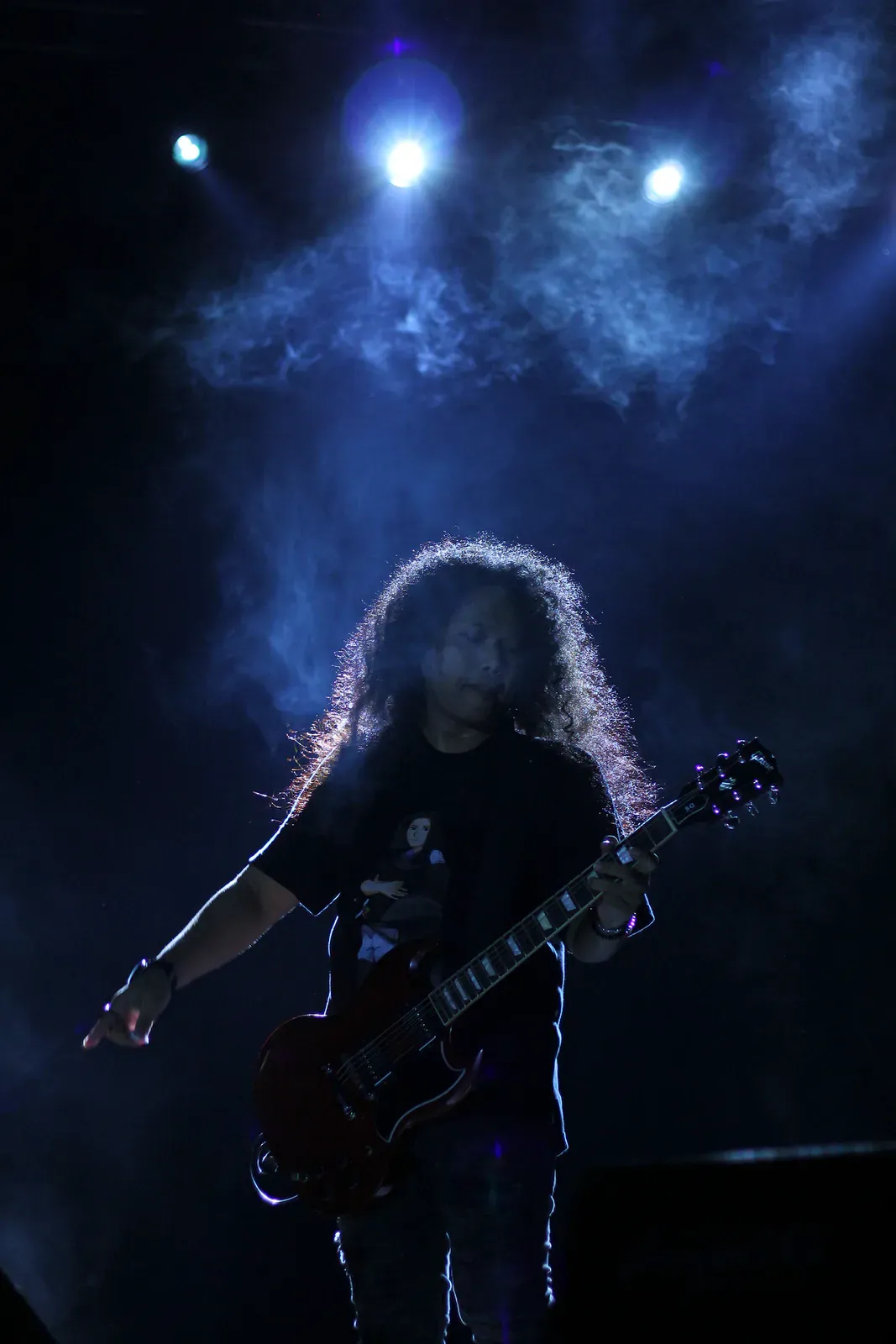
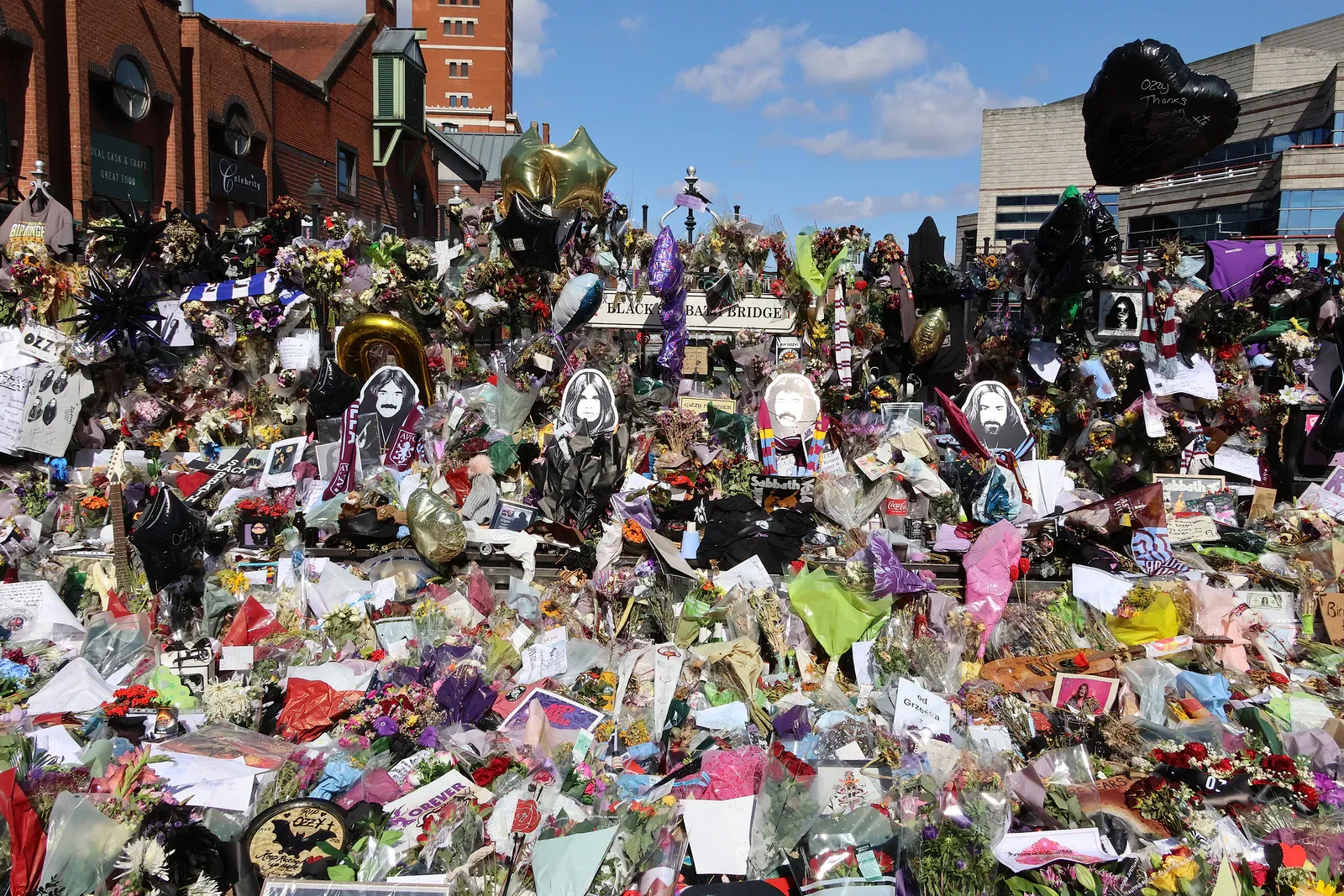
The founders began to leave. Lemmy died on 28 December 2015 and Motorhead ended. Slayer played their last show at the Forum in Inglewood, California, in 2019. On 5 July 2025 Black Sabbath’s original four members played Back to the Beginning at Villa Park in Birmingham, with Metallica, Slayer, Guns N’ Roses and Tool on the bill, and profits went to three charities (Radio X; Nuclear Blast). Ozzy Osbourne died 17 days later, on 22 July 2025, aged 76.
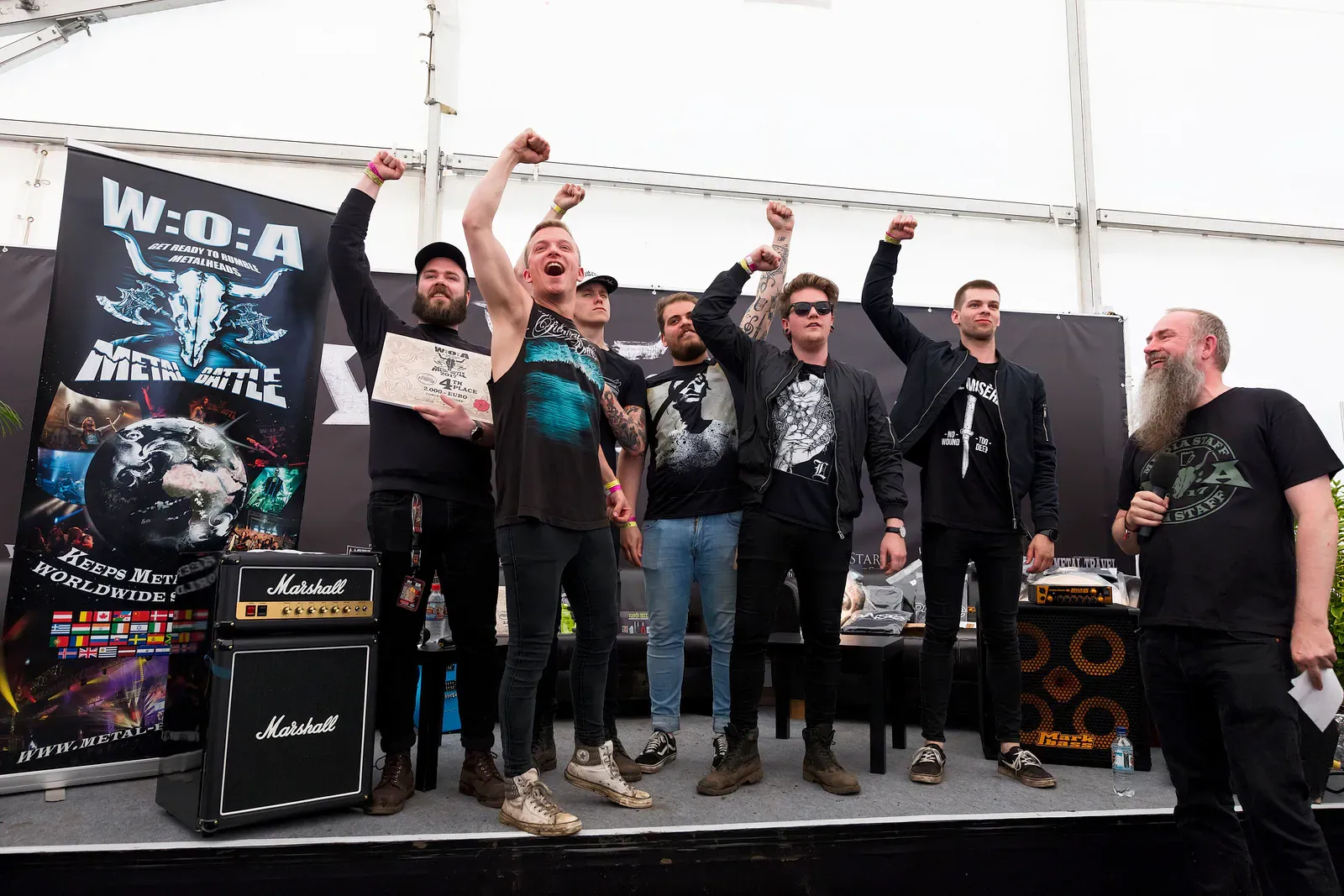
The new generation now fills the headline slots, and metal has shown it can outlive its founders. Wacken’s Metal Battle, a contest for bands from many countries, is one place where that handover is visible.
Culture
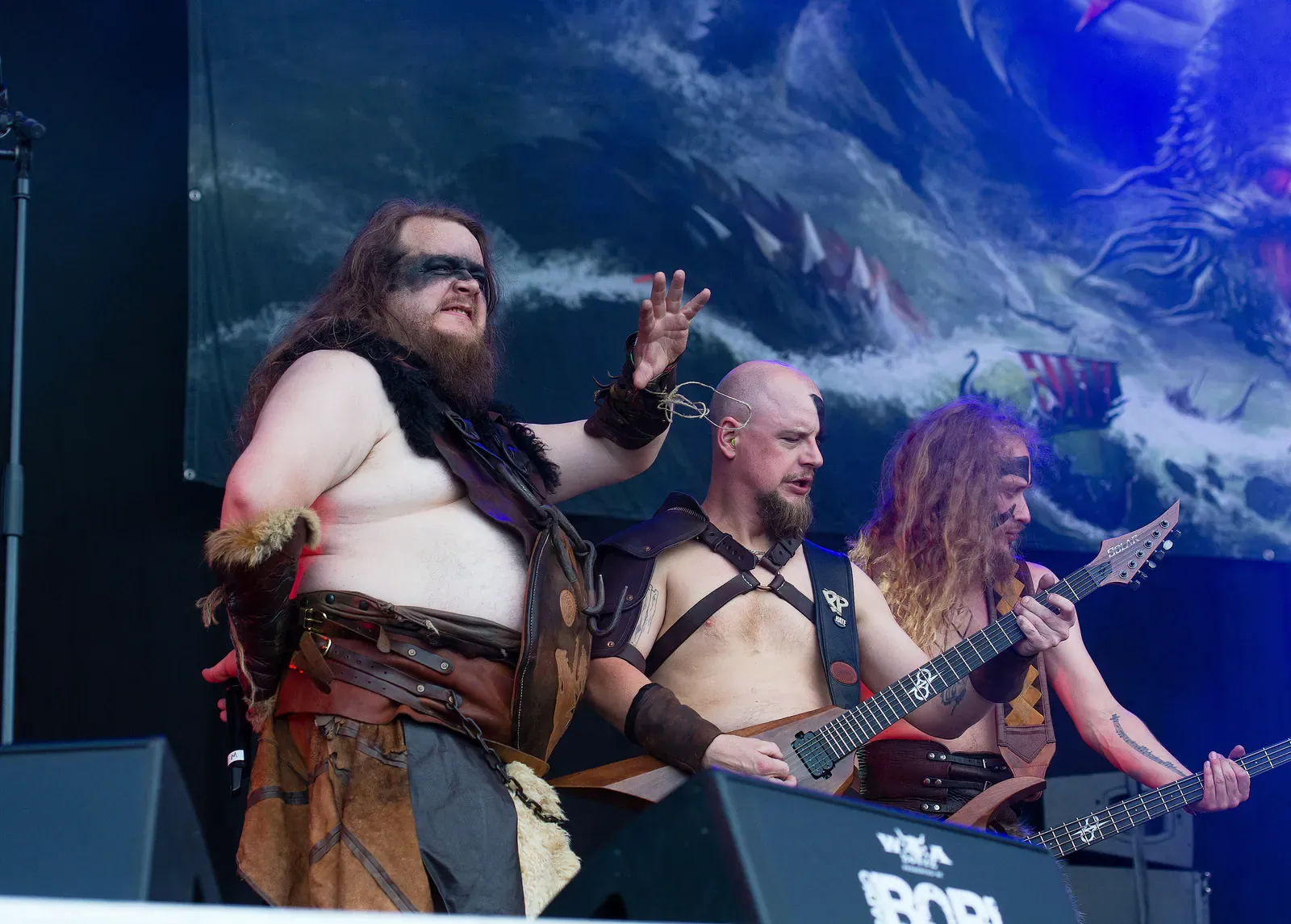
Metal spread through trade, not radio. In the 1980s fans swapped cassettes by post and zines carried the news. Small independent labels, Metal Blade in Los Angeles, Neat in Wallsend, Earache in Nottingham, Noise in Berlin, signed bands the majors ignored. Fans wore denim, leather, studded belts and patches, a visible badge of belonging.
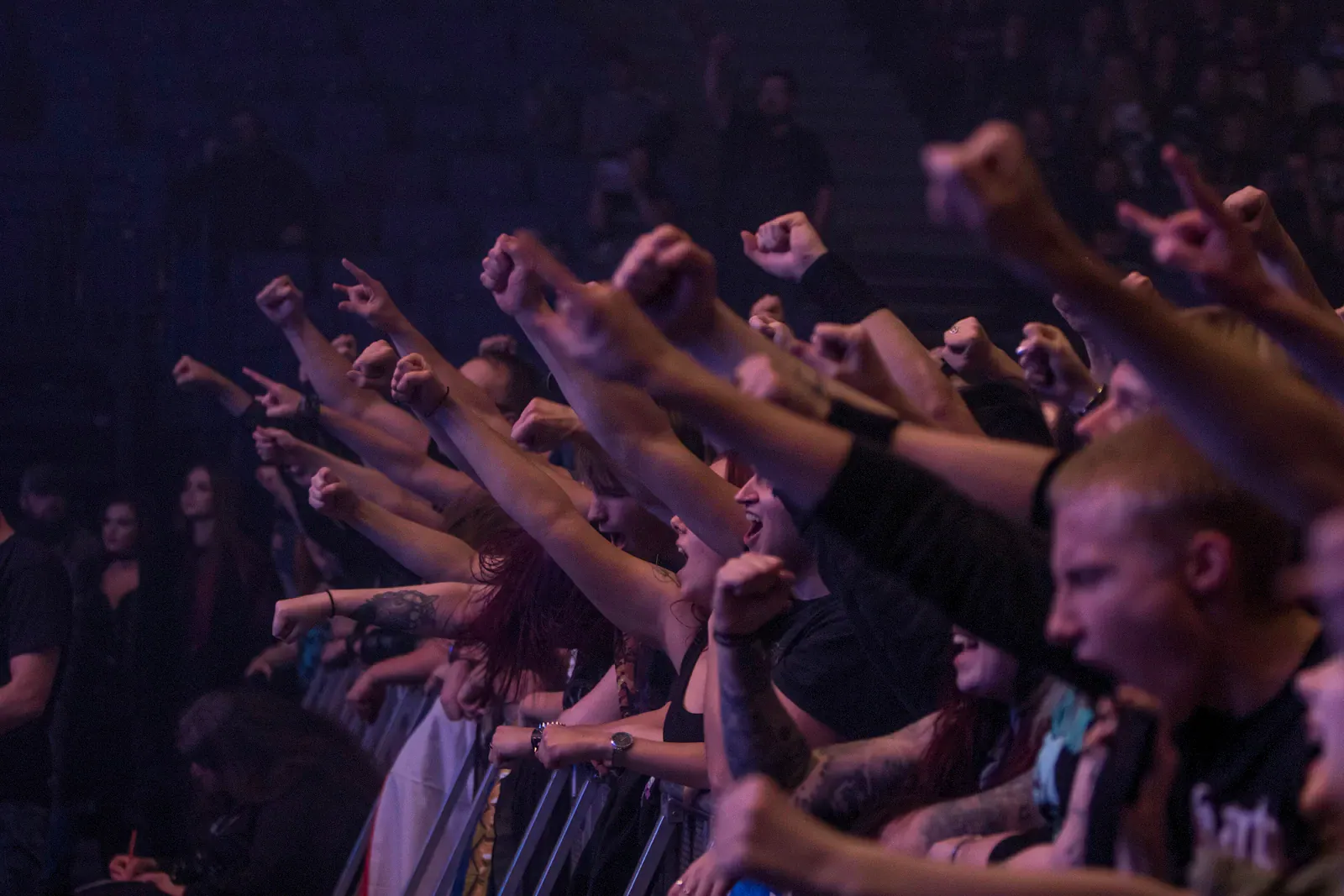
The look and the symbols were meant to unsettle. Fans, though, built something communal: festivals, tape-trading networks and local venues. After 2000 the scene went global without losing its handmade habits, and the economics still favour small, self-run operations: a pressing of a few hundred records, a van, a festival slot.
Misconceptions
“Metal makes its fans violent or suicidal.” In 1990 a Reno court heard a civil suit claiming Judas Priest had hidden a subliminal “do it” message in a song, and Judge Jerry Whitehead dismissed the case, finding no conclusive evidence of such messages. Research points the other way. A 2015 University of Queensland study of 39 extreme-music listeners by Leah Sharman and Genevieve Dingle found that hostility, irritability and stress fell after they listened, and inspiration rose most (Frontiers in Human Neuroscience, 2015).
“Metal is a white, Western genre.” Sepultura’s Roots in 1996 drew on Brazilian tribal percussion. Indonesia’s president Joko Widodo, elected in 2014, openly named Metallica, Megadeth and Napalm Death among his favourites (Blabbermouth, 2014), and the Hammersonic festival in Jakarta, running since 2012, is described as Southeast Asia’s largest metal festival. Metal was never confined to one place.
“The devil horns are a satanic sign.” Dio said his Italian grandmother made the gesture to ward off the evil eye, the malocchio, and he began using it around 1979 when he joined Black Sabbath. Geezer Butler has claimed he flashed it as early as 1971. It is a folk gesture, adopted by a subculture.
Frequently asked questions
What is heavy metal music?
Heavy metal is a style of loud, riff-based rock music built on distorted electric guitar, power chords, a heavy drum sound and often virtuoso soloing. It began around 1968 in Birmingham and the United States and has grown into a family of dozens of subgenres.
When did heavy metal start?
Heavy metal started in the late 1960s. Black Sabbath formed in Birmingham in 1968, and their debut album arrived on 13 February 1970. The genre formed in the UK and the US out of blues rock, psychedelic rock and hard rock.
Who invented heavy metal?
No one person did, but Black Sabbath is the band most often credited. Led Zeppelin and Deep Purple supplied volume and virtuosity, and Black Sabbath added detuned riffs and a dark mood. Judas Priest later shaped the leather-and-studs look.
What is the difference between heavy metal and hard rock?
Hard rock leans on blues structures and a bluesy swing, while heavy metal puts riffs, speed and distortion first and often drops the blues entirely. The boundary is blurry, and bands like Led Zeppelin sit on both sides. See rock for the parent family.
Subgenres
Genres in the family
53 main branches. Names with their own page are links.
1985, 4 branches
1985, 1 branch
- Bangladeshi heavy metal
1986
1982, 47 branches
- Botswana metal
1995
- Canadian heavy metal
1968
- Chinese heavy metal
1988
- Christian metal
1978, 1 branch
1984, 32 branches
- Doom metal
1970, 17 branches
- Dutch metal
1982
- Finnish metal
1980
1990, 11 branches
- French metal
1979
- German metal
1978
1979, 2 branches
1991, 2 branches
- Greek heavy metal
1987
1985, 15 branches
1989, 1 branch
1970, 4 branches
- Icelandic heavy metal
1980
- Indian metal
1990
- Indonesian heavy metal
1985
1988, 3 branches
- Israeli metal
1985
- Italian metal
1980
- Japanese metal
1975
2010, 1 branch
- Korean metal
1983
- Latin metal
1978, 6 branches
1990, 19 branches
- Middle Eastern metal
1993
1978, 1 branch
- Nepalese metal
1987
- New wave of American heavy metal
1993
- Norwegian metal
1982
- Polish metal
1981
1992
1984, 5 branches
1985, 2 branches
- Proto-metal
1965
- Russian metal
1985
- Singaporean metal
1988
1986, 9 branches
- South African heavy metal
1983
1978
1991, 3 branches
- Swedish metal
1979
1993, 2 branches
1981, 11 branches
- Turkish heavy metal
1986
Sound
What it sounds like
Tempo
- Overall65-225
- Doom metal65-80
- Heavy metal90-175
- Groove metal115-160
- Power metal155-180
- Thrash metal165-225
- Death metal145-195
- Metalcore125-180
- Black metal125-185
Drums and percussion
- Double bass drum kit
Synths and software
- Superior Drummer 3
- Archetype series
Techniques
- Palm muting
- Power chords
- Gallop rhythm
- Tremolo picking
- Blast beat
- Double bass drumming
- Half-time breakdown
Keys and modes
Aeolian (natural minor). Minor-mode riffs and the I-bVI-bVII progression underpin most metal.
Phrygian mode. The flat second gives riffs a dark, tense colour, common in thrash and extreme metal.
Chromatic and tritone-based. Thrash and extreme metal lean on chromatic runs and the tritone and diminished intervals.
Tuning
Standard E to drop D, with C standard, B standard and lower common in doom and extreme metal
Vocals
Ranges from clean melodic singing and high wails to growls, screams and shrieks in extreme styles.
Hallmarks
- distorted electric guitar
- power chords and riffs
- loudness
- virtuoso lead guitar
- emphatic beats
- subcultural identity
Instruments
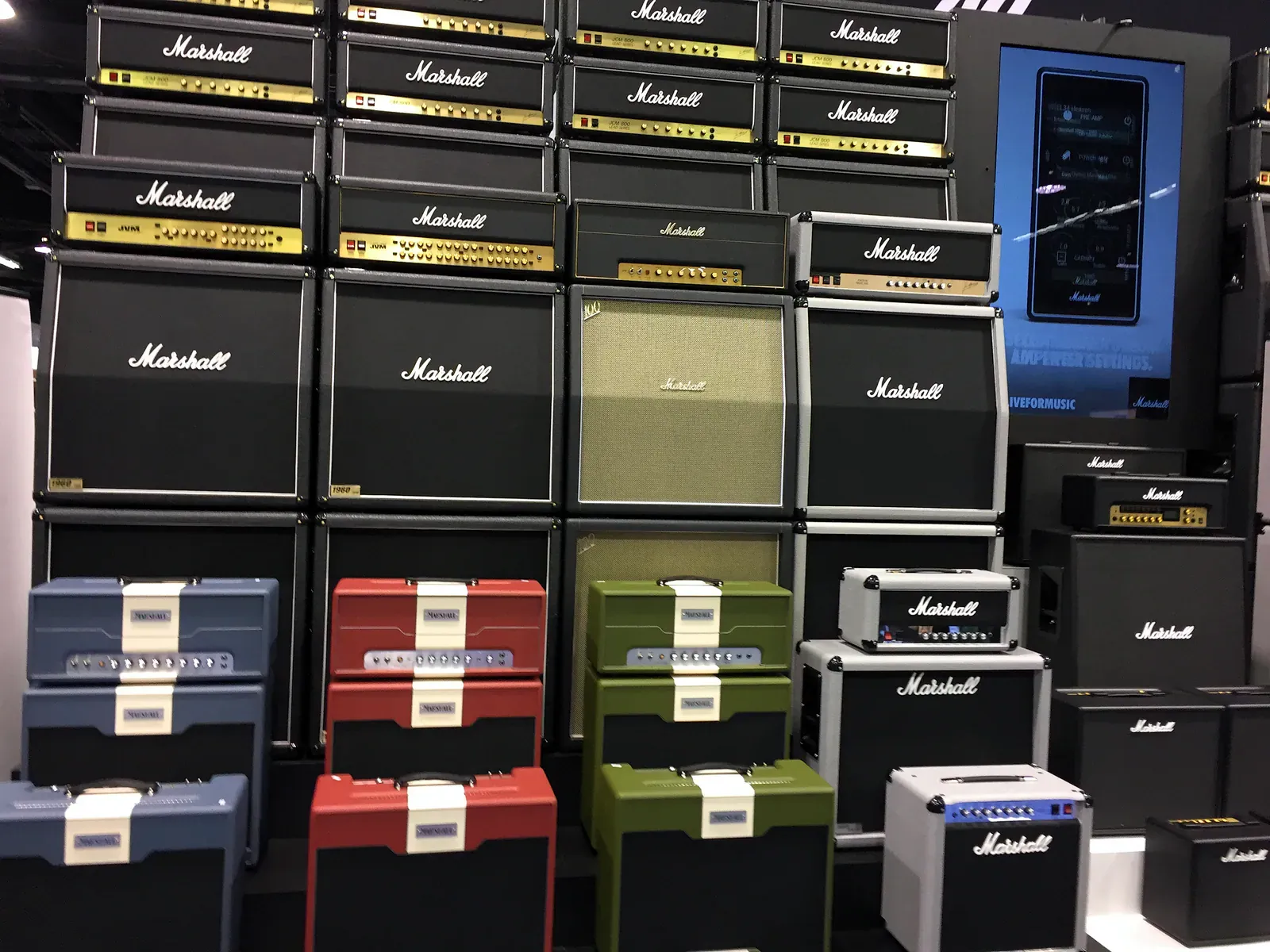
- Marshall stack
The cranked tube amplifier and speaker cabinet that supply metal's roar.
- Gibson SG
Tony Iommi's guitar of choice and a core sound of early metal.
- Gibson Les Paul
Thick sustain for riffs and leads in classic and hard rock.
- Double bass drum kit
Two kick drums or a double pedal drive the speed and gallop of thrash and death metal.
- Rickenbacker 4001 bass
Lemmy's distorted bass turned the bass into a lead voice.
- Floyd Rose tremolo
A locking vibrato bridge for dive bombs and whammy-bar solos.
- Boss HM-2 Heavy Metal pedal
The pedal behind the thick, sawing tone of Swedish death metal.
- Seven-string guitar
Extra low string for downtuned riffs in nu metal, djent and modern metalcore.
Technology that shaped it
- 1962Marshall JTM45
Jim Marshall's first amplifier model began the tradition of loud, overdriven British guitar tone.
- 1977Floyd Rose tremolo
A locking tremolo that keeps guitars in tune through extreme whammy-bar use.
- 1990Ibanez Universe seven-string
Steve Vai's signature model made seven-string guitars available to metal players.
- 1991Pro Tools
Digital multitrack recording raised precision, and later made drum editing and tightly gridded production standard in metal.
- 2008Bandcamp
Direct online sales let small bands release music without labels.
Essential records
- 1970Paranoid
Black Sabbath. Its riffs, doom mood and short songs fixed metal's basic grammar.
- 1980British Steel
Judas Priest. Short, hard-edged songs and a leather-and-chrome image defined classic heavy metal.
- 1980Ace of Spades
Motorhead. Punk speed and metal volume made a bridge between scenes.
- 1982The Number of the Beast
Iron Maiden. Bruce Dickinson's debut with the band set the template for operatic British metal.
- 1986Master of Puppets
Metallica. Complex arrangements and relentless riffs raised thrash into a mainstream art form.
- 1986Reign in Blood
Slayer. Under 30 minutes of speed and aggression that shaped extreme metal.
- 1987Scum
Napalm Death. Blast beats and brief songs launched grindcore.
- 1991Human
Death. Chuck Schuldiner's technical writing pushed death metal toward complex song forms.
- 1992Vulgar Display of Power
Pantera. Heavy, syncopated riffs defined groove metal and 1990s American metal.
- 1994De Mysteriis Dom Sathanas
Mayhem. Its cold, ritualistic sound became the reference for Norwegian black metal.
- 1996Roots
Sepultura. Tribal percussion and Brazilian themes showed that metal could draw on local music.
Scenes
Where it happened
Where and when the sound lived: one bar per city on a shared timeline.
Europe
North America
Latin America
Active scenes
Peak 8, 1990
Industrial Birmingham produced Black Sabbath, Judas Priest and later Napalm Death.
Venom and Neat Records made the north-east a hub of the NWOBHM.
Slayer, Megadeth and early Metallica came out of the LA club scene and Metal Blade.
Exodus, Testament and Metallica's later base made the Bay Area the heart of thrash.
Kreator, Sodom and Destruction built German thrash in the Ruhr region.
Florida's Morrisound Studios recorded Death, Obituary and Morbid Angel.
Sunlight Studio and the Boss HM-2 pedal gave Swedish death metal a buzzsaw tone.
Helvete and Deathlike Silence Productions anchored the second wave of black metal.
Sepultura turned the Brazilian city into a global metal landmark.
At the Gates, In Flames and Dark Tranquillity developed melodic death metal.
Glossary
Terms on this page
A very fast drum pattern in which kick, snare and cymbal hit in rapid alternation.
A slow, heavy, syncopated section designed to make a crowd move.
Black and white face makeup worn by black metal musicians.
Fast drumming on two bass drums, or a double pedal, common in thrash and death metal.
A deep, guttural vocal style used in death metal and its relatives.
The crowd area where fans slam into each other in time to the music.
The new wave of British heavy metal, a movement of young UK bands from about 1979 to 1983.
A technique of resting the picking hand on the strings to produce a tight, chugging sound.
A two- or three-note chord of root and fifth that stays clear under heavy distortion.
A short, repeated guitar phrase that forms the backbone of a song.
Families