Blues rock
Blues rock fuses electric blues with rock volume and long guitar solos. It began in London clubs in the early 1960s and spread to the US, Texas and beyond.
United Kingdom, United States, 1963
Rock family
Born
1963
United Kingdom, United States
Subgenres
2
Documented branches
Links
29
Genres it drew on or shaped
Tempo
90-165 BPMLineage
Family tree
Grew out of
Derived from
- Chicago blues
Derived from
Influenced by
United Kingdom, United States, 1963
Blues rock
Led to (12)
Timeline
Era by era
From the first sparks to today. Select a dot to read the story behind it.
- British blues boom
1962 to 1966
- Power trios and psychedelia
1966 to 1970
- Boogie and Southern jams
1971 to 1982
- Guitar blues revival
1983 to 1999
- Duos, garage and festivals
2000 to 2026
Eras
Moments
- 1 British blues boom, 1962 to 1966
- 2 Power trios and psychedelia, 1966 to 1970
- 3 Boogie and Southern jams, 1971 to 1982
- 4 Guitar blues revival, 1983 to 1999
- 5 Duos, garage and festivals, 2000 to 2026
1962
British blues boom
London clubs and the Bluesbreakers, Yardbirds and Rolling Stones turn Chicago electric blues into loud, young-audience music.
- 1962Blues Incorporated opens at the Ealing ClubAlexis Korner and Cyril Davies give London its first regular electric Chicago-style blues nights.
- 1963John Mayall forms the BluesbreakersMayall builds a band around Chicago-style electric blues that becomes a training ground for British guitarists.
- 1964The Yardbirds record Five Live YardbirdsA Marquee Club set of Chicago blues covers played at rock volume and speed, with Eric Clapton on guitar.
- 1965Paul Butterfield Blues Band debut albumA racially mixed Chicago band takes electric blues to a rock audience on Elektra.
1966
Power trios and psychedelia
Cream, Hendrix and Led Zeppelin stretch the 12-bar form into long solos, feedback and studio effects.
- 1966Blues Breakers with Eric ClaptonThe "Beano" album sets the template of a Les Paul through a cranked Marshall.
- 1966Cream make their debut at WindsorClapton, Jack Bruce and Ginger Baker play their first major gig at the National Jazz and Blues Festival.
- 1966Fuzz Face pedal reaches guitaristsCompact fuzz pedals give lead guitar a sustained, singing distortion.
- 1967Disraeli Gears by CreamIncludes "Sunshine of Your Love" and takes blues rock to the US top five.
- 1967Jimi Hendrix at Monterey PopHendrix plays his US breakthrough set and sets his guitar on fire.
- 1968Peter Green's Fleetwood Mac debut albumPeter Green leads a British blues band to the UK top ten on Blue Horizon.
- 1968Electric Ladyland by The Jimi Hendrix ExperienceA double album that holds "Voodoo Child (Slight Return)" and pushes blues rock into studio psychedelia.
- 1968Cream play their farewell at the Royal Albert HallThe trio breaks up after about two and a half years.
- 1969Led Zeppelin by Led ZeppelinReworks Willie Dixon and Howlin' Wolf blues songs into heavy rock and leads straight to hard rock.
- 1969Woodstock festivalHendrix, Johnny Winter, Canned Heat and Ten Years After play to a mass audience.
- 1970Jimi Hendrix dies in LondonThe death ends the Experience era and Electric Lady Studios opens weeks earlier.
1971
Boogie and Southern jams
Allman Brothers, ZZ Top, Johnny Winter and others turn blues rock into arena and roadhouse music.
- 1971At Fillmore East by The Allman Brothers BandExtended live blues jams recorded in New York become a template for Southern rock.
- 1973Tres Hombres by ZZ TopContains "La Grange" and sets a boogie-driven Texas blues-rock sound.
1983
Guitar blues revival
Stevie Ray Vaughan, Robert Cray and Austin clubs return clean electric blues to a rock audience.
- 1983Texas Flood by Stevie Ray VaughanThe debut revives guitar blues for the MTV era and launches an Austin-centred revival.
- 1986Robert Cray reaches a pop audience with Strong PersuaderThe album crosses over from the blues circuit and wins a Grammy in 1987.
2000
Duos, garage and festivals
The White Stripes and The Black Keys strip blues rock to two players, while festivals and young guitarists keep the genre active.
- 2002The Black Keys debut with The Big Come UpAn Akron guitar and drum duo records lo-fi blues rock in a basement.
- 2003The White Stripes release ElephantIncludes "Seven Nation Army" and puts garage blues rock back on world charts.
- 2011El Camino by The Black Keys"Lonely Boy" turns the duo into arena headliners and reaches a global rock audience.
- 2012Blak and Blu by Gary Clark Jr.The Austin guitarist brings blues rock to a new generation.
Listening path
Start listening
A short path from an easy way in to the deep end. Thumbnails come from YouTube; the player loads only when you press play.
- 01
John Mayall & the Bluesbreakers, 1966
Started the British blues-rock sound: Clapton's guitar tone on a Chicago blues cover.
- 02
Cream, 1967
Took blues rock into the pop charts on a heavy blues riff.
- 03
Jimi Hendrix, 1968
Signature track of the psychedelic blues-rock era with wah-wah and feedback.
- 04
Stevie Ray Vaughan & Double Trouble, 1983
Signature shuffle of the 1980s blues-rock revival.
- 05
The Black Keys, 2011
Showed the modern duo form reaching an arena audience.
Facts
| Family | Rock |
| Origin | United Kingdom, United States |
| Emerged | Early 1960s |
| Status | Active |
| Tempo | 90 to 165 BPM |
| Meter | 4/4 (shuffle or straight feel) |
| Grew out of | British blues, Chicago blues |
| Subgenres | 1 |
Blues rock is a fusion of electric blues with rock instrumentation, volume and a heavy backbeat, built on twelve-bar forms, pentatonic guitar solos and shuffle grooves. It took shape in London and the United States in the early 1960s and became the main route by which blues phrasing entered rock.
Its core lineup is guitar, bass and drums, often with a harmonica or organ added.
Origins
The first step came from London musicians who learned Chicago electric blues from imported records. Alexis Korner and Cyril Davies opened regular blues nights at the Ealing Club in 1962 under the name Blues Incorporated, and players who later formed the Rolling Stones, Cream and other bands passed through. A young audience that knew rock and roll heard Muddy Waters and Howlin’ Wolf songs played at much higher volume.
The British scene was matched by American groups. The Paul Butterfield Blues Band, a racially mixed Chicago group, made its Elektra debut in 1965 and showed that a blues band could play to rock listeners. The musical ingredients were already in place: the twelve-bar form, the shuffle, the bent notes of Chicago guitarists, and the amplified drive of rock and roll.
British blues boom, 1962-1966
John Mayall formed the Bluesbreakers in 1963 and treated the band as a school for guitarists. Eric Clapton joined after leaving the Yardbirds, which had recorded Five Live Yardbirds at the Marquee in 1964, and the Bluesbreakers album with Clapton came out on Decca in 1966. Its sleeve shows Clapton reading the comic Beano, which gave the record its nickname. The guitar sound, a Gibson Les Paul pushed through a Marshall combo amplifier, became the reference tone for British blues players.
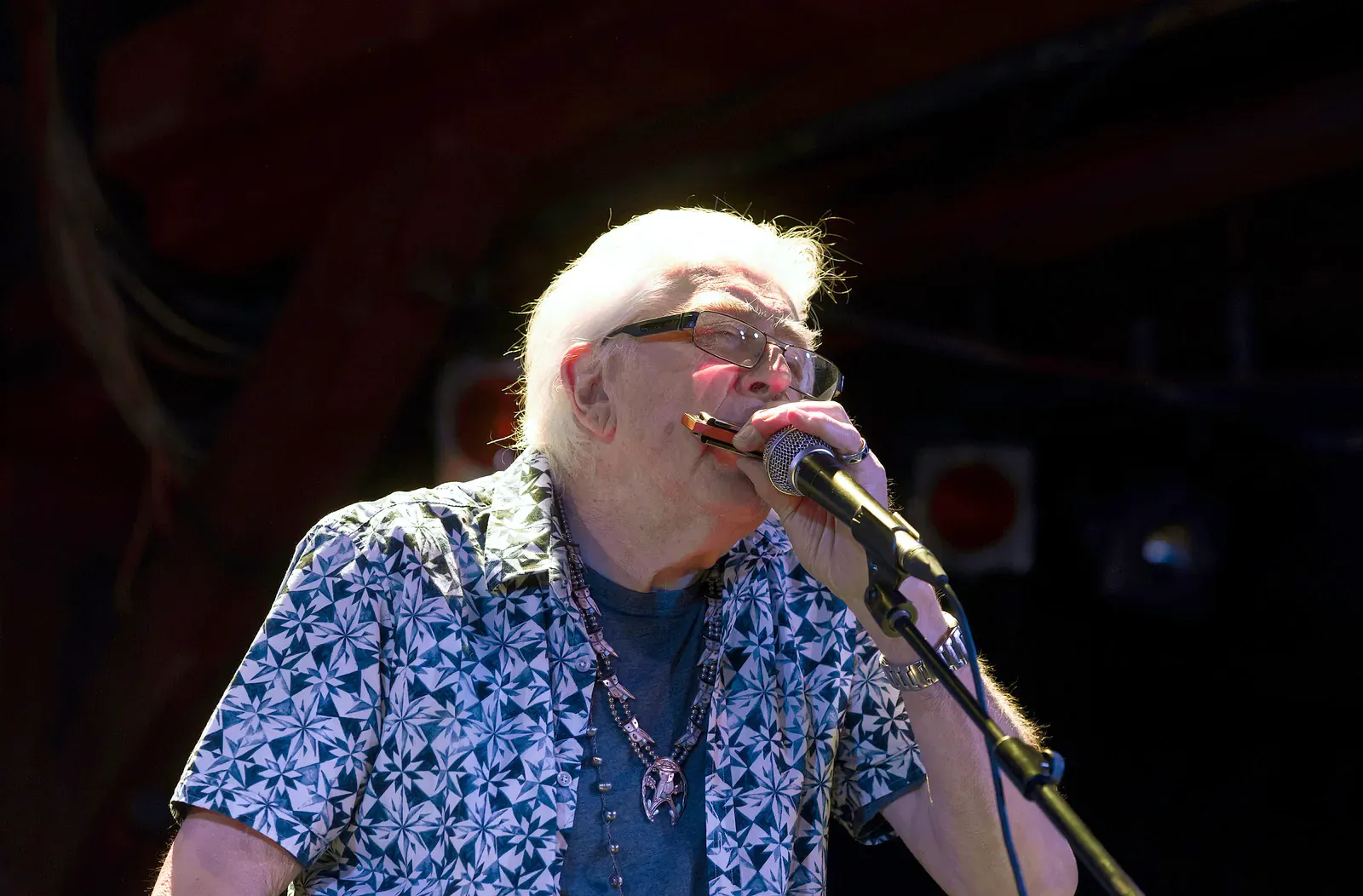
When Clapton left, Peter Green took his place. Green soon formed Fleetwood Mac on Blue Horizon, whose 1968 debut reached the UK top ten and made a blues-only British band a chart act.
Power trios and psychedelia, 1966-1970
Cream formed in 1966 from Clapton, bassist Jack Bruce and drummer Ginger Baker. The three treated each song as a frame for improvisation, with live versions far longer than the studio takes. Disraeli Gears (1967) held “Sunshine of Your Love” and put the band in the US top five. The group played a farewell concert at the Royal Albert Hall in November 1968, after about two and a half years together.
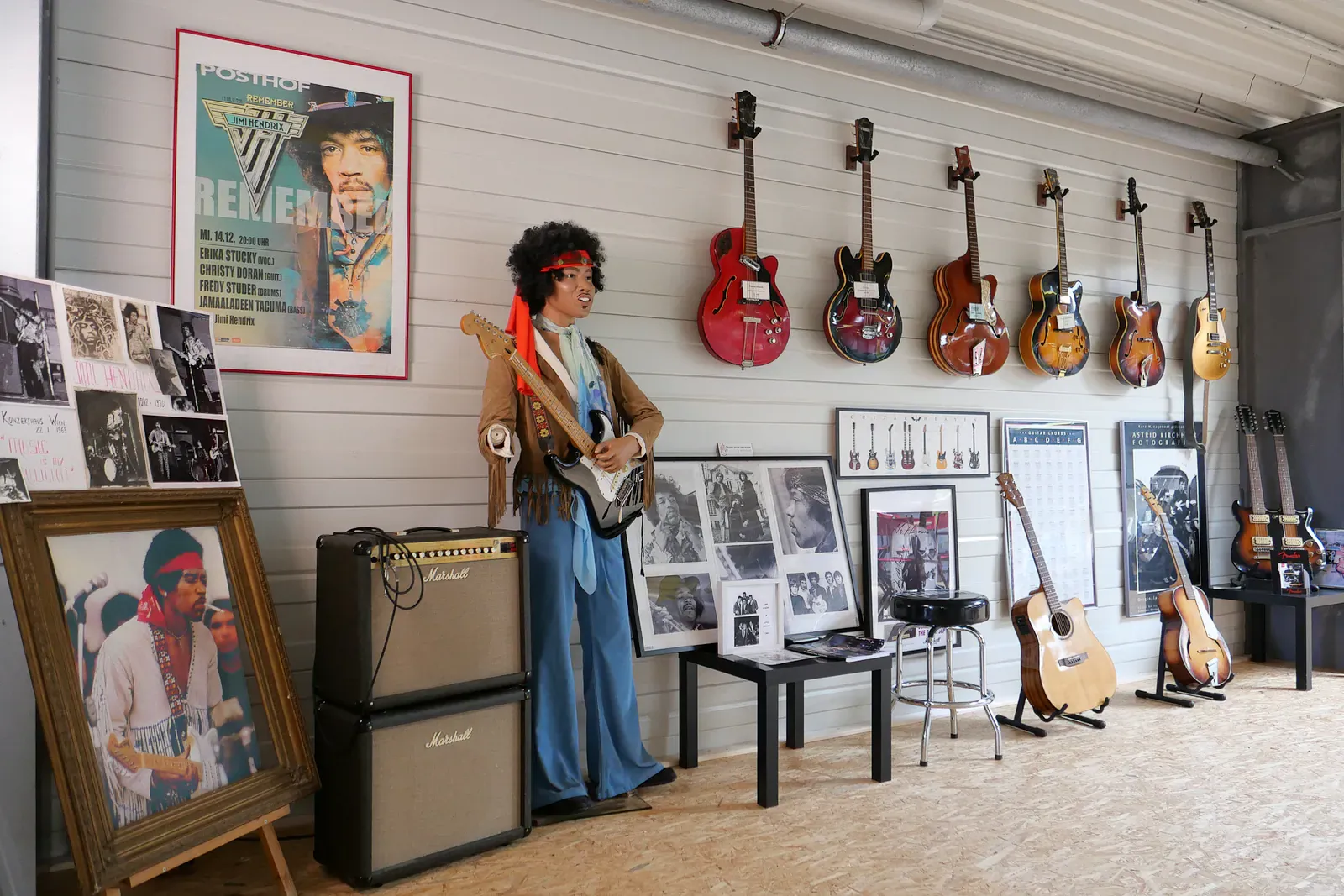
Jimi Hendrix arrived in London in 1966 and formed the Experience with bassist Noel Redding and drummer Mitch Mitchell. His blues roots stayed audible under feedback, wah-wah and studio effects. The 1967 Monterey Pop set made him a US star, and Electric Ladyland (1968) pushed the form deep into psychedelia.
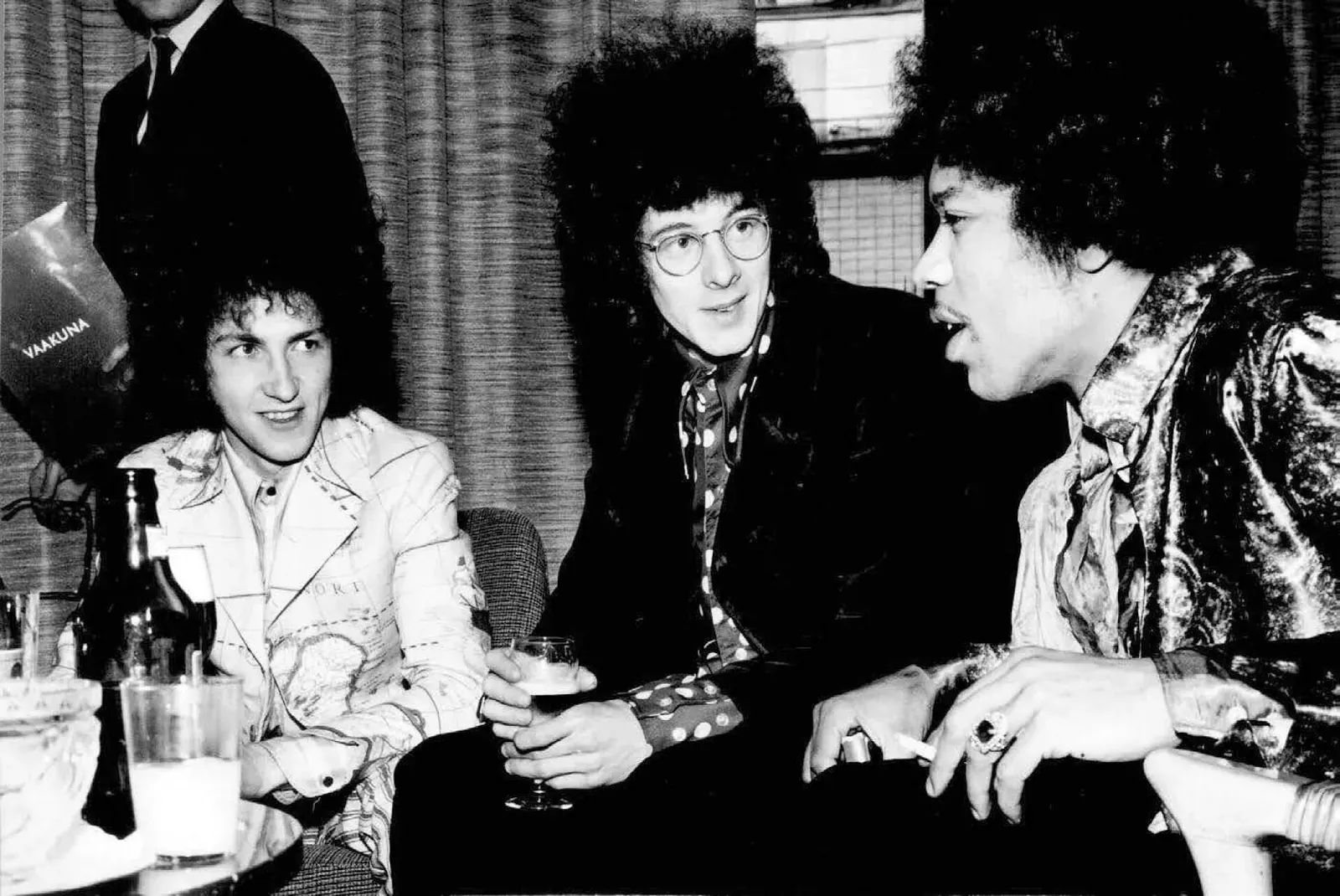
Led Zeppelin’s first album, released in 1969 on Atlantic, reworked songs by Willie Dixon and others into heavy rock. That record marks the point where blues rock and hard rock meet. Later Zeppelin material drew on the same songbook, and a lawsuit over one song led to a credit for Dixon. Psychedelic rock took the same loud guitars in a different direction.
Boogie and Southern jams, 1971-1982
After 1970, the center of the genre moved to American arenas and roadhouses. The Allman Brothers Band recorded At Fillmore East in New York in 1971 for Capricorn, a label based in Macon, Georgia, and the double album set a pattern for long live jams with twin guitars. Johnny Winter, who played Woodstock in 1969, supplied slide guitar and a Texas sound.
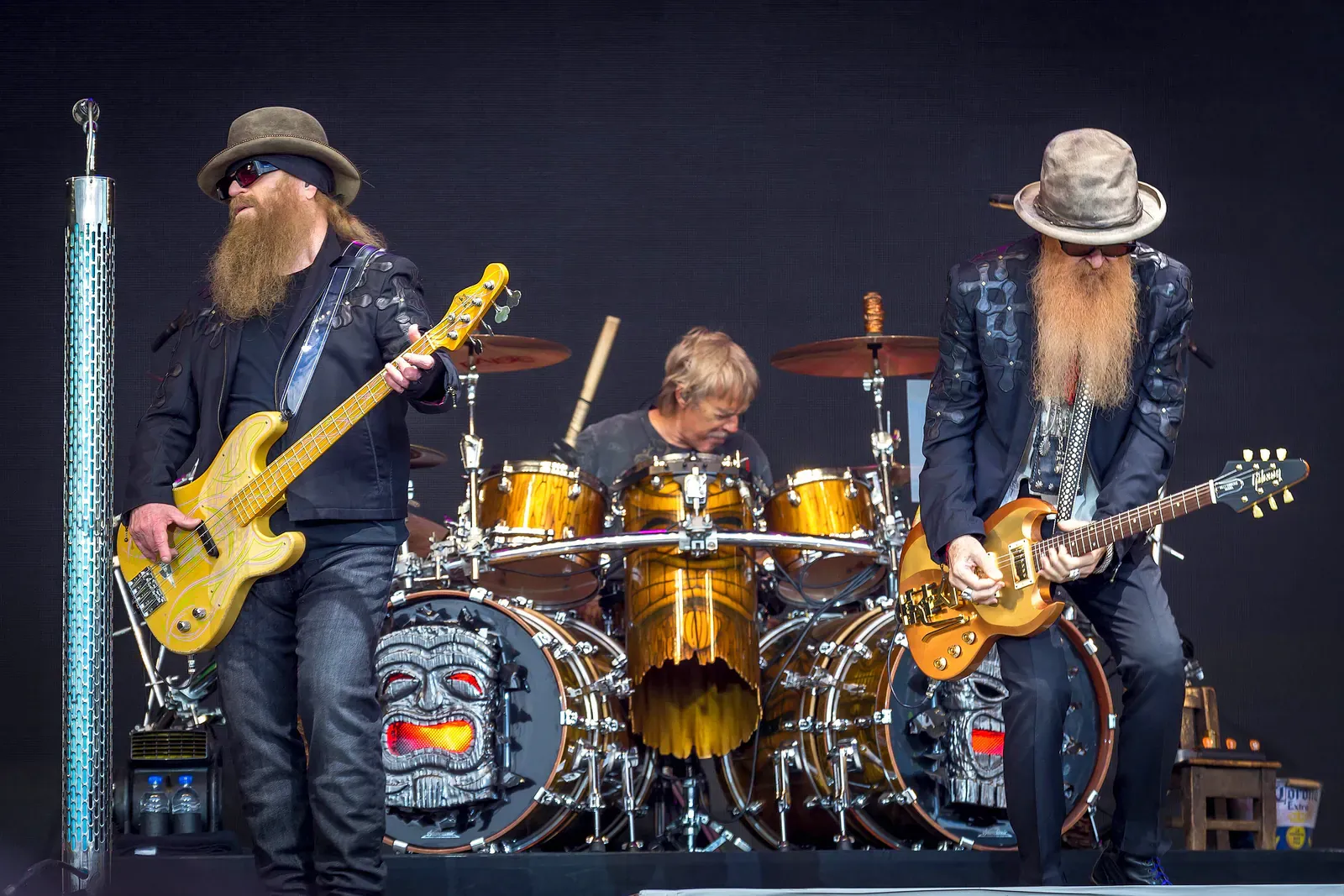
ZZ Top formed in Houston in 1969 and built a three-piece sound around driving boogie. Tres Hombres (1973) contains “La Grange”, a riff built on the boogie shuffle of John Lee Hooker. Their 1983 album Eliminator added synthesizers and music videos for MTV without dropping the blues form.
Guitar blues revival, 1983-1999
Stevie Ray Vaughan and Double Trouble released Texas Flood in 1983. The record came out of the Austin club circuit, where Antone’s, opened in 1975, hosted touring Chicago players, and it brought clean, loud guitar blues to an audience raised on MTV. Vaughan used heavy strings, tuned his guitar down a half step and played a Stratocaster. His death in a helicopter crash in 1990 ended a career of just seven years in the national spotlight.
Robert Cray crossed over in the same decade. His 1986 album Strong Persuader moved from the blues circuit to the pop charts and won a Grammy in 1987.
Duos, garage and festivals, 2000 to present
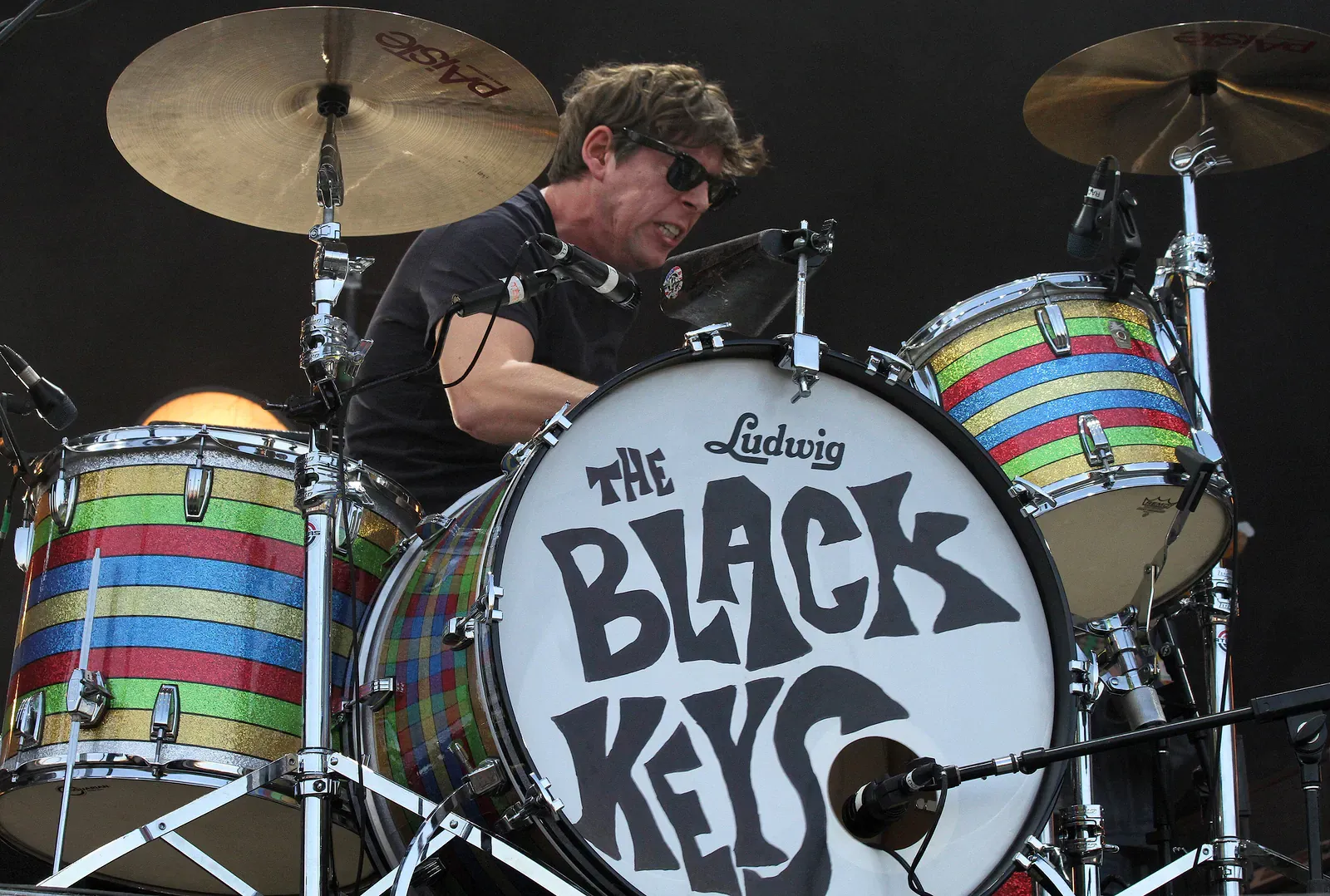
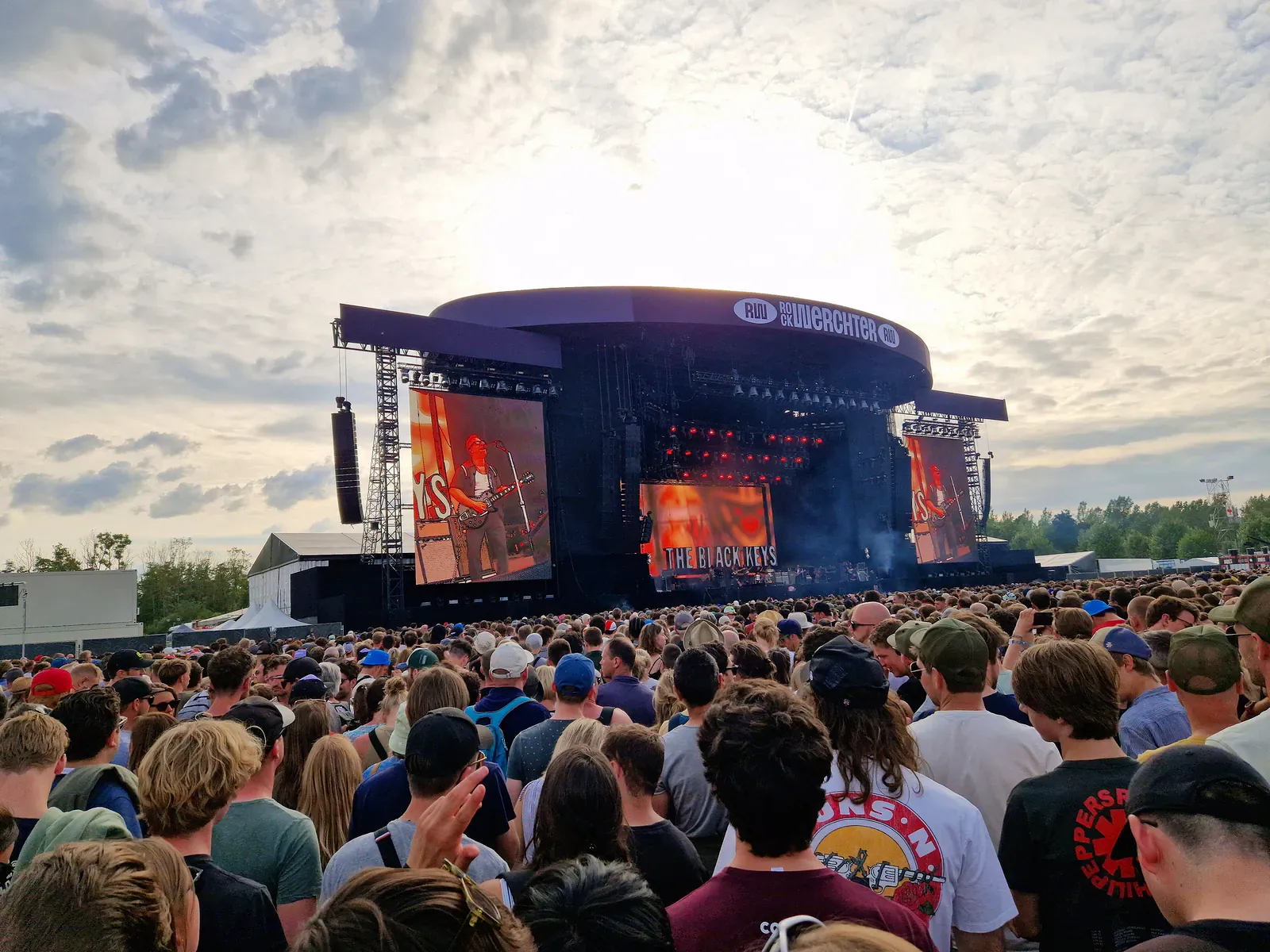
In the 2000s the form shrank to two players. The White Stripes came out of the Detroit garage scene, and their 2003 album Elephant brought “Seven Nation Army” to charts around the world. The Black Keys, a guitar and drum duo from Akron, Ohio, recorded their 2002 debut The Big Come Up in a basement. Their 2011 album El Camino, with “Lonely Boy”, made them arena headliners. Gary Clark Jr. brought the Austin tradition to a new generation with Blak and Blu in 2012. The garage rock revival of the period runs close to this duo style.
Characteristics
Songs rest on the twelve-bar blues or a riff borrowed from it, with a vocal line that the guitar answers. Solos use the minor pentatonic scale and the blues scale, with string bends and vibrato. The rhythm is a shuffle or a straight backbeat, and the performance prizes improvisation over fixed arrangements. The power trio, with its open space for the guitarist, became the genre’s standard format.
Instruments and production
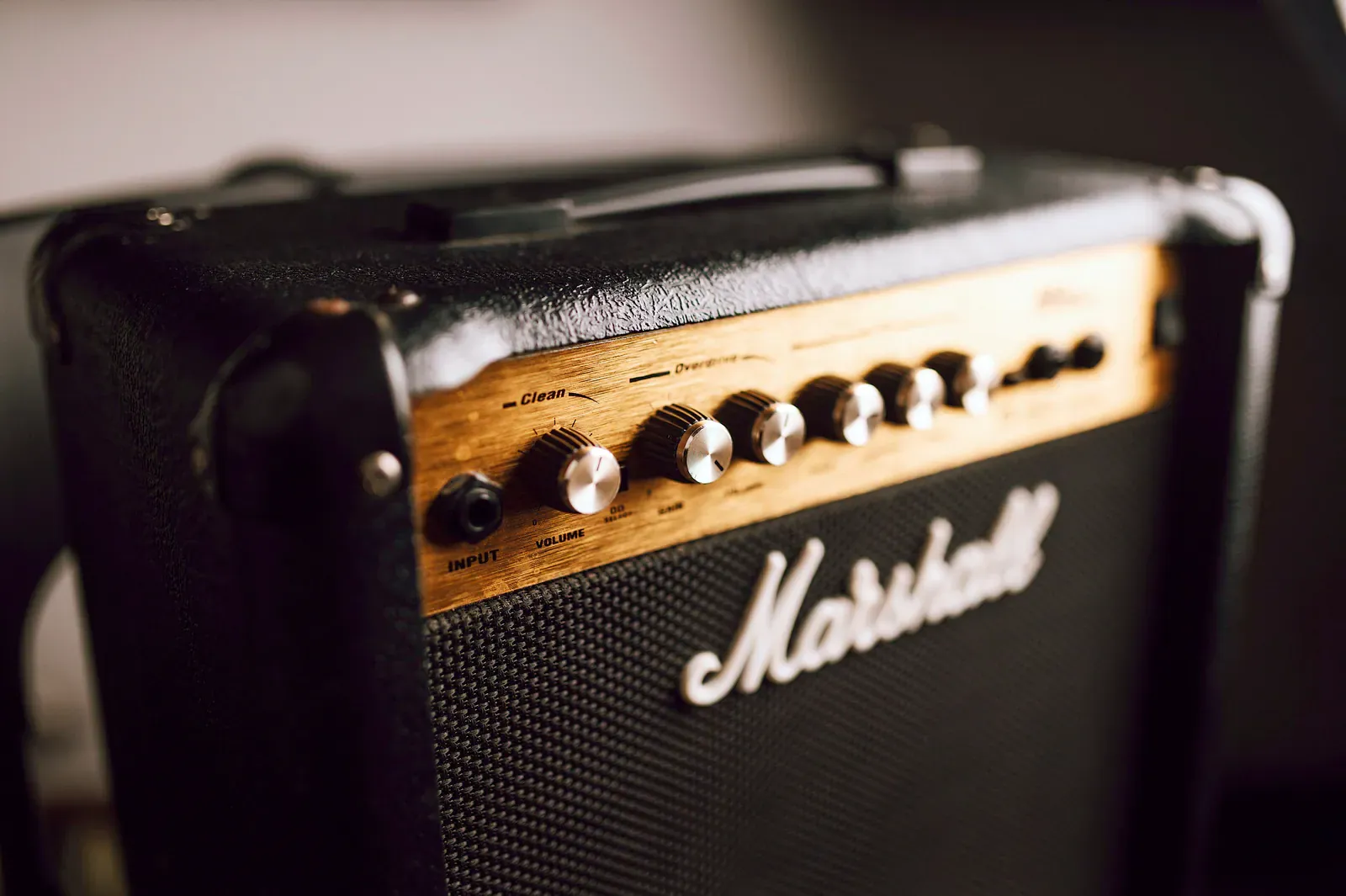
Volume shaped the style. Jim Marshall’s amplifiers, first built in 1962, were loud enough to overdrive naturally, and guitarists found that a cranked tube amp gave a sustained, singing distortion. The Gibson Les Paul with humbucking pickups gave a thick sound, while the Fender Stratocaster gave a sharper one.
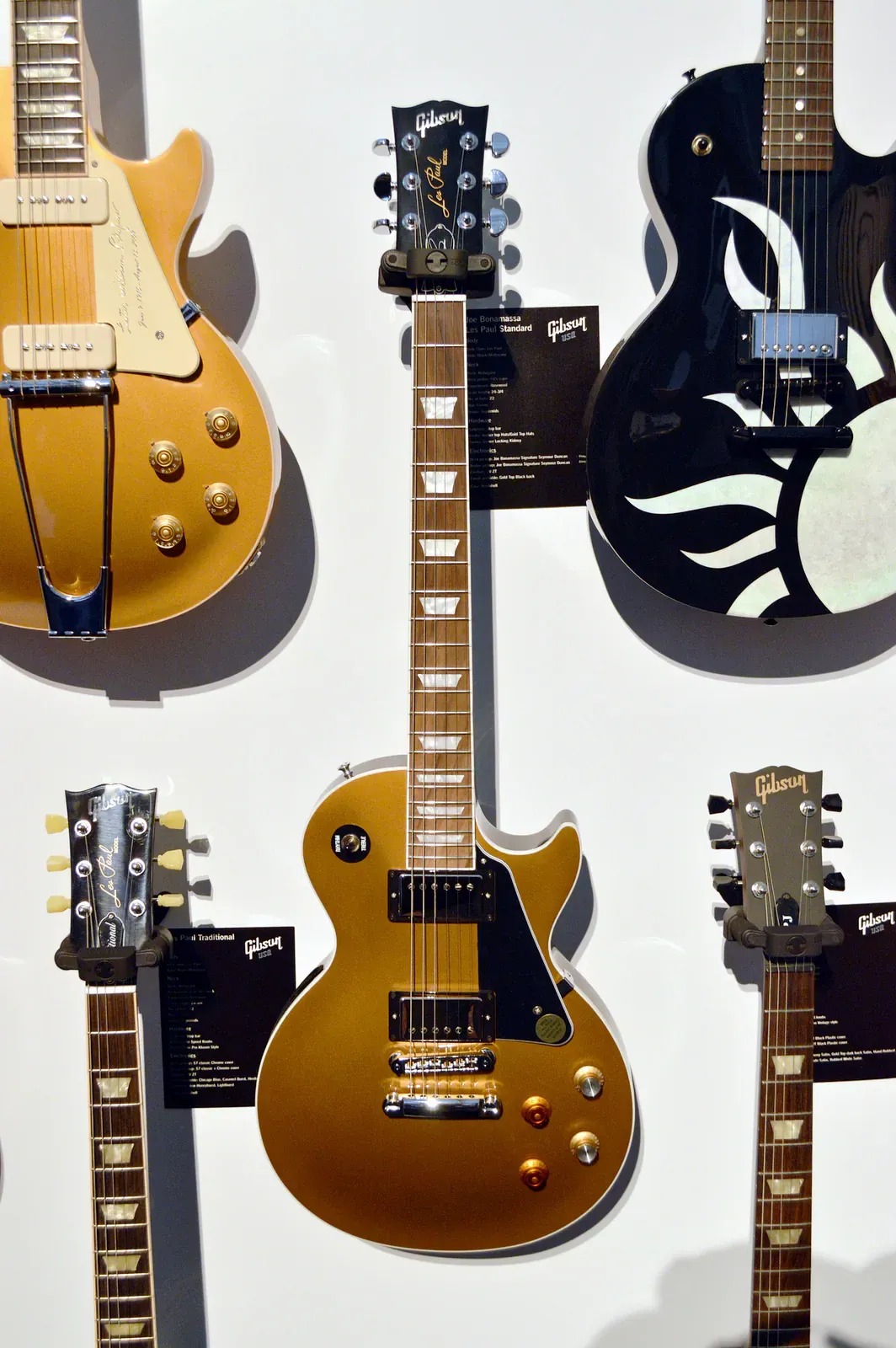
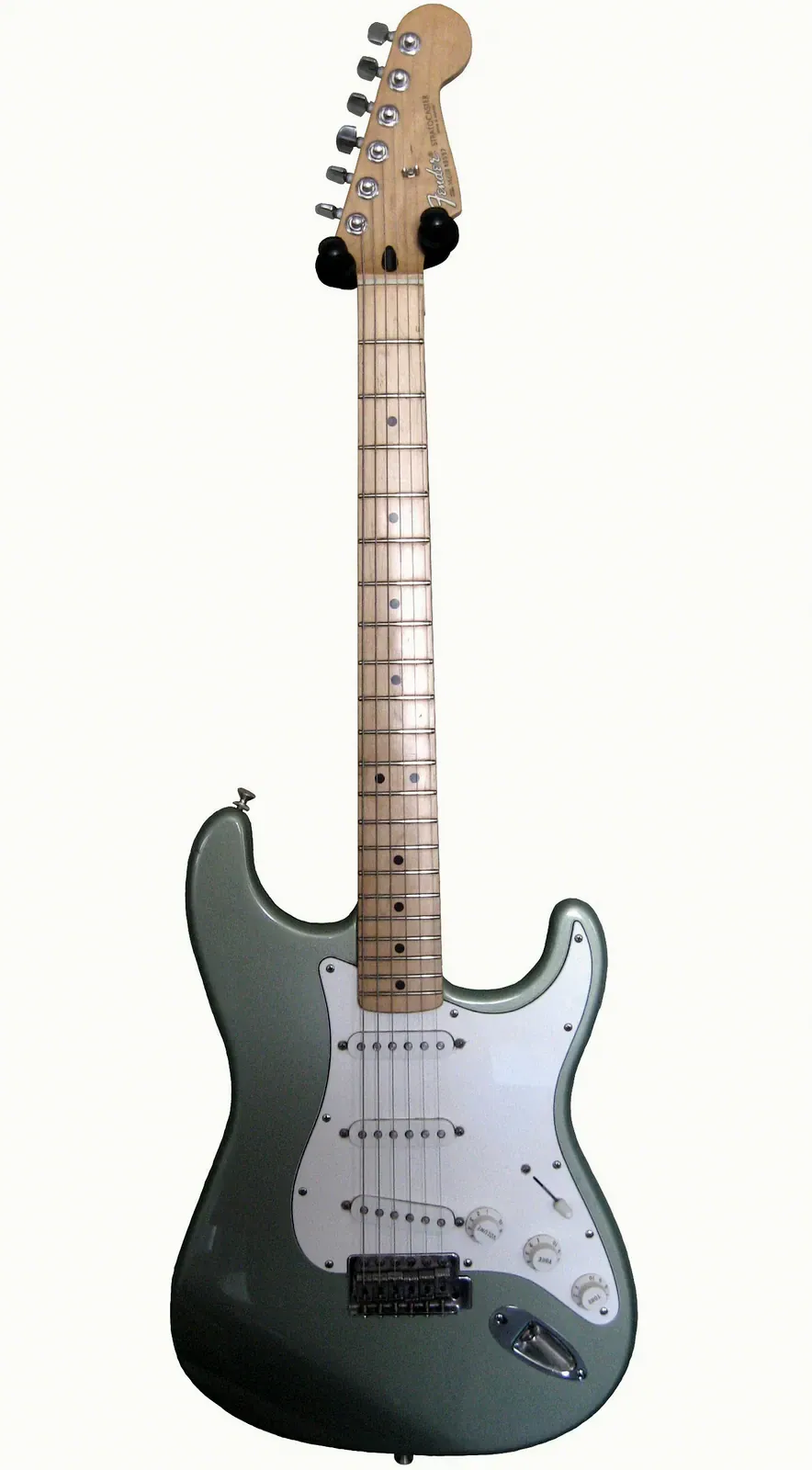
Effects pedals appeared in the mid-1960s. The Fuzz Face of 1966 and the wah-wah pedal of 1967 gave lead playing new colors, and Hendrix used both extensively. Studio records tried to keep the live feel of an amplifier driven hard.
Mainstream success
Disraeli Gears put blues rock in the US top five in 1967, and Led Zeppelin turned it into stadium music within two years. At Woodstock in 1969 Hendrix, Johnny Winter and Ten Years After played to a mass audience, and the film of the festival spread their performances further. ZZ Top took the style to the pop charts in the 1980s, while Texas Flood and Strong Persuader made blues guitar commercial again. The Black Keys and the White Stripes repeated the crossover in the 2000s and 2010s.
Backlash came from two sides. Some blues listeners resented British bands earning more from Black songwriters’ music than the originators, and rock critics tired of the long solo by the late 1970s. Punk and new wave swept away much of the format, and the revival of the 1980s answered the perception that the genre was finished.
Notable recordings
Three records show the genre’s range. “All Your Love” from the 1966 Bluesbreakers album captured Clapton’s guitar tone on a cover of an Otis Rush song. “Voodoo Child (Slight Return)” from Electric Ladyland used wah-wah and feedback to stretch a blues riff. “Pride and Joy” from Texas Flood took the shuffle of Texas blues and gave it a rock punch that stayed in radio rotation for years.
Culture
The genre’s cultural center was the guitarist. Graffiti reading “Clapton is God” appeared in London in 1967 and became a catchphrase for the cult of the guitar hero. Martin Sharp’s psychedelic sleeve for Disraeli Gears placed Cream inside the counterculture’s look. ZZ Top’s beards and sunglasses became a fixed image of Texas blues rock.
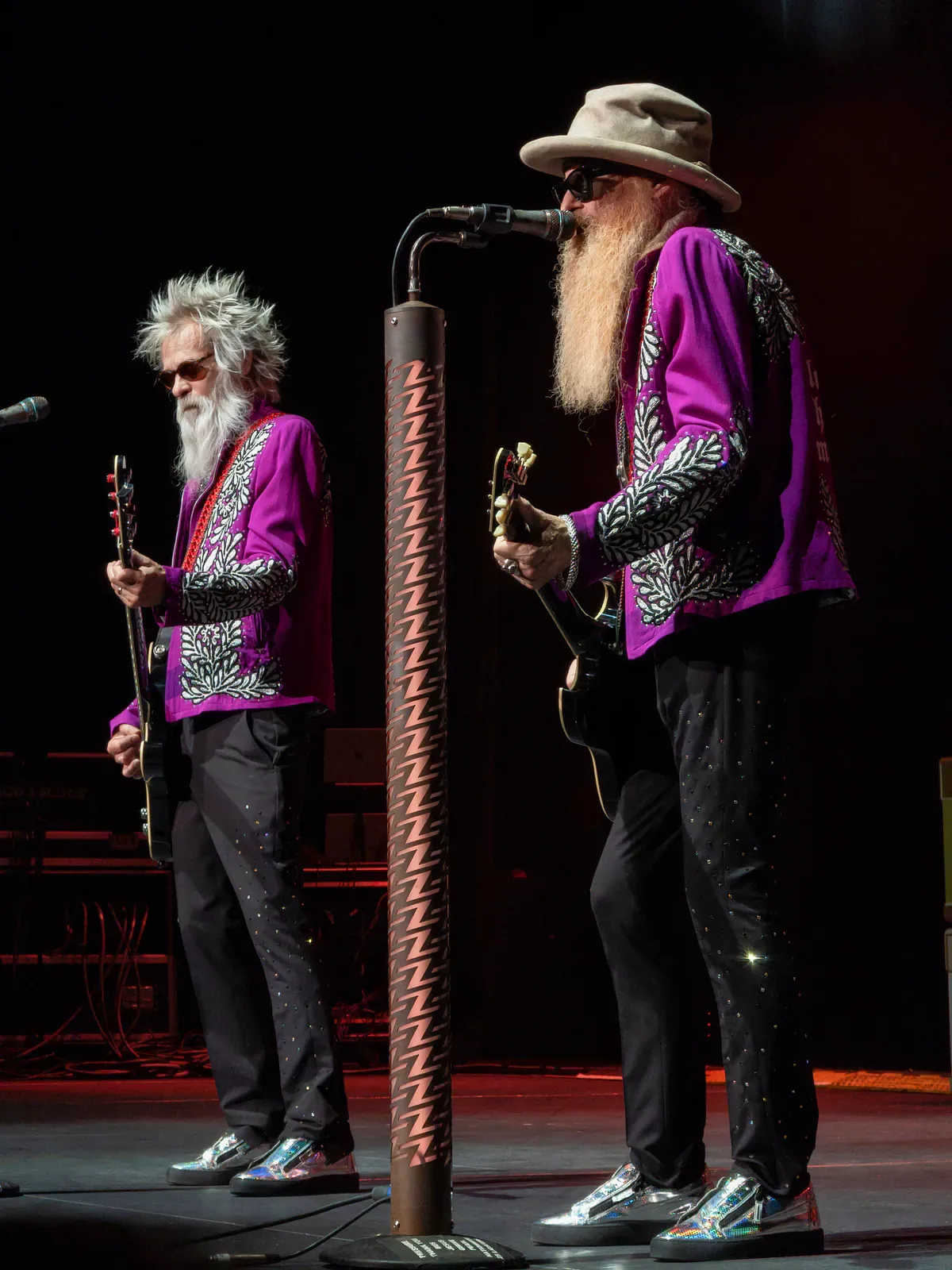
Live performance mattered more than records. Festivals such as Monterey and Woodstock, and rooms such as the Marquee, the Fillmore East and Antone’s, gave the music an audience that valued long solos. The festival remains the genre’s main stage today.
Legacy
Blues rock supplied hard rock, heavy metal and Southern rock with their riffs, their solos and their stage format. Its power trio template survived in later rock, and each revival, from Austin in the 1980s to the duos of the 2000s, returned to the same blues vocabulary. Genres such as electric blues and classic rock share much of its history, and the broader rock family and blues family both claim it.
Misconceptions
Blues rock is not only British. London built the first scene, but the Paul Butterfield Blues Band in Chicago, Canned Heat in California and Johnny Winter in Texas were making their own versions at the same time.
Led Zeppelin did not write all of their early blues songs. Several were rewrites of Willie Dixon and other blues songs, and Dixon’s credit on one of them followed a lawsuit.
The genre did not end around 1970. The Allman Brothers, ZZ Top, Stevie Ray Vaughan, the White Stripes and The Black Keys all scored their biggest successes in later decades, and festivals still book blues-rock acts every year.
Frequently asked questions
What is blues rock?
Blues rock is a style that plays blues forms and guitar phrasing at rock volume and tempo. It started in London in the early 1960s and is built on twelve-bar songs, pentatonic solos and a heavy backbeat.
Who invented blues rock?
No single person did. Alexis Korner, John Mayall and the Yardbirds in London, and the Paul Butterfield Blues Band in Chicago, all pushed Chicago electric blues toward rock in the early and mid-1960s, and Cream and Hendrix then defined the sound.
What is the difference between blues rock and electric blues?
Electric blues is the amplified blues of Chicago and Texas, played within blues traditions. Blues rock takes that style into rock, with louder amps, longer solos and rock bands and audiences.
Which bands are most associated with blues rock?
Cream, the Jimi Hendrix Experience, Led Zeppelin, the Allman Brothers Band and ZZ Top defined the classic period. Stevie Ray Vaughan, the White Stripes and The Black Keys carried the style into later decades.
Sound
Sound sheet
Anatomy of a track
| # | Part | Bars |
|---|---|---|
| 1 | Intro riff | 4 |
| 2 | Verse (12-bar) | 12 |
| 3 | Verse 2 | 12 |
| 4 | Guitar solo | 24 |
| 5 | Verse 3 | 12 |
| 6 | Tag ending | 4 |
Signature sounds
- 12-bar blues form
- Minor pentatonic and blues-scale lead guitar
- Overdriven tube-amp guitar tone
- Riff-based songs with call and response
- Extended live solos
- Power trio or duo format
Drums and percussion
- Ludwig drum kit
Techniques
- String bending and vibrato
- Shuffle rhythm
- Amp overdrive and feedback
- Slide guitar
- Call and response
Keys and modes
Minor pentatonic and blues scale. Basis of most riffs and solos.
E and A. Open-string guitar keys that suit blues rock.
Dominant seventh chords. I7, IV7 and V7 give the 12-bar form its sound.
Tuning
Standard EADGBE, A=440; Stevie Ray Vaughan tuned down a half step
Vocals
Gritty or high, blues-derived lead vocals, often answered by the guitar
Scenes
Where it happened
Where and when the sound lived: one bar per city on a shared timeline.
Europe
North America
Active scenes
Peak 5, 1970
Clubs such as the Marquee and Ealing feed the Bluesbreakers, Yardbirds and Cream.
The Fillmore and Winterland host blues-rooted bands in the psychedelic ballroom circuit.
The Fillmore East and Electric Lady Studios record Hendrix and the Allmans.
Capricorn Records builds a Southern blues-rock label around the Allman Brothers.
The Armadillo World Headquarters and Antone's anchor a long-running Texas blues-rock circuit.
The Black Keys make their first records in Akron basements.
The White Stripes come out of the Detroit garage scene.
Venues and places
London, 1958 to today. Jazz and blues club where the Yardbirds, Cream and the Bluesbreakers built their audience.
Monterey, 1967 to today. Gave Hendrix and Janis Joplin a US audience.
New York, 1968 to today. Hosted the Allman Brothers and other blues-rock live albums.
London, 1871 to today. Site of Cream's farewell in 1968.
Bethel, 1969 to today. A mass audience for Hendrix, Johnny Winter and Ten Years After.
New York, 1970 to today. Hendrix-built studio that recorded rock and blues-rock acts.
Austin, 1975 to today. Austin blues club where Stevie Ray Vaughan came up.
Culture
Culture markers
- "Clapton is God"
Graffiti that appeared in London in 1967 and became a catchphrase for guitar worship.
Slang - Disraeli Gears sleeve
Martin Sharp's psychedelic sleeve painted Cream into the counterculture look.
Artwork - Beards and dark glasses
ZZ Top's long beards and sunglasses became a fixed image of Texas blues rock.
Fashion - The long live solo
Extended improvised solos became the centerpiece of a blues-rock set.
Ritual
Media
Key media
- 1966What's Shakin'
by Various. Elektra compilation that includes Eric Clapton's Powerhouse.
Compilation - 1967Top Gear (BBC Radio 1)
by John Peel. A BBC show that gave sessions to British blues-rock groups.
Radio - 1968Monterey Pop
by D. A. Pennebaker. Documentary of the festival that launched Hendrix in the US.
Film - 1970Woodstock
by Michael Wadleigh. Concert film that brought blues rock to a wider audience.
Film - 2007Clapton: The Autobiography
by Eric Clapton. First-hand account of the British blues-rock years.
Book
Glossary
Terms on this page
The minor pentatonic scale plus a flattened fifth, the basis of most solos.
A driving shuffle rhythm with a repeated bass figure, central to ZZ Top and Status Quo.
A short, reusable guitar phrase borrowed from blues players.
A guitar, bass and drums lineup such as Cream, the Experience and ZZ Top.
A swung, triplet-based groove common in blues-rock drumming and rhythm guitar.
A short chord or riff figure at the end of a chorus that leads back to the start.
The 12-measure chord form (I, IV, V) behind most blues rock songs.
Rock family