Heavy metal
Heavy metal is the riff-driven rock style that emerged in Britain and the US around 1970, led by Black Sabbath, Judas Priest and Iron Maiden.
Birmingham, 1970
Metal family
Born
1970
Birmingham
Subgenres
4
Documented branches
Links
38
Genres it drew on or shaped
Tempo
90-205 BPMLineage
Family tree
Grew out of
Derived from
Derived from
Derived from
Influenced by
Birmingham, 1970
Heavy metal
Led to (19)
Timeline
Era by era
From the first sparks to today. Select a dot to read the story behind it.
- Birmingham and the first records
1968 to 1975
- Judas Priest and the punk years
1976 to 1979
- NWOBHM and the mainstream
1980 to 1989
- Persistence and revival
1990 to today
Eras
Moments
- 1 Birmingham and the first records, 1968 to 1975
- 2 Judas Priest and the punk years, 1976 to 1979
- 3 NWOBHM and the mainstream, 1980 to 1989
- 4 Persistence and revival, 1990 to today
1968
Birmingham and the first records
Blue Cheer, Led Zeppelin, Black Sabbath and Deep Purple fused blues rock and psychedelia into a heavier, louder sound. Black Sabbath's 1970 debut is generally accepted as the first heavy metal album.
- 1968Blue Cheer's Summertime BluesBlue Cheer's January 1968 cover on Vincebus Eruptum is regarded by many as the first true heavy metal recording.
- 1969Led Zeppelin's debut albumReleased in January 1969, it reached No. 10 on the Billboard album chart.
- 1970Black SabbathThe Birmingham band's debut is generally accepted as the first heavy metal album.
- 1970ParanoidBlack Sabbath's second album and its title single, a major UK chart hit the same year.
1976
Judas Priest and the punk years
Judas Priest discarded blues phrasing for a faster, harder sound while punk and disco cut metal's record sales; Motörhead bridged the two scenes.
- 1976Sad Wings of DestinyJudas Priest's second album began the move away from blues influence.
- 1979NWOBHM namedSounds writer Geoff Barton christens the New Wave of British Heavy Metal as punk-inspired bands rebuild the genre.
1980
NWOBHM and the mainstream
Iron Maiden, Saxon and Motörhead reached the British top 10, MTV spread the style in the US, and heavy metal's share of US record sales rose from 8% to 20% between 1983 and 1984.
- 1980British SteelJudas Priest's breakthrough album, with Breaking the Law and Living After Midnight.
- 1980Ace of SpadesMotörhead's single and album, released on Bronze, set a new standard for speed.
- 1981No Sleep 'til HammersmithMotörhead's live album becomes the first by a NWOBHM-era band to top the UK chart.
- 1982The Number of the BeastIron Maiden's third album, the first with Bruce Dickinson.
- 1983US Festival heavy metal dayOzzy Osbourne, Scorpions, Judas Priest and others draw the largest crowd of the three-day California festival.
- 1985US Senate hearing on lyricsThe PMRC hearing in Washington puts rock and metal lyrics under public scrutiny.
1990
Persistence and revival
Faster and more extreme offshoots took the spotlight, while the traditional style carried on through veteran bands such as Judas Priest and Iron Maiden and through later revival acts.
Listening path
Start listening
A short path from an easy way in to the deep end. Thumbnails come from YouTube; the player loads only when you press play.
- 01
Black Sabbath, 1970
The short, fast riff song that made Black Sabbath chart stars.
- 02
Judas Priest, 1980
A compact, riff-led anthem from the album that took Priest to the mainstream.
- 03
Motörhead, 1980
Punk speed and metal weight in under three minutes.
- 04
Iron Maiden, 1982
Dual guitars and Bruce Dickinson's high vocal on a NWOBHM landmark.
- 05
Dio, 1983
Slow, heavy fantasy metal led by Ronnie James Dio's voice.
Facts
| Family | Metal |
| Origin | Birmingham, United Kingdom |
| Emerged | Late 1960s to 1970s |
| Status | Active |
| Tempo | 90 to 205 BPM |
| Meter | 4/4 |
| Grew out of | Hard rock, Blues rock, Psychedelic rock |
| Subgenres | 4 |
Heavy metal is a genre of rock music that developed in the late 1960s and early 1970s, mainly in the United Kingdom and the United States. It is built on distorted guitars, riffs, extended solos, emphatic beats and loudness, with roots in blues rock, psychedelic rock and acid rock.
In the narrow sense used here it names the traditional style, as distinct from the wider metal family and its extreme branches.
Origins
Critics disagree over who played the first heavy metal. Most credit the British bands Led Zeppelin and Black Sabbath, with American writers tending to favour Led Zeppelin and British writers Black Sabbath. Deep Purple, the third band of the so-called unholy trinity, turned toward a heavier sound in late 1969. A smaller group of commentators, mostly American, points to Iron Butterfly, Steppenwolf, Blue Cheer or Vanilla Fudge.
The sound began to coalesce in 1968. Blue Cheer’s January cover of Summertime Blues is considered by many the first true heavy metal recording, Steppenwolf’s Born to Be Wild mentioned “heavy metal thunder”, and Led Zeppelin made their live debut in September. Led Zeppelin’s first album arrived in January 1969 and reached No. 10 on the Billboard chart.

The 1970 releases by Black Sabbath, Black Sabbath and Paranoid, and Deep Purple’s Deep Purple in Rock were decisive in codifying the genre. Black Sabbath’s debut is generally accepted as the first heavy metal album. Birmingham’s noisy, metal-working environment has been credited with shaping their chugging sound, and guitarist Tony Iommi, who lost the ends of two fingers in a workplace accident, tuned down and relied on power chords for easier fretting. Their records came out on Vertigo in Britain. Paranoid, a chart hit that year, set the template of a short, riff-led song.
The label itself was a problem for early metal. Critics used “heavy metal” as a near automatic put-down through the 1970s, and the terms heavy metal, hard rock and acid rock were largely interchangeable for bands of that decade.
Judas Priest and the punk years, 1976-1979
During the mid-1970s Judas Priest helped steer the style away from its blues roots. Their 1976 album Sad Wings of Destiny was an early step toward a sharper, faster sound built on twin guitars and a high voice. Motörhead, formed in London in 1975, brought a punk sensibility and more speed, and was the first important band to straddle the punk and metal divide.
Sales of heavy metal records fell sharply in the late 1970s in the face of punk, disco and mainstream rock. Many younger British bands took from punk its aggression and its do-it-yourself approach, putting out cheap independent releases to small audiences. That underground fed directly into the next phase.
The New Wave of British Heavy Metal and the mainstream, 1980-1989
In 1979 the writer Geoff Barton christened the movement the New Wave of British Heavy Metal. Iron Maiden, Saxon and Def Leppard followed the lead of Judas Priest and Motörhead, reducing the blues content and emphasising fast tempos. By 1980 albums by Iron Maiden, Saxon and Motörhead reached the British top 10, and Judas Priest’s British Steel broke through the same year. In 1981 Motörhead’s live album No Sleep ’til Hammersmith became the first by one of the new bands to top the UK chart.

Iron Maiden’s The Number of the Beast (1982) was their third album and the first with singer Bruce Dickinson. The East London band built its sound on bassist Steve Harris’s songwriting and harmonised guitar leads.
In the United States a scene grew on Los Angeles’s Sunset Strip, where Mötley Crüe, Quiet Riot, Ratt and W.A.S.P. blended 1970s heavy metal with glam theatrics. MTV, which began airing in 1981, boosted sales for bands whose videos it played. Quiet Riot became the first American heavy metal band to top the Billboard chart with Metal Health in 1983, and between 1983 and 1984 heavy metal’s share of all recordings sold in the US rose from 8% to 20%. The “heavy metal day” of the 1983 US Festival, with Ozzy Osbourne, Scorpions, Judas Priest and others, drew the biggest crowd of the three-day event. Kerrang! launched in 1981 and Metal Hammer in 1984, and MTV started Headbangers Ball in 1987.
Persistence and revival, 1990-present
From the late 1980s the metal audience split. Underground fans favoured more extreme sounds and dismissed popular glam as “light metal” or “hair metal”, while thrash metal, death metal and black metal developed their own scenes. Traditional heavy metal continued through veteran bands such as Judas Priest and Iron Maiden and through revival acts that reused the earlier template. The British independent Music for Nations, launched in 1983, was one of the labels that gave the wider rock and metal field a European base.
Characteristics
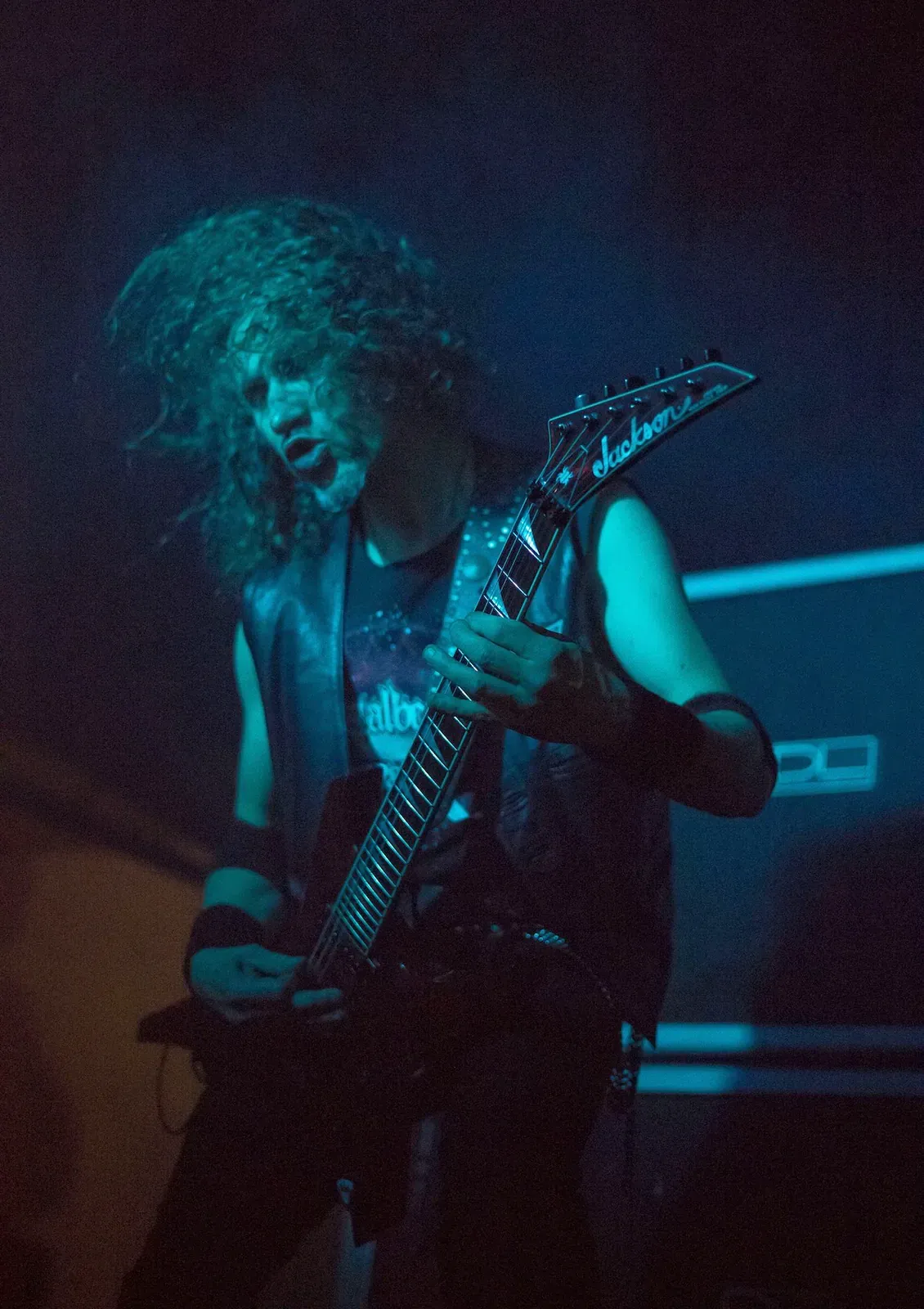
The main groove usually rests on short two- or three-note rhythmic figures of eighth or sixteenth notes, played with palm muting on rhythm guitar. These short cells form riffs, the thematic hooks of a song. Early tempos tended to be slow and ponderous, but by the late 1970s bands used a wide spread of speeds; across the genre’s history tempos range from slow ballads around 60 beats per minute to blast beat speeds near 350.
The power chord is the central harmonic tool. It is built on a root and usually a perfect fifth, and when played low, loud and distorted it adds low frequencies that give the sound its weight. Vocals are typically clean and powerful, often in a high register, and lyrics draw on fantasy, the occult, war and street life.
Instruments and production
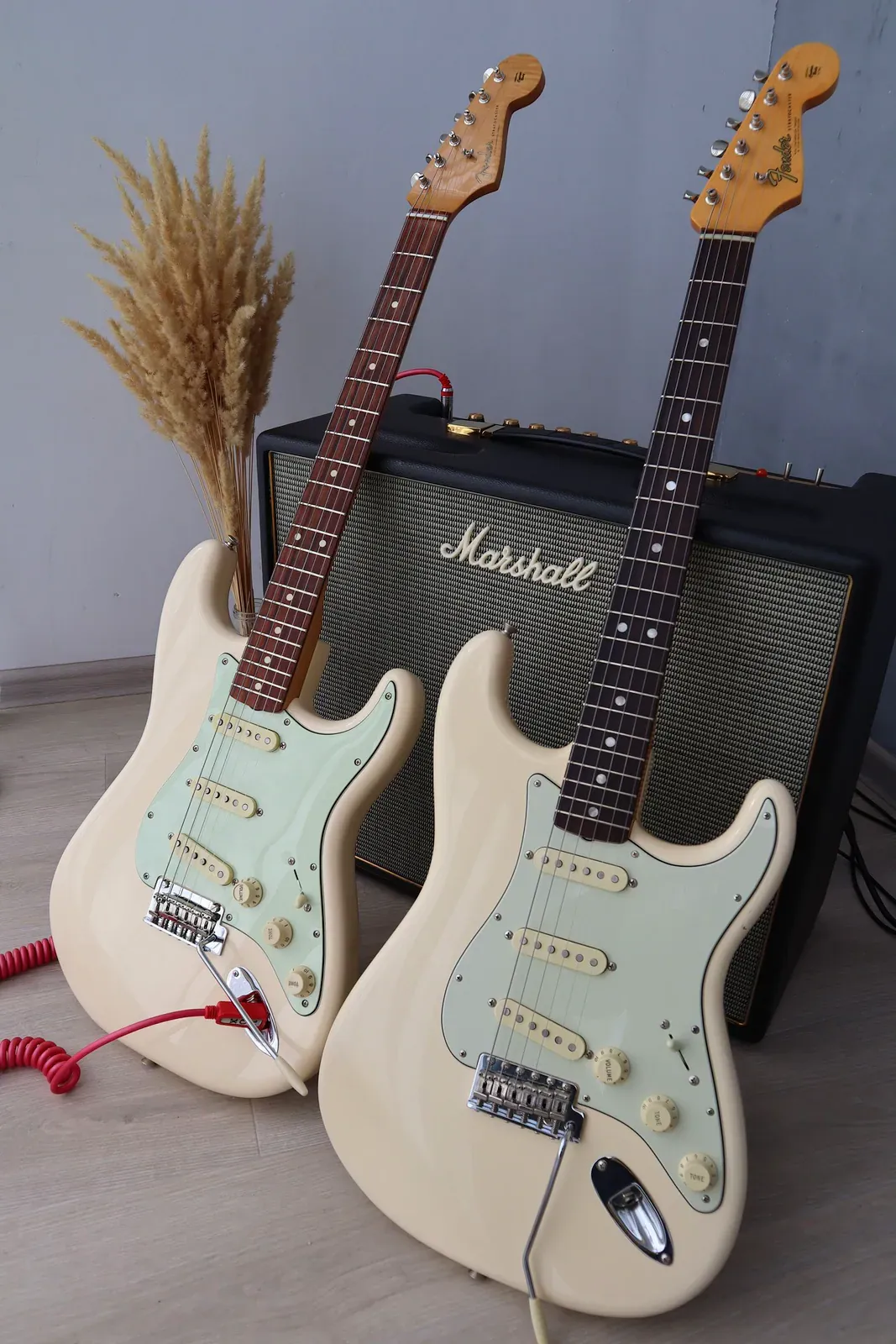
The classic line-up is a lead singer, two guitars, bass and drums. High-gain tube amplifiers, often stacked in walls, supply the overdriven tone, and the twin guitars alternate between rhythm and harmonised leads. Drummers added double bass drum patterns from the late 1970s to drive faster songs.
Notable recordings
Black Sabbath’s Paranoid, released in 1970, shows the form at its leanest: a fast, riff-led song of under three minutes that turned a heavy album band into a singles act. British Steel (1980) stripped Judas Priest’s sound to compact, radio-friendly songs such as Breaking the Law and Living After Midnight.
Motörhead’s Ace of Spades, released on Bronze in November 1980, merged punk speed with metal weight, while Iron Maiden’s The Number of the Beast and Dio’s Holy Diver (1983) represent the dramatic, fantasy-driven wing of the style.
Culture
Down-the-back long hair is considered the most crucial distinguishing feature of metal fashion. The classic fan uniform is ripped blue jeans, black T-shirts printed with band logos, boots, and black leather or denim jackets. Visual imagery matters throughout: logos, album art, stage sets and instrument designs form part of each band’s identity, and by the end of the 1970s fans were known as metalheads or headbangers.

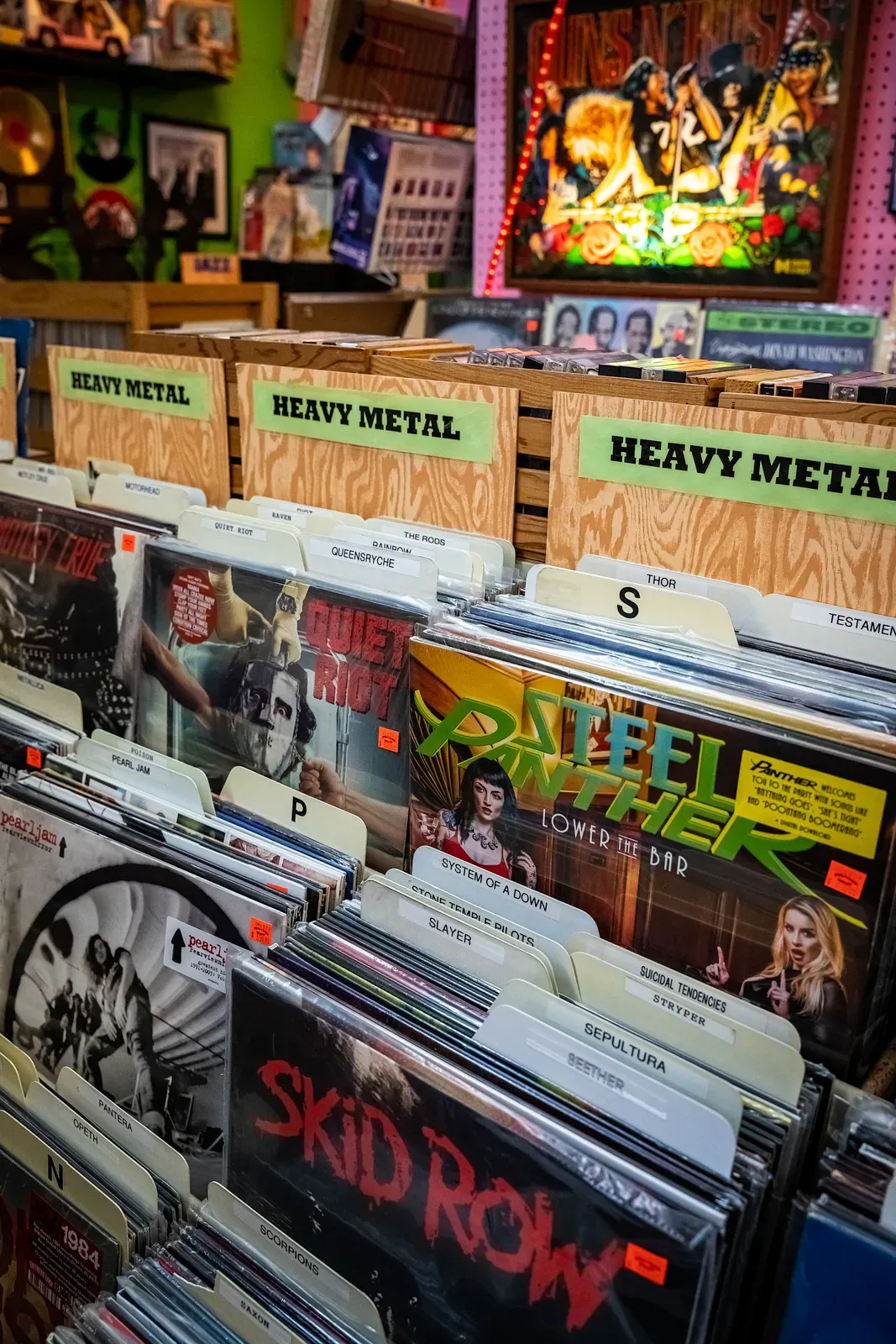
The genre has also faced public controversy. In 1985 a US Senate hearing put rock and metal lyrics under scrutiny, part of a long debate over the occult and violent imagery associated with the style.
Legacy
Heavy metal gave rise to a family of subgenres, among them thrash, death, black, doom and power metal, and its guitar techniques and visual codes shaped much of later rock. Its twin-lead harmonies, power-chord riffs and high-register vocals remain the reference point for what “traditional” metal sounds like.
Misconceptions
The first myth is that heavy metal and hard rock are separate from the start. In the 1970s the two terms were largely synonymous, and a 1983 reference work could call Aerosmith the top American heavy metal band of the mid-1970s; the split between the styles came later.
The second is that metal has always been fast. Early heavy metal tended toward slow, ponderous tempos, and speed grew through the late 1970s as Judas Priest and Motörhead pushed it and the new wave of British bands followed.
The third is that metal is only about the occult. Black Sabbath used occult themes and horror imagery, but the genre’s lyrics range across fantasy, war, aggression and street life.
Frequently asked questions
What is heavy metal music?
Heavy metal is a rock genre that developed around 1970 in the UK and US, built on distorted guitars, riffs, power chords, solos and loud, emphatic drumming. Black Sabbath, Judas Priest and Iron Maiden are its best-known traditional bands.
Who started heavy metal?
There is no single founder. Black Sabbath and Led Zeppelin are most often credited, with Deep Purple as the third name in the trio, and Black Sabbath’s 1970 debut is generally accepted as the first heavy metal album.
What is the difference between heavy metal and metal?
Metal is the umbrella term for the whole family, including thrash, death and black metal. Heavy metal in the narrow sense is the traditional style that came before those offshoots.
How fast is heavy metal?
Traditional heavy metal songs typically sit between roughly 90 and 205 beats per minute, from slow, heavy tracks to fast gallops, though the wider metal family spans from about 60 to well over 300.
What does NWOBHM mean?
NWOBHM stands for the New Wave of British Heavy Metal, a movement from about 1979 in which Iron Maiden, Saxon, Def Leppard and others revived heavy metal with faster tempos and punk energy.
Sound
Sound sheet
Anatomy of a track
| # | Part | Bars |
|---|---|---|
| 1 | Intro riff | 8 |
| 2 | Verse | 16 |
| 3 | Chorus | 8 |
| 4 | Guitar solo | 16 |
| 5 | Final chorus and outro | 16 |
Signature sounds
- Distorted power-chord riffs
- Harmonised twin lead guitars
- Galloping palm-muted rhythm guitar
- Clean high-register vocals
Drums and percussion
- Double bass drum kit
Techniques
- Palm muting
- Twin-guitar harmony
- Power chords
- Galloping rhythm
Keys and modes
Natural minor. Dark minor riffs dominate, with the tritone and Phrygian color used for menace.
Dorian. Minor mode with a brighter sixth, common in solos and melodic lines.
Tuning
Mostly E standard; Black Sabbath tuned lower for a heavier tone.
Vocals
Clean, high-register and powerful singing, with fantasy, occult or street-life lyrics.
Scenes
Where it happened
Where and when the sound lived: one bar per city on a shared timeline.
Europe
North America
Active scenes
Peak 3, 1978-2025
Home of Black Sabbath and Judas Priest; its factory-town setting is often credited with shaping the sound.
Base of Iron Maiden and Motörhead, and of the Sounds and Kerrang! press.
The Sunset Strip clubs produced the American glam metal wing of the style.
Venues and places
London, 1964 to today. Soho club where NWOBHM bands played early shows.
London, 1932 to today. Concert hall named in Motörhead's No Sleep 'til Hammersmith.
Culture
Culture markers
- Denim and leather
Ripped jeans, black T-shirts, boots and leather or denim jackets are the classic fan uniform.
Fashion - Long hair
Down-the-back long hair is the most crucial distinguishing feature of metal fashion.
Fashion - Headbanging
Nodding the head to the beat, which gave fans the nickname headbangers.
Slang - Band logos and cover art
Logos, album art and stage sets form a large part of a band's image.
Artwork
Media
Key media
- 1981Kerrang!
by Spotlight Publications. British magazine devoted to heavy metal.
Zine - 1984Metal Hammer
by Various. Magazine devoted to the genre, launched in the mid-1980s.
Zine - 1987Headbangers Ball
by MTV. MTV show devoted exclusively to heavy metal videos.
Radio
Glossary
Terms on this page
Fan nickname for metal fans, in use from the late 1970s.
New Wave of British Heavy Metal, the punk-influenced British revival from about 1979.
Two- or three-note chord built on a root and fifth, played with distortion for weight.
Short repeated guitar figure that anchors a song.
Two guitarists playing harmonised melodies or trading solos.
Metal family