Hard rock
Hard rock is riff-driven, amplified rock that grew from blues rock and psychedelia in the US and UK in the mid-1960s and filled arenas in the 1970s and 80s.
United States, United Kingdom, 1966
Rock family
Born
1966
United States, United Kingdom
Subgenres
6
Documented branches
Links
47
Genres it drew on or shaped
Tempo
80-175 BPMLineage
Family tree
Grew out of
Derived from
Derived from
- Acid rock
Derived from
Derived from
Derived from
United States, United Kingdom, 1966
Hard rock
Led to (26)
Timeline
Era by era
From the first sparks to today. Select a dot to read the story behind it.
- Blues riffs and loud amps
1964 to 1968
- Zeppelin and Purple
1969 to 1975
- Arena rock and new bands
1975 to 1979
- Back in Black to MTV
1980 to 1990
- Grunge shifts the mainstream
1991 to 1999
- Reunions and retro revival
2000 to today
Eras
Moments
- 1 Blues riffs and loud amps, 1964 to 1968
- 2 Zeppelin and Purple, 1969 to 1975
- 3 Arena rock and new bands, 1975 to 1979
- 4 Back in Black to MTV, 1980 to 1990
- 5 Grunge shifts the mainstream, 1991 to 1999
- 6 Reunions and retro revival, 2000 to today
1964
Blues riffs and loud amps
British groups turn blues and garage rock into louder, distorted riff music. The Kinks' 1964 single is later called a blueprint for the sound.
- 1964The Kinks release You Really Got MeDave Davies cuts the cone of his small amp for a fuzzy riff; the song reaches number one in the UK.
- 1965Marshall introduces the 1959 Super LeadThe 100-watt Plexi head is taken up by Townshend, Hendrix, Clapton and Page.
- 1968Deep Purple form in LondonJon Lord's organ and Ritchie Blackmore's guitar shape the band's heavy sound.
- 1968Led Zeppelin form in London from the YardbirdsPage, Plant, Jones and Bonham start rehearsing as a four-piece.
1969
Zeppelin and Purple
Led Zeppelin and Deep Purple set the template of riff, wailing singer and long solos, and fill concert halls. The genre and early heavy metal overlap.
- 1969Led Zeppelin's debut album on AtlanticReleased in January 1969 after what was then the largest advance for a new group.
- 1970Deep Purple in RockThe Mark II line-up turns the band from orchestral rock to full-force hard rock.
- 1971Led Zeppelin IVThe untitled fourth album becomes one of the best-selling records of all time.
- 1972Deep Purple release Machine HeadRecorded in Switzerland after the Montreux Casino fire; it holds Smoke on the Water and Highway Star.
- 1972Aerosmith sign to ColumbiaThe Boston band signs for a reported 125,000 dollars.
- 1973AC/DC form in SydneyBrothers Angus and Malcolm Young start the band in November.
- 1974Kiss release their debut on CasablancaThe New York band signed in November 1973 and issued the album in February 1974.
1975
Arena rock and new bands
Aerosmith, Kiss, AC/DC and Van Halen build national and global audiences from Boston, New York, Sydney and Los Angeles.
- 1975Kiss release Alive!The live album gives the band its first top 40 single and is credited with rescuing Casablanca.
- 1975Aerosmith release Toys in the AtticTheir best-selling US studio album makes them international stars.
- 1977Warner Bros. sees Van Halen at the StarwoodProducer Ted Templeman and executive Mo Ostin bring the band to Warner.
- 1978Van Halen's debut album introduces finger-tappingEddie Van Halen's solo Eruption brings two-handed tapping to a wide audience.
- 1979AC/DC release Highway to HellThe breakthrough that pushes the band into the top ranks of hard rock.
1980
Back in Black to MTV
Festivals, magazines and MTV carry hard rock into its commercial peak, from Back in Black to Appetite for Destruction and the glam metal wave.
- 1980AC/DC release Back in BlackOne of the best-selling albums worldwide, number one in the UK.
- 1980John Bonham dies and Led Zeppelin disbandBonham dies on 25 September; the band announces its end on 4 December.
- 1980First Monsters of Rock at Castle DoningtonRainbow headline a one-day festival that runs for about 15 years.
- 1981Kerrang! launches from SoundsA one-off heavy metal special becomes a monthly, then weekly magazine.
- 1984Van Halen's 1984 and the single JumpA keyboard-led song becomes the band's only US number one.
- 1986Aerosmith and Run-D.M.C. remake Walk This WayThe collaboration reaches number 4 in the US and restarts Aerosmith's career.
- 1987Guns N' Roses release Appetite for DestructionMTV airplay of Welcome to the Jungle drives a debut that sells over 30 million copies.
around 1991
Grunge shifts the mainstream
Grunge and Britpop displace hard rock on radio and television. Older acts keep touring.
- 1991Grunge and Britpop push hard rock off the mainstreamGrunge bands such as Nirvana and Pearl Jam take over radio and television.
2000
Reunions and retro revival
AC/DC, Aerosmith and Van Halen sustain stadium careers, and younger bands such as Wolfmother and The Sword revive 1970s sounds.
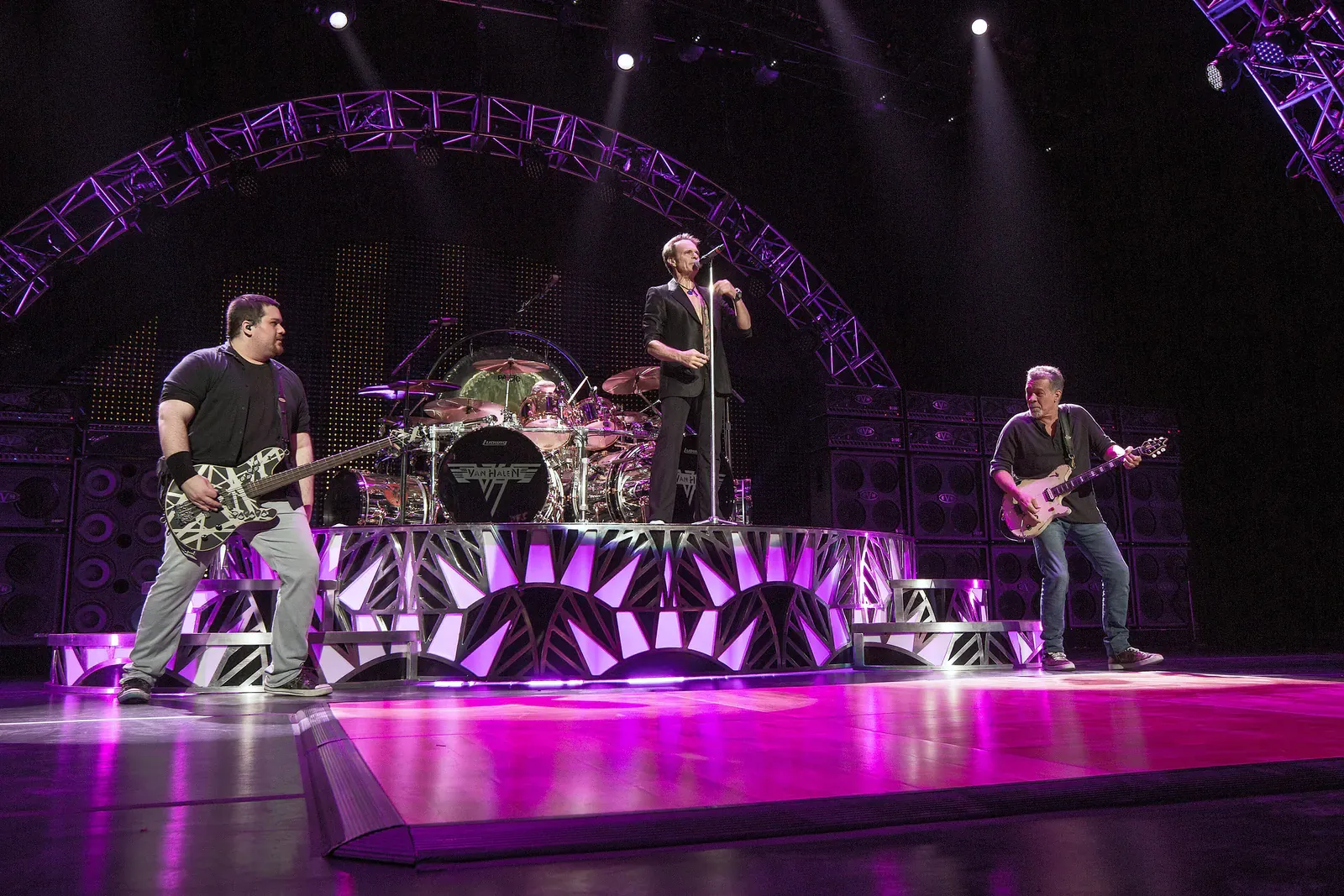
- 2006Van Halen reunite with David Lee RothWolfgang Van Halen joins on bass as the old stars return to stadiums.
Listening path
Start listening
A short path from an easy way in to the deep end. Thumbnails come from YouTube; the player loads only when you press play.
- 01
AC/DC, 1979
A riff-and-chorus song from the breakthrough album, the last with singer Bon Scott.
- 02
Deep Purple, 1972
Built on a four-note blues-scale riff; from Machine Head, recorded after the Montreux Casino fire.
- 03
Guns N' Roses, 1987
MTV rotation of this track broke Appetite for Destruction and revived raw hard rock.
- 04
Led Zeppelin, 1969
A heavy riff and wailing vocal; the opening track of Led Zeppelin II.
- 05
The Kinks, 1964
The distorted-guitar riff called a blueprint for hard rock.
Facts
| Family | Rock |
| Origin | United States, United Kingdom |
| Emerged | Mid to late 1960s |
| Status | Active |
| Tempo | 80 to 175 BPM |
| Meter | 4/4 |
| Grew out of | Blues rock, Psychedelic rock, Acid rock, Garage rock, Rock and roll |
| Subgenres | 6 |
Hard rock is loud, amplified rock music built on distorted guitar riffs, a heavy backbeat and a powerful lead vocal. It formed in the United States and Britain in the mid-1960s out of blues rock, psychedelic rock and garage rock, and reached its commercial peak in the 1970s and 1980s.
Origins
Hard rock came from musicians who took the blues and early rock and roll and played them louder than the amplifiers were designed for. Its parent styles were blues rock, psychedelic rock, acid rock and garage rock, and the line to heavy metal stayed blurred for years: the two share early bands, and the music press used the terms loosely.
The usual starting point is a single record. The Kinks released “You Really Got Me” in 1964, and its fuzzy riff came from guitarist Dave Davies cutting the cone of his small amplifier. The song reached number one in the UK and is later named as a blueprint for the genre. A year later Marshall introduced the 100-watt 1959 Super Lead, nicknamed the Plexi, which Pete Townshend, Jimi Hendrix, Eric Clapton and Jimmy Page took up and which fixed the loud, driven guitar tone of the period.
London and the blues, 1964-1968
London’s Marquee Club and the Wardour Street venues around it hosted the groups that turned blues into riff music. The key technical step was volume: stacked Marshall cabinets, the arrangement pioneered by Townshend and John Entwistle of The Who, gave guitar a physical presence that earlier amplifiers could not.

The next generation formed at the end of the period. Deep Purple came together in London in 1968, and Led Zeppelin began rehearsing the same year as a four-piece of Jimmy Page, Robert Plant, John Paul Jones and John Bonham, formed from the Yardbirds.
Zeppelin and Purple, 1969-1975
Led Zeppelin’s debut album appeared on Atlantic in January 1969, after what was then the largest advance paid to a new group. The signing made Atlantic Records the label of Led Zeppelin. Zeppelin fused blues with heavy distortion and Plant’s wailing vocal, and the pattern of riff, high singer and extended solo became the template other bands copied. The untitled fourth album of 1971 sold some 37 million copies.
Deep Purple’s own turn came with Deep Purple in Rock in 1970, when the Mark II line-up moved the band from orchestral rock to full-force hard rock. Jon Lord’s organ and Ritchie Blackmore’s guitar defined the band’s heavy sound.
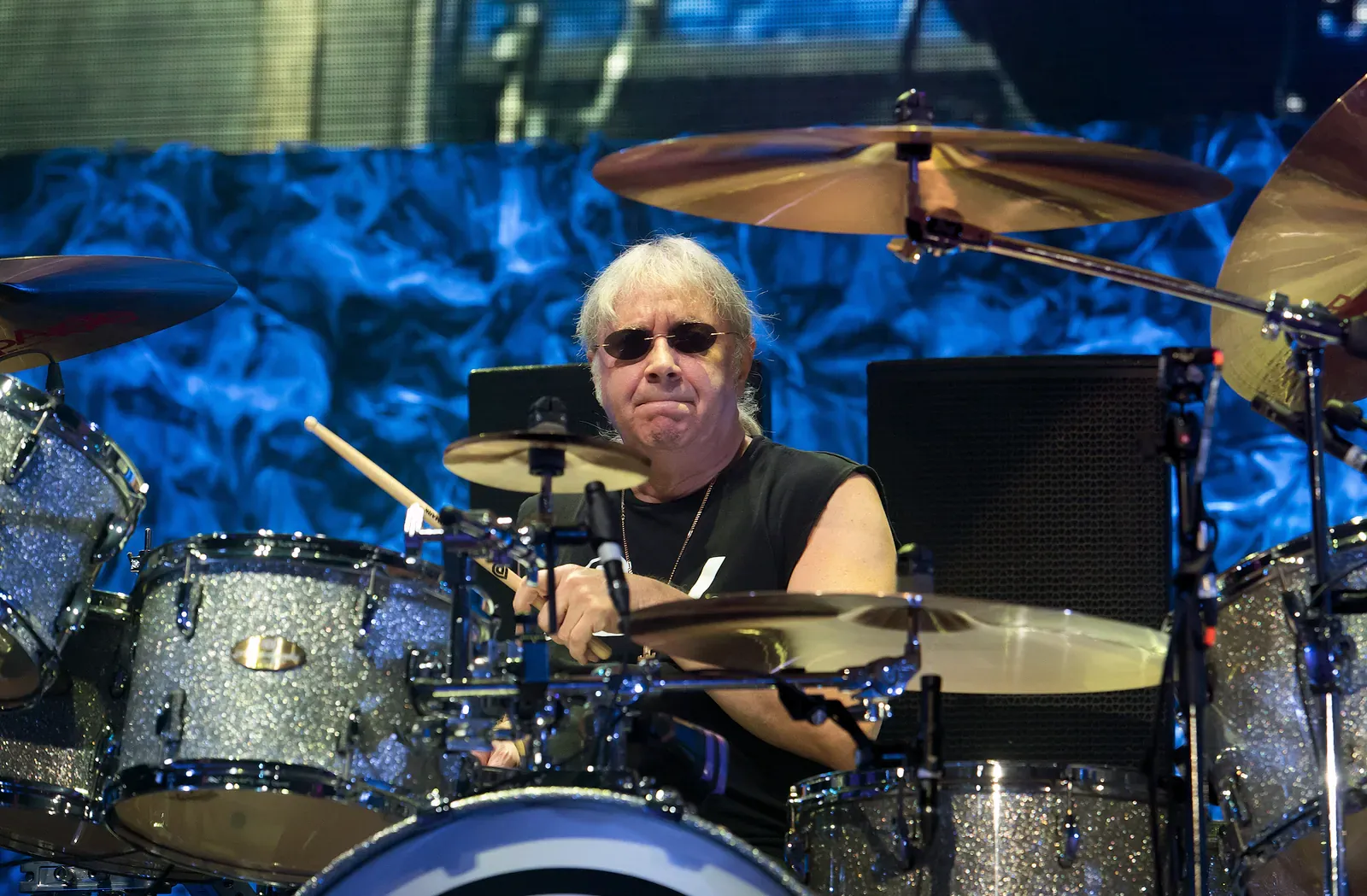
The period closed with arena audiences and with the genre still overlapping early heavy metal, which is why several 1970s records sit on both lists.
Arena rock, 1975-1979
A second wave arrived from other cities. Aerosmith formed in Boston in 1970 and signed in 1972 for a reported 125,000 dollars; Toys in the Attic in 1975 became their best-selling US studio album and made them international stars. The label was Columbia Records.
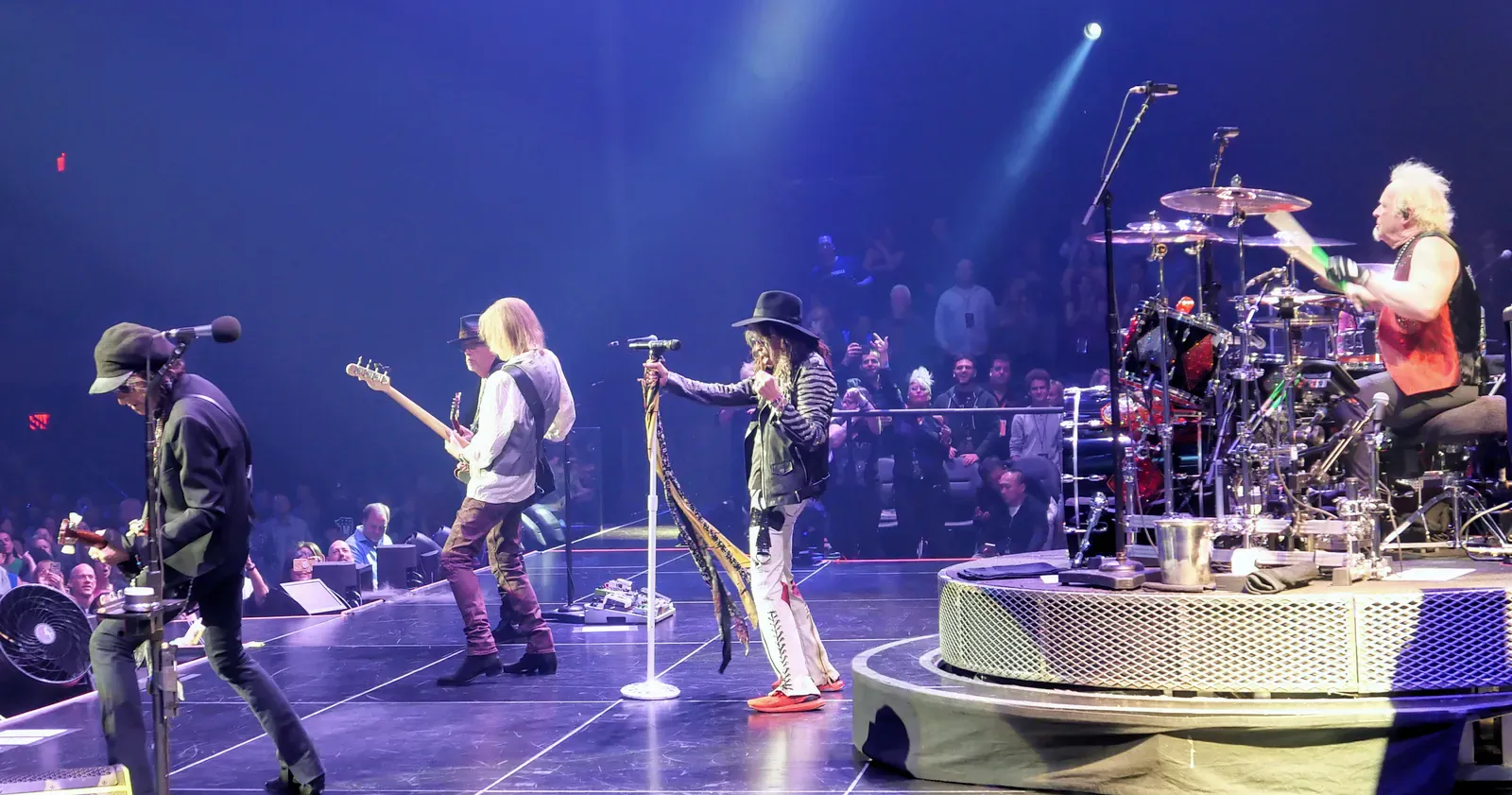
In New York, Kiss built a theatrical stadium show. Signed to Casablanca in November 1973, they released a debut in February 1974, and the live album Alive! in 1975 gave them a first top 40 single and is credited with rescuing the label. In Sydney, brothers Angus and Malcolm Young formed AC/DC in November 1973.
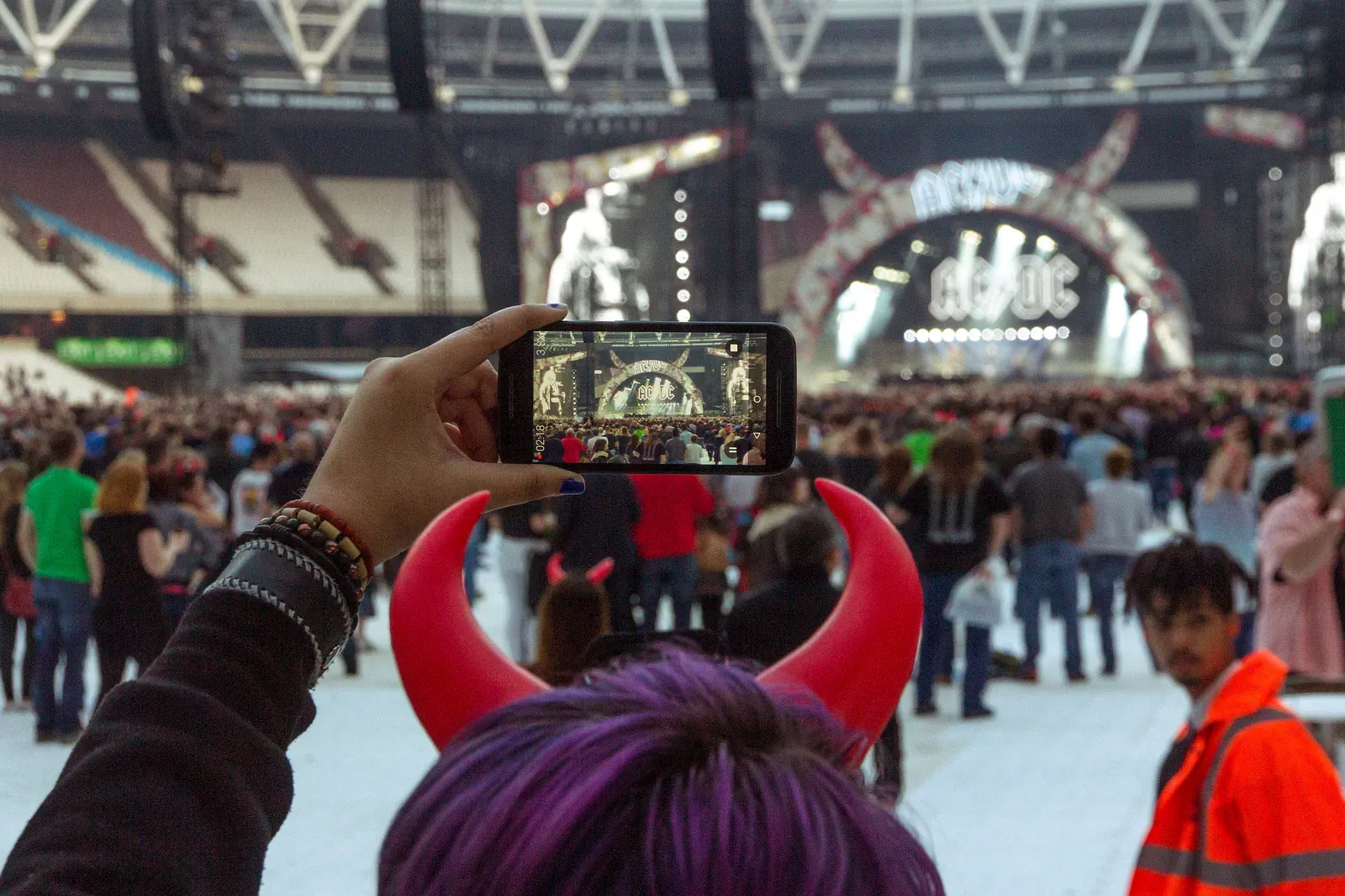
In Los Angeles, Van Halen rose from the Sunset Strip clubs. Producer Ted Templeman and executive Mo Ostin of Warner Bros. saw them at the Starwood in 1977. Their debut album followed in 1978, and Eddie Van Halen’s solo “Eruption” brought two-handed finger-tapping to a wide audience. The band signed to Warner Records.
Back in Black to MTV, 1980-1990
AC/DC’s Highway to Hell in 1979 pushed the band into the top ranks, and Back in Black in 1980 became one of the best-selling albums in the world and reached number one in the UK. It also proved that the band could survive a change of singer after the death of Bon Scott.
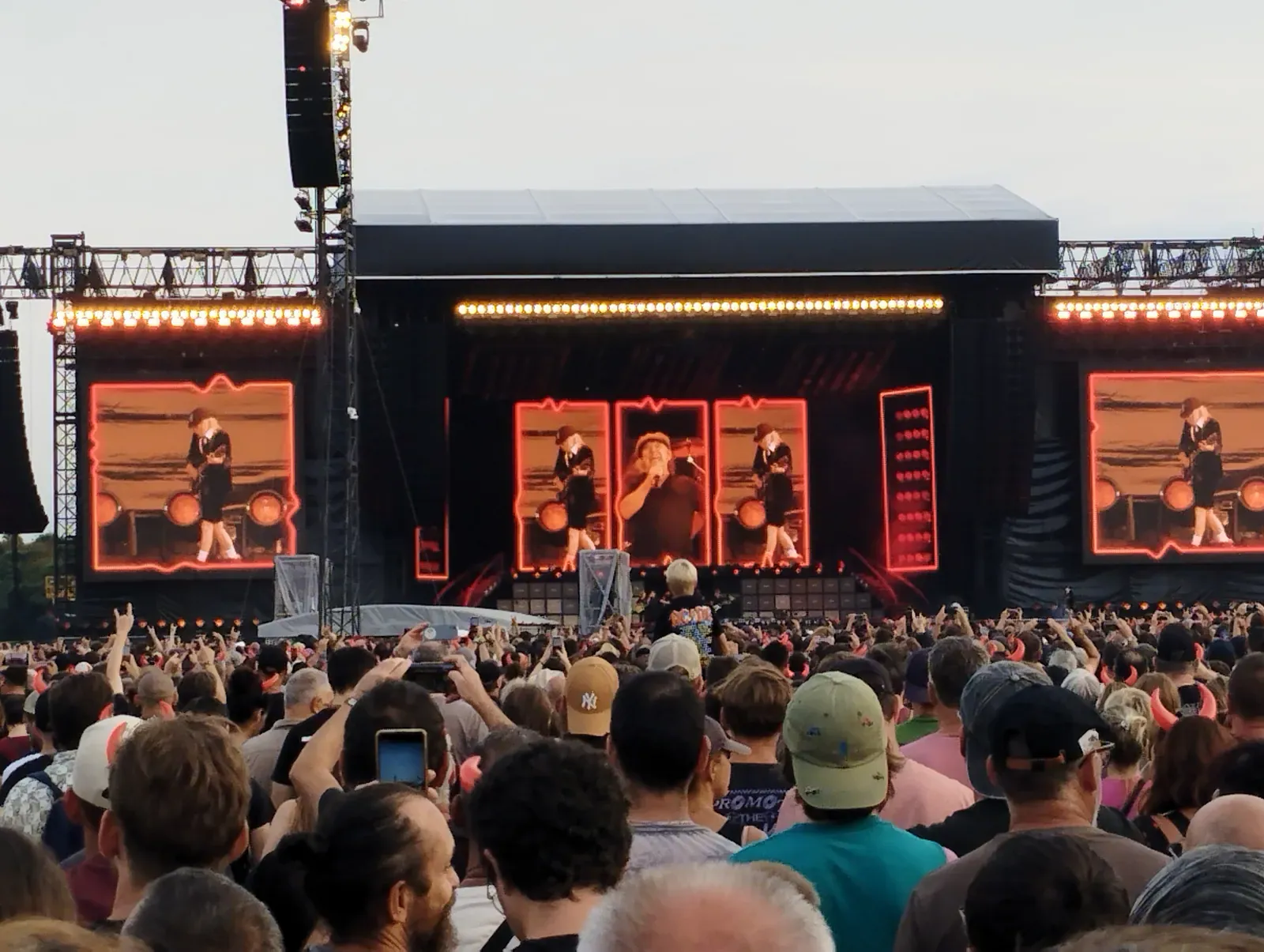
Infrastructure grew around the music. The first Monsters of Rock at Castle Donington in 1980, headlined by Rainbow, began a one-day festival that ran for about fifteen years, and Kerrang! grew from a one-off special in the weekly Sounds in 1981 into a magazine of its own. In September 1980 John Bonham died and Led Zeppelin announced their end in December, closing the founding generation.
Television then took over. Van Halen’s 1984 produced the keyboard-led “Jump”, the band’s only US number one, and in 1986 Aerosmith and Run-D.M.C. remade “Walk This Way”, which reached number 4 in the US and restarted Aerosmith’s career. Glam metal, with bands such as Mötley Crüe and Poison, was the decade’s commercial offshoot.
Guns N’ Roses closed the era in 1987. Appetite for Destruction, on Geffen, sold over 30 million copies once MTV began playing “Welcome to the Jungle”.
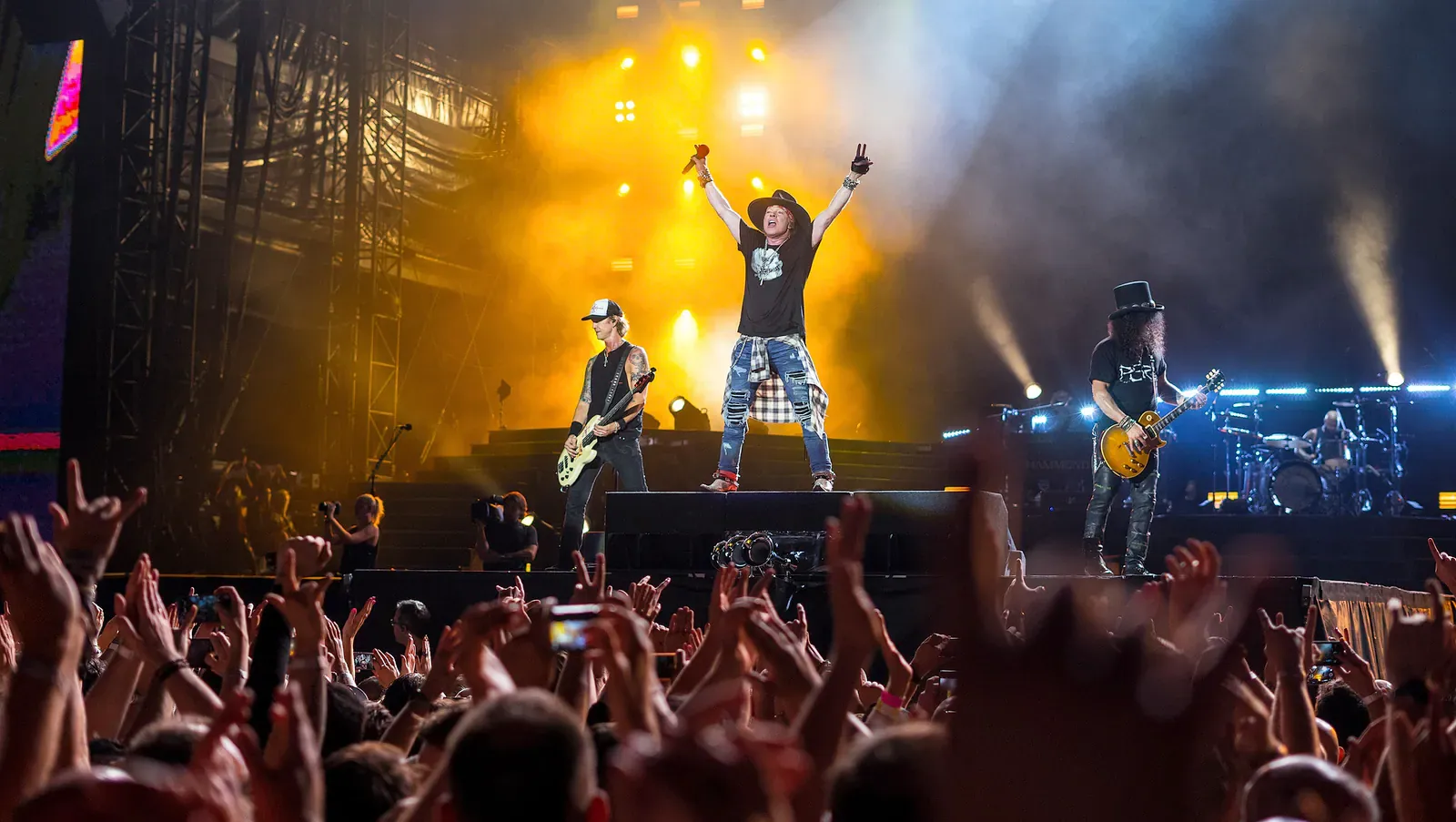
Grunge and the decline, 1991-1999
Around 1991, grunge bands such as Nirvana and Pearl Jam, and later Britpop in the UK, displaced hard rock on radio and television. Hard rock lost its place at the centre of the mainstream, and the older acts kept touring to loyal audiences.
Reunions and revival, 2000 onward
From 2000 the old names sustained stadium careers. AC/DC and Aerosmith toured steadily, and in 2006 Van Halen reunited with David Lee Roth, with Wolfgang Van Halen joining on bass. Younger bands such as Wolfmother and The Sword revived 1970s sounds.
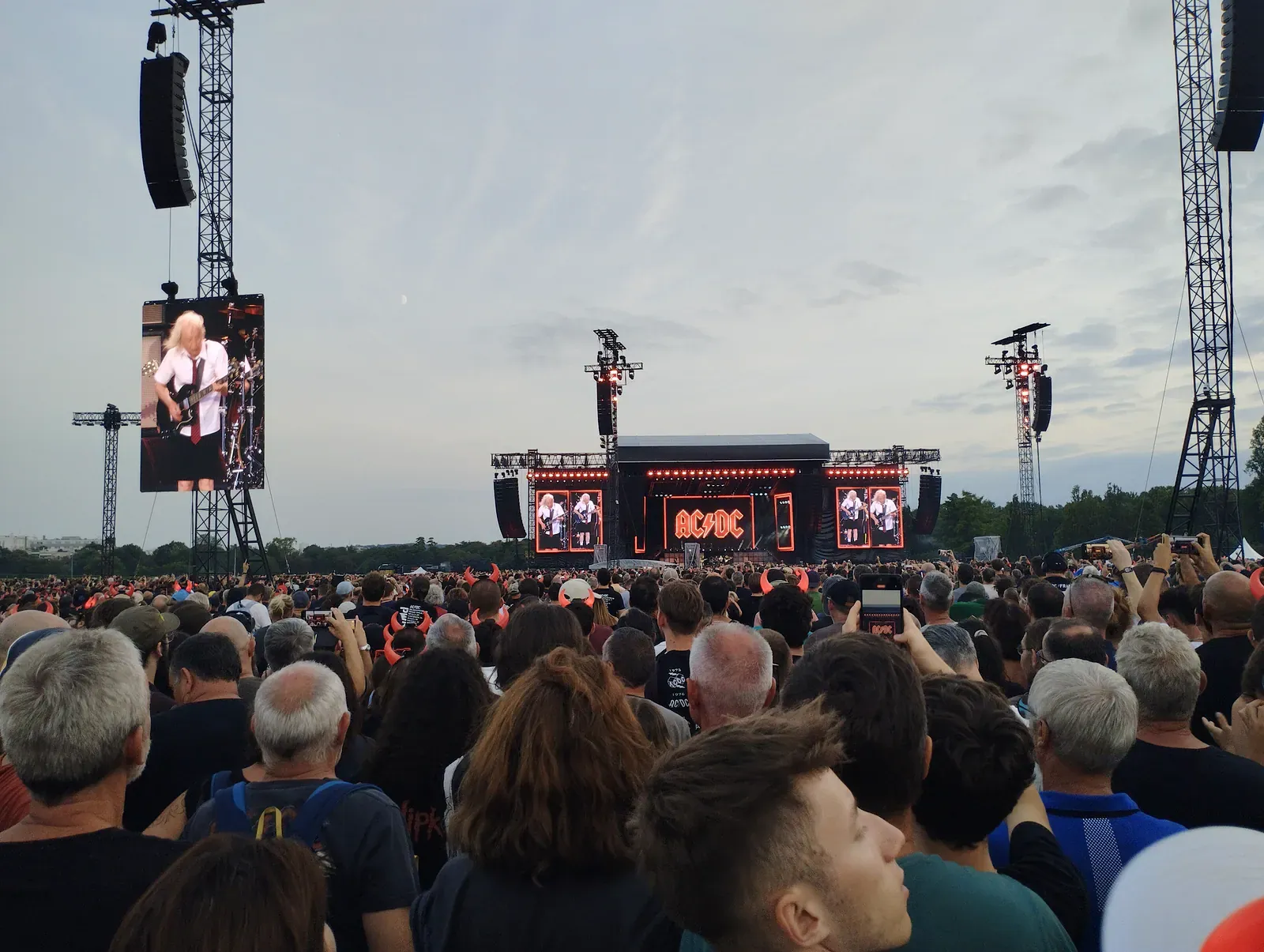
Characteristics
The riff is the unit of composition. Where blues and pop songs hang on chord progressions, a hard rock song hangs on a repeated guitar figure, such as the four-note blues-scale phrase of “Smoke on the Water”, and the chorus and the guitar solo are built around it. Power chords carry the rhythm parts, the lead guitar draws on the blues scale, and the vocal sits in a high, raspy or wailing register.

Instruments and production
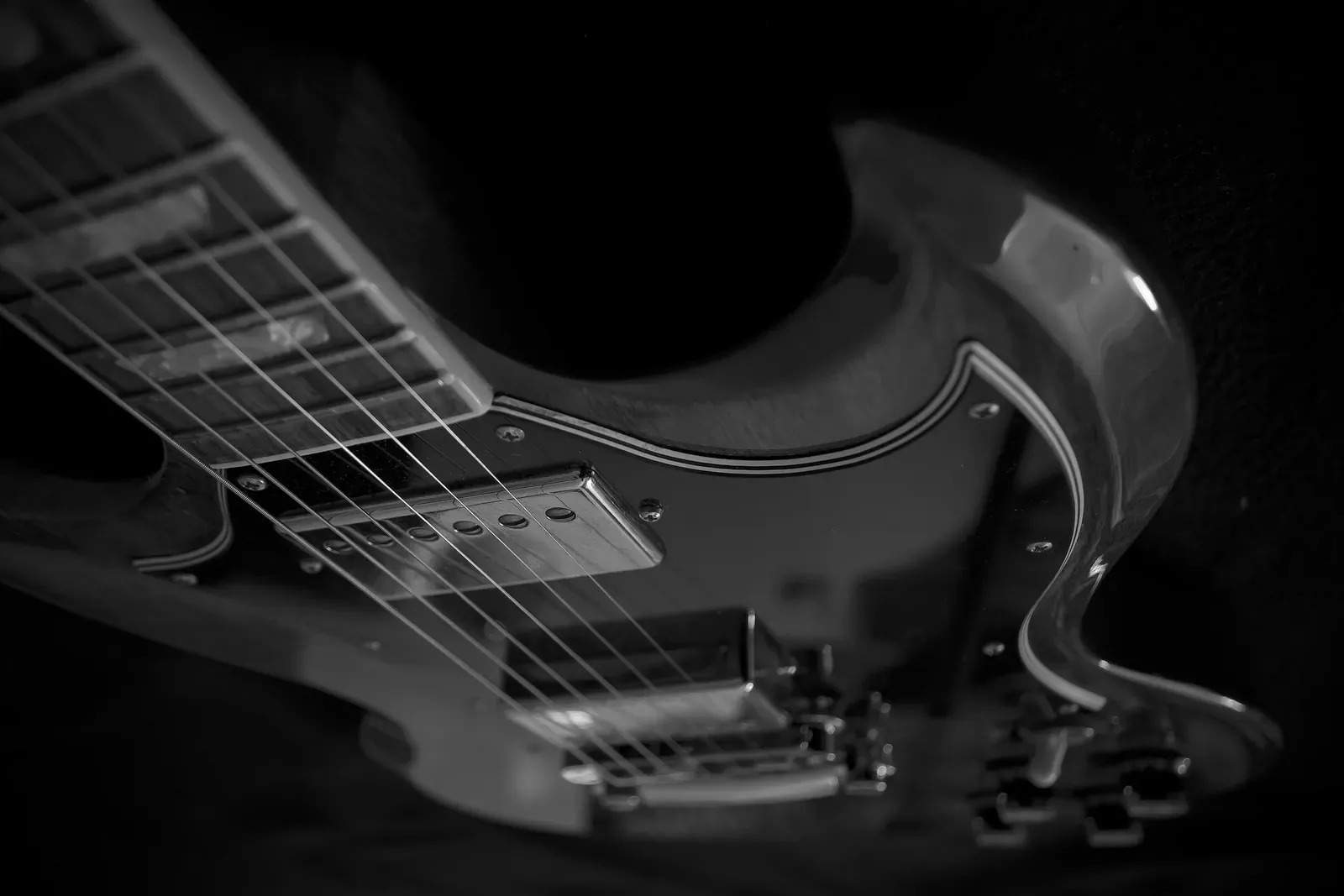
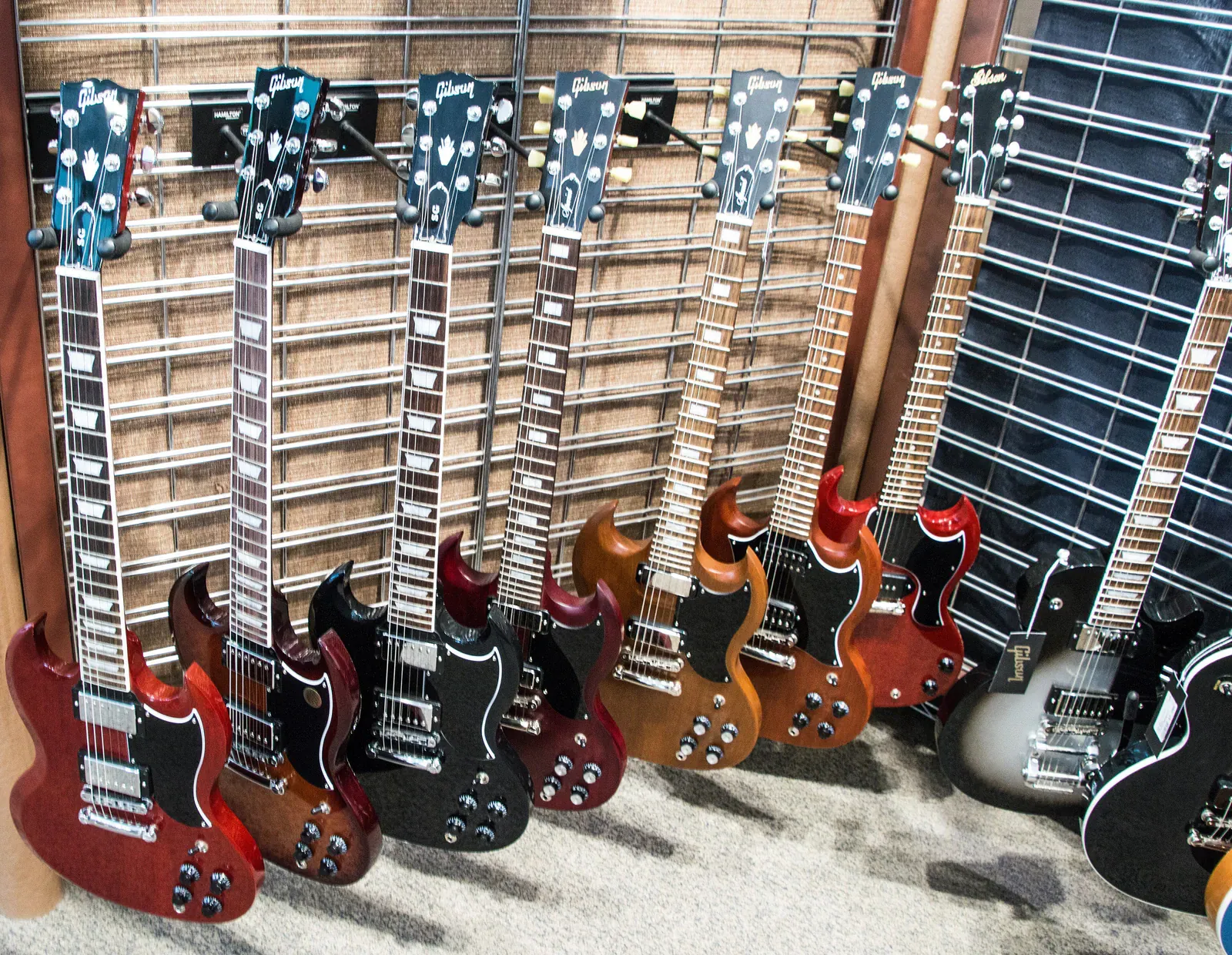
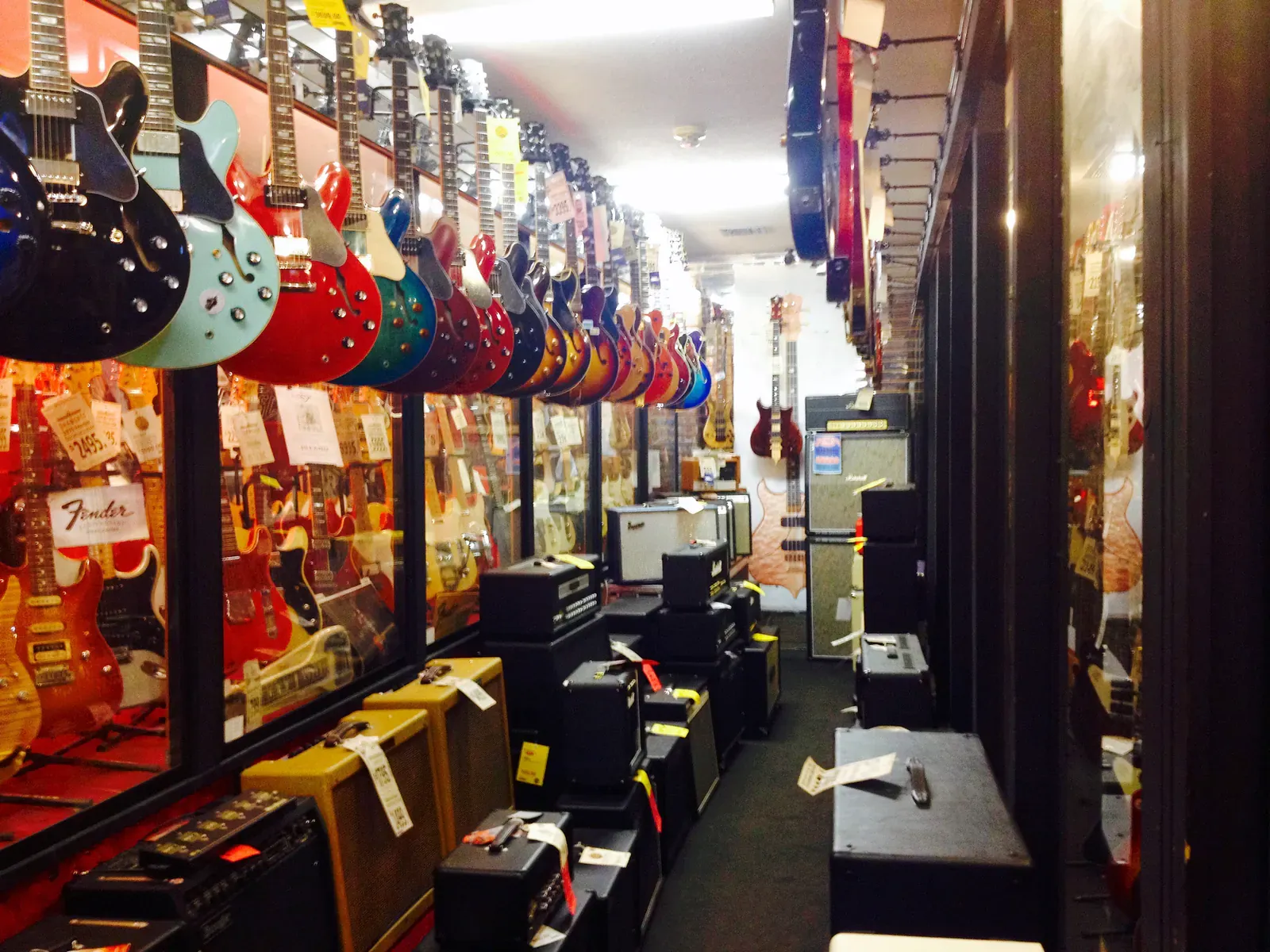
Hard rock is partly an equipment story. Two guitar designs dominate the image: the Gibson Les Paul, popularised by British blues-rock players such as Eric Clapton, and the lighter double-cut Gibson SG, introduced in 1961 and linked to Angus Young and Tony Iommi. The amplifier is the Marshall, first as the 1965 Plexi and then as the JCM800 series of 1981.
Jon Lord’s Hammond organ was pushed through a Marshall stack for a growling tone.
Notable recordings
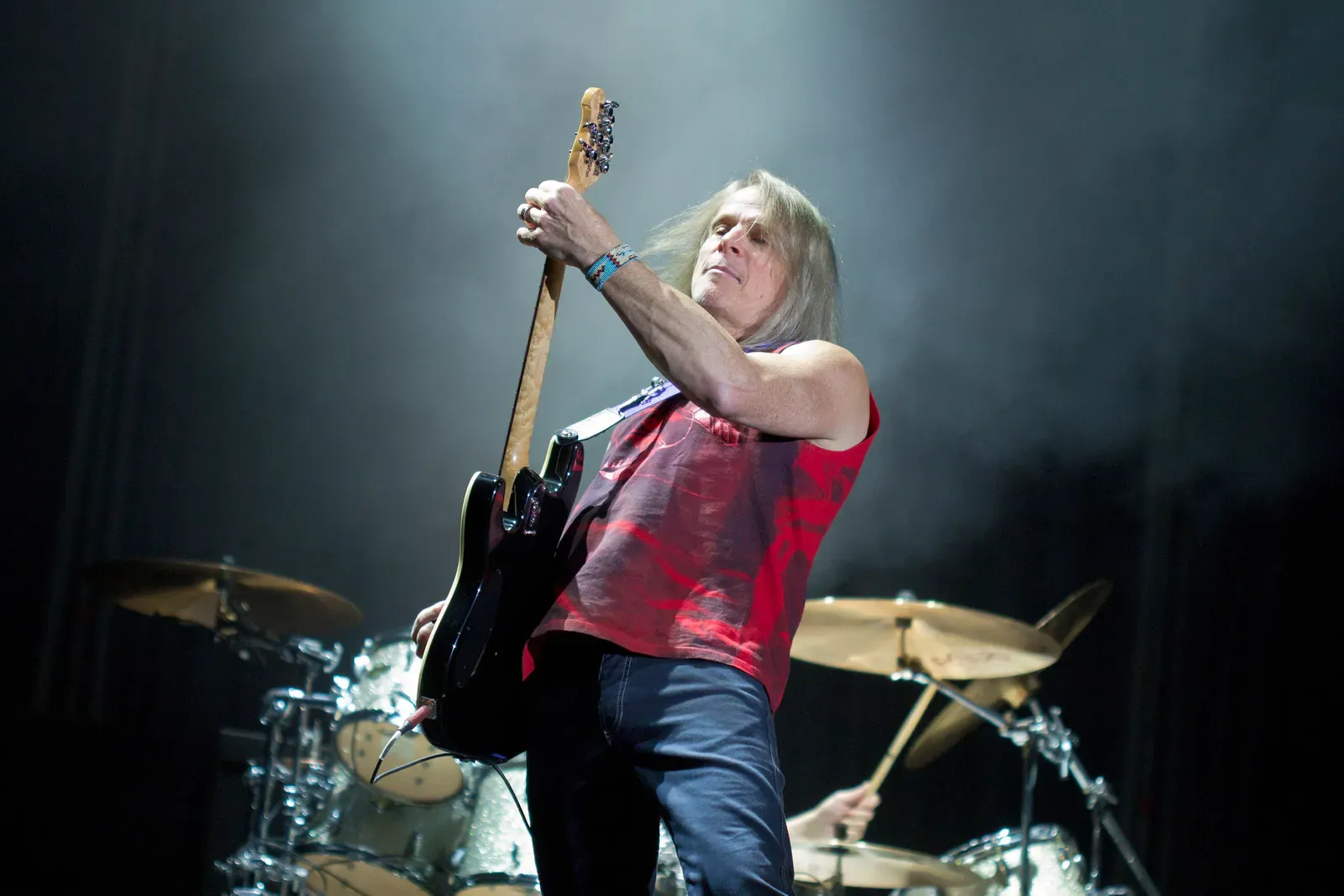
“Smoke on the Water” (1972) is one of the most recognised riffs in rock. Deep Purple recorded Machine Head in Switzerland after the Montreux Casino fire interrupted their plans, using a mobile studio in the corridors of the Grand Hotel de Territet.
“You Really Got Me” (1964) shows the earliest form of the sound. “Whole Lotta Love” (1969) fixed the heavy riff and wailing vocal, and “Highway to Hell” (1979) put the same ingredients in a compact, chorus-led form that travelled worldwide.
Culture
The genre built the stadium concert. Led Zeppelin’s 1973 North American tour filled stadiums, and Kiss turned it into a brand with face paint, costumes and pyrotechnics, dropping the paint for the first time in 1983. Mockery followed success: This Is Spinal Tap in 1984 satirised rock-band excess, and the phrase “going to eleven” entered everyday speech. Stephen Davis’s disputed Led Zeppelin biography Hammer of the Gods (1985) shaped the legend of the band’s tours.
Legacy
Hard rock set the vocabulary for rock volume: the riff, the Marshall stack, the stadium tour and the guitar solo. It fed heavy metal, glam metal and later retro revivals, and its biggest bands came through Atlantic, Warner, Columbia, Geffen and Casablanca.
Misconceptions
A common claim holds that hard rock and heavy metal are the same thing. The genres are related and share early bands, but they separated into different traditions, and many hard rock acts were never considered metal.
Another claim is that grunge ended hard rock. Grunge pushed it off mainstream radio and television in the early 1990s, but the older acts kept touring and the genre returned to stadiums in the 2000s.
A third is that stacked amplifiers made the distorted sound. The fuzz of “You Really Got Me” came from a small amplifier whose speaker cone Dave Davies had cut, a year before the Marshall Plexi appeared.
Frequently asked questions
What is the difference between hard rock and heavy metal?
Hard rock is riff-based rock with blues roots and a prominent backbeat, while heavy metal pushes the volume, weight and aggression further. The two overlap in the early 1970s, when bands such as Led Zeppelin and Deep Purple sat on both lists.
Which bands defined hard rock?
Led Zeppelin, Deep Purple, AC/DC, Aerosmith and Van Halen are the central names, with Kiss and Guns N’ Roses as major American acts and The Kinks as the earliest reference point.
When did hard rock begin?
The sound formed in the mid-1960s, with The Kinks’ “You Really Got Me” in 1964 as an early landmark. The template of riff, high vocal and long solo settled in 1969 with Led Zeppelin’s debut album.
Is hard rock still active?
Yes. Older acts such as AC/DC and Aerosmith kept touring into the 21st century, and bands such as Wolfmother and The Sword revived the 1970s sound.
Sound
Sound sheet
Anatomy of a track
| # | Part |
|---|---|
| 1 | Opening riff |
| 2 | Verse |
| 3 | Chorus |
| 4 | Verse |
| 5 | Chorus |
| 6 | Guitar solo |
| 7 | Final choruses |
Signature sounds
- Distorted guitar riff as the song's hook
- Power chords over a strong backbeat
- Wailing, raspy or screamed lead vocal
- Blues-scale lead guitar solo
- Overdriven Hammond organ (Deep Purple)
Techniques
- Distorted power chords
- Finger-tapping
- Riff-based songwriting
Keys and modes
Blues scale. Smoke on the Water rests on a four-note blues-scale riff in G minor.
Vocals
High-register, wailing, raspy or screamed lead vocals, as in Robert Plant's.
Scenes
Where it happened
Where and when the sound lived: one bar per city on a shared timeline.
Europe
North America
Oceania
Active scenes
Peak 5, 1976-1980
The Marquee and the Wardour Street clubs host the Kinks, Led Zeppelin, the Who and Deep Purple's generation.
Aerosmith form here in 1970 and become the city's best-known hard rock band.
Kiss start in 1973 and build a theatrical stadium show.
AC/DC form here in November 1973.
Van Halen and later Guns N' Roses rise from the Sunset Strip clubs.
Venues and places
London, 1964 to today. Soho club where Led Zeppelin, the Who, Hendrix and later NWOBHM bands played.
West Hollywood, 1964 to today. Sunset Strip club that anchored Los Angeles rock for decades.
Castle Donington, 1980 to today. Home of the one-day festival that ran about 15 years, first headlined by Rainbow.
Montreux, 1971 to today. Corridor where Deep Purple recorded most of Machine Head with a mobile studio.
Culture
Culture markers
- The stadium show
Led Zeppelin's 1973 North American tour filled stadiums and broke attendance records.
Ritual - Kiss face paint and costumes
Face paint, costumes and pyrotechnics made Kiss a visual brand, dropped for the first time in 1983.
Fashion - Going to eleven
A phrase from This Is Spinal Tap for pushing excess one step further.
Slang
Media
Key media
- 1981Kerrang!
by Sounds. The magazine that began as a heavy metal special and covered hard rock for decades.
Zine - 1984This Is Spinal Tap
by Rob Reiner. A mockumentary that satirised rock-band excess; "going to eleven" entered everyday speech.
Film - 1985Hammer of the Gods
by Stephen Davis. A disputed unauthorised Led Zeppelin biography that shaped the band's legend.
Book
Glossary
Terms on this page
A guitar technique where the picking hand taps notes on the fretboard, popularised by Eddie Van Halen.
The 1980s MTV-driven branch of hard rock, with bands such as Mötley Crüe and Poison.
An amplifier head on top of 4x12 speaker cabinets, a setup pioneered by Pete Townshend and John Entwistle.
Nickname of the 1965 Marshall 1959 head with a Plexiglass control panel.
A two-note guitar chord, usually distorted, that carries most hard rock rhythm parts.
A short repeated guitar figure that anchors a song, as in Smoke on the Water.
Rock family