Rock and roll
Rock and roll is the guitar, piano and backbeat style that grew from rhythm and blues and country in the American South and Midwest between 1947 and 1958.
American South, 1949
Rock family
Born
1949
American South
Subgenres
3
Documented branches
Links
94
Genres it drew on or shaped
Tempo
95-185 BPMLineage
Family tree
Grew out of
Derived from
Derived from
Derived from
Derived from
Derived from
Derived from
- Western swing
Derived from
American South, 1949
Rock and roll
Led to (49)
Timeline
Era by era
From the first sparks to today. Select a dot to read the story behind it.
- Rhythm and blues roots
1947 to 1953
- Breakthrough
1954 to 1955
- Golden age
1956 to 1958
- Disruption
1959 to 1960
- Revivals and reissue
1961 to 1990
Eras
Moments
- 1 Rhythm and blues roots, 1947 to 1953
- 2 Breakthrough, 1954 to 1955
- 3 Golden age, 1956 to 1958
- 4 Disruption, 1959 to 1960
- 5 Revivals and reissue, 1961 to 1990
1947
Rhythm and blues roots
Jump blues, boogie-woogie and country boogie records and radio shows from Cleveland to Memphis laid the groundwork, and Rocket 88 already carried the beat.
- 1947Roy Brown records Good Rockin' TonightA jump blues number with a rock-the-night lyric; Wynonie Harris's 1948 cover became a rhythm and blues number 1.
- 1951Rocket 88 is recorded in MemphisJackie Brenston and the Delta Cats, led by Ike Turner's band, cut a distorted-guitar car song at Sam Phillips's studio, released on Chess.
- 1951Alan Freed starts The Moondog ShowThe Cleveland disc jockey played rhythm and blues for a growing white teenage audience and popularized the phrase rock and roll.
- 1952Moondog Coronation Ball in ClevelandFreed's concert drew far more people than the arena held and was stopped early, an early sign of the new audience.
- 1952Sam Phillips founds Sun RecordsThe Memphis label recorded blues artists first and later the rockabilly and rock and roll singers who made it famous.
1954
Breakthrough
Presley at Sun, Rock Around the Clock and the film Blackboard Jungle, plus Chuck Berry and Little Richard, moved the sound from regional black and country markets to national teenage pop charts.
- 1954Presley records That's All Right at SunThe first single by Elvis Presley, with Scotty Moore and Bill Black, blended rhythm and blues and country in July 1954.
- 1954Bill Haley records Rock Around the ClockHaley and the Comets recorded the song for Decca in April; it sold modestly until a film placed it in 1955.
- 1955Blackboard Jungle uses Rock Around the ClockThe MGM film about a rowdy high school used the song over its titles and pushed it to number 1 in July 1955.
- 1955Chuck Berry releases MaybelleneChess issued his first single, a country song sped up with a guitar solo; it reached the top of the rhythm and blues chart.
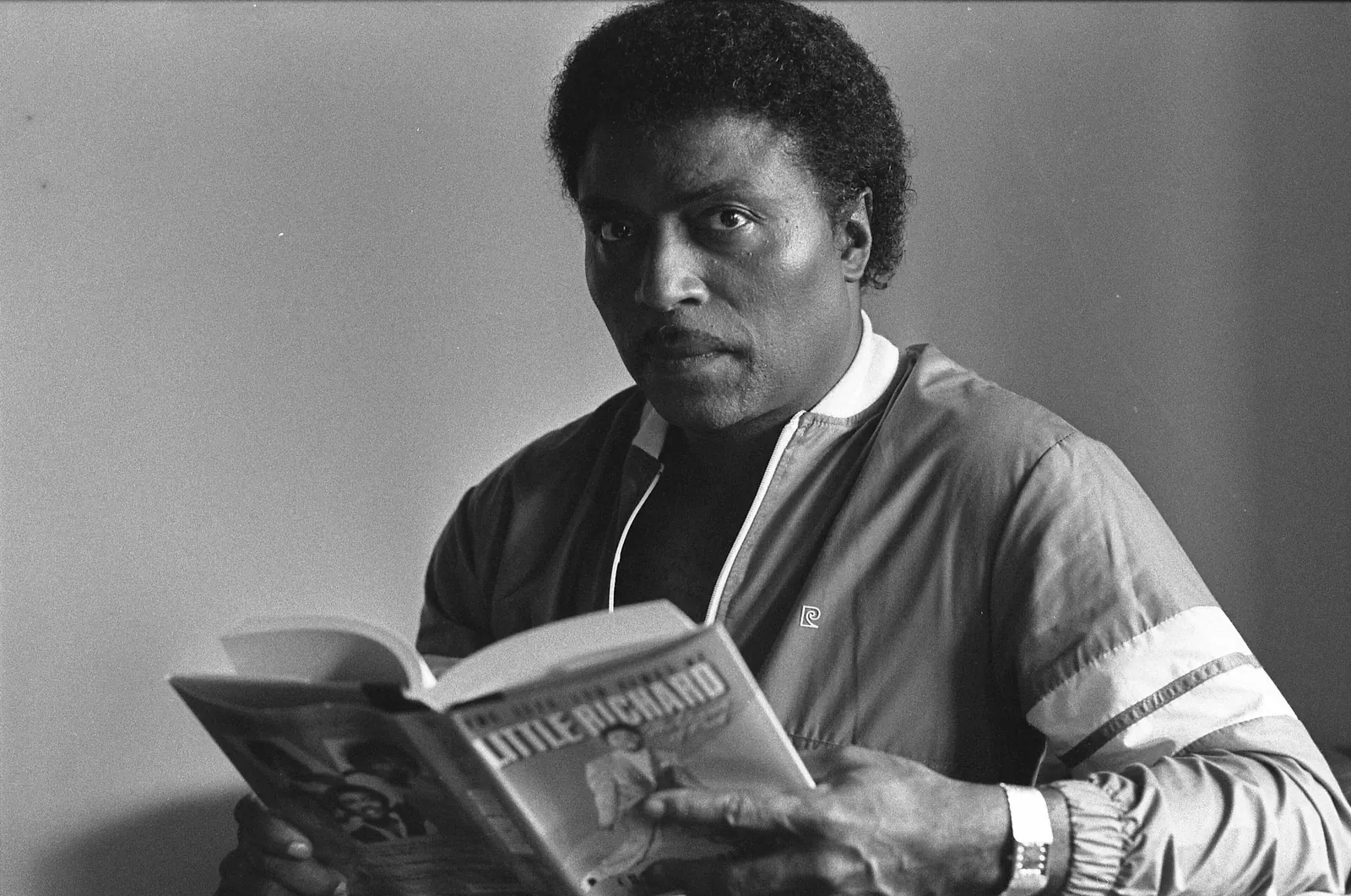
- 1955Little Richard records Tutti FruttiA cleaned-up lyric and a piano and shouting performance made the Specialty record a hit in New Orleans and then nationally.
- 1955RCA buys Presley's contract from SunRCA paid about $40,000 for the contract and Sun masters in November 1955, turning Presley into a national act.
1956
Golden age
Presley on RCA, Jerry Lee Lewis, Buddy Holly, the Everly Brothers and Berry filled the charts, and American Bandstand and the film musical took the music into every teenager's home.
- 1956Heartbreak Hotel reaches number 1Presley's first RCA single topped the US pop chart and started a run of hits and television appearances.
- 1956Rock Around the Clock film provokes riotsScreenings in Britain led to dancing in the aisles, damage and arrests, and some towns banned the film.
- 1957American Bandstand goes nationalDick Clark's teen dance show on ABC gave the music a daily television showcase.
- 1957Jerry Lee Lewis releases Whole Lotta Shakin' Goin' OnThe Sun single of a boogie-woogie piano and shouted vocal made him a national star.
- 1957The Crickets release That'll Be the DayBuddy Holly and his band took a Clovis, New Mexico recording to the top of the US chart on Brunswick.
- 1957Little Richard leaves for the ministryHe quit secular music in October 1957 at his peak and turned to gospel.
- 1958Jerry Lee Lewis's British tour is cancelledPress reports of his marriage to his 13-year-old cousin ended the tour after a few dates and damaged his American career.
- 1958Chuck Berry releases Johnny B. GoodeHis Chess single set out the guitar introduction and teenage story lyric that later rock groups copied.
1959
Disruption
A plane crash, Presley's army service, Berry's conviction, the payola hearings and the deaths of Holly, Valens and Cochran ended the first wave and shifted the charts toward teen pop.
- 1959The Day the Music DiedA plane crash near Clear Lake, Iowa on 3 February killed Buddy Holly, Ritchie Valens and the Big Bopper.
- 1959Payola scandal begins to end Freed's careerInvestigations into disc jockeys taking money for airplay led to the firing of Alan Freed in November 1959.
- 1960Eddie Cochran dies in a car accidentHe was killed in England in April 1960 while on tour, a further blow to the first wave.
1961
Revivals and reissue
British groups reworked the repertoire in the 1960s, then oldies concerts, American Graffiti and the Happy Days television series fed nostalgia that has kept the 1950s sound in circulation.
- 1969Toronto Rock and Roll Revival festivalChuck Berry, Little Richard, Jerry Lee Lewis and Bo Diddley played a festival that also featured the first live show of the Plastic Ono Band.
- 1973American Graffiti revives 1950s rock and rollGeorge Lucas's film, set in 1962 and loaded with 1950s hits, started a wave of nostalgia.
Listening path
Start listening
A short path from an easy way in to the deep end. Thumbnails come from YouTube; the player loads only when you press play.
- 01
Chuck Berry, 1958
The most copied recording of the genre, a good entry point with its guitar introduction and teenage story.
- 02
Bill Haley and His Comets, 1954
The record that took the style to the mainstream as the first rock and roll number 1 in 1955.
- 03
Little Richard, 1955
A signature track of the New Orleans piano shout that defined the wild side of the scene.
- 04
Elvis Presley, 1956
Presley's first number 1 on RCA, which made the music a national phenomenon.
- 05
Elvis Presley, 1954
The Sun single that started Presley's career and is often cited as a starting point of the genre.
Facts
| Family | Rock |
| Origin | American South, United States |
| Emerged | Late 1940s to early 1950s |
| Status | Revival |
| Tempo | 95 to 185 BPM |
| Meter | 4/4 |
| Grew out of | Rhythm and blues, Jump blues, Electric blues, Boogie-woogie, Country, Honky-tonk |
| Subgenres | 2 |
Rock and roll is the uptempo popular music that took shape in the United States between the late 1940s and 1958, joining rhythm and blues with country, boogie-woogie and gospel.
It is built on a heavy backbeat, twelve-bar blues forms, electric guitar, piano and saxophone, sung in a shouted or hiccuping voice and sold on two-minute 45 rpm singles. It is the root of the wider rock family.
Origins
The music came out of Black rhythm and blues and country dance records. By the late 1940s, jump blues bands and boogie-woogie pianists were making loud, danceable records, and country artists were cutting their own boogies. Roy Brown recorded “Good Rockin’ Tonight” in 1947, and Wynonie Harris’s 1948 cover reached number 1 on the rhythm and blues chart. The words “rock” and “roll” were older blues slang for dancing and sex, which is one reason the phrase fitted.
Several records are named as the first rock and roll record, and the choice depends on the definition. “Rocket 88” by Jackie Brenston and His Delta Cats, recorded in Memphis in March 1951 with Ike Turner’s band, has a distorted guitar and a car-and-dancing lyric. Brown’s and Harris’s records come earlier and sit closer to jump blues. Fats Domino’s “The Fat Man” (1949) carries the New Orleans piano shuffle. “Rock Around the Clock” (recorded 1954) reached a mass white audience, and Elvis Presley’s “That’s All Right” (1954) fuses country and blues in a single voice. Historians disagree, and this page does not choose one.
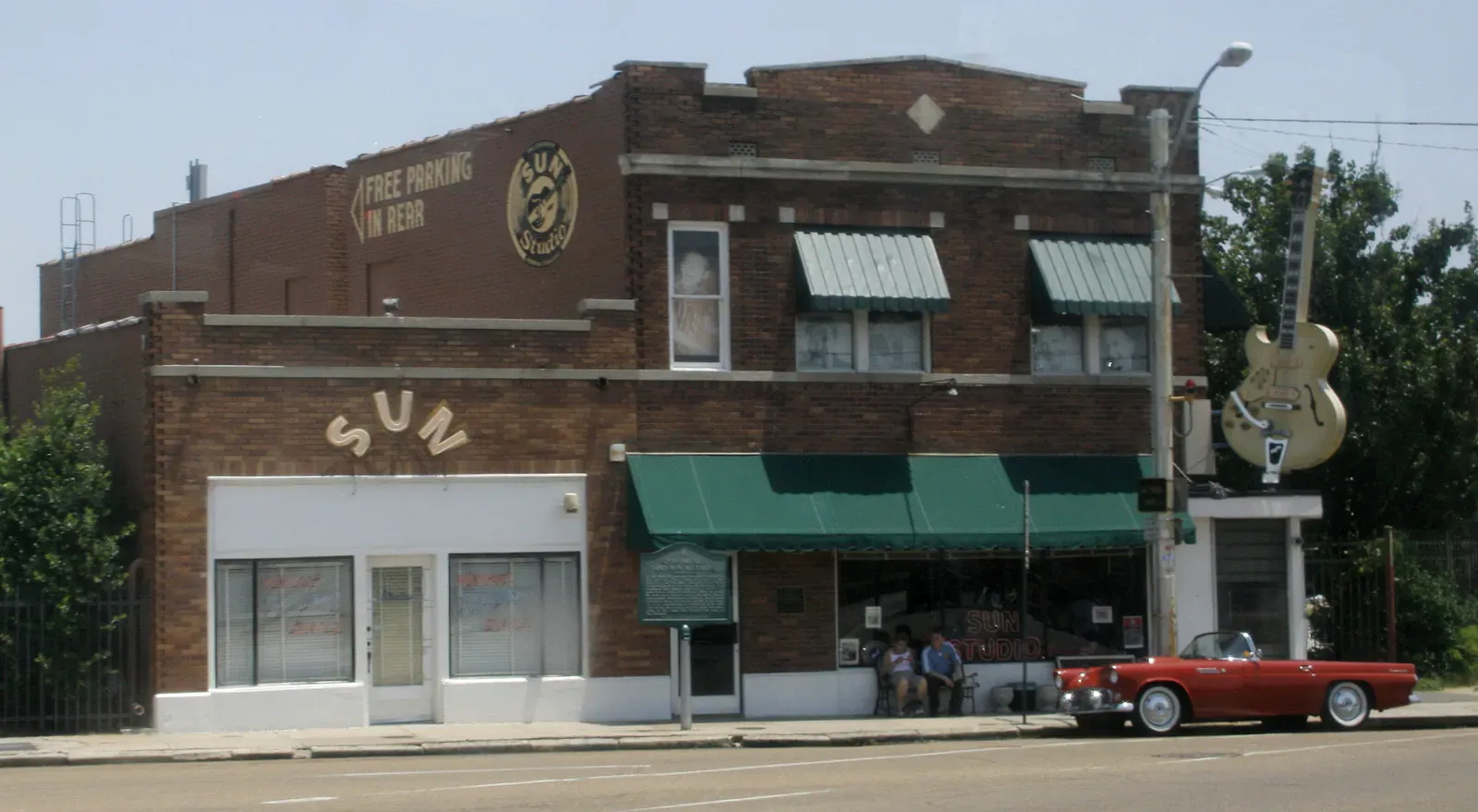
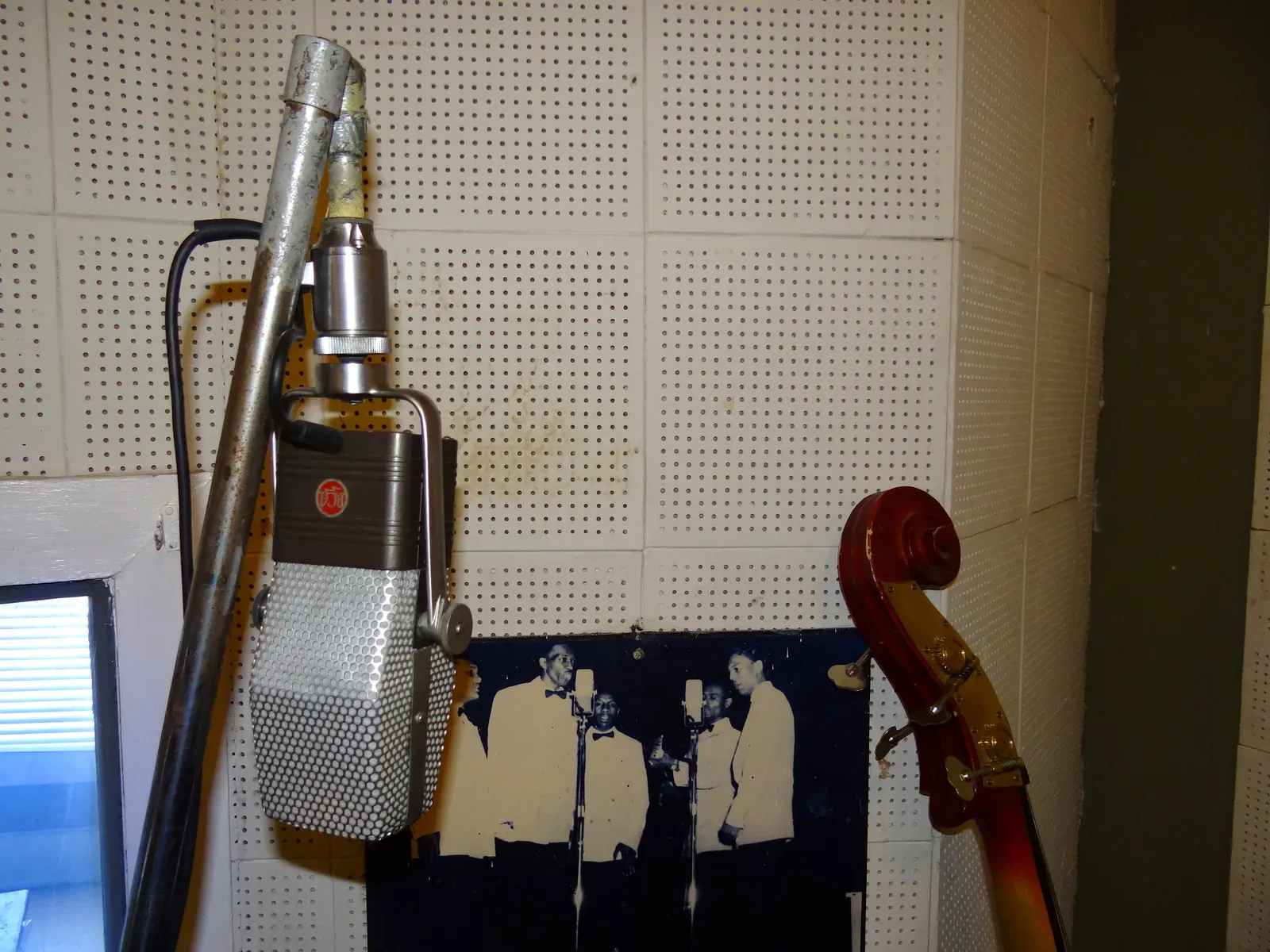
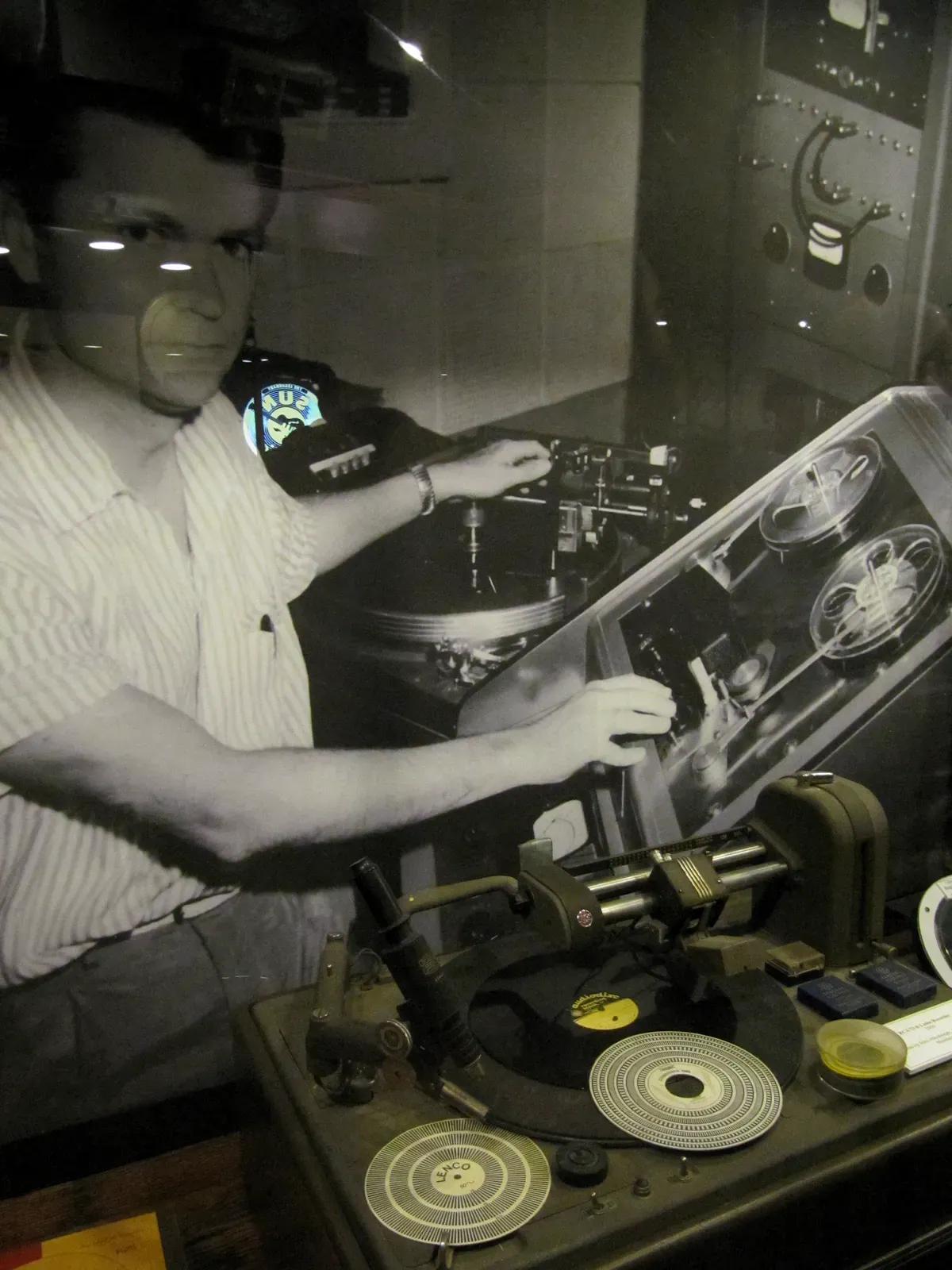
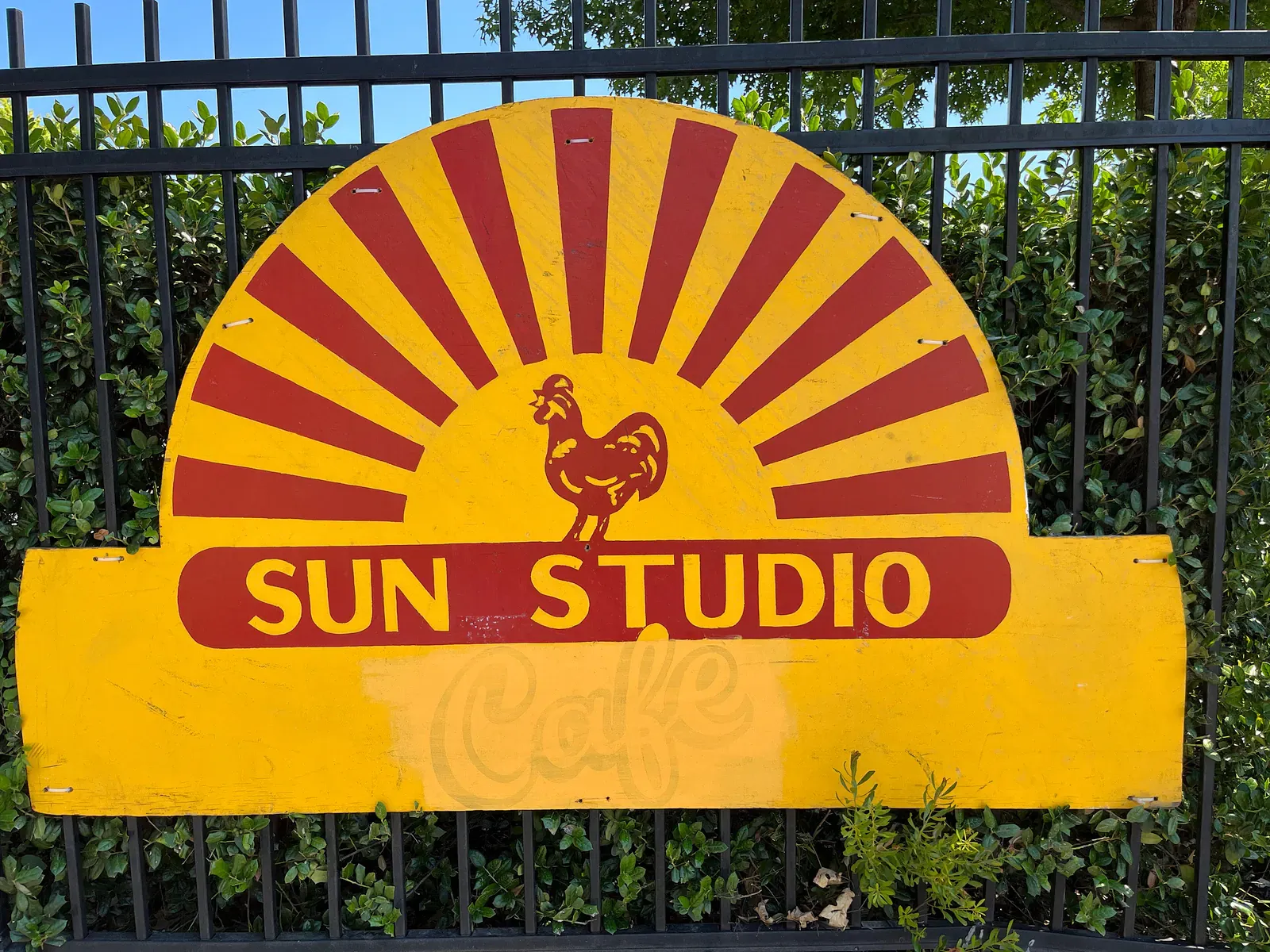
Memphis mattered because of Sam Phillips, who recorded Black blues musicians at his small studio and leased the masters to labels such as Chess. In 1952 he founded Sun Records. Radio mattered as much. Alan Freed, a Cleveland disc jockey, began playing rhythm and blues for a mixed teenage audience in 1951 and put the name rock and roll into wide use. His Moondog Coronation Ball in March 1952 drew far more people than the arena could hold and was stopped early.
Breakthrough, 1954-1955
Presley, Scotty Moore and Bill Black recorded “That’s All Right” at Sun in July 1954, and Phillips paired it with a country-speed “Blue Moon of Kentucky”. Haley’s “Rock Around the Clock” sold modestly until MGM used it over the opening titles of the school film Blackboard Jungle; it topped the US pop chart in July 1955. British screenings in 1956 brought dancing in the aisles and arrests.
Two Black artists then set the template. Chuck Berry’s “Maybellene”, issued by Chess in 1955, was a country tune (“Ida Red”) sped up and given a guitar solo; it reached the top of the rhythm and blues chart. Little Richard recorded “Tutti Frutti” at J&M Studio in New Orleans for Specialty in September 1955, with a lyric rewritten for radio. White singers who covered Black records often sold more at first: Pat Boone’s 1956 version of “Tutti Frutti” charted higher than Richard’s.
Golden age, 1956-1958
In November 1955 RCA bought Presley’s contract and his Sun masters for about $40,000. “Heartbreak Hotel”, his first RCA single, reached number 1 in 1956, and television turned him into a national figure. Jerry Lee Lewis’s “Whole Lotta Shakin’ Goin’ On” (1957) took boogie-woogie piano to the pop charts. Buddy Holly and the Crickets cut “That’ll Be the Day” in Clovis, New Mexico, and it reached number 1 in 1957. Writing their own songs and playing guitar, bass and drums, the Crickets set the model for later bands. American Bandstand went national in 1957.
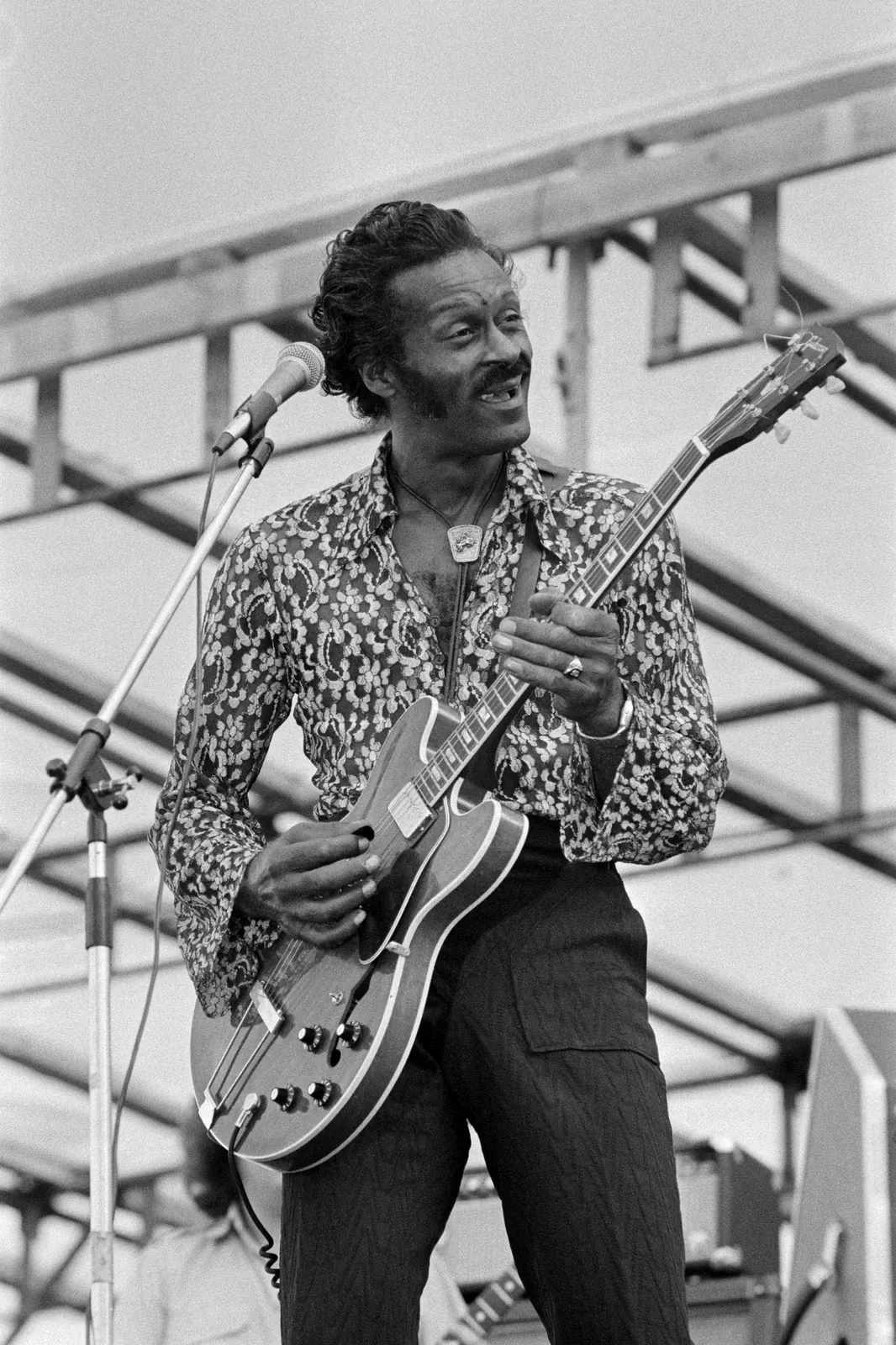
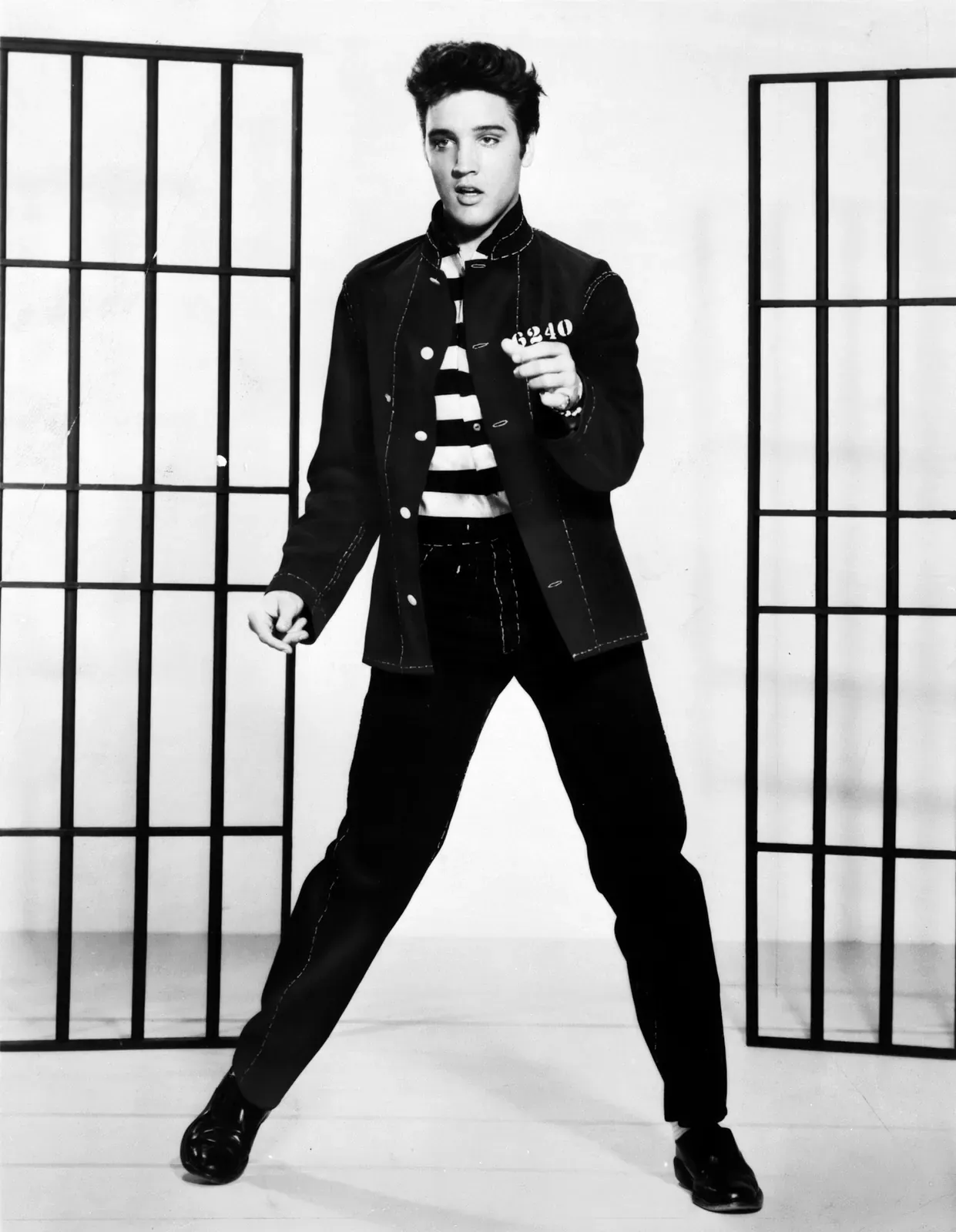
Berry’s “Johnny B. Goode” (1958) fixed the pattern copied by later guitarists: a double-stop opening, a driving rhythm and a story about a young musician with a dream. Presley’s films, among them Jailhouse Rock in 1957, spread the look as well as the sound.
Disruption, 1959-1960
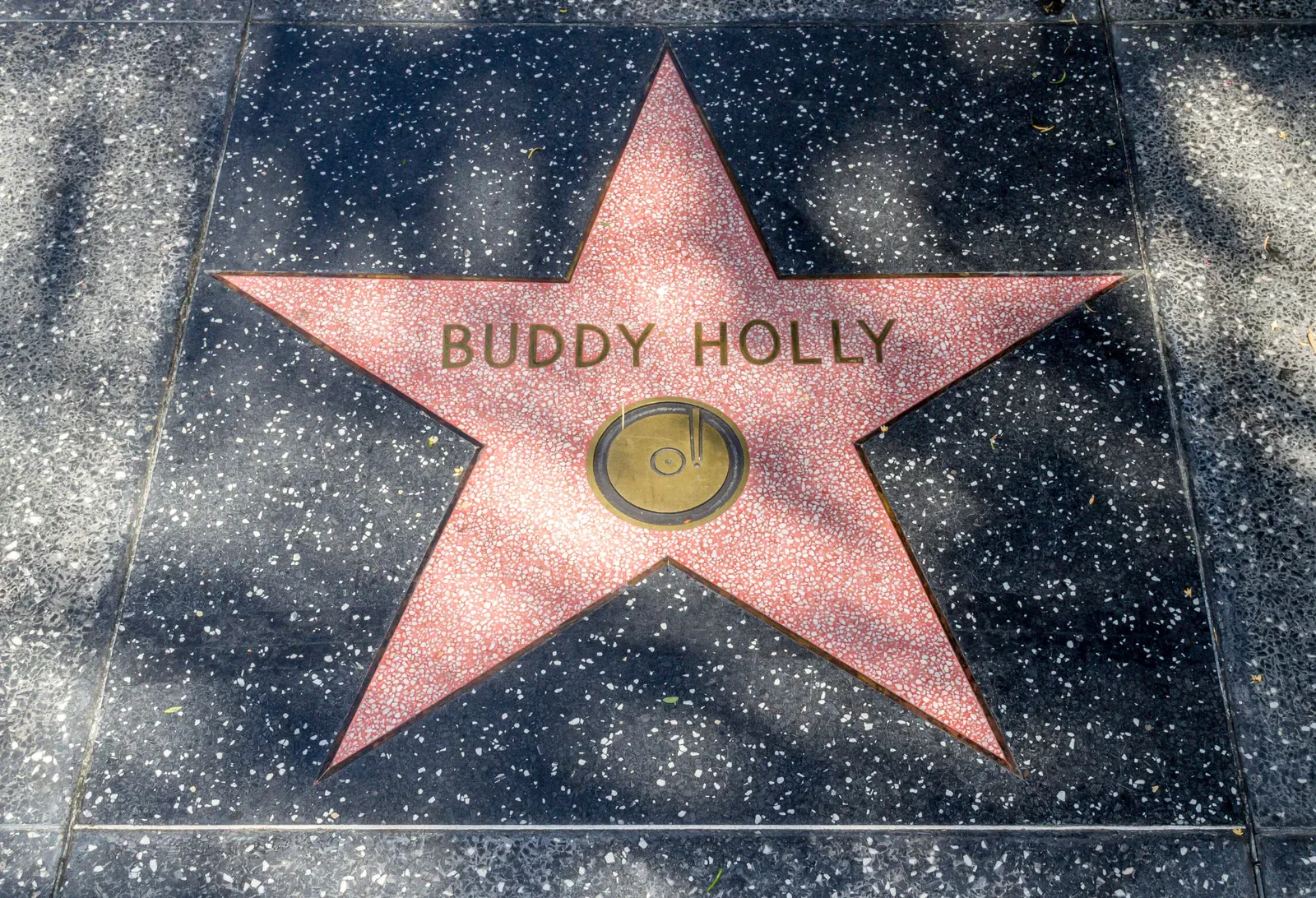
The first wave ended in a run of losses. Little Richard left secular music for the ministry in October 1957. Lewis’s British tour was cancelled in 1958 after press reports about his marriage to his 13-year-old cousin. Presley was drafted that year. A plane crash near Clear Lake, Iowa, killed Holly, Ritchie Valens and the Big Bopper on 3 February 1959. Berry was arrested in December 1959 and convicted in 1960. The payola investigations cost Freed his radio job in late 1959, and Eddie Cochran died in a car crash in England in April 1960. Labels filled the gap with clean-cut teen idols.
Characteristics
A typical record runs about two minutes. It opens on a riff, then runs through twelve-bar verses with a break in the middle for a solo. The drummer plays the backbeat on two and four, and the vocal is shouted, hiccuped or pleaded rather than crooned. The lyrics are about cars, dancing, school and young love in plain speech.
Instruments and production
The core band was guitar, bass, drums and piano, with a saxophone in the rhythm and blues groups, and the electric guitar moved from rhythm to lead. Studios were small and cheap, often a converted shop, and producers such as Phillips and Norman Petty used tape echo and close microphones to make a few players sound large. The single was the format the music was made for.
Mainstream success
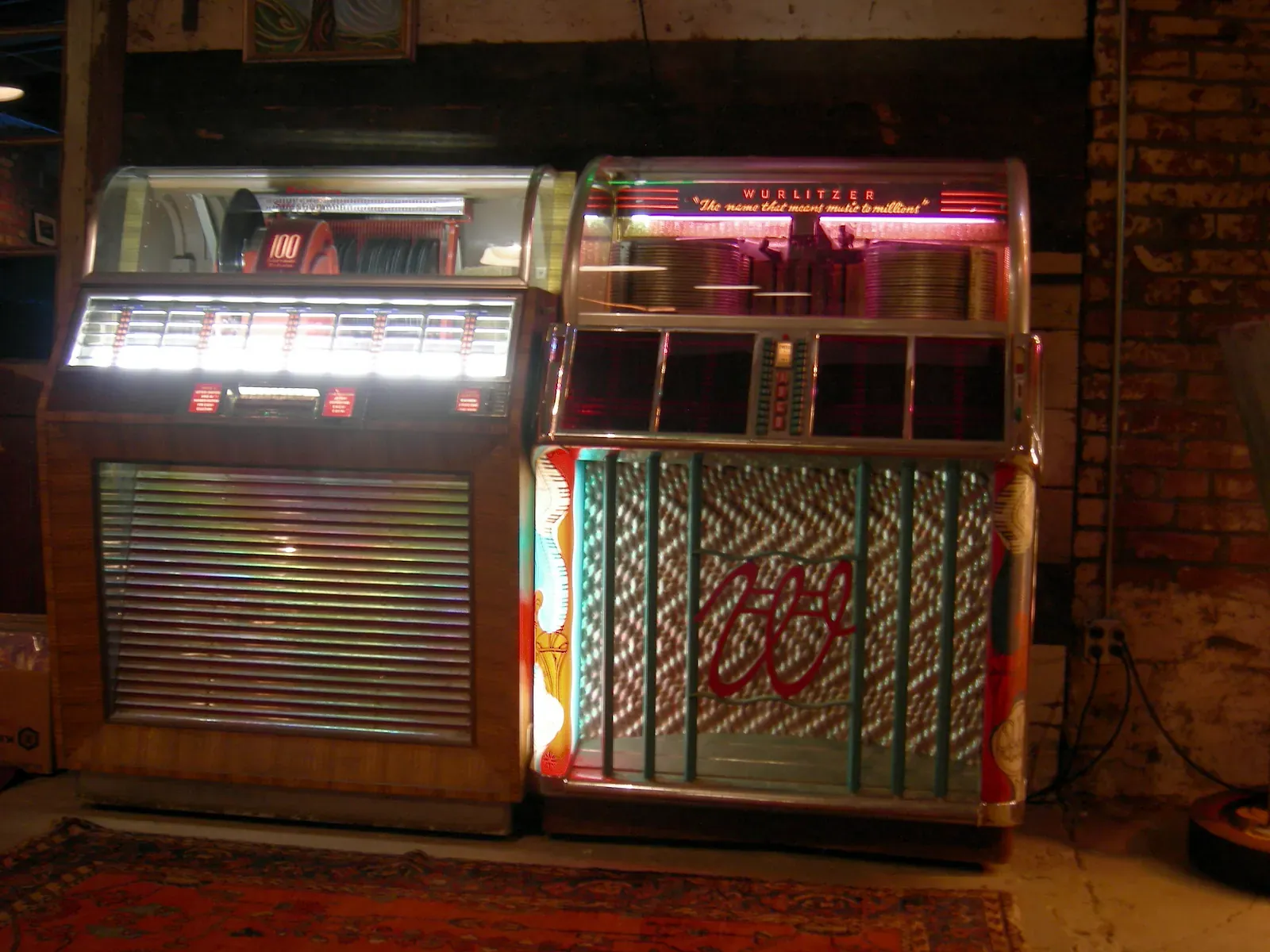
Rock and roll was an American teenage market before it was a genre label. Records sold on 45s, jukeboxes and radio, and the postwar baby-boom generation had pocket money and free evenings. Film, American Bandstand and the Billboard charts took the music from regional Black and country audiences to the national mainstream within about four years. Moral objection followed, and newspapers, pulpits and city councils blamed it for juvenile delinquency.
Notable recordings
“Maybellene” is the clearest case of the fusion: a country song at a rhythm and blues tempo, with Freed credited as co-writer.
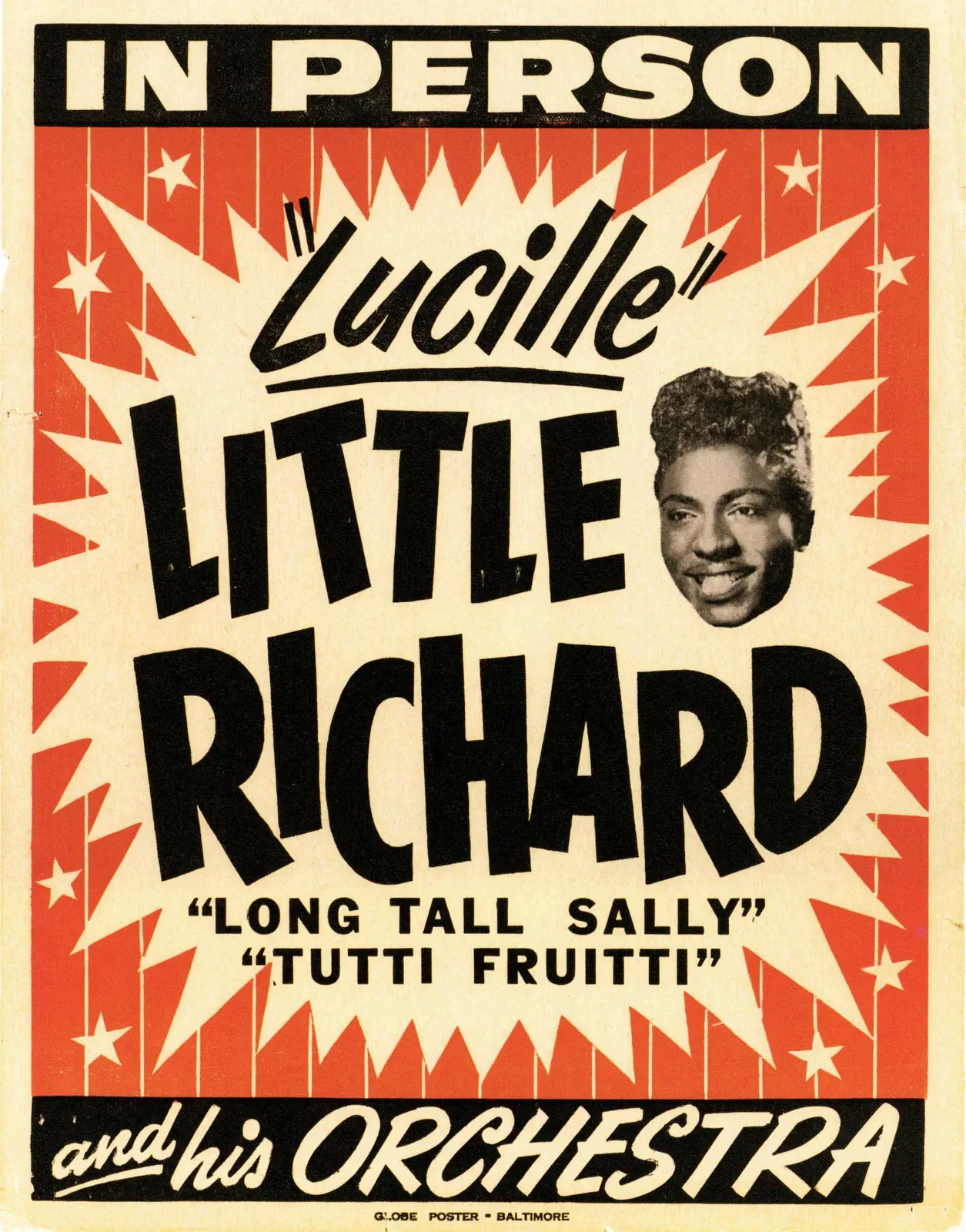
“Tutti Frutti” shows the move from the clubs to radio. Richard’s original verses were too bawdy for broadcast, and the songwriter Dorothy LaBostrie wrote new ones, but the opening shout and the piano figure remained. “That’ll Be the Day” shows the band format: Holly’s group recorded it in Petty’s studio in Clovis, and it reached number 1 on Brunswick in 1957.
Culture
The dance floor ran from the jitterbug to the bop, and the sock hop in a school gym was the typical venue. Boys wore leather jackets, jeans and pompadours, girls poodle skirts and bobby socks. Slang words such as cat, daddy-o and cool came from jazz and Black speech. Freed’s concerts drew mixed audiences at a time when much of the United States was segregated, and some officials tried to stop the mixing.
Legacy
British groups reworked the repertoire in the early 1960s, and the Beatles and the Rolling Stones covered Berry, Holly and Little Richard before writing their own songs, a line that leads to beat music. Revivals followed with the 1969 Toronto Rock and Roll Revival and the film American Graffiti in 1973. The strand closest to country is rockabilly, and the one closest to the blues roots is rhythm and blues, which fed into soul.
Misconceptions
Presley did not invent rock and roll. His first single appeared in 1954, after Brenston, Domino, Harris and Brown, and he drew on Black blues and country records he had heard in Memphis. His role was to carry the sound to a mass white audience.
“Rock Around the Clock” was not an instant hit. It was released in 1954 and sold modestly until Blackboard Jungle in 1955 turned it into a number 1 record.
The plane crash of 1959 did not end rock and roll by itself. Presley’s army service, Berry’s conviction, Little Richard’s retirement, payola and the death of Cochran combined within about two years, and the charts shifted to teen idols.
Frequently asked questions
What is rock and roll music?
Rock and roll is a style of American popular music from the late 1940s and 1950s that blends rhythm and blues, country and gospel around a backbeat and electric guitar. It is often called the first stage of rock music.
Who made the first rock and roll record?
There is no agreed answer. Candidates include “Good Rockin’ Tonight” (1947), “The Fat Man” (1949), “Rocket 88” (1951), Bill Haley’s early records and “That’s All Right” (1954), and each depends on how rock and roll is defined.
Why is Elvis Presley called the King of Rock and Roll?
Presley’s 1956 run of hits, including “Heartbreak Hotel”, and his television appearances made him the best-known rock and roll star of the 1950s. The nickname reflects sales and fame rather than being first.
What is the difference between rock and roll and rock?
Rock and roll usually means the 1950s style built on blues forms, piano and saxophone. Rock is the wider family that grew from it after the mid-1960s, with longer songs, albums and louder, more varied guitar music.
Sound
Sound sheet
Anatomy of a track
| # | Part | Bars |
|---|---|---|
| 1 | Intro riff or piano roll | 4 |
| 2 | Verse (twelve-bar blues) | 12 |
| 3 | Verse 2 | 12 |
| 4 | Solo break (guitar, sax or piano) | 12 |
| 5 | Final verse | 12 |
| 6 | Tag ending | 4 |
Signature sounds
- Backbeat snare on beats two and four
- Guitar, piano or sax riff that opens the song
- Twelve-bar blues or similar short chord loop
- Shouted or hiccuping lead vocal
- Instrumental break in the middle of the song
- Two-minute single built for 45 rpm
Drums and percussion
- Drum kit
Techniques
- Backbeat
- Boogie-woogie piano
- Double-stop guitar introduction
- Slapback echo
- Saxophone solo break
- Slapped upright bass
Keys and modes
Blues-based major keys. Johnny B. Goode is in B flat and That's All Right in A, with lead lines built on the blues pentatonic scale.
Tuning
Standard guitar tuning (E A D G B E) in 12-tone equal temperament
Vocals
Shouted and gospel-derived blues vocals, hiccups and falsetto breaks, with doo-wop group harmony in the backing.
Scenes
Where it happened
Where and when the sound lived: one bar per city on a shared timeline.
North America
Active scenes
Peak 7, 1954-1958
Sun Records and its studio produced Presley, Perkins, Lewis and Cash alongside blues artists.
Cosimo Matassa's studio and a piano-led rhythm and blues scene gave Fats Domino and Little Richard their sound.
Chess Records recorded Chuck Berry and Bo Diddley beside its electric blues roster.
Specialty, Imperial and other independents plus Gold Star Studios recorded rhythm and blues and rock and roll acts.
Norman Petty's studio in New Mexico recorded Buddy Holly and the Crickets.
Alan Freed's radio show and early concerts built the audience for the music in a northern city.
Atlantic Records, the Apollo, Freed's stage shows and network television made it the business center.
Bill Haley's Comets were based nearby and American Bandstand broadcast from the city until 1964.
Venues and places
Memphis, 1950 to today. Sam Phillips's Union Avenue studio, where Presley, Perkins and Lewis recorded.
New Orleans, 1945 to today. Cosimo Matassa's studio where Fats Domino and Little Richard cut their hits.
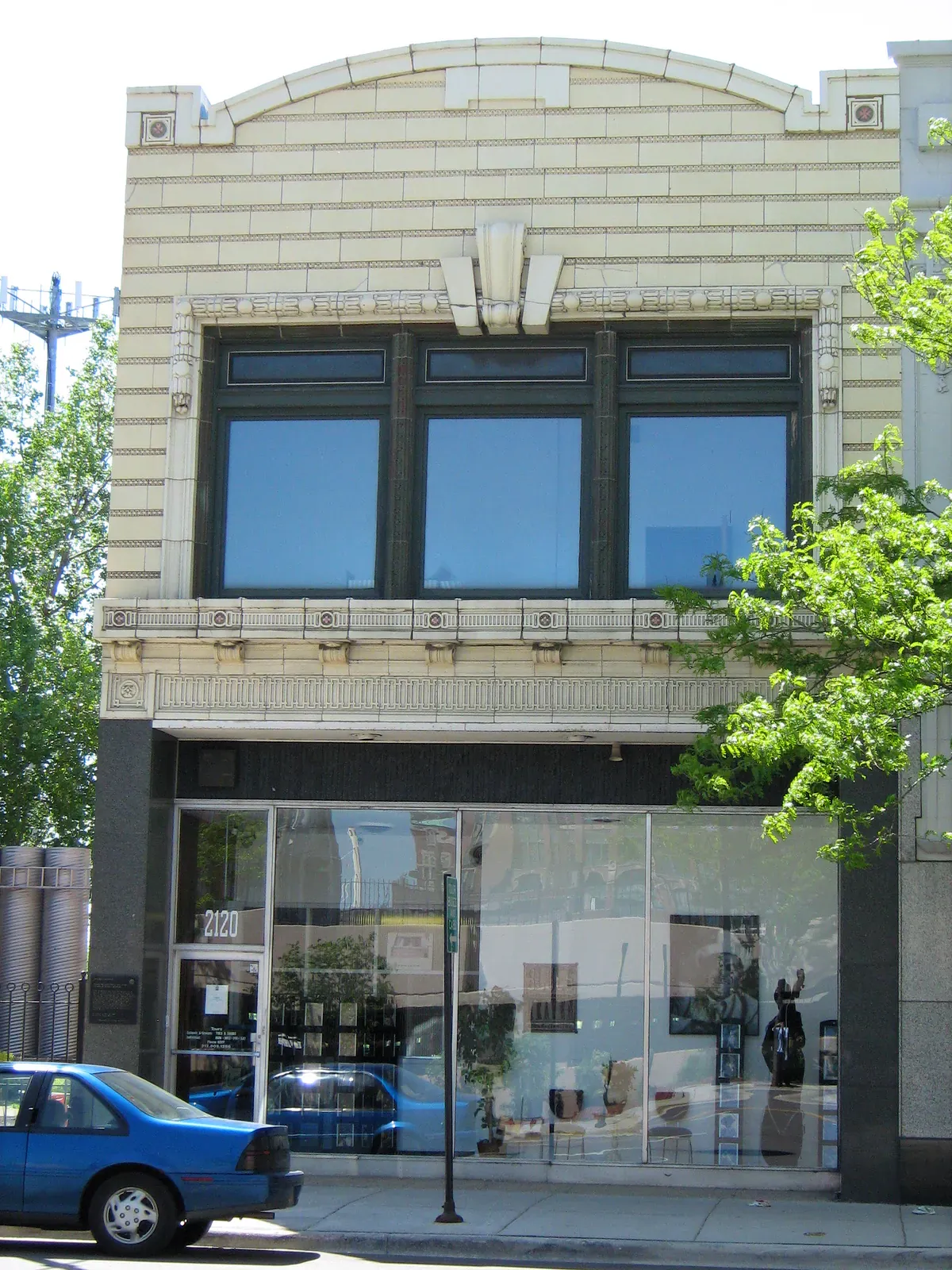
Chicago, 1957 to today. The South Michigan Avenue headquarters where Chess recorded Berry and Bo Diddley from 1957.
Cleveland, 1937 to today. Site of the 1952 Moondog Coronation Ball, an early rock and roll concert.
New York, 1934 to today. Harlem theater that hosted rhythm and blues and rock and roll package shows.
Shreveport, 1948 to today. Radio show that booked Presley in 1954 and carried him to a wider southern audience.
Hollywood, 1950 to today. Los Angeles studio used for Eddie Cochran's records and many other rock and roll sessions.
Clovis, 1956 to today. New Mexico studio where Buddy Holly and the Crickets recorded their first hits.
Culture
Culture markers
- Jitterbug and the bop
Teenagers adapted swing dance steps from lindy hop and jive to the faster backbeat.
Dance - Sock hop
Record hops in gyms and halls, often hosted by a local disc jockey, were where the music was danced to.
Ritual - Leather jackets, jeans and pompadours
A male look with greased, swept-up hair that Presley and others made familiar.
Fashion - Poodle skirts and bobby socks
A common young women's look of full skirts, saddle shoes and ponytails.
Fashion - Cat, daddy-o and cool
Teenage slang borrowed from jazz and rhythm and blues circles.
Slang - 45 rpm record sleeves
Colourful label designs and paper sleeves on jukebox singles defined the music's physical look.
Artwork
Media
Key media
- 1951The Moondog Show
by Alan Freed. Cleveland radio show that introduced rhythm and blues to white teenagers under the name rock and roll.
Radio - 1955Blackboard Jungle
by Richard Brooks. The film whose opening used Rock Around the Clock and linked the music to teenage rebellion.
Film - 1956The Girl Can't Help It
by Frank Tashlin. A comedy featuring Little Richard, Fats Domino, Gene Vincent and Eddie Cochran performing.
Film - 1956Rock Around the Clock
by Fred F. Sears. A low-budget film built around Bill Haley and others that triggered disturbances in cinemas.
Film - 1957American Bandstand
by Dick Clark. Television dance show that reached a national audience and showcased the new records.
Radio - 1973American Graffiti
by George Lucas. Nostalgic film with a wall-to-wall rock and roll soundtrack that revived interest in the era.
Film
Glossary
Terms on this page
A strong accent on the second and fourth beats of the bar, usually from the snare drum.
A repeated eight-to-the-bar left-hand or bass figure that keeps the rhythm rolling.
A version of a song by another artist, often a white act's version of a rhythm and blues record for the pop market.
A record that moves from the rhythm and blues or country chart to the pop chart.
Payment of money or gifts to disc jockeys to play a record, investigated in 1959 and 1960.
A rhythm that plays pairs of eighth notes as long and short, in a triplet swing feel.
A casual teenage dance, often held in a school gym where shoes were removed, with records played by a disc jockey.
A repeating twelve-measure chord pattern on the I, IV and V chords that underlies many songs of the style.
Rock family