Rockabilly
Rockabilly is an early rock and roll style that fused hillbilly country with rhythm and blues in Memphis in the mid-1950s, revived in the 1970s and 1980s.
Memphis, 1954
Rock family
Born
1954
Memphis
Subgenres
4
Documented branches
Links
39
Genres it drew on or shaped
Tempo
105-200 BPMLineage
Family tree
Derived from
Derived from
Influenced by
Memphis, 1954
Rockabilly
Led to (14)
Timeline
Era by era
From the first sparks to today. Select a dot to read the story behind it.
- Hillbilly boogie and slapped bass
1938 to 1953
- Sun Studio and the first wave
1954 to 1959
- Fade from the charts
1960 to 1969
- Revival from Wembley to the Stray Cats
1970 to 1984
- Neo-rockabilly and worldwide scenes
1985 to 2026
Eras
Moments
- 1 Hillbilly boogie and slapped bass, 1938 to 1953
- 2 Sun Studio and the first wave, 1954 to 1959
- 3 Fade from the charts, 1960 to 1969
- 4 Revival from Wembley to the Stray Cats, 1970 to 1984
- 5 Neo-rockabilly and worldwide scenes, 1985 to 2026
around 1938
Hillbilly boogie and slapped bass
Country bands add boogie rhythms, slapped upright bass and echo effects, while Memphis studios record blues and country side by side. The ingredients exist before the name.
- 1940Maddox Brothers and Rose develop slapped bassFred Maddox's hand-slapped upright bass becomes the rhythm engine later heard on rockabilly sides.
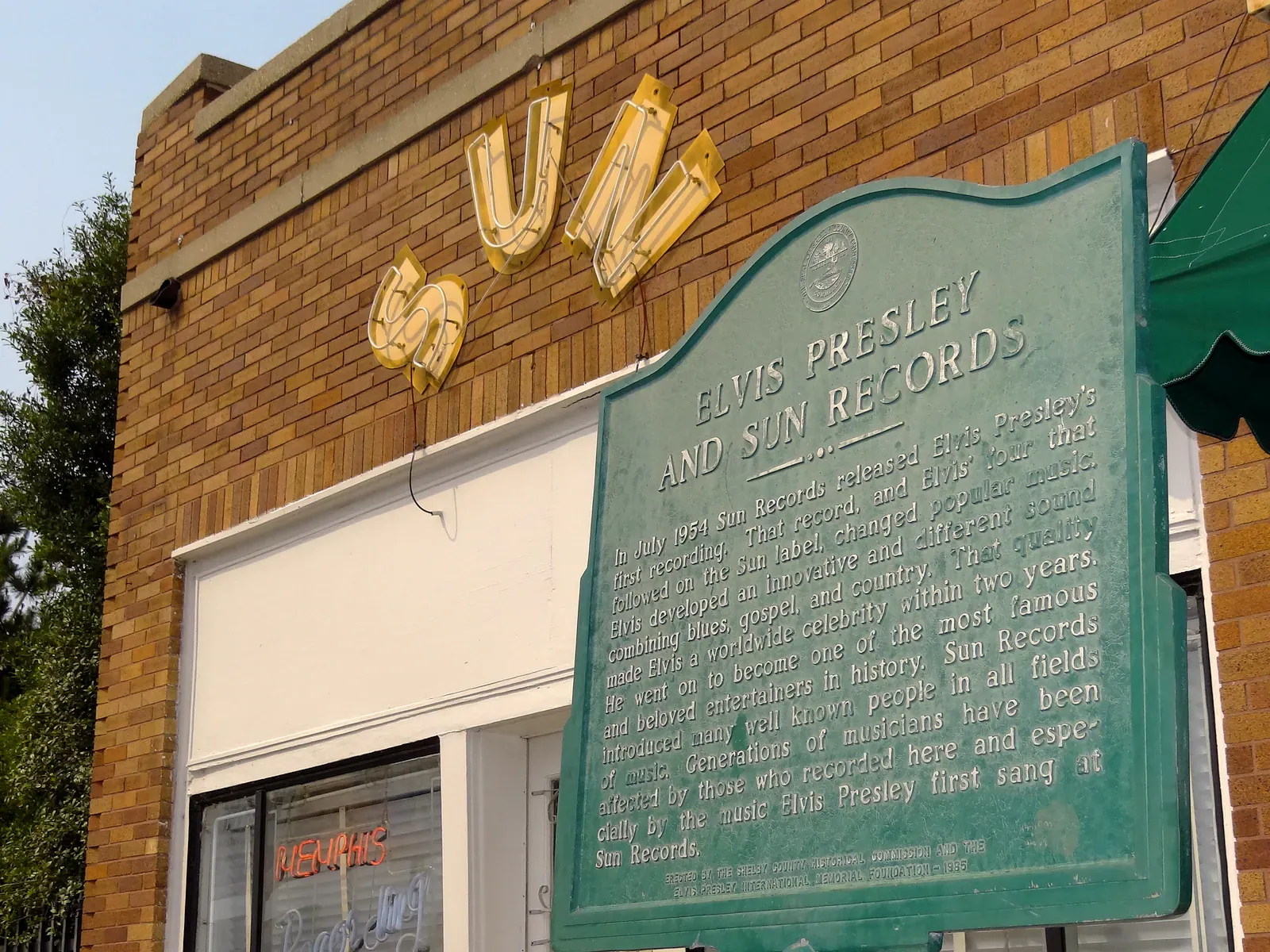
- 1950Sam Phillips opens the Memphis Recording ServiceThe studio at 706 Union Avenue later becomes Sun Studio.
- 1952Sam Phillips founds Sun RecordsThe Memphis label becomes the first home of Presley, Perkins, Cash and Lewis.
1954
Sun Studio and the first wave
Elvis Presley, Carl Perkins, Gene Vincent, Eddie Cochran and Jerry Lee Lewis cut the defining records. Sun in Memphis leads, then RCA, Capitol and Liberty sign the style for national release.
- 1954Elvis Presley records That's All RightPresley, Scotty Moore and Bill Black cut the blues number on July 5 at Sun, and it is released as his first single two weeks later.
- 1954Bill Haley records Rock Around the Clock for DeccaRecorded April 12, 1954; it became a number 1 after Blackboard Jungle used it in 1955.
- 1954Presley's first Louisiana Hayride appearanceOn October 16 the Shreveport radio show gave Presley a one-year contract despite a muted first reaction.
- 1955Carl Perkins records Blue Suede ShoesPerkins cut the song at Sun on December 19.
- 1956Blue Suede Shoes crosses overReleased January 1, it reached the top two on both the country and pop charts.
- 1956Presley makes his first RCA Victor recordingsThe January 10 Nashville session follows the move from Sun to RCA.
- 1956Train Kept A-Rollin' brings in distorted guitarPaul Burlison's fuzz-toned guitar on the Johnny Burnette Trio record is called an early intentional use of distortion.
- 1956Gene Vincent releases Be-Bop-A-LulaCapitol single F3450 reached number 7 on the Billboard pop chart.
- 1956Million Dollar Quartet jam at SunOn December 4 Presley, Perkins, Cash and Lewis play together at Sun; part of the tapes first appears on record in 1981.
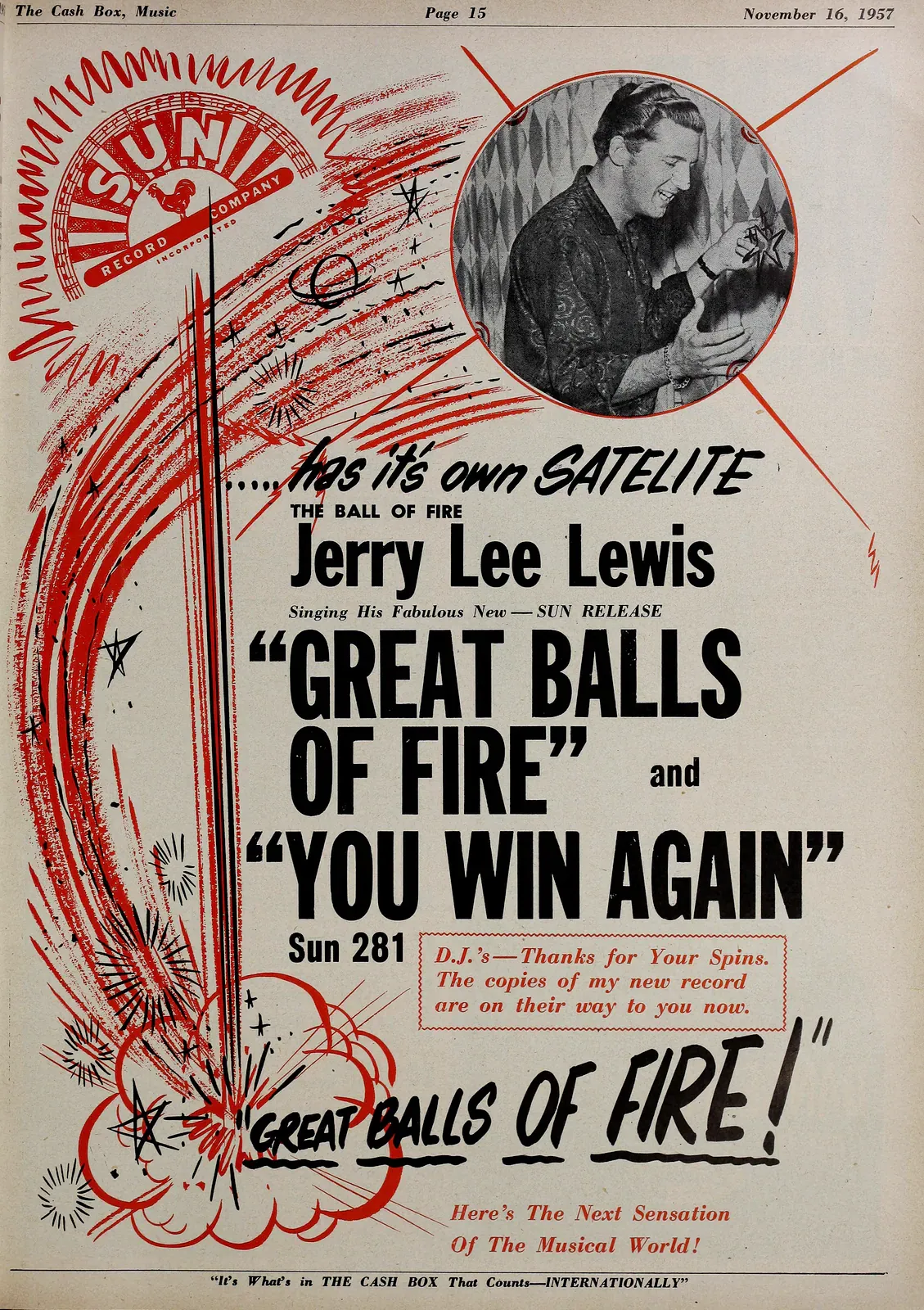
- 1957Jerry Lee Lewis releases Whole Lotta Shakin' Goin' OnThe piano-led Sun single becomes the first of his big hits.
- 1957Eddie Cochran's Twenty Flight Rock on LibertyLiberty issues the 1957 re-recording; an earlier take was cut at Gold Star Studios in Hollywood in 1956.
- 1958Eddie Cochran releases Summertime BluesReleased July 21 on Liberty after a March 28 session.
- 1958Presley is drafted into the US ArmyHis 1958 induction removes the genre's biggest star from the scene until 1960.
- 1959Buddy Holly dies in a plane crashThe February 3 crash, with Ritchie Valens and the Big Bopper, is cited among the causes of the first wave fading.
1960
Fade from the charts
Presley in the army, Holly dead in 1959 and Cochran dead in 1960 end the first wave. The style survives with British Teddy Boys, rockers and Beatles covers of Perkins.
- 1960Eddie Cochran dies after a UK taxi crashThe crash on April 16 near Chippenham ends his tour with Gene Vincent; he died the next day, aged 21.
1970
Revival from Wembley to the Stray Cats
A 1972 London rock and roll show, Dave Edmunds and Rockpile, the Cramps and then the Stray Cats bring rockabilly back, first in Britain and then to US charts.
- 1970Dave Edmunds releases I Hear You KnockingThe Smiley Lewis cover sold over three million copies and reached number 1 in the UK.
- 1972London Rock and Roll Show at WembleyThe show sparks the 1970s Teddy Boy revival in Britain.
- 1976The Cramps form in New YorkLux Interior and Poison Ivy mix 1950s rockabilly with punk and horror imagery around CBGB.
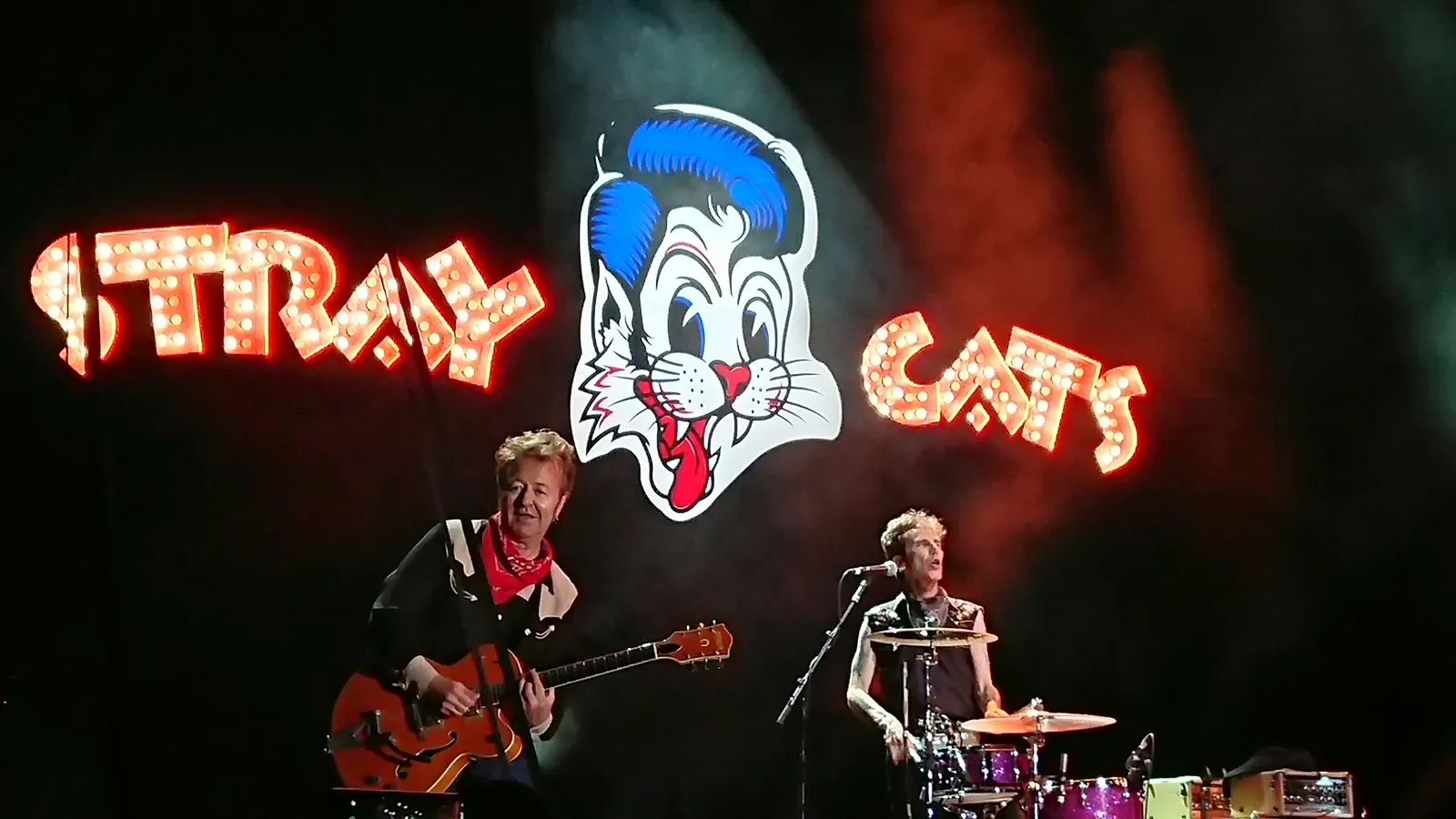
- 1979The Stray Cats form on Long IslandBrian Setzer, Lee Rocker and Slim Jim Phantom start a Sun-inspired trio in Massapequa.
- 1981Stray Cat Strut and Rock This Town released in the UKBoth singles came out in 1981 on Arista (UK) and later EMI America (US).
- 1982Built for Speed reaches number 2 in the USThe Stray Cats compilation went platinum in the US and spent 15 weeks at number 2.
1985
Neo-rockabilly and worldwide scenes
Reverend Horton Heat, Imelda May and festival weekenders keep the sound going, with fashion scenes in Japan, Europe and the US and offshoots such as psychobilly.
Listening path
Start listening
A short path from an easy way in to the deep end. Thumbnails come from YouTube; the player loads only when you press play.
- 01
Stray Cats, 1981
The Stray Cats single that took slap bass and a hollow-body guitar solo into the 1980s charts.
- 02
Carl Perkins, 1956
The Sun song that reached the top two on both the country and pop charts in 1956.
- 03
Eddie Cochran, 1958
Cochran's Liberty single, recorded in March 1958 and later covered by the Who and others.
- 04
Gene Vincent and His Blue Caps, 1956
The Capitol single that took the echoed, hiccuping vocal style to number 7 on the US pop chart.
- 05
Elvis Presley, 1954
Presley's first Sun single, recorded July 5, 1954: a blues song with a country lilt and no drum kit.
Facts
| Family | Rock |
| Origin | Memphis, United States |
| Emerged | Early to mid-1950s |
| Status | Revival |
| Tempo | 105 to 200 BPM |
| Meter | 4/4 |
| Grew out of | Country, Bluegrass, Western swing, Rhythm and blues, Rock and roll |
| Subgenres | 4 |
Rockabilly is a style of early rock and roll that joined hillbilly country music to rhythm and blues, taking shape in Memphis, Tennessee, around 1954.
It is marked by a slapped upright bass, a hollow-body electric guitar, slapback echo and a stuttering, hiccuping vocal, and it returned in waves from the 1970s onward as a revival and a fashion scene.
Origins
The name joins “rock” and “hillbilly”, and the music did the same. In the 1940s country bands already played fast hillbilly boogie, and Fred Maddox of the Maddox Brothers and Rose was slapping his upright bass by hand, producing the percussive pulse that later sat under nearly every rockabilly record. On early sides the slapped bass often stood in for drums.
The other ingredient came from Memphis. Sam Phillips opened the Memphis Recording Service in 1950 and started Sun Records in 1952, recording blues and country artists side by side in a small room. On July 5, 1954, Elvis Presley, guitarist Scotty Moore and bassist Bill Black cut a blues number, “That’s All Right”, at Sun. It was released as Presley’s first single about two weeks later and is often cited as a candidate for the first rock and roll record: a rhythm and blues song sung with a country lilt, with a doubled, echoing vocal and no drum kit.
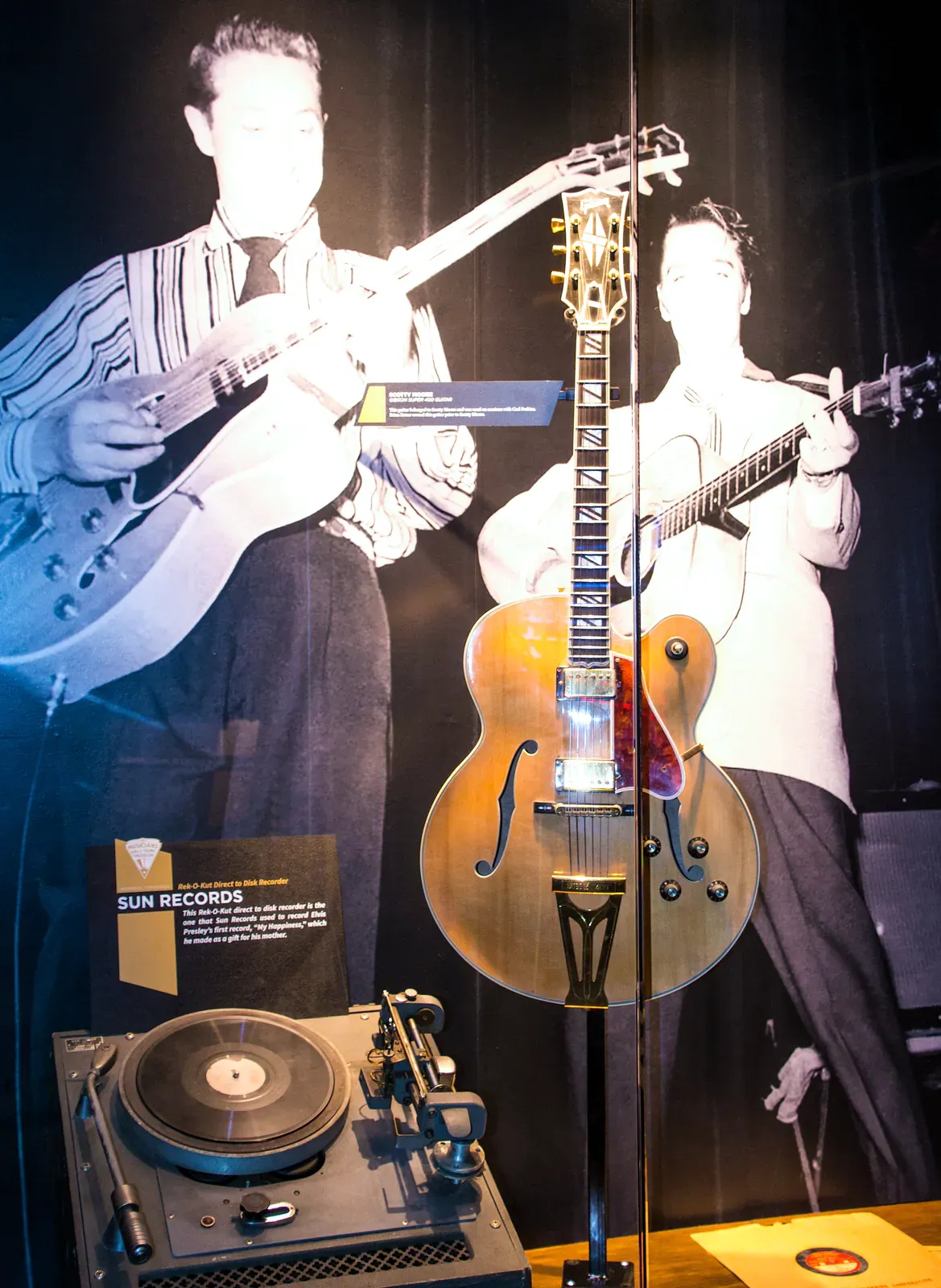
Sun Studio and the first wave, 1954-1959
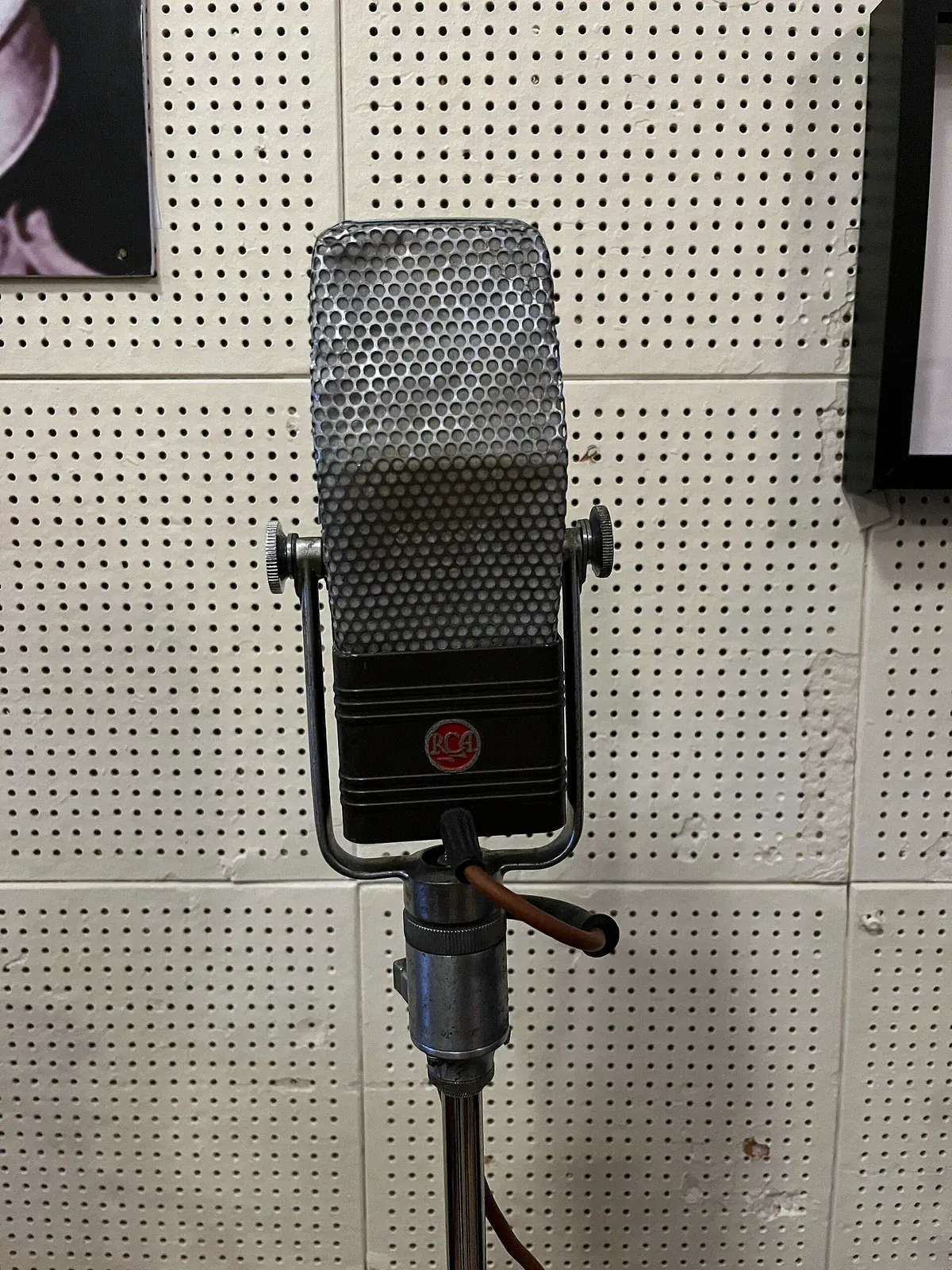
Sun became the style’s workshop. Phillips used a second tape machine to feed the signal back a fraction of a second late, which gave voices and guitars the slapback doubling that defines the sound. Presley’s October 1954 appearance on the Shreveport radio show Louisiana Hayride, a rival to the Grand Ole Opry, earned him a one-year contract and carried the sound across the South.
Carl Perkins recorded “Blue Suede Shoes” at Sun on December 19, 1955. Released on January 1, 1956, it reached the top two on both the country and pop charts, showing that rockabilly could cross over. Jerry Lee Lewis brought boogie-woogie piano to the same room and scored his first big hit with “Whole Lotta Shakin’ Goin’ On” in 1957. On December 4, 1956, Presley, Perkins, Johnny Cash and Lewis played together at Sun in an impromptu session whose tapes first appeared on record in 1981.
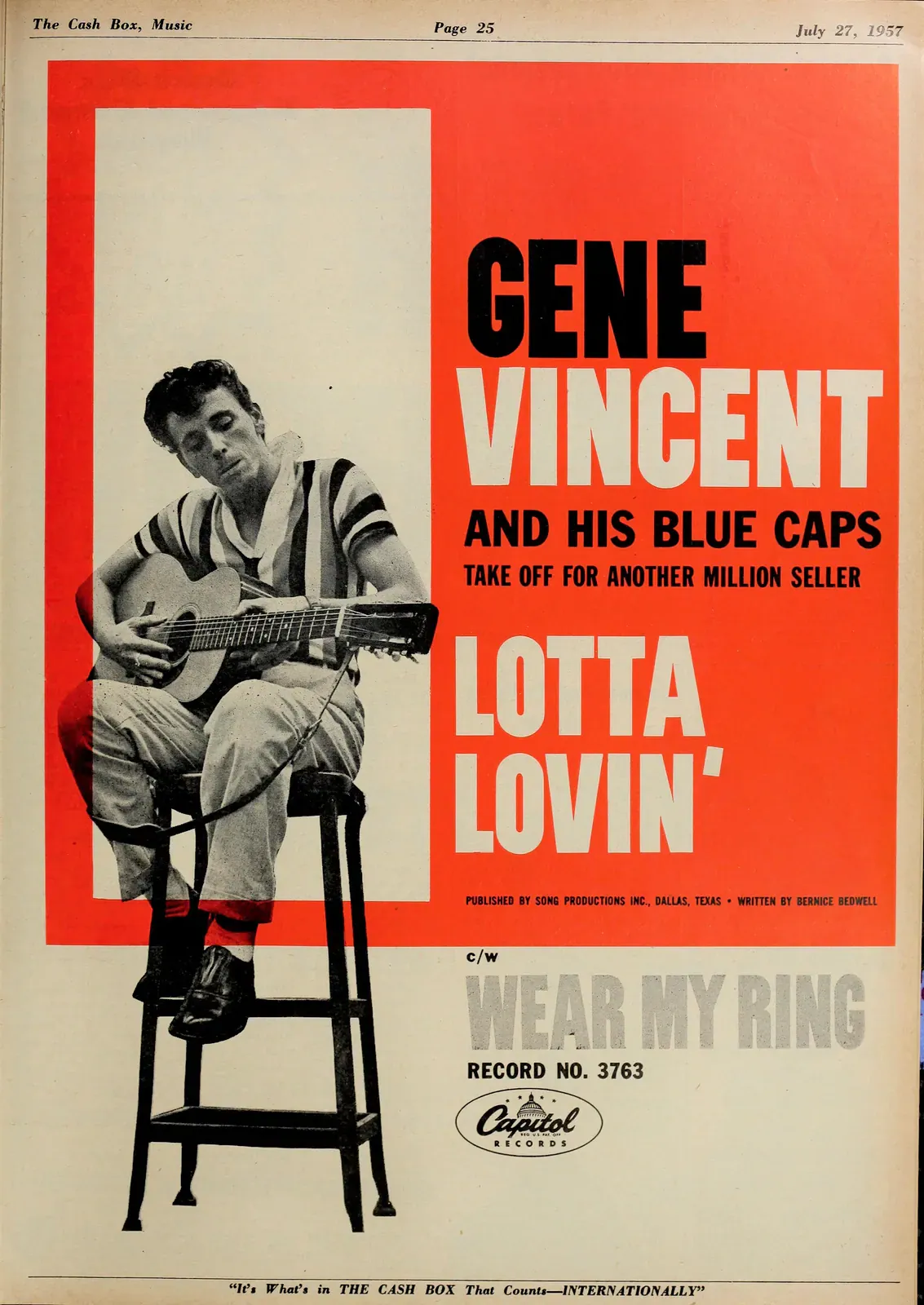
The major labels followed. Presley moved from Sun to RCA Victor and made his first RCA recordings in Nashville on January 10, 1956. Capitol answered with Gene Vincent and His Blue Caps, whose “Be-Bop-A-Lula” reached number 7 on the Billboard pop chart in 1956. On the West Coast, Liberty released Eddie Cochran’s “Twenty Flight Rock” in 1957, after an earlier take at Gold Star Studios in Hollywood, and “Summertime Blues” in 1958. Outside Memphis the sound also drew from the Norfolk, Virginia scene that produced Vincent, and from the guitar breaks of the Johnny Burnette Trio, whose 1956 “Train Kept A-Rollin’” has Paul Burlison’s fuzz-toned guitar, an early intentional use of distortion.
Fade from the charts, 1960-1969
The first wave ended within a few years. Presley was drafted into the US Army in 1958 and was away until 1960. Buddy Holly died in a plane crash on February 3, 1959, and Eddie Cochran died on April 17, 1960, a day after a taxi crash near Chippenham in England, aged 21. Major labels shifted toward smoother pop, and the style left the charts.

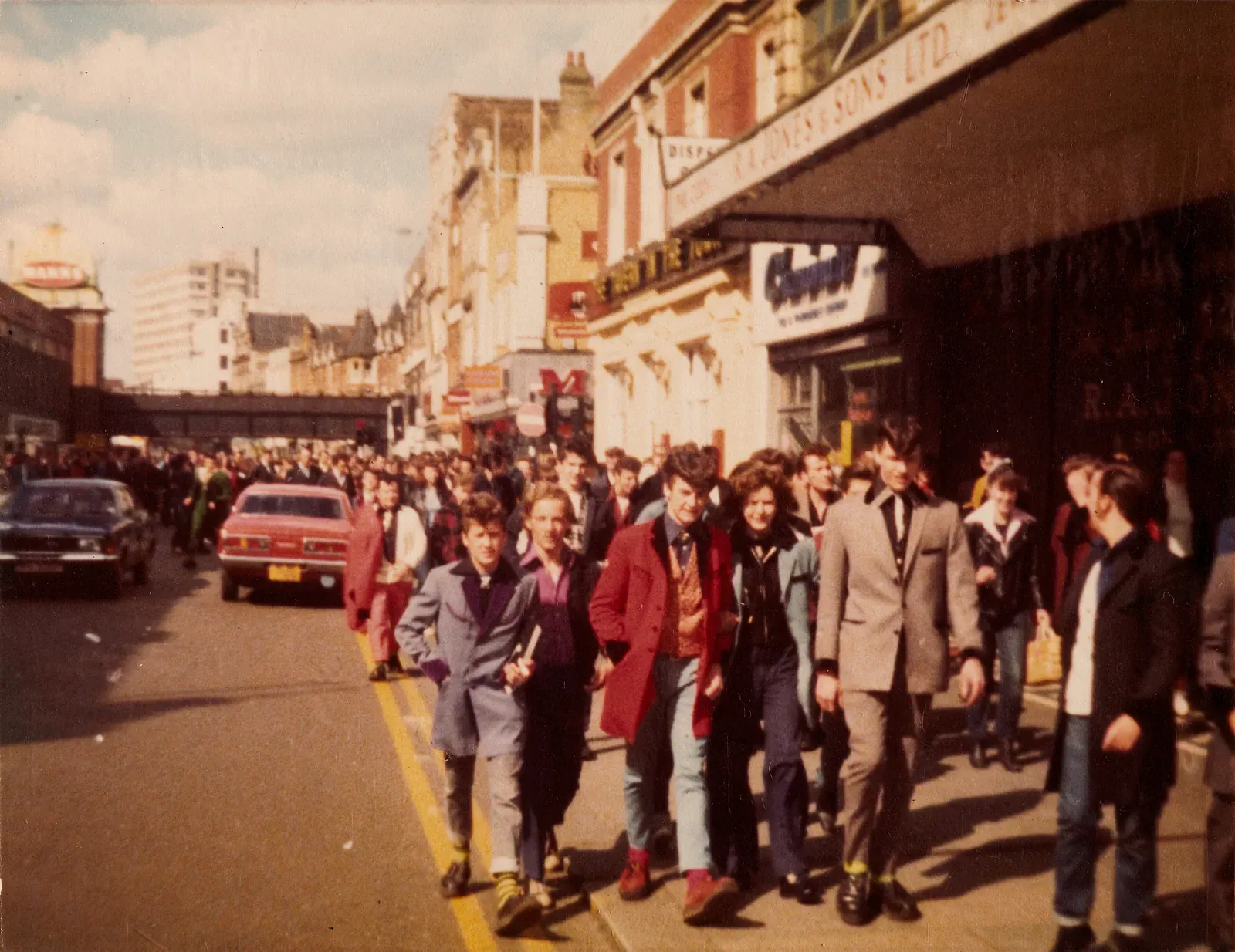
It survived abroad. In Britain, Teddy Boys and later rockers kept Vincent and Cochran records in rotation, and the Beatles covered Perkins songs.
Revival, 1970-1984
A 1972 London Rock and Roll Show at Wembley sparked a Teddy Boy revival in Britain, and Dave Edmunds’ 1970 cover of “I Hear You Knocking” in a 1950s manner sold more than three million copies. In New York, the Cramps formed in 1976 around the CBGB scene and mixed rockabilly with punk and horror imagery, an offshoot that came to be called psychobilly.
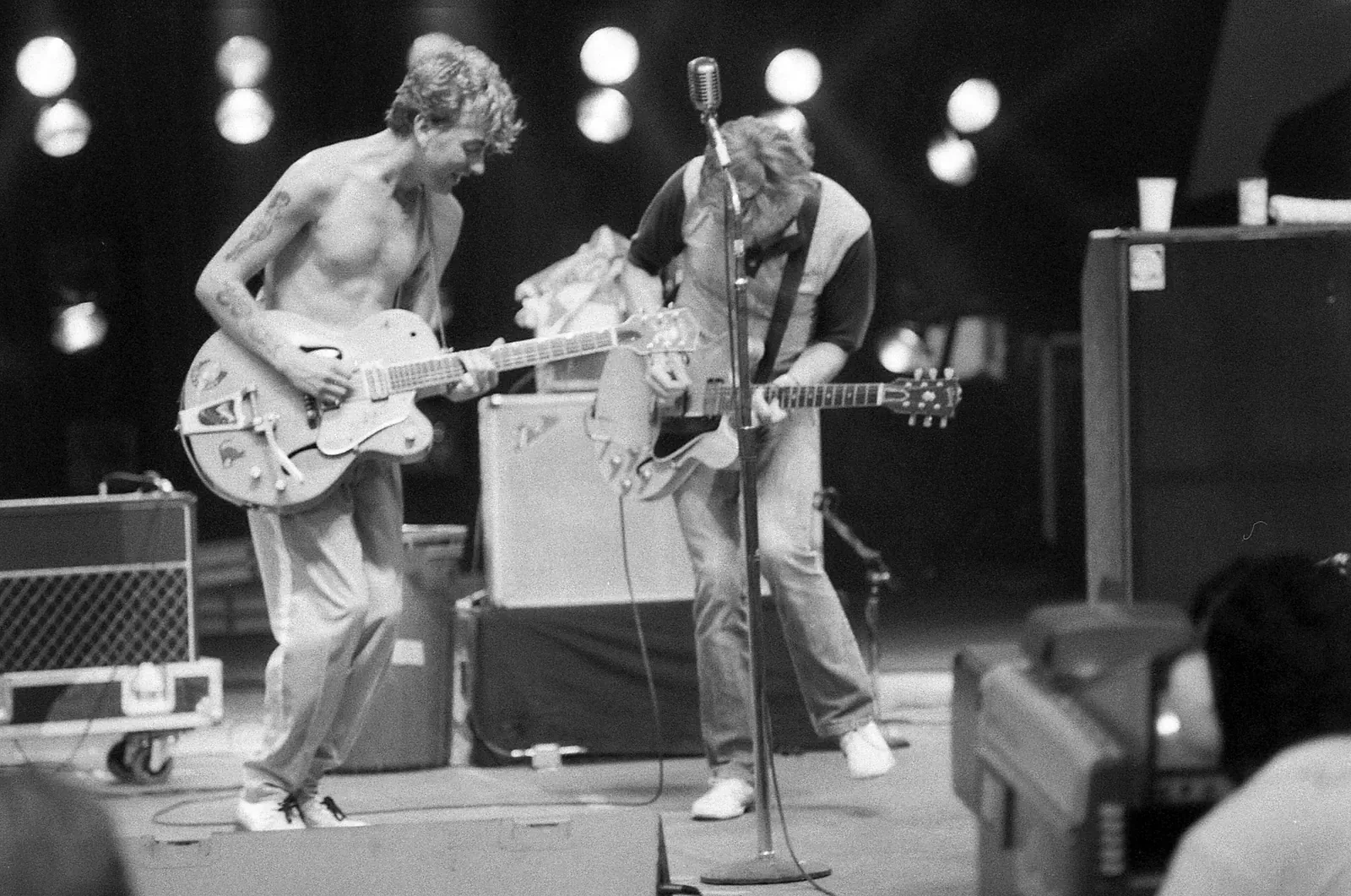
The decisive revival act was the Stray Cats, a trio formed on Long Island in 1979 by Brian Setzer, Lee Rocker and Slim Jim Phantom. “Stray Cat Strut” and “Rock This Town” came out in 1981, first in the UK, and the compilation “Built for Speed” spent 15 weeks at number 2 in the US in 1982. Edmunds produced early Stray Cats recordings.
Neo-rockabilly and worldwide scenes, 1985 onward
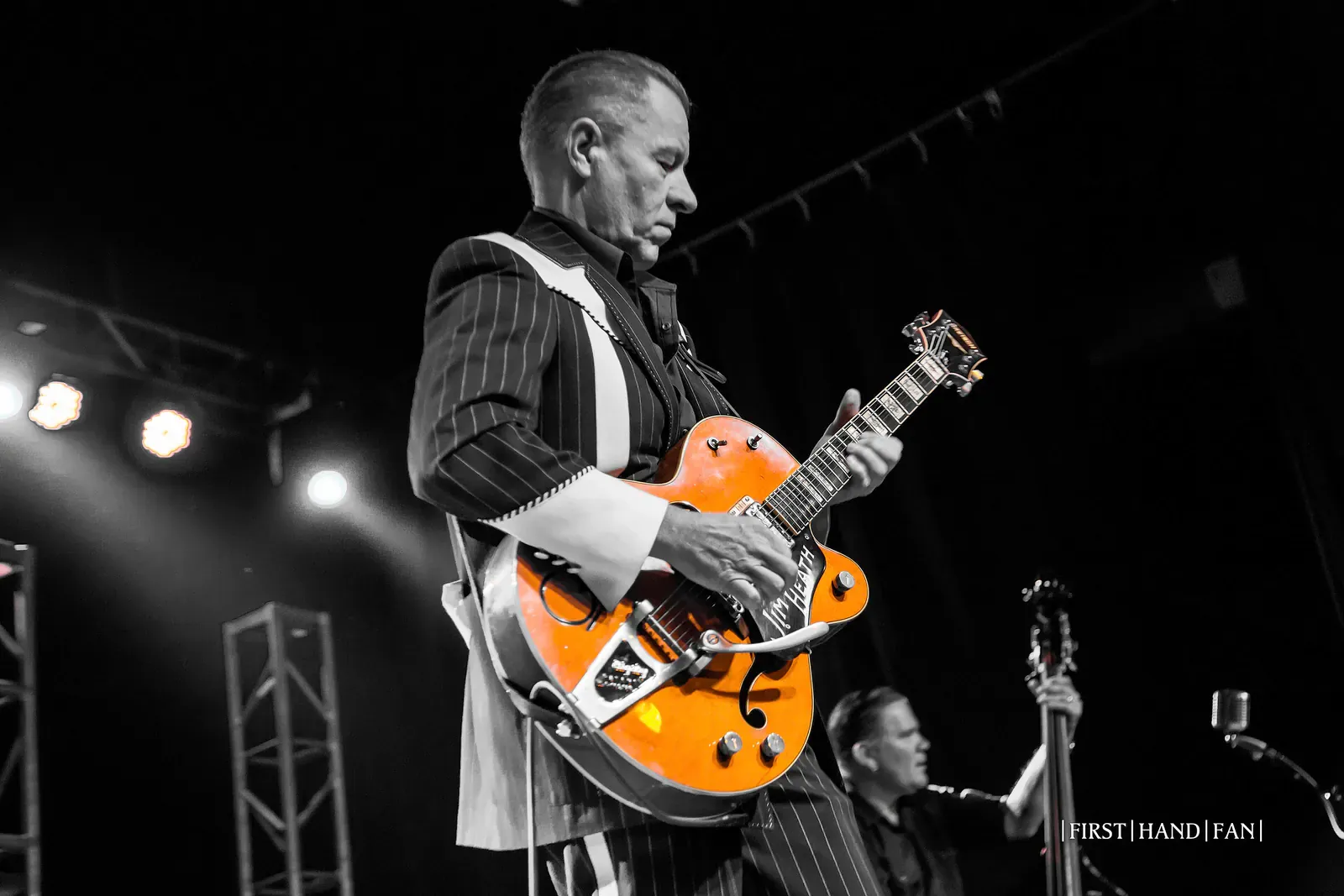
From 1985 the style split into neo-rockabilly bands and fashion scenes. Reverend Horton Heat, from Dallas, led the genre in the US. Imelda May and festival weekenders keep the sound going, with fashion scenes in Japan, Europe and the US.
Characteristics
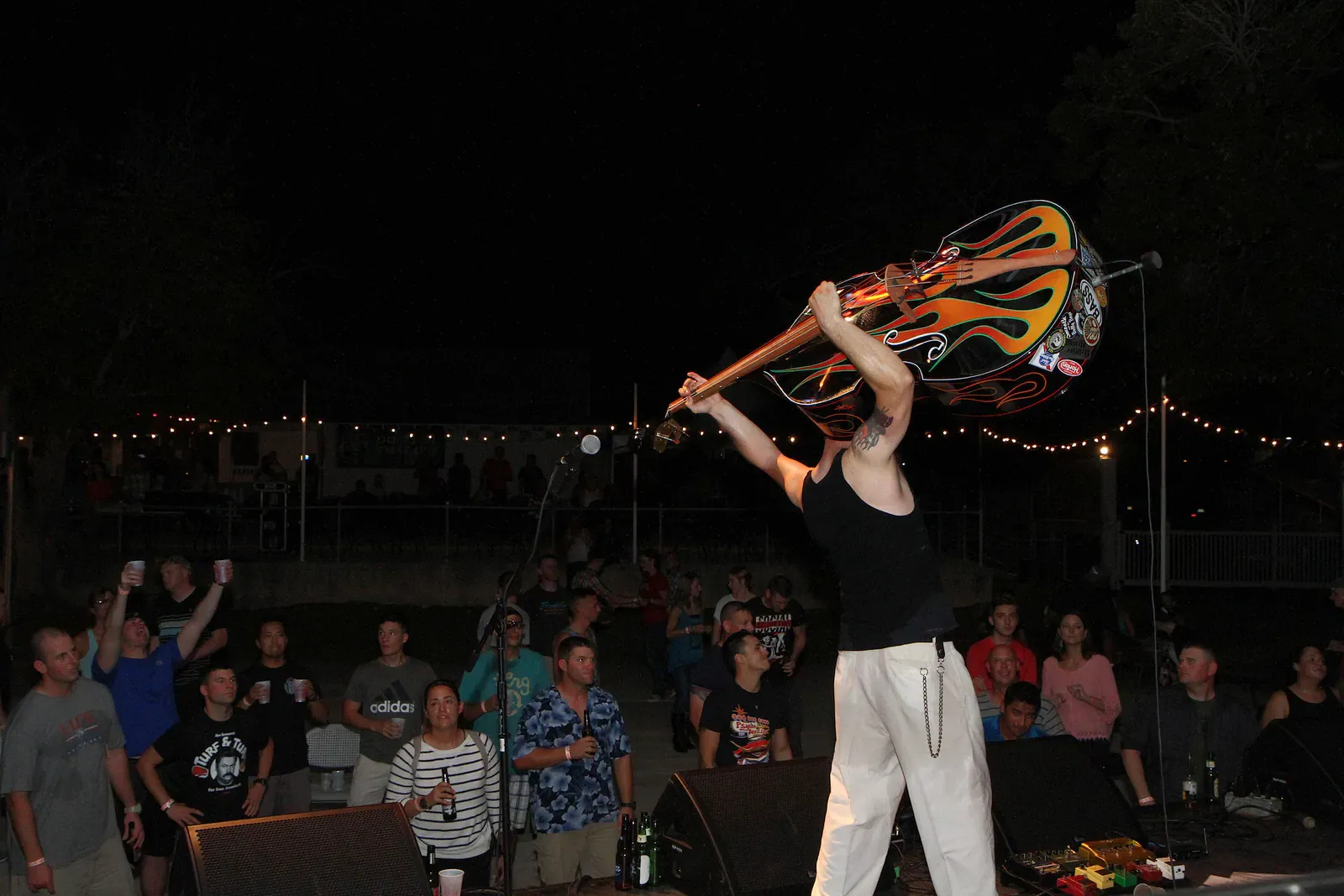
A rockabilly track is built on an upright bass played percussively, with the strings slapped against the fingerboard, a lead guitar that takes short, fast breaks between vocal lines, and a rhythm guitar that locks in with the bass. Vocals bounce between a croon, a hiccup and a shout, usually with a single short echo behind them. Early records have no drum kit or very little, and drums became standard by 1955 to separate the music from country.
Instruments and production
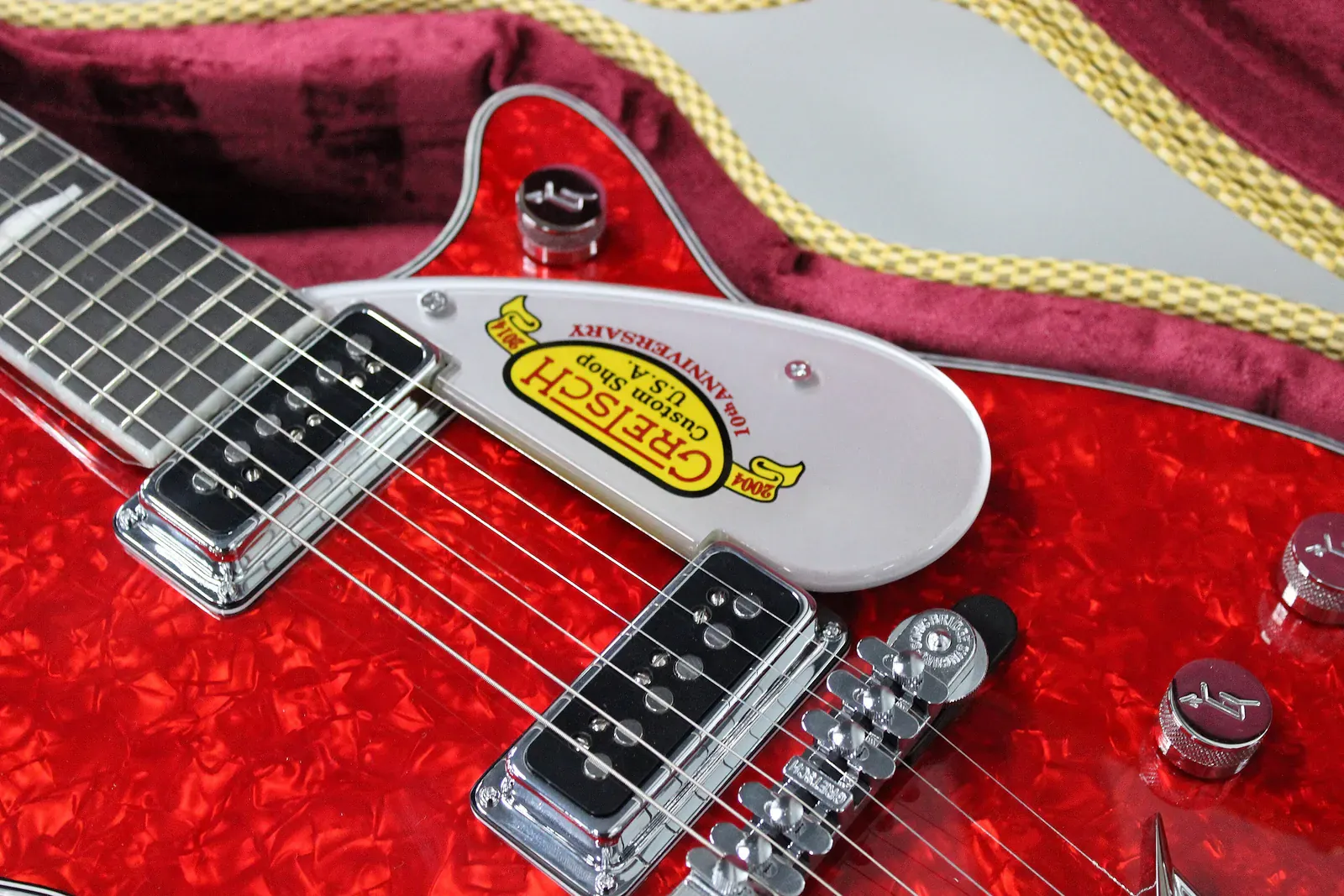
The sound depends on equipment as much as on playing. Sun’s tape echo made a small room sound larger and gave single voices a doubled quality. Hollow-body electric guitars, especially Gretsch models associated with Setzer, carry the lead, and Scotty Moore’s fancy fingerpicking set the early pattern. Revival bands kept these tools, pairing slapped bass and a small kit with hollow-body guitars.
Notable recordings
“That’s All Right” is the founding record. Its source was a blues song, but its rhythm, vocal delivery and lack of drums made it something new, and Phillips released it on Sun in July 1954. “Blue Suede Shoes” proved the market: it reached the top two on both the country and pop charts, and Perkins wrote it himself. “Be-Bop-A-Lula” put the hiccuping vocal on a national hit and gave Capitol its answer to Presley. “Twenty Flight Rock” is remembered partly because Paul McCartney later played it to audition for John Lennon, and “Summertime Blues” became a standard covered by The Who and others.
Culture
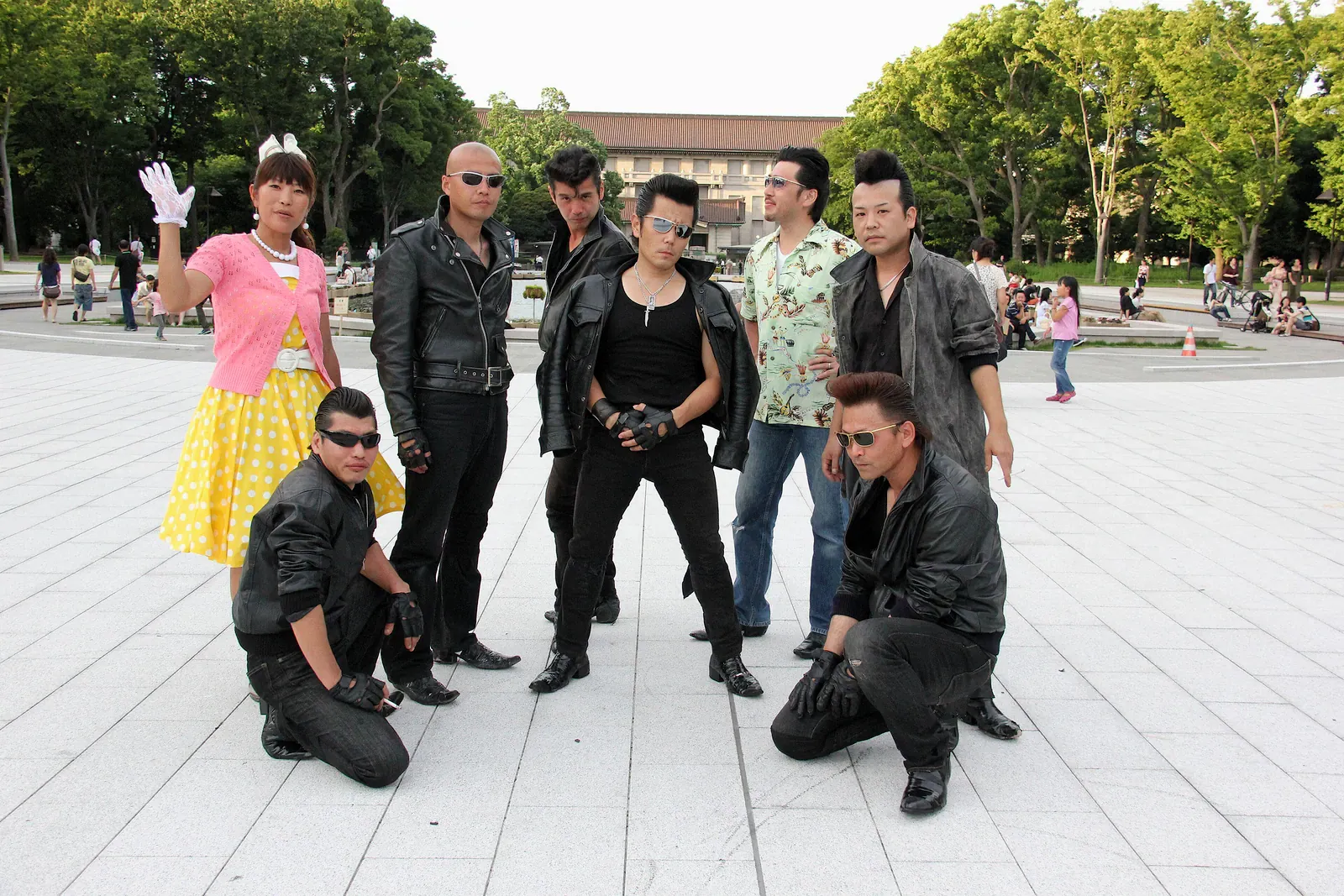
Rockabilly was never only a sound. In Britain it fed the Teddy Boys, who wore Edwardian frock coats, drape jackets and suede creepers, and later the rockers in leather jackets and pompadours who followed Vincent. After 1976 the Cramps added horror and B-movie imagery. A long-running Japanese scene of slicked-back hair and leather jackets and European and American festival weekenders keep the look alive.
Legacy
Paul Burlison’s distorted break pointed ahead to the guitar tones of the next decades, the Cramps and their followers drew on it for punk, and psychobilly grew out of that mix. The style also left a template for rock revival movements: a clear set of tools, a look and a canon of 1950s records. Rock and country both owe it a debt, and honky-tonk and rhythm and blues are its direct roots. Its energy also fed punk rock.
Misconceptions
One myth is that Elvis Presley and Sun Records invented rock and roll alone. Rockabilly was one strand of a wider fusion: Bill Haley recorded “Rock Around the Clock” on April 12, 1954, months before Presley’s first single, and it became a number 1 hit only after the 1955 film Blackboard Jungle used it.
Another is that rockabilly is only country with a faster beat. Its core songs were often blues or rhythm and blues numbers sung with a country delivery, and “That’s All Right” began as a blues record.
A third is that the style died with the first wave. Presley’s army service, Holly’s death in 1959 and Cochran’s in 1960 ended the original run, but Teddy Boys, the 1972 Wembley show, the Cramps and the Stray Cats show that the music came back.
Frequently asked questions
What is rockabilly music?
Rockabilly is an early rock and roll style from the mid-1950s American South that blended hillbilly country, boogie and rhythm and blues. It is known for slapped upright bass, slapback echo and hiccuping vocals.
Who invented rockabilly?
No single person did. Sam Phillips’ Sun Records in Memphis recorded the first records in the style, and Elvis Presley’s “That’s All Right” in 1954 is often cited as a candidate for the first rock and roll record, alongside work by Carl Perkins and Jerry Lee Lewis.
What is the difference between rockabilly and rock and roll?
Rockabilly is one branch of rock and roll with a country foundation, small lineups and prominent slap bass and echo. Rock and roll also includes rhythm and blues, doo-wop and piano-led styles.
What is neo-rockabilly?
Neo-rockabilly is the revival that began with the Stray Cats in the early 1980s and continued with bands such as Reverend Horton Heat, mixing 1950s sounds with faster tempos and punk-influenced energy.
Sound
Sound sheet
Signature sounds
- Slapback echo on the vocal
- Slapped upright bass
- Hollow-body guitar break
- Hiccuping, stuttering vocal
- Sparse or absent drums on early sides
Techniques
- Slapback echo
- Slap bass
- Vocal hiccup
- Distorted guitar break
Keys and modes
A major. Perkins started Blue Suede Shoes on an A chord, and Be-Bop-A-Lula is listed in A.
Vocals
Flamboyant singing with hiccups, stutters and falsetto-to-bass swoops, delivered nervously up tempo.
Scenes
Where it happened
Where and when the sound lived: one bar per city on a shared timeline.
North America
Europe
Active scenes
Peak 7, 1985-2025
Sun Studio and Sam Phillips recorded Presley, Perkins, Cash and Lewis here.
The Louisiana Hayride radio show showcased Presley and other Sun acts.
Gene Vincent and the Blue Caps came out of the local music scene.
Capitol and Liberty signed rockabilly acts and Cochran recorded at Gold Star in Hollywood.
The Teddy Boy revival and 1980 arrival of the Stray Cats made London the revival hub.
CBGB-era punk bands such as the Cramps and Robert Gordon revisited rockabilly.
Reverend Horton Heat formed here and led neo-rockabilly in the US.
Venues and places
Memphis, 1950 to today. 706 Union Avenue studio where Phillips cut Presley, Perkins, Cash and Lewis.
Shreveport, 1948 to today. Radio show from the Municipal Memorial Auditorium that ran until 1960 and booked Presley in 1954.
Hollywood, 1957 to today. Hollywood studio where Eddie Cochran cut an early Twenty Flight Rock take in 1956 and Summertime Blues in 1958.
New York, 1976 to today. Punk club where Robert Gordon and the Cramps built the late-1970s revival.
London, 1972 to today. Host of the 1972 London Rock and Roll Show that restarted the Teddy Boy scene.
Culture
Culture markers
- Teddy Boy dress
Edwardian frock coats, drape jackets and suede creepers worn by British fans.
Fashion - Greaser look
Leather jackets and pompadours adopted by 1960s rockers who followed Gene Vincent.
Fashion - Japanese rockabilly style
Slicked-back hair and leather jackets form a long-running youth subculture in Japan.
Fashion - Horror and B-movie imagery
The Cramps paired rockabilly with horror-film visuals and humor.
Artwork - Hillbilly Cat
Early nickname for Presley that captured the genre's country-blues mix.
Slang
Media
Key media
- 1948Louisiana Hayride
by KWKH Shreveport. Live radio show that was the main rival to the Grand Ole Opry and a key showcase for Presley.
Radio - 1955Blackboard Jungle
by Richard Brooks. The film that used Rock Around the Clock and made it a number 1 hit.
Film - 1973American Graffiti
by George Lucas. Film that fed 1970s nostalgia for 1950s rock and roll.
Film - 1981Million Dollar Quartet
by Presley, Perkins, Lewis and Cash. First European release of part of the 1956 Sun jam session tapes.
Compilation
Glossary
Terms on this page
A vocal trick of stutters and breaks, as on Be-Bop-A-Lula, common in rockabilly singing.
Fast country boogie of the 1940s that fed directly into rockabilly.
Early nickname for Elvis Presley, from the country-and-blues mix of his Sun records.
Punk-edged offshoot that the Cramps named, mixing rockabilly with horror imagery.
Playing the upright bass by slapping the strings against the fingerboard to produce a percussive click.
A single short repeat of the signal from a second tape machine, giving vocals and guitar a doubled, live feel.
British youth subculture in Edwardian-style clothes that adopted rock and roll and revived in the 1970s.
Rock family