Punk rock
Punk rock is fast, short, distorted rock that emerged in New York, London and Brisbane in the mid-1970s and spread a do-it-yourself method of music-making.
New York City, 1974
Rock family
Born
1974
New York City
Subgenres
46
Documented branches
Links
70
Genres it drew on or shaped
Tempo
130-190 BPMLineage
Family tree
Grew out of
Derived from
Derived from
- Proto-punk
Derived from
Influenced by
Pushed back against
Progressive rockArena rock
New York City, 1974
Punk rock
Led to (66)
Timeline
Era by era
From the first sparks to today. Select a dot to read the story behind it.
- Garage roots and a name
1965 to 1973
- The Bowery and Brisbane
1973 to 1975
- London year zero
1976 to 1977
- Splintering
1978 to 1983
- Underground networks
1984 to 1993
- Platinum punk and revival
1994 to 2026
Eras
Moments
- 1 Garage roots and a name, 1965 to 1973
- 2 The Bowery and Brisbane, 1973 to 1975
- 3 London year zero, 1976 to 1977
- 4 Splintering, 1978 to 1983
- 5 Underground networks, 1984 to 1993
- 6 Platinum punk and revival, 1994 to 2026
around 1965
Garage roots and a name
Garage bands, the Stooges and the Velvet Underground set the template, and critics started using the phrase punk rock for raw, amateur guitar music.
- 1970The phrase punk rock appears in printEd Sanders used it in 1970, and Dave Marsh applied it to ? and the Mysterians in Creem in 1971, long before any scene.
1973
The Bowery and Brisbane
CBGB opened in New York, the Ramones and Patti Smith found an audience, and in Brisbane the Saints were building their own scene far from any industry.
- 1973CBGB opens on the BoweryHilly Kristal's club at 315 Bowery opened on 10 December 1973 and became the home of the New York scene.
- 1974Patti Smith releases Hey Joe and Piss FactoryHer self-financed June 1974 single is often cited as the first punk record from the New York scene.
- 1974Ramones play their first CBGB showThe band debuted at the club in August 1974 and kept up a heavy schedule of gigs there.
- 1975Patti Smith's HorsesReleased 10 November 1975 on Arista, produced by John Cale, it peaked at No. 47 in the US.
- 1975Sex Pistols play their first gigThe first show took place at Saint Martin's School of Art in London in November 1975.
1976
London year zero
The Sex Pistols, Clash, Damned and Buzzcocks turned a small scene into a national scandal. The Roxy opened, indie singles appeared and the first punk albums landed.
- 1976Ramones release their debut albumRecorded for $6,400, it came out on 23 April 1976 on Sire and runs 29 minutes.
- 1976The 100 Club Punk FestivalOn 20 and 21 September 1976 the Sex Pistols, Clash, Damned and Buzzcocks shared a London bill.
- 1976The Saints self-release (I'm) StrandedPressed as 500 copies on their own Fatal Records in September 1976, a month before New Rose.
- 1976The Damned release New RoseOut on Stiff on 22 October 1976, it is described as the first single by a British punk band.
- 1976Sex Pistols release Anarchy in the U.K.Their debut single came out on EMI on 26 November 1976 and was recorded with producer Chris Thomas.
- 1976The Bill Grundy interviewA swearing exchange on Thames Television on 1 December 1976 made the Sex Pistols tabloid headlines overnight.
- 1976The Roxy opens in Covent GardenLondon's first dedicated punk venue held its first show on 14 December 1976 and closed in spring 1977.
- 1977Buzzcocks release Spiral Scratch on their own labelFunded with about 750 pounds from friends and family, it came out on 28 January 1977 on New Hormones.
- 1977The Clash release their debut albumRecorded for about 4,000 pounds and issued by CBS on 8 April 1977, it reached No. 12 in the UK.
- 1977God Save the Queen in Jubilee weekReleased 27 May 1977 on Virgin, it reached No. 2 amid a BBC ban and claims the chart was fixed.
- 1977Never Mind the Bollocks goes to courtThe UK No. 1 album of 28 October 1977 led to an obscenity case over its title that ended in acquittal on 24 November.
1978
Splintering
The Sex Pistols split, bands went pop, reggae or darker, and punk branched into post-punk, new wave, Oi! and hardcore.
- 1978Sex Pistols split after WinterlandAfter their last US show on 14 January 1978 in San Francisco, the band announced the end days later.
- 1978Teenage Kicks on Good VibrationsThe Undertones' September 1978 EP from Belfast was recorded for about 200 pounds and championed by John Peel.
- 1979The Clash release London CallingThe double album appeared in the UK on 14 December 1979 and reached No. 27 in the US the following year.
around 1984
Underground networks
Punk lived on through hardcore, independent labels such as Dischord and Epitaph, fanzines and touring circuits, away from radio and major labels.
1994
Platinum punk and revival
Green Day and the Offspring took punk to multi-platinum sales in 1994. Veteran bands still tour and release records, and the sound keeps feeding new generations.
- 1994Dookie and Smash bring punk to the mainstreamGreen Day's Dookie (Reprise, February) and the Offspring's Smash (Epitaph, April) both sold in the millions.
- 2004Green Day release American IdiotThe 21 September 2004 punk rock opera went to No. 1 in the US and UK and won the Grammy for Best Rock Album.
- 2006CBGB closesThe Bowery club shut on 15 October 2006 after a three-and-a-half hour farewell set by Patti Smith.
Listening path
Anthems
The records that built the sound, grouped by the part they played. Thumbnails come from YouTube; the player loads only when you press play.
- 01
Ramones, 1976 · Sire Records
The Hey Ho Let's Go chant on the debut album set the speed, length and plainness that later punk bands copied.
Start hereOrigin - 02
The Saints, 1976
A self-released Brisbane single that reached vinyl a month before New Rose and showed punk was not only a US or UK story.
Origin - 03
The Damned, 1976 · Stiff
Described as the first single by a British punk band, it was cut in about a day and gave the London scene its first record.
Origin - 04
Sex Pistols, 1976
Its November 1976 release and the Bill Grundy scandal that followed put punk on every British front page.
Start hereBreakthrough - 05
Richard Hell and the Voidoids, 1977 · Sire Records
The New York scene's self-description, written by Richard Hell, whose torn clothes and safety pins shaped punk style.
Anthem - 06
Sex Pistols, 1977 · Virgin Records
A Jubilee-week attack on the monarchy that the BBC banned and that reached No. 2 amid chart-fixing claims.
Anthem - 07
The Undertones, 1978 · Good Vibrations
A 200-pound Belfast recording that John Peel championed on BBC Radio 1 and called his all-time favourite song.
Anthem - 08
Buzzcocks, 1978 · United Artists Records
Pete Shelley's melodic love song showed punk could write a pop hook; it reached No. 12 in the UK.
Start hereAnthem - 09
The Clash, 1979
The title track of the double album that widened punk into reggae and rockabilly and reached the US top 30.
Crossover - 10
Green Day, 1994
A single from Dookie, which sold over 20 million copies, that made melodic punk a 1990s radio staple.
Revival - 11
The Offspring, 1994 · Epitaph
Topped the Modern Rock chart in 1994 and drove Smash to more than 11 million sales on an independent label.
Revival - 12
Green Day, 2004
A 2004 political punk single and album that went to No. 1 in the US and UK and brought the sound to a new generation.
Revival
Facts
| Family | Rock |
| Origin | New York City, United States |
| Emerged | Mid-1970s |
| Status | Active |
| Tempo | 130 to 190 BPM |
| Meter | 4/4 |
| Grew out of | Garage rock, Rock and roll, Proto-punk |
| Subgenres | 42 |
Punk rock is a style of rock music defined by short songs, fast tempos, distorted power chords and shouted vocals. It took shape in the mid-1970s in New York, London and Brisbane, among bands with more nerve than technique and no wish to wait for a record deal.
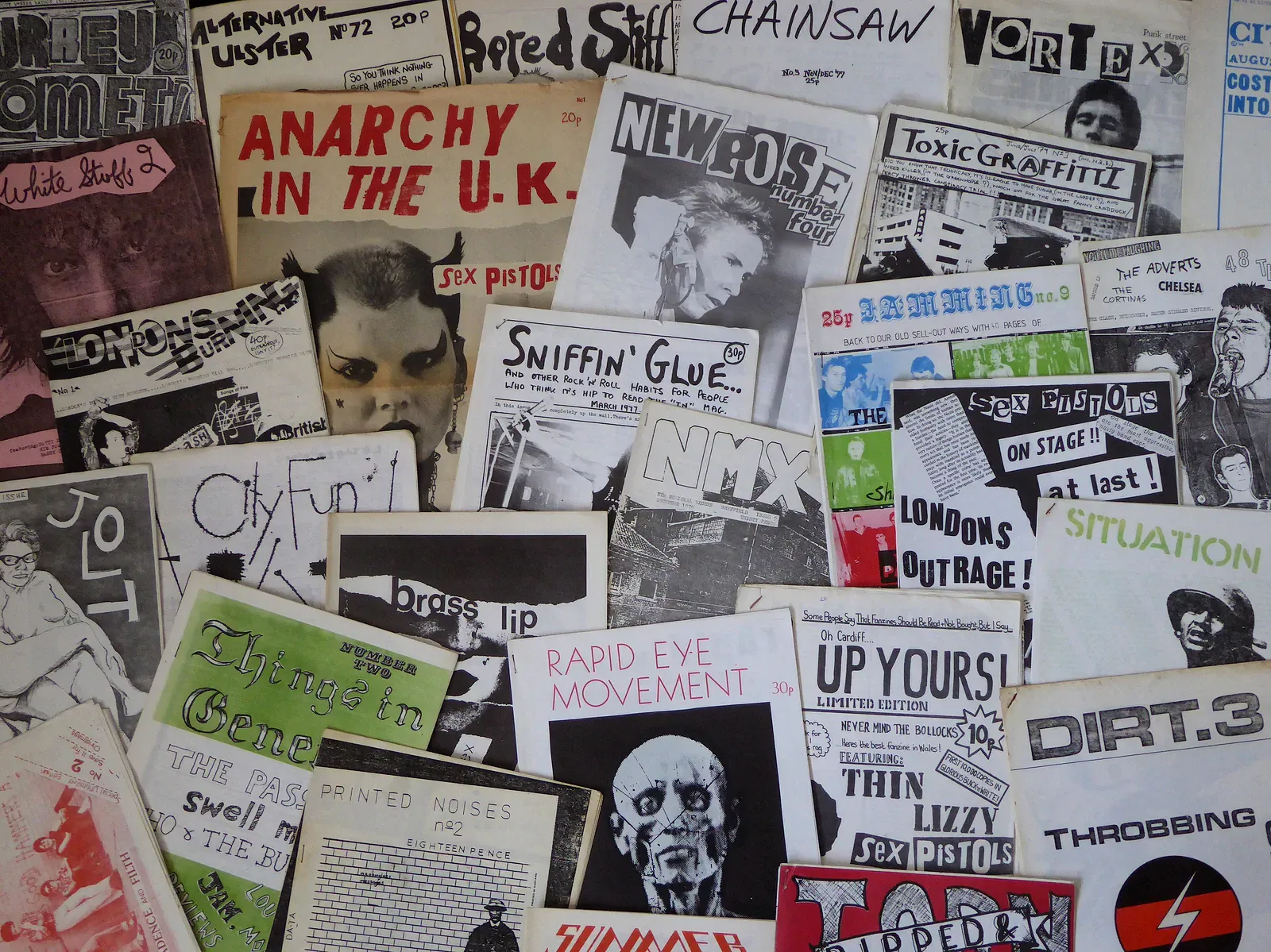
Beyond its sound it names a method of working (self-written songs, self-released records, photocopied fanzines), and it is the root of dozens of later genres in the rock family.
Origins
Three records from 1976 mark the beginning, and each comes from a different country.
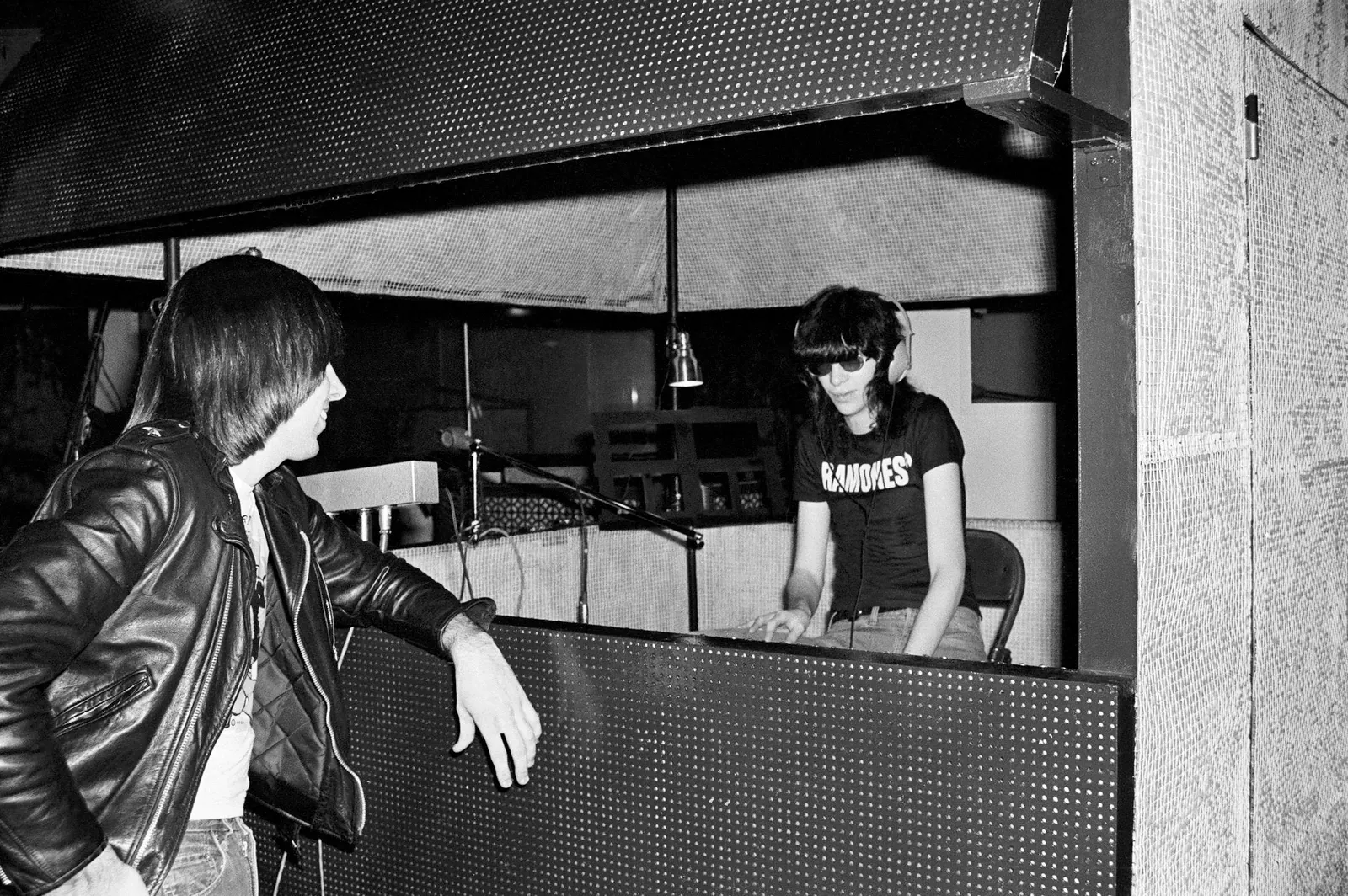
The Ramones recorded their first album at Plaza Sound Studios in New York. It opens with “Blitzkrieg Bop”, a “Hey! Ho! Let’s go!” chant over three chords at full speed. The album came out on Sire on 23 April 1976.
In Brisbane, the Saints turned a share house on Petrie Terrace into a venue, a promotions company and a label. They pressed 500 copies of “(I’m) Stranded” on their own Fatal Records in September 1976. In London, the Damned recorded “New Rose” with producer Nick Lowe in about a day, and Stiff released it on 22 October 1976. It is described as the first single by a British punk band.
Three groups with no contact were reaching for the same sound.
Garage roots and a name, 1965-1973
The word came before the scene. Ed Sanders used “punk rock” in 1970, and a critic in Creem applied it to ? and the Mysterians in 1971. It described garage bands of the mid-1960s, teenagers with cheap amplifiers and sneering vocals. The Stooges and the Velvet Underground added menace and noise.
By 1973 progressive and arena rock had pushed that raw tradition off the radio, and punk reacted against both.
The Bowery and Brisbane, 1973-1975
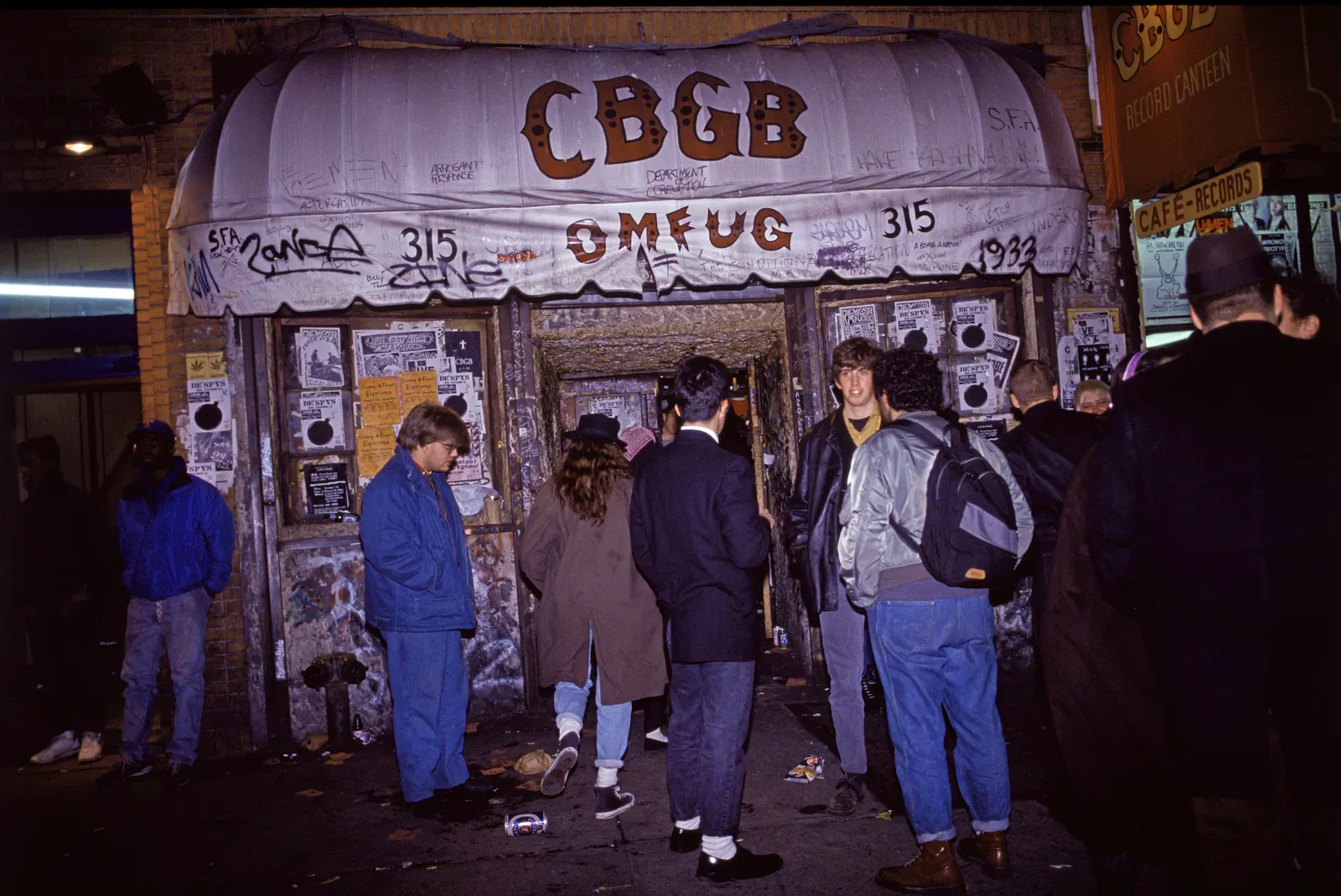
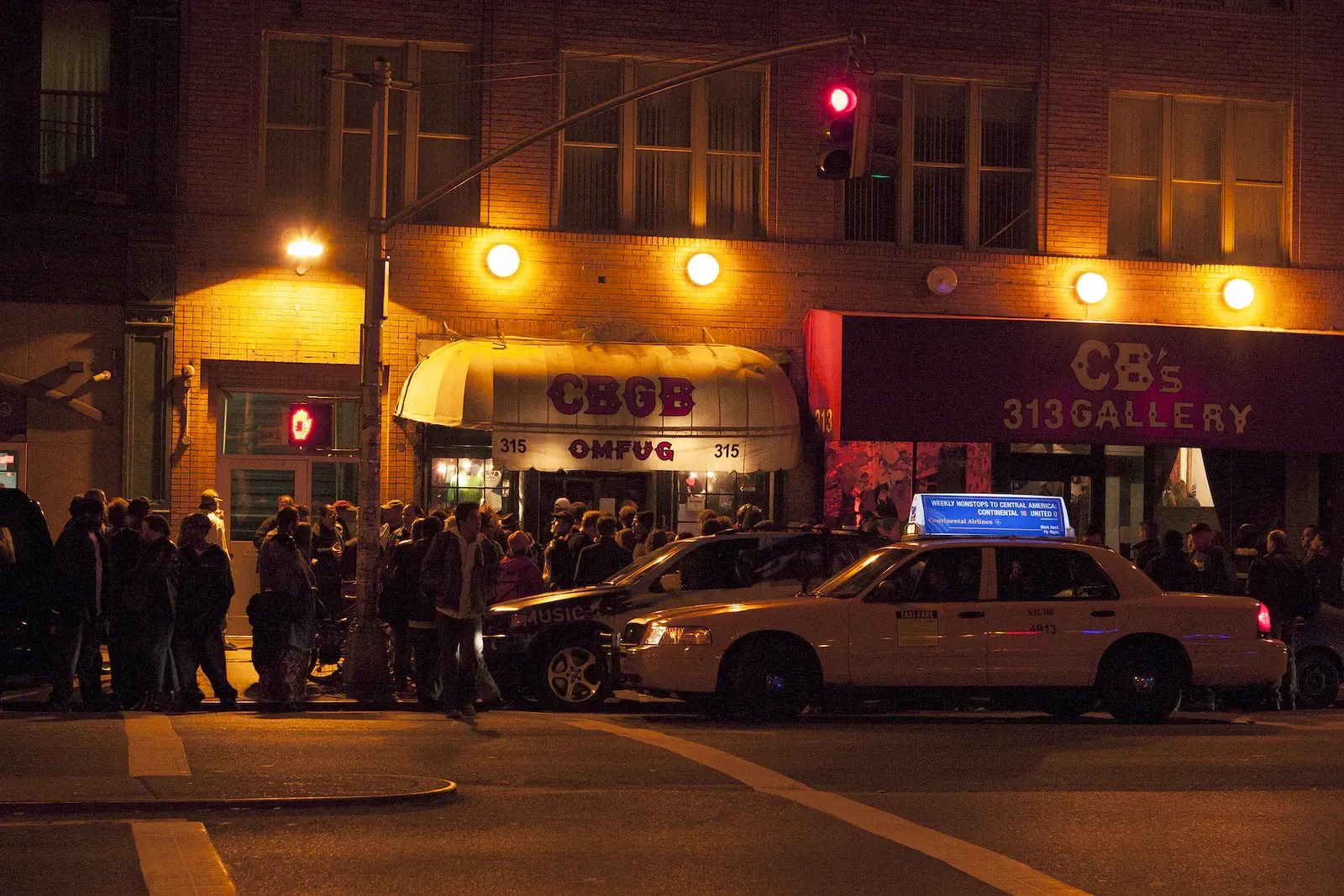
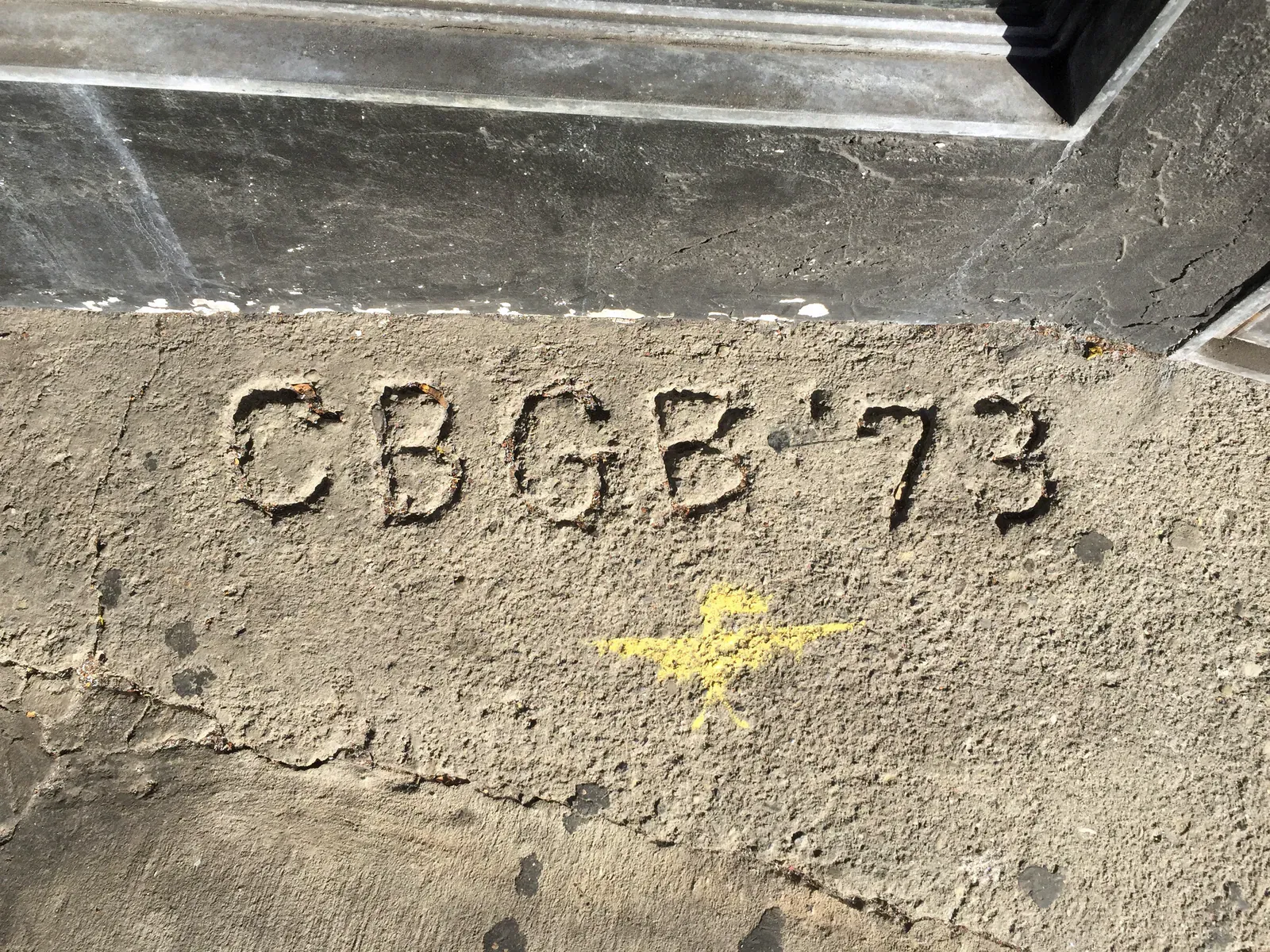
CBGB, Hilly Kristal’s club at 315 Bowery, opened on 10 December 1973. It became the home of the New York scene. The Ramones played there for the first time in August 1974 and kept up a heavy schedule of shows. Television, Blondie and Talking Heads soon followed.
Patti Smith paid for her own single, “Hey Joe” with “Piss Factory”, in June 1974. Her album Horses, produced by John Cale and released in November 1975, fused three-chord rock with poetry. John Holmstrom and Legs McNeil started Punk magazine in late 1975, and its title helped fix the name for the scene.
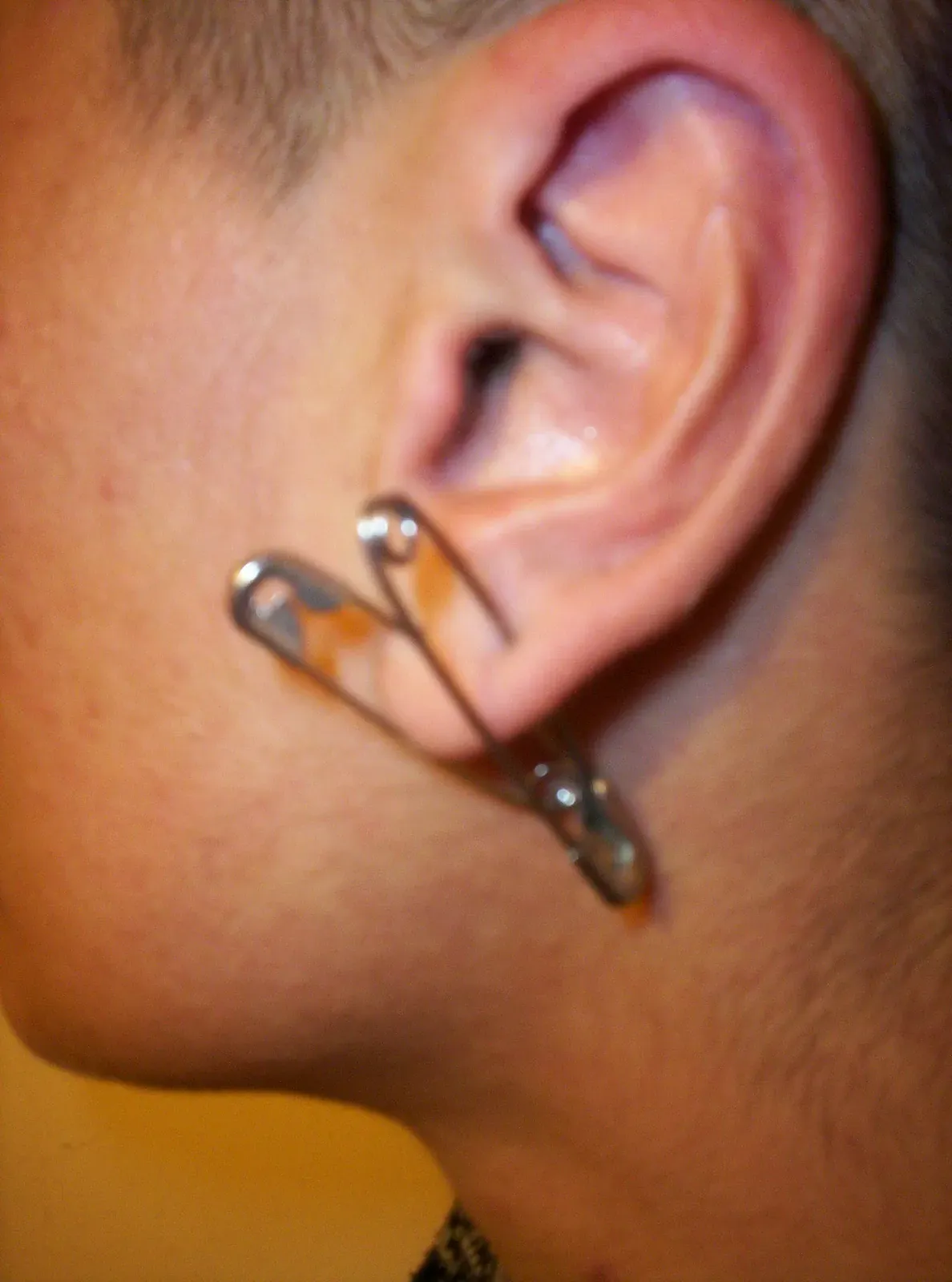
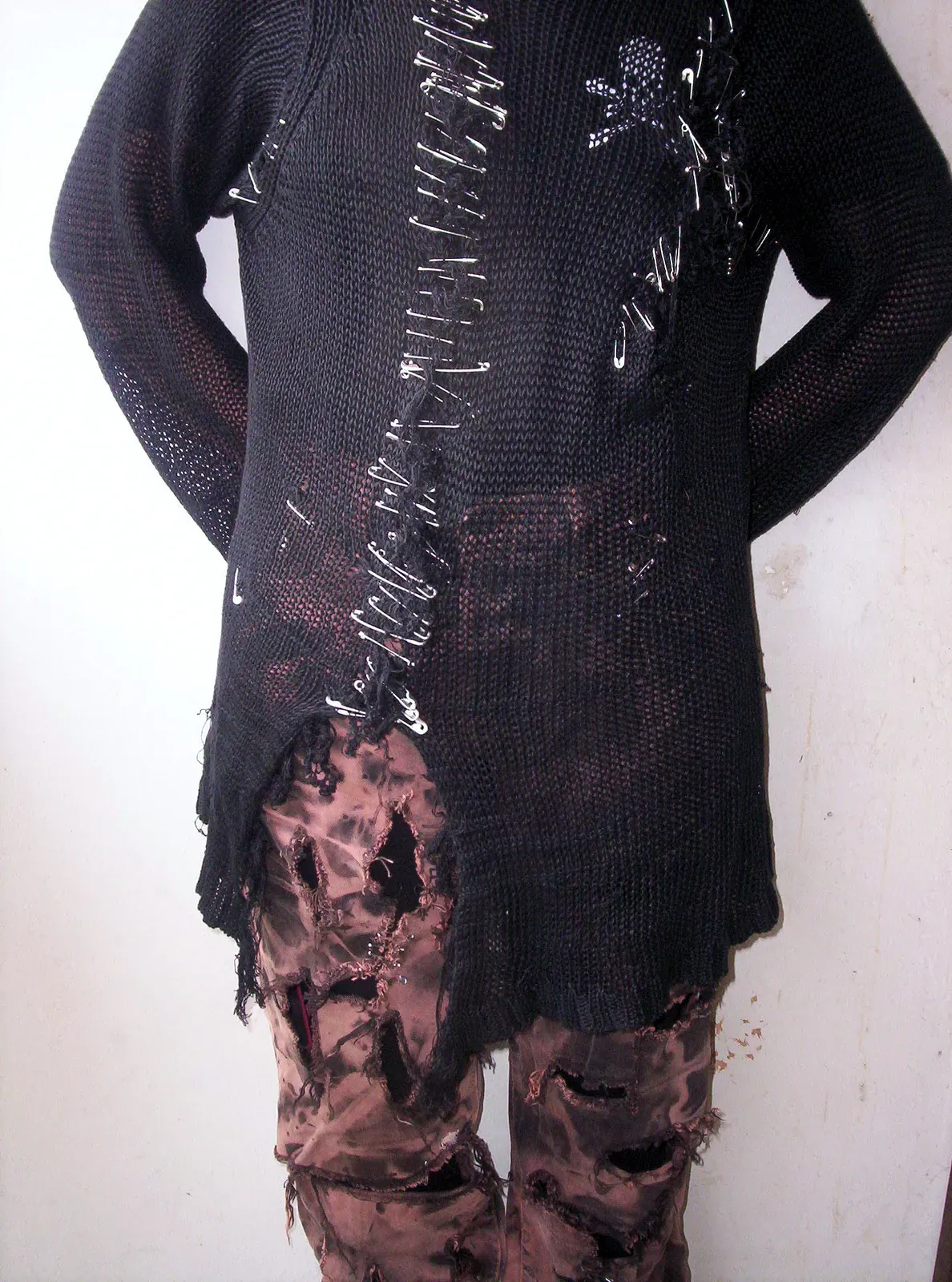
Richard Hell, with his torn shirts held together by safety pins, supplied the look. His song “Blank Generation” became the scene’s self-description, and Malcolm McLaren carried the style back to London.
London, 1976-1977
McLaren’s Sex Pistols played their first gig at Saint Martin’s School of Art on 6 November 1975. The 100 Club Punk Festival on 20 and 21 September 1976 put the Sex Pistols, the Clash, the Damned and the Buzzcocks on one bill.
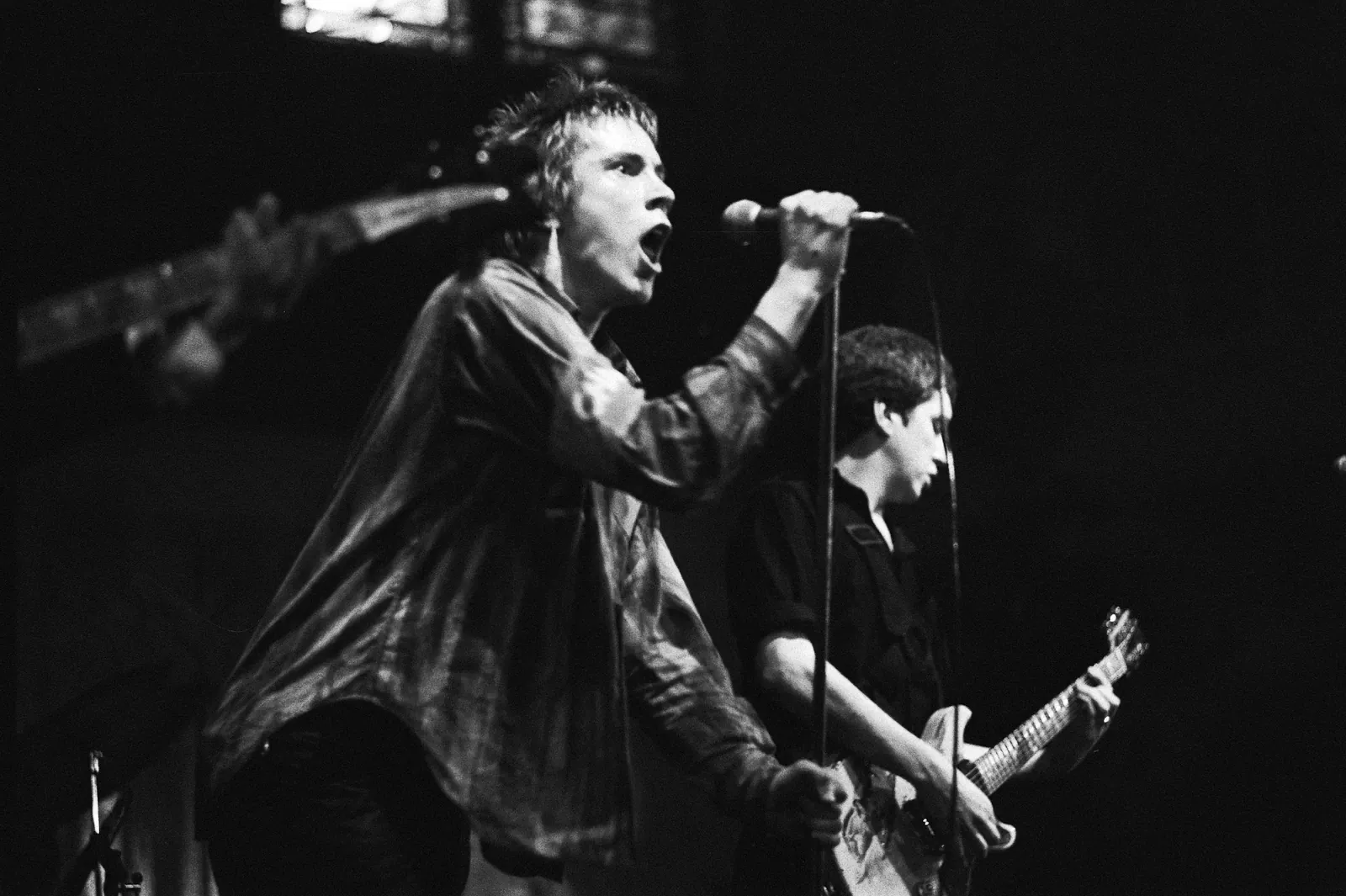
Then came the scandal. After “Anarchy in the U.K.” appeared on EMI on 26 November 1976, the band swore on live Thames Television on 1 December, in an exchange with presenter Bill Grundy. The tabloids made them famous overnight. The Roxy in Covent Garden, London’s first dedicated punk venue, opened on 14 December.
The Buzzcocks, from Manchester, showed that a band did not need a company at all. They borrowed about 750 pounds, recorded Spiral Scratch in December 1976 and released it on their own New Hormones label on 28 January 1977.
Splintering, 1978-1983
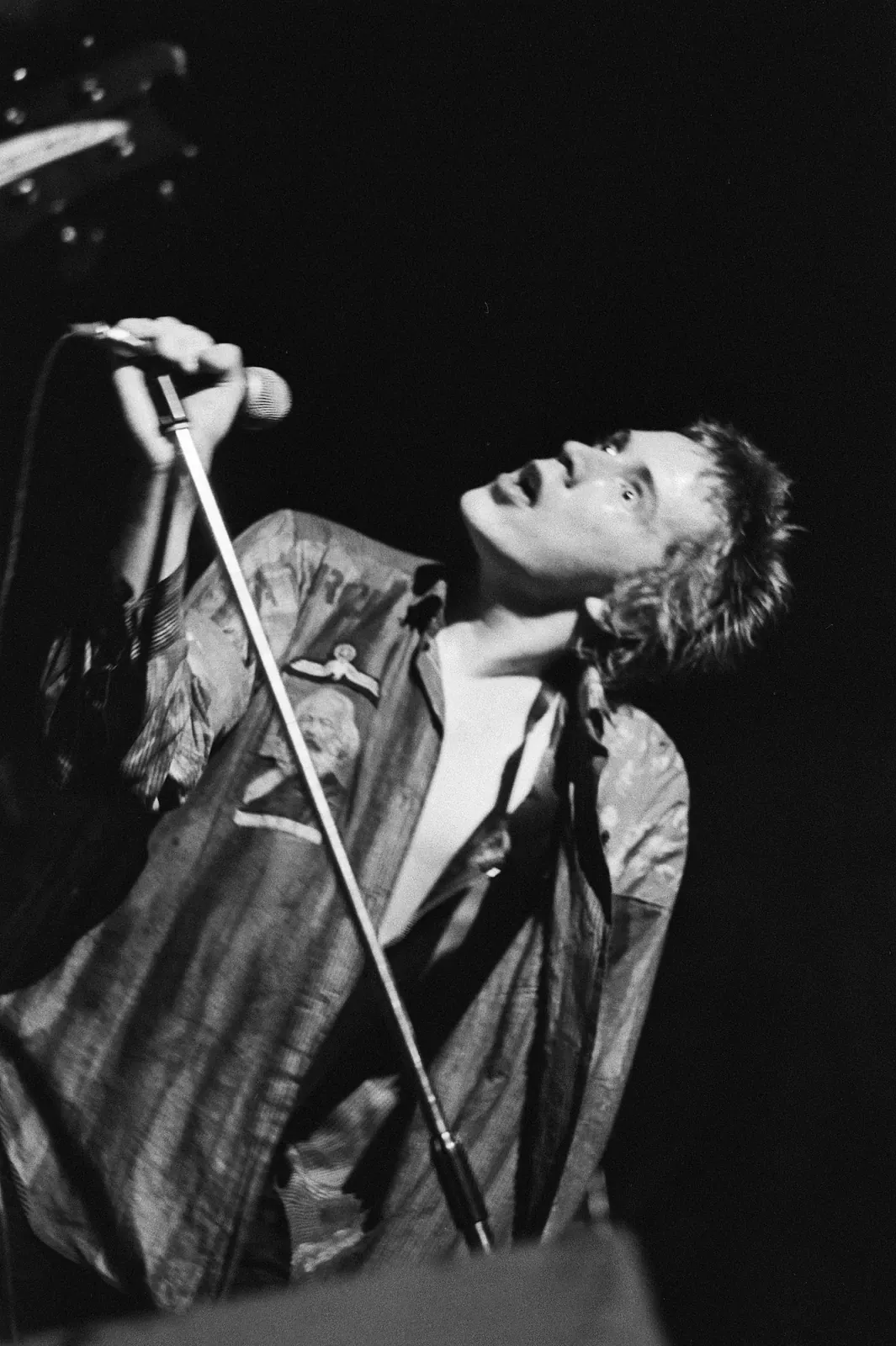
The Sex Pistols split in January 1978 after their last US show at Winterland in San Francisco. The genre was already pulling apart: new wave went pop, post-punk went darker, Oi! spoke for working-class British fans, and hardcore punk got faster and angrier.
The Clash widened the sound with London Calling, a double album released on 14 December 1979 that borrowed from reggae, ska and rockabilly. It reached the US top 30 the following year. The Undertones’ “Teenage Kicks”, recorded for about 200 pounds in Belfast and released by Terri Hooley’s Good Vibrations label, showed that punk could carry a pure pop hook.
Underground networks, 1984-1993
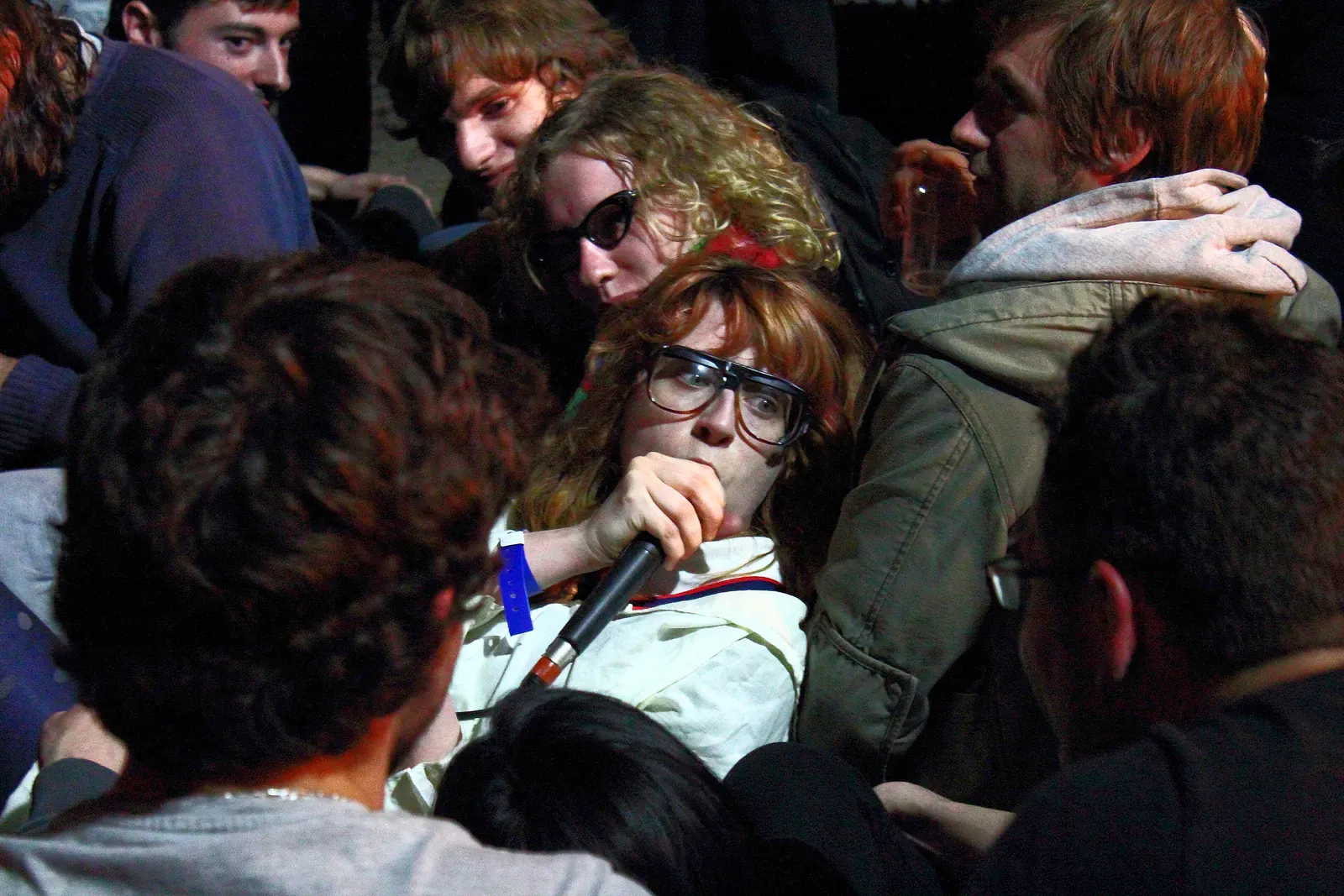
After 1983 punk left the charts and lived in a network. Rough Trade in London distributed independent singles. In Washington, Dischord put out hardcore records by local bands from 1980. In Los Angeles, Brett Gurewitz of Bad Religion built Epitaph into a punk hub. Touring circuits replaced radio.
Mainstream success
It went mainstream twice. In Britain, the Sex Pistols did it by force in 1977. “God Save the Queen” came out on 27 May, Jubilee week, on Virgin. The BBC banned it and it reached No. 2 amid claims that the chart had been fixed. Never Mind the Bollocks went to No. 1 on 28 October 1977, and an obscenity case over its title ended in acquittal on 24 November.
In the United States the road was slower. The Ramones’ debut peaked at No. 111, sold around 6,000 copies in its first year and went Gold only in 2014.
Platinum punk and revival, 1994 onward
The second breakthrough came in 1994. Green Day’s Dookie arrived on Reprise in February and sold over 20 million copies. The Offspring’s Smash followed in April on Epitaph, and went past 11 million, the best-selling album ever issued by an independent label. Green Day’s American Idiot, released on 21 September 2004, went to No. 1 in the US and UK and won the Grammy for Best Rock Album.
Notable recordings
“Anarchy in the U.K.” was produced by Chris Thomas and became the Sex Pistols’ calling card. The Grundy interview turned the single into a national argument within days.
“Teenage Kicks” cost about 200 pounds to record. John Peel championed it on BBC Radio 1 and called it his all-time favourite song, which carried a Derry band to the whole of the UK.
“(I’m) Stranded” was pressed in a run of 500 copies and proved that a fast, shouted single could come from a city far from any industry hub.
Culture
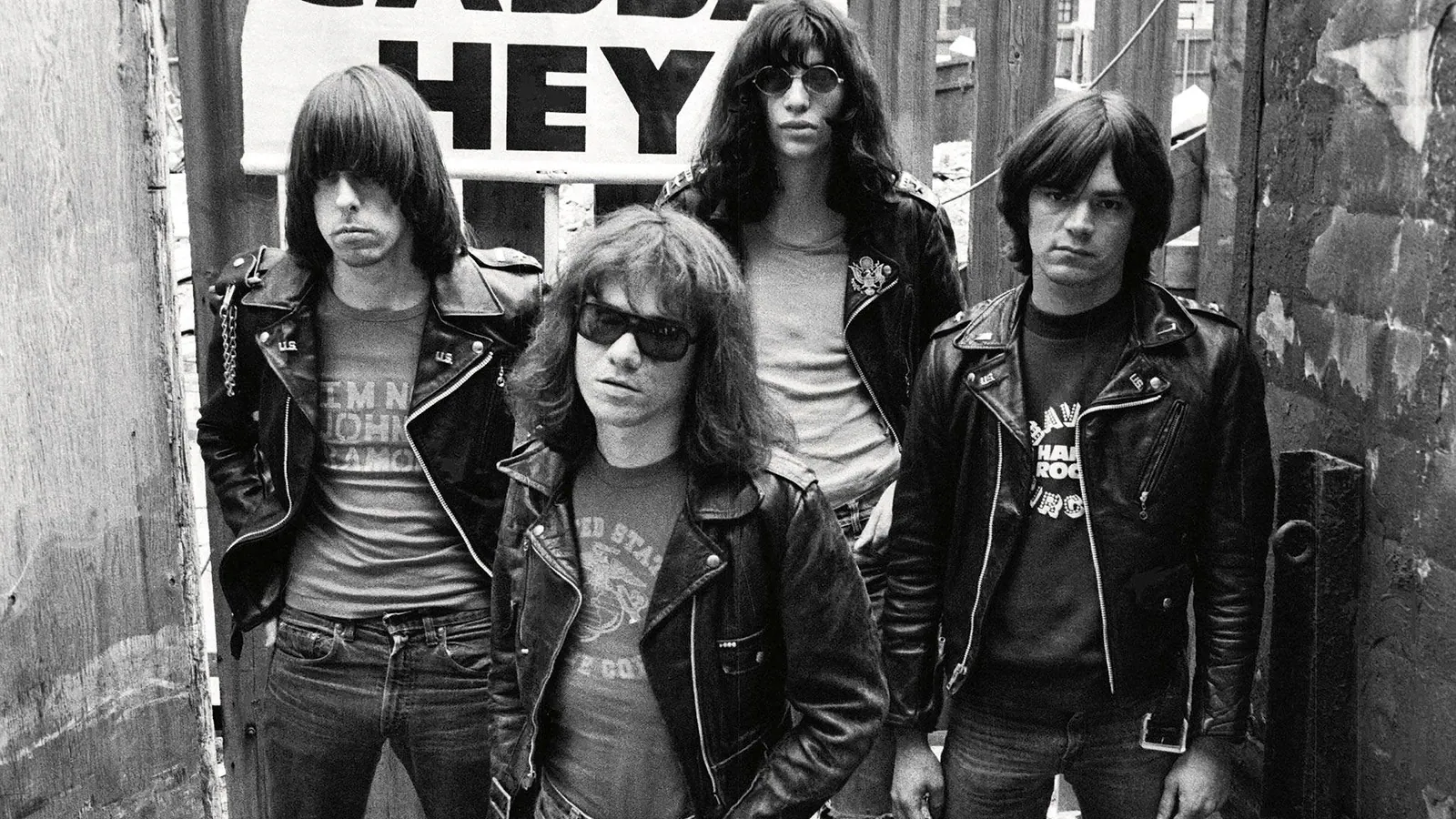
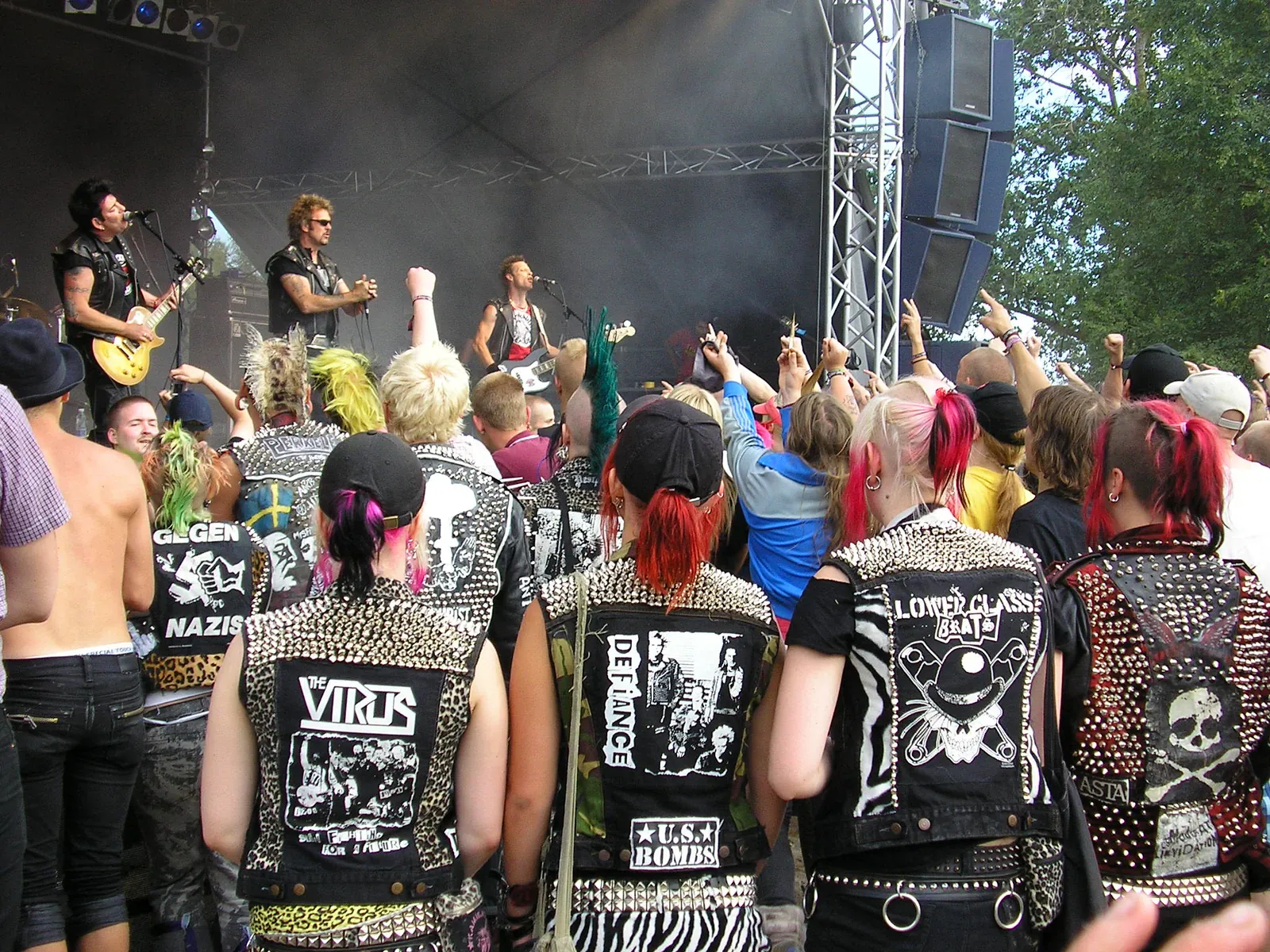
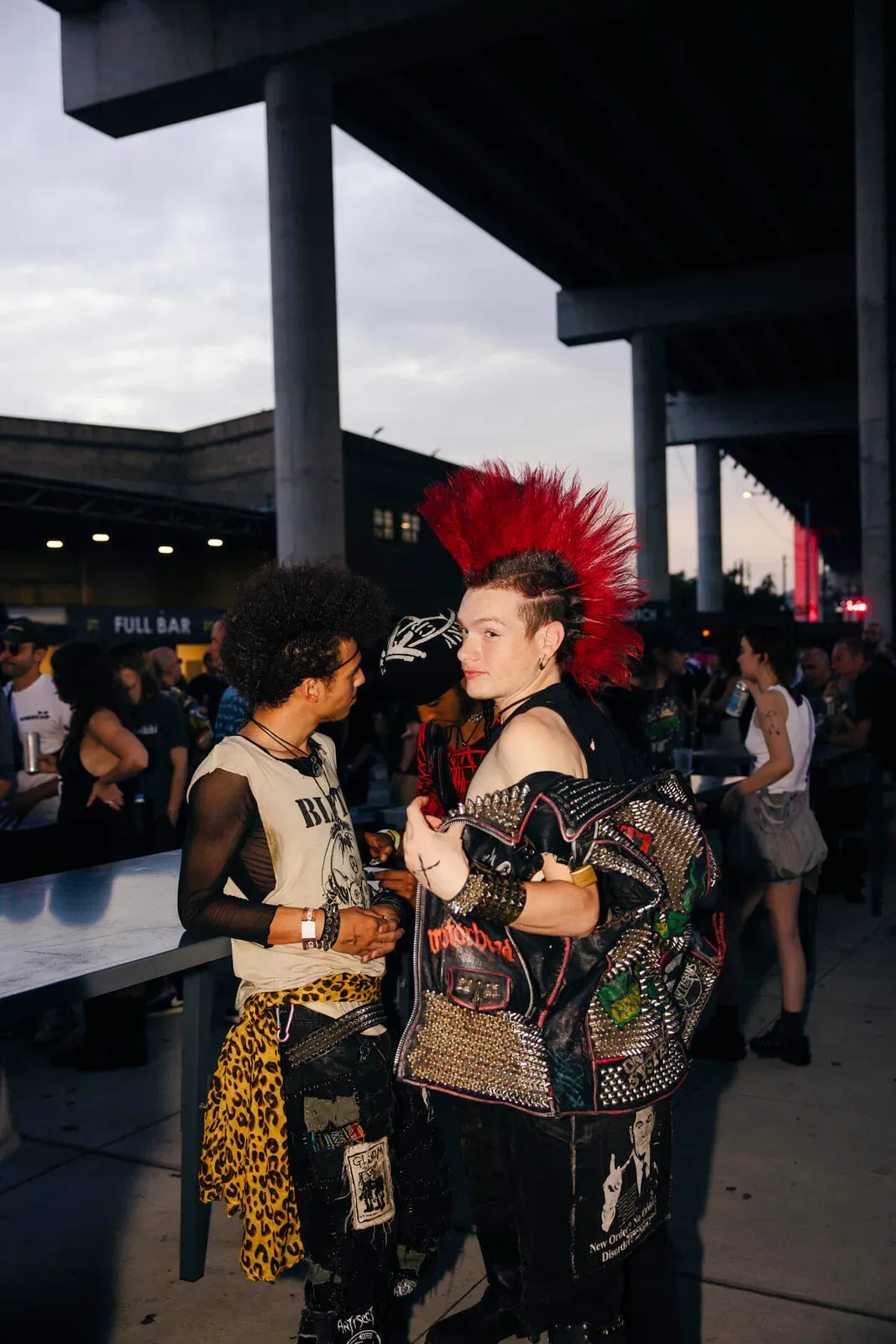
Punk had a look: leather jackets and ripped jeans from the Ramones, safety pins and torn clothes from Hell and McLaren. Pennie Smith’s photograph of Paul Simonon smashing his bass at the Palladium on 20 September 1979 became the sleeve of London Calling.
At gigs, people pogoed, jumping straight up and down in front of the stage, and songs opened with a shouted 1-2-3-4 count-in, a Ramones habit that countless bands copied.
The economics were part of the culture: a single needed 500 copies, and a band could run its own label because Spiral Scratch and “(I’m) Stranded” had shown it was possible.
Misconceptions
Myth: punk began in London. The phrase was in print in 1970. The Ramones played CBGB in 1974 and the Saints released a single in 1976, before the Sex Pistols had a record out. London made punk famous, but it did not start it.
Myth: punk bands could not write songs. “Teenage Kicks” and the Buzzcocks’ “Ever Fallen in Love”, a No. 12 UK hit from 1978, are pop songs with hooks.
Myth: punk never sold records. Never Mind the Bollocks was a UK No. 1 in 1977. Smash sold over 11 million copies on an independent label, and Dookie more than 20 million.
Frequently asked questions
What is punk rock?
Punk rock is a fast, stripped-down style of rock with distorted power chords, short songs and shouted vocals. It began in the mid-1970s in New York, London and Brisbane, and it also names a DIY attitude of making music, records and magazines without industry help.
Who started punk rock?
No single band started it. The Ramones played their first show at CBGB in New York in August 1974, the Saints released “(I’m) Stranded” in Brisbane in September 1976, and the Sex Pistols played their first gig in London in November 1975.
What is the difference between punk rock and hardcore punk?
Hardcore punk is the faster, harder branch that emerged in the early 1980s, with bands such as Bad Brains and Minor Threat. Punk rock refers to the original 1970s style and, more broadly, to the whole family that grew out of it.
Which punk rock songs are most representative?
Representative songs include “Blitzkrieg Bop” by the Ramones, “Anarchy in the U.K.” by the Sex Pistols and “Ever Fallen in Love” by the Buzzcocks. London Calling by the Clash shows how far the sound could stretch.
Sound
Sound sheet
Anatomy of a track
| # | Part | Bars |
|---|---|---|
| 1 | Count-in (1-2-3-4) | 1 |
| 2 | Verse | 8 |
| 3 | Chorus | 8 |
| 4 | Verse | 8 |
| 5 | Chorus | 8 |
| 6 | Short bridge or solo | 8 |
| 7 | Final chorus | 8 |
Signature sounds
- Loud distorted power chords on guitar
- Shouted count-in before the first bar
- Short songs, often about two minutes
- Shouted or sneered vocals
- Raw, unpolished studio sound
- Few or no guitar solos
Drums and percussion
- Minimal acoustic drum kit
Techniques
- Continuous downstroke picking
- Distorted power and barre chords
- Driving repetitive bass
- Shouted count-in
- Short guitar breaks instead of solos
- Minimal DIY recording
Keys and modes
Power chords and barre chords. Two-note power chords and full barre chords, usually in simple three-chord progressions.
Vocals
Shouted or sneered, often nasal, closer to speech than to conventional singing.
Scenes
Where it happened
Where and when the sound lived: one bar per city on a shared timeline.
North America
Oceania
Europe
Active scenes
Peak 6, 1977-1978
CBGB and Max's Kansas City hosted the Ramones, Television, Patti Smith, Blondie and Talking Heads.
The Sex Pistols, Clash and Damned played the 100 Club and the Roxy, and shops and fanzines fed the look.
The Saints ran their own venue, promotions firm and label from a share house.
Buzzcocks formed here and put out Spiral Scratch on New Hormones after seeing the Sex Pistols.
The Undertones came from this Northern Irish city and became a pillar of the Northern Irish punk scene.
Terri Hooley's Good Vibrations shop and label anchored the Northern Irish punk scene.
Epitaph Records, home of the Offspring, grew from Brett Gurewitz's Hollywood label into the 1990s punk hub.
Venues and places
New York, 1973 to today. Hilly Kristal's Bowery club, open from December 1973 to October 2006, launched the Ramones, Television, Blondie and Talking Heads.
New York, 1975 to today. Reopened as a punk room in 1975 and hosted early shows by the Ramones, Television, Blondie and Talking Heads.
New York, 1976 to today. The Radio City Music Hall studio where the Ramones recorded their debut album in January 1976.
London, 1976 to today. Host of the first international punk festival on 20 and 21 September 1976.
London, 1976 to today. A Covent Garden basement that was London's first dedicated punk venue, open December 1976 to April 1977.
London, 1976 to today. Where the Sex Pistols cut Anarchy in the U.K. and Never Mind the Bollocks, and the Clash made London Calling.
Brisbane, 1976 to today. The Saints converted their Petrie Terrace share house into this venue and promotions base.
Belfast, 1976 to today. Terri Hooley's Great Victoria Street record shop, home to the label that released Teenage Kicks.
Culture
Culture markers
- Safety pins and torn clothes
Richard Hell is credited with the look that Malcolm McLaren brought to London.
Fashion - Leather jackets and ripped jeans
The Ramones' uniform of black leather and torn denim became punk's default dress.
Fashion - Cut-and-paste fanzine collage
Photocopied layouts with hand lettering gave punk its visual style.
Artwork - The London Calling sleeve
Pennie Smith's photo of Paul Simonon smashing his bass at the Palladium on 20 September 1979.
Artwork - The shouted count-in
Ramones songs open with a rapid 1-2-3-4, a habit copied by countless bands.
Ritual - Pogoing
Crowds jump up and down in place in front of the stage.
Dance
Media
Key media
- 1975Punk
by John Holmstrom and Legs McNeil. The New York magazine whose name helped fix the term for the scene.
Zine - 1976Sniffin' Glue
by Mark Perry. A photocopied London fanzine that ran 12 issues and reached 15,000 copies.
Zine - 1976Sideburns
by Sideburns fanzine. Printed the three-chord drawing captioned with the line that became punk's slogan.
Zine - 1977Live at the Roxy WC2
by Various. A live album from London's first punk club that reached No. 24 in the UK.
Compilation - 1978The John Peel Show
by John Peel, BBC Radio 1. Peel's airplay, including Teenage Kicks, took Belfast and other regional punk to the UK.
Radio - 2010Just Kids
by Patti Smith. A memoir of New York in the late 1960s and 1970s that won the National Book Award.
Book
Glossary
Terms on this page
Do it yourself: bands booking gigs, pressing records and printing zines without industry help.
A cheap, photocopied fan magazine such as Sniffin' Glue or Punk.
A faster, harder branch of the early 1980s, with bands such as Bad Brains and Minor Threat.
A broader, poppier label for CBGB-era bands such as Blondie and Talking Heads.
A working-class strand of British punk, with bands such as Sham 69 and the Exploited.
A two- or three-note guitar chord, played loud and distorted, that drives most punk riffs.
Rock family