Indie rock
Indie rock is guitar music from independent-label and DIY networks in the UK, US and New Zealand, taking shape around 1980.
United Kingdom, United States, New Zealand, 1980
Rock family
Born
1980
United Kingdom, United States, New Zealand
Subgenres
16
Documented branches
Links
33
Genres it drew on or shaped
Tempo
80-175 BPMLineage
Family tree
- Jangle pop
Derived from
- College rock
Derived from
Influenced by
Dunedin sound
United Kingdom, United States, New Zealand, 1980
Indie rock
Led to (18)
Timeline
Era by era
From the first sparks to today. Select a dot to read the story behind it.
- Independent labels and jangling guitars
1978 to 1985
- C86 and college radio
1986 to 1990
- Lo-fi and the major-label gold rush
1991 to 1999
- Garage revival, blogs and the Pitchfork effect
2000 to 2009
- Streaming and Bandcamp
2010 to today
Eras
Moments
- 1 Independent labels and jangling guitars, 1978 to 1985
- 2 C86 and college radio, 1986 to 1990
- 3 Lo-fi and the major-label gold rush, 1991 to 1999
- 4 Garage revival, blogs and the Pitchfork effect, 2000 to 2009
- 5 Streaming and Bandcamp, 2010 to today
1978
Independent labels and jangling guitars
Post-punk shops and labels such as Rough Trade, Postcard and Flying Nun build a distribution circuit outside the majors. Orange Juice, The Smiths and R.E.M. give it a guitar sound.
- 1978Rough Trade starts as a labelThe London record shop grows into a label and distributor serving independent bands.
- 1980UK independent singles chart beginsSales through independent distributors get their own weekly chart, which fixes the meaning of the word indie.
- 1980Orange Juice release Falling and LaughingThe first single on Glasgow's Postcard Records sets out a jangling, tender guitar sound.
- 1981Flying Nun Records opens in ChristchurchRoger Shepherd's label becomes the home of the Dunedin sound.
- 1981NME and Rough Trade issue the C81 cassetteA mail-order tape of post-punk groups that shows the new network at work.
- 1981R.E.M. release Radio Free Europe on Hib-ToneAn Athens, Georgia single that college radio picks up before any major label does.
- 1982K Records starts in OlympiaCalvin Johnson begins a cassette label that grows into the centre of the American indie pop scene.
- 1983The Smiths release This Charming ManThe Manchester band's second single on Rough Trade makes jangle guitar a national sound.
1986
C86 and college radio
The NME's C86 tape names a UK scene, while US college radio carries Pixies, Sonic Youth and Dinosaur Jr. Matador and Merge open in 1989.
- 1986NME issues the C86 cassetteIts fey, guitar-first bands give the press a name for a new UK underground.
- 1986Sub Pop 100 compilation appears in SeattleBruce Pavitt's fanzine turns into a record series that later signs Nirvana and The Shins.
- 1988Pixies release Surfer RosaSteve Albini's raw room sound and the band's loud-quiet shifts become a template.
- 1989Matador and Merge both openNew York and Chapel Hill start labels that stay independent for decades.
1991
Lo-fi and the major-label gold rush
After Nevermind, majors chase independent bands while Pavement, Yo La Tengo and Neutral Milk Hotel keep records small, odd and four-track warm.
- 1991International Pop Underground Convention in OlympiaA week of shows organised by K Records puts the DIY ethos on a stage.
- 1992Pavement release Slanted and EnchantedA lo-fi debut on Matador that critics read as the defining indie album of its decade.
- 1997Yo La Tengo release I Can Hear the Heart Beating as OneA long, quiet-to-noisy record that shows how wide the style could stretch.
- 1998Neutral Milk Hotel release In the Aeroplane Over the SeaA modest Merge release that finds a huge cult audience through word of mouth and the internet.
2000
Garage revival, blogs and the Pitchfork effect
The Strokes, Arcade Fire, The Shins and Arctic Monkeys put indie bands on charts and film soundtracks. Music blogs and file sharing replace radio as the gatekeeper.
- 2001The Strokes release Is This ItA tight New York debut that sends labels back to guitar bands.
- 2004Arcade Fire release FuneralA Montreal group on Merge reaches an international crowd with big, communal arrangements.
- 2004Garden State film puts The Shins on a soundtrackA film scene turns New Slang into a song many first-time listeners trace to indie rock.
- 2006Arctic Monkeys post the fastest-selling UK debut albumWhatever People Say I Am, That's What I'm Not, helped by early online fans, becomes a landmark for a band on an independent label.
2010
Streaming and Bandcamp
Indie becomes a loose style tag more than a business model. Vampire Weekend top the US chart, and Alvvays and Wet Leg show the guitar-band format still travels.
- 2010Vampire Weekend's Contra debuts at number one in the USAn indie-label guitar album tops the Billboard 200.
- 2011Arcade Fire's The Suburbs wins the Grammy for Album of the YearA Merge release wins the top prize.
- 2021Wet Leg release Chaise LongueA deadpan debut single from the Isle of Wight on Domino leads a new wave of guitar bands.
Listening path
Anthems
The records that built the sound, grouped by the part they played. Thumbnails come from YouTube; the player loads only when you press play.
- 01
Orange Juice, 1980 · Postcard Records
The Glasgow label's first single that set out the jangling, tender, anti-macho indie guitar sound.
Origin - 02
R.E.M., 1981
An independent debut single that proved a college-radio band could build a career outside the majors.
Origin - 03
The Strokes, 2001 · RCA Records
A crisp, guitar-driven single that returned rock bands to the charts and clubs.
Start hereBreakthrough - 04
The Shins, 2001 · Sub Pop
A hushed folk-rock song that reached a mass audience through a 2004 film.
Breakthrough - 05
Modest Mouse, 2004 · Epic Records
A sunny, upbeat single that took a cult Northwest band to mainstream radio.
Start hereBreakthrough - 06
The Smiths, 1983 · Rough Trade
Johnny Marr's bright, nimble guitar line sets the template for British indie pop.
Start hereAnthem - 07
Pixies, 1988 · 4AD
Slow, ghostly guitar and a quiet-loud turn that became a generation's reference point.
Anthem - 08
Pavement, 1994 · Matador
Wry, crooked guitar pop that put lo-fi sensibility on MTV and the radio.
Anthem - 09
Yo La Tengo, 1997 · Matador
A soft, organ-led groove that showed the mellow side of 1990s indie.
Anthem - 10
Neutral Milk Hotel, 1998 · Merge
Strummed, fuzzy and heartfelt, the title track of a cult favourite that spread through word of mouth.
Anthem - 11
Arcade Fire, 2004 · Merge
A shout-along, orchestral anthem that made an independent record sound like a stadium event.
Anthem - 12
Arctic Monkeys, 2005 · Domino
A fast, tense debut single that sent an independent-label band to the top of the UK charts.
Crossover - 13
Vampire Weekend, 2008 · XL Recordings
Quick, bright guitars with African-pop-style rhythms reached a wider pop audience.
Crossover - 14
Alvvays, 2014
Dreamy, chiming guitar pop that reset the twee and jangle tradition for a new decade.
Revival - 15
Wet Leg, 2021 · Domino
A sly, spoken-sung debut single that revived the guitar-band hit in the streaming era.
Revival
Indie rock is guitar-based rock made within independent-label and do-it-yourself networks, first in the United Kingdom, the United States and New Zealand around 1980.
The word began as a business category, records sold through independent distributors, and hardened into a style: melodic songs, chiming or fuzzy guitars, informal production and a deliberately amateur-friendly attitude.
Origins
The idea of “indie” came before the sound. In the late 1970s, Rough Trade grew from a London record shop into a label and a distributor that served small British labels. In 1980 the UK started a weekly independent singles chart, which fixed the meaning of the word: music that reached listeners without the major companies. The scene drew on punk rock for its self-reliance and on post-punk for its restraint, then added the clear guitar tone of jangle pop.
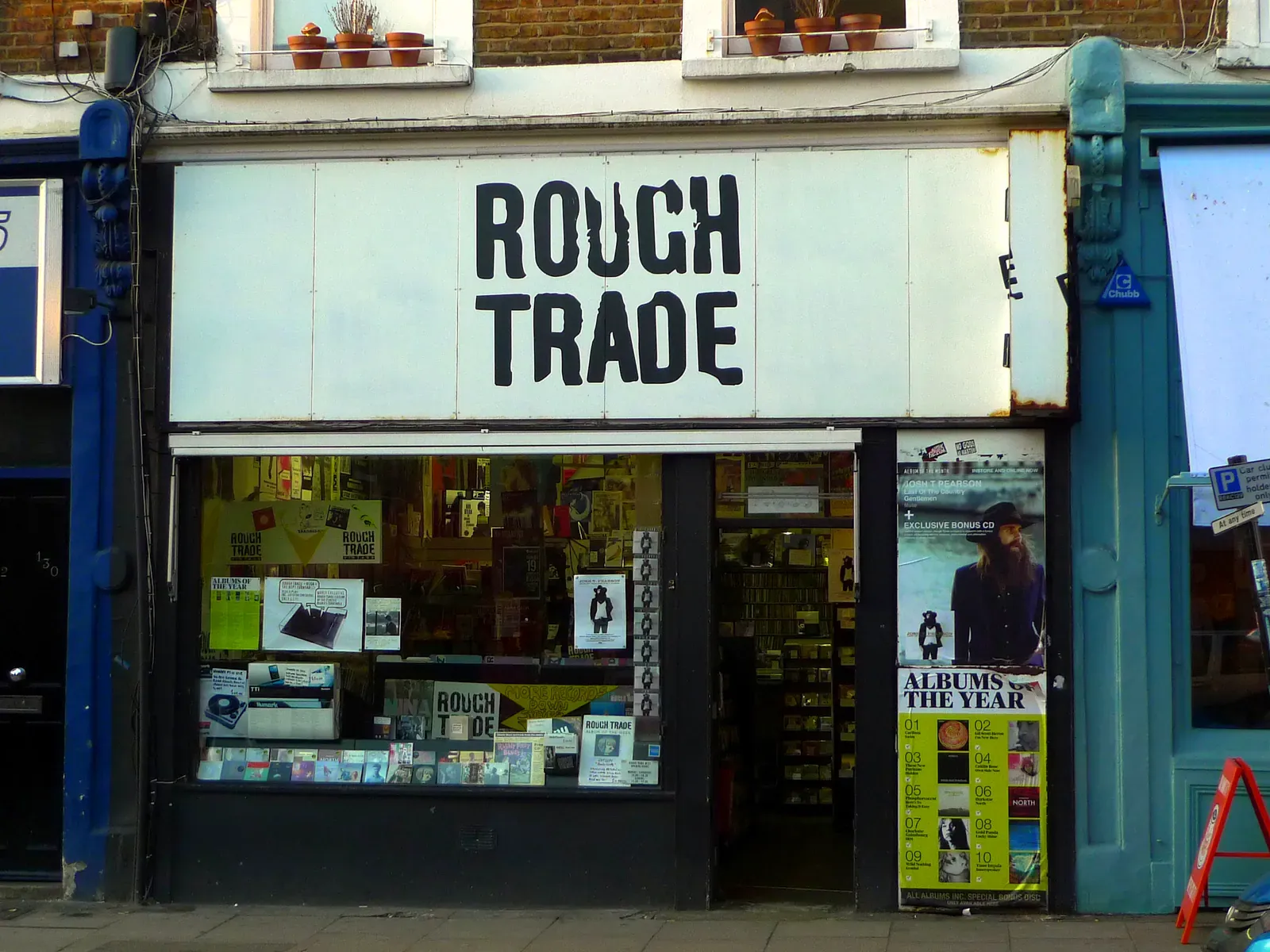
Orange Juice’s “Falling and Laughing” (1980), the first single on Glasgow’s Postcard Records, set the early template: tender, jangling guitars and no macho pose. Roger Shepherd opened Flying Nun in Christchurch in 1981 and gave the Dunedin sound a home. In the same year R.E.M., from Athens, Georgia, issued “Radio Free Europe”, and US college radio played it before any major label did. Calvin Johnson started K Records in Olympia in 1982, and The Smiths released “This Charming Man” on Rough Trade in 1983, with Johnny Marr’s bright guitar line.
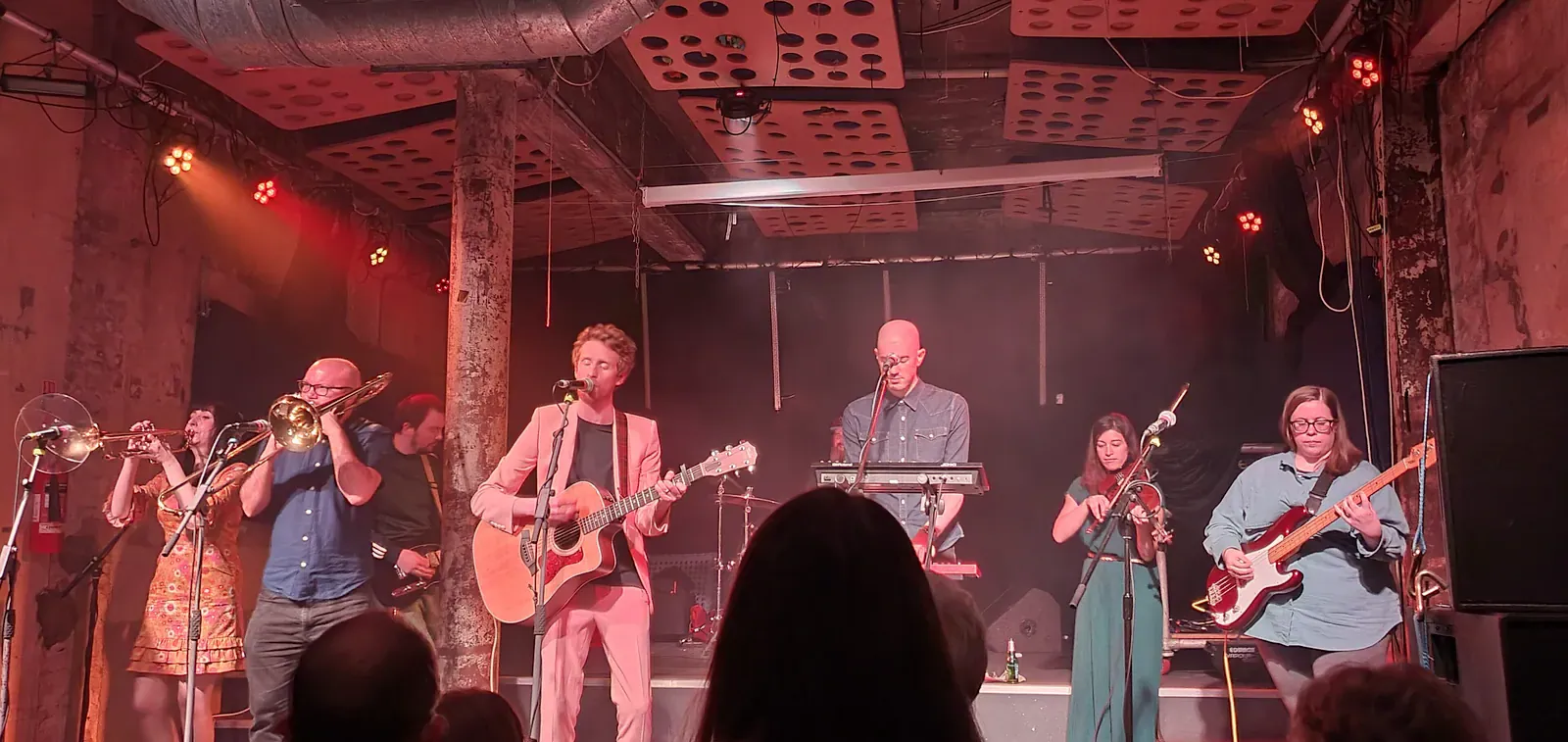
C86 and college radio, 1986-1990
Two cassette compilations from the British weekly NME mark the shift from a trade term to a scene. C81, issued with Rough Trade in 1981, showed the new network at work. C86, in 1986, gave the press a name for a fey, guitar-first British underground, and “twee” became shorthand for its softest end.
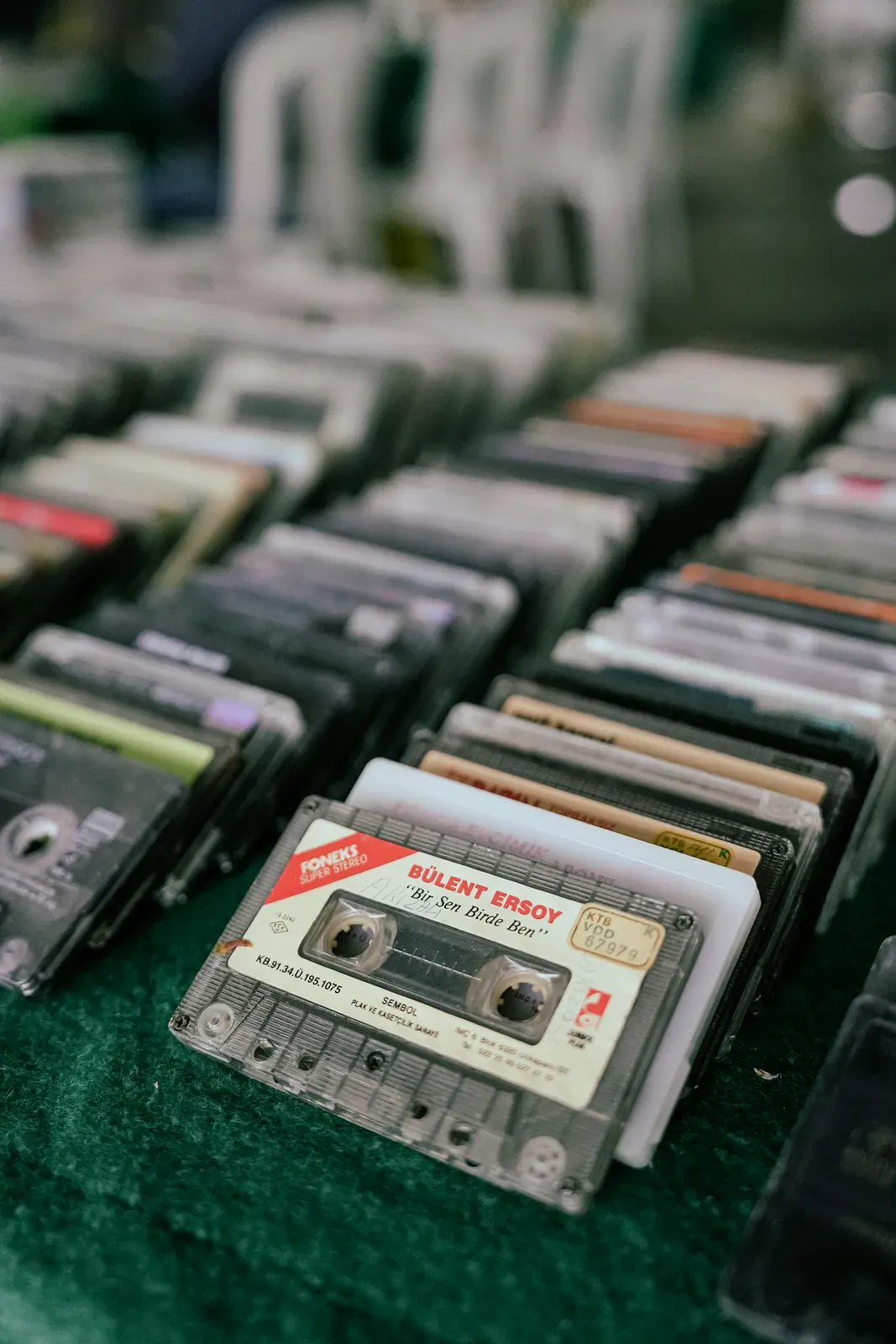
In the United States, campus stations did the same job. Pixies’ Surfer Rosa (1988), recorded with Steve Albini and released by 4AD, set out the quiet-loud song shape that bands copied for years. Sonic Youth’s Daydream Nation (1988) showed that underground rock could be ambitious. Sub Pop released its Sub Pop 100 compilation in Seattle in 1986, and Matador and Merge both opened in 1989, in New York and Chapel Hill. The 1991 International Pop Underground Convention in Olympia, organised around K Records, put the do-it-yourself creed on a stage.
Lo-fi and the major-label rush, 1991-1999
After Nirvana’s Nevermind, major labels went looking for independent bands. Several bands answered with records that were small, odd and warm with tape hiss. Pavement’s Slanted and Enchanted (1992), on Matador, made lo-fi a sound people chose rather than a limit they suffered. “Cut Your Hair” (1994) took the same crooked guitar pop to MTV. Yo La Tengo’s I Can Hear the Heart Beating as One (1997) mixed covers, drones and soft pop, and Neutral Milk Hotel’s In the Aeroplane Over the Sea (1998), a modest Merge release, found a huge cult audience by word of mouth and then the internet.
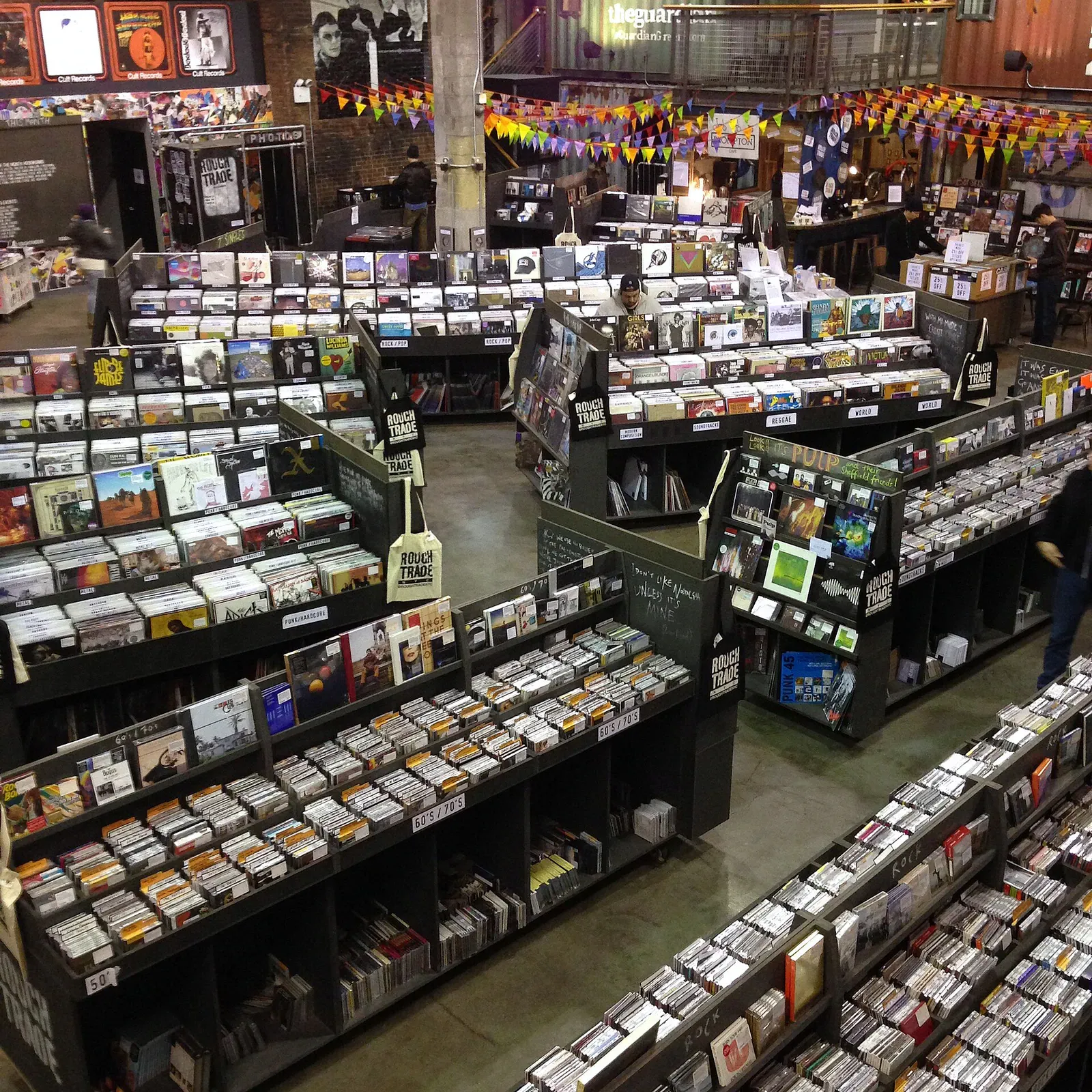
Garage revival, blogs and the Pitchfork effect, 2000-2009
The Strokes’ Is This It (2001), clean, taut and from New York, sent labels back to guitar bands; “Last Nite” became the breakthrough single. The Shins’ “New Slang” (2001, Sub Pop) reached a mass audience when the 2004 film Garden State used it. Arcade Fire’s Funeral (2004, Merge) brought orchestral scale from Montreal, and Modest Mouse’s “Float On” (2004, Epic) carried a cult Northwest band to mainstream radio.
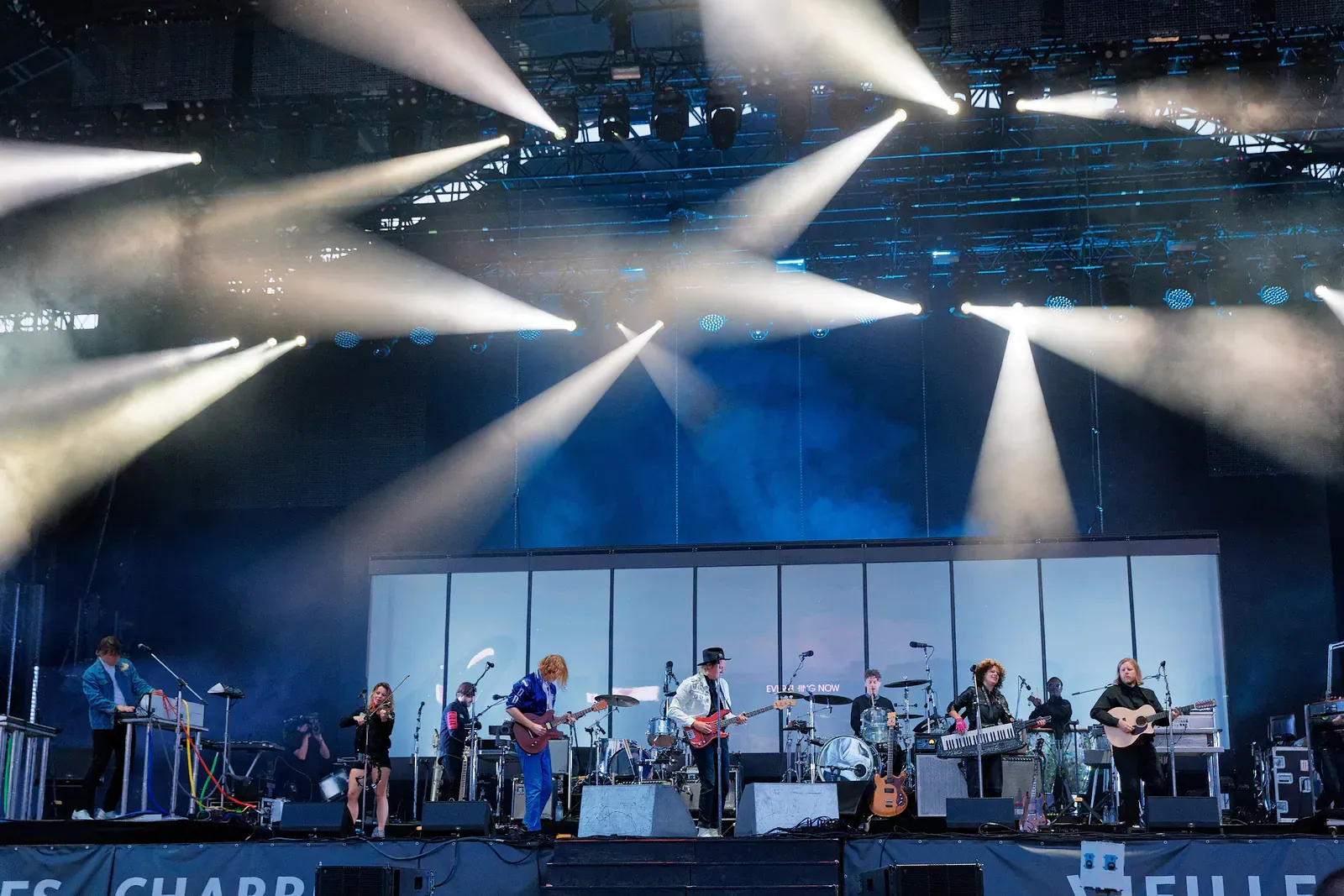
Music blogs and file sharing replaced radio as the gatekeeper. In 2006, Arctic Monkeys’ Whatever People Say I Am, That’s What I’m Not, on Domino and helped by early online fans, became the fastest-selling debut album in UK chart history.
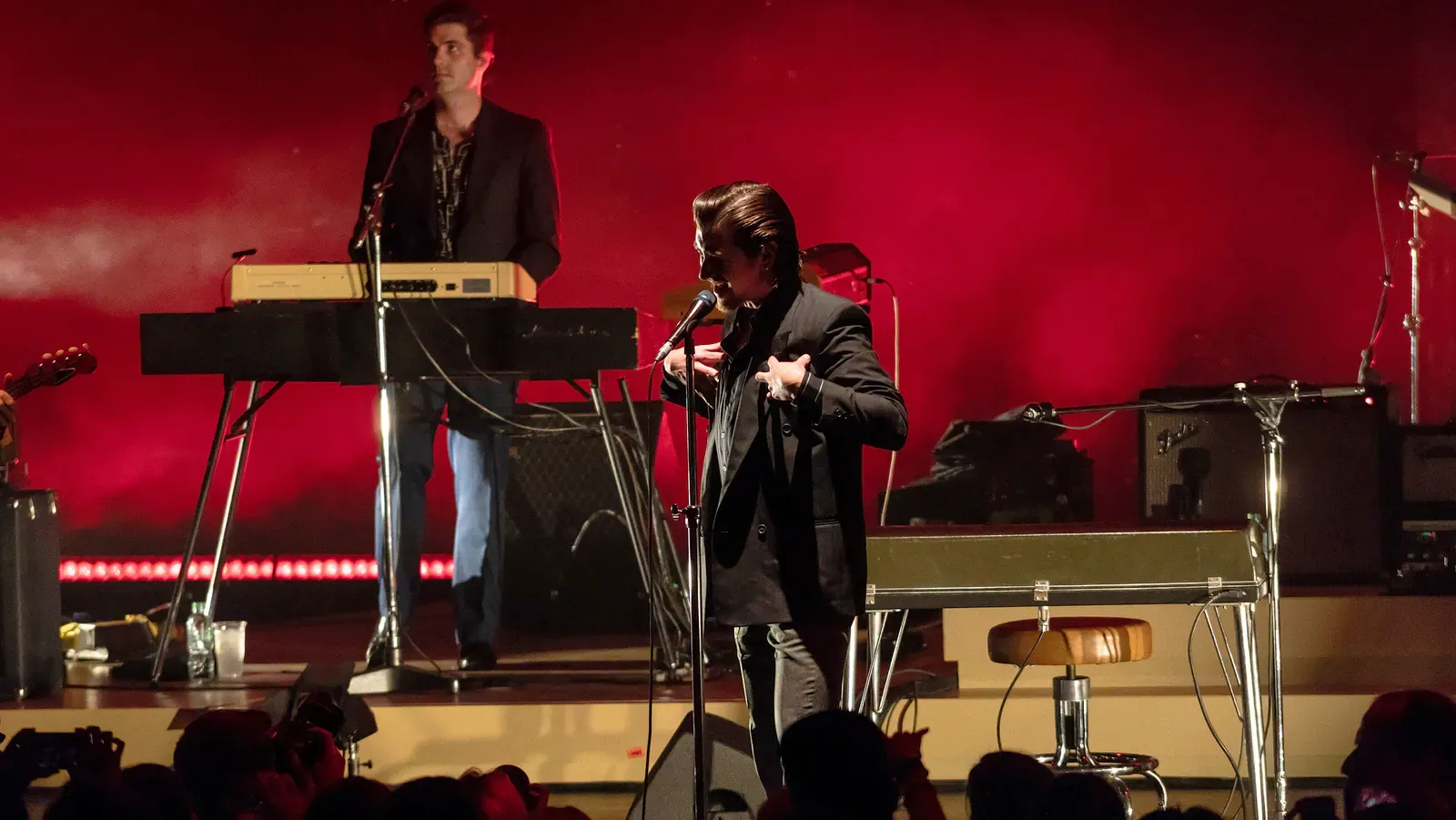
Streaming and Bandcamp, 2010 onward
By 2010 indie had become a loose style tag more than a business model. XL Recordings released Vampire Weekend’s Contra, which debuted at number one on the US Billboard 200 that year, and in 2011 Arcade Fire’s The Suburbs won the Grammy for Album of the Year. Bandcamp, launched in 2008, let small bands sell directly without a label. Alvvays and Wet Leg showed that the guitar-band format still travels: Wet Leg’s “Chaise Longue” (2021, Domino) revived the guitar-band hit in the streaming era.
Characteristics
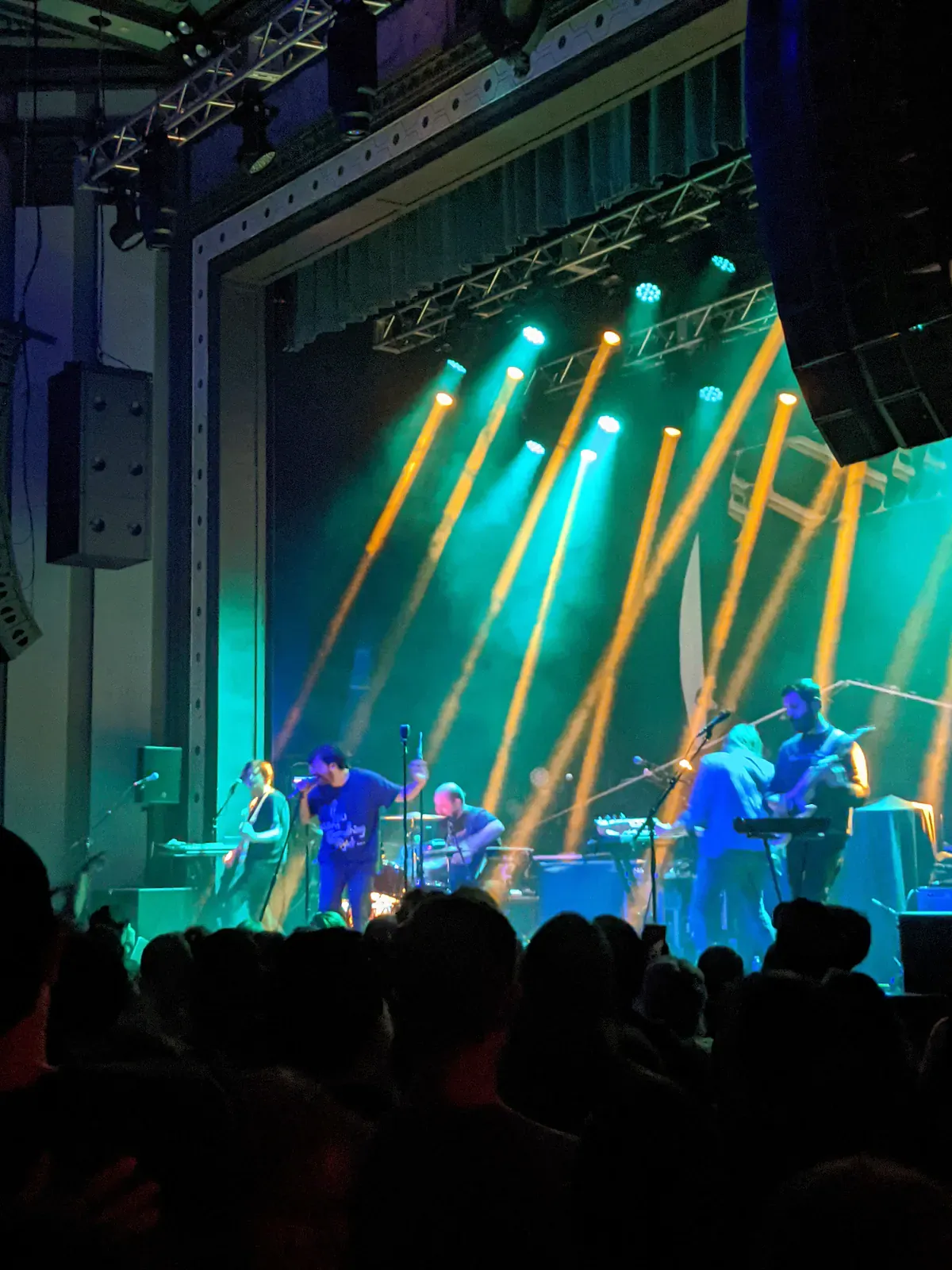
Songs usually run in 4/4 with short, hook-led verse and chorus forms and no solo showmanship. Guitars lead: clean, ringing arpeggios in the jangle strand, fuzz and feedback in the noise strand, often with two interlocking parts instead of lead and rhythm. Loud-quiet dynamics, popularised by Pixies, move a song from hushed verse to surging chorus. Vocals are understated, often speak-sung or high and light, with a human rather than polished delivery.
Instruments and production
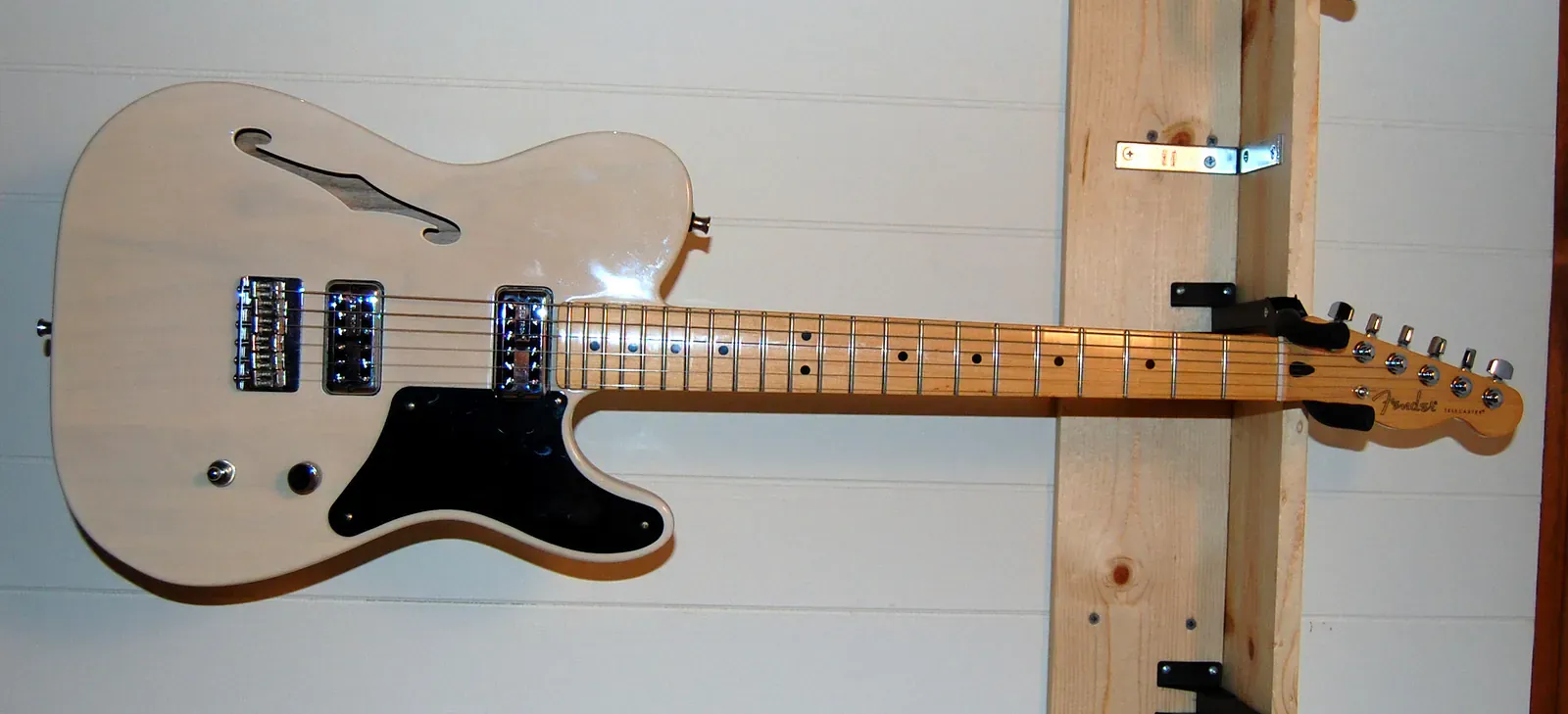
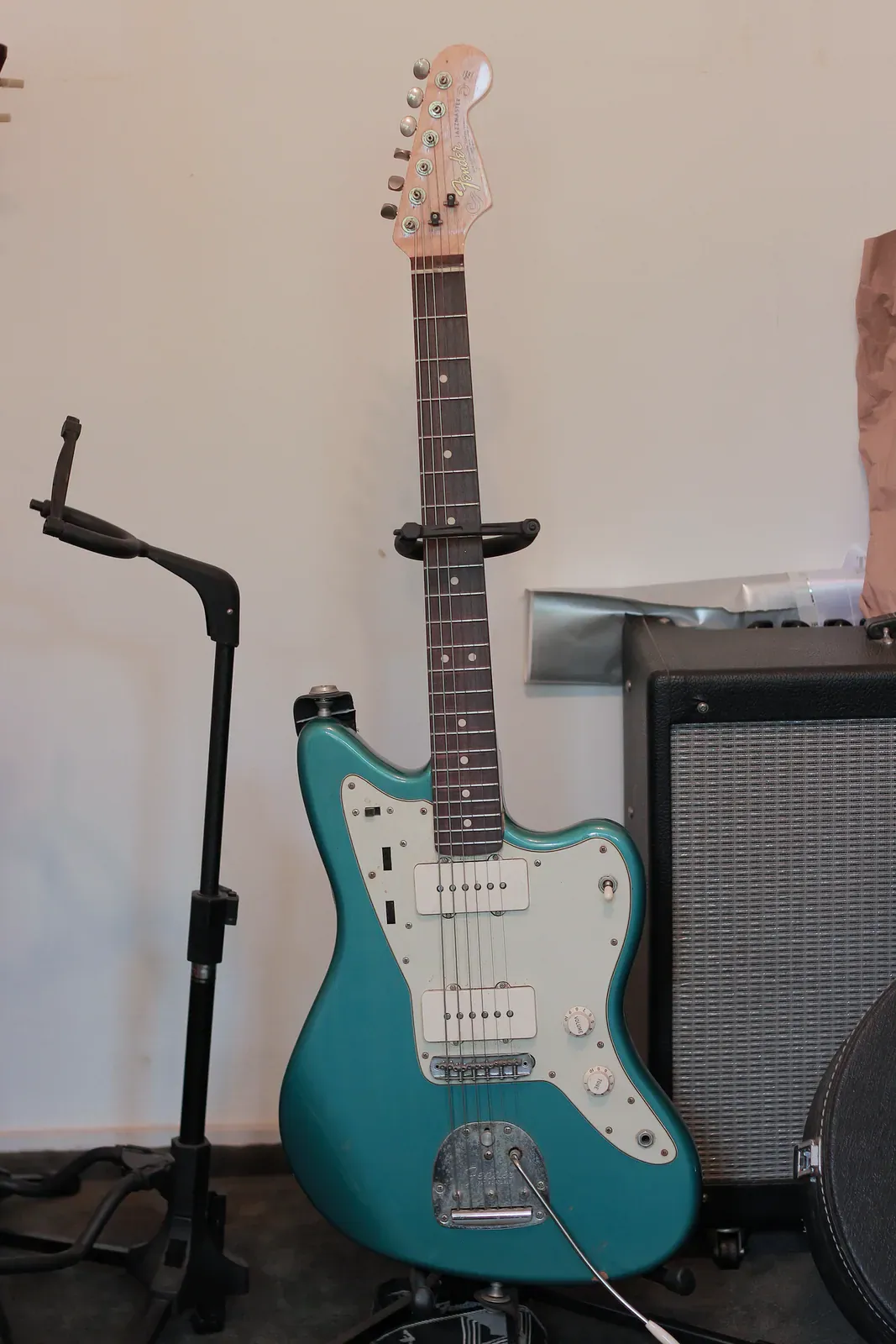
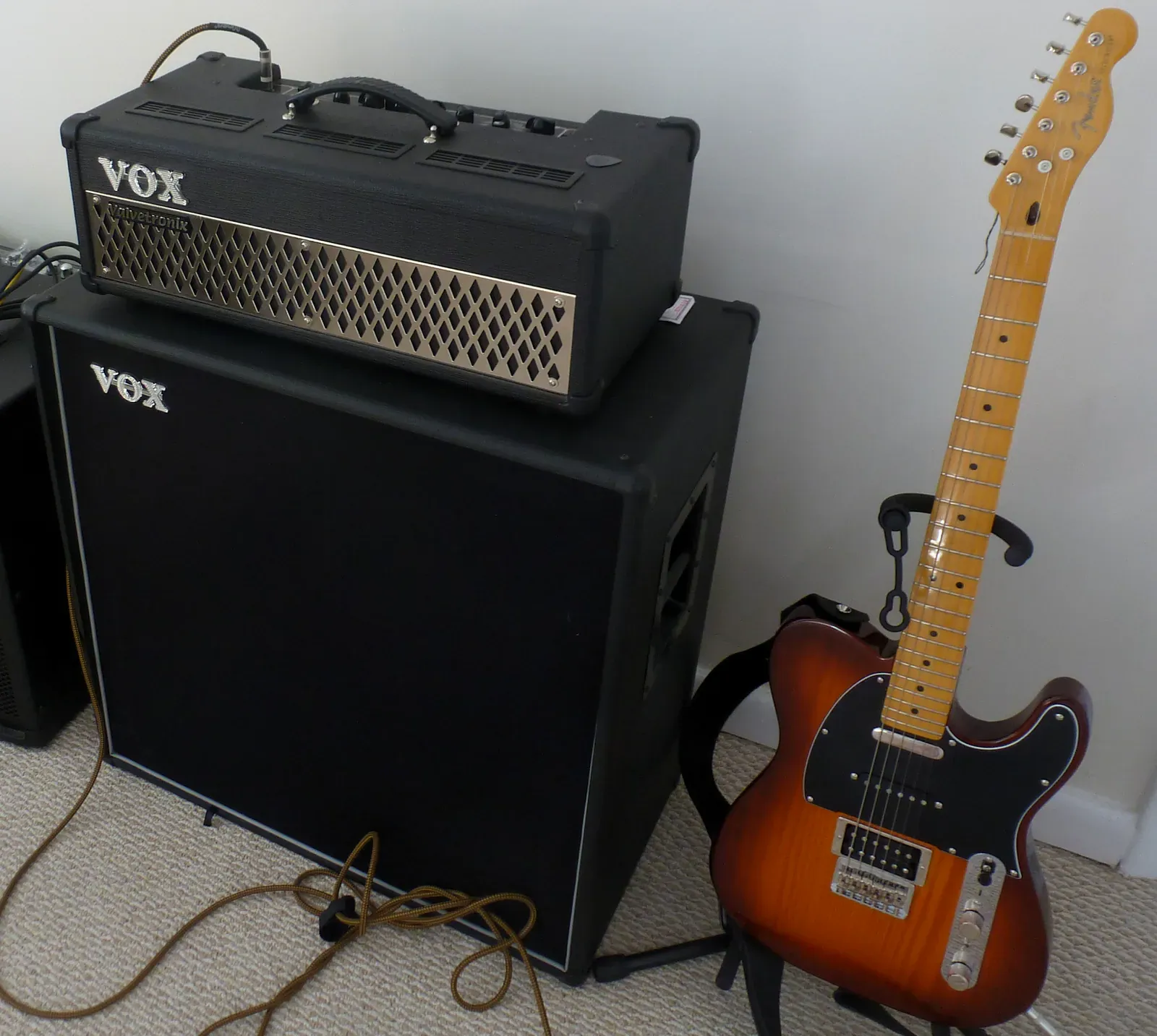
The core is a plain rock line-up of electric guitar, bass and drums. The Fender Telecaster and the offset Jazzmaster are the best-known guitars, the Rickenbacker 12-string supplies the jangle, and the Vox AC30 is the chiming British amplifier of choice. Cheap distortion and fuzz pedals bring the crunch. Folk instruments such as acoustic guitar and banjo enter the arrangements of Neutral Milk Hotel and Arcade Fire.
Production values stayed low on purpose. The Tascam Portastudio, a four-track cassette recorder of 1979, let a band make a record at home, and tape hiss and room sound were kept as part of the sound. Steve Albini’s room-mic approach, later housed in Electrical Audio in Chicago, gave other bands a dry, live-in-the-room sound.
Culture
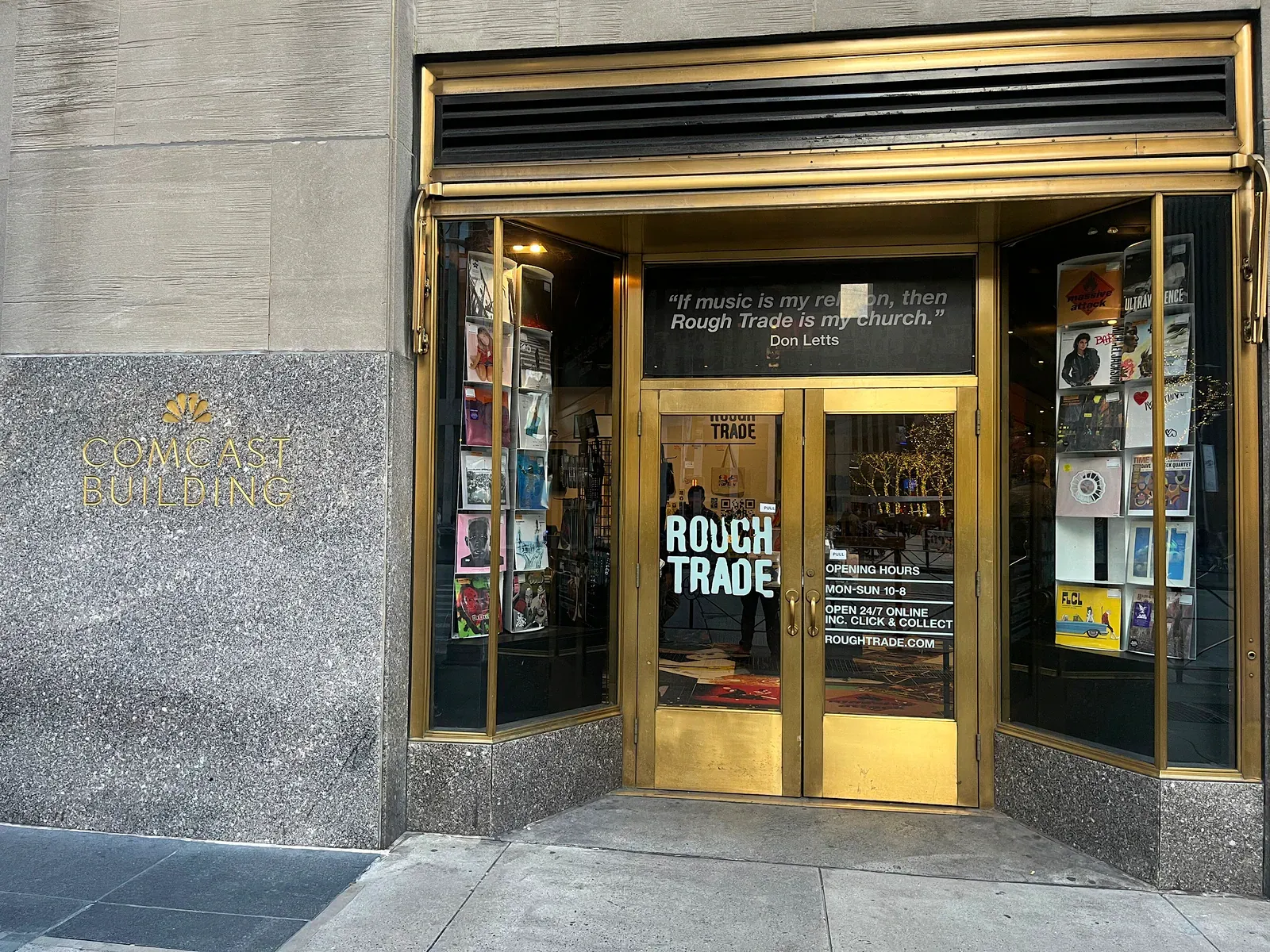
Independent record shops, fanzines and mail order were the early public sphere. Photocopied fanzines and hand-drawn sleeves tied bands to the DIY ethic, and thrift-store clothing, cardigans and plain shirts signalled anti-glamour from The Smiths onward. The John Peel show on BBC Radio 1 gave many independent bands their first national airplay, and Michael Azerrad’s book Our Band Could Be Your Life (2001) later told the story of the American underground of the 1980s.
Legacy
Indie rock shaped the vocabulary of modern guitar music. It supplied the DIY label model that Merge and Matador kept alive for decades, and it fed offshoots from indie pop to lo-fi, slowcore and indie folk. The line between independent and major has blurred, and the word now names a sound more than a business: the same guitar-led style appears on small labels, on majors and on Bandcamp.
Misconceptions
Indie rock is not defined by the size of a label. The word began as a distribution category, and bands such as The Strokes on RCA and Modest Mouse on Epic are still filed under indie rock, because the label deal is less important than the sound and the scene.
It is also not one sound. The genre includes the jangle of Orange Juice and The Smiths, the noise of Sonic Youth, the lo-fi of Pavement and the orchestral sweep of Arcade Fire, which share a stance more than a style.
The 2000s did not invent it. The independent chart and the word indie date from 1980, and the blog era of the 2000s was a revival that brought the style to far larger audiences.
Frequently asked questions
What is indie rock?
Indie rock is guitar-based music made and released through independent labels and DIY networks, with melodic songs and informal production. It began around 1980 in the UK, the US and New Zealand.
Why is it called indie?
Indie is short for independent. The term first meant records distributed outside the major music companies, and the UK independent singles chart of 1980 made it a common word.
What is the difference between indie rock and alternative rock?
Alternative rock is the wider term for guitar music outside the mainstream, whatever the label. Indie rock is the narrower strand with roots in independent labels, college radio and a DIY approach.
Which bands defined indie rock?
R.E.M., The Smiths, Pixies, Sonic Youth, Pavement, Neutral Milk Hotel, The Strokes and Arcade Fire are the most often cited, and Arctic Monkeys and Vampire Weekend carried the style to the charts.
Sound
Sound sheet
Anatomy of a track
| # | Part | Bars |
|---|---|---|
| 1 | Intro (guitar riff or strummed chords) | 4 |
| 2 | Verse | 16 |
| 3 | Chorus | 8 |
| 4 | Verse | 16 |
| 5 | Chorus | 8 |
| 6 | Bridge or guitar break | 8 |
| 7 | Final chorus and outro | 12 |
Signature sounds
- Clean, ringing or jangling guitar arpeggios
- Loud-quiet dynamic shifts between verse and chorus
- Rough, lo-fi or dry room-mic production
- Understated, speak-sung or untrained vocals
- Short song forms with a hook but no solo showmanship
Drums and percussion
- Standard rock kit
Techniques
- Jangly arpeggios
- Loud-quiet dynamics
- Four-track lo-fi recording
- Interlocking dual guitars
- Offset or detuned noise textures
Keys and modes
Open-position major and minor chords. E, A, D and G shapes suit the guitar-first writing.
Tuning
Standard tuning (E A D G B E), with occasional alternate tunings
Vocals
Understated, often speak-sung or high and light; a human, not polished, delivery.
Scenes
Where it happened
Where and when the sound lived: one bar per city on a shared timeline.
Europe
North America
Oceania
Active scenes
Peak 5, 2003-2025
Postcard Records and Orange Juice make the first guitar-pop version of independent rock.
Flying Nun bands such as The Clean and The Chills create a jangly, lo-fi regional sound.
A college town where R.E.M. and the 40 Watt Club helped start US college rock.
K Records and the Evergreen State College circle shape the American DIY and twee strand.
Merge Records grows here from a band-run label into a long-running independent.
The Strokes, Interpol and Yeah Yeah Yeahs make downtown clubs the centre of the revival.
Arcade Fire and a wider collective scene make the city a base for large-scale indie.
Venues and places
London, 1976 to today. The Notting Hill record shop that became a label, distributor and hub for the independent scene.
Athens, 1978 to today. The small room where R.E.M. and other Athens bands built an audience.
Hoboken, 1978 to today. A Hoboken club and the home room of Yo La Tengo and other East Coast independent bands.
Olympia, 1991 to today. Host of the 1991 International Pop Underground Convention.
Chicago, 1997 to today. Steve Albini's studio, used by many independent rock bands for live-in-room recording.
New York, 1993 to today. A Lower East Side room where early 2000s New York bands played their first shows.
Culture
Culture markers
- Thrift-store dressing
Cardigans, plain shirts and second-hand clothes signal anti-glamour from the Smiths onward.
Fashion - Hand-made sleeves and zines
Photocopied fanzines and hand-drawn record sleeves tie bands to the DIY ethic.
Artwork - Twee
A word for the softer, childlike end of indie, first used for C86-era bands.
Slang - Cassette and mail-order trading
Fans swapped tapes and ordered seven-inch singles by post before the internet.
Ritual - Record-shop browsing
Independent shops such as Rough Trade serve as meeting places and taste-makers.
Ritual
Media
Key media
- 1975The John Peel Show
by John Peel. BBC Radio 1 show that gave many independent bands their first national airplay.
Radio - 1981C81
by Various. Cassette from NME and Rough Trade that tied together a new independent network.
Compilation - 1986C86
by Various. NME cassette that gave a UK guitar scene its name and sound.
Compilation - 1986Sub Pop 100
by Various. The Seattle label's first record release, an early picture of the US underground.
Compilation - 2001Our Band Could Be Your Life
by Michael Azerrad. Portraits of the American underground bands of the 1980s.
Book - 2004Garden State
by Zach Braff. Soundtrack film that introduced The Shins and other indie acts to a wider audience.
Film
Glossary
Terms on this page
A 1986 NME cassette and the British guitar-pop scene it named.
US campus stations that played independent records before commercial radio did.
Do it yourself: bands and fans run their own recording, labels, shows and fanzines.
A record company independent of the major labels, the original meaning of indie.
Chiming, clean guitar playing, usually in arpeggios or on a 12-string.
Deliberately rough, tape-hissy recording that treats limits as part of the sound.
Verses played softly that explode into loud choruses, made popular by Pixies.
A gentle, childlike, melody-first strand of indie pop.
Rock family