Shoegaze
Shoegaze is a British guitar style of layered, effects-heavy noise with soft vocals mixed in as texture, formed around 1988 and peaking with Loveless in 1991.
Thames Valley, 1988
Rock family
Born
1988
Thames Valley
Subgenres
5
Documented branches
Links
20
Genres it drew on or shaped
Tempo
90-170 BPMLineage
Family tree
Grew out of
- Noise pop
Derived from
- Dream pop
Derived from
- Neo-psychedelia
Derived from
Derived from
Influenced by
Thames Valley, 1988
Shoegaze
Led to (5)
Timeline
Era by era
From the first sparks to today. Select a dot to read the story behind it.
- Roots in noise and dream pop
1982 to 1987
- The Thames Valley wave
1988 to 1992
- Britpop eclipse
1993 to 2001
- Rediscovery
2002 to 2012
- Reunions, blackgaze and a global revival
2013 to 2026
Eras
Moments
- 1 Roots in noise and dream pop, 1982 to 1987
- 2 The Thames Valley wave, 1988 to 1992
- 3 Britpop eclipse, 1993 to 2001
- 4 Rediscovery, 2002 to 2012
- 5 Reunions, blackgaze and a global revival, 2013 to 2026
1982
Roots in noise and dream pop
Cocteau Twins on 4AD and The Jesus and Mary Chain's feedback-soaked Psychocandy supplied the blueprint of ethereal vocals under a wall of distorted guitar.
- 1983My Bloody Valentine form in DublinKevin Shields and Colm O Ciosoig start the group that will define the genre.
- 1985Psychocandy by The Jesus and Mary ChainA pop record made of white noise and feedback, a frequent pre-history marker of the sound.
1988
The Thames Valley wave
My Bloody Valentine, Ride, Slowdive, Lush and Chapterhouse built the sound around London and the Thames Valley, peaking with Loveless in 1991 on Creation Records.
- 1988My Bloody Valentine's You Made Me RealiseThe EP, with its noise-storm closer, is the group's breakthrough release.
- 1988Isn't AnythingMy Bloody Valentine's first album, on Creation Records, sets the template for the genre.
- 1989Slowdive form in ReadingThe Berkshire band joins Chapterhouse as Reading's contribution to the Thames Valley scene.
- 1989Lush's Scar mini-albumThe London group's debut arrives on 4AD, the label of Cocteau Twins.
- 1990Ride's NowhereThe Oxford band's debut album, home of Vapour Trail, on Creation Records.
- 1990My Bloody Valentine's SoonA dance-leaning 1990 release that later closes Loveless.
- 1991Chapterhouse's WhirlpoolThe Reading band's debut album, on Dedicated Records.
- 1991The press coins 'shoegazing'British music papers use the word as a jibe at bands standing still and watching their pedals.
- 1991LovelessRecorded across 19 studios over more than two and a half years, it becomes the genre's landmark album.
- 1992Lush's SpookyA 4AD album that links the dream-pop line to the shoegaze scene.
1993
Britpop eclipse
Grunge and Britpop pushed the scene aside, the press mocked it, and most first-wave bands split or changed course by the mid-1990s.
- 1993Slowdive's SouvlakiSlowdive's second album, on Creation Records, drifts toward ambient texture.
- 1993Britpop and grunge overshadow the scenePress and audience attention moves to Suede, Blur and Oasis and to Nirvana, and the first wave loses its platform.
- 1995Creation drops Slowdive after PygmalionThe label ends the contract within a week of the album's release.
- 1996The original wave splits or changes courseRide break up, Lush's drummer Chris Acland dies, and My Bloody Valentine go silent for years.
2002
Rediscovery
A tribute album, film soundtracks and new labels such as Sonic Cathedral re-opened the sound, and nu gaze and blackgaze acts appeared.
- 2002Blue Skied an' Clear tribute albumA Slowdive tribute on Morr Music reimagines the songs with ambient electronics.
- 2005Alcest's Le Secret opens blackgazeThe French EP fuses black metal with shoegaze textures.
- 2006Sonic Cathedral label starts in LondonNathaniel Cramp's label becomes a home for new shoegaze and for reunited veterans.
2013
Reunions, blackgaze and a global revival
My Bloody Valentine's m b v, Slowdive and Ride reunions and Deafheaven's Sunbather fed a worldwide scene that later spread through short-video platforms.
- 2013My Bloody Valentine release m b vThe third album arrives online on 2 February 2013, 22 years after Loveless.
- 2013Deafheaven's SunbatherThe blackgaze album becomes a critical landmark and carries the sound into metal.
- 2017Slowdive return with SlowdiveThe reunion album is their first in 22 years, issued by Dead Oceans.
Listening path
Start listening
A short path from an easy way in to the deep end. Thumbnails come from YouTube; the player loads only when you press play.
- 01
Slowdive, 1993
A signature track from Souvlaki, the gentlest way into the genre's dreamier side.
- 02
Ride, 1990
A scene signature from Nowhere that turns the guitar wash into a melody.
- 03
Lush, 1990
A scene signature from the 4AD side, with bright vocals over chiming guitars.
- 04
My Bloody Valentine, 1991
The opening track of Loveless, the album that defines the genre's peak.
- 05
My Bloody Valentine, 1988
The title track of the 1988 breakthrough EP, ending in a long noise passage.
Facts
| Family | Rock |
| Origin | Thames Valley, United Kingdom |
| Emerged | Late 1980s |
| Status | Revival |
| Tempo | 90 to 170 BPM |
| Meter | 4/4 |
| Grew out of | Noise pop, Dream pop, Neo-psychedelia, Indie rock |
| Subgenres | 5 |
Shoegaze is a style of guitar music built from layered, distorted and heavily processed guitars, with soft vocals mixed in as one more texture rather than placed on top.
It formed in Britain and Ireland in the late 1980s, grew out of noise pop and dream pop, and reached its peak with My Bloody Valentine’s Loveless in 1991. It belongs to the rock family.
Roots in noise and dream pop, 1982-1987
Two earlier records supplied the blueprint. Cocteau Twins, on the 4AD label, showed how a voice could float as an instrument above shimmering guitars, the core of dream pop. The Jesus and Mary Chain’s Psychocandy (1985) showed the opposite pole: pop melodies buried in feedback and white noise.
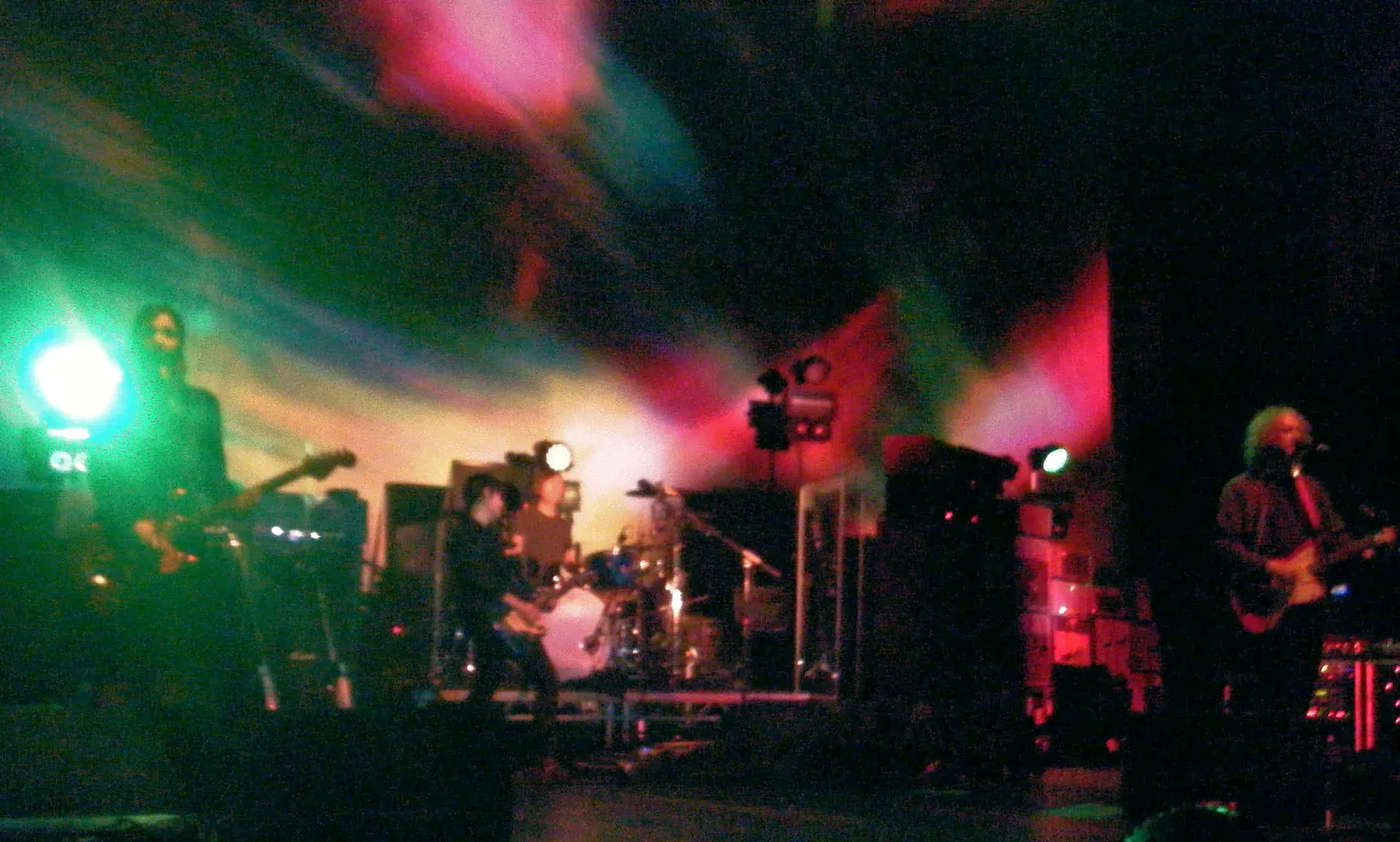
My Bloody Valentine formed in Dublin in 1983 around Kevin Shields and drummer Colm O Ciosoig. The group later moved to London. The elements that would define the genre, a wall of detuned guitar and vocals sunk into the mix, were still being assembled across several unconnected bands.
The Thames Valley wave, 1988-1992
The sound took recognizable form in 1988 with My Bloody Valentine’s You Made Me Realise EP, whose closing passage turns into a long storm of noise, and their first album Isn’t Anything on Creation Records, which set the template of bent, detuned guitar and breathy vocals.
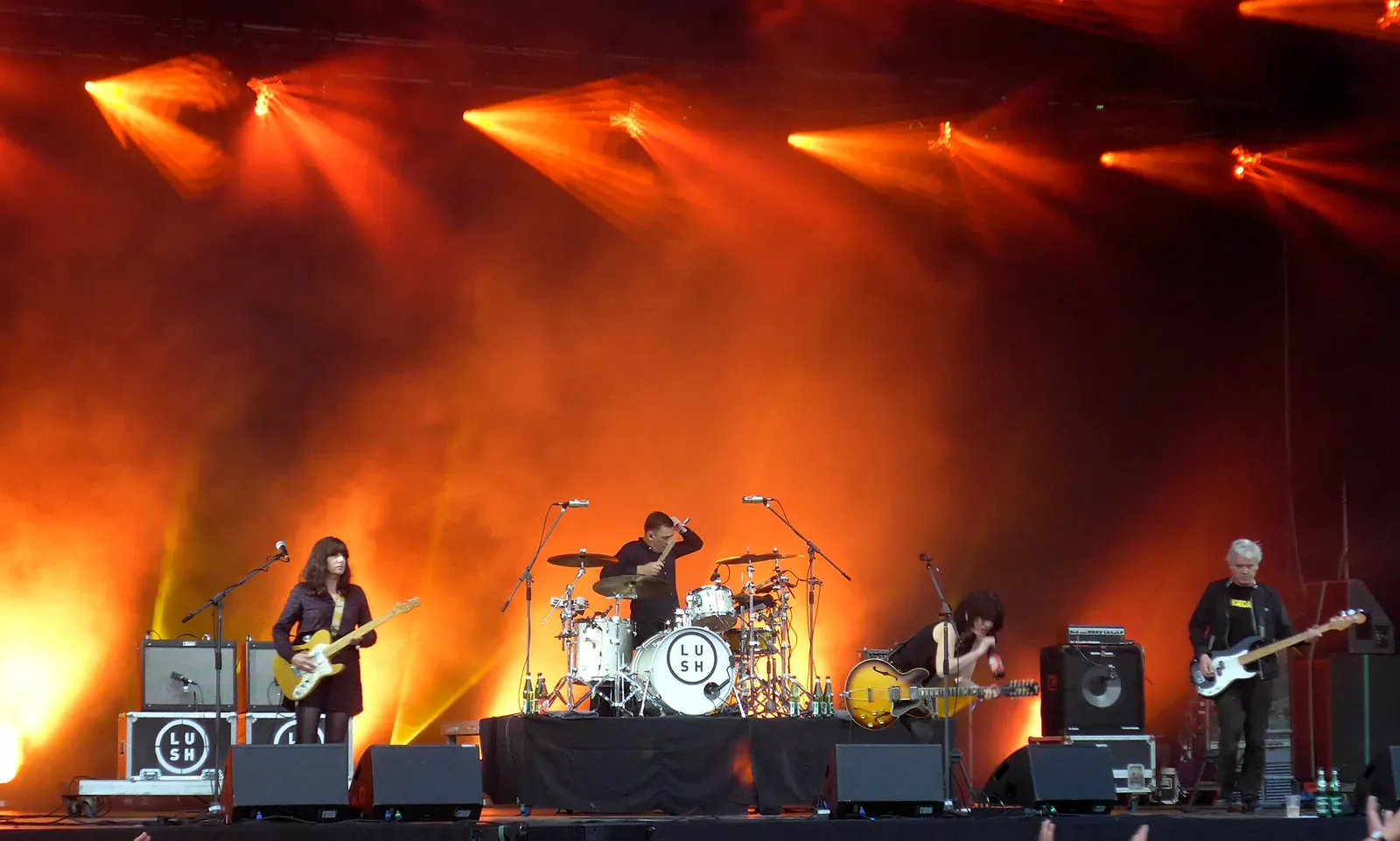
Other bands formed around London and the Thames Valley at the same moment. Ride came from Oxford, Slowdive and Chapterhouse from Reading, and Lush from London. Lush released their debut Scar on 4AD in 1989, linking the dream-pop label to the new scene. Ride’s Nowhere (1990) and Slowdive’s early releases came out on Creation, and Chapterhouse’s Whirlpool (1991) appeared on Dedicated.
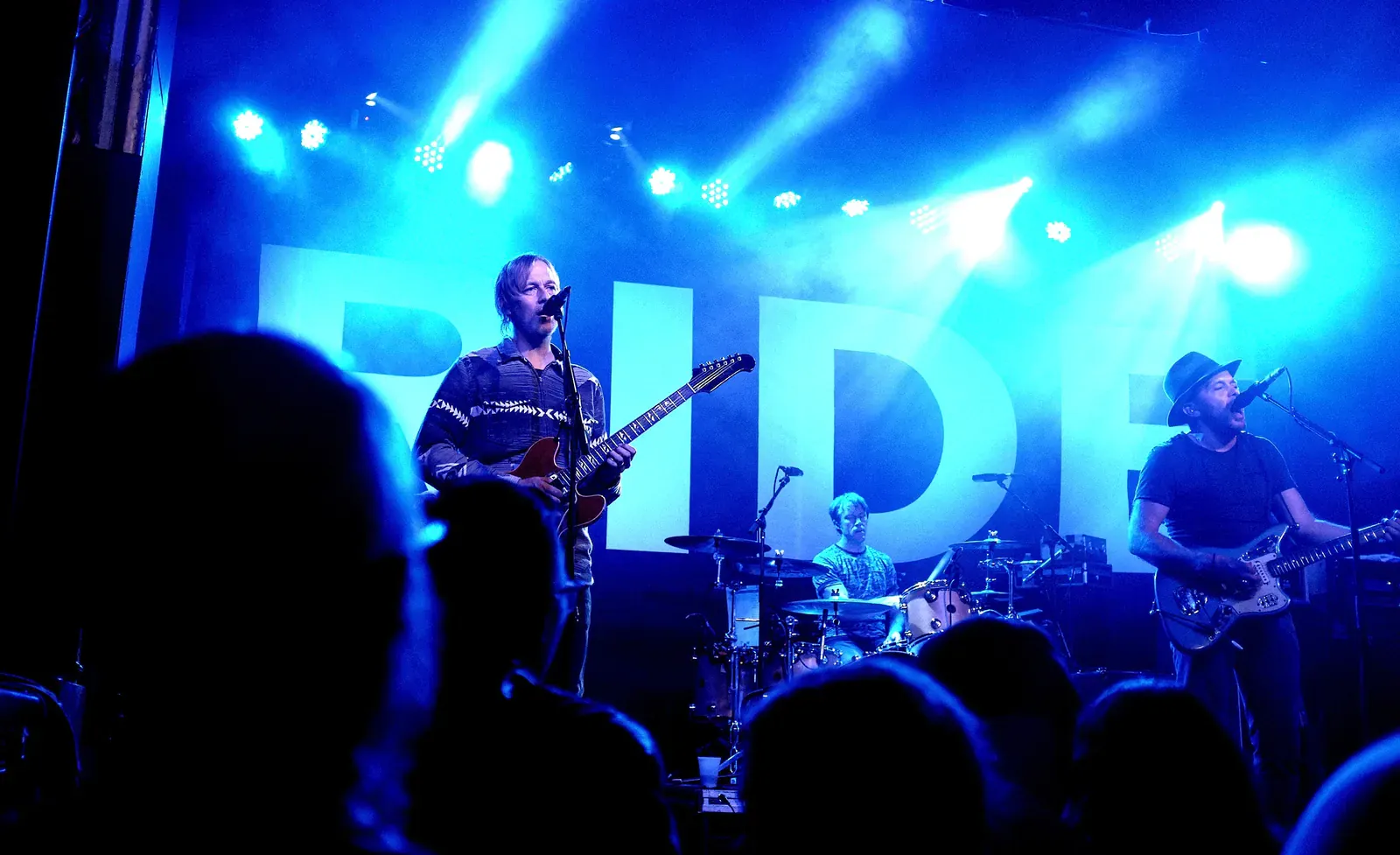
The scene was small and close. Bands shared labels, bills and audiences, and Camden pubs such as the Falcon hosted much of it. Around 1991 the British music press coined two labels for it. One was “shoegazing”, a jibe at musicians who stood motionless with their heads down over effects pedals. The other was “The Scene That Celebrates Itself”, coined in Melody Maker and first meant kindly, then used mockingly for the clique of bands who attended each other’s gigs.
Loveless arrived in November 1991. It was recorded across 19 studios over more than two and a half years, and its layered guitars and low-mixed voices fixed the genre’s ideal sound. Lush’s Spooky followed in 1992, and Slowdive’s Souvlaki in 1993 drifted toward ambient texture.
Britpop eclipse, 1993-2001
Attention moved quickly. Grunge in the United States and Britpop at home, led by Suede, Blur and Oasis, pulled the press and the audience toward louder personalities and plainer songs, and the first wave lost its platform.
The effects were concrete. Creation ended Slowdive’s contract within a week of the release of Pygmalion in 1995. By about 1996 Ride had broken up, Lush’s drummer Chris Acland had died, and My Bloody Valentine had gone silent for years. Most of the original bands split or changed direction before the decade ended.
Rediscovery, 2002-2012
Younger listeners found the records through reissues, soundtracks and the internet. Blue Skied an’ Clear, a Slowdive tribute album issued by Morr Music in 2002, recast the songs with ambient electronics. In 2003 the film Lost in Translation used music by My Bloody Valentine and Kevin Shields, which introduced the sound to a much wider audience.
New acts, often labelled nu gaze, revived or updated the British sound. In 2005 the French EP Le Secret by Alcest fused shoegaze textures with black metal and started the branch known as blackgaze. In London, Nathaniel Cramp founded the Sonic Cathedral label in 2006, which became a home for new bands and, later, for reunited veterans.
Reunions, blackgaze and a global revival, 2013-2026
2013 was the turning point. My Bloody Valentine released m b v on 2 February, 22 years after Loveless, and the album appeared online without advance warning. Deafheaven’s Sunbather the same year became a critical landmark that carried shoegaze textures into metal and made blackgaze widely known.
Reunions followed. Ride returned, and Slowdive issued their first album in 22 years, titled Slowdive, in 2017 on Dead Oceans. The sound later spread through short-video platforms and a worldwide scene of bands that grew up on the early records.
Characteristics
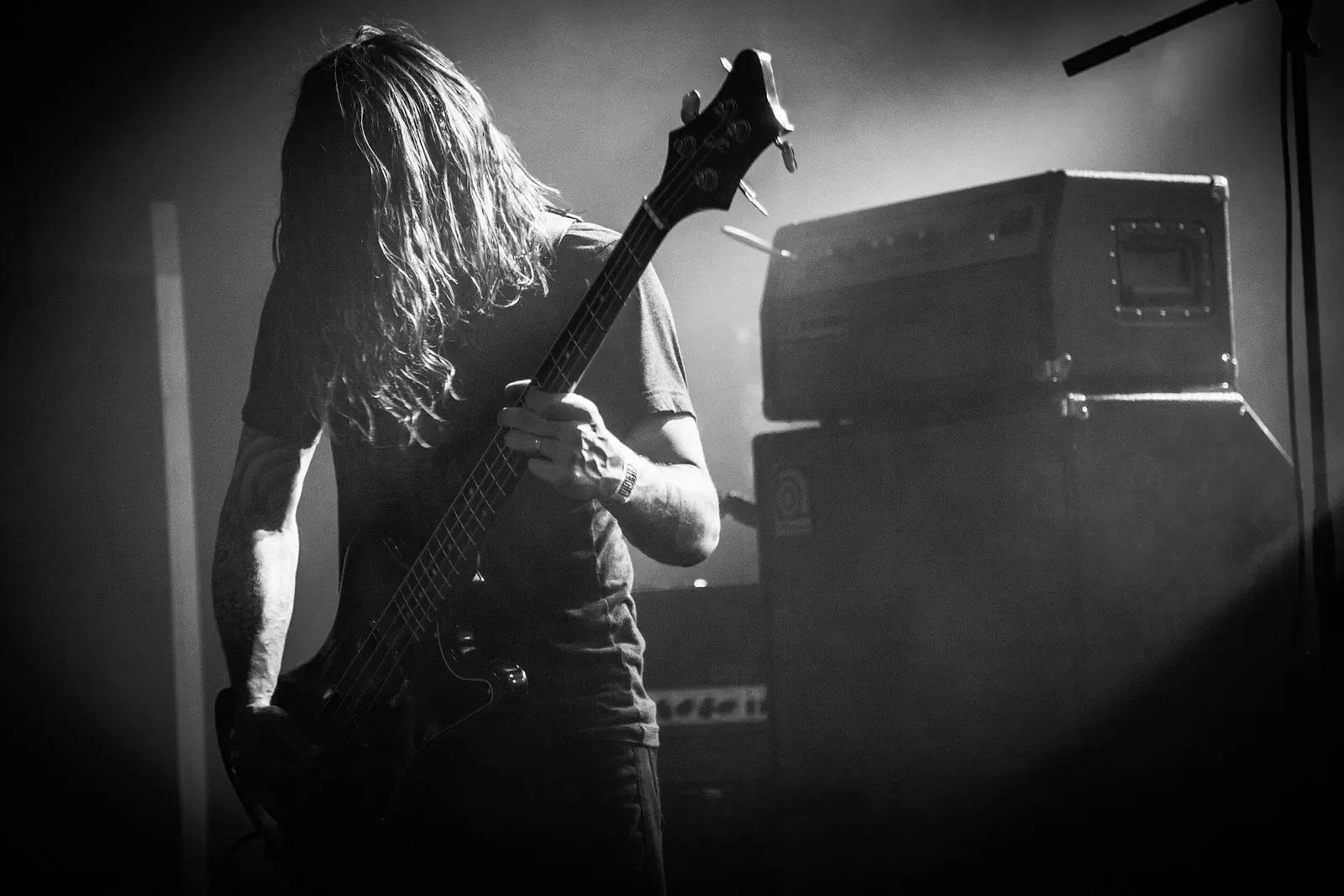
Shoegaze is defined by density. Many guitar parts are stacked until single lines are hard to separate, closer to a wash of sound than to riffs and solos. Melody survives inside it, usually carried by a voice mixed level with the guitars, so words are secondary to timbre.
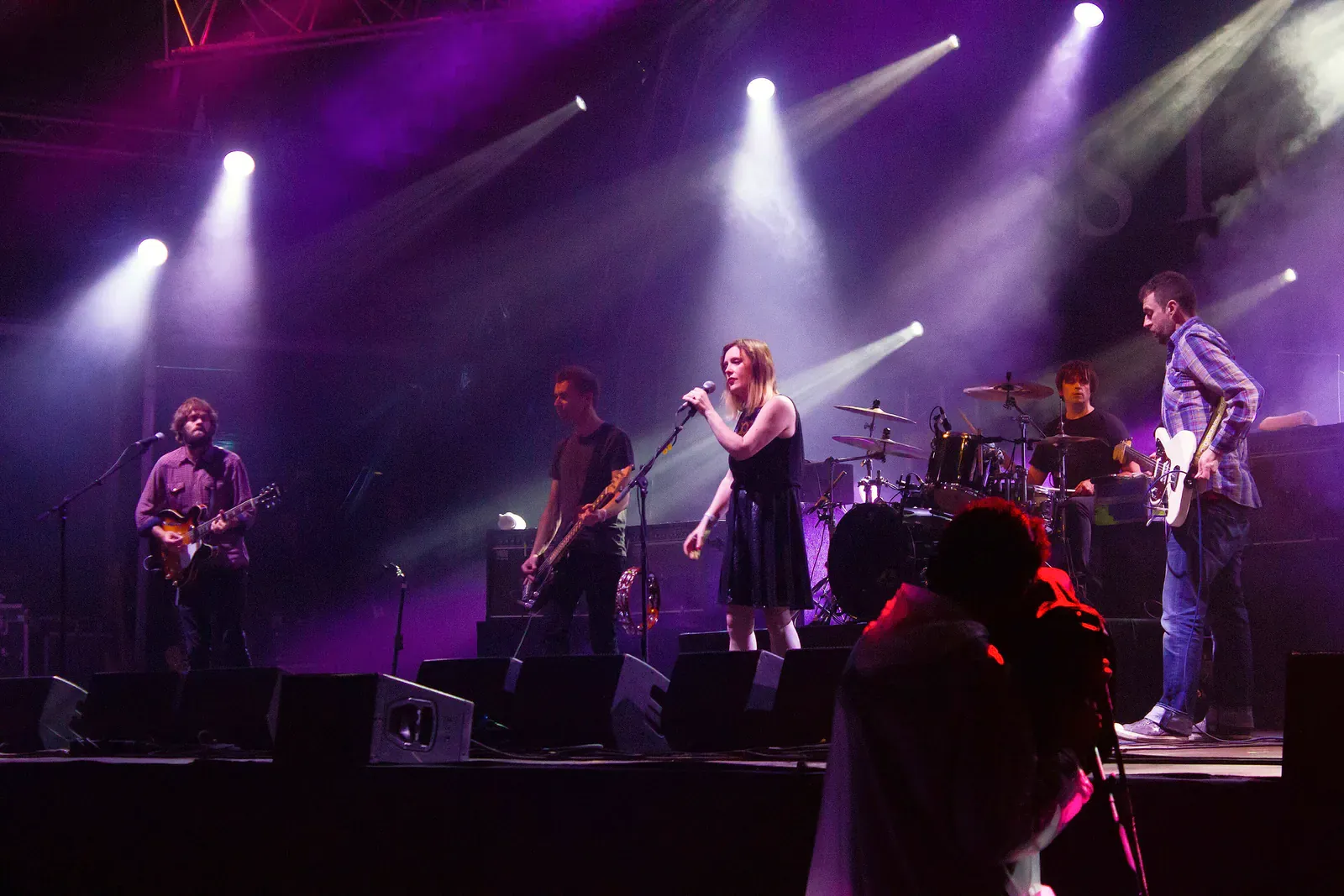
On stage, musicians stand still and look down at their pedalboards instead of performing to the crowd. My Bloody Valentine have often stretched You Made Me Realise into an extended wall of white noise in concert.
Instruments and production
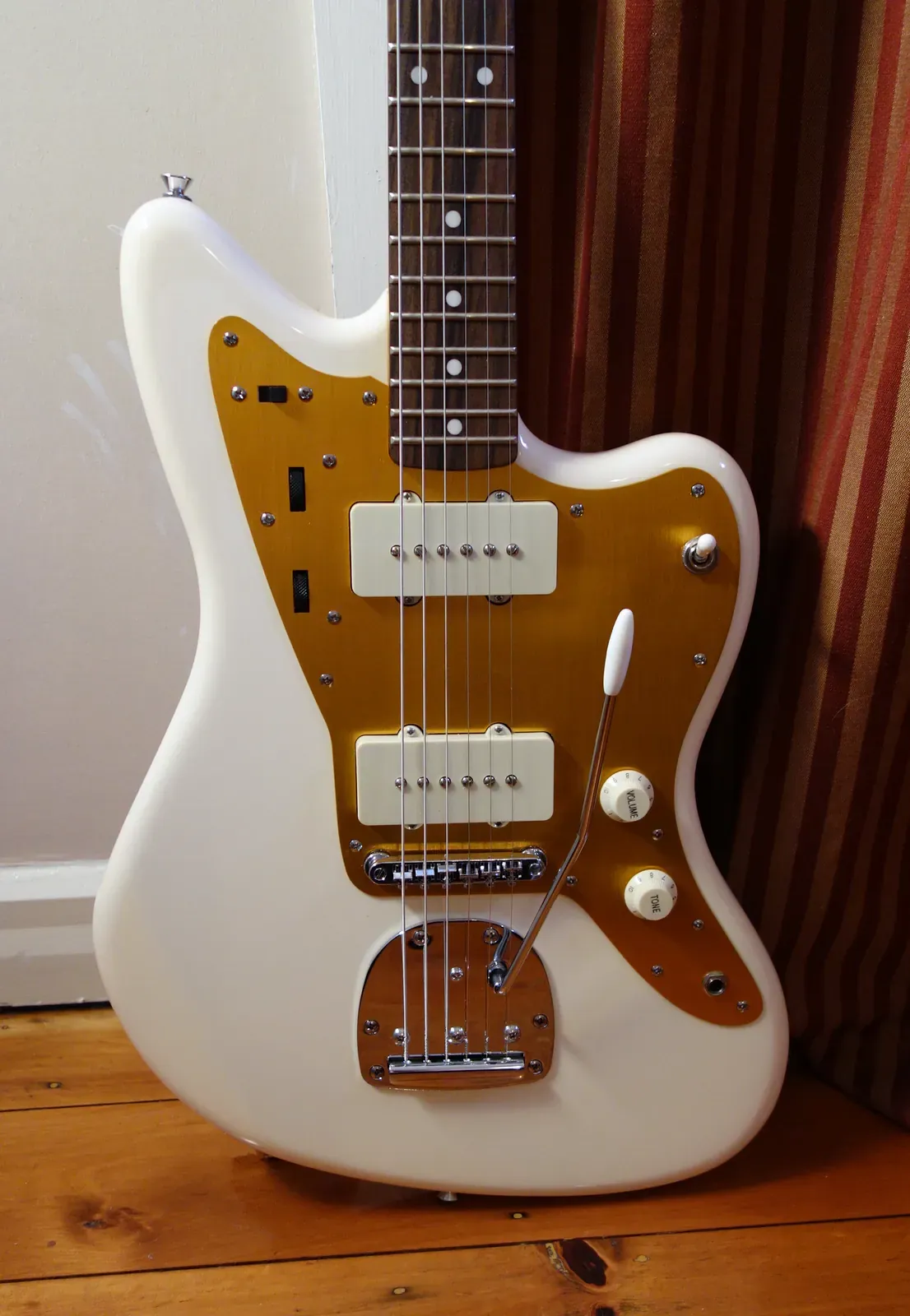
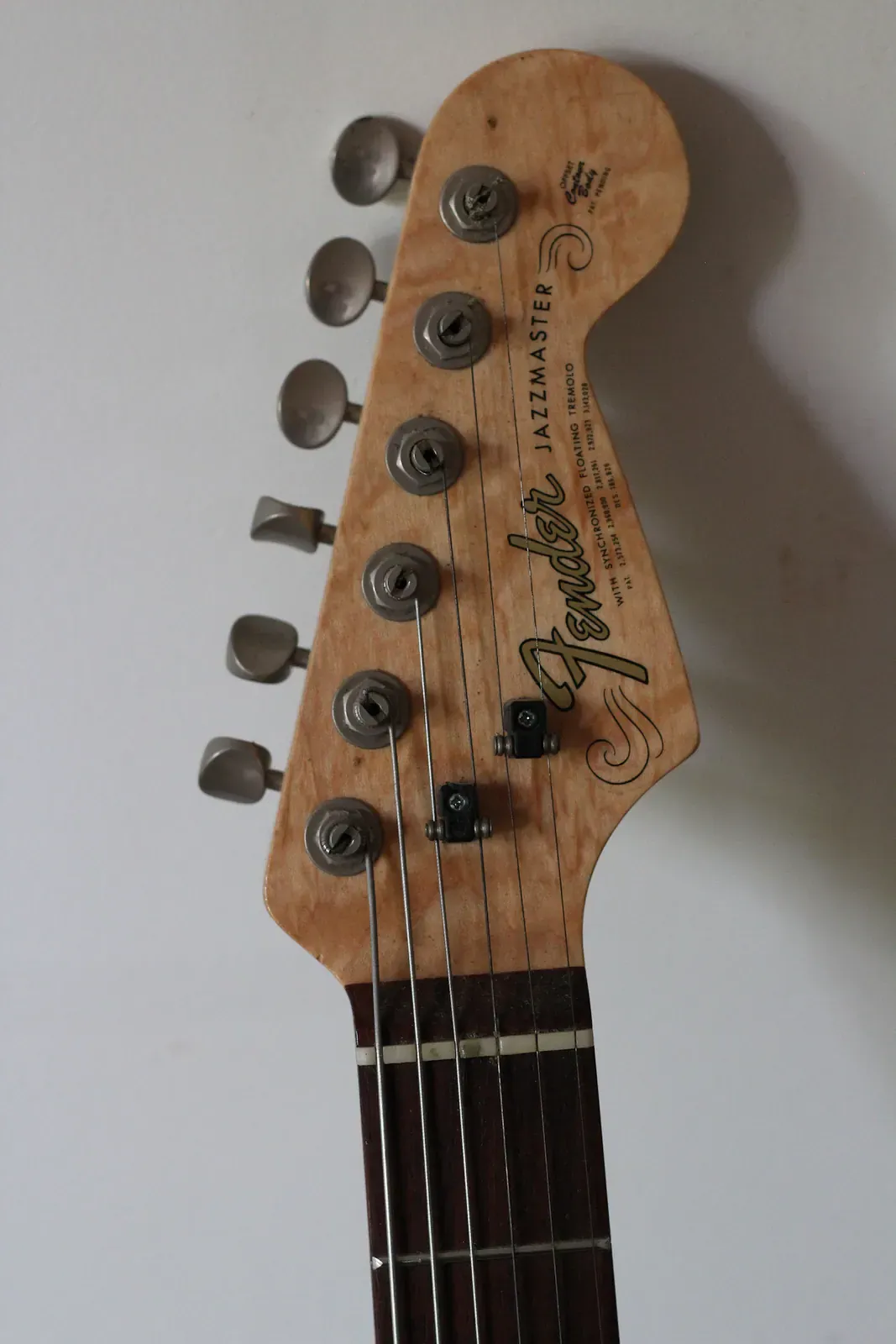
The guitar is the central instrument, and the offset Fender Jazzmaster and Jaguar are its signature models. Their floating tremolo systems suit glide guitar, in which a player strums while moving the tremolo arm so chords bend out of tune. Combined with slack, altered tunings, the technique gives the genre its seasick shimmer.
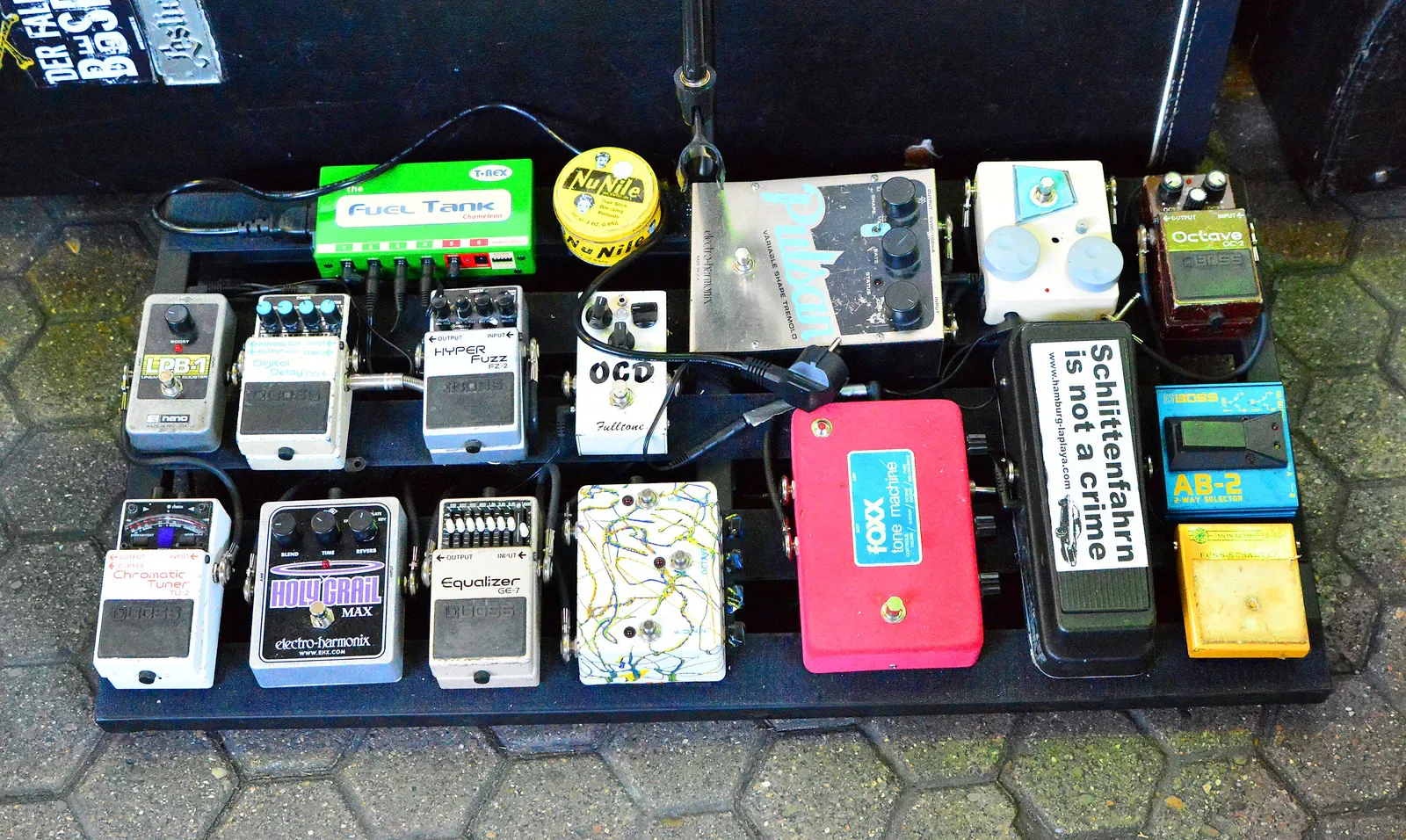
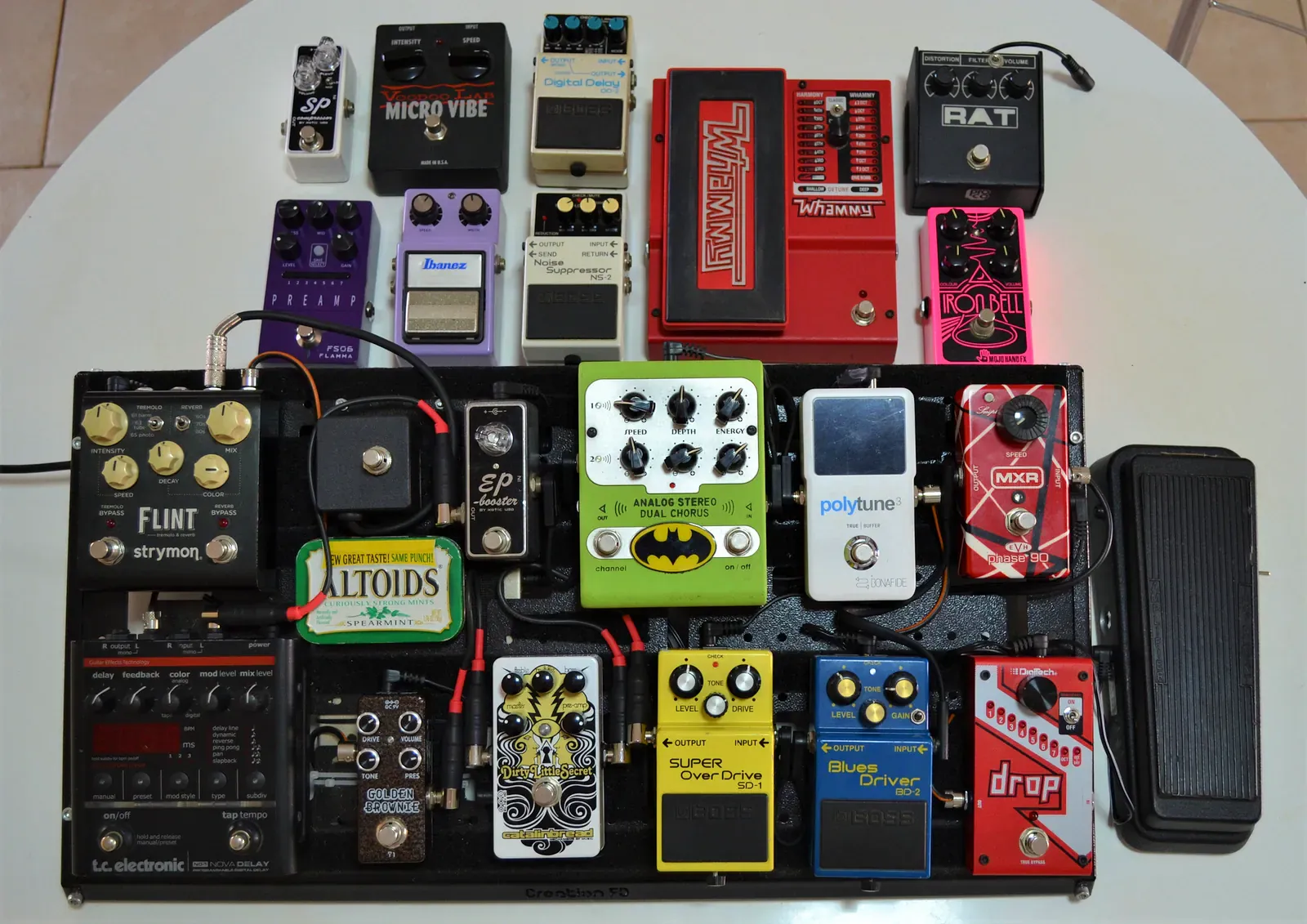
Fuzz, chorus, delay and reverb pedals do the rest. Several amplifiers are often stacked for a thick tone, and studio work relied on digital effects units and heavy overdubbing. Reverse reverb, where the swell of the reverb comes before the note, gives the ghostly wash heard on My Bloody Valentine records.
Mainstream success
Shoegaze never had a mass-market moment in its first life, and the first wave was overtaken within two years of its peak. Recognition came later and through other channels: critics’ lists, film soundtracks, reunions and younger bands.
Notable recordings
Loveless is the central work. Its opener Only Shallow introduces the genre’s ideal in a few seconds. Soon, released in 1990 and later closing the album, shows a dance-leaning side of the group.

Slowdive’s Alison, from Souvlaki (1993), is the gentlest entry on the dreamier side of the genre, while Ride’s Vapour Trail and Lush’s Sweetness and Light show how the scene’s melodic songwriting sat inside the wash. You Made Me Realise, from 1988, remains the origin point: a short song that ends in a sustained noise passage.
Culture
The scene was small, London-centered and tied together by a few labels and venues. The press supplied the vocabulary, “shoegazing” and “The Scene That Celebrates Itself”, the first used as an insult and later reclaimed as the name of the genre itself, the second first meant kindly and soon used mockingly.
The scene’s culture was one of restraint on stage. Band members stood still and did not perform to the crowd, a detachment that looked arrogant to critics and shy to supporters.
Legacy
Shoegaze fed into later textural guitar styles. Its habits of treating the voice as texture and the guitar as a wall passed to dream-pop and indie acts, and blackgaze showed that the approach could carry metal. The first-wave bands gained a second career through reunions, and a generation that never saw them live learned the sound from records and the internet.
Misconceptions
The name is often assumed to describe a compliment, but “shoegazing” began as a British press jibe about bands that stared at their effects pedals. Musicians and fans later adopted it as the genre’s name.
The soft, buried vocals are sometimes read as sloppy mixing or an absence of lyrics. They were a deliberate choice: voices were set at the level of the guitars so that they would work as texture, part of the sound rather than a lead.
The genre is also called a purely British or purely 1990s phenomenon. Its central band began in Dublin, its metal-fused branch was born in France with Alcest and widened by the American band Deafheaven, and some noted recent releases came from reunited first-wave bands.
Frequently asked questions
What is shoegaze?
Shoegaze is a genre of rock music defined by dense, effects-laden guitars and soft vocals blended into the instrumental wash. It started in the United Kingdom and Ireland in the late 1980s.
Why is shoegaze called shoegaze?
The name comes from the British music press, which used “shoegazing” around 1991 to mock bands whose members stood still and looked at the effects pedals at their feet. The word stuck and became the name of the style.
Which album defines shoegaze?
My Bloody Valentine’s Loveless, released in 1991 on Creation Records, is the most often cited. Slowdive’s Souvlaki and Ride’s Nowhere are the other records most associated with the first wave.
What is blackgaze?
Blackgaze is a fusion of black metal and shoegaze. The French band Alcest opened the branch with the 2005 EP Le Secret, and Deafheaven’s Sunbather (2013) brought it to a wide audience.
Is shoegaze the same as dream pop?
No. Dream pop, represented by Cocteau Twins, centers on ethereal vocals and shimmering guitar. Shoegaze shares that softness but adds heavy distortion, noise and a dense wall of guitars, and the two meet in bands such as Lush.
Sound
Sound sheet
Signature sounds
- Glide guitar: tremolo-arm pitch bends while strumming
- Vocals mixed as another texture, often buried under guitars
- Reverse reverb and long delay washes
- Many layered, detuned guitar tracks forming a wall of sound
- Noise or feedback passages in the live set
Techniques
- Glide guitar
- Reverse reverb
- Buried vocals
- Layered guitar tracks
Tuning
Slack, alternate guitar tunings so chords detune under tremolo-arm vibrato
Vocals
Soft, breathy vocals blended into the guitar texture rather than placed on top.
Scenes
Where it happened
Where and when the sound lived: one bar per city on a shared timeline.
Europe
Active scenes
Peak 3, 1989-1995
Lush and the press scene around venues such as the Camden Falcon.
Home of Ride and Swervedriver, both on Creation Records.
Slowdive and Chapterhouse formed in the Berkshire town.
My Bloody Valentine began here before moving to London.
Alcest's Le Secret EP opened the blackgaze branch.
Venues and places
London, 1989 to today. Camden pub that hosted Lush, Slowdive and Pale Saints and closed as a venue in 2002.
Culture
Culture markers
- Shoegazing
A British press jibe about bands staring at pedals, later reclaimed as the genre's name.
Slang - The Scene That Celebrates Itself
A 1991 Melody Maker tag, first meant kindly and soon used mockingly, for the bands who went to each other's concerts and shared labels.
Slang - Motionless stage presence
Musicians stood still, heads down over pedalboards, instead of performing to the crowd.
Ritual - The Holocaust noise passage
My Bloody Valentine have often stretched You Made Me Realise into a long wall of white noise in concert.
Ritual
Media
Key media
- 1991Melody Maker
by Steve Sutherland. The paper that coined 'The Scene That Celebrates Itself' for the London and Thames Valley bands.
Zine - 2002Blue Skied an' Clear: A Slowdive Tribute
by Various. A Morr Music tribute that recast the songs for a new electronic audience.
Compilation - 2003Lost in Translation
by Sofia Coppola. Its soundtrack featured My Bloody Valentine and Kevin Shields and introduced the sound to a wider audience.
Film - 2007My Bloody Valentine's Loveless (33 1/3)
by Mike McGonigal. A book-length study of the album's making and legacy.
Book
Glossary
Terms on this page
A fusion of black metal and shoegaze, associated with Alcest and Deafheaven.
Strumming while moving the tremolo arm so chords bend slightly out of tune.
A label for 2000s-era acts that revived or updated the original British sound.
An effect that makes a reverb swell build up before the note, used for a ghostly wash.
Originally a press jibe about bands staring at their effects pedals, now the name of the whole style.
A 1991 Melody Maker label for the clique of London and Thames Valley bands who attended each other's gigs.
A dense blend of layered guitars where single parts are hard to separate.
Rock family