Glam rock
Glam rock is a British rock style of the early 1970s that paired rock and roll stomps and hooks with glitter, make-up and invented stage personae.
United Kingdom, 1971
Rock family
Born
1971
United Kingdom
Subgenres
2
Documented branches
Links
27
Genres it drew on or shaped
Tempo
110-140 BPMLineage
Family tree
Grew out of
Derived from
Derived from
Derived from
Derived from
Influenced by
Pushed back against
United Kingdom, 1971
Glam rock
Led to (5)
Timeline
Era by era
From the first sparks to today. Select a dot to read the story behind it.
- Electric Bolan
1970 to 1971
- Ziggy, Slade and the singles boom
1972 to 1973
- Second wave and the Christmas hits
1973 to 1975
- Punk and the end of the fashion
1976 to 1979
- Revival and legacy
1980 to today
Eras
Moments
- 1 Electric Bolan, 1970 to 1971
- 2 Ziggy, Slade and the singles boom, 1972 to 1973
- 3 Second wave and the Christmas hits, 1973 to 1975
- 4 Punk and the end of the fashion, 1976 to 1979
- 5 Revival and legacy, 1980 to today
1970
Electric Bolan
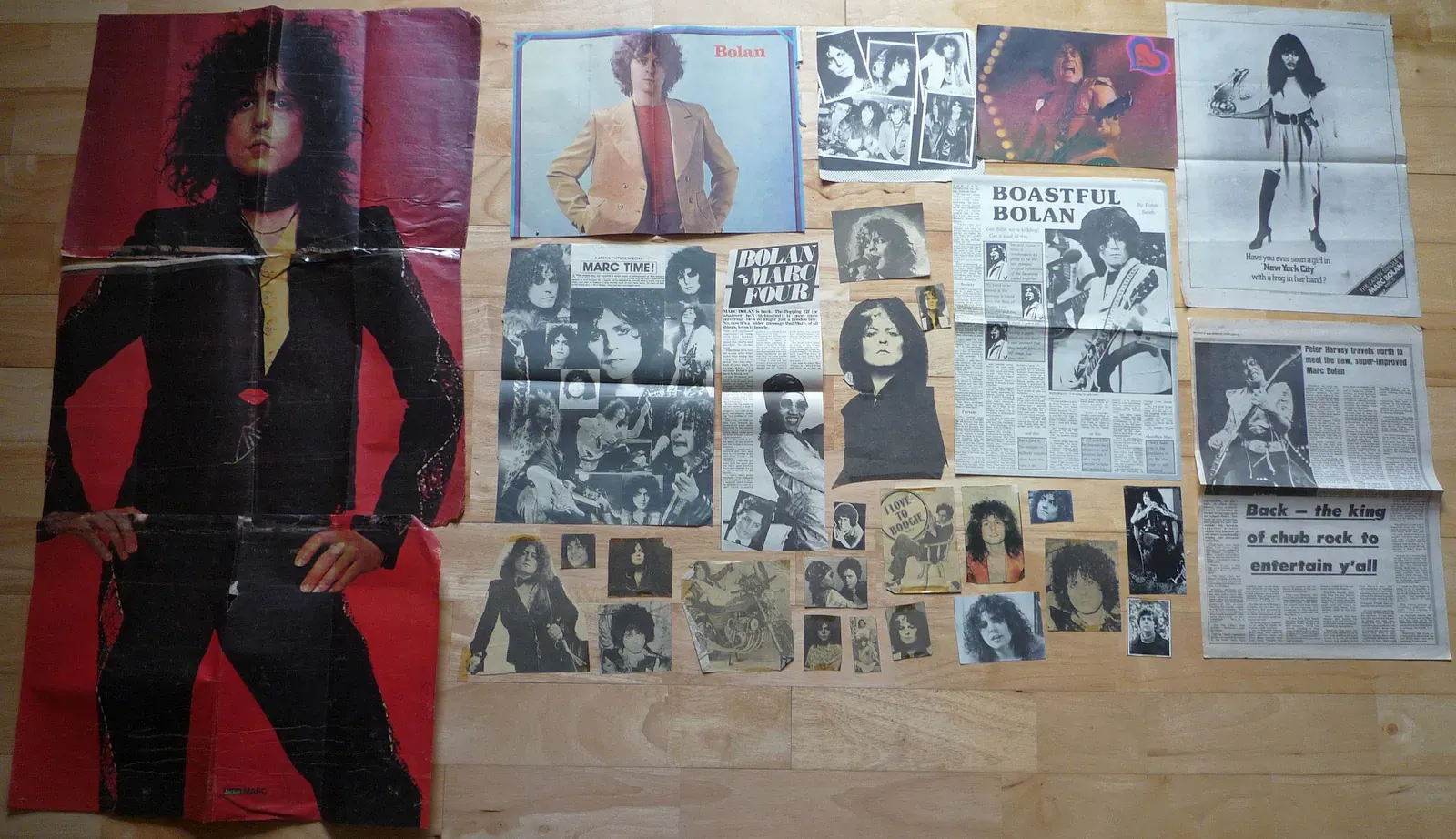
Marc Bolan turns Tyrannosaurus Rex into the electric T. Rex and adds glitter, satin and a pop single sense. Hot Love on Top of the Pops in March 1971 starts the look.
- 1970Tyrannosaurus Rex shorten to T. Rex and go electricMarc Bolan trades acoustic folk for electric boogie, and Ride a White Swan gives him his first hit in October 1970.
- 1971Bolan wears glitter on Top of the PopsHis March 1971 Hot Love appearance in satin and sparkle is often dated as the start of glam.
- 1971T. Rex release Get It On and Electric WarriorGet It On reaches number one in the UK and the album becomes a template for glam rock records.
1972
Ziggy, Slade and the singles boom
Bowie's Ziggy Stardust, Roxy Music, Slade, Sweet and Gary Glitter fill the UK charts and Top of the Pops with stomp, hand-claps and costume.
- 1972Slade release Slade Alive!Polydor issues the live album that makes the Wolverhampton band's raucous stomp a national name.
- 1972Roxy Music release their debut albumIsland issues the self-titled LP with Brian Eno's synthesizer, a sax and retro-futurist styling.
- 1972Bowie releases Ziggy StardustRCA issues The Rise and Fall of Ziggy Stardust and the Spiders from Mars on 16 June 1972.
- 1972Bowie sings Starman on Top of the PopsThe 5 July 1972 broadcast, with Mick Ronson and a rainbow jumpsuit, converts a generation of fans.
- 1972Mott the Hoople record All the Young DudesBowie writes and produces the single, released in July 1972, that revives the band.
- 1972Gary Glitter releases Rock and Roll (Parts 1 and 2)Produced by Mike Leander for Bell, the heavy-drum single reaches number two in the UK.
- 1972Rodney's English Disco opens in Los AngelesThe Sunset Strip club becomes the West Coast hangout for glam fans and bands.
- 1972Lou Reed releases TransformerBowie and Mick Ronson produce the RCA album that carries Walk on the Wild Side.
1973
Second wave and the Christmas hits
Mud, Suzi Quatro, Wizzard, Sparks and Cockney Rebel follow; Merry Xmas Everybody sets a seasonal standard while the original stars drift on.
- 1973Sweet reach number one with Block Buster!The Chinnichap-written hit moves the band from bubblegum to a harder glam sound.
- 1973Suzi Quatro releases Can the CanMickie Most's RAK label launches the Detroit leather-clad bass player as a UK star.
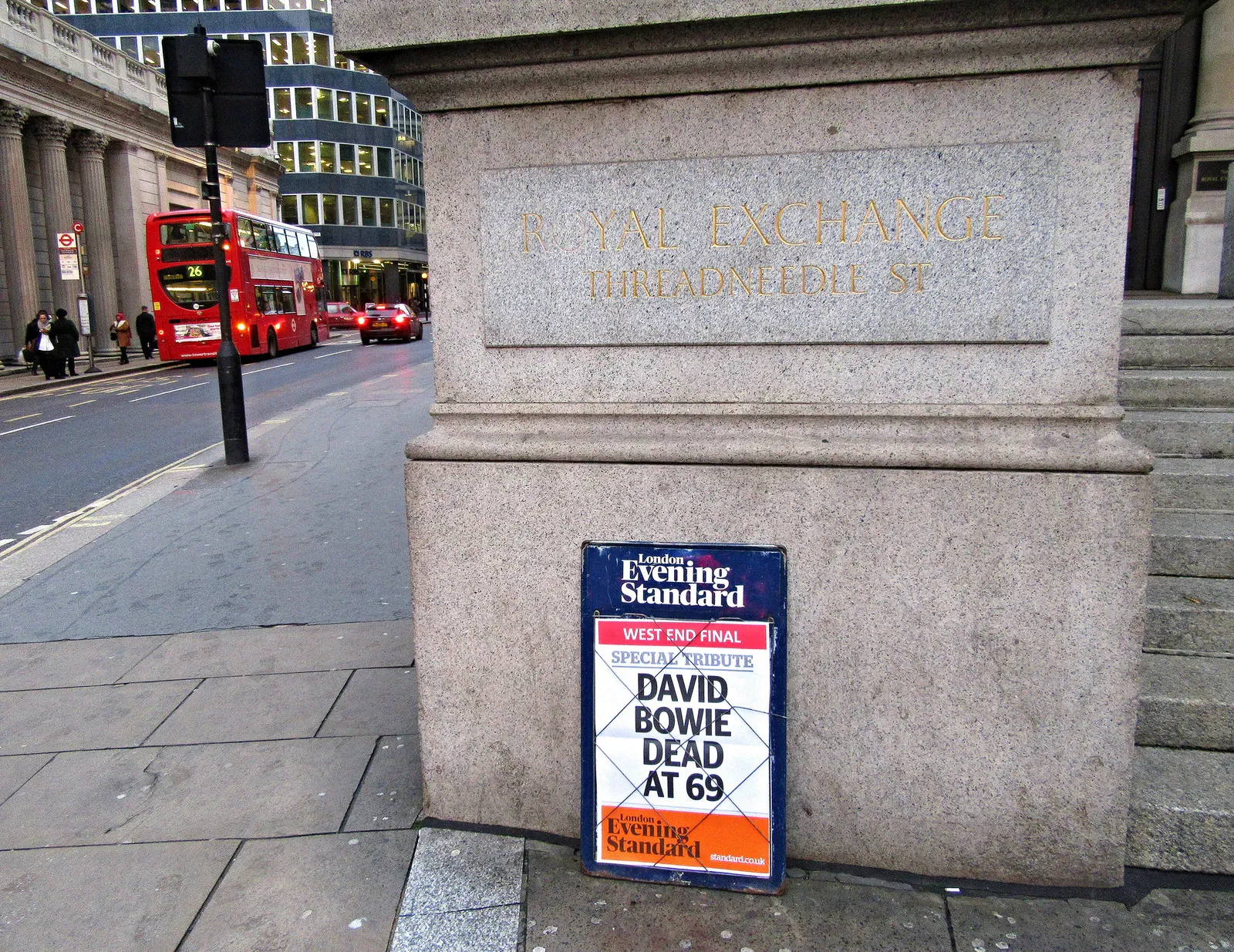
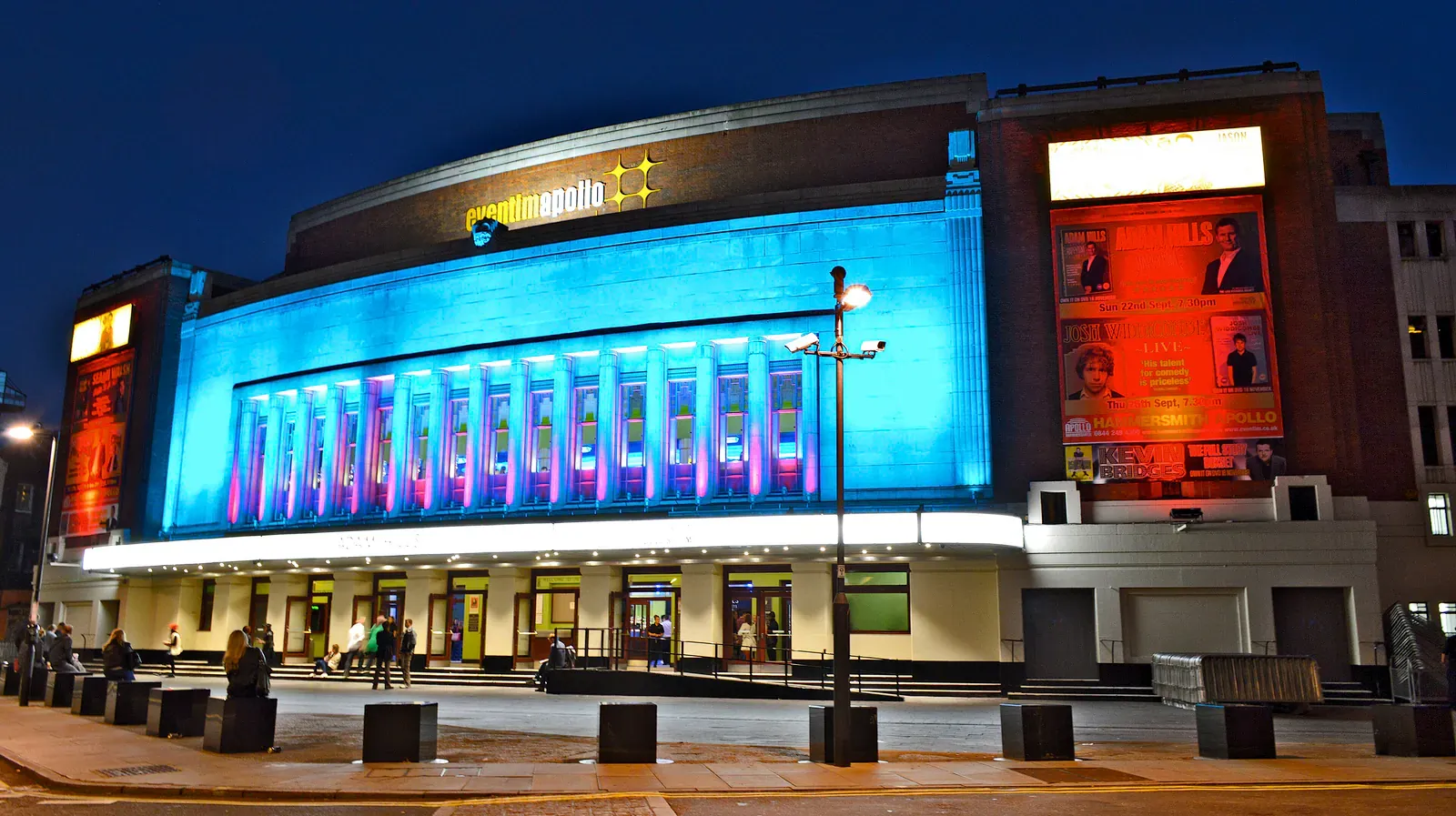
- 1973Bowie retires Ziggy at Hammersmith OdeonOn 3 July 1973 he ends the character on stage and moves on to a new persona.
- 1973Slade release Merry Xmas EverybodyThe December 1973 single reaches number one in the UK and returns every holiday season.
- 1973New York Dolls release their debut albumTheir trashy, cross-dressing take on glam links the genre to the later punk scene.
- 1975Slade in Flame reaches cinemasThe film shows a fictional band's rise and fall.
1976
Punk and the end of the fashion
Punk rock pushes glam aside in Britain. Bolan dies in 1977, and Bowie and Roxy Music move on to new sounds.
- 1976Punk displaces glam in the UKA new generation prefers stripped-down aggression to costume and polish.
- 1977Marc Bolan dies in a car crashHe dies on 16 September 1977, at 29, two weeks before his birthday.
1980
Revival and legacy
Glam's costume and hooks feed new romantic, glam metal, Britpop and later neo-glam bands; the original acts tour and reissue on catalogue labels.
- 1980Slade return at the Reading FestivalA late stand-in set re-launches the group and brings back a British hit run.
- 1998Velvet Goldmine revisits glamTodd Haynes's film puts the 1970s scene back in front of a new audience.
Listening path
Start listening
A short path from an easy way in to the deep end. Thumbnails come from YouTube; the player loads only when you press play.
- 01
David Bowie, 1972
The song and 1972 Top of the Pops performance that took Ziggy Stardust to a mass audience.
- 02
T. Rex, 1971
The T. Rex number one that set the boogie-riff template of early glam rock.
- 03
Slade, 1973
Slade's Christmas number one of 1973, a stomp that re-enters the UK chart each December.
- 04
Sweet, 1973
Hard-edged glam pop from the Chinnichap era with a signature drum and chant hook.
- 05
Roxy Music, 1972
Roxy Music's debut single, the art-school side of glam with synthesizer and sax.
Facts
| Family | Rock |
| Origin | United Kingdom |
| Emerged | Early 1970s |
| Status | Revival |
| Tempo | 110 to 140 BPM |
| Meter | 4/4 |
| Grew out of | Rock and roll, Hard rock, Art rock, Psychedelic rock |
| Subgenres | 2 |
Glam rock, also called glitter rock, is a style of British rock that began in the early 1970s. It built simple rock and roll stomps, hand-claps and chorus hooks into three-minute singles, and wrapped them in make-up, satin, platform boots and invented stage characters.
Origins
Glam rock drew on several older styles. Its beat and riffs came from 1950s rock and roll, its volume from hard rock, its theatrical streak from art rock and cabaret, and its pop sense from bubblegum. Psychedelic rock supplied the colour and the permission to dress up. What was new in 1970 was the way these parts were joined, and the weight given to appearance: a record was expected to arrive with a look.
Marc Bolan led the first step. Tyrannosaurus Rex, an acoustic folk duo, shortened its name to T. Rex and turned electric in 1970. “Ride a White Swan” gave Bolan his first hit in October 1970. In March 1971 he performed “Hot Love” on the BBC chart show Top of the Pops in satin and glitter, a broadcast often taken as the starting point of the look. “Get It On” followed in 1971, reached number one in the UK, and appeared on the album Electric Warrior, which became a template for glam records.
Ziggy, Slade and the singles boom, 1972-1973
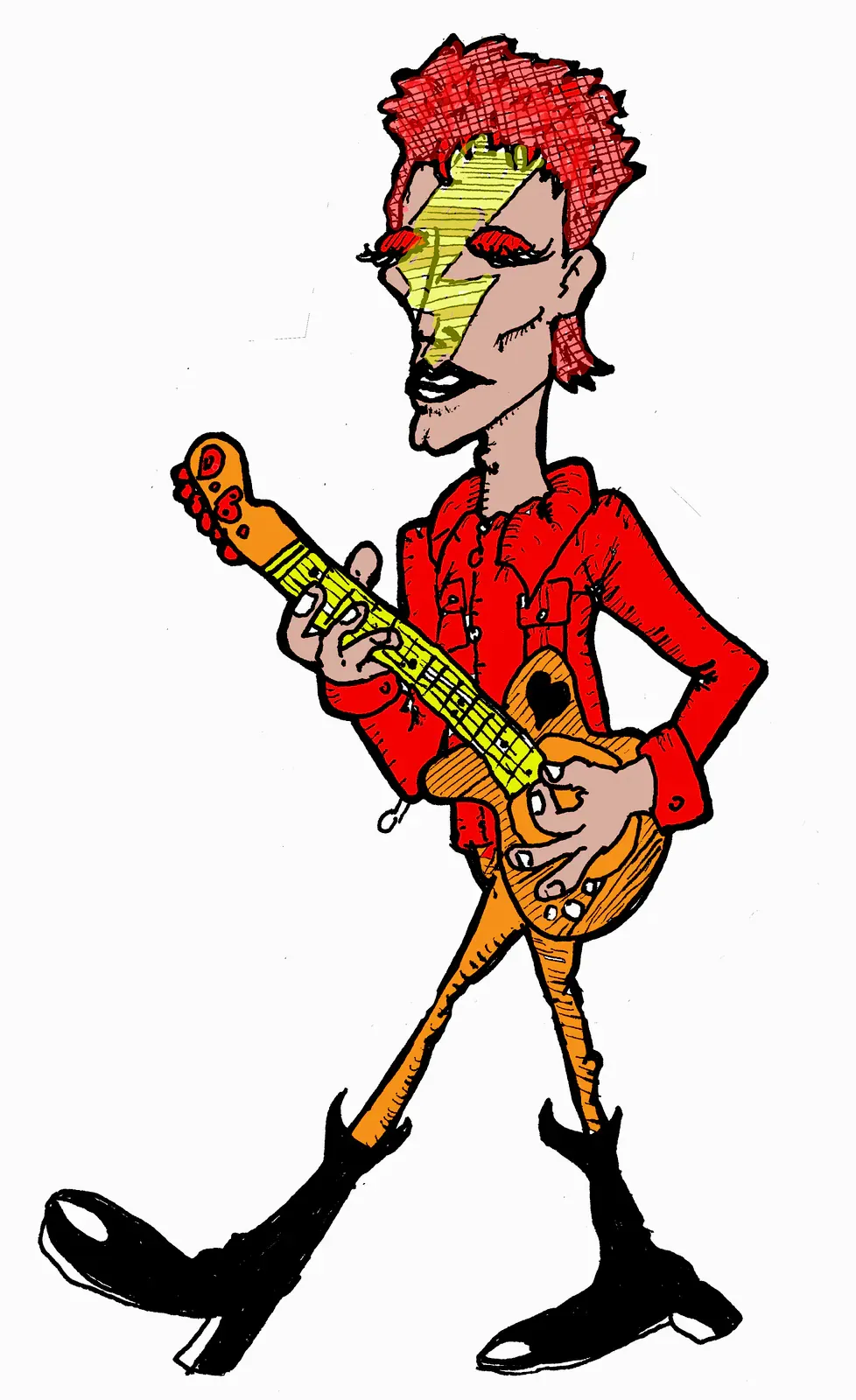
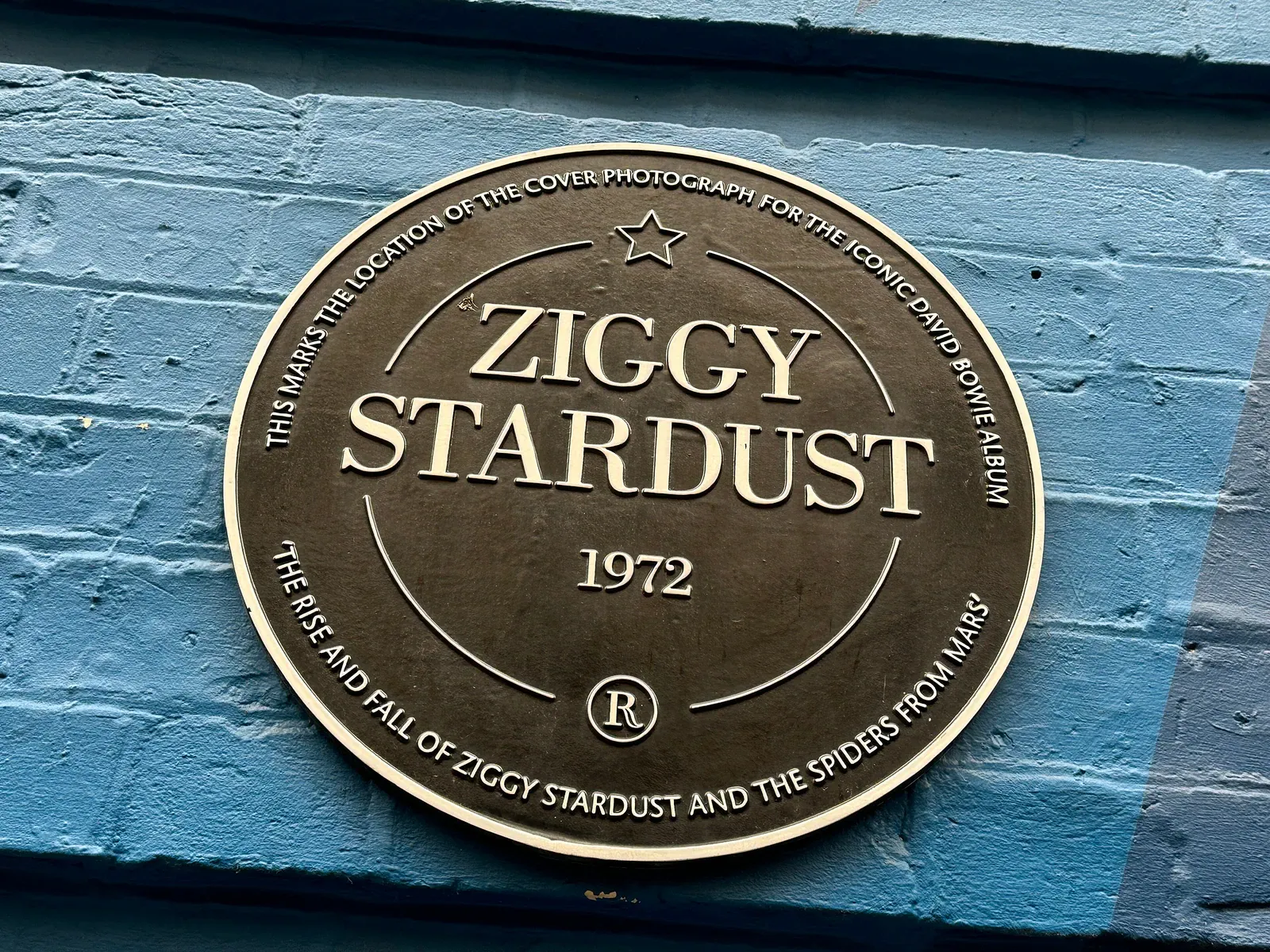
The peak came in 1972 and 1973, when glam filled the British charts and the weekly television pop show. David Bowie released The Rise and Fall of Ziggy Stardust and the Spiders from Mars on 16 June 1972 through RCA. It was a concept album built around an invented rock star, and it moved glam from fashion into theatre. On 5 July 1972 he sang “Starman” on Top of the Pops in a rainbow jumpsuit, with the guitarist Mick Ronson beside him.
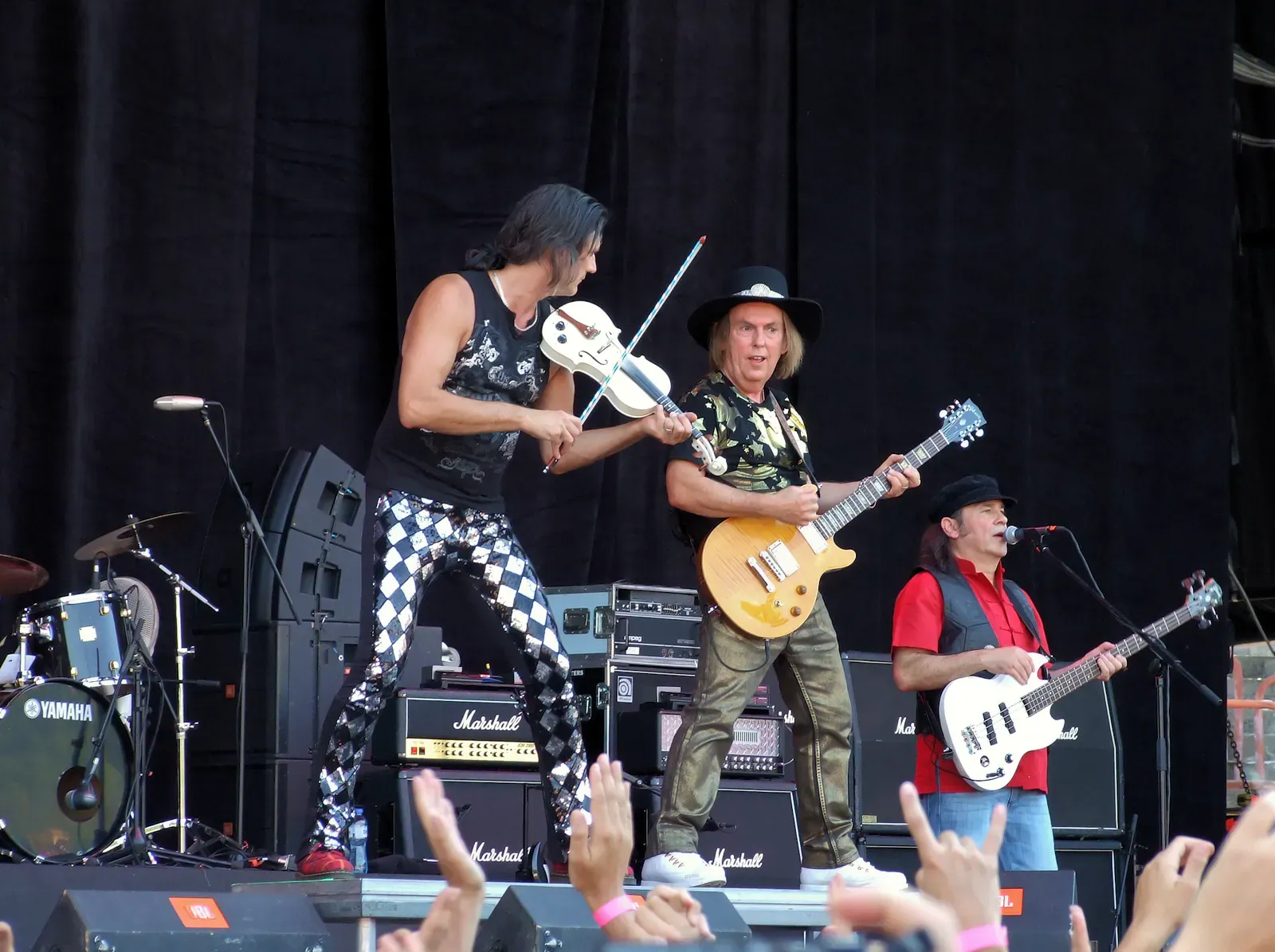
Slade took a different route. The Wolverhampton band’s loud, working-class stomp reached a wide audience with the live album Slade Alive!, released by Polydor in 1972, and with chant-along singles such as “Cum On Feel the Noize” in 1973. In the same year Sweet reached number one with “Block Buster!”, written by the Chinnichap team of Nicky Chinn and Mike Chapman, and turned from bubblegum pop toward a harder sound. Gary Glitter’s “Rock and Roll (Parts 1 and 2)”, produced by Mike Leander and released on Bell in 1972, rode a heavy drum pattern to number two in the UK.
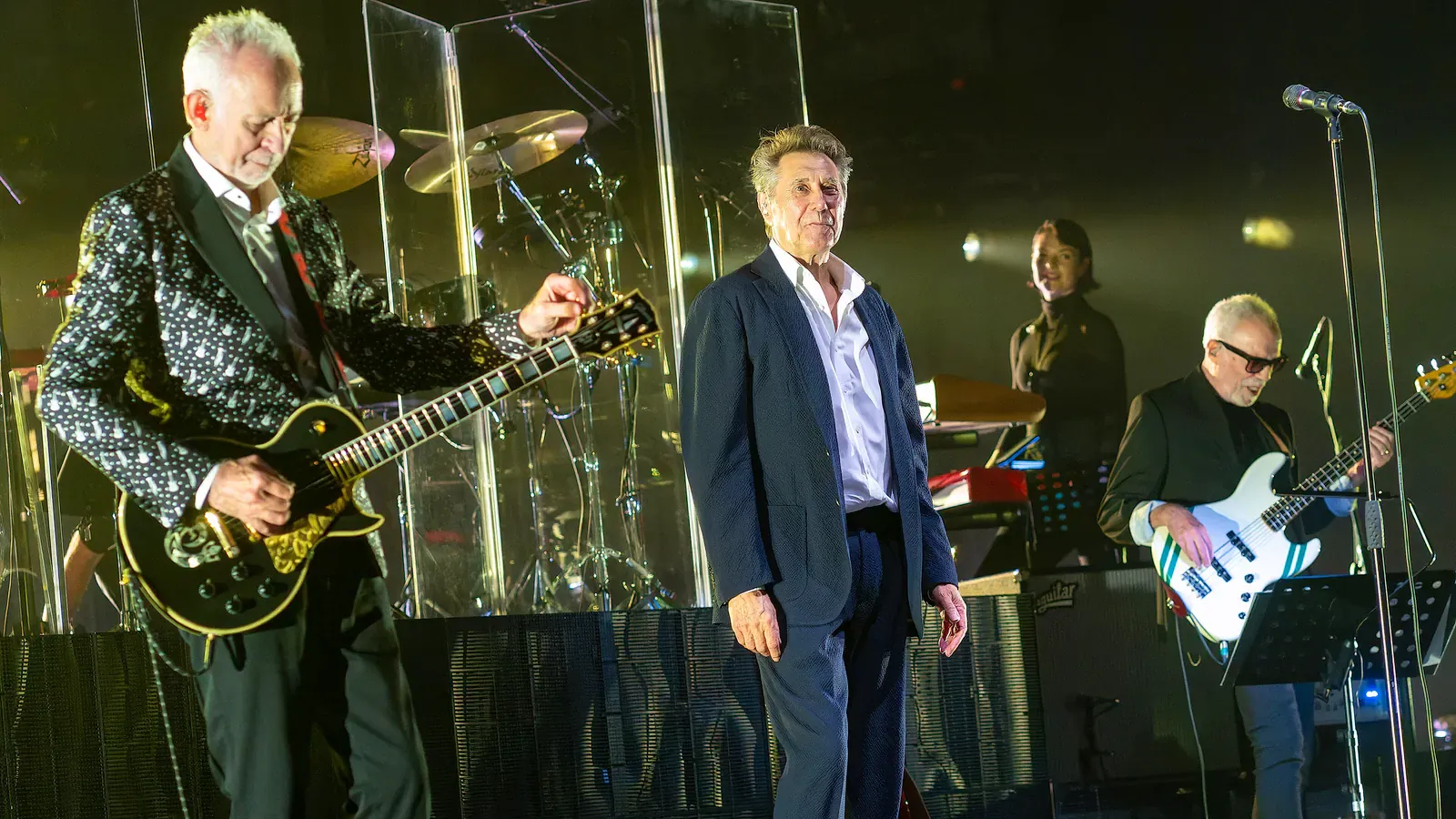
Roxy Music offered an arty counterpart. Their debut album, released by Island in 1972, set saxophone and Brian Eno’s synthesizer against retro-futurist styling. Bowie, meanwhile, wrote and produced “All the Young Dudes” for Mott the Hoople in July 1972, and with Ronson produced Lou Reed’s Transformer for RCA the same year.
Venues and screens mattered as much as records. T. Rex played the Wembley Empire Pool in March 1972, a concert filmed for Born to Boogie, and Bowie recorded Ziggy Stardust at Trident Studios in London. Colour television made the costume part of the song.
Second wave and the Christmas hits, 1973-1975
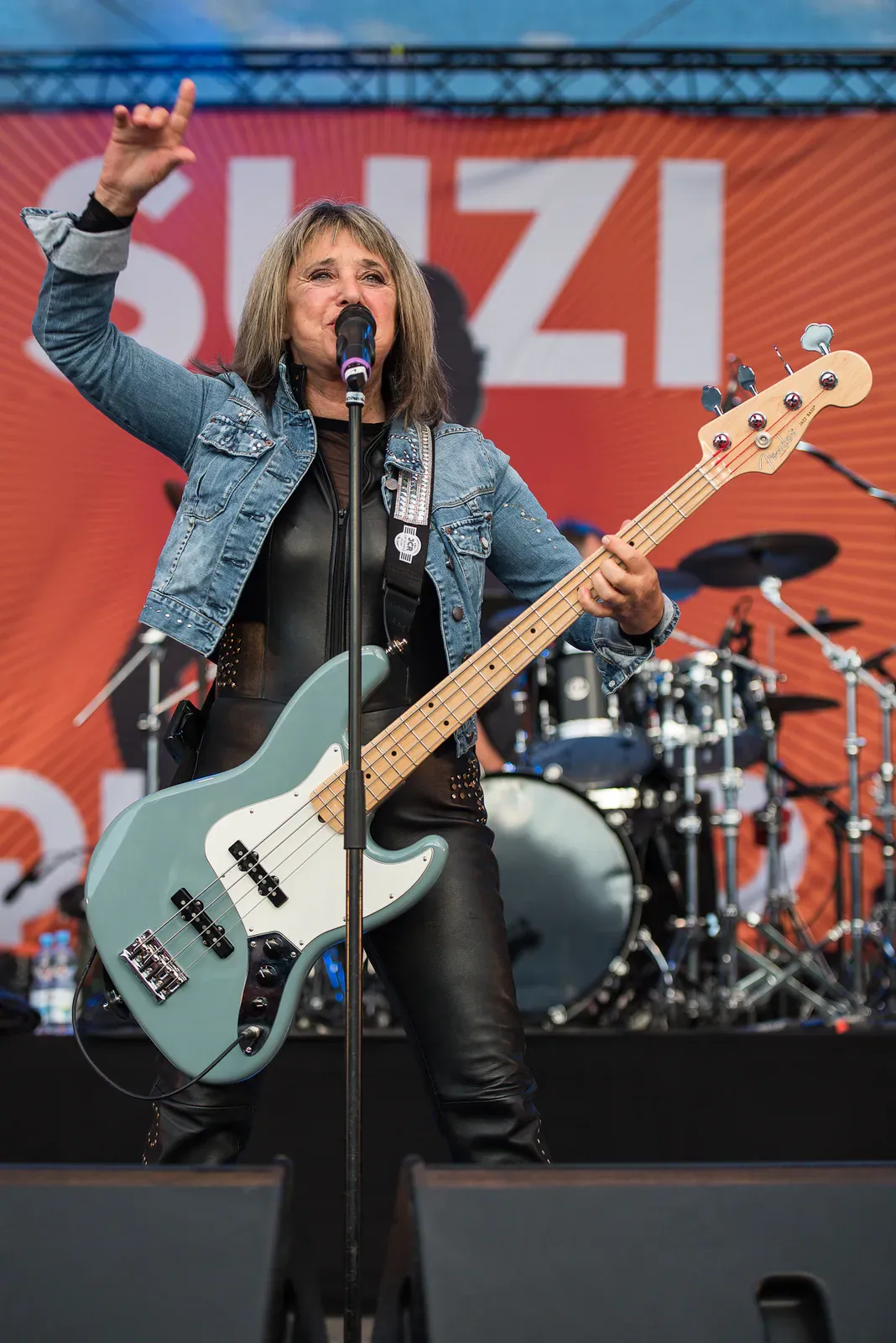
By mid-1973 the founders were moving on. On 3 July 1973 Bowie retired the Ziggy character on stage at the Hammersmith Odeon. A second wave filled the gap: Mud, Suzi Quatro, Wizzard, Sparks and Cockney Rebel. Quatro, a bass player from Detroit, was launched in Britain by Mickie Most’s RAK label with “Can the Can” in 1973.
Slade’s “Merry Xmas Everybody”, released in December 1973, reached number one in the UK and returned to the charts in later holiday seasons, setting a seasonal standard for rock singles. In 1975 the band appeared in the film Slade in Flame, a fictional story of a band’s rise and fall.
Punk and the end of the fashion, 1976-1979
From 1976 punk rock replaced costume and polish with stripped-down aggression, and glam lost its place in the British charts. Marc Bolan died in a car crash on 16 September 1977, two weeks before his thirtieth birthday. Bowie and Roxy Music moved on to new sounds. Punk and new wave did not break cleanly with glam, however; the New York Dolls, whose trashy, cross-dressing take on glam produced a debut album in 1973 around the Mercer Arts Center, are often placed between the two.
Revival and legacy
Glam’s costume and hooks fed later styles. Punk rock, new romantic, glam metal, Britpop and visual kei all took something from it, and neo-glam bands of the 1990s such as Suede, Placebo and the Darkness revived its sound and image. Slade returned at the Reading Festival in 1980 and brought back a run of British hits, and Todd Haynes’s film Velvet Goldmine revisited the era in 1998. Its parent family is rock, and its offshoot glitter is the most chart-pop end of the style.
Characteristics
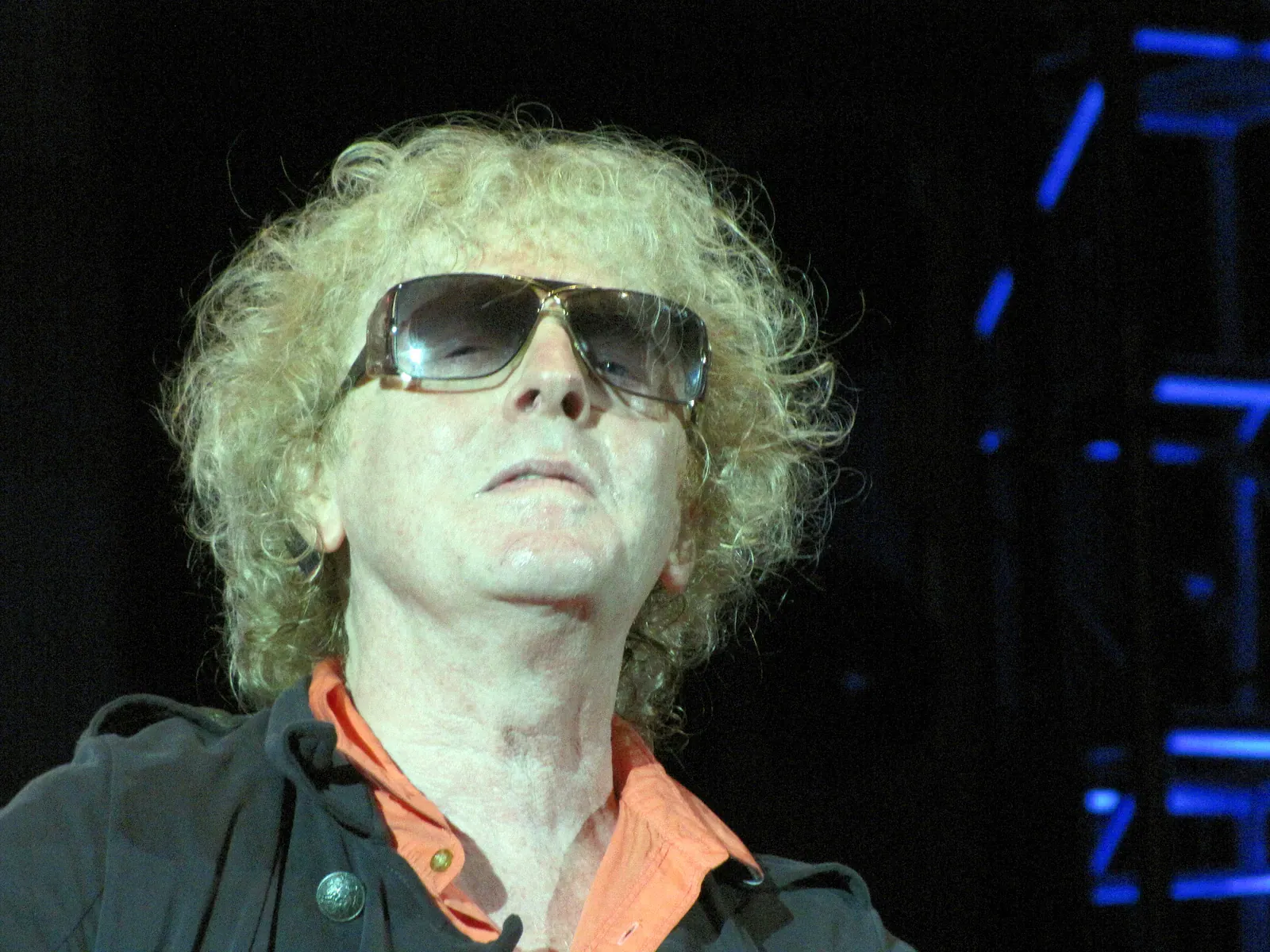
Songs are short, usually about three minutes, and built on a repeated three-chord riff of the rock and roll kind. The tempo sits mostly in the moderate range of 110 to 140 beats per minute in 4/4. The backbeat is heavy and often doubled with hand-claps or foot stomps, and choruses are written to be chanted by a crowd, with stacked falsetto voices behind a gruff or sneering lead. Roxy Music and Bowie added saxophone and piano, which gave some records a retro rock and roll colour.
The look was part of the style. Platform boots, satin, sequins and glitter on faces broke the macho image of earlier rock and made male performers androgynous. Bowie’s red and blue lightning flash on the cover of Aladdin Sane became one of the best-known album-cover images.

Instruments and production
The core line-up was guitar, bass, drums and vocals, recorded in eight-track and 16-track studios where producers could stack guitars, hand-claps and chorus vocals. Eno’s work on the EMS VCS3 with Roxy Music in 1972 brought a synthesizer into a rock band, and piano carried the rock and roll side of Bowie, Elton John and Mott the Hoople.
Culture
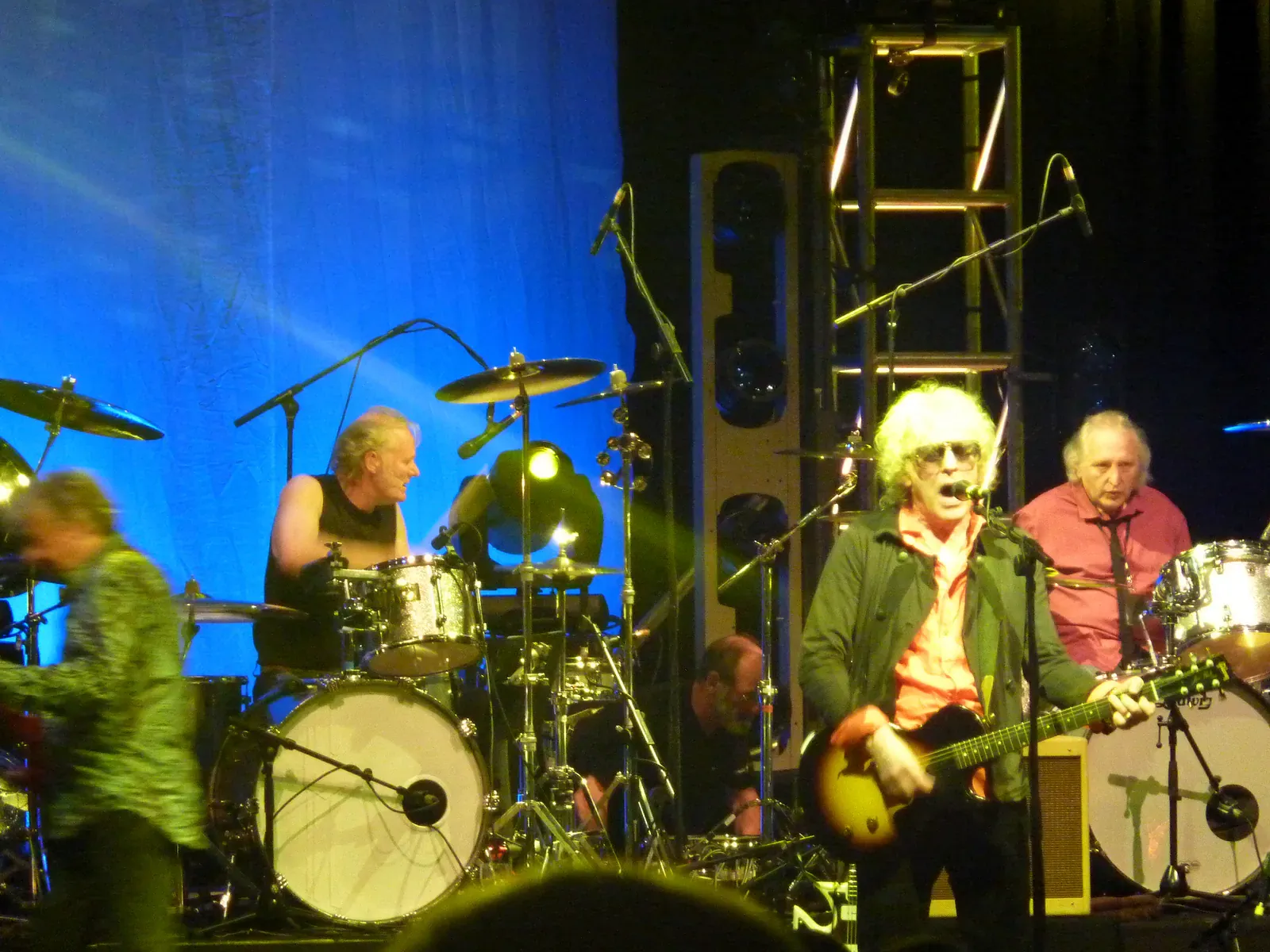
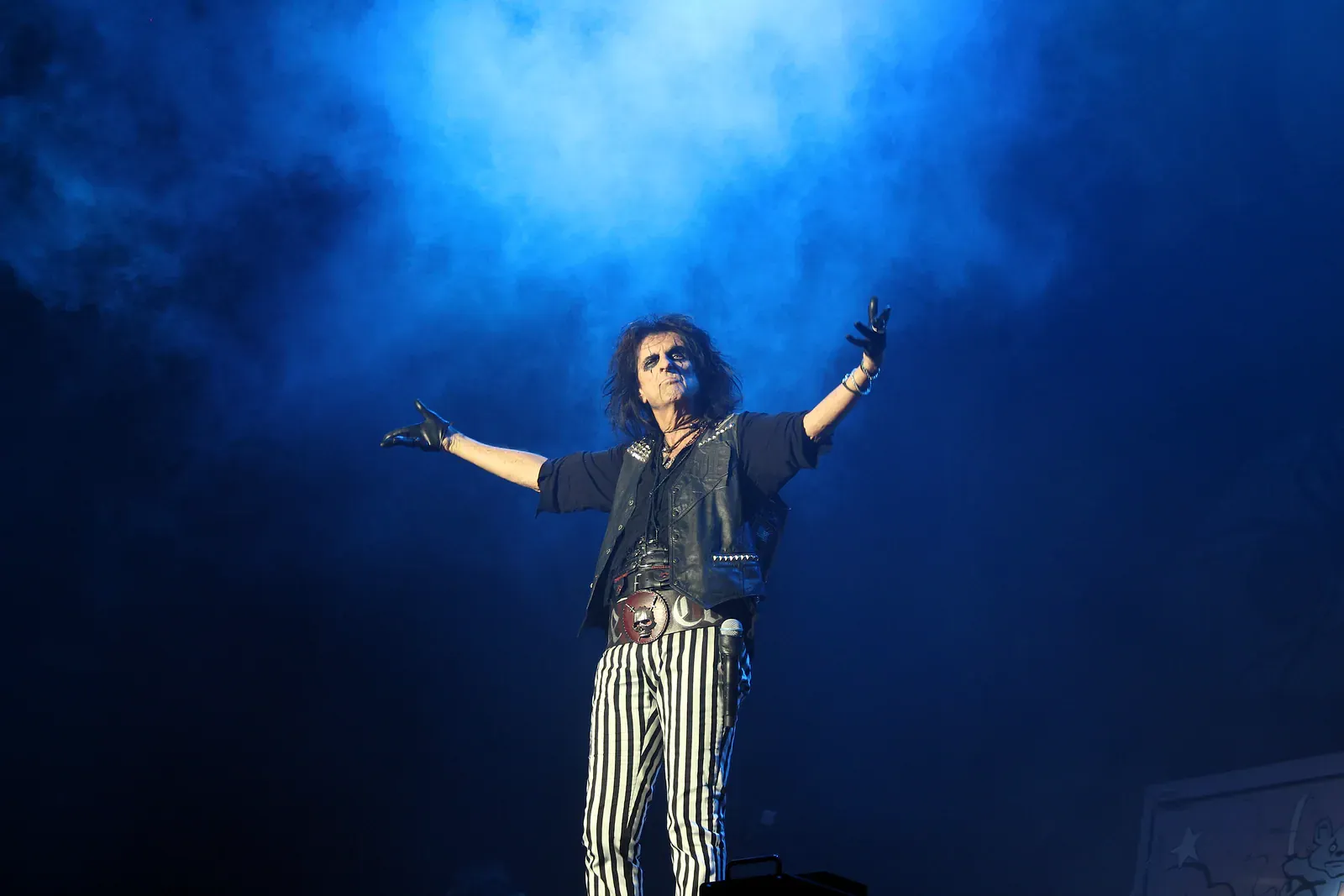
Top of the Pops was the main shop window: a performance there decided how a record looked to millions of viewers. In Los Angeles, Rodney’s English Disco opened in 1972 on the Sunset Strip as a gathering place for British glam fans and bands. Detroit contributed Alice Cooper and Suzi Quatro, and shock theatre, including the staging of Cooper’s concerts, ran alongside glam through the decade. Live shows by Slade and Gary Glitter relied on audience stomping, clapping and chanting.
Misconceptions
One common belief is that Bowie invented glam. Bolan had already gone electric in 1970 and appeared on television in glitter in March 1971, over a year before Ziggy Stardust, and Bowie’s role was to push the style into concept and theatre.
A second is that glam was only a fashion statement with no distinct sound. The records share a recognisable sound: a stomping backbeat, a boogie riff and a shouted chorus, which is why acts as different as Slade and Sweet are grouped together.
A third is that glam was purely British. The movement began in Britain, but Detroit, New York and Los Angeles each had a scene by 1972 or 1973, and the New York Dolls and Alice Cooper belong to its American history.
Frequently asked questions
What is glam rock?
Glam rock is a British rock style of the early 1970s that combined simple rock and roll riffs, stomping beats and chorus hooks with glitter, make-up and theatrical stage personae.
Who were the main glam rock bands?
The core acts are T. Rex, David Bowie, Slade, Roxy Music and Sweet. Mud, Suzi Quatro, Mott the Hoople and Gary Glitter also had hits in the same years.
When did glam rock start and end?
Glam rock began in 1970 and 1971 with T. Rex and peaked in 1972 and 1973. Punk displaced it in Britain from 1976, and Marc Bolan’s death in 1977 is often taken as the end of the original era.
What is the difference between glam rock and glam metal?
Glam rock is the British style of the early 1970s. Glam metal is a later genre, derived from it, that took its make-up and showmanship into hard rock and heavy metal from the late 1970s.
Sound
Sound sheet
Anatomy of a track
| # | Part | Bars |
|---|---|---|
| 1 | Intro riff | 4 |
| 2 | Verse | 8 |
| 3 | Chorus hook with chant | 8 |
| 4 | Verse | 8 |
| 5 | Chorus hook with chant | 8 |
| 6 | Solo or break | 8 |
| 7 | Final chorus | 16 |
Signature sounds
- Heavy backbeat with hand-claps or foot stomps
- Repeated three-chord rock and roll riff
- Shouted group chorus built for audience singing
- Falsetto or high-register backing vocals
- Short single format of about three minutes
Drums and percussion
- Acoustic drum kit
Synths and software
- EMS VCS3
Techniques
- Stomp-and-clap backbeat
- Boogie riff
- Layered falsetto backing vocals
- Saxophone solo or riff
Keys and modes
Major pentatonic and blues-based riffs. Simple A or E boogie riffs in the Chuck Berry and rock and roll mould.
Tuning
Standard guitar tuning, A=440
Vocals
Shouted or sneering lead lines, chant choruses and falsetto backing harmonies.
Scenes
Where it happened
Where and when the sound lived: one bar per city on a shared timeline.
Europe
North America
Active scenes
Peak 5, 1972-1975
Studios, clubs and the Top of the Pops studio concentrated T. Rex, Bowie and Roxy Music in the capital.
Slade's Black Country base, loud and working class beside the arty London acts.
The New York Dolls and the Mercer Arts Center scene carried glam into trashier American form.
Alice Cooper and Suzi Quatro came from the city's hard rock scene before success in Britain.
Rodney's English Disco on Sunset Strip tied British glam to the California scene.
Venues and places
London, 1968 to today. Bowie recorded Ziggy Stardust here from late 1971 to early 1972.
London, 1972 to today. T. Rex played here in March 1972, a concert filmed for Born to Boogie.
London, 1972 to today. A London venue where Bowie and the Spiders from Mars played in 1972.
London, 1973 to today. Site of Bowie's farewell to Ziggy on 3 July 1973.
New York, 1971 to 1973. Home base of the New York Dolls and the downtown glam scene.
Los Angeles, 1972 to 1975. Los Angeles club focused on British glam records and bands.
Culture
Culture markers
- Platform boots and satin
High-soled boots, satin and sequins turned the stage into a runway.
Fashion - Glitter and make-up on men
Face glitter, eyeshadow and androgynous styling challenged the rock macho image.
Fashion - Aladdin Sane lightning flash
The red and blue bolt on Bowie's face became one of the best-known album-cover images.
Artwork - Stomp-along live shows
Slade and Gary Glitter shows built on audience foot-stomping, clapping and chanting.
Ritual
Media
Key media
- 1972Born to Boogie
by Ringo Starr. Concert and fantasy film of T. Rex at the height of Bolan's fame.
Film - 1975Slade in Flame
by Richard Loncraine. Fictional feature about a 1960s band, starring Slade, and a rare film portrait of the era.
Film - 1998Velvet Goldmine
by Todd Haynes. Fiction film inspired by the glam scene and the Bowie persona.
Film - 2016Shock and Awe: Glam Rock and Its Legacy
by Simon Reynolds. A survey of glam rock from Bolan to the present.
Book
Glossary
Terms on this page
Songwriting and production team of Nicky Chinn and Mike Chapman behind Sweet, Mud and Suzi Quatro hits.
The stage make-up and costume sparkle that gave the style its alternate name, glitter rock.
An invented stage character, such as Bowie's Ziggy Stardust, who performs as the star.
High-soled shoes worn by glam performers and fans.
A heavy beat marked with feet and hand-claps, common in Slade and Gary Glitter records.
The weekly BBC chart show where many glam acts reached a mass audience.
Rock family