Cabaret
Cabaret is intimate stage entertainment of songs, monologue and satire for seated audiences, born in Montmartre in 1881 and central to German Kabarett.
Paris, 1881
Stage and screen family
Born
1881
Paris
Subgenres
5
Documented branches
Links
10
Genres it drew on or shaped
Tempo
65-110 BPMLineage
Family tree
Grew out of
Paris, 1881
Cabaret
Led to (5)
Timeline
Era by era
From the first sparks to today. Select a dot to read the story behind it.
- Montmartre and the cabaret artistique
1881 to 1900
- Kabarett and the Weimar years
1901 to 1932
- Suppression and exile
1933 to 1954
- Postwar satire and the Cabaret musical
1955 to 1979
- Revival and heritage
1980 to today
Eras
Moments
- 1 Montmartre and the cabaret artistique, 1881 to 1900
- 2 Kabarett and the Weimar years, 1901 to 1932
- 3 Suppression and exile, 1933 to 1954
- 4 Postwar satire and the Cabaret musical, 1955 to 1979
- 5 Revival and heritage, 1980 to today
1881
Montmartre and the cabaret artistique
Rodolphe Salis opened Le Chat Noir in 1881. Songs, monologues and satire for seated patrons followed at Le Mirliton and the Moulin Rouge, with Bruant and Guilbert as stars.
- 1881Le Chat Noir opensRodolphe Salis opens Le Chat Noir in Montmartre on 18 November, the first modern cabaret with seated patrons and a master of ceremonies.
- 1885Bruant opens Le MirlitonAristide Bruant starts his own Montmartre club, where he mocks slumming guests between his songs of the poor.
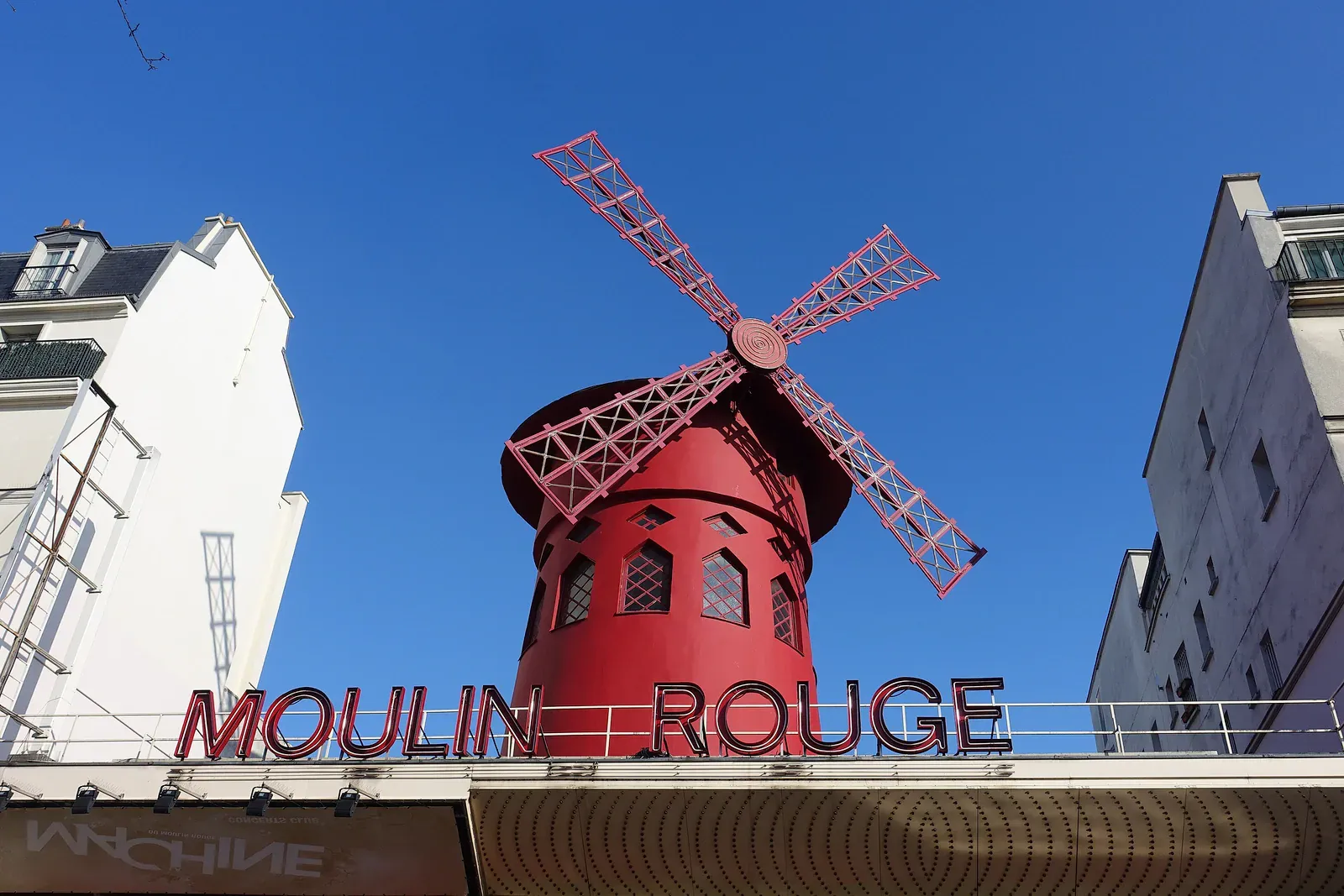
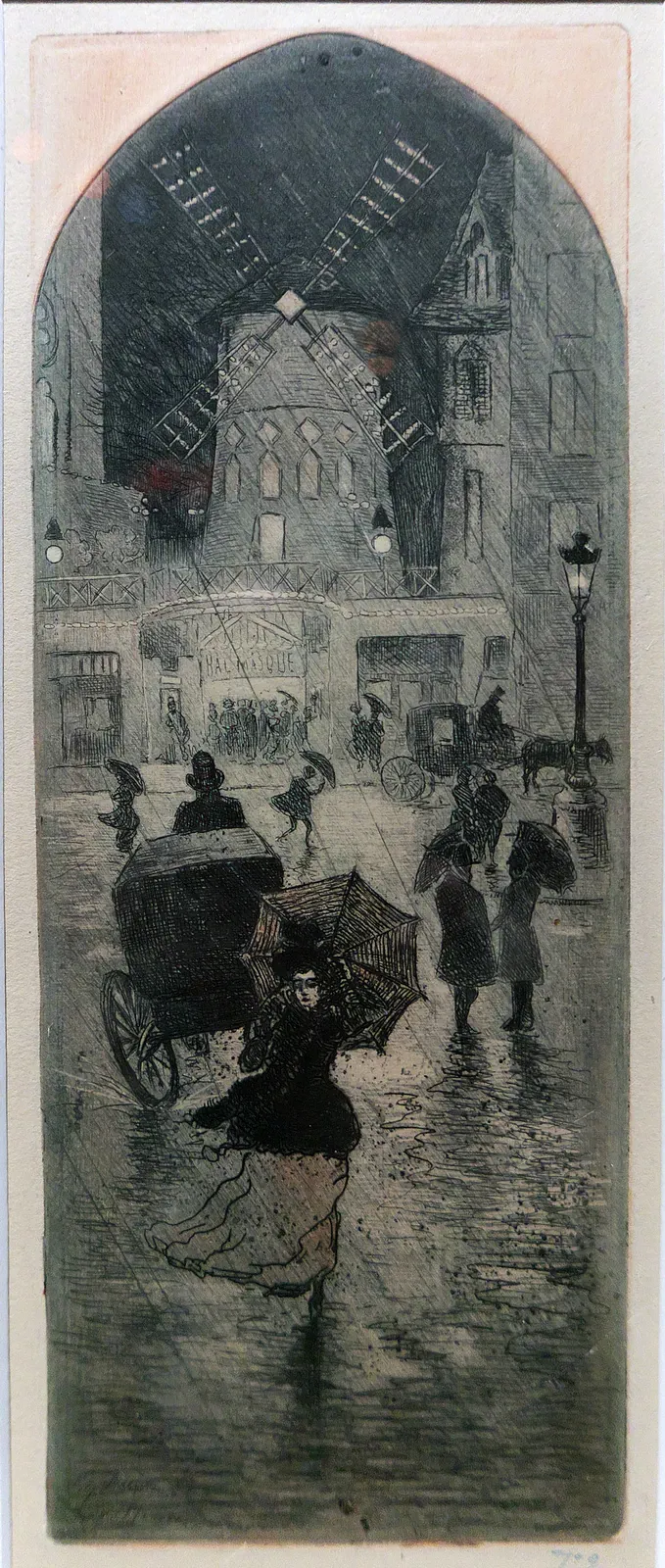
- 1889The Moulin Rouge opensJoseph Oller opens the Moulin Rouge in Montmartre, a venue linked with the French cancan and with Toulouse-Lautrec's posters.
- 1890Guilbert headlines the Moulin RougeYvette Guilbert, billed as a diseuse, wins Montmartre with sharp patter songs and later sings at the Café des Ambassadeurs.
1901
Kabarett and the Weimar years
Berlin's Überbrettl and Munich's Elf Scharfrichter opened in 1901. After censorship ended in 1918 German-language cabaret turned to political satire and gallows humour, while London, Zurich and New York copied the format.
- 1901Überbrettl opens in BerlinErnst von Wolzogen opens the first German cabaret in January; Munich's Die Elf Scharfrichter follows in April.
- 1912Cave of the Golden Calf in LondonFrida Strindberg opens a bohemian cabaret club on Heddon Street, introducing the format to London; it fails in 1914.
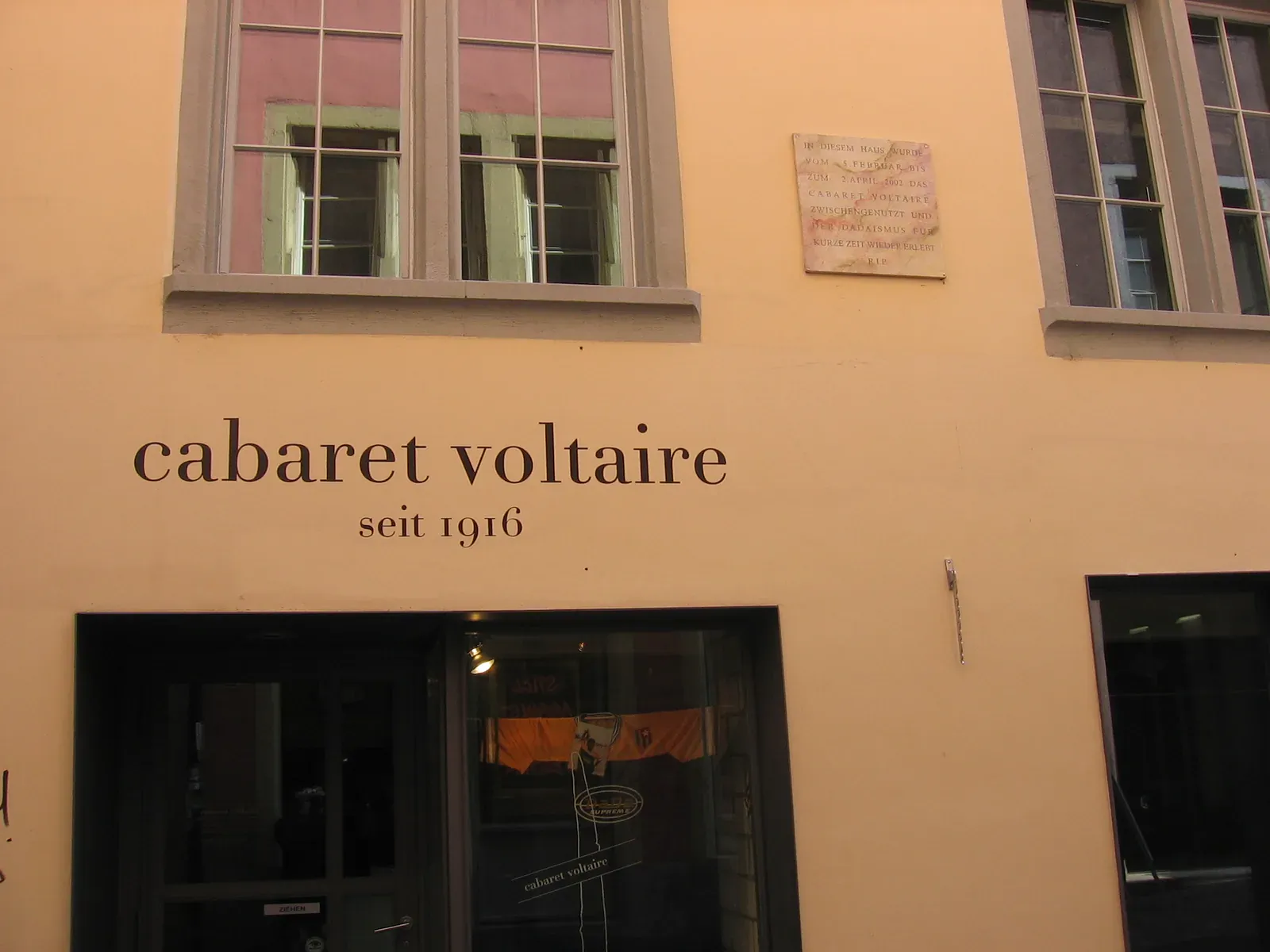
- 1916Cabaret Voltaire in ZurichHugo Ball and Emmy Hennings open the cabaret where the Dada movement began.
- 1918Censorship ends in GermanyThe end of the First World War lifts the ban on public criticism on stage, and Kabarett turns political in the 1920s.
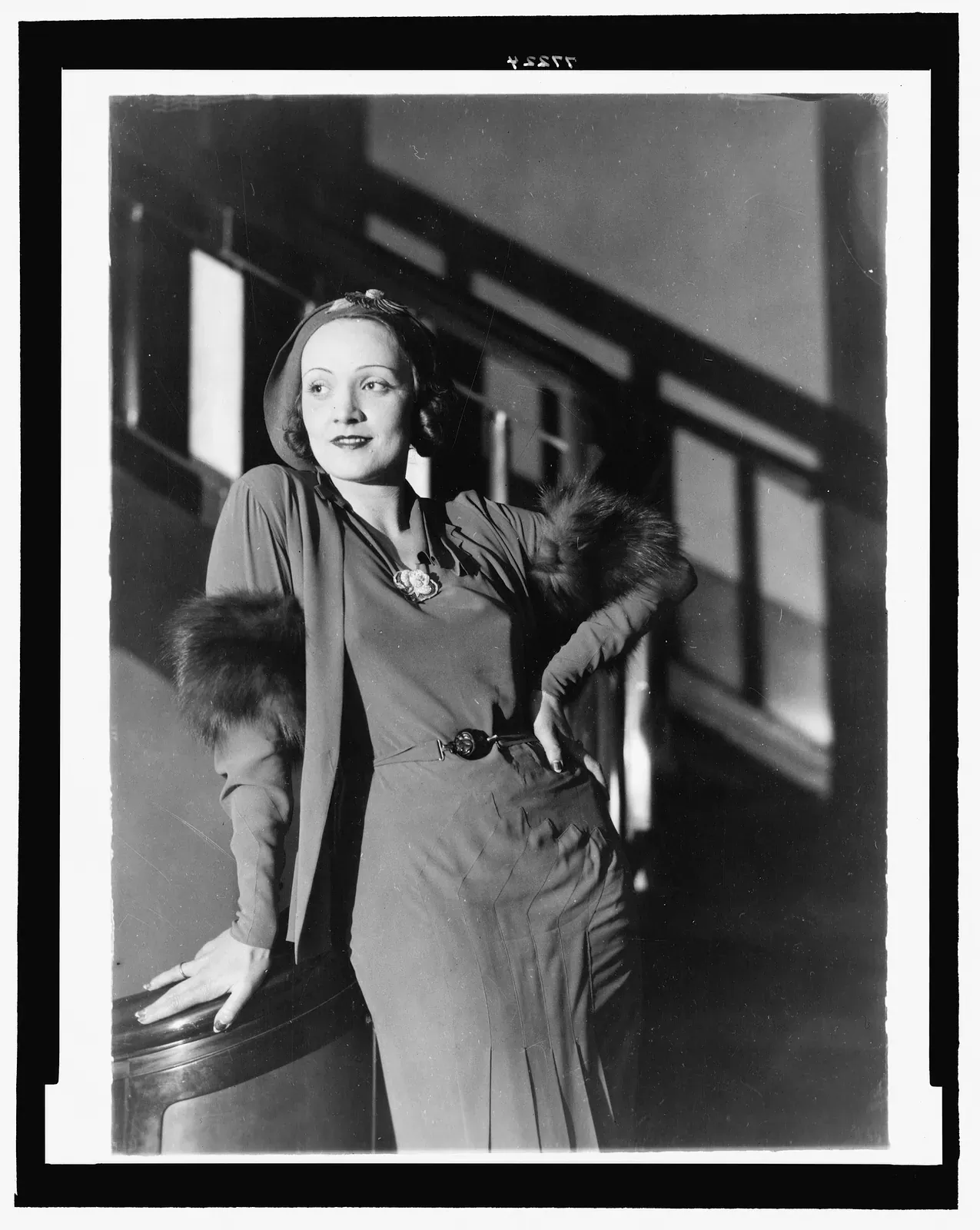
- 1930Dietrich sings for The Blue AngelMarlene Dietrich records Friedrich Hollaender's Ich bin von Kopf bis Fuß auf Liebe eingestellt in Berlin for the film.
1933
Suppression and exile
The Nazi government repressed Kabarett from 1933 and most of its artists fled. After 1945 the occupying powers backed cabaret that confronted the regime, and new stages opened in Düsseldorf, Munich and Berlin.
- 1933Nazi repression of KabarettKabarett is repressed after the Nazis take power; Werner Finck is jailed in 1935 and nearly all artists flee into exile.
1955
Postwar satire and the Cabaret musical
Kreisler and others built a satirical song repertory, television carried Kabarett into homes, and the 1966 Broadway musical and 1972 film made a stylised Berlin cabaret an international image.
- 1958Kreisler's FrühlingsliedGeorg Kreisler releases Tauben vergiften, a dark comic song that became his best-known number in the German-speaking world.
- 1966Cabaret opens on BroadwayKander and Ebb's musical opens at the Broadhurst Theatre on 20 November and runs for 1,166 performances.
- 1972Fosse's film of CabaretBob Fosse's film, released 13 February, wins eight Academy Awards, including Best Actress for Liza Minnelli.
1980
Revival and heritage
American cabaret clubs and awards revived in the 1980s, German-speaking Kabarett grew around reunification, and the form survives in burlesque, drag and political satire shows.
- 1985Bistro Awards begin in New YorkNew York starts an annual prize for enduring and innovative cabaret acts.
Listening path
Start listening
A short path from an easy way in to the deep end. Thumbnails come from YouTube; the player loads only when you press play.
- 01
Yvette Guilbert, 1934
A diseuse of the Belle Époque in her patter style: listen for the spoken phrasing over piano.
- 02
Marlene Dietrich, 1930
The Weimar cabaret song from The Blue Angel: listen for the half-spoken, world-weary delivery.
- 03
Georg Kreisler, 1958
Postwar Viennese satire: a gentle tune carrying a black joke.
- 04
Joel Grey, 1966
The emcee's greeting that defines the stage-musical image of cabaret.
- 05
Liza Minnelli, 1972
The best-known cabaret song, in the film that took the form to a mass audience.
Facts
| Family | Stage and screen |
| Origin | Paris, France |
| Emerged | 1880s onward |
| Status | Active |
| Tempo | 65 to 110 BPM |
| Meter | 4/4 |
| Subgenres | 5 |
Cabaret is a form of venue-based entertainment in which songs, monologues, dance and satire are performed for an audience seated at tables, usually introduced by a master of ceremonies.
It began in Montmartre, Paris, in 1881 and spread to Germany, Austria, Switzerland, Britain and the United States, where it split into political Kabarett, vocalist-led supper-club cabaret and the stage and screen musical. Its traits are a small room, close contact with the audience, and words that matter more than the arrangement.
Origins
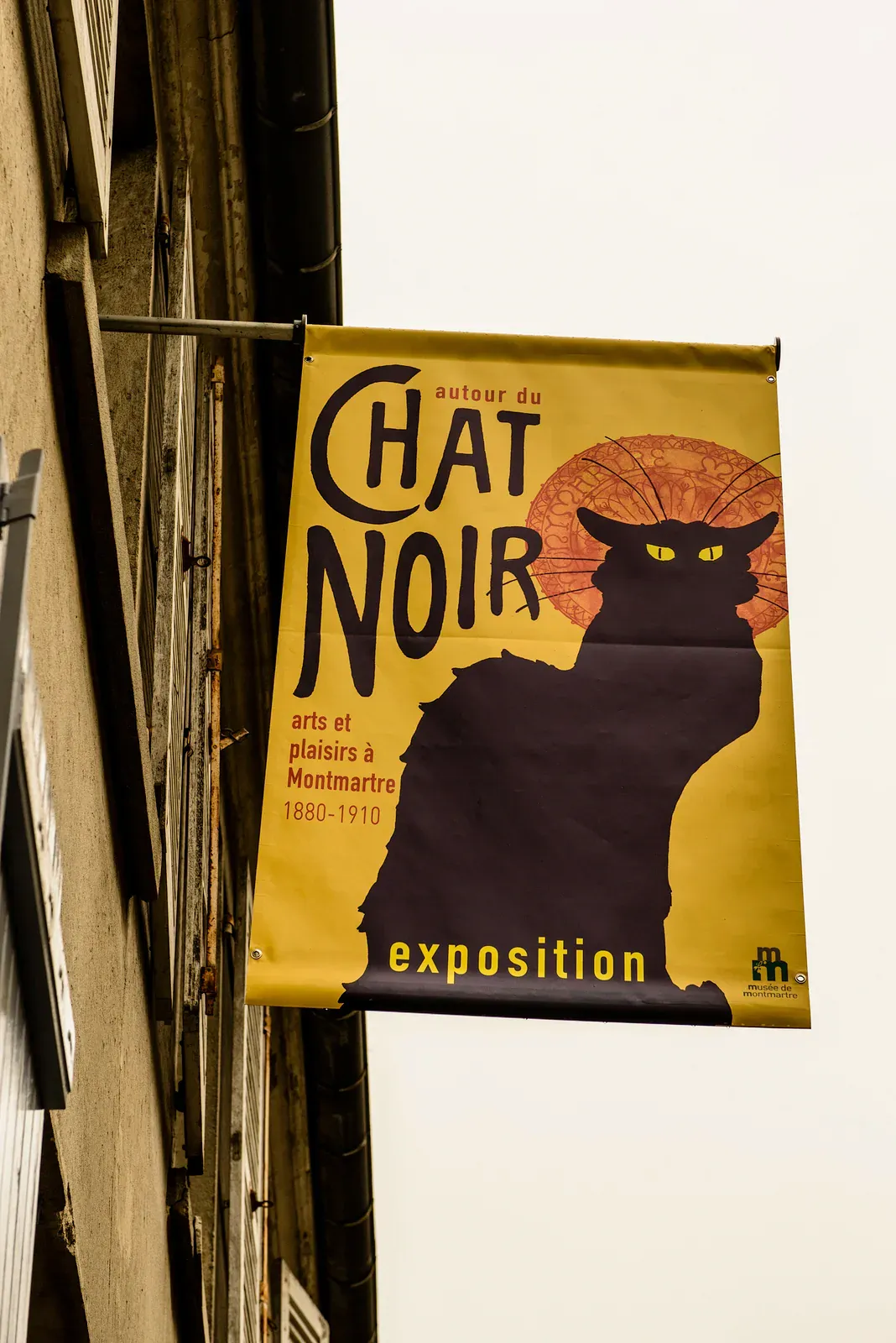
The first modern cabaret was Le Chat Noir, opened in the bohemian district of Montmartre in 1881 by the entrepreneur Rodolphe Salis. Paris already had café-chantants, cafés that offered food along with music, singers and magicians, and by 1900 there were more than 150. Salis changed the format: patrons sat at tables and drank while a variety show played on a small stage, and he opened each evening with a monologue that mocked the wealthy and the deputies of the National Assembly. The crowd mixed writers, painters, journalists, students and models, and the composer Erik Satie earned his living there as a pianist. In 1885 the club moved to a larger house on the rue de Laval.
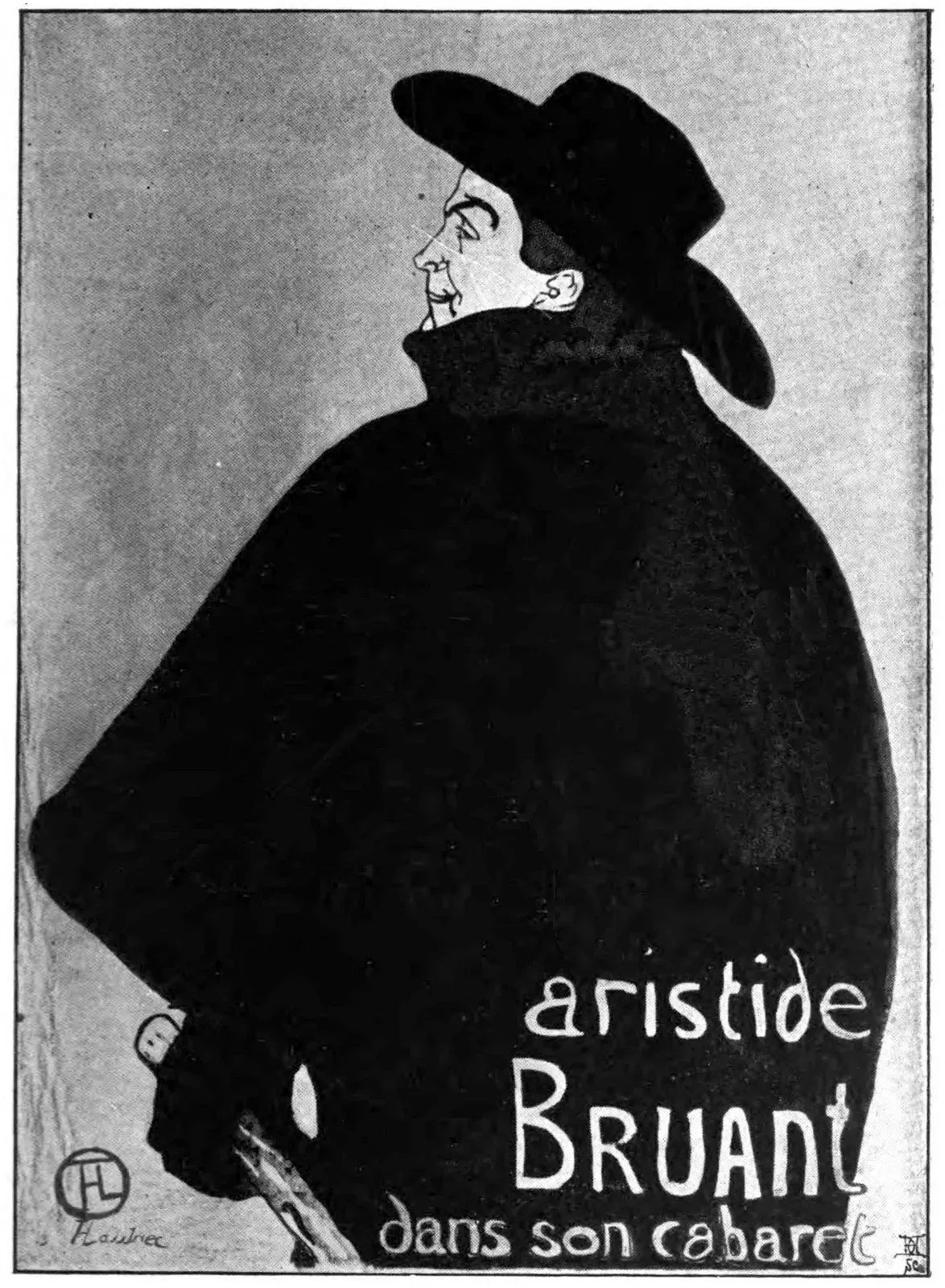
Other Montmartre rooms followed. Aristide Bruant, a singer who had come to Paris at fifteen and learned the slang of the working-class bistros, opened Le Mirliton in 1885. He greeted guests with insults, mocking the well-off visitors who came to see the poor quarter, and sang about the struggles of the poor in a style that grew into chanson réaliste. The Moulin Rouge, opened by Joseph Oller in 1889, was closer to a music hall but shared the audience. By 1896 Paris had 56 cabarets and cafés with music, some specialising in satire or short plays.
Montmartre, 1881-1900
The 1890s belonged to a few performers whom Henri de Toulouse-Lautrec drew again and again. Bruant wore a red scarf, a black cape and a wide hat. Yvette Guilbert, who headlined the Moulin Rouge in 1890, wore a yellow dress with long black gloves and stood almost still, gesturing with her long arms through sharp patter songs about lost love and Parisian poverty. Billed as a diseuse, a speaker rather than a singer, she treated a song as a short spoken drama, a template for cabaret delivery.
Kabarett and the Weimar years, 1901-1932
In January 1901 Ernst von Wolzogen opened the Überbrettl in Berlin, the first German cabaret; its name plays on Nietzsche’s Übermensch. In April Die Elf Scharfrichter was founded in Munich and is sometimes called the first political Kabarett. Vienna followed with the Jung-Wiener Theater zum lieben Augustin. A censor still banned public criticism on German stages until the end of the First World War, and in the 1920s Kabarett flourished, led by Werner Finck at the Katakombe, Karl Valentin, Karl Farkas and Fritz Grünbaum at the Kabarett Simpl in Vienna, and Claire Waldoff in Berlin. Kurt Tucholsky and Erich Kästner supplied texts. German cabaret kept the intimacy of its French model and added gallows humour.
The format travelled. Frida Strindberg opened the Cave of the Golden Calf on Heddon Street in London in 1912; it went bankrupt in 1914 but served as a model for later nightclubs. In Zurich Hugo Ball and Emmy Hennings opened the Cabaret Voltaire in 1916, where Dada began. Jesse Louis Lasky imported cabaret to the United States in 1911, where jazz pushed it toward big bands in Chicago speakeasies and toward vocalists in New York.
Suppression and exile, 1933-1954
When the Nazi party took power in 1933 it began to repress the intellectual criticism that Kabarett carried. Werner Finck was briefly imprisoned in a concentration camp in 1935, Kurt Tucholsky died that year, and almost all German-speaking cabaret artists left for Switzerland, France, Scandinavia or the United States. Friedrich Hollaender, who had written The Blue Angel songs and worked in Berlin cabarets with Tucholsky and Joachim Ringelnatz, left in 1933. After the war the occupying powers ensured that Kabarett confronted the regime, and the Kom(m)ödchen in Düsseldorf and the Münchner Lach- und Schießgesellschaft opened. In East Germany Die Distel, the first state Kabarett stage, opened in Berlin in 1953 under censorship.
Characteristics
A cabaret evening has no fixed set list, but its elements are stable: a small room with table seating, a master of ceremonies who talks to the house, short acts, and songs and monologues written for the room. The accompaniment is usually a piano or a small band, and singers lean toward speech. On the Blue Angel recording, made in Berlin in 1930 with an orchestra led by Hollaender, Marlene Dietrich delivers Ich bin von Kopf bis Fuß auf Liebe eingestellt in a world-weary, half-spoken way where phrasing counts for more than range. Tempo is moderate, from about 65 to 110 beats per minute. The point is the lyric, and the common device is ironic contrast, a sweet tune over a dark text.
Postwar satire and the Cabaret musical, 1955-1979
Postwar German-language cabaret turned to satire in song. Georg Kreisler, born in Vienna in 1922, fled the Nazis in 1938, became an American citizen and returned to Europe in 1955. His Tauben vergiften, released on record in 1958, turns a gentle tune into a joke about poisoning pigeons in a park and sold more than 100,000 copies; its Viennese dialect ties it to the Wienerlied. In the 1950s Kabarett moved onto television, and in 1968 the student movement split opinion on the form as some older performers were booed off stage as part of the establishment.
In the United States cabaret meant vocalists. New York rooms favoured singers such as Nina Simone, Eartha Kitt and Peggy Lee, and Julius Monk’s revues set the standard in the late 1950s and 1960s. The form declined in the 1960s under rock concerts and television variety shows.
Mainstream success
Cabaret reached a world audience through a novel. Christopher Isherwood’s Goodbye to Berlin (1939) became the play I Am a Camera in 1951 and then, with music by John Kander, lyrics by Fred Ebb and a book by Joe Masteroff, the Broadway musical Cabaret, which opened at the Broadhurst Theatre on 20 November 1966 and ran for 1,166 performances. Set in Berlin in 1929 and 1930 at the Kit Kat Klub, it uses the club as a metaphor for the rise of the Nazis, with a master of ceremonies overseeing the action; Joel Grey’s Willkommen opens it. The musical won eight Tony Awards, and Bob Fosse’s 1972 film won eight Academy Awards, including Best Actress for Liza Minnelli as Sally Bowles and Best Supporting Actor for Grey. The result tied the word cabaret in popular memory to Berlin and a stylised, decadent club, and Kander and Ebb’s work belongs to the broader tradition of musical theatre.
Culture
Cabaret has a visual culture as strong as its musical one. Toulouse-Lautrec’s posters of Bruant, Guilbert and the Moulin Rouge fixed the look of Montmartre, and the Moulin Rouge became linked with the French cancan. Performers cultivated recognisable costumes: Bruant’s red scarf and black cape, Guilbert’s yellow dress and black gloves. The master of ceremonies is the form’s ritual figure, a host who teases the patrons by name.
Legacy
Cabaret kept changing shape. American cabaret revived in New Orleans, Chicago, Seattle and other cities, with groups combining original music, burlesque and political satire, and since 1985 New York’s Bistro Awards have honoured enduring acts. German-speaking Kabarett had a minor boom around reunification. The idea of a small room, an emcee and words that count survives in drag shows, burlesque and satirical stage shows. Its French roots in realist song continue in chanson, and it sits within stage and screen music.
Misconceptions
Cabaret is often equated with striptease. In the United States striptease, burlesque and drag shows are often advertised as cabarets, but the European original was an ensemble show of songs, monologue and satire, often adult and underground. The Moulin Rouge is often called the first cabaret, but Le Chat Noir opened in 1881, eight years earlier, and the Moulin Rouge was nearer to a music hall. Another belief is that cabaret is a Berlin invention of the 1920s, yet German Kabarett began in 1901, imported from France, with early rooms in Munich and Vienna as well.
Frequently asked questions
What is cabaret music?
Cabaret music is the song repertory of cabaret venues: songs, spoken monologue and satire sung to a piano or small band for a seated audience, valuing the text over the arrangement.
Where and when did cabaret begin?
Cabaret began at Le Chat Noir in Montmartre, Paris, which Rodolphe Salis opened in November 1881. It combined music with political commentary and satire for patrons sitting at tables.
What is the difference between cabaret and Kabarett?
Kabarett is the German-language form of cabaret, imported from France from 1901 and known by the 1920s for political satire and gallows humour. Cabaret in general also covers French, American and British venue entertainment.
What is the cabaret film with Liza Minnelli about?
Bob Fosse’s 1972 film follows the singer Sally Bowles at the Kit Kat Klub in Berlin at the start of the 1930s, as the Nazis rise. It is based on the Kander and Ebb stage musical, which draws on Isherwood’s Goodbye to Berlin.
Sound
Sound sheet
Anatomy of a track
| # | Part | Bars |
|---|---|---|
| 1 | Spoken introduction or piano intro | 4 |
| 2 | Verse | 16 |
| 3 | Refrain | 16 |
Signature sounds
- Piano or small-band accompaniment
- Half-spoken delivery
- Satirical or ironic lyric
- Direct address to a seated audience
Techniques
- Patter song
- Spoken introduction
- Ironic contrast
Keys and modes
Tonal major and minor. Popular-song harmony, with minor-key verses for torch and satire songs.
Vocals
Half-spoken delivery where the text leads, sung by diseuses, chansonniers and an emcee.
Scenes
Where it happened
Where and when the sound lived: one bar per city on a shared timeline.
Europe
North America
Active scenes
Peak 5, 1916-1933
Montmartre's Chat Noir, Mirliton and Moulin Rouge created the cabaret and its stars.
Überbrettl and the Weimar cabarets produced the political, gallows-humour Kabarett.
The Jung-Wiener Theater zum lieben Augustin and the Kabarett Simpl anchor Austrian cabaret.
Cabaret Voltaire, the home of Dada, now a museum and bar.
Vocalist-led cabaret in supper clubs, honoured since 1985 by the Bistro Awards.
Venues and places
Paris, 1881 to today. Rodolphe Salis's Montmartre cabaret, the first modern cabaret, which moved to a larger house in 1885.
Paris, 1889 to today. Montmartre music hall known for the cancan and for Guilbert's headline run there in 1890.
Berlin, 1901 to today. The first German cabaret, founded by Ernst von Wolzogen.
Zurich, 1916 to today. Founded by Hugo Ball and Emmy Hennings; birthplace of Dada.
London, 1912 to today. Frida Strindberg's Heddon Street basement cabaret, open until 1914.
Culture
Culture markers
- Red scarf and black cape
Bruant's stage costume, immortalised on Toulouse-Lautrec's poster.
Fashion - Yellow dress and black gloves
Guilbert's trademark look, painted and caricatured by Toulouse-Lautrec.
Fashion - French cancan
A high-kicking dance that took shape at the Moulin Rouge.
Dance - Toulouse-Lautrec posters
Posters for Bruant, Guilbert and the Moulin Rouge fixed the look of Montmartre cabaret.
Artwork
Media
Key media
- 1930The Blue Angel
by Josef von Sternberg. Dietrich's Lola Lola sings Hollaender's cabaret songs in a Berlin club.
Film - 1939Goodbye to Berlin
by Christopher Isherwood. The novel behind I Am a Camera and the musical Cabaret.
Book - 1966Cabaret (original Broadway cast)
by Various. The cast album of the musical by Kander and Ebb.
Compilation - 1972Cabaret
by Bob Fosse. Film adaptation set in the Kit Kat Klub that won eight Academy Awards.
Film
Glossary
Terms on this page
A French café with songs and variety acts, the forerunner of the cabaret.
Realist song about the poor and the street, developed from Bruant's cabaret songs.
A female performer who speaks or half-speaks her songs, as Yvette Guilbert did.
The German-language form of cabaret, known for political satire and gallows humour.
The host who introduces the acts and jokes with the audience; Salis set the model at Le Chat Noir.
Stage and screen family