Glam metal
Glam metal is a 1980s style of heavy metal that joins hard rock riffs, pop hooks and power ballads with the make-up and fashion of 1970s glam rock.
Los Angeles, 1979
Metal family
Born
1979
Los Angeles
Subgenres
2
Documented branches
Links
12
Genres it drew on or shaped
Tempo
75-145 BPMLineage
Family tree
Grew out of
Derived from
Derived from
Derived from
Influenced by
Pop rockGlam punk
Los Angeles, 1979
Glam metal
Led to (3)
Timeline
Era by era
From the first sparks to today. Select a dot to read the story behind it.
- Glam rock and Van Halen
1973 to 1980
- First wave
1981 to 1985
- Second wave
1986 to 1990
- Grunge backlash
1991 to 1996
- Reunions and revivals
1997 to 2026
Eras
Moments
- 1 Glam rock and Van Halen, 1973 to 1980
- 2 First wave, 1981 to 1985
- 3 Second wave, 1986 to 1990
- 4 Grunge backlash, 1991 to 1996
- 5 Reunions and revivals, 1997 to 2026
around 1973
Glam rock and Van Halen
New York Dolls, Kiss, Sweet and Aerosmith supplied the look, while Van Halen's 1978 debut from the Sunset Strip scene supplied the guitar playing.
- 1978Van Halen release their debut albumEddie Van Halen's tapping on Eruption became a model for the guitar style of the genre.
1981
First wave
Mötley Crüe, Ratt, Dokken and Quiet Riot formed around Sunset Strip clubs, and Def Leppard's Pyromania and Quiet Riot's Metal Health took metal to the top of the US charts in 1983.
- 1981Mötley Crüe form and release Too Fast for LoveThe band formed in Los Angeles around Nikki Sixx and Tommy Lee.
- 1981MTV starts broadcastingMusic television gave a visual look decisive weight in how bands were marketed.
- 1983Def Leppard release PyromaniaIt was the first glam metal album in the US top ten, peaking at number two.
- 1983Quiet Riot's Metal Health reaches number oneIt topped the Billboard 200 on 26 November 1983, opening the door for other metal acts.
- 1984Ratt release Out of the CellarRound and Round reached number 12 on the Billboard Hot 100.
- 1985Mötley Crüe release Home Sweet HomeThe single popularised the power ballad in the genre.
1986
Second wave
Bon Jovi, Poison, Cinderella, Warrant and Skid Row sold multi-platinum albums on MTV rotation, and power ballads became the genre's main singles.
- 1986Bon Jovi release Slippery When WetIt spent eight weeks at number one and sold over 15 million copies in the US.
- 1987Guns N' Roses release Appetite for DestructionA rawer album that led critics to coin the terms sleaze rock and sleaze metal.
- 1988Poison release Open Up and Say... Ahh!Every Rose Has Its Thorn became the number one single and the album sold eight million copies worldwide.
- 1988The Decline of Western Civilization Part II is releasedThe documentary of the Los Angeles scene showed its excesses and has been seen as fuelling a backlash.
- 1989Dr. Feelgood reaches number oneIt was the most commercially successful album of Mötley Crüe.
1991
Grunge backlash
Nirvana, Seattle bands and alternative rock displaced the genre on MTV and radio, and line-up losses broke up many acts.
- 1991Nevermind and Out of Time mark the shift to alternative rockGlam metal's audience and airplay moved away within a few years.
- 1994MTV cancels Headbangers BallLate-night airplay ended at the close of 1994, and the radio station KNAC left rock.
1997
Reunions and revivals
Reunion tours, the Monster Ballads compilations, the musical Rock of Ages and new European and American bands brought the style back to stages.
- 1999The Monster Ballads series beginsThe first volume of power ballads went platinum on nostalgia for the era.
- 2003The Darkness release Permission to LandA British homage to 1980s metal topped the UK chart and went quintuple platinum.
Listening path
Start listening
A short path from an easy way in to the deep end. Thumbnails come from YouTube; the player loads only when you press play.
- 01
Quiet Riot, 1983
The song that took the genre to number one; listen for the stacked chorus vocals.
- 02
Ratt, 1984
The Sunset Strip sound at its most direct, with a twin-guitar riff and hook.
- 03
Mötley Crüe, 1985
The piano-led ballad that set the template for the genre's biggest singles.
- 04
Bon Jovi, 1986
The pop crossover peak, with a talk box riff and a key change.
- 05
Poison, 1988
The ballad that reached number one and the video archetype of the era.
Facts
| Family | Metal |
| Origin | Los Angeles, United States |
| Emerged | Late 1970s to early 1980s |
| Status | Active |
| Tempo | 75 to 145 BPM |
| Meter | 4/4 |
| Grew out of | Heavy metal, Glam rock, Hard rock |
| Subgenres | 2 |
Glam metal, also called hair metal, is a style of heavy metal that combines guitar riffs, pop-influenced hooks, upbeat anthems and slow power ballads with the make-up and fashion of 1970s glam rock.
It began in the United States in the late 1970s and early 1980s, centred on the Sunset Strip in Los Angeles, and sold most heavily between about 1982 and 1991. It belongs to the wider metal family and borders hard rock.
Origins
The look came from 1970s acts such as T. Rex, David Bowie and the New York Dolls, while the theatrical side came from Alice Cooper and Kiss. Aerosmith, Cheap Trick, Sweet and Boston supplied the hard rock song craft. The Finnish band Hanoi Rocks, itself shaped by the New York Dolls, has been credited with setting the blueprint for the visual style.
The guitar sound was shaped by Van Halen, who came out of the Sunset Strip scene and released their debut in 1978. Eddie Van Halen popularised two-handed tapping on “Eruption”, and David Lee Roth’s stage manner became a model for singers who followed.
Los Angeles and the first wave, 1981-1985
Mötley Crüe formed in Los Angeles in 1981 and released Too Fast for Love the same year. Other bands formed on the same circuit: Ratt, which had worked in the late 1970s as Mickey Ratt, plus Dokken, Great White, W.A.S.P. and Quiet Riot, the band that Randy Rhoads and Kevin DuBrow founded in 1973. Clubs on the Sunset Strip, including the Whisky a Go Go and the Starwood, avoided booking punk bands for fear of violence and booked metal acts instead, usually on a pay-to-play basis. That arrangement produced a dense local circuit.
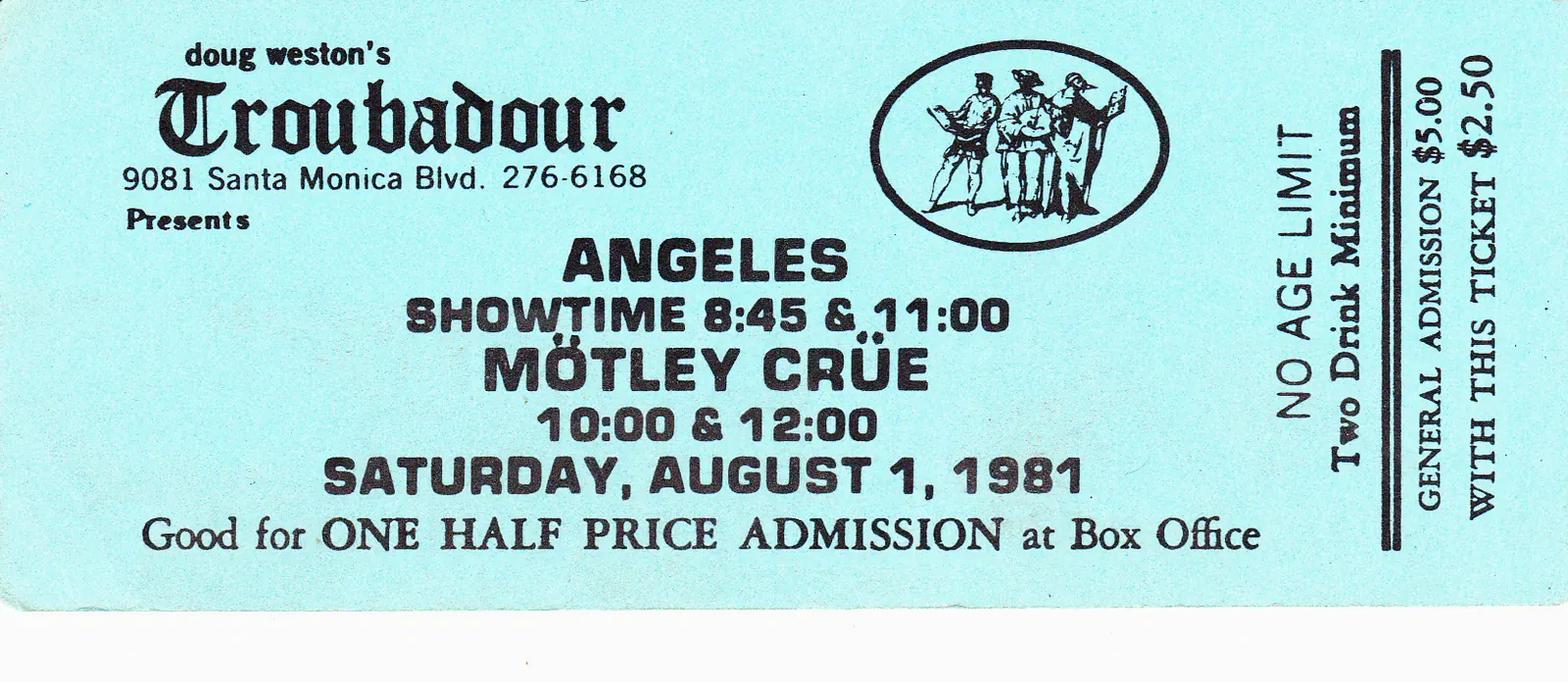
The national breakthrough came in 1983. Def Leppard, a British band usually grouped with the New Wave of British heavy metal, released Pyromania in January and became the first glam metal act in the Billboard top ten, peaking at number two. Quiet Riot’s Metal Health followed in March and reached number one on 26 November 1983. Mötley Crüe’s Shout at the Devil and Kiss’s Lick It Up came out that September.
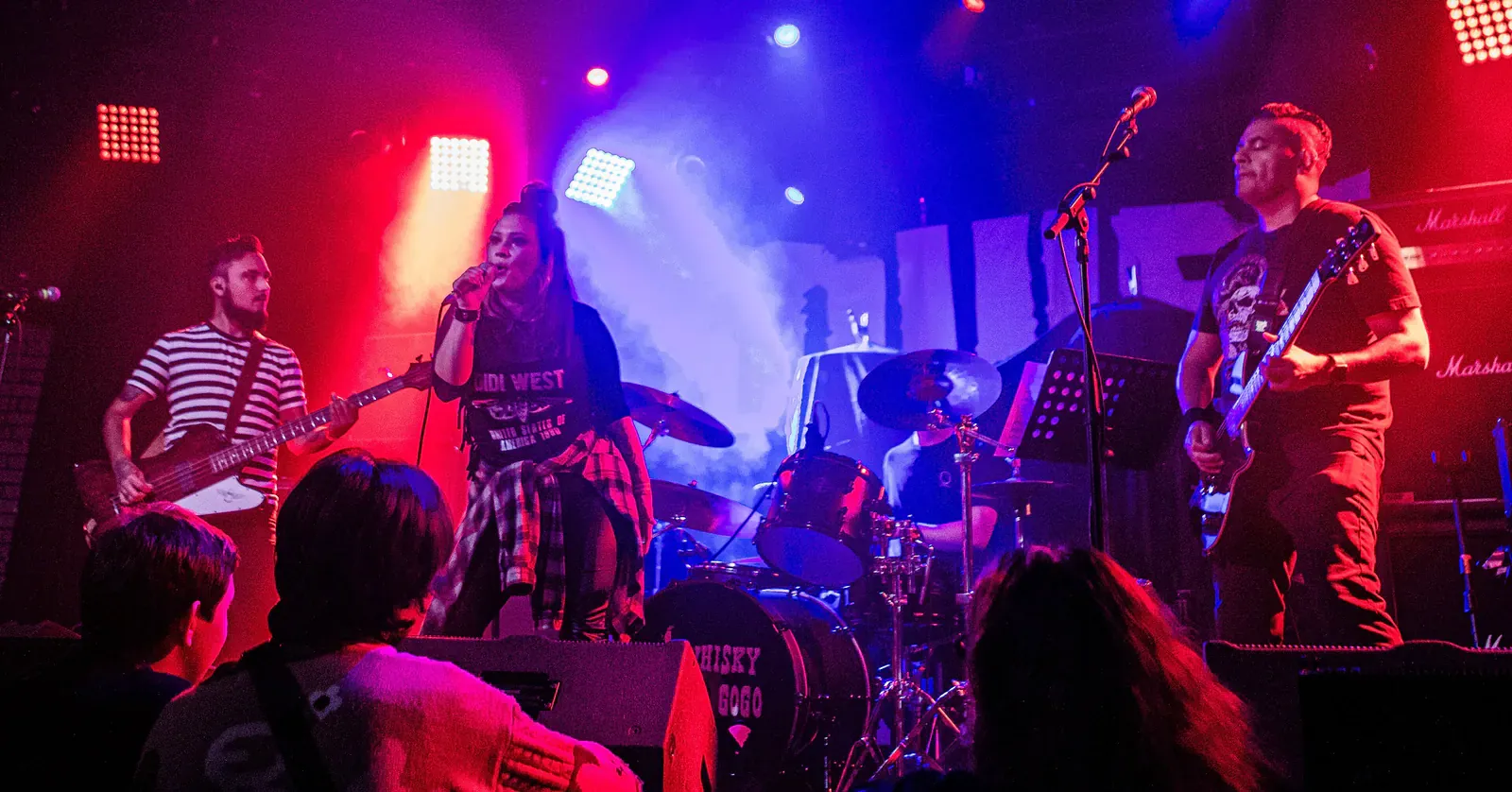
In 1984 Ratt released Out of the Cellar, whose single “Round and Round” reached number 12 on the Billboard Hot 100, and Bon Jovi from New Jersey and W.A.S.P. issued their debuts. In 1985 Mötley Crüe’s “Home Sweet Home” popularised the power ballad inside the genre and opened a new commercial route for bands that had been selling to a metal audience.
The second wave, 1986-1991
MTV launched in 1981, and by the middle of the decade clips of these bands were in heavy rotation. The channel’s Headbangers Ball became one of its most popular programmes, and the Los Angeles radio station KNAC backed the scene.
Bon Jovi’s Slippery When Wet (1986) spent eight weeks at number one and sold over 15 million copies in the United States. It was the first hard rock album to produce three top ten singles, two of them number one, and it widened the audience to include women as well as the traditionally male metal public. Europe, from Sweden, reached number one in 26 countries with “The Final Countdown”. Poison and Cinderella, both from Pennsylvania, released multi-platinum debuts the same year, and Stryper’s To Hell with the Devil became the first album from Enigma Records to reach the top 40.
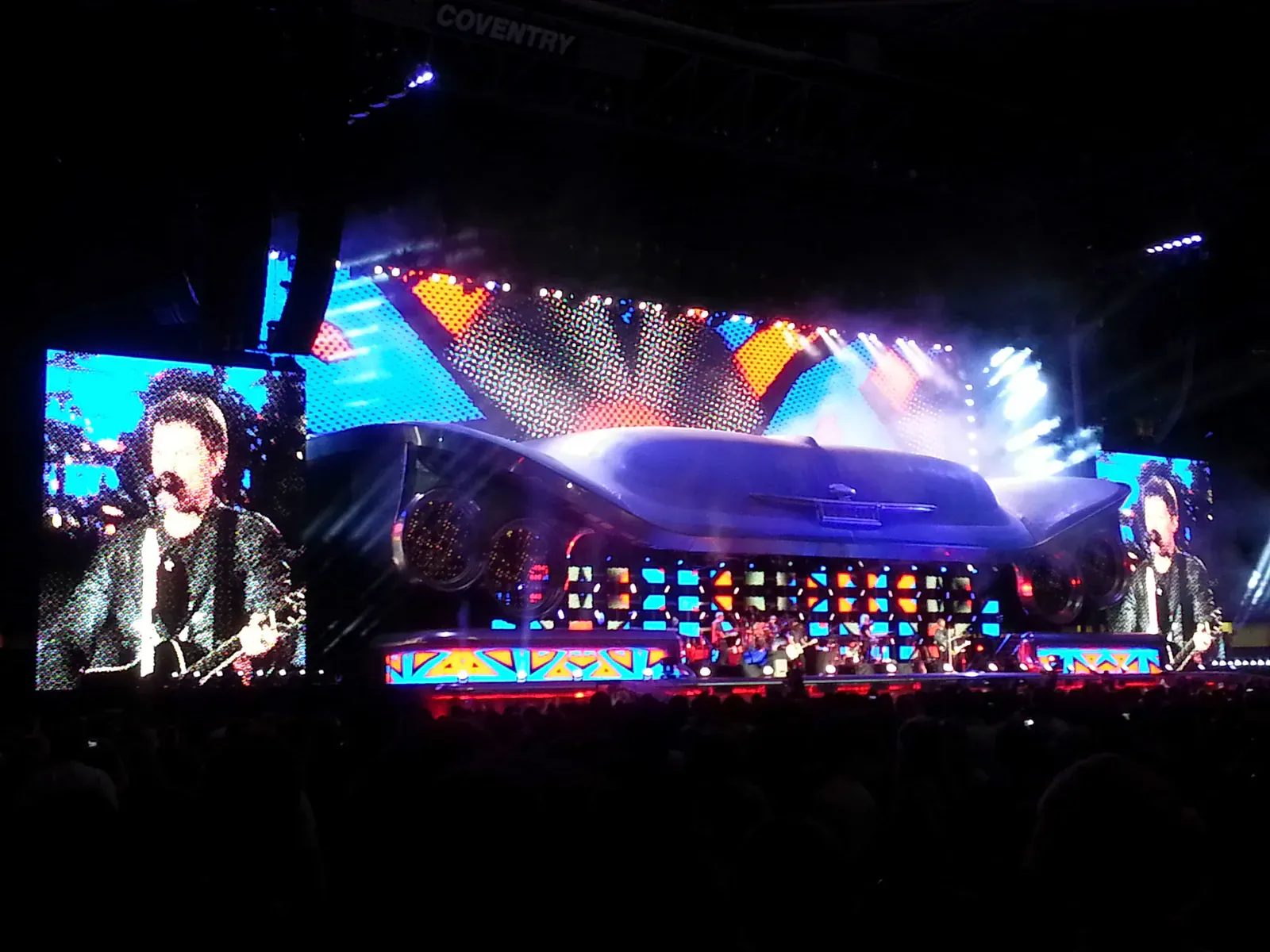
The late 1980s were the peak. Def Leppard’s Hysteria (1987) spawned seven hit singles and stayed on the Billboard 200 for 136 weeks. Poison’s Open Up and Say… Ahh! (1988) carried “Every Rose Has Its Thorn”, a number one single, and sold eight million copies worldwide. Mötley Crüe’s Dr. Feelgood (1989) reached number one, and Skid Row’s debut peaked at number six the same year. Guns N’ Roses, who emerged from the fusion of L.A. Guns and Hollywood Rose, sold the best-selling debut album of all time with Appetite for Destruction, but reject the label. Its rawer, punk and blues tinged sound led critics to coin sleaze rock or sleaze metal for that branch.
Decline, 1991-1997
The 1988 documentary The Decline of Western Civilization Part II: The Metal Years recorded the scene’s excesses and has been seen as feeding a backlash. In the early 1990s the audience left quickly. Key members left successful bands, among them Vince Neil from Mötley Crüe, C.C. DeVille from Poison and Izzy Stradlin from Guns N’ Roses, and the power ballad formula lost its appeal after years of use.
The decisive change was the rise of alternative rock. R.E.M.’s Out of Time and Nirvana’s Nevermind, both from 1991, favoured a stripped-down sound and rejected the glam look entirely. MTV moved its attention to the new scene, and Headbangers Ball was cancelled at the end of 1994. The derogatory name “hair metal” appeared in this period, along with “hair farmers”, “butt rock” and “poodle bands”.
Characteristics
Musically the style joins a traditional metal sound with hard rock and a trace of punk, then adds catchy hooks. Songs typically use anthemic choruses with layered backing vocals, a shred or tapped guitar solo and, on each album, one or two power ballads that grow from a quiet verse to a strong finale. Lyrics mostly deal with love, lust and parties and are often aimed at a particular woman.
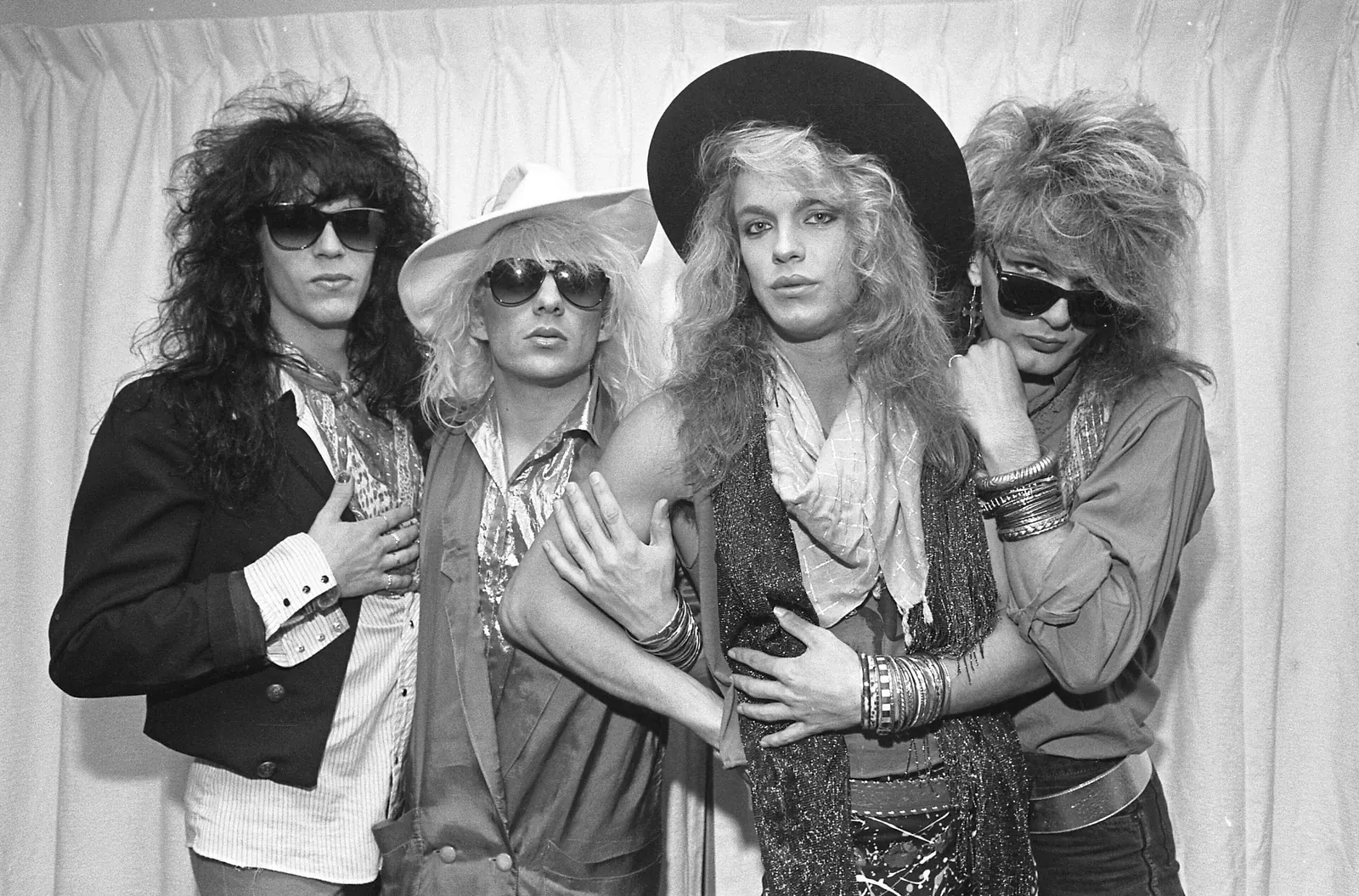
The visual language is as defining as the sound. Backcombed, hair-sprayed hair, make-up, spandex, lace, headbands and bright colours replaced the denim and leather of earlier heavy metal. The bands became known for lifestyles of drugs, strippers and late-night parties, widely covered in the tabloid press.
Instruments and production
The core line-up is a lead singer, two guitarists, a bassist and a drummer, with keyboards added mainly for ballads. Guitar parts are double-tracked and the choruses layered with gang vocals and close harmonies, a production approach designed for radio and MTV. Drum kits were large, usually with two bass drums, and recorded with a big, reverberant sound. Tapping became a staple of solos.
Mainstream success
Glam metal sold in large numbers to a pop audience, and its singles regularly reached the Billboard Hot 100. Labels with large rock catalogues carried the leading acts: Elektra with Mötley Crüe, Atlantic with Ratt and Capitol with Poison. Established acts such as Scorpions, Whitesnake, Aerosmith, Ozzy Osbourne and Judas Priest also added hair metal elements around 1985 and 1986.
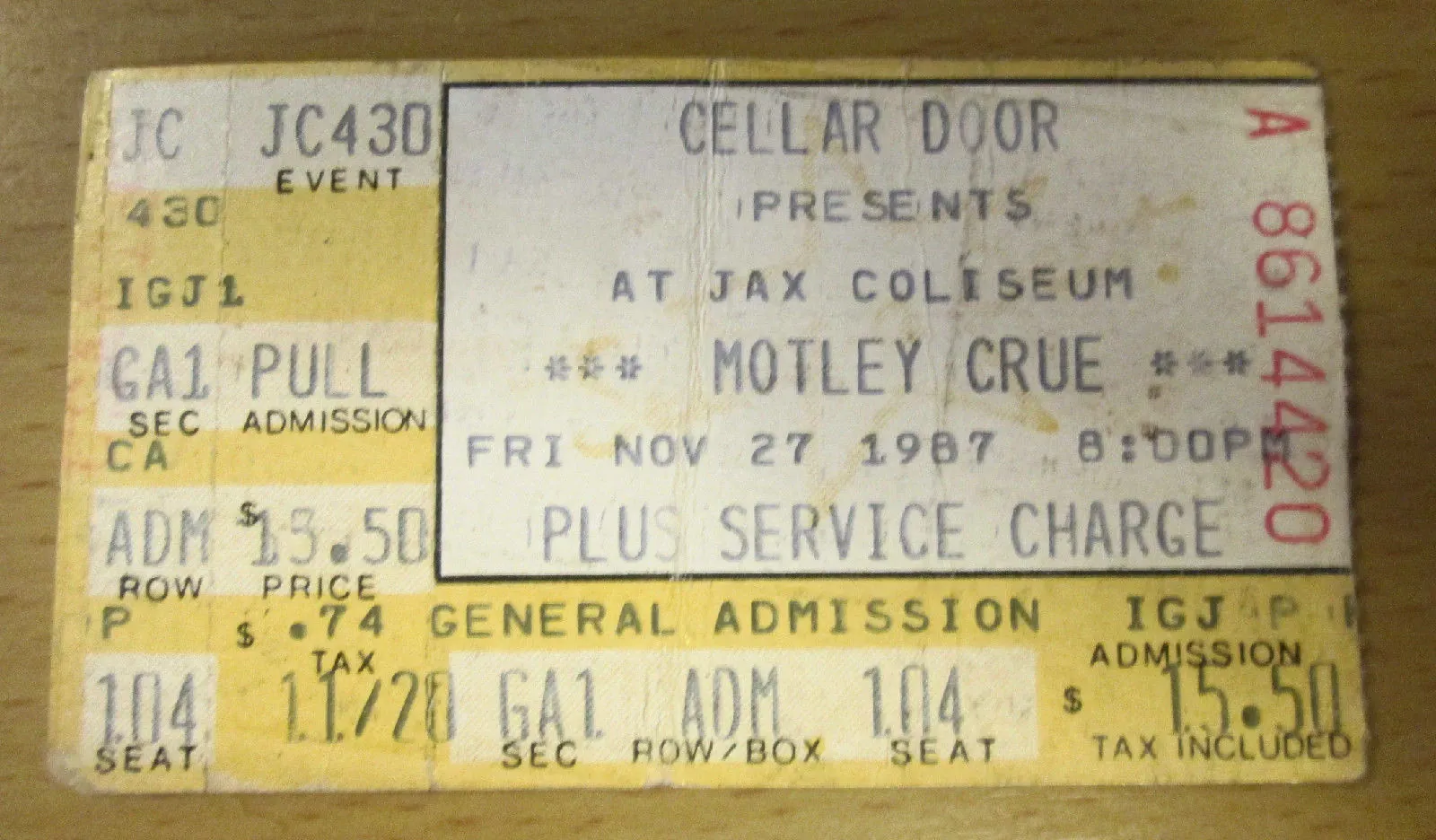
Notable recordings
“Cum On Feel the Noize” by Quiet Riot, a cover of the 1973 Slade song, was the single that carried Metal Health to the top of the chart. Ratt’s “Round and Round” put the Sunset Strip sound on the radio in 1984.
“Home Sweet Home” by Mötley Crüe, released in 1985, is built around a piano line and a slow build, and set the template for the genre’s biggest singles. Bon Jovi’s “Livin’ on a Prayer”, from 1986, brought the style to the widest pop audience, and Poison’s “Every Rose Has Its Thorn” in 1988 became the number one ballad of the period.
Culture
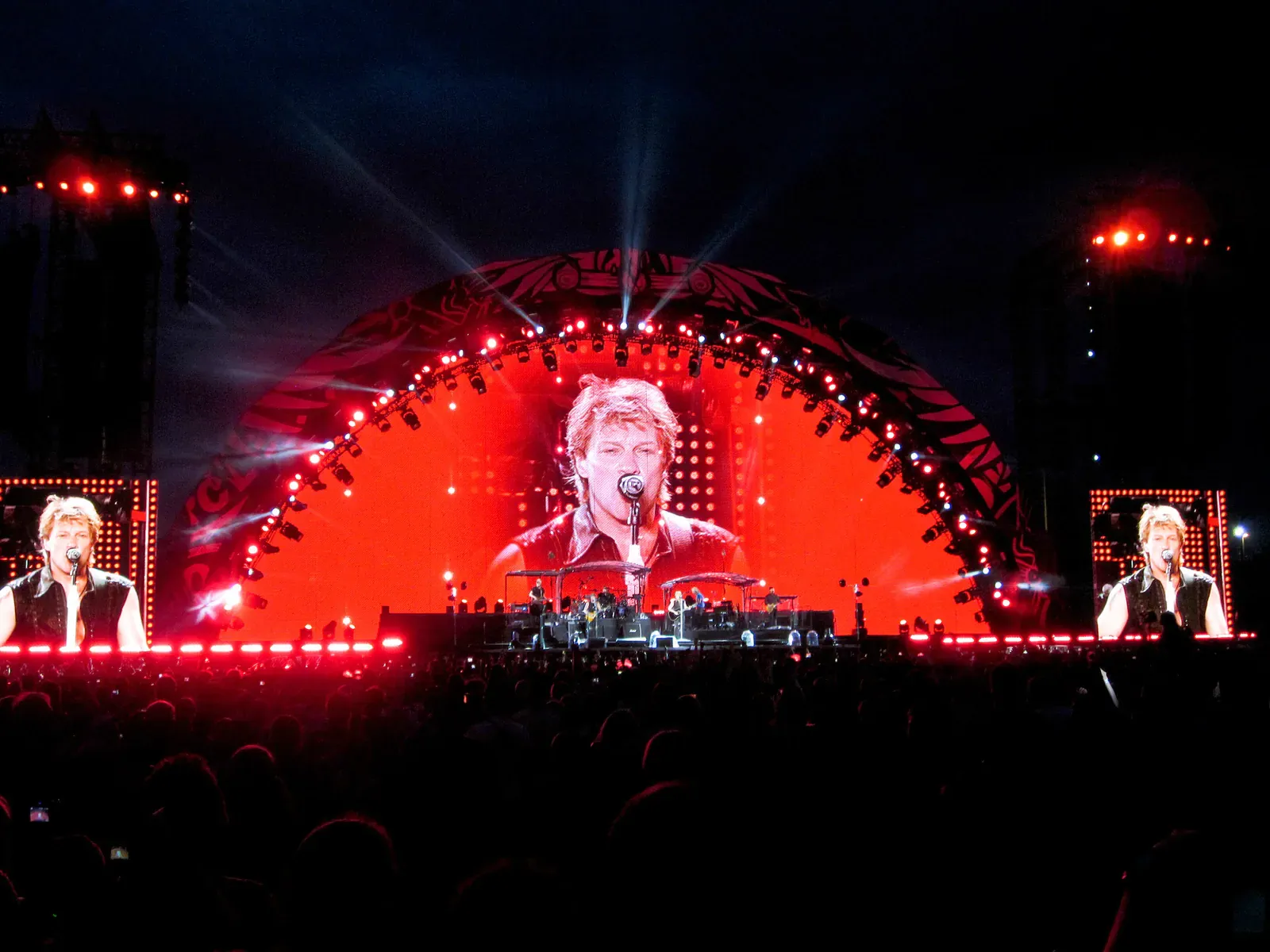
The scene ran on image, nightlife and the Strip clubs. The pay-to-play booking system meant that bands sold tickets themselves to reach the stage, and the glam look helped the genre appeal to women, who became a larger part of the audience after 1986.
Legacy
A revival began in the late 1990s. Reunion tours by Mötley Crüe, Poison, Ratt, Stryper and Skid Row drew large crowds, the VH1 Rock Never Stops Tour began in 1998, and the Monster Ballads compilations started in 1999, with the first volume going platinum. The Darkness’s Permission to Land (2003) topped the UK chart, and the musical Rock of Ages opened in Los Angeles in 2006 and became a film in 2012. In Sweden a sleaze metal movement grew with bands such as Hardcore Superstar and Crashdïet.
Misconceptions
Glam metal is not the same as glam rock. Glam rock is the British and American style of the early 1970s that provided the look, while glam metal adds heavy metal riffs and a pop-driven structure a decade later.
The name hair metal appeared in the early 1990s as a derogatory term as grunge rose.
Frequently asked questions
What is glam metal?
Glam metal is a style of heavy metal from the 1980s that pairs hard rock riffs and pop hooks with power ballads and the make-up and fashion of glam rock. Mötley Crüe, Poison, Ratt and Bon Jovi are among the best-known acts.
Where did glam metal start?
It started in the United States in the late 1970s and early 1980s, mainly on the Sunset Strip in Los Angeles, where clubs such as the Whisky a Go Go booked metal bands.
Why is glam metal called hair metal?
The name refers to the long, backcombed, hair-sprayed hair of the bands. It started as a derogatory term in the early 1990s as grunge gained popularity.
What ended the glam metal era?
The rise of alternative rock and grunge, especially Nirvana’s Nevermind in 1991, shifted MTV and radio attention away, and key members left leading bands.
Which glam metal album sold the most?
Bon Jovi’s Slippery When Wet (1986) sold over 15 million copies in the United States and spent eight weeks at number one. Guns N’ Roses’ Appetite for Destruction is the best-selling debut of all time, though the band reject the label.
Sound
Sound sheet
Anatomy of a track
| # | Part | Bars |
|---|---|---|
| 1 | Intro riff | 4 |
| 2 | Verse | 16 |
| 3 | Chorus | 8 |
| 4 | Guitar solo | 8 |
Signature sounds
- Shred and tapping guitar solos
- Stacked gang-vocal choruses
- Slow power ballad with a building finale
- Keyboard colour on ballads
Drums and percussion
- Double bass drum kit
Techniques
- Two-handed tapping
- Layered backing vocals
- Power ballad build
- Shred solo
Keys and modes
Minor pentatonic with major choruses. Riffs sit in the blues-based minor scale while choruses often lift to major.
Tuning
Standard tuning, E A D G B E
Vocals
High tenor leads with screams and harmonised choruses on party and love lyrics.
Scenes
Where it happened
Where and when the sound lived: one bar per city on a shared timeline.
North America
Europe
Active scenes
Peak 4, 1986-1991
The Sunset Strip clubs booked metal bands instead of punk acts and launched Mötley Crüe, Ratt, Quiet Riot and Warrant.
Home of Cinderella and Britny Fox, with Poison also from Pennsylvania.
The New Jersey town where Bon Jovi formed.
Europe's The Final Countdown reached number one in 26 countries.
Venues and places
West Hollywood, 1964 to today. Sunset Strip club that hosted the early metal bands of the scene.
West Hollywood, 1972 to today. Hangout of Strip musicians next to the clubs.
West Hollywood, 1973 to today. Club on the Strip used for band showcases.
Culture
Culture markers
- Teased hair
Long backcombed, hair-sprayed hair and make-up carried over from 1970s glam rock.
Fashion - Spandex and bright colours
Tight clothing, lace and headbands replaced the denim and leather of earlier metal.
Fashion - Hair metal
A derogatory name from the early 1990s, alongside butt rock and poodle bands.
Slang - Headbangers Ball
The MTV show that put the videos in heavy rotation.
Ritual
Media
Key media
- 1988The Decline of Western Civilization Part II: The Metal Years
by Penelope Spheeris. Documentary of the Los Angeles scene and its excesses.
Film - 1999Monster Ballads
by Various. Power ballad compilation series whose first volume went platinum.
Compilation - 2005Metal: A Headbanger's Journey
by Sam Dunn. Documentary whose metal family tree separates pop metal from glam metal.
Film - 2012Rock of Ages
by Adam Shankman. Film of the glam metal musical that ran in Los Angeles and New York.
Film
Glossary
Terms on this page
A derogatory name for the genre that appeared in the early 1990s as grunge rose.
A booking system in which bands paid for or sold tickets to earn a slot at the Strip clubs.
A name for the commercial end of metal, coined by a critic in 1983 for bands such as Van Halen and Def Leppard.
A slow, emotional song that builds to a strong finale, often the biggest single of the band.
A grittier, punk and blues tinged variant that critics separated from the more commercial acts.
The West Hollywood stretch of clubs where the Los Angeles scene formed.
Metal family