Metalcore
Metalcore fuses extreme metal riffs with hardcore punk. Its history runs from Cleveland and Syracuse in 1988 to Killswitch Engage and the UK top.
Boston, 1990
Metal family
Born
1990
Boston
Subgenres
12
Documented branches
Links
28
Genres it drew on or shaped
Tempo
90-185 BPMLineage
Family tree
Grew out of
- Crossover thrash
Derived from
Derived from
Influenced by
Boston, 1990
Metalcore
Led to (13)
Timeline
Era by era
From the first sparks to today. Select a dot to read the story behind it.
- Hardcore turns heavy
1988 to 1996
- The melodic turn
1997 to 2001
- The mainstream wave
2002 to 2008
- Splintering and reinvention
2009 to 2015
- Global revival
2016 to today
Eras
Moments
- 1 Hardcore turns heavy, 1988 to 1996
- 2 The melodic turn, 1997 to 2001
- 3 The mainstream wave, 2002 to 2008
- 4 Splintering and reinvention, 2009 to 2015
- 5 Global revival, 2016 to today
1988
Hardcore turns heavy
Integrity, Converge and Earth Crisis drop hardcore punk tempos into down-tuned metal riffing. Victory Records and a few New England and Ohio scenes carry it, while the word "metalcore" is still half a joke.
- 1988Integrity forms in ClevelandDwid Hellion starts a band that blends hardcore, extreme metal and occult themes.
- 1989Earth Crisis forms in SyracuseA vegan straight edge band that plays hardcore tuned down and played like death metal.
- 1990Converge forms in Salem, MassachusettsJacob Bannon and Kurt Ballou start the band in the winter of 1990.
- 1991Those Who Fear TomorrowIntegrity album that is often cited as an early metalcore blueprint.
- 1993Firestorm EPEarth Crisis releases its debut on Victory and helps set the first-wave sound.
- 1994Hatebreed forms in Bridgeport, ConnecticutJamey Jasta starts the band that will carry hardcore-metal to a mass audience.
- 1995Systems OverloadIntegrity album on Victory, later called a landmark of the genre.
1997
The melodic turn
Hatebreed sells records on Victory, Killswitch Engage forms in Massachusetts and Converge releases Jane Doe. Melodic death metal leads and sung hooks start to sit next to breakdowns.
- 1997Satisfaction Is the Death of DesireHatebreed debut sells about 158,000 copies and becomes the best-selling debut in Victory history.
- 1999Killswitch Engage forms in Westfield, MassachusettsThe band starts the melodic-metalcore wave and later takes it to the charts.
- 1999New England Metal and Hardcore Festival beginsThe yearly festival at the Worcester Palladium becomes the genre's hometown gathering.
- 2001Jane DoeConverge album on Equal Vision, widely ranked among the best heavy records of its decade.
2002
The mainstream wave
Killswitch Engage, Atreyu, As I Lay Dying, Underoath and Bullet for My Valentine chart on the Billboard 200 and fill Ozzfest and Warped Tour stages. Metalcore becomes a major-label genre.
- 2002Alive or Just BreathingKillswitch Engage on Roadrunner brings sung choruses and Gothenburg-style leads to US metalcore.
- 2004The End of HeartacheKillswitch Engage peaks at number 21 on the Billboard 200.
- 2004Metalcore albums chart on the Billboard 200Albums by Shadows Fall, Atreyu and Killswitch Engage all chart in the same year.
- 2005Killswitch Engage Grammy nominationThe End of Heartache is nominated for Best Metal Performance.
- 2005The PoisonBullet for My Valentine debut arrives in the UK and spreads Welsh metalcore worldwide.
- 2006Define the Great LineUnderoath debuts at number 2 on the Billboard 200.
- 2007An Ocean Between UsAs I Lay Dying debuts at number 8 on the Billboard 200 on Metal Blade.
2009
Splintering and reinvention
Deathcore, electronicore and mathcore split away. Bring Me the Horizon, Parkway Drive and Architects extend the sound, while As I Lay Dying stalls after the 2013 arrest of its singer.
- 2012Jesse Leach returns to Killswitch EngageThe original vocalist replaces Howard Jones after a decade away.
- 2013As I Lay Dying singer is arrestedTim Lambesis is arrested in May 2013 and the band goes on hiatus until 2018.
- 2013SempiternalBring Me the Horizon reaches number 3 in the UK and number 11 in the US.
around 2016
Global revival
Architects, Bring Me the Horizon and Spiritbox reach UK number ones and Grammy attention, and a nu metalcore wave grows online. The genre returns to the top of the rock charts.
- 2018Holy HellArchitects release their first album since the death of guitarist Tom Searle.
- 2020Post Human: Survival HorrorBring Me the Horizon take a metalcore-rooted album to number 1 in the UK.
- 2021For Those That Wish to ExistArchitects score their first UK number one.
Listening path
Anthems
The records that built the sound, grouped by the part they played. Thumbnails come from YouTube; the player loads only when you press play.
- 01
Earth Crisis, 1993 · Victory Records
The EP title track that set the heavy, down-tuned, vegan straight edge sound of first-wave metalcore.
Origin - 02
Killswitch Engage, 2004 · Roadrunner
From the number 21 album that put metalcore on the Billboard 200 and earned a Grammy nomination.
Start hereBreakthrough - 03
Underoath, 2006
Lead single of the number 2 album that took the Christian-scene sound to the mainstream.
Breakthrough - 04
Converge, 2001 · Equal Vision Records
A short, frantic blast that opens Jane Doe and shows how fast and precise the genre can get.
Anthem - 05
Killswitch Engage, 2002 · Roadrunner
The track that made screamed verses with a sung hook the template for melodic metalcore.
Anthem - 06
Hatebreed, 2002
Chant-along hardcore-metal that became the crowd anthem of the first generation.
Anthem - 07
Atreyu, 2002 · Victory Records
Melodic, catchy and screamed in equal parts; an easy way in from early 2000s rock radio.
Start hereAnthem - 08
Unearth, 2004 · Metal Blade
Boston band shows the thrash and melodic death metal side of the New Wave of American Heavy Metal.
Anthem - 09
As I Lay Dying, 2007 · Metal Blade
Single from the number 8 album.
Anthem - 10
Parkway Drive, 2012 · Epitaph
Australian metalcore anthem from Atlas that turned festival crowds into choirs.
Anthem - 11
Bullet for My Valentine, 2006 · Trustkill Records
Welsh hit single that took metalcore to a pop audience and won a Kerrang! Award for Best Single.
Start hereCrossover - 12
Bring Me the Horizon, 2013 · RCA Records
The Sempiternal opener that carried electronics and an arena chorus out of deathcore roots.
Crossover - 13
Architects, 2018 · Epitaph
Anthemic, grief-driven metalcore that restarted the band after Tom Searle's death.
Revival - 14
Spiritbox, 2020
Modern, groove-heavy single that brought a new generation to metalcore.
Revival
Facts
| Family | Metal |
| Origin | Boston, United States |
| Emerged | Late 1980s to early 1990s, mainstream in the 2000s |
| Status | Active |
| Tempo | 90 to 185 BPM |
| Meter | 4/4, tempo varies by song |
| Grew out of | Crossover thrash, Groove metal |
| Subgenres | 11 |
Metalcore is a fusion of extreme metal riffing and hardcore punk, built on low-tuned chugging guitars, double bass drumming, slow crowd-moving breakdowns and a contrast between screamed and sung vocals.
It began in the US from 1988 and grew from basement and club scenes in Cleveland, Syracuse and Massachusetts into a major-label genre in the 2000s. It matters because it brought hardcore’s shouted honesty to metal’s biggest stages and still sells records today.
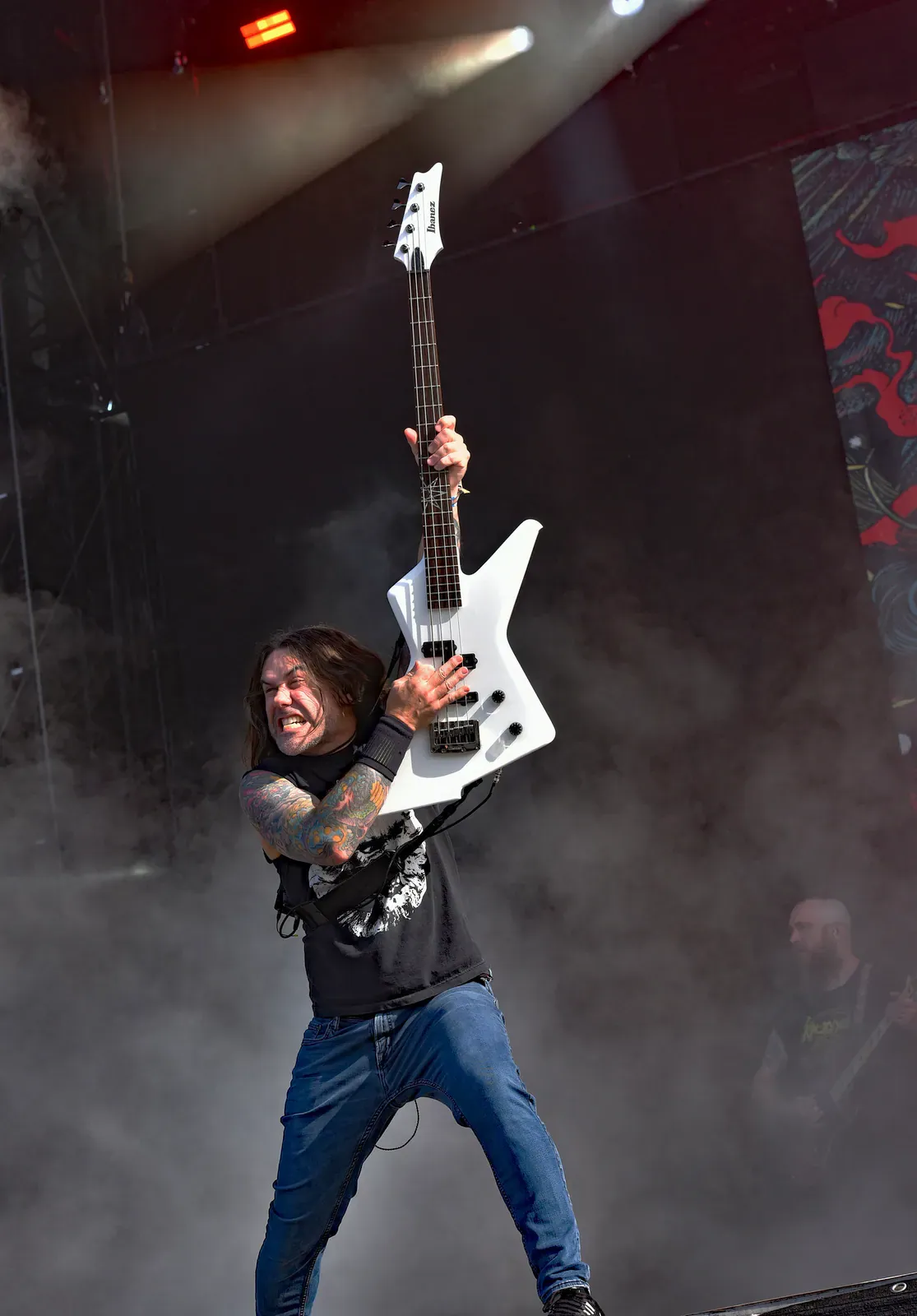
Origins
Metalcore began when hardcore bands stopped playing fast and started playing heavy. In Cleveland, Dwid Hellion formed Integrity in 1988 and mixed hardcore with extreme metal and occult themes. In 1989 Earth Crisis formed in Syracuse, a vegan straight edge band that played hardcore tuned down and attacked like death metal. In 1990 Jacob Bannon and Kurt Ballou started Converge in Salem, Massachusetts.
The origin of the word “metalcore” is disputed, and bands did not rush to wear it. Integrity’s album “Those Who Fear Tomorrow” (1991) is often cited as an early blueprint, and Earth Crisis’s “Firestorm” EP (1993) on Victory fixed the heavy, down-tuned first-wave sound.
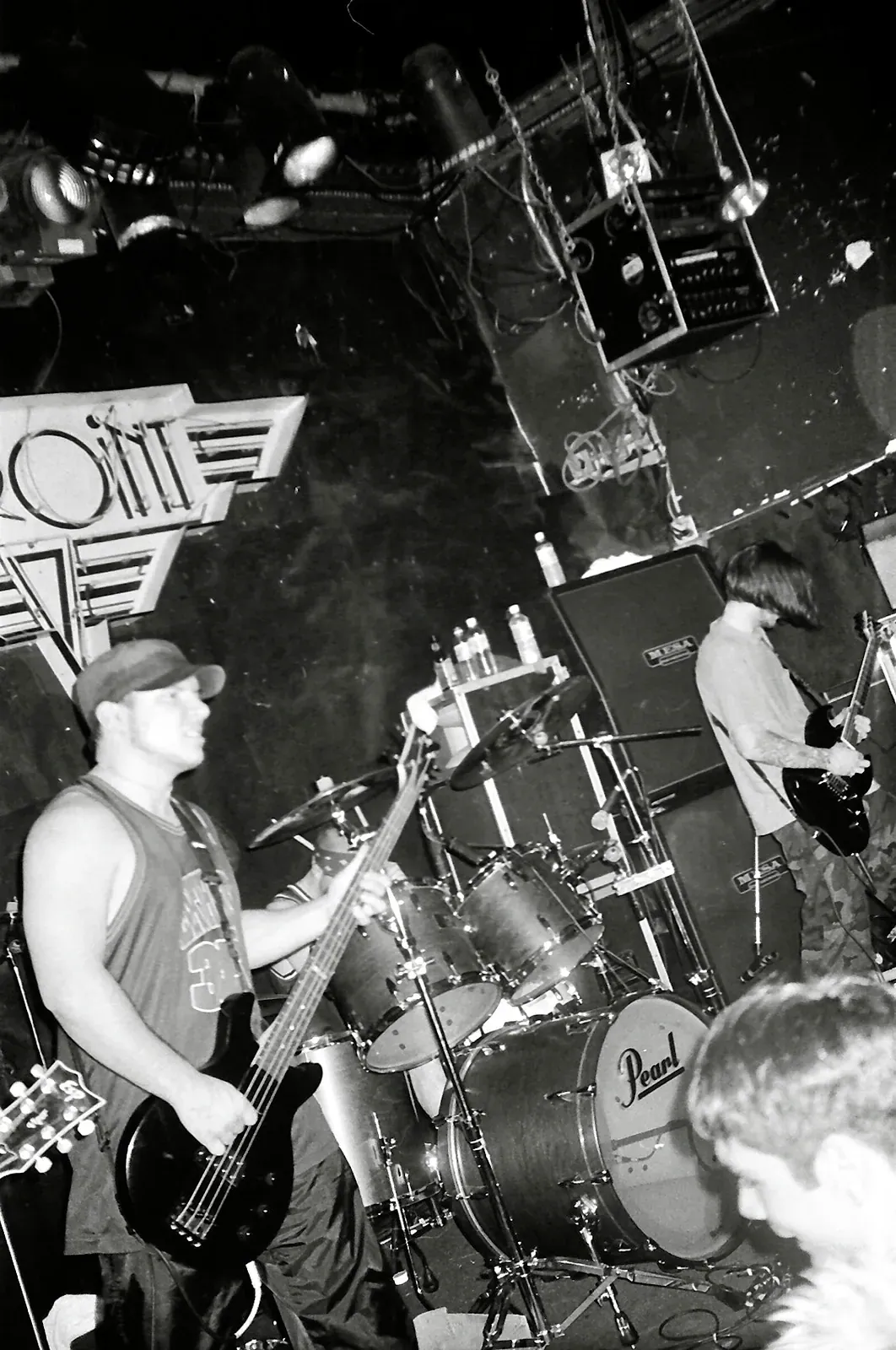
The straight edge scene shaped the early look. Black X marks on the hands meant no alcohol, drugs or tobacco, and the bands brought the two-step dance and windmill arms of hardcore pits into heavier music. Its roots also reach back to hardcore punk, the faster parent, and to thrash and crossover thrash on the metal side.
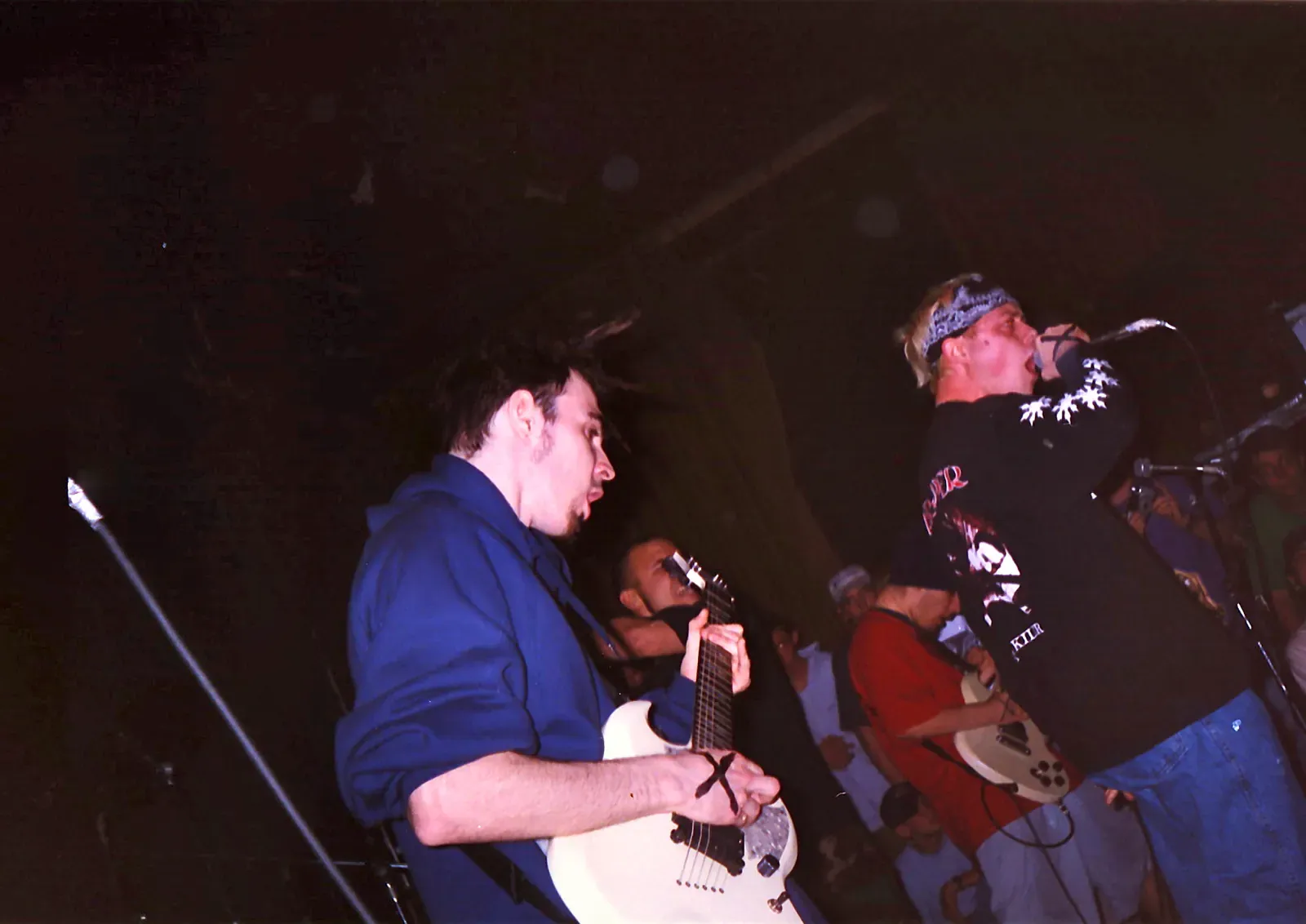
Hardcore turns heavy, 1988 to 1996
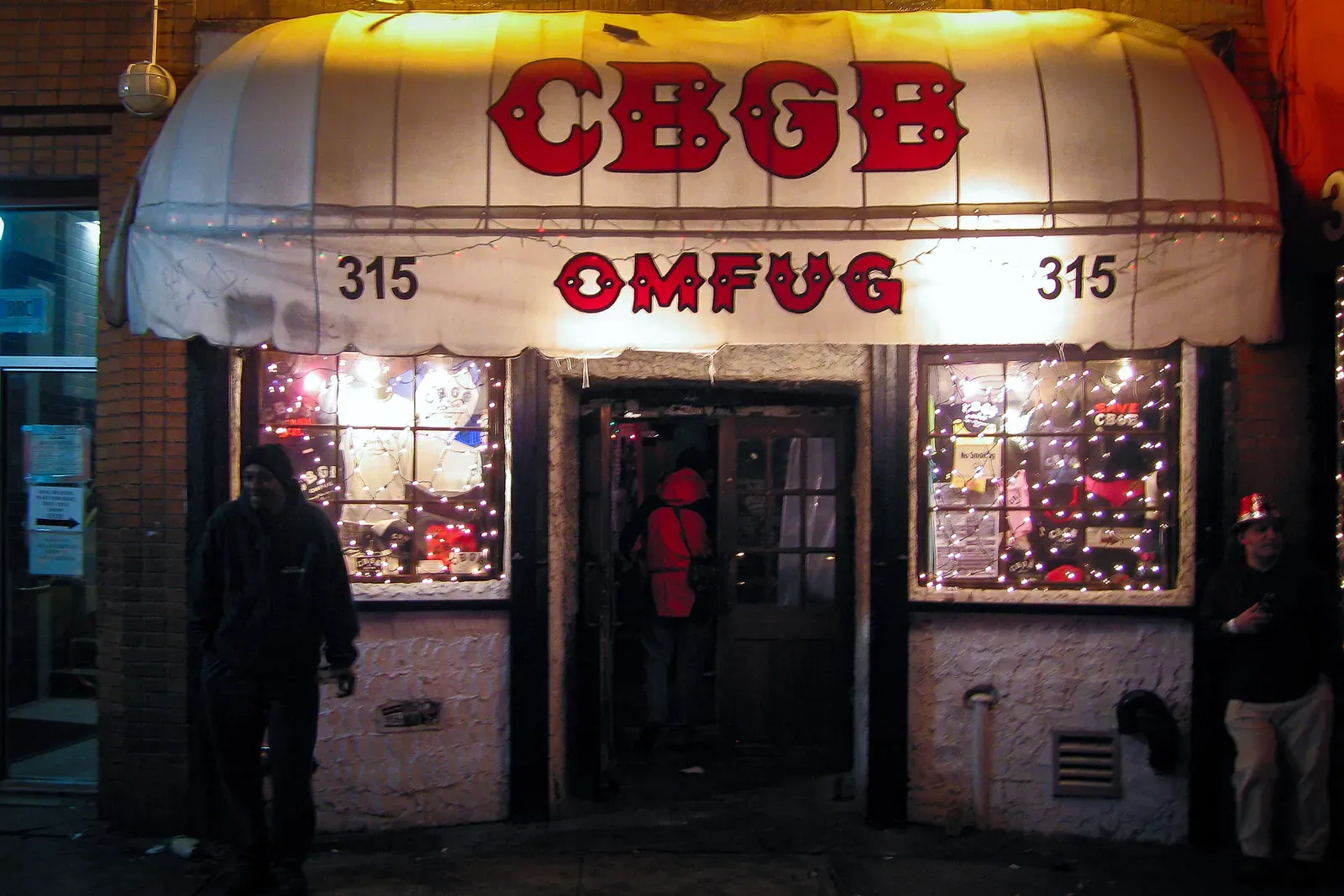
New York’s hardcore matinees at CBGB fed the scene that metalcore grew out of, and the club closed in 2006. Hatebreed formed in Bridgeport, Connecticut, in 1994 around Jamey Jasta. Integrity’s “Systems Overload” (1995) on Victory is later called a landmark of the genre.
Few people outside the scene heard any of this. The records were small-label releases, the shows were in clubs and halls, and the word still meant almost nothing.
Massachusetts and the melodic turn, 1997 to 2001
Hatebreed’s debut “Satisfaction Is the Death of Desire” (1997) sold about 158,000 copies and became the best-selling debut in Victory’s history. That proved metallic hardcore could sell.
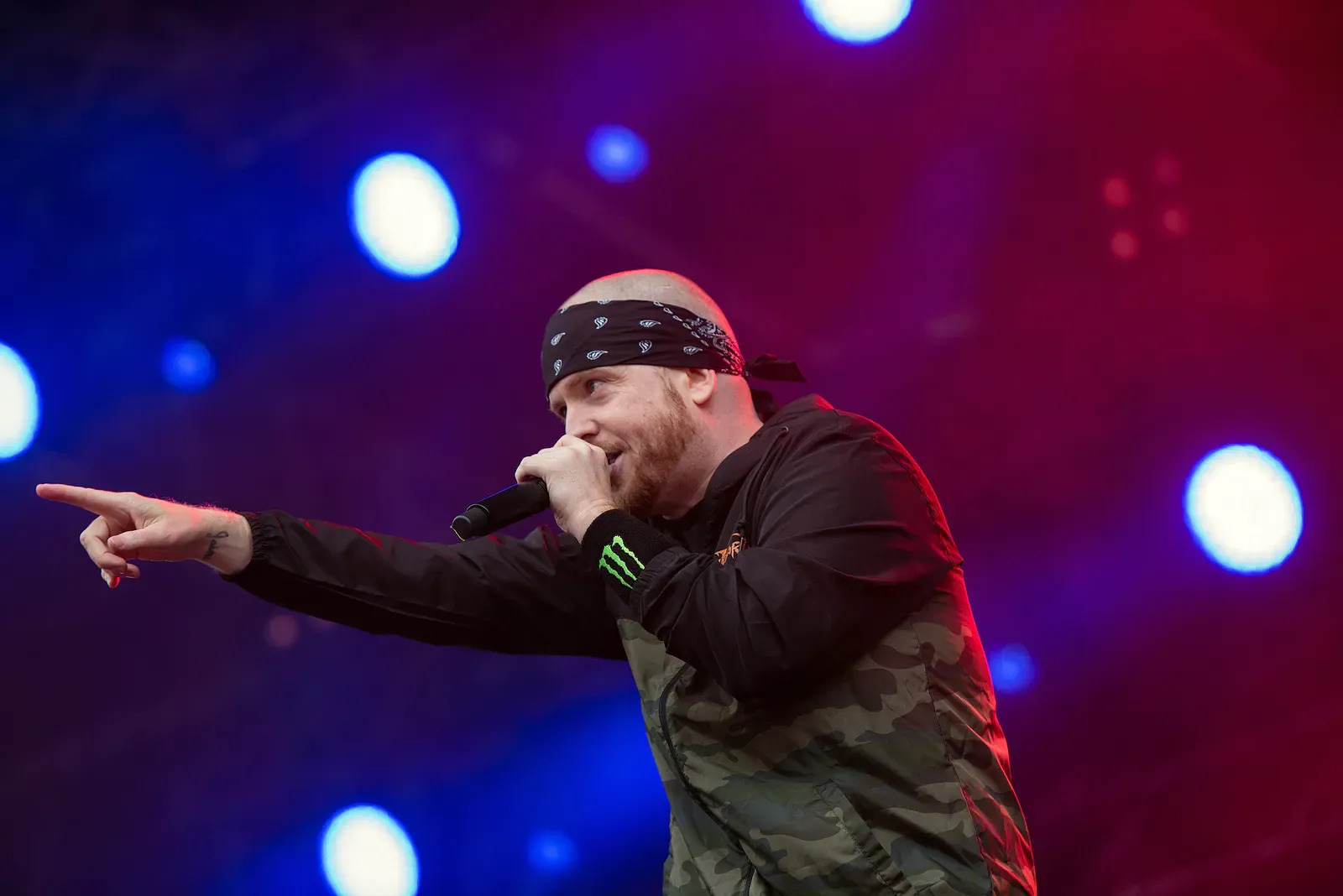
In 1999 Killswitch Engage formed in Westfield, Massachusetts, and started the melodic wave. The New England Metal and Hardcore Festival also began that year at the Worcester Palladium, which became the genre’s hometown gathering.
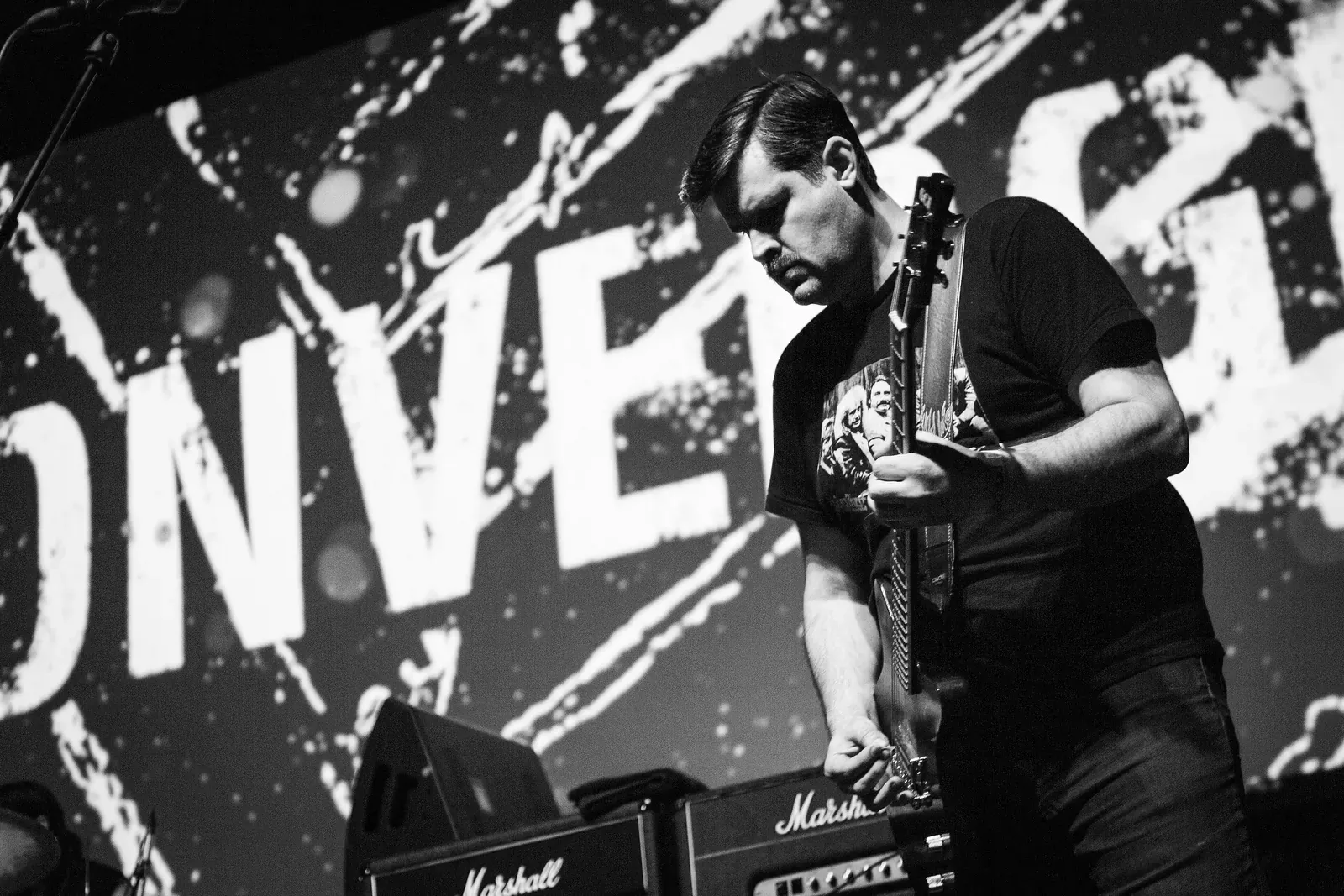
Converge’s “Jane Doe” (2001) on Equal Vision moved in the opposite direction: chaotic, precise and tuneless on purpose, and widely ranked among the best heavy records of its decade. Bannon has designed every Converge album cover since 1996, and Ballou records bands at his GodCity Studio in Salem.
Characteristics
Metalcore pairs low-tuned, palm-muted guitar riffs with double-kick drumming and slow half-time breakdowns. Vocals alternate between shouts or screams and sung choruses, often with gang vocals. Songs sit in 4/4 at tempos usually slower than the metal and hardcore they borrow from, dropping to half-time for the breakdown.
Instruments and production
Guitars sit in drop tunings anywhere from drop D to drop A, and seven-string guitars are used. Early records were lo-fi; modern metalcore is polished, with heavy processing, layering, programming and synthesizers.
Mainstream success
Metalcore went mainstream through melody. Killswitch Engage’s “Alive or Just Breathing” (2002) on Roadrunner brought sung choruses and Gothenburg-style leads to US metalcore, and the template was simple: screamed verses, a sung hook, a breakdown in the middle. Their follow-up “The End of Heartache” (2004) peaked at number 21 on the Billboard 200 and was nominated for a Grammy for Best Metal Performance in 2005.
In 2004 albums by Shadows Fall, Atreyu and Killswitch Engage charted in the same year. Underoath’s “Define the Great Line” (2006) debuted at number 2, and As I Lay Dying’s “An Ocean Between Us” (2007) on Metal Blade debuted at number 8. Ozzfest and Warped Tour stages filled with the sound, and Myspace carried new bands to fans without a label.
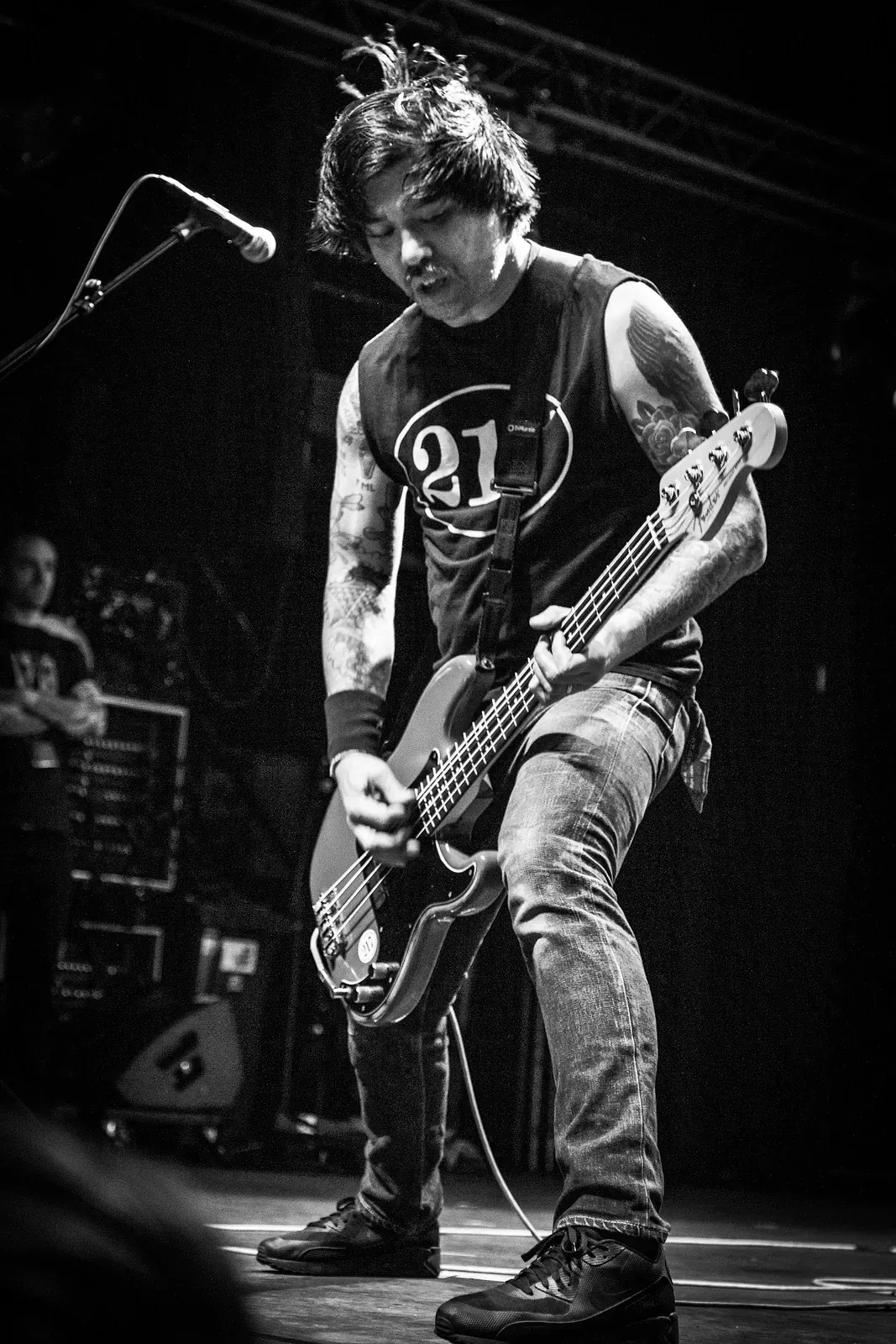
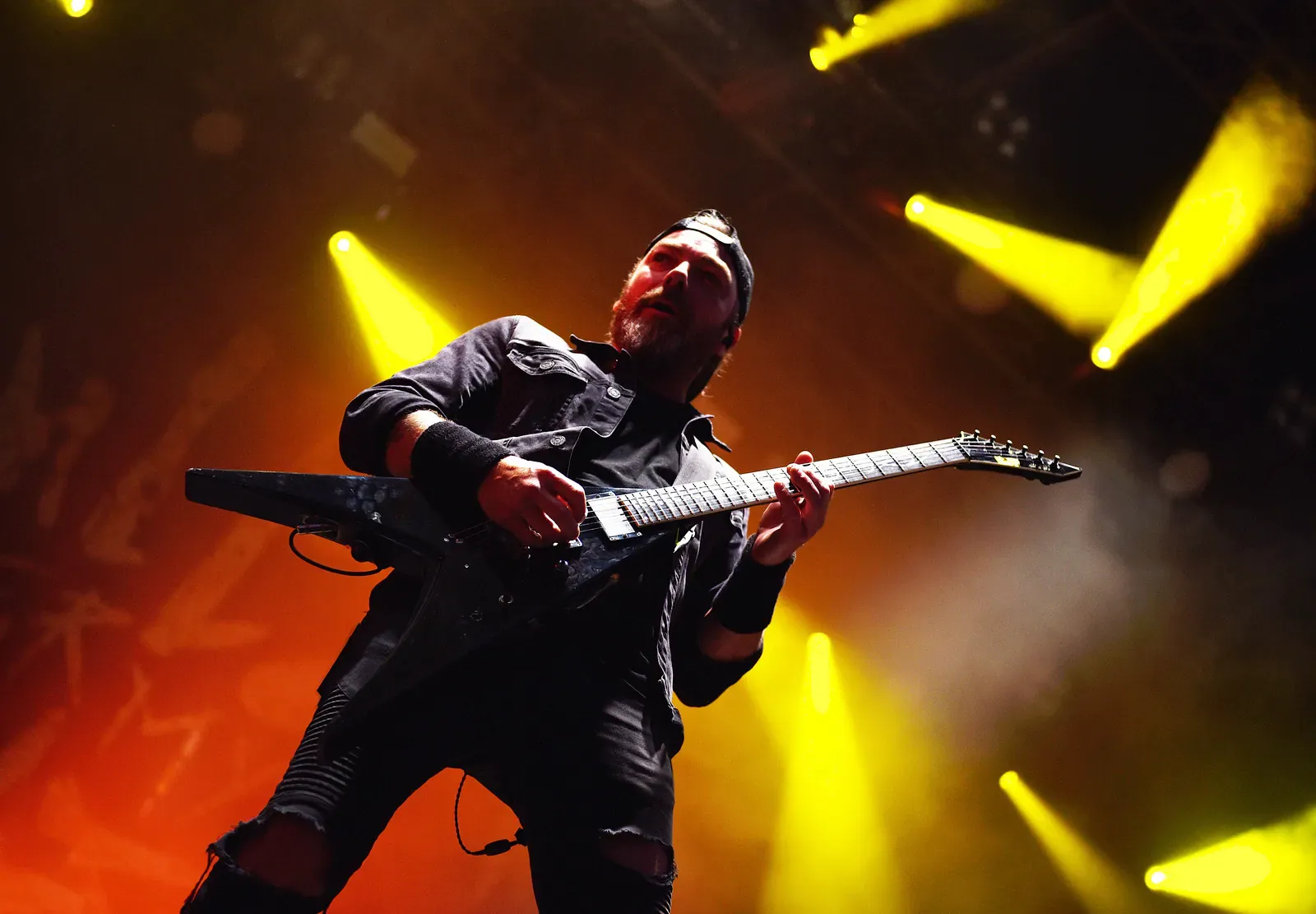
The wave also crossed the Atlantic. Bullet for My Valentine’s “The Poison” (2005) arrived from Bridgend in Wales, and “Scream Aim Fire” (2008) reached number 4 on the Billboard 200.
Notable recordings
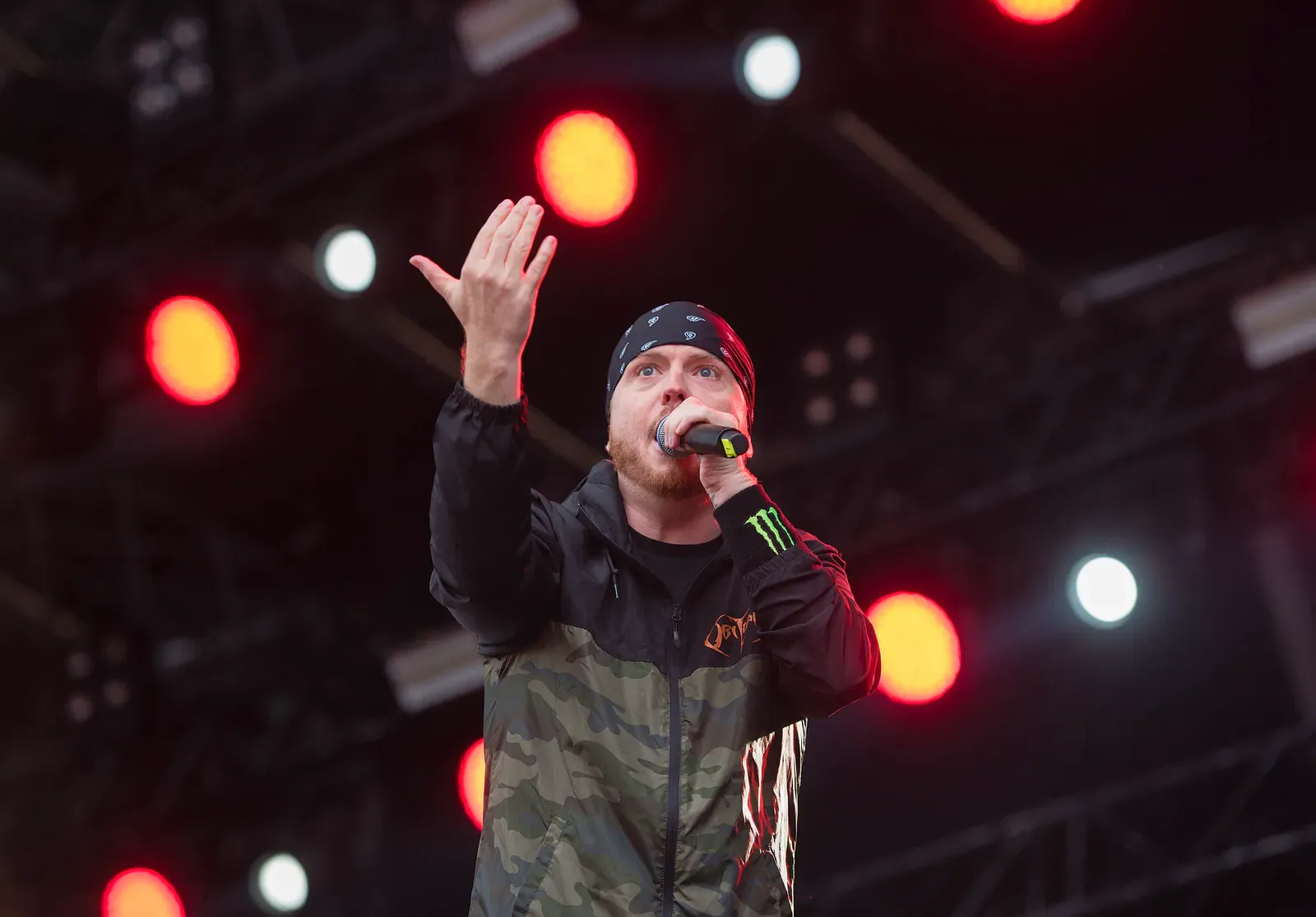
“Firestorm” (1993) by Earth Crisis was the origin point. The title track of a Victory EP, it put down-tuned riffs and straight edge lyrics on one record and gave first-wave metalcore its template.
“My Last Serenade” (2002) by Killswitch Engage turned screamed verses with a sung hook into the standard model for melodic metalcore. The band was recording at Zing Studios in Westfield in late 2001, a small local room, and the result reached radio and charts within two years.
“I Will Be Heard” (2002) by Hatebreed is the opposite kind of anthem, a chant-along that the first generation of fans knows word for word.
Culture
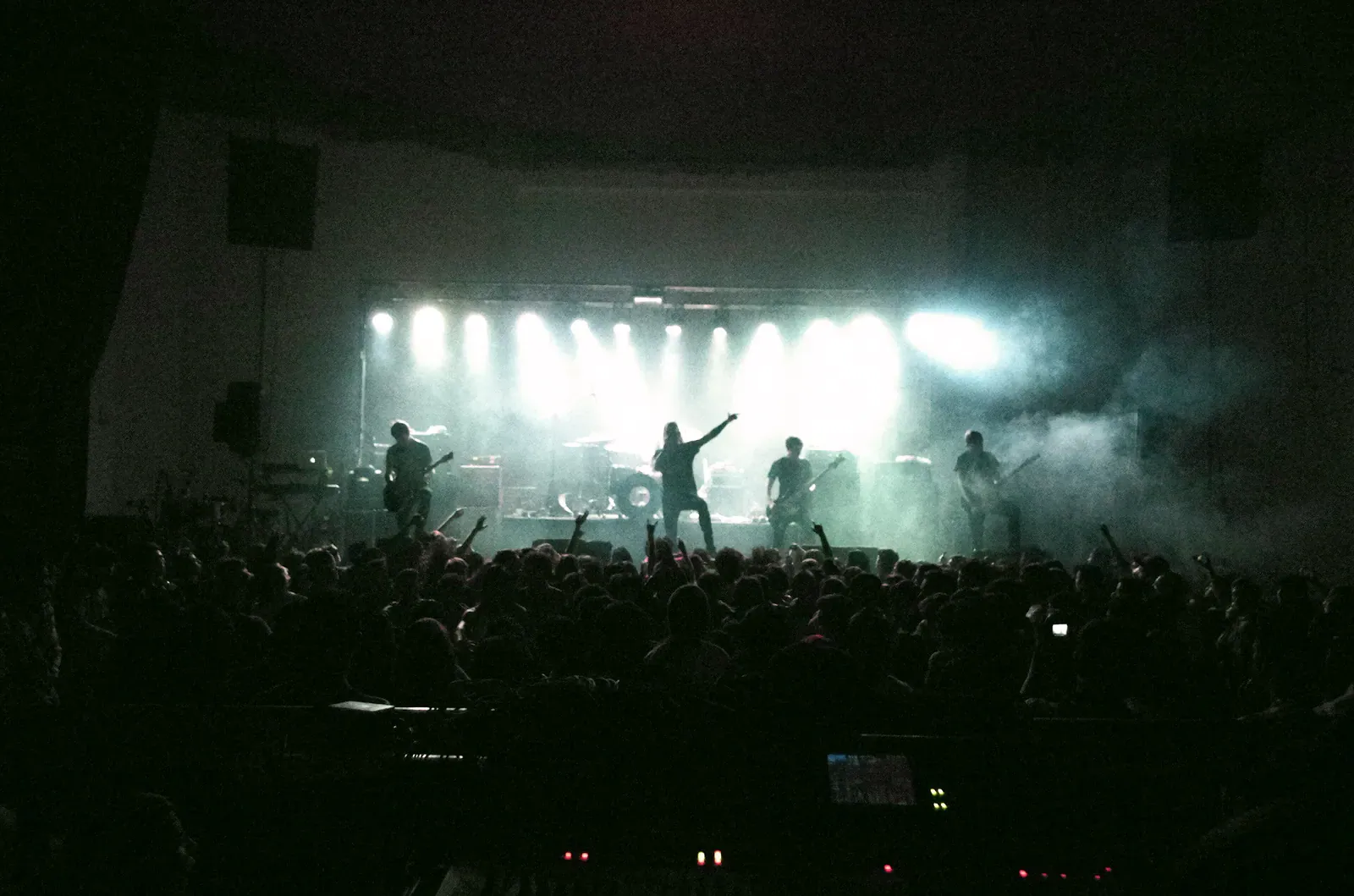
Metalcore culture is physical. Two-step and windmill arms moved from hardcore pits into metalcore shows, and the breakdown works as a signal for the crowd to start moshing. The mid 2000s added a Myspace-era scene look: side-swept fringes and skinny jeans.
Scenes spread from Cleveland, Syracuse, Boston and Bridgeport to Orange County, Bridgend, Byron Bay and Sheffield. The wider metal family holds the other branches, including death metal, whose melodic leads shaped the Gothenburg-style guitars in the melodic wave.
Legacy
After 2008 the genre split. Deathcore, electronicore and mathcore broke away, and Bring Me the Horizon, Parkway Drive and Architects widened the sound. Jesse Leach returned to Killswitch Engage in 2012 after a decade away. In 2013 As I Lay Dying’s singer Tim Lambesis was arrested and the band went on hiatus until 2018.
Bring Me the Horizon’s “Sempiternal” (2013) on RCA reached number 3 in the UK and number 11 in the US and rebuilt the band’s sound around electronics and hooks.
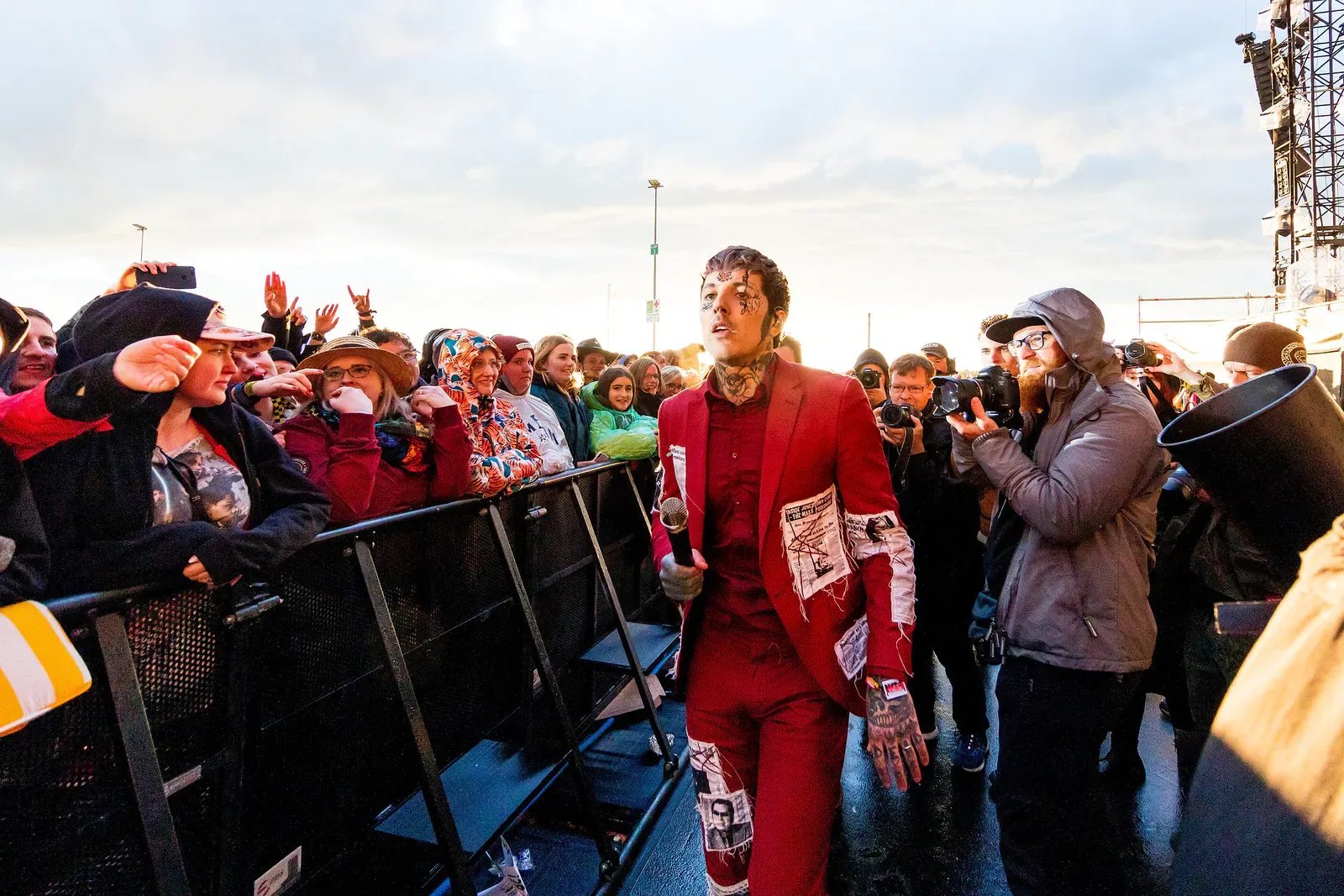
Architects released “Holy Hell” (2018) on Epitaph, their first album since guitarist Tom Searle died. Spiritbox’s “Holy Roller” (2020) brought a new generation, and Bring Me the Horizon’s “Post Human: Survival Horror” (2020) went to number 1 in the UK.
Misconceptions
Is metalcore just screaming over breakdowns?
No. Breakdowns and screamed and sung vocals are common, but Converge’s “Jane Doe” has neither a polished chorus nor a formula, and Earth Crisis built its sound on tuning and straight edge lyrics, not on a sung hook.
Was metalcore invented by Myspace bands?
No. The genre formed between 1988 and 1990, with Integrity, Earth Crisis and Converge. Myspace promotion in 2003 helped a wave of mid 2000s bands, but it came more than a decade after the first records.
Is metalcore the same as hardcore with more distortion?
No. Metalcore is a fusion: hardcore’s attitude and breakdowns, plus extreme metal’s riffing, tuning and, from the late 1990s, melodic death metal leads.
Frequently asked questions
What is metalcore?
Metalcore is a fusion genre that combines extreme metal riffing with hardcore punk. It usually features low-tuned palm-muted riffs, double bass drumming, breakdowns and a contrast between screamed verses and sung choruses.
Where did metalcore start?
Metalcore started in the US from 1988, in Cleveland with Integrity, Syracuse with Earth Crisis and Massachusetts with Converge. It later became strong in the UK, Australia and Europe.
Which metalcore band should I hear first?
Common entry points are Atreyu’s “Lip Gloss and Black” (2002), Killswitch Engage’s “My Curse” (2004) and Bullet for My Valentine’s “Tears Don’t Fall” (2006), with Earth Crisis’s “Firestorm” and Converge’s “Concubine” for the harder roots.
How fast is metalcore?
Metalcore songs are usually in 4/4 and slower than the metal and hardcore they draw on, with the speed dropping to half-time for the breakdown.
Sound
Sound sheet
Anatomy of a track
| # | Part | Bars |
|---|---|---|
| 1 | Intro (riff or atmosphere) | 8 |
| 2 | Verse (screamed, double kick) | 16 |
| 3 | Pre-chorus build | 8 |
| 4 | Chorus (sung hook) | 16 |
| 5 | Verse 2 | 16 |
| 6 | Breakdown | 8 |
| 7 | Final chorus | 16 |
| 8 | Outro | 4 |
Signature sounds
- Screamed verses against sung choruses
- Palm-muted low-tuned chugging
- Half-time breakdown
- Melodic dual-guitar leads
- Gang vocals
- Synth and sample layers
Techniques
- Breakdown
- Palm-muted chugging
- Double-kick drumming
- Harsh and clean vocal contrast
- Gang vocals
Tuning
Drop D down to drop A; drop C and drop B are common, 7 and 8 string guitars occur
Vocals
Shouts, screams and growls alternate with sung clean choruses, often backed by gang vocals
Scenes
Where it happened
Where and when the sound lived: one bar per city on a shared timeline.
North America
Europe
Oceania
Active scenes
Peak 8, 2004-2025
Home of Integrity and its dark, occult hardcore-metal.
Earth Crisis made the city the first-wave capital of vegan straight edge metalcore.
Converge, Unearth and, nearby, Killswitch Engage made Massachusetts the melodic heart of the genre.
Hatebreed brought Connecticut hardcore-metal to national audiences.
Atreyu came out of Yorba Linda in the Southern California scene.
Bullet for My Valentine put South Wales on the metalcore map.
Parkway Drive made Australian metalcore a global export.
Bring Me the Horizon rose from the local scene to arena level.
Venues and places
New York, 1973 to today. Hardcore matinee home of the New York scene that metalcore grew out of; closed in 2006.
Worcester, 1990 to today. Opened in 1928 and a metal and hardcore room from 1992; hosts the New England Metal and Hardcore Festival.
Salem, 1997 to today. Kurt Ballou's recording studio, where Converge and many later hardcore bands record.
Westfield, 2001 to today. Killswitch Engage began recording Alive or Just Breathing here in November 2001.
Culture
Culture markers
- Hardcore dancing
Two-stepping and windmill arms carried from hardcore pits into metalcore shows.
Dance - Straight edge X marks
Black X marks on the hands signalled no drinking or drugs, central to Earth Crisis and early metalcore.
Ritual - Jacob Bannon covers
The Converge singer has made every album cover since 1996, setting an art-first example.
Artwork - Breakdown
The slow, heavy section the crowd waits for, a call to start moshing.
Slang - Myspace-era scene look
Side-swept fringes and skinny jeans spread among mid 2000s fans of the genre.
Fashion
Media
Key media
- 1981Kerrang!
by Bauer Media. UK magazine whose awards championed Bullet for My Valentine and Bring Me the Horizon.
Zine - 1982Maximumrocknroll
by Tim Yohannan. Punk fanzine in which the tongue-in-cheek word "metalcore" first appeared.
Zine - 2020Viva the Underdogs
by Parkway Drive. Documentary on Parkway Drive's rise from Byron Bay to headlining festivals.
Film
Glossary
Terms on this page
A slow, syncopated, heavy section that the crowd moshes to.
Palm-muted low-string riffing that gives the genre its percussive weight.
Sung passages, usually in choruses, set against screamed verses.
Lowering the lowest guitar string for heavier chords.
Screams and growls that carry the aggression of the verses.
A hardcore scene lifestyle of no alcohol, drugs or tobacco, key to early metalcore.
Hardcore dance style of stepping and swinging arms in the pit.
Metal family