Groove metal
Groove metal is a heavy metal style that slows thrash to mid-tempo and builds on syncopated riffs and shouted vocals, formed in the US in the late 1980s.
New Orleans, 1989
Metal family
Born
1989
New Orleans
Subgenres
1
Documented branches
Links
9
Genres it drew on or shaped
Tempo
95-155 BPMLineage
Family tree
Grew out of
Derived from
Derived from
Influenced by
Southern rock
New Orleans, 1989
Groove metal
Led to (5)
Timeline
Era by era
From the first sparks to today. Select a dot to read the story behind it.
- Underground roots
1985 to 1989
- Pantera and the breakthrough
1990 to 1999
- Second wave
2000 to today
Eras
Moments
- 1 Underground roots, 1985 to 1989
- 2 Pantera and the breakthrough, 1990 to 1999
- 3 Second wave, 2000 to today
1985
Underground roots
Exhorder in New Orleans, Prong and White Zombie in New York, and a few thrash bands slowed their tempos and pushed rhythm over speed, drawing on hardcore punk and Southern groove.
- 1985Exhorder form in New OrleansThe band mixes hardcore punk, jazz, funk, blues and Mardi Gras music into thrash; later named as a founder of groove metal.
- 1986Exhorder's first demoSludge bands Eyehategod, Soilent Green and Crowbar play some of their earliest shows supporting Exhorder.
- 1989White Zombie's Make Them Die SlowlyThe New York band leans into groove on its second album.
1990
Pantera and the breakthrough
Pantera's Cowboys from Hell (1990) codified the style. Vulgar Display of Power, Sepultura's Chaos A.D. and Machine Head's Burn My Eyes spread it, and thrash veterans slowed down to follow.
- 1990Prong's Beg to DifferProng slow their tempos and add heavier percussion, a template for the style.
- 1990Exhorder's Slaughter in the VaticanThe New Orleans debut album, released in 1990, is treated as a groove-oriented thrash landmark.
- 1990Pantera's Cowboys from HellReleased 24 July 1990; the band calls its mid-tempo, riff-led sound power groove.
- 1991Metallica's Black AlbumThe 1991 album includes groove metal tracks such as Sad but True and The Struggle Within.
- 1991Monsters in MoscowPantera play to a crowd of over 500,000 with AC/DC and Metallica in September 1991.
- 1992Pantera's Vulgar Display of PowerReleased 25 February 1992 with a shouted, hardcore-influenced delivery; Walk reached number 35 in the UK.
- 1993Sepultura's Chaos A.D.The Brazilian band slows down and absorbs New York hardcore, a widely influential record.
- 1994Machine Head's Burn My EyesReleased 9 August 1994; it became Roadrunner's best-selling debut album.
- 1994Far Beyond Driven reaches number onePantera debut at number one in the US on 22 March 1994; the original sleeve art was banned and replaced.
- 1995White Zombie win at the MTV VMAsMore Human than Human takes Best Metal/Hard Rock Video and reaches number 10 on the Mainstream Rock chart.
2000
Second wave
Lamb of God, Chimaira, DevilDriver and Damageplan carried the sound into the 2000s, then Five Finger Death Punch, Hellyeah and later acts kept it on the charts.
- 2004Dimebag Darrell killed on stageThe Pantera and Damageplan guitarist is shot dead by a fan at a Damageplan show in Columbus, Ohio, on 8 December 2004.
- 2006Lamb of God's SacramentDebuts at number eight on the Billboard 200; Redneck is nominated for a 2007 Grammy for Best Metal Performance.
Listening path
Start listening
A short path from an easy way in to the deep end. Thumbnails come from YouTube; the player loads only when you press play.
- 01
Sepultura, 1993
A hardcore-driven, slowed-down Chaos A.D. riff that shows the style's global reach.
- 02
Machine Head, 1994
The Burn My Eyes opener, built on a heavy, grinding mid-tempo riff.
- 03
Pantera, 1992
The riff that defined the sound, from Vulgar Display of Power.
- 04
Lamb of God, 2006
Second-wave groove metal, nominated for a Grammy in 2007.
Facts
| Family | Metal |
| Origin | New Orleans, United States |
| Emerged | Late 1980s to early 1990s |
| Status | Active |
| Tempo | 95 to 155 BPM |
| Meter | 4/4 |
| Grew out of | Thrash metal, Hardcore punk |
| Subgenres | 1 |
Groove metal, also called neo-thrash or post-thrash, is a branch of heavy metal that plays thrash metal at slower, mid-tempo speeds and builds songs on syncopated, rhythmically emphatic riffs and shouted vocals.
It formed in the United States in the late 1980s, spread through the early 1990s and belongs to the wider metal family.
Origins
The style grew from the thrash scene when some bands decided that weight and rhythm mattered more than speed. Two outside currents shaped it. One was hardcore punk, especially the New York scene, whose tough, stop-start rhythms entered metal. The other was the Southern groove of bands rooted in southern rock, which left a loose, swinging feel under the aggression.
Two bands of the late 1980s are most often named as founders. Exhorder, formed in New Orleans in 1985, blended hardcore punk, jazz, funk, blues and the music of Mardi Gras into thrash. Prong came out of the New York hardcore scene and began as a crossover thrash band before slowing down. Bad Brains’ later work, notably Quickness in 1989, is also credited with pointing the way.
Underground roots, 1985-1989
Exhorder recorded their first demo in the summer of 1986 and quickly became a reference point in New Orleans. Eyehategod, Soilent Green and Crowbar, the pioneers of sludge metal, all played some of their first shows supporting them, which ties groove metal to the city’s heavy underground.
In New York, hardcore bands were adopting metal riffs, and some, such as Sick of It All and Leeway, jokingly labelled themselves “Jackson Heights groove metal”. White Zombie, formed in 1985 from the noise rock scene, began leaning into groove on their second album Make Them Die Slowly in 1989. Prong’s Beg to Differ followed in 1990 with slower tempos and heavier percussion than the band’s earlier crossover thrash.
Pantera and the breakthrough, 1990-1999
Pantera, formed in Arlington, Texas, in 1981 by the brothers Dimebag Darrell and Vinnie Paul, started as a glam-leaning metal act. After years of rejection by labels, Atco signed them in 1989, and Cowboys from Hell, released on 24 July 1990 and produced with Terry Date, replaced glam with a mid-tempo, riff-led sound the band called power groove. Many fans and the band itself treat it as their real debut.
Vulgar Display of Power on 25 February 1992 hardened the sound with a shouted, hardcore-influenced delivery, and its single “Walk” reached number 35 in the UK. The band played to a crowd of over 500,000 at Monsters in Moscow in September 1991, alongside AC/DC and Metallica.
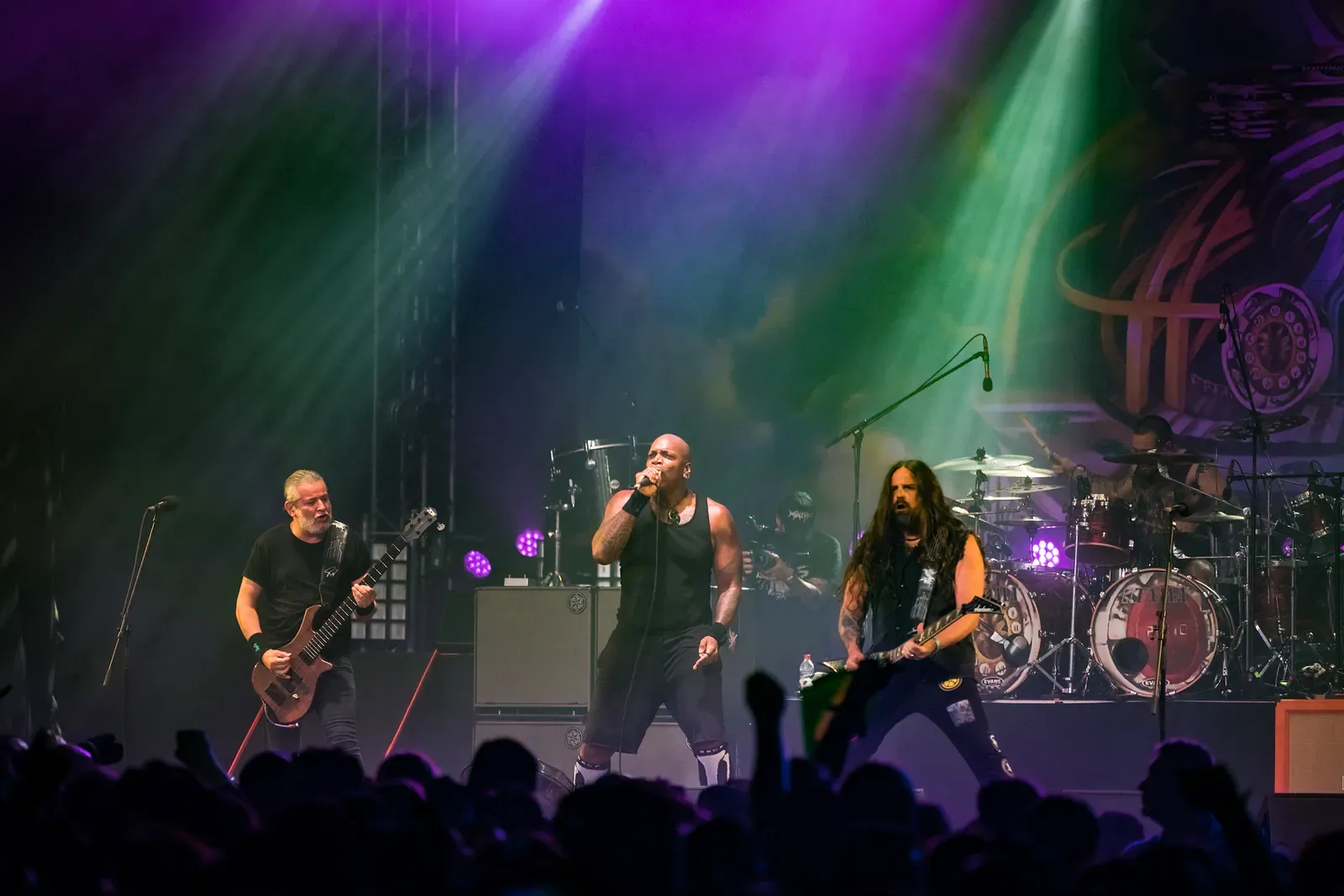
The style then spread across borders and generations. Metallica’s 1991 Black Album included groove-driven tracks such as “Sad but True” and “The Struggle Within”. Sepultura, a Brazilian deathrash band from Belo Horizonte, slowed down and absorbed New York hardcore on Chaos A.D. in 1993, an album widely credited with helping to build the genre. Machine Head, formed in Oakland in October 1991, issued Burn My Eyes on Roadrunner in 1994. Thrash veterans including Sacred Reich, Overkill, Testament and Anthrax followed with groove-heavy albums in the mid-1990s.
Second wave, 2000 onward
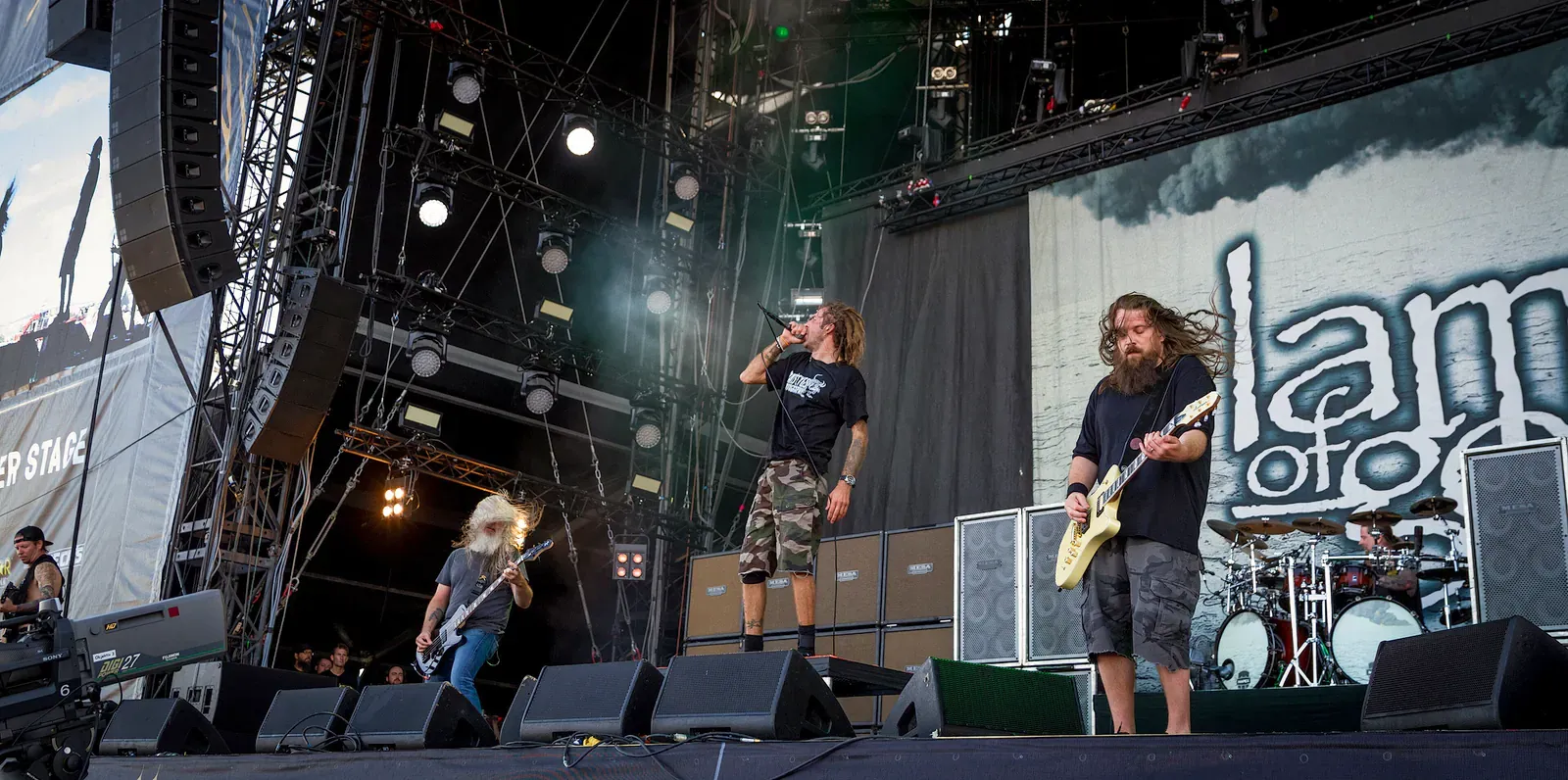
A second wave arrived in the 2000s with Lamb of God, Chimaira, DevilDriver and Damageplan. Damageplan was formed in 2003 by the Abbott brothers just before Pantera ended, and it released one album in 2004. The band ended in December of that year when Dimebag Darrell was shot dead on stage at a Damageplan show in Columbus, Ohio, on 8 December 2004. Vinnie Paul later formed Hellyeah in 2006.
Five Finger Death Punch, formed in 2005, earned gold and platinum certifications in the United States, and later acts such as Killer Be Killed and Bad Wolves kept the approach alive. In 2022 Malevolence’s Malicious Intent carried groove metal and sludge into beatdown hardcore and metalcore.
Characteristics
The defining feature is groove: a syncopated riff pattern that sets the pace in place of speed. Most canonical recordings sit between roughly 95 and 155 beats per minute, well under the fastest thrash. Guitars are tuned low, pinch harmonics punctuate the riffs, and vocals are shouted rather than screamed in falsetto or sung cleanly.
Pantera’s Phil Anselmo dropped the high power-metal screams of the band’s earlier records for this hardcore-influenced bark, and the change is one of the clearest dividing lines between glam-era Pantera and the groove era. The rhythm section does more than keep time. Drums and bass lock to the guitar riff and give each accent room to swing.
Instruments and production
The core line-up is two downtuned guitars, bass, drums and a vocalist, with little reliance on synthesisers or electronics. Production emphasises weight and punch rather than speed. Terry Date, who had worked with Soundgarden, Metal Church and Overkill, produced Pantera’s major-label debut, and Colin Richardson produced Machine Head’s Burn My Eyes at Fantasy Studios in Berkeley.
The guitar tone is thick and tight, so that palm-muted chugs and open chords stay distinct at mid-tempo. Soloing remained a feature: Dimebag Darrell’s more complex solos and riffs marked Pantera’s change from glam to groove.
Mainstream success
Groove metal produced chart-topping metal records at a time when the genre rarely reached the top. Far Beyond Driven, released on 22 March 1994, debuted at number one on the US and Australian album charts, selling 186,000 copies in its first week, and its single “I’m Broken” earned Pantera’s first Grammy nomination. White Zombie’s Astro Creep: 2000 reached number 6 on the Billboard 200 in 1995 and went double platinum, and “More Human than Human” won the Best Metal/Hard Rock Video award at the 1995 MTV Video Music Awards.
Burn My Eyes shipped nearly 400,000 copies worldwide and became Roadrunner’s best-selling debut. Lamb of God’s Sacrament debuted at number eight on the Billboard 200 in 2006, and its song “Redneck” was nominated for a Grammy for Best Metal Performance in 2007.
Notable recordings
Pantera’s “Walk”, from Vulgar Display of Power, rests on a single stripped-down riff and a pace of about 118 beats per minute. It gave the genre its most recognisable guitar figure.
Sepultura’s “Refuse/Resist”, from Chaos A.D., came in 1993 and showed a death-metal band using hardcore-style chants and groove. Machine Head’s “Davidian”, the opener of Burn My Eyes, set the template for the Bay Area’s contribution: a heavy, grinding riff and an aggressive vocal over a faster tempo of around 154 beats per minute, at the top of the genre’s range.
Culture
The genre brought its own vocabulary. Pantera used “power groove” for their sound, and New York hardcore bands used “Jackson Heights groove metal”. Pantera’s Texas roots gave the style a Southern identity, while its riffs came from the hardcore and metal scenes.
Controversy came with the territory. The original sleeve for Far Beyond Driven, showing a drill bit through an anus, was banned and replaced with a skull impaled on a drill bit. Anselmo was charged with assault in 1994 after an incident with a security guard and pleaded guilty to attempted assault in May 1995.
Legacy
Groove metal drove the new wave of American heavy metal that began in the 1990s and fed directly into nu metal and metalcore, two of the most commercially successful metal styles that followed. It also redefined what mainstream metal could sound like: lower, heavier and more rhythmic than the speed metal it replaced. Southern metal is among its offshoots.
Misconceptions
A common claim is that Pantera invented the style. The record shows earlier work: Exhorder’s first demo dated to 1986 and Prong’s slower turn came on Beg to Differ in 1990, several months before Cowboys from Hell. Pantera popularised and codified groove metal more than they started it.
Another is that groove metal is simply thrash played slowly. Slower tempos are only part of it. Hardcore punk, jazz, funk, blues and Southern rock supplied the rhythmic feel, and the vocal style also changed.
A third is that Pantera always sounded like this. The band released several albums as a glam-influenced act before Cowboys from Hell, including Power Metal in 1988, and only dropped the falsetto vocals and glam look for the 1990 record.
Frequently asked questions
What is groove metal?
Groove metal is a style of heavy metal that takes thrash metal and slows it to mid-tempo, with syncopated riffs, low-tuned guitars and shouted vocals. It began in the United States in the late 1980s.
What is the difference between groove metal and thrash metal?
Thrash metal prizes speed and fast tremolo-picked riffs. Groove metal slows the pace and builds songs on rhythmic emphasis, with influences from hardcore punk and Southern groove.
Which bands are known for groove metal?
Pantera, Exhorder, Prong, White Zombie, Sepultura, Machine Head and Lamb of God are among the best-known groove metal acts, with Chimaira, DevilDriver and Five Finger Death Punch in the later wave.
Where did groove metal start?
Groove metal started in the United States in the late 1980s, with early work from New Orleans, New York and Texas. Exhorder in New Orleans and Prong in New York are usually named as the first groove metal bands.
Sound
Sound sheet
Signature sounds
- Syncopated mid-tempo riffs
- Pinch harmonics
- Shouted vocals
- Downtuned guitars
Techniques
- Syncopated riffing
- Pinch harmonics
- Slowed thrash tempo
Tuning
Downtuned guitars, lower than standard E
Vocals
Shouted, hardcore-influenced delivery rather than falsetto or clean singing.
Scenes
Where it happened
Where and when the sound lived: one bar per city on a shared timeline.
North America
Latin America
Active scenes
Peak 5, 1991-2025
Exhorder's hometown, where groove-oriented thrash met the early sludge bands.
Prong and White Zombie came out of its hardcore and noise rock scenes.
Texas home of Pantera, formed in 1981 and the style's main popularisers.
Machine Head formed here in October 1991.
Sepultura's base; their 1993 turn to groove spread the style globally.
Culture
Culture markers
- Power groove
Pantera's own name for the mid-tempo, riff-driven style they developed.
Slang - Jackson Heights groove metal
Tag some New York hardcore bands, such as Sick of It All and Leeway, applied to themselves.
Slang - Banned Far Beyond Driven sleeve
The first cover, a drill bit through an anus, was banned and replaced with a skull and drill bit.
Artwork
Glossary
Terms on this page
A syncopated, rhythmically emphatic riff pattern that sets the pace in place of speed.
Moderate speed, slower than thrash, that gives each riff room to swing.
Alternative name for groove metal, also called post-thrash.
A squealing guitar harmonic made by catching the string with the picking hand's thumb.
Pantera's name for its own mid-tempo style of the early 1990s.
Metal family