Bluegrass
Bluegrass is acoustic string-band music born in the 1940s around Bill Monroe and Earl Scruggs. Follow it from Kentucky to festivals, film and arena stages.
Kentucky, 1945
Country family
Born
1945
Kentucky
Subgenres
5
Documented branches
Links
36
Genres it drew on or shaped
Tempo
110-180 BPMLineage
Family tree
Grew out of
- Old-time music
Derived from
- Appalachian music
Derived from
- String band music
Derived from
- Brother duet
Derived from
Kentucky, 1945
Bluegrass
Led to (6)
Timeline
Era by era
From the first sparks to today. Select a dot to read the story behind it.
- String bands and brother duets
1927 to 1944
- The classic band
1945 to 1959
- Folk revival and festivals
1960 to 1970
- Progressive and newgrass
1971 to 1999
- O Brother and after
2000 to 2014
- Arena bluegrass
2015 to today
Eras
Moments
- 1 String bands and brother duets, 1927 to 1944
- 2 The classic band, 1945 to 1959
- 3 Folk revival and festivals, 1960 to 1970
- 4 Progressive and newgrass, 1971 to 1999
- 5 O Brother and after, 2000 to 2014
- 6 Arena bluegrass, 2015 to today
around 1927
String bands and brother duets
Old-time string bands, brother duets and gospel quartets feed the music Bill Monroe will harden into a distinct band style.
- 1939Monroe joins the Grand Ole OpryBill Monroe and his Blue Grass Boys win the Opry audience, and the band name later gives the music its own.
- 1940Mule Skinner Blues on BluebirdMonroe cuts his first band sides for RCA Victor, a fast blues-driven number that points toward bluegrass.
1945
The classic band
Monroe's lineup with Flatt and Scruggs fixes the sound; the Stanley Brothers and the Foggy Mountain Boys spread it. The name "bluegrass" is adopted in the late 1950s.
- 1945Earl Scruggs joins the Blue Grass BoysHis three-finger banjo roll arrives in Monroe's band and sets the sound heard on the 1946 sessions.
- 1946The classic Columbia sessionsMonroe records with Lester Flatt, Earl Scruggs, Chubby Wise and Howard Watts, the lineup many call the definitive sound.
- 1948Flatt and Scruggs form the Foggy Mountain BoysThe two leave Monroe and start a rival band, spreading the style through radio and records.
- 1949Foggy Mountain Breakdown recordedEarl Scruggs's banjo showcase is cut in December 1949 and released in 1950.
- 1951Monroe takes over Bean BlossomHe buys the Brown County Jamboree in Indiana, later home to the long-running Bean Blossom festival.
- 1951Man of Constant Sorrow singleThe Stanley Brothers' Columbia recording of the mountain lament is released in May 1951.
- 1954Elvis records Blue Moon of KentuckyPresley turns Monroe's waltz into an up-tempo 4/4 number on Sun Records, and Monroe later earns writing royalties.
1960
Folk revival and festivals
City clubs, college folk audiences and the first festivals, from Fincastle in 1965 to the Bonnie and Clyde film in 1967, make bluegrass a national sound.
- 1960Country Songs, Old and NewThe Country Gentlemen's album starts the progressive movement with new songs and a city-club audience.
- 1963The Ballad of Jed Clampett tops countryThe Beverly Hillbillies theme becomes the first bluegrass record to reach No. 1 on the country chart.
- 1965First bluegrass festival at FincastleCarlton Haney stages a three-day bill with Monroe, the Stanley Brothers, Jimmy Martin and Doc Watson in Virginia.
- 1967Bonnie and Clyde puts the banjo on screenFoggy Mountain Breakdown scores the chase scenes and reaches the pop charts the next year.
- 1970Rounder Records foundedA Massachusetts collective starts a label that becomes a leading home for bluegrass.
1971
Progressive and newgrass
New Grass Revival, the Seldom Scene, Tony Rice and Alison Krauss stretch the form; labels such as Rounder and Sugar Hill and the IBMA (1985) build an industry.
- 1971Seldom Scene and New Grass Revival formA Maryland band of weekday professionals and a Louisville quartet widen the sound with rock, jazz and pop songs.
- 1972Will the Circle Be UnbrokenThe Nitty Gritty Dirt Band sit in with Earl Scruggs, Doc Watson, Jimmy Martin and others, and rock fans find the old players.
- 1972Dueling Banjos from DeliveranceEric Weissberg and Steve Mandell's banjo duel is released in December 1972 and peaks at No. 2 in 1973.
- 1985IBMA is foundedThe International Bluegrass Music Association forms to organise the trade and its awards.
- 1995When You Say Nothing at AllAlison Krauss's cover reaches No. 3 on the US country chart and brings her to a wide audience.
- 1996Bill Monroe diesThe founder of the music dies in September 1996, ending the first generation's era.
2000
O Brother and after
The 2000 film soundtrack sells millions, Nickel Creek brings in young listeners and bluegrass becomes a fixture of festivals and Americana.
- 2000O Brother, Where Art Thou? soundtrackT Bone Burnett's film soundtrack, with the Soggy Bottom Boys and Ralph Stanley, becomes a multi-million seller.
around 2015
Arena bluegrass
Billy Strings and others fill large halls and jam-band stages while traditional bands keep the Monroe repertoire alive.
- 2019Billy Strings releases HomeThe album from the young Michigan picker wins the 2021 Grammy for Best Bluegrass Album.
- 2025Alison Krauss and Union Station returnArcadia, released in March 2025, is their first album together since 2011.
Listening path
Anthems
The records that built the sound, grouped by the part they played. Thumbnails come from YouTube; the player loads only when you press play.
- 01
Bill Monroe, 1946 · Columbia Records
Recorded in September 1946 by the classic lineup, it is one of the first records of the full bluegrass sound.
Start hereOrigin - 02
Bill Monroe, 1946 · Columbia Records
Monroe's waltz from the same era shows the lonesome, high tenor singing that defines the style.
Origin - 03
Flatt & Scruggs, 1949
Scruggs's banjo showcase, heard in Bonnie and Clyde, is the tune the public knows as bluegrass.
Start hereBreakthrough - 04
Flatt & Scruggs, 1962 · #1 Hot Country Singles, 1963 · Columbia Records
The Beverly Hillbillies theme reached No. 1 on the country chart, the first bluegrass record to do so.
Breakthrough - 05
Bill Monroe, 1950 · Decca Records
A tribute to his fiddling uncle that became a staple of every bluegrass band.
Anthem - 06
The Stanley Brothers, 1951 · Columbia Records
The Stanley Brothers' mountain lament, a standard that the film O Brother revived fifty years later.
Anthem - 07
The Osborne Brothers, 1967 · Decca Records
The Osborne Brothers' version made the Bryant song a bluegrass favourite and later a Tennessee state song.
Anthem - 08
Ralph Stanley, 2000
Ralph Stanley's unaccompanied hymn from the same soundtrack brought the mountain-gospel tradition to a new audience.
Anthem - 09
Eric Weissberg, 1972 · #2 Billboard Hot 100, 1973
The Deliverance banjo duel took acoustic string music to the top of the pop chart in 1973.
Crossover - 10
Alison Krauss, 1995
A bluegrass-band cover that won country radio and the CMA Single of the Year.
Crossover - 11
Soggy Bottom Boys, 2000
Dan Tyminski's lead vocal for the film O Brother turned an old song into a hit and sparked a roots revival.
Start hereCrossover - 12
Nickel Creek, 2000 · Sugar Hill Records
A young trio's story-song that mixed string-band chops with modern writing and drew a new generation in.
Revival - 13
Billy Strings, 2016
A signature song of the picker who took bluegrass to arenas and jam-band crowds.
Revival
Facts
| Family | Country |
| Origin | Kentucky, United States |
| Emerged | 1940s (name adopted late 1950s) |
| Status | Active |
| Tempo | 110 to 180 BPM |
| Meter | 2/4 |
| Grew out of | Old-time music, Appalachian music, String band music, Brother duet |
| Subgenres | 5 |
Bluegrass is acoustic string-band music built on a high, keening tenor harmony, fast tempos and instrumental breaks passed from player to player.
It took shape in the mid 1940s in the American South around Bill Monroe and his Blue Grass Boys, and it matters because it turned old mountain songs into a virtuoso band art that festivals, films and arenas still carry today.
Origins
It started with a band, not a song. Bill Monroe was born in Kentucky and joined the Grand Ole Opry in 1939 with his Blue Grass Boys, a name taken from his home state. He took what he knew, old-time string bands, brother duets, gospel quartets, the blues and Scottish and Irish tunes, and pushed it faster, higher and louder, with every instrument getting a solo turn.
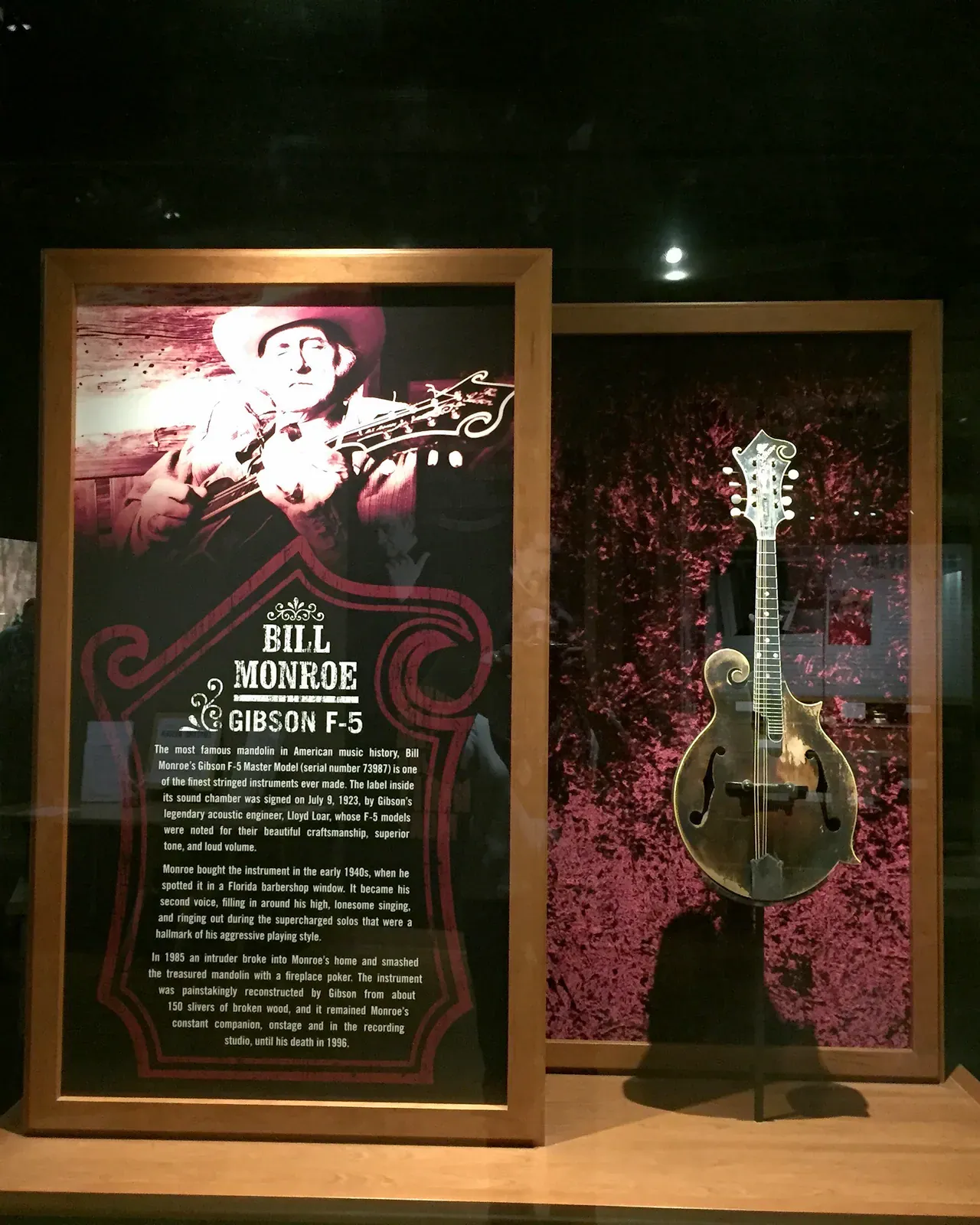
The date most historians give for the full sound is September 1946, when Monroe recorded for Columbia Records with guitarist and singer Lester Flatt, banjo player Earl Scruggs, fiddler Chubby Wise and bassist Howard Watts. “Blue Moon of Kentucky” and “Kentucky Waltz” came from that period. The records show the lonesome, high tenor lead that listeners later called the high lonesome.
String bands and brother duets, 1927-1944
Before bluegrass there was a crowded field of rural groups: old-time fiddle and banjo bands, brother harmony duos and gospel quartets, all heard on radio and 78 rpm records. None of them had Monroe’s pace or his habit of treating the band as a team of soloists. The ingredients were old. What was new was the arrangement: a hard-driven beat, tight trio harmony and a rule that every instrument could take a break.
The classic band, 1945-1959
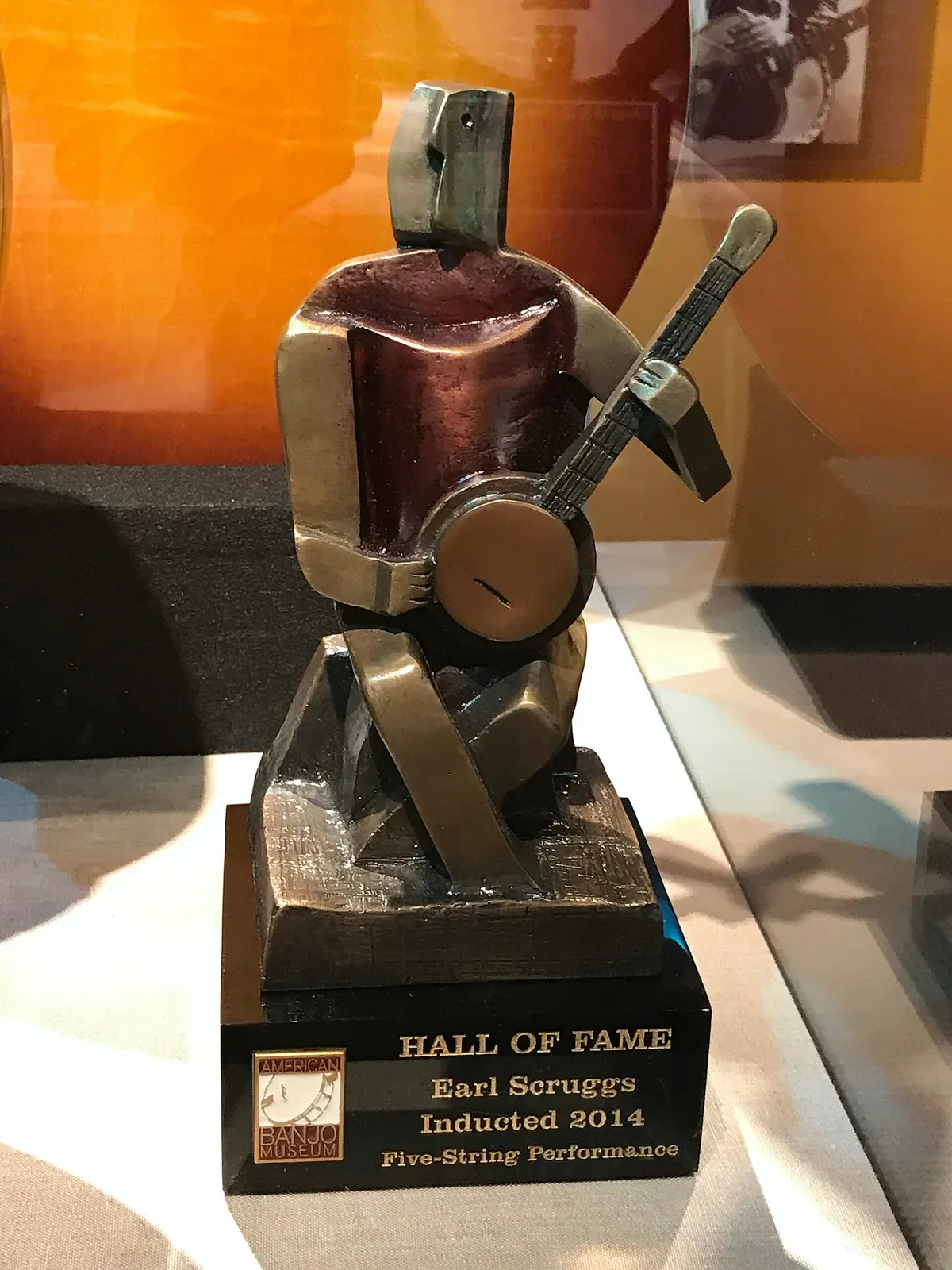
Earl Scruggs joined Monroe in 1945 and brought a three-finger banjo roll that made the instrument sound fluid and fast instead of rhythmic and clawed. That roll is the sound most people mean when they say bluegrass.
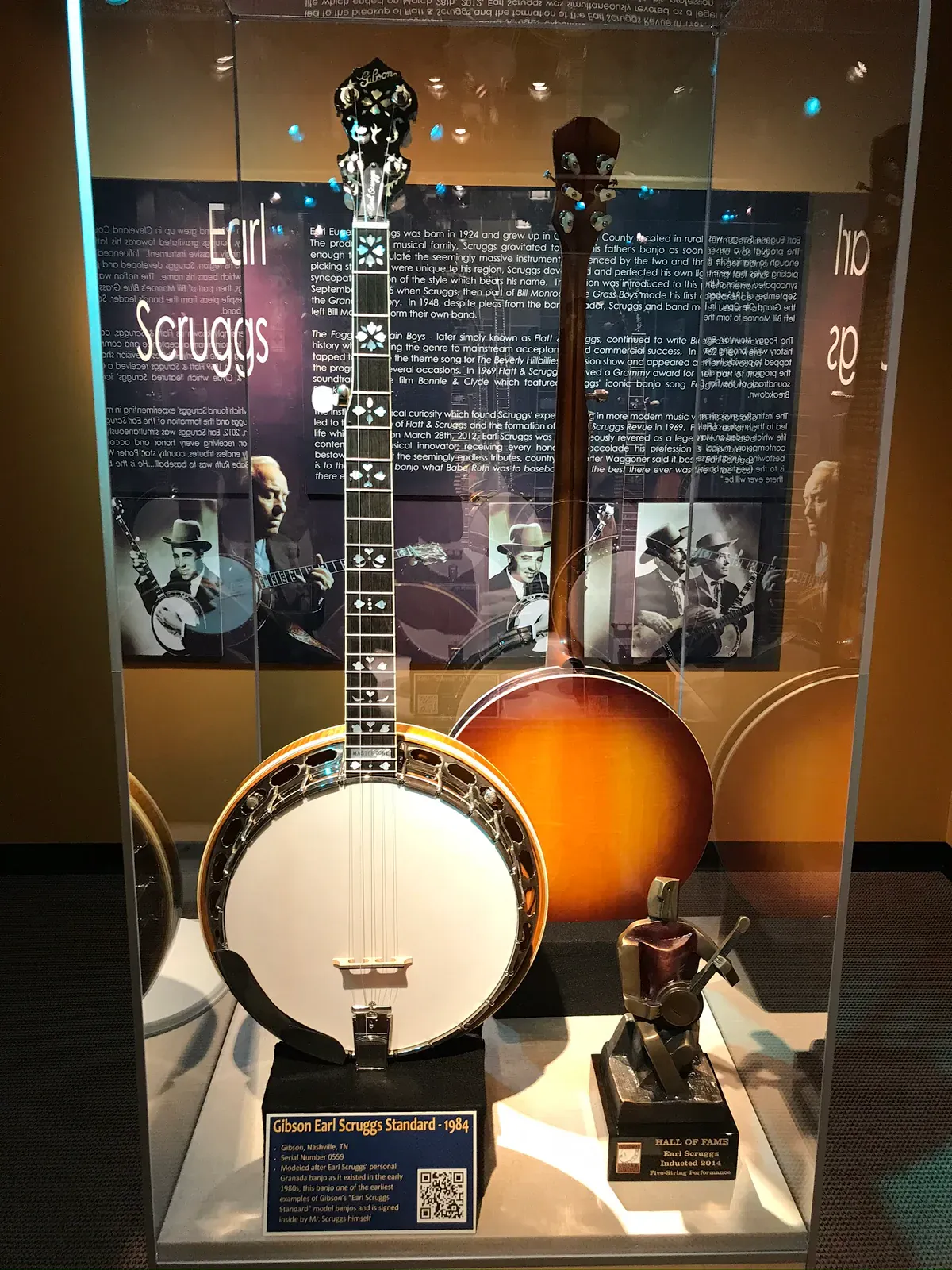
In 1948 Flatt and Scruggs left Monroe and formed the Foggy Mountain Boys, spreading the style through radio and records. Scruggs recorded “Foggy Mountain Breakdown” in December 1949, and it was released in 1950. Meanwhile the Stanley Brothers, Carter and Ralph, from southwest Virginia, brought a more mountain-flavored and gospel-tinged version. Their Columbia single “Man of Constant Sorrow” appeared in 1951.
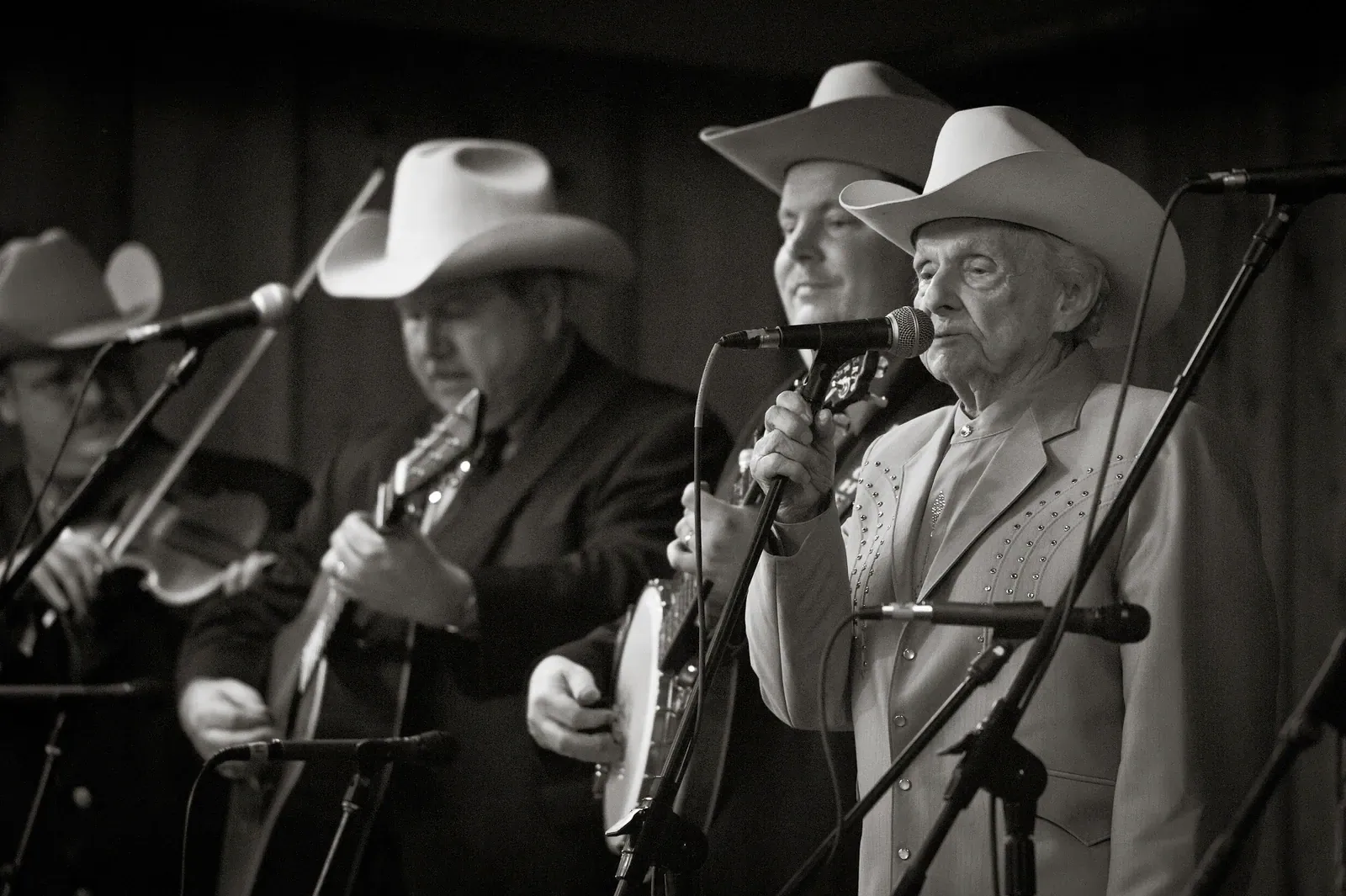
Monroe also built a home for the music. In 1951 he bought the Brown County Jamboree at Bean Blossom, Indiana, which later became a long-running bluegrass festival. Rock and roll took the radio in the mid 1950s, and Elvis’s 1954 version of Monroe’s waltz “Blue Moon of Kentucky” showed how far a Monroe song could travel in another costume. The name bluegrass for the music, not just the band, settled in the late 1950s.
Folk revival and festivals, 1960-1970
City listeners found the music in the 1960s. The Country Gentlemen, from the Washington, D.C. area, released “Country Songs, Old and New” in 1960 and started the progressive branch with new songs and a club audience. Flatt and Scruggs’s “The Ballad of Jed Clampett”, the theme from The Beverly Hillbillies, came out in 1962 and in 1963 became the first bluegrass record to reach No. 1 on the country chart.
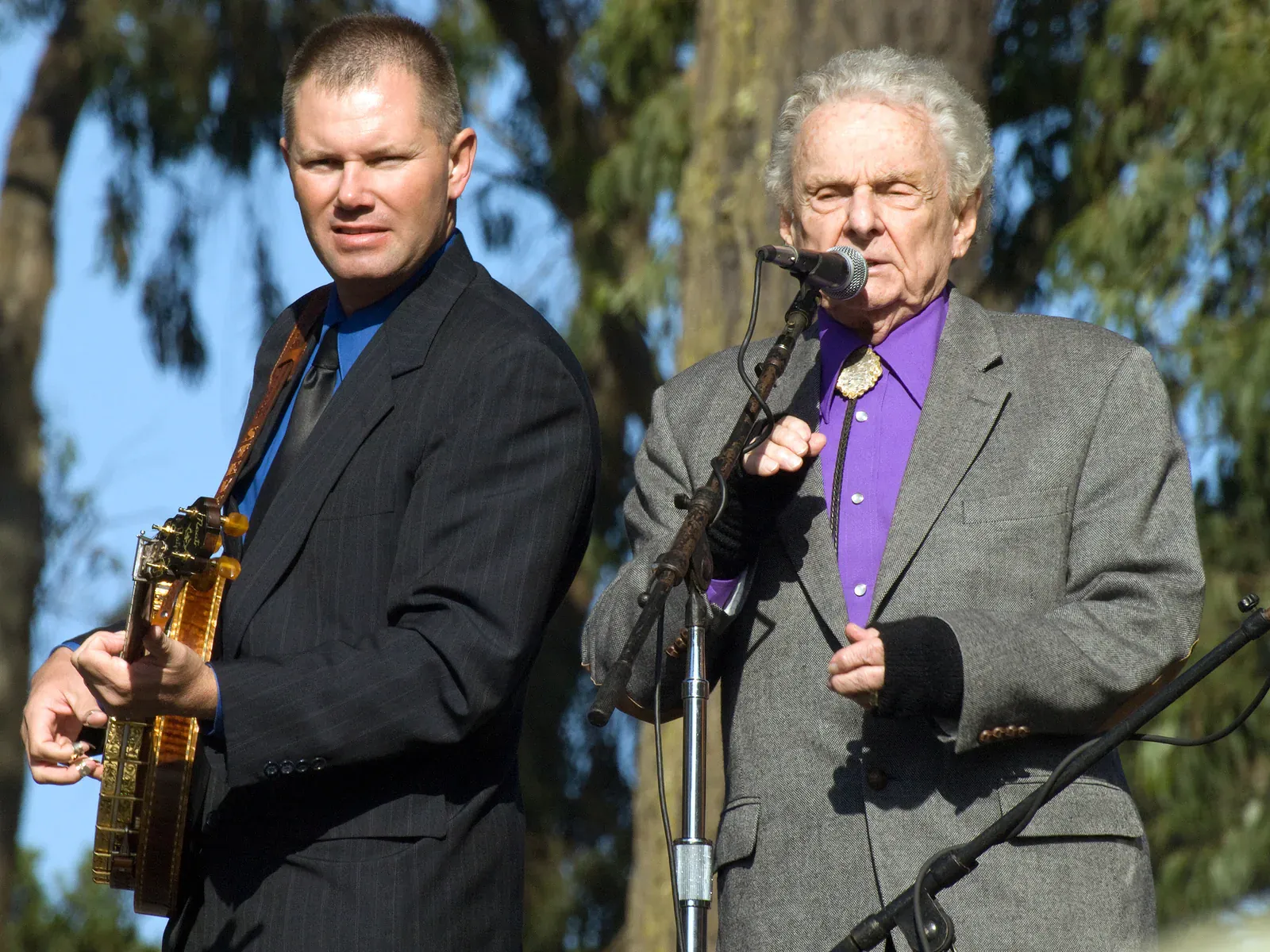
The festival came next. Promoter Carlton Haney staged the first multi-day bluegrass festival at Fincastle, Virginia, in 1965, with Monroe, the Stanley Brothers, Jimmy Martin and Doc Watson on the bill. In 1967 “Foggy Mountain Breakdown” scored the chase scenes of Bonnie and Clyde and reached the pop charts the next year. Bill Keith and Dan Bump’s banjo tuners, from 1964, let a banjo player retune strings mid-song and play melodies note for note.
Progressive and newgrass, 1971-1999
The 1970s widened the form. The Seldom Scene and New Grass Revival both formed in 1971, bringing in rock, jazz and pop songs. In 1972 the Nitty Gritty Dirt Band’s three-record “Will the Circle Be Unbroken” put Scruggs, Doc Watson and other elders in front of rock-era listeners, and Eric Weissberg and Steve Mandell’s “Dueling Banjos” reached No. 2 on the pop chart in 1973.
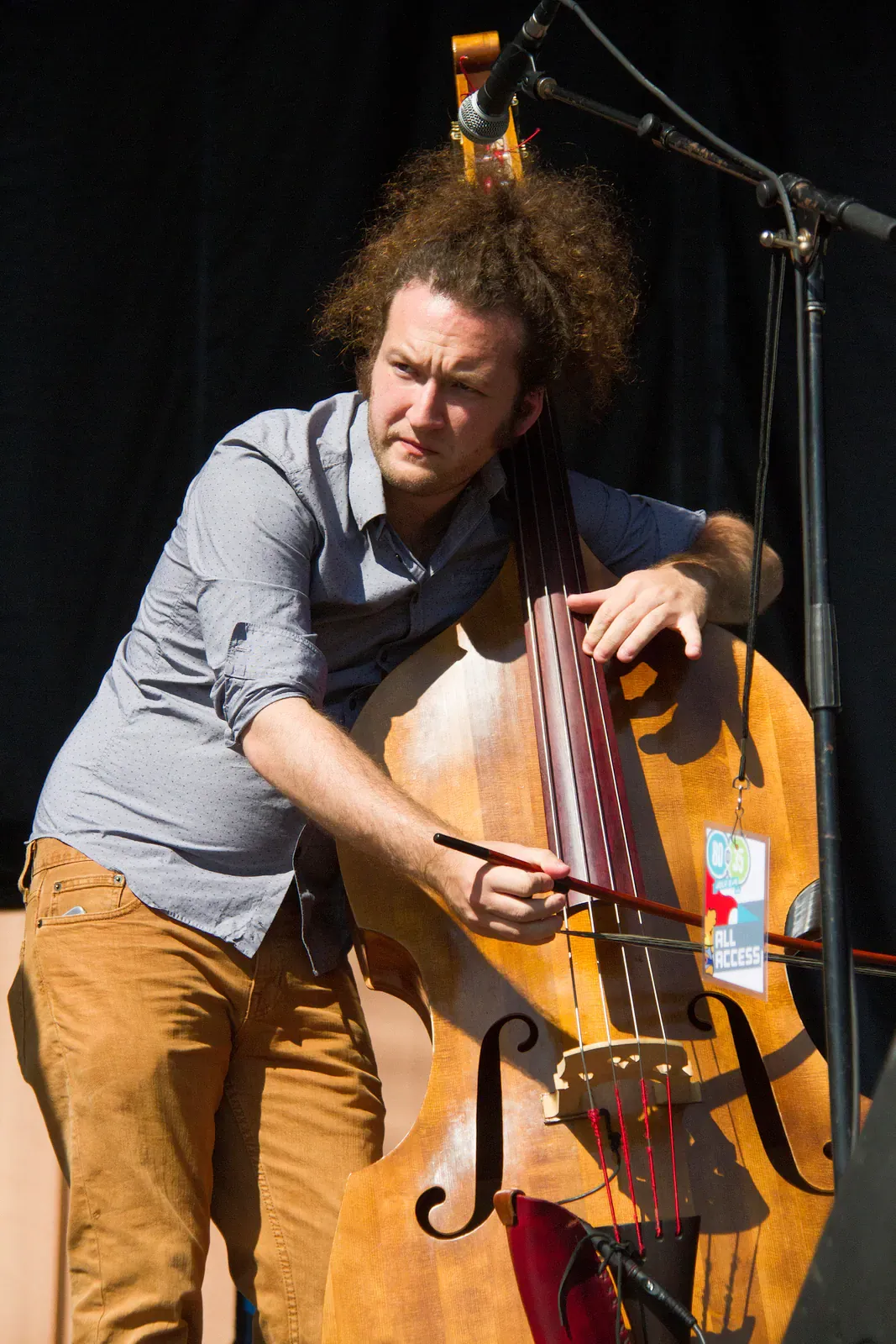
Labels grew up around the music. Rounder Records started in 1970 as a Massachusetts collective, and Sugar Hill Records began in Durham in 1978. Tony Rice’s “Manzanita” (1979) turned the flat-top guitar into a lead voice. Alison Krauss’s cover of “When You Say Nothing at All” reached No. 3 on the country chart in 1995, and in 1985 the International Bluegrass Music Association formed to organize the trade. Monroe died in September 1996.
O Brother and after, 2000-2014
The soundtrack to O Brother, Where Art Thou?, produced by T Bone Burnett, sold millions in 2000. Dan Tyminski’s lead on “I Am a Man of Constant Sorrow” for the Soggy Bottom Boys made an old song a hit, and Ralph Stanley’s unaccompanied “O Death” brought the mountain hymn tradition to a new crowd. The same year, teenage trio Nickel Creek released a debut on Sugar Hill that mixed string-band chops with modern songwriting and drew young listeners to the festival circuit.
Arena bluegrass, 2015-now
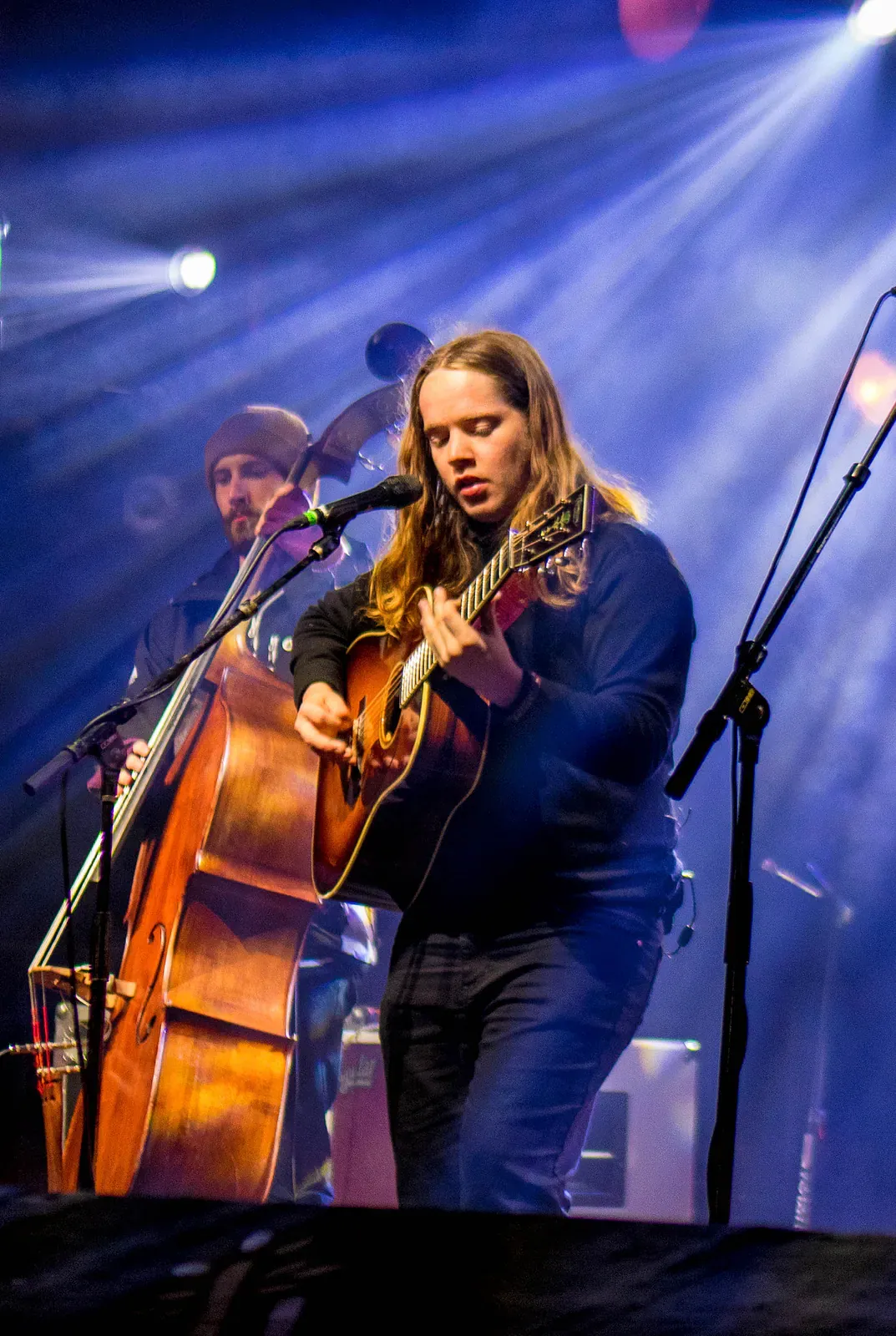
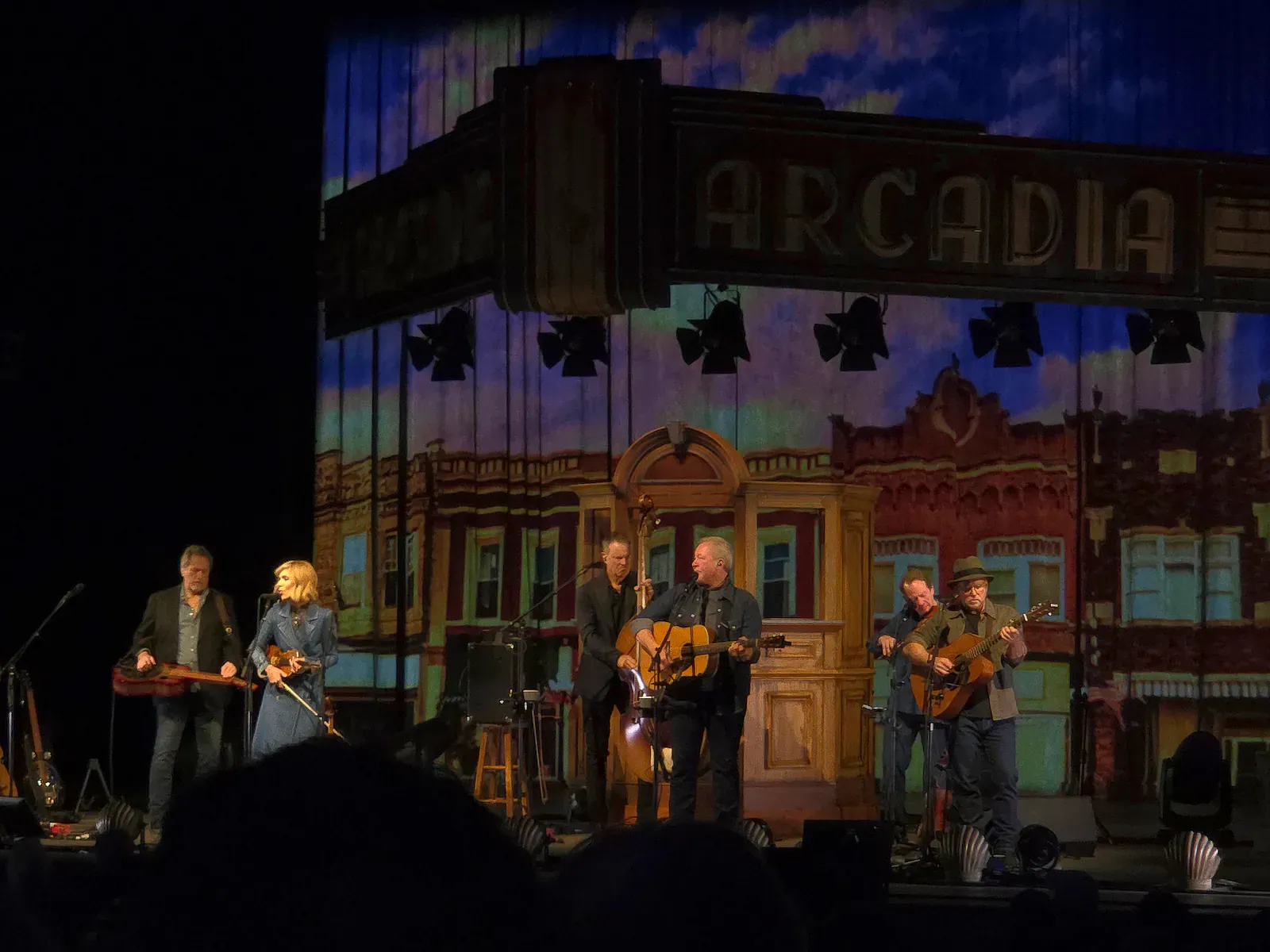
Billy Strings, a young picker from Michigan, released “Home” in 2019 on Rounder, and it won the 2021 Grammy for Best Bluegrass Album. He plays arenas and jam-band stages with flat-picked guitar solos and long improvisations. Alison Krauss and Union Station released “Arcadia” in March 2025, their first album together since 2011. Traditional bands carry on the Monroe repertoire alongside them.
Mainstream success
It never became a radio staple in its own right, and it spread in waves instead. First came radio and the Opry, then the folk-revival campuses and the festival circuit, then film: Bonnie and Clyde in 1967, Deliverance in 1972 and O Brother in 2000. Each time a tune from the style, “Foggy Mountain Breakdown”, “Dueling Banjos” or “Man of Constant Sorrow”, reached an audience that did not know the genre by name. The backlash from purists is a regular part of the story, and the arguments over how far to stretch the form, from the Country Gentlemen to newgrass to jam bands, have run since 1960.
Notable recordings
“Blue Moon of Kentucky.” Monroe wrote it as a slow waltz, and the 1946 Columbia version already had the bluegrass setup. Presley turned it into an up-tempo number in 1954 on Sun Records, and Monroe later earned writing royalties from that version.
“Foggy Mountain Breakdown.” Scruggs’s banjo showcase was cut in December 1949 and became a standard that nearly every banjo player learns. The Bonnie and Clyde film put it in front of millions.
“I’m a Man of Constant Sorrow.” The Stanley Brothers’ 1951 recording carried an old mountain lament. Fifty years later the film O Brother revived it with a new lead vocal.
Culture
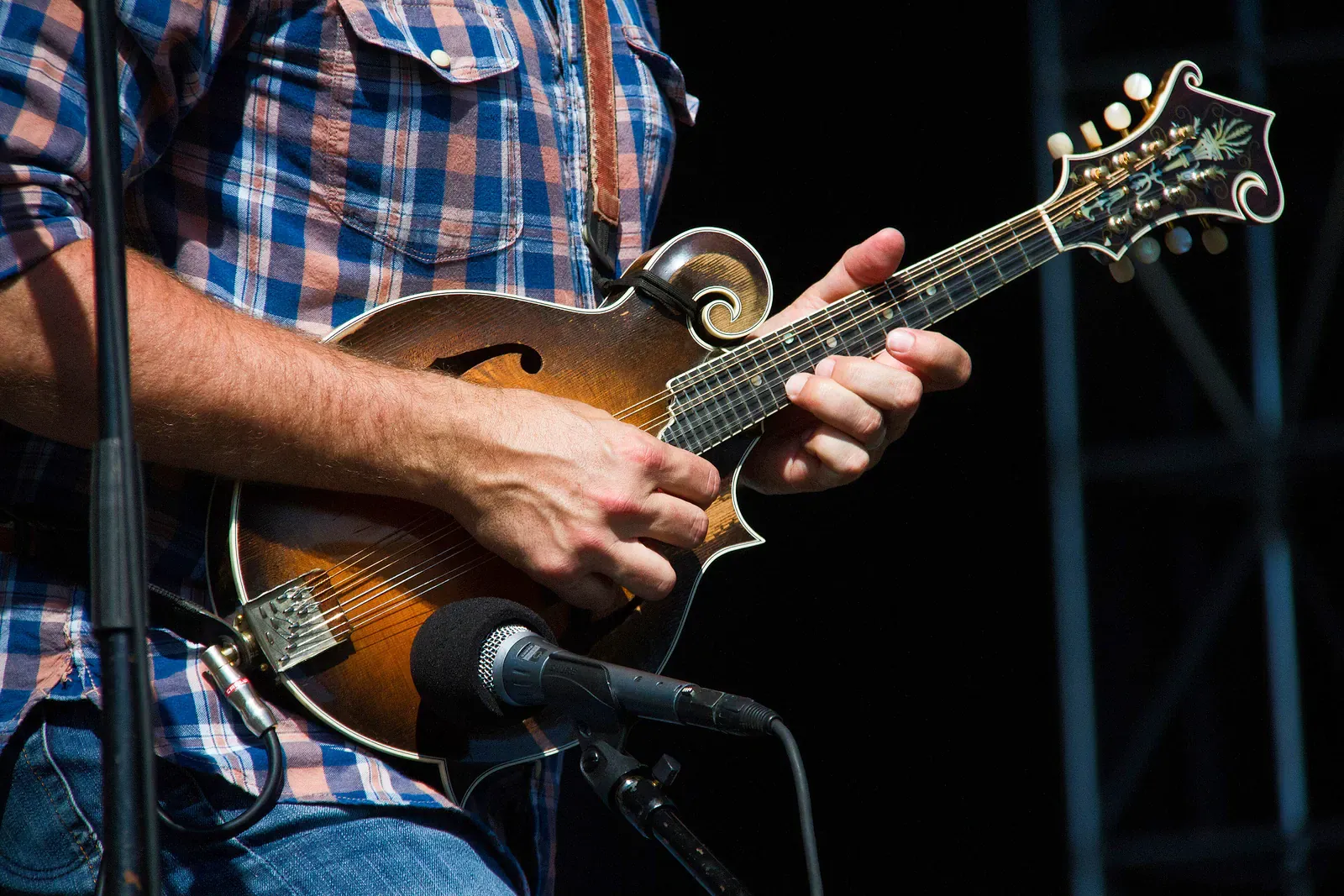
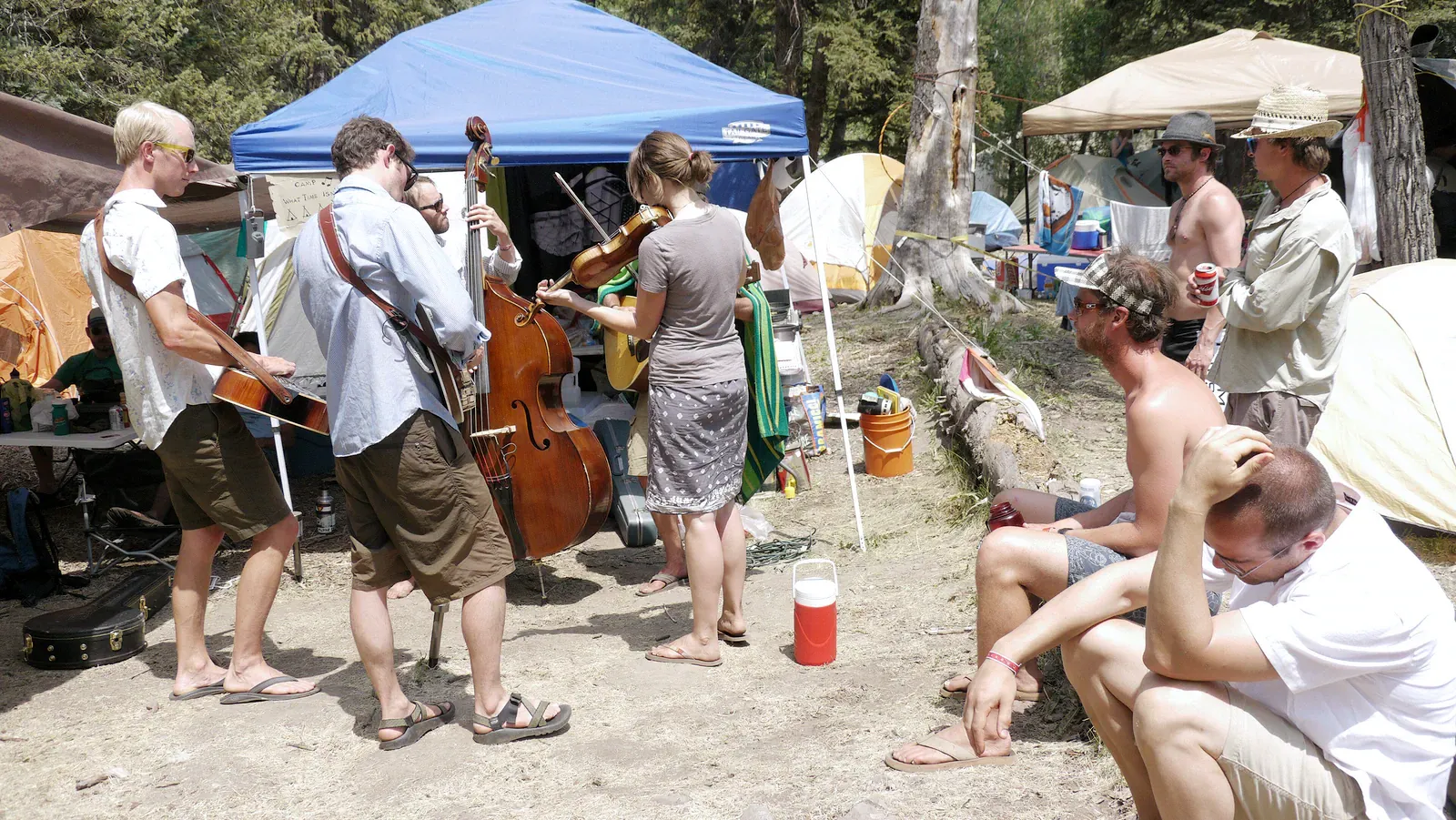
Bluegrass is a participatory scene. At festivals campers form pick-up circles and play standards through the night, a ritual known as a jam. Flatfooting and clogging, mountain step dances, are common. Monroe’s Blue Grass Boys wore suits and ties, and many bands still do.
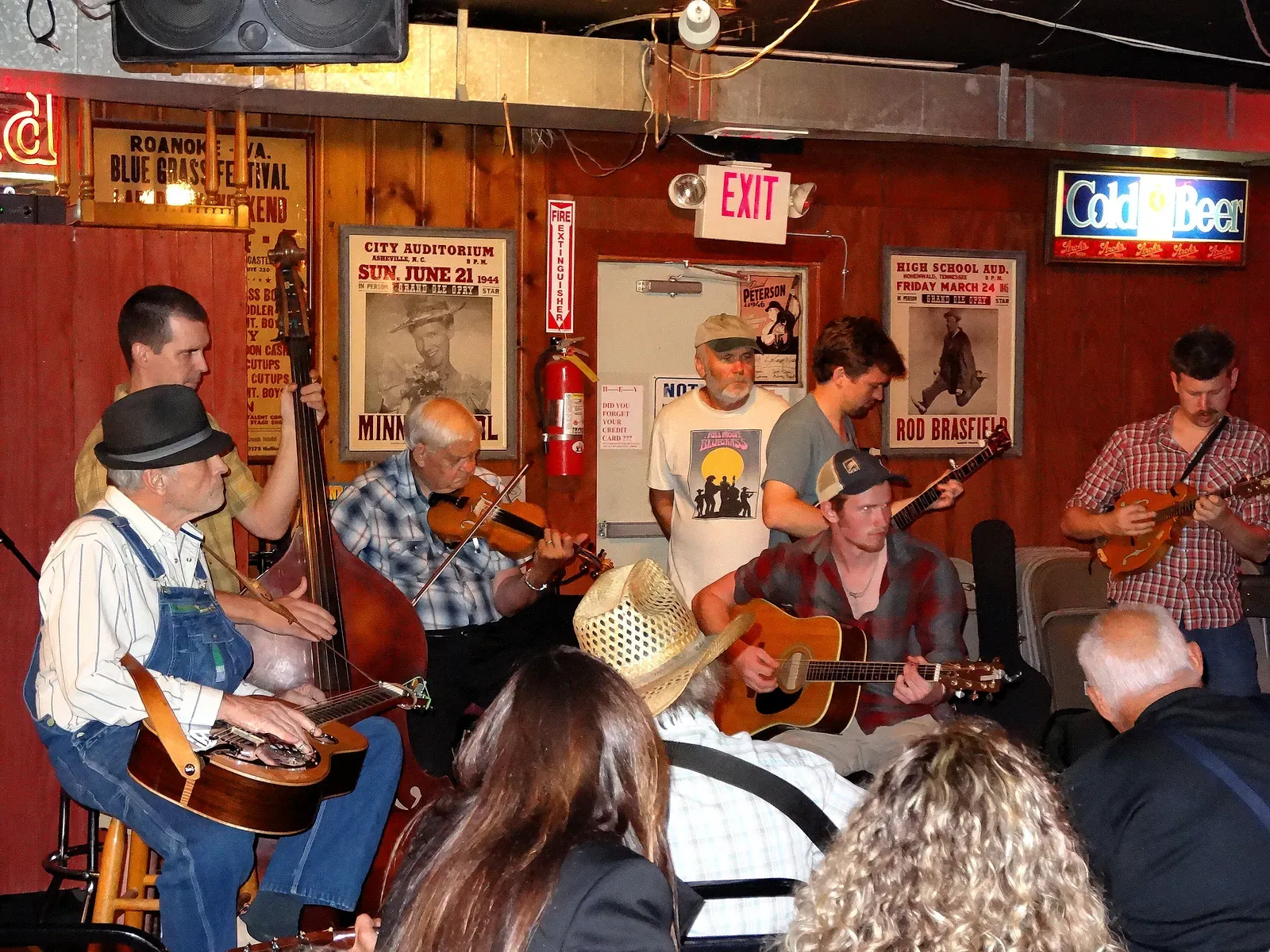
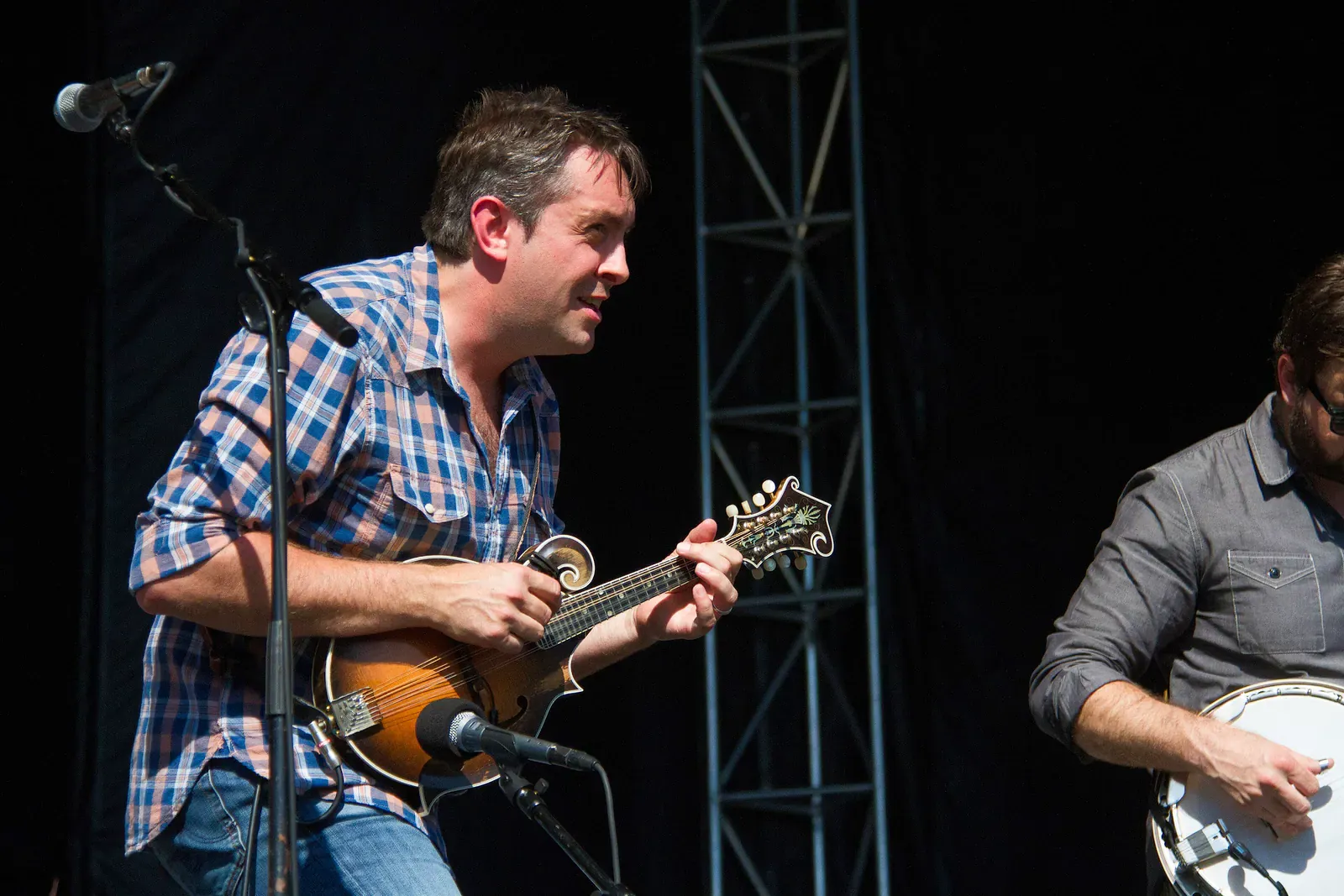
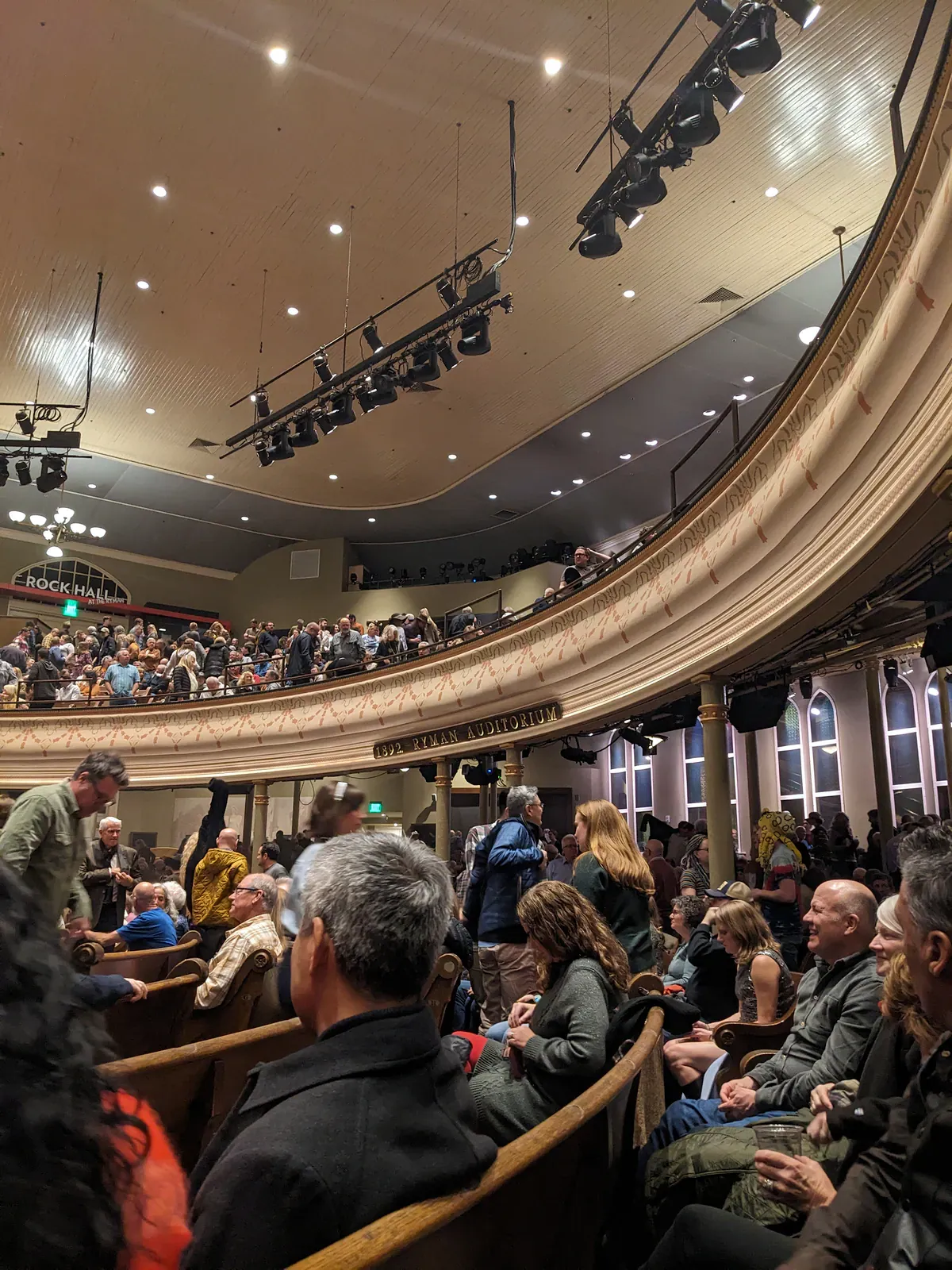
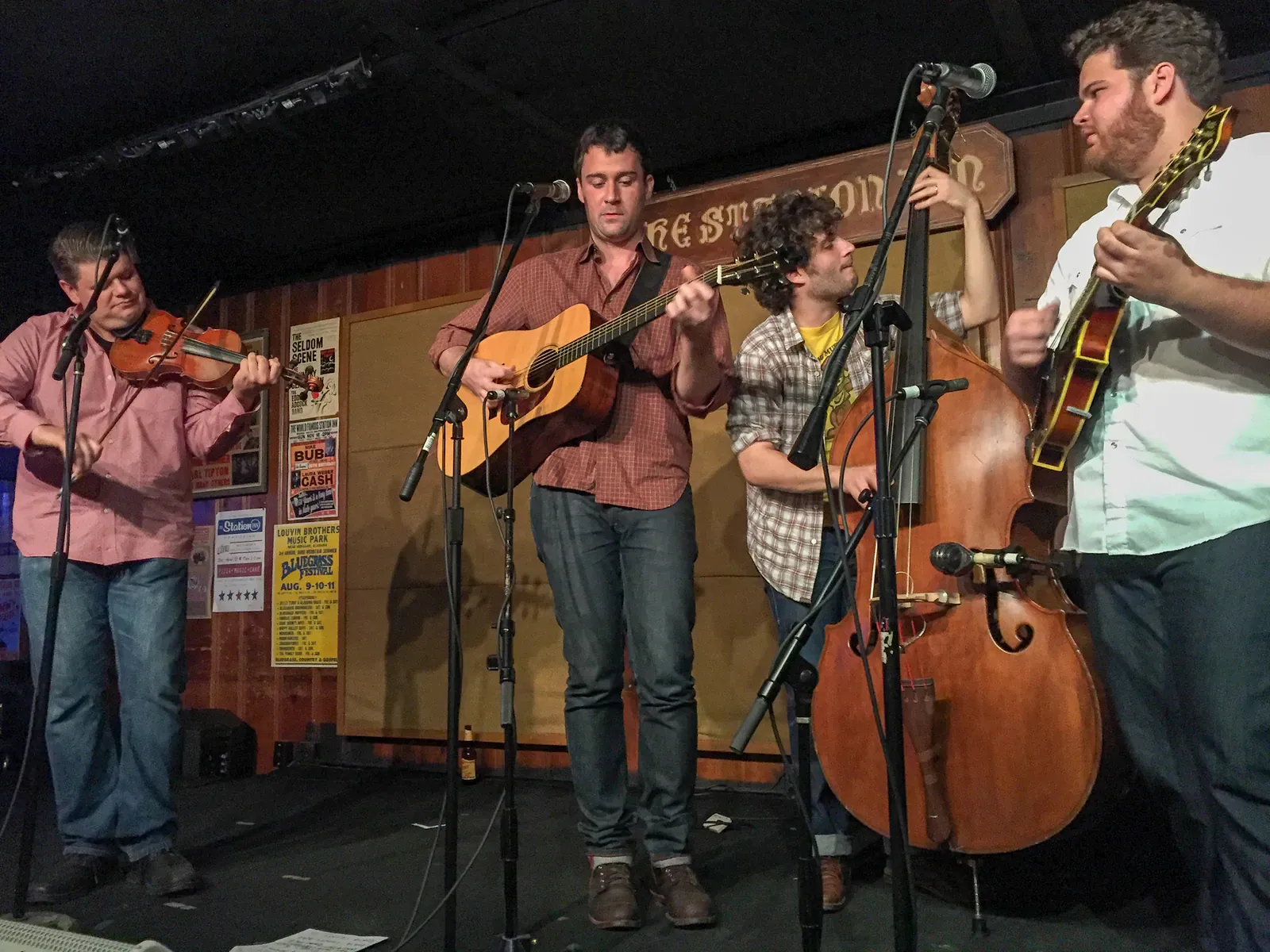
Early bands shared a single microphone, moving in for a solo and stepping back for harmony. That habit survives in the way many bands still crowd around one or two mics. The Station Inn in Nashville, opened in 1974 by a group of pickers, is the best-known small club, and the Ryman Auditorium, the Opry’s home from 1943 to 1974, is the best-known hall.
Misconceptions
Bluegrass is any country music with a banjo. It is a specific style with fixed instruments, a hard on-beat drive and breaks passed around the band. Plenty of country and old-time music uses a banjo without being bluegrass.
The banjo is a purely white mountain instrument. The banjo’s roots go back to African instruments brought by enslaved people. Scruggs’s three-finger style grew out of a regional picking tradition in North Carolina.
“Dueling Banjos” is a bluegrass song. Arthur Smith wrote it in 1954 as “Feudin’ Banjos”. Weissberg and Mandell’s 1972 recording for Deliverance made it a pop hit, and many people still use it as shorthand for the style.
Frequently asked questions
What is bluegrass music?
Bluegrass is an acoustic string-band style from the American South, built on banjo, mandolin, fiddle, guitar and upright bass, with high-tenor harmony and solo breaks. Bill Monroe’s band, joined by Earl Scruggs in 1945, defined it.
What is the difference between bluegrass and country?
Country is the wider family of American popular song. Bluegrass is a subgenre of it with all-acoustic instruments, a fast two-beat drive and instrumental breaks. For the bigger picture, read about the country family and its older cousin country blues.
Who invented bluegrass?
Bill Monroe is called the father of bluegrass. He built the style with his Blue Grass Boys in the 1940s, and Earl Scruggs’s banjo style completed it.
What are some good bluegrass songs to start with?
Try “Blue Moon of Kentucky” by Bill Monroe, “Foggy Mountain Breakdown” by Flatt and Scruggs, “Man of Constant Sorrow” by the Stanley Brothers, “Rocky Top” by the Osborne Brothers and “Home” by Billy Strings.
What is the high lonesome sound?
It is the strained, high tenor singing tied to Monroe and the mountain tradition. People now use the phrase for the whole style of bluegrass vocals.
Sound
Sound sheet
Anatomy of a track
| # | Part | Bars |
|---|---|---|
| 1 | Kickoff (banjo or mandolin) | 4 |
| 2 | Verse 1 (lead singer) | 16 |
| 3 | Chorus (trio harmony) | 8 |
| 4 | Banjo break | 16 |
| 5 | Fiddle break | 16 |
| 6 | Mandolin or guitar break | 16 |
| 7 | Final verse and chorus | 24 |
| 8 | Tag ending | 2 |
Signature sounds
- Three-finger banjo rolls
- Offbeat mandolin chop
- Lead, tenor and baritone harmony over a high tenor
- Breaks passed around the band
- Guitar bass runs between chords
- All-acoustic instruments, played around a single microphone
Techniques
- Three-finger banjo roll
- Mandolin chop
- Trading breaks
- G run
- Single-microphone staging
Keys and modes
G major. The default rhythm key, built on open G banjo and guitar shapes
A major (capo 2). Second most common key, played with G shapes and a capo on the second fret.
Tuning
Open G banjo tuning (gDGBD), 12-TET
Vocals
High lonesome tenor lead over close two to four part harmony, often stacked as baritone, lead and tenor
Scenes
Where it happened
Where and when the sound lived: one bar per city on a shared timeline.
North America
Active scenes
Peak 6, 1978-1989
The Grand Ole Opry made Monroe's band a national act; later the Station Inn became the music's home club.
The Stanley Brothers and Flatt and Scruggs worked the radio stations of the Virginia-Tennessee border.
The Country Gentlemen and later the Seldom Scene built a club and college audience around the capital.
New Grass Revival formed here and pushed bluegrass toward rock and jazz.
The Colorado festival, begun in 1974, became a showcase for progressive and jam-friendly acts.
Sugar Hill Records started here in 1978 and recorded a generation of bluegrass artists.
Venues and places
Nashville, 1943 to today. Home of the Grand Ole Opry from 1943 to 1974, where Monroe and the Foggy Mountain Boys played.
Bean Blossom, 1951 to today. Monroe bought the Indiana jamboree in 1951; its festival is called the longest-running in bluegrass.
Fincastle, 1965 to 1965. Site of the first multi-day bluegrass festival, over Labor Day weekend 1965.
Nashville, 1974 to today. A small Nashville club opened by a group of pickers, known as the home of bluegrass in the city.
Telluride, 1974 to today. Colorado festival begun in 1974 that grew into a major stop for progressive bands.
Wilkesboro, 1988 to today. Doc Watson's festival, named for his son Merle, draws crowds above 75,000 each April.
Culture
Culture markers
- Suits, ties and hats
Monroe's Blue Grass Boys dressed formally on stage, and many bands still do.
Fashion - Flatfooting and clogging
Mountain step dances remain common at festivals.
Dance - Parking-lot jams
Festival campers gather in pick-up circles to play standards through the night.
Ritual - High lonesome
A phrase for the keening vocal sound, now also used for the style itself.
Slang - One microphone
Early bands moved in and out of a single mic, balancing the mix by stepping closer for solos.
Ritual
Media
Key media
- 1939Grand Ole Opry
by WSM. The radio show that carried Monroe's band to a national audience.
Radio - 1966Bluegrass Unlimited
by Pete Kuykendall. The monthly magazine that has covered the music since 1966.
Zine - 1967Bonnie and Clyde
by Arthur Penn. Its chase scenes made Foggy Mountain Breakdown known worldwide.
Film - 1972Will the Circle Be Unbroken
by Nitty Gritty Dirt Band. A triple album that brought the elder players to rock-era listeners.
Compilation - 1972Deliverance
by John Boorman. Its banjo duel became the most famous bluegrass tune in pop.
Film - 1985Bluegrass: A History
by Neil V. Rosenberg. The standard scholarly history of the music.
Book - 2000O Brother, Where Art Thou?
by Joel and Ethan Coen. The film and its T Bone Burnett soundtrack set off a roots revival.
Film
Glossary
Terms on this page
A solo instrumental turn inside a song, passed from player to player.
The percussive offbeat mandolin stroke that acts as the band's backbeat.
The strained, high tenor singing style tied to Monroe and the mountain tradition.
An informal circle of pickers who play standards together, a festival ritual.
The short instrumental intro that sets the key and tempo.
The 1970s label for bluegrass mixed with rock, jazz and pop, from New Grass Revival.
A repeating banjo picking pattern, such as the forward roll, in Scruggs style.
Country family