English folk music
English folk music is the traditional song, dance and instrumental music of England, from medieval ballads and morris dance to the revivals of the 20th century.
England, 1882
Folk family
Born
1882
England
Subgenres
6
Documented branches
Links
16
Genres it drew on or shaped
Tempo
65-145 BPMLineage
Family tree
Grew out of
Pushed back against
England
English folk music
Led to (12)
Timeline
Era by era
From the first sparks to today. Select a dot to read the story behind it.
- Collectors and societies
1882 to 1944
- Clubs, radio and the second revival
1945 to 1964
- Folk baroque and electric folk
1965 to 1976
- Festivals and survival
1977 to 1999
- Awards and new folk
2000 to today
Eras
Moments
- 1 Collectors and societies, 1882 to 1944
- 2 Clubs, radio and the second revival, 1945 to 1964
- 3 Folk baroque and electric folk, 1965 to 1976
- 4 Festivals and survival, 1977 to 1999
- 5 Awards and new folk, 2000 to today
1882
Collectors and societies
Child prints the ballads, Sharp and Broadwood collect songs and dances, and societies and schools turn rural repertoire into a national heritage.
- 1882Child begins publishing his ballad collectionThe English and Scottish Popular Ballads (1882-92) fixes the numbered Child ballads that later revival singers draw on.
- 1898Folk Song Society foundedLucy Broadwood and Frank Kidson found the first English society for collecting traditional song.
- 1899Sharp sees Headington Quarry morris dancersOn Boxing Day Cecil Sharp notes tunes from the fiddler William Kimber, sparking interest in the dances.
- 1903Sharp hears The Seeds of Love in SomersetCecil Sharp notes a song from the gardener John England, the start of his Somerset collecting.
- 1906Grainger records Joseph Taylor on wax cylinderThe Lincolnshire farm worker is the first English folk singer to be recorded; HMV issues nine of his songs in 1908.
- 1911English Folk Dance Society foundedSharp creates a society to teach and perform English dances.
- 1939Topic Records foundedThe Workers' Music Association label becomes the main home of recorded English folk.
around 1945
Clubs, radio and the second revival
BBC field recordings, skiffle and MacColl's Ballads and Blues club start a folk club circuit of 300 rooms by the mid-1960s.
- 1952BBC begins As I Roved OutThe Home Service series (1952-58) broadcasts field recordings of traditional singers.
- 1953MacColl and Lloyd launch the Ballads and Blues clubThe London club becomes the Singers Club and a model for folk clubs across Britain.
- 1956Skiffle craze brings guitars to Britain's youthLonnie Donegan's Rock Island Line sparks the skiffle boom (1956-58) that feeds the first folk clubs.
- 1963The Iron Muse on TopicThe album of industrial songs sells well enough to secure the label's finances.
- 1964Collins and Graham record Folk Roots, New RoutesJazz-inflected guitar behind English songs is a first for the revival.
1965
Folk baroque and electric folk
Guitarists, family harmony groups and folk-rock bands bring ballads to festivals, the album charts and the singles chart.
- 1965Cambridge Folk Festival beginsKen Woollard opens the festival at Cherry Hinton Hall; Paul Simon plays as a late addition.
- 1966Scarborough Fair credited to Simon and GarfunkelMartin Carthy's arrangement is released without credit; the two meet on stage in 2000.
- 1967Pentangle and Fairport Convention formTwo London groups start the folk baroque and folk-rock strands of the revival.
- 1969Fairport Convention release Liege and LiefElectric instruments meet traditional ballads; the 2006 BBC poll names it the most influential folk album.
- 1969Steeleye Span formAshley Hutchings leaves Fairport to start a group built on traditional songs.
- 1973Gaudete reaches the UK top 15An unaccompanied Latin carol by Steeleye Span peaks at number 14 on the UK Singles Chart.
- 1975All Around My Hat reaches number 5Steeleye Span's biggest hit lifts the album to number 7 in the UK.
1977
Festivals and survival
Cropredy, Sidmouth and Cambridge sustain the scene, while Nic Jones, Oysterband and others keep traditional repertoire alive after the chart moment fades.
- 1979Fairport's Cropredy Convention beginsThe Oxfordshire reunion party grows into one of the largest folk gatherings in Britain.
- 1982Nic Jones is badly hurt in a car crashThe accident ends his touring career two years after Penguin Eggs.
2000
Awards and new folk
The BBC Radio 2 Folk Awards, Kate Rusby, Seth Lakeman and the eleven-piece Bellowhead bring a new generation to old songs.
- 2000BBC Radio 2 Folk Awards beginAn annual awards ceremony gives the scene a mainstream stage.
- 2005Seth Lakeman's Kitty Jay is shortlisted for the Mercury PrizeA fiddle-driven Dartmoor folk album reaches the wider public.
- 2016Shirley Collins returns with LodestarHer first album in 38 years follows a long break caused by dysphonia.
Listening path
Anthems
The records that built the sound, grouped by the part they played. Thumbnails come from YouTube; the player loads only when you press play.
- 01
Martin Carthy, 1965 · Topic Records
Carthy's guitar arrangement of the old ballad set the template for English folk guitar and was the source Paul Simon learned.
Start hereOrigin - 02
Pentangle, 1969 · Transatlantic Records
Used as the BBC drama theme Take Three Girls, it brought folk, jazz and odd metres to a TV audience.
Breakthrough - 03
Steeleye Span, 1972 · #14 UK Singles, 1973 · Chrysalis Records
An unaccompanied Latin carol that gave the band its first hit when reissued for Christmas 1973.
Breakthrough - 04
Steeleye Span, 1975 · #5 UK Singles, 1975 · Chrysalis Records
A traditional song with rock backing that took English folk rock to the UK top five.
Start hereBreakthrough - 05
Shirley Collins, 1964 · Decca Classics
Collins and Davy Graham put an English song over modal jazz guitar, a sound that defined 1960s folk baroque.
Anthem - 06
The Watersons, 1965 · Topic Records
Four voices without instruments make a spring ritual song a revival staple.
Anthem - 07
Fairport Convention, 1969 · Island Records
An electric treatment of a Child ballad that became the template for British folk rock.
Anthem - 08
Anne Briggs, 1971 · Topic Records
Briggs taught the song to Bert Jansch, whose version reached Led Zeppelin's Black Mountain Side.
Anthem - 09
Nic Jones, 1980 · Topic Records
Open-tuned guitar and clear voice on a sailor's ballad that later spread to Bob Dylan's repertoire.
Anthem - 10
Simon & Garfunkel, 1966 · Columbia Records
Paul Simon's reworking carried the Carthy arrangement to a worldwide pop audience.
Crossover - 11
Roberta Flack, 1972 · #1 Billboard Hot 100, 1972 · Atlantic Records
Ewan MacColl's love song written in 1957 became a US number one in Flack's soul version.
Crossover - 12
Kate Rusby, 2003
A modern English folk song written by Rusby that became a signature for the new generation.
Revival - 13
Seth Lakeman, 2004
A driving fiddle-and-tenor-guitar telling of a Dartmoor legend that reached the Mercury shortlist.
Revival - 14
Bellowhead, 2010 · Navigator Records
A sea shanty played by an eleven-piece band with brass, the sound of the 2010s folk revival.
Start hereRevival
Facts
| Family | Folk |
| Origin | England, United Kingdom |
| Emerged | Medieval onwards |
| Status | Active |
| Tempo | 65 to 145 BPM |
| Meter | 4/4, 3/4, 6/8 |
| Subgenres | 6 |
English folk music is the traditional song, dance and instrumental music of England, handed down by ear and in cheap print from the Middle Ages and gathered and reinvented in revivals from the 1880s. Its core is the narrative ballad, the carol, the dance tune and the ritual dance.
It belongs to the folk family and shares ballads with American folk music and Celtic music.
Origins
The music has no single starting point. Ballads, carols tied to the farming and church year, wassailing songs, mumming plays and dances with bells, sticks or swords passed between neighbours for centuries, sold on broadsides from the 16th to the 19th century and kept alive by farm workers, miners and sailors.
The tradition became a named genre when outsiders wrote it down. From 1882 Francis James Child published The English and Scottish Popular Ballads, which fixed the 305 numbered Child ballads that revival singers still draw on.
Collectors and societies, 1882-1944
Lucy Broadwood and Frank Kidson helped found the Folk Song Society in 1898. On Boxing Day 1899 Cecil Sharp saw the Headington Quarry morris dancers and noted tunes from the fiddler William Kimber, and in 1903 he took down “The Seeds of Love” in Somerset. Percy Grainger recorded the Lincolnshire farm worker Joseph Taylor on wax cylinder in 1906, the first English folk singer on record.
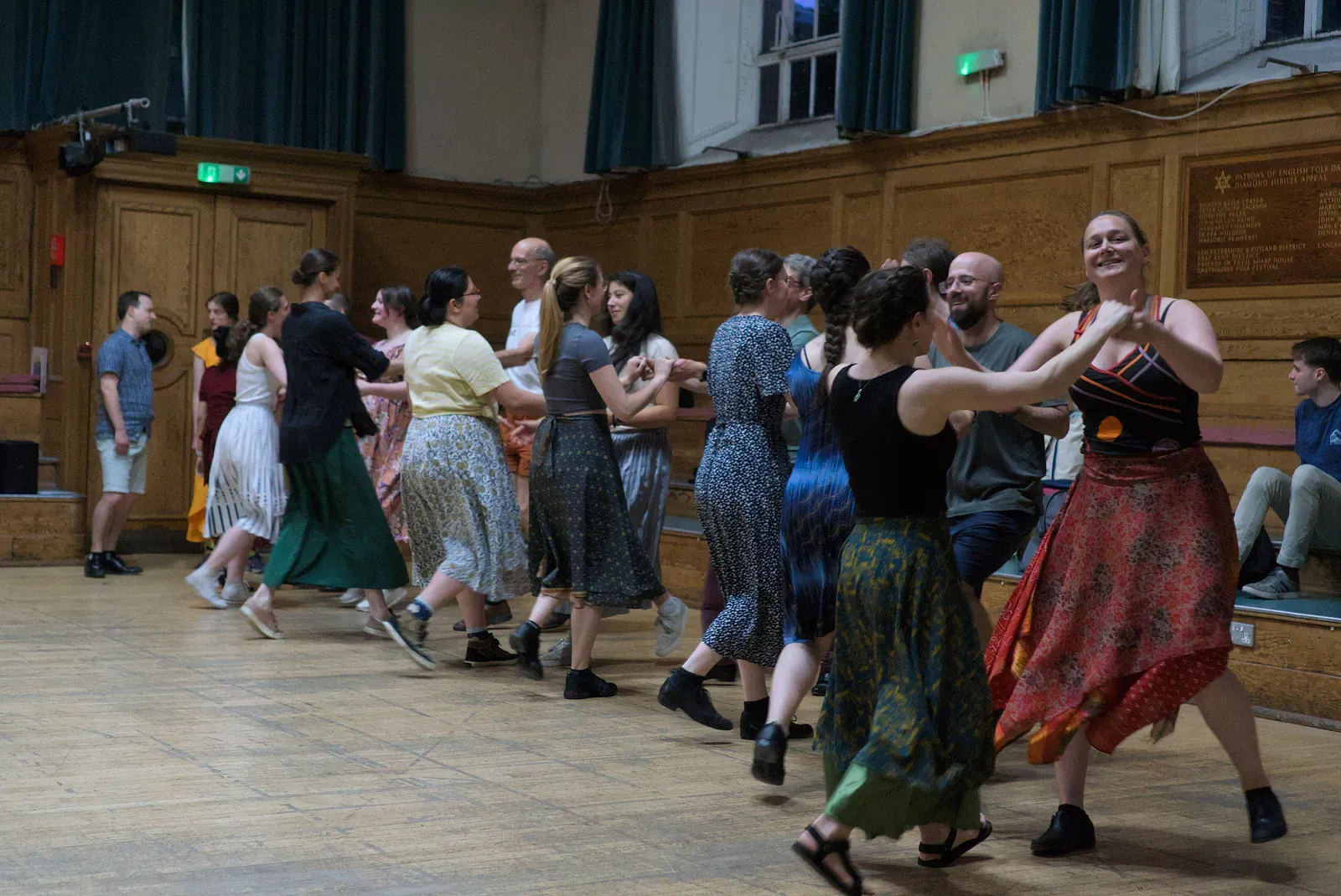
Sharp founded the English Folk Dance Society in 1911. Topic Records began in 1939 as a Workers’ Music Association label and later became the main home of recorded English folk.
Clubs, radio and the second revival, 1945-1964
After the war the revival moved to pubs and the air. The BBC series As I Roved Out ran from 1952 to 1958 and broadcast field recordings of rural singers. Ewan MacColl and A. L. Lloyd launched the Ballads and Blues club in London in 1953, later the Singers Club. Lonnie Donegan’s “Rock Island Line” set off the skiffle boom of 1956-58, and the Sidmouth festival began in 1955.
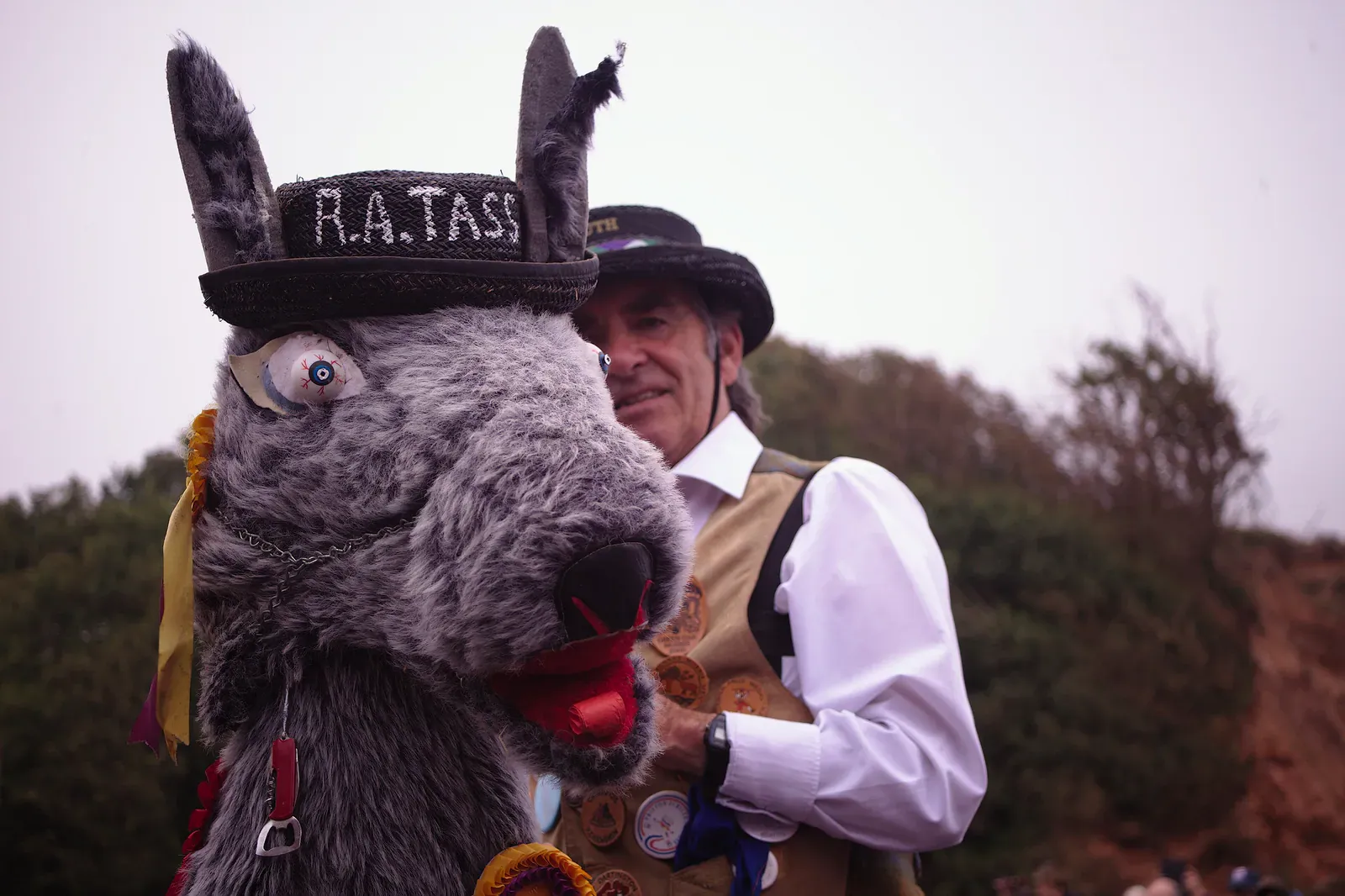
The Iron Muse (1963) gathered industrial songs on Topic, and in 1964 Shirley Collins and Davy Graham made Folk Roots, New Routes, setting English songs over jazz and modal guitar.
Folk baroque and electric folk, 1965-1976
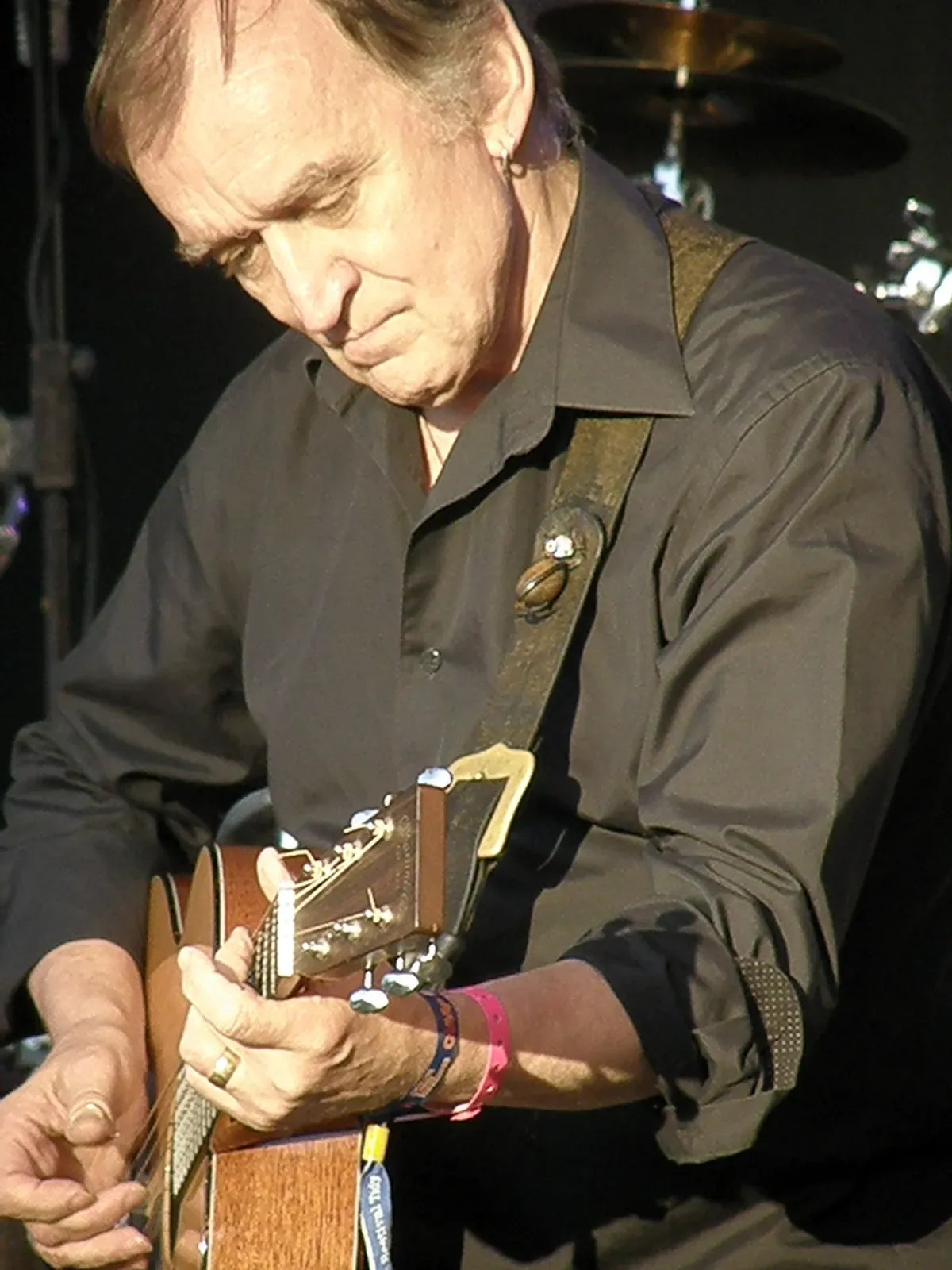
Martin Carthy’s 1965 debut set the percussive guitar style and carried an arrangement of “Scarborough Fair” that Paul Simon learned. The Watersons of Hull, unaccompanied family singers, released Frost and Fire the same year, and the Cambridge Folk Festival opened at Cherry Hinton Hall.
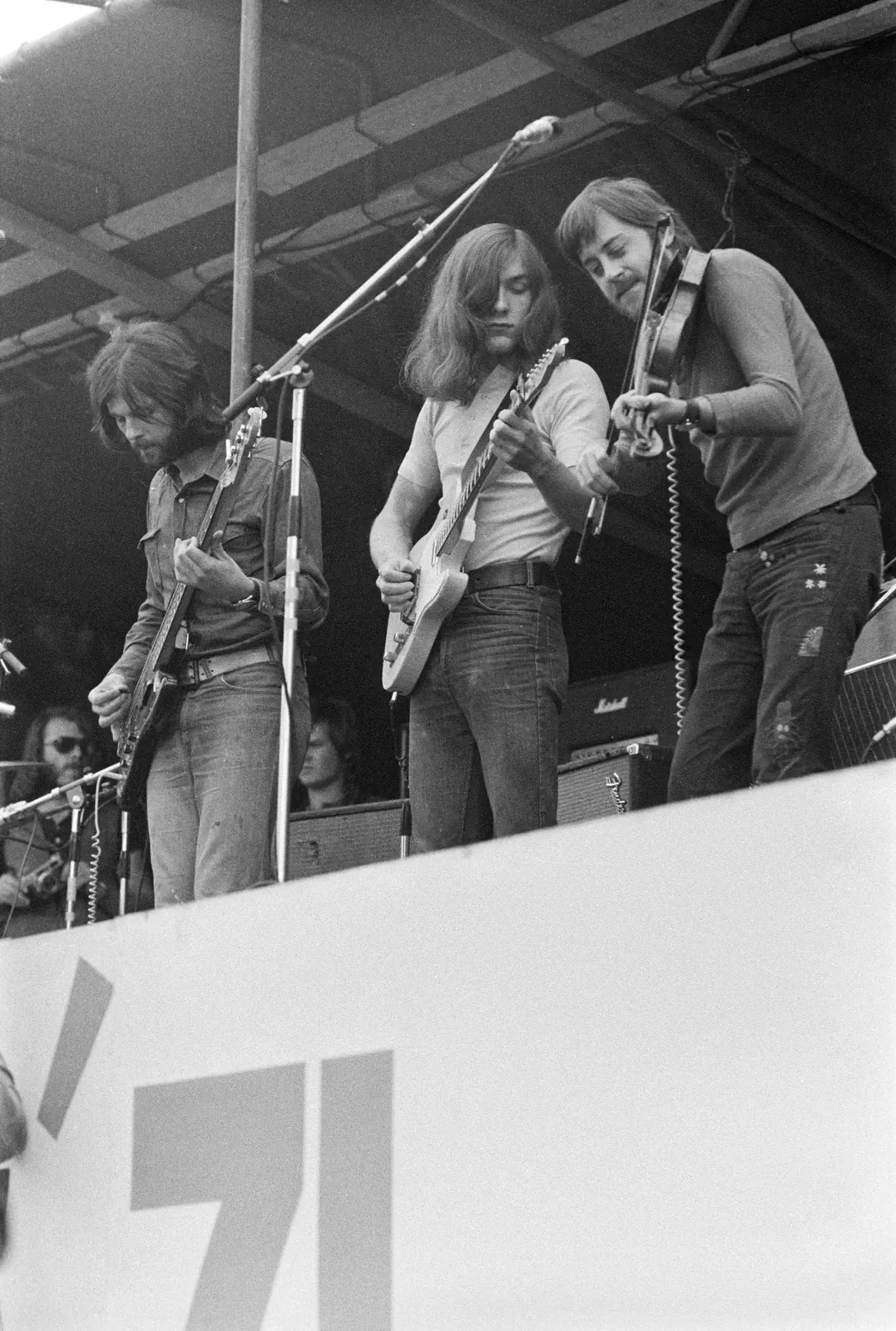
In 1967 Pentangle and Fairport Convention formed in London, one group fusing folk, jazz and blues, the other electrifying songs. Fairport’s Liege and Lief (1969) put electric instruments under traditional ballads on Island Records and defined British folk rock; a 2006 BBC poll named it the most influential folk album. Ashley Hutchings left Fairport the same year to start Steeleye Span. Pentangle’s Basket of Light, on Transatlantic Records, reached number 5 on the UK albums chart.
Festivals and survival, 1977-1999
Chart success faded but the festivals held. Fairport’s Cropredy reunion party began in 1979 and grew into one of the largest folk gatherings in Britain. Nic Jones released Penguin Eggs in 1980; a car crash in 1982 ended his touring career, while polls later ranked the album second only to Liege and Lief.
Awards and new folk, 2000 onwards
The BBC Radio 2 Folk Awards began in 2000. Kate Rusby, whose “Underneath the Stars” (2003) became her signature, and Seth Lakeman, whose independently released Kitty Jay was shortlisted for the 2005 Mercury Prize, reached a wider public. Bellowhead, an eleven-piece band with brass, made Hedonism (2010) at Abbey Road. Shirley Collins returned in 2016 with Lodestar, her first album in 38 years, after dysphonia had silenced her voice.
Characteristics
Most traditional songs are strophic: one short tune repeated through many verses, sung in a plain regional voice, often unaccompanied. Melodies lean on the Dorian and Mixolydian modes. Dance tunes are built from repeated eight-bar parts in 4/4, 3/4 or 6/8. Close-part harmony, as in the Watersons and the Copper family, is the main group technique.
Instruments and production
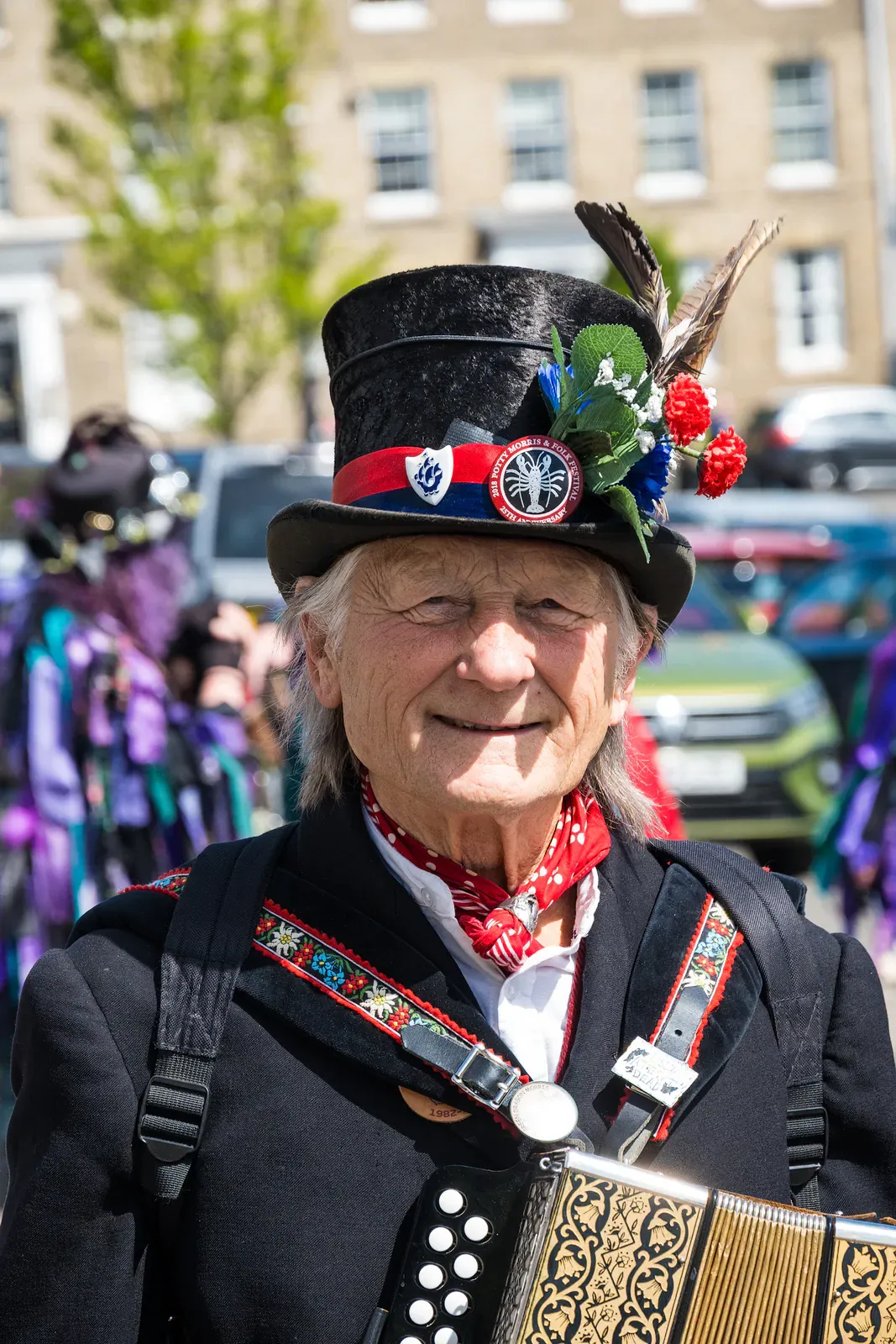
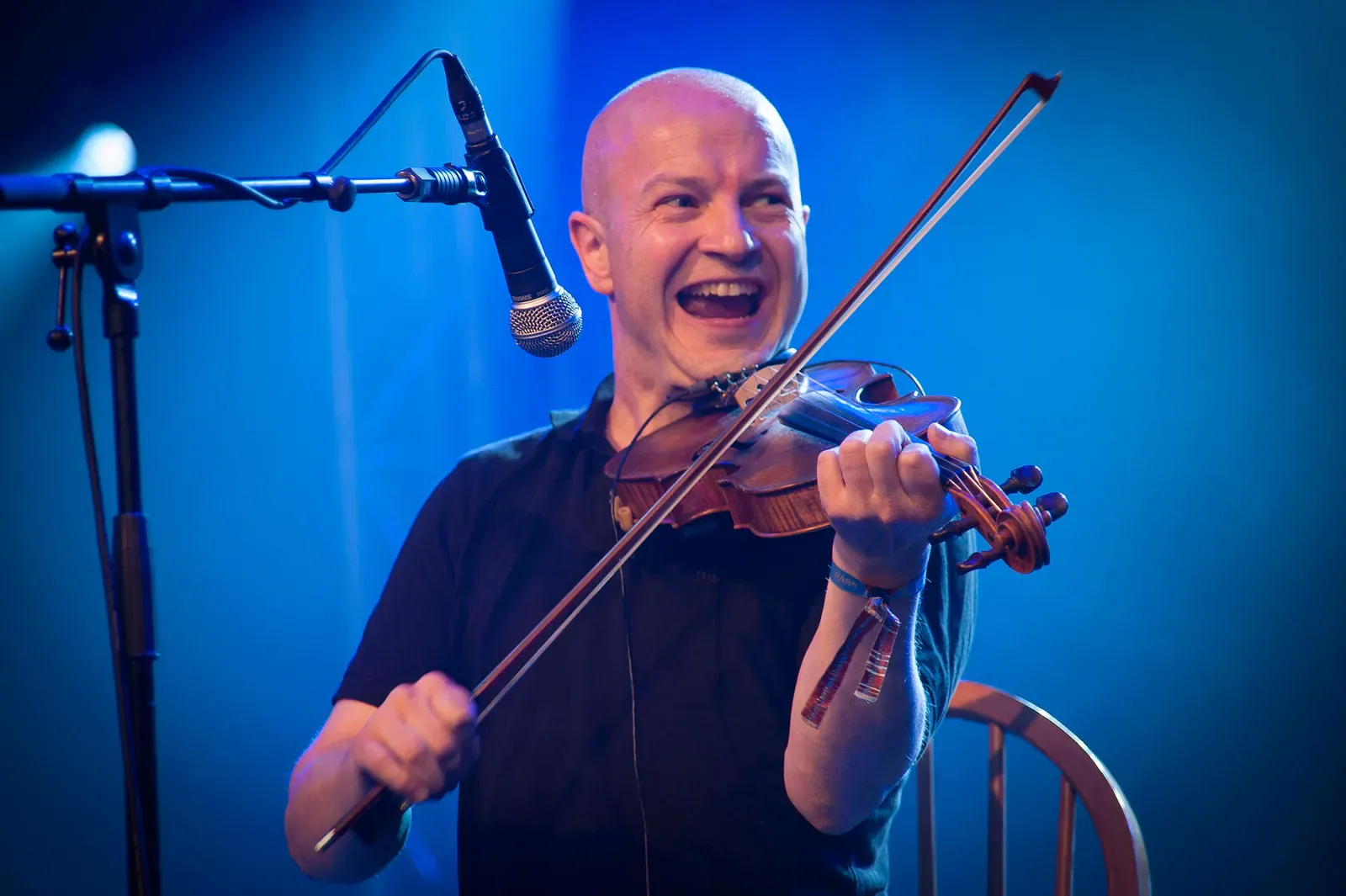
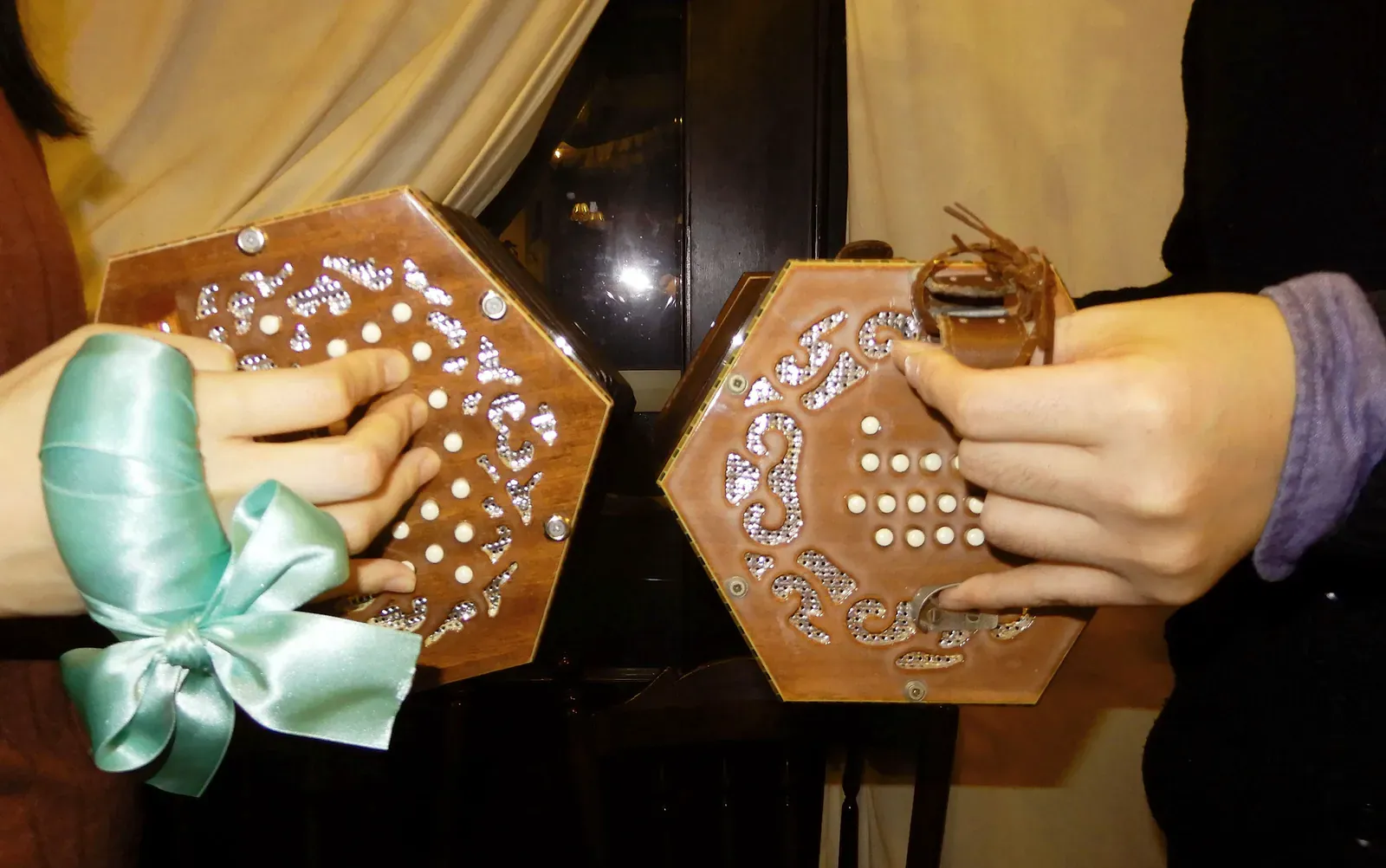
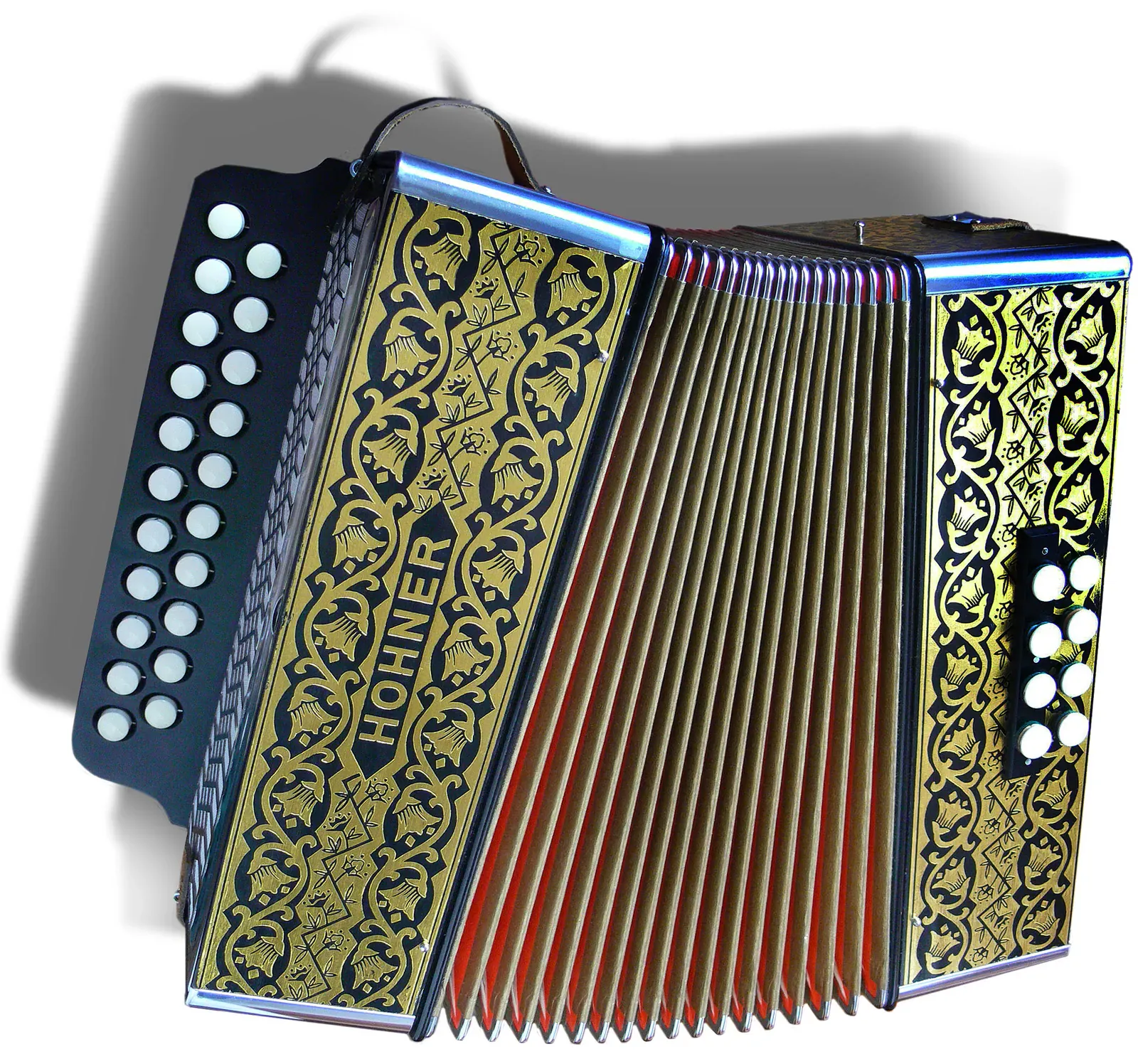
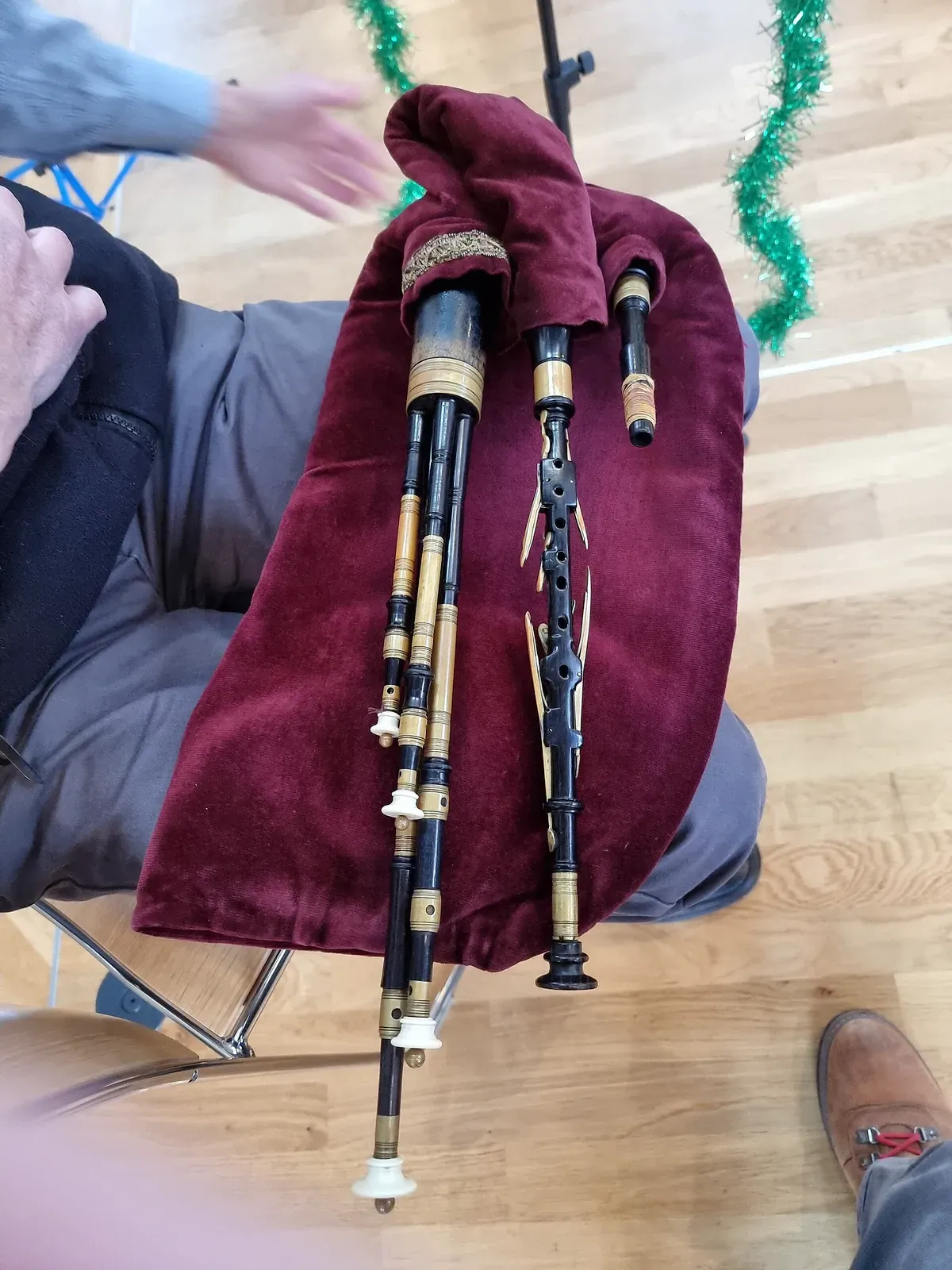
The fiddle carries dance tunes and ballad accompaniment. The melodeon is the usual partner for morris and country dance, the English concertina serves tunes and songs, and the Northumbrian smallpipes give the north-east a closed, sweet bagpipe voice. The pipe and tabor has accompanied morris dancing since the Middle Ages.
Revival guitarists adopted open tunings and percussive thumb picking. Electric folk added bass and drums, keeping the voice and story forward. Folk baroque, the fingerstyle idiom of Davy Graham, Bert Jansch and John Renbourn, brought jazz and early-music voicings to modal tunes.
Mainstream success
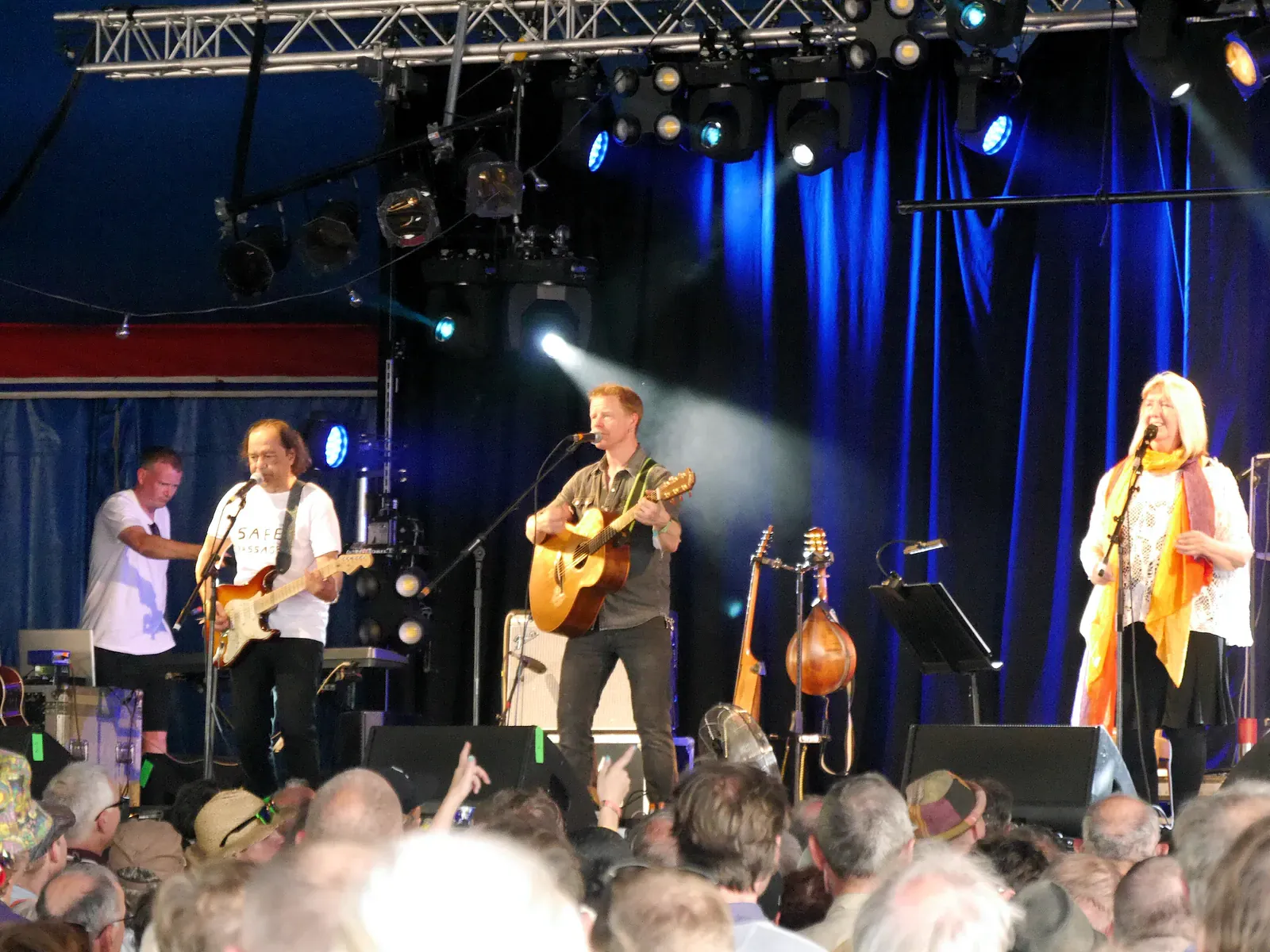
English folk crossed over several times. Simon and Garfunkel’s “Scarborough Fair / Canticle” (1966) took Carthy’s arrangement to a worldwide pop audience, though it was released without crediting him. Roberta Flack’s soul version of MacColl’s 1957 song “The First Time Ever I Saw Your Face” reached number one on the US Billboard Hot 100 in 1972. Steeleye Span’s unaccompanied Latin carol “Gaudete” (recorded 1972) reached number 14 on the UK Singles Chart in 1973 on Chrysalis Records, and “All Around My Hat” peaked at number 5 in 1975. Pentangle’s “Light Flight” became the theme of the BBC drama Take Three Girls.
Notable recordings
Carthy’s 1965 “Scarborough Fair” is the origin point for English folk guitar: the ballad is old, the arrangement new. “Matty Groves” by Fairport Convention (1969) gave a Child ballad of adultery and murder a rock rhythm section. Anne Briggs taught “Blackwater Side” (1971) to Bert Jansch, whose version fed Led Zeppelin’s “Black Mountain Side”. Nic Jones’s “Canadee-I-O” (1980) later entered Bob Dylan’s repertoire.
Culture
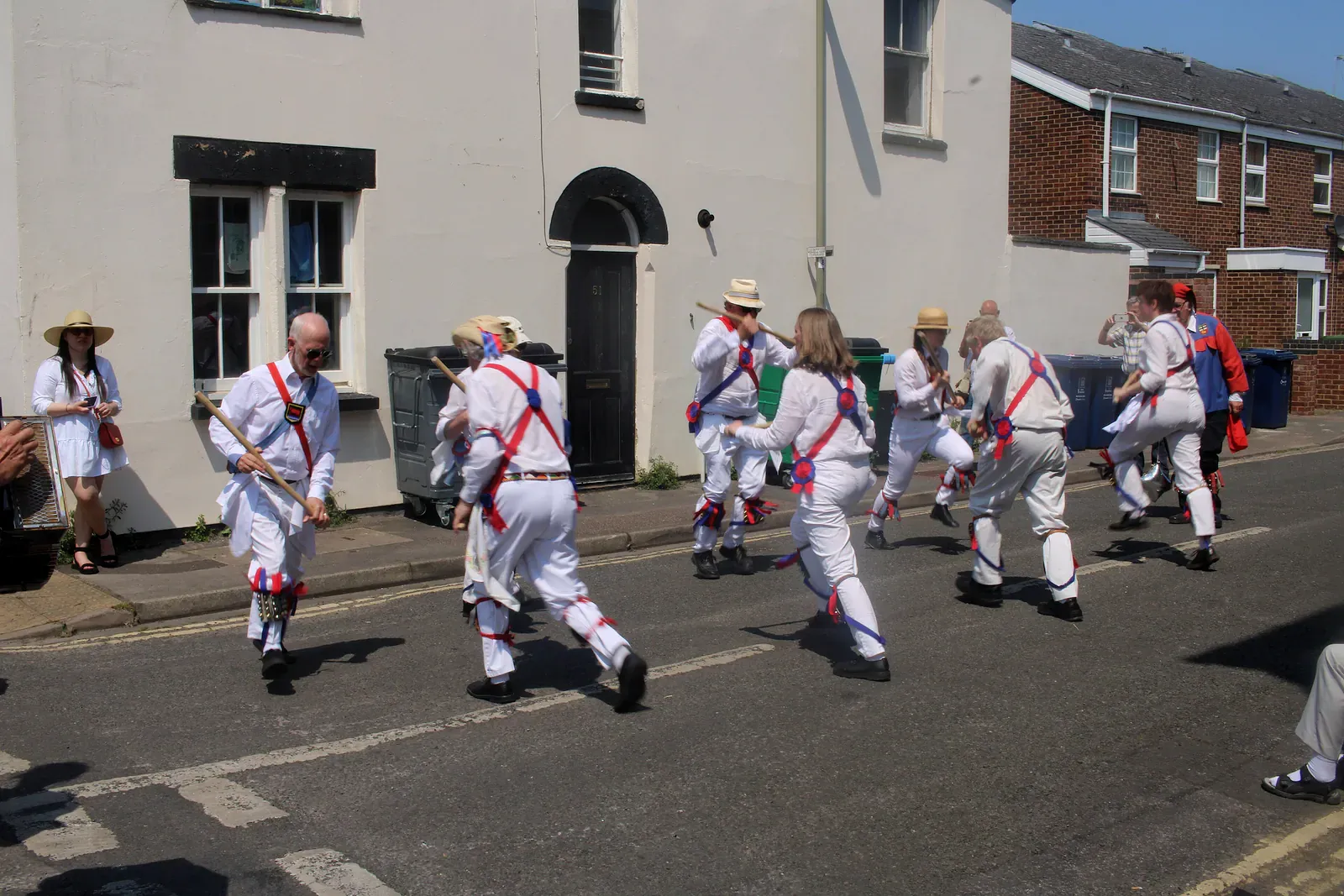
Cotswold morris teams of six dance in white with bells, handkerchiefs or sticks, while longsword and rapper dance are winter traditions of the north. Mumming plays and wassailing mark midwinter, and the Helston Hal-an-Tow processes on Flora Day, 8 May, in Cornwall. Folk clubs host floor spots and singarounds.
Legacy
The ballad repertoire feeds American, Australian and Newfoundland folk, and electric folk became the basis of British folk rock.
Misconceptions
One myth credits “Scarborough Fair” to Simon and Garfunkel; the song is traditional and Carthy’s 1965 arrangement predates their 1966 recording. A second holds that the revival was purely acoustic; Liege and Lief put electric instruments under Child ballads in 1969. A third treats morris dance as a Victorian invention, but the dances were first recorded in England in 1448.
Frequently asked questions
What is English folk music?
English folk music is the traditional song, dance and instrumental music of England, together with the revivals that collected and reworked it.
What instruments are used in English folk music?
The main instruments are the fiddle, melodeon, English concertina, Northumbrian smallpipes, pipe and tabor and acoustic guitar. Many songs are sung unaccompanied.
What is electric folk?
Electric folk is English traditional song played with rock instruments, started by Fairport Convention in 1969.
What is a Child ballad?
A Child ballad is one of 305 English and Scottish ballads that Francis James Child published from 1882 to 1898, and it remains a core singing repertoire of English folk music.
Sound
Sound sheet
Anatomy of a track
| # | Part | Bars |
|---|---|---|
| 1 | Intro (guitar, fiddle or unaccompanied first line) | 4 |
| 2 | First verse (one tune, four lines) | 8 |
| 3 | Further verses on the same tune | 32 |
| 4 | Instrumental break or chorus | 8 |
| 5 | Final verse | 8 |
| 6 | Tag or coda | 2 |
Signature sounds
- Modal tunes, often Dorian or Mixolydian
- Strophic ballads that repeat one tune through many verses
- Unaccompanied singing or sparse guitar and fiddle
- Dance tunes built from repeated 8-bar parts
- Close-part family harmony on choruses
- Open-tuned, percussive revival guitar
Techniques
- Unaccompanied solo singing
- Close-part family harmony
- Percussive guitar in open tunings
- Electric arrangements of ballads
- Dance-band tune playing
- Call and chorus
Keys and modes
Dorian mode. A minor-sounding mode with a raised sixth, as in many English ballad tunes.
Mixolydian mode. A major scale with a flattened seventh, common in dance tunes and songs.
Aeolian (natural minor). A darker mode for long narrative ballads.
Ionian (major). Used for dance tunes, carols and many songs of work and love.
Tuning
12-TET, A=440; guitar revival players use open tunings such as DADGAD
Vocals
Plain, unforced voices in regional accents, solo or in close harmony, telling long ballads without much vibrato.
Scenes
Where it happened
Where and when the sound lived: one bar per city on a shared timeline.
Europe
Active scenes
Peak 5, 1979-2025
Ballads and Blues, Les Cousins, Cecil Sharp House and the recording studios made the capital the hub of the revival.
The EFDSS festival has run every August since 1955.
The Watersons grew up here and made close-harmony singing a signature of English folk.
Cherry Hinton Hall hosts the long-running Cambridge Folk Festival.
Fairport Convention's yearly festival draws up to 20,000 fans.
Venues and places
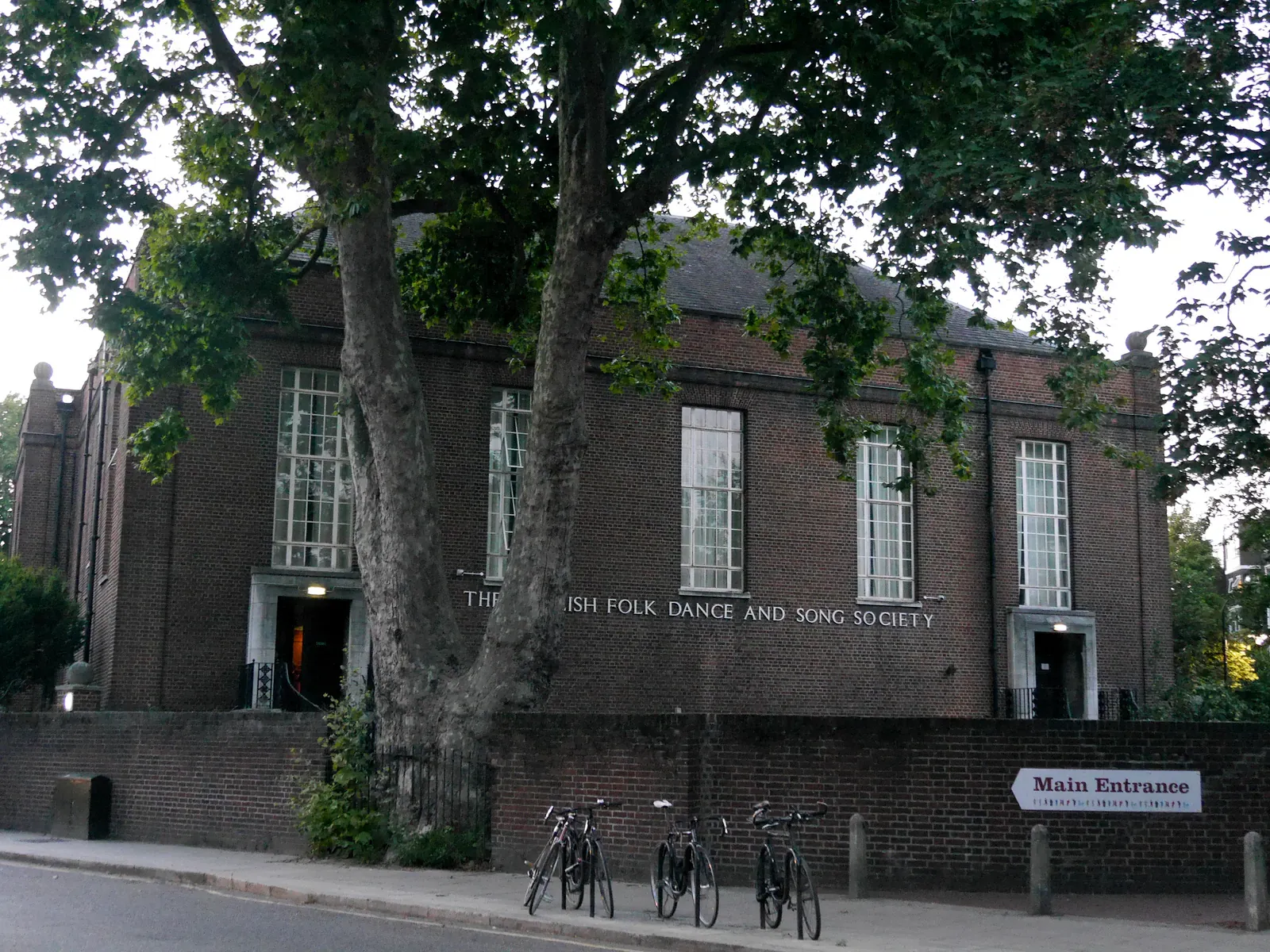
London, 1930 to today. Camden home of the EFDSS, its library and the dance and song events of the revival.
London, 1952 to 1958. Field recordings of rural singers reach a national audience each week.
Sidmouth, 1955 to today. The EFDSS week of dance, song and sessions held every August.
London, 1964 to 1972. A basement all-night club in Greek Street where Jansch, Renbourn and Nick Drake played.
Cambridge, 1965 to today. Weekend festival at Cherry Hinton Hall since 1965.
London, 1965 to today. Chelsea studio where Fairport Convention recorded Liege and Lief in autumn 1969.
Cropredy, 1979 to today. Fairport Convention's annual Oxfordshire festival.
Culture
Culture markers
- Cotswold morris
Teams of six in white with bells, handkerchiefs or sticks dance to melodeon or fiddle.
Dance - Longsword and rapper dance
Teams link swords in figures, a winter tradition of the north of England.
Dance - Mumming plays and wassailing
Seasonal plays and orchard blessings with songs, performed at midwinter.
Ritual - Helston Hal-an-Tow
The morning of Flora Day on 8 May in Cornwall includes the Hal-an-Tow procession and song.
Ritual - Folk club floor spots and singarounds
Amateurs sing a song in turn between resident performers in pub rooms.
Ritual - Morris kit
Bell pads, baldrics, flowers and ribbons mark each side.
Fashion - Finger-in-the-ear
Teasing nickname for strictly traditional singing with a hand cupped at the ear.
Slang
Media
Key media
- 1904Folk Songs from Somerset
by Cecil Sharp and Charles Marson. The first of five volumes drawn from Sharp's Somerset collecting.
Book - 1952As I Roved Out
by BBC Home Service. Peter Kennedy and Seamus Ennis presented recordings of traditional singers.
Radio - 1958The Ballad of John Axon
by Ewan MacColl, Peggy Seeger and Charles Parker. The first Radio Ballad blended field recordings with new songs.
Radio - 1959The Penguin Book of English Folk Songs
by Ralph Vaughan Williams and A. L. Lloyd. A paperback songbook that put the repertoire in many homes.
Book - 1963The Iron Muse
by Various. Industrial songs from Topic, a bestseller that bankrolled the label's folk series.
Compilation - 1971A Song for Every Season
by Bob Copper. A hundred years of Sussex singing in the Copper family.
Book - 1975Electric Muse: The Story of Folk into Rock
by Various. A box-set survey tracing the path from traditional singers to folk rock.
Compilation
Glossary
Terms on this page
A cheap printed sheet of verses sold on the street from the 16th to the 19th century.
One of 305 ballads collected by Francis James Child in the late 1800s, a core singing repertoire of the revival.
Traditional songs played with rock instruments, started by Fairport Convention in 1969.
A guest performer who takes a short turn at a folk club between the main acts.
A pub room where singers and players perform acoustic traditional material, with a resident host and floor spots.
Ritual dance with bells, sticks or handkerchiefs, first recorded in England in 1448.
An informal session where each person in turn sings a song, often unaccompanied.
A winter custom of singing and blessing orchards, houses or livestock.
Folk family