Australian folk music
Australian folk music is the bush ballad and dance tradition that grew from convict and shearer songs set to British and Irish tunes, revived from 1953.
Australia, 1788
Oceanian family
Born
1788
Australia
Subgenres
5
Documented branches
Links
8
Genres it drew on or shaped
Tempo
105-145 BPMLineage
Family tree
Grew out of
Derived from
Derived from
Australia, 1788
Australian folk music
Led to (7)
Timeline
Era by era
From the first sparks to today. Select a dot to read the story behind it.
- Convict and bush songs
1788 to 1900
- Records, radio and decline
1901 to 1952
- Revival and folk clubs
1953 to 1969
- Bush bands, protest and festivals
1970 to 1989
- Festivals and fusion
1990 to today
Eras
Moments
- 1 Convict and bush songs, 1788 to 1900
- 2 Records, radio and decline, 1901 to 1952
- 3 Revival and folk clubs, 1953 to 1969
- 4 Bush bands, protest and festivals, 1970 to 1989
- 5 Festivals and fusion, 1990 to today
1788
Convict and bush songs
Convicts, then shearers, drovers and bushrangers, set new words about hardship and defiance to British and Irish tunes, and The Bulletin helped spread new songs.
- 1788Convict songs reach New South WalesConvicts transported from Britain bring songs that are adapted to colonial conditions, such as Moreton Bay set to an Irish tune.
- 1895Banjo Paterson writes Waltzing MatildaThe bush poet's ballad becomes Australia's best-known unofficial national anthem.
around 1901
Records, radio and decline
Recordings and radio ended bush music in its traditional form, and American country music displaced it in the bush, while dance music proved more durable.
1953
Revival and folk clubs
The 1953 musical Reedy River revived the bush band, and folk clubs, festivals and pop-folk acts such as The Seekers followed in the 1960s.
- 1953Reedy River revives the bush bandThe New Theatre musical about the 1891 shearers strike is backed by The Bushwhackers, formed in Sydney in 1952, and local bush bands spring up in each city it visits.
- 1957A Pub With No BeerSlim Dusty's recording of the bush ballad becomes the first Australian gold single.
- 1962Brisbane Folk Centre opensStan and Kathy Arthur run the Ann Street venue as a crucible for established and emerging acts until it closes in 1977.
- 1967National Folk Festival beginsThe first National Folk Festival is held in Melbourne and later settles in Canberra.
1970
Bush bands, protest and festivals
Bush bands such as the Bushwackers, protest writers such as Redgum and Eric Bogle, Larrikin Records and new folk festivals brought the music to a national audience.
- 1971Bushwackers form in MelbourneDave Isom, Bert Kahanoff and Jan Wositzky found the band that carries bush music and dance around the world.
- 1971Eric Bogle writes his Gallipoli songThe Scottish-born writer composes And the Band Played Waltzing Matilda in two weeks, an oblique comment on the Vietnam War.
- 1974Larrikin Records foundedWarren Fahey starts the Sydney independent that records Redgum, Eric Bogle, Kev Carmody and others.
- 1975Redgum form in AdelaideThree Flinders University students start a protest folk group from a politics assignment.
- 1976The Bushwackers record Bogle's songTheir second album carries a cover of And the Band Played Waltzing Matilda, later listed among APRA's top 30 Australian songs.
- 1977Port Fairy Folk Festival startsFounded on 2 December under the theme of Australian and Irish traditional music.
- 1983I Was Only 19 reaches number oneRedgum's Vietnam veteran song tops the national singles chart for two weeks.
- 1988Bicentenary boosts bush musicThe years around the Bicentenary see a lasting resurgence of bush music and bush dances.
1990
Festivals and fusion
Bush music lives on at festivals and bush dances, and newer bands blend it with rock, punk and Celtic influences.
- 2009Larrikin sues Men at WorkLarrikin, owner of the 1932 song Kookaburra, wins a share of royalties from Down Under over a two-bar phrase.
Listening path
Start listening
A short path from an easy way in to the deep end. Thumbnails come from YouTube; the player loads only when you press play.
- 01
Slim Dusty, 1957
The bush ballad of drovers and the pub that ran dry, a jaunty easy way in.
- 02
The Bushwackers Band, 1978
The best-known bush song played by the band that popularised the electric-bass bush sound.
- 03
Eric Bogle, 1983
Bogle's account of a Gallipoli veteran, sung plainly over guitar.
- 04
Redgum, 1983
The folk-protest hit that reached number one, built on a veteran's detail.
- 05
John Williamson, 1986
A modern bush singalong that shows the tradition's pop-country reach.
Facts
| Family | Oceanian |
| Origin | Australia |
| Emerged | 1788 onwards; revived from 1953 |
| Status | Revival |
| Tempo | 105 to 145 BPM |
| Grew out of | English folk music, Irish traditional music |
| Subgenres | 5 |
Australian folk music is the settler song and dance tradition of Australia: narrative bush ballads and dance tunes, mostly set to British and Irish melodies, about convicts, bushrangers, shearers, drovers and later war and politics.
It began with the convict transports from 1788, faded under records and radio, and was revived from 1953 through bush bands, folk clubs and festivals. It belongs to the Oceanian family and descends from English folk and Irish traditional music.
Origins: convict and bush songs, 1788-1900
European settlement began with the transportation of convicts from Great Britain, and the convicts brought their songs with them. These were quickly adapted to local conditions. Moreton Bay, about the suffering of convicts, was fitted to the Irish song Boolavogue, while the broadsheet ballad The Black Velvet Band and the music-hall song Botany Bay entered the repertoire unchanged. The best-known convict-era writer was Frank Macnamara, called Frank the Poet, whose Bold Jack Donahue developed into The Wild Colonial Boy.
In the century after settlement, a musical tradition grew among itinerant workers, above all shearers, in the bush. As in the convict era, most songs were new words to known tunes. The magazine The Bulletin, called the bushman’s bible, published and popularised many of them. Classic pieces such as Click Go the Shears, The Eumeralla Shore, The Drover’s Dream and The Dying Stockman come from this period. Paterson also wrote the ballad Waltzing Matilda in 1895, now often called Australia’s unofficial national anthem.
Decline, 1900-1952
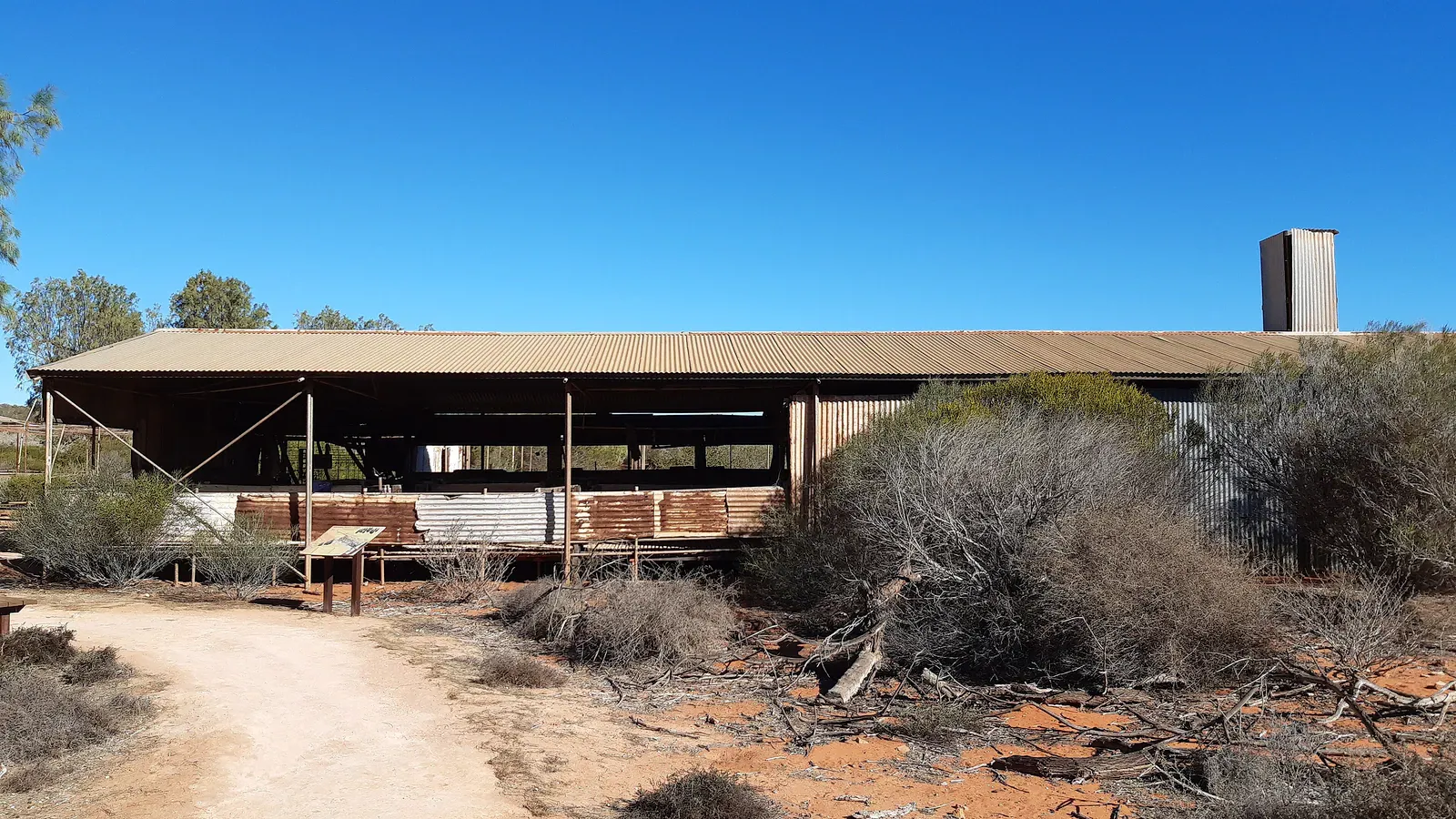
Recorded music and radio ended bush music in its traditional form, and American country music largely displaced it in the bush. Dance music proved more durable. Bush dances, held in woolsheds and local halls from about 1860, kept a core of players and dancers going. Country singers also carried the old themes forward: Tex Morton, Slim Dusty and later John Williamson recorded bush ballads, and Slim Dusty’s A Pub With No Beer became the first Australian gold single in 1957. That strand is covered under Australian country music.
Revival, 1953-1969
The revival of the bush band dates to 1953 and the musical play Reedy River, staged by the New Theatre in Sydney about the 1891 shearers strike. Its backing group, The Bushwhackers, had formed a year earlier. As the show toured, local bands modelled on the Sydney group appeared in each city, including the Moreton Bay Bushwhackers in Brisbane, and many outlasted the production.
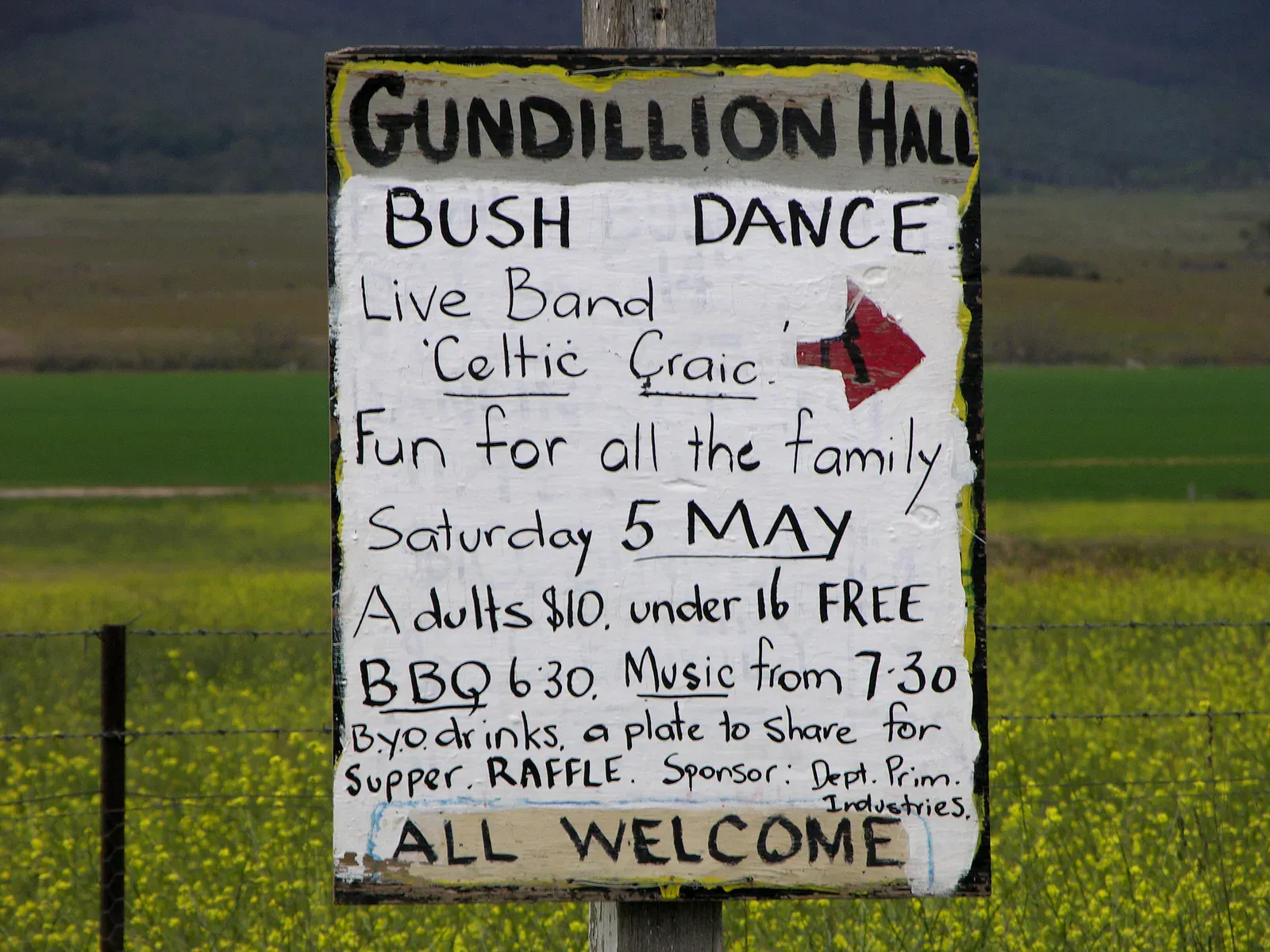
A second, more contemporary strand grew with the wider folk revival. The Seekers emerged in 1963, mixing traditional music and pop, and Lionel Long and Gary Shearston performed bush and traditional material. Clubs gave the scene a base. Stan and Kathy Arthur ran the Folk Centre on Ann Street in Brisbane from 1962 to 1977, with the Wayfarers as house group, and Perth’s Stables folk club helped start the Mucky Duck Bush Band, which turned professional in 1974. The National Folk Festival held its first edition in Melbourne in 1967.
Bush bands and protest, 1970-1989
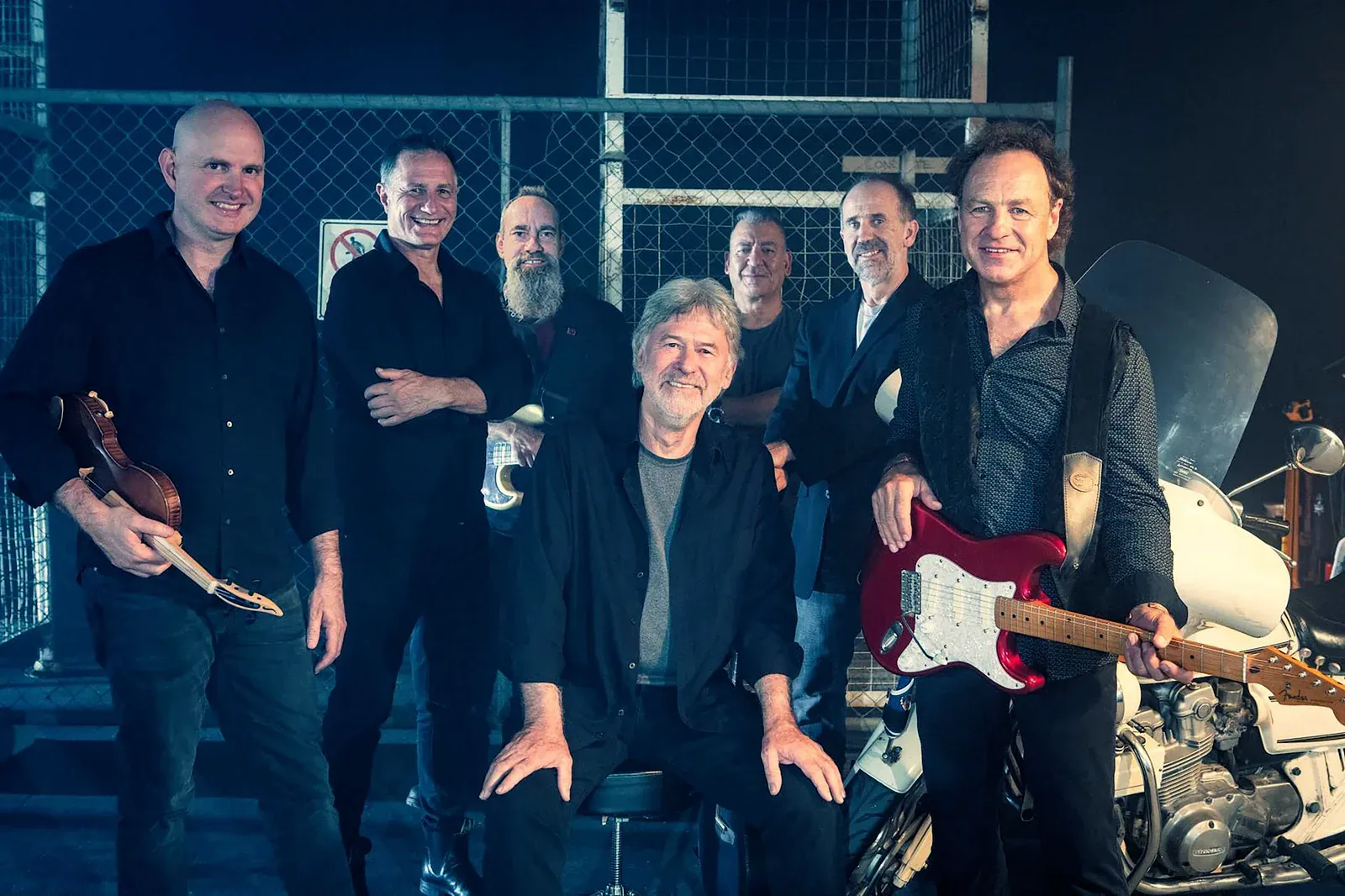
Two currents ran side by side in the 1970s. The first was the bush band as a party act. The Bushwackers formed in Melbourne in 1971 around Dave Isom, Bert Kahanoff and Jan Wositzky, went full time after their first album in 1974, and toured Australia and Europe. They leaned on Celtic reels and jigs more than earlier bands and used electric bass in place of the bush bass. Their albums Bushfire (1978) and Dance Album (1980) reached the Kent Music Report top 40.
The second current was singer-songwriter folk shaped by Bob Dylan, The Byrds and the protest movements. Eric Bogle, born in Scotland, emigrated to Australia in 1969. Redgum began in 1975 when three Flinders University students in Adelaide, John Schumann, Michael Atkinson and Verity Truman, turned a politics assignment into a band. Many acts recorded for Larrikin Records, founded in Sydney in 1974 by the folklorist Warren Fahey, which also released Kev Carmody and others.
Characteristics
The core is the narrative song: verses that tell a story, a sung refrain, and a plain delivery in an Australian voice. Themes include the harshness of colonial life, bushrangers and swagmen, drovers, stockmen and shearers, then war, droughts and floods, railways and trucking routes, and the loneliness of the bush. Tunes are mostly traditional British and Irish ones, so the dance repertoire of reels, jigs, marches, waltzes and hornpipes is shared with the older folk traditions.
Instruments and production
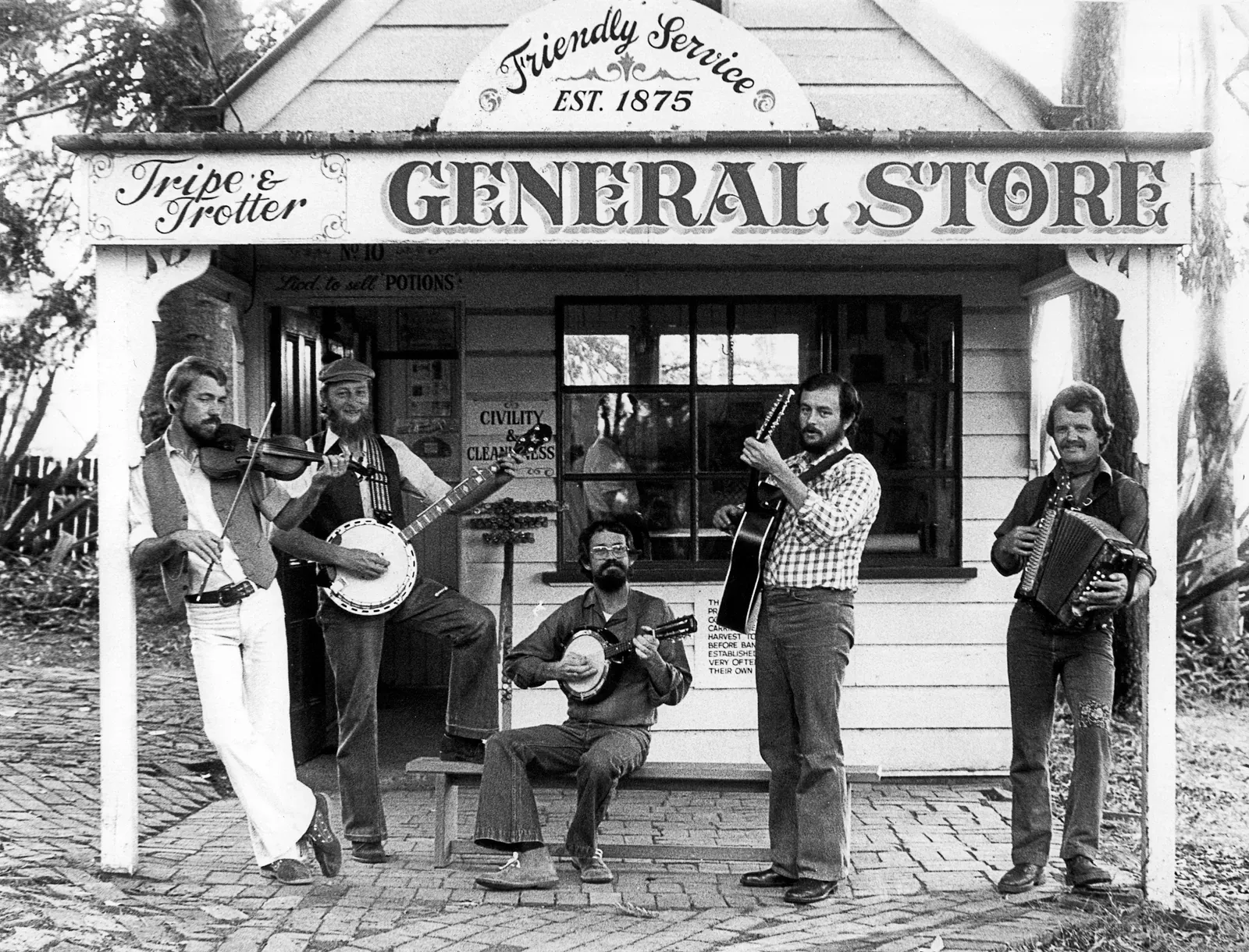
Bush bands use fiddle, accordion, concertina, guitar, banjo and mandolin. The rhythm section is homemade: the lagerphone, a pole fitted with metal bottle tops and thumped on the floor, and the bush bass, a tea chest bass, stand in for a drum kit and double bass. Electric bass and guitar have appeared since the 1970s.
Mainstream success
Two protest songs reached the whole country. Eric Bogle wrote And the Band Played Waltzing Matilda in 1971 after seeing an Anzac Day march in Canberra, setting it at Gallipoli as an oblique comment on the Vietnam War. It was later covered by Joan Baez, The Pogues and June Tabor. Redgum’s I Was Only 19, released in March 1983, spent two weeks at number one on the Kent Music Report singles chart, and its royalties go to the Vietnam Veterans Association of Australia. Both songs appear on APRA’s list of the top 30 Australian songs. John Williamson’s True Blue, a 1982 release, became his best-known hit.
Notable recordings
Bogle’s song began as a quiet, plain account of a Gallipoli veteran who lost his legs, ending with a quotation of the melody of Waltzing Matilda. The Bushwackers’ band version on their 1976 album brought it to a wider audience and sits beside Bogle’s own recording on the APRA list.
I Was Only 19 draws its power from detail. John Schumann wrote it from stories told by veterans, notably his brother-in-law, following a soldier from training at Puckapunyal to mines and a hard return home. Trevor Lucas of Fairport Convention produced the live album Caught in the Act, and the song was followed by a Royal Commission on the use of chemical agents in Vietnam.
Festivals and fusion, 1990 to present
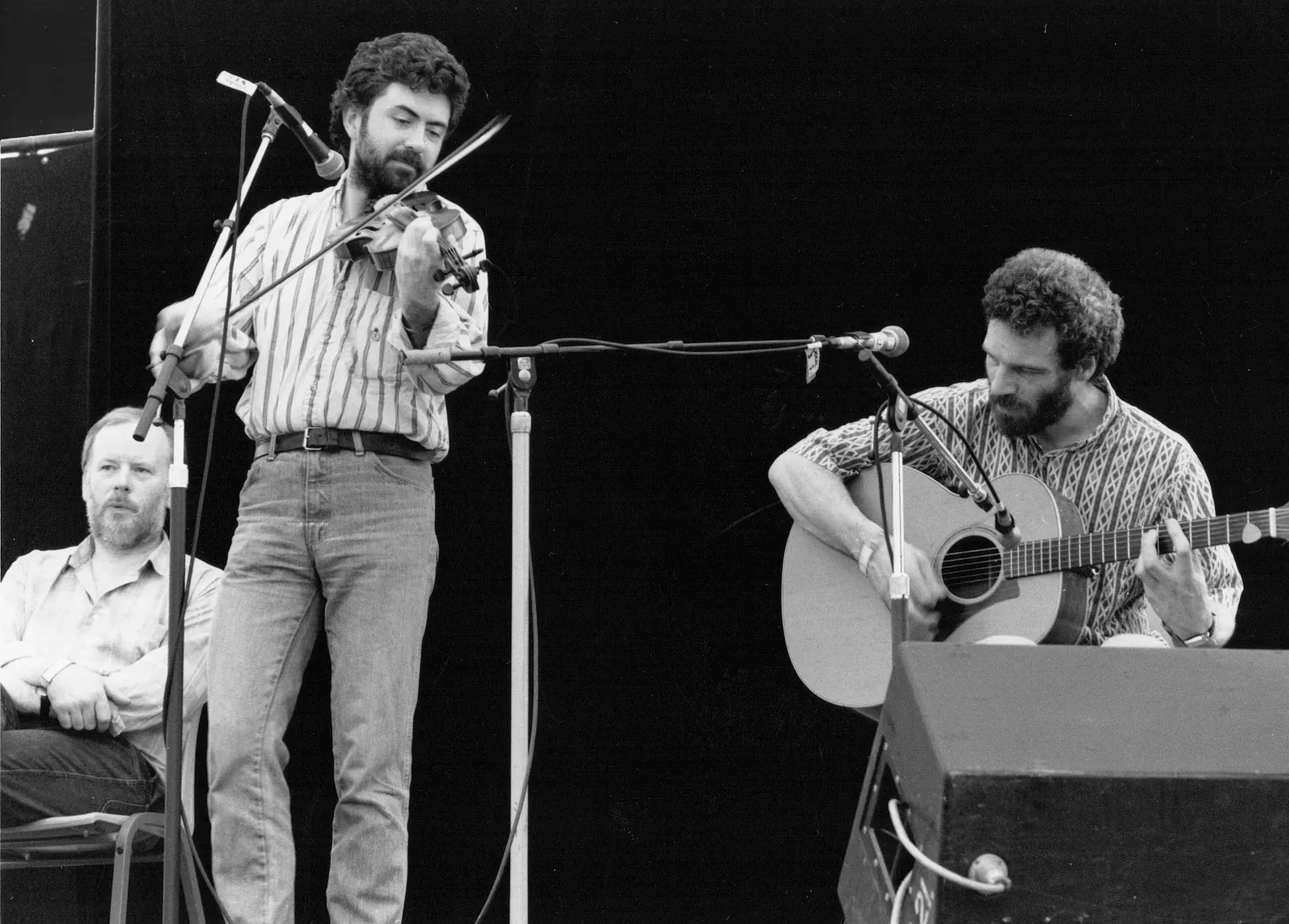
Folk festivals gave the music a home outside radio. Port Fairy Folk Festival began on 2 December 1977 under the theme of Australian and Irish traditional music. The Maleny festival of 1987 grew into Woodford in 1994, which draws about 125,000 visitors a year. The National Folk Festival has been held every Easter in Canberra since 1992.
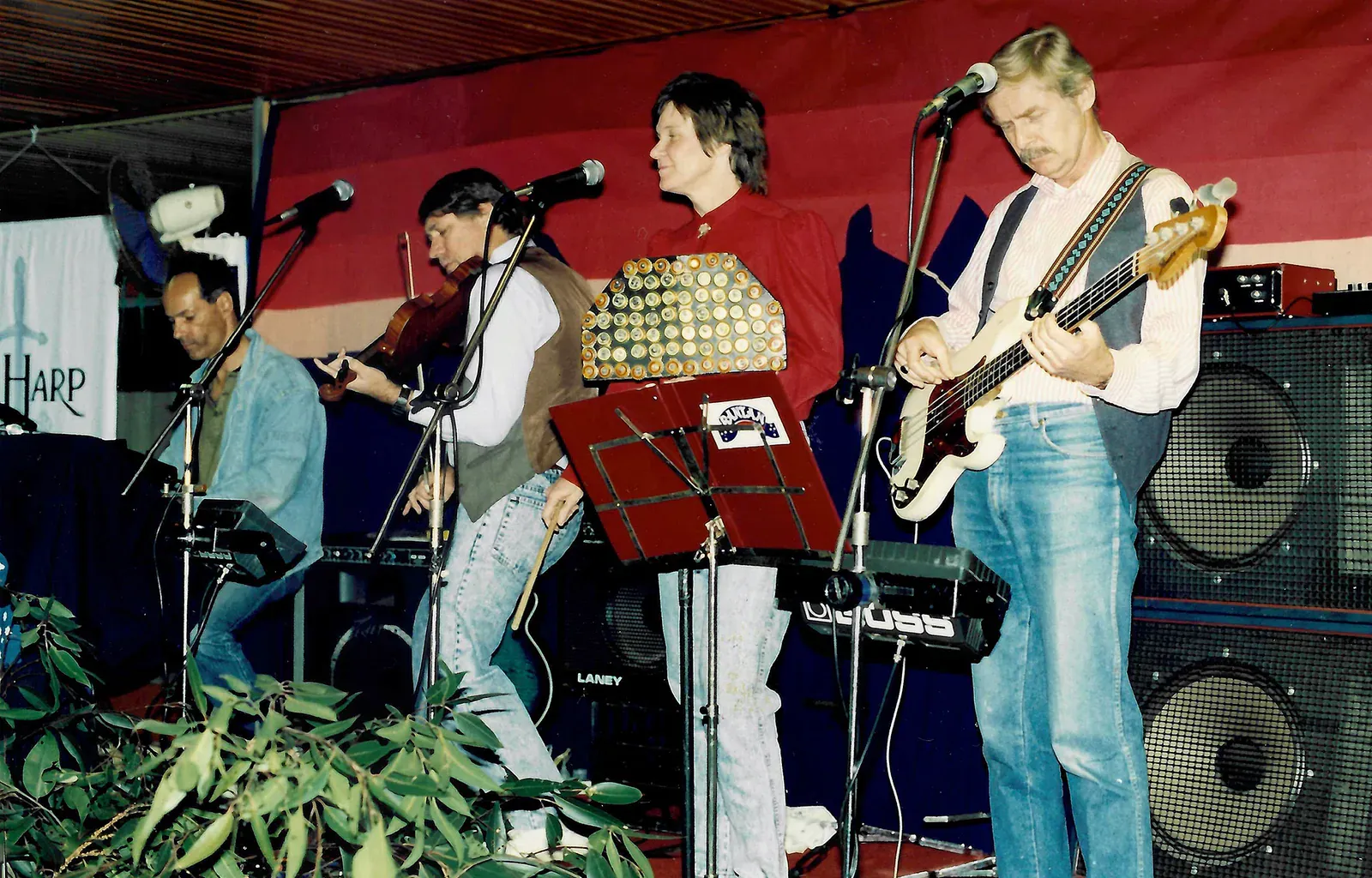
The years around the 1988 Bicentenary brought a lasting resurgence of bush music and bush dances, and bands such as the Ants Bush Band, Rantan Bush Band, Eureka! and Bullamakanka added original songs with a rock edge. Rantan, formed in Brisbane in 1977, continues to perform. More recent bands, among them The Currency, The Handsome Young Strangers and Sydney City Trash, play bush music in rock venues, blending it with punk and Celtic styles. Indigenous performers such as Kev Carmody and Archie Roach combined acoustic folk with storytelling from the 1980s, a line described further under Aboriginal Australian music. Redgum disbanded in 1990 once its debts were cleared.
Culture
The social home of the music is the bush dance. Its eras run from early settlers’ dances through the gold rush and the pastoral period of woolshed balls to the revival of the 1950s, and regular community bush balls have been held since the 1970s.
Legal history touched the scene as well. Larrikin Records bought the copyright to the children’s song Kookaburra, written in 1932, for $6,100 in 1990. In 2009 it sued Men at Work over a two-bar phrase in Down Under and was awarded 5 percent of the profits, later set at $100,000.
Misconceptions
Waltzing Matilda is sometimes taken as an anonymous folk song. It is the ballad of the poet Banjo Paterson, written in 1895 and recorded more often than any other Australian song.
And the Band Played Waltzing Matilda is often thought to be traditional. Bogle wrote it in 1971, and he has said that many people assume it is old and that he died in the war.
Bush music is not simply Celtic. The first wave of immigrant music included Celtic, English, German and Scandinavian traditions, and Indigenous music shaped Australian folk after the revival.
Frequently asked questions
What is Australian folk music?
Australian folk music is the traditional music of Australia’s settler cultures: bush ballads about convicts, bushrangers and rural workers, plus the dance tunes of the bush dance, revived from the 1950s.
What is a bush band?
A bush band is a group that plays Australian bush ballads and dance music, usually with fiddle, accordion, banjo, guitar and a lagerphone or bush bass.
What is the difference between Australian folk and country music?
Both draw on bush ballads. Australian country, led by Tex Morton and Slim Dusty, added American country style, while Australian folk keeps closer to British and Irish tunes, bush dances and the folk revival.
Who wrote And the Band Played Waltzing Matilda?
Eric Bogle, a Scottish-born Australian songwriter, wrote it in 1971 after an Anzac Day march in Canberra.
What is a bush dance?
A bush dance is a social dance, mostly based on British, Irish and central European folk dances, played by a bush band with reels, jigs, marches, waltzes and hornpipes.
Sound
Sound sheet
Anatomy of a track
| # | Part |
|---|---|
| 1 | Narrative verses |
| 2 | Sung refrain |
| 3 | Instrumental dance tune or set |
Signature sounds
- New words set to borrowed British and Irish tunes
- Narrative ballads of bushrangers, shearers and drovers
- Reels, jigs and marches in a bush band set
- Lagerphone and bush bass as the rhythm section
Drums and percussion
- Lagerphone
Techniques
- New words on old tunes
- Dance-set playing
- Electric bass in place of bush bass
Keys and modes
Major keys such as D, G and F. Guitar-friendly keys on database readings of canonical recordings.
Vocals
Plain narrative singing of convict, bush, war and protest stories.
Scenes
Where it happened
Where and when the sound lived: one bar per city on a shared timeline.
Oceania
Active scenes
Peak 5, 1975-2025
Home of The Bushwhackers, the Reedy River musical and Larrikin Records.
Hosted the first National Folk Festival and gave rise to the Bushwackers.
Redgum began at Flinders University, and Eric Bogle later settled here.
The Folk Centre on Ann Street nurtured the Wayfarers and other acts.
The Stables folk club helped start the Mucky Duck Bush Band, professional from 1974.
The National Folk Festival has been held here at Easter since 1992.
Venues and places
Brisbane, 1962 to 1977. Run by Stan and Kathy Arthur on Ann Street, with the Wayfarers as house act.
Port Fairy, 1977 to today. Annual four-day festival begun under a theme of Australian and Irish traditional music.
Woodford, 1994 to today. Grew out of the Maleny festival of 1987 and moved to Woodford when it outgrew its site.
Canberra, 1992 to today. Held every Easter at Exhibition Park since 1992, after earlier editions in other cities.
Culture
Culture markers
- Bush dance
Social dancing to reels, jigs, marches, waltzes and hornpipes played by a bush band.
Dance - Bushy balls
Regular community bush dances held by social clubs across Australia since the 1970s.
Ritual - Anzac Day
Waltzing Matilda and Bogle's Gallipoli song are tied to the remembrance of war.
Ritual
Media
Key media
- 1967Bullockies, Bushwhackers and Booze
by Various. A recording by Martyn Wyndham-Read and others whose title gave the Bushwackers their name.
Compilation - 1981The Redgum Songbook: Stubborn Words, Flagrant Vices
by Redgum. Songbook of the group's political songs.
Book - 1983Banjo Paterson's Old Bush Songs
by Graham Seal (ed.). An edited collection of the bush songs that Paterson gathered, a standard source for the repertoire.
Book
Glossary
Terms on this page
A narrative song about bush life, from bushrangers and swagmen to drovers, stockmen and shearers.
A group that plays Australian bush ballads and dance music, with fiddle, accordion, banjo and lagerphone.
A homemade tea chest bass used in place of a double bass.
A social dance mostly based on British, Irish and central European folk dances, played by a bush band.
A pole studded with beer bottle tops, struck on the floor as a percussion instrument.
Oceanian family