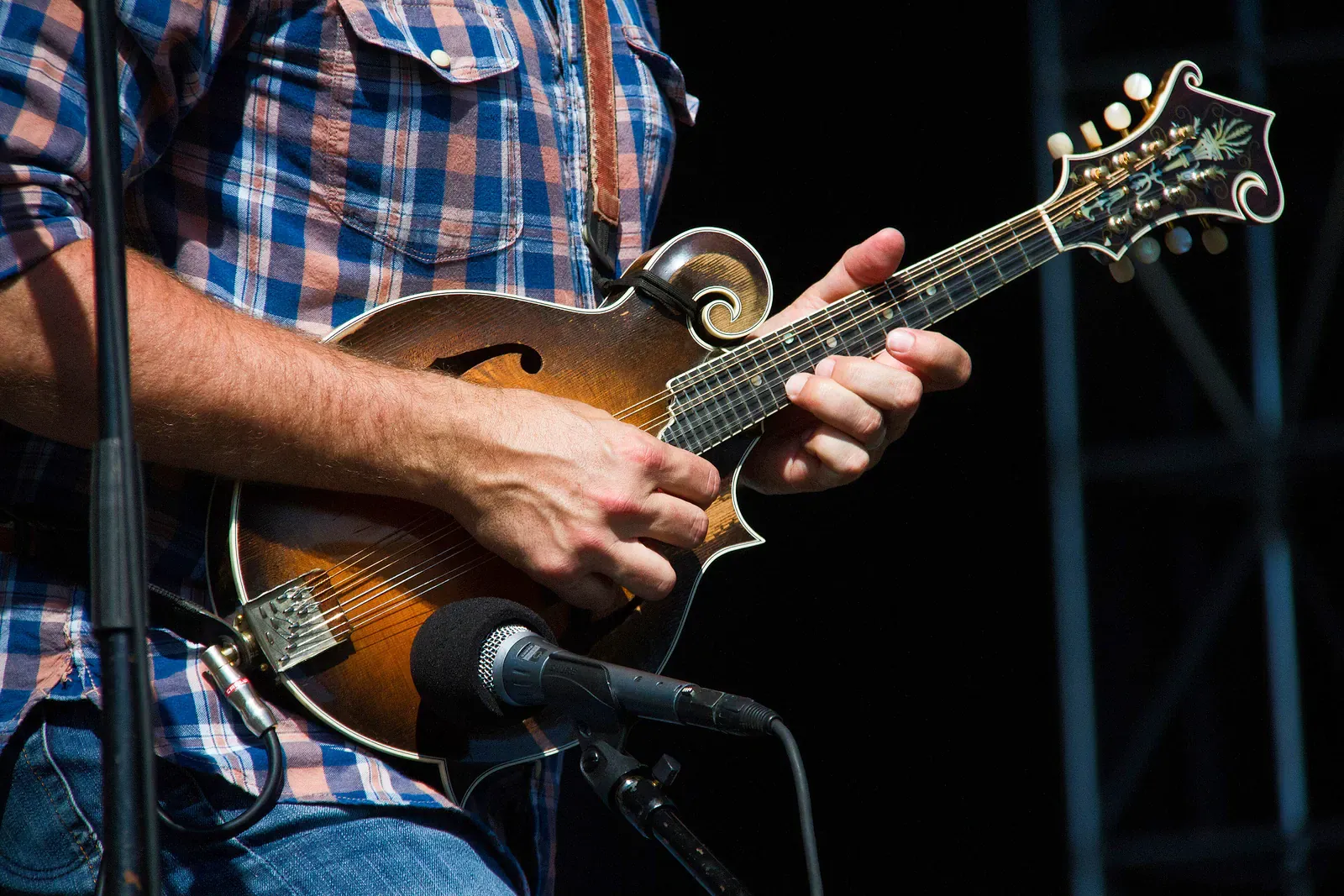
Australian country
Australian country is Australia's country music, begun in the 1930s by Tex Morton and Smoky Dawson and centred on the Tamworth festival and Golden Guitars.
Tamworth, New South Wales, 1936
Country family

Born
1936
Tamworth, New South Wales
Subgenres
3
Documented branches
Links
9
Genres it drew on or shaped
Tempo
90-175 BPMLineage
Family tree
Grew out of
- Bush ballad
Derived from
Influenced by
Tamworth, New South Wales, 1936
Australian country
Led to (3)
Timeline
Era by era
From the first sparks to today. Select a dot to read the story behind it.
- Convict and bush song roots
1788 to 1935
- Tex Morton and the first stars
1936 to 1956
- The Slim Dusty era
1957 to 1972
- Tamworth and the Golden Guitars
1973 to 1991
- Industry bodies and crossover
1992 to 2026
Eras
Moments
- 1 Convict and bush song roots, 1788 to 1935
- 2 Tex Morton and the first stars, 1936 to 1956
- 3 The Slim Dusty era, 1957 to 1972
- 4 Tamworth and the Golden Guitars, 1973 to 1991
- 5 Industry bodies and crossover, 1992 to 2026
around 1788
Convict and bush song roots
Convict, bushranger and drover songs passed down orally, then printed in collections and joined by Banjo Paterson's 1895 Waltzing Matilda.
- 1895Waltzing Matilda lyrics writtenBanjo Paterson wrote the lyrics, a bush song shaped more by Celtic ballads than by American country.
- 1932Tex Morton arrives from New ZealandAged 16, he travelled outback stations with a swag and a guitar and began building a following.
1936
Tex Morton and the first stars
Tex Morton and Smoky Dawson recorded and broadcast Americanised country, then shifted to Australian subjects, with Slim Dusty signing in 1946.
- 1936Tex Morton's first commercial recordingsHe cut four songs for Columbia in Sydney on 25 February, the first country recordings of this style made outside the United States.
- 1941Smoky Dawson's first recordI'm a Happy Go Lucky Cowhand introduced Australia's first singing cowboy on disc.
- 1946Slim Dusty signs with ColumbiaAt 19 he signed a recording contract with Columbia Graphophone for the Regal Zonophone label.
1957
The Slim Dusty era
A Pub With No Beer made Slim Dusty a star in 1957, and touring families, radio hosts and television shows carried country to regional Australia.
- 1957A Pub With No Beer goes goldSlim Dusty's single became the first Australian single to go gold and the first 78 rpm record awarded a gold disc.
- 1964Slim Dusty family begins round-Australia toursThe annual tours, including a 10-month journey later filmed, brought country to remote towns.
- 1968Tamworth talent quest beginsA local country music association started a talent quest on the Australia Day long weekend, a forerunner of the festival.
1973
Tamworth and the Golden Guitars
The first Golden Guitar awards in 1973 turned Tamworth into the industry capital, and John Williamson and Slim Dusty built national audiences.
- 1973First Tamworth Country Music Festival and Golden GuitarsRadio 2TM staged the first Golden Guitar awards in January; Lights on the Hill won Song of the Year for Joy McKean.
- 1982Gympie Muster beginsThe community festival near Gympie, Queensland grew to draw about 25,000 fans.
- 1982John Williamson releases True BlueThe single became his best-known song and a vernacular Australian anthem.
1992
Industry bodies and crossover
The 1992 Country Music Association of Australia, Lee Kernaghan's pop-country hits and Kasey Chambers' ARIA wins brought country back to city radio.
- 1992Country Music Association of Australia foundedLaunched in Tamworth with Slim Dusty as first chairman; it took over the Golden Guitar awards from Radio 2TM in 1993.
- 1992Lee Kernaghan's Boys From the BushFrom The Outback Club, it set a pop-country sound that returned country to city radio in the 1990s.
- 2000Slim Dusty releases his 100th album and sings at the OlympicsHe also sang Waltzing Matilda at the closing ceremony of the Sydney Olympics.
- 2003Slim Dusty dies and receives a state funeralHe had sold over 7 million records in Australia.
- 2021Tamworth festival cancelled by COVID-19The first cancellation in its history; the 2022 event was postponed to April.
Listening path
Start listening
A short path from an easy way in to the deep end. Thumbnails come from YouTube; the player loads only when you press play.
- 01
Slim Dusty, 1957
The breakthrough that made Slim Dusty the first Australian gold single artist.
- 02
Slim Dusty, 1981
A number one on the Kent Music Report in early 1981 and his second-biggest single.
- 03
John Williamson, 1982
The anthem of plain Australian character in the Tamworth era.
- 04
Lee Kernaghan, 1992
A contemporary country classic that took the genre back to city airwaves.
- 05
Kasey Chambers, 2002
A number one in Australia that made Chambers a crossover star.
Facts
| Family | Country |
| Origin | Tamworth, New South Wales, Australia |
| Emerged | 1930s to |
| Status | Active |
| Tempo | 90 to 175 BPM |
| Meter | 4/4 |
| Grew out of | Bush ballad |
| Subgenres | 3 |
Australian country is the country music of Australia, a regional branch of the country family that took shape from the 1930s. It joins American country and western delivery to the bush ballad, Celtic settler song and subject matter drawn from the outback.
Its institutions are the Tamworth Country Music Festival, held since 1973, and the Golden Guitar awards given there.
Origins
The oldest layer is bush music. Convicts sent to Australia from 1788 left songs of hard labour and tyranny, and later ballads followed bushrangers, swagmen, drovers, stockmen and shearers. This repertoire was long oral, printed only later in collections. “Waltzing Matilda”, with lyrics written by the poet Banjo Paterson in 1895, is its best-known piece, and it owes more to Celtic ballads than to American country.
The American layer arrived with records and radio. Tex Morton, born Robert Lane in Nelson, New Zealand, reached Australia in 1932 at sixteen and worked outback stations with a swag and a guitar. On 25 February 1936 he recorded four songs for Columbia in Sydney, and between 1936 and 1943 he cut 93 songs for its Regal Zonophone label. His early records copied American references. “Wrap Me Up with My Stockwhip and Blanket” (1936) put dingoes and the coolibah into the same style, and that move toward local subject matter defined the genre. He is called the Father of Australian Country Music.
Singing cowboys and the first stars, 1936-1956
Smoky Dawson, Australia’s first singing cowboy, recorded “I’m a Happy Go Lucky Cowhand” in 1941 and began a radio show in 1952, going on to fame as a yodelling, whip-cracking entertainer on radio, television and film. Buddy Williams and Donn Reynolds, who recorded for Regal Zonophone in 1947, were other early names. Morton ran a travelling Rodeo and Wildwest Show in the 1940s, went abroad in 1949 as a stage hypnotist, and returned in the early 1960s to find a generation working in his style.
The most important newcomer was David Gordon Kirkpatrick, born in 1927 near Kempsey, New South Wales. He took the name Slim Dusty at eleven, released his first record in 1945 and signed to Columbia the next year. He married the songwriter Joy McKean in 1951, and she wrote several of his best-known songs, among them “Indian Pacific” and “Lights on the Hill”. In 1954 the couple launched the Slim Dusty Travelling Show.
The Slim Dusty era, 1957-1972
In 1957 Slim Dusty’s “A Pub With No Beer” became the biggest-selling record by an Australian up to that time. It was the first Australian single to go gold and the only 78 rpm record to be awarded a gold disc.
The family began annual round-Australia tours in 1964, including a ten-month, 30,000-mile journey that became the 1984 feature film The Slim Dusty Movie. Radio and television carried the genre further: Reg Lindsay, on Sydney radio from 1951, later hosted The Country & Western Hour on Channel 9, a networked show that gave hundreds of young artists a start.
Rock and roll cost country its place on metropolitan radio. Despite big sales, Slim Dusty and his peers were rarely heard outside regional centres until the pop-country of the 1990s.
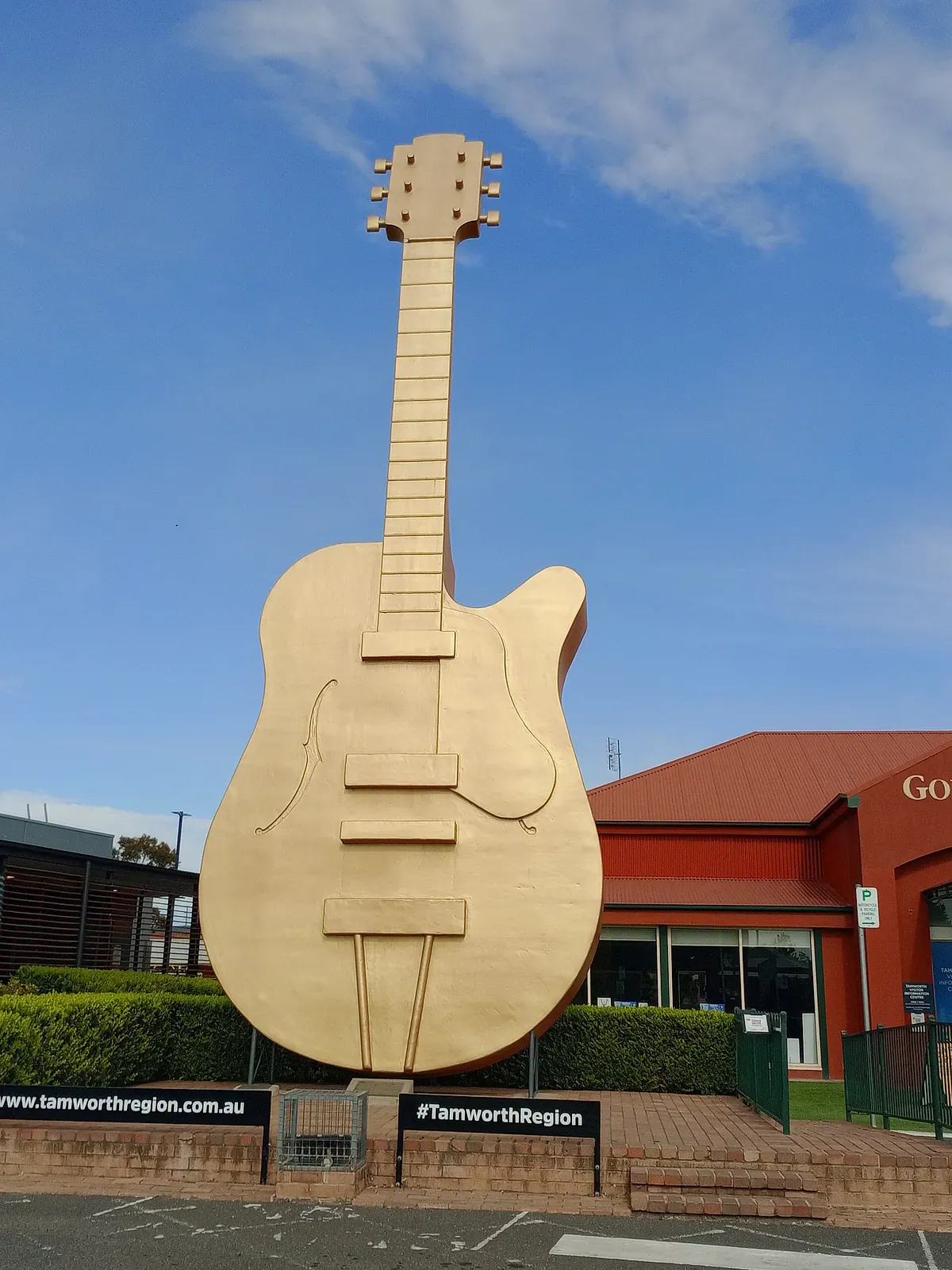
Tamworth and the Golden Guitars, 1973-1991
Tamworth, in New South Wales, became the industry’s centre in stages. A local country music association began a talent quest there in 1968, the local radio station promoted the town as the Country Music Capital from 1969, and in January 1973 the station staged the first Golden Guitar awards. Joy McKean won Song of the Year for “Lights on the Hill” and Slim Dusty’s recording won best single. The festival grew around the awards into ten days each January of concerts, busking in Peel Street and the Roll of Renown, an honour roll for pioneers.

John Williamson became known in 1970 when he performed “Old Man Emu” on the television show New Faces, the first of many songs in Australian slang. His 1982 single “True Blue” became his best-known song. Another community festival, the Gympie Muster in Queensland, began in 1982 and came to draw about 25,000 fans.

Industry bodies and crossover, 1992 onward
In 1992 the Country Music Association of Australia was launched in Tamworth, with Slim Dusty as its first chairman, John Williamson as vice chairman and Joy McKean as treasurer. It took over the Golden Guitar awards from the radio station in 1993. The same year as its founding, Lee Kernaghan released “Boys From the Bush” on The Outback Club, a pop-country record that returned the genre to city radio. Kernaghan was named Australian of the Year in 2008 and had won 38 Golden Guitars by 2021.

Crossover followed. Kasey Chambers, who had played with her family’s Dead Ringer Band from 1992 to 1998, won the ARIA Award for Best Female Artist in 2000, 2002 and 2003. “Not Pretty Enough”, released as a single in January 2002, reached number one in Australia and made her a crossover star. She became the youngest artist inducted into the ARIA Hall of Fame. Keith Urban released a debut in 1991, moved to the United States in 1992 and later took ten singles to number one on the country chart.
Characteristics
The subject matter is the most consistent trait. Songs treat outback life, stockmen, truckers and outlaws, romance and political protest, and what listeners call the beauty and terror of the bush. Styles run from bluegrass and yodelling to folk and pop. Lyrics keep local diction, and a song such as “Duncan”, written by Pat Alexander and a number one on the Kent Music Report in early 1981, tells a pub story in plain Australian speech. Slim Dusty’s writers, among them Stan Coster, drew on work as a sheep hand and railway labourer, so his catalogue reads as a chronicle of postwar Australia.
Instruments and production
Early records were mostly one voice and an acoustic steel-string guitar, as in Tex Morton’s sessions. Smoky Dawson added a stockwhip to his act, and yodelling marked the pioneers. Steel guitar entered through family bands such as the Chambers family group, led by the steel guitarist Bill Chambers.
Notable recordings
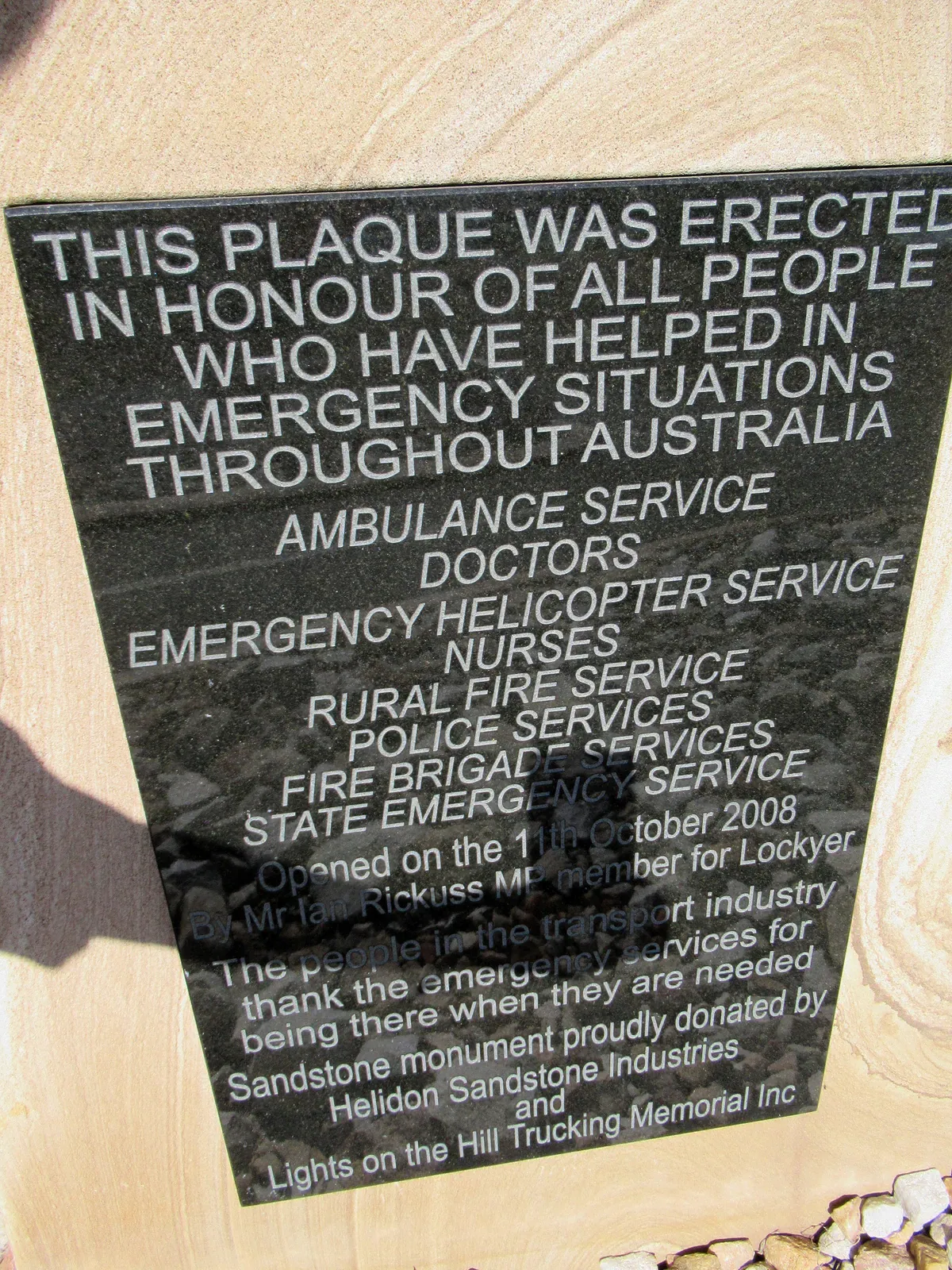
“A Pub With No Beer” is the founding hit of the Slim Dusty catalogue. The pub of the title is a real place in Ingham, North Queensland. “Lights on the Hill”, written by Joy McKean, describes a truck driver on a night run, blinded by headlights, who leaves the road and realises he will not survive. A memorial to truck and coach drivers in Queensland carries its name.
“Duncan”, recorded in 1980, was his second-biggest single.
Mainstream success
Slim Dusty sold more than seven million records in Australia and recorded his hundredth album in 2000, the year he sang “Waltzing Matilda” at the closing ceremony of the Sydney Olympics. He received a state funeral in 2003. John Williamson has won 28 Golden Guitars and three ARIA awards for Best Country Album. Tamworth’s festival is described as the second biggest country music festival in the world after Nashville’s, and visitors double the city’s population each January.
Culture
The January festival is a ritual in itself, with visitors camping by the river in caravans and tents and buskers working Peel Street. The touring shows begun by Slim Dusty’s family are the other pillar. In 2021 COVID-19 cancelled the festival for the first time in its history.
Aboriginal and Torres Strait Islander performers have long shaped the music. Jimmy Little was a pioneer, Roger Knox is called the godfather of Koori music, and Troy Cassar-Daley is among the best-known present-day performers. Kev Carmody and Archie Roach mixed folk-rock and country to sing about Aboriginal rights. The wider tradition is covered at Aboriginal Australian music.
Legacy
The genre fed songwriters beyond country. Paul Kelly, whose music sits between folk, rock and country, is often called the poet laureate of Australian music. Sara Storer and Beccy Cole work the bush themes today. The ties to American country remain close. Smoky Dawson modelled his act on American singing cowboys of the western tradition, Reg Lindsay played the Grand Ole Opry in 1974, and Keith Urban built his career in Nashville, yet the repertoire kept its own landscape and speech.
Misconceptions
The first is that Australian country simply copied America. Tex Morton began with American songs but moved to Australian subjects, and the bush ballad tradition, shaped by Celtic song, predates him. The second is that Tex Morton was Australian; he was born in New Zealand. The third is that the Tamworth festival began in 1973. A talent quest ran there from 1968 and a promotion from 1969; 1973 marks the first Golden Guitars.
Frequently asked questions
What is Australian country music?
The country music of Australia, combining American country with bush ballads, Celtic settler song and outback subject matter, dating from Tex Morton’s 1930s recordings.
Who is the King of Australian Country Music?
Slim Dusty, who sold over seven million records in Australia. His 1957 single “A Pub With No Beer” was the first Australian gold single.
What are the Golden Guitar awards?
The Golden Guitars are the trophies of the Country Music Awards of Australia, first awarded in Tamworth in January 1973 and held each year during the Tamworth Country Music Festival.
Where is the Tamworth Country Music Festival held?
In Tamworth, New South Wales, for ten days from mid to late January each year.
Sound
Sound sheet
Anatomy of a track
| # | Part | Bars |
|---|---|---|
| 1 | Verse | 16 |
| 2 | Chorus | 8 |
| 3 | Verse | 16 |
| 4 | Chorus | 8 |
Signature sounds
- Narrative storytelling verses
- Bush and outback subject matter
- Australian vernacular diction
Techniques
- Yodelling
- Narrative story-song
- Whip cracking
- Vernacular diction
Keys and modes
Major keys. Canonical recordings cluster on D major, with F, E-flat and B also appearing.
Vocals
Plain Australian accents and storytelling delivery, with yodelling in the early tradition.
Scenes
Where it happened
Where and when the sound lived: one bar per city on a shared timeline.
Oceania
Active scenes
Peak 3, 1982-2025
The country music capital, home of the January festival and the Golden Guitar awards.
Where Tex Morton made his first recordings and where the early radio shows and record labels were based.
Host of the Gympie Muster, a community festival and charity fundraiser.
Venues and places
Tamworth, 1973 to today. Ten days each January of concerts, busking in Peel Street and the Golden Guitar awards.
Gympie, 1982 to today. A non-profit festival of mainstream, bush and alternative country.
Culture
Culture markers
- January in Tamworth
Visitors double the city's population and camp by the riverside in caravans and tents.
Ritual - Touring shows
Slim Dusty's family travelling show and annual tours took country to bush towns.
Ritual - Australian vernacular
Songs such as Old Man Emu and True Blue use Australian slang and bush subjects.
Slang
Media
Key media
- 1964The Country & Western Hour
by Reg Lindsay. Networked television show that gave hundreds of young artists a start.
Radio - 1984The Slim Dusty Movie
by Slim Dusty. Feature film of the family's 10-month, 30,000-mile round-Australia tour.
Film - 2000Buried Country
by Various. Book, documentary and soundtrack on Indigenous musicians from the 1940s to the 1990s.
Film
Glossary
Terms on this page
Narrative song of drovers, shearers, bushrangers and swagmen, also called bush music or bush band music.
Trophy of the Country Music Awards of Australia, first awarded in Tamworth in January 1973.
Name of country gatherings such as the Gympie Muster and the Grabine Music Muster.
Honour roll of Australian country music whose members include Tex Morton, Smoky Dawson and Slim Dusty.
Country family