Aboriginal Australian music
Aboriginal Australian music joins song, dance and country with contemporary rock, reggae and hip-hop sung in community languages, recorded since 1949.
Australia, 1949
Oceanian family
Born
1949
Australia
Subgenres
12
Documented branches
Links
6
Genres it drew on or shaped
Tempo
80-135 BPMLineage
Family tree
Grew out of
Australia
Aboriginal Australian music
Led to (12)
Timeline
Era by era
From the first sparks to today. Select a dot to read the story behind it.
- Field recordings and gospel voices
1949 to 1971
- Training and first bands
1972 to 1982
- Rock and reconciliation
1983 to 1995
- Festivals and world audiences
1996 to 2013
- Hip-hop and new voices
2014 to 2026
Eras
Moments
- 1 Field recordings and gospel voices, 1949 to 1971
- 2 Training and first bands, 1972 to 1982
- 3 Rock and reconciliation, 1983 to 1995
- 4 Festivals and world audiences, 1996 to 2013
- 5 Hip-hop and new voices, 2014 to 2026
1949
Field recordings and gospel voices
Elkin recorded Yolngu songs at Yirrkala, while Jimmy Little took a gospel song to the top of the Sydney charts in 1963 as the first Aboriginal pop star.
- 1953Tribal Music of Australia releasedA. P. Elkin's Yirrkala recordings of 1949-52 became the first LP of traditional Aboriginal music.
- 1963Jimmy Little's Royal TelephoneThe gospel song reached number 1 in Sydney and sold over 75,000 copies, a first for an Indigenous Australian singer.
1972
Training and first bands
The Centre for Aboriginal Studies in Music trained a generation, and Coloured Stone, No Fixed Address and Warumpi Band formed, with CAAMA founding a label in Alice Springs.
- 1972CASM founded in AdelaideThe Centre for Aboriginal Studies in Music at the University of Adelaide trained Coloured Stone, No Fixed Address and Us Mob.
- 1977Coloured Stone start at KoonibbaThe band from the Koonibba Mission in South Australia is still active.
- 1979No Fixed Address form in AdelaideBart Willoughby's reggae-rock band formed at CASM and became the first Aboriginal band to travel overseas.
- 1980Warumpi Band form at PapunyaThe band took its name from the Luritja word for a honey-ant dreaming site near the settlement.
- 1980CAAMA founded in Alice SpringsIts radio station 8KIN-FM and record label CAAMA Music gave Central Australian languages a broadcast and recording home.
- 1982We Have Survived releasedNo Fixed Address's reggae single became an anthem of cultural persistence.
1983
Rock and reconciliation
Songs in Luritja and Yolngu Matha, protest anthems like Treaty and Took the Children Away, and Christine Anu's pop hit carried Aboriginal voices onto national radio.
- 1983Jailanguru PakarnuWarumpi Band's single was a pioneering rock record in an Aboriginal language.
- 1984Black Boy by Coloured StoneBunna Lawrie's song of cultural pride sold widely, notably in Fiji.
- 1985Blackfella/Whitefella and Big Name, No BlanketsWarumpi Band's song about racism and cooperation appeared on their debut album.
- 1986Blackfella/Whitefella TourMidnight Oil and Warumpi Band toured remote Central Australian communities together.
- 1987My Island Home on Go Bush!Neil Murray wrote it for Warumpi singer George Burarrwanga, and Christine Anu's 1995 version made it a national favourite.
- 1988Barunga StatementAt the Barunga Festival, leaders asked Prime Minister Bob Hawke for a treaty, the spark for Yothu Yindi's song.
- 1990Charcoal LaneArchie Roach's debut album carried Took the Children Away, about the Stolen Generations.
- 1991TreatyThe Filthy Lucre remix became the first single by a mainly Aboriginal band to reach the Australian pop chart.
- 1993Carmody and Kelly's From Little Things Big Things GrowThe song retells the Gurindji walk-off from Wave Hill Station.
- 1995Christine Anu's Island HomeHer reworking of the Warumpi Band song won APRA Song of the Year and lifted Stylin' Up to platinum.
1996
Festivals and world audiences
Garma gave Yolngu ceremony a public stage from 1999, and Gurrumul's 2008 debut became the best-selling Aboriginal and Torres Strait Islander album in Australia.
- 1999First Garma FestivalThe Yothu Yindi Foundation's festival at Gulkula features nightly public bunggul dancing by Yolngu clans.
- 2008Gurrumul releasedThe debut became the best-selling Aboriginal and Torres Strait Islander album in Australia.
- 2012Yothu Yindi enter the ARIA Hall of Fame
2014
Hip-hop and new voices
Baker Boy rapped in Yolngu Matha to a national audience, and artists such as Kankawa Nagarra and King Stingray widened the sound.
- 2017MarryunaBaker Boy and Yirrmal's Yolngu Matha and English dance track placed 17th in the triple j Hottest 100.
- 2019Baker Boy named Young Australian of the Year
- 2022Archie Roach diesHe was posthumously made a Companion of the Order of Australia in 2023.
Listening path
Anthems
The records that built the sound, grouped by the part they played. Thumbnails come from YouTube; the player loads only when you press play.
- 01
No Fixed Address, 1982
Reggae single by Aboriginal musicians from CASM that became an anthem of cultural persistence.
Origin - 02
Warumpi Band, 1983
A pioneering rock single sung in an Aboriginal language, from Papunya.
Origin - 03
Yothu Yindi, 1991 · Mushroom Records
Yolngu Matha and English protest song on the yidaki, bilma and rock band that took an Aboriginal band onto the pop chart.
Start hereBreakthrough - 04
Coloured Stone, 1984
Bunna Lawrie's song of cultural pride, a staple of Aboriginal rock.
Anthem - 05
Warumpi Band, 1985
A plea for cooperation that gave its name to the 1986 tour with Midnight Oil.
Anthem - 06
Warumpi Band, 1987
Neil Murray's song for George Burarrwanga, later reworked by Christine Anu into a national favourite.
Anthem - 07
Archie Roach, 1990 · Mushroom Records
Archie Roach's account of the Stolen Generations, the first song to win a Human Rights Award for songwriting; the linked video is his 2020 re-recording.
Start hereAnthem - 08
Kev Carmody, 1993 · Festival Records
Carmody and Paul Kelly's folk retelling of the Gurindji walk-off led by Vincent Lingiari.
Anthem - 09
Gurrumul, 2008 · Skinnyfish Music
A quiet Yolngu-language song from the album that won Gurrumul listeners across Europe.
Start hereCrossover - 10
Baker Boy, 2017
Baker Boy and Yirrmal rap and sing between Yolngu Matha and English, the title meaning let's dance.
Revival
Facts
| Family | Oceanian |
| Origin | Australia |
| Emerged | Pre-colonial onwards |
| Status | Active |
| Tempo | 80 to 135 BPM |
| Meter | 4/4 |
| Subgenres | 12 |
Aboriginal Australian music is the song and dance of the many Aboriginal nations of Australia, together with the popular styles that Aboriginal musicians built from them from the 1970s onward.
In the older traditions song, dance and country are one practice: a song belongs to a language group, a clan or a stretch of land, and much of it is restricted to those with the right to perform it. The contemporary side adds rock, reggae, country, gospel and hip-hop, often sung in Luritja, Yolngu Matha, Pitjantjatjara and other community languages. It is part of Oceanian music and has close neighbours in the music of the Torres Strait Islands.
Origins
The oldest layer is the clan and regional song of the Aboriginal nations, passed on orally and tied to country. Songlines, the tracks of creator beings across land and sky, are kept in song cycles, stories, dance and art, and are sung in the languages of the places they cross. Regional forms carry their own names: manikay, the clan songs of the Yolngu of north-east Arnhem Land; bunggul, the song and dance of central-eastern Arnhem Land, whose song series can run past 180 songs; wangga, from the country near the South Alligator River, whose melodies open on a high note and descend; and wajarra, the non-sacred entertainment songs of the Gurindji region that travelled along stock routes.

Most of this music is not public. Ceremonial songs and their dances are restricted by gender, age, clan and permission, and sacred repertoire is not recorded or shown to outsiders. What is publicly documented is the entertainment and community repertoire, and a smaller body of songs that communities have chosen to share. The account here covers only that material.
Field recordings and gospel voices, 1949-1971
The first sustained recordings of Aboriginal song for a wide audience were made at Yirrkala in 1949-52 by the anthropologist A. P. Elkin. They were issued in 1953 as Tribal Music of Australia, the first LP of traditional Aboriginal music, and gave an early annotated recording of the yidaki. The recordings were made for study and release by outsiders, which is how most Aboriginal music first reached record shelves.
A separate path ran through church and country music. Jimmy Little’s gospel song Royal Telephone reached number 1 in Sydney in 1963 and sold more than 75,000 copies on the label Festival Records, making him the first Aboriginal pop star.
Training and first bands, 1972-1982
The Centre for Aboriginal Studies in Music (CASM) opened at the University of Adelaide in 1972 and trained a generation of players, among them members of Coloured Stone, No Fixed Address and Us Mob. Coloured Stone had started in 1977 at the Koonibba Mission in South Australia and is still active. No Fixed Address formed at CASM in Adelaide in 1979 around Bart Willoughby and played reggae-rock, drawing on the wider reggae world; it became the first Aboriginal band to travel overseas.
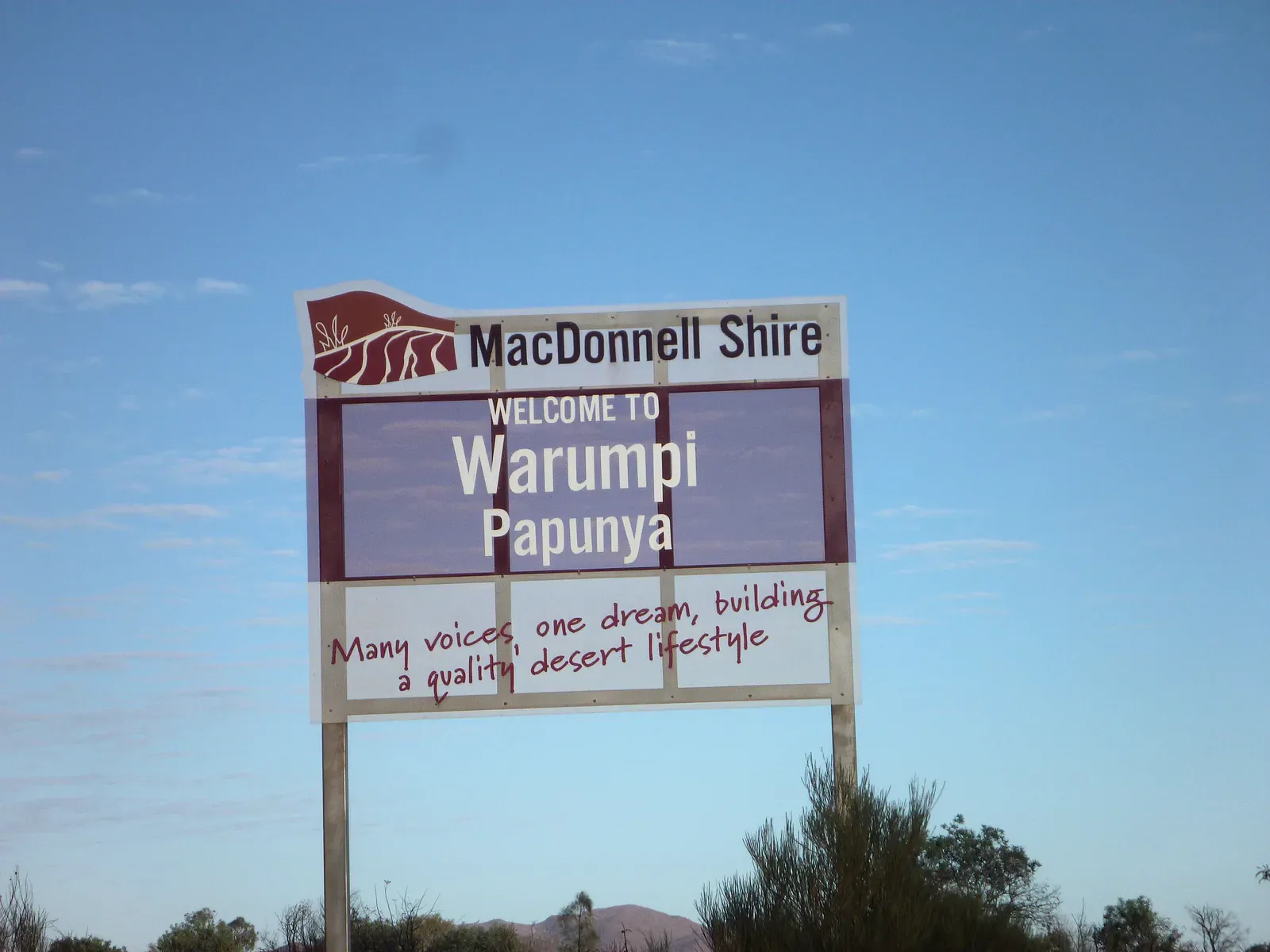
In 1980 two things happened in central Australia. Warumpi Band formed at Papunya, naming itself after the Luritja word for a honey-ant dreaming site near the settlement, and the Central Australian Aboriginal Media Association (CAAMA) began in Alice Springs. Its station 8KIN-FM and label CAAMA Music gave central Australian languages a broadcast and recording home. No Fixed Address released We Have Survived in 1982, a reggae single that became an anthem of cultural persistence.
Rock and reconciliation, 1983-1995
Warumpi Band’s Jailanguru Pakarnu (Out from Jail) in 1983 was a pioneering rock record sung in an Aboriginal language. The debut album Big Name, No Blankets followed in 1985 with Blackfella/Whitefella, a plea for cooperation across the colour line that mixed English, Luritja and Gumatj lyrics in a pub-rock sound. A year later the song gave its name to a tour in which Midnight Oil and Warumpi Band played remote communities of Central Australia together. Neil Murray’s My Island Home, written for the Warumpi singer George Burarrwanga and recorded in 1987, would be reworked into a national favourite eight years later.
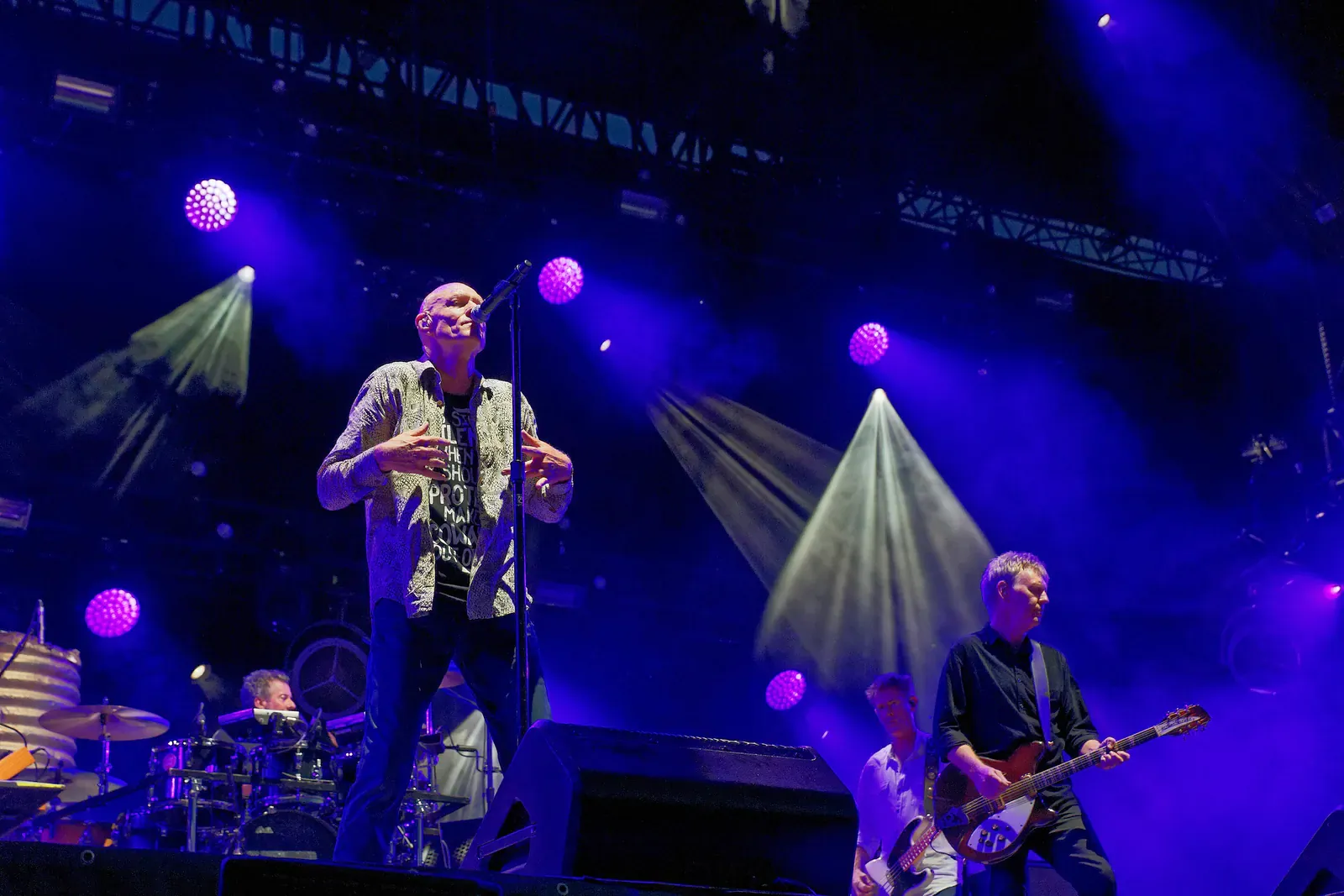
Coloured Stone’s Black Boy of 1984, written by Bunna Lawrie, was a song of cultural pride that sold widely, notably in Fiji. In 1988 leaders at the Barunga Festival presented the Barunga Statement to Prime Minister Bob Hawke asking for a treaty, and the idea became the spark for the best-known Aboriginal song of the era.
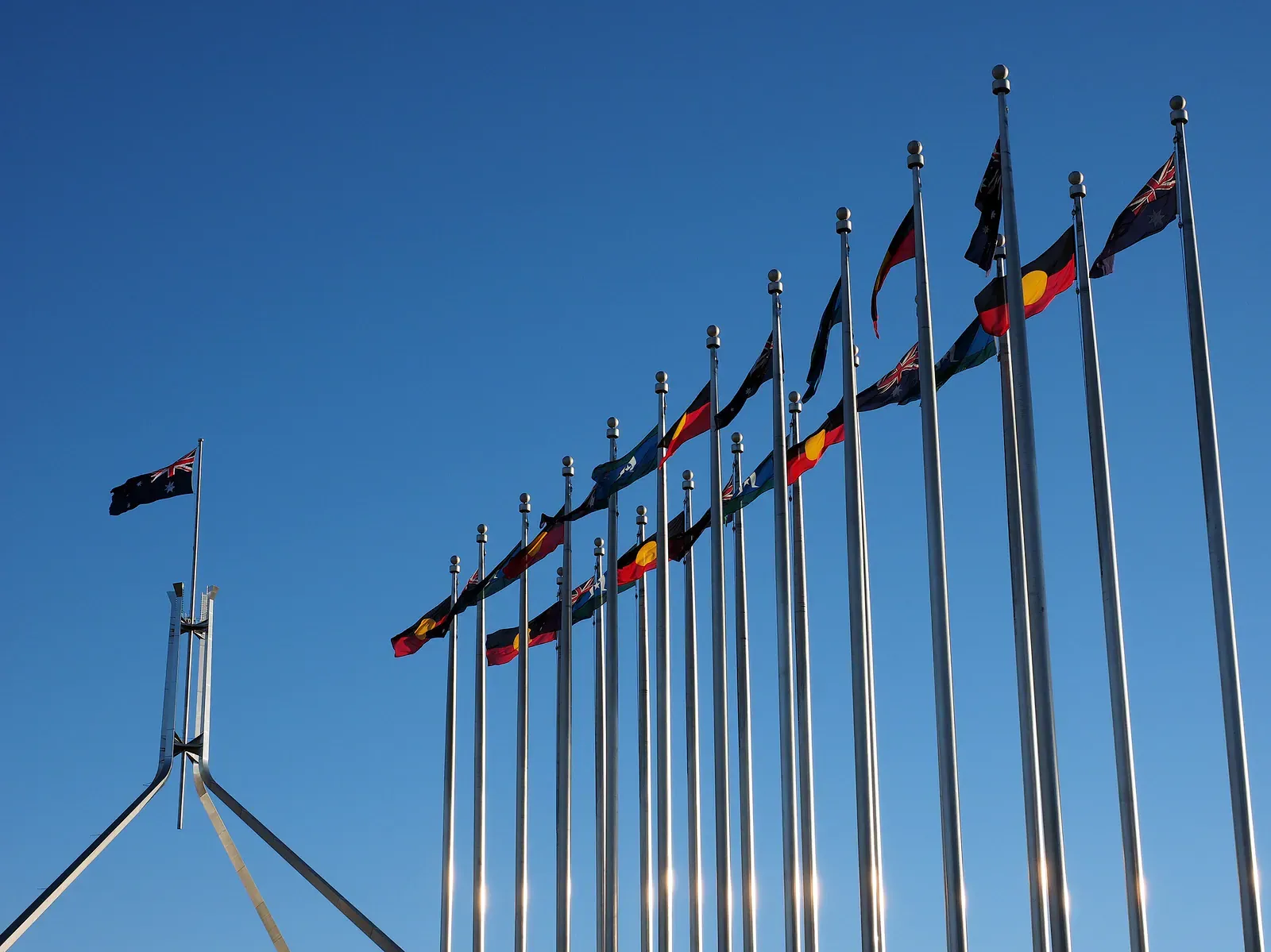
Yothu Yindi’s Treaty came from that moment. The Yolngu Matha and English protest song, built on yidaki, bilma and a rock band, reached the Australian pop chart in 1991 in its Filthy Lucre remix, the first single by a mainly Aboriginal band to do so. The parent album Tribal Voice peaked at number 4 on the ARIA chart on Mushroom Records. In 1990 Archie Roach’s debut album Charcoal Lane on the same label carried Took the Children Away, his account of the removal of Aboriginal children from their families. It won two ARIA Awards in 1991 and later went gold. In 1993 Kev Carmody and Paul Kelly’s From Little Things Big Things Grow retold the Gurindji walk-off from Wave Hill Station, led by Vincent Lingiari; Carmody’s version appeared on Bloodlines.
Festivals and world audiences, 1996-2013
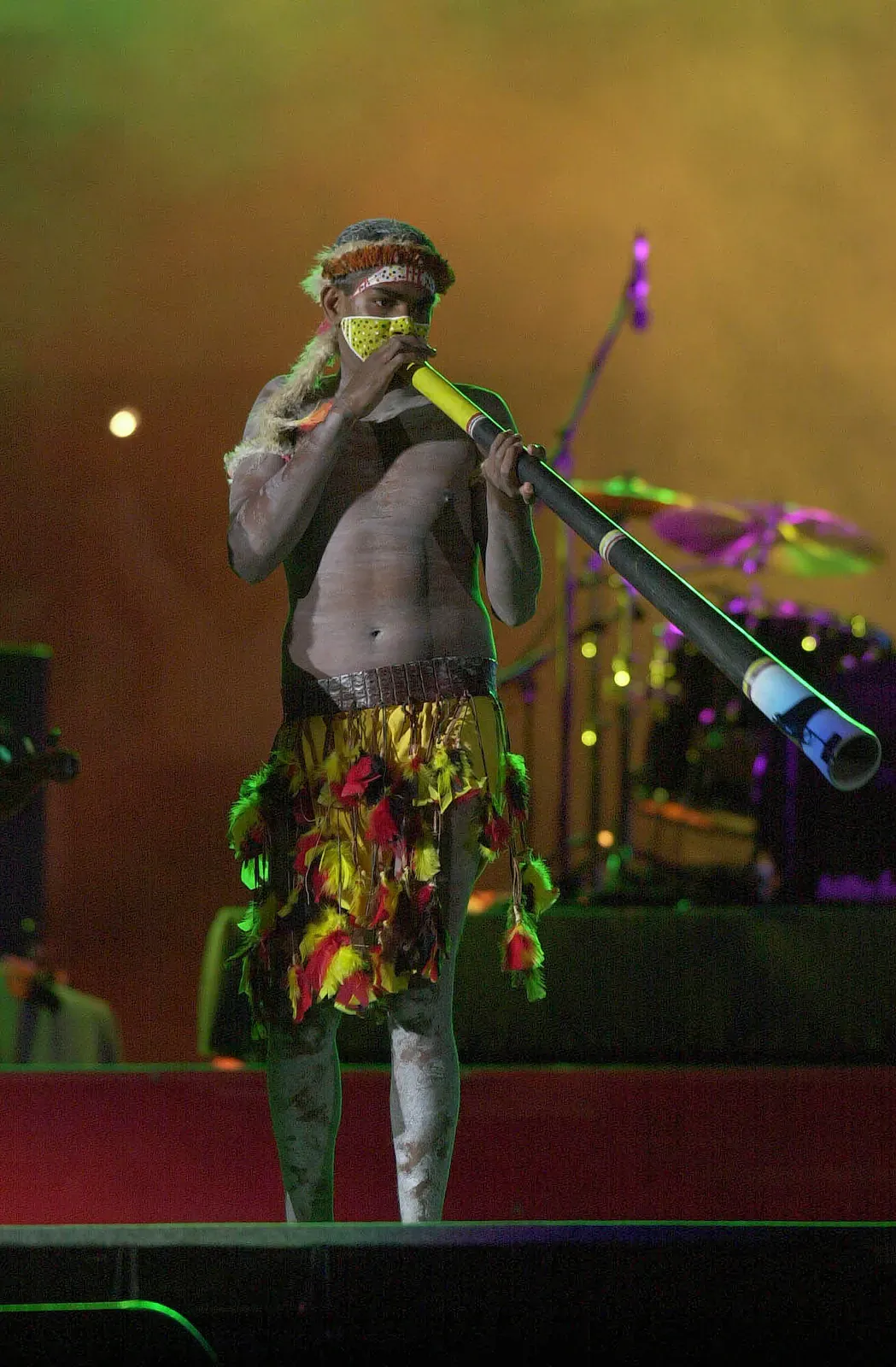
Christine Anu’s 1995 reworking of My Island Home won the APRA Song of the Year award and lifted her debut Stylin’ Up to platinum. The Garma Festival, run by the Yothu Yindi Foundation at Gulkula in north-east Arnhem Land, began in 1999 and gives Yolngu clans a public stage; bunggul dancing by clans takes place there each evening. Barunga, near Katherine, hosts live bands and holds its festival each Queen’s Birthday weekend.
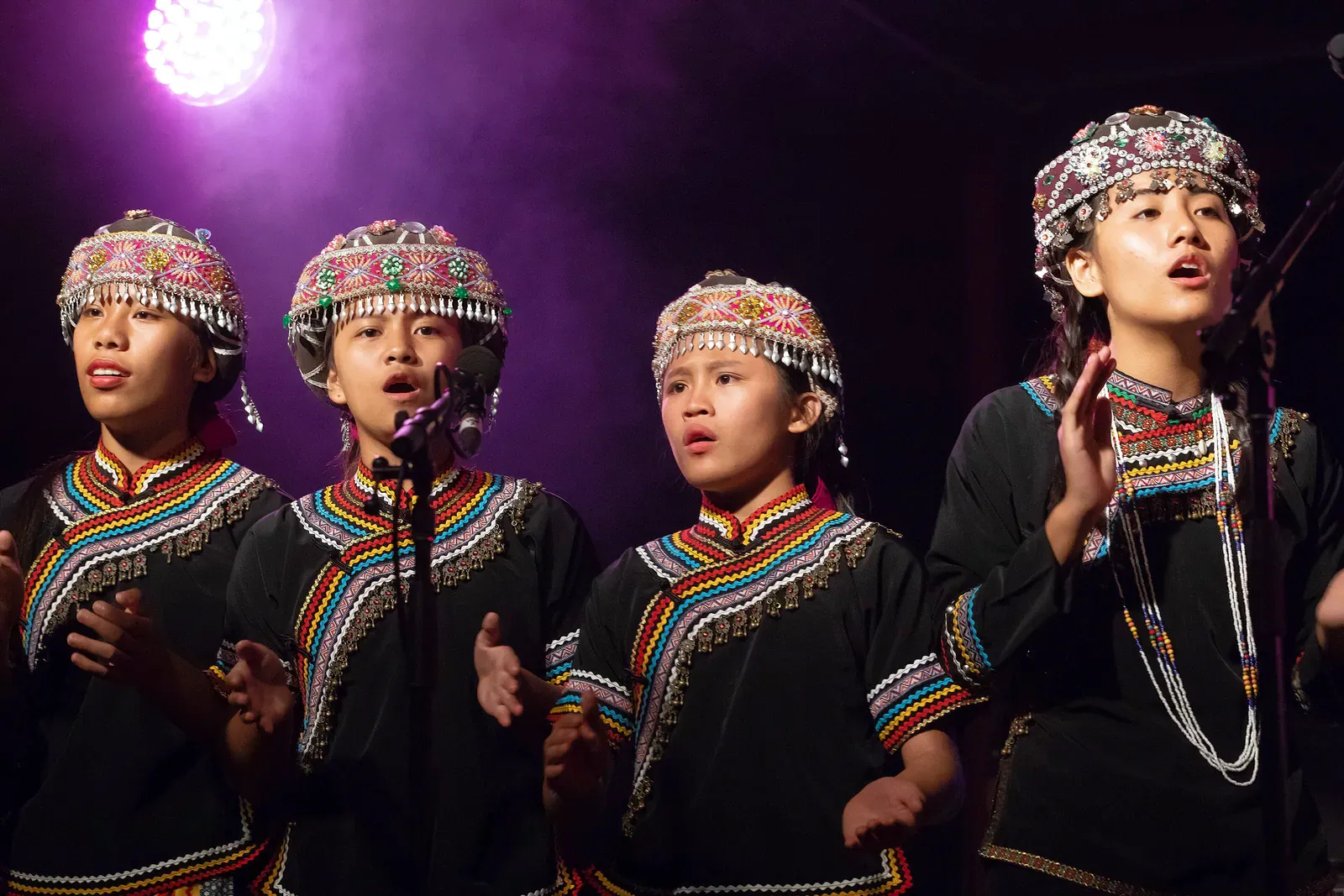
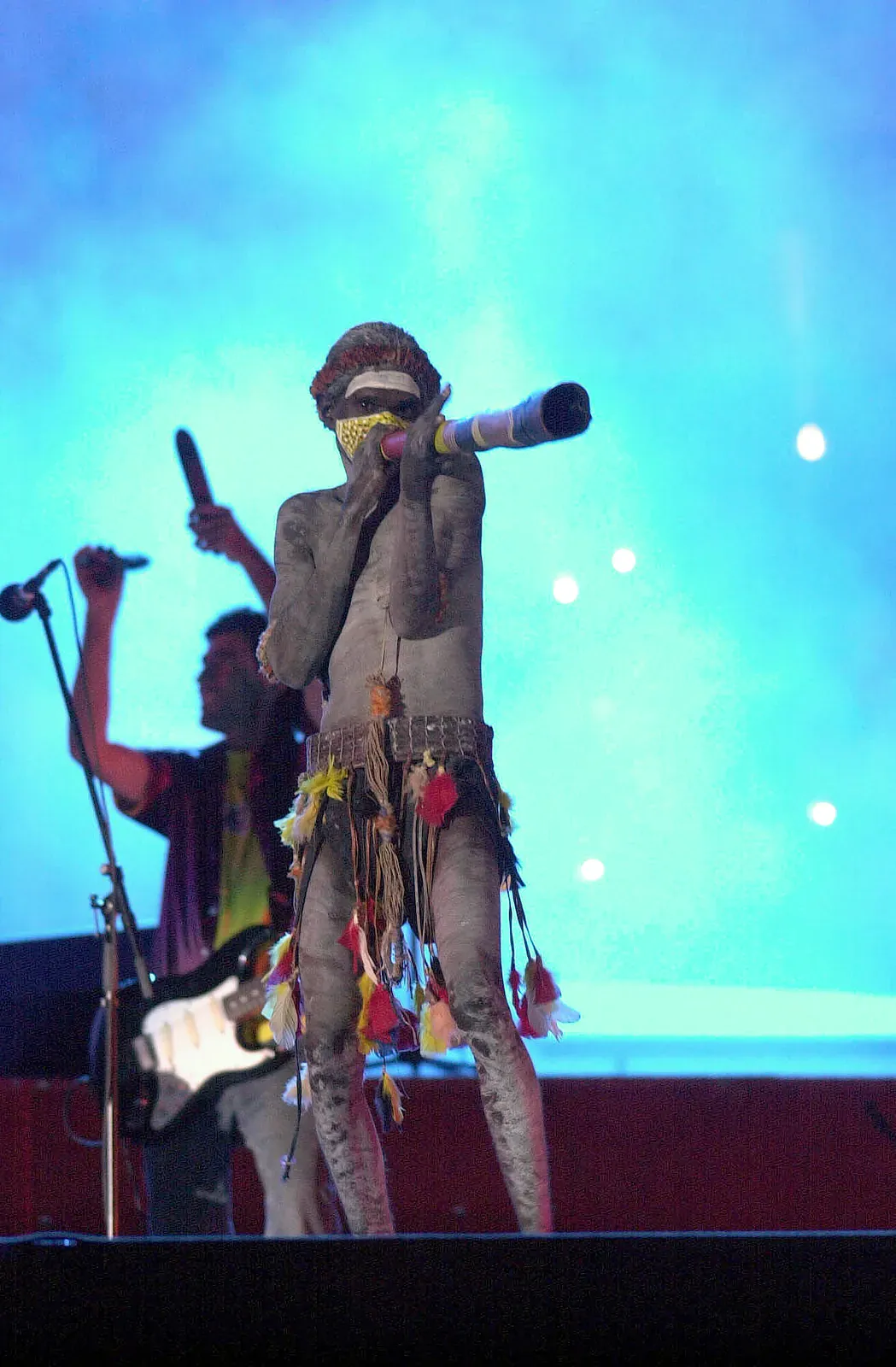
Gurrumul’s debut album, released in 2008 on Skinnyfish Music, was sung in Yolngu languages and English and became the best-selling album by an Aboriginal or Torres Strait Islander artist in Australia, reaching number 3 and going 3x platinum. It also won listeners across Europe. Yothu Yindi entered the ARIA Hall of Fame in 2012.
Hip-hop and new voices, 2014 onward
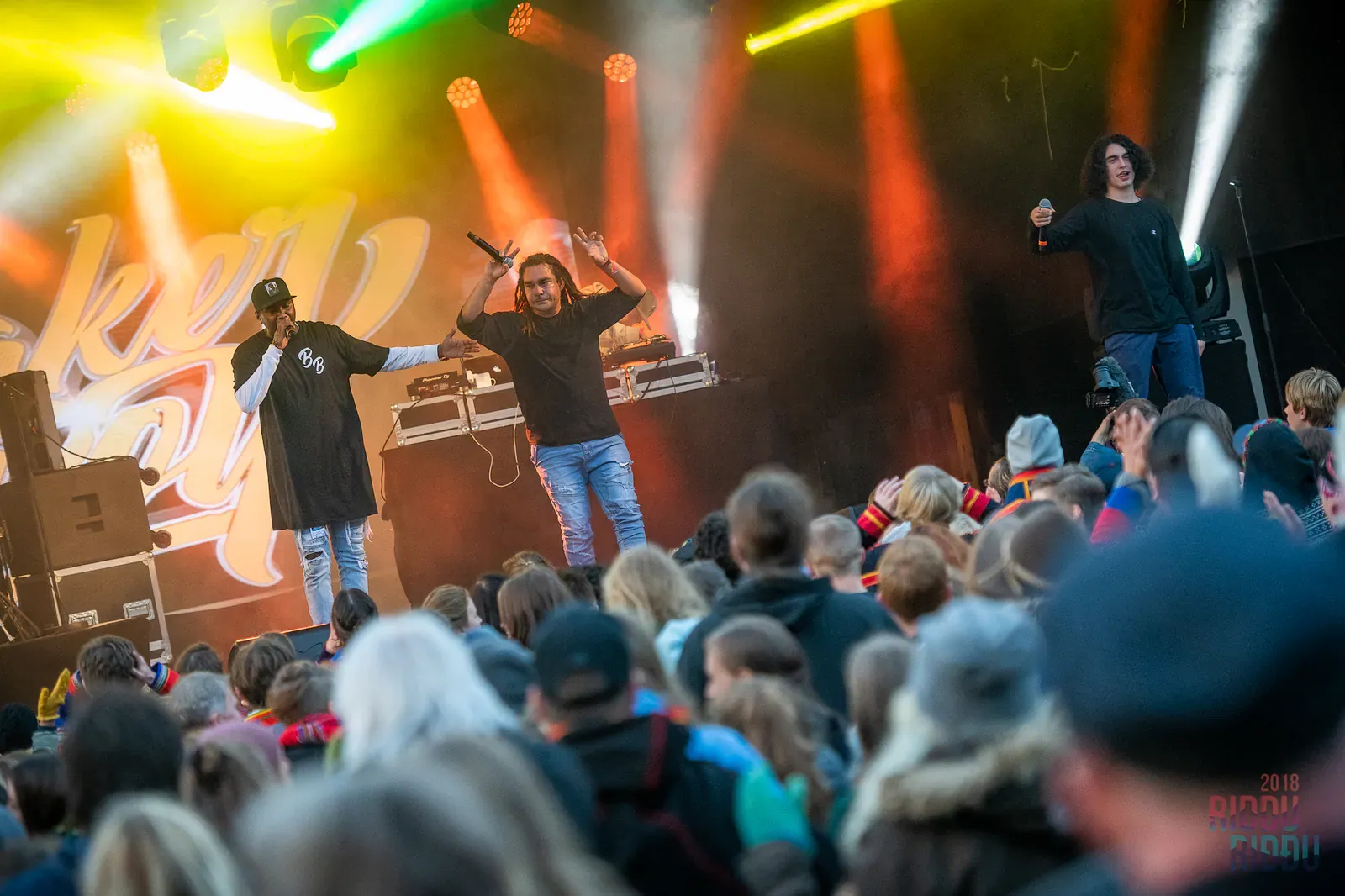
A younger generation moved between Yolngu Matha or other community languages and English inside a single song. Baker Boy and Yirrmal’s Marryuna, from 2017, placed 17th in the triple j Hottest 100; the title is a Yolngu Matha phrase meaning let’s dance. Baker Boy was named Young Australian of the Year in 2019. Artists such as Kankawa Nagarra and King Stingray widened the sound further. Archie Roach died in 2022 and was posthumously made a Companion of the Order of Australia in 2023.
Characteristics
Traditional performance rests on a singer with a clapstick pulse and, where the tradition allows, a didgeridoo drone, and on texts that name country, ancestors and creatures. Song series are long and organised by place. The contemporary repertoire keeps those features in a rock band format, so a bass and drum line may sit under language lyrics and a yidaki. A typical thread is the use of Aboriginal languages in popular forms, which began with Warumpi Band and continues across hip-hop.
Instruments and production
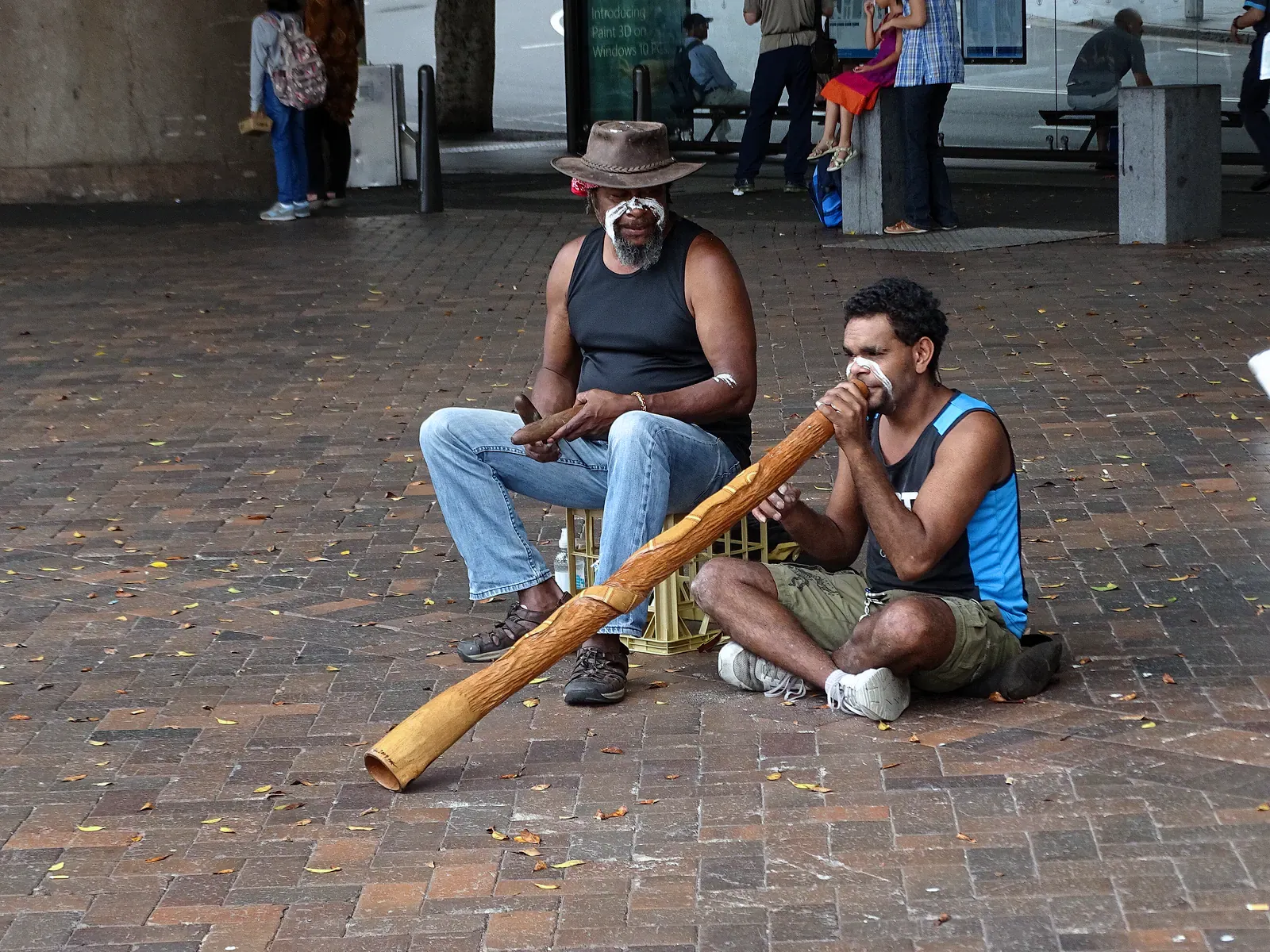
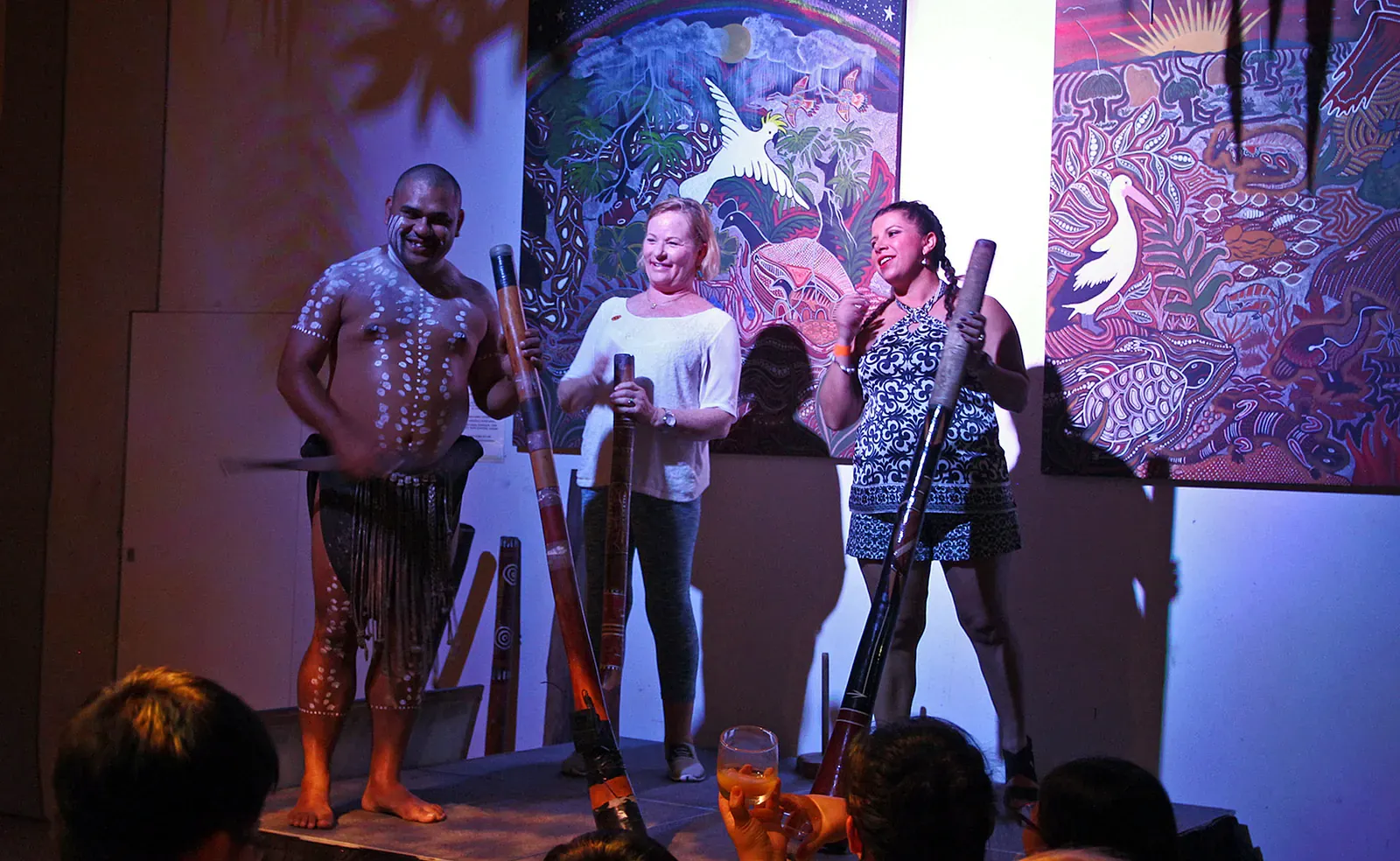
The didgeridoo is a hollow eucalyptus pipe played with circular breathing, and in the north-east it is called the yidaki. Bilma, the clapsticks, are often decorated. The gum leaf, a eucalyptus leaf held to the lips as a free reed, was first used for bird calls. A bullroarer, a flat piece of wood swung on a cord, belongs to ceremonial contexts. Recording moved from Elkin’s field recordings to the training and broadcast facilities at CASM and CAAMA, where acoustic instruments sit beside electric guitars.
Culture
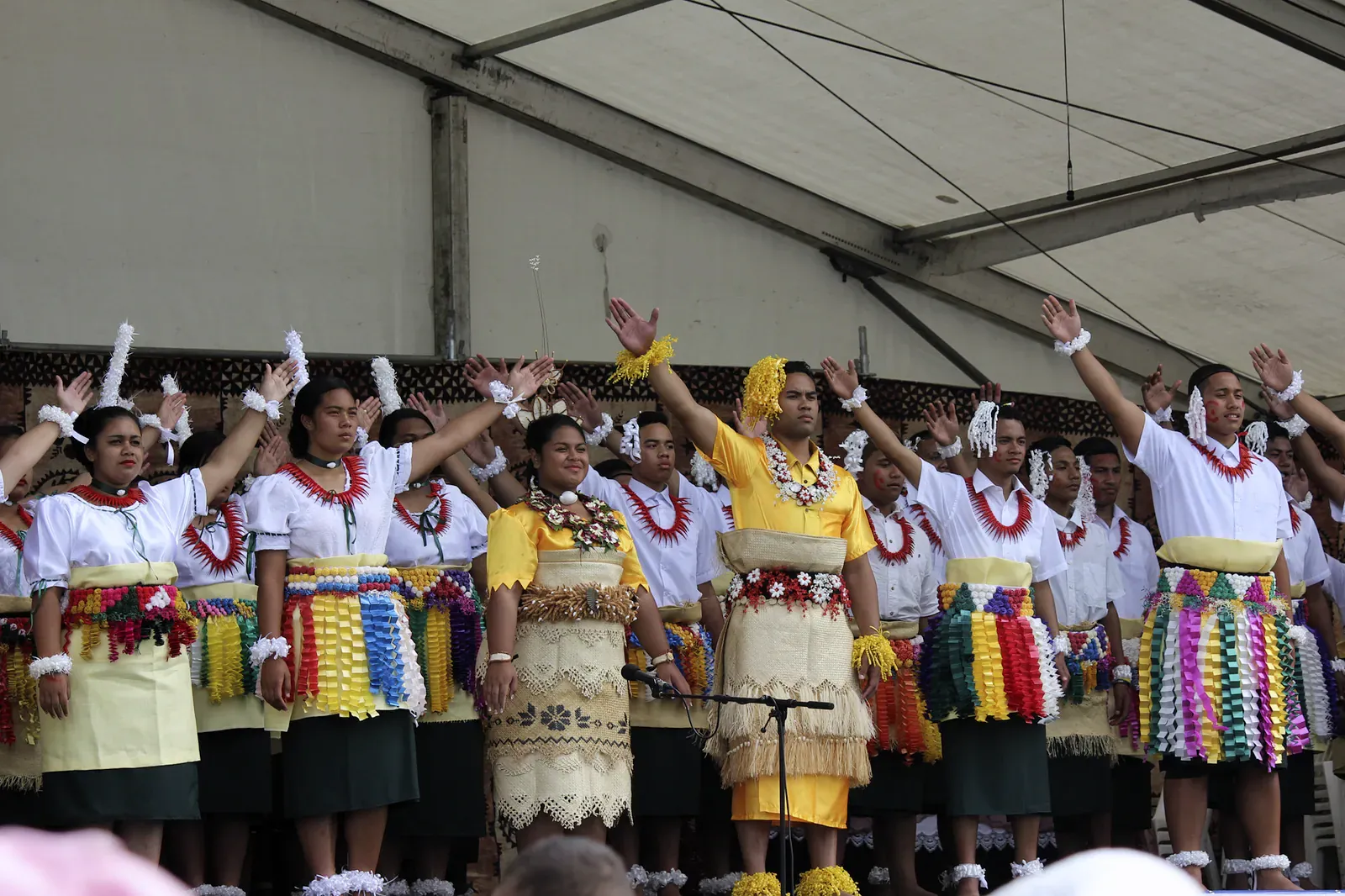
Many songs belong to particular communities and need permission to perform. Sacred repertoire is not public, and the images in this article show only public performance. Public dance takes place at festivals and community events, where bunggul and other dances are shown with body paint, headbands and, in some regions, boomerangs.
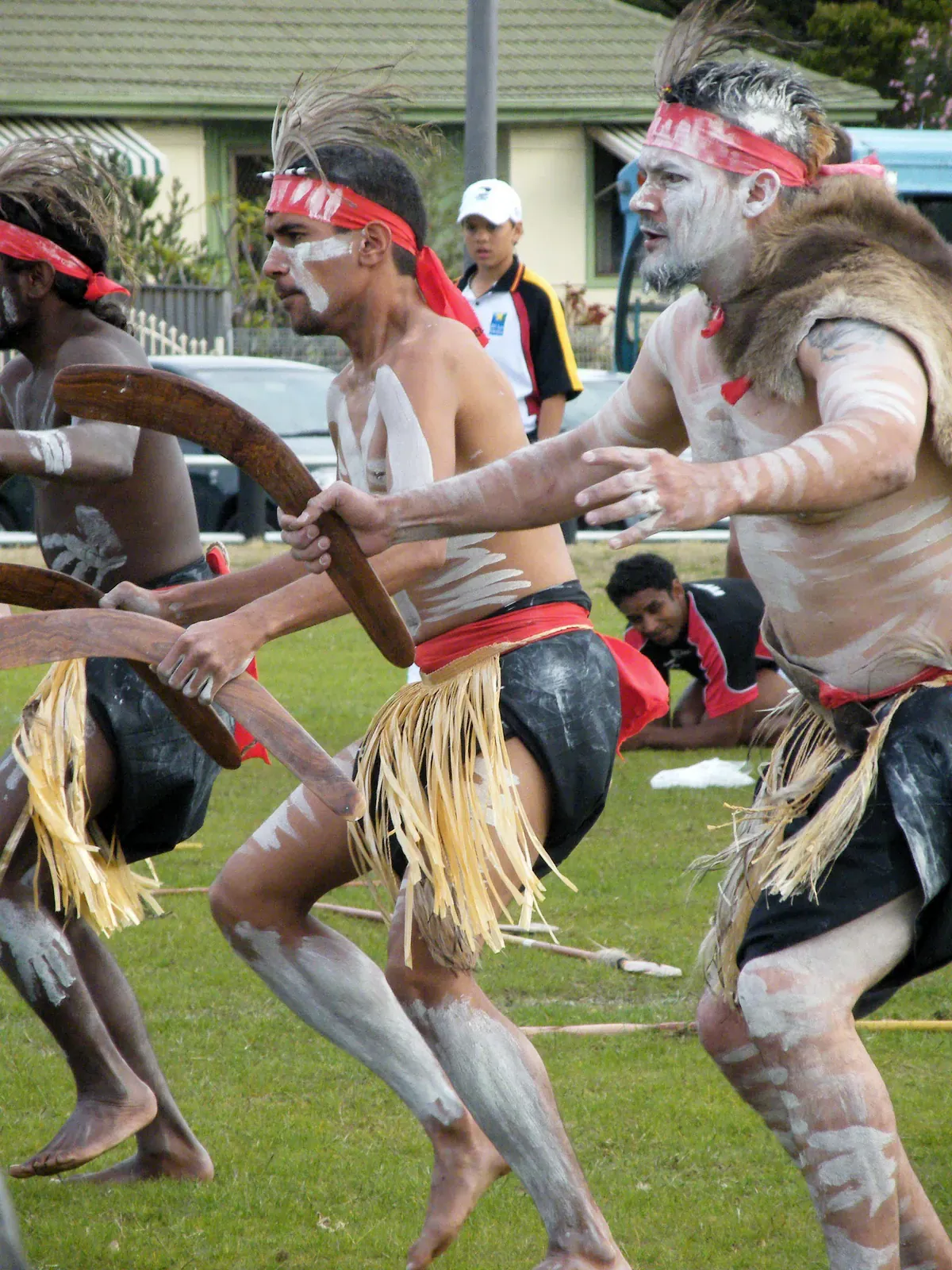
Protest and recognition are central themes. Treaty, Took the Children Away, From Little Things Big Things Grow and Blackfella/Whitefella all tell the history of dispossession, removal and reconciliation in song. Media also shaped the scene: Wrong Side of the Road, a 1981 film, brought No Fixed Address and Us Mob to cinema audiences, and the compilation Buried Country, released in 2000, traced Aboriginal country music.
Legacy
The tradition shows that song can carry law, land and language while adapting to amplified instruments and charts. Radio and a record label in central Australia gave community languages a broadcast home, and the same languages now appear in the Hottest 100.
Misconceptions
One myth is that the didgeridoo is played across all of Aboriginal Australia. It is best documented in northern Australia, and its Yolngu name is yidaki; many other regions used clapsticks, voices and other instruments. A second myth is that the music is a single style. It is a set of regional repertoires in different languages, from Arnhem Land manikay to Gurindji wajarra, and a range of modern genres. A third is that Aboriginal pop began with Yothu Yindi. Jimmy Little reached number 1 in Sydney in 1963, and Warumpi Band, Coloured Stone and No Fixed Address recorded in the early 1980s.
Frequently asked questions
What is Aboriginal Australian music?
Aboriginal Australian music is the song and dance of the Aboriginal nations of Australia and the contemporary styles, from reggae to hip-hop, that Aboriginal musicians have built from them. Traditional repertoires are tied to language and country.
What instruments are used in Aboriginal Australian music?
The didgeridoo, called yidaki by the Yolngu, and paired clapsticks called bilma are the best-known instruments. A bullroarer and the gum leaf are also used in some contexts, while modern bands add electric guitar, bass and drums.
What are songlines?
Songlines are the tracks of creator beings across land or sky, kept in song cycles, stories, dance and art. They link places and carry law, and are sung in the regional languages of the country they cross.
Which Aboriginal bands are best known?
Yothu Yindi, with Treaty in 1991, is the best-known band; Warumpi Band, Coloured Stone and No Fixed Address were the first to record in the early 1980s. Gurrumul, Archie Roach, Christine Anu and Baker Boy are widely known solo artists.
Sound
Sound sheet
Anatomy of a track
| # | Part |
|---|---|
| 1 | Didjeridu drone and clapsticks set the pulse |
| 2 | Sung verse, melody falling from a high opening |
| 3 | Final recitative after the instruments stop |
Signature sounds
- Continuous didjeridu drone
- Clapstick pulse
- Descending melodic line
- Final recitative
- Lyrics in community languages over a rock band
Techniques
- Circular breathing
- Clapstick beating
- Descending melody
- Final recitative
- Language code-switching
Tuning
Each didjeridu sounds one fixed drone pitch set by its length.
Vocals
Sung in community languages such as Yolngu Matha, Luritja and Pitjantjatjara, often alongside English.
Scenes
Where it happened
Where and when the sound lived: one bar per city on a shared timeline.
Oceania
Active scenes
Peak 6, 1999-2025
Home of the Yolngu manikay tradition and the 1949-52 Elkin recordings.
CASM trained and launched Coloured Stone and No Fixed Address.
Warumpi Band formed here, singing in Luritja and English.
CAAMA's radio station and CAAMA Music label are based here.
Its annual festival hosted the 1988 Barunga Statement and live bands.
Garma Festival site in Arnhem Land, near Nhulunbuy.
Venues and places
Nhulunbuy, 1999 to today. Four days each August with nightly public bunggul by Yolngu clans.
Barunga, 1985 to today. Held on the Queen's Birthday weekend near Katherine; scene of the 1988 Barunga Statement.
Alice Springs, 1980 to today. Described as the first Aboriginal radio station in the country.
Adelaide, 1972 to today. Training centre with recording facilities; a base for the first Aboriginal bands.
Culture
Culture markers
- Bunggul at Garma
Yolngu clans dance in public each evening during the festival.
Dance - Songlines
Songs map routes across country and carry law, and are sung respectfully in regional languages.
Ritual - Ceremonial restriction
Many songs belong to particular communities and need permission to perform; sacred repertoire is not public.
Ritual - Decorated clapsticks
Bilma are often decorated with Indigenous artwork.
Artwork - Marryuna
A Yolngu Matha word meaning let's dance, made known by Baker Boy.
Slang
Media
Key media
- 1953Tribal Music of Australia
by A. P. Elkin. The first LP of traditional Aboriginal music, from Yirrkala recordings.
Compilation - 1981Wrong Side of the Road
Its soundtrack gave exposure to No Fixed Address and Us Mob.
Film - 1987The Songlines
by Bruce Chatwin. Introduced the idea of songlines to a wide readership.
Book - 2000Buried Country: The Story of Aboriginal Country Music
by Various. Larrikin release tracing Aboriginal country music.
Compilation
Glossary
Terms on this page
Yolngu word for clapsticks.
Song and dance performance of central-eastern Arnhem Land, with song series that can run past 180 songs.
Words sung for a long time after the didjeridu and sticks have stopped.
Clan songs of Yolngu people of north-east Arnhem Land, sung with yidaki and bilma.
A track of a creator being across land or sky, kept in song cycles, stories, dance and art.
Non-sacred entertainment songs of the Gurindji region that spread along stock routes.
Song genre from near the South Alligator River whose melody starts on a high note and descends.
The Yolngu name for the didjeridu of north-east Arnhem Land.
Oceanian family