Oceanian & Pacific music
Oceanian and Pacific music covers Aboriginal song, Polynesian chant, Hawaiian slack key, kapa haka and Pacific reggae, from ancient chant to streaming.
118 genres
Since around 1000
Genres
118
In this family
Branches
9
Main subgenres
Since
around 1000
Australia, New Zealand, United States, Fiji, Papua New Guinea, Samoa, Tonga, Solomon Islands, Vanuatu, French Polynesia, Cook Islands, Micronesia
Timeline
Era by era
From the first sparks to today. Select a dot to read the story behind it.
- Chant, voyaging and dance
1000 to 1788
- Hymns, guitars and contact
1788 to 1900
- Hapa haole and Pacific radio
1900 to 1945
- First labels and showbands
1946 to 1969
- Renaissance and protest
1970 to 1989
- Indigenous voices go national
1990 to 2009
- Streaming, festivals and Moana
2010 to today
Eras
Moments
- 1 Chant, voyaging and dance, 1000 to 1788
- 2 Hymns, guitars and contact, 1788 to 1900
- 3 Hapa haole and Pacific radio, 1900 to 1945
- 4 First labels and showbands, 1946 to 1969
- 5 Renaissance and protest, 1970 to 1989
- 6 Indigenous voices go national, 1990 to 2009
- 7 Streaming, festivals and Moana, 2010 to today
around 1000
Chant, voyaging and dance
Aboriginal song traditions run back tens of thousands of years, and Polynesian and Melanesian communities keep chant, dance and drum forms tied to genealogy, land and ceremony.
- 1000Pacific voyagers carry chant and dance across OceaniaShared forms of group chant, genealogy song and dance spread with settlement across Polynesia, while Melanesian and Aboriginal traditions stay locally rooted.
around 1788
Hymns, guitars and contact
Missionary hymn singing, the Portuguese braguinha in Hawaii (1879) and the invention of steel guitar (about 1889) bring new harmony and instruments that Pacific musicians quickly make their own.
- 1879The Ravenscrag brings the braguinha to HonoluluPortuguese workers arrived on 23 August 1879 with the small guitar that became the ukulele.
- 1889Joseph Kekuku slides steel over guitar stringsThe Hawaiian steel guitar traced to this invention spreads worldwide in the next decades.
around 1900
Hapa haole and Pacific radio
Hawaiian bands tour the world, hapa haole songs mix English lyrics with island sounds, and the Hawaii Calls radio show (from 1935) sells a picture of the Pacific to listeners abroad.
- 1935Hawaii Calls begins on radioThe weekly Honolulu broadcast spreads hapa haole songs and steel guitar sounds across the United States.
around 1946
First labels and showbands
Small local labels such as Hula Records and Kiwi Records press island music on disc, while Maori showbands and the first Aboriginal pop singers reach mainstream audiences in New Zealand and Australia.
- 1946Gabby Pahinui records Hi'ilaweIt may be the first Hawaiian song recording to feature slack key guitar.
- 1947Hula Records is founded in HonoluluDon McDiarmid Sr. started it; his son revived the label in the 1950s and it grew into a leading Hawaiian imprint.
- 1957Kiwi Records issues Maori Action SongsThe Putiki Maori Club disc was an early release in a catalogue of Maori and later Pacific recordings.
- 1961The Sons of Hawaii debut on Hula RecordsGabby Pahinui and ukulele player Eddie Kamae recorded the album that fed the later Hawaiian Renaissance.
around 1970
Renaissance and protest
The Hawaiian Renaissance revives slack key and language, Herbs create Pacific reggae, and bands such as Warumpi Band sing rock in Aboriginal languages. CAAMA (1980) records remote communities.
- 1970The Hawaiian Renaissance gathers paceInterest in slack key, Hawaiian language and hula grows through the 1970s, with Gabby Pahinui at its centre.
- 1978Herbs form in AucklandThe band built Pacific reggae around Polynesian Panther politics and anti-nuclear themes.
- 1980Warumpi Band form in PapunyaThe group mixed Luritja and English rock and became a model for remote-community bands.
- 1980CAAMA begins in Alice SpringsThe Central Australian Aboriginal Media Association runs what it calls Australia's oldest Aboriginal record label.
- 1981Herbs release the What's Be Happen? EPThe cover showed police at Bastion Point, and the EP set a standard for Pacific reggae that is hard to surpass.
- 1983Warumpi Band release Jailanguru PakarnuThe first rock-format single in an Aboriginal language, sung in Luritja.
- 1984Poi E tops the New Zealand chartThe Patea Maori Club song, released in 1983 and sung entirely in te reo Maori, showed Maori pop could top the chart.
- 1986Yothu Yindi formThe band joined Yolngu song and instruments with rock to promote understanding between cultures.
around 1990
Indigenous voices go national
Archie Roach, Yothu Yindi, Israel Kamakawiwoʻole, Te Vaka and Fat Freddy's Drop take Pacific songs onto national charts and into world music, and Gurrumul becomes an international name in 2008.
- 1990Archie Roach releases Charcoal LaneHis debut carried Took the Children Away and won two ARIA Awards in 1991.
- 1991Yothu Yindi release Tribal Voice and TreatyThe album reached number 4 on the ARIA chart, and a 1992 remix of Treaty hit number 11 on the singles chart.
- 1993Israel Kamakawiwoʻole releases Facing FutureIts Over the Rainbow medley, first heard on Ka ʻAnoʻi, later spent a record run at number one on Billboard's World Digital Songs chart.
- 1995Te Vaka is established in New ZealandOpetaia Foaʻi formed the Pacific fusion group that later wrote for Disney's Moana.
- 1999Garma Festival begins in Arnhem LandYothu Yindi Foundation set up the annual Yolngu festival of traditional cultures.
- 2005Fat Freddy's Drop release Based on a True StoryThe debut won Album of the Year at the 2005 New Zealand Music Awards.
- 2005The Grammys add a Hawaiian music categoryBest Hawaiian Music Album ran from 2005 to 2011, when the Academy folded it into a broader roots category.
- 2008Gurrumul releases his solo debutThe Skinnyfish album carried Yolngu-language songs to a world audience.
around 2010
Streaming, festivals and Moana
Archives and small labels move to streaming, festivals such as Garma and Te Matatini sustain live practice, and Disney's Moana (2016) puts Pacific songwriting before a global audience.
- 2016Moana puts Pacific songwriting on screenOpetaia Foaʻi of Te Vaka co-wrote songs for the Disney film.
- 2017Gurrumul dies in DarwinHe died on 25 July 2017, aged 46; a posthumous album followed in 2018.
- 2024Fat Freddy's Drop release Slo MoThe band's latest album came out on their own label.
Facts
| Genres in the family | 118 |
| Main branches | 9 |
| Emerged | Ancient |
| Tempo | 70 to 140 BPM |
Oceanian and Pacific music is the song, dance and instrument traditions of Australia, New Zealand, Melanesia, Micronesia and Polynesia, plus the pop, reggae and rock that grew from them.
Its oldest layer is Aboriginal song and Pacific chant, tens of thousands of years deep in Australia and carried across the Pacific by voyagers over thousands of years. It is defined by the unity of song and dance, hymn-derived harmony and local instruments, and it produced the ukulele, the steel guitar and Pacific reggae.
Origins
Before any recording, music in Oceania was memory. Aboriginal song traditions in Australia run back tens of thousands of years, with songs tied to country and kinship, and the clapsticks and the yidaki (the Yolngu name for the didgeridoo of north-east Arnhem Land) set the pulse. Polynesian and Melanesian communities carried chant, genealogy song and dance across the Pacific as people settled new islands, and slit drums, panpipes and, in Aotearoa, taonga puoro (traditional Maori instruments) gave each place its own sound.
Some of this material is sacred or restricted, belonging to particular families, initiated people or ceremonies. This page stays with what communities share publicly: instruments, stage performance, festivals and recordings made with permission.
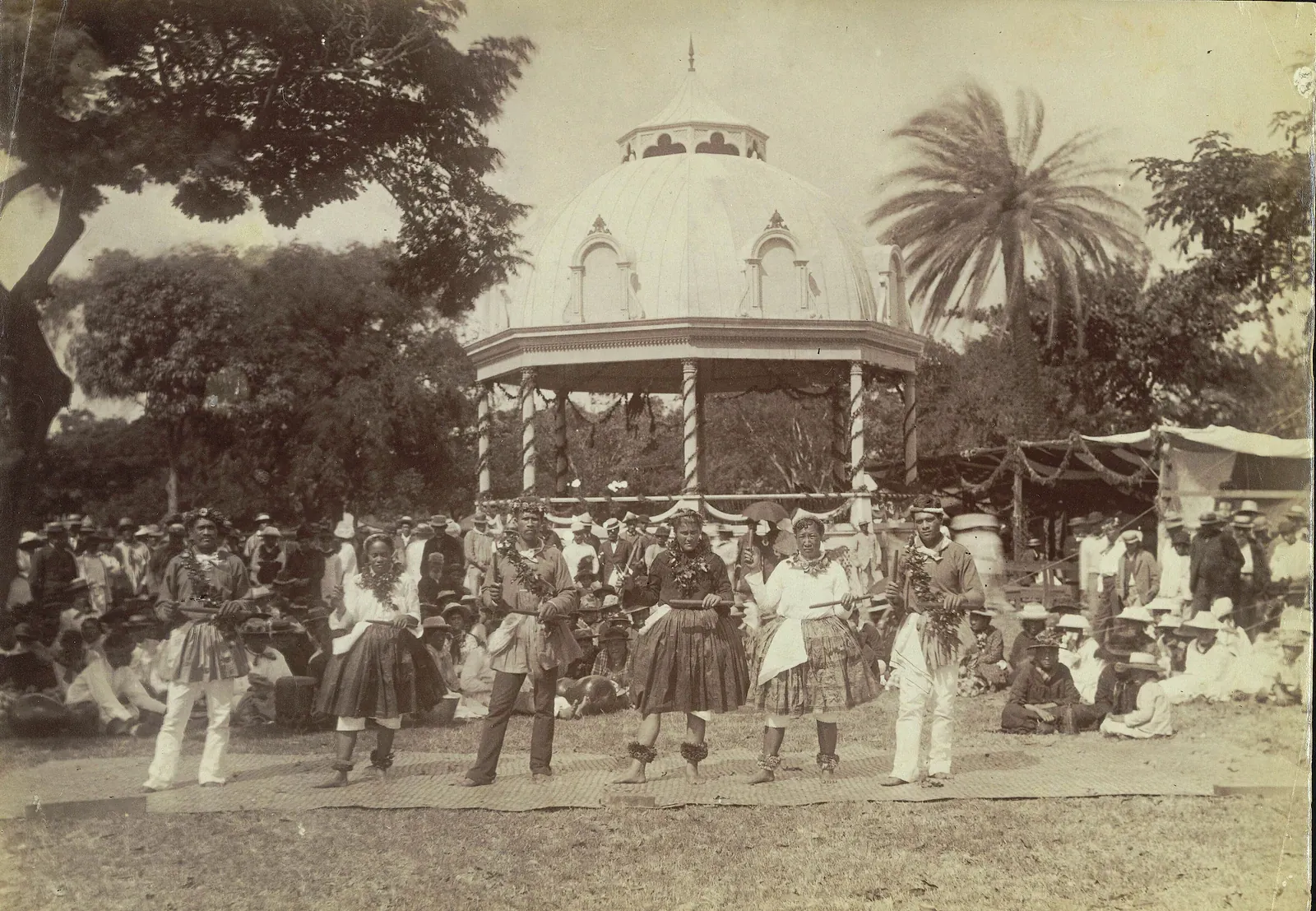
Hymns, guitars and contact, 1788 to 1900
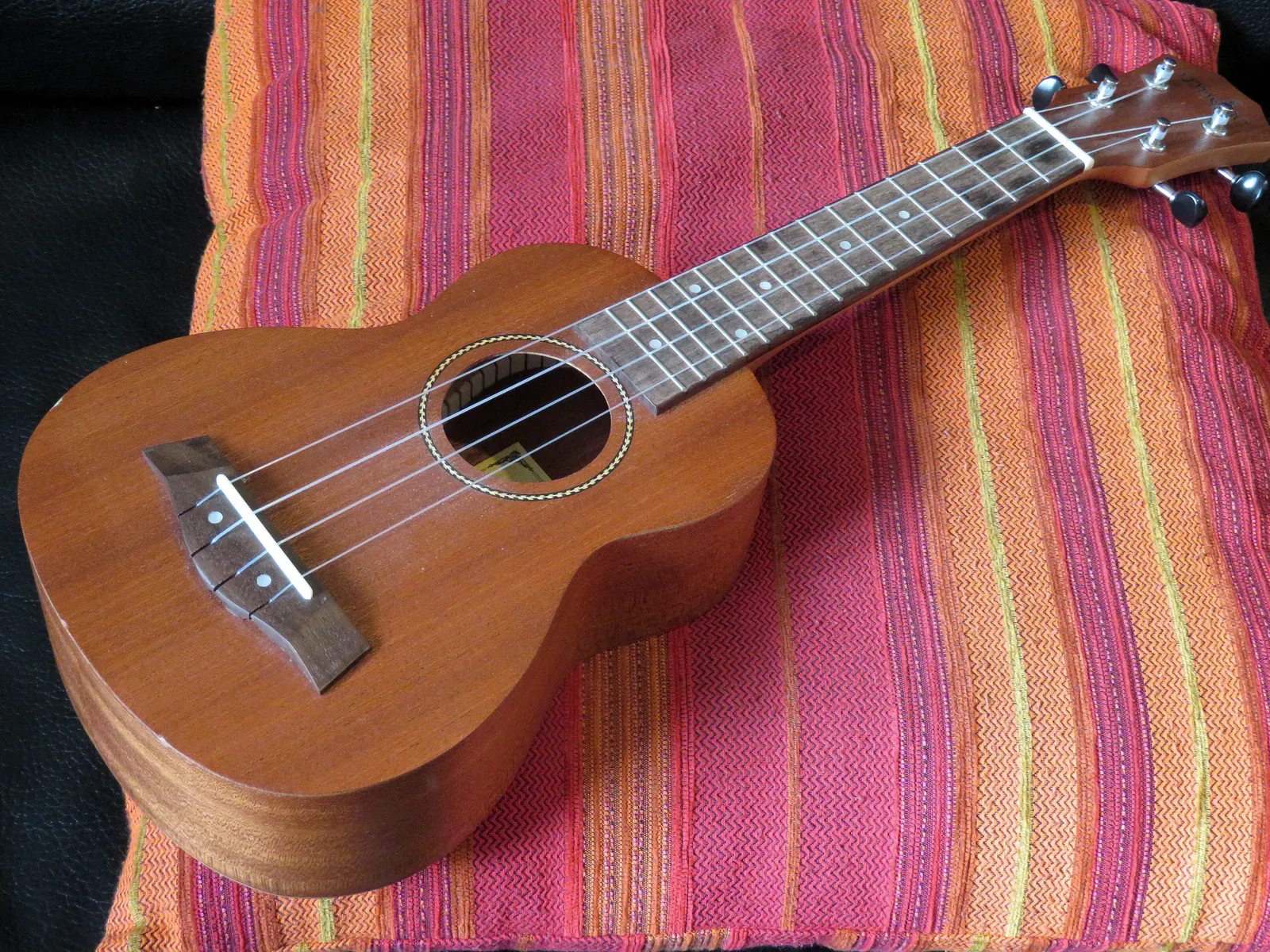
Contact changed the instruments before it changed the songs. Missionary hymn singing taught Pacific communities European harmony, and they added it to older vocal styles. On 23 August 1879 Portuguese workers stepped off the Ravenscrag in Honolulu with a small four-string guitar, the braguinha, and within years Hawaiian makers had turned it into the ukulele. About 1889 Joseph Kekuku is credited with sliding a steel bar over the strings of a guitar, the start of the Hawaiian steel guitar.
Hapa haole and Pacific radio, 1900 to 1945
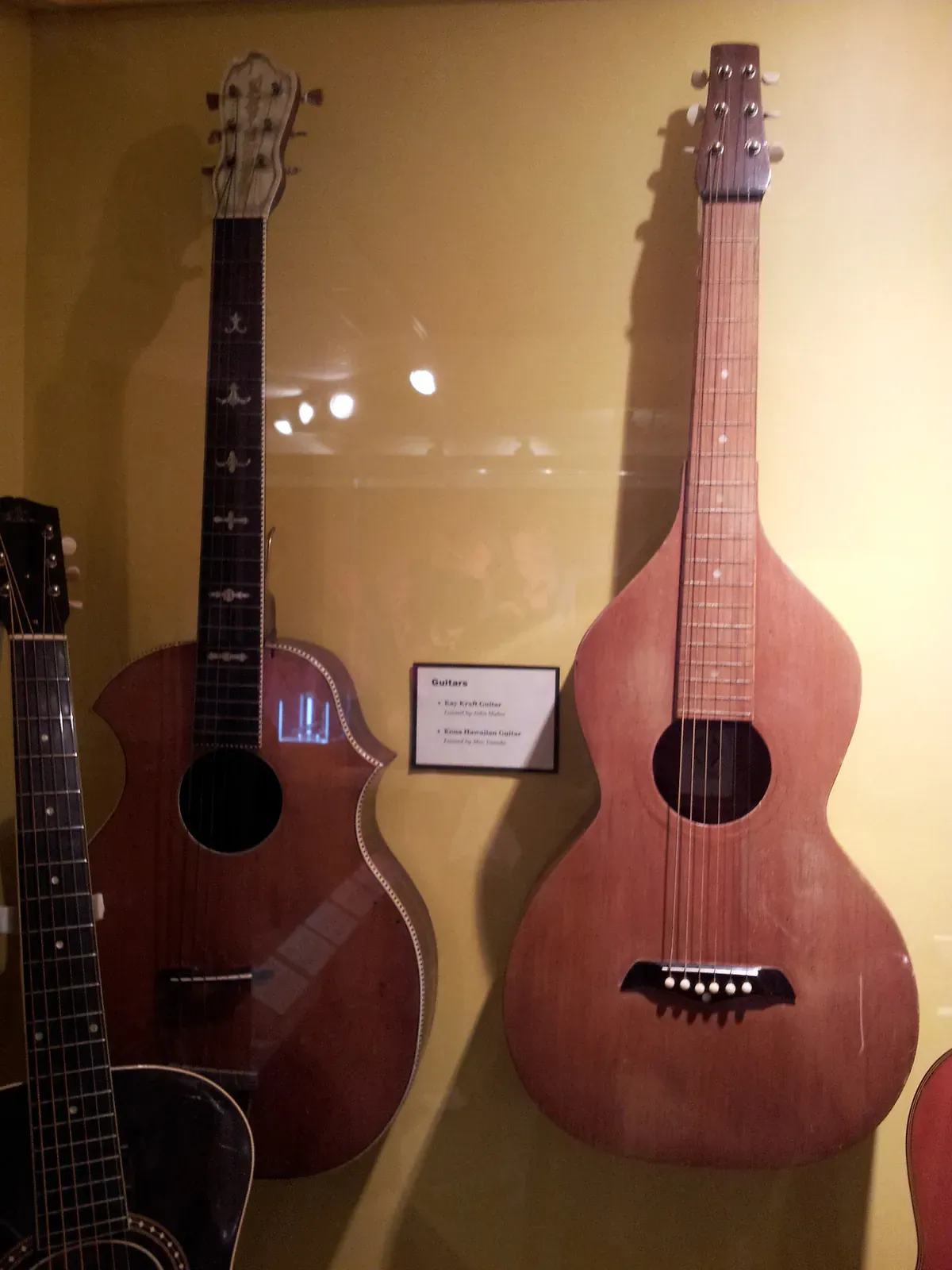
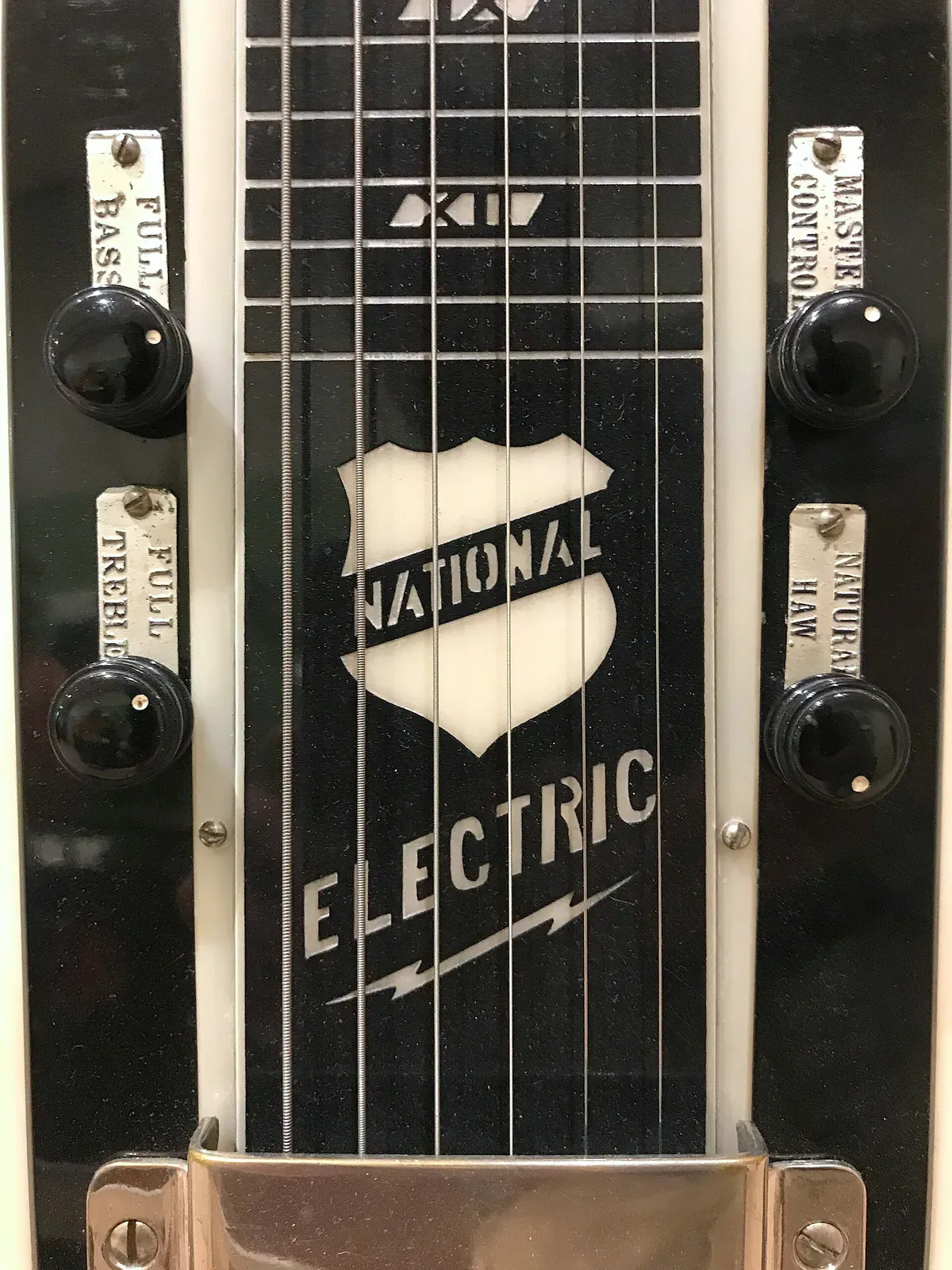
From the early 1900s Hawaiian musicians toured the United States and Europe, and the music left home in a form shaped for visitors. Hapa haole songs put English lyrics on island melodies, and the weekly radio show Hawaii Calls, broadcast from Honolulu from 1935, sold a picture of the Pacific to listeners who might never arrive. The steel guitar went with it, and electric lap steels such as the National company’s followed.
First labels and showbands, 1946 to 1969
After the war small local labels gave island music a place on disc. In the late 1940s Gabby Pahinui recorded “Hi’ilawe”, which may be the first Hawaiian recording to feature slack key guitar. Hula Records was founded in Honolulu in 1947 and issued The Sons of Hawaii, Pahinui and ukulele player Eddie Kamae’s debut, in 1961. In New Zealand, Kiwi Pacific Records began in 1957 and issued Maori Action Songs by the Putiki Maori Club, and Maori showbands reached mainstream audiences. In Australia the first Aboriginal pop singers reached mainstream audiences.
Renaissance and protest, 1970 to 1989
The 1970s gave the region its political voice. In Hawaii a revival of slack key, Hawaiian language and hula, the Hawaiian Renaissance, put Pahinui at its centre. Slack key is fingerstyle guitar with strings loosened into open tunings, usually taught inside families. In Auckland Herbs formed in 1978 and released the What’s Be Happen? EP in 1981. Its cover showed police action at the Bastion Point protest, and its songs of Polynesian Panther politics and the anti-nuclear movement made Pacific reggae a sound with a message.
In Central Australia the Warumpi Band formed in 1980 at Papunya, and in 1983 their single “Jailanguru Pakarnu” became the first rock-format record sung in an Aboriginal language, in Luritja. CAAMA, founded in Alice Springs in 1980, runs what it calls Australia’s oldest Aboriginal record label and records remote communities. Released in 1983 and number one in 1984, the Patea Maori Club’s “Poi E”, written with Dalvanius Prime, showed a song sung wholly in te reo Maori could top the chart.
Indigenous voices go national, 1990 to 2009
The 1990s carried Pacific songwriting onto national charts. Archie Roach released Charcoal Lane in 1990, and Yothu Yindi’s Tribal Voice (1991) and “Treaty” joined Yolngu song and instruments with rock. Israel Kamakawiwo’ole’s Facing Future (1993) and Te Vaka, founded in New Zealand in 1995, found audiences far outside the islands. Tangata Records, founded in 1992, built a home for Maori pop and hip-hop, with Moana and the Moahunters and Dam Native, and its story overlaps with the wider hip hop family. The Garma Festival began at Gulkula in north-east Arnhem Land in 1999, a gathering run by the Yothu Yindi Foundation to share Yolngu song, dance and art.
In 2005 Fat Freddy’s Drop released Based on a True Story on their own The Drop label. It topped the New Zealand chart as an independent release, and the same year the Grammys added a Hawaiian music category. The Wellington band joined a line that includes Salmonella Dub Recordings from Christchurch. In 2008 Gurrumul released his solo debut, which reached number three in Australia.
Streaming, festivals and Moana, 2010 to the present
Archives and small labels have moved to streaming, and a handful of independents now carry much of the catalogue. Skinnyfish Music in Darwin built its roster around Gurrumul, who died in Darwin in 2017, and continues with new artists. Wantok Musik records music from Papua New Guinea, the Solomon Islands, Vanuatu and Timor-Leste. Daniel Ho Creations has made several Grammy-winning Hawaiian albums, and Larrikin Records documented Australian folk and issued Aboriginal artists. Disney’s Moana (2016) brought Pacific songwriting before a global audience. Fat Freddy’s Drop released Slo Mo in 2024.
Characteristics
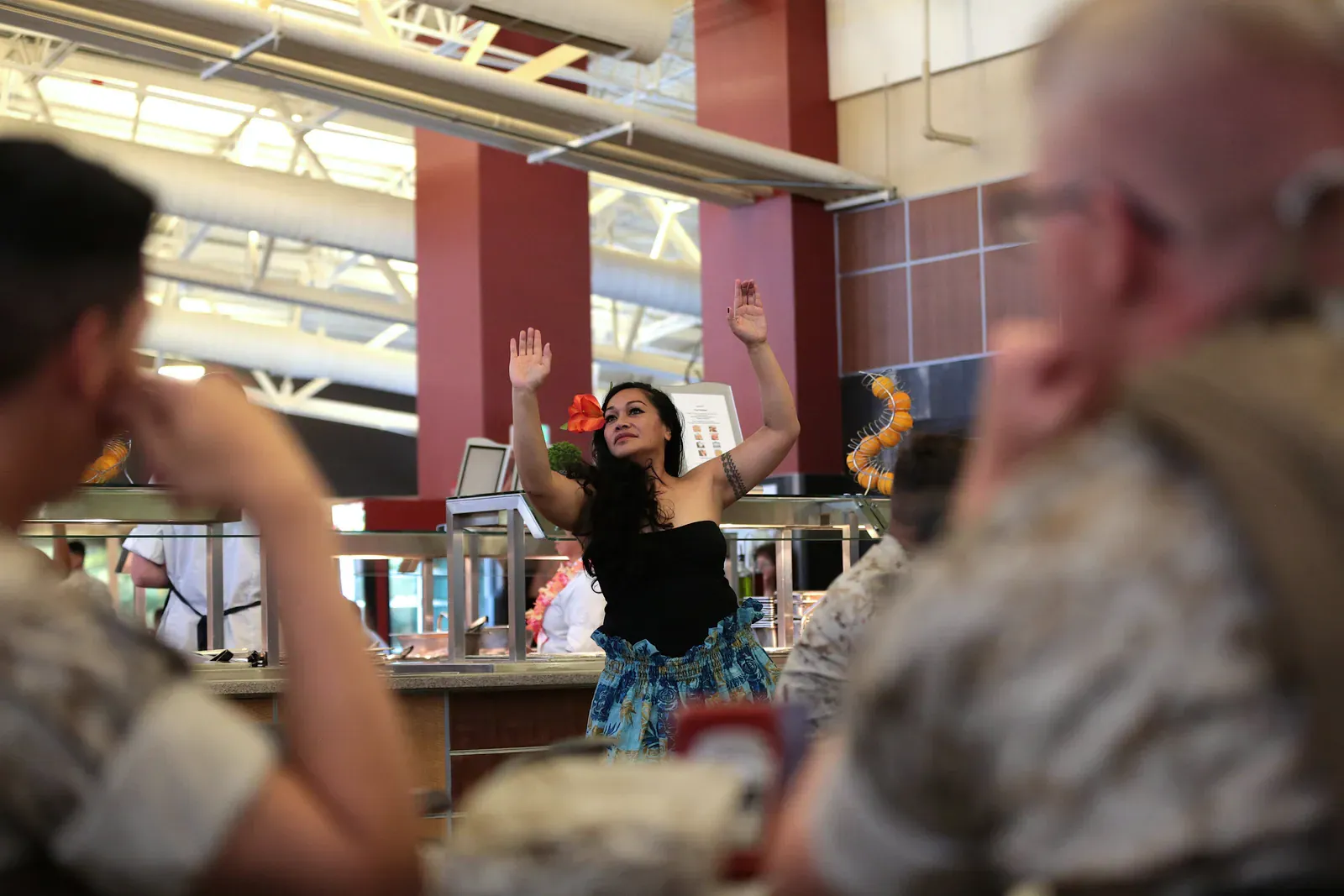
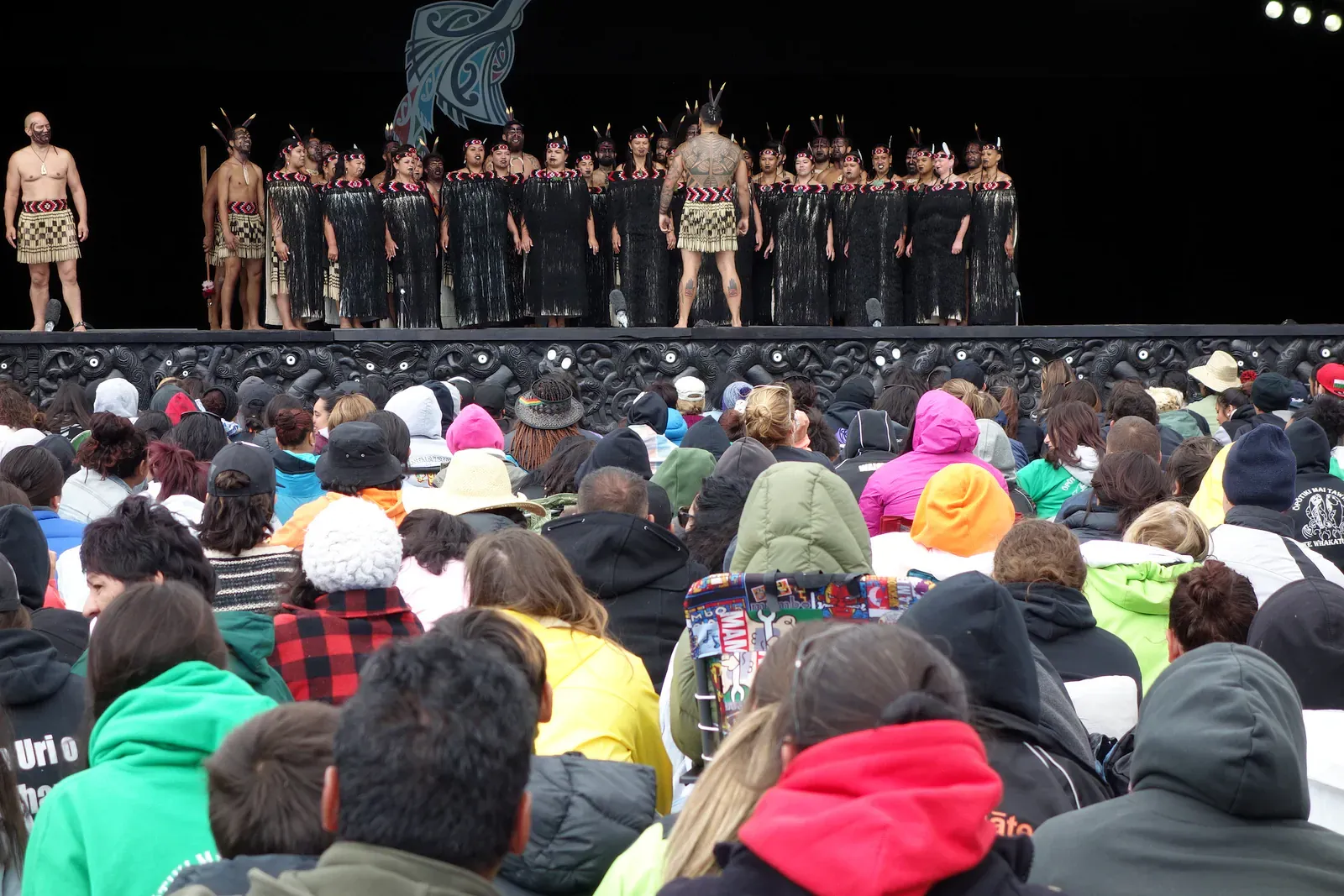
Song and dance are rarely separate in Oceanian music. Chant, singing and movement are performed together in hula, haka, poi and otea, and many songs carry genealogy, land and ceremony. Maori moteatea keep to a narrow melodic range, repeating a line centred on one note and falling away at the end. Aboriginal song and chant are often free in rhythm, with clapsticks marking the pulse, while dance music such as otea and hula is metered. Tahitian tamure and poi performances speed up as they progress.
Missionary hymn singing gave the region its harmony. Pacific communities added European part-singing to older vocal styles, and groups may sing solo, in unison or at the octave, staggering breaths for continuous flow. Songs are sung in indigenous languages such as Maori, Hawaiian and Luritja.
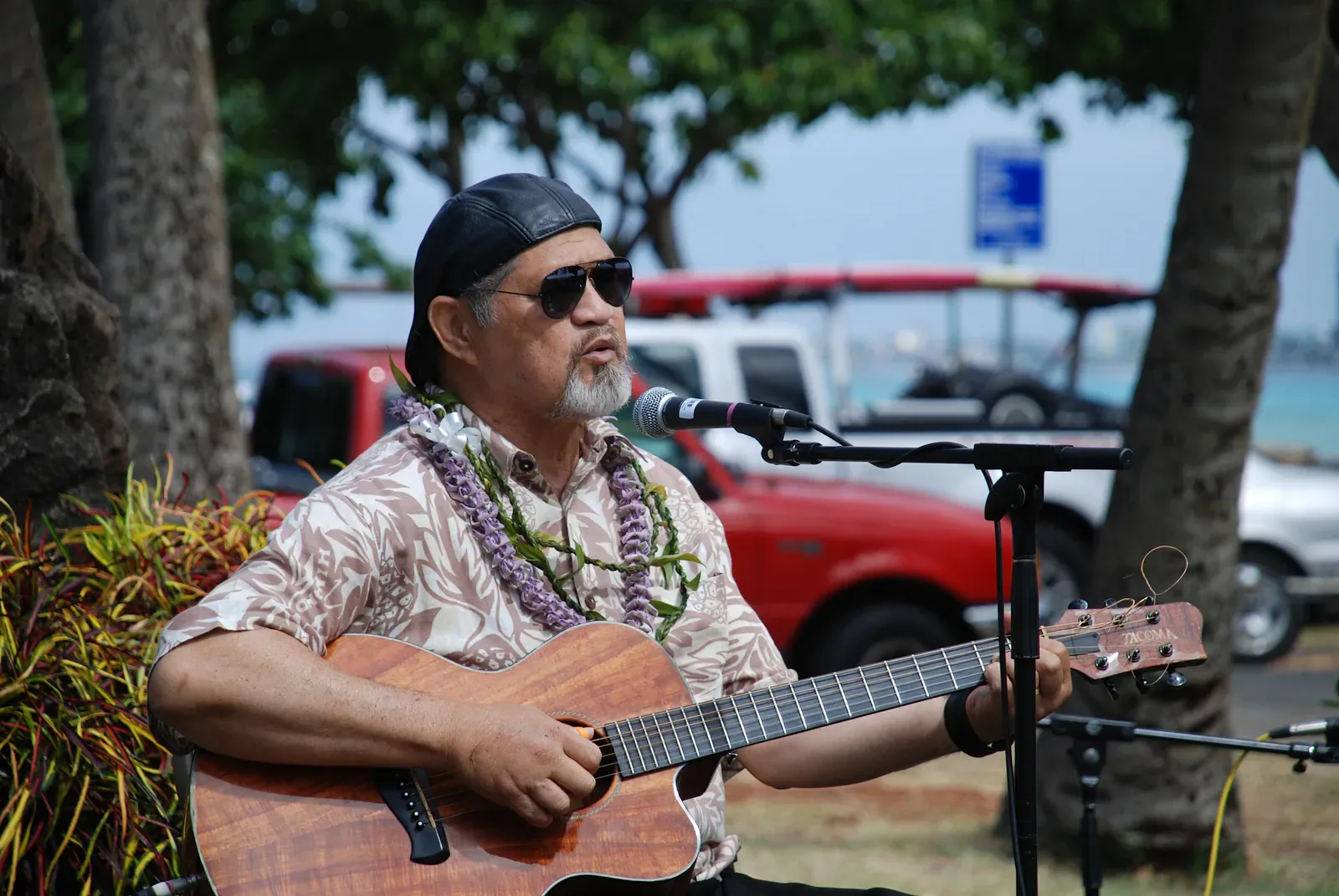
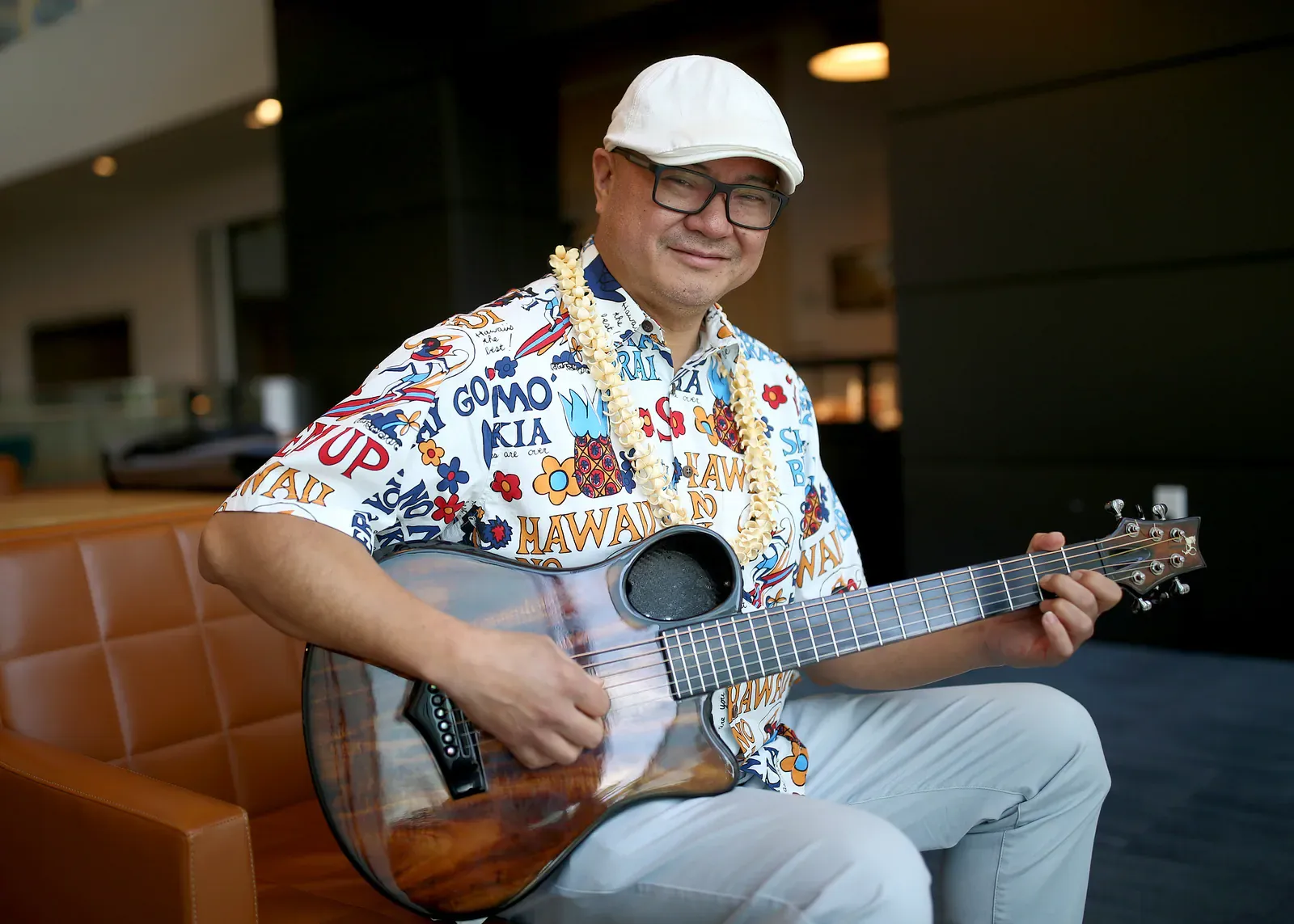
Guitar music took its own form. Slack key loosens the strings into open tunings, with a thumb bass line under melody and chords. The tunings are usually taught inside families. Hapa haole and hula songs rest on simple major-key chord progressions, and in New Zealand the rhythm of reggae was reworked for Pacific themes. In Melanesia and Polynesia, log-drum rhythms signal and accompany dance.
Instruments and production
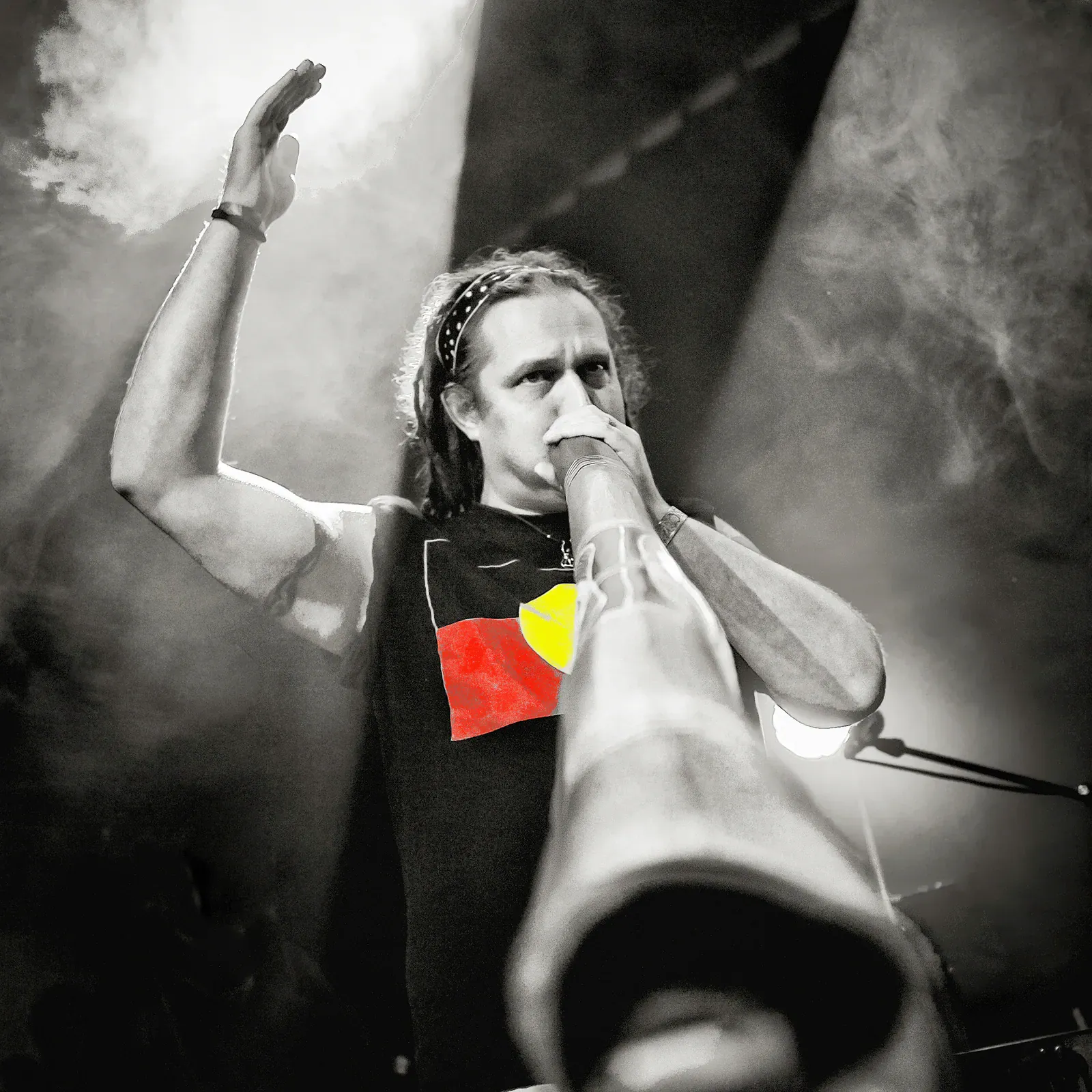
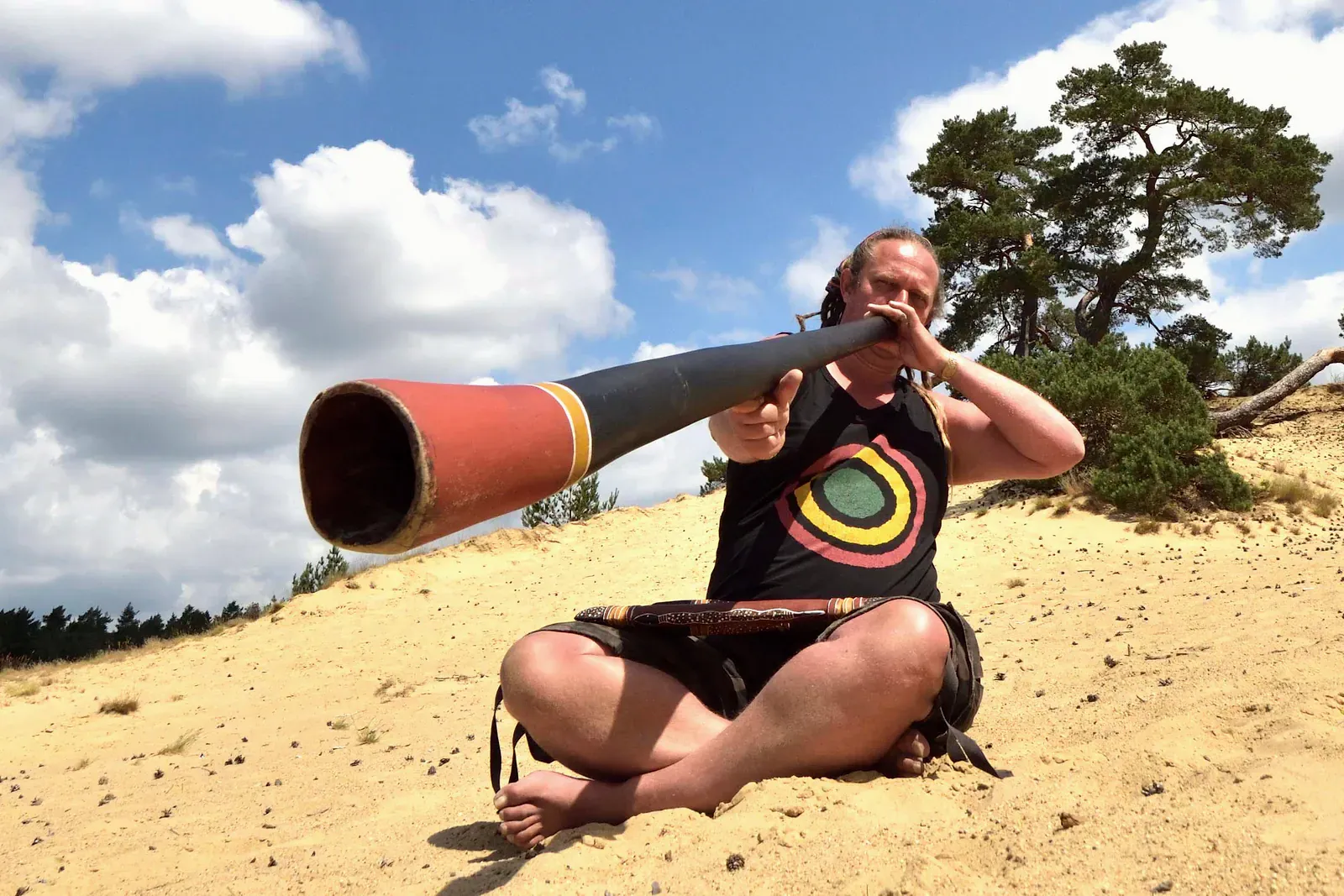
Percussion in the region is often made from wood and gourd. Paired clapsticks keep the pulse for Aboriginal song. In Tahitian otea drumming the toere, a slit log struck with sticks, leads, and the double-headed pahu anchors the ensemble beside it. The ipu heke, a double gourd drum, accompanies hula chant. Slit drums such as the garamut and lali serve the same purpose across Melanesia. The didgeridoo, called yidaki by the Yolngu, supplies a drone, which players sustain by circular breathing.
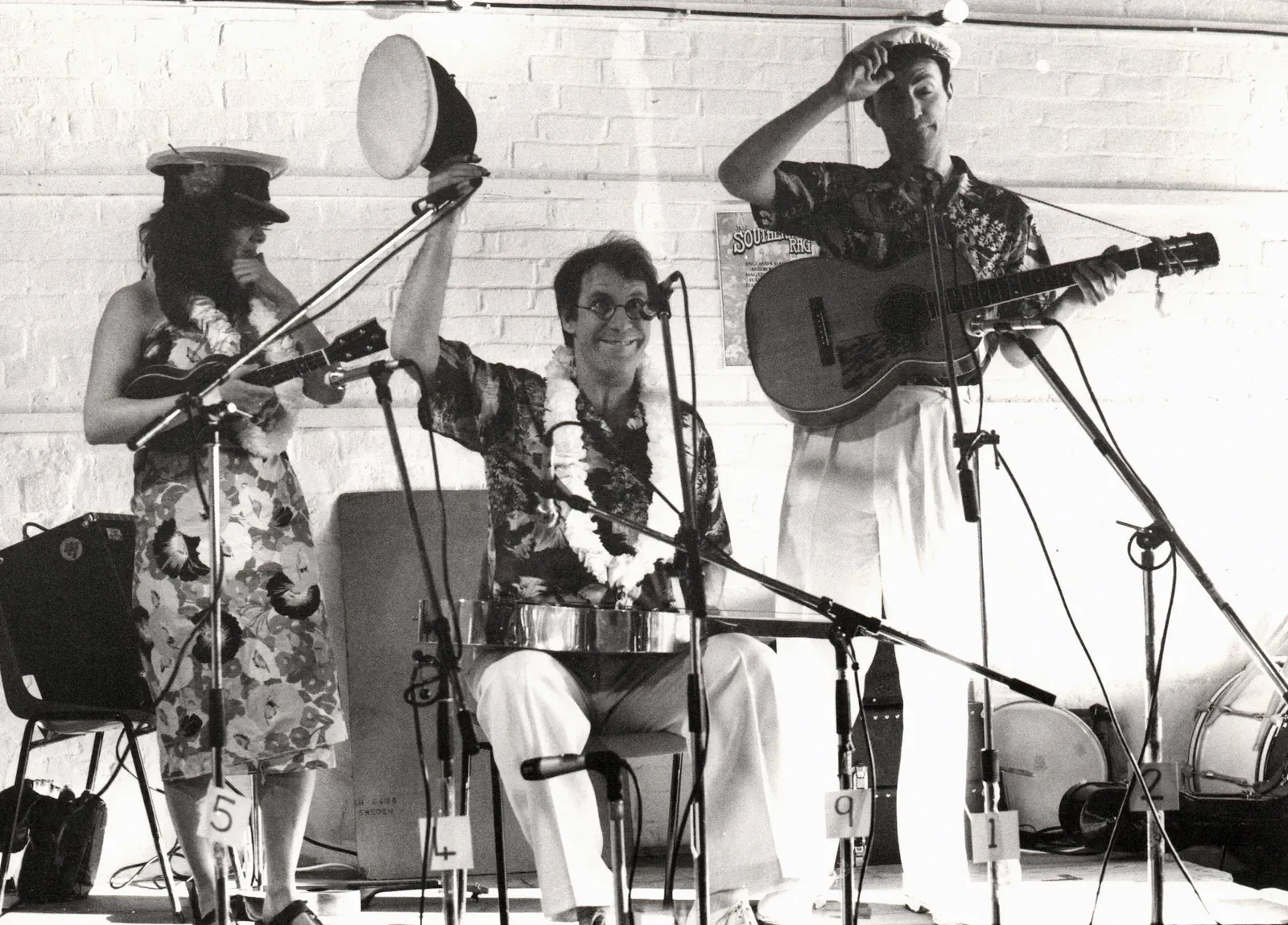
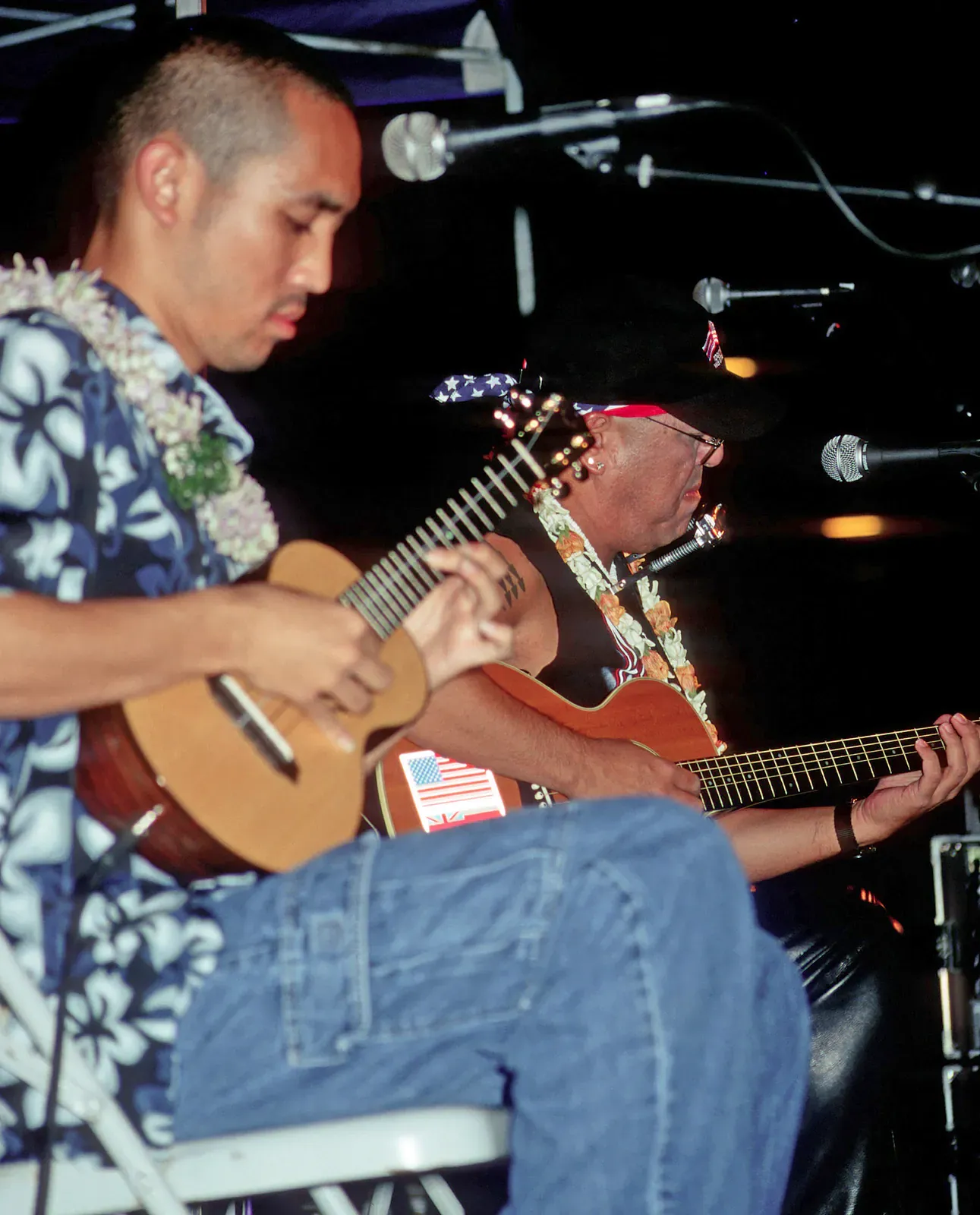
String instruments came through contact. The ukulele descends from the braguinha and became central to Hawaiian and wider Pacific music. The Hawaiian steel guitar is played flat with a steel bar slid over the strings, and electric lap steels carried it abroad. Slack key guitar is fingerstyle playing in open tunings. Taonga puoro, the Maori flutes and trumpets, saw a revival from the late twentieth century.
Recording began with small local labels pressing island music on disc. CAAMA, founded in 1980, records remote communities, and independent labels such as The Drop let bands release their own albums. Archives and small labels have since moved to streaming.
Culture
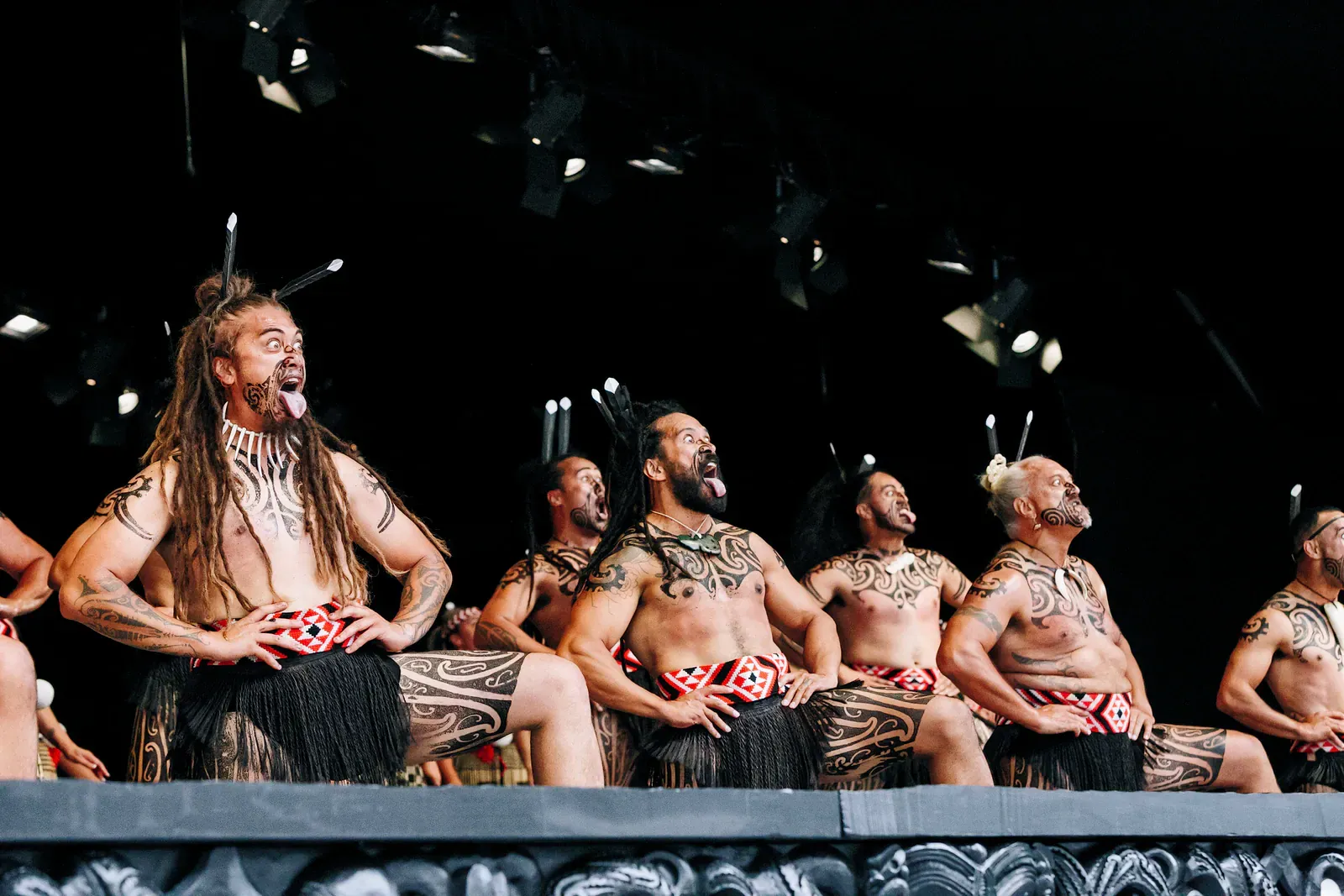
The audience is often the performers. In kapa haka (Maori group performance), whole communities rehearse for months to compete at Te Matatini, and the Te Matatini Society was established in 1972. In remote Australian communities, bands such as the Warumpi Band sang rock in Luritja and became a model for other remote-community groups. In Hawaii, hula halau (schools) and family guitar lines carry repertoire from teacher to student.
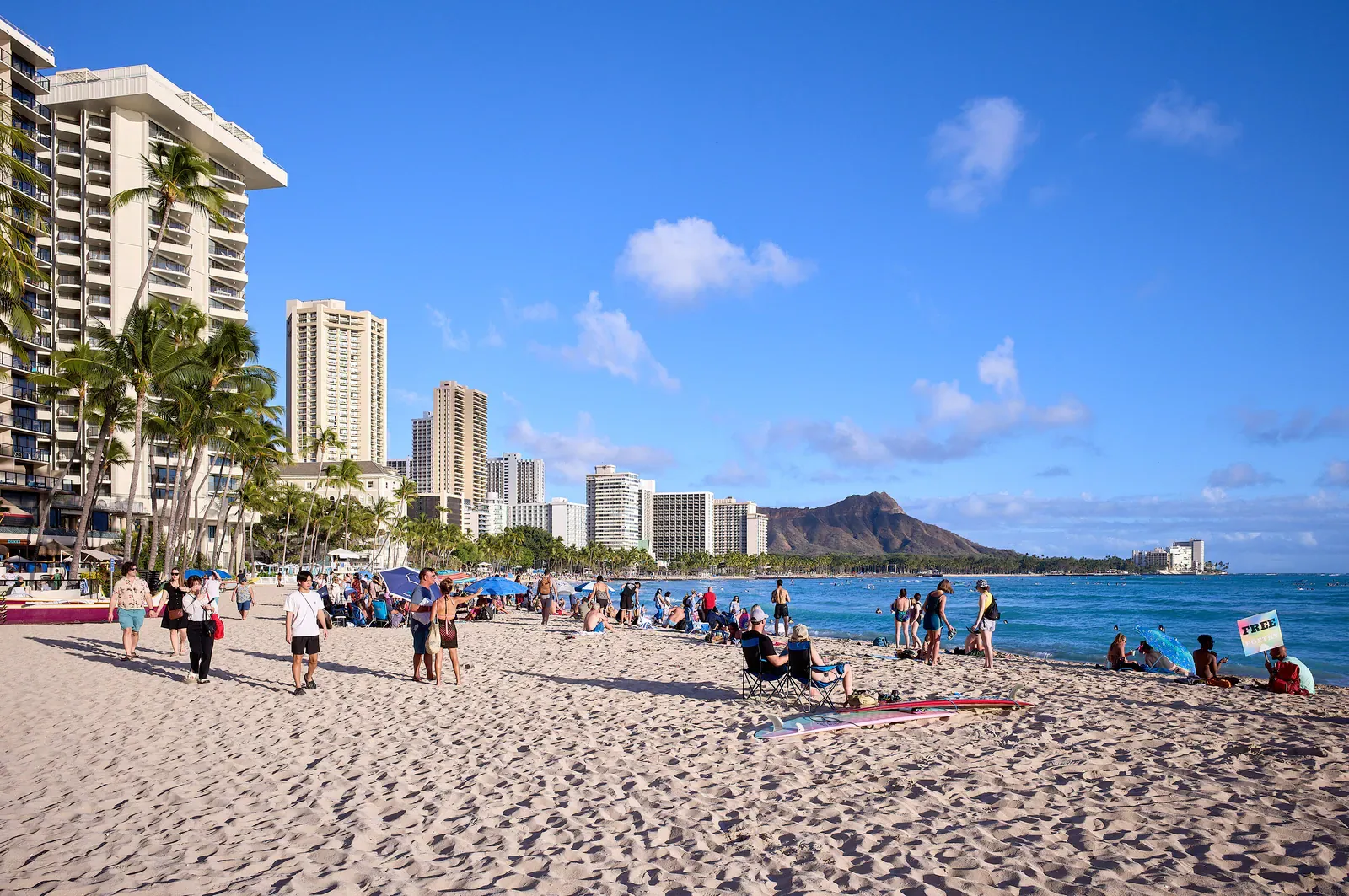
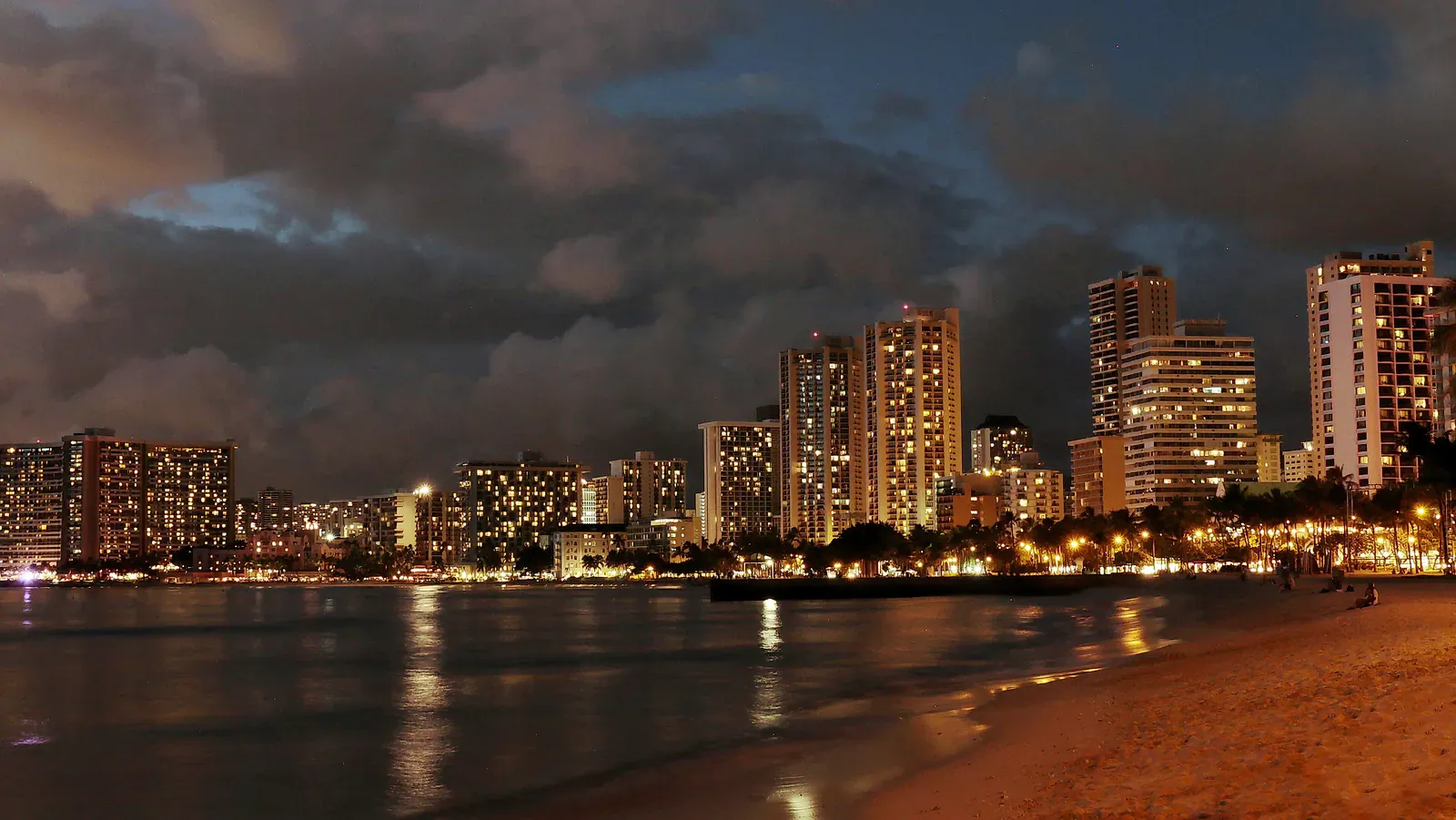
The economics are small and local. Many labels here are community enterprises or non-profits: Wantok Musik is a not-for-profit, and Tangata Records grew out of a government training programme. Radio was a barrier for Maori-language songs, so iwi radio stations carried them. Tourism pulled the other way, bringing paid work in Waikiki and an expectation of postcard sounds that musicians have both used and pushed against.
Misconceptions
The ukulele is often called a Hawaiian invention, but its ancestor is the Portuguese braguinha, which arrived with workers on the Ravenscrag in 1879. Hawaii made the instrument its own and gave it a new name and repertoire.
Aboriginal music is not just the didgeridoo. The yidaki is a Yolngu instrument from north-east Arnhem Land, while the Warumpi Band sang rock in Luritja and Archie Roach wrote folk-soul songs. Australia has hundreds of language groups with their own music.
Pacific reggae is not a copy of Jamaican reggae. It borrowed the rhythm, as did reggae everywhere (see the Caribbean family), but Herbs, formed in Auckland in 1978, used it for Polynesian Panther politics and anti-nuclear songs. Local themes and instruments made it a separate scene.
Frequently asked questions
What is Oceanian music?
Oceanian music covers the traditional and popular music of Australia, New Zealand, Melanesia, Micronesia and Polynesia. It includes Aboriginal song, Pacific chant, kapa haka, slack key guitar and Pacific reggae.
Where did the ukulele come from?
The ukulele developed in Hawaii after Portuguese workers brought the braguinha to Honolulu in 1879. Hawaiian musicians adapted it into the four-string instrument now played around the world.
What is slack key guitar?
Slack key is a Hawaiian fingerstyle guitar tradition in which strings are loosened into open tunings. Gabby Pahinui’s “Hi’ilawe”, recorded in the late 1940s, may be the first Hawaiian record to feature it.
What is Pacific reggae?
Pacific reggae is reggae made in Aotearoa New Zealand and the Pacific, with Polynesian themes and politics. Herbs, who formed in Auckland in 1978, are its best-known pioneers, followed by Fat Freddy’s Drop and Salmonella Dub.
What is Te Matatini?
Te Matatini is the national Maori kapa haka festival, held every two years. The 2025 festival ran from 25 February to 1 March in New Plymouth.
Subgenres
Genres in the family
9 main branches. Names with their own page are links.
14 branches
1788, 5 branches
14 branches
- Māori music
14 branches
- Melanesian music
22 branches
- Micronesian music
8 branches
1979, 2 branches
27 branches
3 branches
Sound
What it sounds like
Tempo
- Overall70-140
- Hawaiian music70-115
- Slack-key guitar95-120
- Pacific reggae80-90
- Aboriginal rock110-135
- Aboriginal folk90-110
- Island pop95-140
- Dub (New Zealand)115-130
Drums and percussion
- Clapsticks
- Toere slit drum
- Pahu
- Ipu heke
Techniques
- Slack key tuning
- Steel bar slide
- Circular breathing
- Song and dance unity
- Accelerating tempo
- Unison and octave singing
Keys and modes
Open major tunings. Slack key guitar loosens strings into chords such as taro patch (G major, D-G-D-G-B-D) and G wahine (major seventh).
Major, I-IV-V. Ukulele and guitar songs of hapa haole and hula auana rest on simple major-key chord progressions.
Single-note chant centre. Maori moteatea repeat a melodic line centred on one note and fall away at the end.
Tuning
Western 12-TET for guitar and ukulele; slack key uses about fifty open tunings, and chant and taonga puoro are not tied to fixed scales
Vocals
Chant on a narrow melodic range, hymn-derived harmony, and songs in indigenous languages such as Maori, Hawaiian and Luritja.
Hallmarks
- chant and polyphonic song
- song-and-dance unity
- slit drums, panpipes, ukulele and guitar
- hymnody-derived harmony
Instruments
- Yidaki
The Yolngu name for the didgeridoo, a drone instrument central to Arnhem Land song and to modern Yolngu bands.
- Clapsticks
Paired wooden sticks that keep the beat for Aboriginal song and dance.
- Ukulele
Descended from the braguinha, it became the core of Hawaiian and wider Pacific string music.
- Hawaiian steel guitar
Slide guitar played flat, invented in Hawaii about 1889 and exported worldwide.
- Slack key guitar
Fingerstyle guitar in open tunings, kept in families and revived in the 1970s.
- Taonga puoro
Maori instruments such as flutes and trumpets whose revival began in the late twentieth century.
- Slit drum
Hollowed log drums, such as the garamut and lali, signal and accompany dance across Melanesia.
- Panpipes
Bamboo pipe ensembles are a signature of Solomon Islands music.
Technology that shaped it
- 1889Steel guitar
Slide technique born in Hawaii changes country, blues and island music.
- 1904Wax cylinder recording
Early field recordings in German New Guinea preserve Melanesian song.
- 1935Radio broadcasting
Hawaii Calls sends Hawaiian music across the United States on radio.
- 1980Indigenous community radio
CAAMA, formed in Alice Springs, gives remote communities their own media and recording.
Essential records
- 1946Hi'ilawe
Gabby Pahinui. An early recording that may be the first to feature slack key guitar.
- 1961The Sons of Hawaii
The Sons of Hawaii. Gabby Pahinui and Eddie Kamae set the template for the Hawaiian Renaissance.
- 1981What's Be Happen?
Herbs. The EP that fixed the sound of Pacific reggae.
- 1983Jailanguru Pakarnu
Warumpi Band. First rock-format single released in an Aboriginal language.
- 1985Big Name, No Blankets
Warumpi Band. Debut album that took Papunya rock to national audiences.
- 1990Charcoal Lane
Archie Roach. Debut album whose songs told the Stolen Generations story and won ARIA Awards.
- 1991Tribal Voice
Yothu Yindi. Reached number 4 and brought Yolngu instruments and language to the charts.
- 1993Facing Future
Israel Kamakawiwoʻole. Its ukulele medley of Over the Rainbow became a worldwide favourite.
- 1993Tahi
Moana and the Moahunters. Debut album that blended haka and chant with reggae and soul.
- 1997Te Vaka
Te Vaka. Debut of the Pacific group that later wrote for Moana.
- 2005Based on a True Story
Fat Freddy's Drop. Independent debut that topped New Zealand charts and won Album of the Year in 2005.
- 2008Gurrumul
Gurrumul. Quiet Yolngu-language album that made him internationally known.
Scenes
Where it happened
Where and when the sound lived: one bar per city on a shared timeline.
North America
Oceania
Active scenes
Peak 10, 1999-2025
Hapa haole bands, Hawaii Calls, Hula Records and the Renaissance all centred here.
Herbs, Te Vaka and Pasifika communities made it the largest Polynesian city in the world.
Home of Kiwi Records, the Tangata scene and later Fat Freddy's Drop.
CAAMA Music records Central Australian desert bands here.
Warumpi Band formed in this Western Desert community.
The Yolngu homeland community from which Yothu Yindi grew.
Skinnyfish Music and the Top End recording scene are based here.
Recording hub for Papua New Guinean string band and pop music.
Centre of Tahitian drumming and ori dance, with annual dance contests.
Samoan choirs, siva dance and popular music cluster in the capital.
Glossary
Terms on this page
Hawaiian songs with mostly English lyrics and island themes, popular from the early 1900s.
Polynesian hymn singing, a rich multipart choral form that blends church and island harmony.
Kahiko is the older chanted hula, while auana is the modern style danced to string music.
Maori group performance of song, haka and movement, often staged in competition.
The Hawaiian name for slack key guitar, meaning to loosen the key.
A New Zealand term for people of Pacific Islands heritage and the culture they bring.
Aboriginal song cycles that link places, stories and law across country, held by the custodians of each region.
The Maori word for song, covering older chants and newer compositions.
Families