Polynesian music
Polynesian music is the song and dance of Samoa, Tonga, Tahiti, the Cook Islands and nearby islands, joining slit drums, chant and hymn harmony.
Samoa, Tonga, French Polynesia, Cook Islands, Niue, Tuvalu, Tokelau, Wallis & Futuna, around 1000
Oceanian family
Born
around 1000
Samoa, Tonga, French Polynesia, Cook Islands, Niue, Tuvalu, Tokelau, Wallis & Futuna
Subgenres
7
Documented branches
Links
9
Genres it drew on or shaped
Tempo
75-180 BPMLineage
Family tree
Grew out of
Samoa, Tonga, French Polynesia, Cook Islands, Niue, Tuvalu, Tokelau, Wallis & Futuna
Polynesian music
Led to (7)
Timeline
Era by era
From the first sparks to today. Select a dot to read the story behind it.
- Drum, chant and ancestral dance
1000 to 1819
- Missions, hymns and bans
1819 to 1955
- Revival and island pop
1956 to 1989
- Diaspora and Pacific pop
1990 to 2015
- Screen and streaming
2016 to 2026
Eras
Moments
- 1 Drum, chant and ancestral dance, 1000 to 1819
- 2 Missions, hymns and bans, 1819 to 1955
- 3 Revival and island pop, 1956 to 1989
- 4 Diaspora and Pacific pop, 1990 to 2015
- 5 Screen and streaming, 2016 to 2026
around 1000
Drum, chant and ancestral dance
Slit drums, mat beating, chanted verse and group dance carried the song traditions of Samoa, Tonga, Tahiti and the Cook Islands for a thousand years or more before missionary contact.
- 1000Slit drums mark island ritual and warSamoan slit drums such as the logo and lali announced chiefs and signalled in conflict for over a thousand years.
1819
Missions, hymns and bans
Missionary hymnody gave the islands choral harmony, guitars and ukuleles, while dance was banned or tightly policed. Himene tarava, imene tuki and fatele grew from that mix.
- 1819Pomare Code bans the Tahitian heivaMissionary-backed law banned the heiva festivities in Tahiti, and the ban was reinforced in 1842.
- 1822English Methodists bring hymns to TongaHymns introduced from this year became the base of church singing across Tonga.
- 1830London Missionary Society reaches SamoaEvangelical hymnody reshaped Samoan song, and guitars and ukuleles became common.
- 1844Himene tarava emerges on TubuaiThe hymn-derived Tahitian choral style took shape around 1844 as the islands were Christianised.
- 1860Samoan missionaries suppress Tuvaluan dance songsLMS pastors from Samoa discouraged old religious songs and swaying dances in Tuvalu, from which fatele grew.
- 1881Tiurai festival begins in TahitiThe 14 July festivities held songs, sports and tarava singing meetings, with traditional dance left out.
1956
Revival and island pop
Tahitian dance was revived from 1956 and Queen Salote's songs shaped Tongan repertoire. Singers like Bobby Holcomb began mixing island melody with reggae and popular rhythms.
- 1956Madeleine Moua leads 'ori Tahiti revivalThe teacher and Heiva group director began the revival of Tahitian dance.
- 1976Bobby Holcomb settles in TahitiThe Honolulu-born singer and painter moved to Tahiti and later learned the language.
- 1985Tiurai is renamed Heiva i TahitiThe festival took its present name as Tahiti gained greater autonomy from France.
1990
Diaspora and Pacific pop
In South Auckland and California, island families fed hip-hop, R&B and reggae. Records by the Tahitian Choir, OMC, King Kapisi and Nesian Mystik carried Pacific voices into charts and film.
- 1990The Mau form as a Samoan hip-hop groupKosmo and fellow Samoans founded the group, an early sign of Samoan hip-hop.
- 1993The Tahitian Choir's Rapa Iti tops world chartThe Rapa Iti island choir's album topped Billboard World Albums.
- 1995OMC release How BizarreThe Niuean-led trio's single hit the UK top 5 and topped charts in several countries.
- 1999King Kapisi wins the APRA Silver ScrollReverse Resistance made him the first New Zealand hip-hop artist to win the award.
- 1999Dawn Raid Entertainment starts in PapatoetoeFounders Brotha D and Andy Murnane built a South Auckland label that backed Pacific hip-hop and R&B.
- 2002Nesian Mystik release For the PeopleThe Cook Island, Tongan, Samoan and Maori group's single peaked at number 5 in New Zealand.
- 2004Te Vaka's Tutuki wins Best Pacific Music AlbumThe album took the New Zealand Music Awards category, as Olatia did in 2007.
- 2008Lakalaka inscribed by UNESCOTonga's national dance form was listed as intangible cultural heritage.
- 2008Savage's Swing reaches the USThe Samoan South Auckland rapper's 2005 single was reissued for the US and peaked at 45 on the Hot 100.
- 2013Sol3 Mio's debut album sells eight times platinumThe Samoan operatic trio topped New Zealand sales for 2014 and 2015.
2016
Screen and streaming
Moana put Tokelauan and Samoan lyrics in front of a global audience, and a siren beat from Auckland became a worldwide hit in 2020. Island song now travels through film and short video.
- 2016Moana carries Tokelauan and Samoan song to cinemasOpetaia Foa'i wrote with Lin-Manuel Miranda, and Te Vaka performed on the soundtrack.
- 2017Common Kings top Billboard Reggae with Lost in ParadiseThe Orange County group of Samoan, Tongan and Fijian roots earned a Grammy nomination.
- 2020Savage Love turns a siren beat into a global hitJawsh 685's instrumental went viral on TikTok and reached number 1 in the US, UK and New Zealand.
Listening path
Anthems
The records that built the sound, grouped by the part they played. Thumbnails come from YouTube; the player loads only when you press play.
- 01
The Tahitian Choir, 1992 · Triloka Records
A Rapa Iti choir sings himene tarava, the hymn-born Tahitian style, in a recording that took the tradition to world audiences.
Origin - 02
OMC, 1995
Pauly Fuemana's single took a South Auckland Niuean voice to number 5 in the UK and the top of charts in several countries.
Start hereBreakthrough - 03
Jawsh 685, 2020 · Columbia Records
A Samoan and Cook Islands tribute beat that went viral on TikTok, then topped the US, UK and New Zealand charts with Jason Derulo.
Breakthrough - 04
King Kapisi, 1999
Samoan-New Zealand hip-hop single that won the APRA Silver Scroll and voiced Pacific identity in Aotearoa.
Anthem - 05
Nesian Mystik, 2002
A multi-island Auckland group's feel-good single that reached number 5 in New Zealand and became a Pacific pop staple.
Anthem - 06
Te Vaka, 2004
Title song of the award-winning Te Vaka album, a Tokelau-led mix of pate drums, chant and pop that defines Pacific fusion.
Start hereAnthem - 07
Common Kings, 2017
Reggae-pop from Orange County's Samoan, Tongan and Fijian band, title song of a number 1 Billboard Reggae album.
Anthem - 08
Savage, 2008 · Dawn Raid Entertainment
Samoan South Auckland rapper Savage's 2005 hit, remade for the US, reached 45 on the Hot 100 and earned a platinum certification.
Crossover - 09
Sol3 Mio, 2013
Three Samoan tenors took an operatic favourite to the top of New Zealand sales on a debut that went eight times platinum.
Crossover - 10
Opetaia Foa'i, 2016 · Walt Disney Records
Foa'i's song for Moana, sung partly in Samoan and Tokelauan with Lin-Manuel Miranda, carried Pacific language into mainstream cinema.
Start hereCrossover - 11
Te Vaka, 2017 · Walt Disney Records
Te Vaka's single named for Tonga's national dance, issued by Disney on the Moana-era greatest hits set.
Revival
Facts
| Family | Oceanian |
| Origin | Samoa, Tonga, French Polynesia, Cook Islands, Niue, Tuvalu, Tokelau, Wallis & Futuna |
| Emerged | Ancient onwards |
| Status | Active |
| Tempo | 75 to 180 BPM |
| Meter | Varies by piece; drum phrases and hymn choirs set their own pulse |
| Subgenres | 7 |
Polynesian music is the song and dance of the islands of the central and south Pacific outside Hawaii and Aotearoa: Samoa, Tonga, Tahiti and French Polynesia, the Cook Islands, Tuvalu, Tokelau and Niue.
It grew from slit drums, chanted verse and group dance, then took on hymn harmony from missionaries from the 1820s. Its singers now reach charts and cinemas through hip-hop, reggae and film, from Auckland to Orange County.
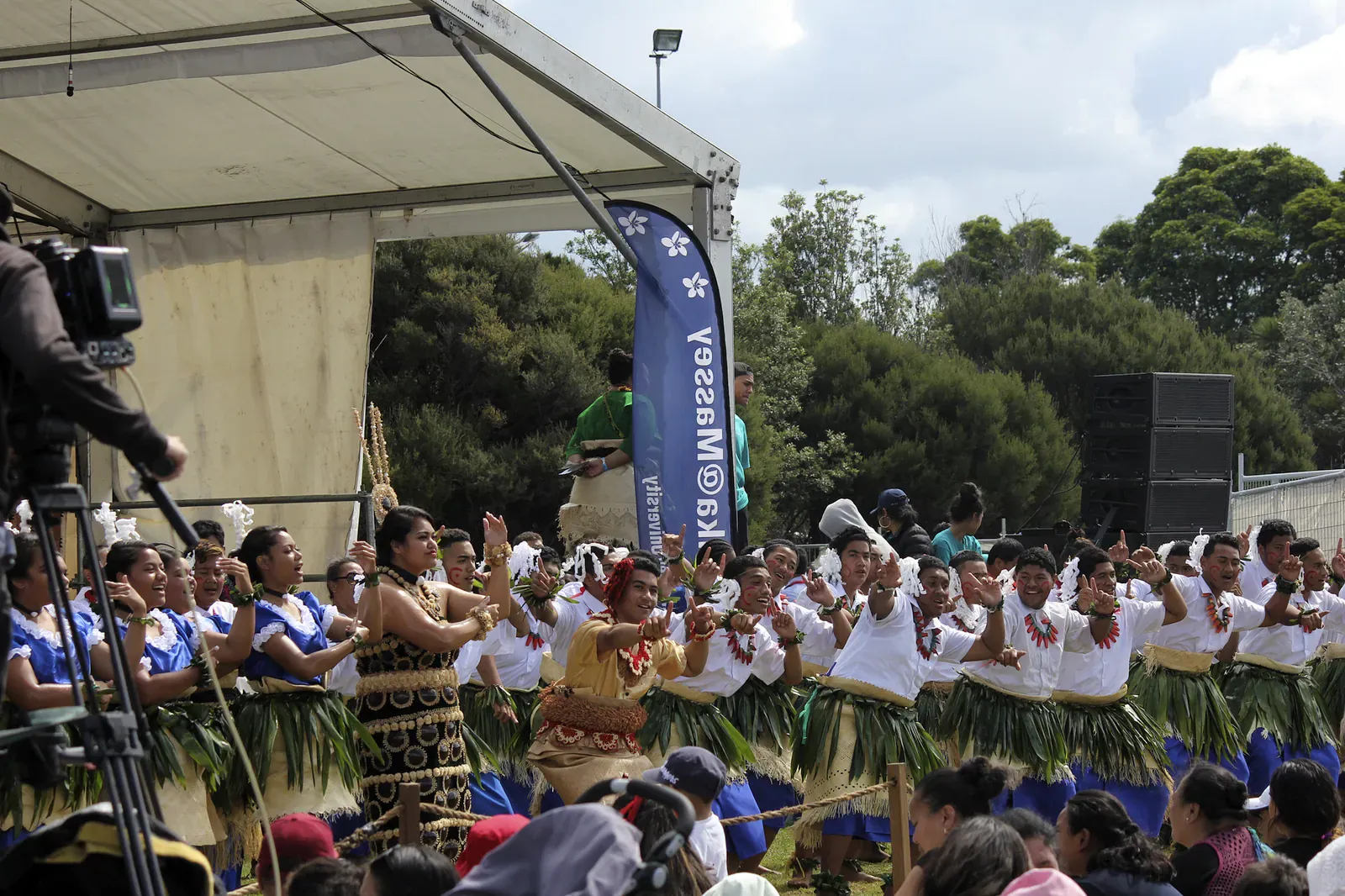
Origins
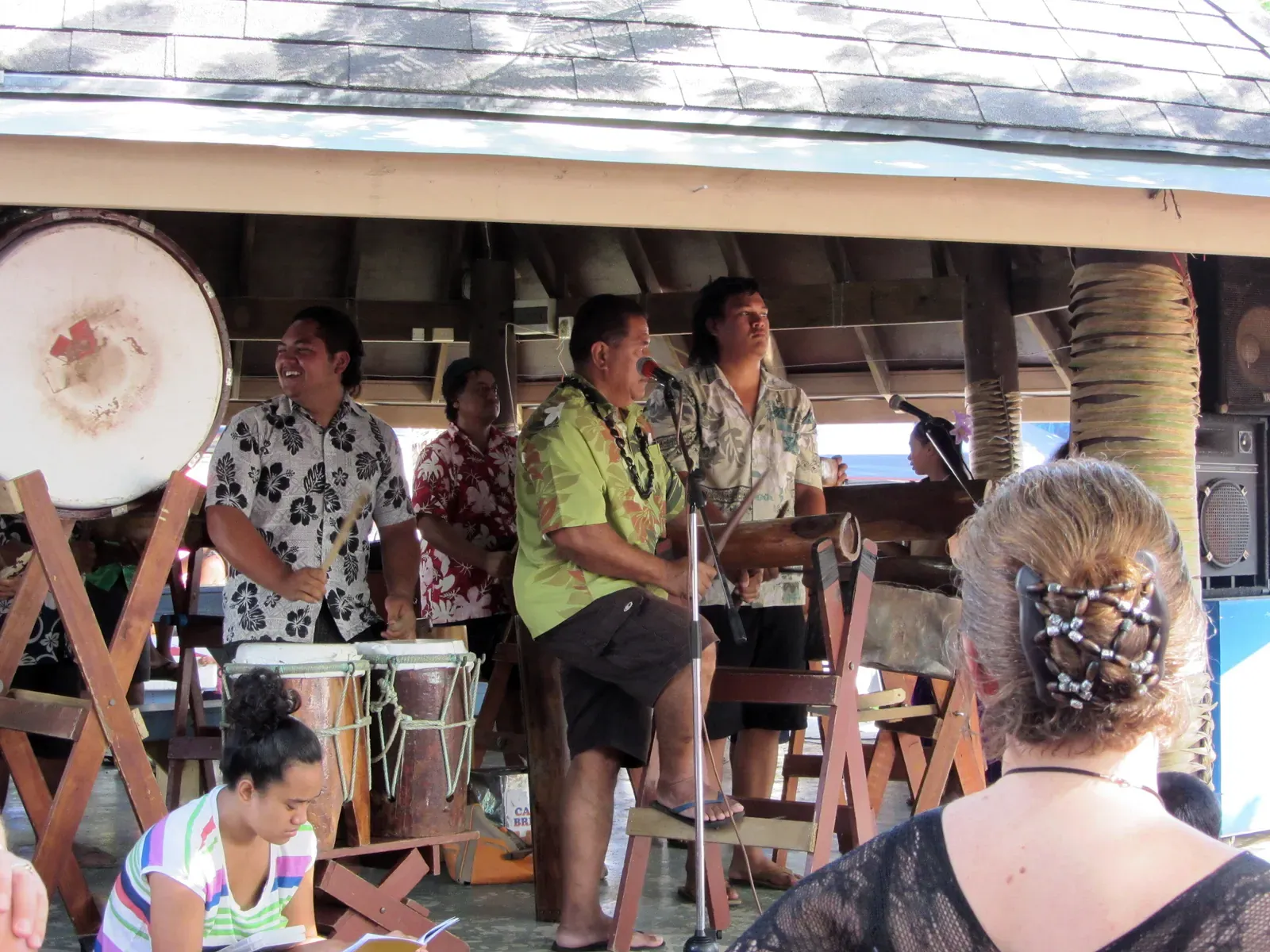
It started as ritual, signal and story. Samoan slit drums such as the logo and lali announced chiefs and called warriors for well over a thousand years. Alongside them came the fala, a rolled mat beaten with sticks, and the pate, a log drum that still keeps the beat for Samoan, Cook Islands and Tokelauan dance.
Voices carried the words. Genealogies, love poems and praise for chiefs were chanted or sung in groups, with dance gestures that told the same story.
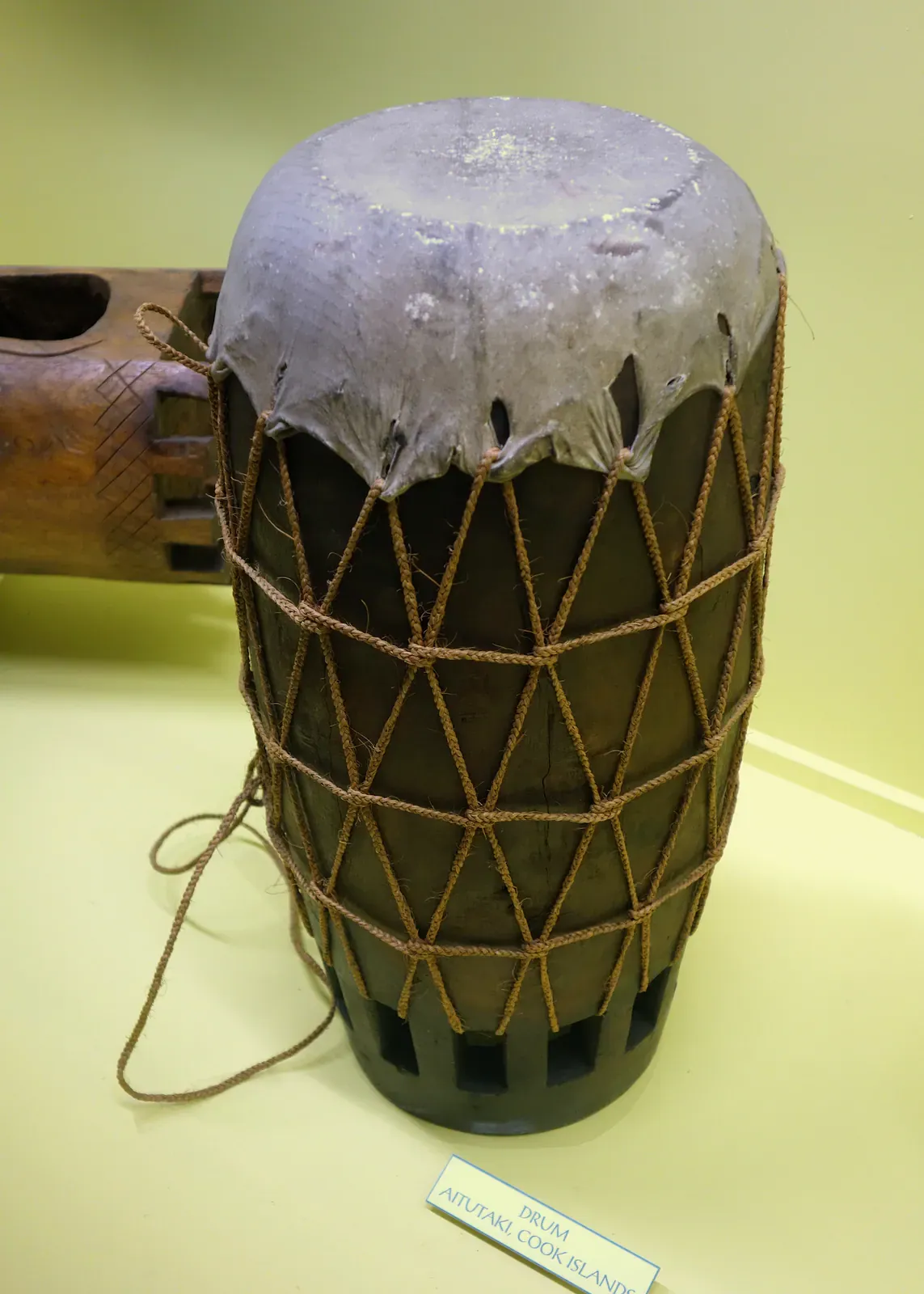
Drum, chant and ancestral dance
For a thousand years or more, song kept memory. A slit drum could carry a signal across a village, and a chant could hold a family’s descent. The arm and hand movements of a Tongan lakalaka still illustrate the words being sung.
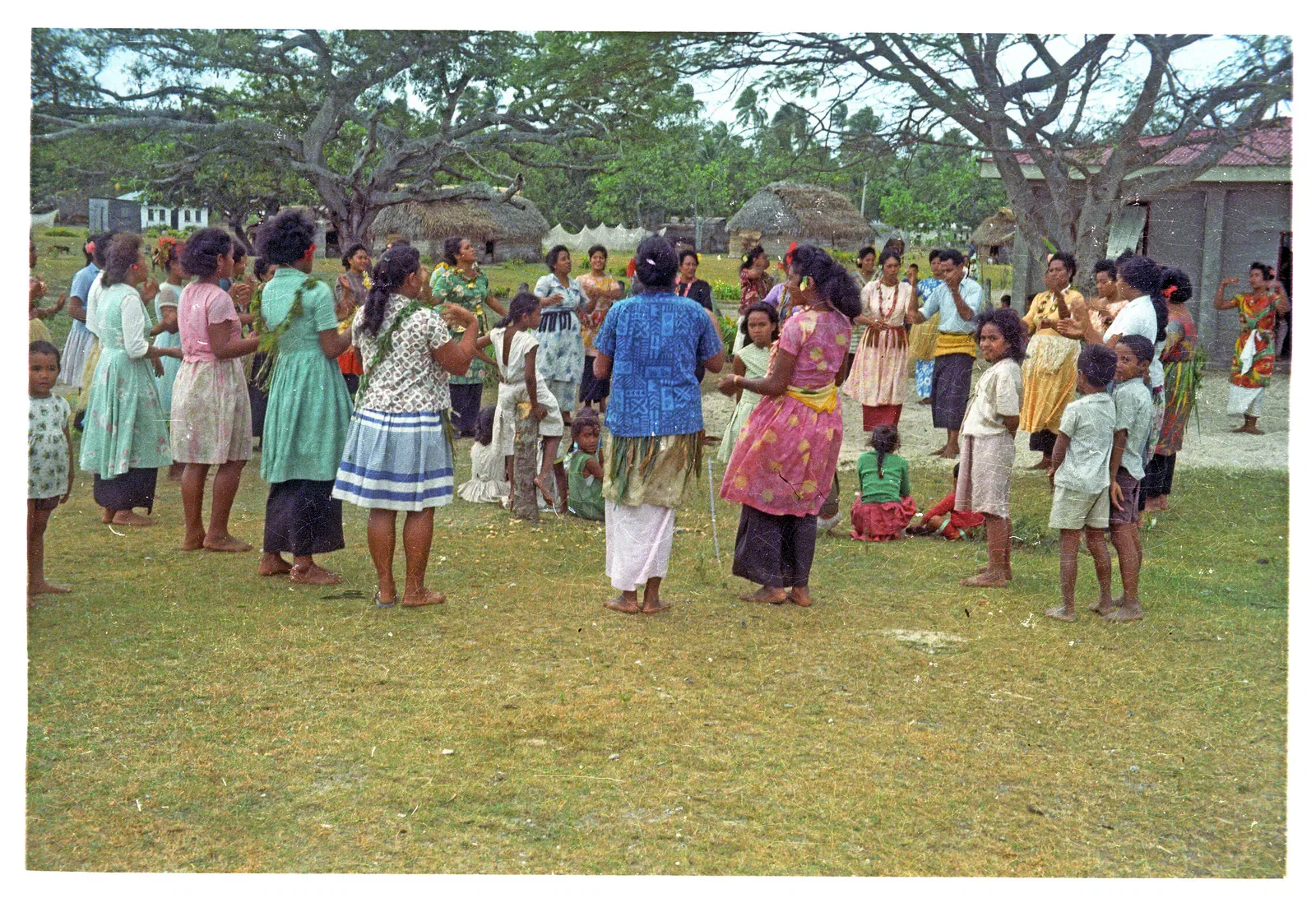
Characteristics
Song and dance are one act: arm and hand movements illustrate the sung words, and groups perform in rows or choirs rather than as soloists. Harmony comes from hymn singing, with minor-key and major-key chords, and the lead singer often opens alone before the group joins. Percussion is usually a slit drum, a beaten mat or a skin drum, and the guitar and ukulele support the voices.
Instruments and production
Traditional percussion is made by hand from wood, skin and mat: the pate, lali, fala and the Tahitian to’ere and pahu. Imported guitar and ukulele became the usual accompaniment from the 1800s, and electronic keyboards later replaced many older instruments in Samoan popular music. Auckland producers added drum machines and keyboards, as on the siren beat of Savage Love.
Missions, hymns and bans
Contact changed the music in two opposite ways. Missionaries banned or policed what they saw as pagan, and they introduced something that took root fast. In Tahiti, a law known as the Pomare Code banned the heiva festivities in 1819, and the ban was reinforced in 1842. English Methodists brought hymns to Tonga in 1822, and the London Missionary Society reached Samoa in 1830. Pastors from Samoa also discouraged old religious songs and swaying dances in Tuvalu around 1860.
The hymns did not replace local singing. Islanders folded them into it. Himene tarava, an unaccompanied Tahitian choral style in which voices enter one by one and phrases end on a dropped pitch, took shape around 1844. In the Cook Islands, imene tuki added bursts of rhythmic nonsense syllables to hymn harmony. Guitars and ukuleles arrived with the missionaries and the traders, and they became standard accompaniment for island song.
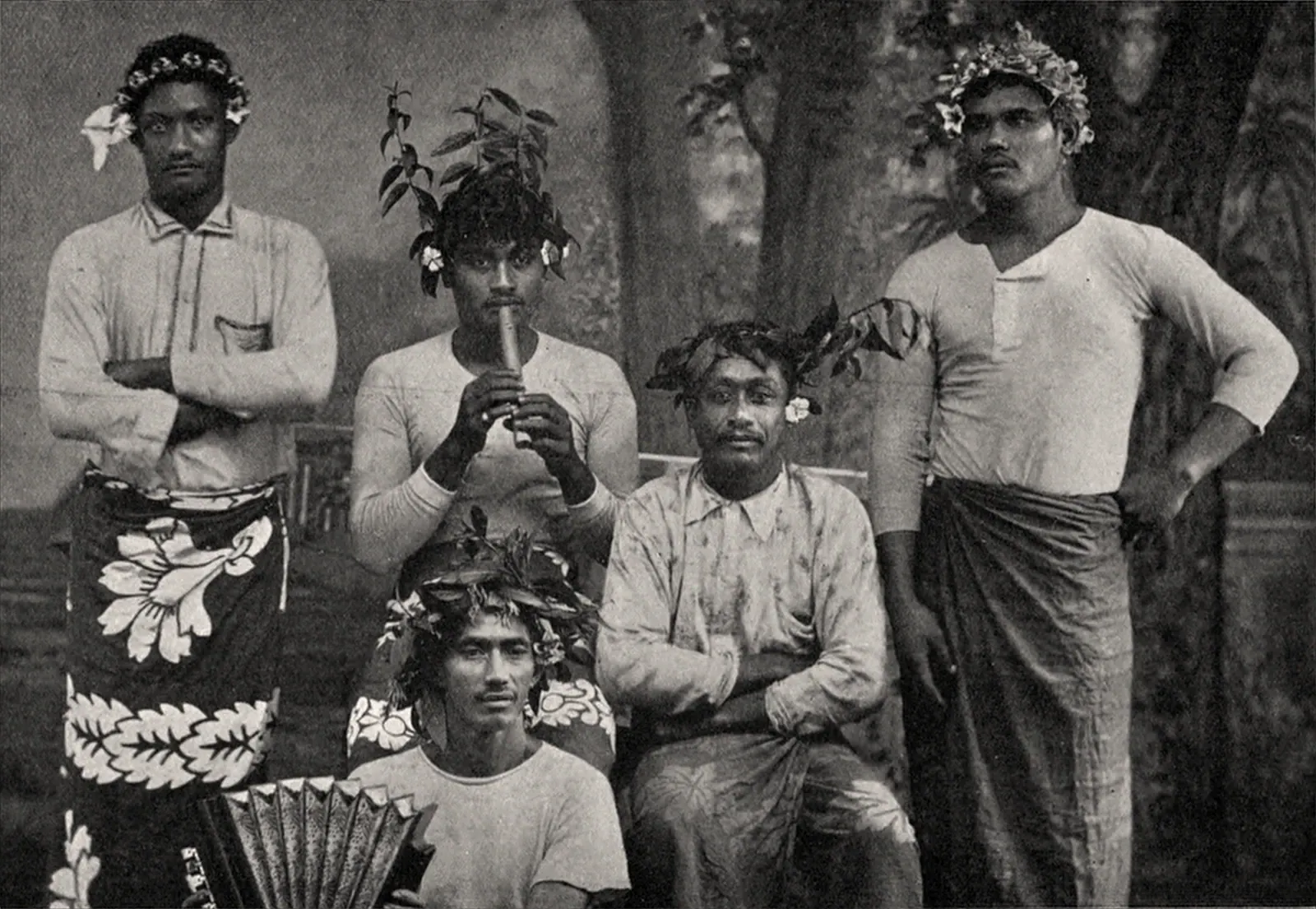
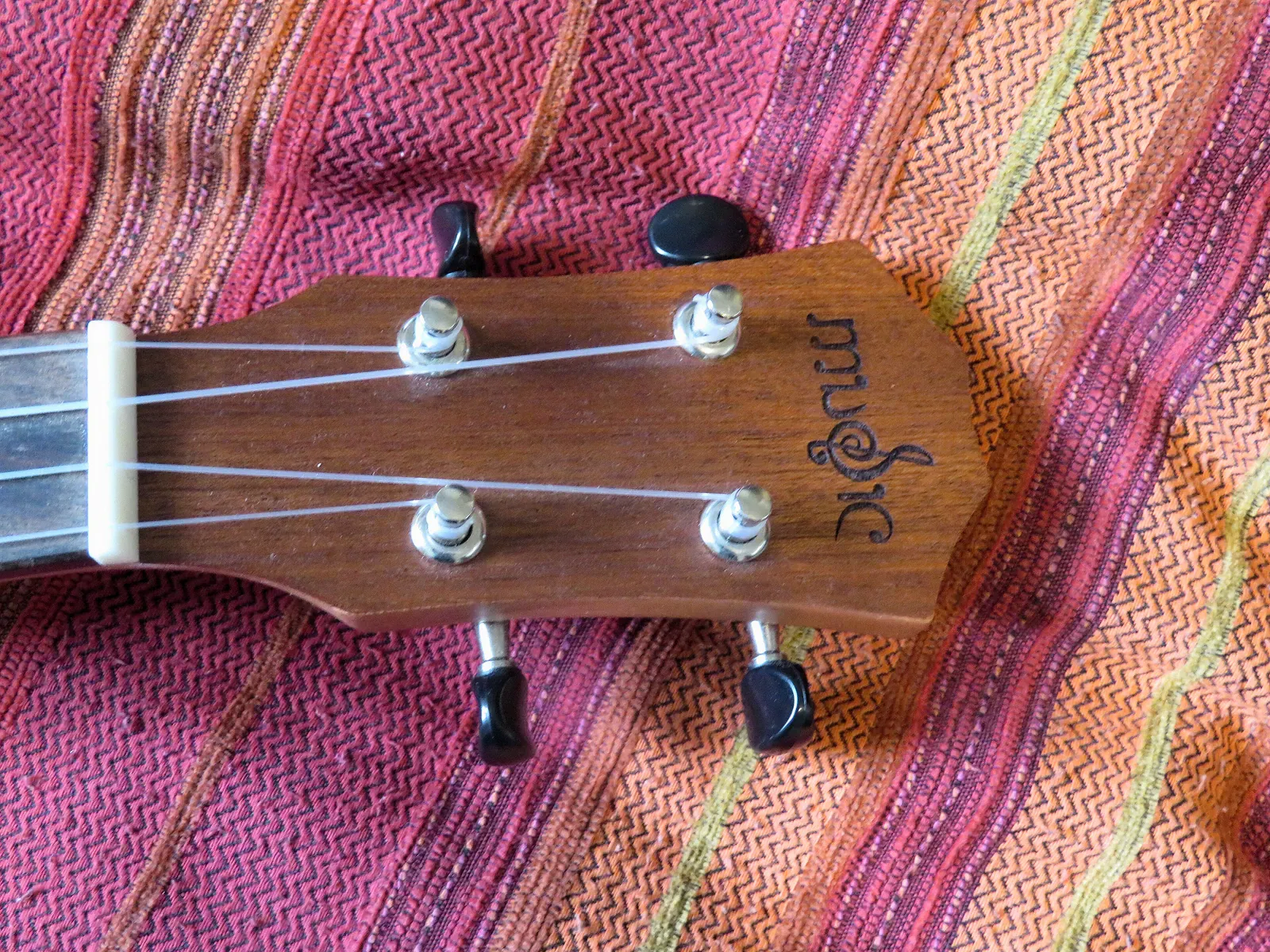
Tahiti’s Tiurai festival began in 1881 with songs, sports and tarava singing meetings, but traditional dance was left out.
Revival and island pop
The revival began with a teacher. In 1956, Madeleine Moua, a Heiva group director, began bringing ’ori Tahiti back to the stage. Over the following decades the dance returned, and in 1985 the Tiurai festival was renamed Heiva i Tahiti as the territory gained more autonomy from France.
Elsewhere the older repertoire was documented. In 1978, David Fanshawe began a ten-year trip recording Pacific song, and Tongan field recordings made in 1990 came out in 1992 as Malie! Beautiful! Dance Music of Tonga.
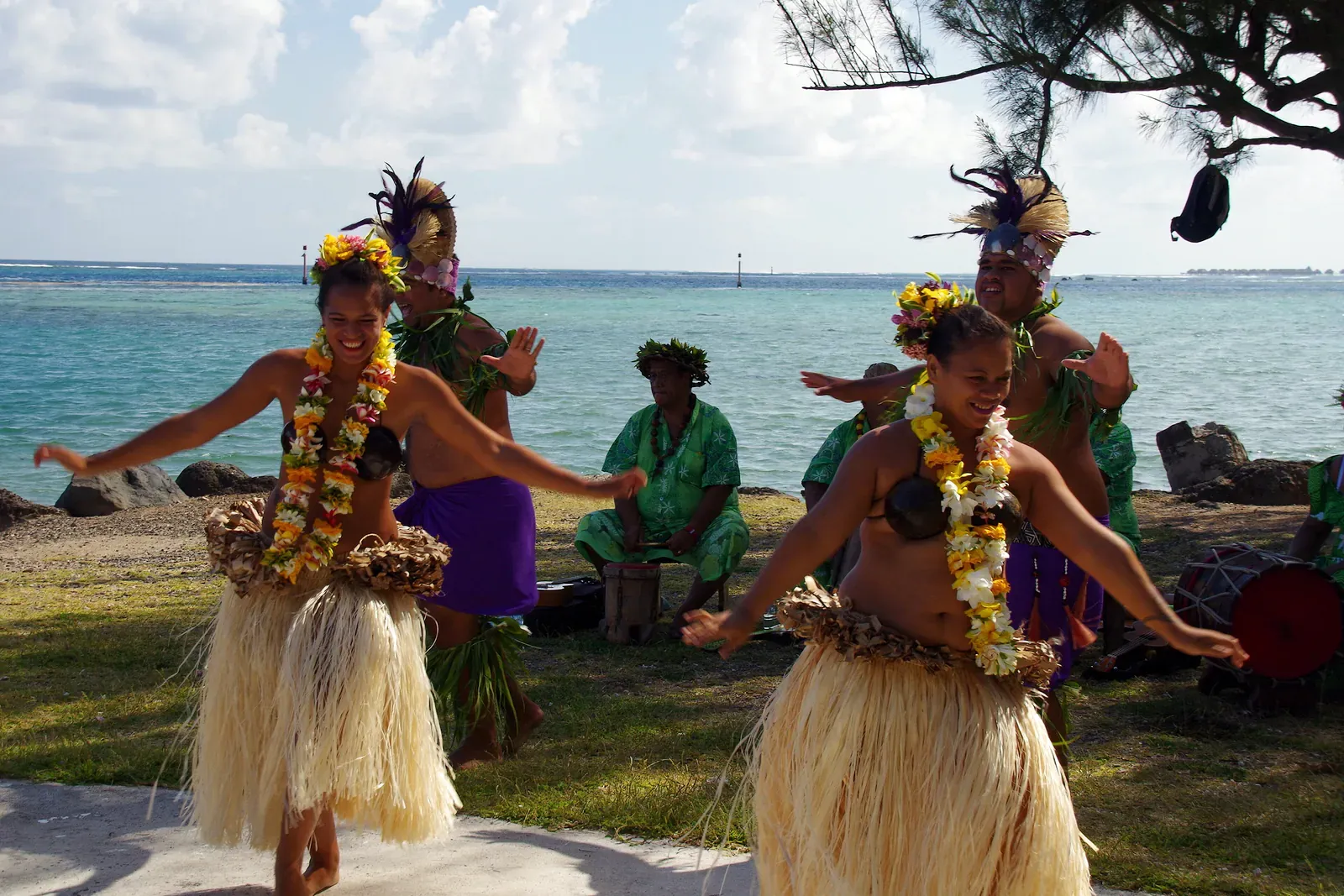
The first popular crossover was local. The Honolulu-born singer and painter Bobby Holcomb moved to Tahiti in 1976, learned the language and began mixing island melody with reggae and popular rhythms.
Diaspora and Pacific pop
The biggest shift came when island families settled in South Auckland and California. In Auckland, the children of Samoan, Tongan, Cook Islands and Niuean families grew up on hip-hop, R&B and reggae and began writing in those forms with island voices on top. The Mau formed in 1990 as a Samoan hip-hop group. In 1992, a 126-voice choir from Rapa Iti sang himene tarava on an album that topped Billboard World Albums.
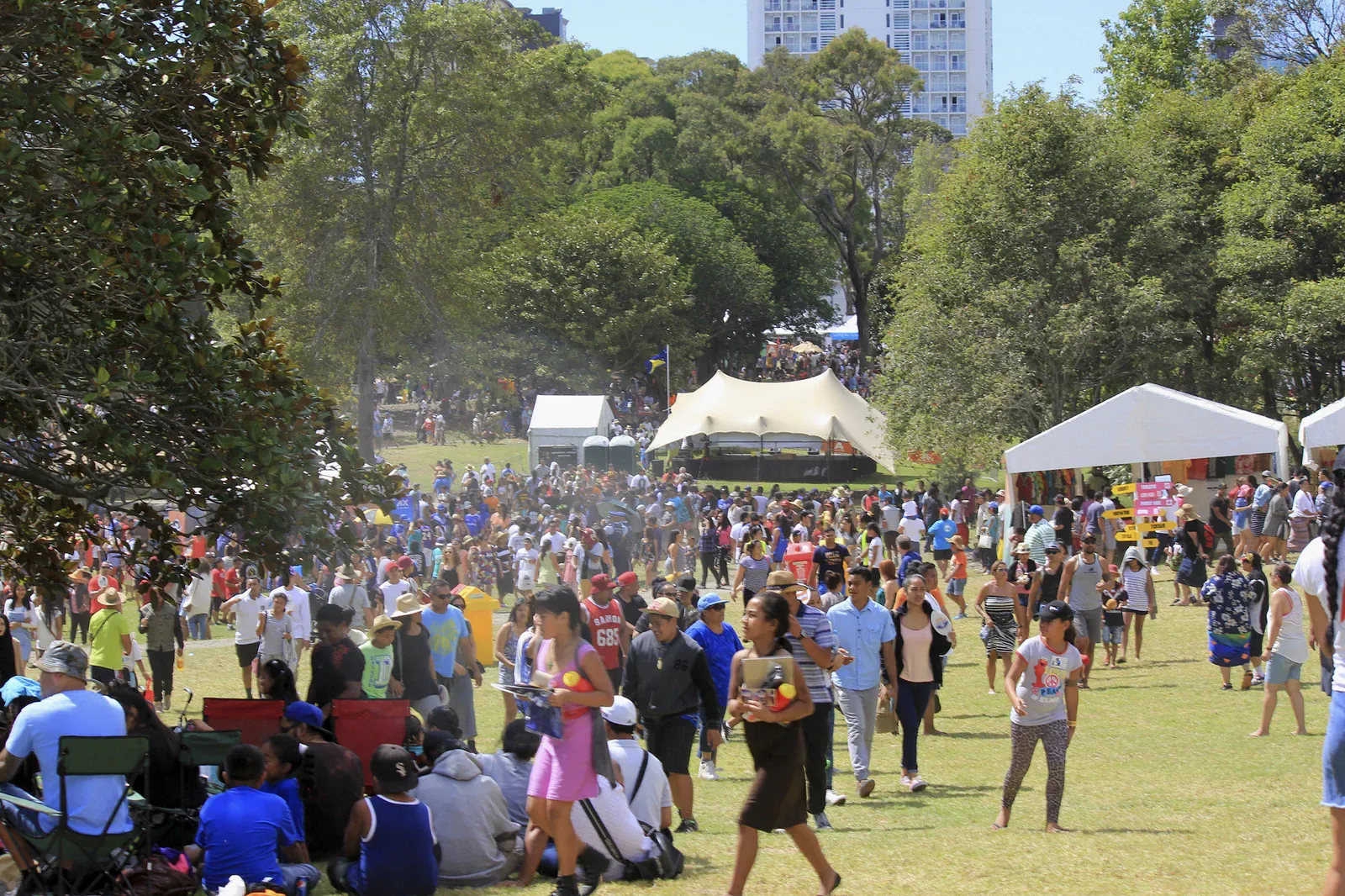
Pop followed. OMC’s How Bizarre was released in 1995 and reached the UK top 5 and the top of charts in several countries. King Kapisi won the APRA Silver Scroll in 1999 for Reverse Resistance, the first New Zealand hip-hop artist to do so. The same year, Dawn Raid Entertainment started in Papatoetoe, backing Pacific hip-hop and R&B. Nesian Mystik’s For the People reached number 5 in New Zealand in 2002 and the group went on to a record 11 NZ top-10 singles. Te Vaka’s Tutuki won Best Pacific Music Album at the New Zealand Music Awards in 2004, and the group showed a Tokelau-led mix of pate drums, chant and pop could win an audience.
Screen and streaming
Film changed the scale. The Disney film Moana, released in 2016, used songs written by Opetaia Foa’i with Lin-Manuel Miranda, with Te Vaka performing on the soundtrack, in Samoan and Tokelauan as well as English. The soundtrack came out on Walt Disney Records. A year later, Common Kings, an Orange County group of Samoan, Tongan and Fijian roots, topped the Billboard Reggae Albums chart with Lost in Paradise.
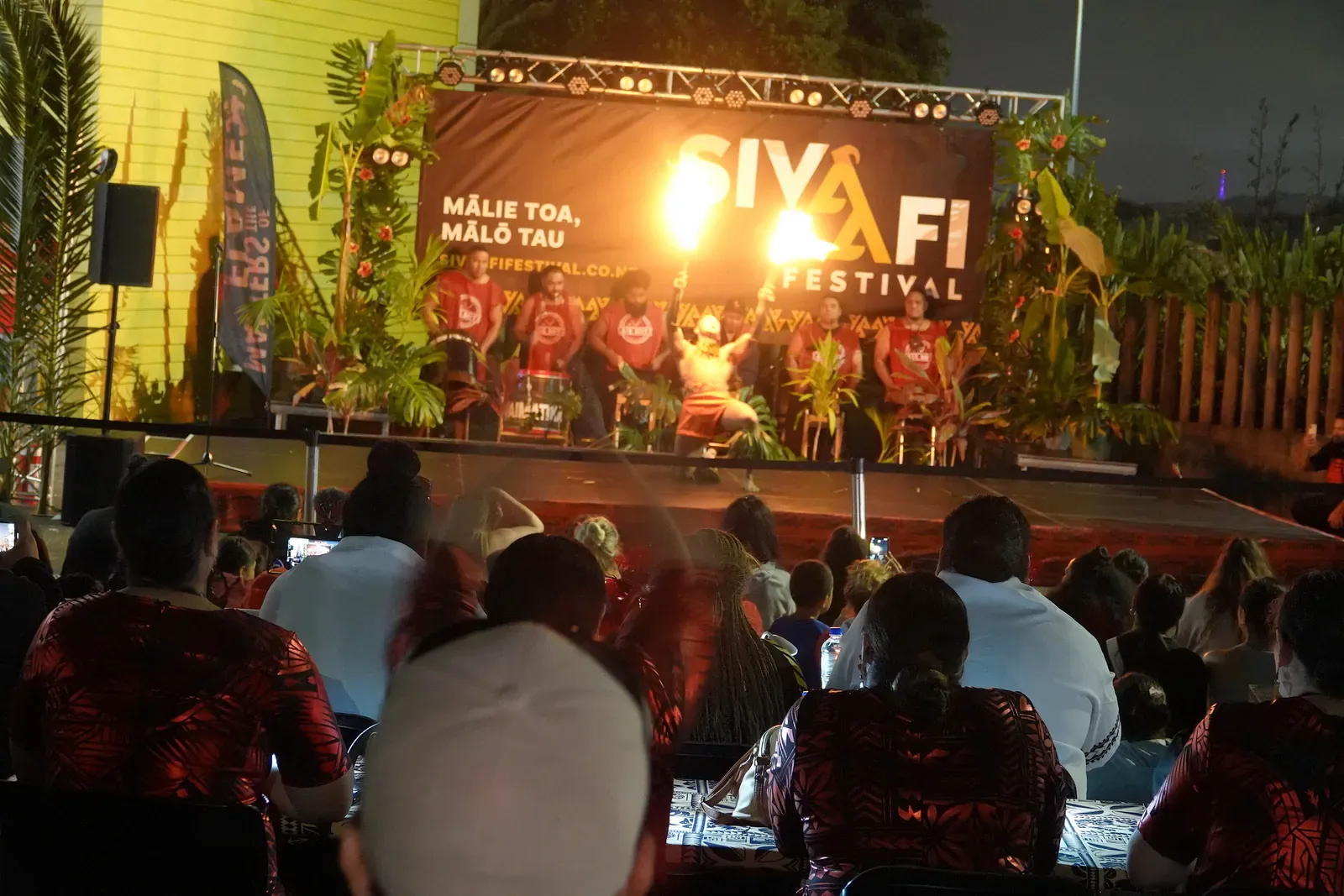
Then came the siren beat. In 2020, Jawsh 685, an Auckland producer of Samoan and Cook Islands heritage, released Savage Love, an instrumental built on the siren-jam habit of making beats for the sirens fitted to cars. It went viral on TikTok and, with a vocal from Jason Derulo on Columbia Records, reached number 1 in the US, the UK and New Zealand.
Mainstream success
Through every genre in turn: world-music recordings in 1992, a pop single in 1995, hip-hop in the early 2000s, a Disney film in 2016, short video in 2020. Sol3 Mio, three Samoan tenors, show the other road: their 2013 debut sold eight times platinum and led New Zealand sales for 2014 and 2015.
The backlash was the missionary-era ban, which kept dance out of public life for generations.
Notable recordings
Himene Tatou (1992). The Tahitian Choir came from the small island of Rapa Iti, and Pascal Nabet Meyer recorded their himene tarava. The album topped Billboard World Albums.
How Bizarre (1995). Pauly Fuemana, of Niuean descent, led OMC from South Auckland. The single took a Niuean voice to number 5 in the UK and the top of the charts in several countries, and it put South Auckland on the pop map.
Savage Love (2020). The siren beat began as a tribute beat rooted in Pasifika siren jams. The instrumental was picked up by TikTok dancers, many in traditional costume, before the Jason Derulo version arrived.
Culture
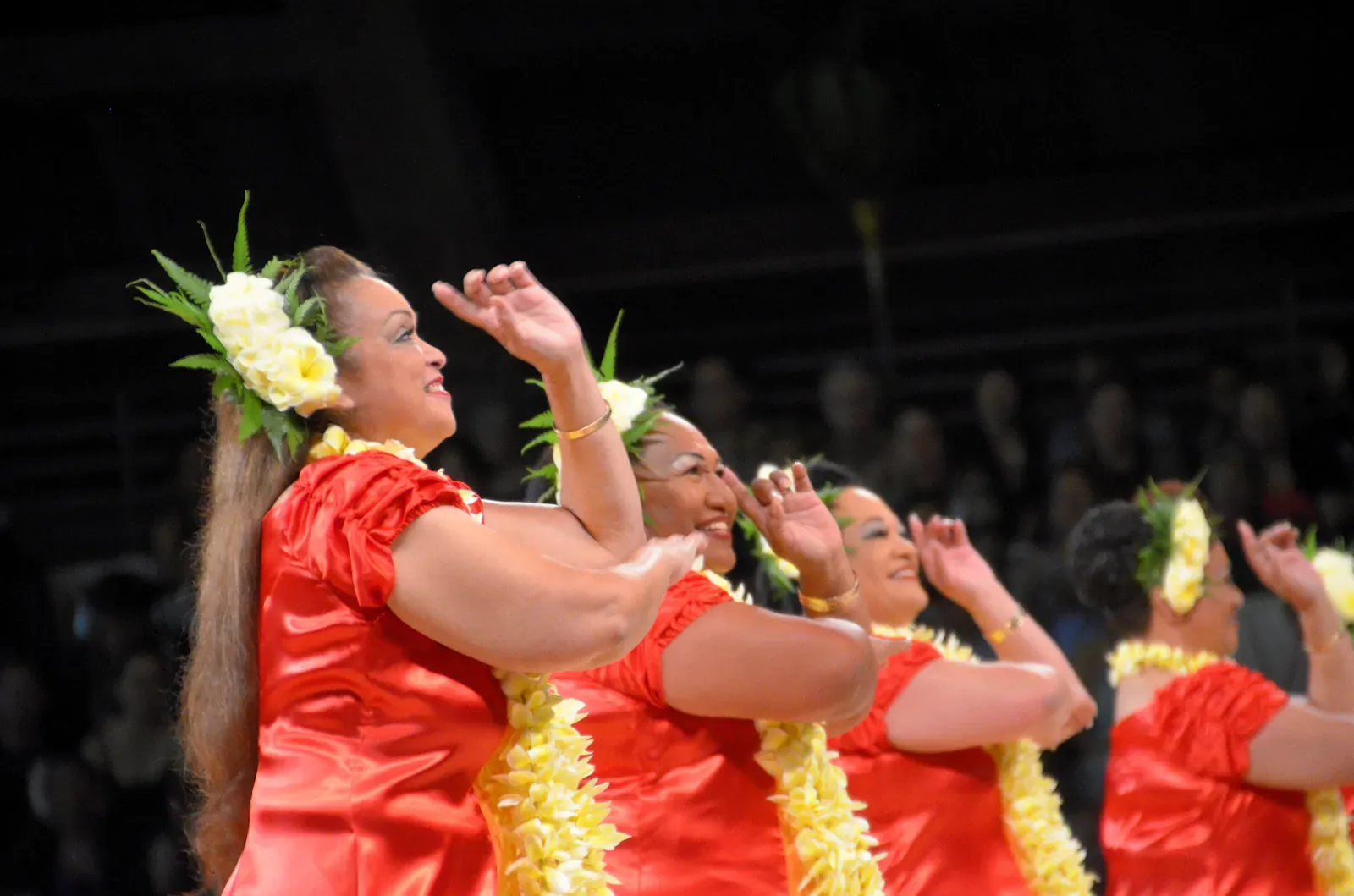
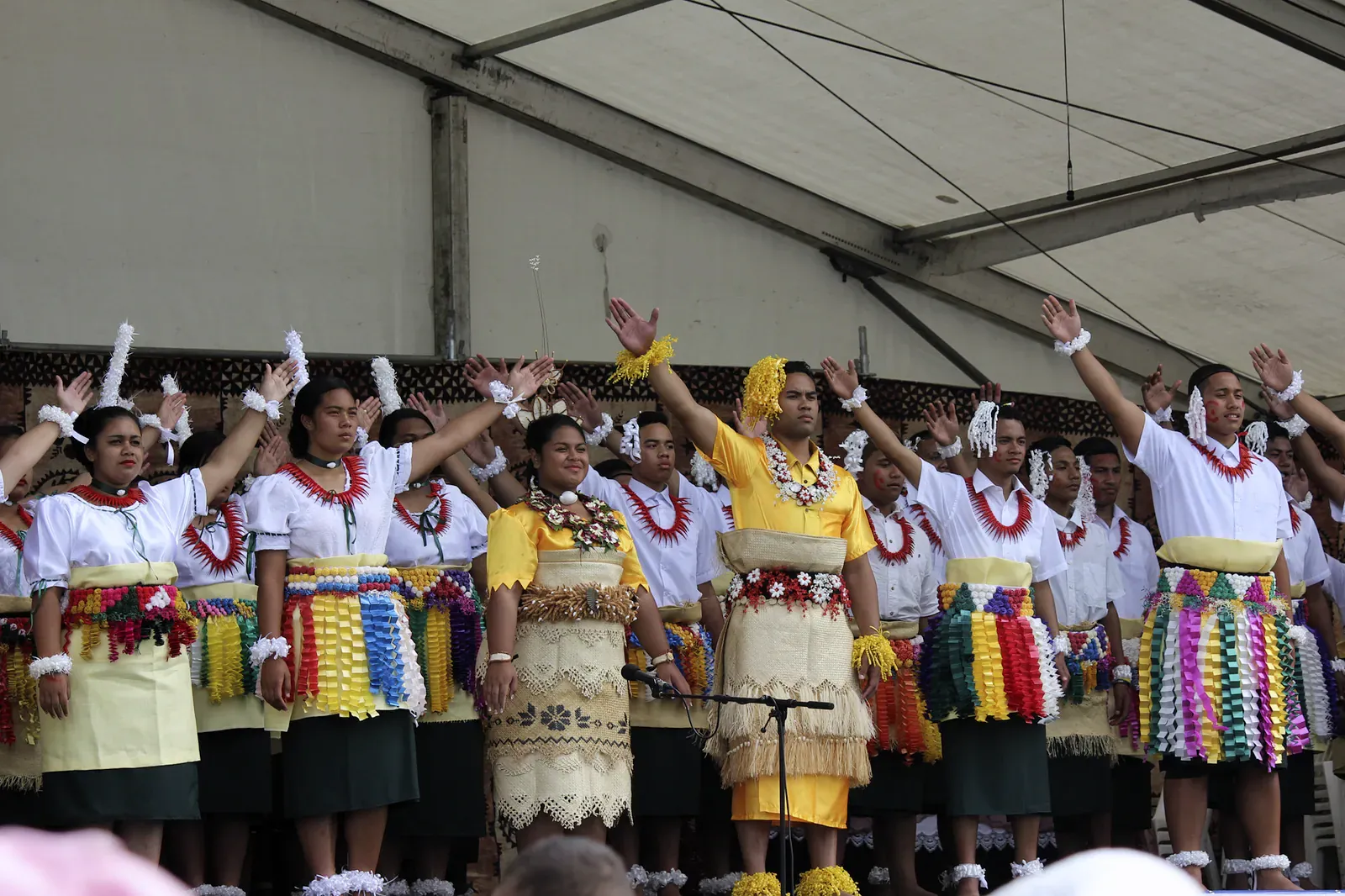
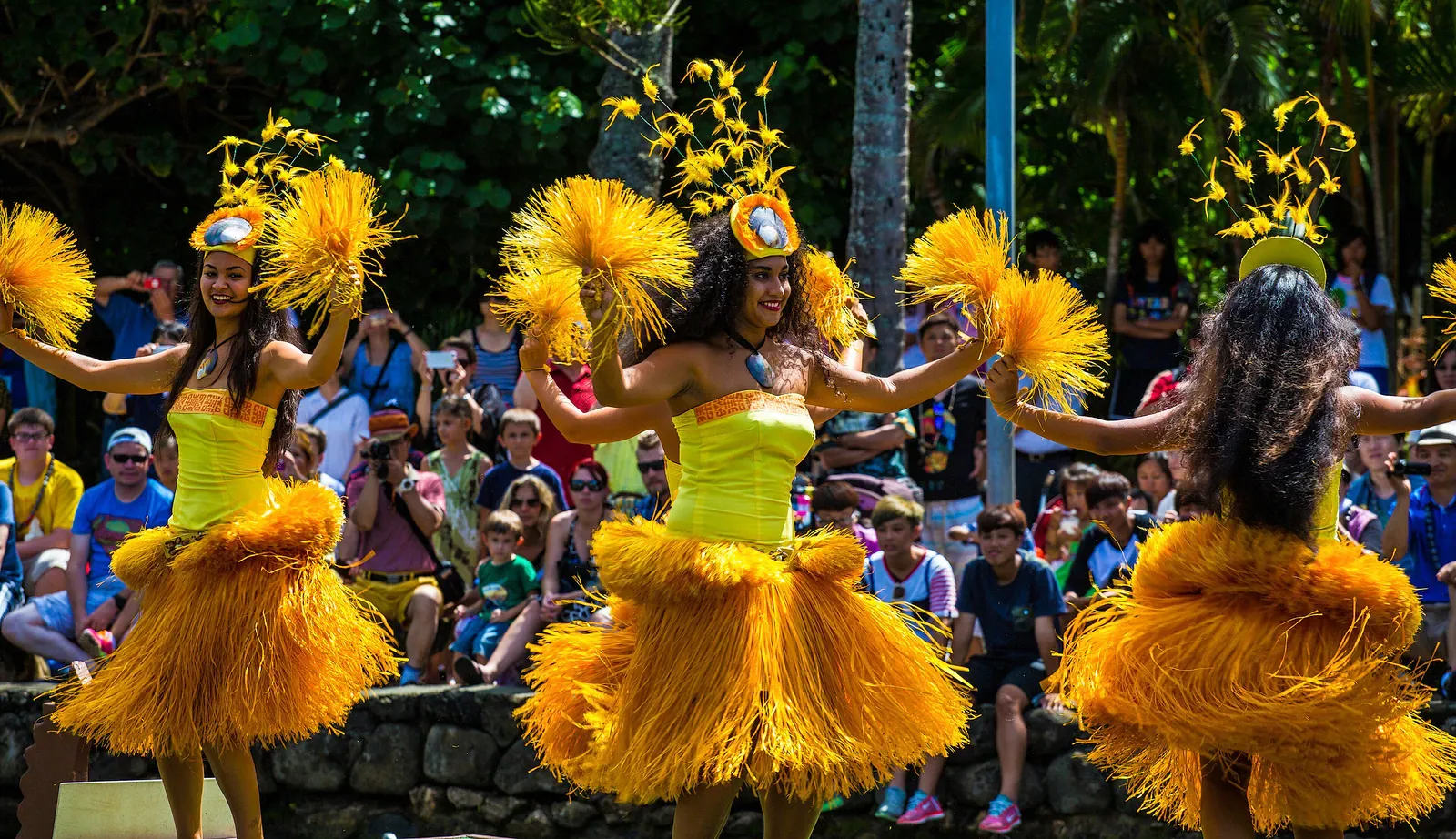
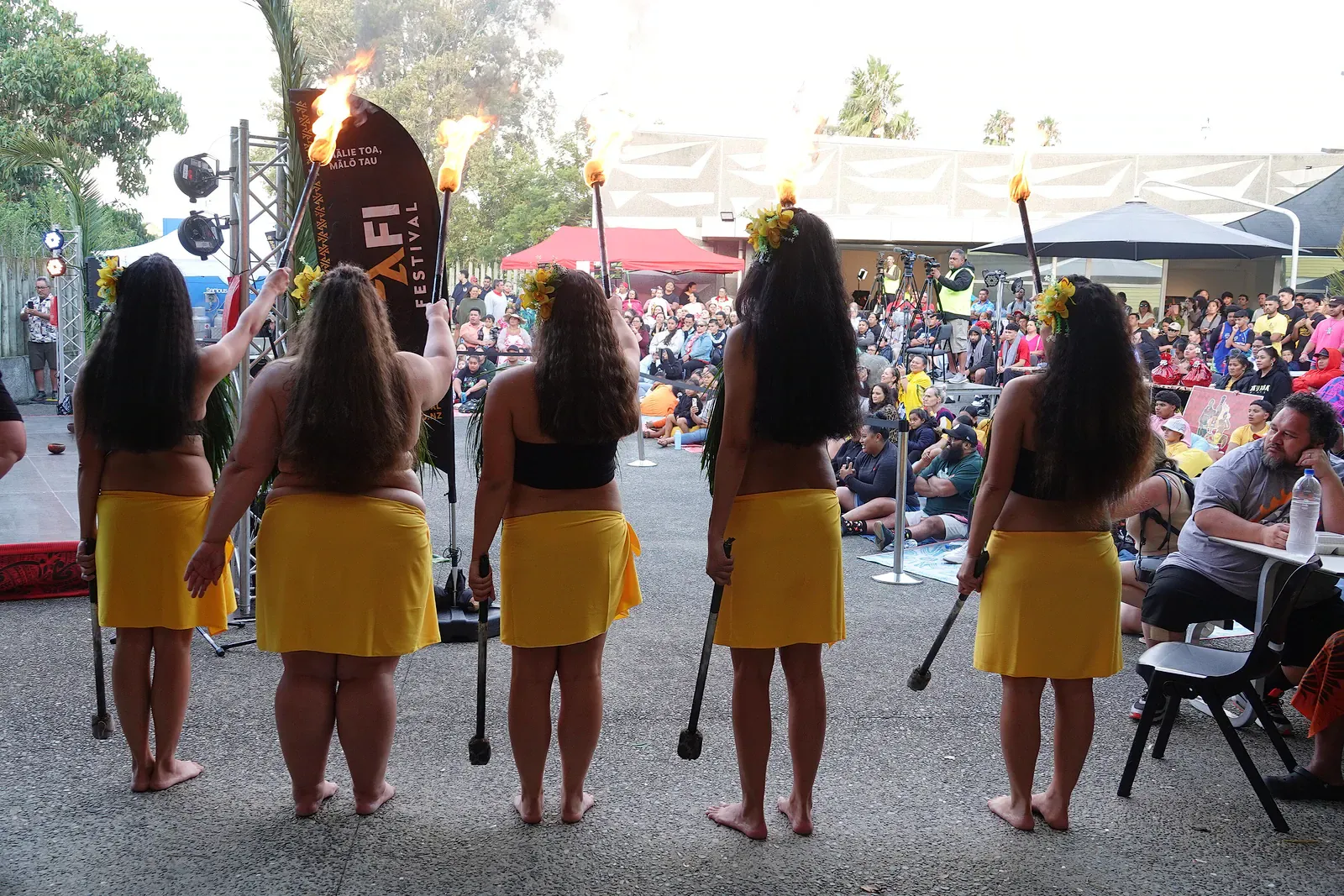
In Polynesia, music is mostly communal. Lakalaka is performed by rows of people at royal and church events in Tonga. Fatele in Tuvalu has men beating boxes while singers move in a line. In Tahiti, ’ori Tahiti is judged at Heiva i Tahiti, the annual summer festival held in Papeete, where choirs and dance troupes compete.
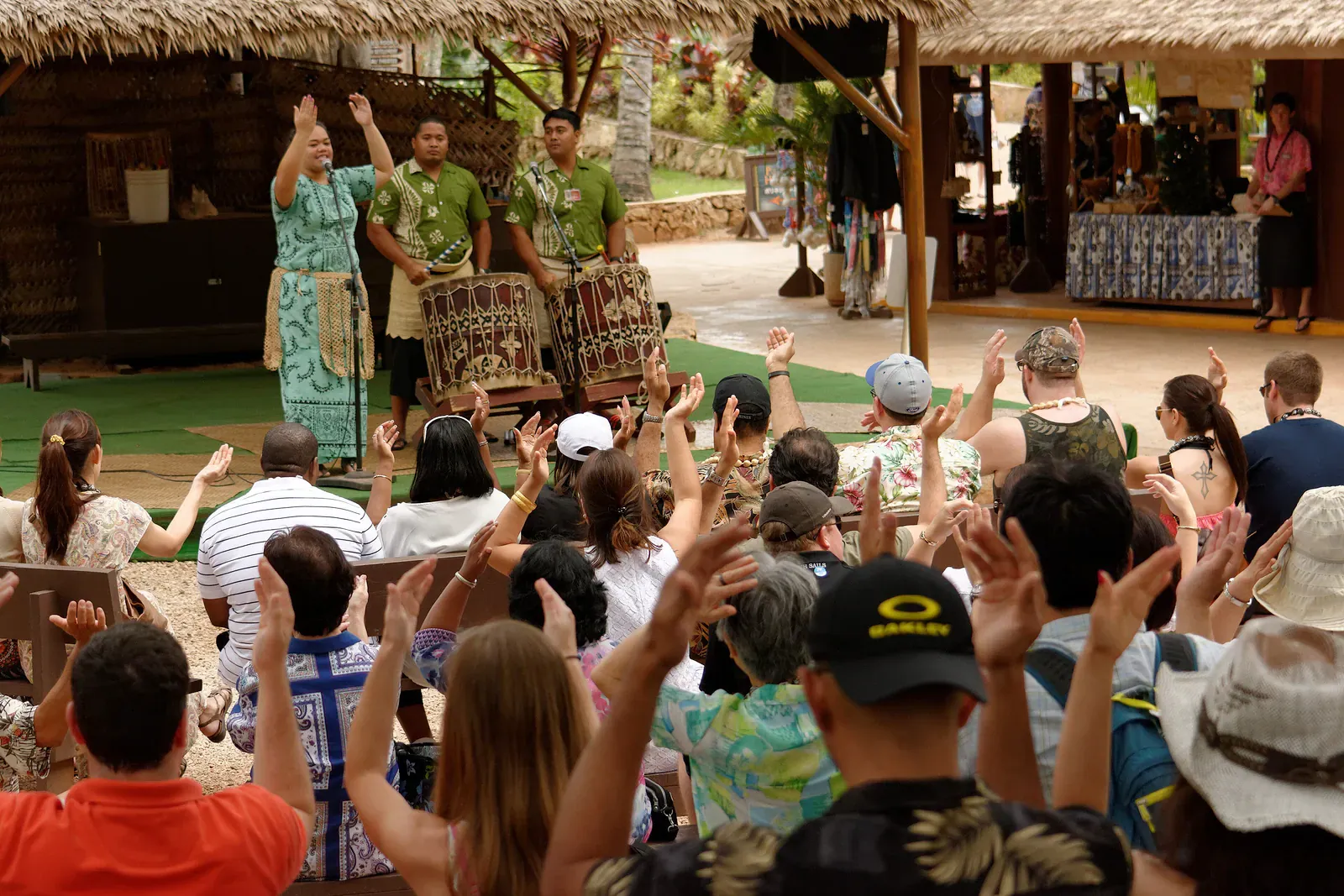
Church is the other centre: hymn singing is the base of himene tarava and imene tuki. Since Savage Love, dancers in traditional costume have posted to the siren beat on short video.
Misconceptions
It is all hula and ukulele. Hula and slack-key belong to Hawaii, which has its own tradition. Polynesian music beyond Hawaii and New Zealand includes Tongan lakalaka, Tahitian himene tarava and Tuvaluan fatele, none of which depends on the ukulele. The ukulele and guitar arrived with missionaries and traders.
It is a single sound. The islands have distinct styles. A himene tarava, with voices entering one by one and dropping at the end of each phrase, sounds nothing like a Samoan siva driven by beaten log and mat.
It is only ancient. Much of today’s repertoire is modern: hymn-based choirs date from the 1800s, and Tahitian dance was revived from 1956. Acts such as Te Vaka and Common Kings keep adding records.
Frequently asked questions
What is Polynesian music?
Polynesian music is the singing, drumming and dance of the Polynesian islands, such as Samoa, Tonga, Tahiti and the Cook Islands. It joins old chant and percussion with church hymn harmony, and song and dance are usually performed together.
What instruments are used in Polynesian music?
Typical instruments include the pate and lali (slit drums), the fala (a beaten mat), the pa’u (a goat-skin drum), the nafa nose flute in Tonga, and the guitar and ukulele. In Tuvalu, tea chests and cracker tins often carry the beat.
What is the difference between Polynesian and Hawaiian music?
Hawaiian music is one part of Polynesia, with its own history in hula, slack key and steel guitar. Polynesian music as covered here means the traditions of the other islands, including Samoa, Tonga, French Polynesia, the Cook Islands, Tuvalu, Tokelau and Niue. The wider family is covered on the Oceanian music page.
Which recordings represent Polynesian music?
Representative recordings include OMC’s How Bizarre, Te Vaka’s Tutuki and Opetaia Foa’i’s We Know the Way from Moana. The Tahitian Choir’s Himene Tatou shows himene tarava, and Jawsh 685’s Savage Love shows the siren beat.
Sound
Sound sheet
Signature sounds
- Unaccompanied voices joining one by one
- Dropped pitch at the end of phrases
- Rhythmic bursts of nonsense syllables
- Slit drum and goat-skin drum rhythm
- Hymn-style sixth chords and harmony
- Song and dance performed together
Drums and percussion
- Pate
- Lali
- Fala
- Tariparau
- Fa'atete
- To'ere
Techniques
- Voices entering one by one
- Dropped pitch at phrase ends
- Staccato nonsense syllables
- Unaccompanied choral singing
- Drummer-led dance cues
- Gestural dance-song
Keys and modes
Major and minor scales. Lakalaka melodies use major and minor scales, with the leading note generally left out.
Minor-key harmony. Tongan vocal groups are known for minor-key harmonies over guitar backing.
Hymn-style triadic harmony. Missionary hymns gave the islands sung chordal harmony, now the base of church and choir styles.
Tuning
Western diatonic tuning from missionary hymns and guitar
Vocals
Group singing in multi-part harmony, from solo openings to choirs of dozens, with men in deep punctuating parts and women carrying the melody
Scenes
Where it happened
Where and when the sound lived: one bar per city on a shared timeline.
Oceania
North America
Active scenes
Peak 3, 2011-2025
Home of the Tiurai, now Heiva i Tahiti, where dance, drumming and tarava choirs compete.
South Auckland's Pacific communities made hip-hop, R&B and Pacific fusion that reached charts.
Orange County base of Common Kings and other Pacific reggae acts.
Venues and places
Papeete, 1881 to today. Annual summer festival, born as the Tiurai, where choirs and dance troupes compete.
Papatoetoe, 1999 to today. A South Auckland label that began with T-shirts sold at a market.
Auckland, 1999 to today. School room where Nesian Mystik formed.
Culture
Culture markers
- Lakalaka
Tonga's national dance, performed in rows, with Queen Salote's pieces still widely staged.
Dance - 'Ori Tahiti
Tahitian dance, banned under the Pomare Code and revived from the 1950s, now judged at Heiva i Tahiti.
Dance - Fatele
Tuvaluan line dance where men beat boxes while singers move to the song.
Dance - Church hymn singing
Missionary hymns became the base of choral styles such as himene tarava and imene tuki.
Ritual - Culture dance clips
TikTok videos in traditional costume followed Savage Love and celebrated Pasifika heritage.
Dance
Media
Key media
- 1992Malie! Beautiful! Dance Music of Tonga
by Various. Tongan dance songs recorded across the islands in 1990.
Compilation - 2002Music of the South Pacific: Recordings by David Fanshawe (1978-1992)
by Various. ARC release drawn from Fanshawe's Pacific field recordings, including Tongan lakalaka.
Compilation - 2016Moana
by Walt Disney Animation Studios. Animated film with Tokelauan and Samoan lyrics by Opetaia Foa'i and Te Vaka.
Film - 2017Greatest Hits: Songs That Inspired Moana
by Te Vaka. Disney-issued collection of Te Vaka songs that led to the film.
Compilation - 2021Dawn Raid
by Oscar Kightley. Documentary on the rise and fall of the South Auckland label that backed Pacific hip-hop.
Film
Glossary
Terms on this page
The Tahitian dance tradition, banned in the 1800s and revived from 1956.
Tuvaluan dance song in which performers sing while beating boxes or mats.
Unaccompanied Tahitian choral style where voices join one by one and phrases end on a dropped pitch.
Tongan 'fragrant song', a love poem often paired with the tau'olunga dance.
Cook Islands vocal style with rhythmic bursts of nonsense syllables called tuki.
Tongan group dance-song in rows, performed largely standing with arm gestures.
Section of a lakalaka where the two groups pass through each other to swap places.
Pasifika habit of making beats for the sirens fitted to cars, the root of Savage Love.
Oceanian family