Pacific reggae
Pacific reggae, or island reggae, adds ukulele, wooden drums and island harmony to the one-drop groove, from Herbs in Auckland to Fiji in Hawaii.
New Zealand, United States, Papua New Guinea, Solomon Islands, Fiji, Australia, 1979
Oceanian family
Born
1979
New Zealand, United States, Papua New Guinea, Solomon Islands, Fiji, Australia
Subgenres
4
Documented branches
Links
16
Genres it drew on or shaped
Tempo
70-90 BPMLineage
Family tree
Timeline
Era by era
From the first sparks to today. Select a dot to read the story behind it.
- Auckland roots
1978 to 1989
- Hawaii and the Marley tribute bands
1990 to 2004
- Diaspora and streaming
2005 to today
Eras
Moments
- 1 Auckland roots, 1978 to 1989
- 2 Hawaii and the Marley tribute bands, 1990 to 2004
- 3 Diaspora and streaming, 2005 to today
1978
Auckland roots
Herbs form in Auckland, Marley plays Western Springs in 1979, and the band's protest singles and albums set the template of island reggae with Pacific politics.
- 1978Herbs form in AucklandThe multi-ethnic band, with Samoan, Tongan, Cook Islander, Māori and Pākehā members, is led by guitarist Dilworth Karaka.
- 1979Bob Marley plays Western SpringsHis only New Zealand show draws about 22,000 to Auckland; young Māori and Pasifika musicians in the crowd take up reggae.
- 1981Herbs release What's Be Happen?The debut EP, with Azania (Soon Come), is described as setting a standard for Pacific reggae.
- 1982French Letter reaches number 11The anti-nuclear single peaks at 11 in New Zealand and is banned in all French territories.
- 1984Herbs release Long AgoThe first full album, produced by bassist Billy Kristian, carries the title track written by Willie Hona.
- 1986Slice of Heaven reaches number oneDave Dobbyn with Herbs tops the New Zealand and Australian singles charts.
- 1987Fiji moves to HawaiiVeikoso leaves Fiji after the 1987 coups and builds his career in Honolulu.
1990
Hawaii and the Marley tribute bands
Fiji builds a Polynesian reggae audience in Hawaii, while Katchafire starts as a Marley tribute band in Hamilton and scores a New Zealand hit with Giddy Up.
- 1995French Letter '95Herbs re-record the song when France resumes nuclear tests; it reaches number 9 with a Greenpeace video.
- 1997Katchafire form in HamiltonThe all-Māori band starts as a Bob Marley tribute and takes its name from the Wailers album Catch a Fire.
- 1998Fiji wins Na Hoku Hanohano awardsHe takes Male Vocalist of the Year and Favorite Entertainer of the Year in Hawaii.
- 2003Katchafire release RevivalThe album carries Giddy Up, the best-selling New Zealand single of 2002.
2005
Diaspora and streaming
Pacific Islander artists in California and Hawaii, including J Boog and Common Kings, reach the Billboard reggae charts, and Fiji's catalogue passes 500 million streams.
- 2007J Boog debuts with Hear Me RoarThe first of three top-ten Billboard Reggae Albums for the Samoan-American singer.
- 2017Common Kings release Lost in ParadiseThe Samoan and Hawaiian band from Orange County later receives a Grammy nomination for the album.
- 2025Fiji's death and tributeA memorial concert at the Waikiki Shell on 13 September draws about 28,500 people.
Listening path
Start listening
A short path from an easy way in to the deep end. Thumbnails come from YouTube; the player loads only when you press play.
- 01
Herbs, 1981
The 1981 EP track that started the Auckland sound, with a South African freedom theme.
- 02
Herbs, 1984
The party anthem of the first Herbs album, built on a gentle island groove.
- 03
Katchafire, 2003
The roots-reggae single that brought the style to a new New Zealand generation.
- 04
Fiji, 1998
Fiji's signature song, recorded in Hawaii, showing how a Fijian singer carries island heritage into reggae.
- 05
J Boog, 2016
A slow diaspora reggae love song from a Samoan-American singer's EP.
Pacific reggae, also called island reggae, is the reggae of Polynesia and Melanesia, played in New Zealand, Hawaii, Fiji, Samoa, Papua New Guinea, the Solomon Islands and Pacific communities abroad.
It keeps the Jamaican one-drop groove and replaces much of the surrounding sound with ukulele, wooden drums, keyboards and close island harmony. It began in Auckland in the late 1970s, and its lyrics are usually about Pacific identity, land and politics rather than Rastafari.
Origins
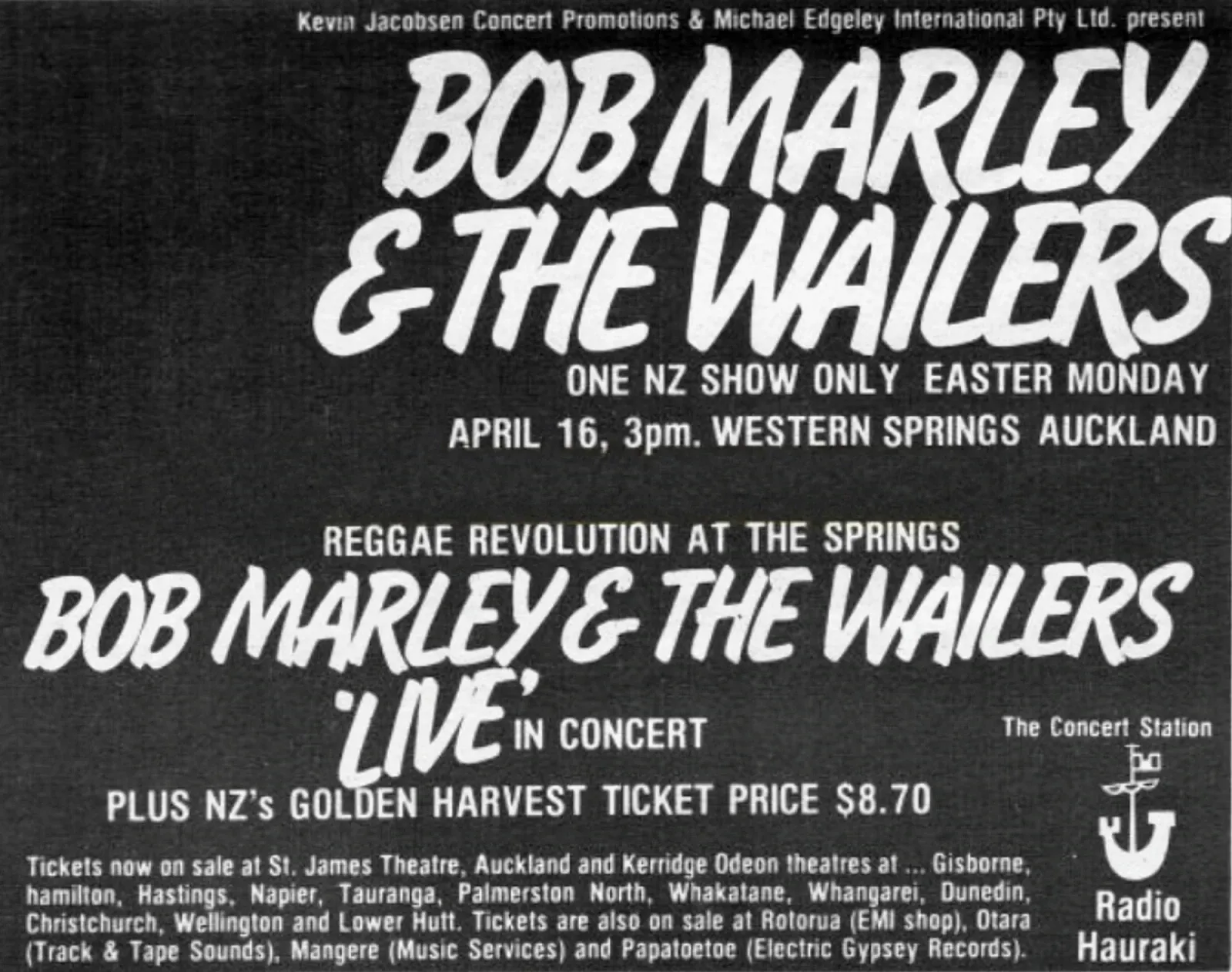
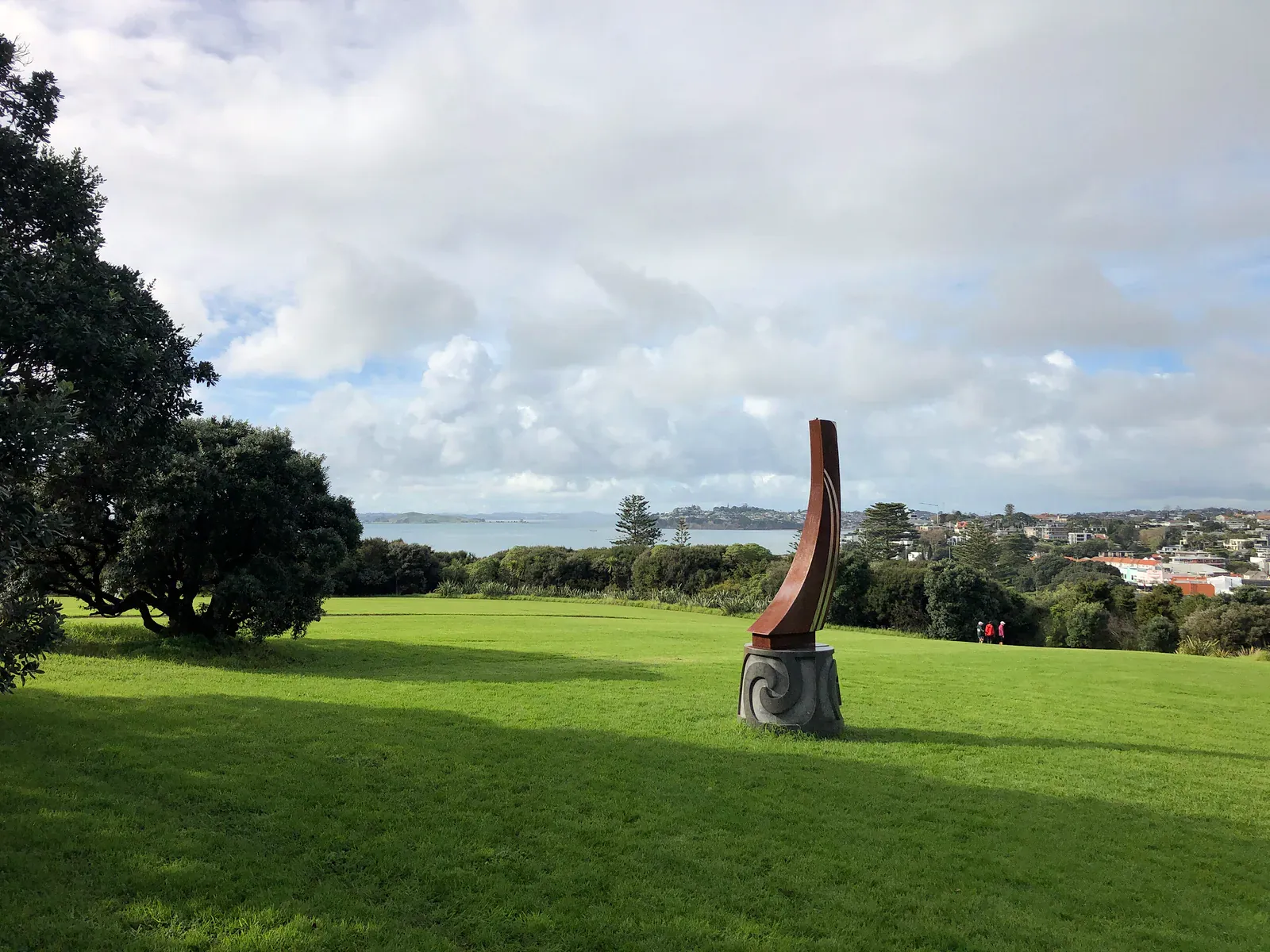
Reggae reached the Pacific in the 1970s, and one concert gave it a local direction. Bob Marley played one New Zealand show, at Western Springs in Auckland on 16 April 1979, for a crowd of about 22,000. Young Māori and Pasifika musicians stood in the audience, among them members of the Auckland band Herbs, and the show is remembered as the point where a local reggae scene began to form. Marley’s songs of dispossession and resistance spoke directly to people whose own land and language had been taken or suppressed.
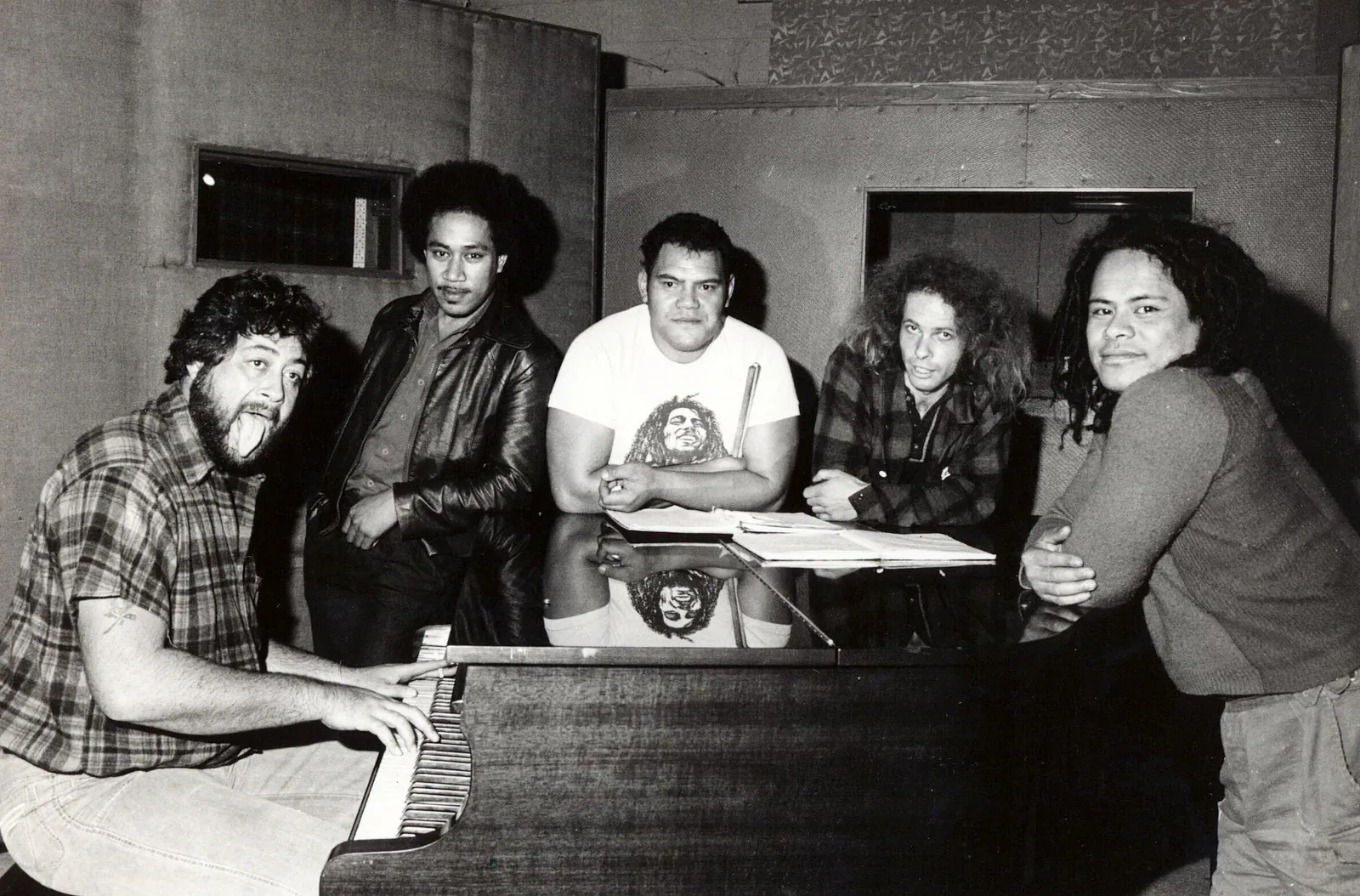
Herbs had formed in Auckland in 1978. The band was multi-ethnic from the start, with Samoan, Tongan, Cook Islander, Māori and Pākehā members, and its manager Will ’Ilolahia linked it to the Polynesian Panthers, the Auckland activist group. Dilworth Karaka, the band’s guitarist and singer, said that the phrase “Pacific reggae” was coined by the British band UB40.
Auckland, 1978-1989
The band’s debut EP, What’s Be Happen?, appeared in 1981. Its cover is an aerial photograph of police at Bastion Point in Auckland, where Māori land protesters were removed in 1978, and the record came out during the divisive 1981 Springbok rugby tour. It has been described as setting a standard for Pacific reggae that was never surpassed.
In 1982 the single French Letter followed. Toni Fonoti wrote it to protest French nuclear tests at Mururoa and Fangataufa, and Karaka has described seeing relatives from Tahiti and the Cook Islands travel to New Zealand for treatment after the tests. Radio hesitated over the title, which is a British slang term for a condom, and the song was banned in all French territories. Herbs played it in Tahiti regardless. A first album, Long Ago, appeared in 1984, produced by the bassist Billy Kristian. In 1986 the former Be-Bop Deluxe bassist Charlie Tumahai joined, and the same year the band backed Dave Dobbyn on Slice of Heaven.
Hawaii and the tribute bands, 1990-2004
Reggae took root in Hawaii alongside the New Zealand scene. It arrived in the 1970s, local musicians were blending it with island music by the early 1980s, and by the late 1980s the mixture was recognised as a style, nicknamed Jawaiian. The group Kapena was an early name, and the singer Walter Aipolani is sometimes called the father of Hawaiian reggae. In the early 1990s it became the most popular style in contemporary Hawaii, with slack-key guitar and ukulele added to the groove. Many artists disliked the label and preferred to call their music Hawaiian.
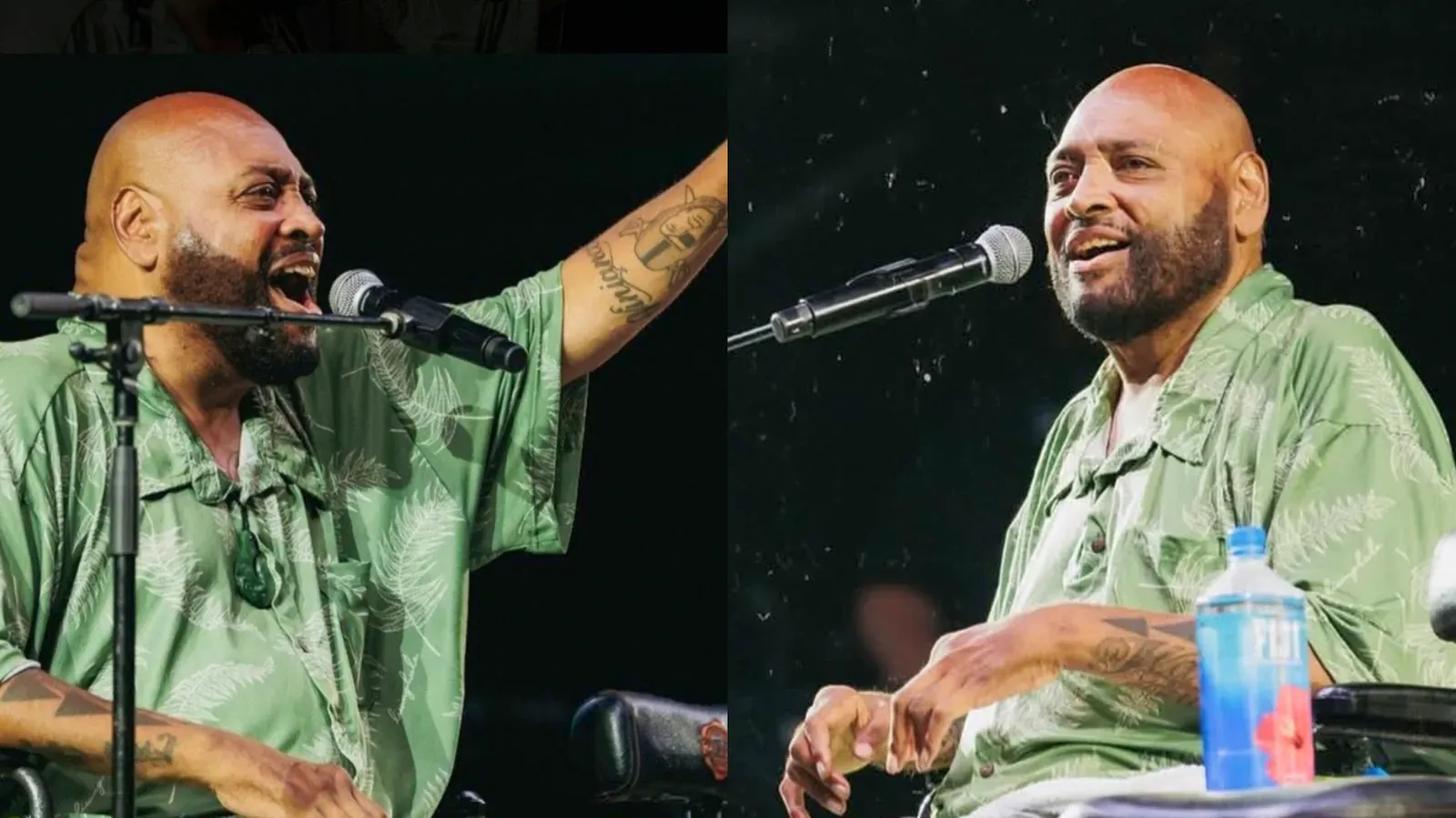
The Fijian singer George Veikoso, known as Fiji, shaped the next stage. Born in 1970 in Tailevu and raised in Suva, he joined the band Rootstrata in 1987, then left for Hawaii the same year after the Fijian coups. In 1998 he won the Hawaiian music awards for male vocalist and favorite entertainer. He kept a Polynesian identity in a style dominated by Jamaican patterns, and he became the best-known performer of island reggae across the Pacific.
In New Zealand, a second generation formed in the late 1990s. Katchafire began in Hamilton in 1997 as a Marley tribute band of Māori musicians and took its name from the Wailers album Catch a Fire. Their first album, Revival, came out in 2003 with Giddy Up, the best-selling New Zealand single of 2002,.
Diaspora and streaming, 2005-present
The next phase was led by Pacific Islanders living on the American west coast and in Hawaii. J Boog, a Samoan-American singer from Long Beach, released Hear Me Roar in 2007, and three of his albums reached the top ten of the Billboard Reggae Albums chart; Backyard Boogie (2011) and Wash House Ting (2016) both went to number one. Common Kings, a Samoan and Hawaiian band from Orange County, followed. Common Kings’ Lost in Paradise (2017) later earned a Grammy nomination.
Back home the audience grew. Fiji won Best Pacific International Artist at the Pacific Music Awards in 2014, and his catalogue had passed 500 million streams by 2023. In 2024 he staged a two-day concert, Homecoming Fiji, in Nadi. After his death in 2025, a tribute at the Waikiki Shell in Honolulu drew about 28,500 people. Dilworth Karaka, the last remaining original member of Herbs, died in March 2026 at the age of 75.
Characteristics
Pacific reggae differs from Jamaican roots reggae mainly in what surrounds the groove. The one-drop beat and offbeat guitar chop stay, but the arrangement leans toward sung harmony in the manner of church and island choirs, with lead and backing voices trading phrases. Lyrics are more often about family, land, migration, island life and politics than about Rastafari, and in the islands the songs are often reggae remakes of older songs in local languages. New Zealand reggae adds Māori references and, on some records, Māori instruments. The tempo is moderate and relaxed.
Instruments and production
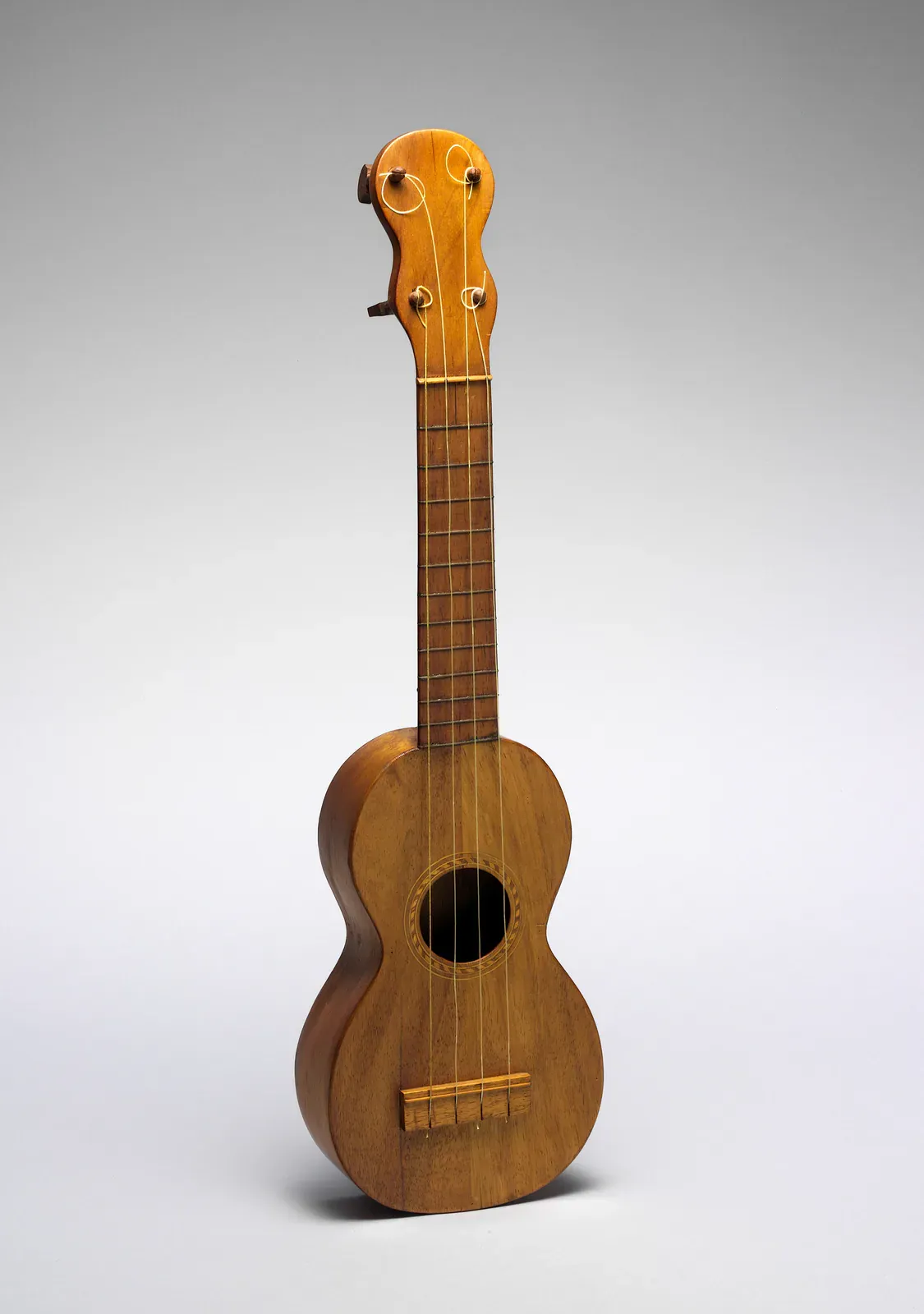
The ukulele adds a bright strum to the offbeat chop that a Jamaican guitarist or pianist would play. Traditional wooden drums sometimes sit beside the drum kit, and keyboard synthesizers replace the Jamaican organ and piano. The bass keeps the one-drop groove, and horns appear on larger bands such as Katchafire.
Mainstream success
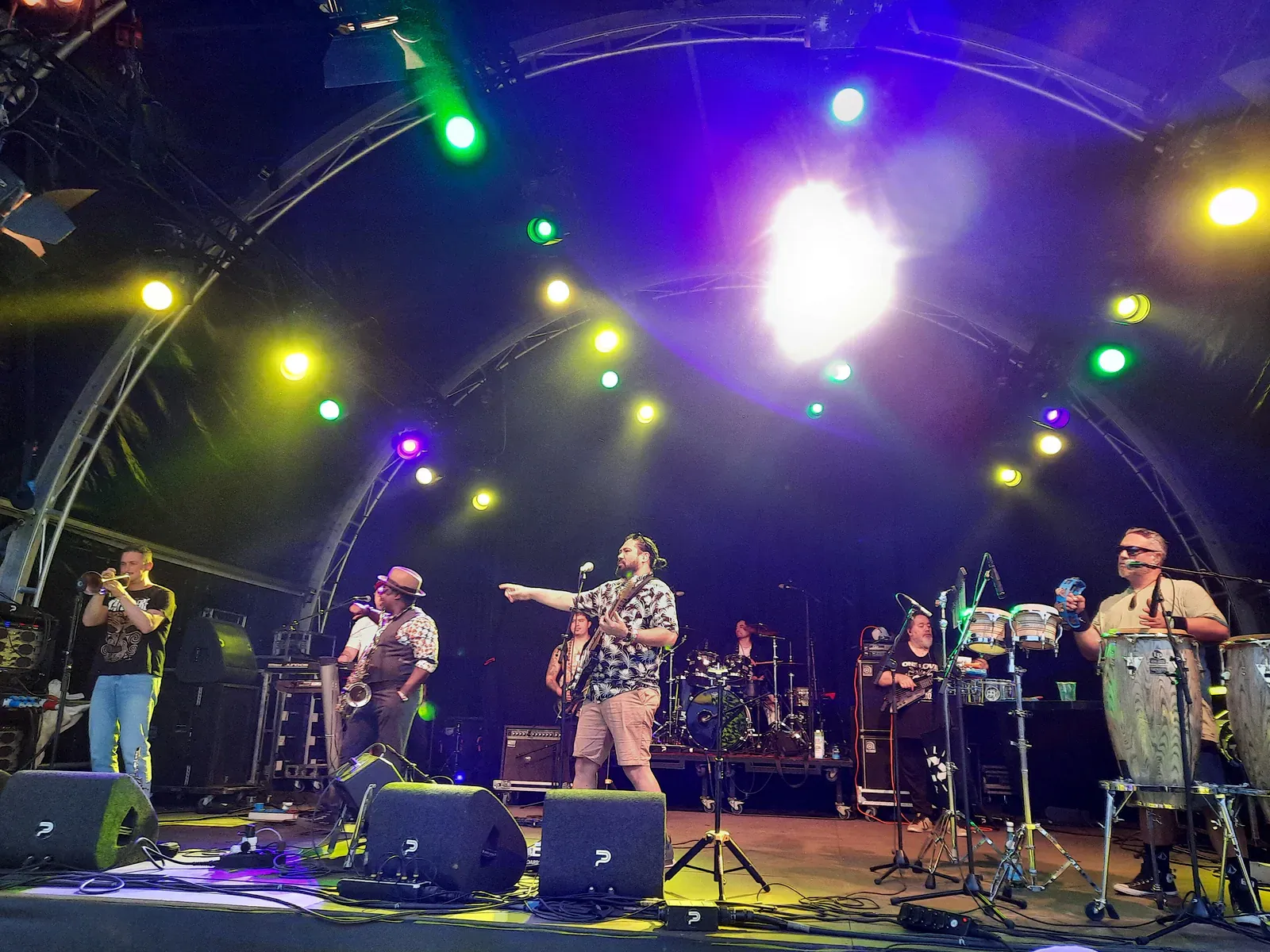
Herbs produced 10 singles in the New Zealand top 20 between the early 1980s and the mid-1990s. French Letter reached number 11 in 1982 and spent 15 weeks in the top 40; when France resumed testing in 1995 the band re-recorded it, and the new version reached number 9, with a video produced with Greenpeace. In 1986 Slice of Heaven with Dave Dobbyn went to number one in New Zealand for eight weeks and in Australia for four, from the soundtrack of the animated film Footrot Flats: The Dog’s Tail Tale. The 1987 album Sensitive to a Smile was named Album of the Year at the New Zealand Music Awards. In 1989 Joe Walsh of the Eagles produced Homegrown and briefly joined the band. Bands such as Fat Freddy’s Drop, Katchafire, the Black Seeds and Trinity Roots followed on the ground it cleared.
Notable recordings
Azania (Soon Come), on the 1981 EP, took its title from a name for South Africa used by apartheid opponents, and set the band’s reggae against its political themes. Long Ago, on the 1984 album, was written by Willie Hona about his mother and became a party anthem as well as a ballad. Giddy Up by Katchafire gave the style a younger audience in the 2000s.
Culture
Politics runs through the genre. The nuclear-free Pacific movement, land rights and the legacy of colonial rule appear in the lyrics of Herbs and in the artwork of their records. In Hawaii the label Jawaiian itself is debated, along with whether the style adds to Hawaiian culture or takes from it.
Legacy
Pacific reggae gave Māori and Pasifika musicians a modern form in which they could use their own languages and subjects, and it opened a path to national charts and, later, to international touring and streaming. It is the base for later styles such as Aotearoa reggae and Pacific Islander diaspora reggae, and it sits alongside the related scenes of Hawaiian music and Polynesian music. It remains a branch of reggae in the Oceanian family.
Misconceptions
Many listeners assume that Pacific reggae is a copy of Jamaican reggae with a ukulele. The instruments are only part of the difference: the themes, the languages and the harmony singing come from Pacific communities, and the songs often begin as local songs. A second misconception is that the genre is Rastafarian. Reggae in the Pacific is not typically Rastafarian, and the dominant concerns are cultural identity, land and politics. A third misconception is that it belongs to New Zealand alone. Hawaii has its own parallel scene, Fijian and Samoan artists work from Hawaii and California, and Papua New Guinea and the Solomon Islands have their own reggae traditions.
Frequently asked questions
What is Pacific reggae?
Pacific reggae is reggae played in Polynesia and Melanesia that adds Pacific instruments such as the ukulele and wooden drums to the Jamaican one-drop groove. Its lyrics usually concern Pacific identity and politics rather than Rastafari.
Who started Pacific reggae?
The Auckland band Herbs, formed in 1978, made the first records that set the pattern for Pacific reggae, beginning with the 1981 EP What’s Be Happen? Bob Marley’s 1979 concert at Western Springs helped to start the New Zealand scene.
What is the difference between Pacific reggae and Jawaiian?
Jawaiian is the Hawaiian reggae style that grew from the early 1980s and became popular in Hawaii in the early 1990s. Pacific reggae is the wider term, covering New Zealand, Fiji, Samoa, Papua New Guinea and the Solomon Islands as well as Hawaii.
Sound
Sound sheet
Anatomy of a track
| # | Part |
|---|---|
| 1 | Drum and bass groove intro |
| 2 | Verse over offbeat guitar or ukulele |
| 3 | Harmonised chorus |
| 4 | Keyboard, horn or guitar solo |
Signature sounds
- Ukulele alongside the reggae offbeat
- Traditional wooden drums or Pacific percussion
- Close island vocal harmony
- Songs about Pacific identity, land and nuclear testing rather than Rastafari
Drums and percussion
- Traditional Pacific wooden drums
Techniques
- One-drop groove
- Offbeat chop
- Close island harmony
- Remaking traditional songs
Keys and modes
E major. French Letter on database readings.
A major. Azania (Soon Come) on database readings.
F major. Giddy Up and Lost in Paradise on database readings.
G major. Rose Petals and Wade in Your Water on database readings.
Vocals
Group harmony and solo lead in English, te reo Māori, Fijian, Samoan and other Pacific languages.
Scenes
Where it happened
Where and when the sound lived: one bar per city on a shared timeline.
Oceania
North America
Active scenes
Peak 4, 2011-2025
Home of Herbs and the Polynesian Panthers circle; Marley played Western Springs here in 1979.
Birthplace of the all-Māori roots band Katchafire.
Fiji's base; the Waikiki Shell hosted his 2025 tribute concert.
Orange County base of the Samoan and Hawaiian band Common Kings.
Culture
Culture markers
- Bastion Point cover
The cover of What's Be Happen? is an aerial photo of police action at Bastion Point in 1978.
Artwork - Anti-nuclear protest song
French Letter was banned in French territories; Herbs played it in Tahiti anyway.
Ritual - Pacific reggae
Herbs co-founder Dilworth Karaka credits UB40 with coining the phrase.
Slang
Media
Key media
- 1986Footrot Flats: The Dog's Tail Tale
by Murray Ball. The animated film whose soundtrack carried Slice of Heaven by Dave Dobbyn and Herbs.
Film
Glossary
Terms on this page
Māori name for New Zealand, used for the country's reggae scene.
Hawaiian reggae style that mixes reggae with local music, popular in Hawaii from the 1980s and 1990s.
Reggae rhythm that leaves the first beat of the bar empty and lands the drum accent on the third beat.
Also called island reggae; reggae of Polynesia and Melanesia with Pacific instruments and themes.
Term for people and culture of Pacific Islands heritage living in New Zealand.
Oceanian family