Irish traditional music
Irish traditional music is the dance tunes and sean-nós songs of Ireland, played on fiddle, pipes, flute and accordion in a session culture.
Ireland, around 1792
Folk family
Born
around 1792
Ireland
Subgenres
8
Documented branches
Links
18
Genres it drew on or shaped
Tempo
90-140 BPMLineage
Family tree
Grew out of
Also shaped by
Ireland
Irish traditional music
Led to (10)
Timeline
Era by era
From the first sparks to today. Select a dot to read the story behind it.
- Collectors and the Gaelic revival
1792 to 1920
- Emigrant records and the cottage
1920 to 1950
- Second revival
1951 to 1980
- Stage and screen
1980 to today
Eras
Moments
- 1 Collectors and the Gaelic revival, 1792 to 1920
- 2 Emigrant records and the cottage, 1920 to 1950
- 3 Second revival, 1951 to 1980
- 4 Stage and screen, 1980 to today
around 1792
Collectors and the Gaelic revival
Tune collectors, ballad printers and the Gaelic League turned a regional repertoire into a national cultural cause, while emigrants carried it to American cities.
- 1893Gaelic League foundedIts revival of the Irish language and arts drew new attention to traditional music.
- 1903First Feis CeoilThe Gaelic League annual competition gave players a public stage.
around 1920
Emigrant records and the cottage
Records by emigrant fiddlers in the United States reached Ireland, while the 1935 dance hall law pushed playing back into private houses.
- 1927Michael Coleman American recordingsRecords by emigrant fiddlers standardised regional styles and revived the music at home.
- 1935Public Dance Halls ActLicensing of public dances pushed traditional music back into private houses.
1951
Second revival
Comhaltas, Seán Ó Riada and a run of groups took the music from kitchens and pubs onto concert stages and radio.
- 1951Comhaltas Ceoltóirí Éireann foundedThe association behind the Fleadh Cheoil festivals led the postwar revival.
- 1959Clancy Brothers and Tommy Makem succeed in the USTheir success made Irish folk music fashionable again.
- 1962The Chieftains form in DublinPaddy Moloney, Seán Potts and Michael Tubridy founded the instrumental group.
- 1967The Dubliners record Whiskey in the JarThe guitar-and-banjo group popularised the traditional song, later covered in rock by Thin Lizzy.
- 1972Planxty formChristy Moore, Andy Irvine, Dónal Lunny and Liam O Flynn built a model for song-led trad groups.
- 1974The Bothy Band formTheir 1975 debut album set a new standard of virtuosity and drive.
around 1980
Stage and screen
Bands such as Clannad and Altan, and film and television work, carried the tradition to wide international audiences.
- 1987Irish Traditional Music Archive set up
- 1992Altan release Harvest StormThe Donegal band brought its fiddle and song style to a wide audience.
Listening path
Start listening
A short path from an easy way in to the deep end. Thumbnails come from YouTube; the player loads only when you press play.
- 01
The Chieftains, 1979
A three-part reel played by pipes, flute and fiddle in the group trademark unison.
- 02
The Bothy Band, 1976
A jig showing the driving band arrangement of the 1970s revival.
- 03
The Dubliners, 1967
A traditional song in the guitar-and-banjo ballad-group style.
- 04
Clannad, 1982
Irish-language song with atmospheric arrangement, the crossover end of the tradition.
Facts
| Family | Folk |
| Origin | Ireland |
| Emerged | Traditional; codified 19th to 20th centuries |
| Status | Active |
| Tempo | 90 to 140 BPM |
| Meter | 4/4 and 6/8 |
| Subgenres | 8 |
Irish traditional music is the folk music of Ireland: a large repertoire of modal dance tunes and songs, passed on by ear and by collections, with unaccompanied sean-nós singing as its most prized vocal form.
It is played mainly on fiddle, flute, uilleann pipes, accordion and banjo, in a heterophonic style where every player ornaments the same melody. Its roots are old, but the form heard today was fixed by nineteenth-century collectors, early twentieth-century revival and the pub session. It belongs to the wider folk family and overlaps with Celtic music.
Origins
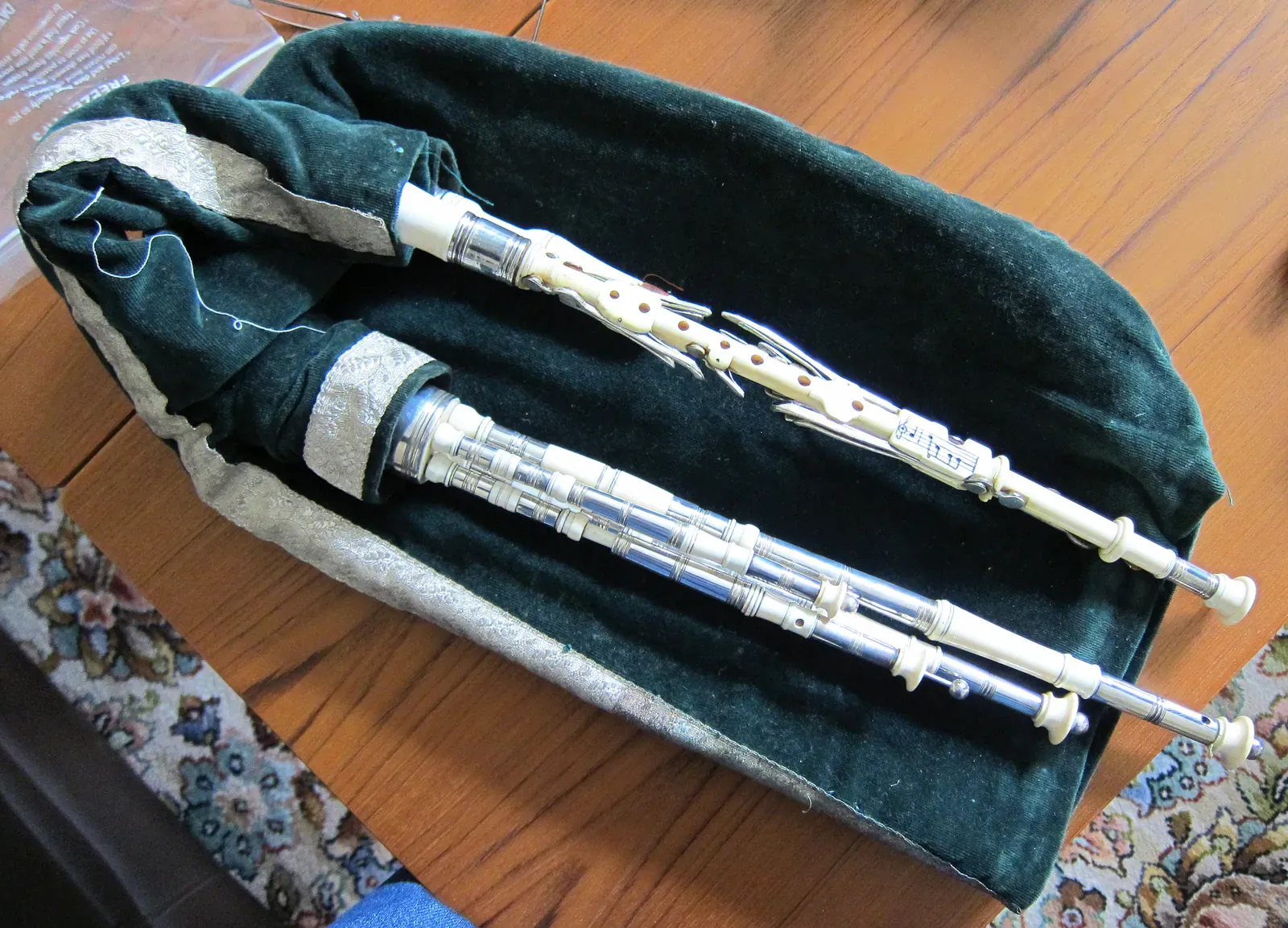
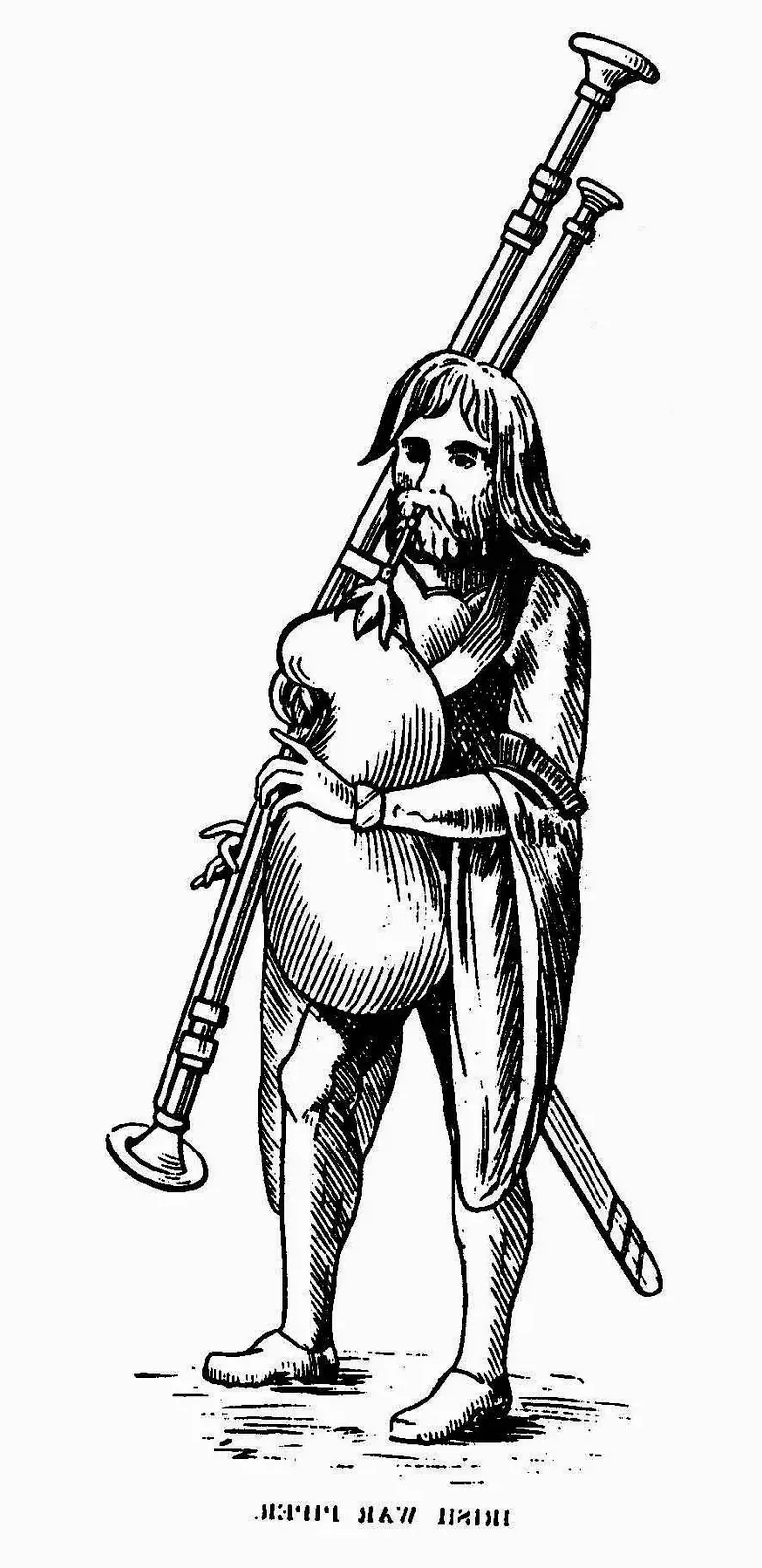
Gaelic Ireland had a rich instrument culture long before the modern tradition. A 1905 history of Irish music lists at least ten instruments in general use, among them the cláirseach harp, the tiompán, pipes and the bones, and verse mentions a fiddle as early as the seventh century. The uilleann pipes appeared around the start of the eighteenth century, and a recognisably modern set was in use by its end.
Written collection began in the eighteenth century, and Dublin ballad printers became established in the nineteenth. Edward Bunting, George Petrie, Francis O’Neill and others gathered tunes that would otherwise have stayed in memory. Solo playing was the preferred mode of the tradition, though small ensembles were probably in use from at least the mid-nineteenth century, a point musicologists still dispute.
Revival and emigration, 1893-1950
The Gaelic League, founded in 1893, tied Irish language and arts to the nationalist cause, and in 1903 it launched the Feis Ceoil competition as a public showcase. In the United States, Irish communities in cities such as Chicago kept the music going. By 1920 the Chicago region had about 220,000 Irish-born residents, and the collector Francis O’Neill published large tune compendiums and made some of the earliest recordings of Irish musicians on wax cylinders.
Records mattered even more. Emigrant fiddlers Michael Coleman, James Morrison and John McKenna, along with Ed Reavy, issued discs in the 1920s and 1930s that were heard back in Ireland. Coleman’s 1927 recordings pushed regional styles toward a more uniform standard. At home, independence brought pressure from church and state: the Public Dance Halls Act of 1935 required a licence for any public dance, usually granted to parish priests or other approved persons, and playing retreated to the kitchen and cottage.
The second revival, 1951-1980
Comhaltas Ceoltóirí Éireann, founded in 1951 to preserve the music, and its Fleadh Cheoil festivals led the postwar revival. The composer Seán Ó Riada brought tunes to concert halls and orchestral settings, and his ensemble Ceoltóirí Chualann gave rise to The Chieftains, who formed in the early 1960s around Paddy Moloney. In 1959 the success of the Clancy Brothers and Tommy Makem in the United States made Irish folk fashionable again and helped the Dubliners, a guitar-and-banjo group that replaced the lush sentimental style of earlier singers.
Pubs began hosting sessions in the early 1960s, as returning emigrants persuaded landlords to open their rooms. In the next decade a new kind of band appeared: Planxty, formed in 1972 around Christy Moore, Andy Irvine, Dónal Lunny and Liam O’Flynn, then the Bothy Band in 1974, whose 1975 debut album was admired by a legion of fans. These groups built their own sets of tunes without regard to dancers. Horslips, formed in 1970, were the first to be called Celtic rock, and Thin Lizzy had their first hit in 1972 with a rock version of the traditional song Whiskey in the Jar.
Stage and screen, 1980 onward
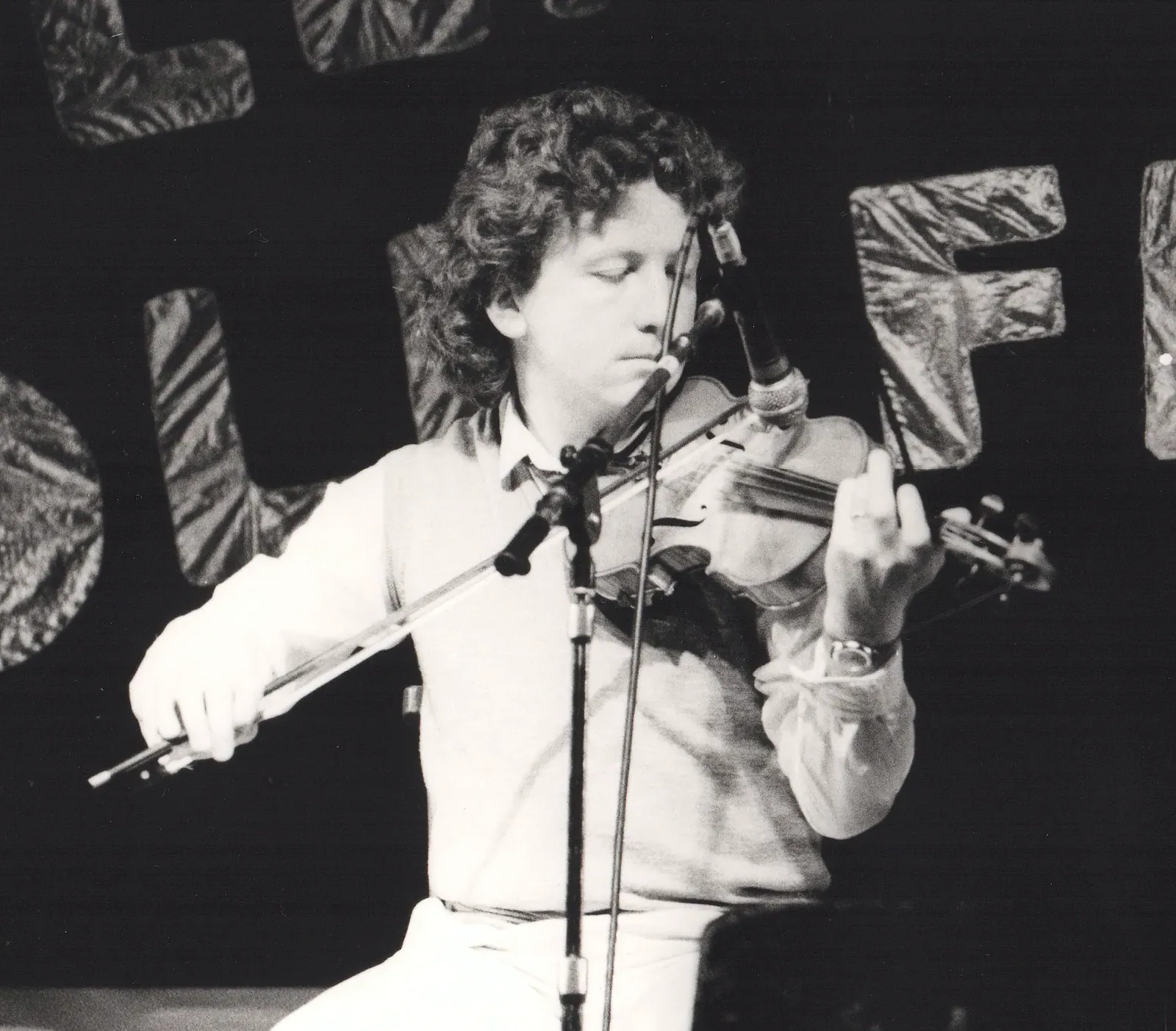
By the 1980s the tradition had a permanent public profile. The Irish Traditional Music Archive was set up in 1987, and groups from Donegal such as Clannad and Altan took their songs and tunes to international audiences. Clannad’s Theme from Harry’s Game (1982), sung in Irish, first brought the band to wide public attention. Altan, led by fiddler Mairéad Ní Mhaonaigh, released Harvest Storm in 1992 and carried the Ulster style abroad. Labels such as Claddagh Records and Gael-Linn issued the music in Ireland.
Characteristics
The music is modal, built on Ionian, Aeolian, Dorian and Mixolydian modes, with hexatonic and pentatonic variants. In the dance repertoire, D and G are the dominant keys, with A, Em, Am and Bm also common. Tunes are binary: an A part and a B part of four to eight bars, each played twice, and the whole tune played three times. Dance tunes are strung together in sets of two to four, while airs are usually played singly.
The repertoire is defined by dance forms. Reels in 4/4, hornpipes with swung quavers and jigs in 6/8 form the core, with slip jigs and hop jigs in 9/8. Polkas and slides belong to the Sliabh Luachra area on the border of Cork and Kerry, mazurkas and the highland to Donegal, and the waltz joined later. Harmony is deliberately sparse: players follow the lead in unison, accompanists use partial chords and drones, and there are no set chord progressions.
Ornamentation carries the individuality of a player. Cuts, rolls, crans, grace notes, triplets and trebles decorate the main notes. Regional style also matters: Donegal fiddling is known for fast bowing that creates most of the ornament, Clare playing for slower bowing and fingered ornament, and the Sligo style shaped the playing of Kevin Burke.
Instruments and production
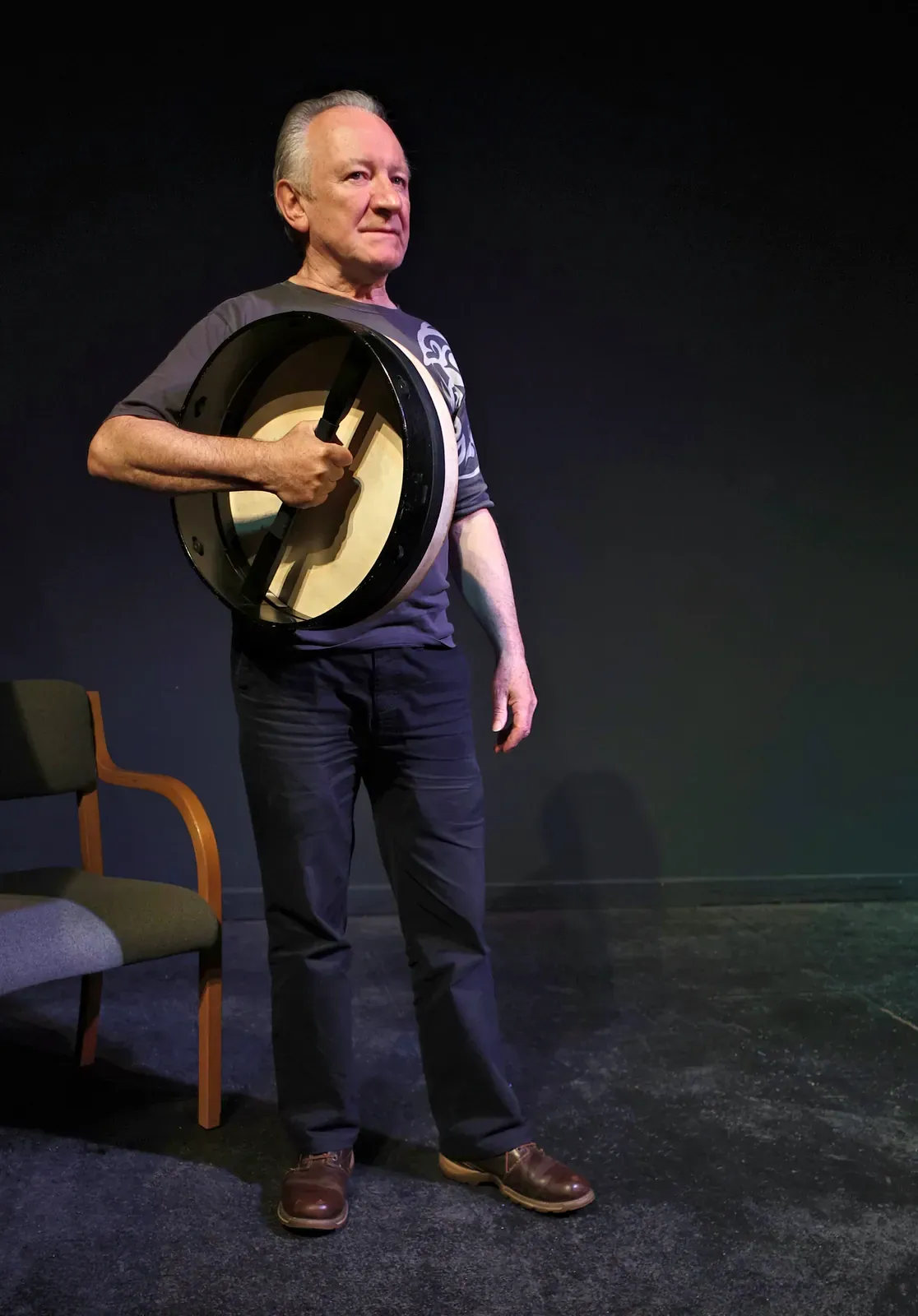
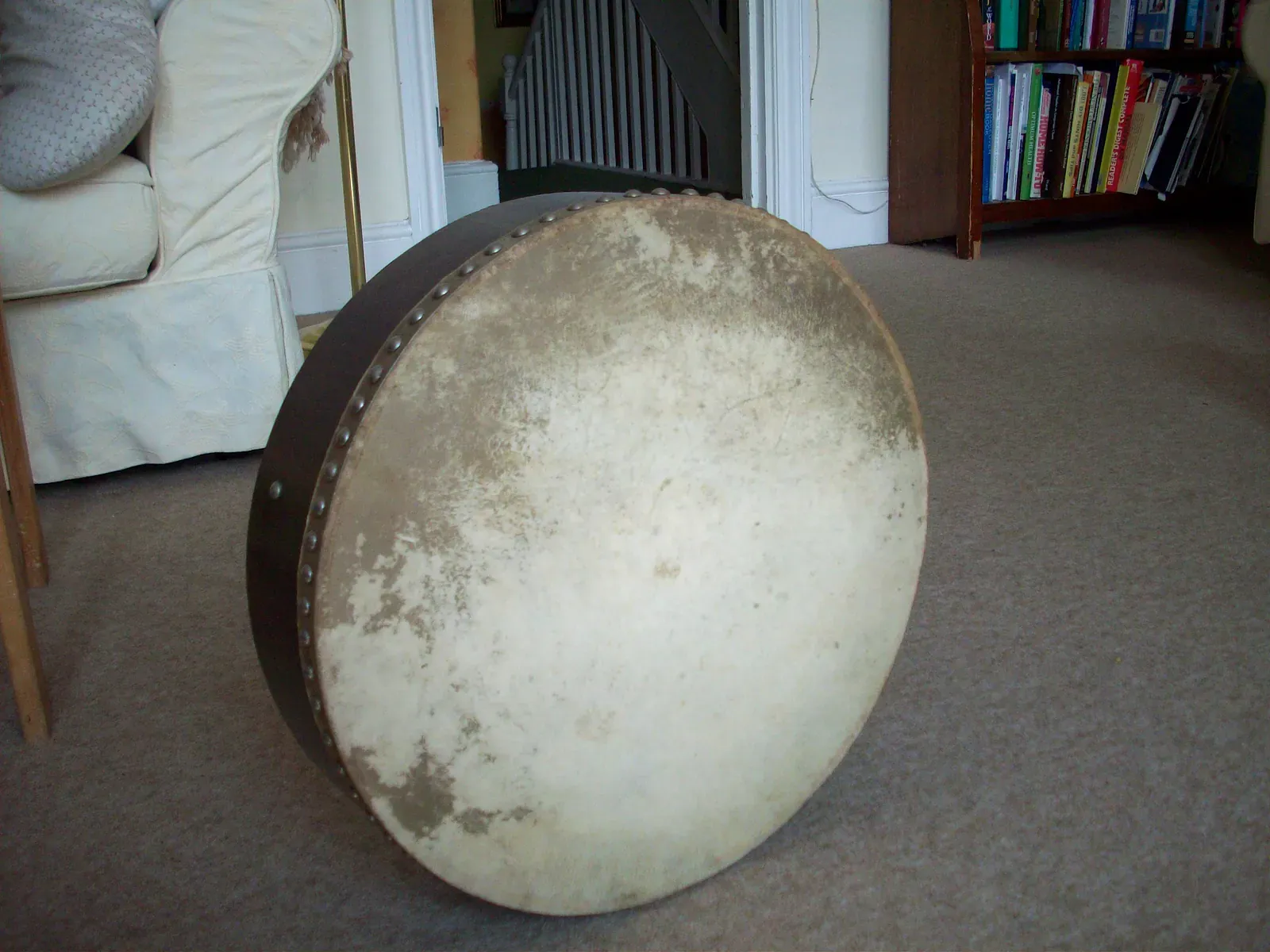
The fiddle, flute, whistle, uilleann pipes and concertina or accordion are the core melody instruments, and the tenor banjo, tuned GDAE, was brought home by returning emigrants and played as a melody instrument. The bodhrán, a goatskin frame drum, was popularised in the 1960s by Ó Riada, and it quickly became popular. The Greek bouzouki arrived in the late 1960s through Johnny Moynihan and became the Irish bouzouki in the hands of Dónal Lunny, Andy Irvine and Alec Finn. Guitarists often use DADGAD tuning because it permits open, partial-chord accompaniment.
Singing
Sean-nós, “in the old style”, is unaccompanied solo song, highly ornamented, with the voice placed near the top of the range. A true sean-nós singer varies the melody of each verse without damaging the words, which matter as much as the tune. Non-lexical vocables, known as lilting, can stand in for an instrument at a dance. Singers accompanied by guitar or banjo still draw on sean-nós ornament and voice placement.
Culture
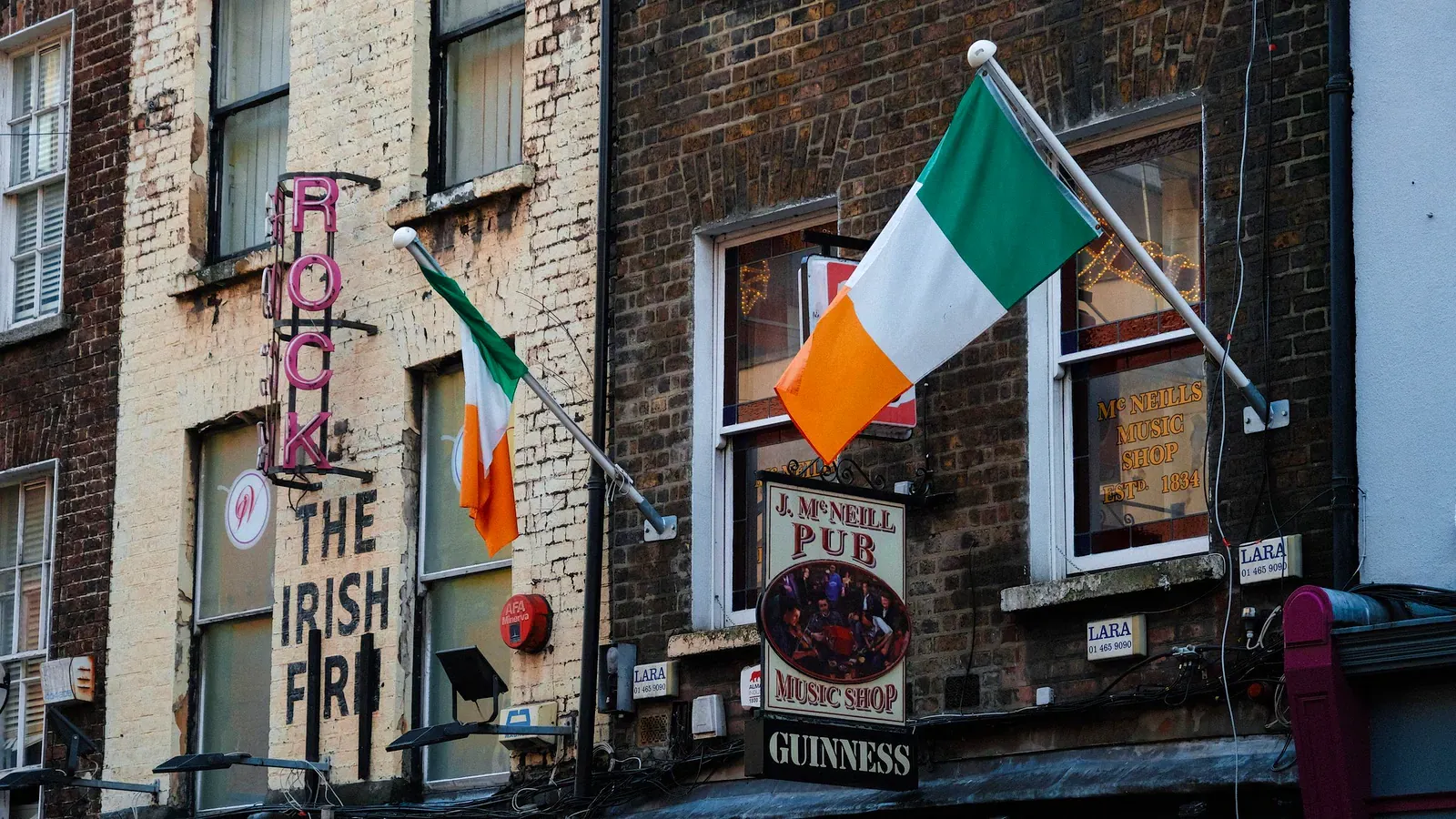
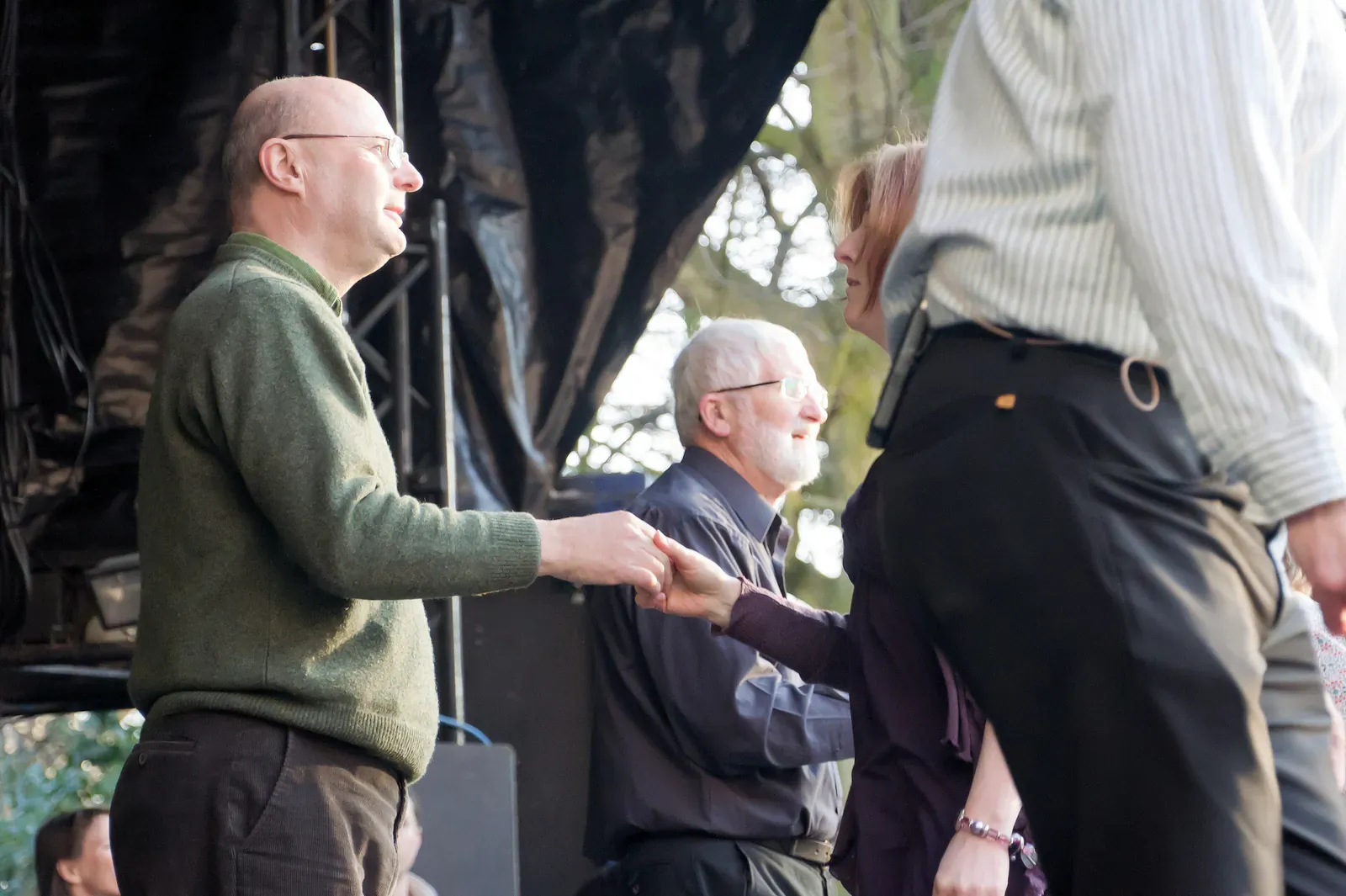
The common social setting is the seisiún, a session that frequently features no dancing at all. Dance has other homes: house parties, country dances, céilí dances, weddings, saints’ days and competitions. The Fleadh Cheoil festivals combine competition and informal playing.
Legacy
Irish traditional music has endured against cinema, radio and mass media more strongly than the folk music of most Western European countries. Its tune repertoire and session habits shaped Celtic music, and its song material fed folk-rock and Celtic rock through Horslips, Thin Lizzy and later bands. Related traditions include English folk music, Scottish folk and the music of Newfoundland.
Misconceptions
The music is often thought to be all fast reels and jigs, yet the tradition also includes slow airs, waltzes, polkas and the unaccompanied sean-nós song, which is considered the ultimate expression of traditional singing. The pub session is often called ancient, but pub sessions were largely a product of the early 1960s, when returned emigrants persuaded landlords to host them after decades in which playing had moved into homes. The bodhrán and the bouzouki are sometimes taken as timeless instruments, but the bodhrán came into dance music through the 1960s and the Irish bouzouki came from Greece in the late 1960s.
Frequently asked questions
What is Irish traditional music?
Irish traditional music is the folk music of Ireland, made up of modal dance tunes, airs and songs, including unaccompanied sean-nós singing. It is learned by ear and played in sessions, at dances and on stage.
Which instruments are used in Irish traditional music?
The core instruments are fiddle, flute, tin whistle, uilleann pipes, accordion, concertina and tenor banjo. Bodhrán, guitar and bouzouki are used for rhythm and accompaniment.
What is a session in Irish music?
A session, or seisiún, is an informal gathering of musicians who play sets of tunes together, often in a pub. It is the most common setting for Irish dance music and frequently has no dancing.
What are the main forms of Irish dance music?
The main forms are reels in 4/4, hornpipes, jigs in 6/8, slip jigs and hop jigs in 9/8, with polkas, slides, mazurkas and waltzes added in particular regions.
Sound
Sound sheet
Anatomy of a track
| # | Part |
|---|---|
| 1 | A part, played twice |
| 2 | B part, played twice |
| 3 | Whole tune repeated, then next tune in the set |
Signature sounds
- Heterophonic unison on the melody
- Ornaments: cuts, rolls and crans
- Tunes joined in sets of two to four
Techniques
- Cuts and rolls
- Cran
- Sean-nós ornamentation
- Heterophony
- DADGAD accompaniment
Keys and modes
D and G major. The most common keys, alongside A, Em, Am and Bm in dance tunes.
Dorian and Mixolydian. Modes used with Ionian and Aeolian, plus hexatonic and pentatonic versions.
Tuning
Tenor banjo GDAE; Irish bouzouki GDAD; guitar often DADGAD
Vocals
Solo sean-nós in the old style; ballad groups sing in unison and harmony; lilting uses vocables such as diddly die-dely
Scenes
Where it happened
Where and when the sound lived: one bar per city on a shared timeline.
North America
Europe
Active scenes
Peak 5, 1960-2025
Home of the Chieftains, the Dubliners and Claddagh Records, and the centre of the second revival.
A major destination for Irish emigrants and the base of collector Francis O Neill.
County of fast, bow-driven fiddle playing, mazurkas and the highland, and later of Altan and Clannad.
County Clare, known for slower bowing and fingered ornamentation on the fiddle.
Home of a regional fiddle style that shaped Kevin Burke.
Glossary
Terms on this page
A rapid ornament on one note, usually D, associated with the uilleann pipes.
A music festival and competition run by Comhaltas Ceoltóirí Éireann.
An ornament around a main note using notes above and below, played in one beat.
Unaccompanied, highly ornamented solo singing in the old style.
A session, the most common setting for dance music, often held in a pub with no dancing.
A medley of two to four dance tunes played in succession.
Folk family