Native American music
Native American music: the nation-specific song traditions of Indigenous peoples in the US and Canada, from powwow drum groups to the flute and Native rock.
United States, Canada, around 1000
Folk family
Born
around 1000
United States, Canada
Subgenres
12
Documented branches
Links
6
Genres it drew on or shaped
Tempo
65-170 BPMLineage
Family tree
Grew out of
United States, Canada
Native American music
Led to (13)
Timeline
Era by era
From the first sparks to today. Select a dot to read the story behind it.
- Nation and ceremony song
1000 to 1890
- Restriction and the gathering
1890 to 1950
- Labels, field recordings, first crossovers
1951 to 1982
- Flute, new age and Native rock
1983 to 1999
- Grammy category and Electric Powwow
2000 to today
Eras
Moments
- 1 Nation and ceremony song, 1000 to 1890
- 2 Restriction and the gathering, 1890 to 1950
- 3 Labels, field recordings, first crossovers, 1951 to 1982
- 4 Flute, new age and Native rock, 1983 to 1999
- 5 Grammy category and Electric Powwow, 2000 to today
around 1000
Nation and ceremony song
Song, drum and dance tied to individual nations, regions and ceremonies, learned by ear and passed down within communities long before any recording.
around 1890
Restriction and the gathering
Reservation-era limits on ceremony pushed song into public dances; the Ghost Dance spread on the Plains, a 1923 federal order restricted when dances could be held, and the modern powwow took shape.
- 1890Ghost Dance songs spread across the PlainsThe Ghost Dance religion, begun among the Paiute, gave many Plains nations a shared body of paired-phrase songs.
- 1923Federal order restricts Native danceIndian Affairs commissioner Charles Burke limited the times of year for traditional dance, yet communities kept gathering, and public powwows became the main home of drum-group music.
1951
Labels, field recordings, first crossovers
Canyon Records (1951) and Indian House (1966) documented singers and drum groups, while Link Wray, Jim Pepper and Redbone took Native musicians into rock, jazz and pop.
- 1951Canyon Records records Ed Lee NatayNatay, Navajo Singer was the first release of the Phoenix label, now a leading publisher of Native American music.
- 1954Tony Isaacs begins field recordingsHe recorded Oglala Lakota singers at the Flagstaff powwow, the start of the work behind Indian House.
- 1958Link Wray's Rumble is banned in citiesThe Shawnee guitarist's distorted instrumental was banned in New York and Boston for fear of gang violence.
- 1966Indian House founded in TaosTony and Ida Isaacs began issuing outdoor-recorded powwow and regional song collections.
- 1969Witchi-Tai-To reaches the Hot 100Jim Pepper's jazz-rock setting of a peyote song learned from his grandfather peaked at 69 for Everything Is Everything.
- 1970Redbone debut albumThe Los Angeles band led by brothers Pat and Lolly Vegas signed to Epic and put Native identity on rock radio.
- 1974Come and Get Your Love peaks at number 5Redbone became the first Native American band in the Billboard Hot 100 top five.
- 1982Northern Cree formed in AlbertaRandy, Charlie and Earl Wood of Saddle Lake Cree Nation founded the drum group now based in Maskwacis.
1983
Flute, new age and Native rock
R. Carlos Nakai made the Native American flute a bestselling instrument, SOAR put traditional music on CD, and Keith Secola, John Trudell and Robbie Robertson carried Native voices into rock.
- 1986AKA Graffiti ManJohn Trudell's spoken poetry over rock backing with Kiowa guitarist Jesse Ed Davis.
- 1987Earth SpiritR. Carlos Nakai's solo flute album on Canyon was later certified gold.
- 1989SOAR foundedTom Bee's Sound of America Records is credited as the first to release traditional Native American music on CD.
- 1992Keith Secola releases NDN KarsThe Ojibwe songwriter's road-trip rock song became an anthem in Native communities.
- 1994Music for The Native AmericansRobbie Robertson and the Red Road Ensemble made a Capitol album tied to a TV documentary series.
- 1997Black Lodge Singers release Enter the CircleOne of about twenty Canyon albums by the Blackfeet-led family drum group.
2000
Grammy category and Electric Powwow
A Grammy category (2001) recognised Native albums, drum groups such as Northern Cree and Black Lodge Singers kept recording, and A Tribe Called Red fused powwow recordings with club music.
- 2001Grammy adds Best Native American Music AlbumTom Bee won in the category's first year.
- 2002Beneath the Raven MoonMary Youngblood's flute album won a Grammy; she was the first Native American woman to win the category.
- 2008Electric Pow Wow nights begin in OttawaMonthly parties at the Babylon club mixed powwow recordings with dubstep and hip hop.
- 2012A Tribe Called Red release a debut albumIssued as a free download, it carried Electric Pow Wow Drum to a wider audience.
- 2014A Tribe Called Red win a JunoBreakthrough Group of the Year, followed by a producer award in 2017.
- 2014Come and Get Your Love returns in Guardians of the GalaxyThe 1974 hit reached a new generation through the film.
- 2021A Tribe Called Red become The Halluci NationThe group renamed itself and released One More Saturday Night, including a version of NDN Kars with Keith Secola.
Listening path
Anthems
The records that built the sound, grouped by the part they played. Thumbnails come from YouTube; the player loads only when you press play.
- 01
Ed Lee Natay, 1951 · Canyon Records
From Natay, Navajo Singer, the album that launched Canyon Records and the commercial recording of Navajo song.
Origin - 02
Redbone, 1974 · #5 Billboard Hot 100, 1974 · Epic Records
The first Native American band single in the Hot 100 top five and still Redbone's calling card.
Start hereBreakthrough - 03
R. Carlos Nakai, 1987 · Canyon Records
Solo Native American flute that sold in gold numbers and set the template for the instrument on record.
Start hereBreakthrough - 04
Keith Secola, 1992
An Ojibwe songwriter's joyful rez-car rock song, sung back by Native audiences for three decades.
Anthem - 05
Black Lodge Singers, 1997 · Canyon Records
A social powwow song for dancers by a Blackfeet-led family drum group, a gateway to the powwow sound.
Start hereAnthem - 06
Link Wray, 1958 · Cadence Records
A Shawnee guitarist's menacing distorted instrumental, banned in some cities and a root of heavy rock guitar.
Crossover - 07
Redbone, 1971 · Epic Records
An early Redbone hit that mixed swamp rock with Native identity on the American charts.
Crossover - 08
John Trudell, 1986
Santee Dakota poet and activist John Trudell speaking over rock and Jesse Ed Davis guitar.
Crossover - 09
Robbie Robertson, 1994 · Capitol Records
Robbie Robertson, Mohawk and Cayuga on his mother's side, pairing a drum song with Ulali vocals and a rock band.
Crossover - 10
Mary Youngblood, 2002
Grammy-winning flute album by the first Native American woman to win in the category.
Crossover - 11
A Tribe Called Red, 2012
Powwow drum samples on a club beat that made a new generation hear the tradition as dance music.
Revival
Facts
| Family | Folk |
| Origin | United States, Canada |
| Emerged | Pre-contact onwards |
| Status | Active |
| Tempo | 65 to 170 BPM |
| Meter | Free for flute and solo songs; steady drum pulse for dance songs, tempo varies by song |
| Subgenres | 12 |
Native American music is the body of nation-specific song traditions of the Indigenous peoples of the United States and Canada, sung mostly in unison, usually with a drum, and often tied to dance.
Its roots predate any recording by centuries, and the modern public form, the powwow, took shape in the early twentieth century. Commercial recording began in 1951, and the songs, drums and flutes have since entered rock, new age and club music on Native terms.
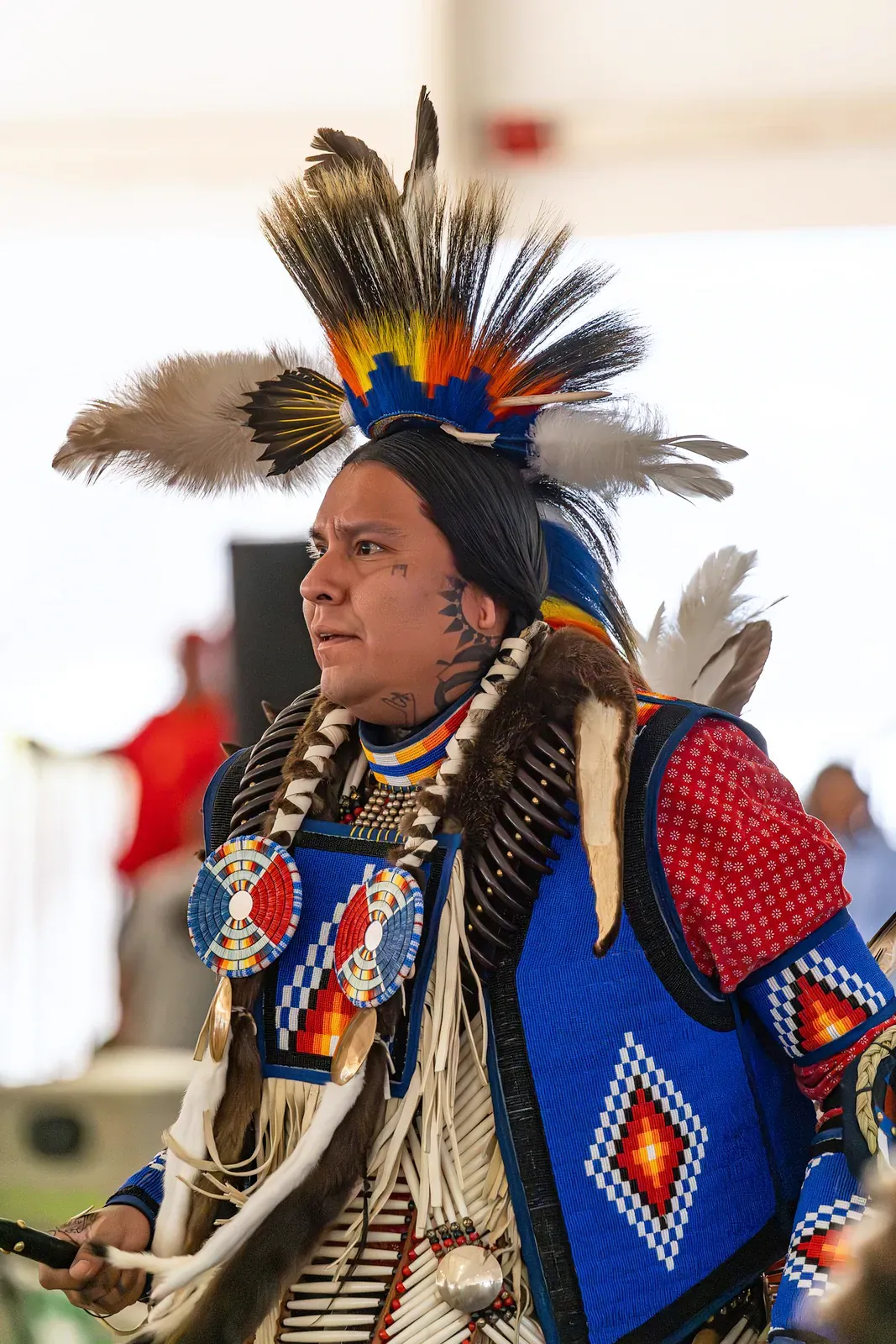
Origins
Before contact, each nation had its own songs for work, healing, hunting, games, courtship, lullabies and ceremony. They were learned by ear, owned or cared for within communities, and sung in languages that differ as much as English and Mandarin do. Many are sung on vocables, syllables with no dictionary meaning, which carry the melody without a translatable text. The melodies often start high and step down in terraces, and the drum is struck on a steady pulse tied to the dance.
Generalising is therefore risky. The Southwest, the Plains, the Great Lakes, the Pacific Northwest and the Northeast each built their own repertoires and rules about who may sing what, and when. Some material was never meant to be shared outside the community, and it should stay that way.
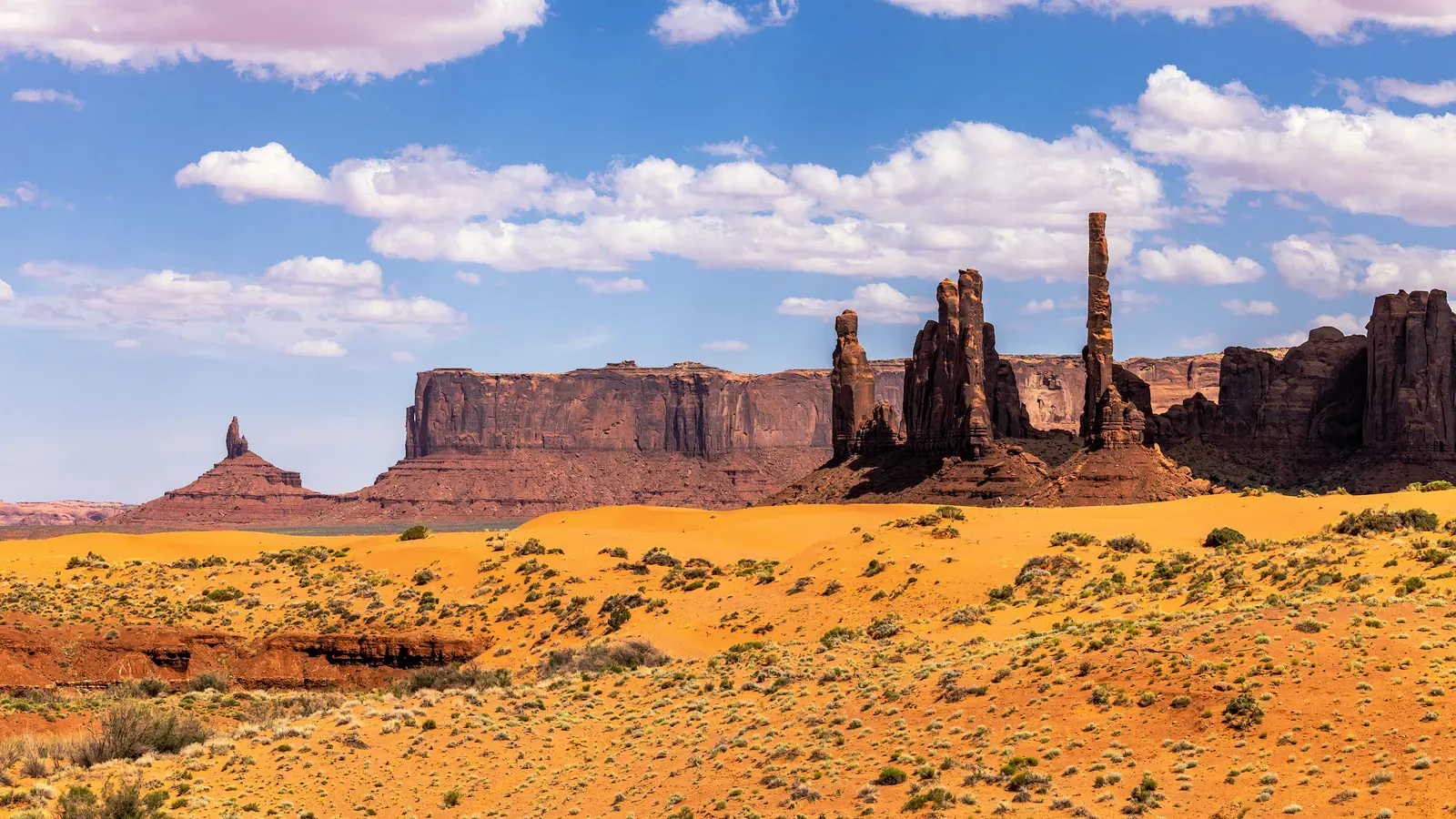
Restriction and the gathering, 1880-1950
From the 1880s, reservation policy in the United States and the Indian Act in Canada pushed against ceremony, dance and gatherings. Song survived by moving, quietly, and by taking new forms. Around 1890 the Ghost Dance, begun among the Paiute, spread across the Plains and gave many nations a shared body of songs, even as the movement was crushed.
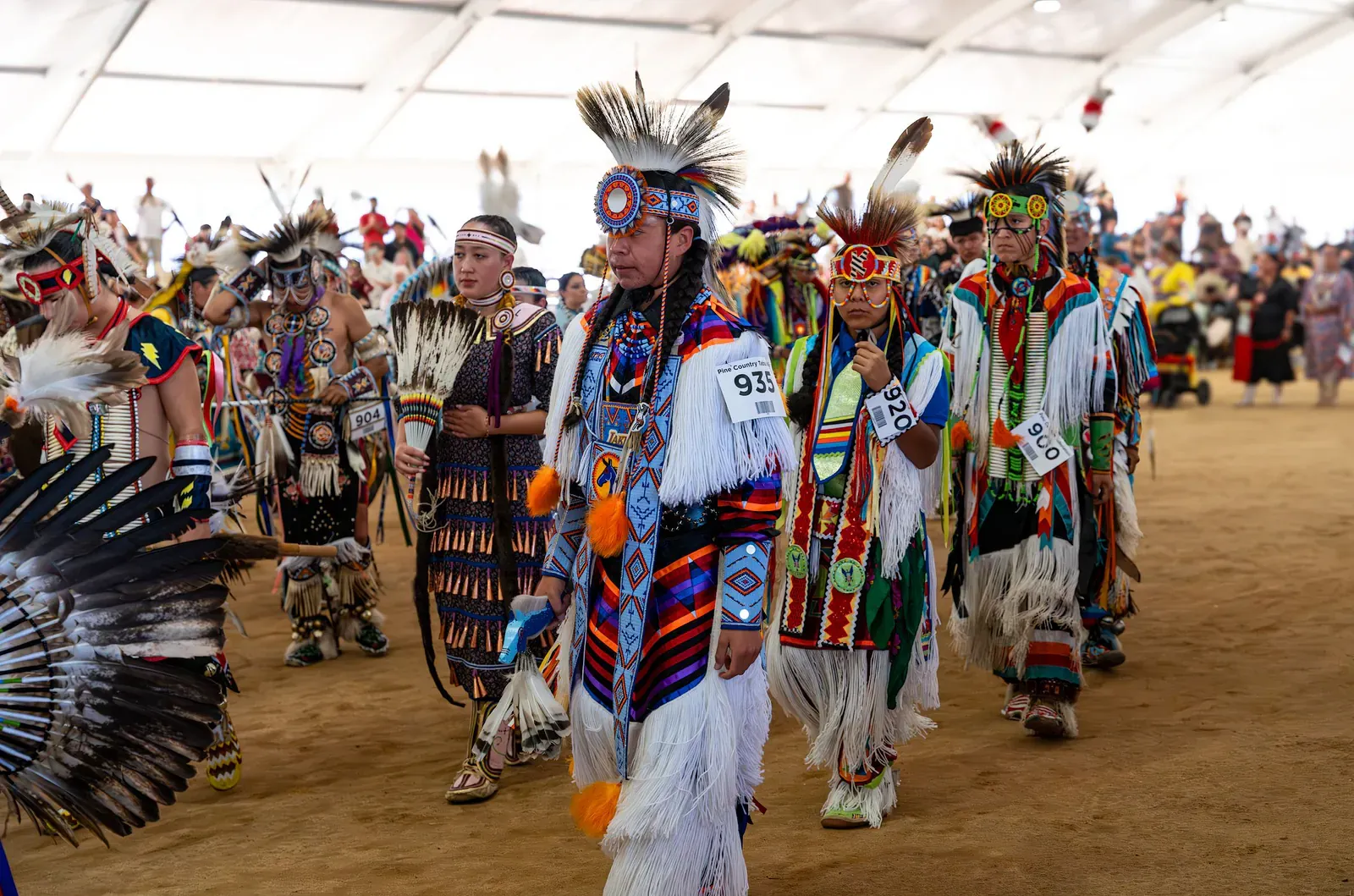
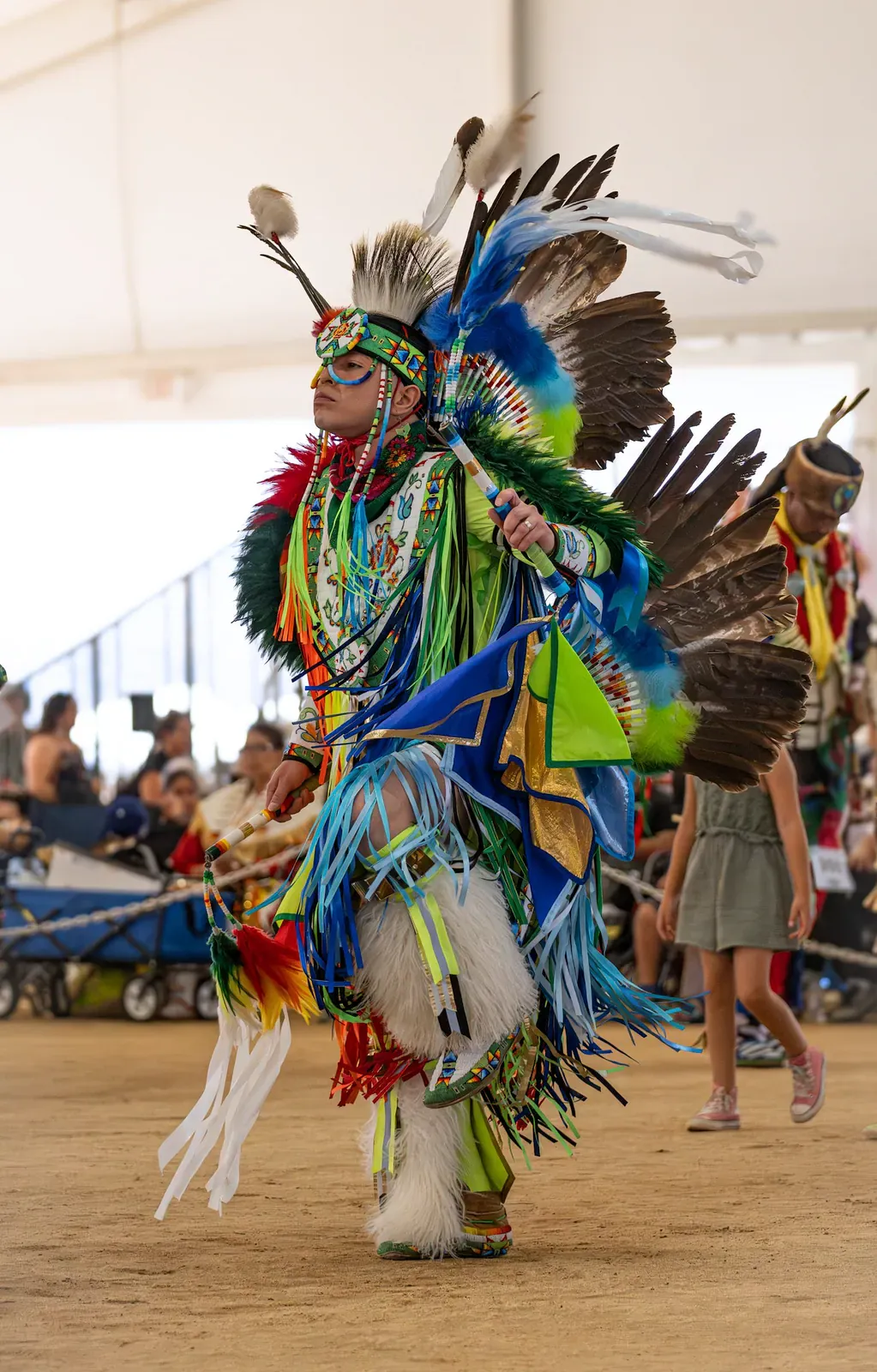
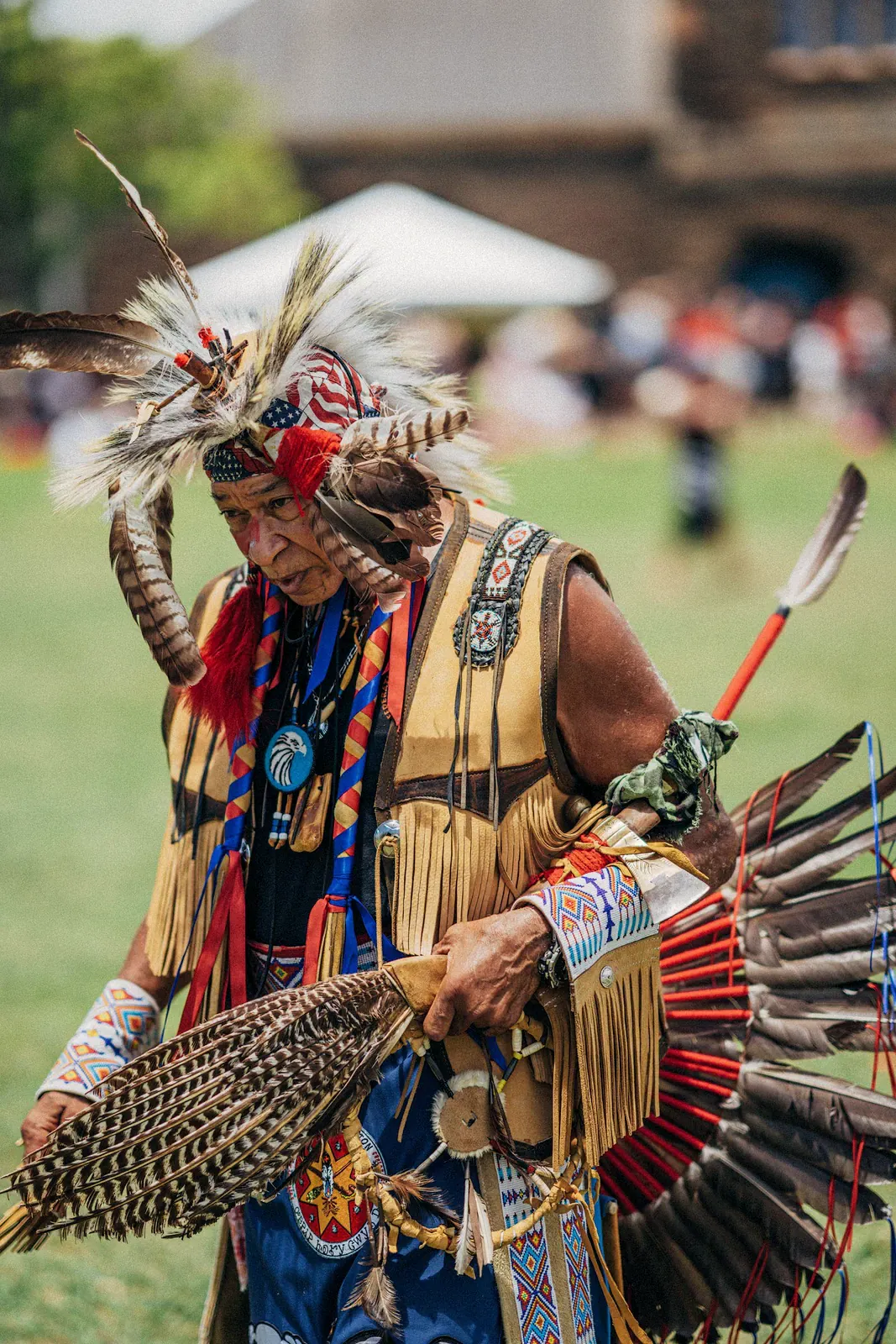
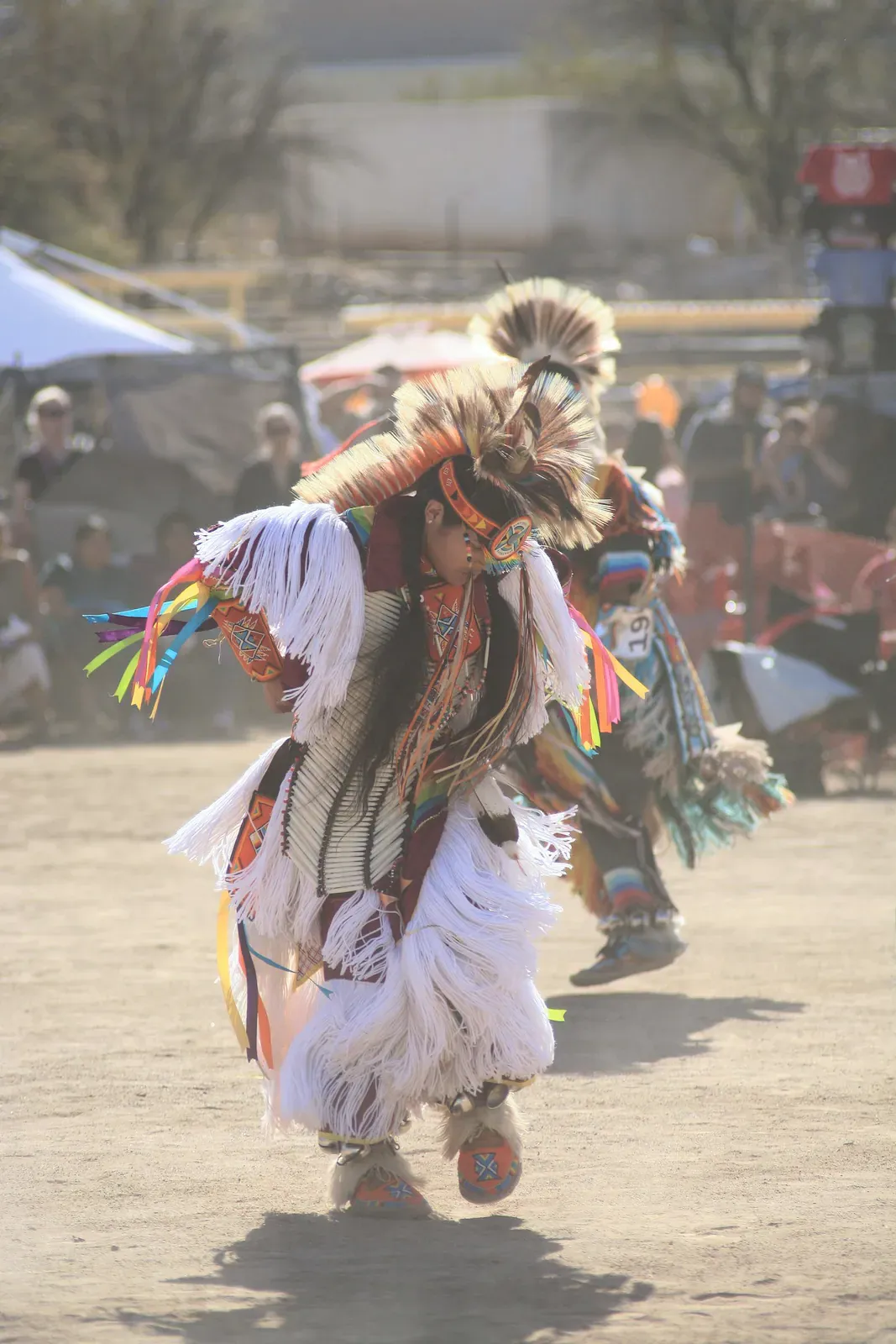
Out of the same pressure grew the intertribal powwow. Plains dance societies, fairs and later veterans’ honour dances merged into a public event where nations could sing and dance together. The modern format is usually dated to the 1920s. A powwow is built around drum groups, a Grand Entry that opens each session, and competition and social dances such as grass dance, fancy dance and jingle dress. Honour songs mark veterans, elders and graduates.
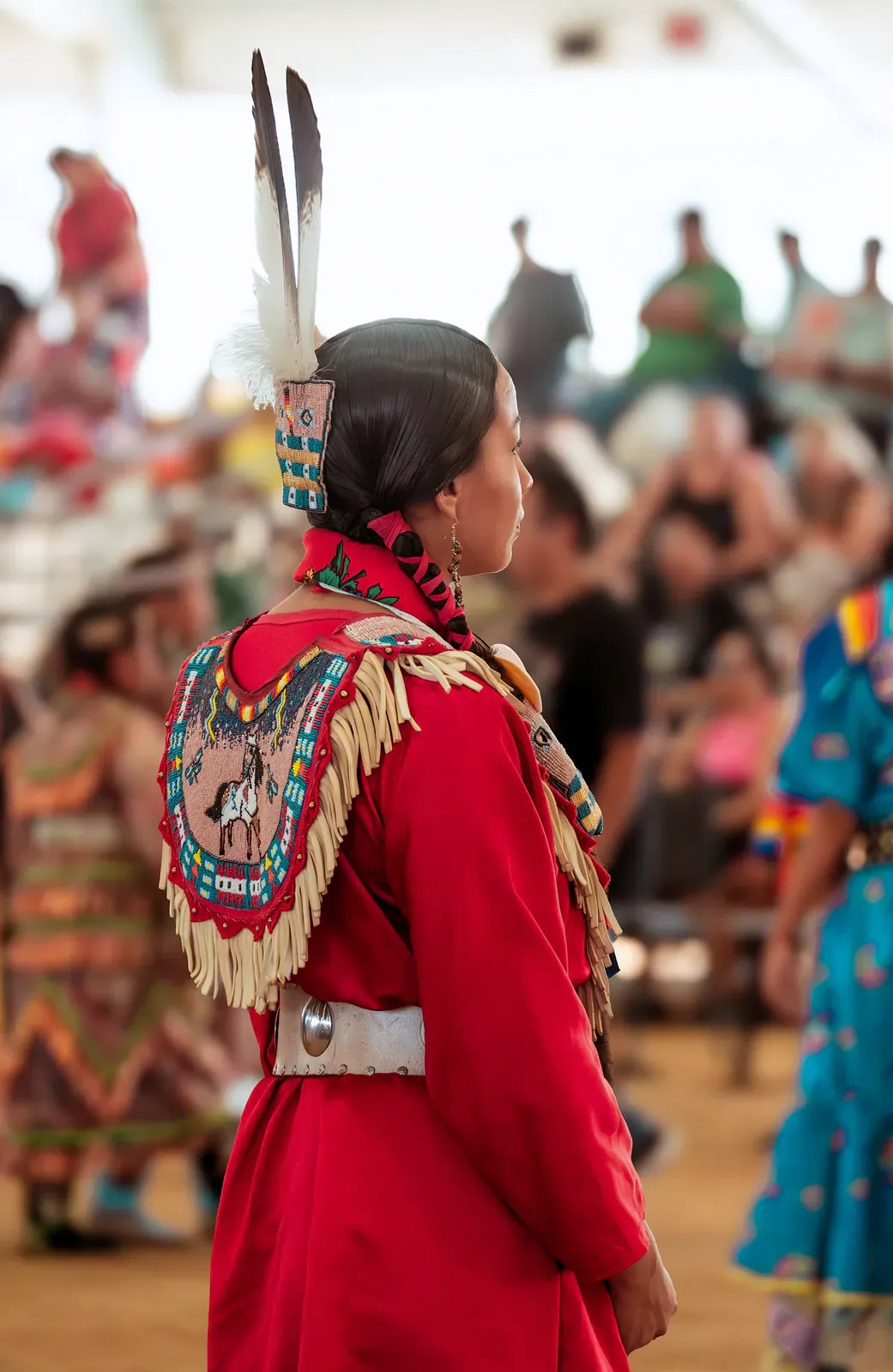
Labels, field recordings and first crossovers, 1951-1982
Commercial recording began late. In 1951 Ray and Mary Boley, who ran a studio in Phoenix, recorded the Navajo singer Ed Lee Natay. The result, Natay, Navajo Singer, was the first release of Canyon Records, and Native listeners who had never seen their own music on a record bought it at a state fair. Canyon went on to become the main publisher of Native American music.
In 1954 Tony Isaacs began recording Lakota singers at powwows, and in 1966 he and Ida Isaacs founded Indian House in Taos, New Mexico, issuing songs recorded outdoors, on location, from many regions.
Meanwhile Native musicians were already inside popular music. The Shawnee guitarist Link Wray recorded “Rumble” for Cadence in 1958; it was banned in some cities, and its distorted tone still echoes through heavy rock. Jim Pepper, a jazz saxophonist of Kaw and Creek descent, turned a peyote song learned from his grandfather into “Witchi-Tai-To”, which reached the Hot 100 in 1969 with the group Everything Is Everything. In Los Angeles, brothers Pat and Lolly Vegas formed Redbone and signed to Epic.
Flute, new age and Native rock, 1983-1999
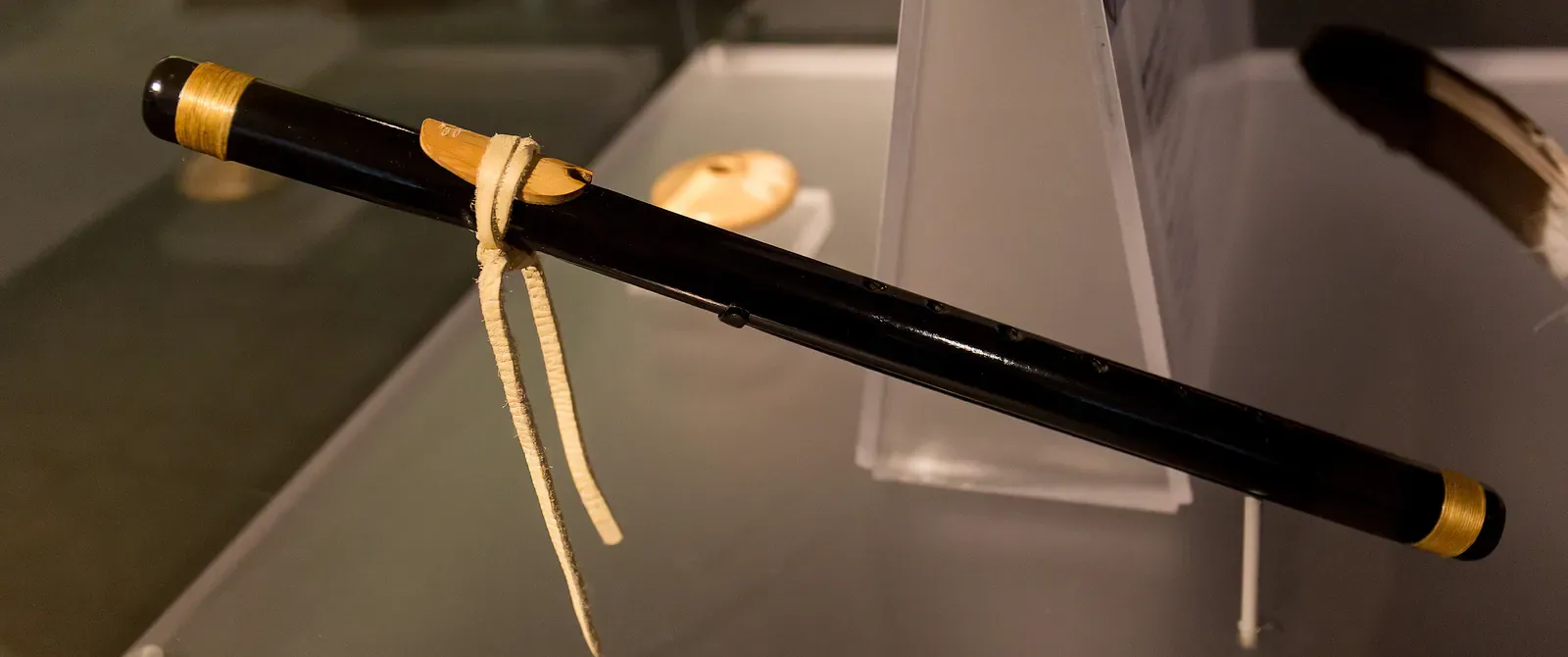
The 1980s moved the story to the flute. R. Carlos Nakai, of Navajo and Ute heritage, released his first Canyon album, Changes, in 1983, and Earth Spirit followed in 1987. Earth Spirit and Canyon Trilogy both went gold, a first for Native American recordings. The Native American flute, an end-blown wooden instrument with a soft, breathy tone, became a bestselling solo voice and a staple of the new age shelf.
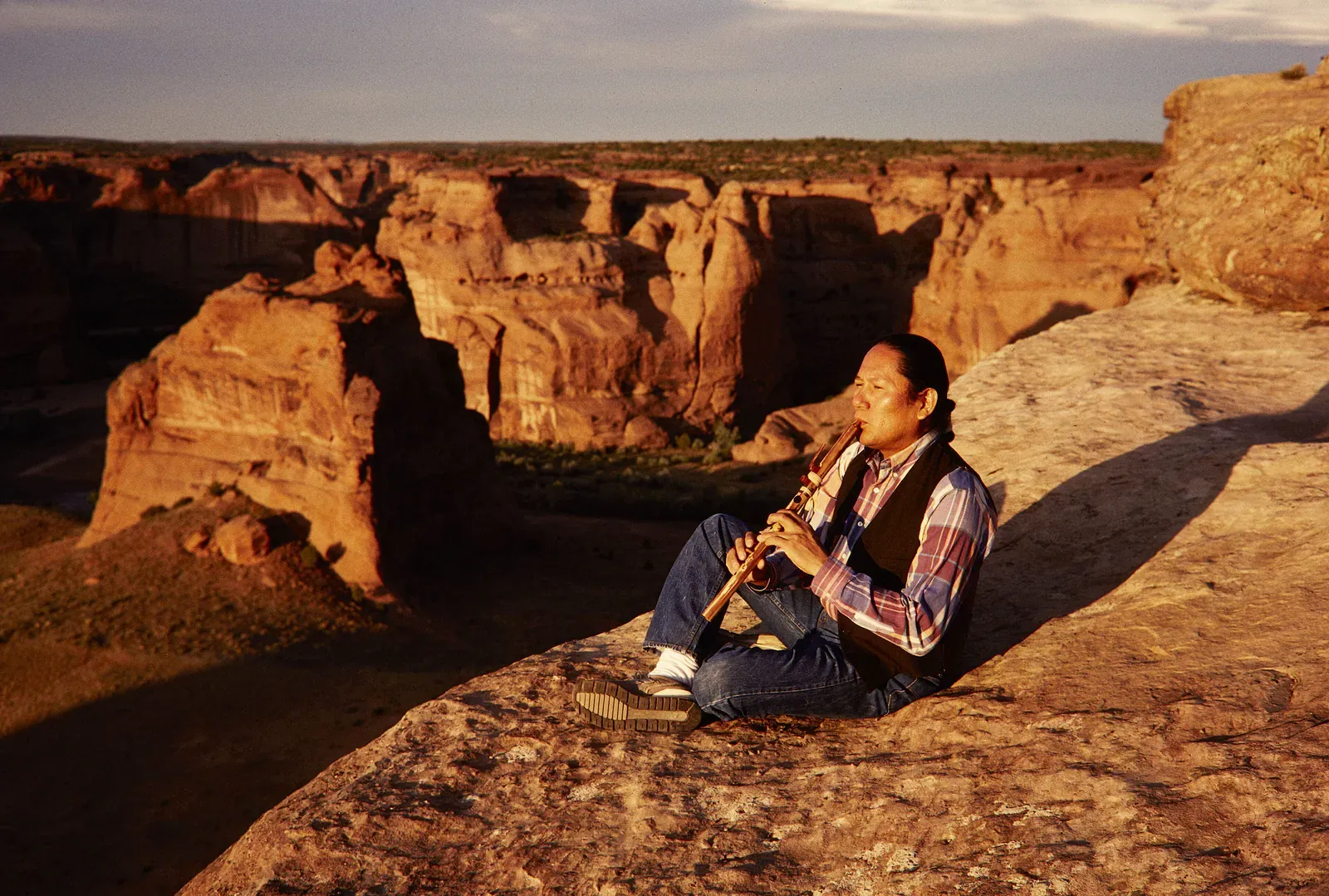
In 1989 Tom Bee’s SOAR began releasing traditional music on compact disc. Native songwriters meanwhile built a rock voice of their own. John Trudell, Santee Dakota, spoke his poetry over rock backing on AKA Graffiti Man in 1986. The Ojibwe songwriter Keith Secola released “NDN Kars” in 1992, a funny, affectionate song about an old rez car that Native audiences still sing back. In 1994 Robbie Robertson, Mohawk and Cayuga on his mother’s side, made Music for The Native Americans with the Red Road Ensemble for Capitol.
Grammy category and Electric Pow Wow, 2000 onward
In 2001 the Grammys added a Best Native American Music Album category. In 2003 Mary Youngblood won for Beneath the Raven Moon and became the first Native American woman to take the award. Powwow drum groups kept recording, among them Northern Cree, founded in 1982 by the Wood brothers of Saddle Lake Cree Nation and now based in Maskwacis, Alberta, and the Black Lodge Singers, a Blackfeet-led family group from White Swan, Washington, who recorded about twenty albums for Canyon.
In 2008 an Ottawa club night called Electric Pow Wow, held at Babylon, mixed recorded powwow drums with dubstep and hip hop. Its DJs became A Tribe Called Red; their free 2012 debut brought the sound to a wide audience, and they won a Juno in 2014. In 2021 they renamed themselves The Halluci Nation.
Characteristics
Native American music is predominantly vocal. Many songs are monophonic, sung in unison or with a lead singer and a second singer who repeats the line, and many use vocables instead of words. Melodies often open high and descend in terraces, and a steady drum pulse ties the song to the dance. A powwow song typically repeats in rounds, each pitched higher than the last (push-ups), and ends with honor beats. Flute and solo songs are often in free time, while dance songs keep a drum pulse whose speed varies from song to song.
Instruments and production
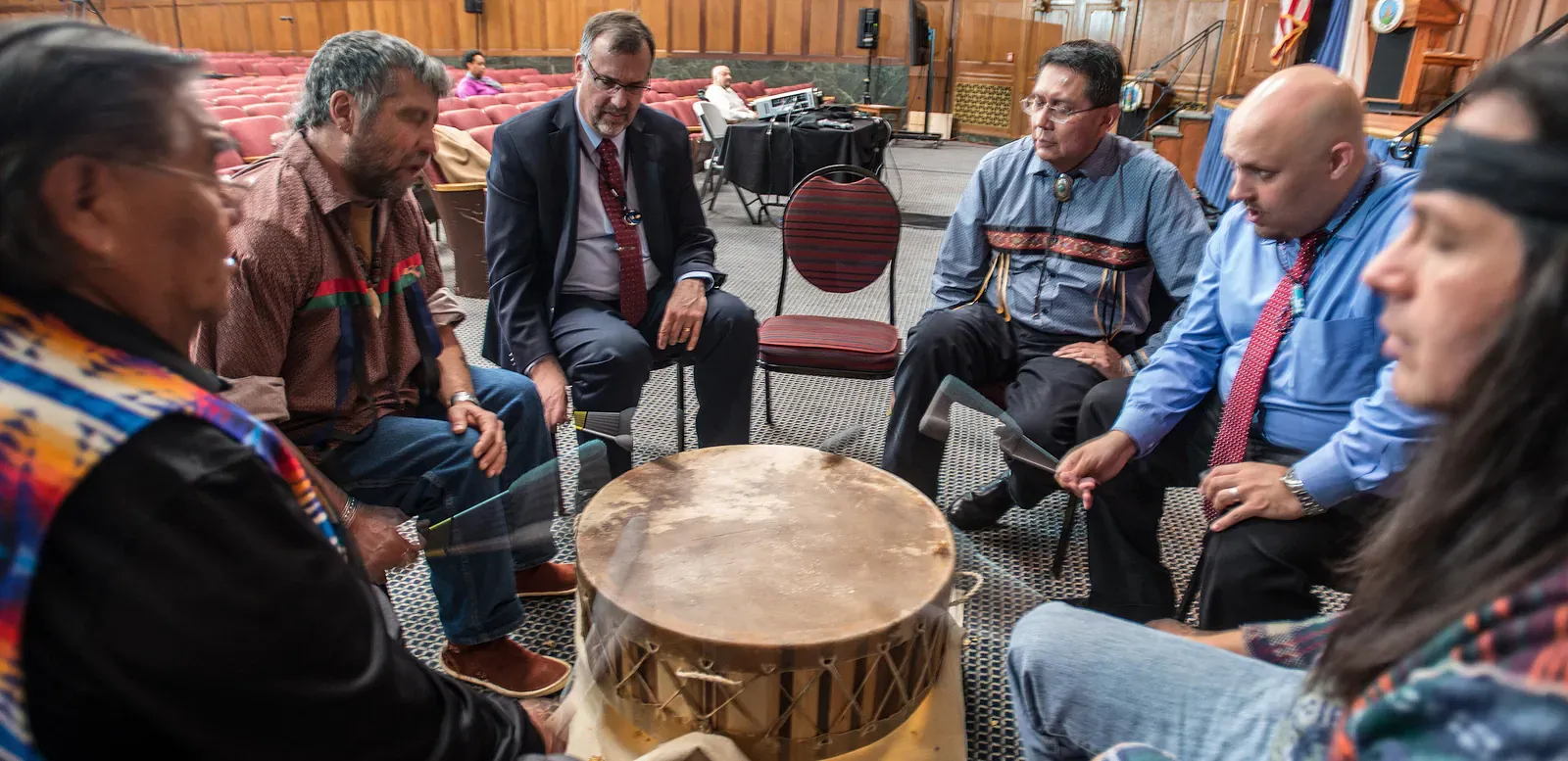
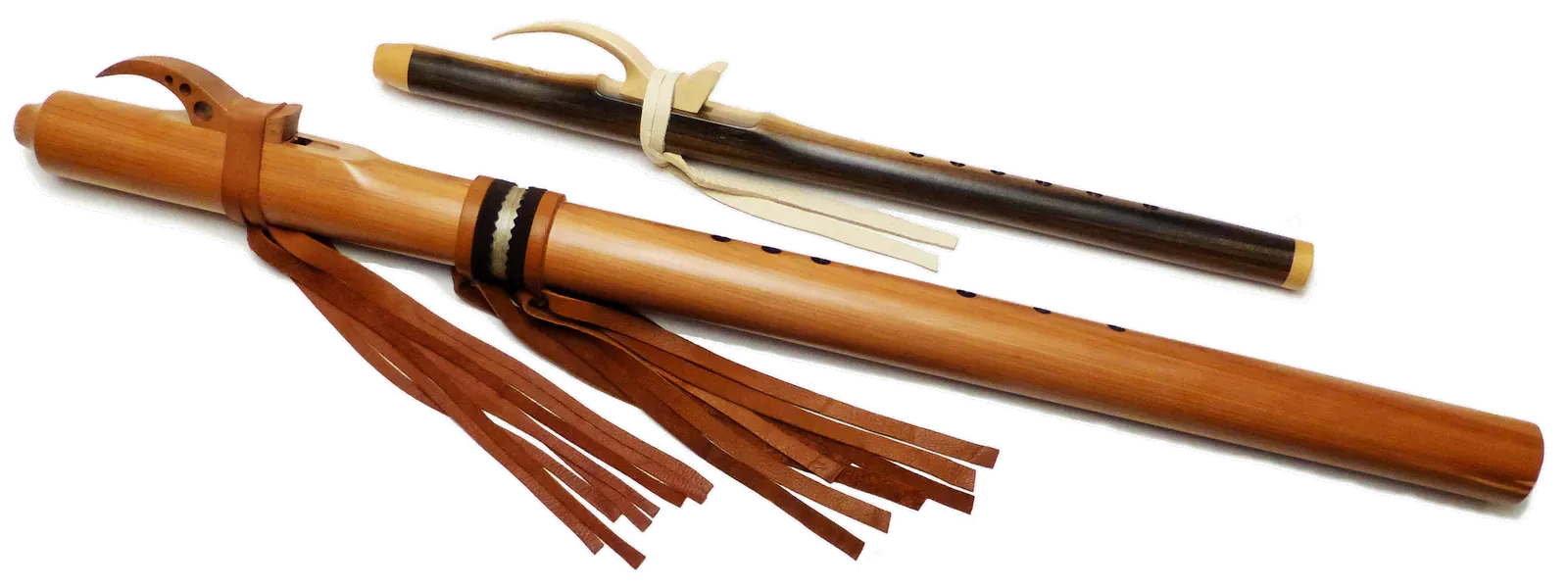
The drum is central. Powwow singers sit around one large drum and strike it together, while hand drums accompany round dance and social songs and water drums serve Navajo, Apache and Great Lakes ceremonial songs. Rattles accompany many songs, and the end-blown Native American flute is a solo instrument associated with personal and courting songs. Early recordings were made on location or in small studios; the later crossover records added guitars, drum kits and studio production, and Electric Pow Wow added electronic beats under recorded powwow drums.
Mainstream success
Mostly sideways. Singers and drum groups built an audience through powwows and their own labels, while the charts were reached by Native musicians playing rock. Redbone’s “Come and Get Your Love” reached number 5 on the Billboard Hot 100 in April 1974, the first single by a Native American band to hit the top five.
Notable recordings
Natay, Navajo Singer (1951) was recorded because a Phoenix theatre wanted to hear a Navajo voice on tape; the Boleys then sold it themselves, and it proved there was an audience that would buy Native songs. Earth Spirit took a solo wooden flute, long used for private song, and made it a record that people played at home, which brought a worldwide audience and a debate about how the instrument was packaged.
Culture
The powwow is a social world: families travel a summer circuit, vendors sell food and beadwork, and drum groups are hired as host drums. Visitors follow the arena rules: stand for the Grand Entry and honour songs, and ask before photographing a dancer.
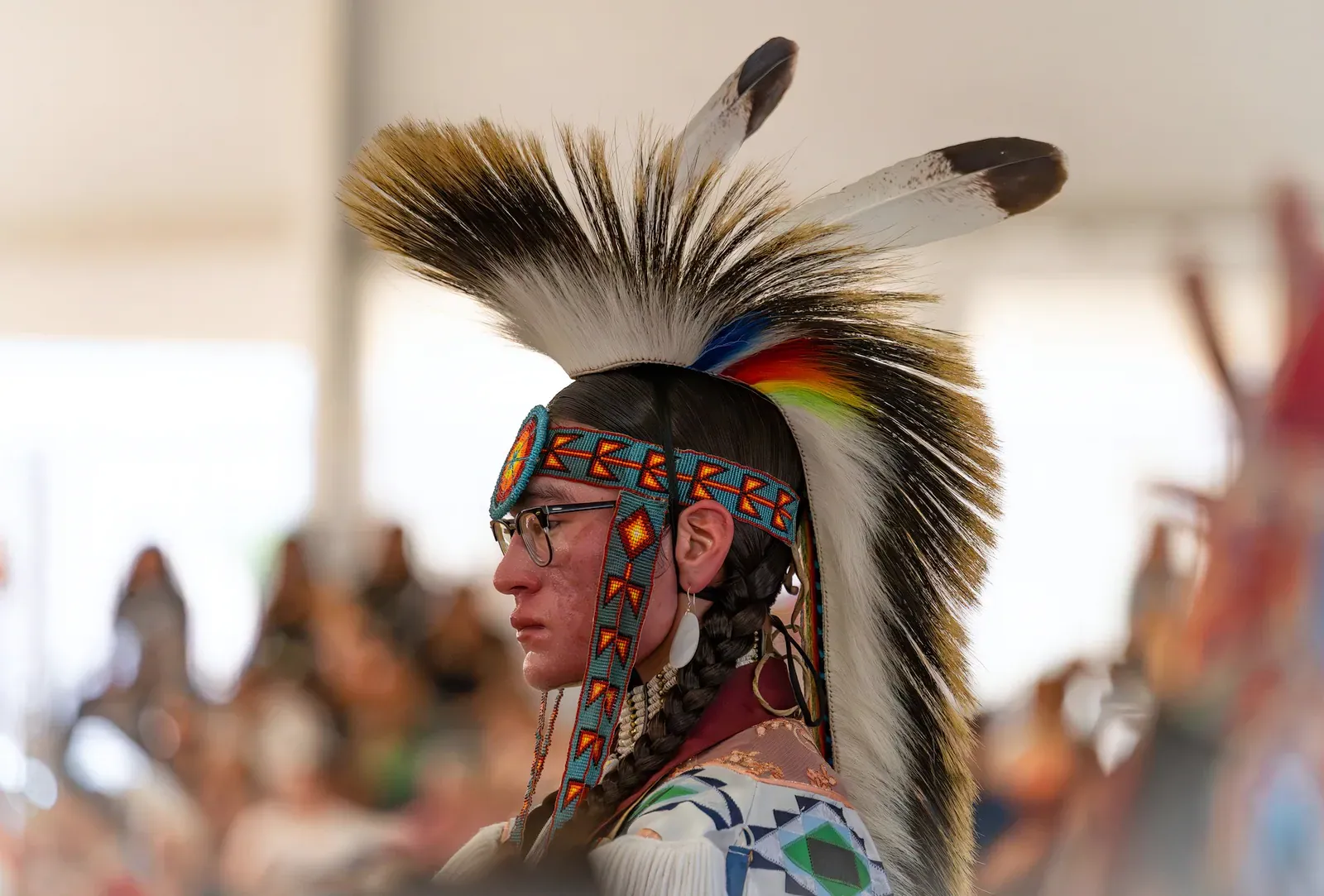
Not everything belongs on a record. Ceremonial songs, healing songs and sacred dances are not entertainment, and many communities restrict them. Albums by Native artists are music their makers chose to share.
Legacy
The tradition is documented on record from 1951 and kept alive at powwows, where drum groups still sing and record. The Grammy category created in 2001, the gold records of R. Carlos Nakai and the work of The Halluci Nation show the range from ceremony-adjacent song to club music.
Misconceptions
It is one sound. Native peoples number in the hundreds of nations in North America. The pulse-and-high-voice style most people picture is a Plains powwow sound. Navajo songs, Cree round dances, Pueblo songs and Pacific Northwest songs are different traditions.
It is a thing of the past. Natay was recorded in 1951, but Northern Cree and Black Lodge Singers are still recording, powwows run every summer, and The Halluci Nation is a current act.
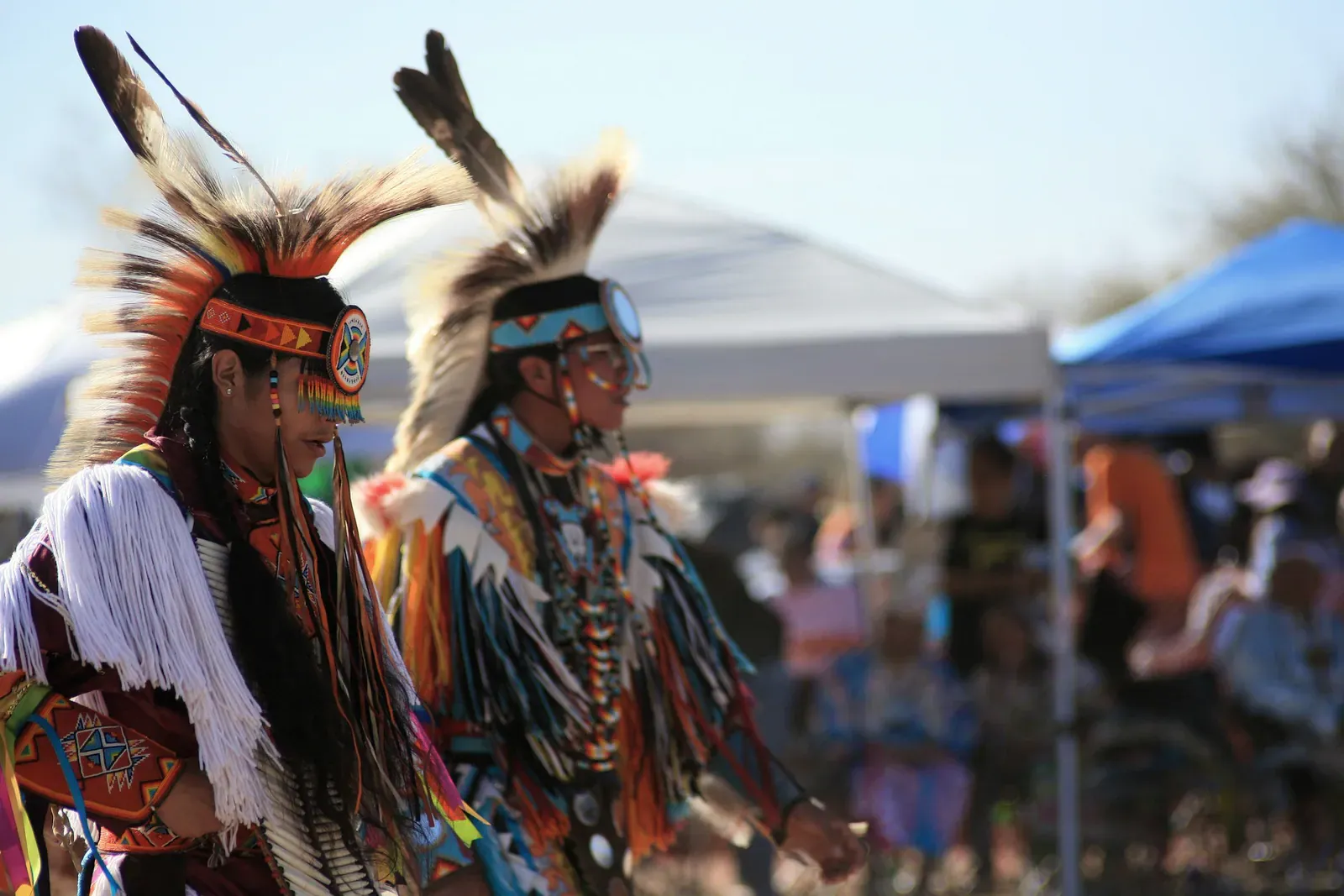
Regalia is a costume. Dance outfits are made and worn with care, and pieces such as feathers carry meaning and rules.
Frequently asked questions
Which Native American recordings are good to hear first?
Opening picks are “Come and Get Your Love” by Redbone for a rock way in, “NDN Kars” by Keith Secola for a Native road song and Black Lodge Singers’ “Crow Hop” for a social powwow song. Earth Spirit by R. Carlos Nakai is the flute entry.
What is powwow music?
Powwow music is drum-group singing for dance: a lead singer starts a line, a second repeats it, the group joins in unison, and everyone strikes one big drum. Songs use vocables and repeat in push-ups, each higher than the last.
What is the Native American flute?
It is an end-blown wooden flute with a block that directs the breath. It has five or six finger holes and is traditionally linked to personal and courting songs. R. Carlos Nakai made it a recording instrument from 1983.
Is Native American music still made today?
Yes. Powwow drum groups tour and record, Native songwriters work in rock and folk, and groups like The Halluci Nation mix powwow drums with electronic music. Canyon Records, founded in 1951, still publishes new releases.
For wider context, see the folk family.
Sound
Sound sheet
Anatomy of a track
| # | Part | Bars |
|---|---|---|
| 1 | Lead singer line (high, solo) | 2 |
| 2 | Second singer repeats the line | 2 |
| 3 | Full group joins in unison | 8 |
| 4 | Repeat as a higher push-up (x4) | 8 |
| 5 | Closing honor beats | 4 |
Signature sounds
- Tense, high, unison singing
- One big drum struck by the whole group
- Vocables with few or no lyrics
- Descending, terraced melody
- Four-part song form repeated in push-ups
- Dance-linked pulse and closing honor beats
Drums and percussion
- Big drum
- Hand drum
- Water drum
Techniques
- Terraced descent
- Vocables
- Lead and second
- Push-ups
- Honor beats
Keys and modes
Minor pentatonic. The scale to which the common six-hole Native American flute is tuned.
Pentatonic and tetratonic song scales. Many Plains and Great Basin songs use five or fewer tones, falling in terraces.
Tuning
No fixed pitch standard: voices and drums are not set to 12-tone equal temperament, and each Native American flute is tuned to its maker's chosen pitch.
Vocals
Unison singing, high and tense in Plains powwow style, in nation languages or on vocables.
Scenes
Where it happened
Where and when the sound lived: one bar per city on a shared timeline.
North America
Active scenes
Peak 6, 2008-2025
Home of Canyon Records, which has published Native American music since 1951.
Indian House has recorded traditional and powwow singers here since 1966.
Redbone formed here in 1969 and worked in the rock studio scene.
Base of Northern Cree, the powwow and round dance group on Canyon Records.
Home of the Black Lodge Singers, a family drum group led by Kenny ScabbyRobe of the Blackfeet Nation.
Electric Pow Wow club nights launched A Tribe Called Red.
Venues and places
Phoenix, 1951 to today. Phoenix home of the label that recorded Native artists from Ed Lee Natay to R. Carlos Nakai.
Taos, 1966 to today. Recordings of regional singers made on location by Tony and Ida Isaacs.
Ottawa, 2008 to today. Monthly club night where DJs mixed powwow with electronic music.
Culture
Culture markers
- Grass dance, fancy dance, jingle dress
Powwow dance styles, each with its own regalia and song types.
Dance - Regalia
Dance outfits are sacred attire, not costume, and photography at some events is restricted.
Fashion - Grand Entry
The parade of dancers that opens each powwow session.
Ritual - Honor songs
Songs sung to recognise veterans, elders and graduates.
Ritual - Rez car
The beat-up vehicle in NDN Kars, an affectionate shared joke and image.
Slang
Media
Key media
- 1969Radio Free Alcatraz
by John Trudell. Broadcast from the Alcatraz occupation on Berkeley station KPFA, sharing Native music and politics.
Radio - 1994Music for The Native Americans
by Robbie Robertson & The Red Road Ensemble. Companion album to a television documentary series.
Compilation - 1994Dance Me Outside
by Bruce McDonald. The film that features Keith Secola's NDN Kars.
Film - 1998Smoke Signals
by Chris Eyre. Film with a Native cast and crew; John Trudell appears in it.
Film
Glossary
Terms on this page
A team of singers who sit around one drum and perform the songs of a powwow.
The opening parade of dancers at a powwow.
The drum group that performs the opening and closing songs of a powwow.
A song or dance open to everyone, not tied to one nation.
One pass through a powwow song; a song is usually built from four of them, each sung higher.
A social circle dance, strong in Cree and other northern communities, with its own song repertoire.
Sung syllables without translatable words, common in many Native song styles.
Folk family