New Age music
New age is slow, mostly instrumental music for relaxation and meditation that took shape in the United States in the 1970s and became a Grammy category in 1987.
35 genres
Since 1970
Genres
35
In this family
Branches
12
Main subgenres
Since
1970
United States, Germany, United Kingdom
Timeline
Era by era
From the first sparks to today. Select a dot to read the story behind it.
- Meditation LPs and private presses
1964 to 1975
- Windham Hill and the new age bin
1976 to 1986
- Grammys, radio formats and Enya
1987 to 1996
- Majors, spas and the long quiet
1997 to 2012
- Reissues and the revival
2013 to 2026
Eras
Moments
- 1 Meditation LPs and private presses, 1964 to 1975
- 2 Windham Hill and the new age bin, 1976 to 1986
- 3 Grammys, radio formats and Enya, 1987 to 1996
- 4 Majors, spas and the long quiet, 1997 to 2012
- 5 Reissues and the revival, 2013 to 2026
1964
Meditation LPs and private presses
Jazz players, synth tinkerers and mystics made quiet records for meditation and healing, sold through ashrams, health stores and mail order, long before anyone called it a genre.
- 1964Tony Scott records Music for Zen MeditationClarinettist Tony Scott made a record with Japanese musicians that is often called the first new age album.
- 1968Paul Horn's InsideThe jazz flautist recorded in the Taj Mahal, using its long echo as part of the sound.
- 1971Deuter's first album DThe German multi-instrumentalist mixed acoustic and electronic instruments with sounds of the sea.
- 1973Hearts of Space begins on KPFAStephen Hill started a weekly radio show of slow, spacious music in Berkeley, California.
- 1975Steven Halpern's Spectrum SuiteOften named as a key record of the new age movement, made for relaxation and healing.
1976
Windham Hill and the new age bin
A Palo Alto guitar label, a Berkeley radio show and Eno's ambient series gave the music its sound and shelf space. In Tokyo, kankyo ongaku grew in parallel.
- 1976William Ackerman founds Windham HillA guitarist's label for his own records in Palo Alto became the genre's biggest brand.
- 1978Brian Eno's Ambient 1: Music for AirportsEno's ambient series gave quiet, unobtrusive music an aesthetic and a name.
- 1980Laraaji's Ambient 3: Day of RadianceEno produced the street zither player's album, recorded in New York.
- 1980Kitaro scores NHK's Silk RoadThe synthesizer score for a Japanese documentary series made him an international name.
- 1980George Winston's AutumnSolo piano on Windham Hill turned seasonal mood pieces into a commercial formula.
- 1981Tower Records adds a new age binA store in Mountain View, California gave the music its own shelf and, soon, its label.
- 1982George Winston's DecemberThe solo piano album became one of the best-selling instrumental records in the US.
- 1982Hiroshi Yoshimura's Music for Nine Post CardsA quiet electric-piano record that became a landmark of Japanese environmental music.
- 1982Paul Winter's Missa GaiaThe Paul Winter Consort's Earth Mass tied the music to ecological concerns.
- 1983John Morey founds Narada in MilwaukeeA mail-order business for new age records became a label and the main rival to Windham Hill.
- 1984Peter Baumann starts Private MusicThe former Tangerine Dream member built a Los Angeles label as a home for instrumental music.
- 1986Andreas Vollenweider's Down to the MoonThe Swiss electro-acoustic harpist's album led to the first Grammy in the category.
1987
Grammys, radio formats and Enya
A Grammy category, Billboard charts and all-new-age radio made it a business. Enya, Kitaro and Sacred Spirit sold in millions, and majors bought up the indie labels.
- 1987Grammy for Best New Age AlbumThe Recording Academy created the category, and Vollenweider won the first award.
- 1987KTWV The Wave launches in Los AngelesA rock station switched to a full-time new age format with minimal talk.
- 1988Enya's WatermarkOrinoco Flow carried layered vocals and synthesizers into the pop charts.
- 1988Billboard launches new age chartsThe weekly charts confirmed the music as a measurable market.
- 1994Sacred Spirit's Chants and Dances of the Native AmericansA worldwide hit that mixed Native American chants with electronic production.
1997
Majors, spas and the long quiet
Narada and Higher Octave passed to Virgin and EMI, the sound moved into spas, yoga studios and retail, and critics wrote the genre off as background music.
- 1997Virgin buys Narada and Higher OctaveVirgin, for EMI, took over the two leading independents, and the indie scene shrank.
2013
Reissues and the revival
Archive labels dug up private-press and Japanese environmental records. A Grammy-nominated compilation, streaming playlists and a renamed Grammy category brought the music back to listeners.
- 2013I Am the Center compilationLight in the Attic's set of private-issue American records started the archive revival.
- 2017Seance Centre reissues Keyboard FantasiesThe Toronto label brought Beverly Glenn-Copeland's 1986 synth record to new ears.
- 2017WRWTFWW reissues Midori TakadaThe Geneva label's reissue of Through the Looking Glass spread Japanese ambient records worldwide.
- 2019Kankyo Ongaku compilationLight in the Attic's licensed set of Japanese environmental music was nominated for a Grammy.
- 2023Grammy adds ambient and chantThe category became Best New Age, Ambient, or Chant Album, folding in a neighbouring genre.
Roots
Roots and offspring
Influenced by
United States, Germany, United Kingdom, 1970
New Age
Facts
| Genres in the family | 35 |
| Main branches | 10 |
| Emerged | 1960s to 1970s |
| Tempo | 60 to 125 BPM |
New age is slow, mostly instrumental music made for relaxation, meditation and reflection, defined by its use and intent more than by any instrument.
It took shape in the United States in the 1970s from jazz players, synthesizer tinkerers and mystics, was sold as a retail category from the early 1980s, and became a Grammy category in 1987. Its archives now drive a reissue scene that treats it as listening music.
Meditation LPs and private presses, 1964 to 1975
Long before anyone said “new age”, clarinettist Tony Scott recorded Music for Zen Meditation (1964) with Japanese shakuhachi and koto players. Many writers call it the first new age record. Flautist Paul Horn followed with Inside (1968), recorded in the Taj Mahal so its long echo became part of the sound. Irv Teibel’s Environments series (1969 to 1979) sold natural soundscapes, and Deuter’s first album D (1971) mixed acoustic and electronic instruments with ocean sounds.
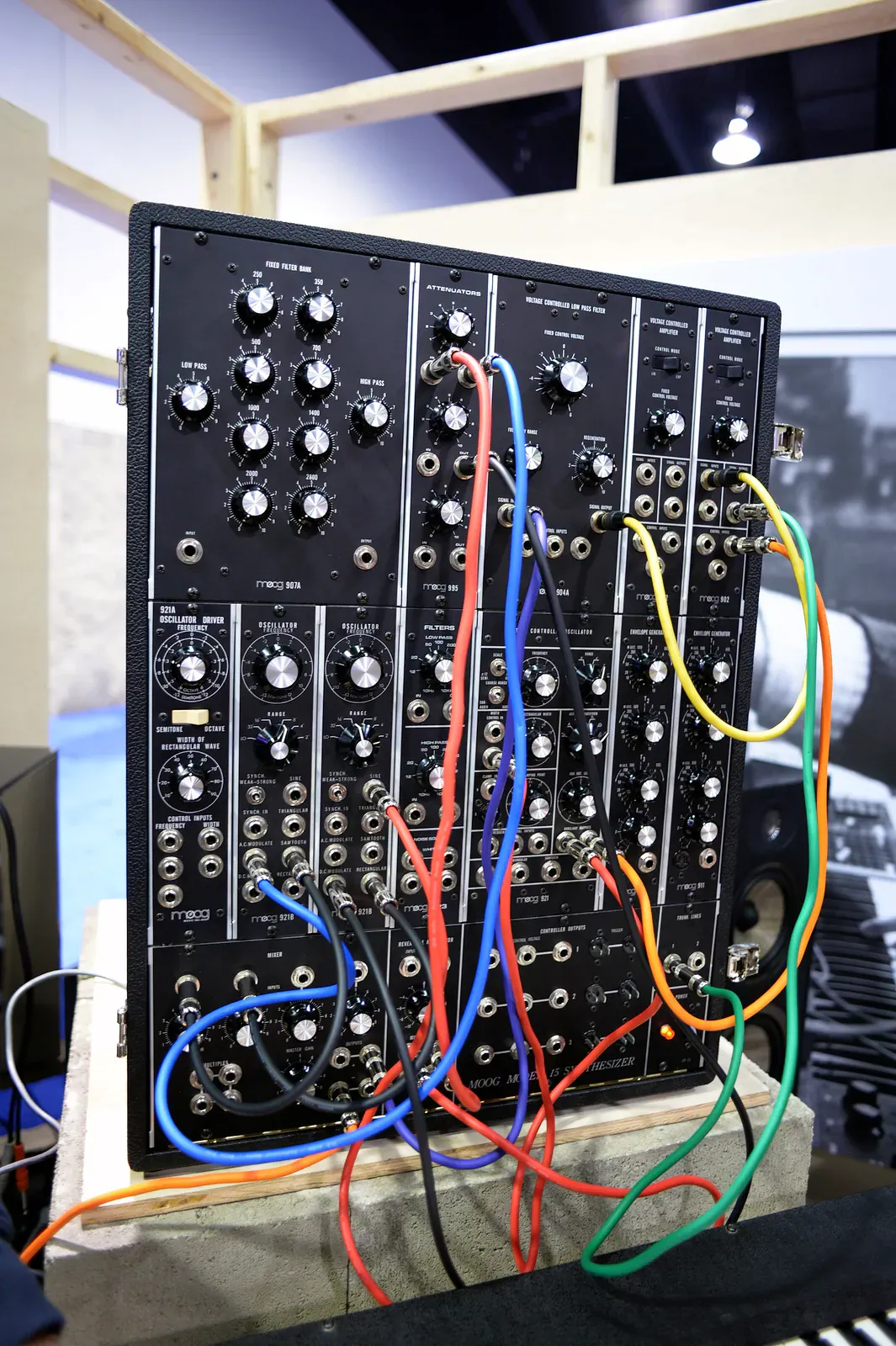
The cause was a mix of cheap new instruments and a hunger for calm among listeners who were exploring Eastern religion and holistic health. These records sold through ashrams, health-food shops and mail order rather than record stores. Stephen Hill started the radio show Hearts of Space on KPFA in Berkeley in 1973. Steven Halpern’s Spectrum Suite (about 1975), made for relaxation, is often named as the work that started the movement, and Kay Gardner’s Mooncircles (1975) tied the music to women’s spirituality.
Windham Hill and the new age bin, 1976 to 1986
In 1976 guitarist William Ackerman began releasing his own records in Palo Alto, and Windham Hill became the genre’s biggest brand. The label started with a $300 investment and grossed more than $26 million a year by the mid-1980s. George Winston’s Autumn (1980) and December (1982) put solo piano at the centre, and December became a million seller.
The idea of a shelf for this music came from retail. Tower Records in Mountain View added a new age bin in 1981, and the NPR network picked up Hearts of Space for syndication in 1983. Around the same time, Narada (1983, Milwaukee), Private Music (1984, founded by Tangerine Dream’s Peter Baumann) and Higher Octave (1983, Los Angeles) gave Windham Hill rivals with different tastes: world music, electronic instrumentals and guitar.
A parallel line ran through experimental music and electronic music. Eno’s Ambient series reached New York in 1980 with Ambient 3: Day of Radiance by Laraaji, a street musician Eno heard playing zither in Washington Square Park. In Japan, Kitaro’s score for the NHK series Silk Road (1980) made synthesizer melody an export, while Hiroshi Yoshimura’s Music for Nine Post Cards (1982) belonged to kankyo ongaku, music made to suit a room, shop or gallery.
Grammys, radio formats and Enya, 1987 to 1996
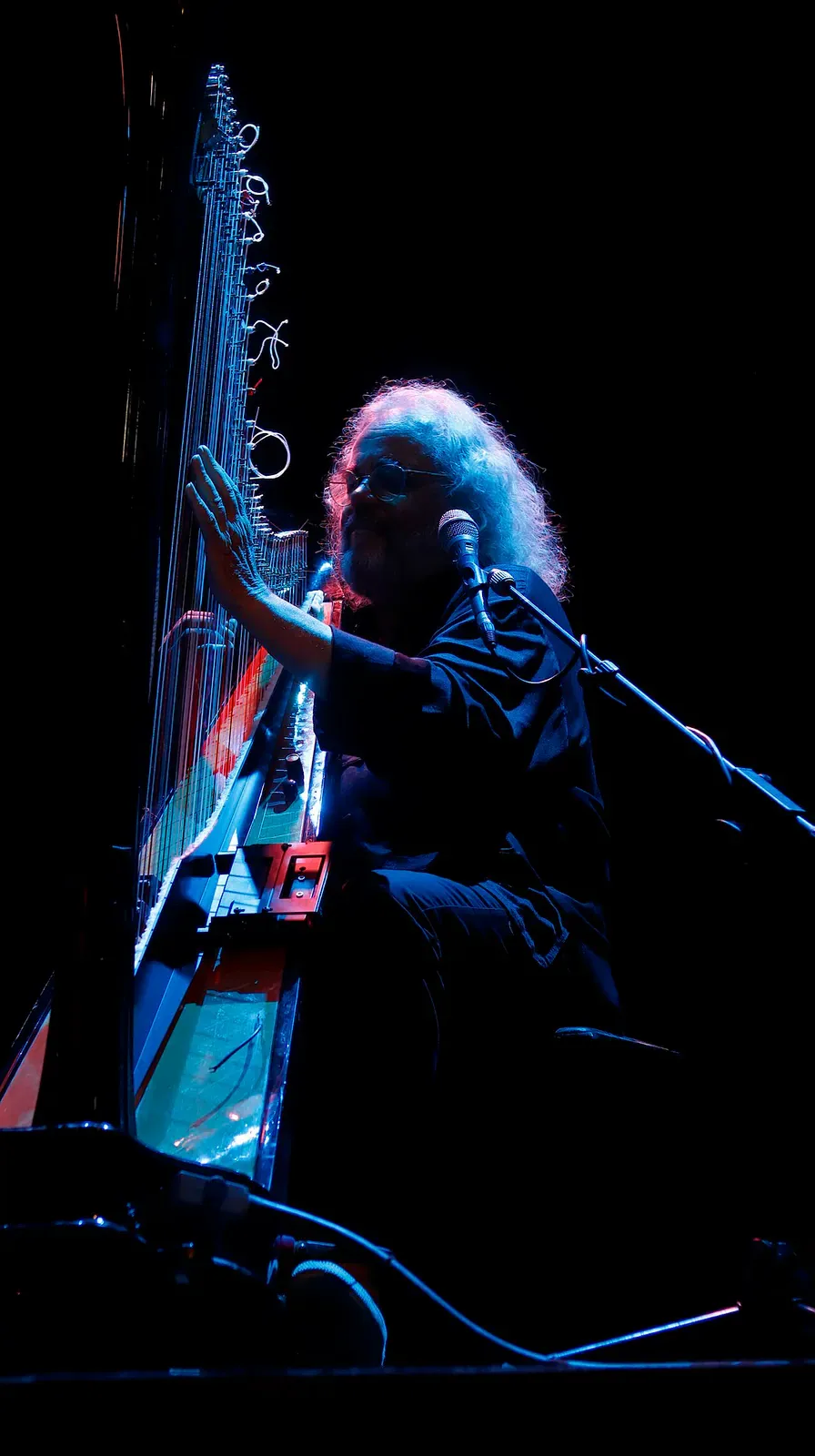
By 1987 the business had arrived. The Recording Academy created a Best New Age Album Grammy and gave the first one to Swiss harpist Andreas Vollenweider for Down to the Moon (1986), who said he did not want to put a name on his music. On Valentine’s Day 1987 a Los Angeles station became the all-new-age KTWV, The Wave, and Billboard began weekly new age charts in 1988.
Mass success came from voices and television rather than guitars. Enya’s Watermark (1988) carried Orinoco Flow, with layered vocals and synthesizers, into the pop charts. Enigma’s Sadeness (Part I) reached number one in 24 countries in 1990, and Sacred Spirit’s Chants and Dances of the Native Americans (1994) was a global seller that set the model for ethnic fusion. By the end of 1989 many small independent labels were issuing new age records, and mail-order distributors sold them.
Critics were less kind. Time’s Michael Walsh wrote in 1986 that the music was called “aural wallpaper” and “yuppie elevator music”, and Harold Budd said that hearing the term made him reach for his revolver. The word stuck anyway, for better and worse.
Majors, spas and the long quiet, 1997 to 2012
The independent boom ended when majors bought the independents. Virgin, on behalf of EMI, bought Narada and Higher Octave in 1997, after BMG had taken over Windham Hill (1992 and 1996) and Private Music (1996). By 1995 Kitaro, Suzanne Ciani and Patrick O’Hearn had already left major labels for independents because of weak promotion and falling sales. Higher Octave’s offices closed in 2004, and Sony ended new Windham Hill releases after 2007.
Yet the sound did not vanish. Enya’s A Day Without Rain reached number two on the Billboard 200 in 2001, with Only Time at number ten on the Hot 100. In Japan, “healing” and “relaxing” music gained ground as a label for the same instincts. In the 2000s a younger wave, sometimes called nu-new age and linked with Emeralds and Oneohtrix Point Never, came out of the noise scene and began to treat the old synthesizer sound as a source rather than a joke.
Reissues and the revival, 2013 to 2026
The revival started in the archives. Light in the Attic released I Am the Center in 2013, a set of private-issue American records, and in 2019 Kankyo Ongaku, a compilation of Japanese environmental and new age music from 1980 to 1990. Spencer Doran compiled it, and it was nominated for the Grammy for Best Historical Album at the 62nd awards.
Small labels turned lost records into discoveries. Seance Centre reissued Beverly Glenn-Copeland’s 1986 synthesizer album Keyboard Fantasies in 2017, and WRWTFWW reissued Midori Takada’s Through the Looking Glass (1983) the same year. Music From Memory gathered 1990s ambient on Virtual Dreams (2021). New work arrived too, from Erased Tapes, RVNG Intl., Constellation Tatsu, Ultimae and Spotted Peccary, which turned 40 in 2026. In 2023 the Grammy category became Best New Age, Ambient, or Chant Album.
Characteristics
New age is defined by function: music for calm, with sustained tones, minimal repetition and no sudden dynamics. The name covers acoustic piano, guitar, harp and flute records, electronic space music, Celtic and world-fusion work and neoclassical piano, which is why one label sits on very different records and why several of its best-known players rejected it.
Instruments and production
Two production lines meet in the genre. Acoustic records, such as Windham Hill’s, were recorded with high-fidelity technique to present piano and fingerstyle guitar as intimate, room-sized sound. Electronic records built slow harmonic beds from analog and digital synthesizers, often with long reverb and layered nature recordings. Wordless voices and chants replaced lyrics on many records.
Culture
The audience consisted of listeners who wanted quiet at home and found it in health-food shops, mail-order catalogues and, later, record-store bins. The economics favoured small operators. A hobbyist could press a record for a few thousand listeners and sell it by mail, which is why Windham Hill and Narada both began small, and why Japanese labels found their own home market for gentle music in the 1990s.
Connections to other music ran in several directions. Celtic singing from folk and chamber textures from classical came in with Enya and the neoclassical players, and the improvising spirit of jazz lived on in Horn, Scott and later Narada’s jazz imprints. The scene also carried real argument: many artists wanted nothing to do with the label, and critics doubted that “relaxing” was a musical quality at all.
Misconceptions
“It began with Windham Hill.” Windham Hill (1976) made the sound a product, but Tony Scott recorded in 1964, Hearts of Space started broadcasting in 1973, and Halpern’s Spectrum Suite appeared in 1975. The label found a market that already existed.
“It is spiritual healing music.” The New Age movement shaped some of it, but scholar J. Gordon Melton argued that the term refers to music used for therapeutic or other new age purposes, not to one style. Much of it was made as plain instrumental music, and several of its biggest names refused the label.
“It faded after the 1990s.” The independent boom ended around 1997, but Enya kept selling in 2001, and the 2010s archive labels made it a collector’s field. A Grammy category still exists for it.
Frequently asked questions
What is new age music?
New age music is slow, mostly instrumental music built for relaxation, meditation or quiet listening. It uses piano, guitar, harp, flute, synthesizers and field recordings. It grew from 1960s meditation records and the 1970s Californian scene, and a Grammy category recognised it in 1987.
When did new age music start?
New age music began in the 1960s and 1970s, with Tony Scott’s Music for Zen Meditation (1964) and Steven Halpern’s Spectrum Suite (about 1975) among the earliest records. The name came in the early 1980s, after Tower Records in Mountain View added a new age bin in 1981.
What is the difference between new age and ambient music?
Ambient music, named by Brian Eno in the late 1970s, is a design idea: quiet music that suits a room without demanding attention. New age is defined more by purpose, such as relaxation or meditation. The two overlap on many records, and the Grammy category now names both.
What is kankyo ongaku?
Kankyo ongaku is Japanese for environmental music, soundscapes made to suit places such as shops, galleries and homes. Hiroshi Yoshimura’s Music for Nine Post Cards (1982) is a landmark. Light in the Attic’s 2019 compilation of 1980 to 1990 recordings brought it to a global audience and earned a Grammy nomination.
Subgenres
Genres in the family
12 main branches. Names with their own page are links.
1982
1974, 1 branch
1983, 6 branches
1975, 3 branches
- Kankyō ongaku
1980
1965, 7 branches
1972, 2 branches
1978, 2 branches
- Progressive electronic
1971, 2 branches
1975, 4 branches
1971
Sound
What it sounds like
Tempo
- Overall60-125
- Celtic and vocal new age80-120
- Solo piano75-120
- Fingerstyle guitar85-120
- Space music and ambient60-110
- Synthesizer and electro-acoustic70-125
- Ethnic fusion90-125
Synths and software
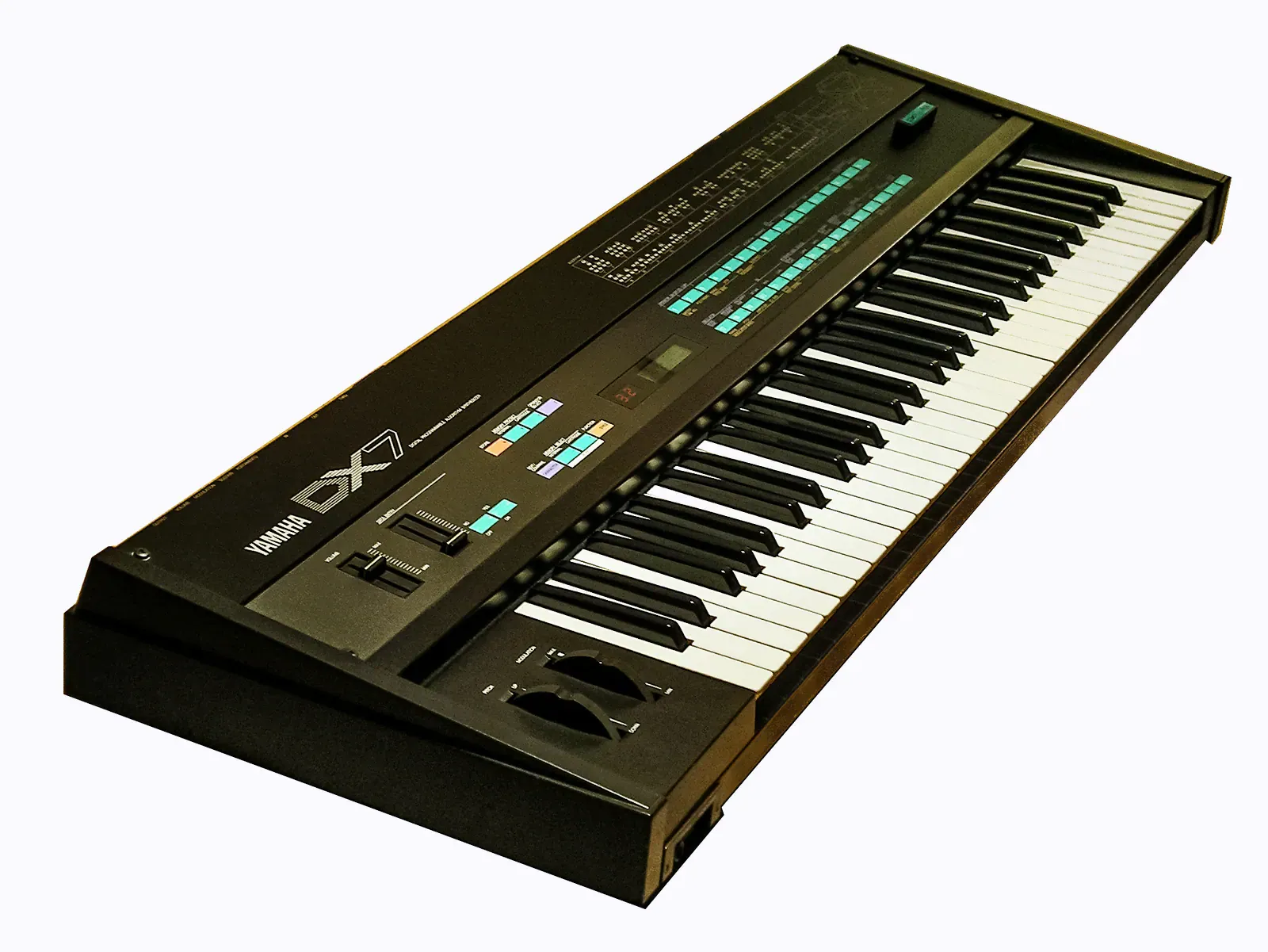
- Yamaha DX7
- Roland D-50
- Oberheim OB-8
Techniques
- Sustained synthesizer pads
- Reverb and echo
- Nature field recordings
- Open and alternate guitar tunings
- Beatless free-tempo playing
Keys and modes
Diatonic major. Simple major-key harmony, as in Orinoco Flow in G major, keeps the mood consonant.
Static modal harmony. Long drones and slow chord changes avoid tension, as in space and meditation records.
Tuning
12-TET, A=440; open and alternate tunings on steel-string guitar records
Vocals
Mostly instrumental; when present, wordless voices, Sanskrit, Tibetan or Native American-style chants and Celtic-themed lyrics.
Hallmarks
- sustained synth pads
- acoustic piano/flute/harp
- minimal repetition
- no sudden dynamics
- functional listening
Instruments
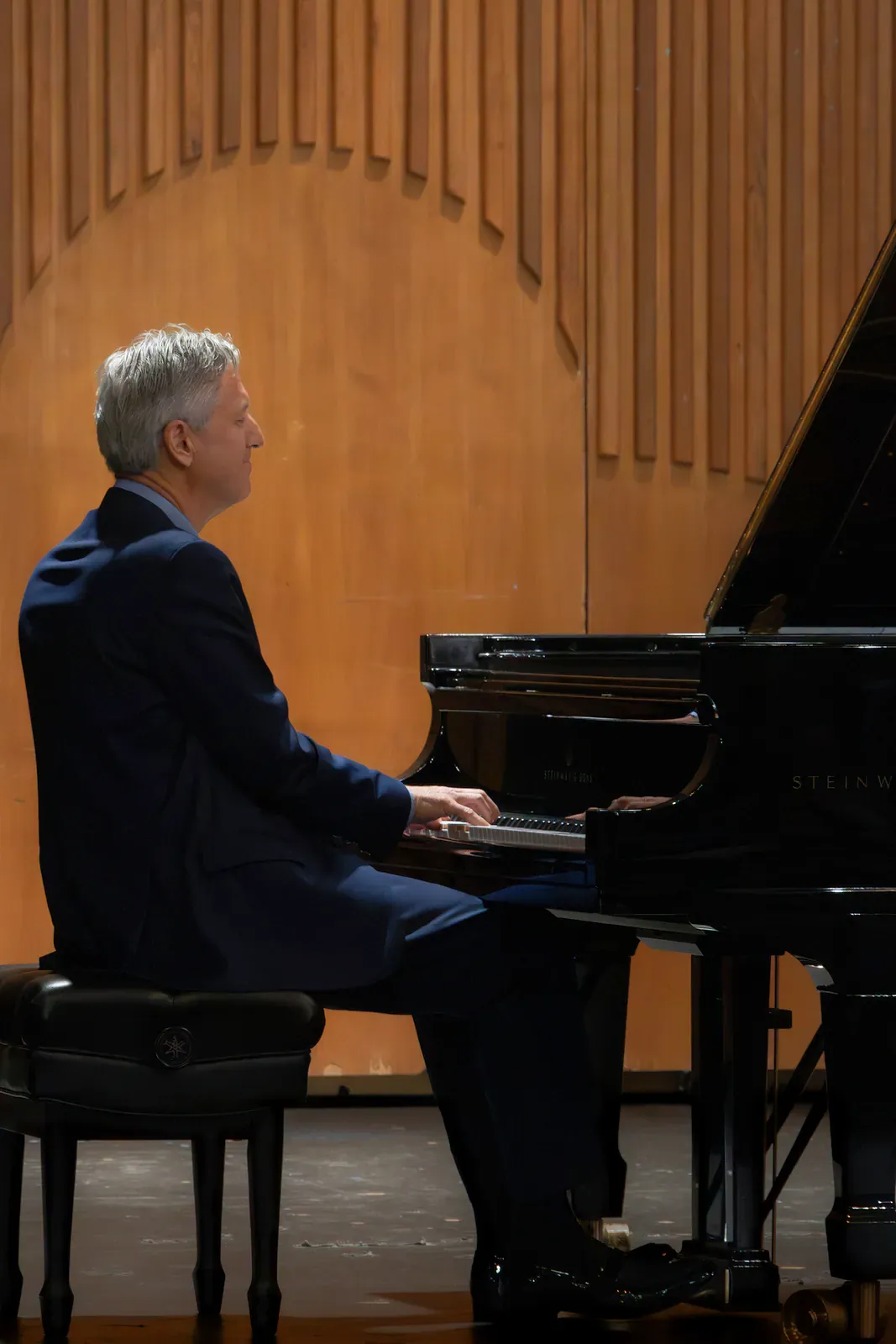
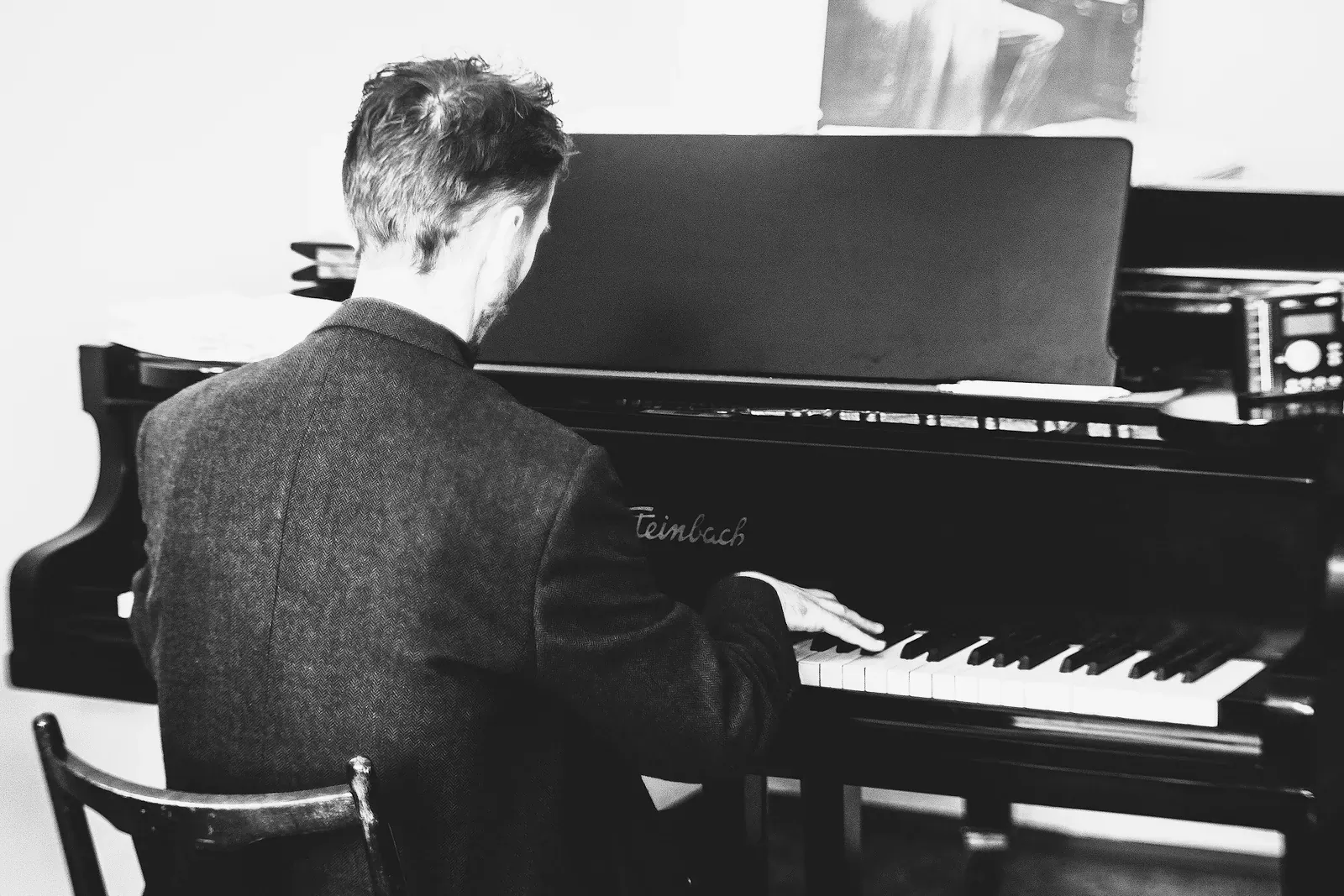
- Grand piano
The lead voice of solo instrumental new age, as on George Winston's seasonal albums.
- Fingerstyle acoustic guitar
Windham Hill's signature sound, played in open tunings.
- Wooden and Native American flute
Gives the music breath and a link to nature and ritual.
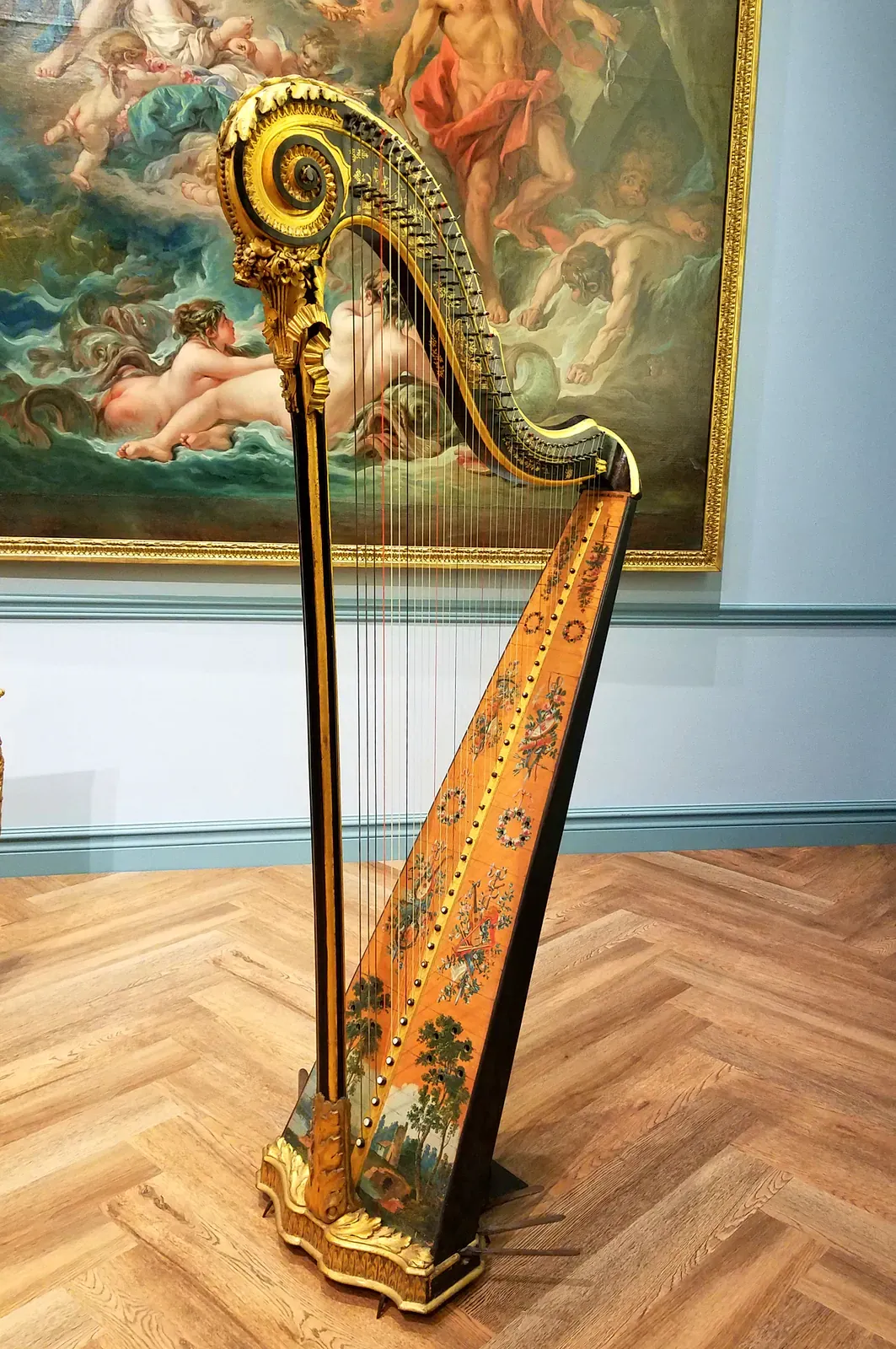
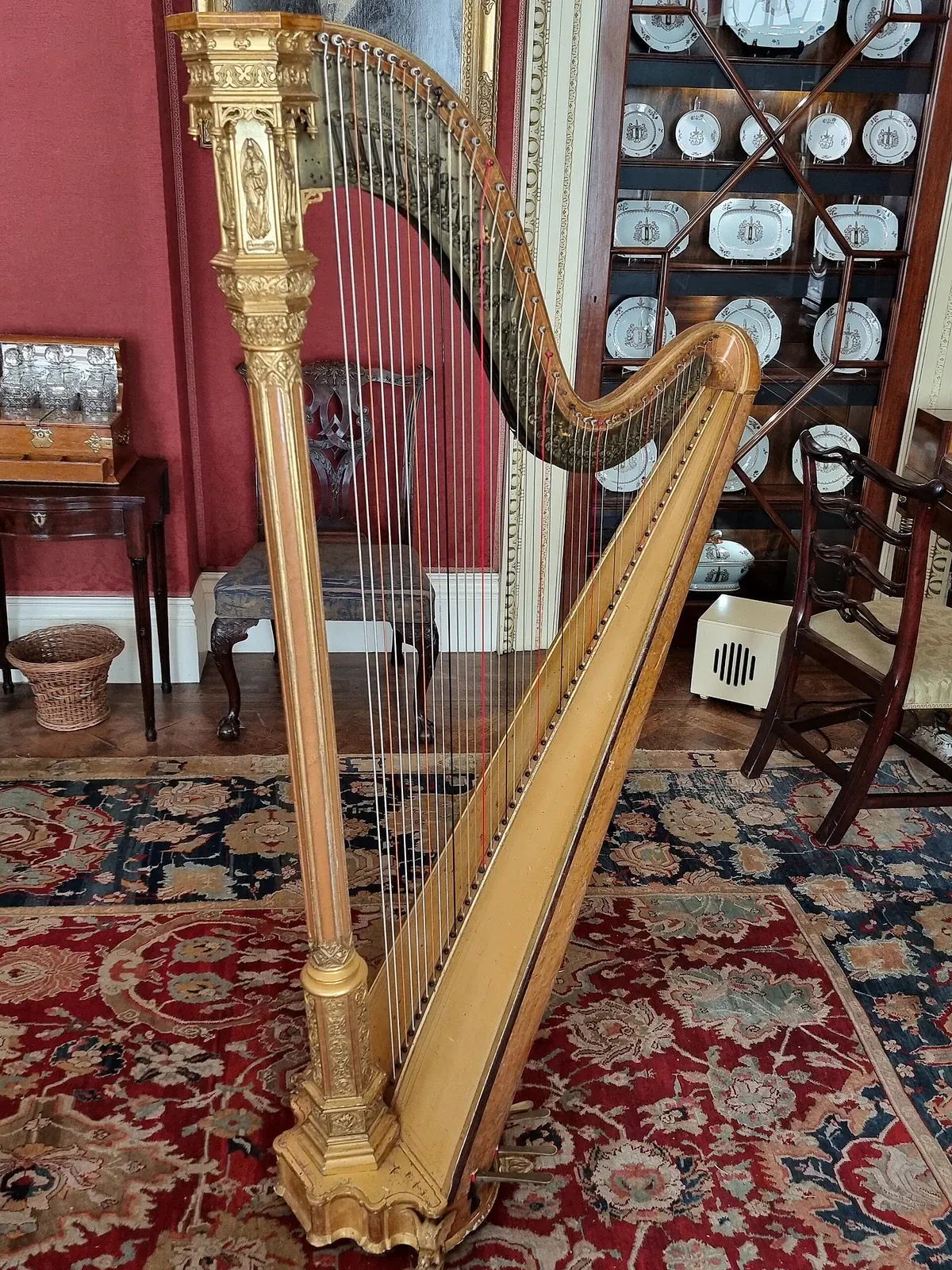
- Electro-acoustic harp
Andreas Vollenweider's instrument, adding shimmering arpeggios.
- Zither
Laraaji's hammered and autoharp-style playing created shimmering drones.
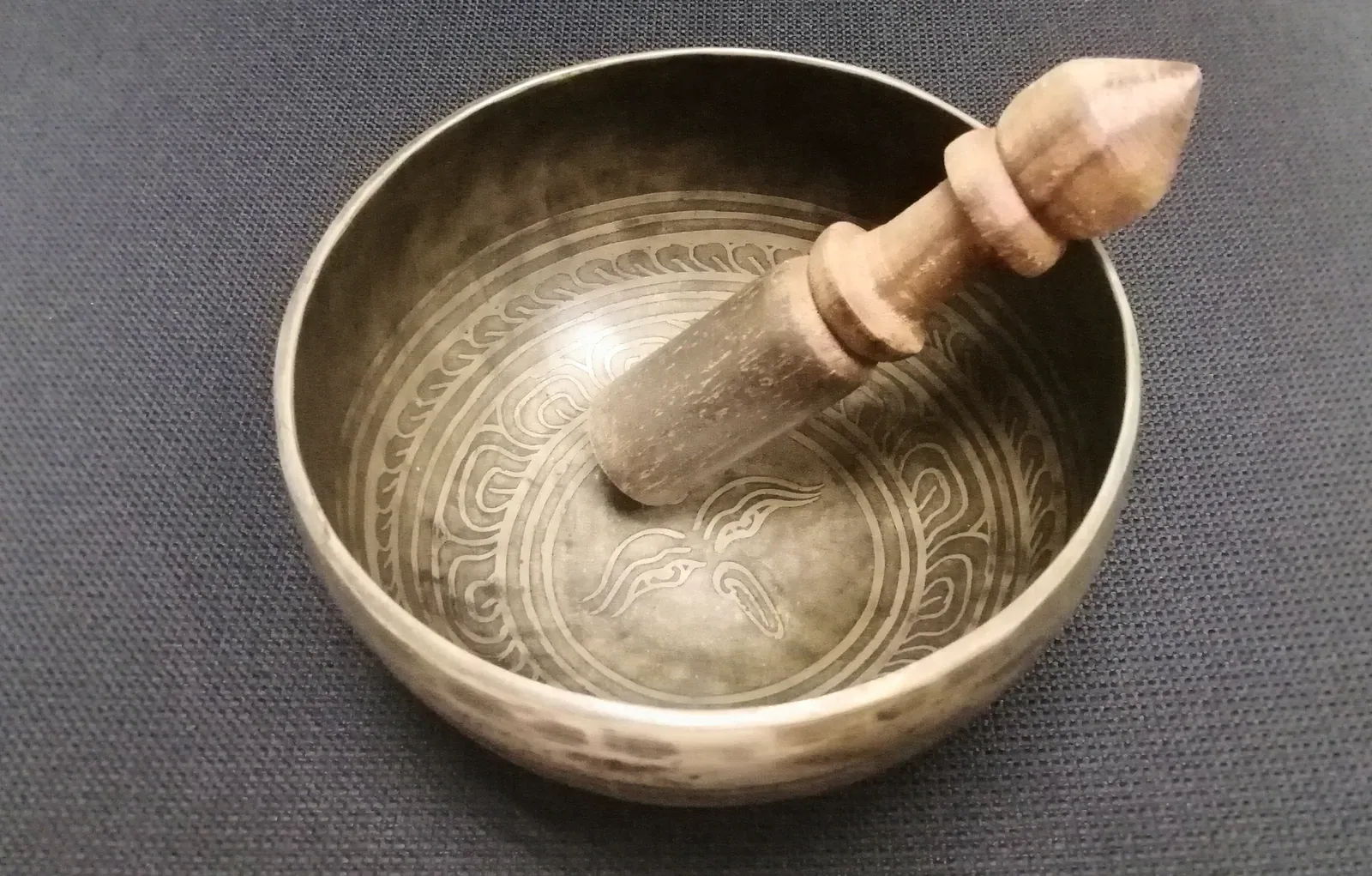
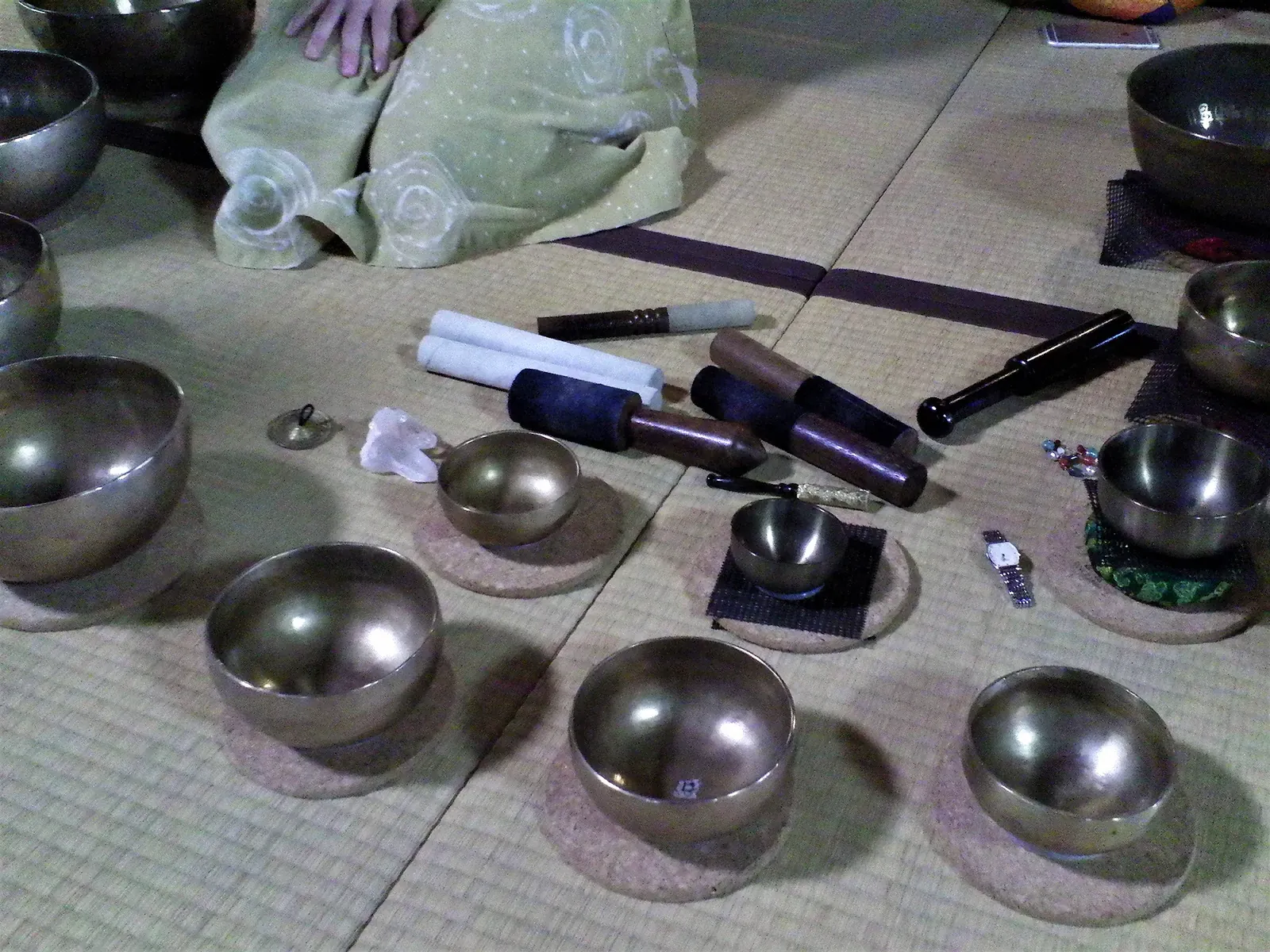
- Singing bowls and gongs
Sustained overtones used in meditation and sound-healing records.
- Yamaha DX7
The 1983 FM synthesizer supplied glassy pads and bell tones in 1980s records.
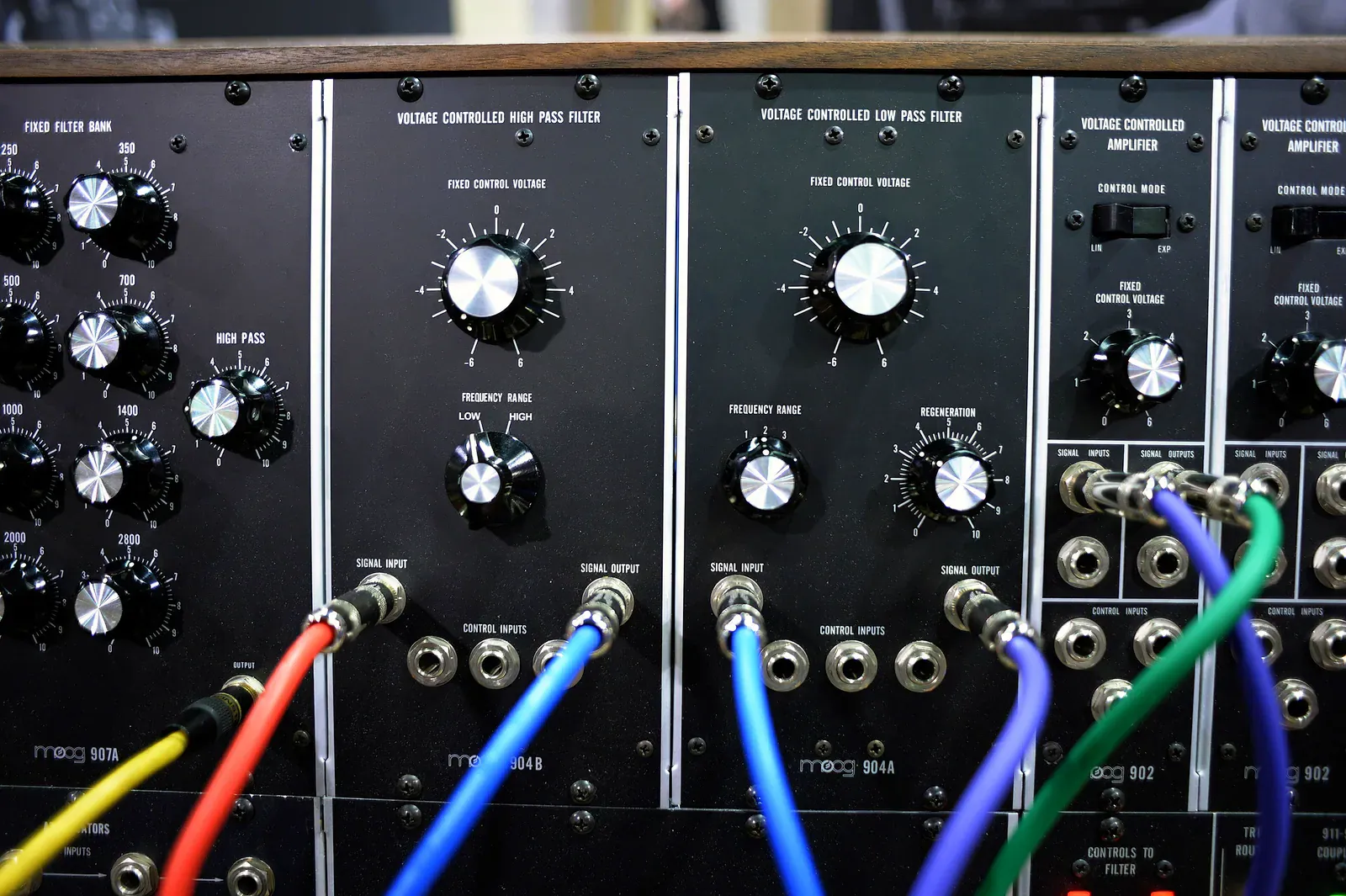
- Analog polyphonic synthesizer
Slow-moving pads that carry the space music and electronic new age sound.
- Field recordings
Waves, rain and birdsong layered under music, as in nature-sounds records.
Technology that shaped it
- 1979Sony Walkman
Personal stereo made private, functional listening for relaxation easy to do anywhere.
- 1982Compact disc
Quiet backgrounds and long playing time suited slow, quiet records.
- 1983MIDI
Let one player run synthesizers and samplers in a home studio.
- 2015Streaming playlists
Mood playlists made sleep, focus and relaxation the main way people find the music.
Essential records
- 1964Music for Zen Meditation
Tony Scott. Often called the first new age recording, made with Japanese shakuhachi and koto players.
- 1968Inside
Paul Horn. Solo flute recorded in the Taj Mahal, a model for meditative recording in big spaces.
- 1975Spectrum Suite
Steven Halpern. A relaxation record on electric piano that helped define the movement.
- 1978Ambient 1: Music for Airports
Brian Eno. The blueprint for slow, ignorable music that rewards close listening.
- 1980Ambient 3: Day of Radiance
Laraaji. Hammered zither meditations that show new age's spiritual and street-music roots.
- 1980Silk Road
Kitaro. Synthesizer themes for a television series that made electronic new age popular in Asia and beyond.
- 1982December
George Winston. The solo piano album that made Windham Hill a household name.
- 1982Music for Nine Post Cards
Hiroshi Yoshimura. Gentle electric piano pieces, central to the kankyo ongaku revival.
- 1983Through the Looking Glass
Midori Takada. Percussion and marimba minimalism that became a collector's favourite of Japanese ambient.
- 1986Down to the Moon
Andreas Vollenweider. Electro-acoustic harp music that won the first Grammy in the new age category.
- 1988Watermark
Enya. Layered vocals and synthesizers that brought Celtic new age to a mass audience.
- 1994Sacred Spirit: Chants and Dances of the Native Americans
Sacred Spirit. A worldwide seller that set the template for ethnic fusion in the 1990s.
Scenes
Where it happened
Where and when the sound lived: one bar per city on a shared timeline.
Europe
North America
Asia
Active scenes
Peak 5, 1980-1990
Windham Hill began here as a hobby label and defined acoustic new age.
Stephen Hill's Hearts of Space radio show began on KPFA here.
Kankyo ongaku, music for shops, galleries and homes, grew alongside the electronics industry.
Kuckuck Schallplatten released early records by Deuter and others.
Eno's Ambient series and Laraaji's Day of Radiance came out of the city's downtown scene.
Narada Productions grew from a mail-order business into a major new age label.
Private Music and Higher Octave were based in the LA area, and KTWV The Wave broadcast new age.
Enya's records with Nicky and Roma Ryan made Celtic new age a global sound.
Glossary
Terms on this page
Brian Eno's term for music that is as ignorable as it is interesting, a close relative of new age.
Jon Hassell's blend of non-Western traditions with electronics, a forerunner of ethnic fusion.
Music made with an intent to relax body or mind, often tuned or structured on claims of its effect.
Japanese for environmental music: soundscapes made to suit a space such as a shop, gallery or home.
The record-store section created in the early 1980s that gave the music its name and market.
Name for the 2000s and 2010s revival by younger artists, often synthesizer based.
A new age style built on one acoustic instrument, usually piano, guitar, harp or flute.
Slow, electronic, drifting new age that evokes the cosmos, popularised by the Hearts of Space radio show.
Families