Space music
Space music is tranquil, mostly beatless instrumental music of contemplative spaciousness, popularised by the Hearts of Space radio programme from 1973.
Germany, Japan, United States, 1971
New Age family
Born
1971
Germany, Japan, United States
Links
13
Genres it drew on or shaped
Tempo
70-130 BPMLineage
Family tree
Grew out of
Derived from
- Berlin School
Derived from
Influenced by
Kosmische MusikEasy Listening
Germany, Japan, United States, 1971
Space music
Timeline
Era by era
From the first sparks to today. Select a dot to read the story behind it.
- Spatial and cosmic precursors
1953 to 1972
- Radio and the first records
1973 to 1983
- Independent labels and the classic albums
1984 to 1999
- Independent catalogues and archives
2000 to today
Eras
Moments
- 1 Spatial and cosmic precursors, 1953 to 1972
- 2 Radio and the first records, 1973 to 1983
- 3 Independent labels and the classic albums, 1984 to 1999
- 4 Independent catalogues and archives, 2000 to today
around 1953
Spatial and cosmic precursors
Stockhausen used the phrase space music for his early electronic tape work, Sun Ra applied it to his own music in 1956, and synthesizer groups in Germany gave the idea a cosmic sound by the early 1970s.
- 1953Stockhausen uses "space music" for tape workKarlheinz Stockhausen described his 1952-53 electronic tape pieces as space music, a different sense from the later contemplative genre.
- 1956Sun Ra calls his music space musicThe jazz bandleader used the term to describe translating the void of space into music people could enjoy.
1973
Radio and the first records
Hearts of Space began on KPFA in 1973, while Iasos and Michael Stearns issued early synthesizer records. The programme went national on public radio on 1 January 1983.
- 1973Music from the Hearts of Space airs on KPFAStephen Hill and Anna Turner start a three-hour late-night programme in Berkeley, California.
- 1975Iasos releases Inter-Dimensional MusicAn early synthesizer album of celestial, meditative music by the Greek-born composer.
- 1977Michael Stearns issues his first tapesDesert Moon Walk and Sustaining Cylinders appear on Stearns's Continuum Montage label.
- 1981Planetary Unfolding by Michael StearnsA Serge synthesizer album made after his years as resident musician at the Continuum workshop in Los Angeles.
- 1982Robert Rich records SunyataRich made his debut at 18 and gave overnight sleep concerts with drones for audiences in sleeping bags.
- 1983Hearts of Space goes nationalA one-hour version enters public radio syndication on 1 January 1983 and reaches 200 stations within three years.
1984
Independent labels and the classic albums
Structures from Silence, Novus Magnificat, Dreamtime Return and Rainforest appeared on small labels and cassette runs, with Hearts of Space playing them to a national audience.
- 1984Steve Roach releases Structures from SilenceStephen Hill played the cassette run on his radio show, which drew wider attention to Roach.
- 1984Hearts of Space Records is foundedHill and Turner start a label in San Francisco for the music their programme played.
- 1986Constance Demby releases Novus MagnificatA large-scale piece for digital orchestra and choral voices, with electronic textures from Michael Stearns.
- 1987Jonn Serrie releases And the Stars Go With YouHis first widely available album is dedicated to the astronauts lost in the Challenger disaster.
- 1988Steve Roach releases Dreamtime ReturnThe double album drew on his trips to Australia and brought the didgeridoo into ambient music.
- 1989Robert Rich releases RainforestHis best-selling CD, with about 50,000 copies sold.
- 1995Steve Roach signs with Projekt RecordsProjekt becomes his main label from then on.
2000
Independent catalogues and archives
Artists such as Stearns and Roach kept releasing through their own and independent labels, and Hearts of Space passed its 1,000th broadcast in 2013 and its 1,300th in 2021.
- 2013Hearts of Space airs its 1,000th programmeThe milestone falls on the 40th anniversary of its KPFA debut.
- 2021Constance Demby diesThe composer of Novus Magnificat died on 20 March 2021.
Listening path
Start listening
A short path from an easy way in to the deep end. Thumbnails come from YouTube; the player loads only when you press play.
- 01
Jonn Serrie, 1987
A melodic, planetarium-style piece and the easiest way in.
- 02
Robert Rich, 1989
Layered environmental textures from the best-selling Rainforest.
- 03
Steve Roach, 1984
A long, beatless drift from Structures from Silence.
- 04
Constance Demby, 1986
Choral voices and electronic orchestra on a grand scale.
- 05
Michael Stearns, 1981
Twinkling Serge synthesizer textures from Planetary Unfolding.
Space music, also written spacemusic or called space ambient, is a form of ambient and new age music that aims for a feeling of contemplative spaciousness.
It is mostly instrumental, often beatless, built from sustained pads, drones and long reverbs, and it took its modern name from a public radio programme that began in Berkeley, California, in 1973. The term covers both electronic and acoustic music, and its centre of gravity is the mood rather than any one instrument.
Origins
The phrase had several meanings before it described a genre. Karlheinz Stockhausen used “space music” in the early 1950s for electronic tape work in which sound was projected through space, and the jazz bandleader Sun Ra used it from 1956 for music that translated the void of space into something listeners could enjoy. Sun Ra’s film Space Is the Place followed in 1974. These uses were about spatial sound or cosmic imagery, not the calm genre that later took the name.
The sound itself grew from electronic music of the early 1970s. Vangelis, Jean-Michel Jarre, Klaus Schulze and Tangerine Dream were described as space musicians because their synthesizer pieces were long, loosely structured and evoked cosmic distance, a lineage tied to the German Berlin School. Tangerine Dream later moved toward rock-influenced work that is not usually counted as space music. Ambient pioneers such as Brian Eno were an equally strong influence on the Americans who came next, and Steve Roach has named Schulze’s Timewind, Tangerine Dream and Eno among the records that shaped him.
California, 1973-1983
The genre’s institutional centre was the San Francisco Bay Area. In 1973 Stephen Hill and Anna Turner started Music from the Hearts of Space as a three-hour late-night show on the station KPFA in Berkeley. Hill broadcast as “Timotheo” and Turner, who co-hosted from 1974 to 1986, as “Annamystic”. They used “spacemusic” for contemplative music broadly defined, drawn from ambient, electronic, classical, world and Celtic sources, so the label described a listening experience as much as a style.
A one-hour version entered public radio syndication on 1 January 1983 and signed its 200th station within three years. It gave isolated, independently made records a national audience, and it is the longest-running radio programme of its kind.
Records of the period came from small studios. Iasos, a Greek-born synthesizer composer, issued Inter-Dimensional Music in 1975. In Los Angeles, Michael Stearns served from 1975 to 1981 as a resident musician at the Continuum movement and meditation workshop, where Gary David played a Minimoog and looped tapes in classes. Stearns released his first tapes in 1977 on his own Continuum Montage label and reached his first classic, Planetary Unfolding, in 1981. Its twinkling Serge synthesizer sound suited the cosmic name. In 1982 he also built The Beam, a 12-foot acoustic instrument strung with 24 piano strings.
The student Robert Rich pursued a different idea. At Stanford he gave overnight “sleep concerts” of drones, nine hours long, from 10 p.m. to 7 a.m., for listeners in sleeping bags, ending with piano solos and tea. He recorded his first album, Sunyata, at 18 in 1982, and released four cassettes in the early 1980s.
Independent labels, 1984-1999
The mid-1980s produced the genre’s best-known albums. Steve Roach, born in 1955 in La Mesa, California, and self-taught on synthesizer from the age of 20, released Structures from Silence in 1984 on cassette. Hill played it on the air, which spread his name to a wider audience, and Hearts of Space Records was founded the same year to issue music of this kind. Roach followed with the Quiet Music series in 1986 and the double album Dreamtime Return in 1988, which drew on his trips to Australia and made the didgeridoo familiar in ambient music. He signed with Projekt Records in 1995.
Constance Demby, born in 1939, released Novus Magnificat in 1986, a large piece for digital orchestra and choral voices with electronic textures from Stearns. She played her own instruments, the sonic steel space bass and the whale sail. Jonn Serrie, who had composed for planetariums since the early 1980s, issued his first widely available album in 1987 in memory of the astronauts lost in the Challenger disaster, and followed it with Flightpath, which commemorates test pilots at Edwards Air Force Base in the 1950s. Rich’s Rainforest of 1989 became his best-selling CD, with about 50,000 copies sold. Spotted Peccary, a label in Portland, Oregon, dates from 1986 and still releases music in the same vein.
Characteristics
Space music has no fixed rhythm. Most pieces are beatless or move in free time, and where a pulse appears it is slow, sparse or sequenced. Structure comes from slow layering rather than verses: a pad or drone fades in, textures accumulate, and the piece dissolves, often over many minutes. Reverb and delay supply the sense of vastness, and the recordings often weave in nature sounds or voices. Harmony is static or modal, and some composers use just intonation, as Rich did on Numena in 1987.
The genre’s boundaries are disputed. Major music databases and retailers file it under new age, and Hill has also called it a sub-category of new age, while one newspaper critic called it “anything but” new age. Rich links it to 1970s electronic influences combined with world music and modern composition. The usual compromise is the one this page follows: space music sits in the overlap of ambient and new age.
Instruments and production
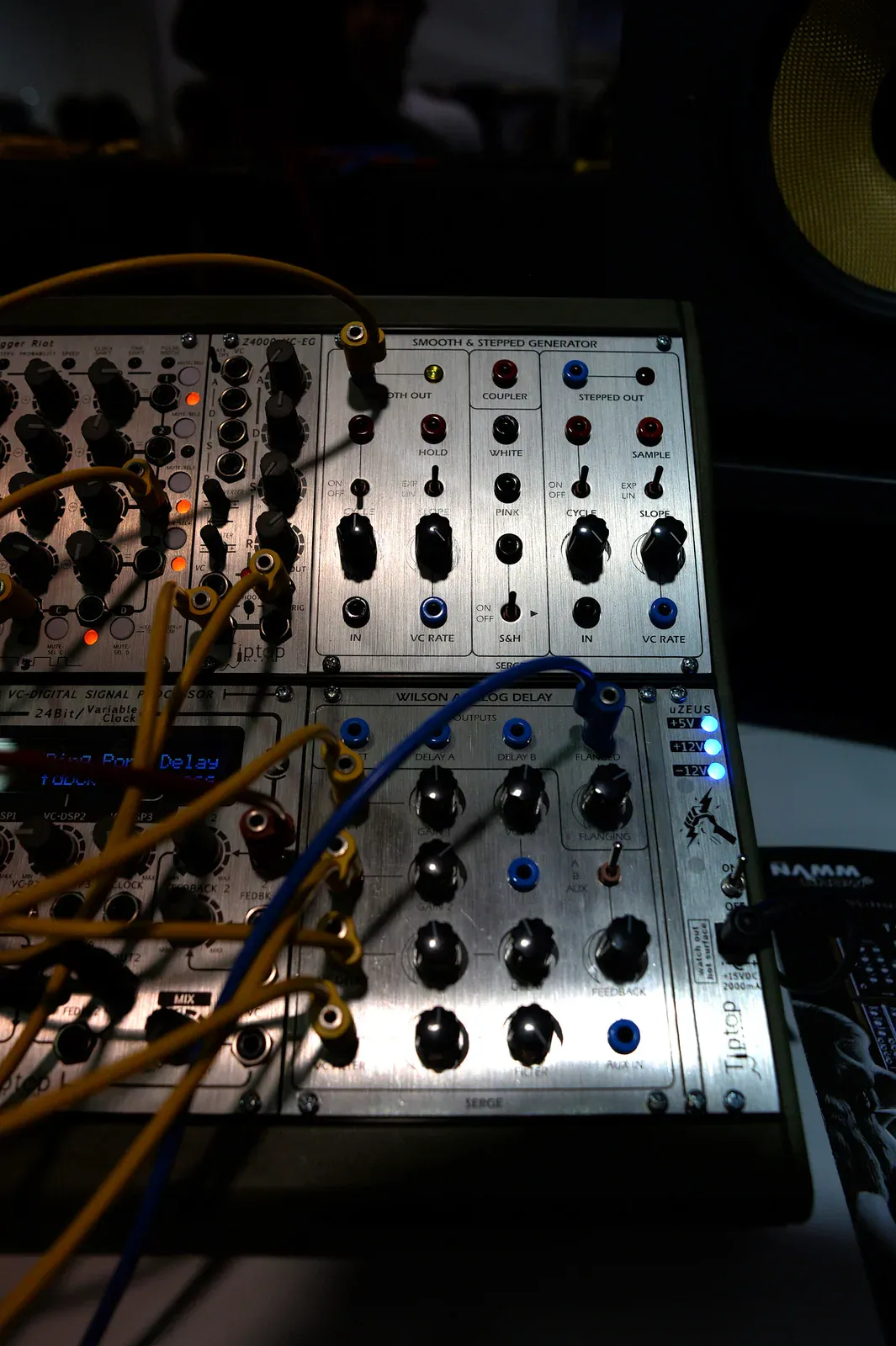
Electronic gear defines the early classics, from the Minimoog and ARP 2600 to modular Serge systems, but the genre is not limited to it. Roach added didgeridoo, Demby built acoustic and electroacoustic instruments, and Stearns recorded with strings stretched across a purpose-built frame. Production favours long takes, deep space and slow change, and many early albums reached listeners first as cassettes, the inexpensive route for independent musicians.
Culture
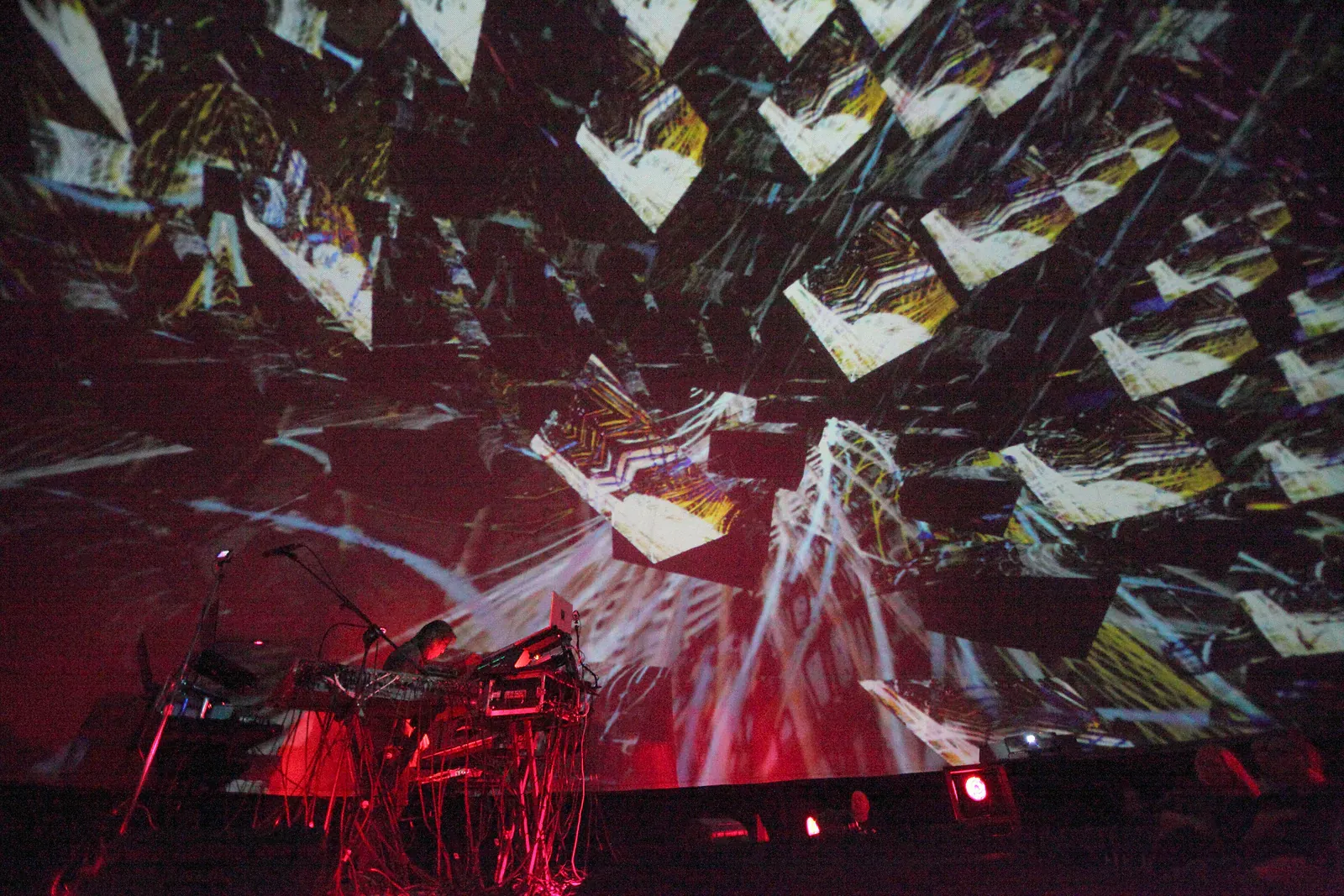
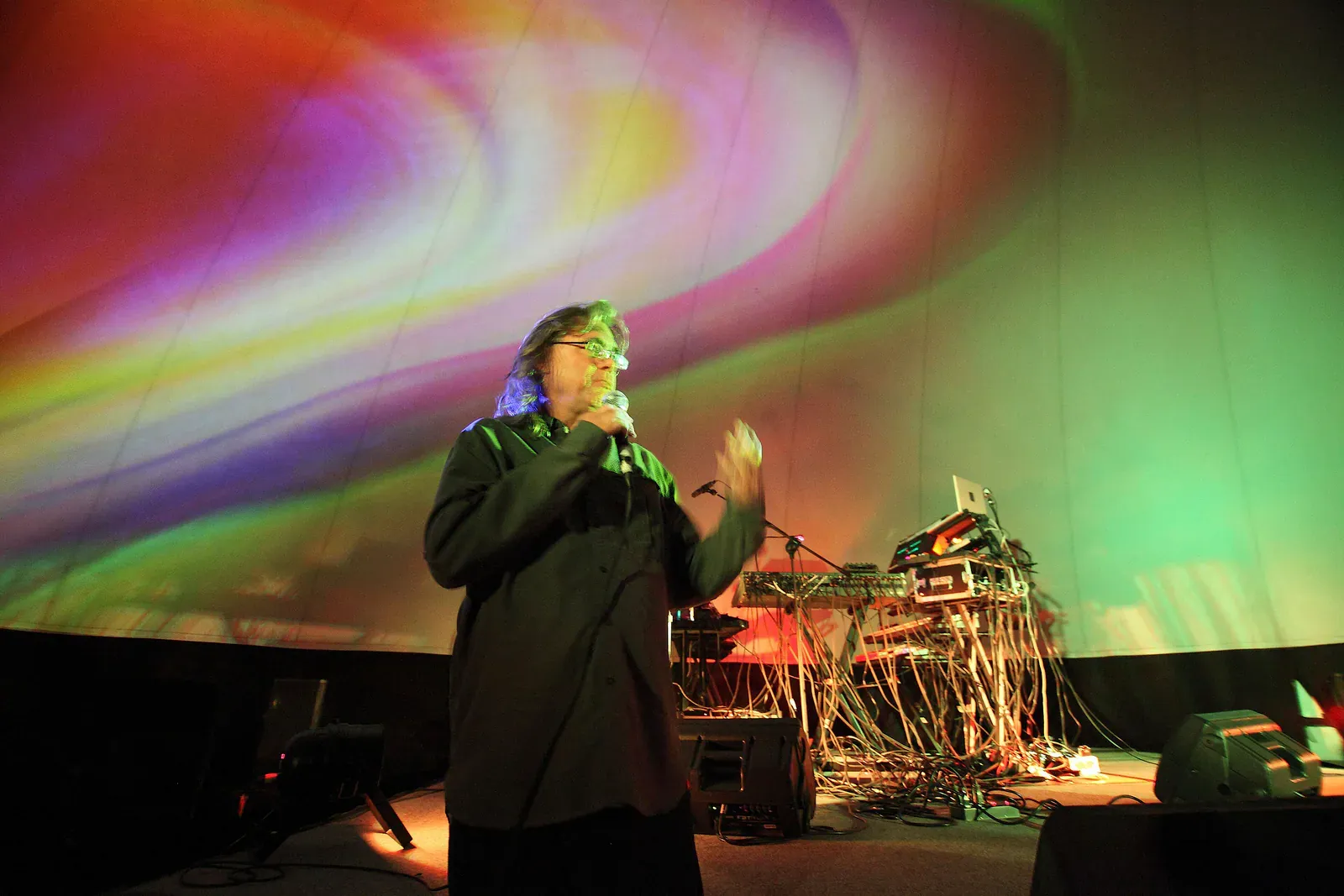
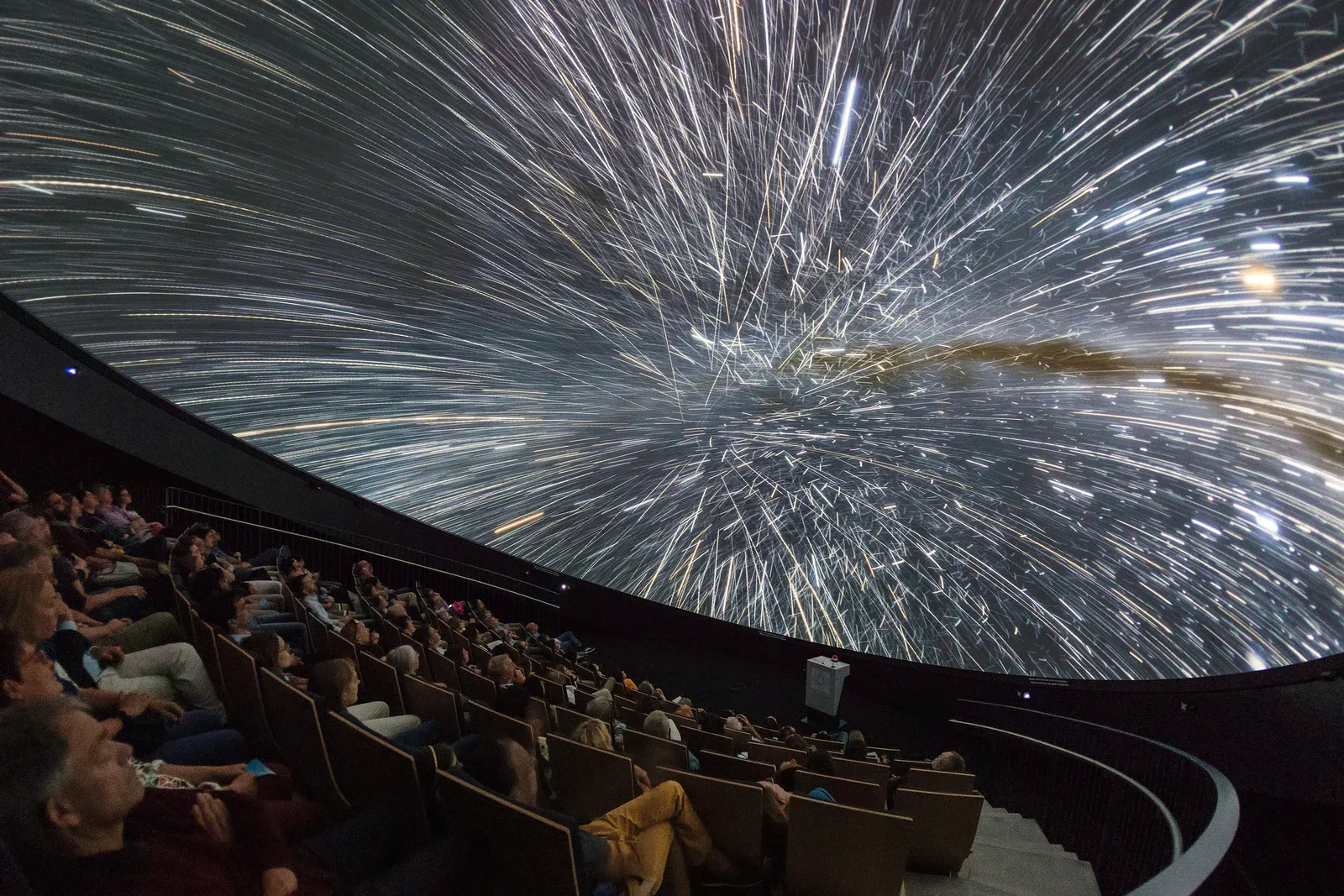
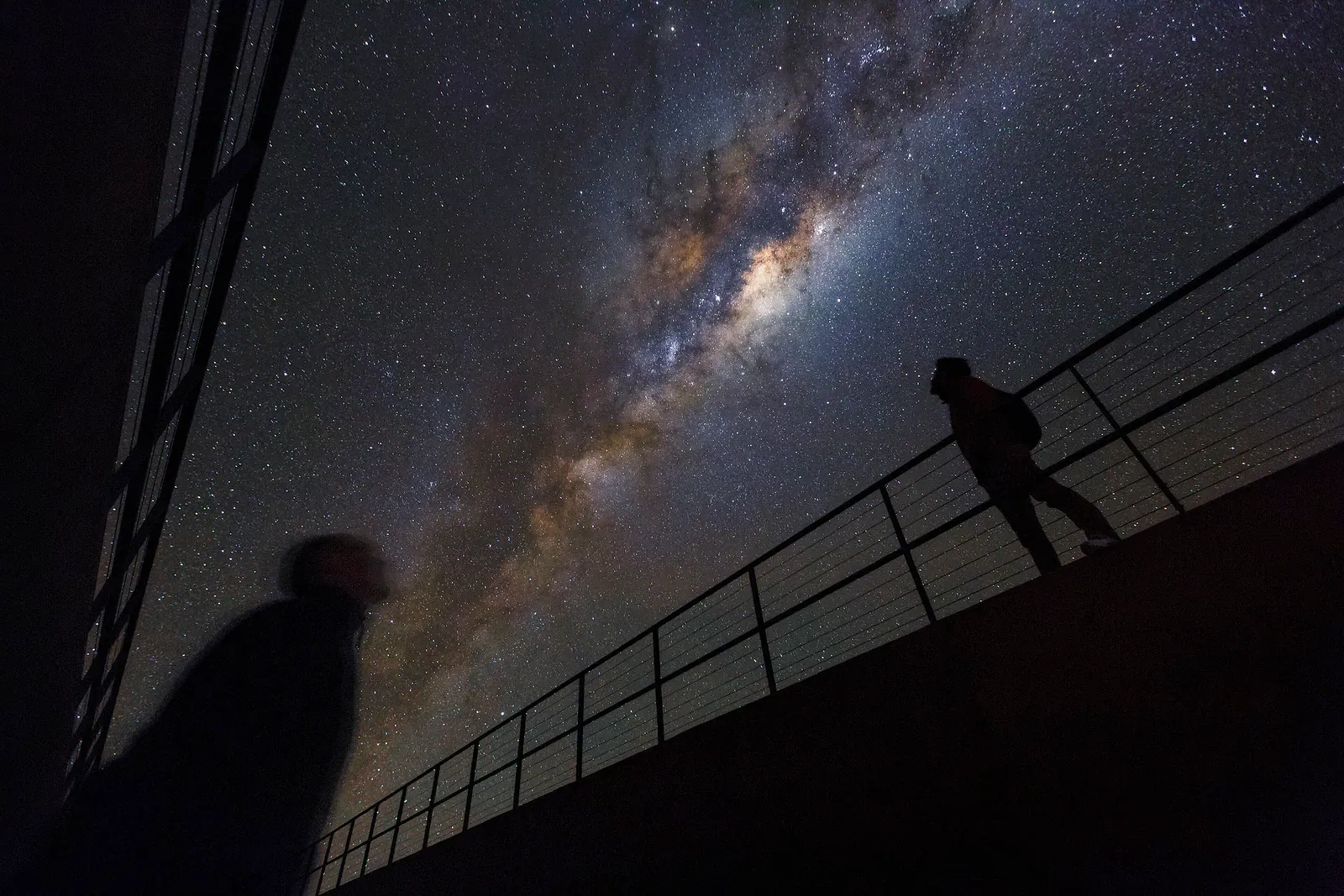
Listeners use the music for relaxation, contemplation, meditation and bodywork therapies, sometimes on headphones and sometimes as background. Planetariums and dome theatres pair it with projected stars, and Serrie’s early work was written for them. Film and television soundtracks use it too, and artists have scored large-format films and astronomy projects. Roach’s 2013 dome concert used projected visuals by Audri Phillips, a modern version of the same idea.
The audience is small but dedicated, and the music is released mostly by independent labels. Hearts of Space has continued: it reached its 1,000th programme on 4 January 2013, the 40th anniversary of its KPFA debut, and its 1,300th in November 2021.
Legacy
Space music helped establish the long, beatless album as a listening form outside the avant-garde. Its radio format showed that a niche genre could reach a national audience without chart hits, and its artists moved into planetarium, film and installation work. Demby died in March 2021 and Iasos in January 2024, but Roach, Rich, Stearns and Serrie have kept recording well into the 21st century, with Roach and Stearns releasing a collaboration, Beyond Space and Time, in 2021.
Misconceptions
Space music is often confused with space rock, which is guitar-driven psychedelic rock, and with spacesynth, a separate offshoot of Italo-disco. Space music proper is slow and contemplative. A second assumption is that the music is always electronic. Hill’s definition includes acoustic and electroacoustic work, and Novus Magnificat is built around voices and an orchestra sound. A third is that it is about outer space. Cosmic titles are common, but the defining idea is an inner sense of spaciousness, and some of the best-known albums, such as Rich’s Rainforest, take their imagery from the earth.
Frequently asked questions
What is space music?
Space music is slow, mostly instrumental music, often beatless, designed to evoke contemplative spaciousness through drones, pads and reverb. The name comes from the Hearts of Space radio programme, which began in 1973.
Is space music the same as new age?
They overlap but are not identical. Many references class space music as a subgenre of new age, while others treat it as a form of ambient music. This site places it under new age with ambient as a secondary parent.
Who are the main space music artists?
Steve Roach, Constance Demby, Jonn Serrie, Robert Rich and Michael Stearns are the central American names, with Iasos as an early figure. German synthesizer musicians such as Klaus Schulze and Tangerine Dream were an influence.
What is Hearts of Space?
Hearts of Space is a weekly syndicated public radio programme created in 1973 by Stephen Hill and Anna Turner. It plays contemplative music from ambient, new age, electronic, classical and world traditions, and it is the longest-running programme of its kind.
Where does space music connect to other genres?
Its closest relatives are electronic new age and meditation music, and its electronic roots run through progressive electronic music.
Sound
Sound sheet
Anatomy of a track
| # | Part |
|---|---|
| 1 | Slow fade-in of pads or a drone |
| 2 | Layering of slow-moving textures |
| 3 | Optional sparse pulse or percussion |
| 4 | Gradual dissolve into silence |
Signature sounds
- Sustained synthesizer pads
- Deep reverb and delay
- Nature sounds or voices woven in
- Long, slowly evolving pieces
Synths and software
- Minimoog
- ARP 2600
- Serge modular
Techniques
- Long drones
- Looped-tape layering
- Reverb and delay
- Nature and voice textures
Tuning
Just intonation on some recordings, such as Robert Rich's Numena (1987)
Vocals
Mostly instrumental; wordless or sampled voices appear as texture, and Novus Magnificat adds choral voices.
Scenes
Where it happened
Where and when the sound lived: one bar per city on a shared timeline.
Europe
North America
Active scenes
Peak 4, 1986-2025
Hearts of Space began on KPFA here, and the Bay Area became the genre's centre for radio and listeners.
Stearns worked at the Continuum workshop, and Roach built his Timeroom studio in nearby Culver City.
Synthesizer music of the Berlin School set the cosmic sound that American space musicians built on.
Home of the Spotted Peccary label, active since the mid-1980s.
Venues and places
Berkeley, 1973 to today. Listener-supported station where Music from the Hearts of Space first aired.
Los Angeles, 1975 to today. Movement and meditation classes where Stearns and Gary David performed live on synthesizers.
Culture
Culture markers
- Sleep concerts
Robert Rich played overnight sets of drones while listeners slept in sleeping bags.
Ritual - Meditation and bodywork
Listeners use the music for relaxation, contemplation, meditation and bodywork therapies.
Ritual - Dome shows
Planetariums and immersion domes pair the music with projected stars and visuals.
Artwork - Safe journeys
Hearts of Space ends each episode with "Safe journeys, space fans".
Slang
Media
Key media
- 1973Music from the Hearts of Space
by Stephen Hill and Anna Turner. The long-running public radio programme that gave the genre its name and its audience.
Radio - 1974Space Is the Place
by Sun Ra. A feature film built around Sun Ra's cosmic jazz philosophy.
Film - 1976Star's End
by John Diliberto. A WXPN programme that has aired ambient and space music since 1976.
Radio - 1981Moondance (The Beyond Within)
by Gerardo Martinez-Casas. A KUSF programme in San Francisco that presented space music as cosmic and contemplative sound.
Radio
Glossary
Terms on this page
German synthesizer music of the 1970s built on sequences and long forms, a root of space music.
Attentive listening that builds awareness of the spatial qualities of sound.
A sustained tone or chord held for minutes while other layers move above it.
An overnight performance of slow music meant to be heard while dozing.
Stephen Hill's term for contemplative music that evokes spaciousness, whether acoustic or electronic.
New Age family