Meditation music
Meditation music is slow, drone-based music made to accompany stillness, first recorded in the 1960s by jazz, folk and studio musicians in the US and Germany.
United States, India, Germany, 1965
New Age family
Born
1965
United States, India, Germany
Subgenres
6
Documented branches
Links
12
Genres it drew on or shaped
Tempo
50-90 BPMLineage
Family tree
Grew out of
Influenced by
United States, India, Germany, 1965
Meditation music
Led to (6)
Timeline
Era by era
From the first sparks to today. Select a dot to read the story behind it.
- Attention as subject
1941 to 1963
- The first meditation records
1964 to 1974
- Space music and the studio
1975 to 1989
- Functional and mantra albums
1990 to 2009
- Streaming and long loops
2010 to today
Eras
Moments
- 1 Attention as subject, 1941 to 1963
- 2 The first meditation records, 1964 to 1974
- 3 Space music and the studio, 1975 to 1989
- 4 Functional and mantra albums, 1990 to 2009
- 5 Streaming and long loops, 2010 to today
1941
Attention as subject
Concert composers such as Messiaen and Cage treat stillness, silence and slow time as the subject of the work, before any record is made to accompany sitting practice.
- 1941Messiaen's Quartet for the End of TimeCited as an explicitly Christian meditative work in the history of meditation music.
- 1951Cage's Imaginary Landscape No. 4Zen-influenced piece for twelve radios, described as a meditation that measures passing time.
1964
The first meditation records
Tony Scott pairs jazz clarinet with koto and shakuhachi, Paul Horn plays flute in the Taj Mahal, and Deuter begins a long line of German meditation albums.
- 1964Tony Scott's Music for Zen MeditationVerve release by a jazz clarinettist with koto and shakuhachi, later called the first new-age record.
- 1968Paul Horn records Inside at the Taj MahalRecorded on 25 April 1968 in Agra, India; issued by Epic in 1969 and later reissued as Inside the Taj Mahal.
- 1968Horn studies Transcendental MeditationHorn attended Maharishi Mahesh Yogi's training in India in 1968, the same season as The Beatles.
- 1968Stockhausen's StimmungVocal work built on one sustained harmony, listed among the meditative scores of the late 1960s.
- 1971Deuter's debut D on KuckuckMunich label Kuckuck issues the first of Deuter's early albums, mixing acoustic, electronic and natural sounds.
- 1973Hearts of Space starts on KPFAStephen Hill launches a weekly three-hour show in Berkeley that becomes the longest-running of its kind.
around 1975
Space music and the studio
Halpern, Eno, Laraaji, Roach and Demby make slow, beatless records, and the radio show Hearts of Space gives the style a name, a broadcast home and a label.
- 1976Steven Halpern's Spectrum SuitePianist's relaxation album, often cited as a seed of the new age movement.
- 1978Eno's Ambient 1: Music for AirportsSlow looped piano and voices made to sit in a space rather than demand attention.
- 1979Eno hears Laraaji in Washington Square ParkThe street zither player is invited to record for Eno's Ambient series.
- 1980Laraaji's Ambient 3: Day of RadianceProduced by Eno on E.G.; hammered dulcimer and zither with Eno's treatments, ending in two beatless meditations.
- 1983Hearts of Space goes nationalNational syndication on public radio begins on 1 January 1983.
- 1984Steve Roach's Structures from SilenceThree long synthesizer pieces on Fortuna; Hill's radio airplay of cassettes widened Roach's audience.
- 1984Hearts of Space Records launchesStephen Hill and Anna Turner turn the radio show into a label for contemplative music.
- 1986Constance Demby's Novus MagnificatSound-sculpture album on Hearts of Space Records, one of its early catalogue entries.
- 1989Oliveros, Dempster and Panaiotis: Deep ListeningAlbum sharing its name with Oliveros's practice of attentive listening.
around 1990
Functional and mantra albums
Liquid Mind sells albums openly as tools for calm, and Sanskrit mantra recordings such as Deva Premal's Gayatri Mantra reach a wide audience.
- 1994Liquid Mind's Ambience MinimusChuck Wild's first Liquid Mind album, made as functional music for calm.
- 1998Deva Premal's The EssenceContains her Gayatri Mantra, a recording that spread Sanskrit mantra singing to a wide audience.
- 2001Horn's Inside passes one million salesSales are reported at over a million copies worldwide by 2001.
around 2010
Streaming and long loops
Weightless becomes a much-quoted example of a relaxation track, and playlists and ten-hour uploads turn meditation music into background listening for daily use.
- 2011Marconi Union releases WeightlessEight-minute ambient piece made with a sound therapist; Time magazine called it a most relaxing song.
- 2017Ten-hour Weightless editionA 10 hour version appears in November 2017, showing the move to long uploads for background use.
- 2020Deva Premal and Miten's Deva nominated for a GrammyThe 2018 album is nominated for Best New Age Album at the 62nd Grammy Awards.
Listening path
Anthems
The records that built the sound, grouped by the part they played. Thumbnails come from YouTube; the player loads only when you press play.
- 01
Tony Scott, 1964 · Verve Records
Second track of Music for Zen Meditation, jazz clarinet with koto and shakuhachi, an early record made for meditation.
Origin - 02
Paul Horn, 1969
Opening of Inside, flute played in the Taj Mahal and a template for echo-filled meditation records.
Origin - 03
Marconi Union, 2011
Eight-minute ambient piece widely described in the press as a most relaxing song, a claim from a commissioned study.
Start hereBreakthrough - 04
Brian Eno, 1978
Piano loops of different lengths from Music for Airports, the clearest model of ambient music for calm.
Start hereAnthem - 05
Laraaji, 1980 · E.G. Records
Rhythmic hammered dulcimer from Day of Radiance, the album Eno produced after hearing Laraaji in the park.
Anthem - 06
Steve Roach, 1984
Synthesizer drone from Structures from Silence, a landmark of beatless space music.
Anthem - 07
Constance Demby, 1986 · Hearts of Space Records
Opening of the album that became Demby's signature and a Hearts of Space Records staple.
Anthem - 08
Liquid Mind, 1994
From Ambience Minimus, slow synth pads sold openly as music for tranquility.
Start hereAnthem - 09
Deva Premal, 1998
Sanskrit chant from The Essence that carried mantra music to a wide audience.
Crossover
Facts
| Family | New Age |
| Origin | United States, India, Germany |
| Emerged | 1960s to 1970s |
| Status | Active |
| Tempo | 50 to 90 BPM |
| Meter | Free or slow steady pulse |
| Subgenres | 6 |
Meditation music is slow, steady music made to accompany sitting practice: long drones, little or no beat and few sudden changes.
It took recorded shape in the mid-1960s, when a New York jazz clarinettist, a Los Angeles flautist and a German multi-instrumentalist made albums for listeners who meant to sit and breathe. The same quiet toolkit now underlies yoga classes, sleep playlists and a large share of new age listening.
Origins
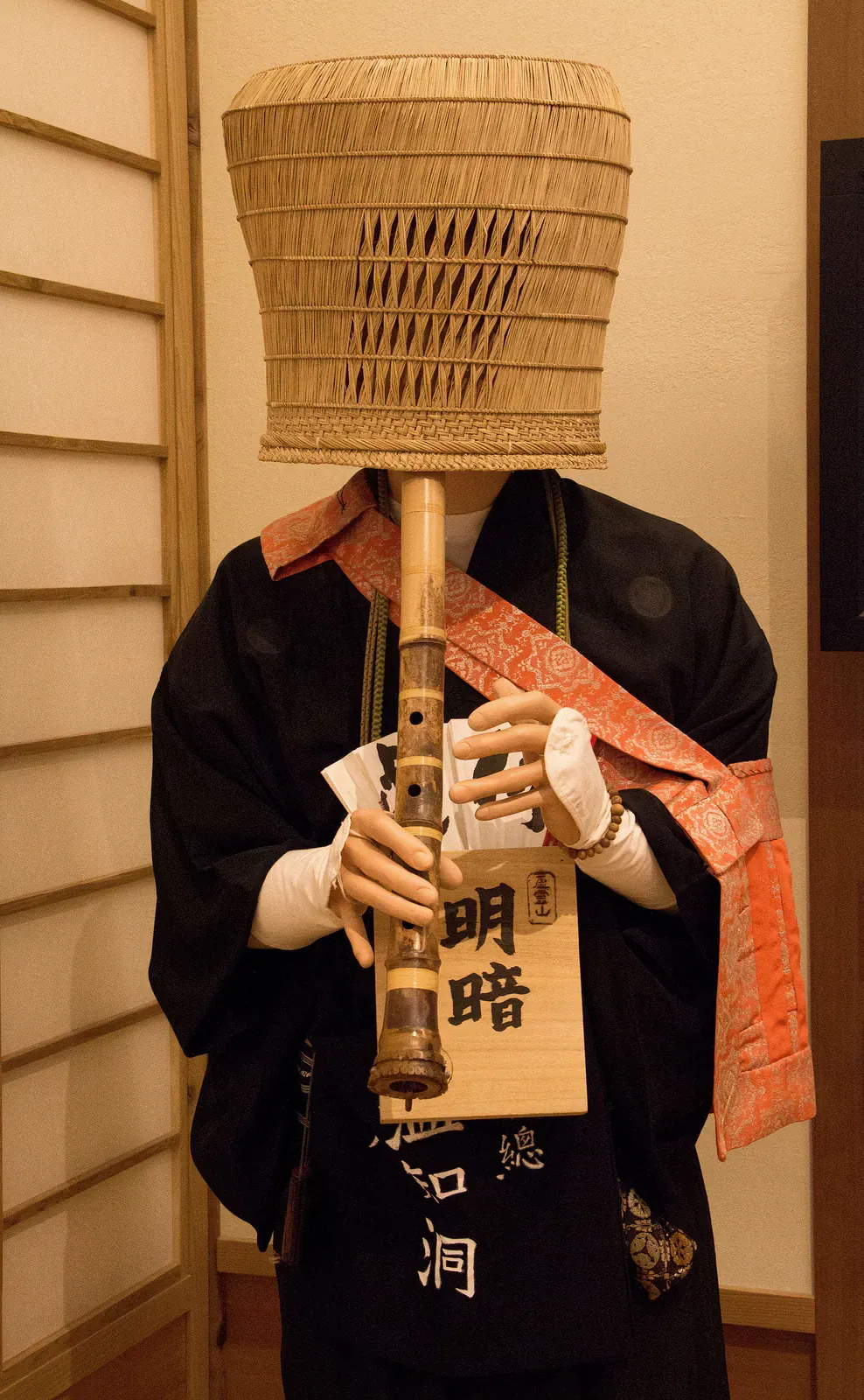
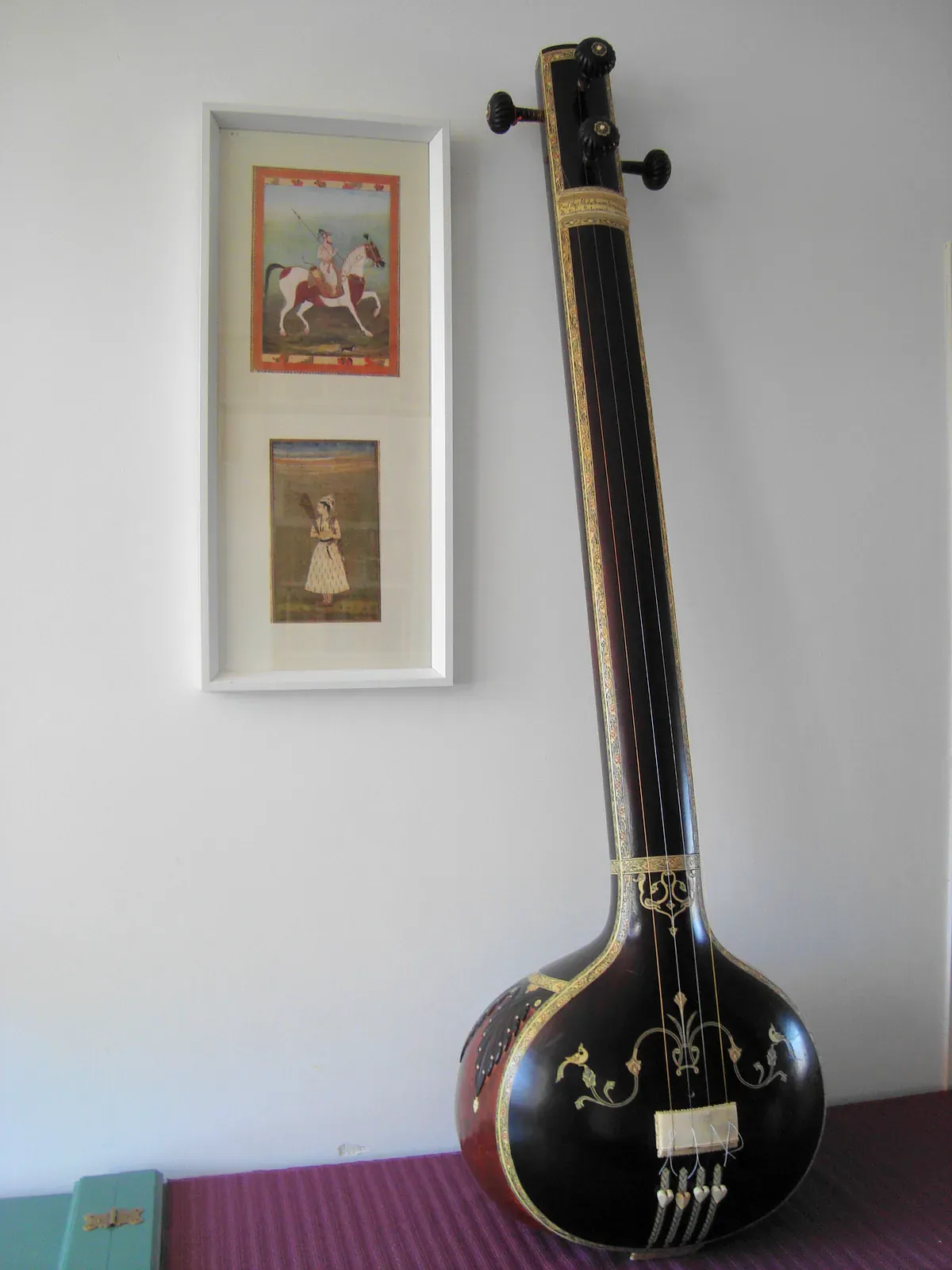
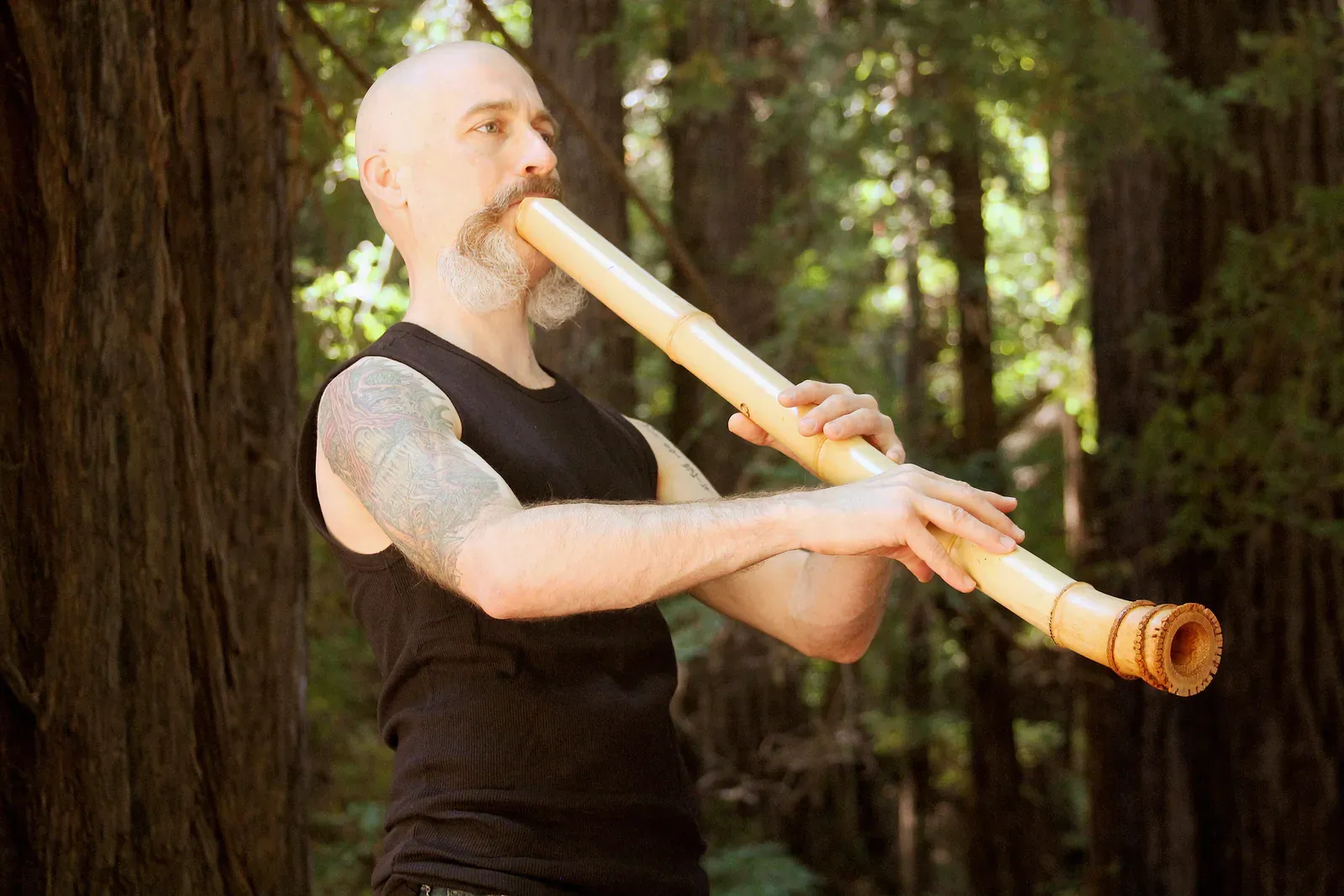
Sitting practice is far older than any record, and so is the music beside it: chant, bells, bowls and bamboo flutes. In Japan the shakuhachi was played by wandering komuso monks who wore deep woven hats and treated blowing the flute as a form of practice. In India the tanpura holds a four-string drone under a singer for hours, which is the clearest ancestor of the sustained base in later studio records.
Concert composers got there from another side. Olivier Messiaen’s Quartet for the End of Time (1941) is a devotional work built on stretched time, and John Cage’s Zen-influenced pieces of the early 1950s treated silence and chance as subjects. Neither wrote for a meditation cushion, but they showed that a score could be about attention itself.
The first record to be sold for the purpose was Music for Zen Meditation, cut in February 1964 for Verve by the jazz clarinettist Tony Scott with Shinichi Yuize on koto and Hozan Yamamoto on shakuhachi. Largely improvised, it set a jazz player’s breath against two Japanese instruments, and it is often called the first new-age record. Its home, Verve, was a jazz label, which shows how little a “meditation” shelf existed.
The first records, 1964-1974
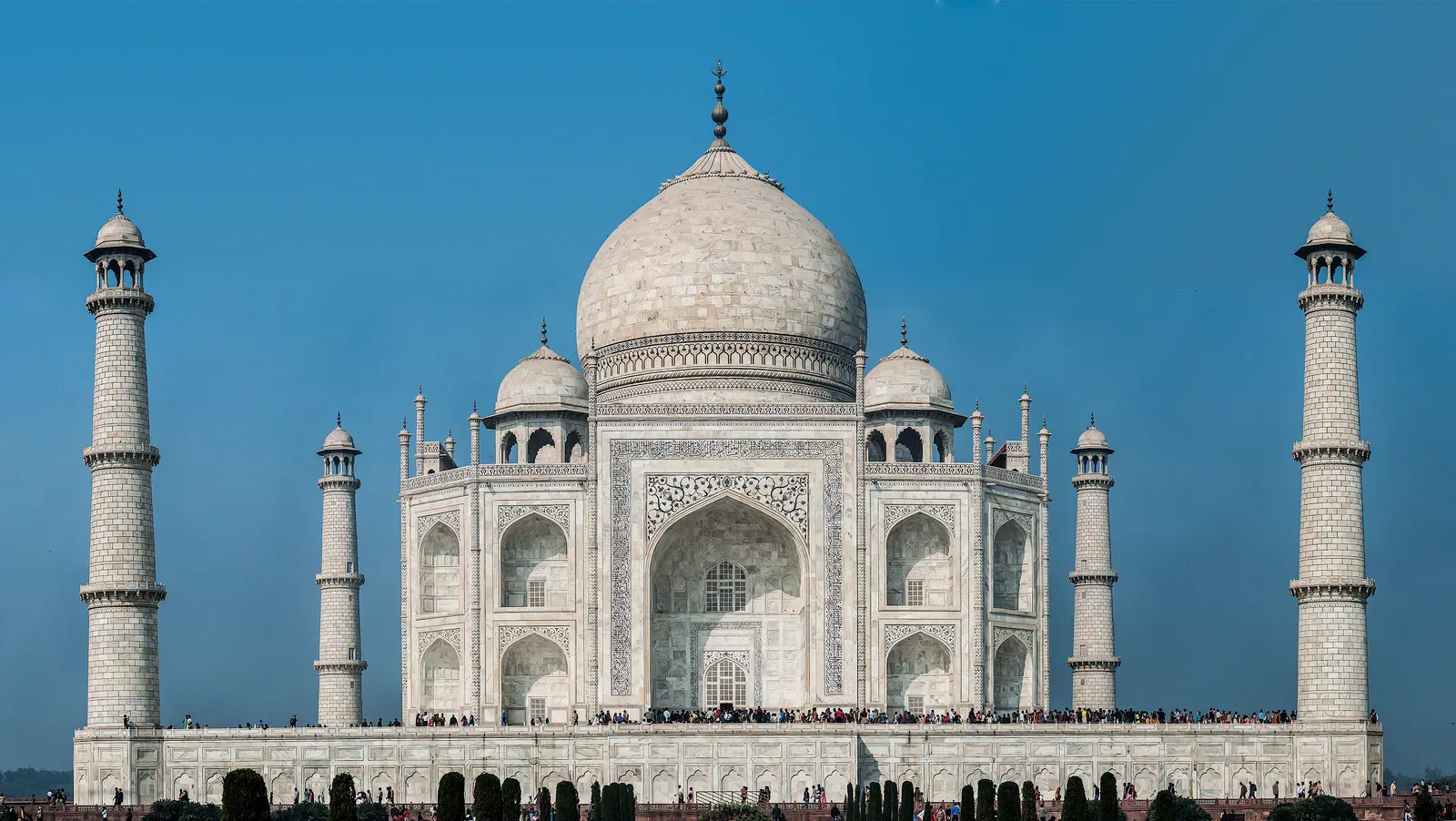
Paul Horn took the idea further. A Los Angeles jazz flautist, he went to India in 1968, spent time at Maharishi Mahesh Yogi’s training camp in the same season as The Beatles, and on 25 April 1968 recorded solo flute inside the Taj Mahal in Agra. The dome’s long echo became his accompanist. Issued in 1969 as Inside, it was reported to have sold over a million copies by 2001, and it became a template for echo-filled, solo-instrument meditation albums.
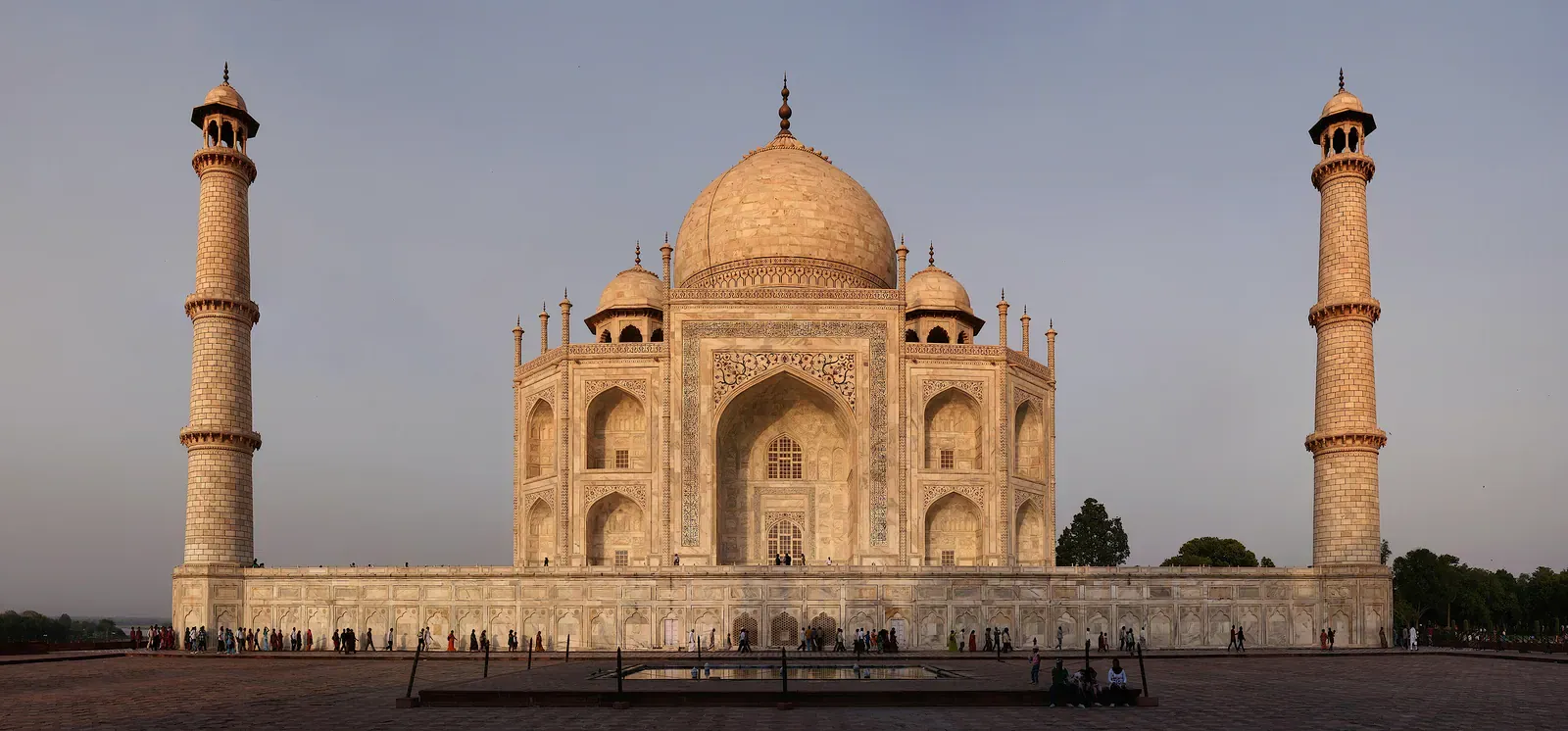
At the same time Germany was producing its own line. Deuter’s debut D (1971) appeared on the Munich label Kuckuck, mixing acoustic and electronic sounds, and his later albums were made with meditation in mind, partly from his time around the Osho community in Pune.
Space music and the studio, 1975-1989
In 1973 Stephen Hill began a weekly show called Hearts of Space on KPFA in Berkeley. It played slow, spacious music from any genre and called it “space music”. It went national on public radio on 1 January 1983 and became a record label the next year. Hearts of Space released Constance Demby’s Novus Magnificat in 1986; she played a huge sheet-metal instrument called the Space Bass with a bow.
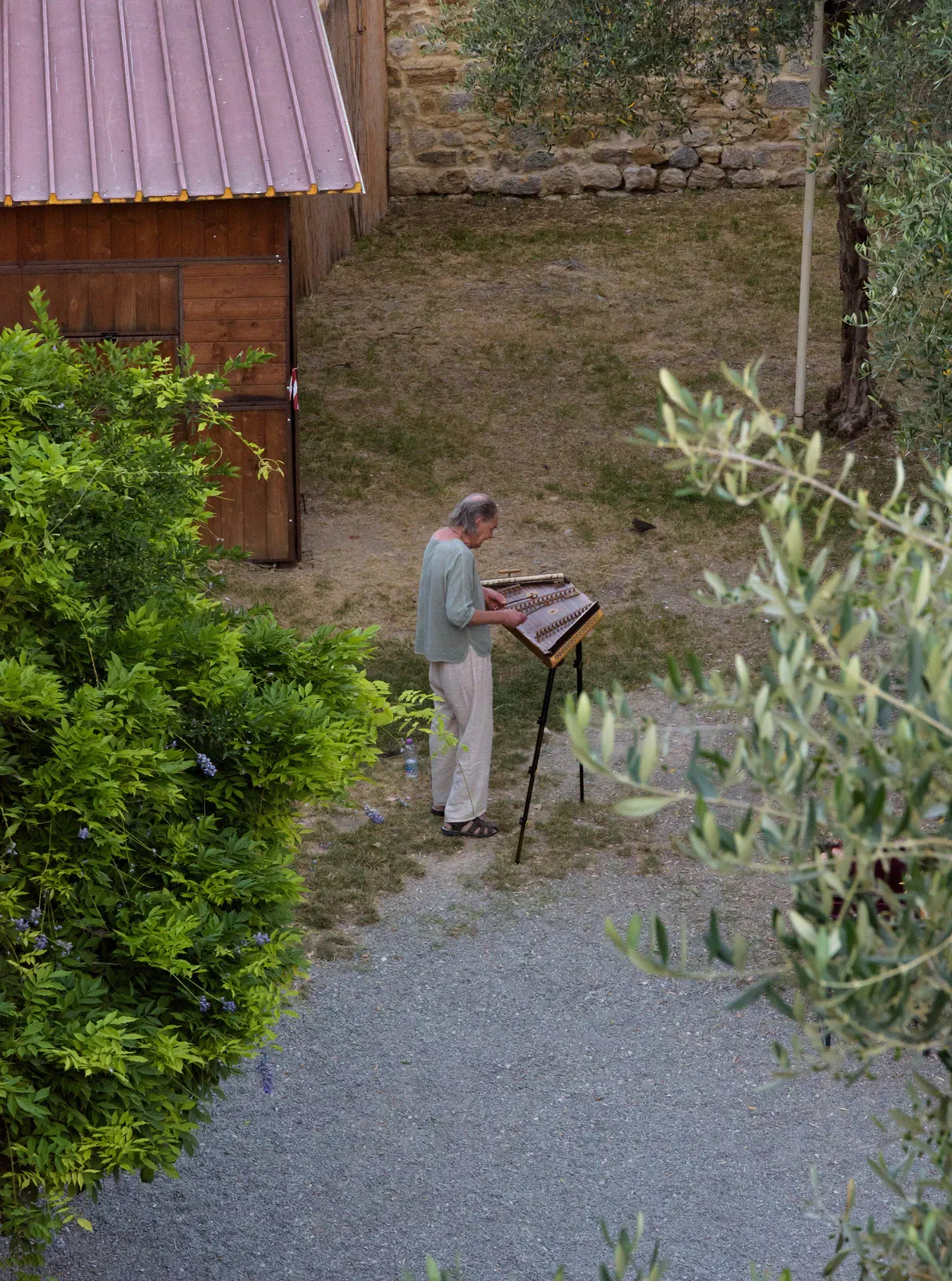
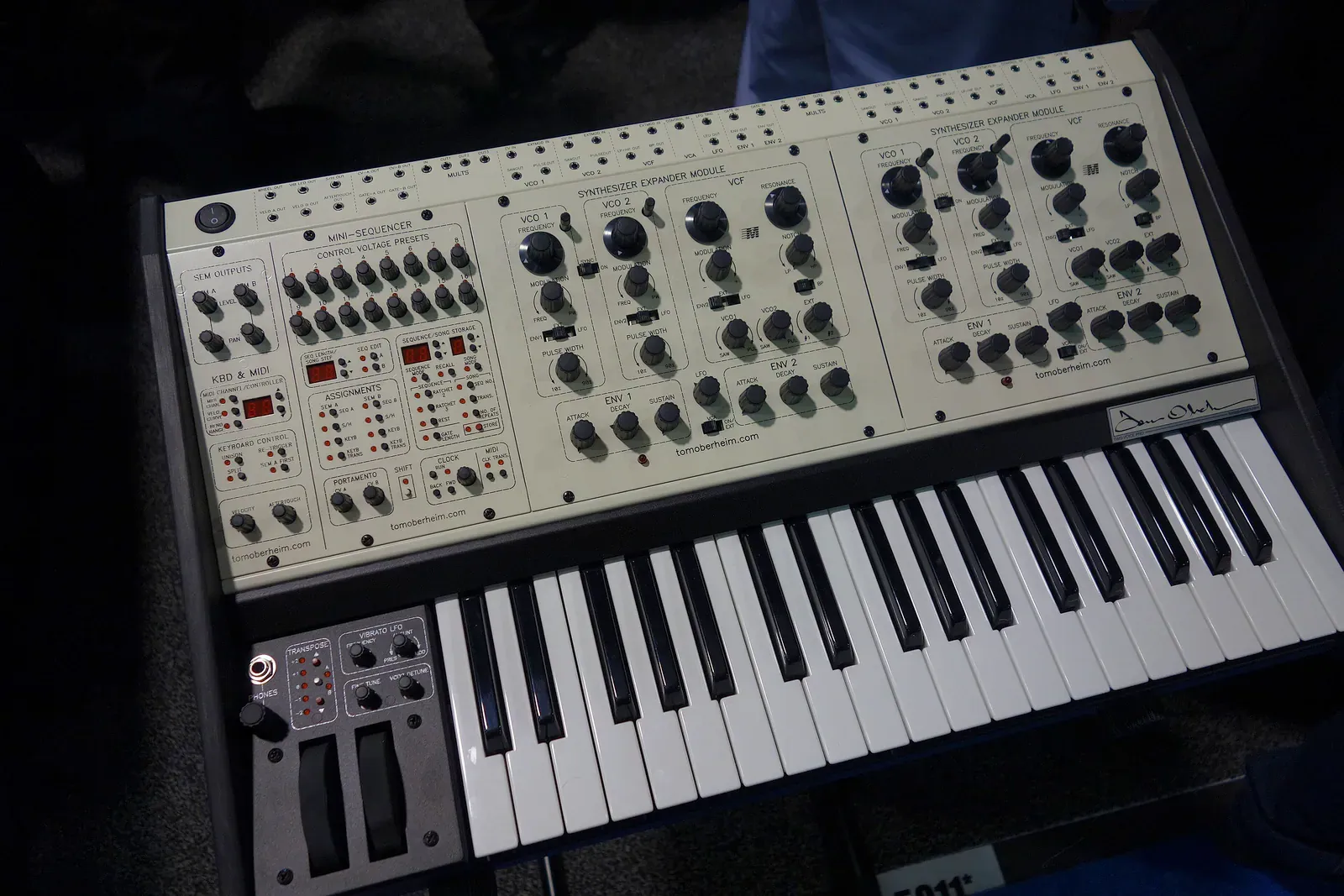
Brian Eno supplied the theory. His Ambient 1: Music for Airports (1978) used looped piano and voices of different lengths, music that could be ignored or attended to. In 1979 he heard Laraaji, a street zither and dulcimer player, in Washington Square Park in New York, and produced Day of Radiance for E.G. Records (1980). Meanwhile Steve Roach was building the long synthesizer drones of Structures from Silence (1984), played on Oberheim instruments, and Steven Halpern’s piano albums sold relaxation outright.
Mainstream success
Through function, not charts. Liquid Mind’s Ambience Minimus (1994) was marketed openly as music for tranquility, and Deva Premal’s Gayatri Mantra on The Essence (1998) carried Sanskrit chant to listeners who had never sat in a hall. The Deva album she made with Miten was nominated for Best New Age Album at the 62nd Grammy Awards.
The biggest single story is Marconi Union’s Weightless (2011), an eight-minute piece made with a sound therapist. A study reported in 2011 claimed it cut anxiety in test subjects by as much as 65 percent, and the press repeated that it was “the most relaxing song in the world”. Those are reported claims from a small commissioned test, not an established finding, but they sent the track around the world, and a ten-hour edition followed in 2017 for people who wanted it running all night.
Notable recordings
Music for Zen Meditation. It was recorded in February 1964, mostly improvised, with a jazz musician working alongside two Japanese players. It was a jazz-label record about stillness, and the category it later seeded did not yet exist.
Inside. Horn brought a flute to a monument, played in its quiet, and recorded the room. Part of its force is that the sound of the place is the second instrument.
Day of Radiance. Eno did not audition Laraaji; he heard him busking and offered a session. The album pairs repetitive dulcimer with Eno’s studio treatments and ends with two beatless pieces.
Culture
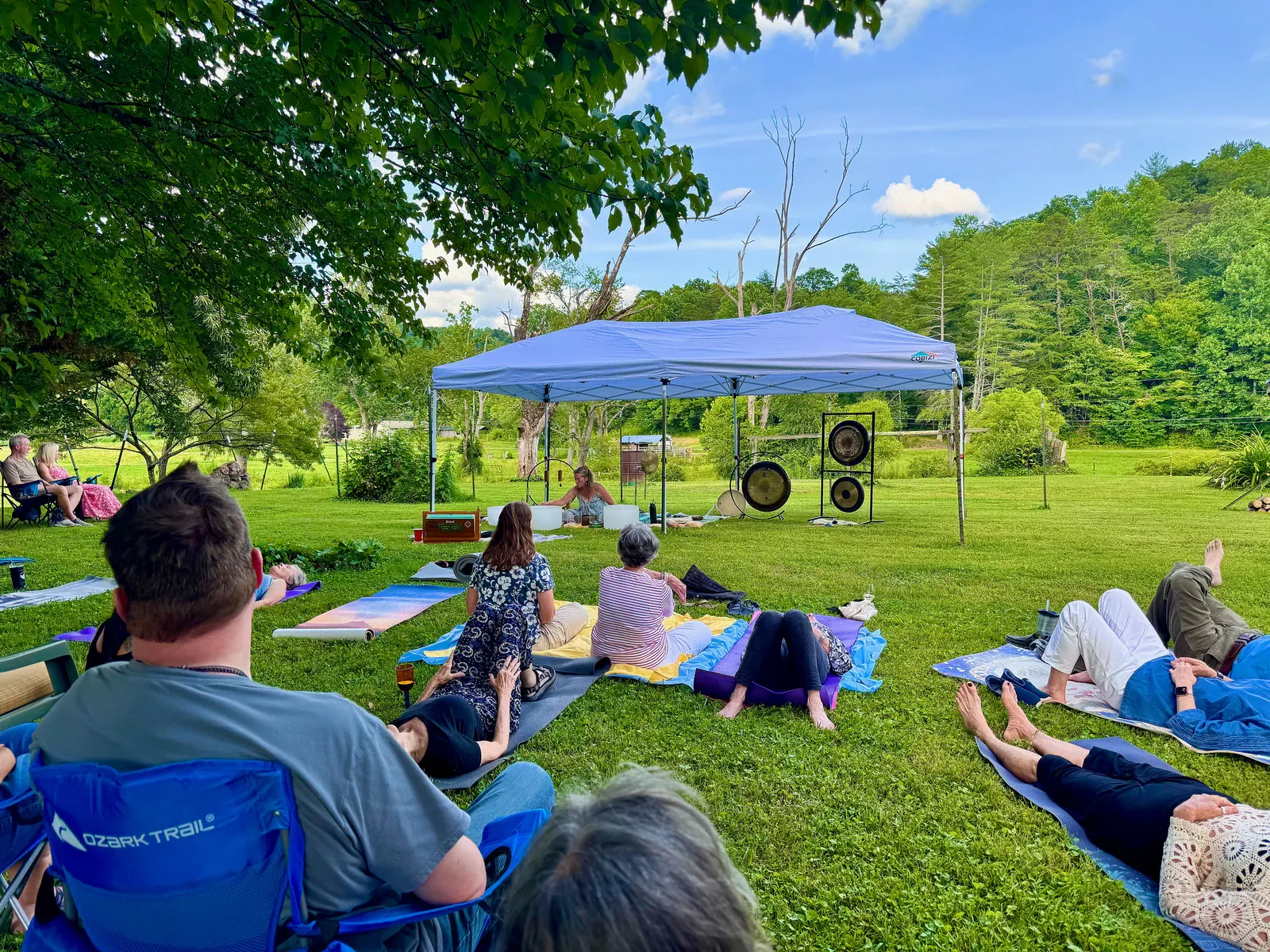
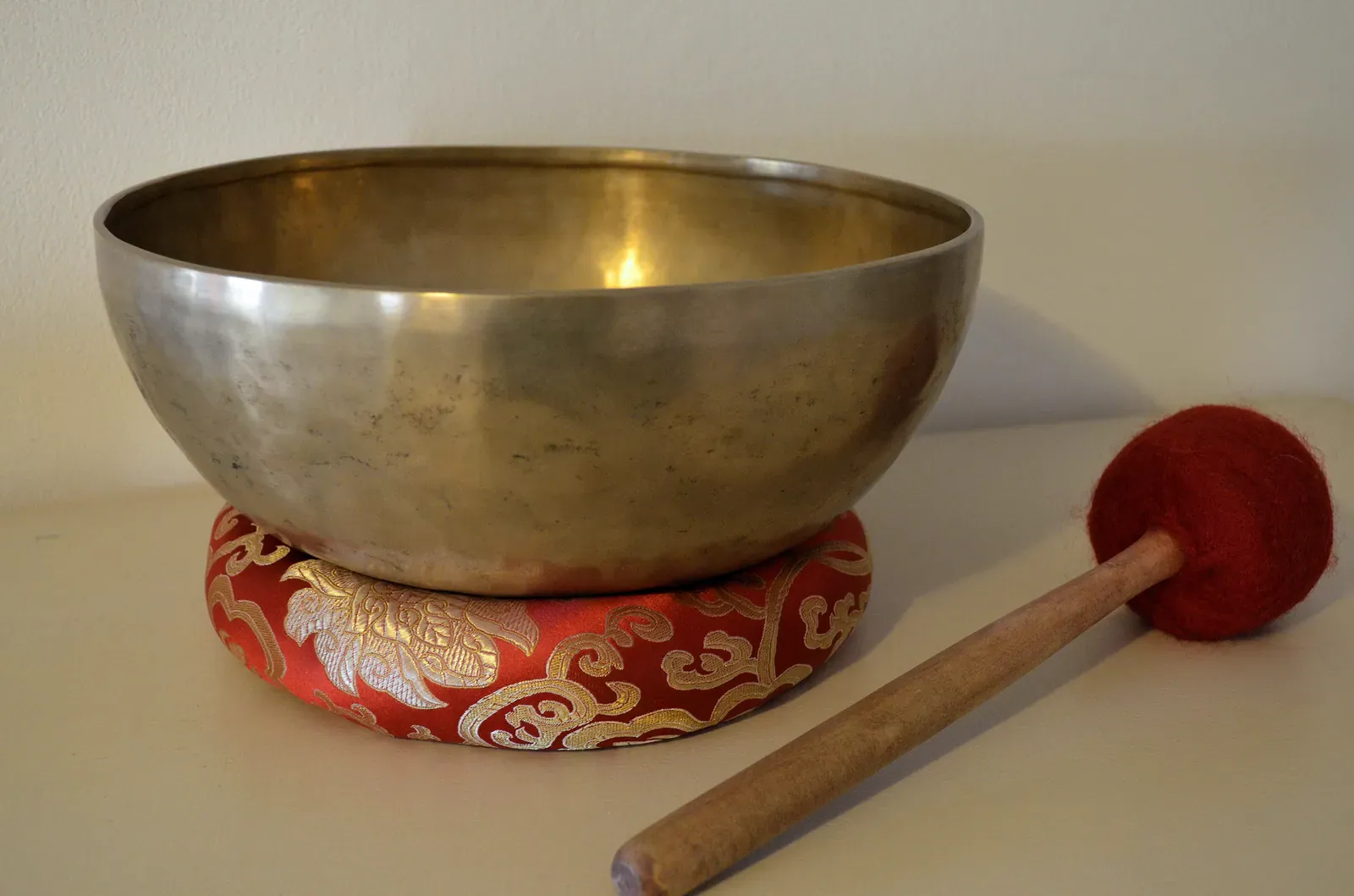
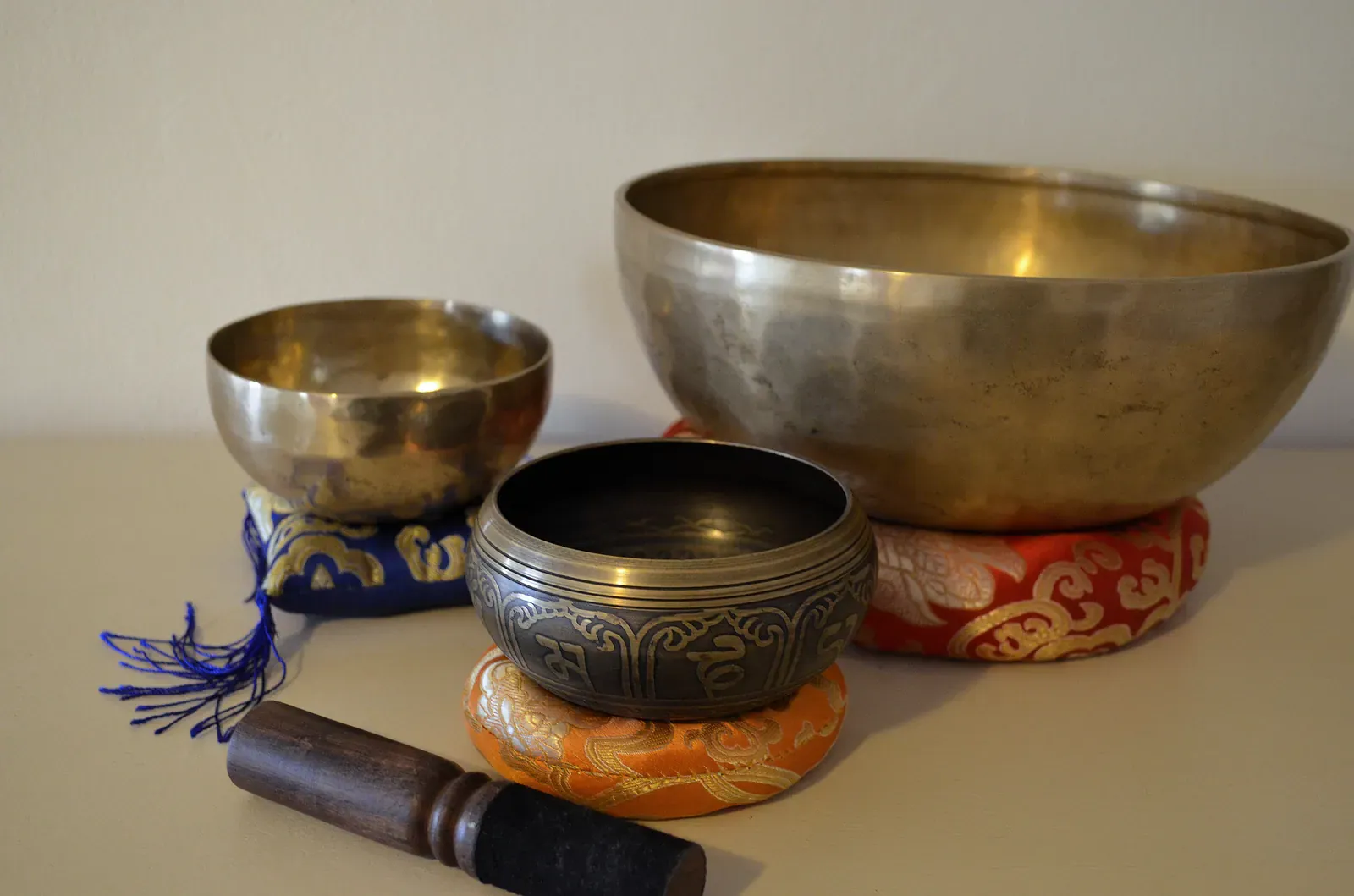
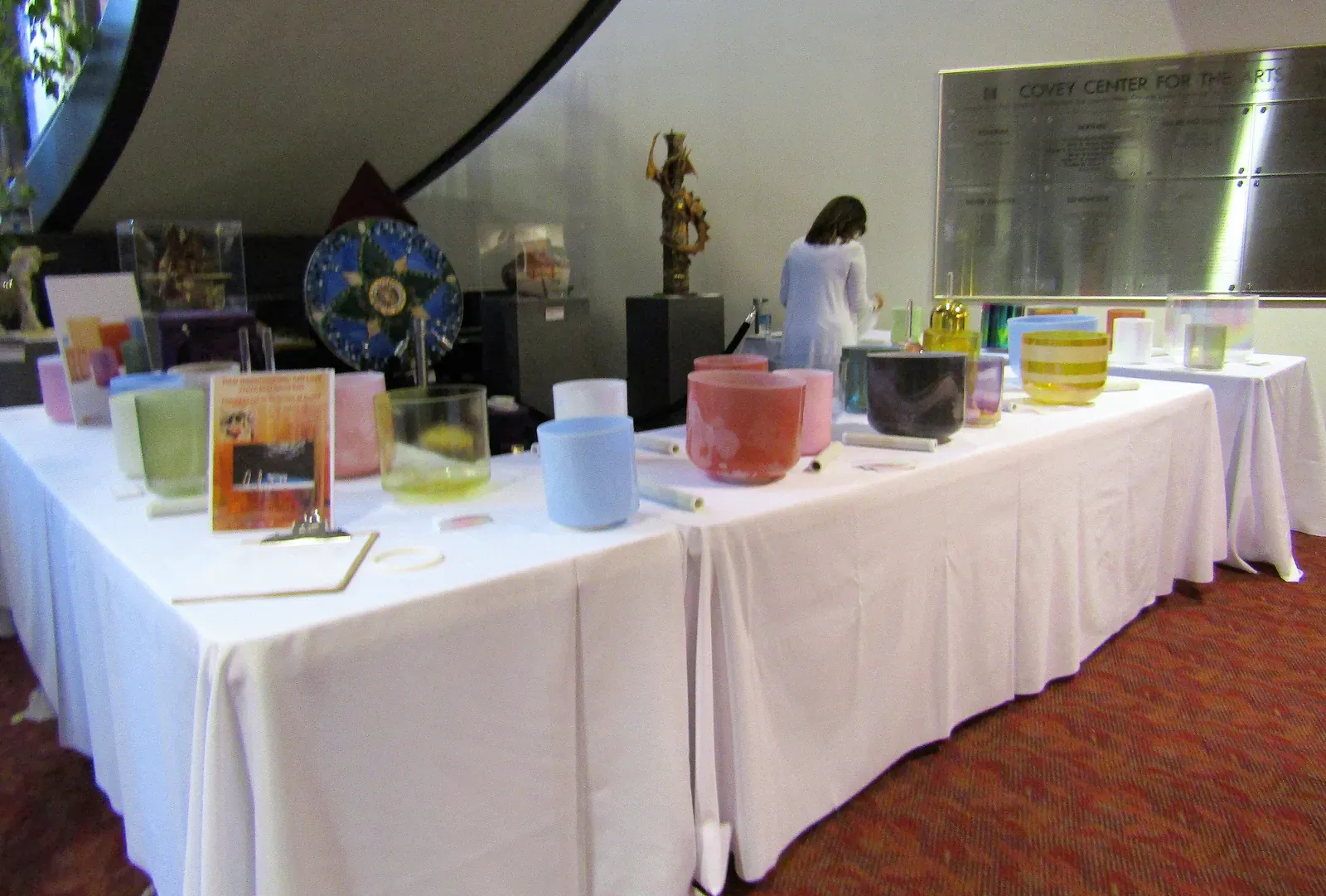
Meditation music centres on practices, not a dance floor. Listeners use it for sitting, yoga, bodywork and sleep. Sound baths, where people lie down while singing bowls, gongs and crystal bowls are played, have become a studio and festival staple. Mantra gatherings, laughter meditation (which Laraaji teaches) and retreat centres supply the live side. Scene economics are modest: cassettes, radio airplay and small labels in the 1980s, then streaming playlists and long uploads.
Misconceptions
Ancient and sacred. The record category dates from 1964, and its founders were jazz and studio musicians as often as monks. Older traditions such as Buddhist music and the drones of Hindustani classical music are ancestors, not the same thing.
Healing frequencies. The idea that certain frequencies heal is a belief within sound-healing circles, not an established medical fact. Claims about specific hertz values or about bowls repairing the body are not supported by proof, and the Weightless result comes from one small commissioned test.
Same as ambient music. The two differ. Ambient, as Eno defined it, is music that can be ignored; meditation music is made with a use in mind. They overlap, and Music for Airports is claimed by both.
Frequently asked questions
What is meditation music?
Meditation music is slow, often beatless music with drones and few sudden changes, designed to accompany sitting or relaxation. The first albums made for that purpose appeared in the 1960s.
Who made the first meditation music record?
Tony Scott’s Music for Zen Meditation (Verve, 1964) is widely called the first. Paul Horn’s Inside, recorded in the Taj Mahal in 1968 and issued in 1969, was the first to reach a very large audience.
What instruments are used in meditation music?
Common voices are flutes (including the shakuhachi), the tanpura and other drone strings, dulcimers and zithers, piano, singing bowls, gongs and analog synthesizers.
Does meditation music really lower anxiety?
Individual listeners often report that it relaxes them, but strong claims, such as the figure attached to Weightless, come from small or commissioned studies and should be treated as reported results.
Sound
Sound sheet
Signature sounds
- Sustained drones or pads
- No steady beat, or a very slow pulse
- Few or no sudden dynamic changes
- Long durations, often over a quarter of an hour
- Acoustic timbres: flute, zither, piano, bowls
- Field recordings or nature sounds under the music
Drums and percussion
- Singing bowl
- Gong
Synths and software
- Oberheim OB-8
Techniques
- Sustained drone
- Natural reverberation
- Looped tape or delay
- Beatless or very slow pulse
- Soft attack and slow swells
Keys and modes
Drone-centred modal. One tonic or open fifth is sustained while slow melody moves around it, as with the tanpura under a raga.
Pentatonic. Five-note scales on flute and similar instruments give simple, consonant phrases without harmonic tension.
Vocals
Mostly instrumental; when voices appear they chant mantras or hold wordless syllables.
Scenes
Where it happened
Where and when the sound lived: one bar per city on a shared timeline.
Asia
Europe
North America
Active scenes
Peak 5, 2003-2005
Laraaji busks in Washington Square Park and is recorded by Brian Eno for Day of Radiance.
Paul Horn records Inside in the Taj Mahal on 25 April 1968.
Kuckuck Schallplatten issues Deuter's early albums before moving to Berlin in 2005.
Hearts of Space begins on KPFA and gives the contemplative-music style its radio home.
Hearts of Space Records is founded here, releasing Constance Demby and others.
Deuter and later Deva Premal and Miten connect to the Osho meditation resort.
Marconi Union form here and make Weightless.
Venues and places
Agra, 1968 to today. Paul Horn recorded Inside here on 25 April 1968.
Berkeley, 1973 to today. Home of the first Hearts of Space broadcasts.
New York, 1979 to today. Where Eno heard Laraaji play, leading to Day of Radiance.
Culver City, 1984 to today. Studio where Steve Roach recorded the title track of Structures from Silence.
Culture
Culture markers
- Space music
Hill's term for contemplative music across genres, used on Hearts of Space.
Slang - Laughter meditation
Laraaji teaches this practice alongside his zither performances.
Ritual - Mantra recitation
Deva Premal and Miten sing Sanskrit mantras at live gatherings and in recordings.
Ritual - Meditation retreats
Horn trained at Maharishi Mahesh Yogi's ashram in 1968, and Deuter studied with Rajneesh in Pune.
Ritual
Media
Key media
- 1973Hearts of Space
by Stephen Hill. Weekly show that named space music and reached national public radio in 1983.
Radio - 1985Chronos
by Ron Fricke. IMAX film with Constance Demby's Space Bass on its soundtrack.
Film - 2013Celestial Music 1978-2011
by Laraaji. Retrospective collection from All Saints Records covering Laraaji's meditative work.
Compilation - 2017Weightless (10 hour version)
by Marconi Union. Long-form edition made for continuous listening.
Mix
Glossary
Terms on this page
Music with no regular pulse, so the listener has no beat to follow.
Pauline Oliveros's name for a practice of attentive listening to all sounds.
A long held note or chord that stays under the music and changes very little.
Music made for a use, such as calm or sleep, rather than for concert listening.
A Sanskrit syllable or verse repeated in meditation and often set to music.
Term Stephen Hill used for contemplative music of any genre played on Hearts of Space.
Eno's word for studio processing applied to another player's performance.
New Age family