Electronic new age
Electronic new age is synthesizer-led instrumental music from the 1970s onward: sustained pads, sequenced arpeggios and soft or absent drums, tied to ambient.
Germany, United States, Greece, France, 1974
New Age family
Born
1974
Germany, United States, Greece, France
Subgenres
1
Documented branches
Links
5
Genres it drew on or shaped
Tempo
70-140 BPMLineage
Family tree
Grew out of
- Progressive electronic
Derived from
Influenced by
Berlin SchoolAmbient
Germany, United States, Greece, France, 1974
Electronic new age
Led to (1)
Timeline
Era by era
From the first sparks to today. Select a dot to read the story behind it.
- Sequencers and long sides
1971 to 1979
- Screen scores and the new age bin
1980 to 1989
- Workstations and independent labels
1990 to 2009
- Reissues and the ambient overlap
2010 to today
Eras
Moments
- 1 Sequencers and long sides, 1971 to 1979
- 2 Screen scores and the new age bin, 1980 to 1989
- 3 Workstations and independent labels, 1990 to 2009
- 4 Reissues and the ambient overlap, 2010 to today
1971
Sequencers and long sides
Berlin and Paris studios turned modular synthesizers and step sequencers into side-long, mostly beatless pieces, from Deuter's D to Phaedra and Oxygene.
- 1971Deuter's first album DGeorg Deuter's debut on Kuckuck mixes krautrock, flute and electronics and is a forerunner of meditative new age.
- 1972Schulze's IrrlichtKlaus Schulze's debut sets organ and electronic drones into long form, a model for later sequencer albums.
- 1974Tangerine Dream's PhaedraA Moog sequencer drives the album that made the Berlin sound an international export for Virgin.
- 1976Jarre's OxygeneJean-Michel Jarre's analogue album from a small Paris studio makes melodic synthesizer music popular in France and abroad.
- 1978Prophet-5 reaches playersSequential Circuits' programmable polyphonic synthesizer makes stored pad and lead sounds practical on stage and in the studio.
- 1979Jarre plays Place de la ConcordeA Bastille Day concert in Paris with lasers and projections draws a crowd reported at about a million.
1980
Screen scores and the new age bin
Silk Road and Chariots of Fire brought synthesizer themes to television and cinema, while Hearts of Space and Private Music gave the sound a radio show and labels.
- 1980Kitaro's Silk RoadThe music for NHK's documentary series takes Japanese synthesizer melody to a wide audience.
- 1981Vangelis scores Chariots of FireThe film's synthesizer theme becomes one of the best-known electronic melodies of the decade.
- 1982Oscar for Chariots of Fire scoreVangelis wins the Academy Award for Best Original Score for an electronic soundtrack.
- 1983MIDI and the DX7A common interface lets synthesizers and sequencers talk to each other, and Yamaha's DX7 brings digital sounds to many studios.
- 1984Private Music opensFormer Tangerine Dream member Peter Baumann starts a Los Angeles label for instrumental electronic and new age artists.
- 1984Roach's Structures from SilenceSteve Roach's slow pad album sets the template for beatless, long-form synthesizer atmosphere.
- 1986Demby's Novus MagnificatConstance Demby's large-scale album for Hearts of Space blends synthesizers with her own steel instrument, the sonic steel space bass.
- 1987Grammy for Best New Age AlbumThe first Grammy category for new age gives synthesizer albums an official shelf.
1990
Workstations and independent labels
Samplers, workstations and then computers replaced racks of analogue gear, and small labels such as Spotted Peccary kept long-form synthesizer albums in print.
2010
Reissues and the ambient overlap
Archival reissues found new listeners, and in 2023 the Grammy category was renamed New Age, Ambient or Chant, acknowledging how close the strand sits to ambient.
- 2023Grammy category renamedThe award becomes New Age, Ambient or Chant, reflecting how closely the genre sits to ambient.
Listening path
Start listening
A short path from an easy way in to the deep end. Thumbnails come from YouTube; the player loads only when you press play.
- 01
Jean-Michel Jarre, 1976
The melodic analogue theme that made instrumental synthesizer music a mainstream listen.
- 02
Kitaro, 1980
A calm, singing synthesizer melody from the NHK documentary score.
- 03
Vangelis, 1981
The Oscar-winning theme that took synthesizer music into cinemas.
- 04
Steve Roach, 1984
Beatless, slowly evolving pads, the deep end of the genre.
- 05
Constance Demby, 1986
A large-scale electronic new age piece with synthesizers and voices.
Facts
| Family | New Age |
| Origin | Germany, United States, Greece, France |
| Emerged | 1970s |
| Status | Active |
| Tempo | 70 to 140 BPM |
| Meter | 4/4 |
| Grew out of | Progressive electronic |
| Subgenres | 1 |
Electronic new age is the strand of new age music made mainly with synthesizers and sequencers.
It took shape in the 1970s, when German and French studios began releasing long, mostly beatless synthesizer albums, and it is defined by sustained pads, slow arpeggios, gentle melodic themes and drums that are soft, programmed or absent. It overlaps most directly with ambient and progressive electronic music.
Origins
The genre grew out of two earlier currents. One was the German electronic scene of the early 1970s, where Tangerine Dream and Klaus Schulze, working from krautrock, turned organs, tape and modular synthesizers into extended pieces. The other was the meditative record, such as Deuter’s 1971 debut D, which brought flute, guitar and electronics together for slow listening.
Tangerine Dream’s Phaedra, released on Virgin in 1974, is the usual starting point. A Moog sequencer supplied a restless pulse, and pads and Mellotron drifted above it; the album sold well outside Germany and showed that a record of synthesizers alone could find a wide audience. Two years later Jean-Michel Jarre’s Oxygene, made in a small Paris studio, gave the same instruments a warmer, more melodic face, with themes a listener could hum.
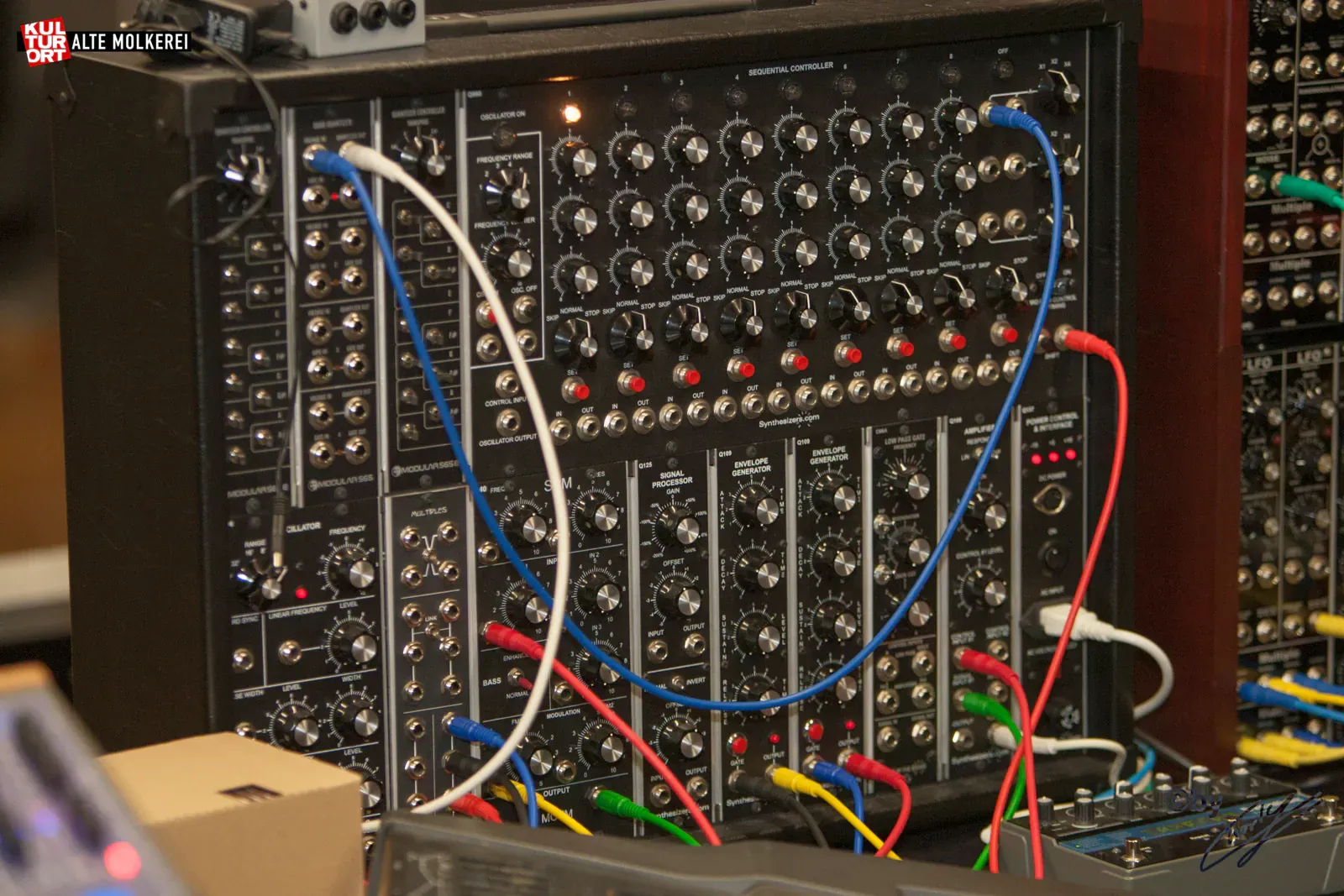
Sequencers and long sides, 1971-1979
In this decade the sound was built from analogue hardware. A step sequencer repeated a short pattern of notes while the player changed filters and layered pads over it, so that a piece could run for twenty minutes without a drum beat. Schulze’s Irrlicht in 1972 and Timewind in 1975 favoured slow organ-like drones; Tangerine Dream’s Rubycon and Stratosfear pushed the sequencer pulse further. Those records are usually filed under progressive electronic or Berlin School, and electronic new age took from them the pulse, the long form and the habit of building a mood rather than a song.
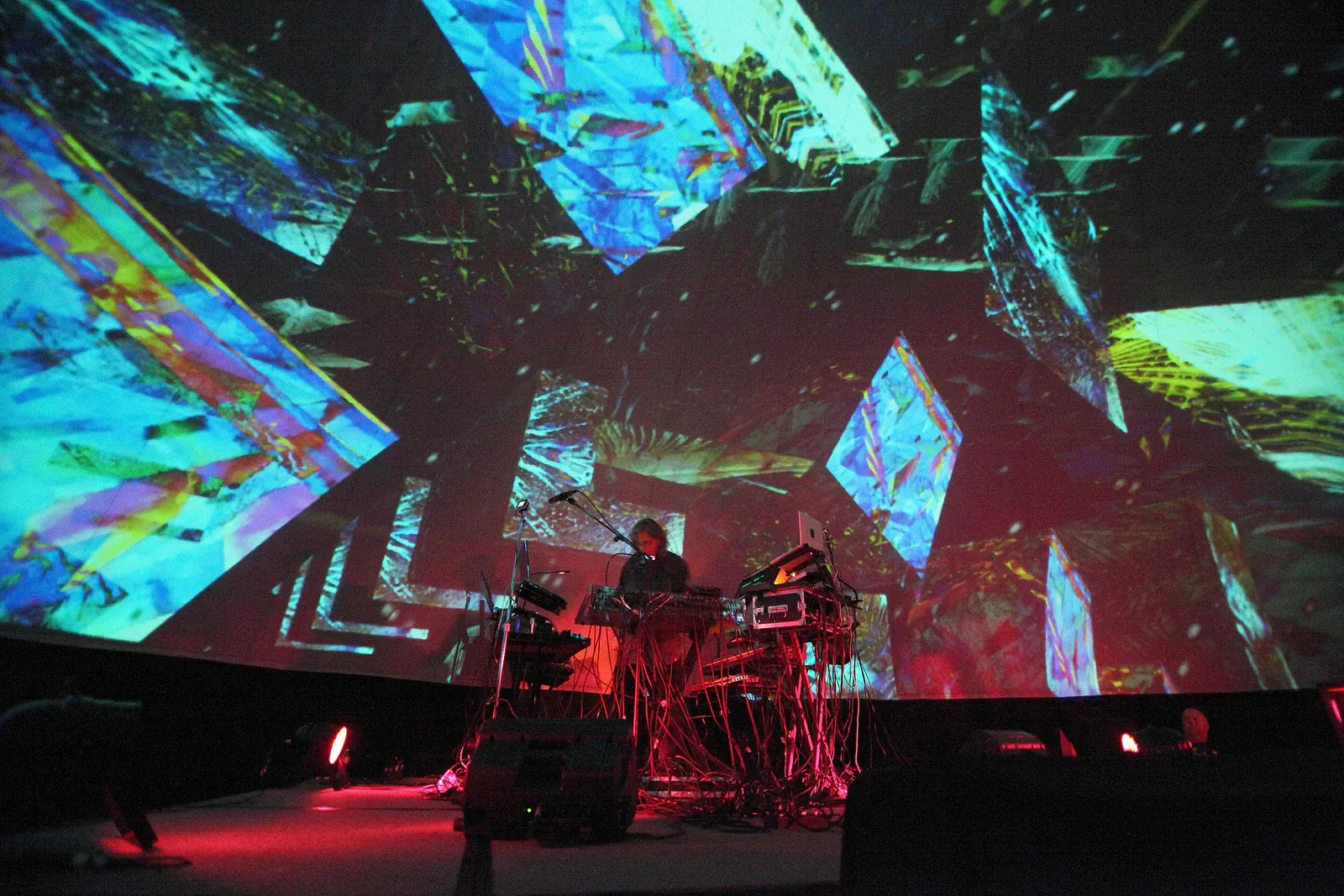
Jarre carried the idea into public space. On 14 July 1979 he played a Bastille Day concert at the Place de la Concorde in Paris, with lasers and projections, before a crowd reported at about a million. It linked synthesizer music with large visual spectacle, a pairing that later shaped planetarium and dome shows.
Screen scores and the new age bin, 1980-1989
The 1980s gave the genre its audience. Kitaro, a Japanese keyboardist who had worked in the group Far East Family Band, wrote the music for NHK’s documentary series Silk Road in 1980, and its main theme carried a singing pentatonic melody to listeners far beyond Japan. In 1981 Vangelis scored Chariots of Fire with a synthesizer theme that won the Academy Award for Best Original Score the following year, and his music for Blade Runner in 1982 fixed a synthesizer sound for science fiction cinema.
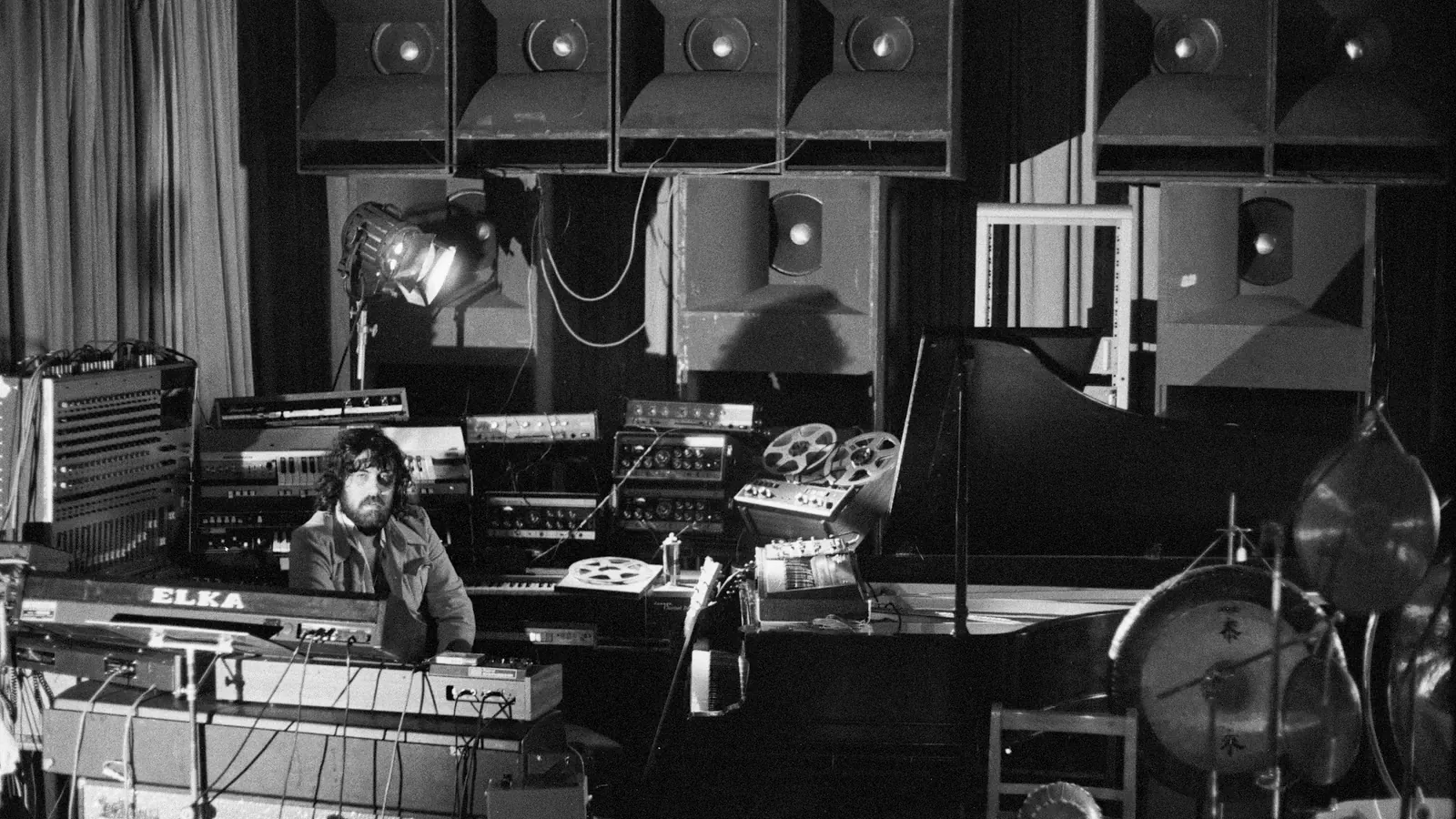
Radio and labels followed. Hearts of Space, a programme of slow, spacious music that began on KPFA in 1973, became a label in 1984, and the same year the former Tangerine Dream member Peter Baumann opened Private Music in Los Angeles. Steve Roach’s Structures from Silence in 1984 set a template for beatless, slowly shifting pad music, and Constance Demby’s Novus Magnificat in 1986, built from synthesizers and her own steel instrument, the sonic steel space bass, showed the idea at orchestral scale. The Grammy Awards added a new age category in 1987, and record shops began stocking a separate section.
Technology moved at the same time. The programmable Prophet-5 of 1978 allowed pads to be stored and recalled on stage, the Fairlight CMI brought sampling to a few studios around 1979, and in 1983 MIDI and Yamaha’s DX7 changed how studios were wired and which sounds they used.
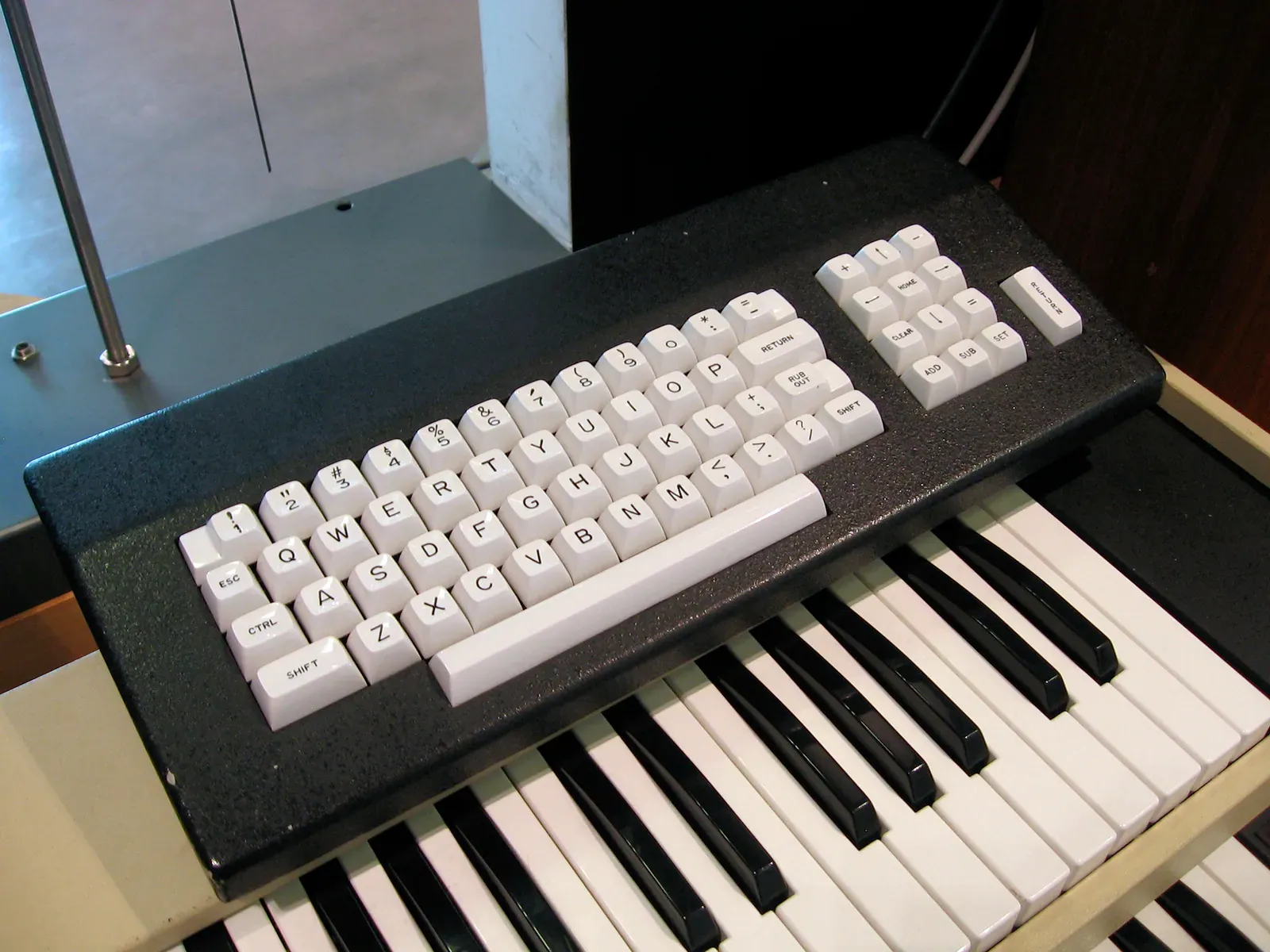
Workstations and independent labels, 1990-2009
By the 1990s racks of analogue modules had given way to sampling workstations and, later, software. Large labels stopped treating the genre as a growth market, but small ones carried on. Spotted Peccary, founded in Portland in 1986, kept releasing long-form synthesizer albums, and the style found a settled audience among listeners of meditation, yoga and bodywork music. Kitaro and Vangelis continued to release albums and score film and television.
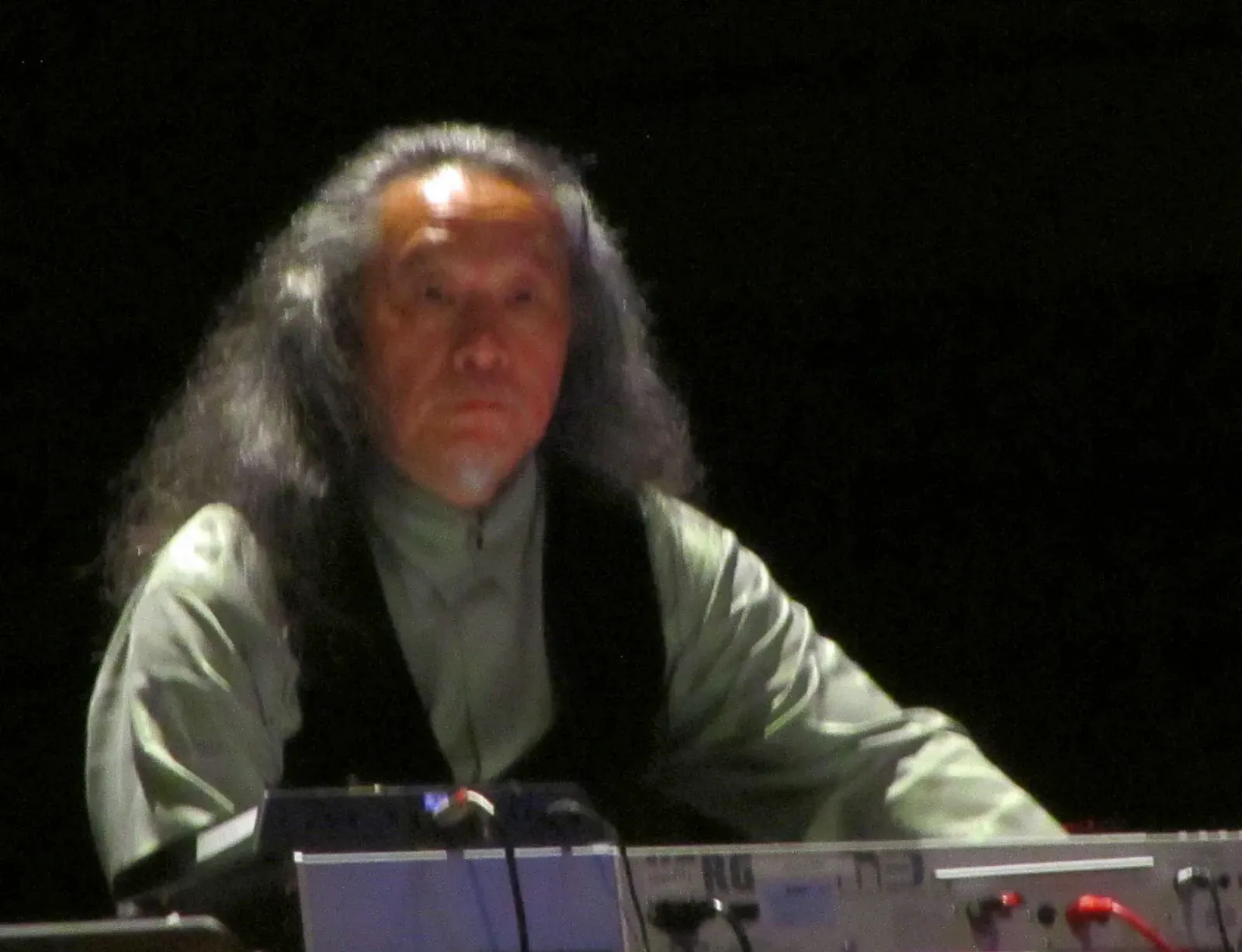
Reissues and the ambient overlap, 2010 onward
Interest returned in the 2010s as archives were reissued and a new generation of listeners met old synthesizer records through compilations and streaming. In 2023 the Grammy category was renamed New Age, Ambient or Chant, a change that reflects how closely electronic new age now sits beside ambient. Live synthesizer shows continue in domes and planetariums, with performers such as Roach playing before projections.
Characteristics
A typical piece opens with a slow pad and brings in a sequence or arpeggio after a minute or two. A melodic theme, often pentatonic or in a minor key, sits over the pulse, and the track varies gradually rather than building to a chorus. Tempo runs from beatless, around 70 beats per minute where a pulse can be felt at all, up to about 140 for the busiest sequencer pieces. Pieces are long, and an album side was a normal length for a single idea.
Instruments and production
Production is built around a few devices: a polyphonic synthesizer for pads, a sequencer or arpeggiator for motion, and reverb and delay to widen the sound. Players layered several voices, tuned them slightly apart and moved filters slowly over many bars, which gives the pads their breathing quality. Drums, where present, are usually machines kept low in the mix.
Culture
The music is closely tied to relaxation and ritual. It is played in meditation and yoga sessions, in massage and spa rooms, and at planetarium and laser shows. Album sleeves favour planets, space and surreal landscapes, as on Oxygene.
Misconceptions
One myth holds that electronic new age is simply ambient music. The two share a great deal, but the new age records usually keep a melody and a pulse, while ambient tends to drop both. Another is that the music was invented by new age labels in the 1980s; in fact its sound and form were settled in German and French studios in the mid-1970s, before the new age name was in use. A third is that it is always slow: sequencer pieces by Jarre and Tangerine Dream run at a brisk dance tempo.
Frequently asked questions
What is electronic new age music?
Electronic new age is instrumental new age music made mainly with synthesizers and sequencers. It is known for sustained pads, slow arpeggios and soft or absent drums.
Who are the main electronic new age artists?
Vangelis, Jean-Michel Jarre, Tangerine Dream, Kitaro and Steve Roach are the most often cited. Constance Demby and Deuter also belong to the story.
How is electronic new age different from ambient?
Both use sustained synthesizer textures. Electronic new age usually keeps a melodic theme and a pulse, while ambient is more often beatless and treats sound as an atmosphere rather than a tune.
What is the tempo of electronic new age?
Most pieces fall between about 70 and 140 beats per minute, with the slowest being beatless pad works and the fastest being sequencer-driven tracks in 4/4.
Legacy
The genre helped make the synthesizer a normal voice in film scoring, radio programming and wellness music. Its mix of pad, pulse and melody remains a reference for ambient, film score and electronic listening music, and its early albums are now reissued as classics.
Sound
Sound sheet
Anatomy of a track
| # | Part |
|---|---|
| 1 | Slow pad introduction |
| 2 | Sequence or arpeggio enters |
| 3 | Melodic theme over the pulse |
| 4 | Gradual variation and fade |
Signature sounds
- Sustained synthesizer pads
- Repeating sequenced arpeggios
- Soft or absent percussion
- Long, slowly developing pieces
Synths and software
- Minimoog
- Yamaha CS-80
- Prophet-5
- Fairlight CMI
- DX7
Techniques
- Step-sequenced pulse
- Slow filter sweeps
- Layered pads
- Long-form structure
Keys and modes
Natural minor. Sustained minor-key pads under repeating sequences.
Pentatonic major. Simple, singing melodies as in Kitaro's Silk Road theme.
Vocals
Mostly instrumental, with occasional wordless voices or choir samples.
Scenes
Where it happened
Where and when the sound lived: one bar per city on a shared timeline.
Europe
Asia
North America
Active scenes
Peak 4, 1984-2025
Home of Tangerine Dream and the sequencer-driven Berlin sound that shaped the strand.
Jean-Michel Jarre's base, where melodic analogue records and large outdoor shows took shape.
Kitaro's scores for NHK's Silk Road series made Japanese synthesizer music known abroad.
Hearts of Space turned a radio programme into a label for slow electronic and space music.
Venues and places
Paris, 1979 to today. Site of Jean-Michel Jarre's 1979 Bastille Day concert with lasers and projections.
Berkeley, 1973 to today. Listener-supported station where Hearts of Space began broadcasting slow, spacious music.
Culture
Culture markers
- Meditation and relaxation listening
Slow, beatless records are used for yoga, meditation and bodywork sessions.
Ritual - Laser and planetarium shows
Dome and laser displays often use synthesizer music as a soundtrack.
Ritual - Cosmic landscape sleeves
Space, planets and surreal landscapes recur on covers, as on Jarre's Oxygene.
Artwork
Media
Key media
- 1973Hearts of Space
by Stephen Hill. The long-running programme that gave slow synthesizer and space music a radio home.
Radio - 1981Chariots of Fire
by Hugh Hudson. Its Vangelis score made the synthesizer a main voice of a prestige film.
Film - 1982Blade Runner
by Ridley Scott. Vangelis's synthesizer score shaped the sound of science fiction on screen.
Film
Glossary
Terms on this page
The notes of a chord played one after another, often by a sequencer.
Music without a steady drum pulse, common in the slower end of the genre.
The sequencer-led electronic style of Tangerine Dream and Klaus Schulze in the 1970s.
A sustained, slowly changing synthesizer chord that forms the background.
A device that plays a stored pattern of notes repeatedly, the pulse of much Berlin-style music.
New Age family