Celtic new age
Celtic new age sets Celtic modal melodies, Irish-language song and layered voices over synthesisers and reverb, from Clannad in 1982 to Enya and Secret Garden.
Ireland, United Kingdom, Canada, 1982
New Age family
Born
1982
Ireland, United Kingdom, Canada
Links
7
Genres it drew on or shaped
Tempo
65-120 BPMLineage
Family tree
Grew out of
- Celtic fusion
Derived from
Influenced by
Ireland, United Kingdom, Canada, 1982
Celtic new age
Timeline
Era by era
From the first sparks to today. Select a dot to read the story behind it.
- Celtic folk roots
1970 to 1981
- Synthesisers meet Gaelic song
1982 to 1987
- Mainstream breakthrough
1988 to 1999
- Screen music and legacy
2000 to today
Eras
Moments
- 1 Celtic folk roots, 1970 to 1981
- 2 Synthesisers meet Gaelic song, 1982 to 1987
- 3 Mainstream breakthrough, 1988 to 1999
- 4 Screen music and legacy, 2000 to today
1970
Celtic folk roots
Clannad formed in Gweedore in 1970 as an acoustic Irish-language folk group, and by 1980 their family circle included a young keyboard player, Enya.
- 1970Clannad forms in GweedoreSiblings Ciaran, Pol and Maire Brennan and twin uncles Noel and Padraig Duggan form the band in County Donegal.
- 1980Enya joins the family bandEnya begins playing keyboards alongside Clannad, working with the group until 1982.
1982
Synthesisers meet Gaelic song
Theme from Harry's Game (1982) put a Prophet-5 and over 100 tracked vocals under Irish lyrics, while Enya and Loreena McKennitt began recording on their own.
- 1982Theme from Harry's GameWritten in a few hours for a TV drama, the Irish-language piece with a Prophet-5 and over 100 tracked vocals reaches No. 5 in the UK.
- 1982Enya moves to Dublin with Nicky and Roma RyanAfter leaving Clannad she forms the production and lyric partnership that shapes her sound.
- 1983Enya's first solo performanceOn 23 September she plays at the National Stadium in Dublin, televised on RTE.
- 1984Legend and Robin of SherwoodClannad score the ITV series and release the Legend album, which reaches No. 15 in the UK.
- 1985Loreena McKennitt founds Quinlan RoadShe releases Elemental on her own label, selling it by mail order from her home.
- 1985Clannad win a BAFTAThey become the first Irish band to win the BAFTA for Best Original Television Music.
1988
Mainstream breakthrough
Enya's Watermark (1988) and Orinoco Flow, Secret Garden's Eurovision win (1995) and McKennitt's The Book of Secrets (1997) turned Celtic-flavoured atmospheric music into a worldwide market.
- 1988Watermark and Orinoco FlowEnya's second album reaches No. 5 in the UK, and Orinoco Flow holds No. 1 for three weeks.
- 1991Shepherd Moons and The VisitEnya's Shepherd Moons, with Caribbean Blue, and McKennitt's The Visit both appear in the same year.
- 1995Nocturne wins EurovisionNorway's Secret Garden win the contest with a mostly instrumental piece, and their debut album spends two years on Billboard's new-age chart.
- 1997The Book of SecretsMcKennitt's album yields The Mummers' Dance, which gets North American airplay and trailer placements.
2000
Screen music and legacy
Only Time (2000), May It Be (2001) and decades of film and television placements kept the sound in circulation; Clannad's farewell tour began in 2020.
- 2000A Day Without Rain and Only TimeEnya's album and single surge in the US after the song is used in news coverage of the 2001 attacks.
- 2001May It Be nominated for an OscarEnya's song from The Lord of the Rings: The Fellowship of the Ring is nominated for Best Original Song.
- 2020Clannad begin their farewell tourThe remaining four-piece line-up embark on a final tour.
- 2025Watermark honoured in IrelandEnya receives the RTE Choice Music Prize Classic Irish Album award for Watermark.
Listening path
Start listening
A short path from an easy way in to the deep end. Thumbnails come from YouTube; the player loads only when you press play.
- 01
Enya, 1988
The hit that brought layered Celtic-flavoured new age to the pop charts; listen for the stacked voices and keyboards.
- 02
Clannad, 1982
The Irish-language single where synthesiser and tracked voices first met a Celtic melody.
- 03
Secret Garden, 1995
Eurovision winner built on violin and piano rather than vocals.
- 04
Loreena McKennitt, 1997
A driving piece from The Book of Secrets, built on Celtic string and percussion colours.
- 05
Enya, 2000
A slow piano-led song that became one of the genre's most-played tracks.
Facts
| Family | New Age |
| Origin | Ireland, United Kingdom, Canada |
| Emerged | 1980s |
| Status | Active |
| Tempo | 65 to 120 BPM |
| Meter | 4/4 |
| Grew out of | Celtic fusion |
Celtic new age is a branch of new-age music that sets traditional Celtic melodies, modes and languages inside a synthesiser-and-reverb soundscape.
It took shape in Ireland in the early 1980s around Clannad and Enya, spread through Canada and Norway with Loreena McKennitt and Secret Garden, and reached mass audiences in 1988. Its defining traits are multitracked vocals, Celtic harp, whistle or violin, Gaelic or archaic-English lyrics and sustained synth pads. It belongs to the new-age family and overlaps with Celtic music and its fusion offshoots.
Origins
The genre’s roots are in the Irish-speaking parish of Gweedore, in County Donegal. In 1970 the siblings Ciaran, Pol and Maire Brennan and their twin uncles Noel and Padraig Duggan formed Clannad, an acoustic group that rearranged traditional Irish songs, mostly in Irish. By 1980 they had expanded to a six-piece with Maire’s younger sister Eithne, known to the world as Enya, on keyboards.
Celtic music had already been mixed with rock and folk revival styles through the 1960s and 1970s. What changed in the early 1980s was the studio. A band that sang in Irish and played harp and guitar met the synthesiser, and the result was a mood closer to ambient and meditation music than to a dance band. The classification came later and from outside: retailers filed the sound under new age, and critics treated it as a branch of Celtic fusion.
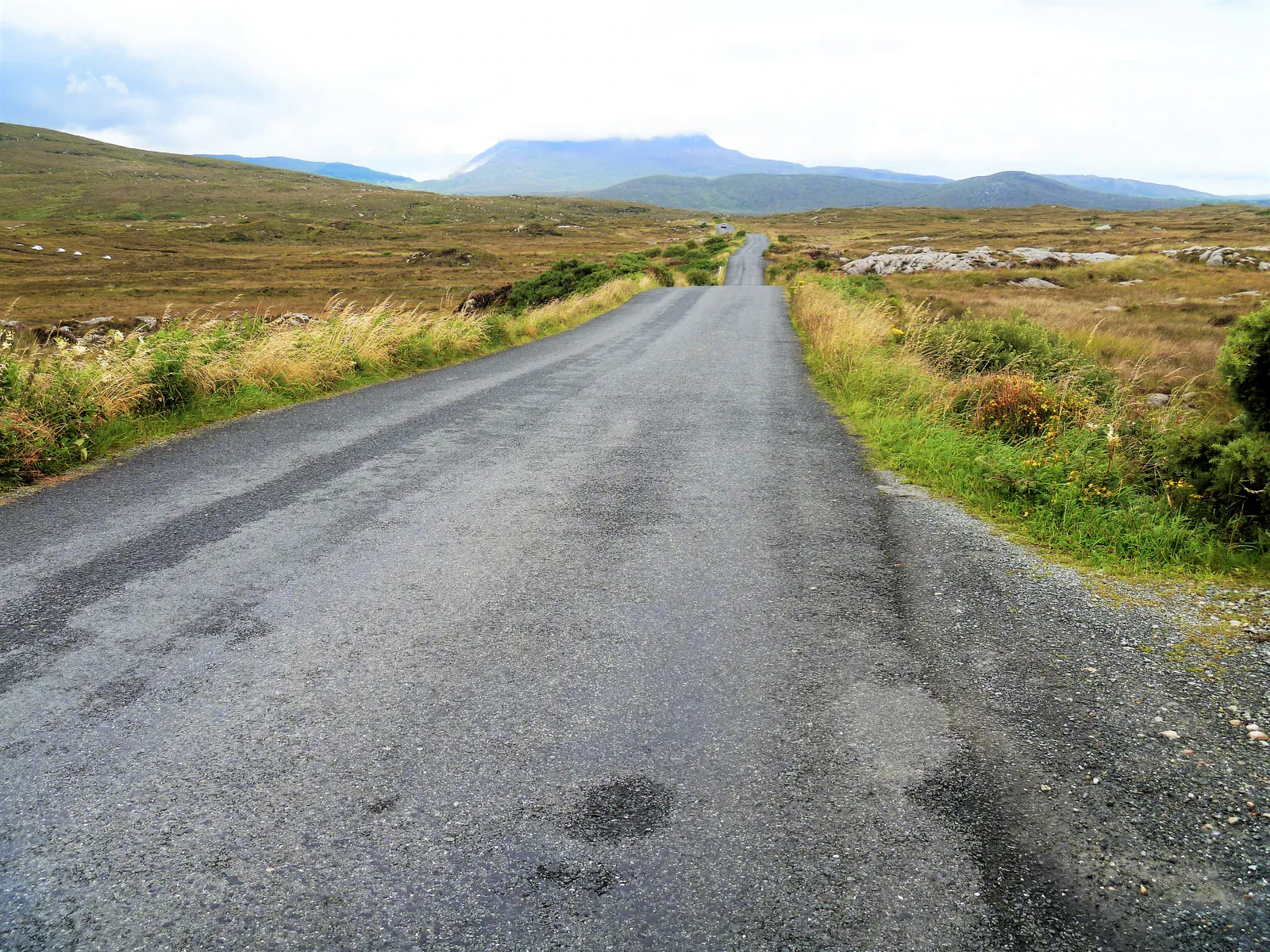
Ireland, 1982-1987
The founding record is Clannad’s Theme from Harry’s Game, released in October 1982. The band was asked to write the title music for a three-part television drama about the Troubles in Northern Ireland, and three of them wrote it in a few hours. It was recorded in two days around a Prophet-5 synthesiser and over 100 tracked vocals, a sharp turn from their acoustic work. It reached No. 5 in the UK and remains the only UK hit single sung entirely in Irish. It also became a closing piece for U2 concerts between 1983 and 1987.
Enya left Clannad in 1982 and moved in with the producer Nicky Ryan and his partner Roma Ryan, later her lyricist, in Artane, Dublin. The three formed a company and built a studio. Her first solo pieces appeared on a 1984 cassette compilation, her first televised solo performance took place at the National Stadium in Dublin on 23 September 1983, and in 1985 she wrote music for a film, The Frog Prince, the first release credited to “Enya”. A BBC commission for the documentary series The Celts followed in 1987.
Clannad meanwhile moved into screen music. Their score for Robin of Sherwood, broadcast from 1984, became the album Legend and brought the band a BAFTA in 1985, the first for an Irish band in that category.
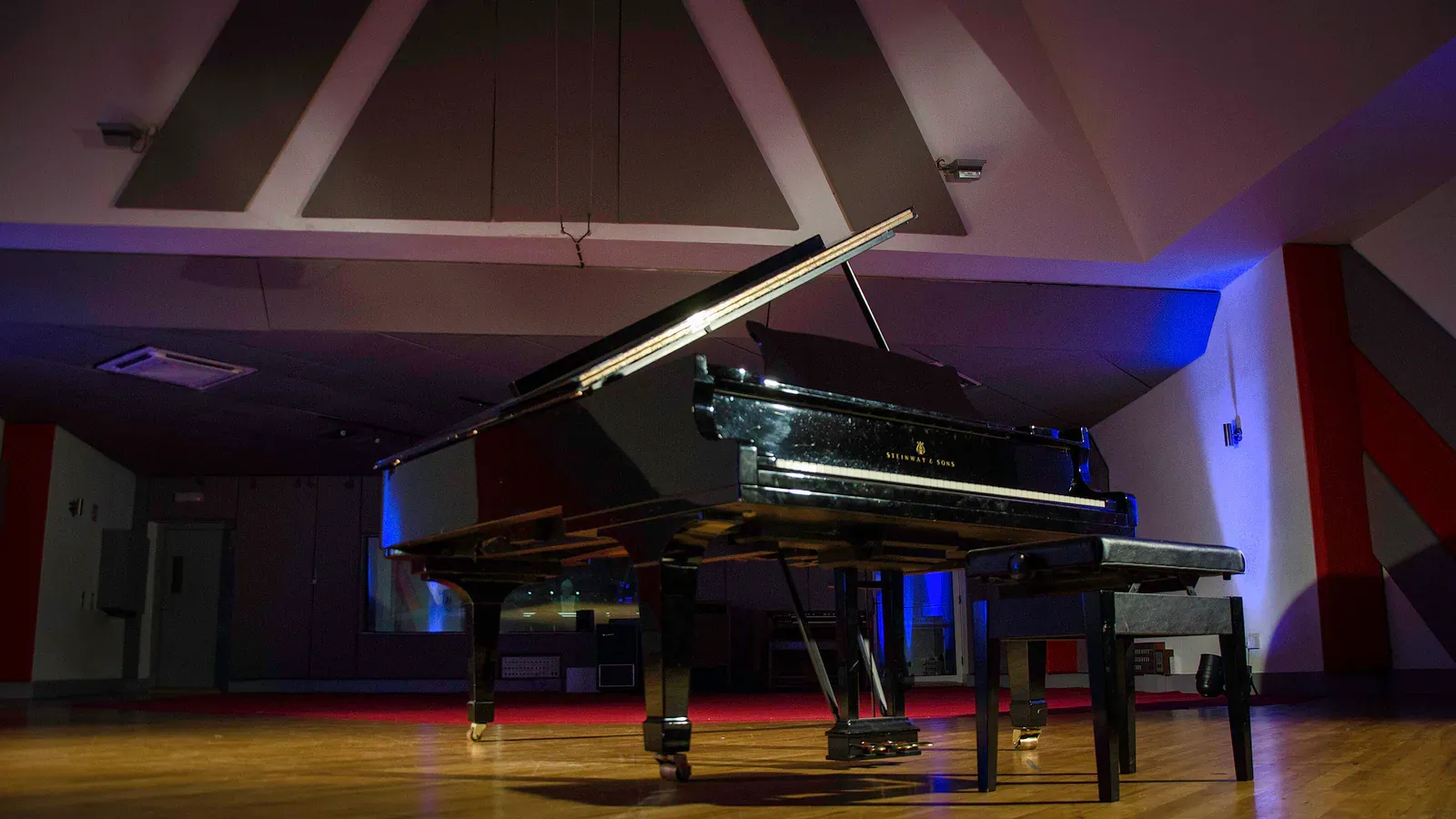
Canada and the wider Celtic world, 1985-1997
In Ontario, Loreena McKennitt founded her own label, Quinlan Road, in 1985 and sold her first album, Elemental, by mail order from her home. She came to the style from a different direction: a harp and piano player drawing on Celtic and Middle Eastern sources and on poems by writers such as Tennyson and Yeats. In 1993 she toured Europe in support of Mike Oldfield, and her version of the traditional song Bonny Portmore was used in the Highlander series in 1995. She is occasionally compared with Enya, but her work leans on literary and traditional sources more than on studio layering.
Breakthrough, 1988-1999
Enya’s Watermark, released in September 1988, was the breakthrough. Rob Dickins of Warner Music UK had signed her promising artistic freedom and no deadlines, and Geffen handled the United States. The last song written for the album, Orinoco Flow, was not meant to be a single; when Dickins joked that he wanted one, the team chose it. It reached No. 1 in the UK for three weeks, the album reached No. 5 there and No. 25 on the Billboard 200, and Orinoco Flow is credited with taking new-age music to the mainstream market. The album was first recorded in analogue at the Aigle studio and then re-recorded digitally at Orinoco Studios in Bermondsey, London.
Shepherd Moons followed in 1991, the same year as McKennitt’s The Visit. In 1995 Norway’s Secret Garden, the duo of Irish violinist Fionnuala Sherry and Norwegian composer Rolf Lovland, won the Eurovision Song Contest in Dublin with Nocturne, a largely instrumental piece. Their debut album sold a million copies and spent two years on the Billboard new-age chart. McKennitt’s The Book of Secrets (1997) produced The Mummers’ Dance, which received North American airplay and appeared in a film trailer.
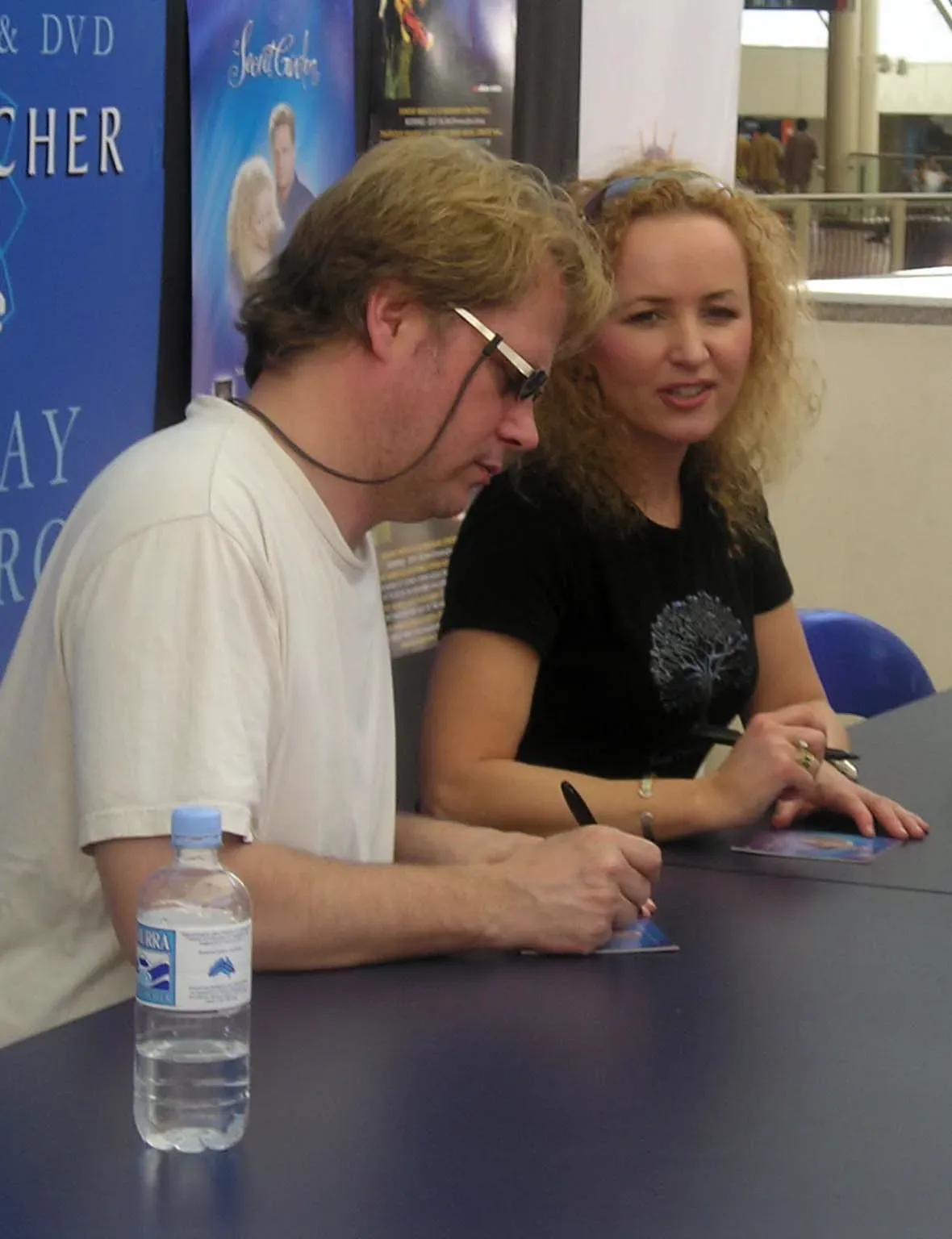
Characteristics
Melodies are modal and drawn from folk tradition, usually moving slowly over sustained harmony. Voices are the central instrument: a single singer is recorded many times and stacked into a choir, and the mix sits in long reverb. Lyrics are often in Irish, with English, Latin, Welsh and, in Enya’s case, constructed languages from Tolkien’s books. Tempos are moderate to slow, which suits the genre’s use for relaxation as well as listening.
Instruments and production
The sound pairs acoustic Celtic instruments with synthesisers. Clannad used a Prophet-5 in 1982, and Enya’s early albums were built on keyboards and samplers including the Roland D-50, whose Pizzagogo patch is heard in Orinoco Flow, and the Roland Juno-60, which she has called a favourite. She also plays piano, tin whistle and cello. Harp is central to McKennitt and to Moya Brennan, and the violin leads Secret Garden. The production method is slow: Enya’s team writes in winter, arranges in spring and summer and records in layers, often first in Irish.
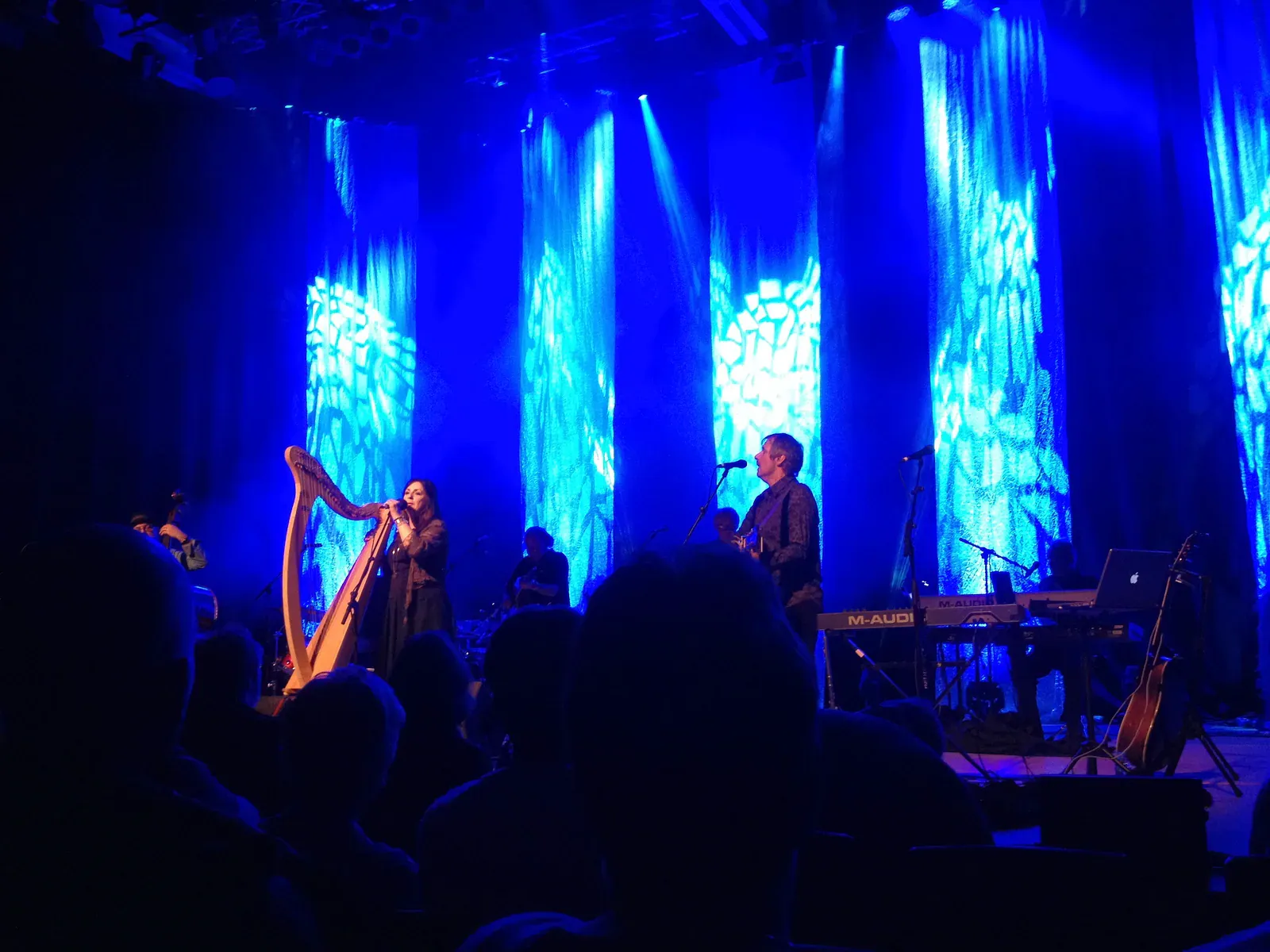
Notable recordings
Theme from Harry’s Game is the template: an Irish text, a modal tune, voices stacked into a choir and a synthesiser underneath. Orinoco Flow, a world hit built on a keyboard patch and layered backing voices, showed that the template could sell on pop radio. Nocturne showed that the sound did not need words at all, and The Mummers’ Dance showed that percussion and string colour could sit inside the same Celtic frame.
Later, Enya’s Only Time (2000) surged in the United States after its use in news coverage of the 2001 attacks. Her song May It Be, written for The Lord of the Rings: The Fellowship of the Ring in 2001, was nominated for an Academy Award.
Culture
The genre is closely tied to screen music: a drama theme, a historical-fantasy series, a documentary on the ancient Celts. Its visual identity borrows from painting; the Caribbean Blue video and The Memory of Trees cover adapt works by Maxfield Parrish. Language is part of it too. Enya’s team presents the work as “Enya music” rather than new age, and Irish-language singing reached large audiences abroad before it did at home.
Legacy
Clannad’s recordings gave Irish music and the Irish language a wider audience, and Enya became the best-selling Irish solo artist. Other acts on the style’s edges include Afro Celt Sound System, Catya Mare, Iona and Gary Stadler. Moya Brennan, long called the First Lady of Celtic Music, died on 13 April 2026. Quinlan Road, now distributed by Universal, still releases McKennitt’s work, including a definitive edition of The Mask and Mirror in 2026.
Misconceptions
The first myth is that Enya invented the style. Clannad’s 1982 single and Enya’s own years in the band predate her solo albums; Enya built on a studio language that her family band had already shown. The second is that the music is a form of traditional folk. Its tunes borrow folk modes, but the arrangement, the multitracking and the synthesiser pads are studio constructions. The third is that Enya embraces the new-age label. She has said she thinks of the music as simply hers and that the tag was given to musicians whom critics could not place.
Frequently asked questions
What is Celtic new age music?
Celtic new age music is new-age music built on Celtic melodies, modes and languages, layered with synthesisers, multitracked vocals and long reverb. Enya, Clannad, Loreena McKennitt and Secret Garden are its best-known names.
Who started Celtic new age?
Clannad’s Theme from Harry’s Game (1982), recorded with a synthesiser and over 100 tracked vocals, is the usual starting point, and Enya’s 1988 Watermark made the style a mainstream seller.
What language is Celtic new age sung in?
Mostly Irish and English, with some Latin and Welsh. Enya has also sung in Quenya and Sindarin, languages from Tolkien’s books.
Is Enya Celtic new age or new age?
Critics classify her albums as new age, and she has won four Grammy Awards in the new-age category, but she has said the label does not describe her music. Her sound draws on Irish melody, which is why the Celtic new age tag is applied.
How fast is Celtic new age music?
Most recordings sit between about 65 and 120 beats per minute, from slow ballads such as Bonny Portmore to brisker pieces such as The Mummers’ Dance.
Sound
Sound sheet
Signature sounds
- Multitracked layered vocals
- Modal folk melody over sustained pads
- Long reverb on voice and piano
- Irish-language or archaic-English lyrics
Synths and software
- Prophet-5
- Roland D-50
- Roland Juno-60
Techniques
- Multitracked vocals
- Long reverb
- Modal melody over pads
- Irish-language lyrics
Keys and modes
Celtic modes. Melodies drawn from traditional modes, usually over sustained pads or drones.
Vocals
Layered soprano and mezzo-soprano voices, sung in Irish and English.
Scenes
Where it happened
Where and when the sound lived: one bar per city on a shared timeline.
Europe
North America
Active scenes
Peak 4, 1988-2025
Irish-speaking Donegal parish where Clannad and Enya grew up.
Enya and the Ryans built their studio here, and Windmill Lane recorded her first solo pieces.
Ontario home of Quinlan Road, McKennitt's own label.
Watermark was re-recorded digitally here at Orinoco Studios.
Venues and places
Dublin, 1983 to today. Where Enya gave her first televised solo performance on 23 September 1983.
London, 1988 to today. Bermondsey studio where Watermark was re-recorded digitally.
Culture
Culture markers
- Maxfield Parrish imagery
The Caribbean Blue video and The Memory of Trees cover adapt works by Parrish.
Artwork - Enya music
Enya herself rejects the new-age label and calls her work Enya music.
Slang - Irish-language singing
Theme from Harry's Game remains the only UK hit single sung entirely in Irish.
Slang
Media
Key media
- 1982Harry's Game
by Yorkshire Television. The three-part drama whose title music was Clannad's breakthrough.
Film - 1984Robin of Sherwood
by ITV. Series scored by Clannad, which led to the Legend album and a BAFTA.
Film - 1987The Celts
by BBC. Documentary series whose soundtrack Enya composed, leading to her first major album.
Film - 2001The Lord of the Rings: The Fellowship of the Ring
by Peter Jackson. Used Enya's May It Be, which earned an Oscar nomination.
Film
Glossary
Terms on this page
Umbrella term for modern styles that mix Celtic music with other genres.
The Gaelic language of Gweedore, used in many Clannad and Enya recordings.
Recording many vocal or instrument layers and stacking them into a choir-like sound.
A sustained synthesiser chord that forms the soft background of a track.
Drawing on the musical traditions of several Celtic nations at once.
New Age family