Spiritual new age
Spiritual new age is new-age music built on chant and mantra, from Deuter's 1970s meditation records to Deva Premal, Snatam Kaur and Grammy winners White Sun.
United States, India, United Kingdom, 1975
New Age family

Born
1975
United States, India, United Kingdom
Links
5
Genres it drew on or shaped
Tempo
65-110 BPMLineage
Family tree
Timeline
Era by era
From the first sparks to today. Select a dot to read the story behind it.
- Meditation records
1971 to 1981
- Independent labels and mass-market new age
1982 to 1989
- Chant crossover
1990 to 1999
- Yoga-world mantra
2000 to 2016
- Grammy-recognised chant
2017 to today
Eras
Moments
- 1 Meditation records, 1971 to 1981
- 2 Independent labels and mass-market new age, 1982 to 1989
- 3 Chant crossover, 1990 to 1999
- 4 Yoga-world mantra, 2000 to 2016
- 5 Grammy-recognised chant, 2017 to today
1971
Meditation records
Deuter's D and Aum on Kuckuck, made in the circle around the guru Rajneesh, and Steven Halpern's Spectrum Suite set out calm, chakra-minded music for practice, sold through alternative shops.
- 1964Tony Scott's Music for Zen MeditationSometimes called the first new-age recording, it sold mostly in California until the 1980s.
- 1969Kuckuck Schallplatten founded in MunichThe German label that later released nearly 20 Deuter albums.
- 1971Deuter's debut DAcoustic, electronic and ethnic sounds with natural sounds, released by Kuckuck.
- 1972Deuter's AumA meditation-school record from the circle around Rajneesh, mixing acoustic and electronic instruments with sea sounds.
- 1975Deuter's meditation music seriesKundalini, Nadabrahma, Nataraj and Whirling Meditation Music appear on Kuckuck.
- 1976Steven Halpern's Spectrum SuiteSlow electric-piano pieces keyed to the seven chakras, sold through health-food stores and yoga outlets.
- 1979Halpern's Tuning the Human InstrumentHis book on healing sound, an early theory text of new-age music.
1982
Independent labels and mass-market new age
Paul Winter's Missa Gaia, Kay Gardner's women's spirituality records and Halpern's health-store sales grew a spiritual strand inside new age; the Grammys added a new-age category in 1987.
- 1984Kay Gardner's A Rainbow PathJoined healing-music theory to women's spirituality and became a sacred-music favourite.
- 1987First Grammy for new ageAndreas Vollenweider's Down to the Moon won the first Best New Age Recording award.
1990
Chant crossover
Enigma's MCMXC a.D. put sampled Gregorian chant over dance rhythms, Deva Premal and Miten began touring chant, and Ravi Shankar and George Harrison issued Chants of India.
- 1990Enigma's MCMXC a.D.New age with dance rhythms and sampled Gregorian chant; it stayed on the Billboard 200 for over five years.
- 1990Deva Premal meets Miten in PuneThe couple met at the Osho meditation resort and have toured together since 1992.
- 1990Enigma's chant sample lawsuitThe Munich choir's label sued over the sampled Gregorian chant; the case ended with compensation.
- 1997Chants of IndiaRavi Shankar set Vedic and Hindu prayers to music, produced by George Harrison.
- 1998Deva Premal's The EssenceAn early Sanskrit mantra album from her work with Prabhu Music.
2000
Yoga-world mantra
Snatam Kaur on Spirit Voyage and Deva Premal's Sanskrit albums served yoga studios and retreats, and Deva Premal recorded Tibetan mantras with the Gyuto monks in 2010.
- 2000Snatam Kaur signs with Spirit VoyageHer first album, Amrit Vela: Sadhana Chants, appears the same year.
- 2010Tibetan Mantras for Turbulent TimesDeva Premal with the Gyuto monks: eight mantras, each chanted 108 times.
2017
Grammy-recognised chant
White Sun II won the Grammy for best new age album in 2017, and from 2023 the category is called Best New Age, Ambient or Chant Album.
- 2017White Sun II wins the GrammyThe chant-based album won Best New Age Album at the 59th ceremony.
- 2019Snatam Kaur's Grammy nominationHer album Beloved was nominated for a Grammy.
- 2023Category renamed with chantThe Grammy category became Best New Age, Ambient or Chant Album.
Listening path
Start listening
A short path from an easy way in to the deep end. Thumbnails come from YouTube; the player loads only when you press play.
- 01
Deuter, 1972
An early meditation-school piece; listen for flute and electronic layers over sea sounds.
- 02
Deva Premal, 2000
The Tibetan compassion mantra repeated over a soft pad: the template of mantra new age.
- 03
Ravi Shankar, 1997
The closing prayer of Chants of India; listen for the unison voices over Indian instruments.
- 04
Snatam Kaur, 2004
A Kundalini yoga blessing sung as a gentle acoustic lullaby.
Facts
| Family | New Age |
| Origin | United States, India, United Kingdom |
| Emerged | 1970s to 1980s |
| Status | Active |
| Tempo | 65 to 110 BPM |
| Meter | 4/4 |
Spiritual new age is the strand of new age music framed around spiritual practice, with chanted mantras, wordless or devotional vocals and a quiet instrumental bed.
It emerged in the 1970s from meditation records in Germany and California and reached a wide audience through yoga, retreat and Grammy-recognised chant albums. Sanskrit, Gurmukhi and Tibetan texts are sung over drones, soft guitar, keyboards and light percussion.
Origins
The idea that music could serve inner practice came before the label new age. Tony Scott’s Music for Zen Meditation (1964) is sometimes called the first new-age recording, though it sold mostly in California until the 1980s. The spiritual line took shape a few years later in two places.
In Germany, Deuter released his debut D in 1971 on the Munich label Kuckuck Schallplatten, blending acoustic, electronic and ethnic sounds with natural sounds. Aum followed in 1972. He later travelled to Pune, took the name Chaitanya Hari and studied with Rajneesh, and the 1975 Kuckuck series of Kundalini, Nadabrahma and Whirling Meditation Music was made for that teacher’s meditation techniques. Kuckuck released nearly 20 Deuter albums over the next two decades.
In California, Steven Halpern began exploring music made only for relaxation, which he called anti-frantic alternative music. His first album, Spectrum Suite (1976), used static, minimal electric-piano pieces that avoided Western harmonic movement. Its title relates the seven tones of the scale to the seven colours and chakras. His 1979 book Tuning the Human Instrument set out the theory, and he sold his albums through health-food stores, yoga conferences and mail order rather than record shops.

Independent labels and new age, 1982-1989
New age was first sold outside the music trade, in bookstores, gift shops and health-food stores and by direct mail. Major labels took interest in the 1980s, and in 1987 the Grammys introduced a new-age category, first won by Andreas Vollenweider for Down to the Moon. The spiritual strand grew within that boom. Paul Winter’s Missa Gaia (1982) treated land, sky and sea as sacred, and Kay Gardner’s A Rainbow Path (1984) joined Halpern’s healing-music ideas to women’s spirituality.
Tibetan chant also reached Western listeners in this decade. The Gyuto monks, whose tantric college was founded in 1475 and re-established in India after 1959, became known for chordal overtone chanting. Recordings made by David Lewiston in 1974 and by Windham Hill Records in 1986 carried it abroad. Their sound became a reference for later mantra albums.
Chant crossover, 1990-1999
Chant entered the pop charts in 1990. Enigma’s MCMXC a.D., led by Michael Cretu, combined new-age textures with dance rhythms, Gregorian chant and themes of religion and sexuality. It reached the top 10 in ten countries, stayed on the Billboard 200 for over five years and was certified quadruple platinum in the United States.
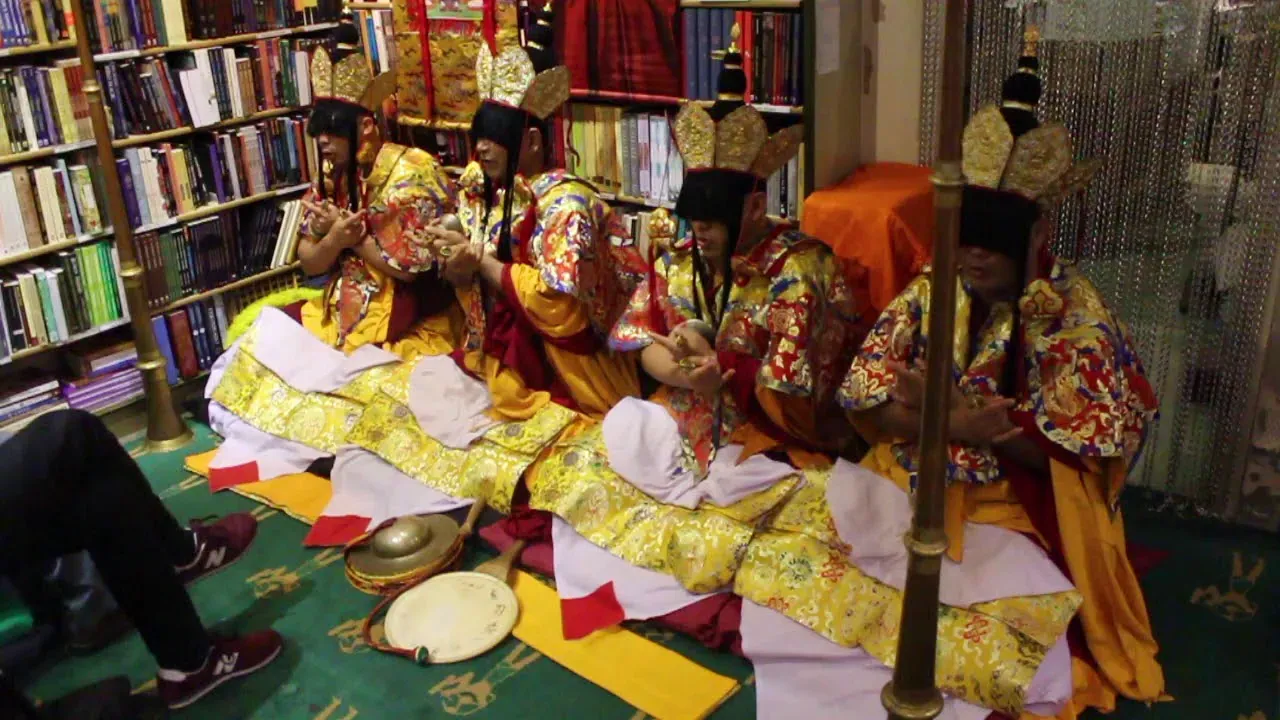
A quieter model came from Deva Premal. She met Miten in 1990 at the Osho resort in Pune, and the pair have toured together since 1992 with concerts and chant workshops. The Essence (1998) is an early record in the Sanskrit mantra style she made a staple of yoga studios. In 1997 Ravi Shankar and producer George Harrison released Chants of India, setting Vedic and other Hindu prayers to music, which reviewers praised as a quiet masterpiece.
Yoga-world mantra, 2000-2016
Mantra albums found a steady audience among yoga teachers and students in the 2000s. Snatam Kaur signed with Spirit Voyage Records in 2000 and released Amrit Vela: Sadhana Chants that year. She sings Kundalini yoga chants and Sikh shabads, and her 2010 compilation Essential Snatam Kaur peaked at number nine on the Billboard top new-age albums chart. Deva Premal’s Tibetan Mantras for Turbulent Times (2010) was recorded with the Gyuto monks and presents eight mantras, each chanted 108 times.
Grammy chant, 2017 onward
White Sun, an American trio of Gurujas Khalsa, Harijiwan Khalsa and Adam Berry, won Best New Age Album at the 59th Grammy Awards with White Sun II. Deva Premal’s Deva (2018) was nominated at the 62nd ceremony, and Snatam Kaur’s Beloved earned a nomination as well. From 2023 the category is named Best New Age, Ambient or Chant Album, giving the style a place in the award’s title.
Characteristics
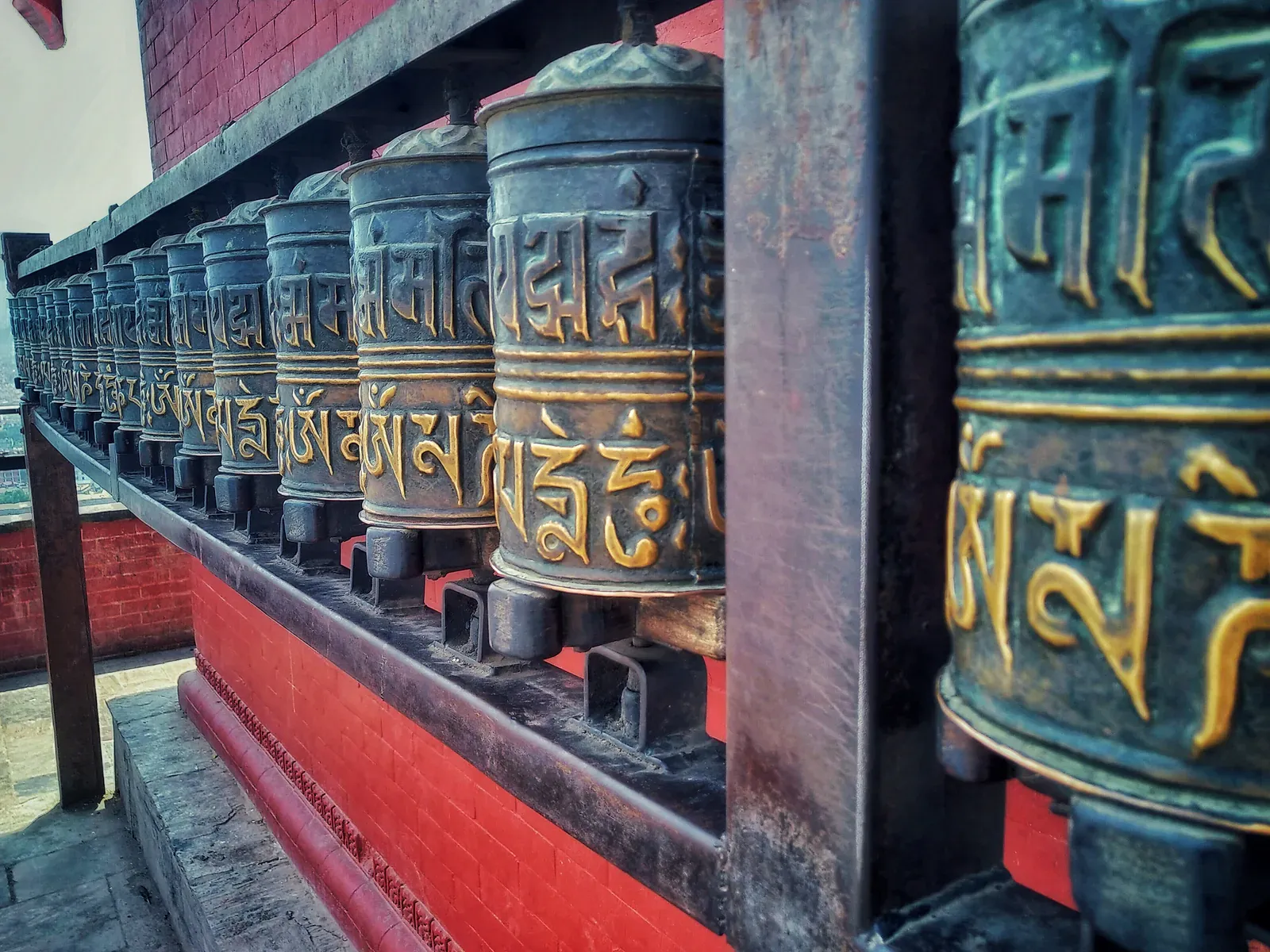
Texts are short and repeated. A mantra such as Om Mani Padme Hum, the six-syllable Tibetan mantra of compassion, or the Sanskrit Gayatri Mantra may run for minutes with small variations in melody. Singers often use a soft contralto, and text is frequently left untranslated. Deva Premal has said that the meaning is secondary to the sound.
Tempo is slow and steady, measured at roughly 65 to 110 beats per minute across canonical recordings. Harmony is static or modal, with a drone or pad under the voice. The goal is closer to calm and devotion than to development or surprise, which is why the form works for practice.
Instruments and production
The voice is the lead instrument. Under it, Deuter works with flute, guitar and electronics, Halpern with electric piano, and Snatam Kaur’s touring band has used guitar, clarinet, flutes and tabla. Production favours reverb, long sustained pads and a quiet pulse that does not compete with the text. Enigma showed the other extreme, setting sampled Gregorian chant over a dance beat.
Notable recordings
Aum (1972) is the flagship of the meditation-school line, with flute and electronic layers over sea sounds. Om Mani Padme Hum, from Deva Premal’s Love Is Space (2000), reduces the form to its core: one mantra over a soft pad. Sarve Shaam closes Chants of India (1997), a prayer for peace sung in unison over Indian instruments. Long Time Sun, from Snatam Kaur’s Grace (2004), turns a Kundalini yoga blessing into an acoustic lullaby.
Culture
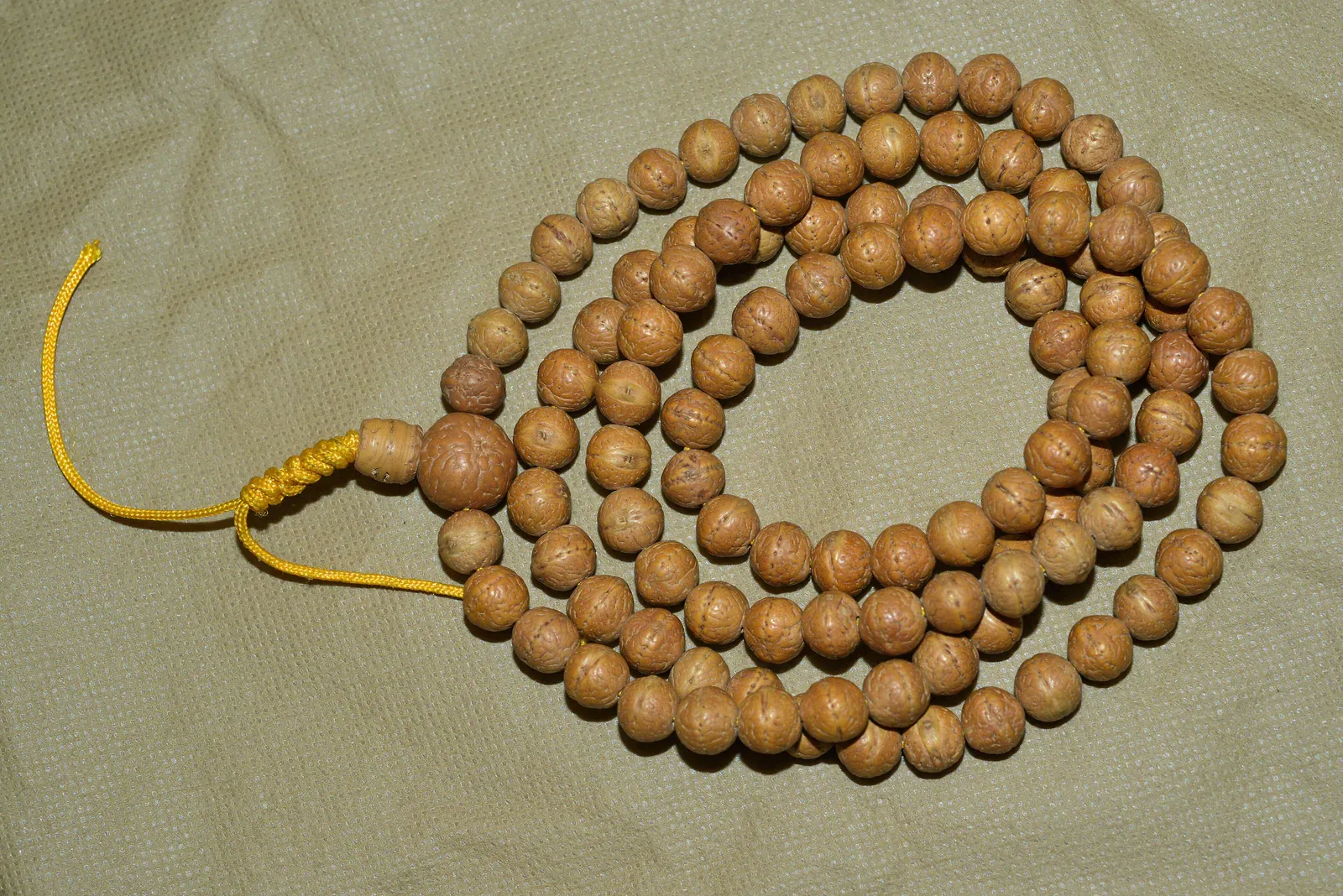
The music belongs to practices more than to scenes. Rajneesh’s meditation techniques, Kundalini yoga sadhana, chant workshops and retreat evenings supply the settings, and the audience is closer to a congregation than a club crowd. Mala beads, used to count repetitions, are a common companion to mantra practice.
Controversy has centred on authenticity. Enigma’s sampled chant led to a lawsuit by the Munich choir’s label over the right of personality, ended when Cretu agreed to pay compensation.
Legacy
The style set a template used by yoga-class playlists, retreat soundtracks and healing sessions, and it brought Sanskrit, Gurmukhi and Tibetan chant to listeners with no religious tie. It sits beside meditation music, healing music and kirtan, and shares ground with ethnic fusion and Buddhist music.
Misconceptions
Spiritual new age is not liturgy. The albums are made for listening and practice outside religious services, and artists such as Deva Premal choose mantras from several traditions.
New age has no single sound. The Grammy screening committee has judged the category by intent, and spiritual new age is one voice-led strand among instrumental piano, ambient and Celtic strands.
The chant on MCMXC a.D. was not sung by monks for Enigma. It was sampled from recordings by the Capella Antiqua München choir, which led to the lawsuit.
Frequently asked questions
What is spiritual new age music?
Spiritual new age music is new-age music framed around spiritual practice, usually with chanted mantras or wordless vocals over a calm instrumental bed. It began in the 1970s with meditation records by Deuter and Steven Halpern.
Who are the best-known spiritual new age artists?
Deuter, Steven Halpern, Deva Premal, Snatam Kaur and White Sun are the central names. Enigma and Ravi Shankar’s Chants of India are major crossover records.
Is spiritual new age the same as kirtan?
No. Kirtan is a devotional group practice with call and response. Spiritual new age borrows its chants and recasts them as soft, produced albums for listening, yoga and retreat settings.
Why is spiritual new age sung in Sanskrit?
Many mantras come from Hindu, Buddhist and Sikh traditions, whose texts are in Sanskrit, Tibetan or Gurmukhi. Artists often keep the original language because the sound of the words is part of the practice.
Sound
Sound sheet
Signature sounds
- A short mantra repeated for minutes
- Soft lead voice, often a contralto, over a held drone-like pad
- Slow steady pulse from a guitar or tabla
- Sanskrit, Gurmukhi or Tibetan text without translation
Drums and percussion
- Tabla
Techniques
- Mantra repetition
- Static keyboard minimalism
- Overtone chanting
- Sampled chant over beats
Keys and modes
Chakra keynotes, C to B. Spectrum Suite assigns the seven tones of the scale to the seven chakras and colours.
Vocals
Sanskrit, Gurmukhi or Tibetan mantras sung softly or intoned in unison, often in a contralto, with little melodic movement.
Scenes
Where it happened
Where and when the sound lived: one bar per city on a shared timeline.
Europe
Asia
North America
Active scenes
Peak 4, 2015-2025
Kuckuck Schallplatten, the label of Deuter's early meditation albums, was founded here.
The Osho meditation resort, where Deva Premal met Miten in 1990 and Deuter studied under Rajneesh.
White Sun formed here in 2015.
Deuter moved here in the 1990s and recorded for New Earth Records.
Culture
Culture markers
- Active meditation
Deuter's Kundalini, Nadabrahma and Whirling Meditation Music were made as sound for Rajneesh's meditation techniques.
Ritual - Chant workshops
Deva Premal and Miten have toured since 1992 with concerts and chant workshops.
Ritual - Kundalini yoga sadhana
Snatam Kaur's chants serve the morning practice of Kundalini yoga, in the lineage of her teacher Yogi Bhajan.
Ritual
Glossary
Terms on this page
In yogic teaching, an energy centre of the body; Halpern's Spectrum Suite pairs seven tones with seven chakras.
A Vedic mantra in Sanskrit that Deva Premal made one of her best-known chants.
Call-and-response devotional singing, the older practice that new-age artists soften for a wide audience.
A syllable, word or phrase repeated in chant or silent meditation.
The six-syllable Tibetan Buddhist mantra of compassion.
A daily spiritual practice; Snatam Kaur's first album is subtitled Sadhana Chants.
New Age family