Scottish folk music
Scottish folk music is the traditional Scots and Gaelic song, pipe and fiddle music of Scotland, documented from the Middle Ages and revived in the 1900s.
Scotland, around 1400
Folk family
Born
around 1400
Scotland
Subgenres
6
Documented branches
Links
12
Genres it drew on or shaped
Tempo
70-140 BPMLineage
Family tree
Grew out of
Also shaped by
Scotland
Scottish folk music
Led to (7)
Timeline
Era by era
From the first sparks to today. Select a dot to read the story behind it.
- Pipes, fiddles and ballads
1400 to 1700
- Collectors and publishers
1723 to 1923
- The second revival
1951 to 1975
- Folk rock and fusion
1969 to today
Eras
Moments
- 1 Pipes, fiddles and ballads, 1400 to 1700
- 2 Collectors and publishers, 1723 to 1923
- 3 The second revival, 1951 to 1975
- 4 Folk rock and fusion, 1969 to today
around 1400
Pipes, fiddles and ballads
Highland bagpipes appear in the record by 1547 and ceòl mòr takes shape in piping families, while fiddles spread in the Highlands and ballads circulate orally.
- 1547Highland pipes at Pinkie CleughThe first clear reference to the Highland bagpipes comes from an account of this battle.
1723
Collectors and publishers
Printed song collections, Gow and Skinner on the fiddle, and ballad scholars fix the repertoire; a country dance society preserves the dances.
- 1723The Tea Table MiscellanyAllan Ramsay's verse compendium opens an age of printed Scottish song.
- 1787The Scots Musical Museum beginsJames Johnson and Robert Burns publish songs in volumes through 1803.
- 1882Child's ballad collectionFrancis James Child's eight volumes of English and Scottish ballads appear to 1892 and shape later repertoire.
- 1923Royal Scottish Country Dance Society foundedSet up to preserve Scottish dances threatened by continental ballroom dances.
1951
The second revival
Fieldwork at the School of Scottish Studies, folk clubs and festivals bring source singers and new groups to audiences.
- 1951School of Scottish Studies foundedThe Edinburgh department begins systematic recording of traditional singers.
- 1956Scottish Popular BalladsEwan MacColl records an influential ballad album as the revival spreads.
- 1958The White Heather Club beginsThe weekly television show runs to 1967 and popularises a tartan image of Scottish music.
- 1962The Corries form in EdinburghThe trio becomes a duo in 1966 and keeps performing until 1990.
1969
Folk rock and fusion
Bands such as Runrig and Capercaillie add electric instruments to Gaelic and Scots material, and later groups add dance-music electronics.
- 1973Runrig form on SkyeThe band later blends Gaelic song with rock.
- 1978Runrig release Play GaelicThe first commercially successful album with all-Gaelic lyrics.
- 1984Capercaillie begin recordingThe band joins Scottish folk to electric instruments and Gaelic vocals.
Listening path
Start listening
A short path from an easy way in to the deep end. Thumbnails come from YouTube; the player loads only when you press play.
- 01
The Corries, 1969
Hear the anthem that took Scottish folk song into stadiums.
- 02
Dougie MacLean, 1983
Listen to the singer-songwriter ballad that became Scotland's best loved.
- 03
Runrig, 1992
Listen to the Gaelic-rooted rock band's crowd anthem.
- 04
Capercaillie, 1991
Listen to Gaelic vocals over electric folk instrumentation.
Facts
| Family | Folk |
| Origin | Scotland, United Kingdom |
| Emerged | Medieval onwards |
| Status | Active |
| Tempo | 70 to 140 BPM |
| Meter | 4/4 |
| Subgenres | 5 |
Scottish folk music is the traditional song and instrumental music of Scotland, sung in Scots and Gaelic and played mainly on the bagpipe, fiddle, harp and voice.
It is documented from the late Middle Ages, took its dance forms in the eighteenth century and was revived twice in the twentieth, once through collectors and once through folk clubs and rock bands. It belongs to the wider Celtic music tradition within the folk family.
Origins
A flourishing popular song culture existed in Scotland by the late Middle Ages, shown by the long list of songs in The Complaynt of Scotland, printed in 1549. Almost no tunes survive from that period. The Pleugh Song is the only song with a melody to come down intact. Melodies also survive because the Wedderburn brothers adapted popular songs into spiritual satires, published as The Gude and Godlie Ballatis in 1567.
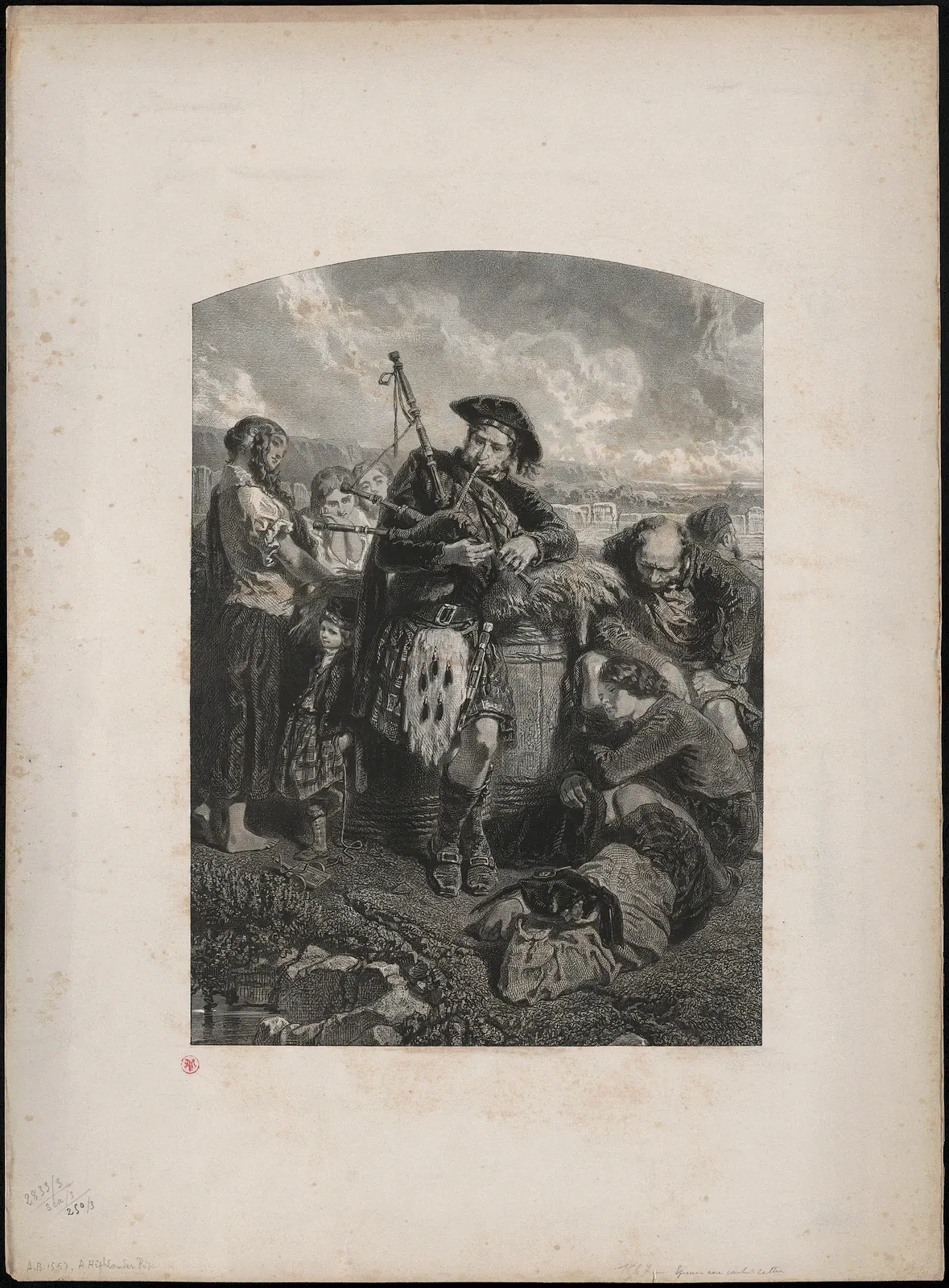
After the Reformation the Kirk tried to suppress dancing and gatherings such as penny weddings, particularly in the Lowlands, yet the secular tradition continued. The first clear reference to Highland bagpipes comes from an account of the Battle of Pinkie Cleugh in 1547. In the early seventeenth century piping families such as the MacCrimmons, MacArthurs, MacGregors and the Mackays of Gairloch shaped the bagpipe’s art music, ceòl mòr, with its battle tunes, marches, salutes and laments. Fiddles were spreading too: a traveller in 1703 counted eighteen players on Lewis alone.
Ballads formed a separate strand. Some, such as Sir Patrick Spens and Thomas the Rhymer, concern events that may reach back to the thirteenth century, though no text appears before the eighteenth. Scottish ballads often include supernatural figures, as with the fairies of Tam Lin. They stayed oral until collectors began to print them.
Collectors and publishers, 1723-1923
Printing turned oral repertoire into a canon. Allan Ramsay’s The Tea Table Miscellany appeared in 1723, and The Scots Musical Museum, edited by James Johnson with Robert Burns, ran from 1787 to 1803. On the fiddle, Niel Gow and his son Nathaniel composed hundreds of tunes and variations. James Scott Skinner, called the Strathspey King, carried the style from local functions to Balmoral.
From the late nineteenth century collecting became more academic. Francis James Child’s eight volumes of English and Scottish ballads, issued from 1882 to 1892, most influenced the repertoire later performers drew on. In Scotland the Reverend James Duncan and Gavin Greig gathered over a thousand songs, mainly in Aberdeenshire. The Royal Scottish Country Dance Society was founded in 1923 to protect dances threatened by continental ballroom fashions, and the accordion became central at Highland balls.
The second revival, 1951-1975
Traditional music was marginalised after the Second World War but stayed stronger than in England, and the cèilidh house survived in rural areas into the early 1950s. The American collector Alan Lomax recorded numerous songs in Scotland, issued on Columbia around 1955, and broadcasts by Lomax, Hamish Henderson and Peter Kennedy raised awareness. The School of Scottish Studies opened at the University of Edinburgh in 1951 with Henderson as a research fellow. Source singers who gained audiences included John Strachan, Jimmy MacBeath, Flora MacNeil and Jeannie Robertson, whom Henderson sought out in Aberdeen in 1953.
Festivals followed: the Edinburgh People’s Festival from 1951, the Aberdeen Folk Festival from 1963 and the Girvan Folk Festival from 1964. Folk clubs flourished in the 1960s and were less dogmatic than English ones, mixing Scottish, Irish, English and American songs. Ewan MacColl recorded Scottish Popular Ballads in 1956. The Corries, formed in Edinburgh in 1962, narrowed to a duo of Roy Williamson and Ronnie Browne in 1966, and Williamson’s Flower of Scotland became an unofficial national anthem.
A parallel popular strand, built on tartanry and music-hall image, rode television. The White Heather Club, fronted by Andy Stewart, ran from 1958 to 1967 and was hugely popular, though many modernists despised its version of Scotland.
Folk rock and fusion, 1969 to the present
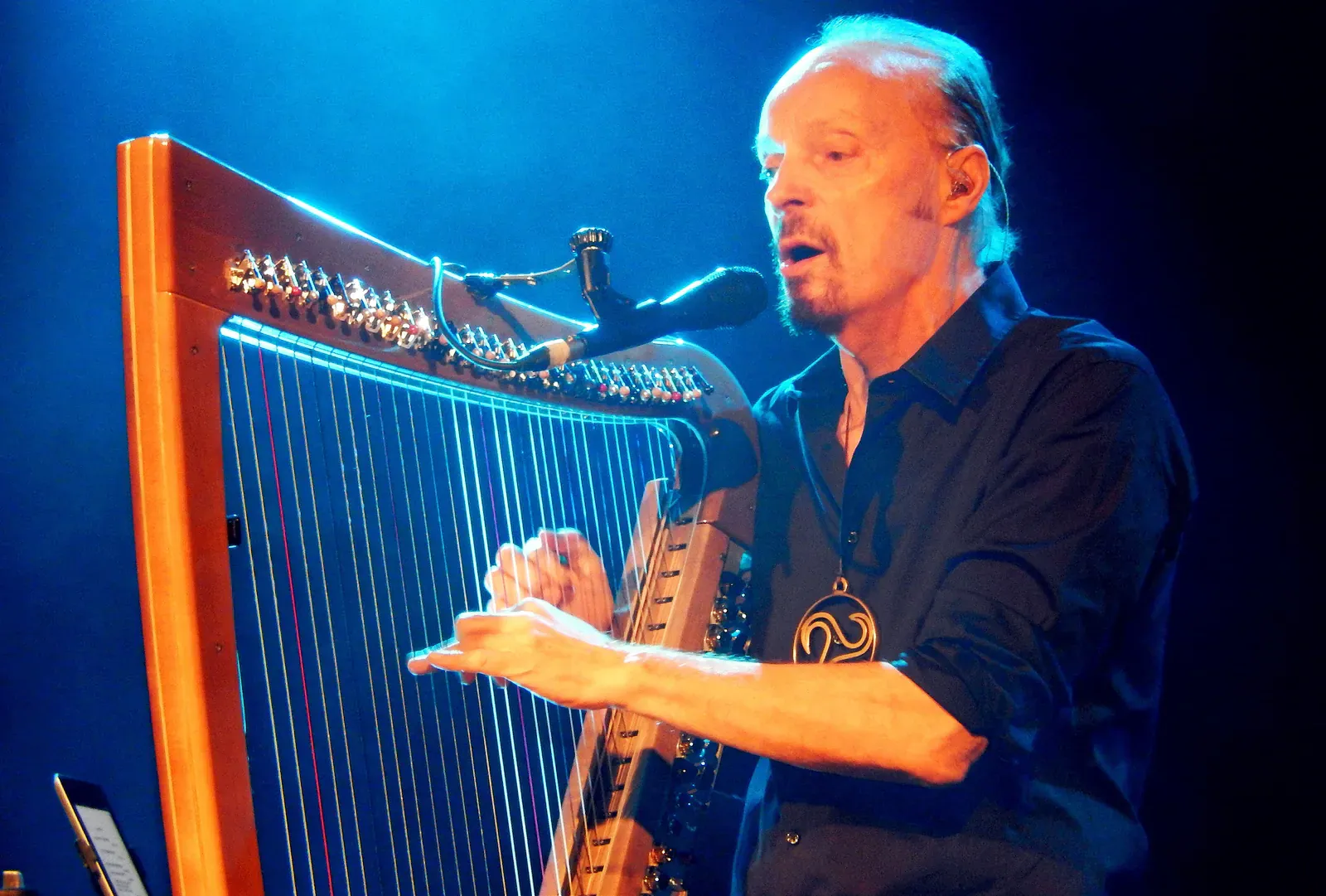
Glasgow’s scene produced the Battlefield Band, founded in 1969, along with The Clutha and the Whistlebinkies, who relied on traditional instruments including the clàrsach. Silly Wizard and Ossian carried traditional material through the 1970s. Many of these groups drew on Lowland music, while later and more successful bands favoured Highland Gaelic sounds. From these groups came solo writers such as Andy M. Stewart, Brian McNeill and Dougie MacLean, whose Caledonia is among Scotland’s best loved songs.
Celtic rock grew from British folk rock, which Fairport Convention developed from 1969. Dick Gaughan’s Five Hand Reel combined Irish and Scottish players. Runrig, formed on Skye in 1973, released Play Gaelic in 1978, the first commercially successful album with all-Gaelic lyrics. Capercaillie joined Scottish folk, electric instruments and Gaelic vocals from the 1980s, and Wolfstone brought bagpipes into rock from 1989. Shooglenifty and Peatbog Faeries mixed Highland music with dub-influenced rhythms, a blend sometimes called acid croft, and Martyn Bennett used electronic sampling. Simple Minds and Big Country absorbed Celtic sounds into stadium rock.
Newer traditional acts include Julie Fowlis, Dàimh and Lau, while Old Blind Dogs sing in the Doric Scots of Aberdeenshire.
Characteristics
The tradition divides into song and instrumental music. Song runs from unaccompanied Scots ballads to Gaelic lament, waulking song and mouth music (puirt à beul), which voices use to accompany dancing. Gaelic songs favour nature, grief and unrequited love, with laments usually sung from a woman’s viewpoint. Lowland Scots ballads more often tell long narratives of murder and misfortune, which Gaelic song seldom does.
Instrumental music divides into the pipe’s ceòl mòr and ceòl beag. A pibroch states a slow theme, the ùrlar, then builds increasingly complex variations before returning to the theme. Ceòl beag covers marches, strathspeys, reels, jigs and airs; a march, strathspey and reel set is standard in competition. The strathspey is a 4/4 tune with dotted rhythms and the Scotch snap, a short accented note before a long one. It is usually followed by a reel in even notes, which releases the tension. Scottish fiddling is marked by exact execution and energy, with hack and snap bowing and regional styles from Shetland, the northeast, the west coast and Cape Breton.
Instruments and production
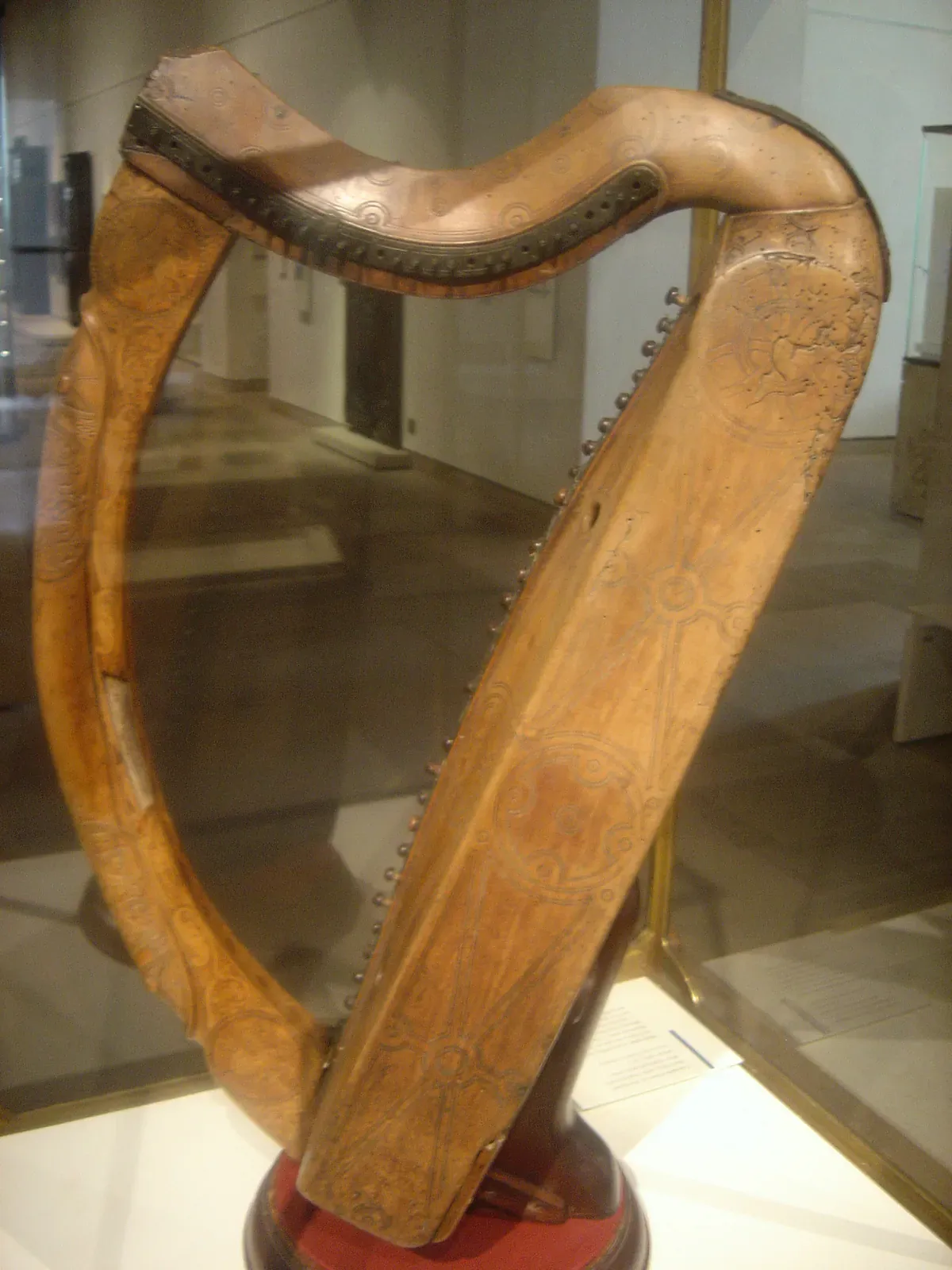
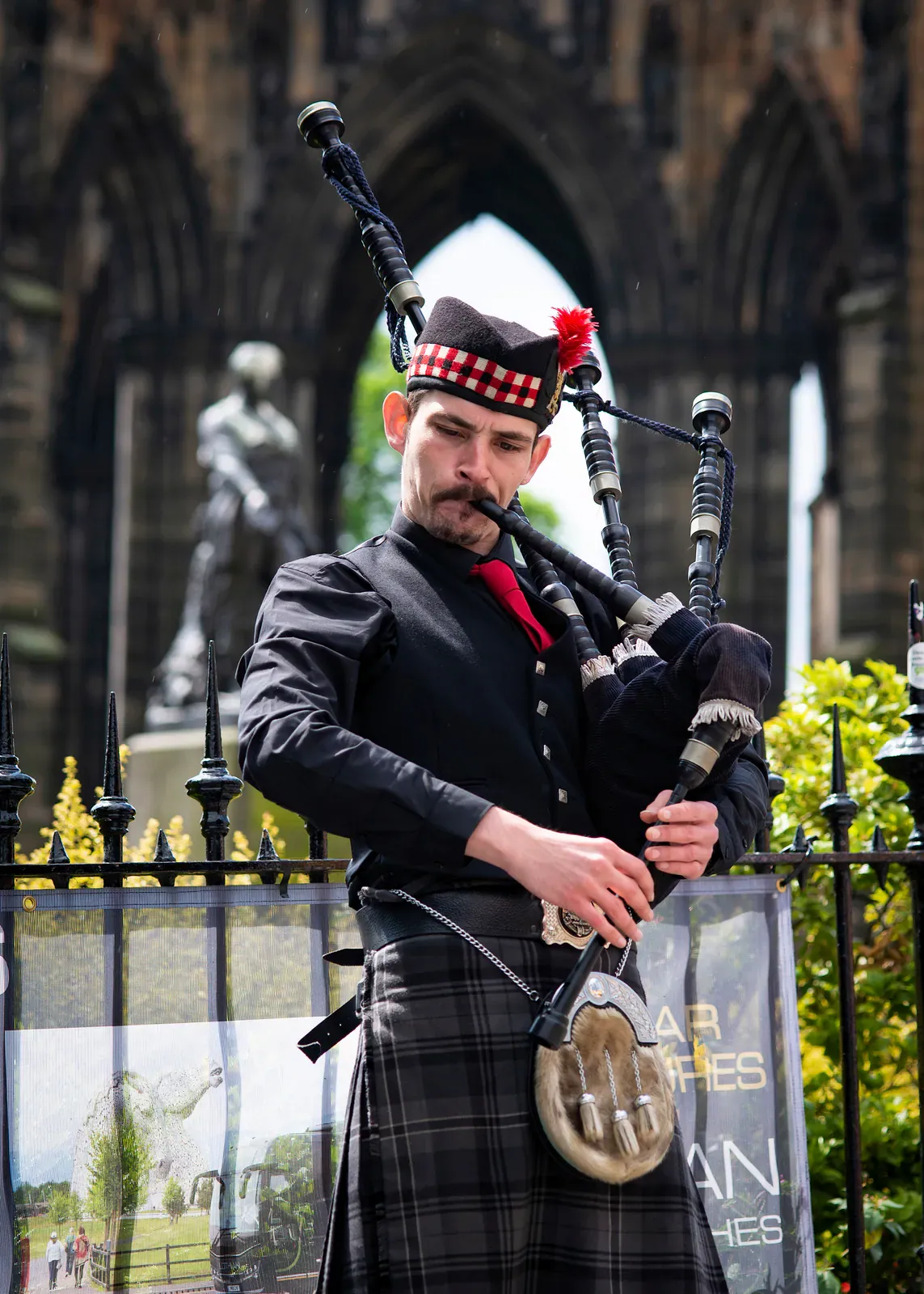
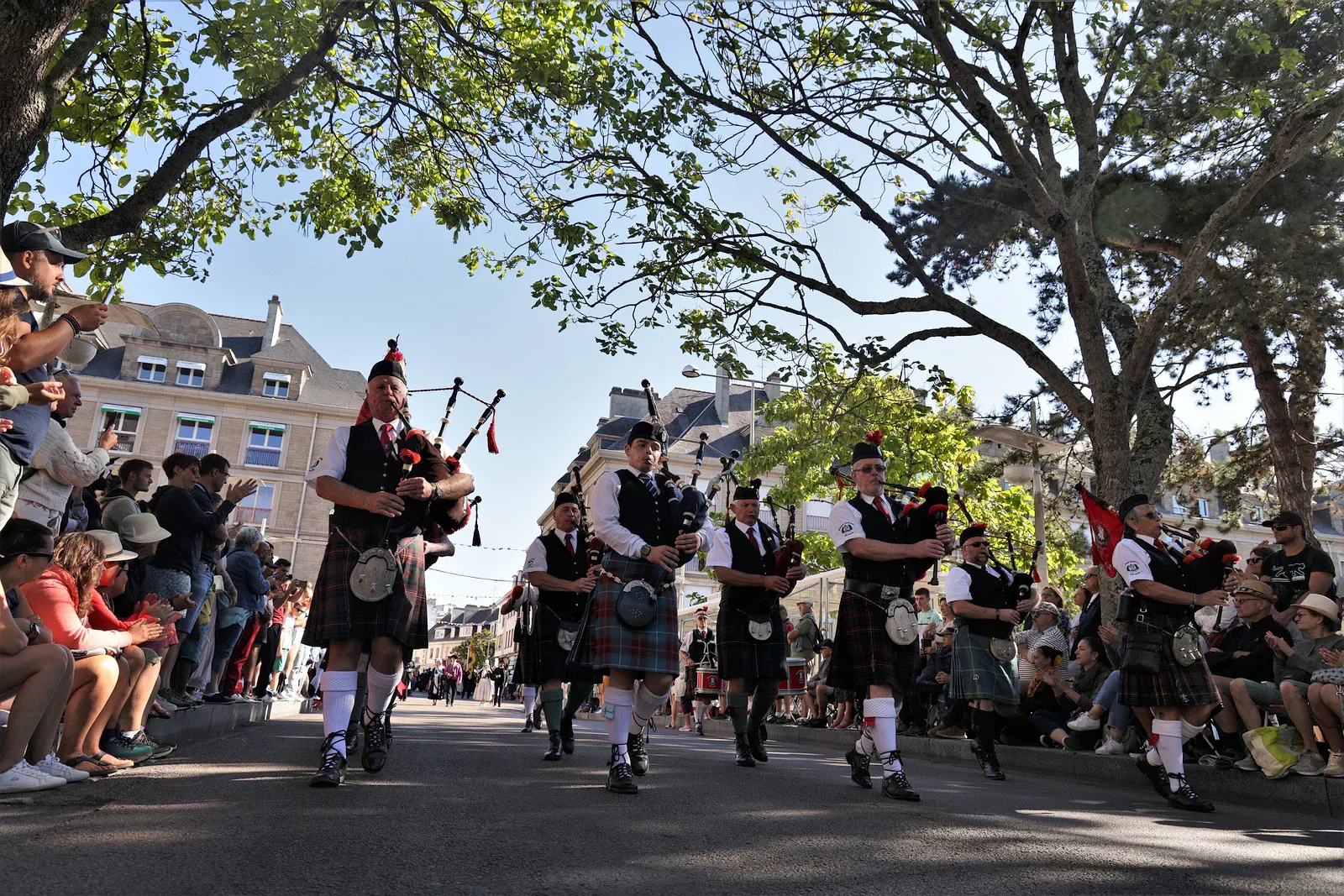
The Great Highland bagpipe has a nine-note chanter, two tenor drones and a bass drone. It cannot stop between notes, so grace-note embellishments such as doublings, throws and birls articulate the tune. Its pitch sits near 470 to 480 Hz, which makes it awkward to combine with concert-pitched instruments. The clàrsach, a wire-strung harp, was the older vehicle for ceòl mòr. Fiddle and accordion carry dance music, and rock-era bands added guitar, bass, drum kit and keyboards.
Mainstream success
No Scottish folk group matched the sales of Irish acts such as The Chieftains and The Dubliners. Success came in other ways: Runrig and Capercaillie grew out of the 1980s dance-band and cèilidh circuit, and television gave the music a mass audience in the 1950s and 1960s.
Notable recordings
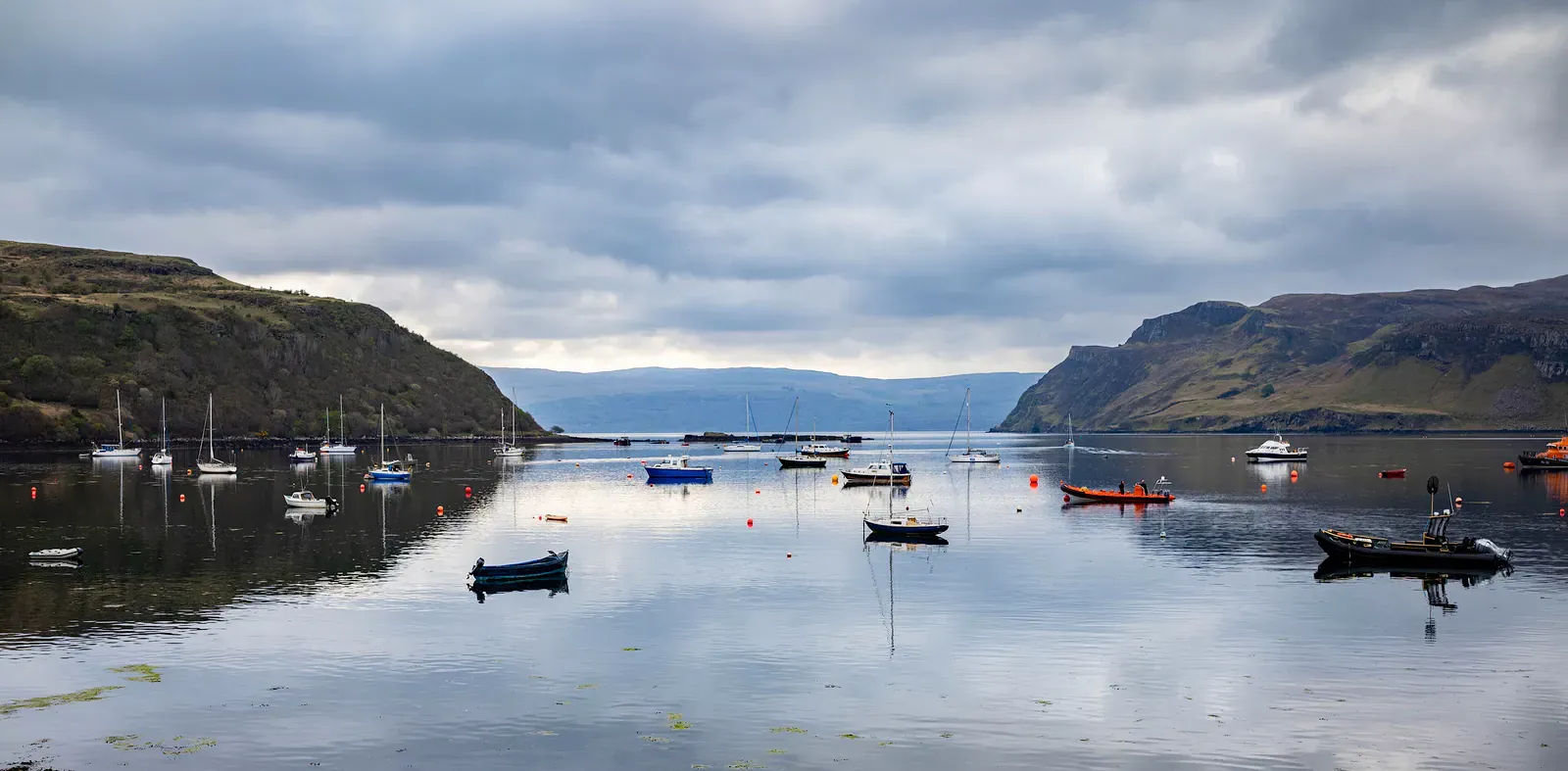
Flower of Scotland first appears on The Corries’ In Concert album in 1969. Caledonia, recorded by Dougie MacLean in 1978 and reissued on Craigie Dhu in 1983, spread through emigrant communities. Capercaillie’s Coisich, a rùin, from the 1991 album Delirium, shows the band’s pairing of Gaelic song with electric arrangements. Jeannie Robertson’s 1953 recordings, including a Child ballad lasting over thirteen minutes, appeared in 1975 as The Queen Among the Heather.
Culture
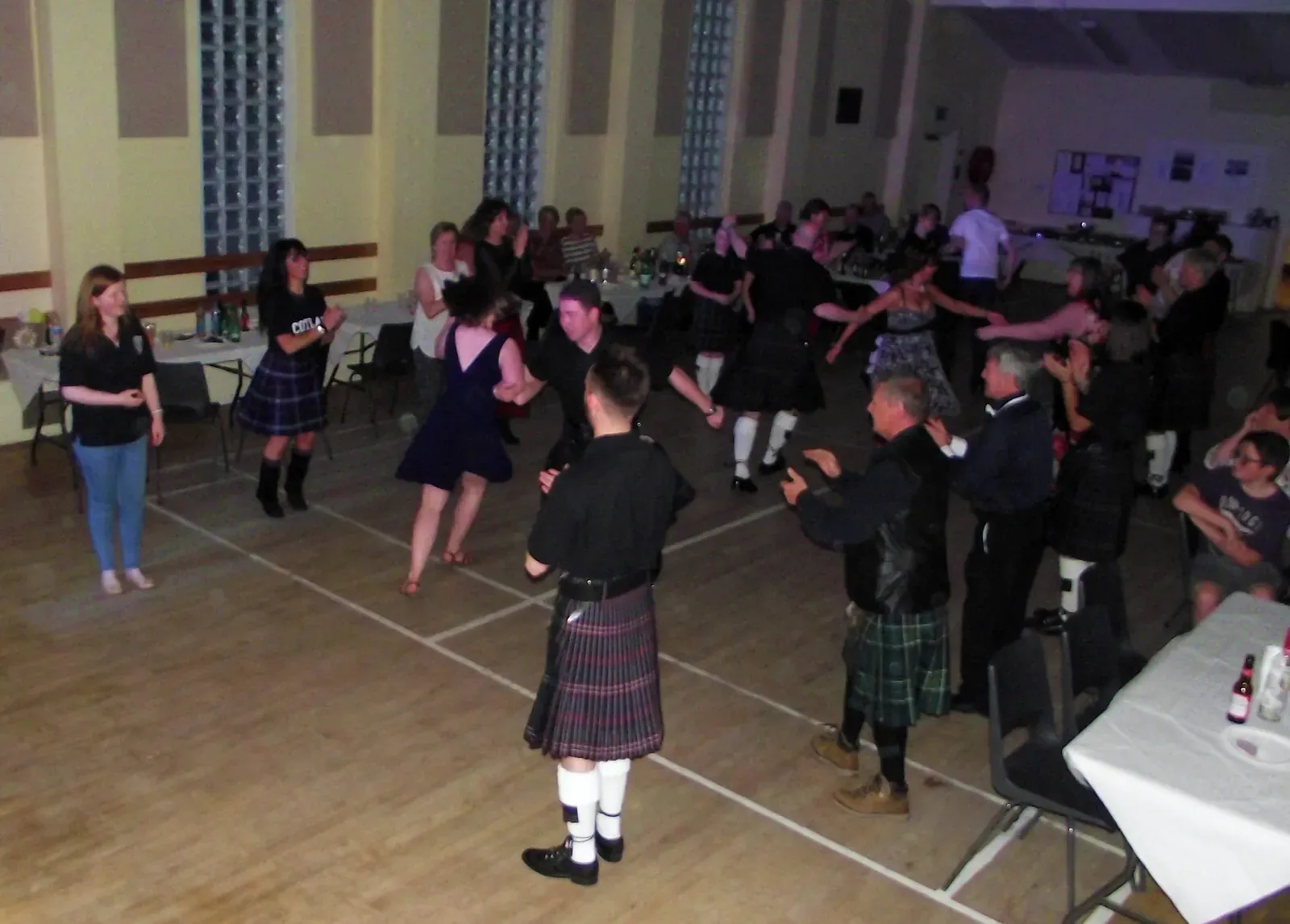
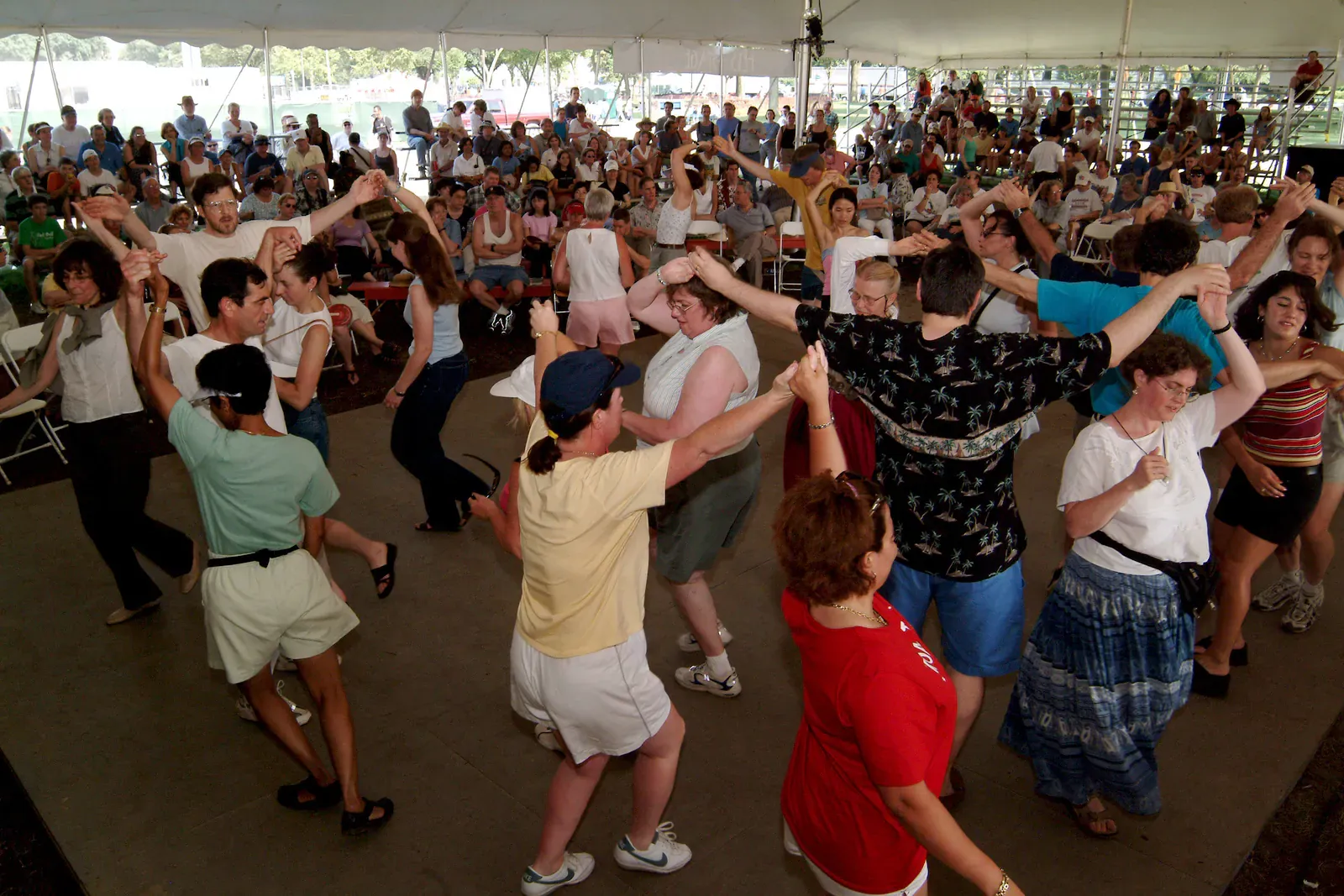
Cèilidh dancing and Scottish country dance share a Gaelic-derived repertoire of jigs, reels and strathspeys. Scottish country dance fuses eighteenth-century English formations with Highland footwork. Labels such as Greentrax Recordings and Transatlantic Records issued much of it on record.
Legacy
The music underlies pipe bands worldwide, the Cape Breton fiddle tradition carried by Highland emigrants and the Celtic rock that followed. It sits beside English folk and folk rock in the British revival.
Misconceptions
Scottish music is often reduced to bagpipes and tartan. The piper’s repertoire is only part of it, and the tartan image on mid-century television was one commercial strand beside unaccompanied singing and fiddle dance music. Bagpipes were also rare in folk rock until Wolfstone integrated them from 1989.
Pibroch is not the usual sound of the pipes. Most piping is ceòl beag, while pibroch is a slow solo art music.
The Scotch snap is not limited to Scotland. It is a short-long rhythm found in baroque music, though in Scottish tradition it defines the strathspey.
Frequently asked questions
What is Scottish folk music?
Scottish folk music is the traditional Scots and Gaelic song, pipe and fiddle music of Scotland, passed down orally and later collected and revived.
What is the difference between ceòl mòr and ceòl beag?
Ceòl mòr is the great music, pibroch for the Highland bagpipe, a slow theme followed by variations. Ceòl beag is the light music of marches, dances and airs.
Which instruments are used in Scottish folk music?
The Great Highland bagpipe, fiddle, clàrsach and accordion are the main instruments, with guitar and drums added by folk rock bands.
Sound
Sound sheet
Signature sounds
- Dotted rhythm and Scotch snap in strathspeys
- Bagpipe or fiddle lead over drones or guitar
- March, strathspey and reel set
- Gaelic or Scots lyrics
Techniques
- Grace-note embellishments
- Scotch snap
- Snap and hack bowing
- Ground and variations
- Puirt à beul
Keys and modes
Mixolydian. Highland pipe chanter scale, written in A or D major with no signature.
Tuning
Highland pipes sit at about 470 to 480 Hz, above A=440.
Vocals
Solo unaccompanied ballads in Scots and Gaelic songs including mouth music, later group harmony and rock vocals.
Scenes
Where it happened
Where and when the sound lived: one bar per city on a shared timeline.
Europe
Active scenes
Peak 4, 1973-2025
Home of the School of Scottish Studies, early folk clubs and The Corries.
Its folk scene produced Battlefield Band, The Clutha and the Whistlebinkies.
Northeast city of ballad collecting and source singers, with a folk festival from 1963.
Isle of Skye, birthplace area of Runrig and a centre of Gaelic song.
Venues and places
Edinburgh, 1951 to today. Held 1951 to 1953, among the first festivals to popularise the music.
Aberdeen, 1963 to today. Festival begun in 1963.
Girvan, 1964 to today. Ran 1964 to 1965 and again from 1975.
Culture
Culture markers
- Cèilidh dancing
Social dance to jigs, reels and strathspeys at gatherings in halls and homes.
Dance - Scottish country dance
Eighteenth-century fusion of English country dance formations with Highland music and footwork.
Dance - Tartanry
Image of Scottishness on mid-century television that many modernists disliked.
Fashion - Pipe band competition
Bands play a march, strathspey and reel set for competition.
Ritual
Media
Key media
- 1787The Scots Musical Museum
by James Johnson and Robert Burns. Song collection published in volumes to 1803.
Book - 1882The English and Scottish Popular Ballads
by Francis James Child. Eight-volume collection that defined later ballad repertoire.
Book
Glossary
Terms on this page
A social gathering with music and dancing.
The little music: marches, strathspeys, reels, jigs and airs.
The great music: pibroch, a slow theme with growing variations on the Highland bagpipe.
Gaelic mouth music sung for dancing.
A short accented note followed by a longer one.
Dance tune in 4/4 with dotted rhythms and the Scotch snap.
Folk family