Jump blues
Jump blues is uptempo, horn-led blues for small combos, formed in the 1930s and 1940s from swing and boogie-woogie, and a direct root of R&B and rock and roll.
Kansas City, 1938
Blues family
Born
1938
Kansas City
Subgenres
3
Documented branches
Links
23
Genres it drew on or shaped
Tempo
115-175 BPMLineage
Family tree
Grew out of
Influenced by
Kansas City, 1938
Jump blues
Led to (5)
Timeline
Era by era
From the first sparks to today. Select a dot to read the story behind it.
- Swing roots and the small combo
1938 to 1944
- The jukebox years
1945 to 1951
- Handoff to rock and roll
1952 to 1960
- Swing revival
1989 to today
Eras
Moments
- 1 Swing roots and the small combo, 1938 to 1944
- 2 The jukebox years, 1945 to 1951
- 3 Handoff to rock and roll, 1952 to 1960
- 4 Swing revival, 1989 to today
1938
Swing roots and the small combo
Big-band blues and boogie-woogie piano met in Kansas City, Harlem and Los Angeles. Louis Jordan cut his band down to a sextet in 1938, and Lionel Hampton's 1942 Flying Home set the screaming tenor sax solo.
- 1938Jordan forms his small bandLouis Jordan trims a nine-piece group to a sextet for a Harlem residency at the Elks Rendezvous and records as the Tympany Five from 1939.
- 1942Flying Home with Illinois JacquetLionel Hampton's 1942 Decca recording of Flying Home features a choked, screaming tenor solo by Illinois Jacquet and becomes a hit in the race category.
1945
The jukebox years
Jordan's Decca hits topped the race and later R&B charts, while Los Angeles labels such as Specialty, Aladdin and Modern recorded Roy Milton, Joe Liggins and Big Jay McNeely. Shouters Wynonie Harris and Big Joe Turner sang over the same riffs.
- 1945CaldoniaJordan and the Tympany Five release Caldonia in April 1945, one of the biggest hits of his Decca run.
- 1945R.M. BluesRoy Milton's R.M. Blues reaches number 2 on the R&B chart and sells over a million copies, helping to establish the company that became Specialty Records.
- 1946Choo Choo Ch'BoogieRecorded in January 1946 and issued by Decca in June, it ranks number 2 on Billboard's year-end chart of most-played race records.
- 1948Wynonie Harris covers Good Rockin' TonightHarris adds a backbeat to Roy Brown's 1947 song for King Records, and it becomes his second number one R&B hit.
- 1948Deacon's HopSaxophonist Big Jay McNeely's honking instrumental becomes his best-known record and a model for stage-walking sax showmanship.
- 1949Saturday Night Fish FryJordan's two-sided 78 uses the word rocking in the chorus and features a distorted electric guitar.
- 1951The Train Kept A-Rollin'Tiny Bradshaw records the jump blues later covered by rock bands from the Rock and Roll Trio to the Yardbirds.
1952
Handoff to rock and roll
Smaller labels turned to rhythm and blues and then rock and roll. Turner's 1954 Shake, Rattle and Roll and Bill Haley's cover took the jump formula to a white teenage audience, and the original bands lost their market.
- 1954Shake, Rattle and RollBig Joe Turner records the song for Atlantic in New York in February, and a cover by Bill Haley follows.
- 1955Jump bands fall out of fashionWith the rise of rock and roll the style becomes unfashionable by the middle of the decade, and acts such as Roy Milton lose their hit run.
1989
Swing revival
Los Angeles bands such as Royal Crown Revue and Big Bad Voodoo Daddy revived jump blues from 1989. The Brian Setzer Orchestra and the Cherry Poppin' Daddies reached platinum sales in 1997 and 1998.
- 1998The Dirty BoogieThe Brian Setzer Orchestra album, with a cover of Louis Prima's Jump, Jive an' Wail, reaches double-platinum sales.
Listening path
Start listening
A short path from an easy way in to the deep end. Thumbnails come from YouTube; the player loads only when you press play.
- 01
Lionel Hampton and His Orchestra, 1942
Listen for Illinois Jacquet's screaming tenor solo over the riffing band.
- 02
Wynonie Harris, 1948
Listen for the shouted vocal and the backbeat that anticipates rock and roll.
- 03
Louis Jordan and His Tympany Five, 1949
Listen for the call-and-response chorus and the early distorted guitar riffs.
- 04
Big Joe Turner, 1954
Listen for the shouter's delivery over a driving shuffle that fed straight into rock and roll.
- 05
The Brian Setzer Orchestra, 1998
Listen for how a revival big band recasts a 1956 jump blues for 1990s dance floors.
Facts
| Family | Blues |
| Origin | Kansas City, United States |
| Emerged | Late 1930s to 1940s |
| Status | Revival |
| Tempo | 115 to 175 BPM |
| Meter | 4/4 |
| Subgenres | 2 |
Jump blues is an uptempo style of blues, played by small combos of five to seven musicians with a horn section, a heavy dance beat and shouted or comic vocals. It formed in the late 1930s and 1940s in the United States from the meeting of big-band swing, boogie-woogie piano and the twelve-bar blues.
Its leading figure was the saxophonist and bandleader Louis Jordan, and it is a direct root of rhythm and blues and of rock and roll.
Origins
The style grew out of the big bands of the early 1940s, such as those of Lionel Hampton and Lucky Millinder, and out of the Kansas City clubs where blues shouters sang over boogie-woogie pianists. In Kansas City the singer Big Joe Turner worked as a bartender and performer beside the pianist Pete Johnson. The two appeared at a Carnegie Hall concert in New York in 1938, an event that introduced blues and jazz to a wider American audience and led to their hit Roll ’Em Pete.
That same year Louis Jordan, a saxophonist and singer who had played in Chick Webb’s orchestra, formed his own group. He cut a nine-piece band down to a sextet for a residency at the Elks Rendezvous in Harlem and recorded under the name Tympany Five from 1939. The small size was the point. A five-piece group could play as loudly as a big band, drew dancers, and cost a venue far less, so agents and ballroom owners hired jump combos for jitterbug dances.
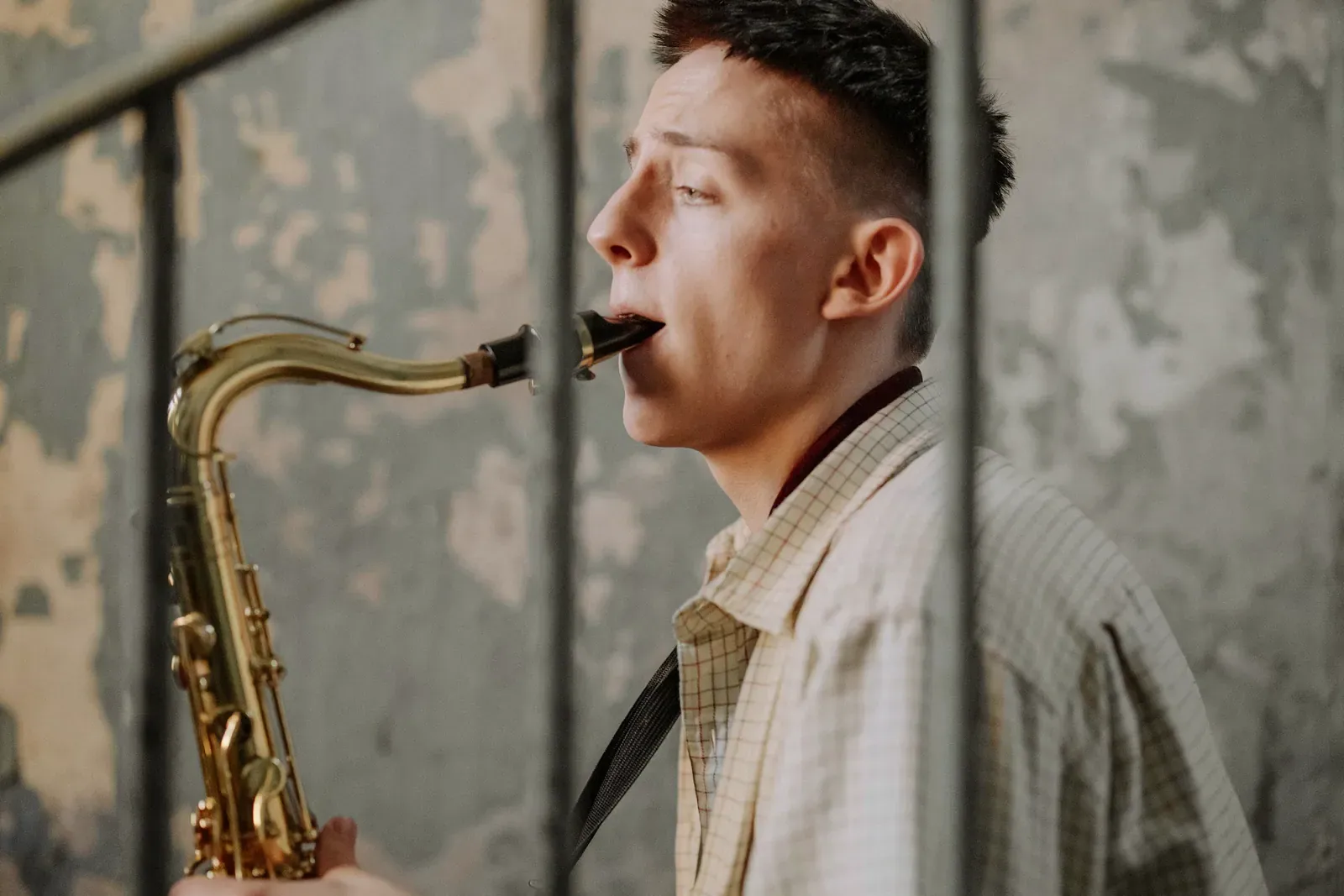
Hampton’s 1942 recording of Flying Home gave the style its model saxophone solo. Illinois Jacquet’s choked, screaming tenor chorus made the record a hit in the race category, and it set the template for the honking tenor that jump bands built their shows around.
Los Angeles and the jukebox years, 1942-1951
Jordan moved to Los Angeles in 1942, made short films for the soundie machines of the day and appeared on radio, including programmes for troops overseas. His Decca singles of the mid-1940s defined the style: Caldonia in 1945, Choo Choo Ch’Boogie in 1946 and Saturday Night Fish Fry in 1949. They combined a shuffle rhythm, boogie-woogie bass lines, short horn riffs, call-and-response between singer and band, and humorous lyrics in African American vernacular. Within a year of his breakthrough the group’s fee rose from 350 to 2,000 dollars a night, and Choo Choo Ch’Boogie ranked number 2 on the year-end chart of most-played race records for 1946.
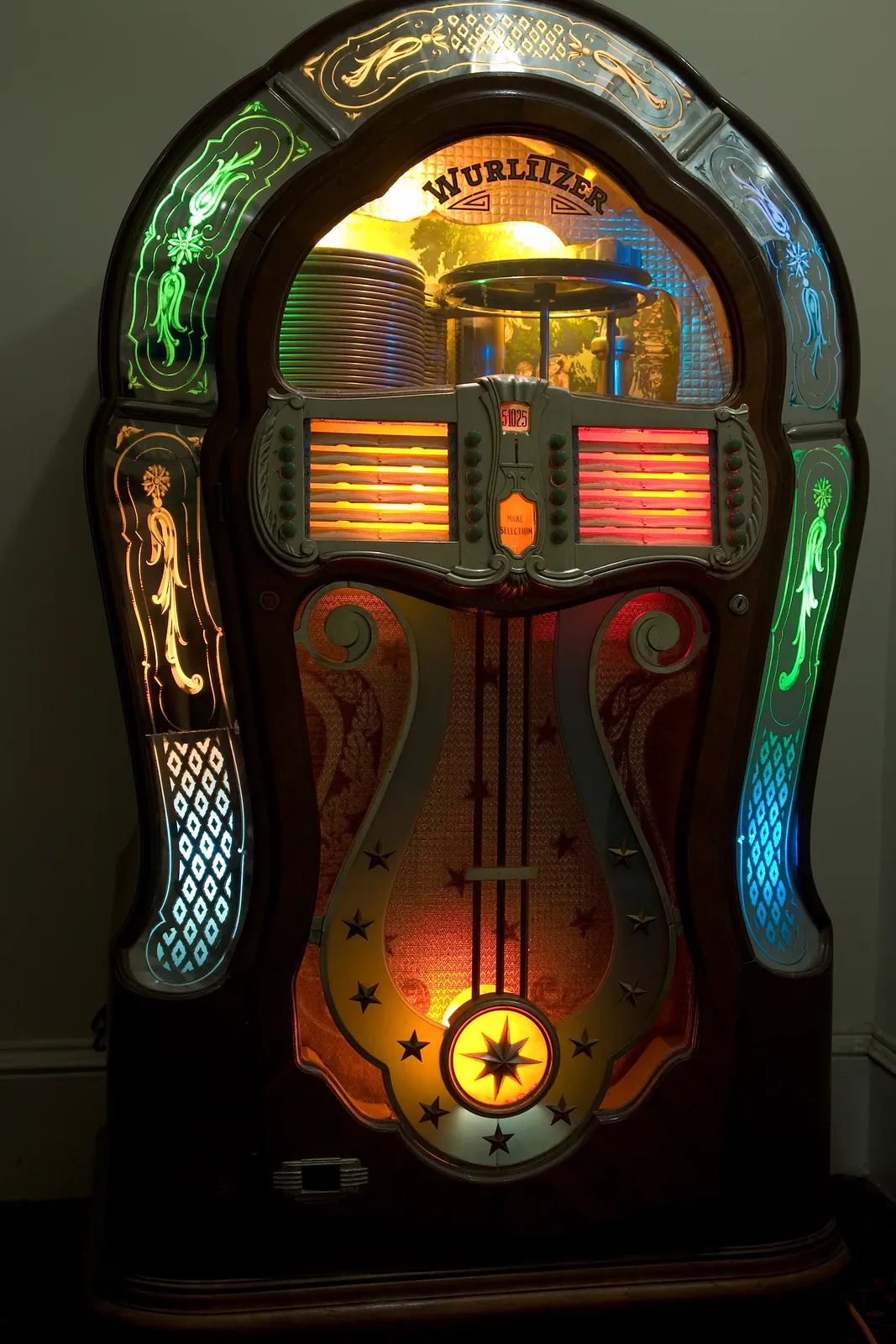
Los Angeles became the second centre of the sound, with independent labels recording local bands along Central Avenue. Roy Milton, a drummer and bandleader who formed the Solid Senders in 1933, had a million-selling hit with R.M. Blues, and its success helped establish the company that became Specialty Records. Joe Liggins and his Honeydrippers had a hit with The Honeydripper in 1945. Aladdin Records and Savoy issued saxophonists in the honking tradition, among them Big Jay McNeely, whose 1948 instrumental Deacon’s Hop became his best-known record.
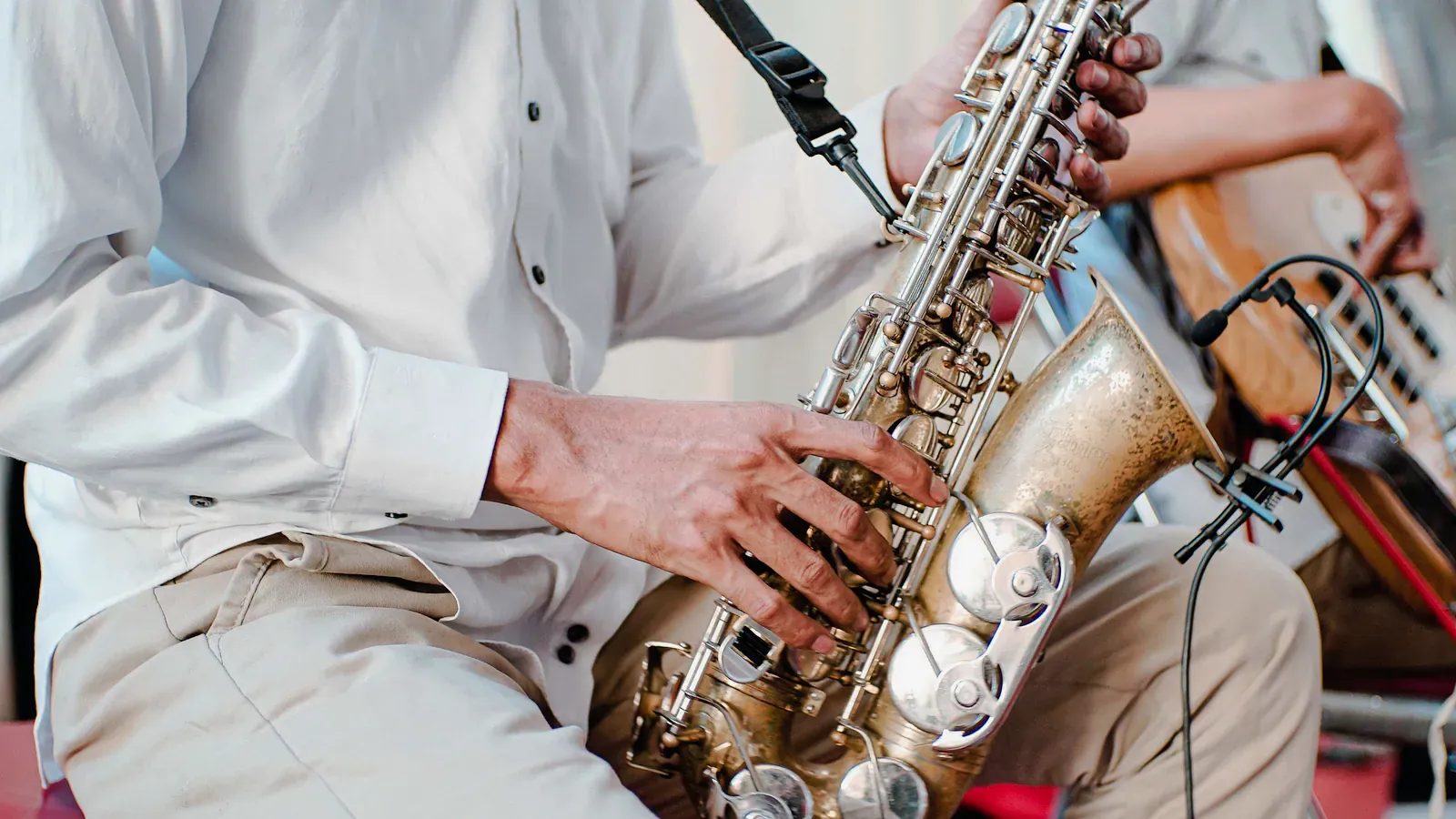
Shouters filled the vocal side. Wynonie Harris had fifteen top-10 hits between 1946 and 1952, and his 1948 version of Roy Brown’s Good Rockin’ Tonight for King Records added a backbeat and became his second number one R&B hit. Turner moved from Kansas City boogie to Atlantic, where he recorded Shake, Rattle and Roll in 1954. Jordan’s records came out on Decca Records.
Characteristics
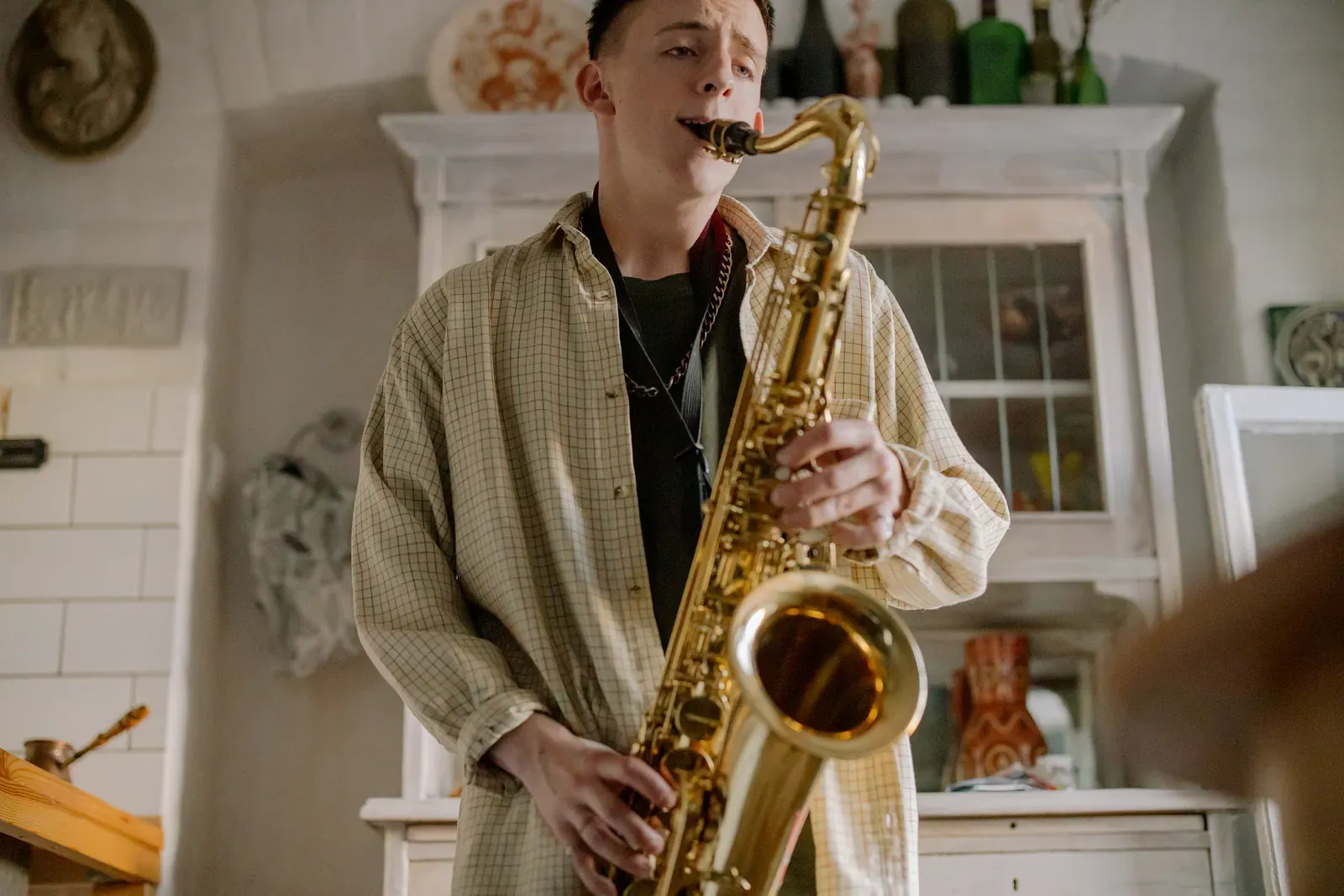
The standard line-up is two or three horns, usually tenor and alto saxophone with trumpet, over piano or guitar, bass and drums. Songs follow the twelve-bar blues or a thirty-two-bar popular form, driven by a shuffle or an eight-to-the-bar boogie bass at a pace made for dancing. Arrangements rely on riffs: short, repeated horn phrases that answer the vocal and return as a closing shout chorus. Lyrics deal with parties, food, drink, trains and romantic mishaps, often with double meanings, and stage acts leaned on showmanship.
The style sits between two neighbours without being either. It uses the blues form and the shouting voice of country and urban blues, and it uses the horn voicings and rhythm section of swing. Its beat is heavier and more insistent than swing’s, a quality that suited listeners who wanted music for the people rather than for the concert hall.
Mainstream success
Jump blues was among the biggest sounds in Black popular music in the second half of the 1940s. Jordan’s records topped the race and R&B charts and crossed to white audiences, and he was inducted into the Rock and Roll Hall of Fame in 1987 as an early influence, in the same year as Turner. Records by Milton, Liggins and Harris sold in large numbers through jukeboxes and live dates. In 1950 Milton’s orchestra played the Cavalcade of Jazz concert at Wrigley Field in Los Angeles, which drew about 16,000 people and ended early after a disturbance in the crowd while Hampton’s band played Flying Home.
By the middle of the 1950s the sound was handing over to rhythm and blues and rock and roll. Turner’s Shake, Rattle and Roll was covered by Bill Haley, and the jump blues The Train Kept A-Rollin’, recorded by Tiny Bradshaw in 1951, was later taken up by rock groups including the Rock and Roll Trio, the Yardbirds, Aerosmith and Motörhead. Milton and other leaders found the style unfashionable by about 1955 and their hit runs ended, even as the next generation copied their riffs. Chuck Berry is said to have borrowed guitar figures from Jordan’s records.
Notable recordings
Saturday Night Fish Fry (1949) was issued as a two-part single across both sides of a 78 rpm record. It uses the word rocking in its chorus and features a distorted electric guitar, which is why it is often cited among the first rock and roll records.
Good Rockin’ Tonight has two claimants. Roy Brown wrote and first released it in 1947 with a label that read “rocking blues”, and Harris’s backbeat version followed in 1948. Each is named as a contender for the first rock and roll record, and Brown’s recording was inducted into the Blues Hall of Fame in 2022.
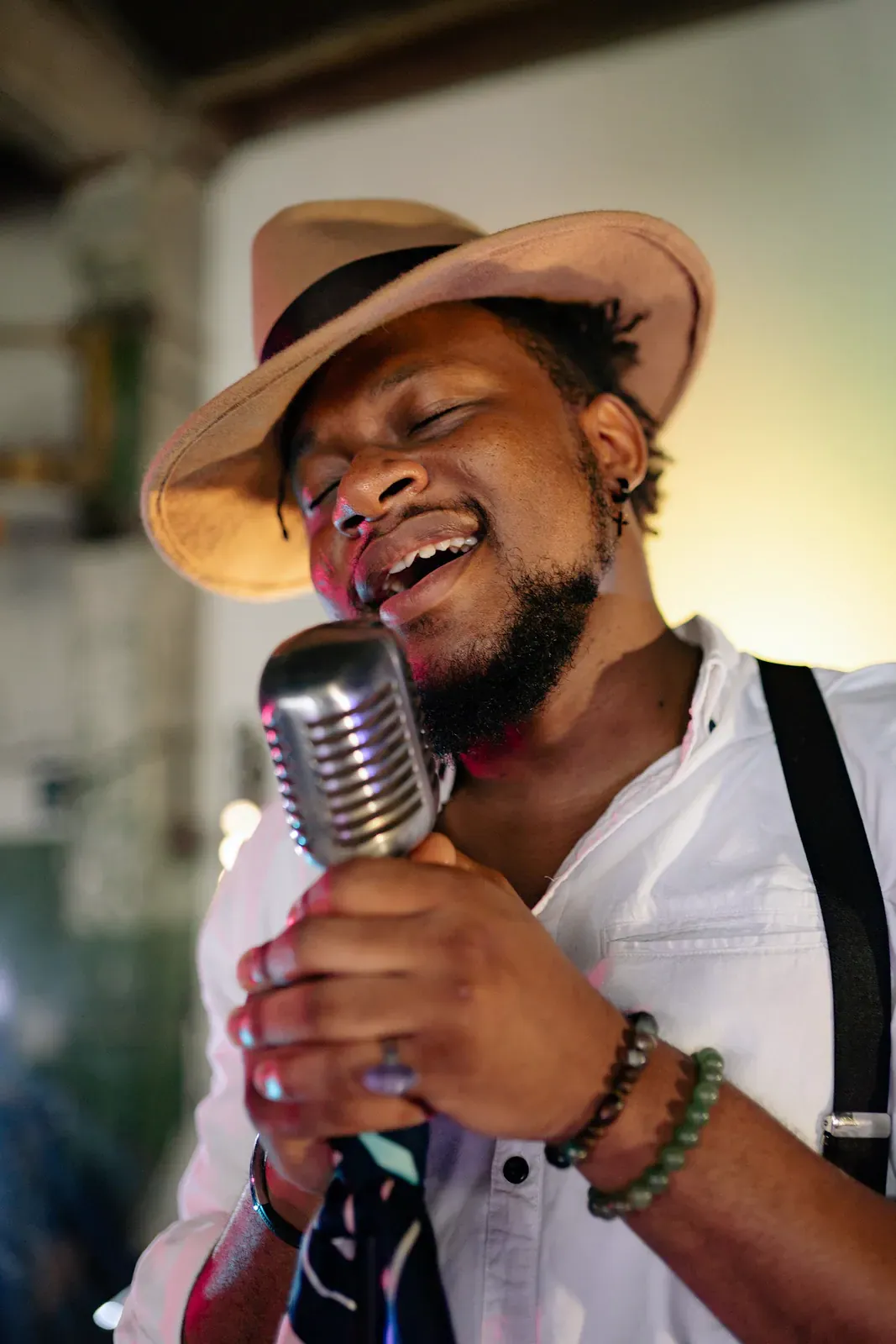
Culture
Dance drove the market. Jump bands played for jitterbug dancers, and the music remains the standard for Lindy hop and other swing dances. Humorous jive talk, the slang and wordplay of the lyrics, carried over into films and soundies. Musicals later drew on the repertoire, among them Five Guys Named Moe, built on Jordan’s songs.
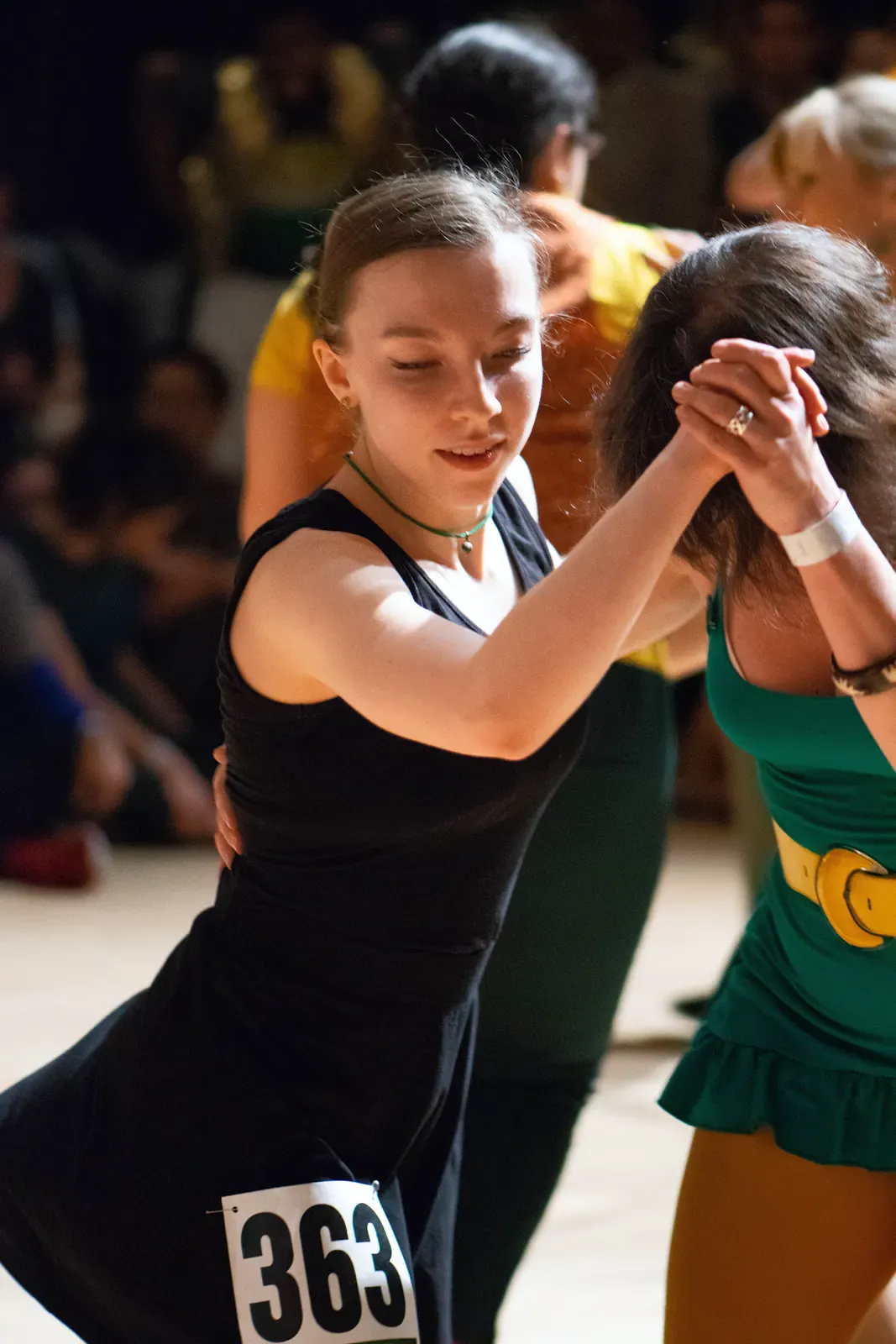
Legacy
The swing revival of the 1990s renewed the audience for jump blues. Royal Crown Revue and Big Bad Voodoo Daddy formed in Los Angeles in 1989 and played traditional jump blues and rockabilly in clubs such as The Derby. The 1996 film Swingers, with a performance by Big Bad Voodoo Daddy, brought the scene into the mainstream. In 1997 the Cherry Poppin’ Daddies released the compilation Zoot Suit Riot, which later reached double-platinum sales in the United States, and in 1998 the Brian Setzer Orchestra reached double platinum with The Dirty Boogie, whose cover of Louis Prima’s 1956 Jump, Jive an’ Wail was its best-known single. Jump blues also feeds into rhythm and blues, rock and roll and rockabilly, all of which kept its backbeat and its horn-led riffs.
Misconceptions
Jump blues is often treated as another name for swing. Swing is the broader big-band and dance-orchestra tradition; jump blues is the blues-based, small-combo branch of it, with a heavier beat and shouted vocals.
Jordan is often called the first rock and roll star. His records inspired Berry and Haley, but critics note that his story songs were aimed as much at adults as at teenagers, and his comic approach differed from the rebellion of 1950s rock.
Another claim holds that jump blues disappeared in the 1950s. The original bands lost their market, but the repertoire remained in rock and roll, and the 1990s revival put it back on records, in films and on dance floors.
Frequently asked questions
What is jump blues?
Jump blues is an uptempo, horn-led style of blues played by small combos in the late 1930s and 1940s. It blends swing, boogie-woogie and twelve-bar blues with shouted vocals and a heavy dance beat.
Who invented jump blues?
No single person did. Louis Jordan and his Tympany Five are its commercial archetype, and Lionel Hampton and Kansas City shouters such as Big Joe Turner shaped it in parallel.
What is the difference between jump blues and swing?
Swing is the larger tradition of big-band dance music, while jump blues uses the blues form with five to seven players, shuffle or boogie rhythms and shouted vocals. Jump blues is the blues-led branch of swing.
Is jump blues the same as rhythm and blues?
Not exactly. Jump blues was one of the main styles that merged into rhythm and blues, which later also took in slower ballads, vocal groups and electric blues.
Who are the main jump blues artists?
Louis Jordan, Wynonie Harris, Big Joe Turner, Roy Milton, Joe Liggins and Big Jay McNeely are central, and the Brian Setzer Orchestra carried the sound into the 1990s revival.
Sound
Sound sheet
Anatomy of a track
| # | Part | Bars |
|---|---|---|
| 1 | Horn intro or riff | 4 |
| 2 | Vocal choruses (12-bar blues) | 24 |
| 3 | Saxophone solo | 12 |
| 4 | Piano or guitar chorus | 12 |
| 5 | Shout chorus and tag | 12 |
Signature sounds
- Five- to seven-piece combo with two or three horns
- Shuffle rhythm with boogie-woogie bass lines
- Short repeated horn riffs behind the vocal
- Honking tenor sax solo
- Shouted or call-and-response vocals with jive lyrics
Drums and percussion
- Drum kit
Techniques
- Honking sax solo
- Eight-to-the-bar boogie bass
- Riff background
- Call and response
Keys and modes
Major 12-bar blues in flat keys. Recordings sit in keys such as B-flat, C and A-flat, friendly to saxophones and trumpets.
Blues scale over dominant chords. Soloists use the blues scale with riff-based, boogie-woogie bass motion.
Vocals
Shouted or comic story-telling vocals with jive slang and sometimes double meanings, from Jordan's light delivery to Harris's and Turner's shouting.
Scenes
Where it happened
Where and when the sound lived: one bar per city on a shared timeline.
North America
Active scenes
Peak 2, 1936-1946
Late-night clubs such as the Sunset and the Kingfish Club bred the blues shouters and boogie-woogie pianists, including Big Joe Turner and Pete Johnson.
Harlem was home to Louis Jordan's early band at the Elks Rendezvous, and Carnegie Hall in 1938 introduced Turner and Johnson to a wider audience.
Jordan moved here in 1942, and Specialty, Aladdin and other independent labels recorded Roy Milton, Joe Liggins and Big Jay McNeely along Central Avenue.
Venues and places
New York City, 1938 to today. Harlem club at 464 Lenox Avenue where Louis Jordan's sextet had its first residency.
Los Angeles, 1950 to today. Site of the 1950 Cavalcade of Jazz concert with Roy Milton and Lionel Hampton before about 16,000 people.
Culture
Culture markers
- Jitterbug
Jump combos were hired to play for jitterbug dances at lower cost than big bands.
Dance - Jive talk
Humorous African American vernacular and verbal asides are part of the lyrics and between-song patter.
Slang - Zoot suit
The long-coated suit is tied to 1940s swing dancing and returned with the 1990s revival, as in the Cherry Poppin' Daddies' Zoot Suit Riot.
Fashion
Media
Key media
- 1994The Mask
by Chuck Russell. Royal Crown Revue appears on screen in a film that helped bring swing music back to mainstream audiences.
Film - 1996Swingers
by Doug Liman. Filmed partly at The Derby with a performance by Big Bad Voodoo Daddy, credited with pushing the swing revival into the mainstream.
Film
Glossary
Terms on this page
Boogie-woogie bass pattern of eight notes per bar played by piano or bass.
Tenor saxophone style built on loud, repeated or squealing notes held for effect.
African American slang and wordplay used in lyrics and spoken asides.
Industry label of the 1940s for records marketed to Black audiences, later renamed rhythm and blues.
Short repeated horn phrase played behind the singer or used as a shout chorus.
Triplet-based swung rhythm in which each beat is split into a long and a short note.
Blues family