Jug band
Jug band music is blues-based ensemble music built on a blown jug and homemade instruments, first recorded in Louisville and Memphis in the 1920s.
Louisville, Kentucky, 1923
Blues family
Born
1923
Louisville, Kentucky
Subgenres
4
Documented branches
Links
13
Genres it drew on or shaped
Tempo
95-160 BPMLineage
Family tree
Grew out of
Influenced by
Louisville, Kentucky, 1923
Jug band
Led to (5)
Timeline
Era by era
From the first sparks to today. Select a dot to read the story behind it.
- Louisville and Memphis
1915 to 1930
- Depression eclipse
1930 to 1957
- Folk revival jug bands
1958 to 1969
- Long tail
1970 to 1989
- Postmodern jug
1990 to 2026
Eras
Moments
- 1 Louisville and Memphis, 1915 to 1930
- 2 Depression eclipse, 1930 to 1957
- 3 Folk revival jug bands, 1958 to 1969
- 4 Long tail, 1970 to 1989
- 5 Postmodern jug, 1990 to 2026
around 1915
Louisville and Memphis
Whistler's group forms in Louisville in 1915, jug bands reach the record labels from 1924, and the Memphis Jug Band and Cannon's Jug Stompers cut the blues-leaning sides that define the sound.
- 1915Whistler forms his Louisville jug bandGuitarist and nose-whistle player Buford Threlkeld moves to Louisville and starts the group that later records as Whistler and His Jug Band.
- 1924Whistler's Jug Band records for GennettA September session in Richmond, Indiana, is among the first jug band recordings on disc.
- 1924Clifford Hayes's Old Southern Jug Band backs Sara MartinThe September 1924 Okeh session with Earl McDonald on jug is Hayes's first recording and among the earliest jug band records.
- 1926Dixieland Jug Blowers record in ChicagoEarl McDonald's jug and Clifford Hayes's violin meet on Victor, cutting Banjoreno in December.
- 1927Memphis Jug Band's first Victor sessionOn 24 February in Memphis the band cuts Memphis Jug Blues and Sun Brimmers Blues for Ralph Peer.
- 1927Whistler cuts ten sides for Okeh in St. LouisThe April 1927 session includes The Jug Band Special.
- 1928Cannon's Jug Stompers form for VictorGus Cannon, Noah Lewis and Ashley Thompson record Minglewood Blues and Viola Lee Blues.
- 1928Stealin', Stealin' is recorded in MemphisA September Victor session with Charlie Burse on lead vocal produces the band's best-known song.
- 1929Cannon's Jug Stompers release Walk Right InThe Victor single becomes a pop hit for the Rooftop Singers 34 years later.
- 1929Memphis Jug Band records K.C. MoanCut on 4 October with Tee Wee Blackman on lead vocal, it later lands on Harry Smith's Anthology.
1930
Depression eclipse
Record sales collapse, Victor stops recording in Memphis in 1930, and the bands shrink to street, club and medicine-show work until folk collectors return in the 1950s.
- 1930Victor stops recording in MemphisThe Depression ends the label's field sessions there and the first jug band boom with them.
- 1952Anthology of American Folk Music reissues jug band sidesHarry Smith's Folkways set includes tracks by the Memphis Jug Band and Cannon's Jug Stompers, a seed of the revival.
- 1956Gus Cannon and Will Shade record for FolkwaysOld Memphis jug band hands are documented again nearly three decades after their Victor sides.
around 1958
Folk revival jug bands
Anthology reissues and coffeehouse circuits spawn the Even Dozen, Kweskin and Van Ronk bands, Walk Right In tops the pop chart in 1963, and rock acts borrow the jug band name and spirit.
- 1963Walk Right In reaches number oneThe Rooftop Singers hold the top of the Billboard Hot 100 for two weeks with a 1929 jug band song.
- 1963The Even Dozen Jug Band album on ElektraJohn Sebastian, David Grisman, Maria Muldaur and Steve Katz play on the group's only LP, released in December.
- 1963Kweskin Jug Band starts recording for VanguardThe Cambridge group stays on the label until 1970 and plays Newport through the mid-1960s.
- 1964Dave Van Ronk and the Ragtime Jug StompersVillage Vanguard owner Max Gordon wanted a New York answer to the Kweskin band; the album came out in January on Verve.
- 1964Mother McCree's Uptown Jug Champions play Palo AltoJerry Garcia, Bob Weir and Ron McKernan, later of the Grateful Dead, perform at the Top of the Tangent in July.
- 1966The Lovin' Spoonful release Jug Band MusicEven Dozen alumnus John Sebastian writes a song celebrating the sound for Kama Sutra.
- 1968Pink Floyd close A Saucerful of Secrets with Jugband BluesSyd Barrett's last song for the band uses a Salvation Army brass ensemble rather than a jug.
1970
Long tail
Veterans of the revival keep playing, Emmet Otter's Jug-Band Christmas brings the washtub bass to TV in 1977, and Minneapolis starts its annual jug band battle in 1980.
- 1977Emmet Otter's Jug-Band Christmas airsJim Henson's puppet special centres on a washtub-bass jug band, with songs by Paul Williams.
- 1980Minneapolis Battle of the Jug Bands beginsThe annual contest is held on the Sunday after the Super Bowl.
around 1990
Postmodern jug
Festivals in Louisville, San Francisco and Chicago, plus bands from New York to Taipei, split between strict 1920s revivalists and writers of new jug band songs.
- 2004National Jug Band Jubilee launches in LouisvilleThe festival brings the music back to its birthplace each September.
Listening path
Anthems
The records that built the sound, grouped by the part they played. Thumbnails come from YouTube; the player loads only when you press play.
- 01
Dixieland Jug Blowers, 1926 · Victor Talking Machine Company
The Louisville jug-and-jazz sound on record: tremolo banjo solo over a two-beat jug and banjo accompaniment.
Start hereOrigin - 02
Whistler and His Jug Band, 1927 · Okeh
Whistler's band, active since 1915, shows the Louisville style with guitar, fiddle and nose whistle.
Origin - 03
Memphis Jug Band, 1927 · Victor Talking Machine Company
The title side from Will Shade's first Victor session starts the Memphis jug band run.
Origin - 04
The Rooftop Singers, 1963 · #1 Billboard Hot 100, 1963 · Vanguard Records
Twin 12-string guitars carry the jug band song to number one on the Hot 100 for two weeks.
Start hereBreakthrough - 05
Cannon's Jug Stompers, 1928 · Victor Talking Machine Company
Noah Lewis's harmonica carries this Cannon's Jug Stompers blues, later chosen for the Anthology.
Anthem - 06
Cannon's Jug Stompers, 1928 · Victor Talking Machine Company
Noah Lewis's blues became a showpiece in the Grateful Dead's repertoire.
Anthem - 07
Memphis Jug Band, 1928 · Victor Talking Machine Company
A Memphis Jug Band signature, recorded in September 1928 and re-covered by revival bands.
Anthem - 08
Memphis Jug Band, 1928 · Victor Talking Machine Company
The scene's most covered song, with Charlie Burse's vocal, kazoo harmony and Jab Jones on jug.
Start hereAnthem - 09
Memphis Jug Band, 1929 · Victor Talking Machine Company
Slow Memphis blues recorded in October 1929 and kept alive on Harry Smith's Anthology.
Anthem - 10
Cannon's Jug Stompers, 1929 · Victor Talking Machine Company
Gus Cannon's original, the song whose 1963 remake gave the style its only number one.
Anthem - 11
Memphis Jug Band, 1930 · Victor Talking Machine Company
A May 1930 Memphis Jug Band side from late in the first boom, with a hard-living theme.
Anthem - 12
The Lovin' Spoonful, 1966 · Kama Sutra
John Sebastian, ex-Even Dozen, names the style in a pop-rock song.
Crossover - 13
Pink Floyd, 1968
Syd Barrett borrows the name for a psychedelic closer with brass in place of jugs.
Crossover - 14
The Even Dozen Jug Band, 1963 · Elektra
From the Even Dozen Jug Band's only LP, a revival-era stage for Sebastian, Grisman and Muldaur.
Revival
Facts
| Family | Blues |
| Origin | Louisville, Kentucky, United States |
| Emerged | 1900s to 1930s |
| Status | Revival |
| Tempo | 95 to 160 BPM |
| Meter | 4/4 |
| Subgenres | 4 |
Jug band music is small-ensemble blues, ragtime and dance music in which a player blows across the mouth of a jug to produce the bass line, backed by guitar, banjo, harmonica, fiddle, kazoo and homemade percussion.
It was first recorded in the 1920s in Louisville, Kentucky, and Memphis, Tennessee, and belongs to the blues family as a party-music branch of the tradition.
Origins
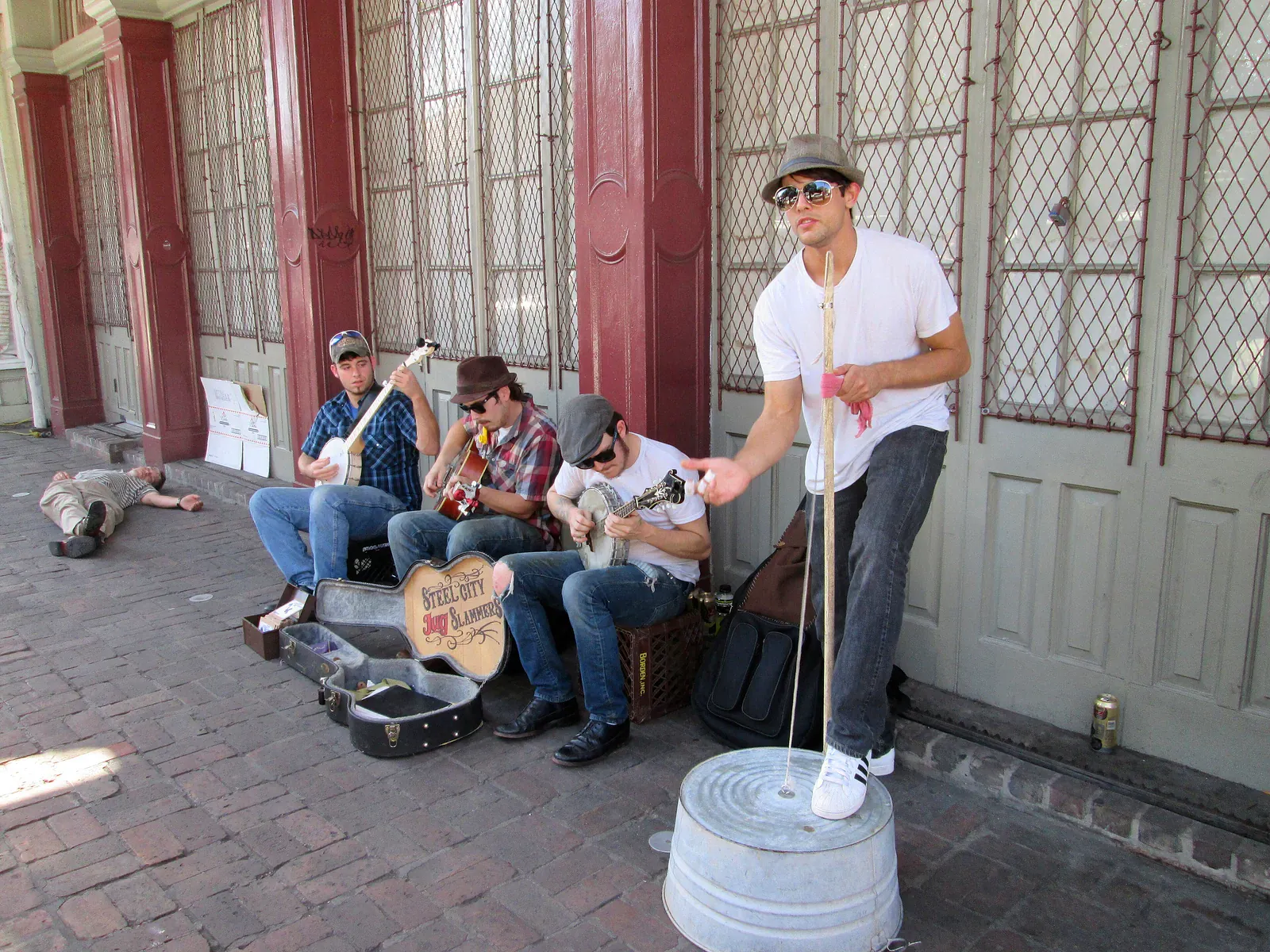
The jug band took shape where African-American string-band and medicine-show traditions met ragtime, early jazz and blues. Musicians who could not afford a tuba or a double bass blew into a stoneware jug, scraped a washboard and hummed through a kazoo, and a crowd on a street corner or in a medicine show heard something close to a small dance orchestra.
Louisville produced the first known groups. Buford Threlkeld, known as Whistler, formed his band there around 1915, with guitar, fiddle and a nose whistle as the solo voice. In September 1924 the band travelled to the Gennett studio in Richmond, Indiana, and cut one of the earliest jug band records. Clifford Hayes’s Old Southern Jug Band recorded about the same time, backing the singer Sara Martin for Okeh.
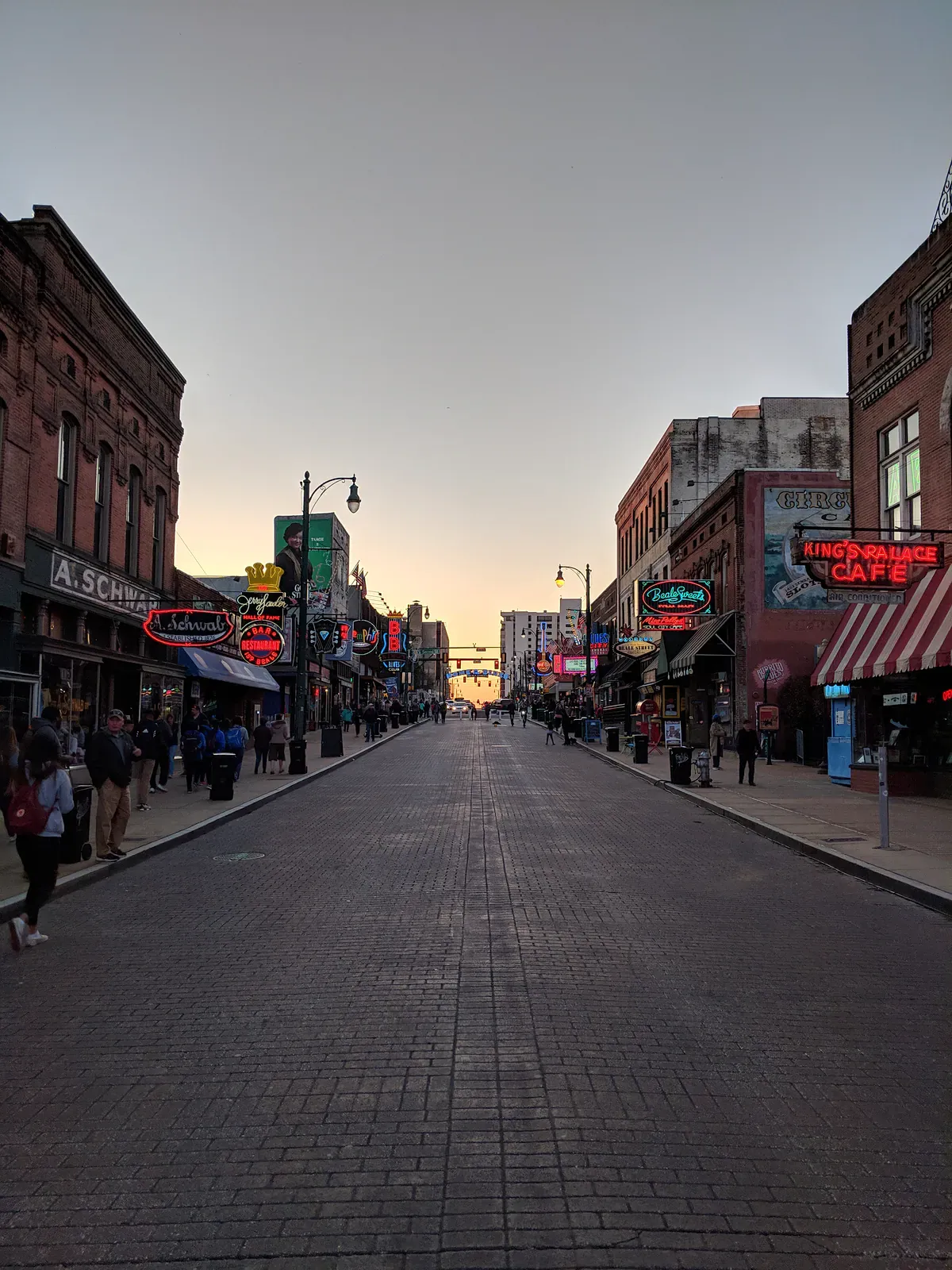
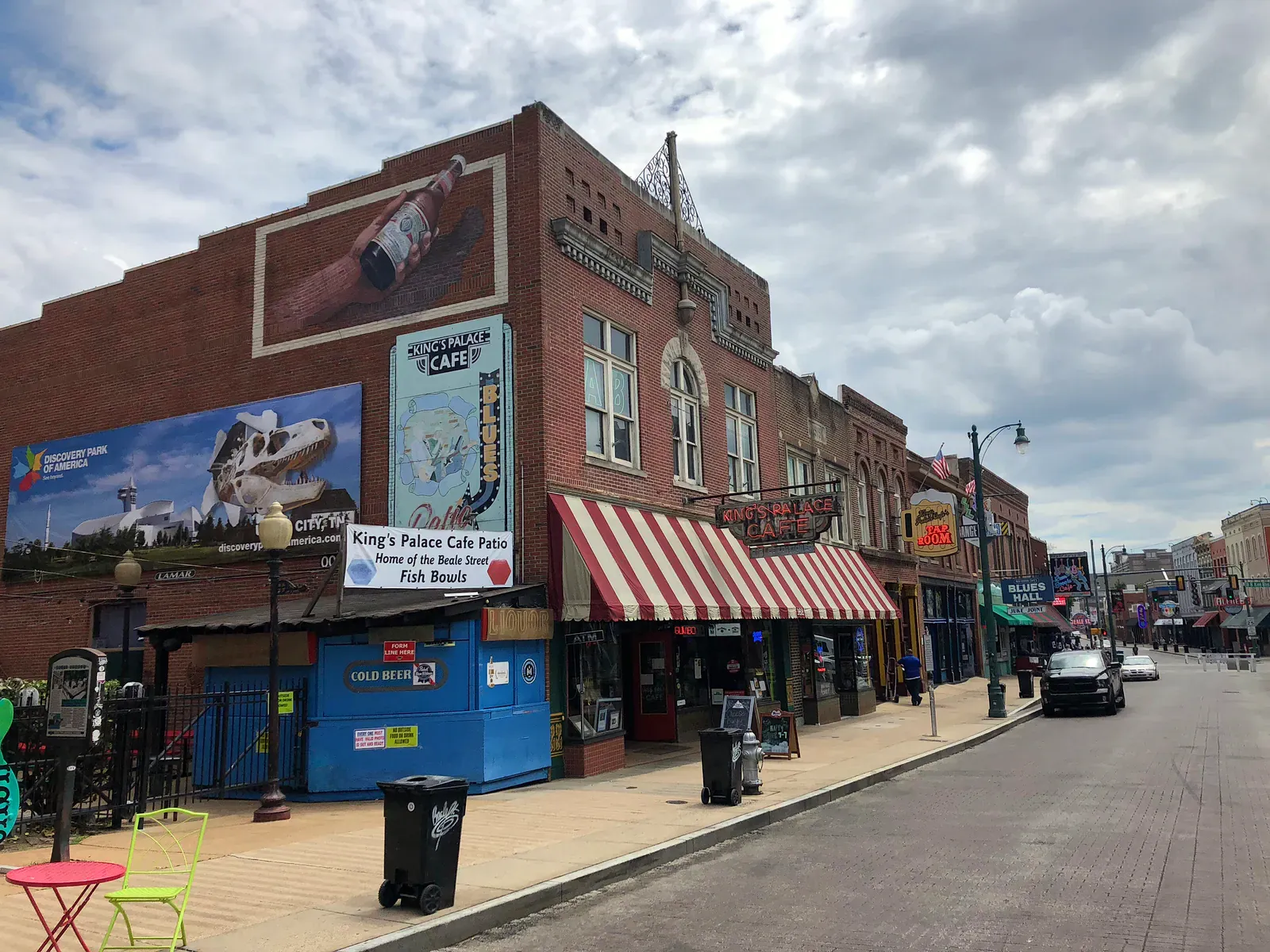
Memphis developed a second strand. Its bands drew more on country blues and the comic songs of hokum, and played on Beale Street, at parties and at political rallies before the record companies arrived.
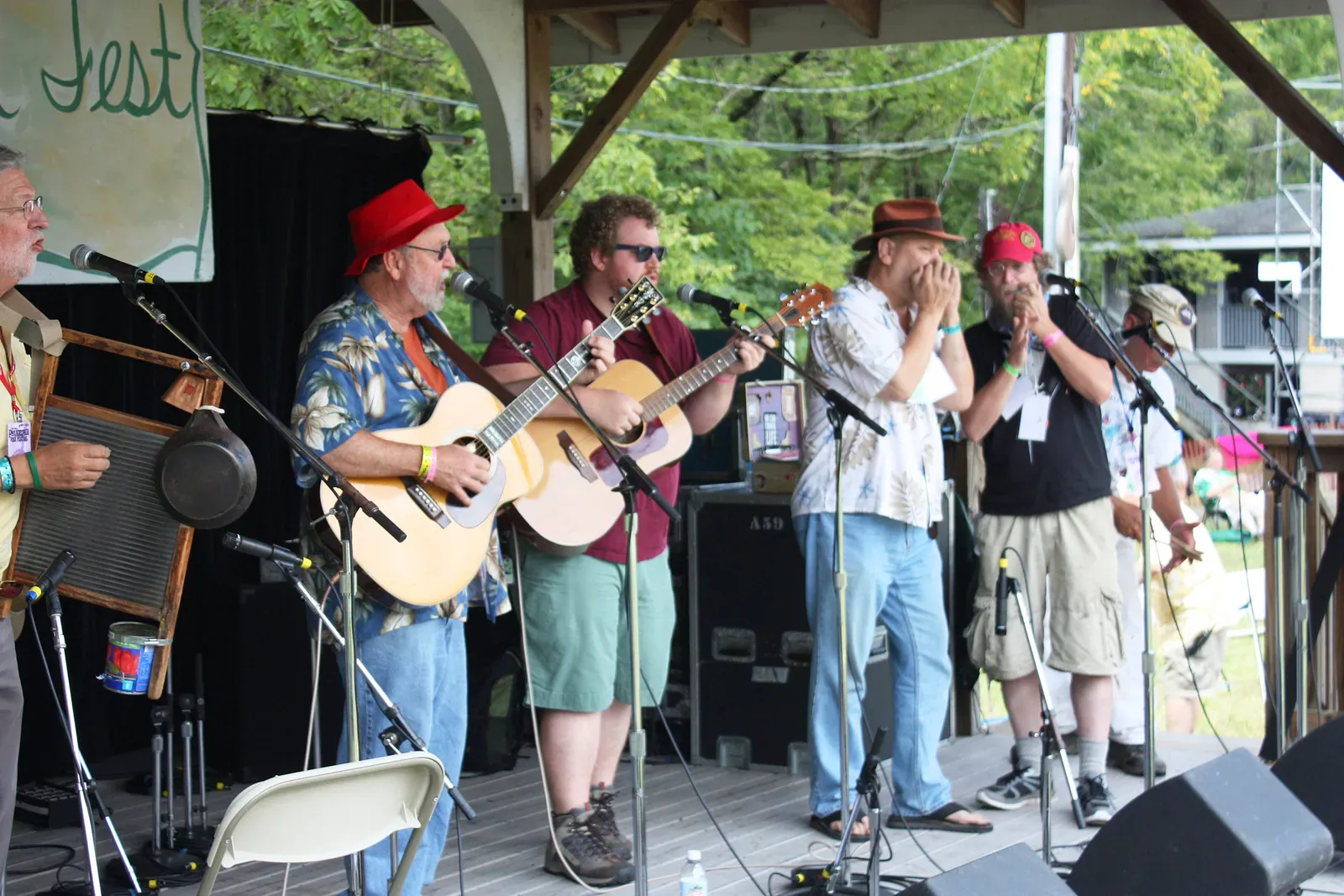
Louisville and Memphis, 1915-1930
Records fixed the two regional sounds. Louisville groups leaned toward jazz and ragtime: in December 1926 the Dixieland Jug Blowers, with Earl McDonald on jug and Clifford Hayes on violin, cut “Banjoreno” for Victor in Chicago, a showpiece built on a tremolo banjo solo over a two-beat jug and banjo accompaniment. Whistler recorded ten sides for Okeh in St. Louis in April 1927, including “The Jug Band Special”.
On 24 February 1927 the Memphis Jug Band, led by Will Shade, recorded “Memphis Jug Blues” and “Sun Brimmers Blues” for Ralph Peer of Victor. Their September 1928 session produced “Stealin’, Stealin’”, sung by Charlie Burse with kazoo harmony and Jab Jones on jug, which became the best-known song of the scene. “K.C. Moan”, a slow blues cut on 4 October 1929 with Tee Wee Blackman on lead vocal, shows the other side of the band.
Gus Cannon, who had worked in medicine shows from 1914, formed Cannon’s Jug Stompers with the harmonica player Noah Lewis and Ashley Thompson. Their 1928 Victor sides included “Minglewood Blues” and “Viola Lee Blues”, and a 1929 release, “Walk Right In”, would return in a very different form 34 years later. Cannon played banjo with a three-finger picking style rather than down-picking.
Depression eclipse, 1930-1957
The first boom ended quickly. Record sales collapsed in the Depression and Victor stopped its Memphis field sessions in 1930. Jug bands shrank to street, club and medicine-show work, and the recorded catalogue sat largely out of print.
The way back came through collectors. In 1952 Harry Smith’s Anthology of American Folk Music, issued by Folkways, included tracks by the Memphis Jug Band and Cannon’s Jug Stompers, and in 1956 Gus Cannon and Will Shade recorded for Folkways, documenting old Memphis jug band hands almost three decades after their Victor sessions.
Folk revival jug bands, 1958-1969
Anthology reissues and the coffeehouse circuit produced a second generation of jug bands. In 1963 the Even Dozen Jug Band, with John Sebastian, David Grisman, Maria Muldaur and Steve Katz, made its only LP for Elektra. The Jim Kweskin Jug Band, from Cambridge, Massachusetts, began recording for Vanguard the same year and became a fixture at the Newport Folk Festival in the mid-1960s. Dave Van Ronk and the Ragtime Jug Stompers followed in January 1964 on Verve, after the Village Vanguard owner Max Gordon asked for a New York answer to the Kweskin band.
The sound spread outside folk clubs. In July 1964 Jerry Garcia, Bob Weir and Ron McKernan, later of the Grateful Dead, played with Mother McCree’s Uptown Jug Champions at the Top of the Tangent in Palo Alto. The Grateful Dead later took up “Stealin’”, “Minglewood Blues” and “Viola Lee Blues” from the Memphis and Cannon repertoire.
Mainstream success
One jug band song reached the top of the American pop chart. In 1963 the Rooftop Singers, built around twin 12-string guitars, took “Walk Right In” to number one on the Billboard Hot 100 for two weeks on Vanguard. The song was Gus Cannon’s, recorded in 1929.
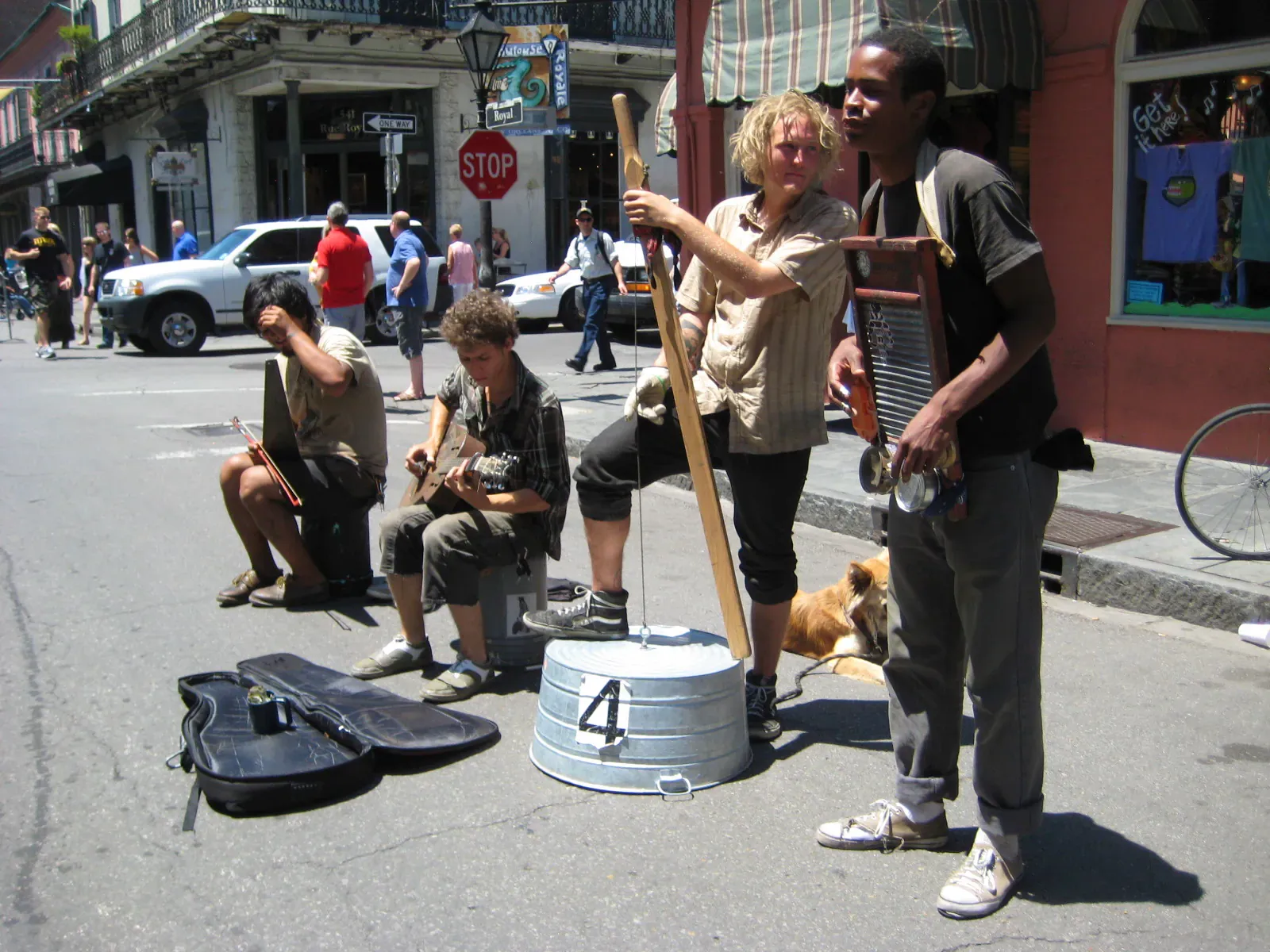
Pop and rock acts borrowed the name more than the instruments. The Lovin’ Spoonful, with the former Even Dozen member John Sebastian, released “Jug Band Music” in 1966. Pink Floyd closed A Saucerful of Secrets in 1968 with Syd Barrett’s “Jugband Blues”, which uses a Salvation Army brass ensemble rather than a jug. In 1977 Jim Henson’s puppet special Emmet Otter’s Jug-Band Christmas, with songs by Paul Williams, put a washtub-bass band in front of a television audience.
Long tail, 1970-1989
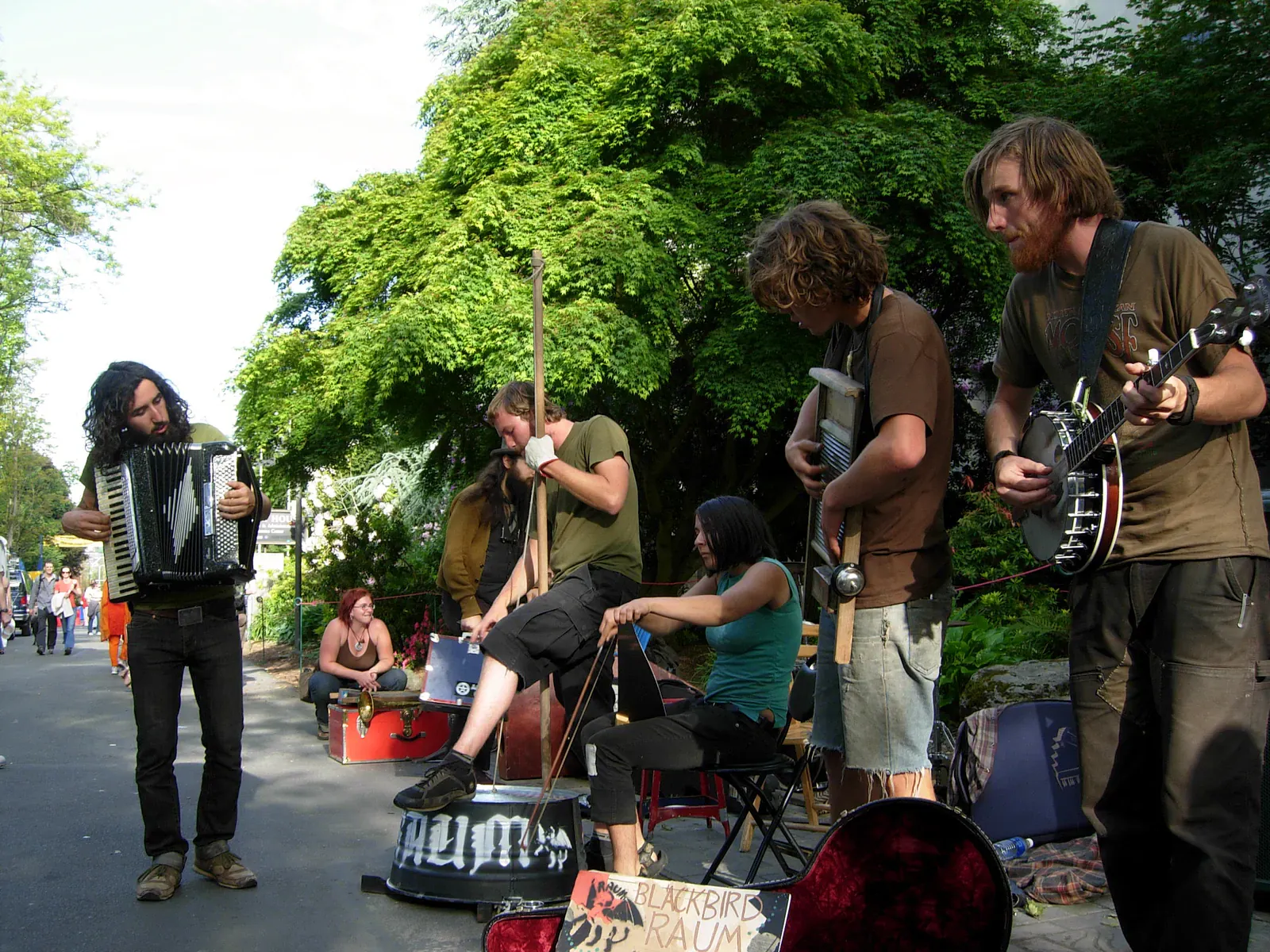
Veterans of the revival kept playing small venues and festivals. In 1980 Minneapolis began its annual Battle of the Jug Bands, held on the Sunday after the Super Bowl, one of several contests that pit amateur and professional bands against one another.
Postmodern jug, 1990-2026
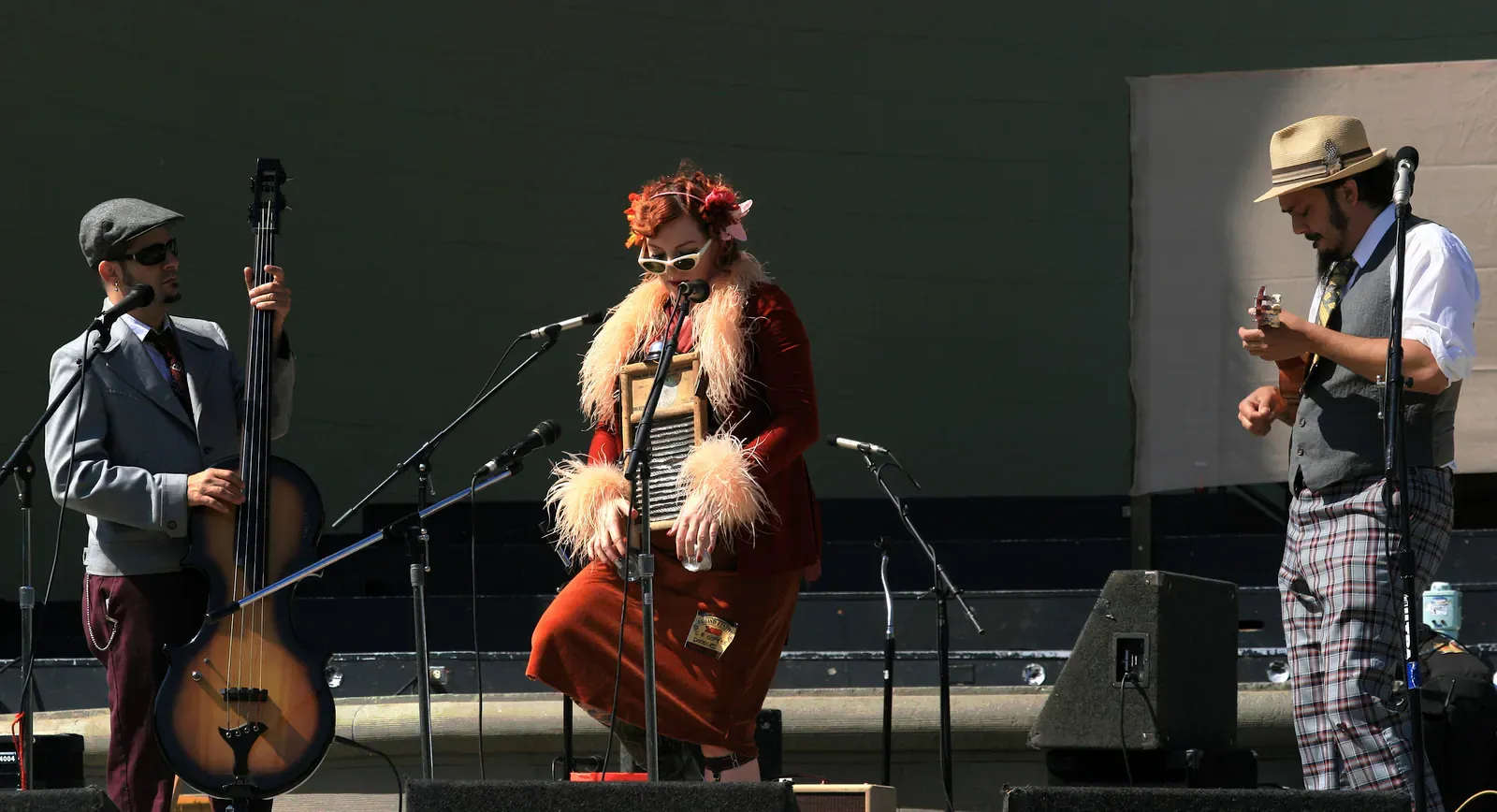
From the 1990s onward festivals and bands appeared in Louisville, San Francisco, Chicago and as far away as Taipei. The National Jug Band Jubilee began in Louisville in 2004 and brings the music back to its birthplace each September. Present-day groups split between strict revivalists who copy the 1920s sides and writers of new jug band songs.
Characteristics
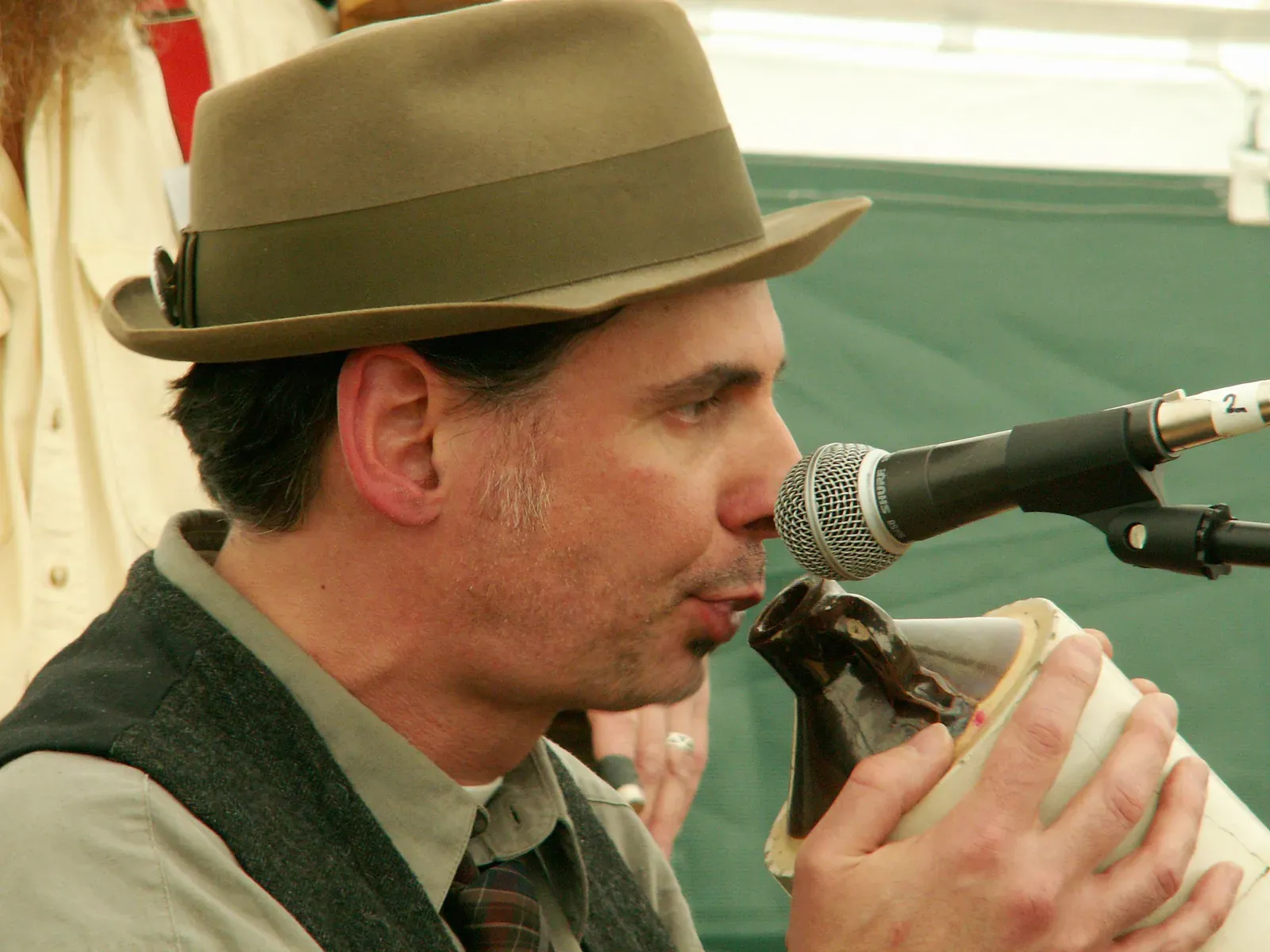
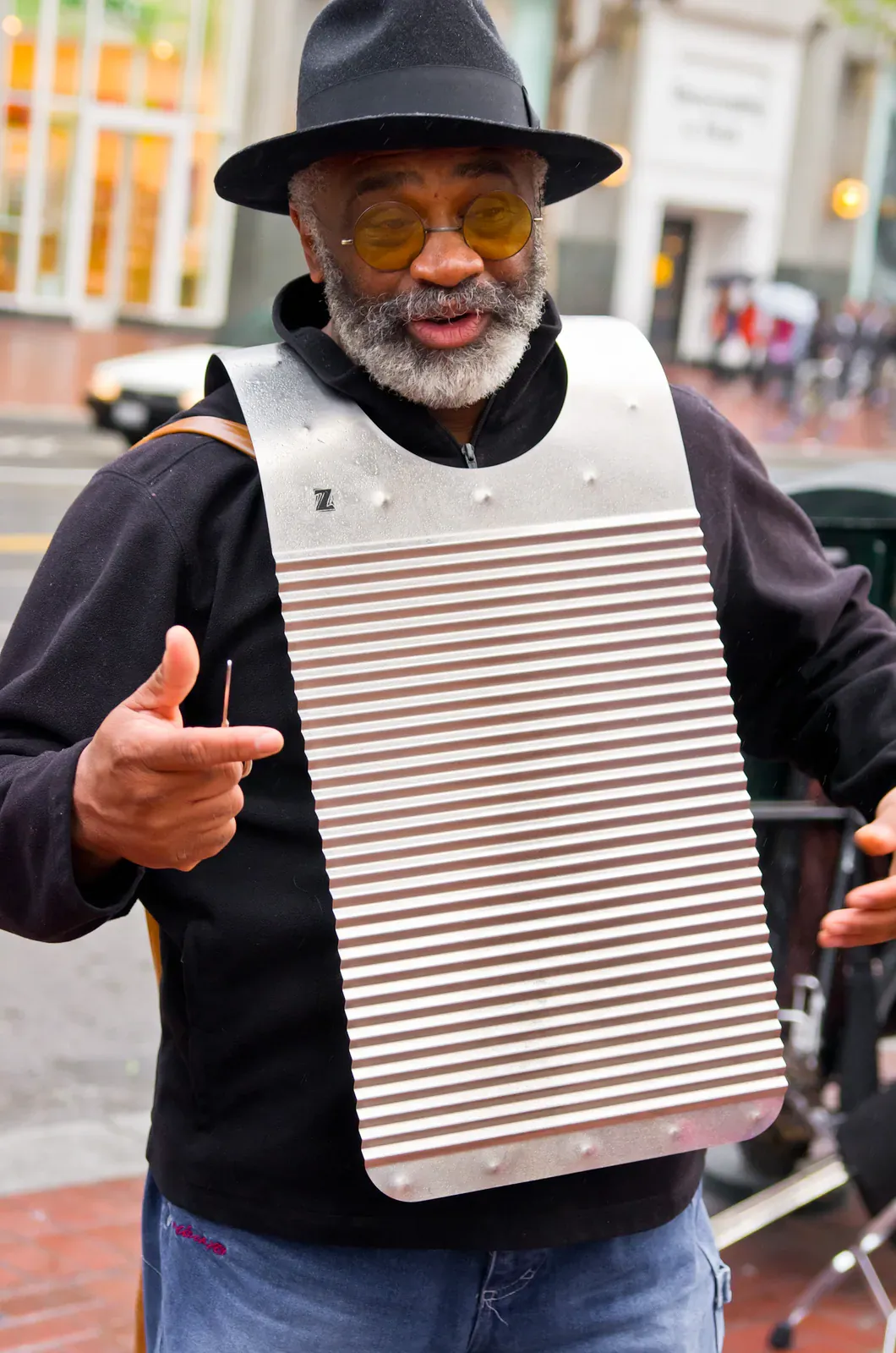
The music is acoustic, rhythmic and heard as a conversation: a steady two-beat bass line, melodic lines weaving above it, and lead vocals that are often shared and often comic. The jug is played by buzzing the lips into its mouth, with the lip tension and air pressure setting the pitch. The washtub bass and the washboard cover the low and the percussive roles that a drum kit and double bass would fill in a larger band.
Instruments and production
Almost all jug band recording was done live into a single microphone or horn, with the balance set by where players stood. The instruments are the character: a jug, a tub, a washboard and a kazoo next to ordinary guitar, banjo, harmonica and fiddle. Harmonica led the Memphis bands through Will Shade and Noah Lewis, while fiddle led Clifford Hayes’s Louisville groups and Whistler used a nose whistle as a solo voice.
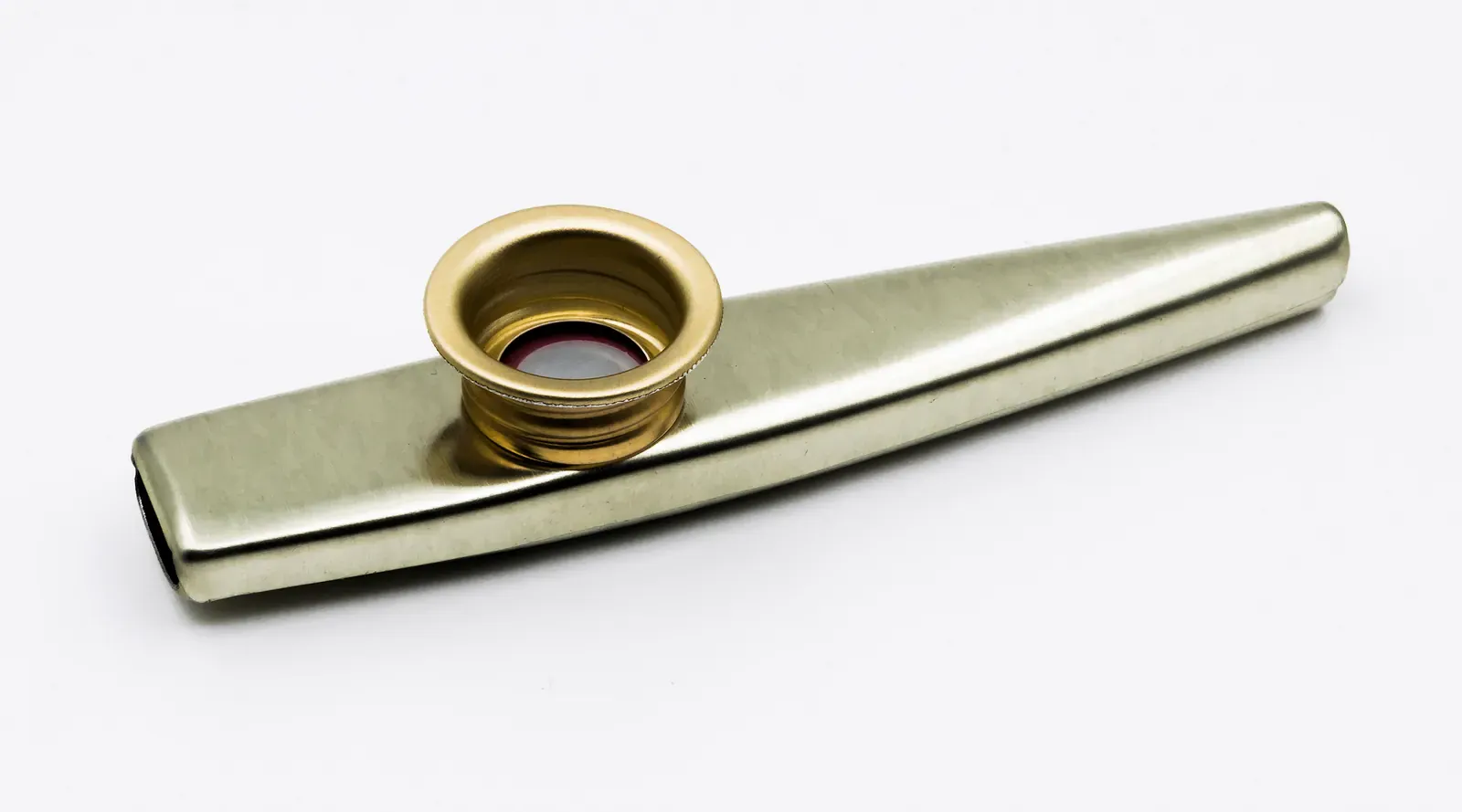
Culture
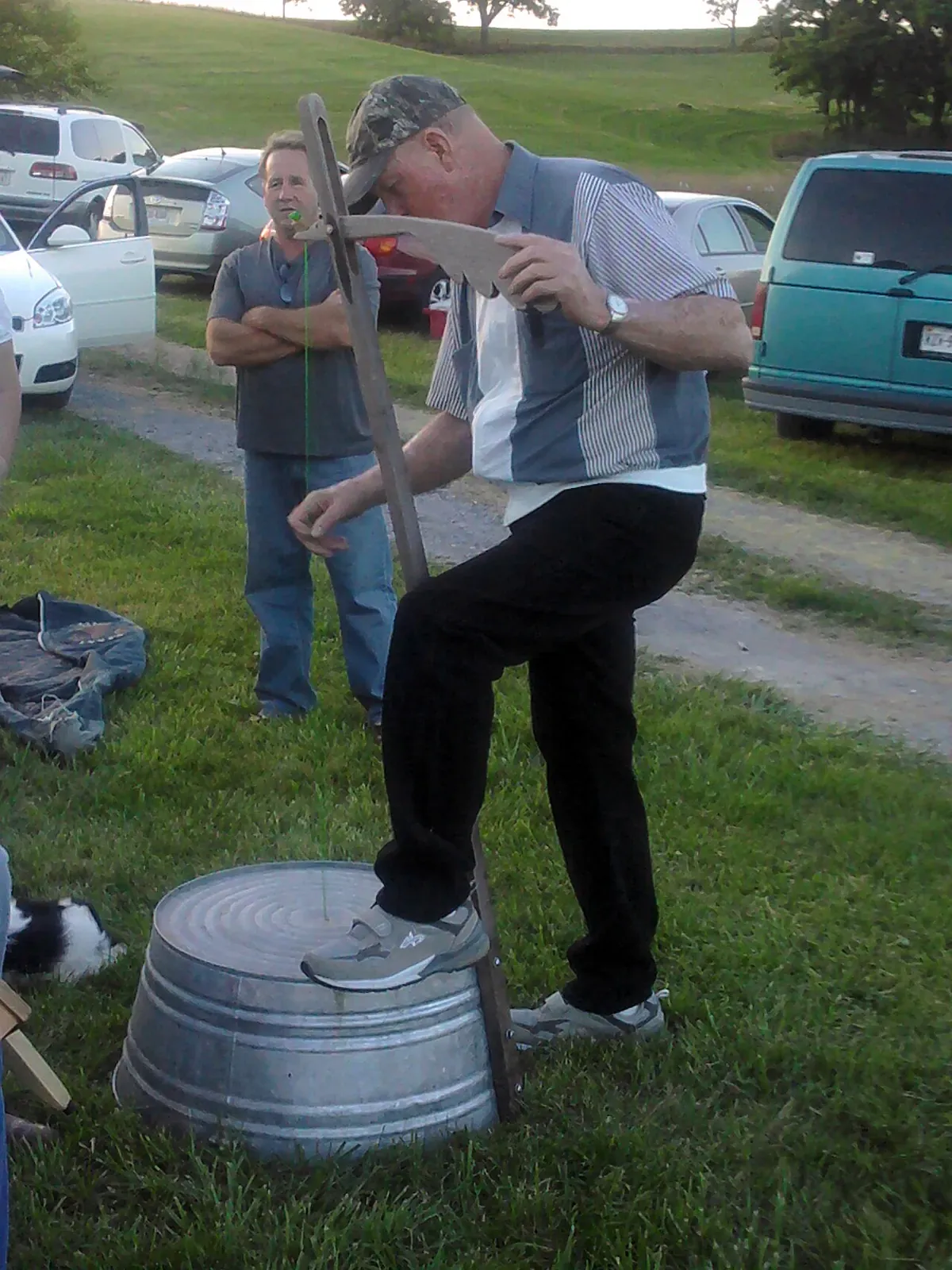
Jug bands were working musicians’ bands. Louisville groups played Kentucky Derby events from the early 1900s, and Memphis groups worked Beale Street, parties and rallies. Many early players, including Gus Cannon, toured the South and Midwest in medicine shows, selling remedies to a crowd by entertaining it. The instruments themselves, built from household junk, are part of the identity: a tub, a broom handle and a length of cord can be assembled at home.
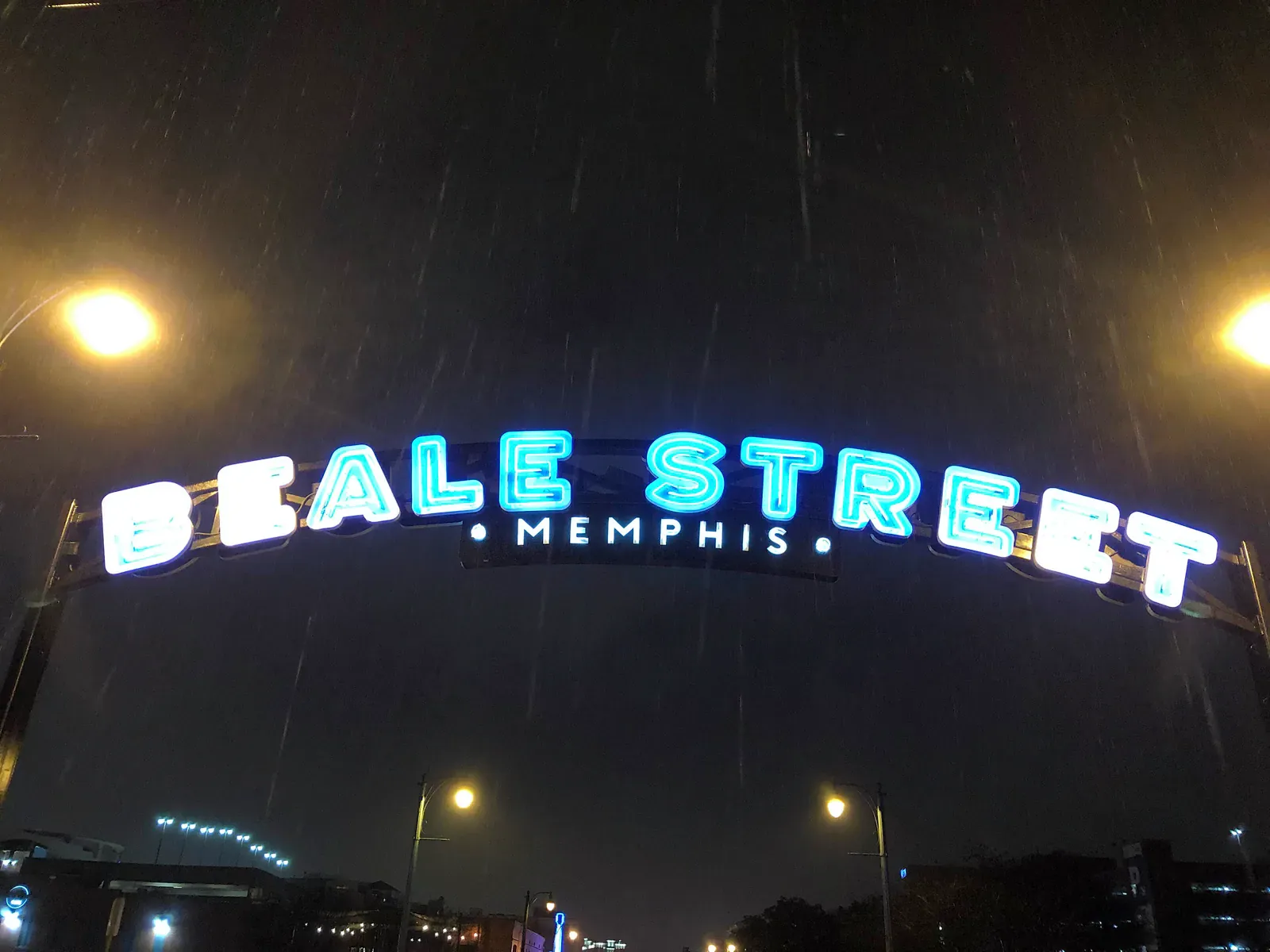
The revival turned that homemade quality into a statement. Contests and festivals reward showmanship as much as skill, and bands from outside the American South now treat the instruments as emblems of a shared folk tradition.

Notable recordings
“Stealin’, Stealin’” is the scene’s best-known song, and its history runs from the Memphis Jug Band’s 1928 session to revival bands and the Grateful Dead. “Walk Right In” has two lives: Gus Cannon’s 1929 original on Victor, and the 1963 Rooftop Singers recording that put it on top of the American chart. “K.C. Moan” survived through the Anthology of American Folk Music, and “Banjoreno” is the clearest document of the jazz-leaning Louisville style.
Legacy
Jug band music left a model for homemade, amateur-friendly ensemble playing. The British skiffle boom of the 1950s used the same washboard and tea-chest bass idea, and folk-revival groups trained a generation of rock and folk musicians, among them John Sebastian, David Grisman and Maria Muldaur. Related traditions include country blues and American folk music, and the style survives mostly through festivals, street bands and archival reissues of the Victor-era recordings.
Misconceptions
Jug band music is not only novelty or comedy. The comic songs were real and common, but the Memphis bands also recorded slow blues such as “K.C. Moan”, and the Louisville bands played jazz-inflected showpieces such as “Banjoreno”.
The style did not start in Memphis. The first jug band records came from Louisville bands recording in 1924, a few years before the Memphis Jug Band’s first Victor session in 1927.
Pink Floyd’s “Jugband Blues” is not a jug band recording. Syd Barrett wrote it as a psychedelic song and set it with a Salvation Army brass ensemble; the title borrows the name only.
Frequently asked questions
What is a jug band?
A jug band is a small ensemble that plays blues, ragtime and dance tunes with a jug as the bass voice, alongside instruments such as guitar, banjo, harmonica, kazoo and washboard.
Where did jug band music begin?
Jug band music began in Louisville, Kentucky, in the 1910s and reached record in 1924, with Memphis, Tennessee, becoming the second major centre from 1927.
Who were the main jug bands?
The best-known early groups were the Memphis Jug Band, Cannon’s Jug Stompers, the Dixieland Jug Blowers and Whistler and His Jug Band; the 1960s revival added the Jim Kweskin Jug Band and the Even Dozen Jug Band.
Is a jug band the same as skiffle?
No. Skiffle is a British style of the 1950s that used guitar, washboard and a tea-chest bass, and it is a close relative of jug band music rather than the same tradition.
Sound
Sound sheet
Signature sounds
- Jug playing the bass line
- Harmonica, kazoo or fiddle lead over a steady two-beat
- Washboard and string-band rhythm instead of drums
- Blues, ragtime and jazz phrases in one ensemble
- Homemade instruments next to guitar and banjo
Techniques
- Lip-buzzed jug bass
- Washtub bass tension
- Kazoo horn lead
- Washboard scraping
- Three-finger banjo
- Counterpoint over bass line
Keys and modes
G major. Keys of Walk Right In and Banjoreno, with C and D also common.
C major. Used on tracks such as Big Railroad Blues.
E major. Guitar-friendly blues key, as on K.C. Moan.
Tuning
Standard guitar tuning, with the jug and washtub bass playing roots by ear
Vocals
Shared lead vocals with kazoo or humming harmonies, often comic or rowdy
Scenes
Where it happened
Where and when the sound lived: one bar per city on a shared timeline.
North America
Active scenes
Peak 3, 1964
Whistler, Clifford Hayes and Earl McDonald build the jazz-leaning jug band tradition and perform at Derby events.
Will Shade's Memphis Jug Band and Gus Cannon's group play Beale Street, parties and rallies and record for Victor in the city.
The Jim Kweskin Jug Band is based in Cambridge, Massachusetts, and plays Newport five years running.
The Even Dozen Jug Band and Van Ronk's Ragtime Jug Stompers play and record in the Greenwich Village folk circuit.
Mother McCree's Uptown Jug Champions record a live set at the Top of the Tangent coffeehouse.
Home of the annual Battle of the Jug Bands.
Venues and places
Memphis, 1926 to today. The Memphis Jug Band played its clubs, and in 2009 received a Brass Note on the street's Walk of Fame.
Memphis, 1927 to today. Ralph Peer's Victor recordings of the Memphis Jug Band and Cannon's Jug Stompers ran until 1930.
Richmond, 1924 to today. Whistler's Jug Band travelled there from Louisville for its first session in September 1924.
Chicago, 1926 to today. The Dixieland Jug Blowers cut Banjoreno here in December 1926.
Newport, 1964 to today. The Jim Kweskin Jug Band played five consecutive editions, 1964 to 1968.
Palo Alto, 1964 to today. Coffeehouse where Mother McCree's Uptown Jug Champions were recorded live in July 1964.
Minneapolis, 1980 to today. Annual contest held on the Sunday after the Super Bowl.
Louisville, 2004 to today. Held each September in the genre's birthplace.
Culture
Culture markers
- Kentucky Derby gigs
Louisville jug bands played Derby-season events from the early 1900s.
Ritual - Medicine shows
Gus Cannon toured the South and Midwest in medicine shows from 1914 to 1930.
Ritual - Jug band battles
Annual contests in Minneapolis, Chicago and elsewhere pit amateur and pro bands against one another.
Ritual - Homemade instruments
Washtub basses, comb-and-paper kazoos and stovepipes are built from household junk.
Artwork
Media
Key media
- 1952Anthology of American Folk Music
by Harry Smith. Folkways set that reissued two Memphis Jug Band and two Cannon's Jug Stompers tracks for a new generation.
Compilation - 1977Emmet Otter's Jug-Band Christmas
by Jim Henson. Puppet TV special about a washtub-bass jug band, with songs by Paul Williams.
Film - 2017American Epic: The Best of the Memphis Jug Band
by Memphis Jug Band. Modern reissue of the band's Victor-era sides.
Compilation
Glossary
Terms on this page
Title of the Dixieland Jug Blowers' tremolo banjo showpiece of 1926.
Comic, risque blues in a related vein, with Memphis jug bands often leaning toward it.
A stoneware or glass bottle blown across with buzzing lips to produce a tuba-like bass line.
A travelling entertainment selling remedies, where many early jug band players such as Gus Cannon worked.
A British cousin built on guitar, washboard and tea-chest bass.
A one-string bass made from a tub, a stick and a cord, with pitch set by the tension.
Blues family