Skiffle
Skiffle is a folk genre played on guitars, banjo, washboard and homemade bass, recorded in 1920s Chicago and a craze in 1950s Britain.
Chicago, 1925
Folk family
Born
1925
Chicago
Subgenres
1
Documented branches
Links
15
Genres it drew on or shaped
Tempo
100-135 BPMLineage
Family tree
Grew out of
Derived from
Influenced by
Chicago, 1925
Skiffle
Led to (3)
Timeline
Era by era
From the first sparks to today. Select a dot to read the story behind it.
- Chicago rent parties
1925 to 1946
- Trad jazz interludes
1952 to 1955
- The British craze
1956 to 1958
- Aftermath and revivals
1959 to today
Eras
Moments
- 1 Chicago rent parties, 1925 to 1946
- 2 Trad jazz interludes, 1952 to 1955
- 3 The British craze, 1956 to 1958
- 4 Aftermath and revivals, 1959 to today
1925
Chicago rent parties
The word skiffle appears on record in 1920s Chicago for country blues and rent-party music, then fades from American use in the 1940s.
- 1925First skiffle on recordJimmy O'Bryant and his Chicago Skifflers carry the word on a 1925 record, the first known use of the term.
- 1937Lead Belly records Rock Island LineHis narrative version of the railroad song becomes the model that British skiffle groups later follow.
around 1952
Trad jazz interludes
British trad jazz bands, notably those of Ken Colyer and Chris Barber, add short skiffle sets, and Decca records the first British skiffle sides in 1954.
- 1954Colyer's band records for DeccaIn June, Ken Colyer's new band makes the first British skiffle recordings, for Decca.
- 1955Rock Island Line is releasedDecca issues two skiffle tracks by Chris Barber's band credited to the Lonnie Donegan Skiffle Group.
1956
The British craze
After Lonnie Donegan's Rock Island Line, tens of thousands of amateur groups form, coffee bars open in Soho, and television gives skiffle a weekly slot.
- 1956Rock Island Line chartsIt spends eight months in the UK Top 20, peaks at No. 6 and reaches No. 8 in the US, a gold-selling debut record.
- 1956The Vipers sign to ParlophoneAfter an audition with George Martin in September, the Soho group wins a recording contract.
- 1957Freight Train reaches No. 5The Chas McDevitt Skiffle Group with Nancy Whiskey takes Elizabeth Cotten's song into the UK chart and onto US television.
- 1957Six-Five Special beginsIn February the BBC launches Britain's first youth music programme, with a skiffle song as its title music.
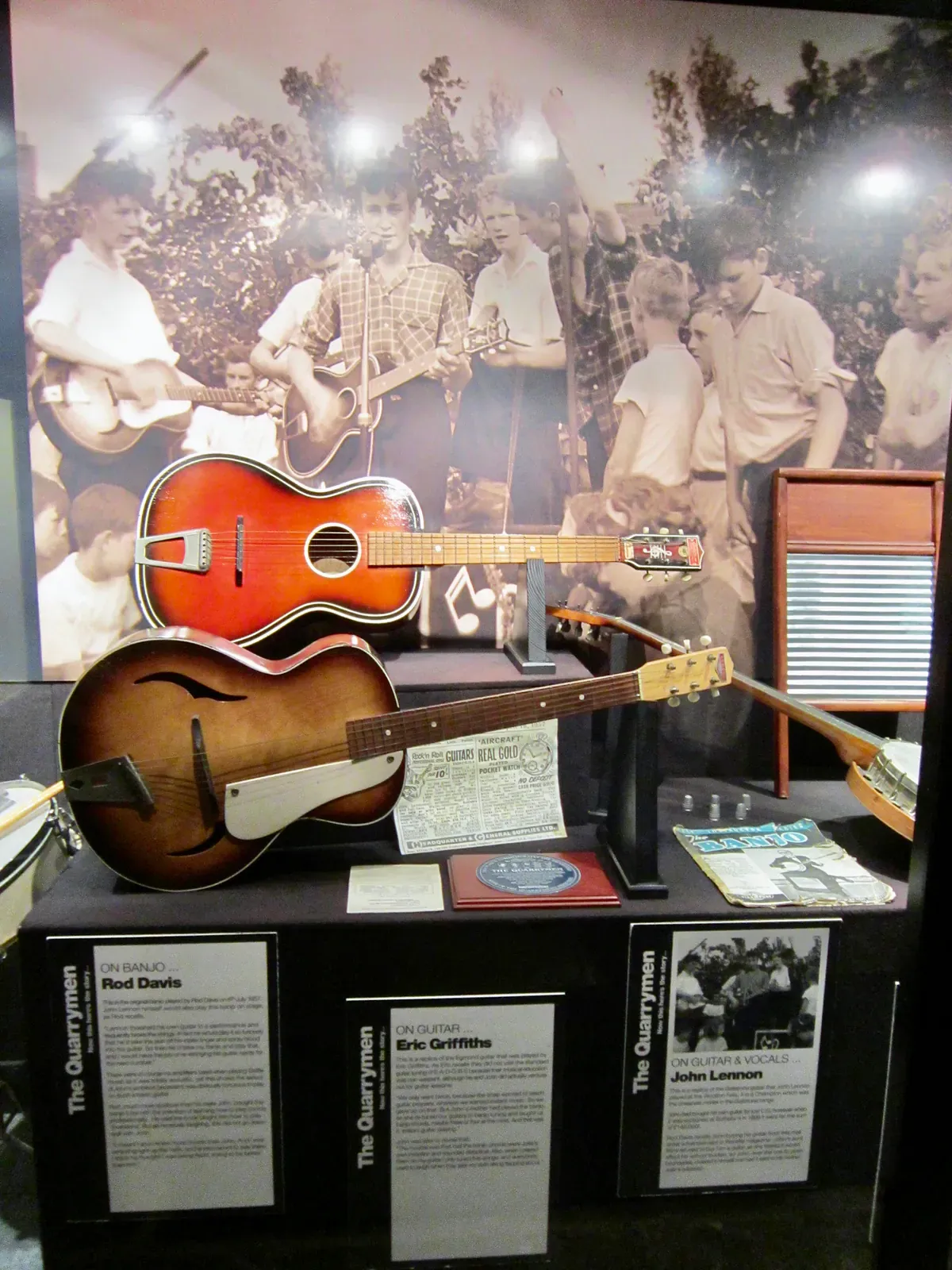
- 1957John Lennon forms the QuarrymenThe Liverpool skiffle group later becomes the Beatles when Paul McCartney and George Harrison join.
- 1958The boom endsGroups start to avoid the word skiffle in February, and by year's end players move to rock and roll, folk and blues.
1959
Aftermath and revivals
Rock and roll, folk and blues absorb the players. Donegan keeps performing skiffle until 2002, and festivals and small bands keep the style alive.
- 1970In the SummertimeMungo Jerry's skiffle-like hit reaches the top of the charts in several countries.
- 2002Lonnie Donegan diesThe King of Skiffle dies on 3 November at the age of 71.
Listening path
Start listening
A short path from an easy way in to the deep end. Thumbnails come from YouTube; the player loads only when you press play.
- 01
Lonnie Donegan, 1955
The record that began the British craze; listen for the washboard and the accelerating arrangement.
- 02
The Vipers Skiffle Group, 1957
The leading Soho group's Top 10 hit, a lighter, vocal-led approach.
- 03
Chas McDevitt Skiffle Group, 1957
A gentle folk song sung by Nancy Whiskey that reached No. 5 in the UK.
- 04
Lonnie Donegan, 1957
A fast Appalachian song turned into a chart-topping skiffle hit.
Skiffle is a genre of folk music drawn from American folk, blues, country, bluegrass and jazz, played on a mixture of manufactured and homemade instruments.
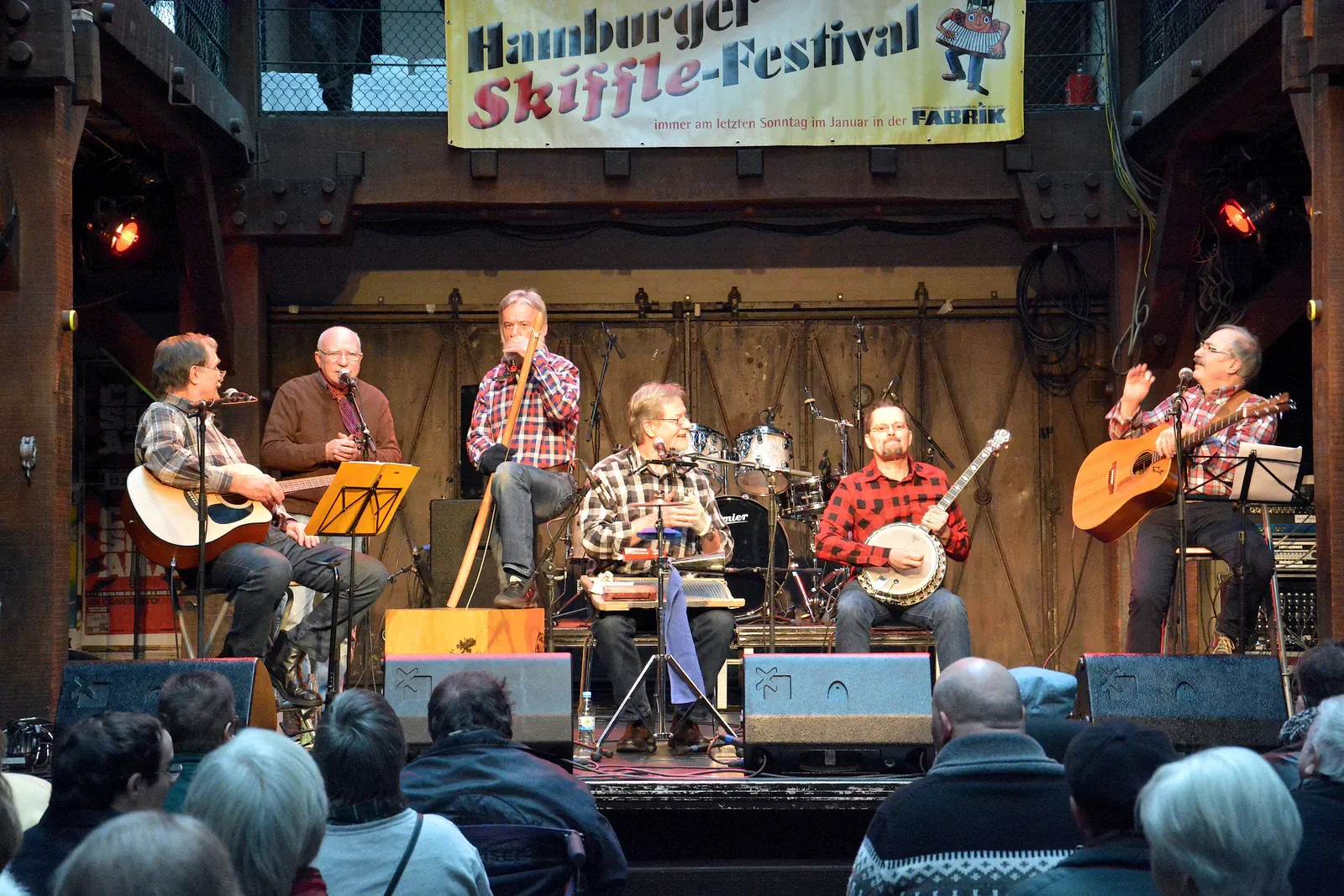
The word was first recorded in Chicago in the 1920s, and the style became a mass amateur movement in Britain in the 1950s, led by Lonnie Donegan. Its defining traits are a strummed guitar or banjo, a washboard, a tea-chest bass and an up-tempo blues and folk repertoire.
Origins
The origin of the English word is unknown. In the dialect of the west of England, to make a skiffle meant to make a mess of a business, a use attested from 1873. In early 20th century America it was one of several slang terms for a rent party, a social event with a small charge designed to pay a household’s rent. It was recorded in Chicago in the 1920s and may have travelled north with the African-American migration to the industrial cities.
The first use of the term on record is the name of Jimmy O’Bryant and his Chicago Skifflers, in 1925. It was applied mostly to country blues records, among them “Hometown Skiffle” (1929) and “Skiffle Blues” (1946) by Dan Burley and his Skiffle Boys, and Ma Rainey used it to describe her repertoire for rural audiences. The word then disappeared from American music in the 1940s. The music itself overlapped with the jug band tradition, and the washtub bass of those bands is the ancestor of the British tea-chest bass.
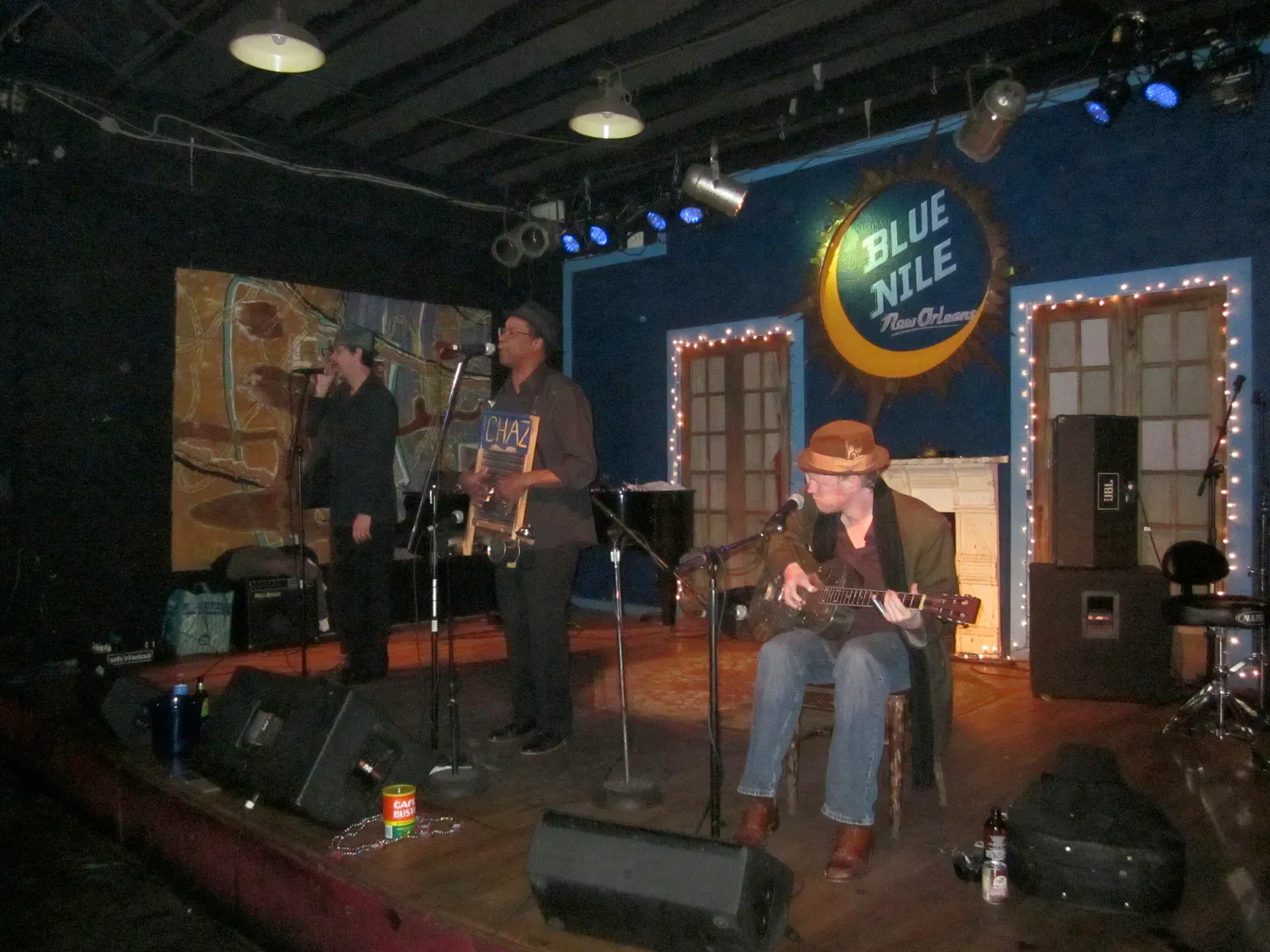
Trad jazz and the first British recordings, 1952-1955
Skiffle reached Britain through the trad jazz revival. Bands led by Ken Colyer and Chris Barber added skiffle interludes to their sets. Colyer’s new band recorded the first British skiffle tracks for Decca in June 1954.
The breakthrough came from Barber’s band. Decca released two skiffle tracks by it under the name Lonnie Donegan Skiffle Group in late 1955. Donegan, who had begun his career in the trad revival, sang a fast version of Lead Belly’s “Rock Island Line”, with a washboard but no tea-chest bass, and “John Henry” on the reverse. Lead Belly had first recorded his own narrative version of the railroad song in 1937. Donegan’s record spent eight months in the Top 20 in 1956, peaking at No. 6 in Britain and No. 8 in the United States, and was the first debut record to go gold in Britain.
The British craze, 1956-1958
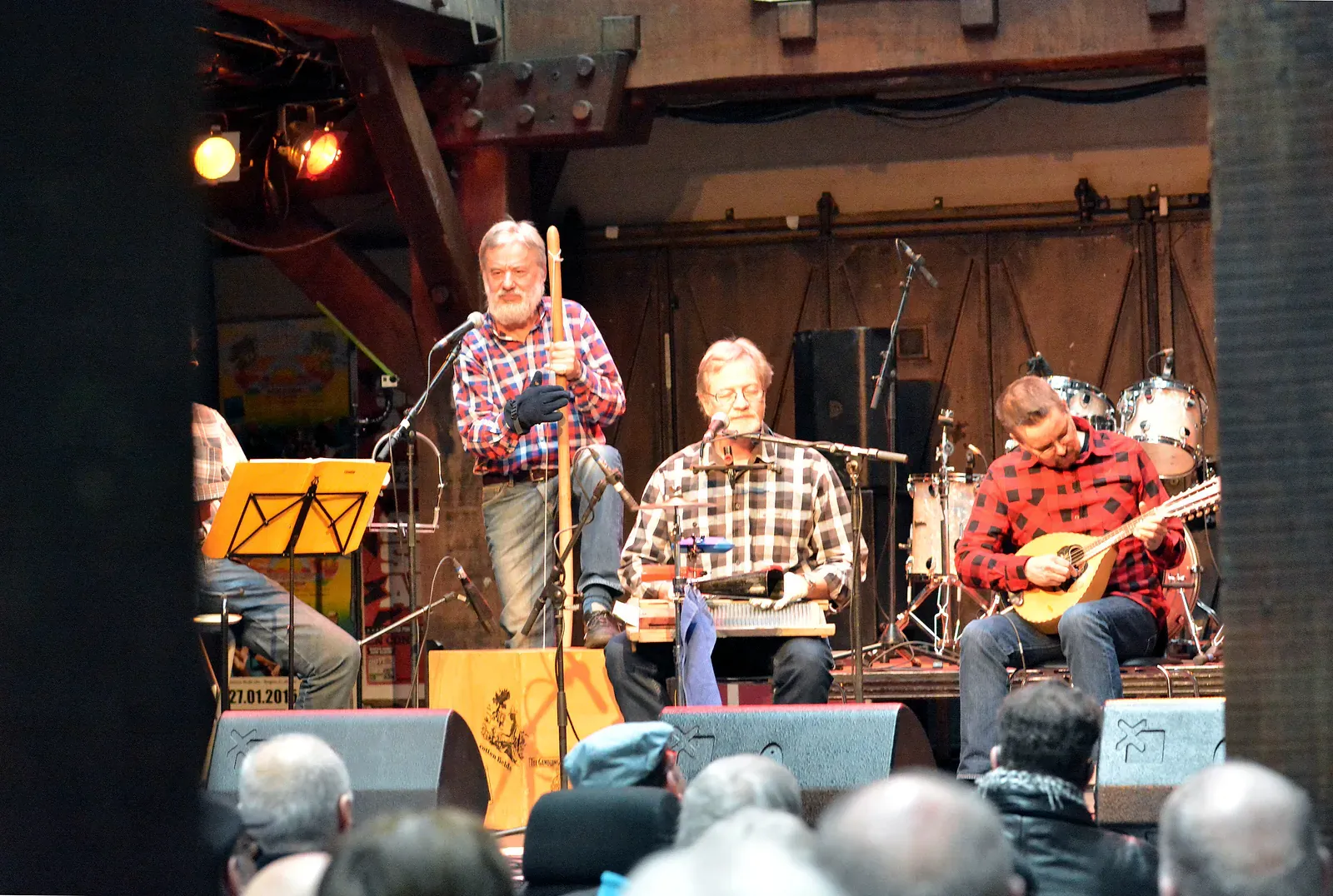
Donegan’s success and the lack of any need for expensive instruments or great technique set off the craze. Guitars sold quickly, and by one estimate there were 30,000 to 50,000 skiffle groups in Britain in the late 1950s. They played in church halls, cafes and the coffee bars of Soho such as the 2i’s Coffee Bar, open at 59 Old Compton Street from 1956, without aspiring to virtuosity. The movement was especially popular among working-class young men, who could buy, improvise or build their own instruments and who have been seen as reacting against the austerity of post-war Britain.
A few groups also had chart success. The Vipers Skiffle Group formed in central London in the spring of 1956 around Wally Whyton, Johnny Martyn and Jean Van den Bosch, took up residence at the 2i’s and signed to Parlophone after an audition with George Martin that September. Their second single, “Don’t You Rock Me Daddy-O”, reached No. 10 in early 1957. The Chas McDevitt Skiffle Group added the singer Nancy Whiskey to record “Freight Train”, Elizabeth Cotten’s song, and reached No. 5 in 1957. It was the only British skiffle group other than Donegan’s to achieve international success, and it appeared on The Ed Sullivan Show. Donegan, signed to Pye, followed with “Cumberland Gap” in 1957 and “My Old Man’s a Dustman” in 1960. Johnny Duncan and the Bluegrass Boys also charted.
The BBC programme Six-Five Special, from February 1957, was the first British youth music programme and used a skiffle song as its title music. The craze probably peaked in that period. British rock and roll was already producing home-grown stars such as Tommy Steele, Marty Wilde and Cliff Richard and the Shadows, some of whom had started in skiffle. By February 1958 the host Pete Murray noticed groups that wanted to play down the word, and by the end of that year the boom was over.
Characteristics
Skiffle takes its repertoire from American folk, blues and country songs, usually in major keys with open guitar chords, and plays it at a driving pace. Rock Island Line, for instance, starts slowly and speeds up. Measured recordings of Donegan, the Vipers and the McDevitt group sit between 100 and 135 beats per minute in four-four time. The washboard stands in for a drum kit, and the amateur approach is part of the sound: enthusiastic, loosely rehearsed, and sung with American inflections by British singers.
Instruments and production
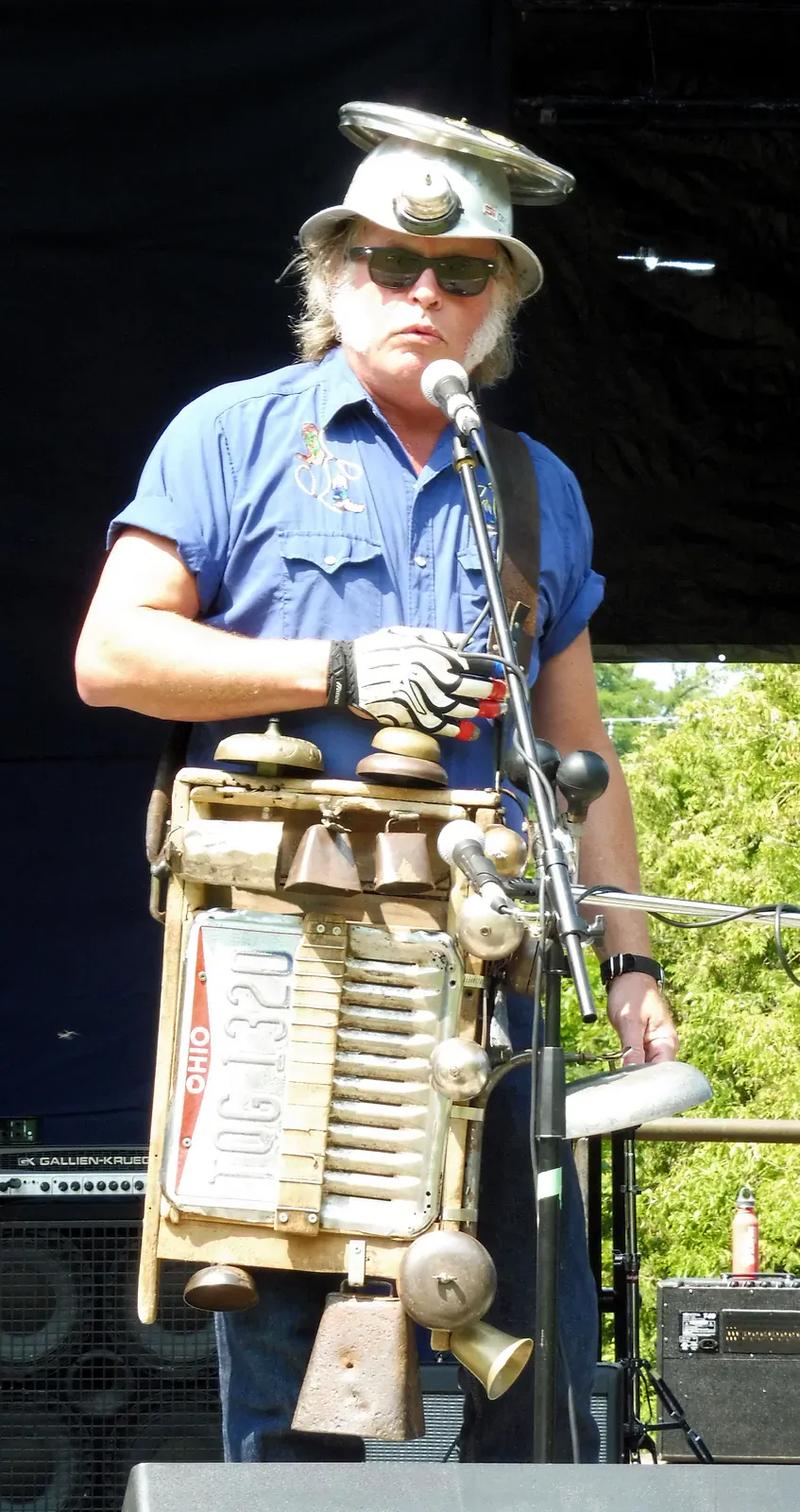
The instruments were often improvised, and that was the point. A washboard played with thimbles gave the rhythm, a tea chest, a broom handle and a length of string gave the bass, and a banjo or an acoustic guitar played the chords. George Martin, who produced the Vipers at Parlophone, later said that working with them gave him important experience of informally trained but enthusiastic musicians.
Culture
Skiffle was an amateur culture first. Groups formed at school, in church halls and in cafes, and the movement was cheap, social and local. The 2i’s in Soho was a place where young performers were noticed, among them Tommy Steele and Cliff Richard, and it also inspired the Casbah Coffee Club in Liverpool.
Legacy
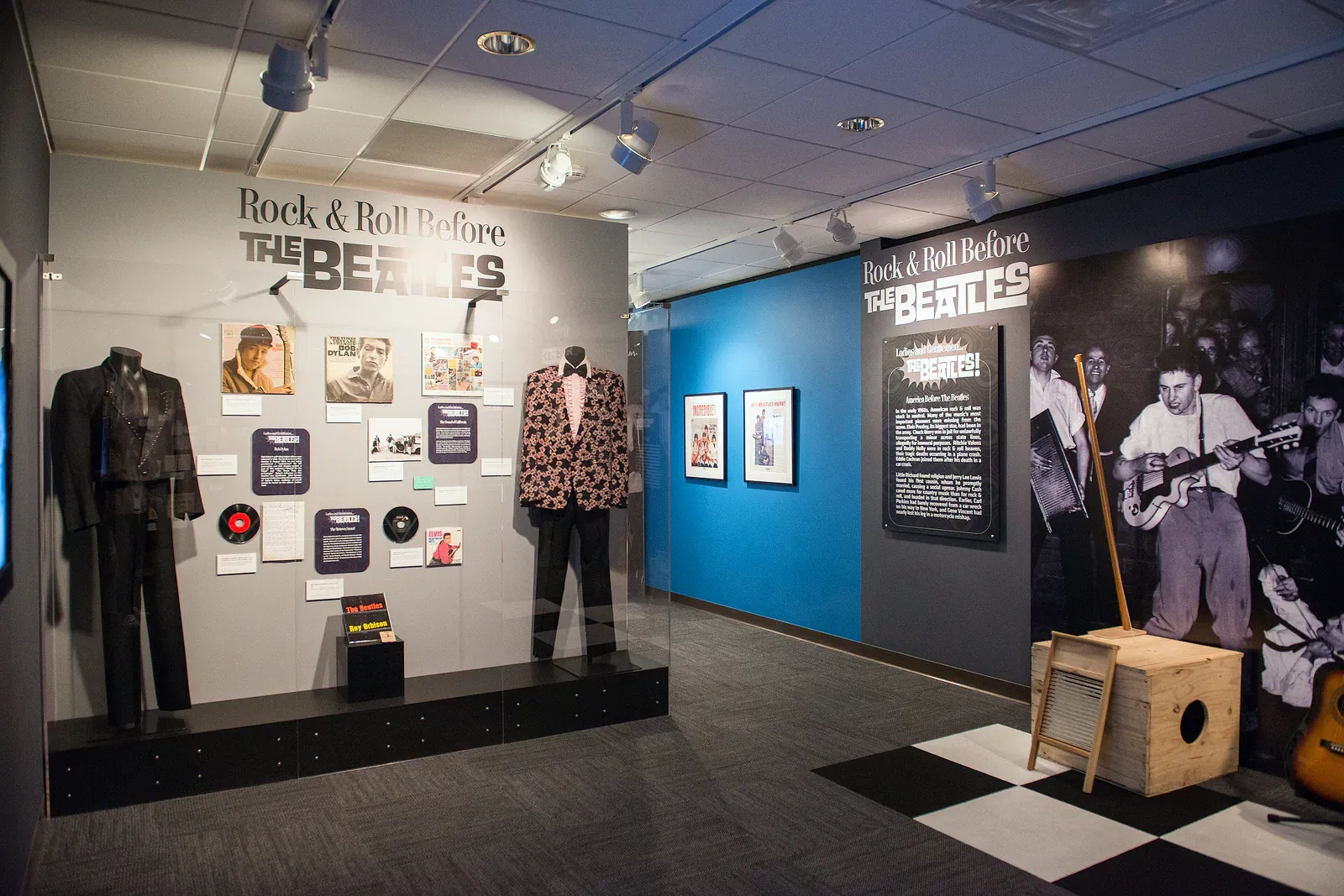
Skiffle has been seen as a critical stepping stone to the second British folk revival, the British blues boom and the British Invasion of American popular music. A large number of British musicians began in skiffle groups, among them Van Morrison, Alexis Korner, Ronnie Wood, Mick Jagger, Martin Carthy, Roger Daltrey, Jimmy Page and David Gilmour. The Beatles developed from John Lennon’s 1957 skiffle group the Quarrymen, joined by Paul McCartney after a few months and by George Harrison in 1958, and the Bee Gees grew from Barry Gibb’s skiffle group the Rattlesnakes. The style returned briefly in 1970 when Mungo Jerry’s skiffle-like song “In the Summertime” reached the top of the charts in several countries, and Donegan kept performing until his death in 2002.
Related pages: the parent folk family, the jug band tradition it grew from, rock and roll and beat music, which followed it, and the folk revival.
Misconceptions
Skiffle is sometimes thought to be a purely British invention. The word and the first records come from 1920s Chicago, and the British craze was built on American songs. It is also said to have been a short fad with no consequences, but the amateur groups of the late 1950s fed directly into folk, blues and beat music.
Another claim is that skiffle needed homemade instruments. Many groups used ordinary guitars and banjos and added only a washboard and a tea-chest bass, and the leading groups recorded for commercial labels such as Parlophone and Oriole.
Frequently asked questions
What is skiffle music?
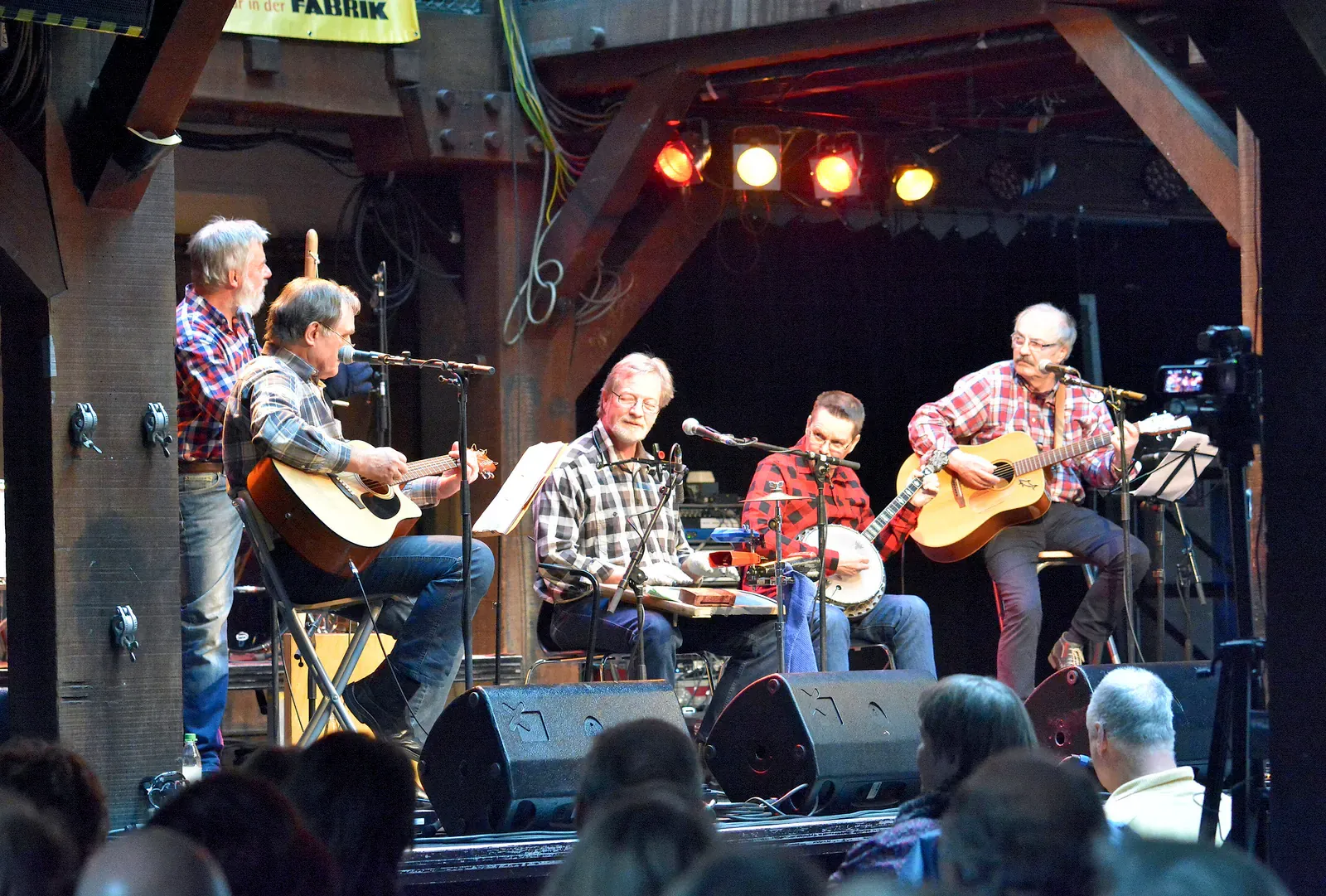
Skiffle is a folk genre with influences from American folk, blues, country, bluegrass and jazz, played on manufactured and homemade instruments such as guitars, banjo, washboard and tea-chest bass. It was recorded in the United States from the 1920s and became hugely popular in Britain in the 1950s.
Who was the king of skiffle?
Lonnie Donegan, born in Glasgow in 1931 and known as the King of Skiffle. His 1955 release of “Rock Island Line” began the British craze and he kept performing skiffle until his death in 2002.
What does the word skiffle mean?
In early 20th century America, skiffle was a slang term for a rent party. Its earlier British dialect meaning was to make a mess of a business. The first record to use the word was by Jimmy O’Bryant and his Chicago Skifflers in 1925.
How did skiffle lead to the Beatles?
John Lennon formed the Quarrymen, a skiffle group, in 1957. Paul McCartney joined a few months later and George Harrison in 1958, and the group became the Beatles.
What instruments does a skiffle group use?
An acoustic guitar, often a banjo, a washboard played with thimbles and a tea-chest bass, sometimes with other homemade or improvised instruments.
Sound
Sound sheet
Anatomy of a track
| # | Part | Bars |
|---|---|---|
| 1 | Intro, guitar or banjo | 4 |
| 2 | Verse and chorus, call and response | 16 |
| 3 | Instrumental break | 8 |
| 4 | Faster final choruses | 16 |
Signature sounds
- Washboard instead of drum kit
- Slapped tea-chest bass on every beat
- Strummed acoustic guitar and banjo
- Blues and folk songs at a driving pace
Drums and percussion
- Washboard
Techniques
- Strummed rhythm guitar
- Tea-chest bass slap
- Washboard scrubbing
- Accelerating arrangement
Keys and modes
Major keys with blues inflection. Twelve-bar blues and folk songs, with open chords on guitar and banjo.
Vocals
Shouted, unpolished and sung with American inflections by British amateurs.
Scenes
Where it happened
Where and when the sound lived: one bar per city on a shared timeline.
North America
Europe
Active scenes
Peak 3, 1957-2025
Where the word skiffle was first recorded, in country blues and rent-party music.
Trad jazz clubs and the Soho coffee bars were the centre of the craze and of its recordings.
Home of the Quarrymen and of hundreds of amateur skiffle groups.
Venues and places
London, 1956 to today. A Soho coffee bar at 59 Old Compton Street where skiffle and early rock and roll acts were discovered.
Culture
Culture markers
- Coffee bar sessions
Soho coffee bars and church halls hosted amateur groups without demanding virtuosity.
Ritual - Homemade instruments
Tea chests, broom handles and washboards stood in for a drum kit and a double bass.
Artwork - Skiffle as rent party
The word began as an American term for a party that raised the rent.
Slang
Glossary
Terms on this page
A social event with a small charge, held to pay a household's rent.
Early 20th century American slang for a rent party, later a music of homemade instruments.
A small amateur band built on guitars, a washboard and a homemade bass.
The British variant of the washtub bass, with a tea chest as the resonator.
The New Orleans style revival in Britain from which skiffle emerged.
A ribbed metal board played by tapping or scraping with thimbles.
Folk family