Vaudeville
Vaudeville was North American variety theatre from the 1870s to the early 1930s: unrelated acts on one bill, booked by circuits and selling popular songs.
United States, Canada, 1870
Stage and screen family
Born
1870
United States, Canada
Subgenres
2
Documented branches
Links
20
Genres it drew on or shaped
Tempo
70-125 BPMLineage
Family tree
Grew out of
- Minstrel show
Derived from
- American burlesque
Derived from
United States, Canada, 1870
Vaudeville
Led to (4)
Timeline
Era by era
From the first sparks to today. Select a dot to read the story behind it.
- Concert saloons and polite variety
1865 to 1880
- Circuits and the big time
1880 to 1912
- The Palace and the record boom
1913 to 1925
- Sound film and collapse
1926 to 1932
- Radio, television and the Borscht Belt
1933 to today
Eras
Moments
- 1 Concert saloons and polite variety, 1865 to 1880
- 2 Circuits and the big time, 1880 to 1912
- 3 The Palace and the record boom, 1913 to 1925
- 4 Sound film and collapse, 1926 to 1932
- 5 Radio, television and the Borscht Belt, 1933 to today
1865
Concert saloons and polite variety
Tony Pastor cleans up the saloon variety show for middle-class families in New York, and the word vaudeville replaces variety in his billing in 1876.
- 1865Pastor opens his Opera House on the BoweryThe former circus clown starts staging variety programs aimed at a respectable audience.
- 1876Pastor starts billing his shows as vaudevilleEarly in 1876 the French-derived word replaces variety, alongside a ban on liquor and bawdy material.
around 1880
Circuits and the big time
Keith-Albee, Orpheum and Pantages link theatres into booking chains; by the late 1890s standard bills, loyal audiences and a ladder from small time to big time exist.
- 1896First public screen projection at Koster and Bial'sCinema debuts inside a New York music hall, and for years films are one act on the vaudeville bill.
- 1902Pantages adds films to his showsAlexander Pantages is among the first managers to program motion pictures on his circuit.
- 1906Bert Williams records NobodyThe song first performed in Abyssinia becomes his signature record and sells at least 100,000 copies.
- 1909Sophie Tucker joins the Ziegfeld FolliesA hit with audiences, she is let go because other female stars refuse to share the spotlight.
- 1910Fanny Brice headlines the Ziegfeld FolliesHer first Follies run in 1910 and 1911 opens a link to Florenz Ziegfeld that lasts into the 1930s.
- 1911Tucker releases Some of These DaysThe Shelton Brooks song on Edison Records becomes her theme and the title of her 1945 biography.
1913
The Palace and the record boom
The Palace Theatre crowns careers, Black and white stars cross into Ziegfeld revues, and singers such as Jolson, Tucker and Brice turn stage hits into best-selling records.
- 1913The Palace Theatre opens in New YorkBuilt by Martin Beck and run by Keith, it becomes the career peak many vaudevillians aimed for.
- 1919Orpheum Circuit incorporatesIt unites 45 theatres in 36 cities across the US and Canada.
- 1920Black circuits book through TOBAIn the 1920s the Theatre Owners Booking Association manages many bookings for Black performers on segregated circuits.
- 1920Jolson records SwaneeThe George Gershwin and Irving Caesar song becomes the best-known record of his career.
- 1921Brice records My Man for VictorIntroduced in the 1921 Follies, the ballad becomes her signature and later enters the Grammy Hall of Fame.
- 1921Tucker hires Ted ShapiroThe pianist and songwriter stays her accompanist and onstage foil for the rest of her career.
1926
Sound film and collapse
Talking pictures remove live theatre's main advantage, RKO converts the Orpheum chain to cinemas and the Palace goes film-only on 16 November 1932.
- 1926Talking pictures arriveSpoken dialogue removes the chief advantage of live theatre, and small-time houses can show big-time stars for a nickel.
- 1927Jolson stars in The Jazz SingerThe first feature with synchronized singing moves the biggest stage star of the decade onto the screen.
- 1928Cantor introduces Makin' WhoopeeThe song comes from the Broadway musical Whoopee! and becomes one of the hits tied to his name.
- 1932Palace Theatre turns film-onlyOn 16 November the house ends live bills, often cited as the death knell of vaudeville.
around 1933
Radio, television and the Borscht Belt
Performers move to radio, film and Catskill resorts, and the host-plus-acts format lives on in television from Milton Berle to Ed Sullivan.
- 1948The Milton Berle Show reuses the formatOne host introducing a run of acts becomes a television staple, followed by Your Show of Shows and The Ed Sullivan Show.
Listening path
Start listening
A short path from an easy way in to the deep end. Thumbnails come from YouTube; the player loads only when you press play.
- 01
Al Jolson, 1920
The Jolson record that made a revue song a national hit; listen for the emphatic, projected delivery of a stage star.
- 02
Fanny Brice, 1921
Brice's Follies torch song, a serious ballad from a comedian best known for clowning.
- 03
Sophie Tucker, 1937
A late recording of her signature number, showing the big, brassy delivery of the Last of the Red-Hot Mamas.
Facts
| Family | Stage and screen |
| Origin | United States, Canada |
| Emerged | 1870s-1930s |
| Status | Historical |
| Tempo | 70 to 125 BPM |
| Meter | 4/4 |
| Grew out of | Minstrel show, American burlesque |
| Subgenres | 2 |
Vaudeville is a form of variety theatre that dominated North American entertainment from the early 1870s to the early 1930s. A bill gathered unrelated acts, among them singers, comedians, dancers, acrobats, magicians and trained animals, and touring circuits moved them from town to town.
It was also the main route by which a new popular song reached the public, through stage stars, sheet music and, from the 1910s, records. It belongs to the stage and screen family and is historical today.
Origins
The name comes from the French comédie en vaudevilles, a genre that mixed acting with songs from the late seventeenth century. The American form grew out of the concert saloon, the minstrel show, dime museums, medicine shows and literary burlesque, and took its settled shape through the 1870s and 1880s. In France the word now refers only to theatrical farce, often a bedroom farce, with no required music.
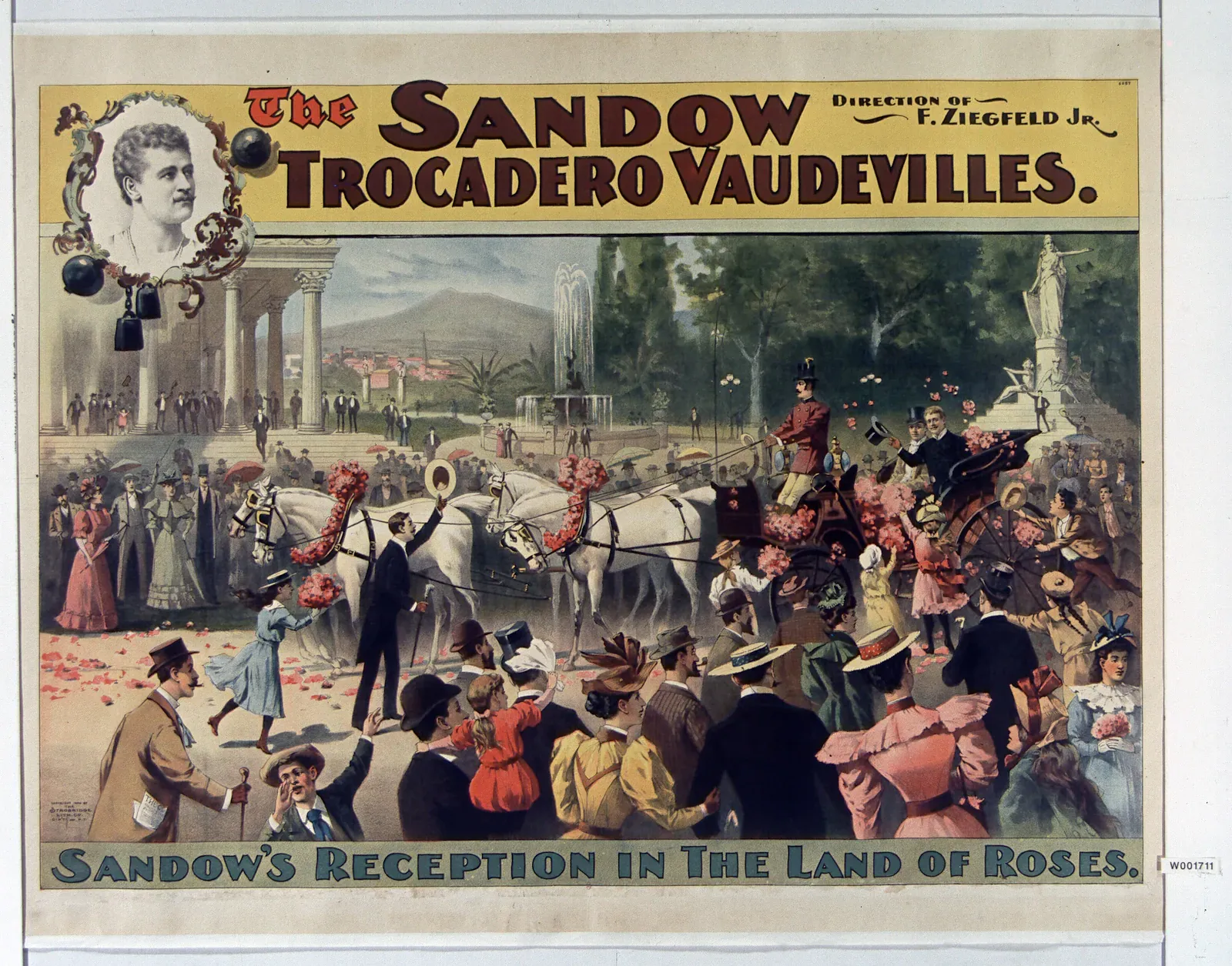
Tony Pastor, a former singing circus clown, drove the change. He opened an Opera House on the Bowery in 1865 and later moved his variety theatre to Broadway and then to Fourteenth Street. Seeking women and families among uptown shoppers, he banned liquor sales and cut bawdy material. He began billing his shows as vaudeville rather than variety only in early 1876, and other managers copied the formula.
Circuits and the big time, 1880-1912
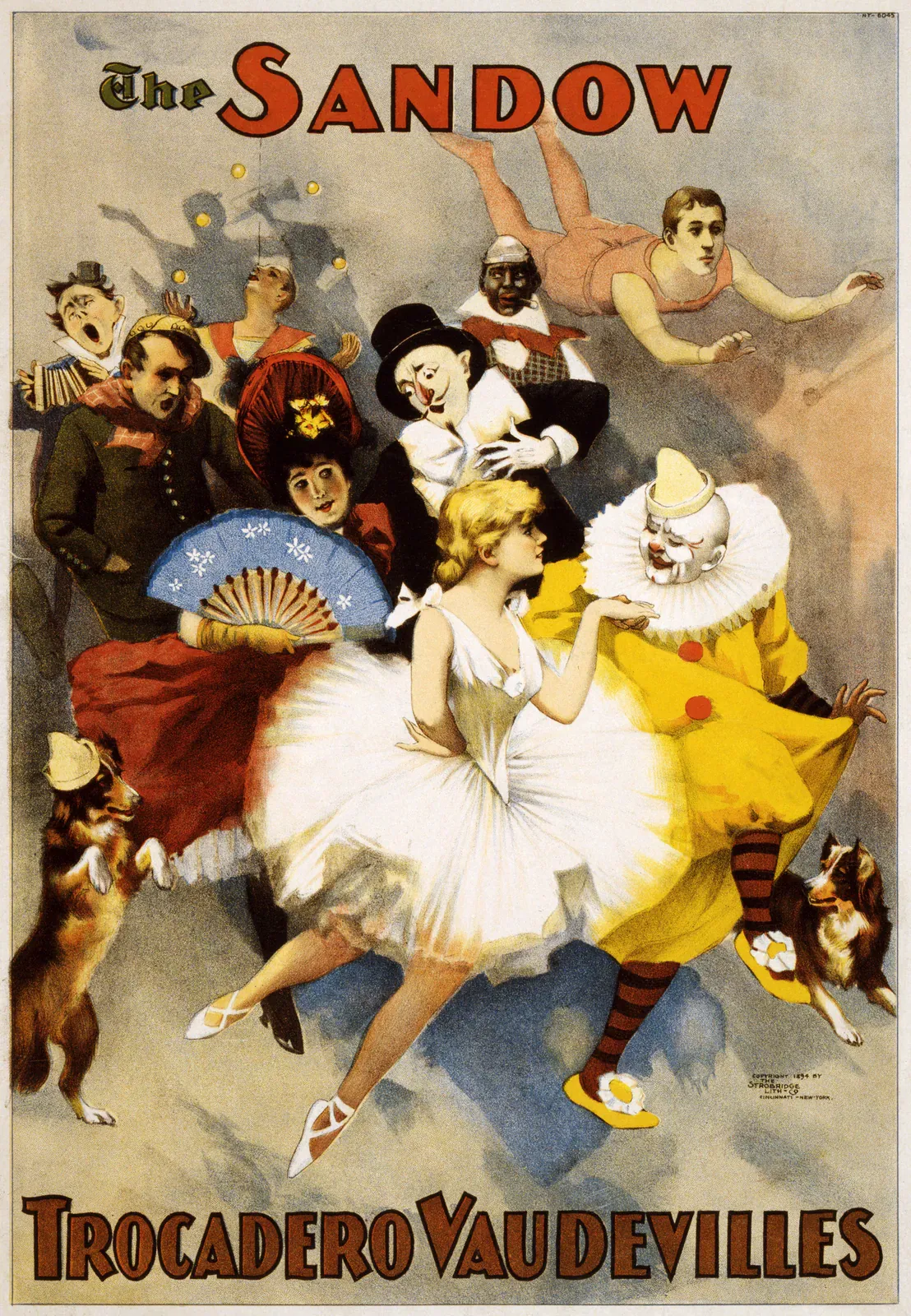
B. F. Keith began in Boston and built a chain of theatres, and E. F. Albee ran it to its greatest success. Circuits were vaudeville’s main economic innovation: they replaced single-theatre booking with contracts for regional and national tours that could stretch from a few weeks to two years. Keith and Albee also made polite entertainment a national rule: managers sent blue envelopes ordering cuts to suggestive lines, and defiance risked a ban from the circuit.
By the late 1890s there were large circuits, theatres in almost every sizable town, standard booking and a pool of skilled acts. Martin Beck’s Orpheum Circuit incorporated in 1919 with 45 theatres in 36 cities across the United States and Canada, and Alexander Pantages owned more than 30 houses and controlled perhaps 60 more by contract. Work ran on three levels. The small time paid less for more shows in rough or converted theatres, the medium time gave two shows a day in purpose-built houses, and the big time paid several thousand dollars a week in large urban theatres.
The Palace and the record boom, 1913-1925
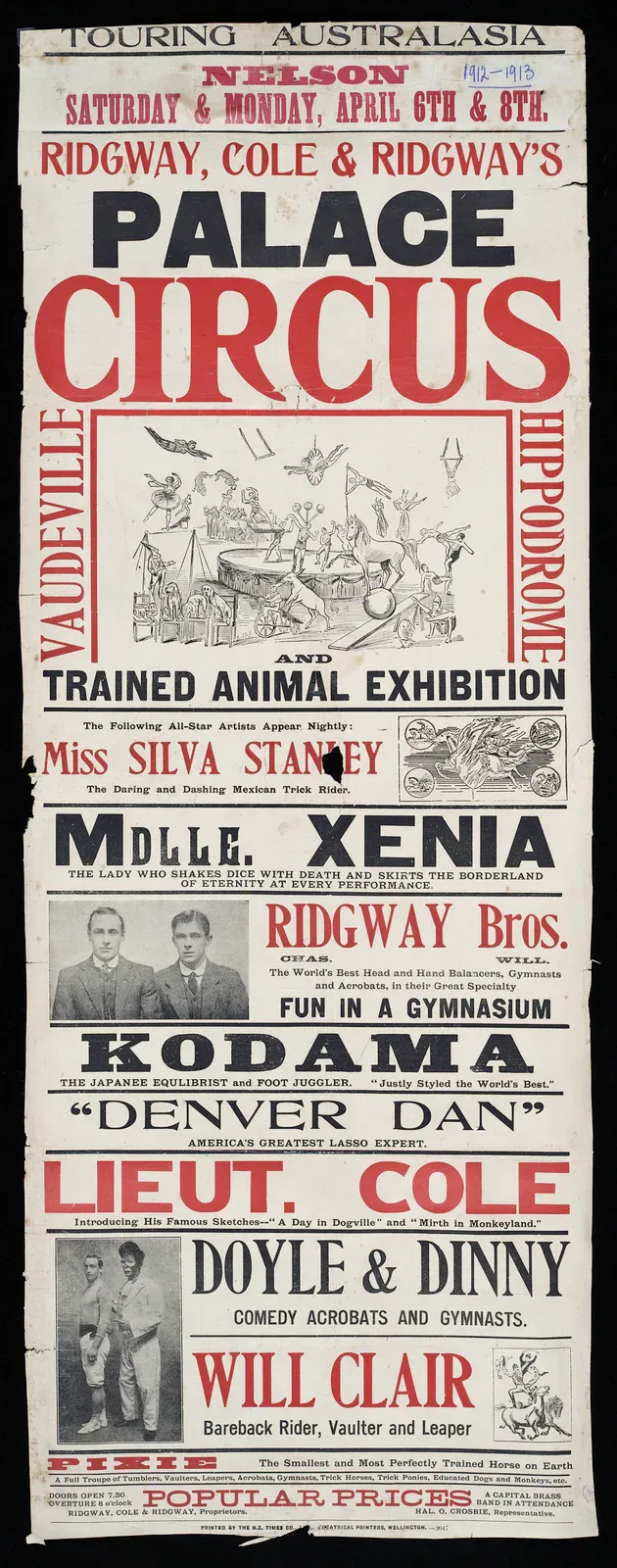
The Palace Theatre in New York, built by Martin Beck in 1913 and operated by Keith, was the goal of many careers. A typical bill opened with a sketch, then a single (one performer), an acrobatic act, another single and another sketch, before a full-company finale. Stars on such bills included the pianist Eubie Blake, the magician Harry Houdini and the trick roper Will Rogers.
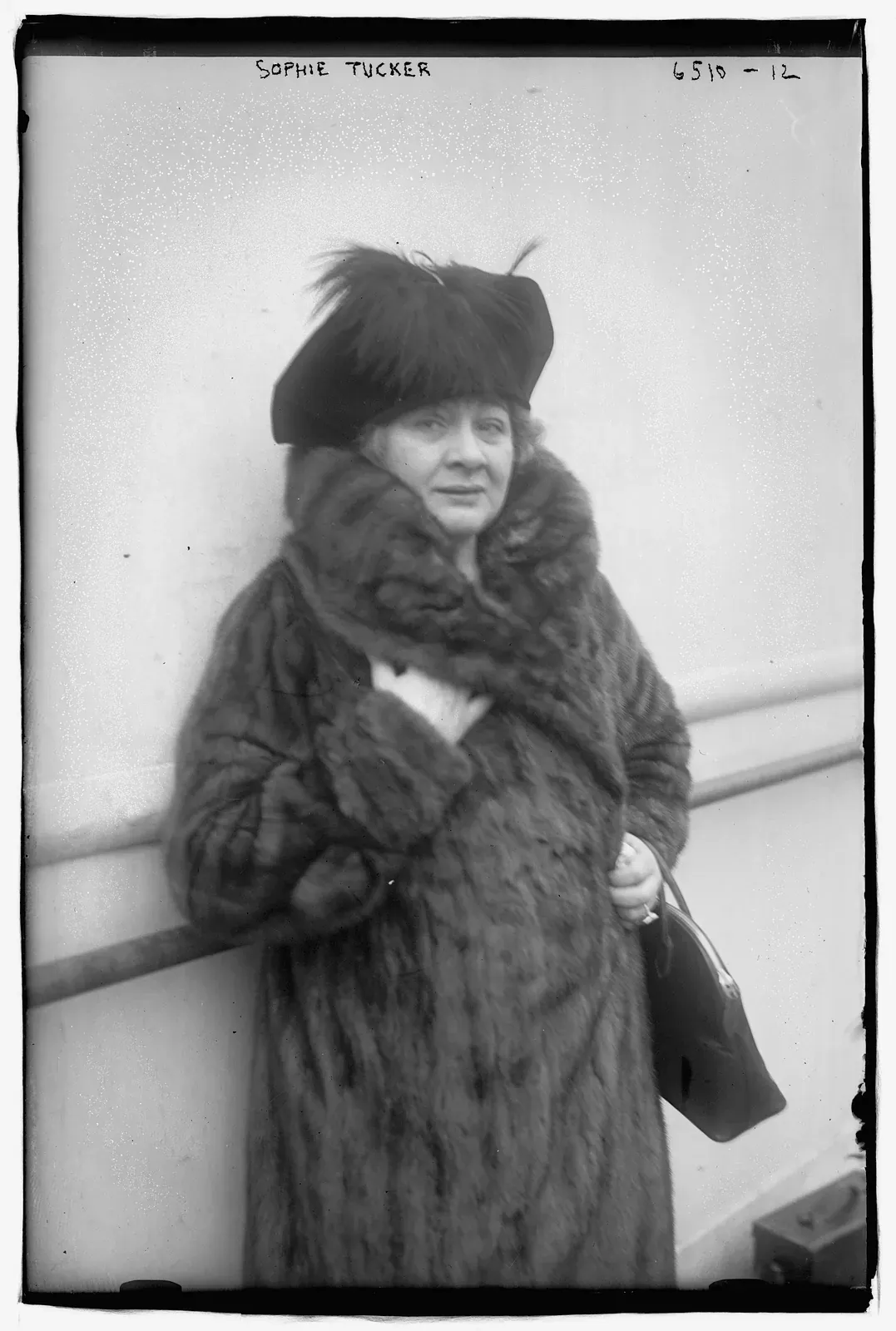
Singers carried the songs. Sophie Tucker first appeared on an amateur night in 1907 and joined the Ziegfeld Follies in 1909, though other female stars would not share the spotlight and she was let go. Fanny Brice left school for a burlesque revue in 1908 and headlined the Follies in 1910 and 1911. Both turned stage hits into records. All-girl bands such as the Ingenues and the Dixie Sweethearts were advertised in trade papers in the 1920s.
Black vaudeville
Black performers worked on a segregated circuit. Early shows for white audiences usually held one Black act per bill, and performers met discrimination in restaurants and lodging. Williams and Walker, Ernest Hogan and the Hyers Sisters played to both audiences, the Whitman Sisters ran their own touring company, and in the 1920s the Theatre Owners Booking Association handled many bookings. Black songwriters wrote songs that white singers made famous, and these stages fed ragtime, blues and tap dance. The stages are a root of classic female blues.
Sound film and collapse, 1926-1932
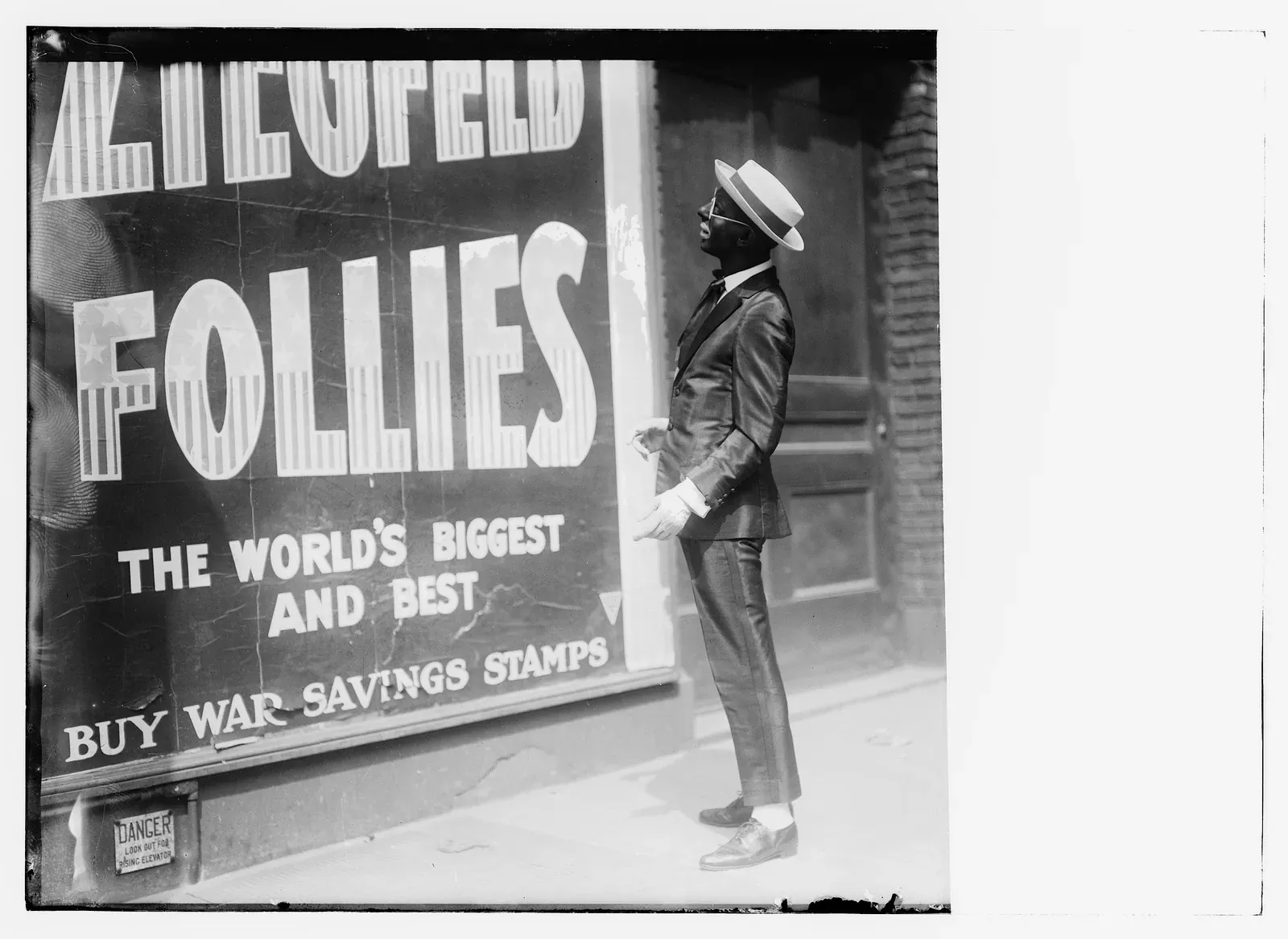
Cinema first reached a paying public inside vaudeville halls, when a screen projection was shown at Koster and Bial’s Music Hall in 1896. By the late 1920s most bills included films. Talking pictures arrived in 1926 and removed the last major advantage of live theatre. Top stars filmed their acts for single payments, and small-time theatres could show big-time performers on screen for a nickel.
The change came in stages. RKO took over the Orpheum chain and turned it into full-time movie theatres, and Joseph Kennedy Sr. acquired the Keith-Albee-Orpheum corporation, which held more than 700 theatres. Radio and the Great Depression added pressure. The Palace went film-only on 16 November 1932, a date often given as the end.
Characteristics
Variety was the rule. Nothing connected one act to the next, and the order mattered more than any story. Songs came as verse-and-chorus numbers meant to be sold as sheet music, so publishers and song pluggers worked the circuits. A signature number, such as a comic lament or a risque belter, was worth more than range.
Instruments and production
A house pit orchestra played the overture, accompanied singers and dancers and cued acts. Tucker hired the pianist Ted Shapiro in 1921, and he stayed for her whole career, writing songs and trading wisecracks in the act. Early recording was acoustic, with performers singing into a horn, which suited projected voices such as Jolson’s and Williams’ half-spoken delivery.
Mainstream success
Vaudeville was the mainstream, and the question whether an act will play in Peoria became a test of mass appeal. Its stars were also the best-selling recording artists of the 1910s and 1920s, issued by labels such as Victor and Columbia,. Al Jolson, billed as the World’s Greatest Entertainer, was among the highest-paid stars of his decade, and his role in The Jazz Singer in 1927 marked the move from stage to sound film.
Notable recordings
Bert Williams’ Nobody, with music by Williams and words by Alex Rogers, was first performed in February 1906 in the Broadway show Abyssinia. The song became his permanent signature, a dry, ironic lament delivered half-spoken, and audiences demanded it at almost every appearance. It stayed in Columbia’s catalogue into the 1930s and is estimated to have sold 100,000 to 150,000 copies, a very large figure for the time.
Fanny Brice’s My Man began as the French song Mon homme, a hit for Mistinguett in 1920, with English words by Channing Pollock. Brice sang it in the 1921 Follies and recorded it for Victor the same year; the record entered the Grammy Hall of Fame in 1999. Tucker’s Some of These Days, written by Shelton Brooks, came out on Edison Records in 1911 and gave her biography its title. Al Jolson’s Swanee, by George Gershwin and Irving Caesar, opened the Capitol Theatre revue Demi Tasse in October 1919 and became his best-known record in 1920.
Culture
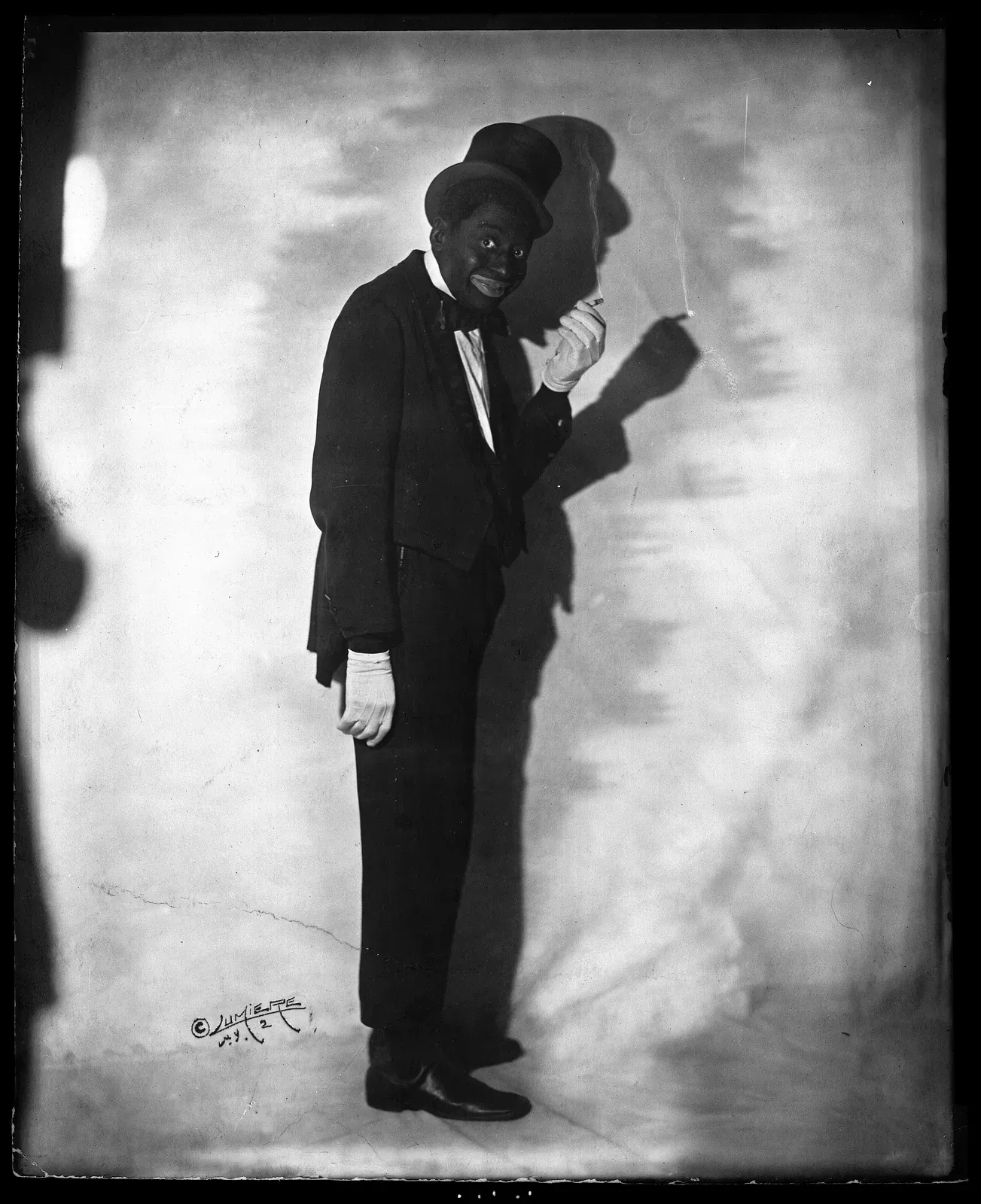
Vaudeville language entered everyday English. The peanut gallery, the cheapest seats, gave the phrase for hecklers, and big time and small time still describe levels of success. The stage also acted as a meeting place for immigrant cultures. Irish Americans were prominent as managers and performers, and acts of many groups used ethnic caricature, which both reflected and fixed the tensions of crowded cities. Blackface was common on bills: Tucker started in it and disliked the work, while Jolson, Cantor and others used it for decades, a legacy now widely criticised for perpetuating stereotypes.
Legacy
Many performers crossed to the new media: Al Jolson, W. C. Fields, Mae West, Charlie Chaplin, the Marx Brothers and Eddie Cantor used vaudeville fame to enter film, while Jack Benny, Bob Hope and Judy Garland treated it as a launching pad. Many veterans later worked in the Catskill resorts of the Borscht Belt.
The structure lived on in broadcasting. Radio shows such as The Rudy Vallee Show used the vaudeville repertoire, and the single host introducing a run of acts became a television model from The Milton Berle Show in 1948 to The Ed Sullivan Show and later talent shows. Related forms include musical theatre, cabaret and ragtime, whose pianists such as Eubie Blake played its bills.
Misconceptions
One myth holds that vaudeville and French vaudeville are the same thing. The French word now names a theatrical farce that need not include music, while the American form was a variety bill of unrelated acts. A second claim is that sound film killed vaudeville in a single year. There was no abrupt end: the form was sagging by the late 1920s, theatres converted in stages, and the Palace closed its live bills in November 1932. A third myth treats vaudeville as a rough saloon show. Pastor and Keith built their business on clean, family-oriented programmes with banned words and censored lines.
Frequently asked questions
What was vaudeville?
Vaudeville was a North American variety stage form, popular from the early 1870s to the early 1930s, that showed a series of separate acts on one bill.
What kind of music did vaudeville use?
Vaudeville music was popular song of its day: comic numbers, sentimental ballads, ragtime and early jazz tunes, promoted through sheet music and later phonograph records.
Who were the biggest vaudeville stars?
Al Jolson, Sophie Tucker, Fanny Brice, Eddie Cantor and Bert Williams were among the best-known singers and comedians, and the Palace Theatre in New York was the top booking.
Why did vaudeville end?
Cheap cinema, talking pictures from 1926, radio and the Great Depression drew away the audience and the performers, and circuits converted their theatres to film.
Sound
Sound sheet
Anatomy of a track
| # | Part |
|---|---|
| 1 | Opening sketch or novelty |
| 2 | First single (song or monologue) |
| 3 | Acrobatic or animal act |
| 4 | Second single |
| 5 | Comedy sketch |
| 6 | Headliner's turn |
| 7 | Closing extravaganza with full company |
Signature sounds
- Unrelated acts on one bill
- Circuit booking from small time to big time
- Sheet-music tie-ins and song pluggers
- Half-spoken comic singing
- Powerful, risque belting for the back row
Techniques
- Talk-singing
- Projected belting
- Verse and chorus popular song
- Patter and banter
Keys and modes
Major keys. Canonical records sit mostly in major keys such as F, G and A.
Vocals
Projected stage voices, comic, sentimental or risque, often half-spoken or shouted to be heard in large theatres, later recorded acoustically into a horn.
Scenes
Where it happened
Where and when the sound lived: one bar per city on a shared timeline.
North America
Active scenes
Peak 2, 1885-1931
Home of Pastor's variety houses, the Follies and the Palace, and the center of the booking business.
Where B. F. Keith started the theatre chain that Albee grew into a national circuit.
Venues and places
New York, 1865 to today. Bowery variety house where Pastor tested clean family programs before moving uptown to Fourteenth Street.
New York, 1913 to 1932. Keith flagship regarded as the top booking in the business, switched to film-only on 16 November 1932.
Culture
Culture markers
- Will it play in Peoria?
Circuit saying that an act good enough for Peoria would work anywhere, now a test of mainstream appeal.
Slang - Peanut gallery
Term for the cheap upper seats that survives as a name for hecklers.
Slang - Blue envelope notices
Keith managers sent blue envelopes ordering cuts to suggestive lines, and defiance meant a black mark on a performer's name.
Ritual
Media
Key media
- 1927The Jazz Singer
by Alan Crosland. First feature with synchronized singing, built on Al Jolson's stage persona.
Film - 1945Some of These Days
by Sophie Tucker. Autobiography named after her signature song.
Book - 1968Funny Girl
by William Wyler. Musical biography of Fanny Brice, starring Barbra Streisand.
Film
Glossary
Terms on this page
Top tier of the circuits, with two shows a day, large urban theatres and pay that could reach several thousand dollars a week.
Cheapest seats in the house, whose rowdy occupants gave the phrase to later English.
Pastor's and Keith's family-friendly programming with no liquor sales and no bawdy material.
An act by one performer, usually a singer, comic or monologist.
Lower-paying tier with more frequent shows in rougher, often converted theatres.
Stage and screen family