Hokum
Hokum is comic, ragtime-bounced blues full of sexual double entendre, popular in the 1920s and 1930s and named after Tampa Red and Georgia Tom's 1928 hit.
Chicago, 1925
Blues family
Born
1925
Chicago
Links
12
Genres it drew on or shaped
Tempo
95-160 BPMLineage
Family tree
Timeline
Era by era
From the first sparks to today. Select a dot to read the story behind it.
- Songsters and forerunners
1924 to 1927
- Tight like that
1928 to 1932
- Bawdy blues and jive
1933 to 1941
- Rhythm and blues and revival
1942 to today
Eras
Moments
- 1 Songsters and forerunners, 1924 to 1927
- 2 Tight like that, 1928 to 1932
- 3 Bawdy blues and jive, 1933 to 1941
- 4 Rhythm and blues and revival, 1942 to today
1924
Songsters and forerunners
Papa Charlie Jackson began recording for Paramount in 1924, and his 1925 Shake That Thing set the template of banjo-guitar, ragtime bounce and a double-meaning title.
- 1924Papa Charlie Jackson starts recordingThe New Orleans-born banjo-guitarist begins recording for Paramount in Chicago.
- 1925Shake That ThingJackson's Paramount single, a forerunner of hokum, is also called an early hit with the male singer playing his own accompaniment.
1928
Tight like that
Tampa Red and Georgia Tom's 1928 Vocalion hit sold in the millions, set off a fad of sequels and Hokum Boys billings, and ended with their partnership in 1932.
- 1928It's Tight Like That recordedTampa Red and Georgia Tom cut the song for Vocalion in Chicago on 24 October; it is issued in December.
- 1929The Hokum label spreadsA race record bills Tampa Red's Hokum Jug Band, and the duo moves on to Paramount as the Hokum Boys.
- 1929Jazz bands answer the hitLuis Russell and Duke Ellington record their own takes, after Louis Armstrong's Tight Like This in December 1928.
- 1930Famous Hokum Boys recordBig Bill Broonzy and Georgia Tom record as the Famous Hokum Boys for the American Record Corporation.
- 1931Bo Carter's Banana in Your Fruit BasketCarter's Columbia single becomes the best known of his many innuendo songs.
- 1932Tampa Red and Georgia Tom partDorsey turns to gospel and Red keeps working as a session guitarist.
1933
Bawdy blues and jive
Bo Carter, Lil Johnson and the Harlem Hamfats carried the innuendo song through the Depression while hokum blended into jive talk and small-band swing.
- 1934Tampa Red joins VictorHe records for Victor and its Bluebird line until 1953, leading the Chicago Five session group.
- 1936Harlem Hamfats form in ChicagoThe band backs Decca singers and scores with Oh! Red, adding hokum-like songs such as Let's Get Drunk and Truck.
- 1936Lil Johnson's Press My ButtonRecorded for Vocalion on 12 February with pianist Black Bob, one of the most explicit songs of the era.
1942
Rhythm and blues and revival
Tampa Red's 1942 Let Me Play with Your Poodle charted on the Harlem Hit Parade, hokum fed R&B and Chicago blues, and critics from the 1960s gave the style its name.
- 1942Let Me Play with Your PoodleTampa Red's Bluebird single later reaches No. 4 on Billboard's Harlem Hit Parade.
- 1960Hokum blues named as a styleThe term hokum blues becomes a formal style label only from the 1960s.
- 2014Blues Hall of Fame inductionIt's Tight Like That is inducted as a Classic of Blues Recording.
Listening path
Start listening
A short path from an easy way in to the deep end. Thumbnails come from YouTube; the player loads only when you press play.
- 01
Papa Charlie Jackson, 1924
An early Jackson side from the year he started recording; listen for the banjo-guitar bounce he later used on Shake That Thing.
- 02
Tampa Red and Georgia Tom, 1928
The hit that named the style; listen for the call-and-response vocals over piano and slide guitar.
- 03
Bo Carter, 1935
A Mississippi take on the innuendo song, recorded in New Orleans in January 1935.
- 04
Lil Johnson, 1936
Late hokum at its most explicit, with Black Bob's piano; recorded in February 1936.
Facts
| Family | Blues |
| Origin | Chicago, United States |
| Emerged | 1920s to 1930s |
| Status | Historical |
| Tempo | 95 to 160 BPM |
| Meter | 4/4 |
| Grew out of | Vaudeville |
Hokum is a style of American blues, recorded mainly in Chicago in the 1920s and 1930s, in which a bouncy, ragtime-inflected song uses one extended analogy or euphemism to deliver a joke about sex.
It took its name from the vaudeville word for sure-fire low comedy and was codified by Tampa Red and Georgia Tom’s 1928 hit “It’s Tight Like That”. It belongs to the blues family and grew from the same soil as ragtime and the jug band.
Origins
The word came first. Hokum was stage slang for simple, obvious comedy that bordered on vulgarity while hinting at clever wordplay, and W. C. Handy remembered minstrel hokum as the bait that pulled passers-by to the ticket window. Its roots are disputed: oakum, the caulking that fills gaps, or a blend of hocus-pocus and bunkum. The humor that blues borrowed from minstrel shows, vaudeville and medicine shows reached the music through the classic and country blues.
The sound was prepared by Papa Charlie Jackson, a New Orleans-born songster who played a banjo-guitar and began recording for Paramount in 1924. His 1925 “Shake That Thing” carried a double-meaning title and a self-accompanied male singer, and it is usually called a forerunner of hokum.
Songsters and forerunners, 1924-1927
Jackson is often named the first self-accompanied blues musician to make records, and his Paramount sides gave Chicago producers a model of the country blues turned urban: a lively banjo-guitar beat, a catchy refrain and a title that could be read two ways. Earlier dirty blues were already circulating, but those were earnest and slow, suited to the slow drag, while the new records were quick and teasing.
Tight like that, 1928-1932
Hudson Whittaker, known as Tampa Red, was a slide guitarist raised in Tampa and working Chicago streets by 1925. Thomas A. Dorsey, a pianist and arranger who had led the band behind Ma Rainey, took the name Georgia Tom. The two met around Rainey’s tours, and Dorsey introduced Red to J. Mayo Williams, who told them to come back the next afternoon with something of their own. They wrote “It’s Tight Like That” overnight. Red supplied the words, built on a Chicago street superlative, and Dorsey supplied the music, modeled on Jackson’s “Shake That Thing”.
They recorded it for Vocalion on 24 October 1928, after two earlier attempts went unreleased. Issued that December, it sold over seven million copies by later counts. Other companies answered with Hokum Boys ensembles, and the term was first applied to this music on a race record billing Tampa Red’s Hokum Jug Band in 1929. The duo then moved to Paramount as the Hokum Boys. In 1930 Big Bill Broonzy teamed with Dorsey as the Famous Hokum Boys for the American Record Corporation, with a rotating cast of session players that included Black Bob, Banjo Ikey Robinson and Washboard Sam.
Bawdy blues and jive, 1933-1941
The partnership of Red and Dorsey ended in 1932. Dorsey became music director of Chicago’s Pilgrim Baptist Church and later the “father of black gospel”, while Red kept working as a session guitarist. Others took up the innuendo song. Bo Carter of Bolton, Mississippi, recorded about 110 sides in the 1930s and was known for innuendo songs, among them “Banana in Your Fruit Basket” and “Please Warm My Wiener”. Lil Johnson, who first recorded in 1929, returned in 1935 with Black Bob on piano and cut over forty explicit songs for Vocalion in 1936 and 1937. In Chicago the Harlem Hamfats, formed in 1936, backed Decca singers and scored with “Oh! Red”.
The hokum era is dated to end in the mid-1930s, as the style dissolved into jive talk, which outlasted it with wider audiences.
Rhythm and blues and revival, 1942 onward
Tampa Red kept the humor alive on Victor’s Bluebird line, where he led a session group called the Chicago Five. His 1942 “Let Me Play with Your Poodle” reached No. 4 on Billboard’s Harlem Hit Parade, a forerunner of the R&B chart, and his 1949 “When Things Go Wrong with You” was later covered by Elmore James. Hokum fed 1940s rhythm and blues and the Chicago blues of the 1950s and 1960s, and it is considered a direct predecessor of urban blues.
Characteristics
A hokum song builds its joke on a single image, usually food, objects or everyday tasks, carried through every verse without ever saying the subject outright. Delivery is playful: two singers trade lines, spoken asides break up the verses, and the tempo is fast enough to dance to. Tempos run from about 95 to 160 beats per minute. Backing is small, often a piano and a guitar, sometimes with a washboard, jug, banjo, mandolin or trumpet. Researchers separate hokum from dirty blues by mood: hokum is sassy and comic, dirty blues serious and slower.
Instruments and production
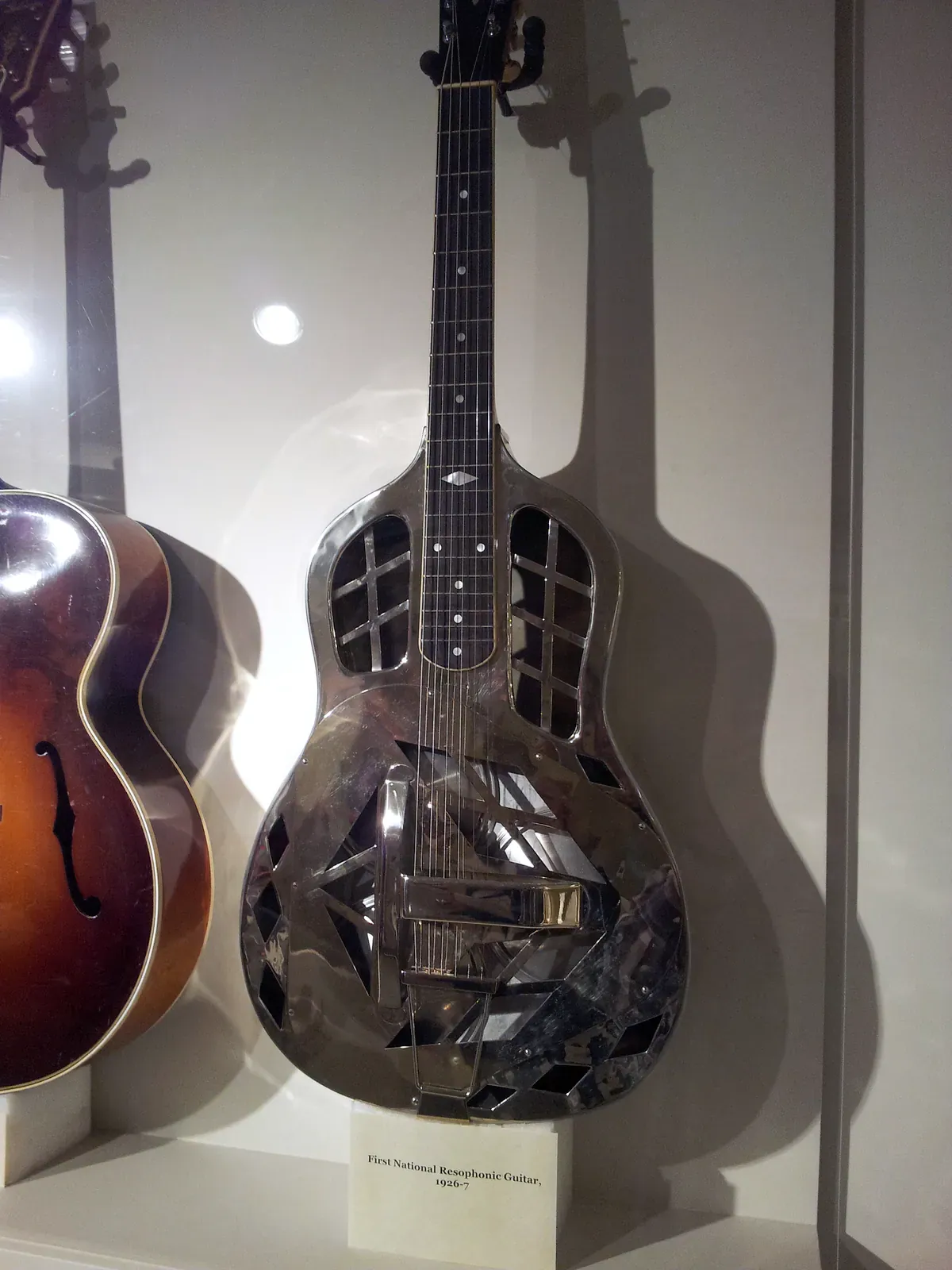
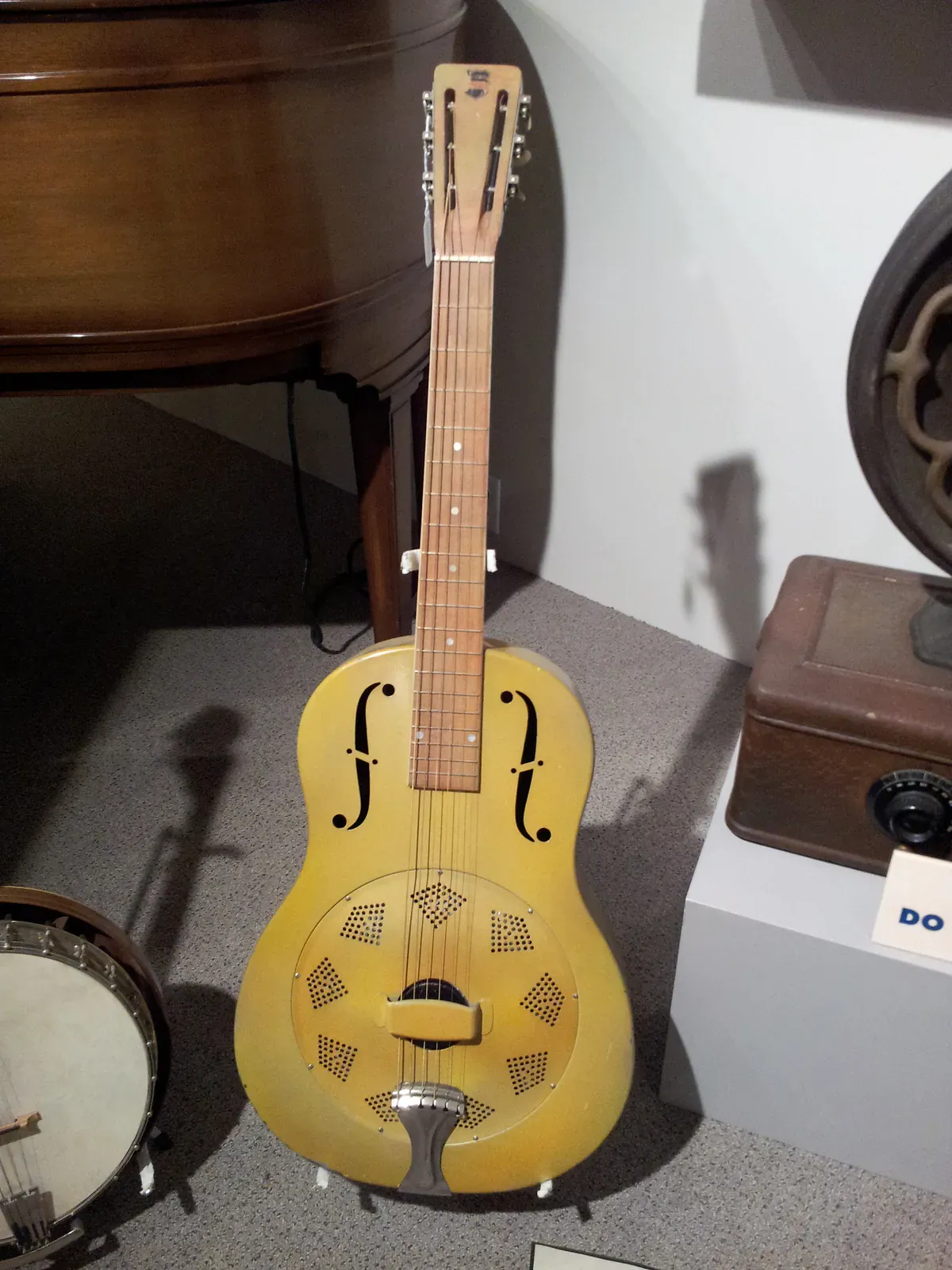
The core of the classic records is Dorsey’s ragtime-influenced piano and Red’s single-string slide guitar. In 1928 Red became the first Black musician to play a steel-bodied National resonator guitar, newly on sale that year. It was loud enough to cut through a studio before amplification, and it let him play single-note runs rather than block chords. Banjo-guitar, mandolin, jug and trumpet appear on other records,.
Mainstream success
The success was commercial and quick. Fans waited outside record stores for the disc. Jazz musicians answered within months: Louis Armstrong cut “Tight Like This” in December 1928, Luis Russell followed in January 1929 and Duke Ellington in March, while Jimmie Noone and McKinney’s Cotton Pickers recorded the song itself. Country music took it up too: the Allen Brothers had a 1927 Columbia hit with “Bow Wow Blues”, Cliff Carlisle wrote hokum tunes such as “Tom Cat Blues”, and the Dallas String Band’s “Hokum Blues” of December 1928 used a mandolin. The Blues Hall of Fame inducted “It’s Tight Like That” as a Classic of Blues Recording in 2014.
Notable recordings
Lil Johnson’s “Press My Button (Ring My Bell)” was recorded on 12 February 1936 with Black Bob on piano and issued by Vocalion that May, one of the most explicit records of the decade. Bo Carter’s “Banana in Your Fruit Basket” was cut in New York on 4 June 1931 and ranks among his best-known songs.
Culture
Hokum thrived on the double meaning of everyday speech. “Tight like that” was a Chicago street superlative before it was a record title, and the phrase became the hook for a fad of sequels, from “It’s Tight Like That No. 2” and “No. 3” to rival versions on other labels. Critics have argued that this city style cheapened the folk blues.
Legacy
Hokum lasted perhaps a decade as a market category but left a long shadow. Its innuendo tradition passed into 1940s jump blues and R&B records. Lil Johnson’s “Keep A-Knockin’” later became a hit for Little Richard, and the Big Bill Broonzy and Tampa Red circle fed the Chicago blues that followed. Tampa Red’s home became a rehearsal and lodging hub for newcomers from the Delta. Revival interest in the late 1950s brought rediscovery, and he made his last recordings in 1960. Hokum songs still turn up from time to time in modern American blues and blues rock.
Misconceptions
Hokum is often said to have been invented in 1928. The label arrived with “It’s Tight Like That”, but Papa Charlie Jackson’s “Shake That Thing” appeared three years earlier and the word was already vaudeville slang.
Hokum is also often treated as a synonym for dirty blues. Some writers do use the terms interchangeably, but researchers point out that dirty blues came first, treated sex earnestly and suited slow dancing, while hokum was fast and comic.
The third myth is that “hokum blues” was a period category. The term did not become a formal style label until the 1960s, when critics applied it retrospectively to records that had been sold as race records or by the name of a band.
Frequently asked questions
What is hokum music?
Hokum is a comic style of blues in which a bouncy ragtime-inflected song uses a single extended analogy to make sexual jokes. It flourished in Chicago in the 1920s and 1930s.
What was the first hokum song?
Papa Charlie Jackson’s “Shake That Thing” of 1925 is usually called its forerunner, and Tampa Red and Georgia Tom’s “It’s Tight Like That” of 1928 is the record that established the style.
Who were the Hokum Boys?
The name was a billing used by several studio groups, first by Tampa Red and Georgia Tom, later by Big Bill Broonzy and Dorsey as the Famous Hokum Boys, with changing session players.
Is hokum the same as dirty blues?
They overlap, but hokum is fast and comic, while dirty blues is slower and more earnest.
How did hokum end?
By the mid-1930s the style had been absorbed into jive talk and small-band swing, and the Tampa Red and Georgia Tom partnership had split in 1932.
Sound
Sound sheet
Signature sounds
- Piano and guitar duo
- Double-entendre lyric built on one extended analogy
- Call-and-response duet vocals
- Single-string slide guitar runs
Techniques
- Extended euphemism
- Call-and-response duet
- Bottleneck single-string slide
- Ragtime bounce
- Numbered sequels
Keys and modes
A minor. The key of It's Tight Like That at a brisk tempo of about 190 beats per minute.
Vocals
Comic and teasing, sung or half-spoken, often as a duet with spoken asides.
Scenes
Where it happened
Where and when the sound lived: one bar per city on a shared timeline.
North America
Active scenes
Peak 2, 1928-1936
Paramount and Vocalion sessions made the city the centre of hokum recording.
Home town of Bo Carter and the Chatmon family, who worked for both Black and white audiences.
Culture
Culture markers
- Tight like that
A Chicago street phrase turned into a record title and a fad of sequel songs.
Slang - Hokum
Stage slang for low comedy, argued over in the 1920s as one of the most discussed words of the vernacular.
Slang - Lively dance tempo
Hokum suited fast, mischievous dancing, unlike the slow drag of dirty blues.
Dance
Media
Key media
- 1976The Copulatin' Blues
by Lil Johnson. Album that reissued her bawdy recordings.
Compilation - 1991Banana in Your Fruit Basket: Red Hot Blues 1931-1936
by Bo Carter. Collection of Carter's innuendo songs.
Compilation - 1991Complete Recorded Works in Chronological Order, Volume 1 (1930)
by Famous Hokum Boys. Document Records edition of the Broonzy and Dorsey sessions.
Compilation
Glossary
Terms on this page
A related slower and more earnest style of sexually explicit blues that predates hokum.
A phrase with an innocent surface meaning and a sexual one, the engine of hokum lyrics.
Vaudeville slang for simple, sure-fire comedy that bordered on vulgarity, later the name for a bawdy comic blues song.
A billing used by many studio groups of the late 1920s and 1930s, from which the style took its name.
A Chicago street superlative that became the title and hook of the 1928 hit.
Blues family