Rock en español
Rock en español is rock sung in Spanish across Latin America, Spain and the US Latino diaspora, with national scenes dating from the late 1950s.
Mexico, Argentina, Spain, Chile, Peru, 1957
Rock family
Born
1957
Mexico, Argentina, Spain, Chile, Peru
Subgenres
12
Documented branches
Links
23
Genres it drew on or shaped
Tempo
80-145 BPMLineage
Family tree
Grew out of
Derived from
Influenced by
Mexico, Argentina, Spain, Chile, Peru, 1957
Rock en español
Led to (12)
Timeline
Era by era
From the first sparks to today. Select a dot to read the story behind it.
- Spanish-language covers
1955 to 1963
- Beat, psychedelia and first originals
1964 to 1975
- Dictatorships and exile
1976 to 1983
- Rock en tu idioma
1984 to 1992
- MTV and Latin alternative
1993 to 2005
- Reunions and festivals
2006 to 2026
Eras
Moments
- 1 Spanish-language covers, 1955 to 1963
- 2 Beat, psychedelia and first originals, 1964 to 1975
- 3 Dictatorships and exile, 1976 to 1983
- 4 Rock en tu idioma, 1984 to 1992
- 5 MTV and Latin alternative, 1993 to 2005
- 6 Reunions and festivals, 2006 to 2026
1955
Spanish-language covers
Argentine and Mexican bands record American rock and roll in Spanish; Los Teen Tops adapt Little Richard-era hits for audiences in Latin America and Spain.
- 1955First recorded rock in ArgentinaRoger Santander's orchestra records a version of Rock Around the Clock on 5 December 1955.
- 1958Los Teen Tops form around Enrique GuzmánThe Mexico City group becomes the best-known early Spanish-language rock act.
- 1959Los Teen Tops record La plagaA Spanish version of Good Golly Miss Molly.
1964
Beat, psychedelia and first originals
After the Beatles, Spanish-speaking bands write their own songs: Los Saicos in Lima, Los Gatos and Almendra in Buenos Aires, with the Avándaro festival in Mexico in 1971 its landmark.
- 1965Los Saicos release DemoliciónReleased in May 1965 in Lima and a national radio hit that year.
- 1967Los Gatos release La balsaThe 3 July 1967 single sells about 250,000 copies and starts Argentine rock nacional.
- 1969Almendra release their debut album, with Muchacha (ojos de papel)
- 1971Avándaro festival and its aftermathMexico's large rock festival is followed by official suppression that pushes bands and labels underground.
- 1972Sui Generis release VidaThe acoustic album becomes a mass success in Argentina.
1976
Dictatorships and exile
Argentine rock survives censorship and exile to Spain while punk and new wave reach Madrid; Charly García and Spinetta's later groups dominate Buenos Aires.
- 1976Argentine coup and exileThe dictatorship censors rock and pushes musicians to Spain, where Hispano-Argentine bands form.
- 1982Soda Stereo form in Buenos Aires
1984
Rock en tu idioma
Soda Stereo, Los Prisioneros, Héroes del Silencio, Caifanes and Maná sign to multinational labels and tour the region; a promotional push under the banner Rock en tu idioma builds a continental market.
- 1986Los Prisioneros release Pateando piedrasReleased on 15 September 1986, their first album for a multinational label, on EMI Odeon Chilena.
- 1988Caifanes release their debutThe Mexico City band's first album sells strongly and brings new wave to Mexican rock.
- 1990Soda Stereo release De música ligeraRecorded in a single take at Criteria Studios in Miami; the 15 October 1990 single becomes the genre's best-known anthem.
- 1990Héroes del Silencio release Senderos de traiciónThe December 1990 album reaches number one in Spain and sells in Germany and Switzerland.
- 1992Maná release Dónde jugarán los niños?Released on 27 October 1992; it becomes the best-selling Spanish-language rock album, over 10 million copies.
1993
MTV and Latin alternative
MTV Latin America launches in 1993; Los Fabulosos Cadillacs, Café Tacvba, Aterciopelados and Molotov fuse rock with ska, folk and rap, and Juanes wins at the Latin Grammys.
- 1993MTV Latin America launchesThe first video broadcast is Los Prisioneros' We are sudamerican rockers.
- 1994Café Tacvba release ReA 1994 album blending rock with norteño, ranchera and son; La ingrata is its best-known track.
- 1994Enanitos Verdes release Big BangThe August 1994 album includes Lamento boliviano.
- 1995Aterciopelados release El doradoIncludes Bolero falaz, a hit on MTV Latin America.
- 1997Molotov's debut refused by retailersProvocative lyrics and artwork lead stores to refuse the album; the band sells it on the street.
- 1998Los Fabulosos Cadillacs win a GrammyFabulosos Calavera wins the first Best Latin Rock/Alternative Performance award.
- 2002Juanes wins a Latin Grammy for A Dios le pidoBest rock song at the 2002 Latin Grammys; the album Un día normal wins five awards in 2003.
2006
Reunions and festivals
Soda Stereo's 2007 reunion tour and Latin festivals keep the catalogue in the stadiums; after Gustavo Cerati's death in 2014 and Maná's 2025 Rock Hall nomination the scene is widely treated as canon.
- 2007Soda Stereo's Gira Me Verás VolverThe reunion tour draws over a million people and sells out River Plate stadium in Buenos Aires.
- 2014Gustavo Cerati diesCerati, Soda Stereo's singer, dies in September 2014 after four years in a coma.
- 2025Maná nominated for the Rock HallThe first Spanish-language rock group nominated for induction.
Listening path
Anthems
The records that built the sound, grouped by the part they played. Thumbnails come from YouTube; the player loads only when you press play.
- 01
Los Teen Tops, 1959
Spanish version of Good Golly Miss Molly that brought rock and roll to Spanish-speaking radio.
Origin - 02
Los Saicos, 1965
Fast, screamed proto-punk single from Lima that was a national radio hit in 1965.
Origin - 03
Los Gatos, 1967 · RCA Records
The single credited with starting Argentine rock; written in a Buenos Aires bar and selling about 250,000 copies.
Origin - 04
Soda Stereo, 1990 · Sony Music Latin
Soda Stereo's best-known song, recorded in one take in Miami and a continental anthem.
Start hereBreakthrough - 05
Héroes del Silencio, 1990
Hard-rock hit from a number one album in Spain that carried the genre into Germany and beyond.
Breakthrough - 06
Maná, 1990 · Warner Music Latina
Maná's first hit single, from Falta amor, the start of their stadium run.
Breakthrough - 07
Almendra, 1969
Spinetta's ballad set the poetic bar for Argentine rock lyrics.
Anthem - 08
Los Prisioneros, 1986
Chilean protest song that became an anthem of the 2019 to 2022 protests.
Anthem - 09
Caifanes, 1988
Hit from Caifanes' first album that brought Mexican new wave to a wide audience.
Anthem - 10
Café Tacvba, 1994 · Warner Music Latina
Re's best-known track, with norteño-style rhythm in an alternative rock arrangement.
Anthem - 11
Enanitos Verdes, 1994
Mendoza band's biggest hit, a cover of an Alcohol Etílico song, from Big Bang.
Start hereAnthem - 12
Los Fabulosos Cadillacs, 1993 · Sony Music Latin
Ska-rock song about dictatorship that refers to Víctor Jara and topped charts across Hispanic America.
Start hereCrossover - 13
Aterciopelados, 1995
Rock and bolero blend from El dorado that was a hit on MTV Latin America.
Crossover - 14
Molotov, 1997 · Universal Music Latino
Rap-rock satire from a debut that retailers refused to stock.
Crossover - 15
Juanes, 2002 · Universal Music Latino
Latin Grammy winner for best rock song in 2002 and the lead hit of Un día normal.
Crossover
Facts
| Family | Rock |
| Origin | Mexico, Argentina, Spain, Chile, Peru |
| Emerged | Late 1950s onward |
| Status | Active |
| Tempo | 80 to 145 BPM |
| Meter | 4/4 |
| Grew out of | Rock and roll |
| Subgenres | 11 |
Rock en español is rock music sung in Spanish, made in Latin America, Spain and the Latino communities of the United States.
It began with Spanish-language covers of American rock and roll in the late 1950s and grew into a set of national scenes that share a language, a touring circuit and a continental audience. It is an umbrella term, and its parent is rock.

Origins
The first Spanish-language rock was imported and translated. An orchestra led by Roger Santander recorded a version of Rock Around the Clock in Argentina on 5 December 1955, and by the end of the decade Mexico City had its own teen idols. Los Teen Tops formed around Enrique Guzmán in 1958 and in 1959 recorded La plaga, a Spanish version of Good Golly Miss Molly that put rock and roll on Spanish-speaking radio.
The copies came with a cost. Translated lyrics had to be singable and acceptable to broadcasters, which kept most early records light and danceable. The first break from imitation came from Lima. Los Saicos released Demolición in May 1965, a fast, screamed single that was a national radio hit and is now often cited as an early proto-punk record.

Beat, psychedelia and first originals, 1964-1975
After the Beatles, bands across the region began writing their own songs. In Buenos Aires, Los Gatos released La balsa on 3 July 1967 on RCA. It sold about 250,000 copies and is the record from which Argentine rock nacional is dated. The band had been the house act at the club La Cueva, and the song was written in a Buenos Aires bar. Almendra followed in 1969 with a debut album that included Muchacha (ojos de papel), and Luis Alberto Spinetta’s lyrics set a poetic standard for the scene.
In 1972 the acoustic duo Sui Generis released Vida, which became a mass success in Argentina and showed that a rock album could be a mass product without electric noise. Mexico’s moment came in 1971 at the Avándaro festival in Valle de Bravo. It was the country’s largest rock gathering up to then and was followed by official suppression that pushed bands and labels underground for years.
Dictatorships and exile, 1976-1983
The Argentine coup of 1976 brought censorship of rock and sent musicians abroad. Many settled in Madrid, where Hispano-Argentine bands formed just as punk and new wave arrived and La Movida madrileña was starting. Charly García and Spinetta’s later groups still dominated Buenos Aires.

Rock en tu idioma, 1984-1992
In the mid-1980s multinational labels began to treat Spanish-language rock as a regional market. A promotional push under the name Rock en tu idioma gave the genre its common label. Soda Stereo formed in Buenos Aires in 1982. Los Prisioneros released Pateando piedras on 15 September 1986 on EMI Odeon Chilena; the synthesizer-driven protest album sold strongly in Chile within weeks and carried El baile de los que sobran. Caifanes brought new wave to Mexican rock with their 1988 debut.
The decisive year was 1990. Soda Stereo recorded De música ligera at Criteria Studios in Miami and released the single on 15 October, on Sony Music Latin; the song became the genre’s best-known anthem. In December, Héroes del Silencio’s Senderos de traición reached number one in Spain and also sold in Germany and Switzerland. Maná’s Rayando el sol made the Mexican band a stadium act, and their album Dónde jugarán los niños?, released on 27 October 1992 on Warner Music Latina, became the best-selling Spanish-language rock album, with over 10 million copies.
MTV and Latin alternative, 1993-2005
MTV Latin America launched in 1993, and its first broadcast video was Los Prisioneros’ We are sudamerican rockers. A regional channel gave bands from Argentina, Mexico, Chile and Colombia one shared audience for the first time. The music that followed mixed rock with local forms: Los Fabulosos Cadillacs fused ska and rock in Matador, from the 1993 album Vasos vacíos, a song about dictatorship that refers to the Chilean singer Víctor Jara. Café Tacvba’s 1994 album Re brought norteño, ranchera and son into an alternative rock frame. Aterciopelados added bolero to punk-edged songs on El dorado in 1995.

Provocation was part of the mix. Molotov’s 1997 debut was refused by retailers over its lyrics and cover, and the band sold it on the street. Recognition from the industry followed: Fabulosos Calavera by Los Fabulosos Cadillacs won the first Grammy for Best Latin Rock/Alternative Performance in 1998, and Juanes took a Latin Grammy in 2002 for A Dios le pido. His album Un día normal won five more awards in 2003.

Reunions and festivals, 2006-2026
Catalogue stayed in circulation through festivals and reunions. Soda Stereo’s 2007 Gira Me Verás Volver drew over a million people and sold out the River Plate stadium in Buenos Aires. Los Prisioneros drew over 140,000 people to two Estadio Nacional shows in Santiago at the end of 2001. Maná became the first Spanish-language rock group nominated for the Rock and Roll Hall of Fame, in 2025.
Characteristics
The defining trait is the language, not a sound. Arrangements are those of a standard rock band, but they take in cumbia, ranchera, bolero and tango, and in the 1980s synthesizers and new wave. Lyrics move between poetic ballads, shouted protest and satire. The tradition is also split by country, with Argentine rock nacional, Mexican, Chilean, Colombian and Peruvian scenes each keeping a distinct character.
Instruments and production
Electric guitar, bass and drums form the core. Horn sections carry the ska and Latin fusion of the Cadillacs, while keyboards define Los Prisioneros and early Soda Stereo. Latin percussion enters wherever a band reaches for Afro-Caribbean rhythm.

Notable recordings
La balsa is the founding single of rock nacional: a ballad rather than a rocker, but the first Argentine hit with an original Spanish lyric and a rock band behind it. De música ligera shows the later sophistication, recorded in a single take and built around a guitar line that still opens stadium shows. El baile de los que sobran lasted beyond its decade; it was sung again at Chilean protests between 2019 and 2022.

Culture
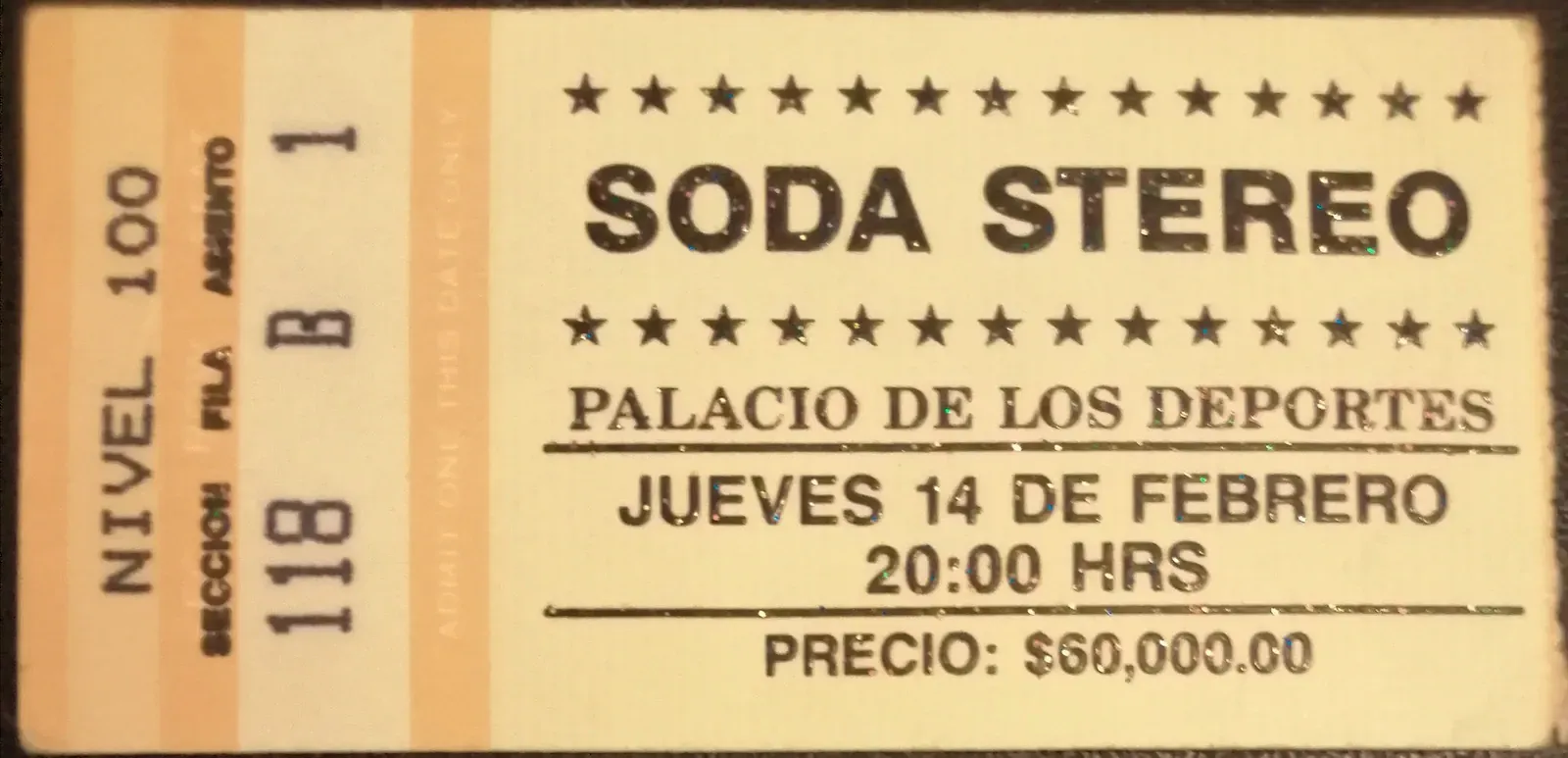
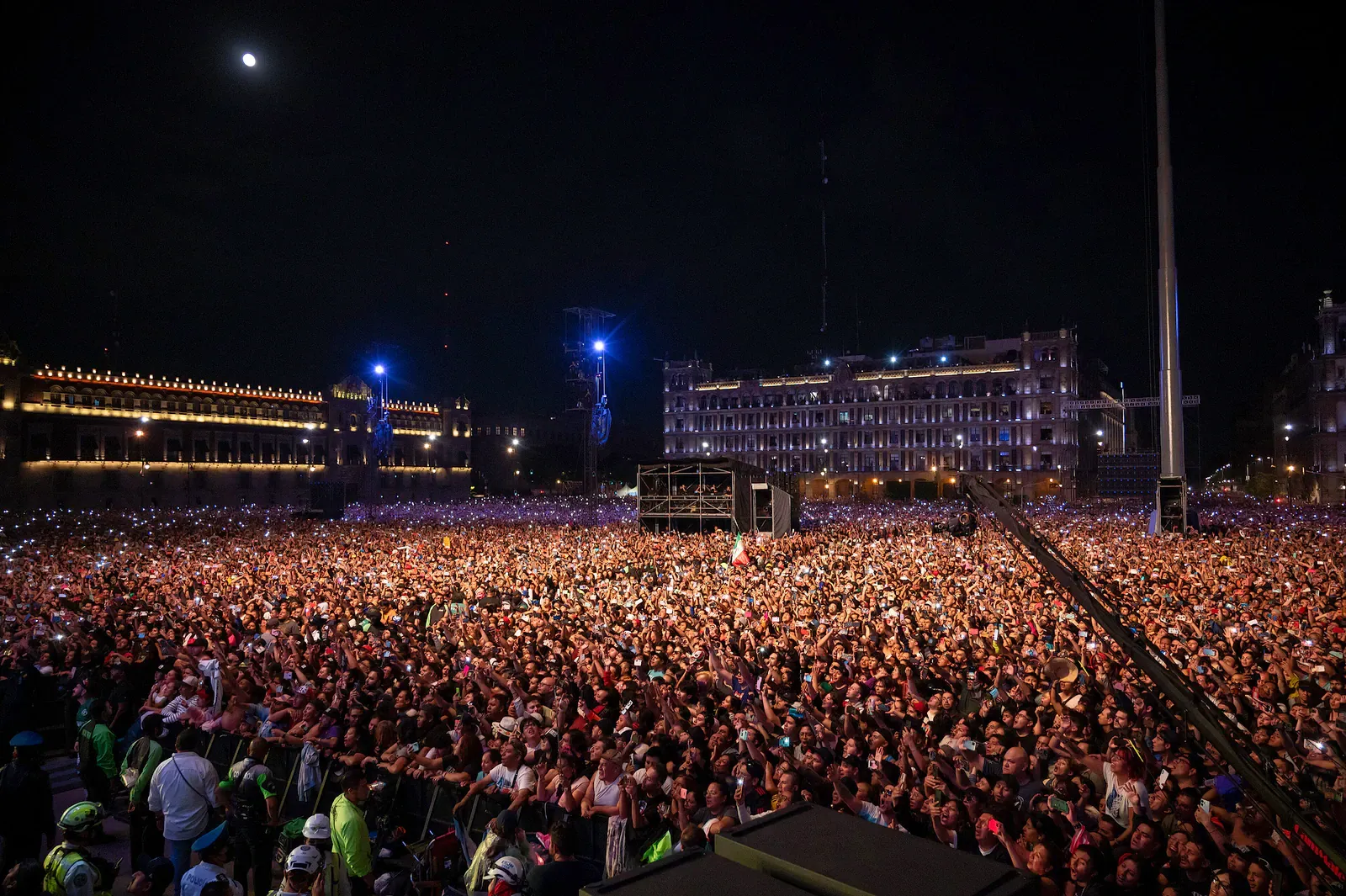
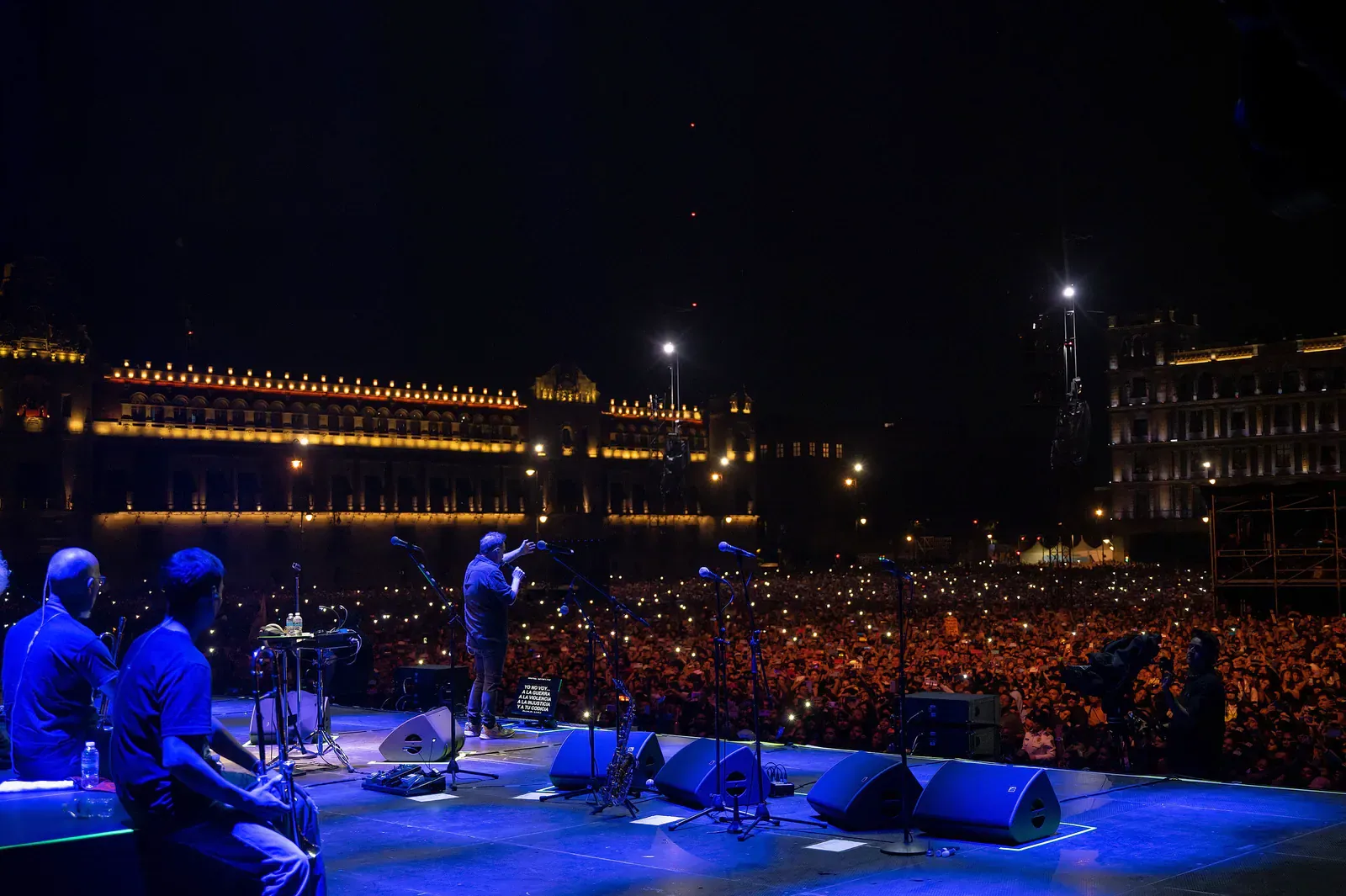
Rock en español has often been political. Bands sang through dictatorships and under suppression, and the genre’s protest songs resurfaced in street movements decades later. Caifanes, Pachuco slang for a cool guy, became the name of a Mexican band, a sign of how much street language shaped the scene. Concerts work as shared national events. The Zócalo and River Plate shows brought together tens of thousands, and fans from different countries bring their national flags.

Legacy
By the 2020s the major bands were treated as canon. Their catalogues still fill stadiums, and Maná’s 2025 Rock and Roll Hall of Fame nomination put a Spanish-language rock group in that conversation for the first time.
Misconceptions
Rock en español is not simply translated rock. After the covers of the late 1950s, bands such as Los Saicos and Los Gatos wrote original songs in the 1960s, and the later scenes drew on bolero, ranchera, norteño and cumbia rather than on English-language models.
It is not a single national sound either. Rock nacional in Argentina, rock from Mexico City, Lima’s proto-punk, Santiago’s synth-pop and Madrid’s Movida grew up in separate cities with separate histories before a continental market connected them.
The genre was not a niche. Maná’s Dónde jugarán los niños? sold over 10 million copies, Héroes del Silencio topped the Spanish album chart, and Soda Stereo’s reunion tour drew over a million people.
Frequently asked questions
What is rock en español?
Rock en español is rock music sung in Spanish. It covers national scenes in Latin America and Spain, such as Argentine rock nacional and Mexican rock, and the Latino communities of the United States.
Who are the most important rock en español bands?
The ranking varies by country, but Soda Stereo, Maná, Café Tacvba, Los Fabulosos Cadillacs, Los Prisioneros, Héroes del Silencio, Caifanes and Charly García are among the most cited.
When did rock en español begin?
Spanish-language rock began in the late 1950s with covers of American rock and roll in Argentina and Mexico. The first original landmarks came in 1965 with Los Saicos in Lima and in 1967 with Los Gatos in Buenos Aires.
What does Rock en tu idioma mean?
Rock en tu idioma, “rock in your language”, was a mid-1980s promotional campaign by record companies that marketed Spanish-language rock across Latin America and Spain, and it became a common name for the whole genre.
Sound
Sound sheet
Anatomy of a track
| # | Part |
|---|---|
| 1 | Intro riff |
| 2 | Verse |
| 3 | Chorus |
| 4 | Verse |
| 5 | Chorus |
| 6 | Bridge or solo |
| 7 | Final chorus |
Signature sounds
- Spanish-language lyrics over a standard rock band
- Folk rhythms such as cumbia, ranchera, bolero and tango
- Ska off-beat in the Cadillacs and Café Tacvba
- Synth-driven new wave in Los Prisioneros and Soda Stereo
Techniques
- Ska off-beat
- Folk-rhythm fusion
- Synth-driven new wave
- Rap-rock delivery
Keys and modes
Major. Bright anthems in D, G and C major such as De música ligera and Rayando el sol.
Natural minor. Minor-key anthems such as Lamento boliviano (E minor) and Entre dos tierras (B minor).
Tuning
12-TET with standard guitar tuning, A=440
Vocals
Spanish-language lead vocals, from poetic ballads to shouted protest lyrics.
Scenes
Where it happened
Where and when the sound lived: one bar per city on a shared timeline.
Latin America
Europe
North America
Active scenes
Peak 6, 1990-2025
Rock nacional's centre: Los Gatos, Almendra, Sui Generis, Soda Stereo and the Cadillacs.
Los Teen Tops, Avándaro, then Caifanes, Café Tacvba and Molotov.
Los Saicos recorded Demolición in 1965.
Los Prisioneros formed in San Miguel in 1983.
Receives Argentine exiles; La Movida madrileña and Héroes del Silencio's market.
Aterciopelados and the alterlatino scene.
Criteria Studios hosted Soda Stereo's Canción animal; Maná's Unplugged was recorded in the city.
Venues and places
Buenos Aires, 1967 to today. Nightclub where Los Gatos were house band during the birth of rock nacional.
Valle de Bravo, 1971 to 1971. Landmark early Mexican rock festival, followed by government suppression.
Santiago, 2001 to 2001. Two sold-out Los Prisioneros reunion shows drew over 140,000 at the end of 2001.
Los Angeles, 1992 to 1992. Caifanes sold it out in 1992.
Buenos Aires, 2007 to 2007. Soda Stereo's reunion shows sold out within hours in 2007.
Miami, 1990 to 1990. Where Soda Stereo recorded De música ligera in 1990.
Culture
Culture markers
- Caifanes
Pachuco slang for a cool guy, adopted as a band name.
Slang - Protest anthems
El baile de los que sobran was sung at Chilean and regional protests in 2019 to 2022.
Ritual - Banned album covers
Molotov's 1997 cover and lyrics led retailers to refuse the album.
Artwork
Media
Key media
- 1993Vasos vacíos
by Los Fabulosos Cadillacs. The compilation where Matador first appeared.
Compilation - 1993We are sudamerican rockers (video)
by Los Prisioneros. First video broadcast by MTV Latin America.
Film - 2011Saicomania
by Various. Documentary on Los Saicos' rediscovery as proto-punk.
Film
Glossary
Terms on this page
Madrid's 1980s cultural and music movement, home to new wave and punk.
1990s style mixing alternative rock with ska, reggae and folk elements.
A mid-1980s promotional campaign that marketed Spanish-language rock across Latin America and Spain.
Argentine rock sung in Spanish, dated from La balsa in 1967.
Spain's harder rock of the late 1970s and 1980s, led by bands such as Leño.
An acoustic MTV format; Maná's 1999 Unplugged is among the best-known.
Rock family