Australian heavy metal
Australian heavy metal grew from 1970s pub rock into a mostly underground scene of thrash, death and black metal, then exported metalcore worldwide.
Sydney, 1978
Metal family
Born
1978
Sydney
Links
7
Genres it drew on or shaped
Tempo
95-185 BPMLineage
Family tree
Grew out of
- Pub rock
Derived from
Derived from
Influenced by
Sydney, 1978
Australian heavy metal
Timeline
Era by era
From the first sparks to today. Select a dot to read the story behind it.
- Hard rock and pub rock roots
1971 to 1977
- Imports and the underground
1978 to 1989
- Death, black and festivals
1990 to 1999
- Export years
2000 to today
Eras
Moments
- 1 Hard rock and pub rock roots, 1971 to 1977
- 2 Imports and the underground, 1978 to 1989
- 3 Death, black and festivals, 1990 to 1999
- 4 Export years, 2000 to today
1971
Hard rock and pub rock roots
Buffalo played Black Sabbath-style heaviness in Sydney from 1970, and Rose Tattoo and The Angels turned pub rock into a heavier sound while radio largely ignored them.
- 1972Buffalo release Dead ForeverThe Sydney band, a Black Sabbath-like heavy act from 1970, issues its debut on Vertigo, the first non-British act signed to the label.
- 1976Rose Tattoo form in SydneyBassist Peter Wells, ex-Buffalo, founds a band with a cult following abroad that radio at home largely ignored.
- 1976The Angels release Am I Ever Gonna See Your Face AgainThe pub rock band later charted high in Australia with the heavier albums Night Attack and Two Minute Warning.
1978
Imports and the underground
Import shops such as Utopia, new wave of British heavy metal records and Mortal Sin's 1986 debut built a metal scene that major labels and radio left alone.
- 1978Utopia Import Records opens in SydneyCollector John Cotter sells metal and punk albums that had no Australian release, and by the early 1980s the shop is the country's best-known metal retailer.
- 1982Bengal Tigers sign to Mushroom and release Metal FetishThe Melbourne band, formed in 1979, puts out an EP on Mushroom Records that does not sell.
- 1986Mortal Sin record Mayhemic DestructionThe Sydney thrash band cuts an album-length demo in three days and releases it on its own Mega Metal Productions imprint.
- 1987Vertigo reissues Mayhemic Destruction worldwidePhonogram's Vertigo signs Mortal Sin for international distribution, a rare major-label deal for Australian metal.
- 1988Hot Metal magazine launchesThe Sydney glossy monthly becomes the first Australian publication devoted to heavy metal and covers local bands.
1990
Death, black and festivals
Swedish death metal and Norwegian black metal reshaped the scene, while Hot Metal, 3 Hours of Power and Metal for the Brain gave it a media and live circuit.
- 1990Triple J starts 3 Hours of PowerThe youth network adds a heavy music show that gradually moves toward Australian metal acts.
- 1991First Metal for the Brain festivalCanberra bands play a charity show organised by Armoured Angel drummer Joel Green, which grows into a 12-hour national festival.
- 1995Phoenician Club licence withdrawnAfter a death at a rave on 21 October, Sydney loses a key metal venue and further rooms close soon after.
- 1998Pegazus sign to Nuclear Blast and play WackenThe Melbourne band becomes the first Australian act at Germany's Wacken Open Air.
2000
Export years
Pegazus, Deströyer 666 and Psycroptic found European labels, then Parkway Drive and Thy Art Is Murder made metalcore and deathcore the scene's main export.
- 2003Parkway Drive form in Byron BayThe metalcore band becomes the scene's biggest international act.
- 2007Parkway Drive release HorizonsThe second album takes the band from the hardcore circuit to metal audiences abroad.
- 2012Thy Art Is Murder's Hate enters the ARIA top 40The deathcore album debuts at no. 35, the first extreme metal record to break the chart top 40.
- 2018Parkway Drive's Reverence tops the ARIA chartIt follows Ire (2015) at number 1, and Darker Still (2022) later does the same.
Listening path
Start listening
A short path from an easy way in to the deep end. Thumbnails come from YouTube; the player loads only when you press play.
- 01
AC/DC, 1979
The riff-driven Sydney hard rock that shaped the scene's idea of loud guitar music.
- 02
Rose Tattoo, 1977
Heavy pub rock blueprint from the band often cited as a cornerstone of Australian metal.
- 03
The Angels, 1976
Chart-minded Australian hard rock whose later albums went close to heavy metal.
- 04
Parkway Drive, 2012
Metalcore from the scene's biggest export, from the album Atlas.
- 05
Psycroptic, 2014
Technical death metal from Hobart, an underground act that built an overseas following.
Australian heavy metal is the metal scene of Australia, rooted in the hard rock and pub rock of the 1970s and reshaped from the mid-1980s by imported American thrash, Swedish death metal and Norwegian black metal.
At home it has stayed an underground culture of small labels, community radio and all-day festivals. From the mid-1990s a string of bands found audiences in Europe, and in the 2000s metalcore and deathcore made the country a major exporter. It is a regional scene of the metal family rather than a single sound.
Origins
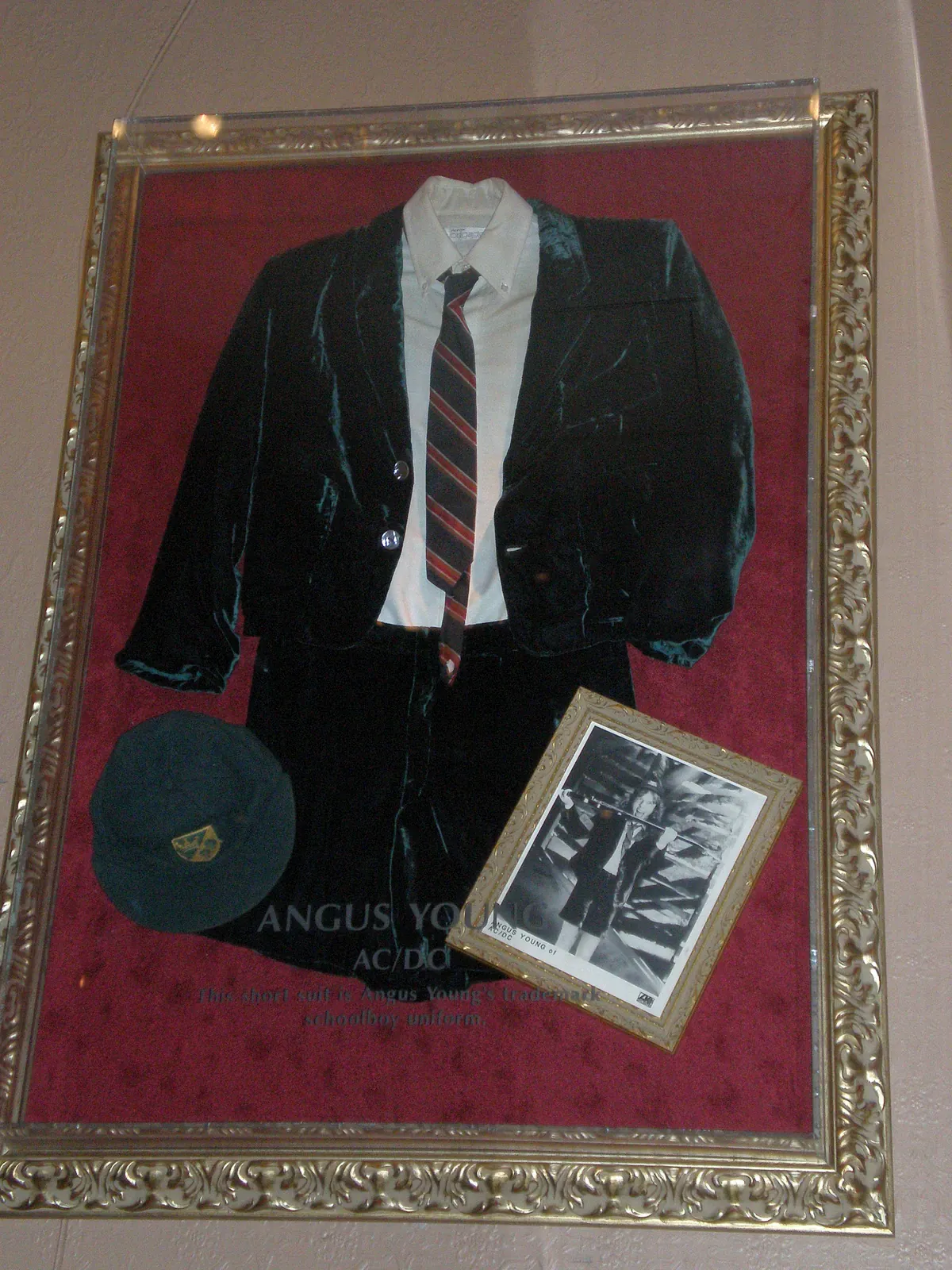
The first Australian heavy music came out of the bars. AC/DC, formed in Sydney in 1973, built a style on loud, riff-driven guitar and became the country’s foremost hard rock band. The band calls its music rock and roll, and its work sits at the border of hard rock and metal rather than inside it, but British bands such as Def Leppard and Saxon cited it as an influence.
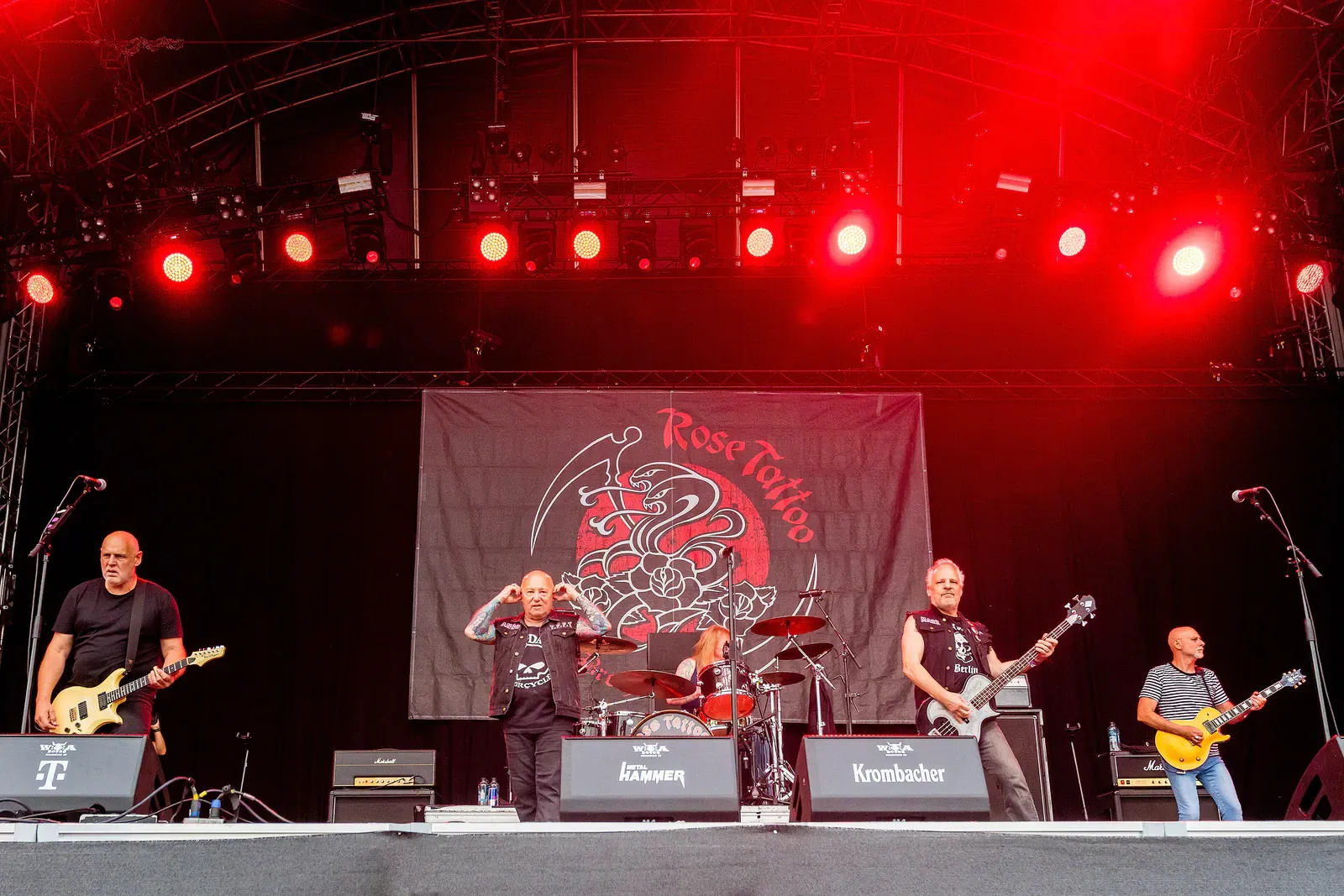
A closer early match was Buffalo, a Sydney band that began as Head in 1967 and played in the manner of Black Sabbath from 1970. It was the first non-British act signed to Vertigo and made three albums for the label between 1972 and 1975 without mainstream success at home. Its bassist Peter Wells formed Rose Tattoo in 1976, which, like Buffalo, was ignored by Australian radio while building a cult following abroad. The Angels took the opposite route, courting chart success through pub rock. Their albums Night Attack, Watch the Red and Two Minute Warning have a distinctly heavy sound, and Two Minute Warning reached number 2, yet the band was rarely called metal. The wider tradition is covered in Aussie rock.
Imports and the underground, 1978-1989
Radio gave metal almost no airtime, and even established foreign bands made little impression on the singles chart until the late 1980s. The audience found its music in shops. Utopia Import Records in Sydney, opened in 1978 by collector John Cotter, sold metal and punk albums that had no Australian release and by the early 1980s was the country’s best-known metal retailer.
The new wave of British heavy metal supplied the model for bands such as Taipan, Saracen, Axatak and Bengal Tigers. Bengal Tigers, formed in Melbourne in 1979, signed to Mushroom Records and released the EP Metal Fetish in 1982, which sold poorly. Boss, from Adelaide, signed to RCA in 1983 and supported Iron Maiden before splitting after a US tour. Heaven toured the United States with Judas Priest and Kiss before imploding in 1985.
Thrash followed. Mortal Sin formed in Sydney in 1985 and recorded an album-length demo in three days in July 1986, released on its own imprint as Mayhemic Destruction. Overseas interest led Vertigo to reissue it worldwide in 1987. The band supported Metallica on the Australian leg of the 1989 Damaged Justice tour and toured Europe with Testament in January 1990, the first Australian thrash band to tour internationally. Hot Metal, a Sydney magazine launched in 1988, was the first Australian publication devoted to metal.
Death, black and festivals, 1990-1999
By the early 1990s heavier groups were replacing the thrash bands that had split. Armoured Angel, formed in Canberra in 1984 and often named as the country’s first major death metal band, played the Big Day Out twice, toured Europe and had two EPs distributed by PolyGram. Norwegian black metal and the harder sound of Pantera and Sepultura then drew fans from older acts such as Metallica and Megadeth.
A support network grew around the bands. In 1990 Triple J added a heavy music program, 3 Hours of Power, which gradually played more local acts. In November 1991 Armoured Angel’s drummer Joel Green organised the first Metal for the Brain in Canberra as a charity event. It began with six local bands and by the end of the decade ran 12 hours with 18 groups. By its close in 2006 more than 100 bands had played it, drawing up to 3,000 people. Melbourne’s Modern Invasion and Sydney’s Warhead Records fed the underground with local releases.
The live circuit also took losses. After a 15-year-old girl died on 21 October 1995 following a rave at Sydney’s Phoenician Club, the venue lost its licence. It had hosted metal shows since the early 1970s. Two more rooms closed soon afterward, and Sydney’s metal gigs almost stopped for a time.
Export years, 2000 onward
By 2000 more bands were being noticed beyond the underground. Pegazus of Melbourne signed to Nuclear Blast in 1998, after Mortification, and was the first Australian act at Germany’s Wacken Open Air. Deströyer 666, formed in Melbourne in 1994, linked up with Season of Mist and moved to Europe in 2001. Psycroptic, a technical death metal band from Hobart, toured Europe in 2004 and signed to Nuclear Blast in 2008.
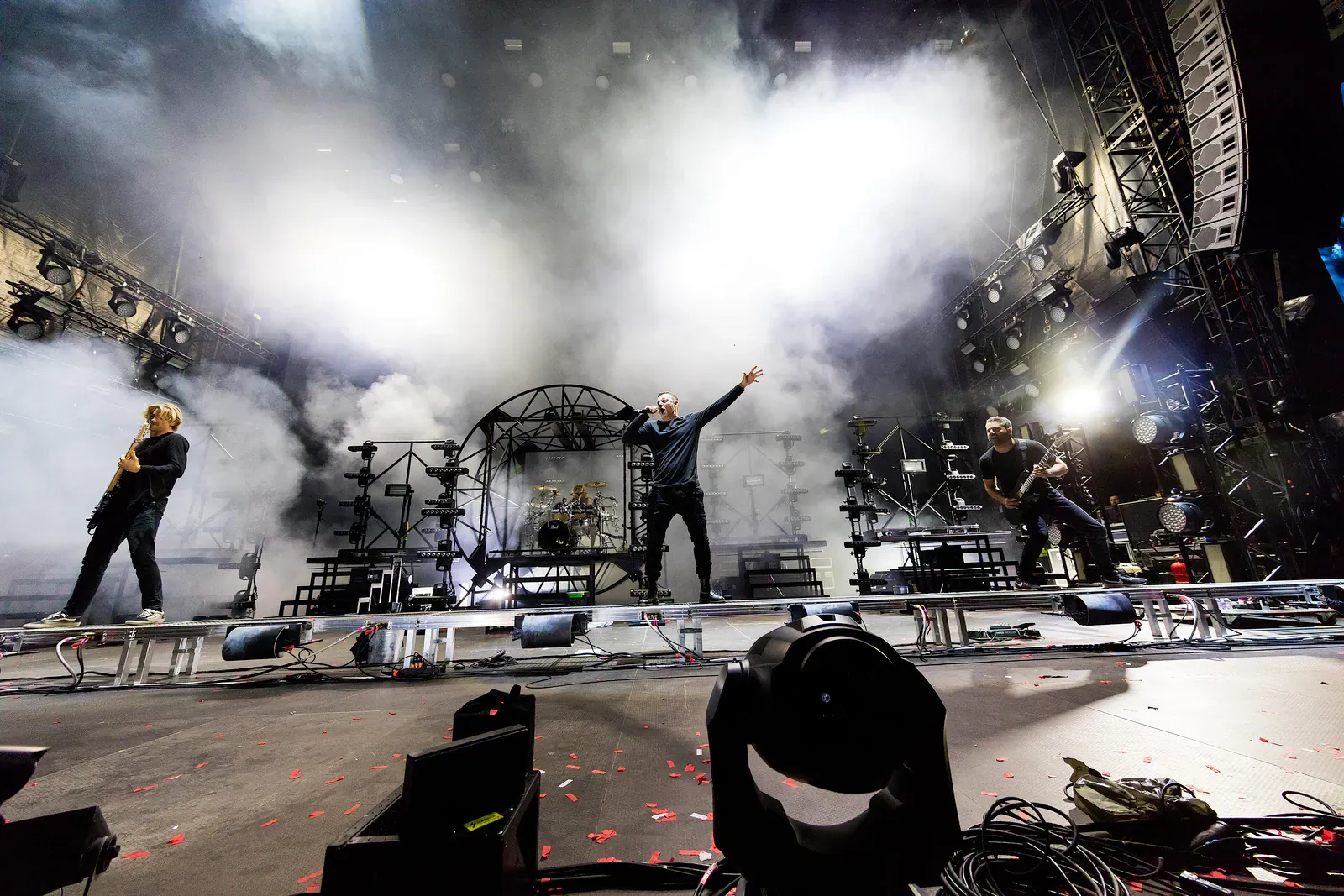
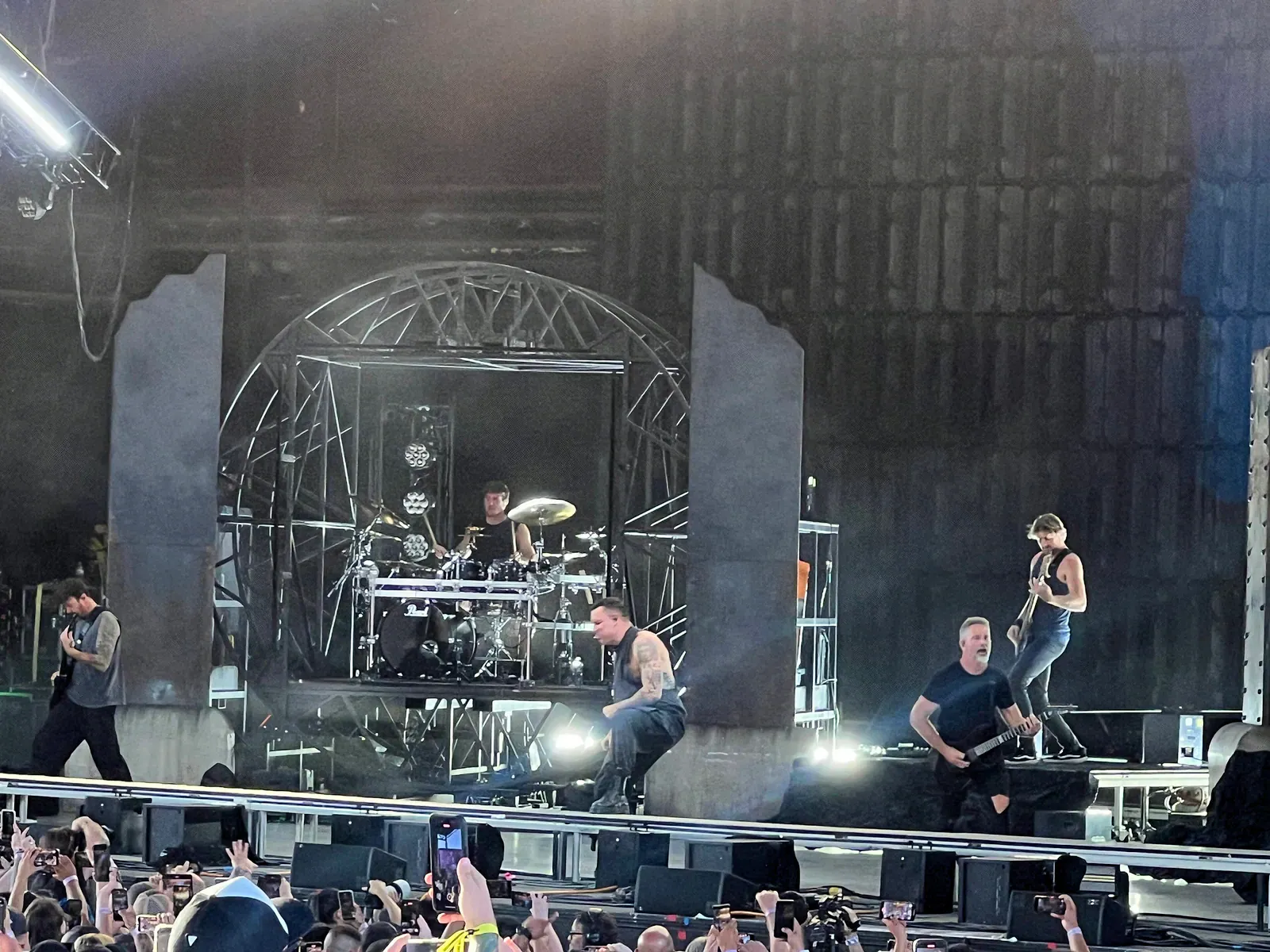
The decisive export was metalcore. Parkway Drive, formed in Byron Bay in 2003, and I Killed the Prom Queen of Adelaide were first seen as part of the hardcore scene, but their audiences crossed into metal as the boundary blurred. Traditional fans often rejected them, yet they became Australia’s most prominent metal groups. Parkway Drive’s albums Ire (2015), Reverence (2018) and Darker Still (2022), released through Epitaph, each reached number 1 on the ARIA chart. Thy Art Is Murder, a deathcore band from Blacktown formed in 2006, saw Hate debut at number 35 in 2012, the first extreme metal record in the ARIA top 40. See metalcore.
Characteristics
The common thread is a heavy riff with roots in blues-based pub rock. Influences arrived late and in layers: the new wave of British heavy metal, then thrash metal, death metal and black metal, then metalcore. Local bands mixed them; Alchemist, formed in Canberra in 1987, combined death metal, grindcore, surf rock and psychedelia. Distance shaped the scene too. Brisbane and Perth sat far from the south-east touring circuit, so the Perth band Epitaph moved to Sydney after signing to Warhead, and bands that wanted to grow went overseas.
Instruments and production
The sound rests on distorted electric guitar, bass and drum kit. As the scene moved to death and black metal the drumming sped up with double bass drums and blast beats, and guitars were tuned lower. Metalcore and deathcore added breakdowns, slow rhythmic sections for the crowd to move to.
Mainstream success
Metal has never been a mainstream radio style in Australia. Major labels showed little interest, with exceptions such as PolyGram, which handled Allegiance and Mortal Sin, and RCA, which signed Boss. The breakthrough that counted came through charts, with Parkway Drive’s three number 1 albums and the 2012 chart entry of Hate.
Notable recordings
Mayhemic Destruction (Mortal Sin, 1986) was recorded in three days with no label. The UK magazine Metal Forces rated it among the best thrash albums issued, and the Vertigo reissue showed that a local underground record could travel.
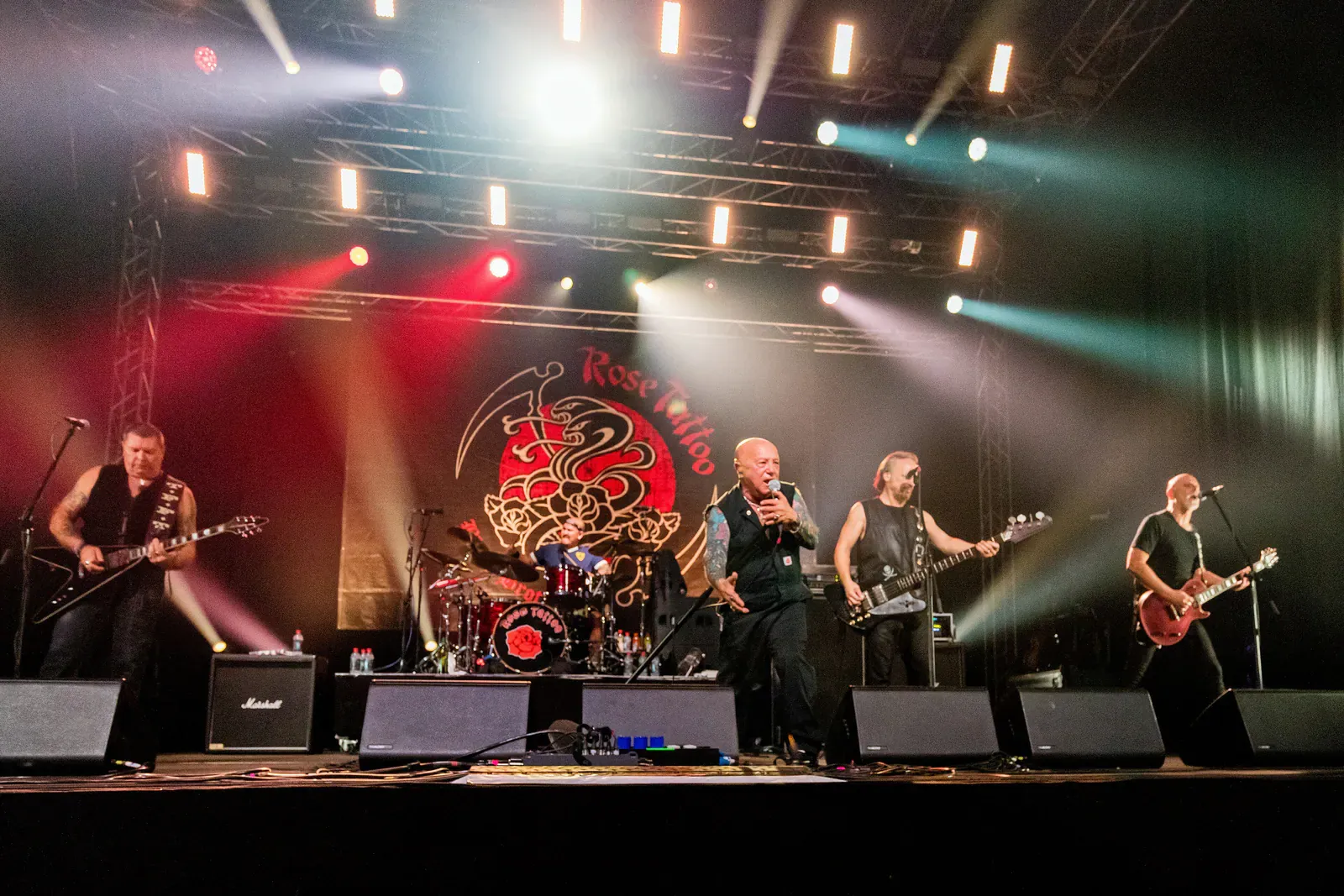
Bad Boy for Love (Rose Tattoo, 1977), released as a single in October 1977 and again on the 1978 debut album, set the template of heavy pub rock: loud, blues-driven and aggressive.
Hate (Thy Art Is Murder, 2012) came out on 19 October 2012. Its first single, Reign of Darkness, premiered on Triple J’s The Racket on 18 September. Critics were divided, but no extreme metal album had entered the ARIA top 40 before.
Culture
The scene’s economy was small and communal. Import shops, community radio such as 3RRR and 3PBS, magazines and festivals took the place of airplay and major-label money. Fans travelled to Canberra for Metal for the Brain.
Legacy
The route that Pegazus, Psycroptic and Deströyer 666 took, signing with a European label and touring abroad, is now standard for local bands. Parkway Drive and Thy Art Is Murder showed that an Australian act could top the home chart and also sell internationally. The radio programs, magazines and import shops left a network that younger bands still use.
Misconceptions
One claim is that AC/DC is the beginning and end of Australian metal. The band calls its music rock and roll and is usually classed as hard rock; the scene’s metal identity came from Buffalo, Rose Tattoo, Mortal Sin and Armoured Angel.
Another is that no Australian metal band made an impression abroad before the 2000s. Heaven toured the United States before 1985, and Mortal Sin toured Europe in 1990.
Frequently asked questions
What is Australian heavy metal?
Australian heavy metal is metal made in Australia, from 1970s hard rock and pub rock through thrash, death and black metal to metalcore and deathcore. It has mostly stayed underground at home.
Who are the most important Australian metal bands?
AC/DC, Rose Tattoo and The Angels laid the hard rock groundwork, Mortal Sin and Armoured Angel led the thrash and death metal underground, and Parkway Drive, Thy Art Is Murder and Psycroptic carried the scene abroad.
Why did Australian metal develop underground?
Radio and major labels showed little interest, cities were far apart, and bands relied on import shops, community radio, small labels and festivals such as Metal for the Brain.
Sound
Sound sheet
Anatomy of a track
| # | Part | Bars |
|---|---|---|
| 1 | Intro riff | 8 |
| 2 | Verse | 16 |
| 3 | Chorus | 8 |
| 4 | Solo or breakdown | 8 |
Signature sounds
- Blues-based pub rock riffs made heavier
- Thrash and death metal influence from imports
- Breakdowns in the metalcore export wave
Techniques
- Power-chord riffing
- Blast beats and tremolo picking
- Breakdowns
Keys and modes
Minor pentatonic and natural minor. Blues-derived riffing inherited from pub rock and hard rock.
Vocals
Gravelly shouts in pub rock, then thrash barks, death growls, black metal rasps and metalcore screams.
Scenes
Where it happened
Where and when the sound lived: one bar per city on a shared timeline.
Oceania
Active scenes
Peak 4, 2003-2025
Home of Buffalo, Rose Tattoo, Mortal Sin, Utopia Import Records and Hot Metal magazine.
Bengal Tigers, BlackJack, Hobbs' Angel of Death, Modern Invasion and a circuit of community radio shows.
Armoured Angel, Alchemist and the Metal for the Brain festival.
Birthplace of Parkway Drive, which grew from the local hardcore scene.
Venues and places
Sydney, 1978 to today. Import shop that supplied unreleased metal and punk records to the early underground.
Canberra, 1991 to today. Annual charity festival of mostly Australian bands, held until 2006.
Culture
Culture markers
- All-day festivals
Metal for the Brain grew from a six-band afternoon to a 12-hour bill of 18 groups.
Ritual - Community radio and record shops
Stations such as 3RRR and 3PBS and shops such as Utopia fed a scene the mainstream ignored.
Ritual - Leather and big hair
Bands such as Axatak adopted the look of early Los Angeles glam metal.
Fashion
Media
Key media
- 1988Hot Metal
by Sydney monthly. First Australian magazine devoted to heavy metal.
Zine - 19903 Hours of Power
by Triple J. Youth network program that brought local metal to radio.
Radio - 2007A Blaze in the Southern Skies
by Various. Double CD of Australian and New Zealand metal on the Perth label Prime Cuts.
Compilation
Glossary
Terms on this page
Triple J heavy music program, begun in 1990, that played local metal.
Sydney monthly from 1988, the first Australian magazine devoted to metal.
Canberra charity metal festival held from 1991 to 2006.
Loud live circuit and style of 1970s Australian bars, the hard-edged root of the scene.
Metal family