Folk metal
Folk metal fuses heavy metal with traditional folk music, using folk instruments and modal melodies. It began in Europe in the early 1990s with Skyclad.
United Kingdom, Ireland, Germany, Finland, 1990
Metal family
Born
1990
United Kingdom, Ireland, Germany, Finland
Subgenres
11
Documented branches
Links
11
Genres it drew on or shaped
Tempo
85-180 BPMLineage
Family tree
Grew out of
Derived from
Derived from
Influenced by
United Kingdom, Ireland, Germany, Finland, 1990
Folk metal
Led to (11)
Timeline
Era by era
From the first sparks to today. Select a dot to read the story behind it.
- First wave
1990 to 1999
- Finnish explosion
2000 to 2009
- Worldwide spread
2010 to today
Eras
Moments
- 1 First wave, 1990 to 1999
- 2 Finnish explosion, 2000 to 2009
- 3 Worldwide spread, 2010 to today
1990
First wave
Skyclad in England and Cruachan in Ireland fuse metal with folk melody; Spain, Finland and Germany add early voices while the style stays small.
- 1990Skyclad formedVocalist Martin Walkyier and guitarist Steve Ramsey start Skyclad after Walkyier leaves Sabbat, aiming at a pagan metal band.
- 1991The Wayward Sons of Mother EarthSkyclad's debut on Noise International adds violin to thrash metal; The Widdershins Jig is cited as a first of its kind.
- 1992Cruachan formed in DublinKeith Fay sets out to merge black metal with Irish folk music after hearing the Skyclad debut.
- 1992A Burnt Offering for the Bone IdolSkyclad add a full-time violinist and a more folk-influenced sound.
- 1994Mägo de Oz debut and Tales from the Thousand LakesSpain's Mägo de Oz bring Celtic-flavoured folk to power metal, and Finland's Amorphis draw on Finnish folk melody.
- 1995Tuatha na GaelCruachan's debut album is a folk metal record from start to finish.
- 1995Subway to Sally switch to GermanThe album MCMXCV adopts a medieval approach with German lyrics and begins what is called medieval metal.
- 1997Finntroll formed in HelsinkiThe band joins black metal to the Finnish polka humppa.
2000
Finnish explosion
Finntroll, Korpiklaani, Ensiferum, Moonsorrow and Turisas take folk metal into the Finnish charts and across Europe; Eluveitie extends it to Switzerland.
- 2001Jaktens tid reaches the Finnish chartsFinntroll's second album is a chart success at home.
- 2003Spirit of the ForestKorpiklaani, who began as a folk group and turned metal, release their first album under the new name.
- 2007One More Magic Potion tops the Finnish chartEnsiferum reach the top of the Finnish singles chart.
- 2008SlaniaEluveitie's second album carries Inis Mona and spreads Celtic metal beyond Ireland.
around 2010
Worldwide spread
Bands from the Baltic states, Russia, Israel and Mongolia fold local folk traditions into metal; The Hu, formed in 2016, carries the idea to Mongolian throat singing.
- 2016The Hu formedThe Mongolian band sets morin khuur and throat singing against heavy rock.
Listening path
Start listening
A short path from an easy way in to the deep end. Thumbnails come from YouTube; the player loads only when you press play.
- 01
Korpiklaani, 2003
A drinking song on fiddle and accordion, the band's calling card.
- 02
Eluveitie, 2008
Celtic metal with folk instruments and mixed vocals.
- 03
Turisas, 2004
Symphonic, choir-led folk metal on a Viking theme.
- 04
Ensiferum, 2024
Ensiferum on Metal Blade, a recent example of the Finnish melodic folk metal line.
Facts
| Family | Metal |
| Origin | United Kingdom, Ireland, Germany, Finland |
| Emerged | Early 1990s |
| Status | Active |
| Tempo | 85 to 180 BPM |
| Grew out of | Heavy metal, Thrash metal |
| Subgenres | 11 |
Folk metal is a fusion of heavy metal and traditional folk music that took shape in Europe in the early 1990s. It is marked by folk instruments such as the fiddle, flute, bagpipes and accordion, by modal folk melodies, and by lyrics about mythology, nature and history.
The first bands were Skyclad from England and Cruachan from Ireland, and the style spread across Europe in the 1990s and 2000s.
Origins
Skyclad formed in 1990 when vocalist Martin Walkyier left the thrash band Sabbat and joined guitarist Steve Ramsey to start what they called the ultimate pagan metal band. Their debut album The Wayward Sons of Mother Earth appeared in 1991 on the German label Noise. It was essentially a thrash record, but a session violin on several tracks, and the jig The Widdershins Jig in particular, has been called a first of its kind. For the second album, A Burnt Offering for the Bone Idol, the band added a full-time violinist and moved further toward folk.
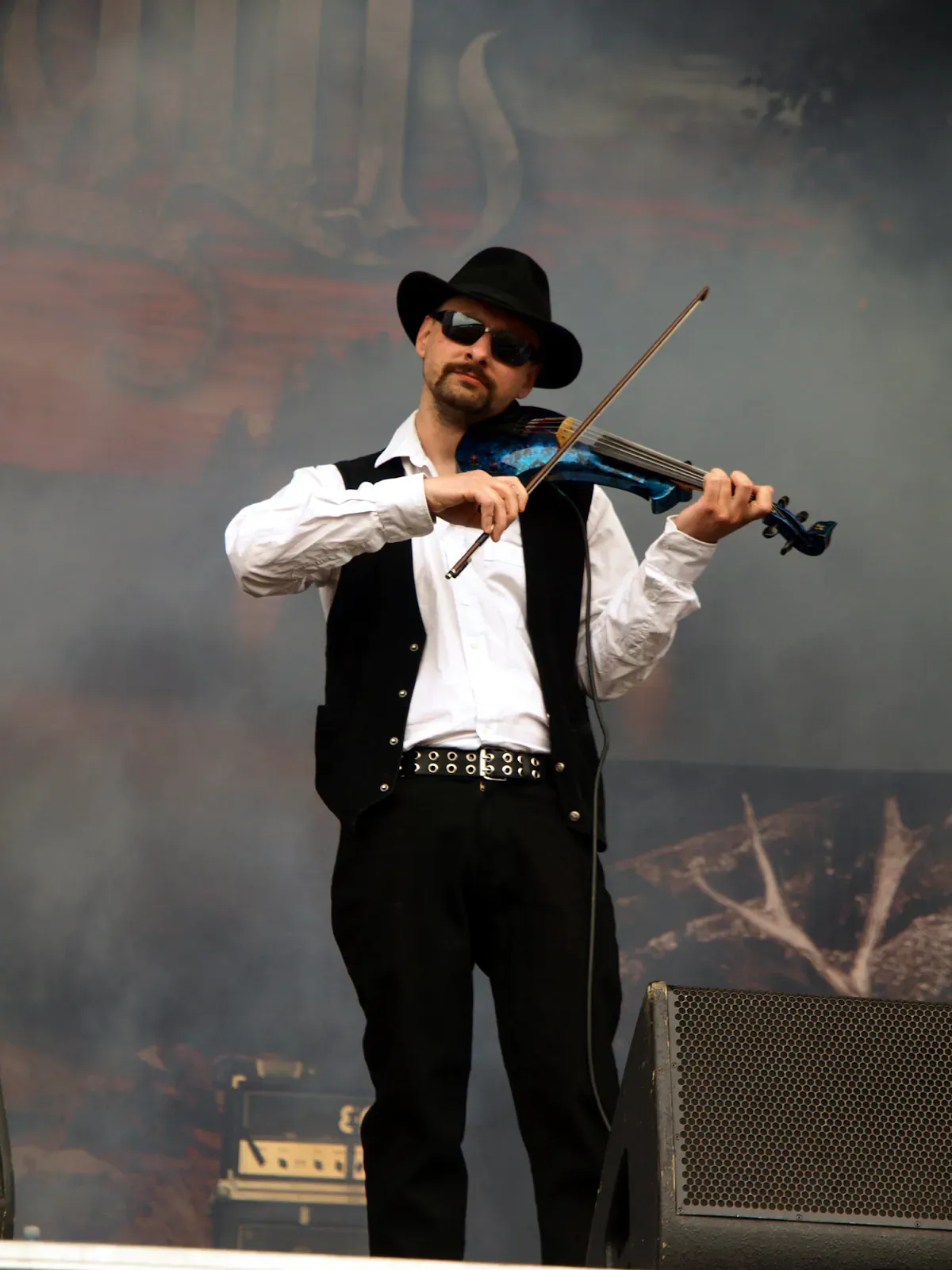
Cruachan began in Dublin in 1992. Keith Fay had heard the Skyclad debut and set out to combine black metal with Irish folk music, with the Irish rock band Horslips as a stated influence. A demo circulated in 1993 and the album Tuatha na Gael followed in 1995. A history of the genre by Fabrizio Giosuè names Cruachan as the first real folk metal band, on the grounds that Skyclad wrote folk-sounding parts while Cruachan used arrangements of known folk tunes and treated folk as half of its sound. The Century Media label showed interest, but Cruachan refused the contract offered and broke up in 1997. The band re-formed in 1999 and signed to Hammerheart for The Middle Kingdom in 2000.
Other early voices appeared away from the British Isles. Spain’s Mägo de Oz added Celtic-flavoured folk to power metal from their 1994 debut. In Finland, Amorphis released Tales from the Thousand Lakes in 1994, built on melodies from Finnish folk music. Storm, with members of Darkthrone and Satyricon, issued Nordavind in 1995, and Falkenbach debuted in 1996. Through the 1990s folk metal stayed small, with Waylander from Ireland among the few bands in it.
Finnish breakthrough, 2000-2009
The genre came into its own in the early 2000s, led from Finland. Finntroll formed in Helsinki in 1997 and released Midnattens widunder in 1999. Their distinctive step was marrying black metal to humppa, a Finnish polka, borrowing its alternating bass line and its accordion. Critics divided over the result. The follow-up Jaktens tid reached the Finnish charts in 2001, and the lyrics are sung in Swedish because the original singer belonged to Finland’s Swedish-speaking minority.
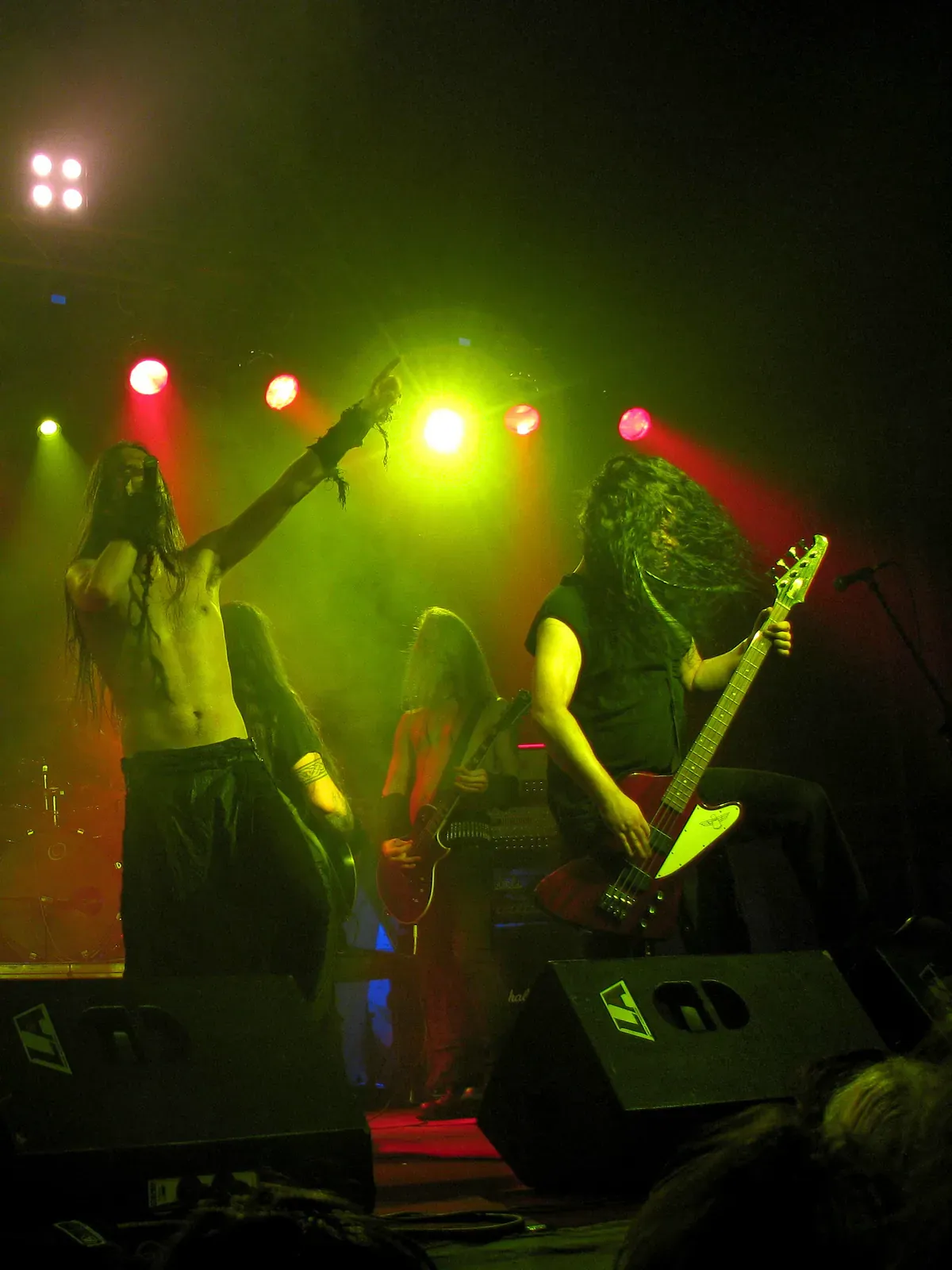
Korpiklaani took the opposite route. The project grew from a Sami folk duo, Shamaani Duo, formed in 1993 in Lahti, then became Shaman, and finally Korpiklaani, with the yoik singing and Northern Sami language dropped and real folk instruments replacing a synthesizer. Frontman Jonne Järvelä credits his work with Finntroll for the shift toward metal. Their 2003 album Spirit of the Forest includes Wooden Pints, and the band has become known for lyrics about having a good time. Moonsorrow, formed in 1995, mixed folk with Viking metal in symphonic arrangements.
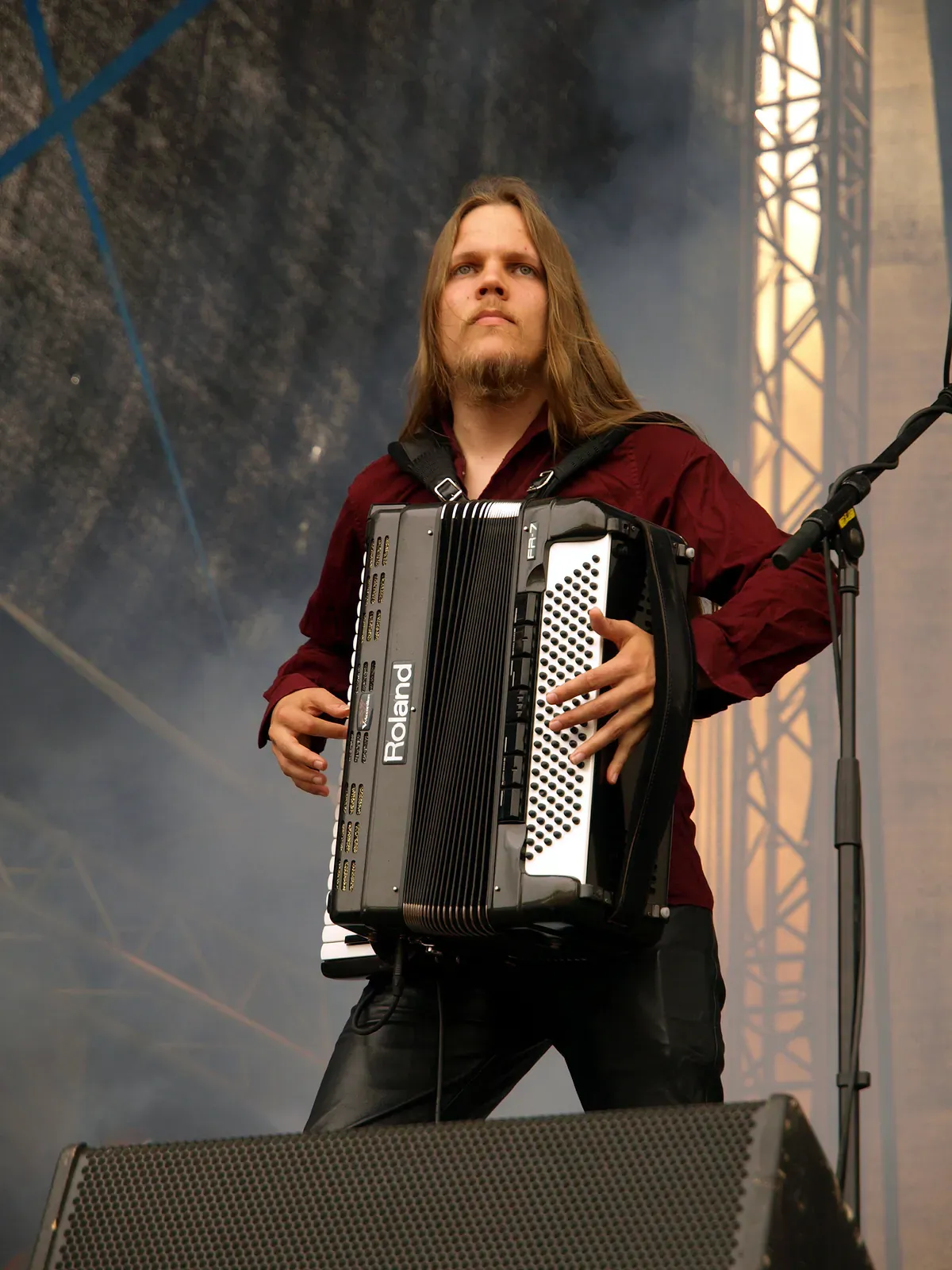
Ensiferum, formed in Helsinki in 1995, play what they call melodic folk metal on a hybrid of power and death metal, and reached the top of the Finnish singles chart in 2007 with One More Magic Potion. Turisas followed with the 2004 album Battle Metal and its choir-led, symphonic sound. Finntroll, Korpiklaani, Moonsorrow and Turisas all had chart success in Finland. Labels such as Spinefarm, Napalm, Nuclear Blast and Metal Blade released much of this work.
Regional branches
Folk metal takes its folk element from the home tradition of each band, and several branches carry their own names. Celtic metal, begun by Cruachan, uses Celtic music and mythology, and was later taken up by Eluveitie from Switzerland, whose second album Slania contains Inis Mona. Waylander and Primordial from Ireland, and Ithilien from Belgium, also belong here.
Medieval metal is a German-language branch. Subway to Sally, formed in 1992 as a folk rock band singing in English, turned to German lyrics and a medieval sound on the 1995 album MCMXCV, citing Skyclad as an influence. In Extremo of Berlin, formed in 1996, and Schandmaul followed, with bagpipes, hurdy-gurdy, shawm and mandolin and a theatrical medieval look.
Oriental metal draws on Middle Eastern music. Orphaned Land of Israel formed in 1991 and brought Jewish and Arabic folk elements into progressive metal, and Melechesh formed in Jerusalem in 1995. Elsewhere the style reached Estonia with Metsatöll, Latvia with Skyforger and Russia with Arkona.
Characteristics
The music is a diverse collection rather than a single sound. Bands may rest on black, death, power, thrash, doom or gothic metal. Finntroll and Primordial lean toward black metal, Mägo de Oz and Slough Feg toward traditional or power metal.
The mood ranges widely. Finntroll and Korpiklaani are cheerful and danceable, Moonsorrow and Turisas epic. Lyrics most often concern paganism, nature, fantasy, mythology and history. Skyclad turned its attention to politics and the environment, avoiding fantasy, with puns and humour in the writing.
Instruments and production
A folk metal band keeps the standard metal line-up of guitars, bass, drums and voice and adds folk instruments to it. A dedicated violinist is common, from Skyclad to Korpiklaani and Eluveitie. Tin whistle and flute appear in Celtic metal, bagpipes in Folkstone and In Extremo, the hurdy-gurdy in Eluveitie and Ithilien, and regional instruments mark national identity: the Latvian kokles for Skyforger, the Estonian torupill for Metsatöll, the kantele for Korpiklaani, and the oud and saz for Orphaned Land.
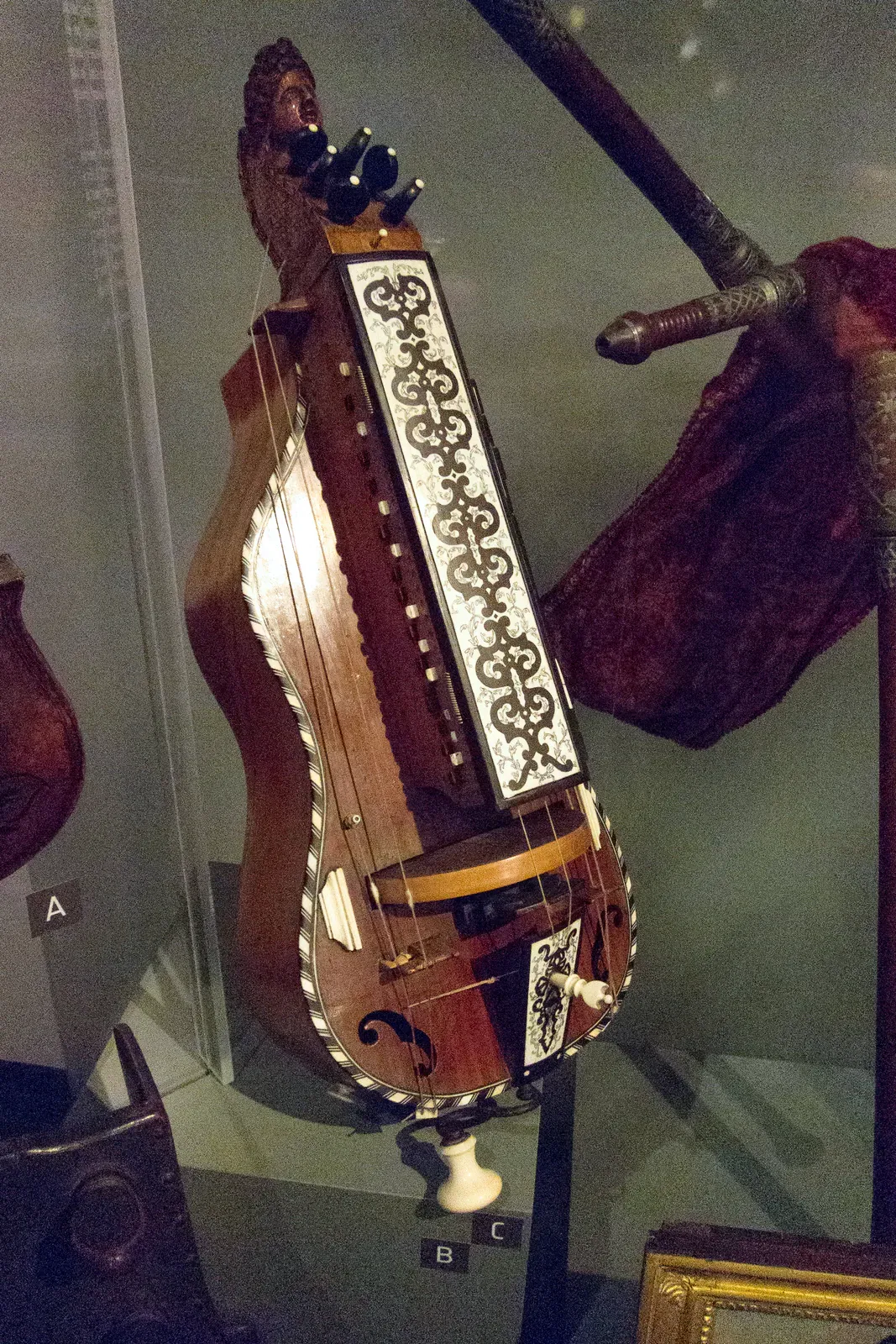
Where bands lack the players, keyboards stand in for folk instruments, as with Finntroll, Storm and Empyrium. Studio albums often use many guest musicians, and line-ups of six or more are common, with Mägo de Oz at nine members.
Vocals span black metal rasps, death shrieks and clean singing, and many bands mix them. Yoik is heard in Shaman, Finntroll and Korpiklaani, and choirs and chants in Turisas, Arkona, Eluveitie and Windir. Female lead singers are not rare, in Cruachan, Arkona and Midnattsol.
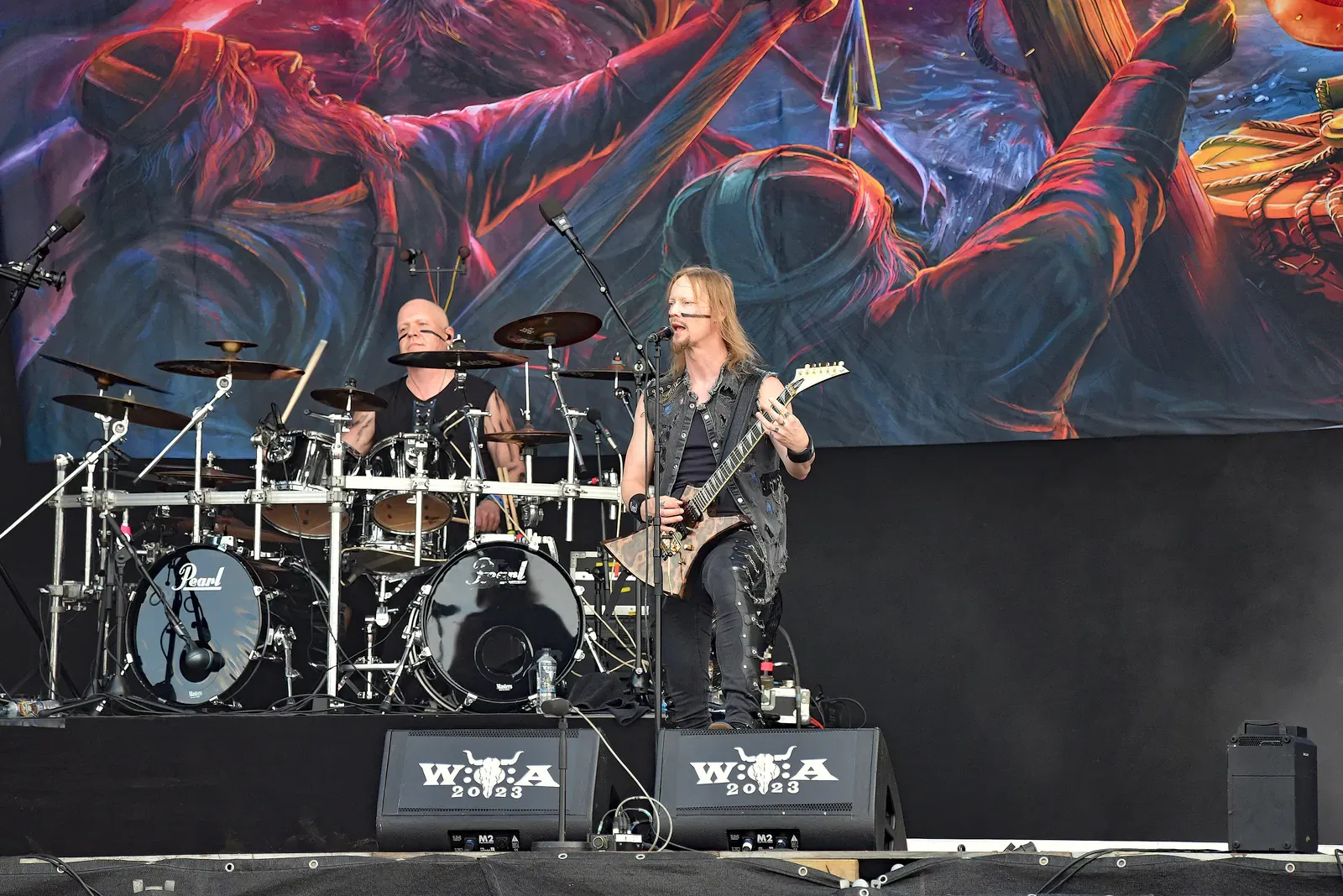
Mainstream success
Folk metal spent the 1990s outside the mainstream. Its commercial base grew in the 2000s: Finnish chart entries for Finntroll, Ensiferum, Korpiklaani, Moonsorrow and Turisas, and chart success in Germany for the medieval bands Subway to Sally, In Extremo and Schandmaul. Mägo de Oz sold well in Spain, South America and Mexico.
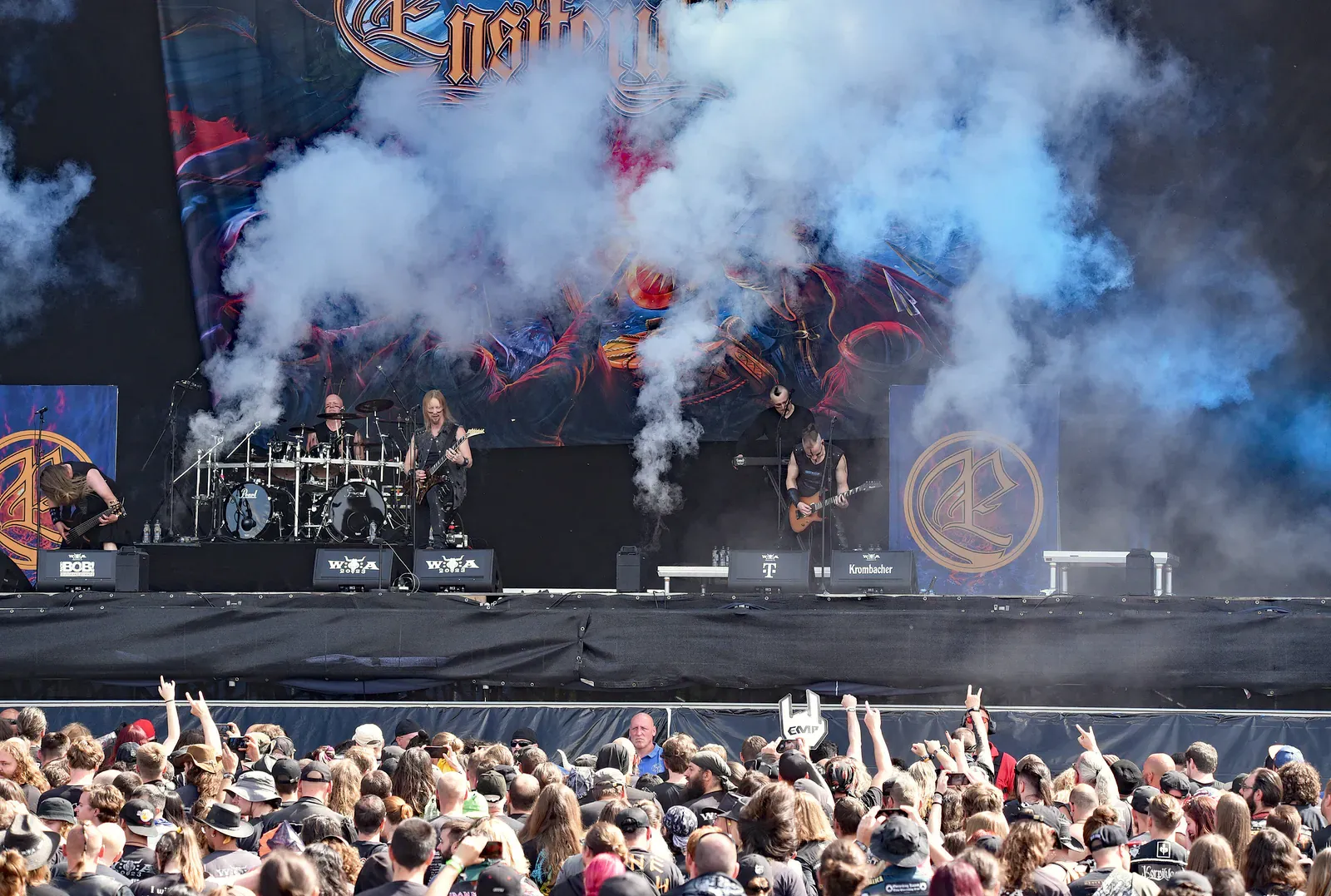
Notable recordings
Three records show the range of the style. The Wayward Sons of Mother Earth (1991) has the violin in a jig that was unusual for metal at the time. Tuatha na Gael (1995) was a complete folk metal album, though its production was later called poor. Jaktens tid (2001) fixed the humppa and black metal formula that Finntroll still uses.
Culture
The genre has a split in its politics. Skyclad took environmental and political stands. Some bands prefer the label pagan metal, because it names their ideas rather than the sound. Others have close ties with black metal, including Drudkh, Primordial and Falkenbach, and a number of National Socialist black metal acts also use folk elements. Humour is a defined strand, from Skyclad’s puns to Finntroll’s trolls and Korpiklaani’s drinking songs.
Legacy
By the 2010s folk metal had reached beyond Europe. Bands such as Tengger Cavalry used Mongolian throat singing, Chthonic used Taiwanese folk music, and The Hu, formed in 2016, combined morin khuur and throat singing with heavy rock. For related styles see folk rock and black metal.
Misconceptions
Folk metal is not always a Finnish style. It began with Skyclad in England and Cruachan in Ireland, and Finland came to the fore only after 2000. It is also not a single sound: a few bands, such as Tharaphita, drop folk instruments altogether and rely only on standard metal instruments. And Skyclad, usually treated as the founder, is not the unchallenged first, since one historian argues that Cruachan was the first real folk metal band because it made folk music a defining part of its sound rather than an occasional colour.
Frequently asked questions
What is folk metal?
Folk metal is a fusion genre that combines heavy metal with traditional folk music, using folk instruments, modal melodies and sometimes traditional singing. It developed in Europe in the 1990s.
Which bands started folk metal?
Skyclad from England and Cruachan from Ireland are the earliest folk metal bands. Skyclad’s debut album came out in 1991 and Cruachan’s in 1995.
What instruments are used in folk metal?
Folk metal uses the usual metal instruments plus folk ones such as the violin, tin whistle, flute, bagpipes, hurdy-gurdy, accordion, kantele, oud and saz. Some bands use keyboards to imitate them.
What are the subgenres of folk metal?
The main branches are Celtic metal, medieval metal, oriental metal and pagan metal, with national variants such as Finnish folk metal.
Sound
Sound sheet
Signature sounds
- Fiddle or whistle playing lead lines over distorted guitars
- Humppa bass-and-drum rhythm with accordion
- Choirs and chanted refrains
- Alternating extreme and clean vocals
Techniques
- Folk instrument as lead voice
- Humppa rhythm
- Keyboard folk simulation
- Choirs and chants
Keys and modes
Modal folk melodies. Melodies taken from traditional folk music of the band's own region.
Vocals
From black metal rasps and death shrieks to clean singing, plus yoik and folk-style singing in some bands; female leads in several.
Scenes
Where it happened
Where and when the sound lived: one bar per city on a shared timeline.
Europe
Active scenes
Peak 4, 1996-2025
Home of Finntroll, Ensiferum and Moonsorrow's founders.
Korpiklaani began here as the Sami folk duo Shamaani Duo.
Cruachan formed here to mix Irish folk with extreme metal.
In Extremo, a leading German medieval metal band, formed here.
Glossary
Terms on this page
Branch begun by Cruachan that blends Celtic music and mythology with metal.
Finnish polka style with an alternating bass line and accordion, used by Finntroll and Korpiklaani.
German-language branch begun by Subway to Sally, with bagpipes, hurdy-gurdy, shawm and fiddle.
Branch using Middle Eastern scales and instruments, led by Orphaned Land and Melechesh.
Label many bands prefer for its ideological themes rather than for the sound.
Traditional Sami vocal style, heard in the music of Shaman, Finntroll and Korpiklaani.
Metal family