Progressive metal
Progressive metal fuses heavy metal with progressive rock: long songs, odd meters and virtuoso playing that took shape in the US in the mid-1980s.
United States, United Kingdom, Canada, 1985
Metal family
Born
1985
United States, United Kingdom, Canada
Subgenres
3
Documented branches
Links
15
Genres it drew on or shaped
Tempo
70-145 BPMLineage
Family tree
Grew out of
Derived from
Influenced by
United States, United Kingdom, Canada, 1985
Progressive metal
Led to (4)
Timeline
Era by era
From the first sparks to today. Select a dot to read the story behind it.
- Precursors
1969 to 1983
- American pioneers
1984 to 1991
- Classic progressive metal
1992 to 1999
- Diversification
2000 to today
Eras
Moments
- 1 Precursors, 1969 to 1983
- 2 American pioneers, 1984 to 1991
- 3 Classic progressive metal, 1992 to 1999
- 4 Diversification, 2000 to today
around 1969
Precursors
King Crimson and Rush bring dissonance, odd meters and long forms to hard rock, while the new wave of heavy metal supplies the speed and twin-guitar attack.
- 1976Rush release 2112The Canadian trio pairs a side-long suite with heavy riffing, often named as a bridge between prog rock and metal.
1984
American pioneers
Queensrÿche, Fates Warning and Watchtower release albums that add complex structures, concept writing and rhythmic deconstruction to metal.
- 1984Queensrÿche and Fates Warning debut albumsThe Warning and Night on Bröcken appear in the same year, both adding progressive elements to US metal.
- 1985Watchtower release Energetic DisassemblyThe Texas band takes thrash into rapid time changes and syncopation, a path later called math metal.
- 1986Rage for Order and Awaken the GuardianQueensrÿche and Fates Warning each release albums usually cited as early landmarks of the genre.
- 1988Queensrÿche release Operation: MindcrimeA political concept album that shows the form could reach a wide metal audience.
- 1989Dream Theater's debut albumWhen Dream and Day Unite is the first full-length of the band that would define the classic sound.
1992
Classic progressive metal
Dream Theater's Images and Words and Awake, Tool's rise and a wave of European and American acts turn the style into a recognised genre.
- 1992Images and WordsDream Theater's second album, led by Pull Me Under, brings the style radio and television play.
- 1993Tool release UndertowThe Los Angeles band's debut carries odd-meter, heavy and atmospheric writing to the alternative metal audience.
- 1999Dream Theater release Scenes from a MemoryA single-story concept album that stands as a model for the long-form narrative record.
2000
Diversification
Opeth, Mastodon and Tool fuse the style with death metal, sludge and alternative rock, while Meshuggah's polyrhythms feed the djent branch.
- 2001Blackwater Park and LateralusOpeth and Tool release defining albums in the same year, one blending death metal with prog, the other building long polymetric songs.
- 2011Opeth's Heritage drops harsh vocalsOpeth abandon death growls on Heritage, a sign of how far the genre's branches had drifted from metal.
- 2019Tool release Fear InoculumThe band's first album in 13 years reaches number one on the US Billboard 200.
Listening path
Start listening
A short path from an easy way in to the deep end. Thumbnails come from YouTube; the player loads only when you press play.
- 01
Queensrÿche, 1991
An acoustic-and-orchestral ballad that reached the US top ten; listen for the dynamic shift.
- 02
Dream Theater, 1992
The riff-led single of Images and Words; listen for the keyboard and guitar unisons.
- 03
Tool, 2001
A song that shifts between odd meters; listen for the changing time signatures.
- 04
Opeth, 2005
Growls, clean singing and acoustic breaks in one long song.
Facts
| Family | Metal |
| Origin | United States, United Kingdom, Canada |
| Emerged | Mid-1980s |
| Status | Active |
| Tempo | 70 to 145 BPM |
| Meter | Odd and changing meters |
| Grew out of | Heavy metal |
| Subgenres | 1 |
Progressive metal is a fusion of heavy metal and progressive rock that pairs loud, distorted guitars with long compositions, changing time signatures and technically demanding playing.
It took shape among American bands in the mid-1980s, including Queensrÿche, Fates Warning and Watchtower, and reached a wide audience in the 1990s through Dream Theater and Tool. It belongs to the wider metal family.
Origins
The roots lie in two earlier moves. In 1969 King Crimson put dissonance and irregular structures into heavy music, most famously on “21st Century Schizoid Man”. In 1976 the Canadian trio Rush released 2112, whose side-long suite combined hard riffs with progressive-rock ambition and is often named as the bridge between the two styles.
The genre itself formed in the early 1980s, when the new wave of heavy metal supplied speed, twin guitars and high vocals, and a few young American bands asked what happens when those ingredients meet long forms. Queensrÿche, who settled on their name in 1982 in Bellevue, Washington, and Fates Warning, formed in Hartford, Connecticut, the same year, both released debut albums in 1984: The Warning and Night on Bröcken. Both bands grew up on Iron Maiden and Judas Priest and added structures borrowed from Yes and Rush.
American pioneers, 1984-1991
The 1986 albums Rage for Order by Queensrÿche and Awaken the Guardian by Fates Warning are usually cited as the first landmarks. The two bands then diverged. Queensrÿche stayed more direct and in 1988 released Operation: Mindcrime, a concept album about political manipulation and a model for story-driven metal. Fates Warning, whose guitarist Jim Matheos is the only constant member, kept moving toward complex, atypical riffs, and Perfect Symmetry (1989) is a high point of that approach. Their early records appeared on Metal Blade.
A second branch grew out of thrash metal. Watchtower, from Austin, Texas, released Energetic Disassembly in 1985 and Control and Resistance in 1989, building songs from rapid time changes and syncopation in a style later called math metal. Voivod in Canada and Coroner in Switzerland pursued related technical, dissonant paths. Bands from the thrash mainstream, among them Metallica on Master of Puppets and Megadeth on Rust in Peace, also borrowed long forms and odd riffs without joining the genre.
Classic progressive metal, 1992-1999
Dream Theater formed in 1985 as Majesty, started by Berklee College of Music students John Petrucci, John Myung and Mike Portnoy. After When Dream and Day Unite (1989), their second album, Images and Words (1992), brought the sound radio and television exposure through “Pull Me Under”. Awake (1994) deepened it, and Metropolis Pt. 2: Scenes from a Memory (1999) told one story across a whole record. The template was a keyboard-led band of instrumental virtuosos playing songs that regularly passed eight minutes.
Queensrÿche reached a mass audience at the same time. “Silent Lucidity”, from the 1990 album Empire, was an acoustic and orchestral ballad that reached the US top ten. Tool, from Los Angeles, brought a darker, rhythmic variant to the alternative metal audience after Undertow in 1993. Other acts of the decade, including Psychotic Waltz, King’s X and the Swedish and Dutch projects Pain of Salvation and Ayreon, widened the range.
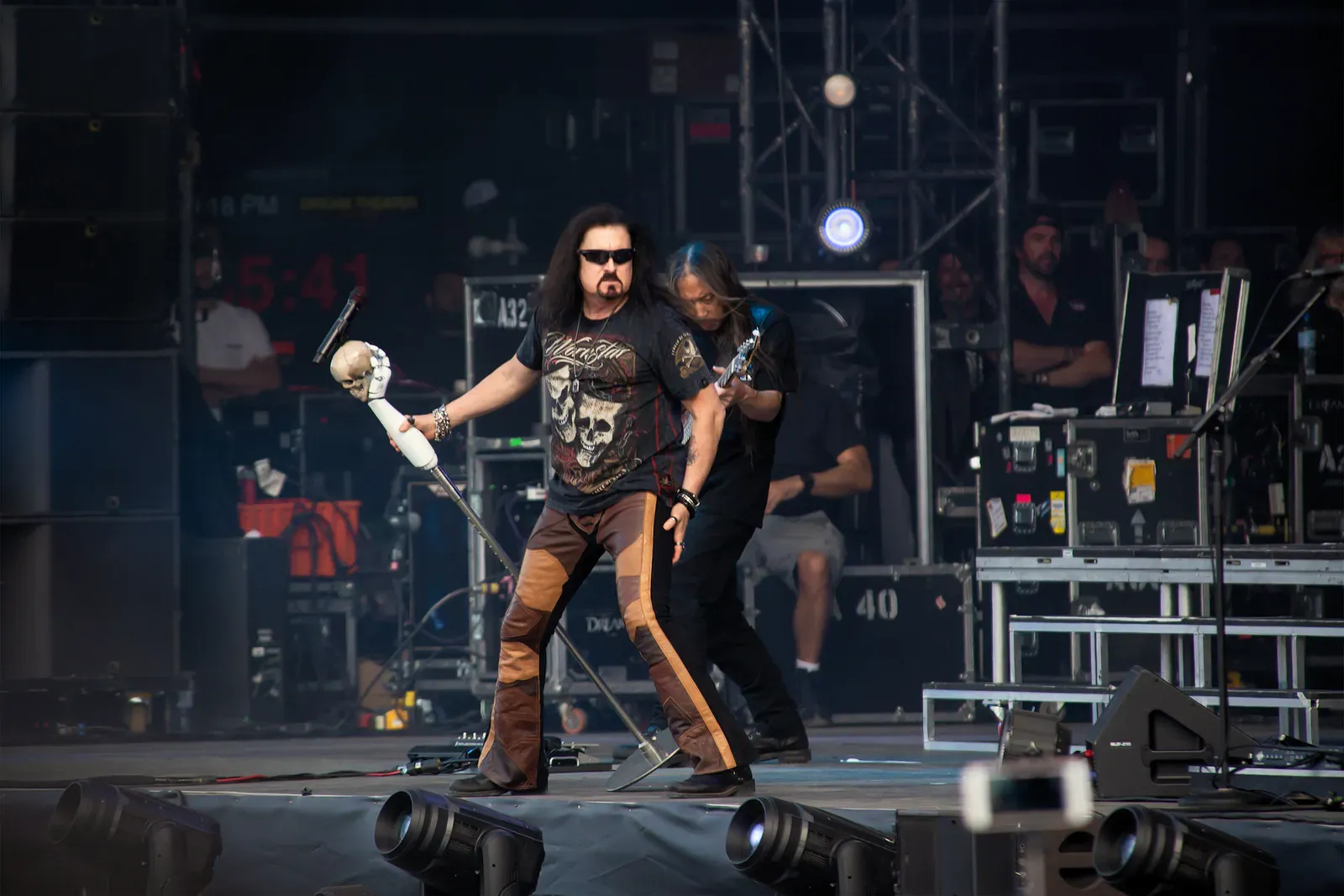
Diversification, 2000 to the present
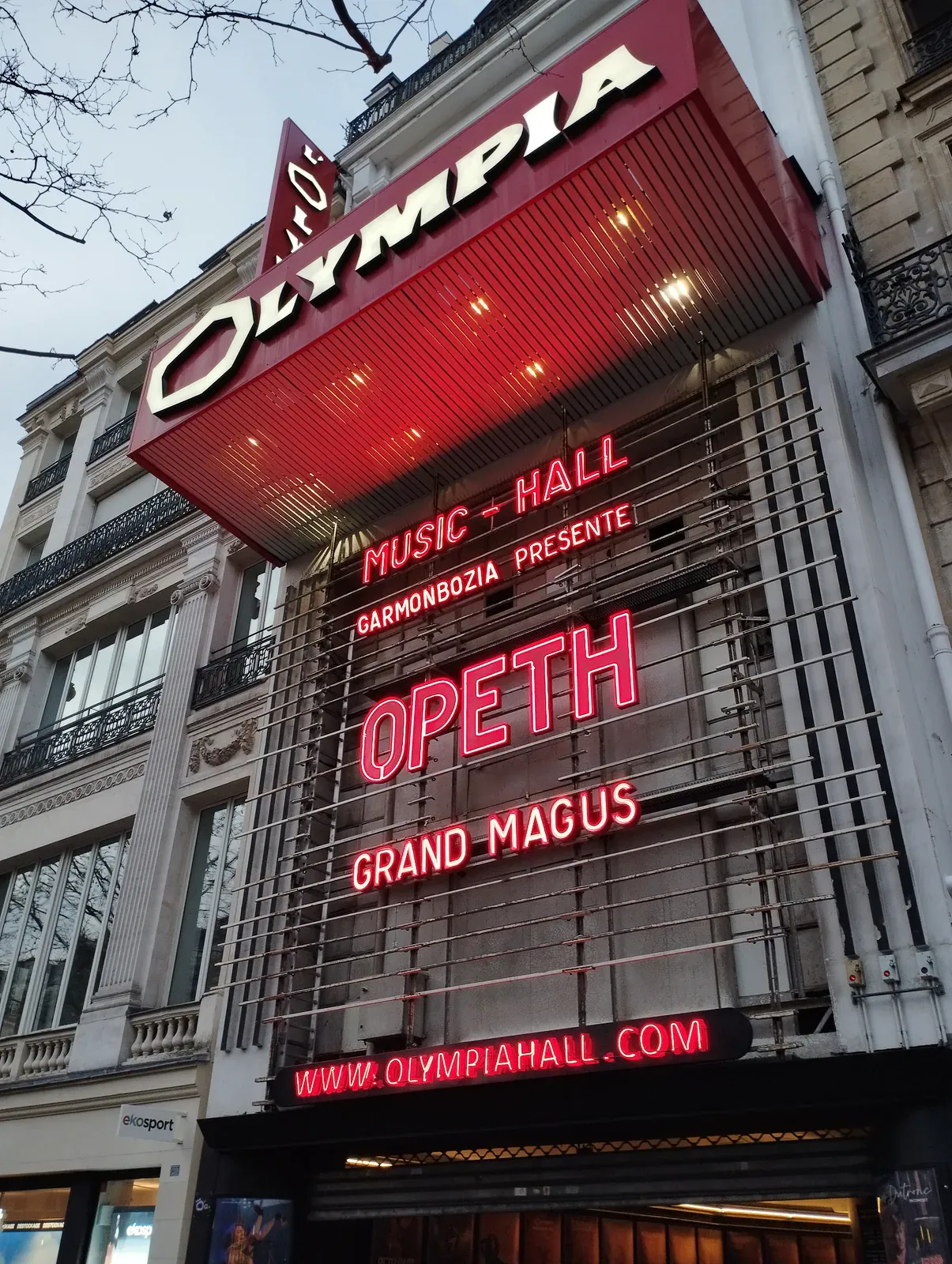
After 2000 the genre split into many directions. Opeth, founded in Stockholm by Mikael Åkerfeldt, alternated death-metal growls with acoustic passages on Blackwater Park (2001), then moved to Roadrunner for Ghost Reveries (2005); earlier releases had appeared on Music for Nations. The band left harsh vocals behind entirely with Heritage in 2011. Tool released Lateralus in 2001 and, after 13 years without an album, Fear Inoculum in 2019, which reached number one on the US Billboard 200.
Meshuggah’s heavily syncopated, low-tuned riffing fed the djent branch, and Mastodon brought sludge and psychedelia into the mix. Dream Theater, meanwhile, continued with a changed lineup after drummer Mike Portnoy left in 2010. The result is a genre defined more by a method than a sound: ambition in structure, and instrumental skill used in service of long forms.
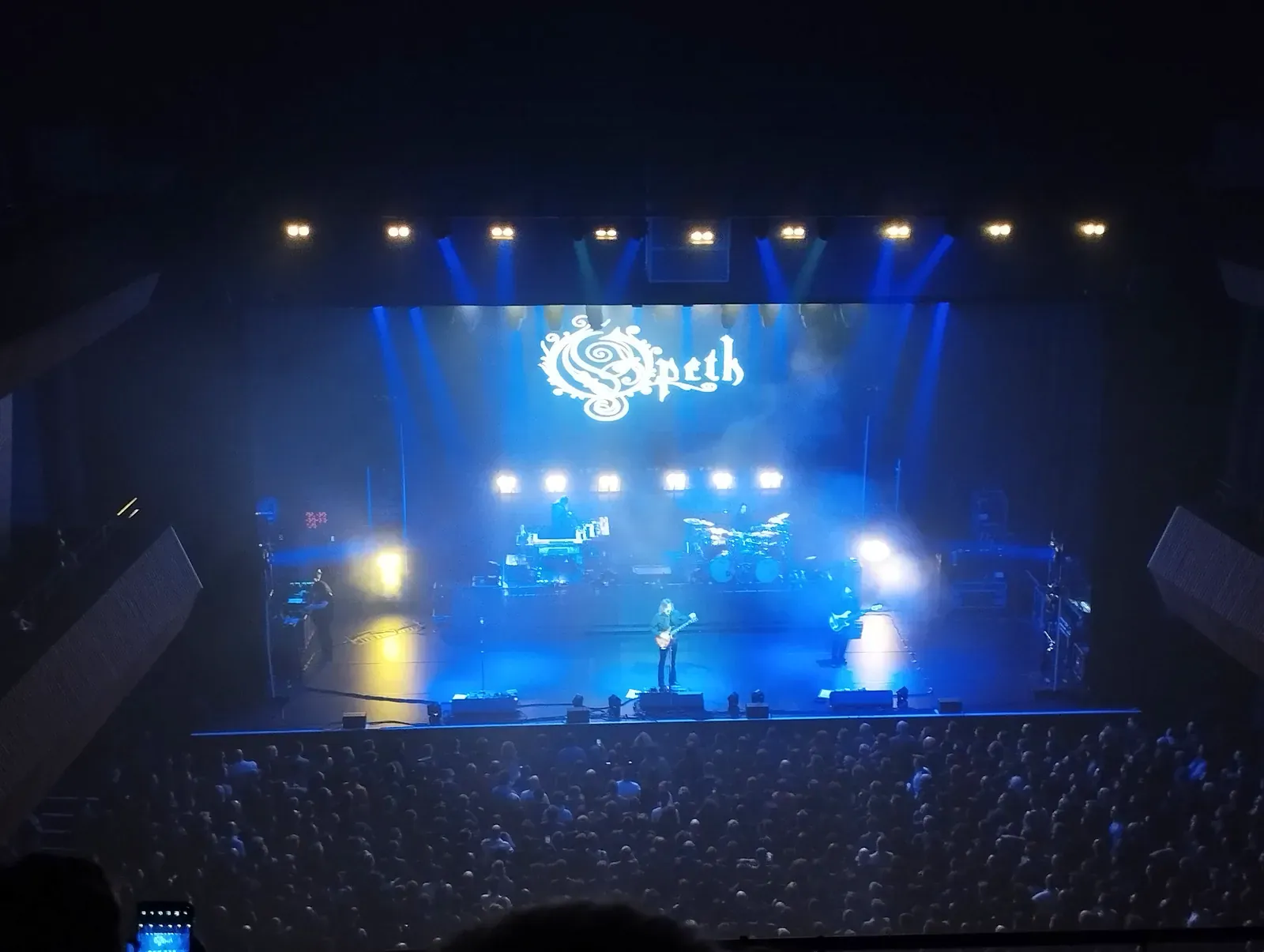
Characteristics
Progressive metal songs favor length and variation. A track often runs past six minutes and moves through several sections: a heavy riff, a melodic vocal part, an instrumental passage of unison runs and solos, a quiet interlude on clean or acoustic guitar, and a return of the main theme. Time signatures other than 4/4 are common, and a riff can sit in a different meter from the drums, creating a polyrhythm.
Jazz fusion and classical music are frequent influences, with solos traded between guitar and keyboards in the Dream Theater tradition. Lyrics draw on fantasy, literature, outer space and politics, as in the concept albums of Queensrÿche and Dream Theater. Vocals range from the high, clean tenor of the 1980s pioneers to the growls of the death-metal-influenced branch.
Instruments and production
Electric guitars with six, seven or eight strings carry the riffs, and the lower-tuned models became central to the later polyrhythmic styles. Keyboards and synthesizers add orchestral color and lead lines. Bass players take independent parts rather than doubling the guitar, and drummers use large kits with double bass drums to handle odd meters at speed.
Notable recordings
Operation: Mindcrime told of a drug addict recruited by a revolutionary group and showed that a concept album could sell to a broad metal audience. Images and Words brought the genre radio and television play through “Pull Me Under” and set the sound many 1990s bands followed. Awaken the Guardian is the reference point for the more angular wing, and Lateralus shows how the style can be built from repeated odd-meter patterns instead of virtuosic solos.
Culture
The genre has a devoted audience of musicians who follow gear, technique and live performance closely. Concept albums, long songs and detailed artwork are part of its identity, and the name djent entered the vocabulary as a description of the low, palm-muted guitar sound.
Legacy
Progressive metal gave later metal a vocabulary of long forms, complex rhythm and concept writing. Its branches include djent, math metal and progressive death metal, and its bands tour worldwide a generation after the first albums.
Misconceptions
The genre is not simply fast playing. Measured tempos of canonical tracks run from about 70 beats per minute for “Silent Lucidity” to the mid-140s for the faster Dream Theater pieces, and much of the music is slow or mid-paced. It also did not begin with Dream Theater: Queensrÿche and Fates Warning released progressive work in 1984, five years before Dream Theater’s debut. Finally, not every band uses keyboards or virtuosic solos; Tool leans on riffs, rhythm and atmosphere.
Frequently asked questions
What is the difference between progressive metal and progressive rock?
Progressive rock grew out of the late 1960s and favors keyboards, long forms and a lighter sound, while progressive metal adds distorted guitars, heavier riffs and metal vocals and rhythms.
Which band started progressive metal?
No single band did. Queensrÿche and Fates Warning released their first progressive-leaning records in 1984, and Watchtower added a technical thrash approach in 1985, before Dream Theater released its debut in 1989.
What time signatures does progressive metal use?
Many songs stay in 4/4 but change meter often, using 5/8, 7/8, 11/8 and other signatures, or layer polyrhythms across guitar and drums.
Is Tool progressive metal?
Tool is usually grouped with alternative metal and progressive metal, because its songs use odd meters, long forms and heavy riffs.
Sound
Sound sheet
Anatomy of a track
| # | Part |
|---|---|
| 1 | Riff-based intro |
| 2 | Verse and chorus in a stable meter |
| 3 | Instrumental section with unison runs and solos |
| 4 | Quiet clean or acoustic interlude |
| 5 | Return of the main theme and climax |
Signature sounds
- Frequent time-signature changes
- Unison guitar and keyboard runs
- Songs well beyond six minutes
- Heavy riffs set against clean, acoustic passages
Drums and percussion
- Double bass drum kit
Techniques
- Odd-meter riffing
- Polyrhythm
- Trading solos
- Soft-loud contrast
Keys and modes
Minor and modal. Dorian, Phrygian and other modes sit beside natural minor.
Tuning
Standard tuning or drop D, with seven- and eight-string guitars tuned lower.
Vocals
Melodic tenor singing in the Queensrÿche and Dream Theater line, with harsh vocals in the death-metal-influenced branch.
Scenes
Where it happened
Where and when the sound lived: one bar per city on a shared timeline.
North America
Active scenes
Peak 4, 1985-2025
Home town of Queensrÿche in the Seattle area.
Fates Warning's base in Connecticut.
Where Dream Theater formed among students of the Berklee College of Music.
Texas base of Watchtower, source of the math metal approach.
Culture
Culture markers
- Concept albums
Records built around one story, from Operation: Mindcrime to Scenes from a Memory.
Artwork - Djent
Onomatopoeic name for the low, palm-muted guitar chug linked with Meshuggah.
Slang
Glossary
Terms on this page
A record whose songs follow one story or theme, as in Operation: Mindcrime.
A subgenre built on palm-muted, low-tuned polyrhythmic riffs, named after the sound they make.
A technical style that builds music from sudden time changes and syncopation, associated with Watchtower.
A time signature other than 4/4 or 3/4, such as 7/8 or 11/8, common in progressive metal riffs.
Two or more rhythmic patterns played at once, such as a guitar riff cycling against the drums.
Metal family