Jazz fusion
Jazz fusion joins jazz improvisation and harmony with rock, funk and R&B on electric instruments. It emerged in the late 1960s and peaked in the 1970s.
United States, United Kingdom, 1968
Jazz family
Born
1968
United States, United Kingdom
Subgenres
2
Documented branches
Links
34
Genres it drew on or shaped
Tempo
100-155 BPMLineage
Family tree
Grew out of
Derived from
Influenced by
United States, United Kingdom, 1968
Jazz fusion
Led to (6)
Timeline
Era by era
From the first sparks to today. Select a dot to read the story behind it.
- Rock meets jazz
1966 to 1969
- Electric breakthrough
1969 to 1976
- Pop success and smooth jazz
1977 to 1989
- Continued experimentation
1990 to today
Eras
Moments
- 1 Rock meets jazz, 1966 to 1969
- 2 Electric breakthrough, 1969 to 1976
- 3 Pop success and smooth jazz, 1977 to 1989
- 4 Continued experimentation, 1990 to today
1966
Rock meets jazz
Players raised on rock and roll, among them Larry Coryell and Charles Lloyd, brought electric guitars, rock stagecraft and rock venues into jazz before the term fusion existed.
- 1966Larry Coryell founds the Free SpiritsCoryell's band with drummer Bob Moses, sometimes cited as the earliest jazz-rock group, recorded Out of Sight and Sound (released 1967).
- 1966Charles Lloyd plays jazz-rock at MontereyLloyd's quartet with Keith Jarrett and Jack DeJohnette mixed rock and jazz and later played the Fillmore West.
- 1968The term jazz fusion appearsA review of David Axelrod's Song of Innocence is credited with coining the term.
1969
Electric breakthrough
Miles Davis's In a Silent Way and Bitches Brew, then Weather Report, Mahavishnu Orchestra, Return to Forever and Herbie Hancock's Head Hunters, defined fusion as loud, virtuosic and groove-driven.
- 1969Tony Williams Lifetime record Emergency!Williams, John McLaughlin and Larry Young combined rock volume with jazz spontaneity, three months before Bitches Brew.
- 1969Miles Davis releases In a Silent WayTwo side-long suites, heavily edited by Teo Macero, with Corea, Hancock, Williams, Shorter, Zawinul and McLaughlin.
- 1970Bitches BrewDavis largely dropped the swing beat for a rock backbeat and bass guitar grooves; it sold about 400,000 copies in its first year.
- 1970Weather Report formedJoe Zawinul and Wayne Shorter founded the band in December 1970.
- 1971Mahavishnu Orchestra debut The Inner Mounting FlameJohn McLaughlin's group fused rock volume, virtuosity and Indian music influence.
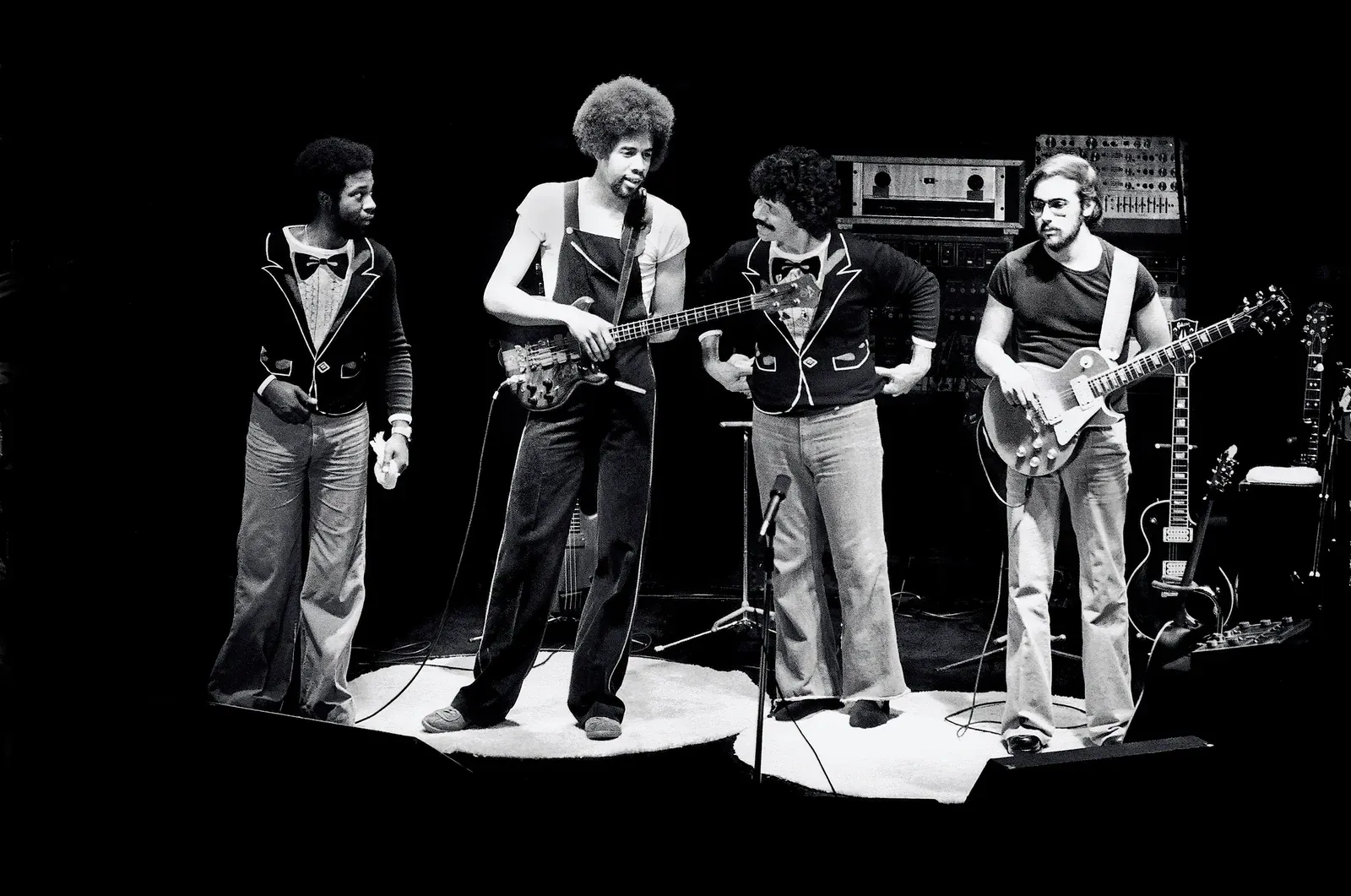
- 1972Return to Forever foundedChick Corea formed the band with bassist Stanley Clarke, later joined by guitarist Al Di Meola.
- 1973Herbie Hancock's Head HuntersFunk, disco and electronic elements in a commercially successful album.
1977
Pop success and smooth jazz
Late-1970s fusion albums reached pop audiences; by the early 1980s much of the original genre had been absorbed into smooth jazz and other branches of jazz and rock.
- 1977Weather Report's Heavy WeatherAlbum from the band's most successful period, with Jaco Pastorius on bass.
- 1980Fusion folds into smooth jazzBy the early 1980s much of the original fusion genre was subsumed into smooth jazz and other branches.
1990
Continued experimentation
Fusion kept its improvisatory and experimental approach through the 1990s and 2000s as a tradition rather than a codified style.
Listening path
Start listening
A short path from an easy way in to the deep end. Thumbnails come from YouTube; the player loads only when you press play.
- 01
Herbie Hancock, 1973
A funk bass line and electric keyboards carry a long improvised form.
- 02
Weather Report, 1977
Zawinul's synthesizer themes over a driving, hook-laden groove.
- 03
Miles Davis, 1970
The dense electric ensemble that opened fusion to rock audiences.
- 04
Mahavishnu Orchestra, 1973
McLaughlin's fast guitar and violin lines over odd-meter rock-jazz writing.
Jazz fusion, also called fusion or jazz-rock fusion, is a style of music that developed in the late 1960s when musicians combined jazz harmony and improvisation with rock, funk and rhythm and blues.
It trades the acoustic piano and double bass of earlier jazz for electric guitars, electric pianos, organs, synthesizers and bass guitar, and it values volume, virtuosity and long improvised solos. Its first decade, the 1970s, produced its best-known bands. Part of jazz, it is better understood as a tradition than as one codified style.
Origins
Rock was the most popular music in the United States when John Coltrane died in 1967, and a DownBeat headline that year declared that jazz as people knew it was dead. Until about 1967 the jazz and rock worlds were close to separate. A generation of players who had grown up on rock and roll began to close the gap. Guitarist Larry Coryell, sometimes called the godfather of fusion, started the Free Spirits in 1966 with drummer Bob Moses and recorded Out of Sight and Sound, released in 1967. The Free Spirits are sometimes cited as the earliest jazz-rock band. Coryell then joined a quartet led by vibraphonist Gary Burton, and several of the Berklee-trained players around them made early rock-influenced jazz records in Boston.
Saxophonist Charles Lloyd took the same idea to rock audiences. His quartet, with Keith Jarrett and Jack DeJohnette, played a mix of rock and jazz at the 1966 Monterey Jazz Festival. Lloyd then played the Fillmore West, wore colorful clothes and gave albums titles such as Dream Weaver and Forest Flower, which were bestselling jazz albums in 1967. The term jazz fusion itself is credited to a review of David Axelrod’s Song of Innocence in 1968.
Miles Davis and the electric turn
Miles Davis wrote in his autobiography that in 1968 and 1969 he had been listening to Jimi Hendrix, James Brown and Sly and the Family Stone. In a Silent Way, released in July 1969, is considered his first fusion album. It consists of two side-long suites heavily edited by producer Teo Macero and was made by Chick Corea, Herbie Hancock, Tony Williams, Wayne Shorter, Joe Zawinul and John McLaughlin, a roll call of fusion’s pioneers.
Bitches Brew followed in 1970. Davis largely abandoned the swing beat for a rock backbeat and bass guitar grooves, and the album mixed free-jazz blowing by a large ensemble with electric keyboards, guitar and dense percussion. Davis played his trumpet through electronic effects and pedals as if it were an electric guitar. It sold about 400,000 copies in its first year, four times the average for a Davis album, and earned a gold record. Some jazz critics accused him of betraying the music. Jack Johnson, from 1971, has been called the purest electric jazz record ever made.
Davis was not alone. Drummer Tony Williams left Davis’s band to form Lifetime with McLaughlin and organist Larry Young. Their debut, Emergency!, was recorded three months before Bitches Brew and paired rock intensity and loudness with jazz spontaneity.
The 1970s bands
The members of Davis’s bands soon led their own groups. Joe Zawinul and Wayne Shorter founded Weather Report in December 1970, and the band kept going until 1986 with players including Jaco Pastorius, Alphonse Mouzon, Airto Moreira and Miroslav Vitous. McLaughlin formed the Mahavishnu Orchestra in 1971 with drummer Billy Cobham, violinist Jerry Goodman, bassist Rick Laird and keyboardist Jan Hammer. Its debut, The Inner Mounting Flame, drew on psychedelic rock and Indian classical music. Hammer pioneered the use of the Minimoog with distortion and bent pitches with the pitch wheel so that a keyboard sounded like a guitar. Both Weather Report and Mahavishnu Orchestra recorded for Columbia Records.
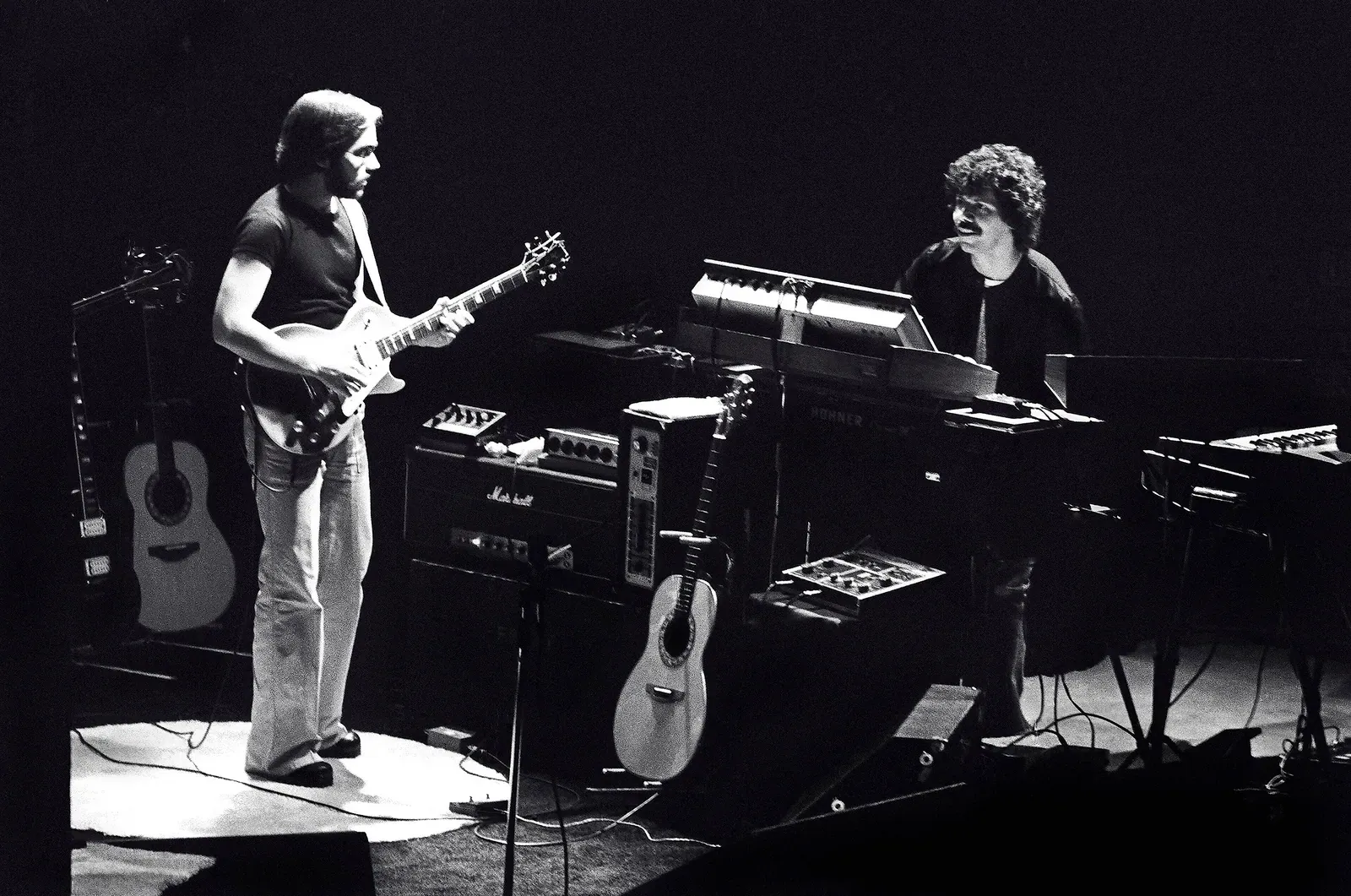
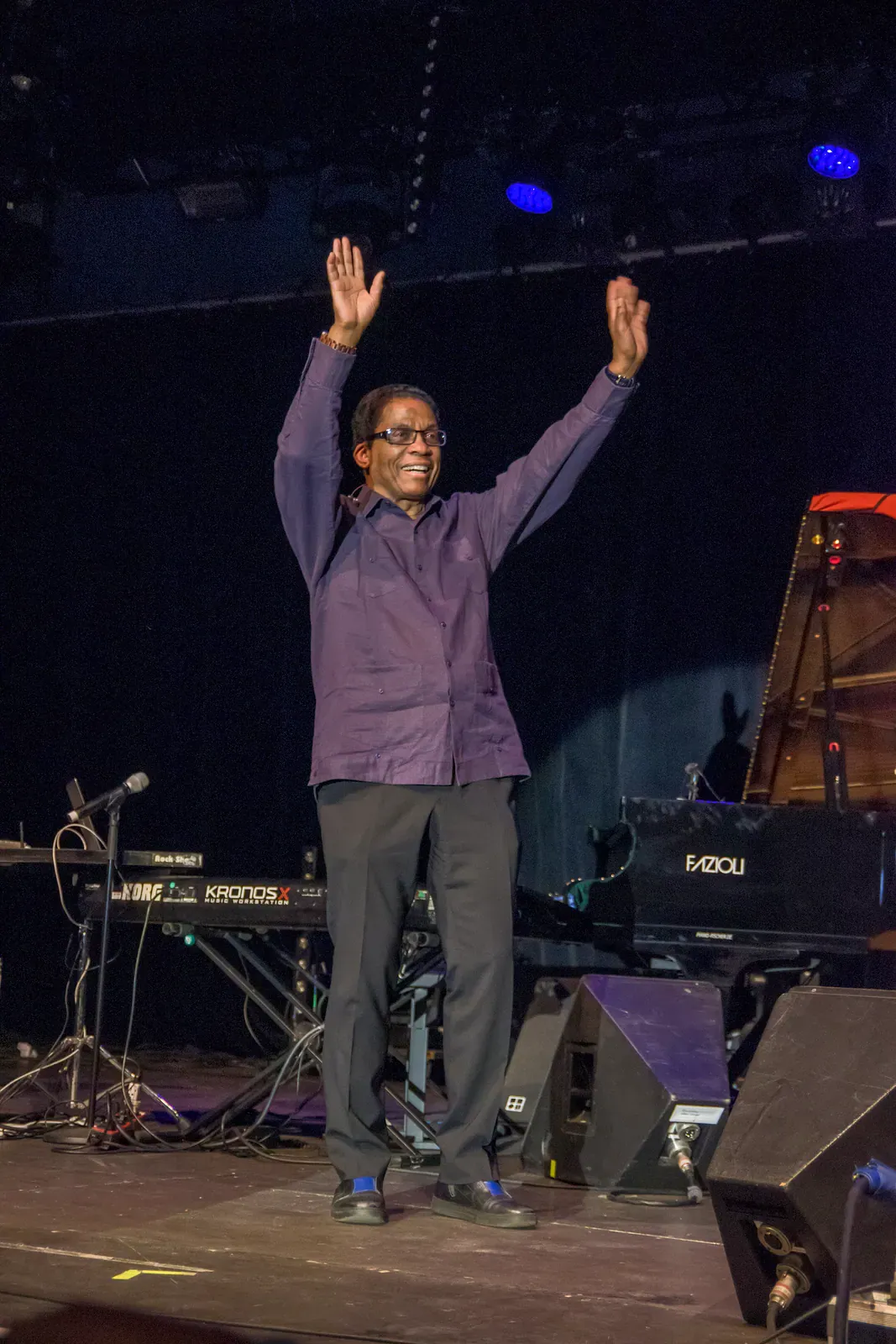
Chick Corea started Return to Forever in 1972 with bassist Stanley Clarke, later adding guitarist Al Di Meola. Corea combined jazz, rock, pop and Brazilian music. Herbie Hancock brought funk, disco and electronic elements into commercially successful albums such as Head Hunters in 1973.
Britain and Europe
In the United Kingdom, fusion merged with progressive rock and psychedelia. Brand X (with Phil Collins), Bruford (led by Bill Bruford) and Nucleus (led by Ian Carr) belonged to this movement, and Soft Machine and Colosseum stood between jazz and rock. Across Europe, Magma in France, Passport in Germany and Terje Rypdal in Norway extended it. Related pages include progressive rock and funk.
Characteristics
Fusion arrangements vary widely. Some use groove-based vamps fixed to a single key or chord with a simple, repeated melody. Others use elaborate chord progressions, unconventional time signatures and counter-melodies, much like progressive rock. Both types normally leave room for improvised sections of any length. Brass and woodwinds such as trumpet and saxophone remain, but electric instruments often take their roles. The pioneers emphasized exploration, energy, intensity, virtuosity and volume, and many pieces were built on rock or funk backbeats in place of the swing feel.
Instruments and production
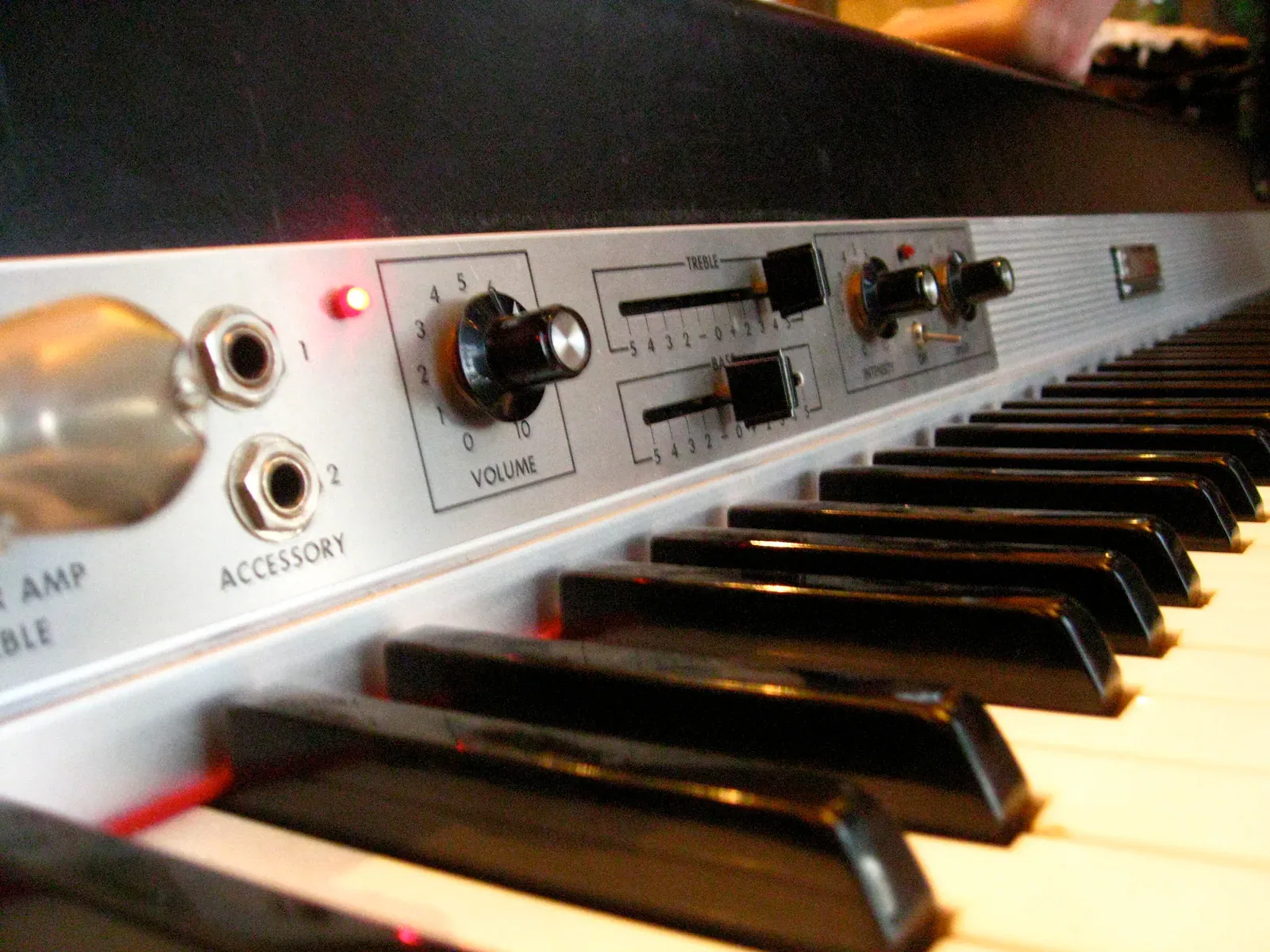
The electric piano, in the form of the Fender Rhodes, replaced the acoustic piano in many bands, and the synthesizer became the other main keyboard voice. Bass guitar carried funk grooves, and electric guitars were played at rock volume, often through effects. The electric violin became a lead voice in Mahavishnu Orchestra, first with Jerry Goodman and later with Jean-Luc Ponty. In the studio, tape editing mattered as much as playing: Macero cut long improvised sessions into the suites of In a Silent Way.
Mainstream success
Several fusion albums reached pop audiences. Hancock’s Head Hunters and, in 1979, Feets, Don’t Fail Me Now did well commercially, and George Benson became a vocalist with pop hits that overshadowed his jazz career. Jean-Luc Ponty, after leaving Mahavishnu Orchestra in 1975, signed with Atlantic and had solo albums in the top five of the Billboard jazz chart in the late 1970s and 1980s. Late-1970s fusion albums by Lee Ritenour, Chuck Mangione, Spyro Gyra and the Crusaders followed.
Commercial success brought a backlash. As fusion became a money-maker, much of what carried the label was jazz mixed with easy-listening pop and lightweight R&B. Jazz writer Stuart Nicholson argued that early albums such as Emergency! and Davis’s Agharta of 1975 hinted at an independent genre, but that the music mutated into jazz-inflected pop for FM radio at the end of the decade. By the early 1980s much of the original fusion had been absorbed into other branches of jazz and rock, particularly smooth jazz, a radio-friendly style influenced by R&B, funk and pop. Fusion kept experimenting through the 1990s and 2000s.
Notable recordings
Bitches Brew is the best-known fusion record; it followed In a Silent Way, where Macero’s editing had turned sessions into long suites. Weather Report’s Birdland, from Heavy Weather in 1977, shows a different side: a catchy synthesizer-led theme over a driving groove. Mahavishnu Orchestra’s Birds of Fire, from 1973, shows McLaughlin’s fast guitar and violin lines. Hancock’s Chameleon, the opening track of Head Hunters, builds a long improvised form on a funk bass line and electric keyboards.
Culture
Fusion brought jazz into rock halls and rock stagecraft. Lloyd’s colorful clothes and Fillmore West bookings showed the idea early, and Davis performed at rock venues. Some in the jazz community regarded rock as less sophisticated and more commercial than jazz, which fed the controversy around Bitches Brew.
Legacy
Fusion reshaped jazz instrumentation, and its players took jazz phrasing and harmony back into rock. Santana and Frank Zappa drew on jazz, and Carlos Santana has credited Davis’s influence. Later offshoots include jazz-funk, jazz-metal and the M-Base movement.
Misconceptions
Fusion is often said to begin with Bitches Brew, but the Free Spirits, Charles Lloyd’s quartet, Coryell and Williams’s Lifetime all worked in the field before it, and In a Silent Way of 1969 predates it. Fusion is also not the same thing as smooth jazz: smooth jazz is a radio-friendly branch, and critics have argued that its best-known artists lack the fire of the 1970s fusion groups. Finally, fusion is not one fixed style. Albums from the same artist may vary widely, and the genre is better seen as an approach.
Frequently asked questions
What is jazz fusion?
Jazz fusion is a music genre from the late 1960s that combines jazz harmony and improvisation with rock, funk and rhythm and blues, played on electric instruments.
Which album started jazz fusion?
No single album did. Miles Davis’s In a Silent Way of 1969 is considered his first fusion album, and Bitches Brew of 1970 made the style famous, but Coryell’s Free Spirits and Lloyd’s quartet were working in the style earlier.
What are the main jazz fusion bands?
The core groups of the 1970s are Weather Report, Mahavishnu Orchestra, Return to Forever and Herbie Hancock’s Headhunters, together with the bands of Miles Davis and Tony Williams Lifetime.
What is the difference between jazz fusion and jazz rock?
The two terms are often used as synonyms. Jazz rock more often describes performers who came from the rock side, such as Chicago, Blood, Sweat and Tears or Soft Machine.
Sound
Sound sheet
Signature sounds
- Electric piano or synthesizer over a bass guitar groove
- Rock backbeat in place of the swing beat
- Long improvised solos over vamps
- Odd or shifting time signatures
Techniques
- Groove vamps
- Odd time signatures
- Extended improvised solos
- Effects on lead instruments
- Pitch-bend synthesizer solos
Keys and modes
Single key or chord vamp. Groove-based pieces stay on one key or chord under a simple repeated melody.
Extended chord progressions. Other pieces use elaborate progressions and counter-melodies, as in progressive rock.
Vocals
Mainly instrumental; pop-leaning fusion later added singers such as George Benson and Al Jarreau.
Scenes
Where it happened
Where and when the sound lived: one bar per city on a shared timeline.
North America
Europe
Active scenes
Peak 3, 1969
Weather Report, Mahavishnu Orchestra and Return to Forever all formed there.
Charles Lloyd brought psychedelic dress and rock-hall bookings to jazz at the Fillmore West.
Berklee students around Larry Coryell and Gary Burton made early jazz-rock records.
British fusion merged with progressive rock and psychedelia, as in Brand X, Bruford and Nucleus.
Culture
Culture markers
- Psychedelic stage dress
Charles Lloyd wore colorful clothes and played rock halls such as the Fillmore West.
Fashion - Jazz at rock venues
Fusion bands played rock rooms, which angered critics who saw rock as less sophisticated than jazz.
Ritual
Glossary
Terms on this page
Jazz harmony and improvisation combined with rock, funk and rhythm and blues, played on electric instruments.
Sometimes a synonym for fusion, often meaning rock bands that added jazz elements.
Radio-friendly branch of fusion influenced by R&B, funk and pop.
A repeated groove fixed to a single key or chord that supports improvisation.
Jazz family