Funk
Funk is rhythm-first African-American dance music from the mid-1960s that accents the downbeat, built on syncopated bass, choppy guitar and horn stabs.
Cincinnati, 1965
R&B, Soul & Funk family
Born
1965
Cincinnati
Subgenres
11
Documented branches
Links
119
Genres it drew on or shaped
Tempo
90-135 BPMLineage
Family tree
Grew out of
Derived from
Derived from
Cincinnati, 1965
Funk
Led to (23)
Timeline
Era by era
From the first sparks to today. Select a dot to read the story behind it.
- Finding the one
1964 to 1969
- Funk spreads
1970 to 1974
- P-Funk and pop funk
1975 to 1979
- Machines and Minneapolis
1980 to 1989
- Samples and revivals
1990 to today
Eras
Moments
- 1 Finding the one, 1964 to 1969
- 2 Funk spreads, 1970 to 1974
- 3 P-Funk and pop funk, 1975 to 1979
- 4 Machines and Minneapolis, 1980 to 1989
- 5 Samples and revivals, 1990 to today
1964
Finding the one
James Brown, the Meters and Sly Stone replace chord changes with interlocking rhythm and an accent on the downbeat.
- 1964James Brown's Out of SightAn early hit that starts Brown's turn toward a groove built on the downbeat.
- 1965Papa's Got a Brand New BagRecorded in February 1965; Jimmy Nolen's guitar and an accent on the one set the template. Brown's first Top 10 pop hit.
- 1967Cold SweatWritten by Brown and Pee Wee Ellis, it rides one chord with the bass line as the hook; a No. 1 R&B hit.
- 1968Dance to the MusicSly and the Family Stone's breakthrough hit brings funk and psychedelia to pop radio.
- 1969Cissy StrutThe Meters' instrumental reaches No. 4 R&B and No. 23 pop, rooted in New Orleans second-line rhythm.
1970
Funk spreads
Brown's band splits, Funkadelic and Kool & the Gang emerge, Stevie Wonder scores a funk No. 1 and hip hop DJs start looping breaks.
- 1970Funky Drummer releasedCut in November 1969, issued in 1970: Clyde Stubblefield's drum break becomes one of the most sampled records ever.
- 1970Funkadelic's first albumArmen Boladian's Westbound issues the Detroit band's debut, the start of P-Funk's guitar side.
- 1971There's a Riot Goin' OnSly Stone's darker, slower, drum-machine-tinged album; its Family Affair reaches No. 1 on the pop chart.
- 1972SuperstitionStevie Wonder's clavinet riff, issued in November, tops the Hot 100 in January 1973.
- 1973DJ Kool Herc's Bronx partiesFunk breaks become the raw material of hip hop, starting a sampling tradition that runs through the genre.
- 1973Jungle BoogieKool & the Gang's street-funk hit from Wild and Peaceful reaches the US top 5.
1975
P-Funk and pop funk
Earth, Wind & Fire and Chic top the pop chart while Parliament-Funkadelic turn funk into theatre; disco borrows its grooves.
- 1975Shining StarEarth, Wind & Fire's horn-driven single reaches No. 1 on the pop and soul charts.
- 1975Mothership ConnectionParliament's space-funk concept album goes gold and platinum and builds the P-Funk stage show.
- 1978One Nation Under a GrooveFunkadelic's biggest hit spends six weeks at No. 1 on the R&B chart.
- 1978Go-go takes shape in WashingtonChuck Brown and the Soul Searchers' Bustin' Loose tops the R&B chart into 1979 and sets a funk-percussion sound for DC.
- 1979Good TimesChic's bass line reaches No. 1 on the Hot 100 and is reworked in Rapper's Delight the same year.
1980
Machines and Minneapolis
Drum machines, synths and talk boxes replace horn sections; Rick James, Zapp and Prince lead a leaner, electronic funk.
- 1980More Bounce to the OunceZapp's debut single, built on Roger Troutman's talk box, is a No. 2 R&B hit.
- 1980Roland TR-808 and Linn LM-1 arriveDrum machines start to replace live drummers and shape a synth-funk and electro-funk sound.
- 1981Street Songs and Super FreakRick James brings his punk funk to the pop top 20 on Motown's Gordy label.
- 1981Funkadelic cover censoredWarner Bros. objects to Pedro Bell's artwork for The Electric Spanking of War Babies.
- 1982Planet RockAfrika Bambaataa's TR-808-driven track, influenced by Kraftwerk, launches electro-funk.
- 1986KissPrince and the Revolution's bass-free funk single reaches No. 1 on the Hot 100.
- 1986In the Jungle Groove and the sampling boomA James Brown compilation and Funky Drummer-based hip hop records make Brown the most sampled artist.
1990
Samples and revivals
Funk breaks drive hip hop and G-funk, then Uptown Funk and neo-funk acts bring live funk back to the charts.
- 2014Uptown FunkMark Ronson and Bruno Mars spend 14 weeks at No. 1 on the Hot 100 with a Minneapolis-flavoured funk single.
Listening path
Anthems
The records that built the sound, grouped by the part they played. Thumbnails come from YouTube; the player loads only when you press play.
- 01
James Brown, 1965 · King Records
Brown's turn to a groove built on the one, with Jimmy Nolen's guitar and a horn-led arrangement; his first Top 10 hit.
Start hereOrigin - 02
James Brown, 1967 · King Records
One chord, no changes, a bass line as the hook: the record often named as the start of funk.
Origin - 03
Sly and the Family Stone, 1971 · Epic Records
Sly Stone's slow, rhythm-box funk went to No. 1 on the pop chart for three weeks.
Breakthrough - 04
Stevie Wonder, 1972 · Motown
Wonder's clavinet riff took funk to No. 1 on the Hot 100 and became the genre's best-known riff.
Start hereBreakthrough - 05
Kool & the Gang, 1973 · De-Lite Records
Street funk with a grunted spoken hook that reached the US top 5 and found a second life in Pulp Fiction.
Breakthrough - 06
Rick James, 1981 · Motown
Rick James's punk funk reached the pop top 20 and was later sampled in U Can't Touch This.
Breakthrough - 07
The Meters, 1969 · Josie Records
The New Orleans answer to Brown: a spare instrumental built on Zigaboo Modeliste's syncopated drums and Leo Nocentelli's guitar.
Anthem - 08
James Brown, 1970 · King Records
Clyde Stubblefield's drum break, among the most sampled in hip hop, made funk the raw material of rap.
Anthem - 09
Parliament, 1976 · Casablanca Records
P-Funk's sing-along chant, Parliament's first million-seller, still the crowd call of funk shows.
Start hereAnthem - 10
Funkadelic, 1978 · Warner Records
A six-week R&B No. 1 that put Funkadelic's dance-floor funk into a UK top 10.
Anthem - 11
Zapp, 1980 · Warner Records
A slow, bouncy electro-funk track whose talk box hook became a sampling staple.
Anthem - 12
Earth, Wind & Fire, 1975 · Columbia Records
Horn-driven funk with gospel harmonies that reached No. 1 on both pop and soul charts.
Crossover - 13
Chic, 1979 · Atlantic Records
Bernard Edwards' bass line carried funk through disco to No. 1 and into Rapper's Delight.
Crossover - 14
Prince, 1986 · Paisley Park Records
A near-bassless funk single at 112 BPM that went to No. 1 on the Hot 100 for two weeks.
Crossover - 15
Mark Ronson, 2014
Mark Ronson and Bruno Mars's funk-pop spent 14 weeks at No. 1 on the Hot 100, a modern revival of the genre.
Revival
Facts
| Family | R&B, Soul & Funk |
| Origin | Cincinnati, United States |
| Emerged | Mid-1960s |
| Status | Active |
| Tempo | 90 to 135 BPM |
| Meter | 4/4 |
| Grew out of | Soul, Rhythm and blues, New Orleans rhythm and blues |
| Subgenres | 10 |
Funk is African-American dance music that took shape in the mid-1960s in the United States. It de-emphasises chord movement in favour of interlocking syncopated grooves anchored on the first beat of the bar, “the one”, played by bass, guitar, drums and horns.
It grew out of soul and rhythm and blues within the wider R&B family.
Origins
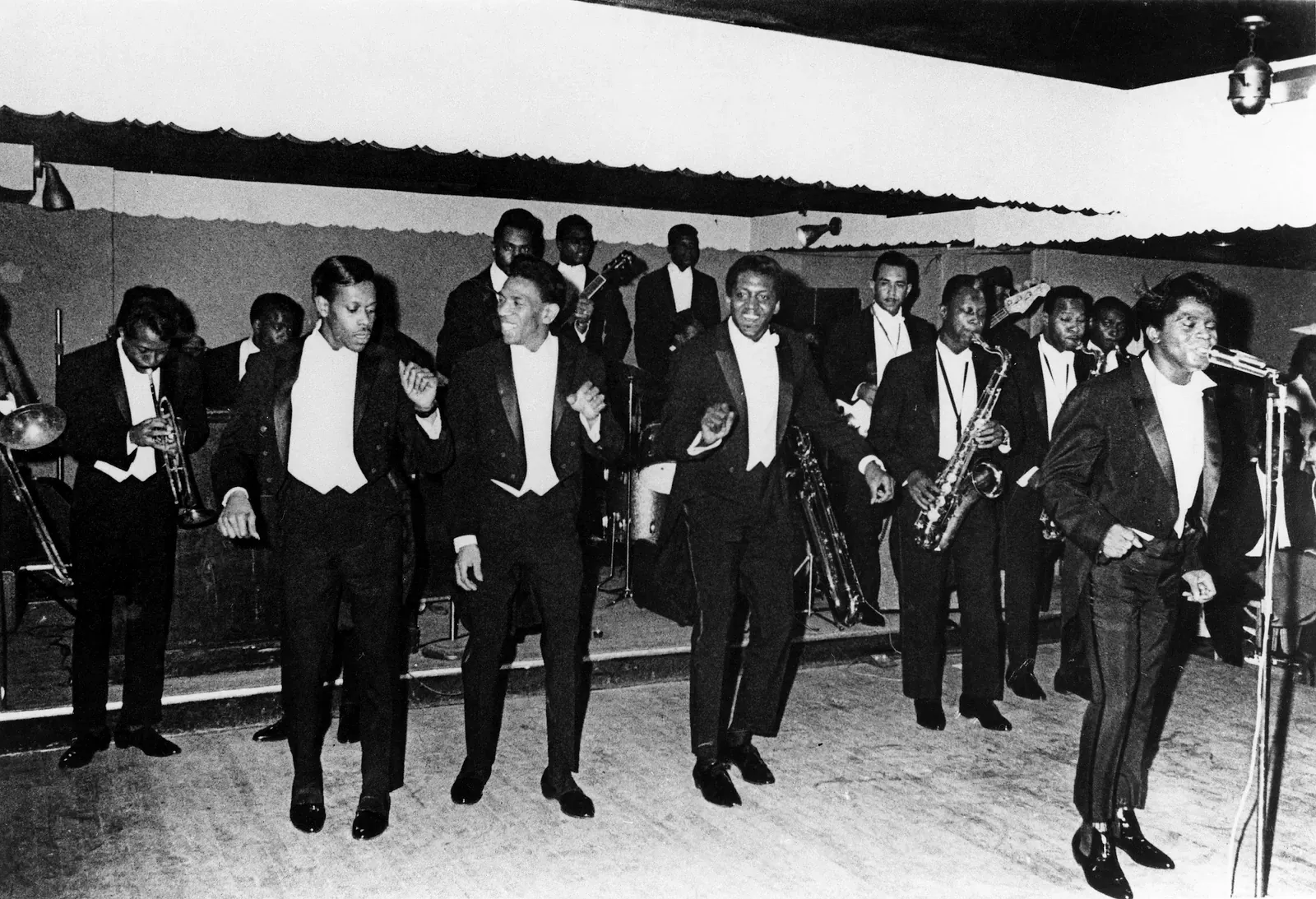
Funk began as a change of emphasis. Soul and R&B leaned on the backbeat and on chord changes; James Brown’s band shifted the weight to the downbeat and let every instrument play a short rhythmic part. Brown recorded “Out of Sight” in 1964, and the turn became unmistakable with “Papa’s Got a Brand New Bag”, cut in February 1965 in Charlotte, North Carolina, and issued by King Records of Cincinnati. Jimmy Nolen’s muted guitar and a horn-led arrangement gave it a template, and it became Brown’s first Top 10 pop hit.
“Cold Sweat” (1967), written by Brown and Pee Wee Ellis, went further: one chord, no changes, and a bass line as the hook. It reached No. 1 on the R&B chart and is the record most often named as the start of funk. Its parts came from gospel call and response, jazz horn arrangements and the second-line rhythms of New Orleans.
Finding the one, 1964-1969
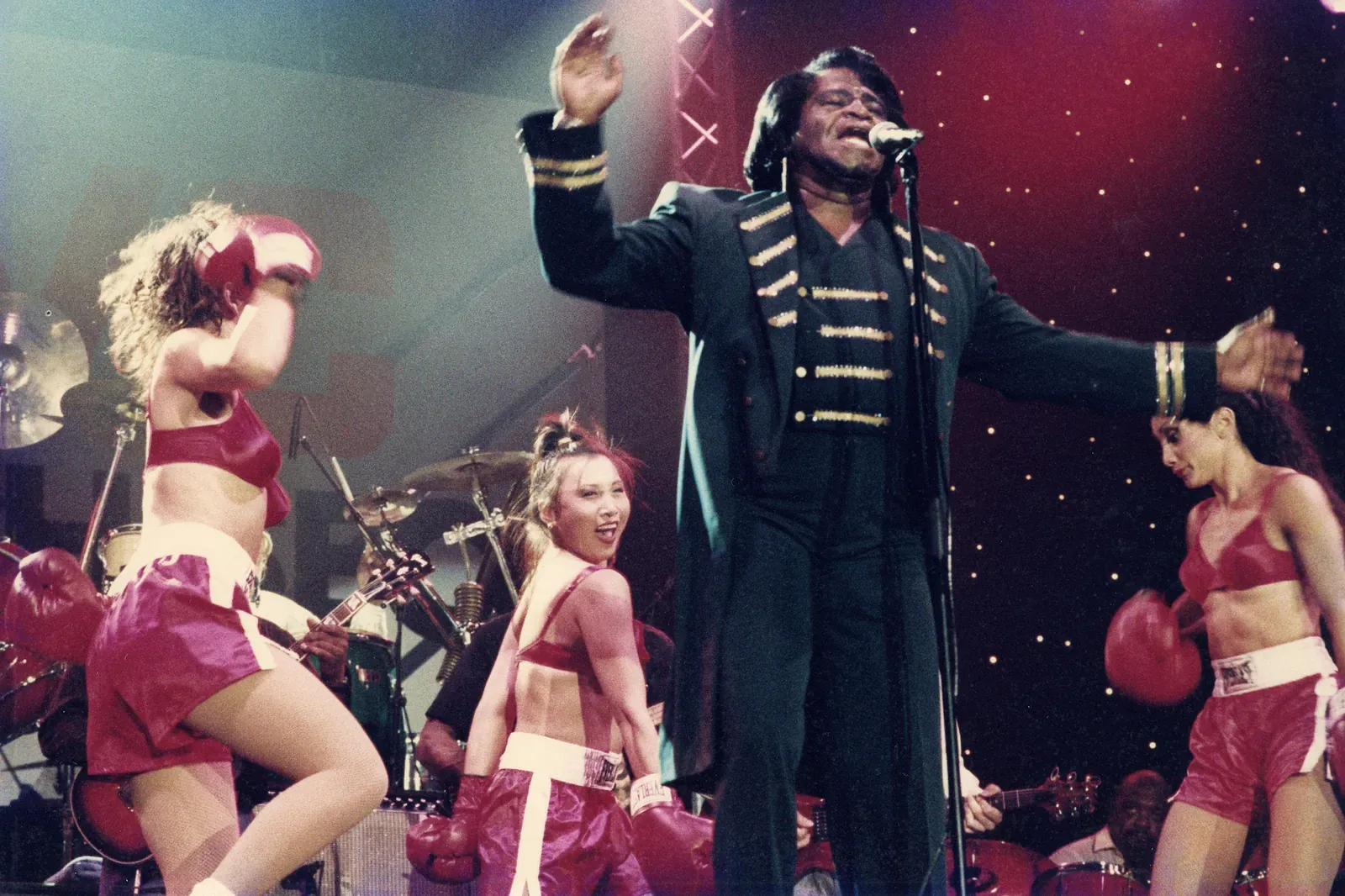
Three scenes developed the sound at once. In Cincinnati, Brown’s band worked out the groove at King’s studio on Brewster Avenue. In New Orleans, the Meters, working with producer Allen Toussaint, released “Cissy Strut” on Josie Records in 1969, a spare instrumental built on Zigaboo Modeliste’s syncopated drums and Leo Nocentelli’s guitar; it reached No. 4 on the R&B chart. In San Francisco, Sly and the Family Stone took funk onto pop radio with “Dance to the Music” (1968) on Epic Records, mixing it with psychedelia.
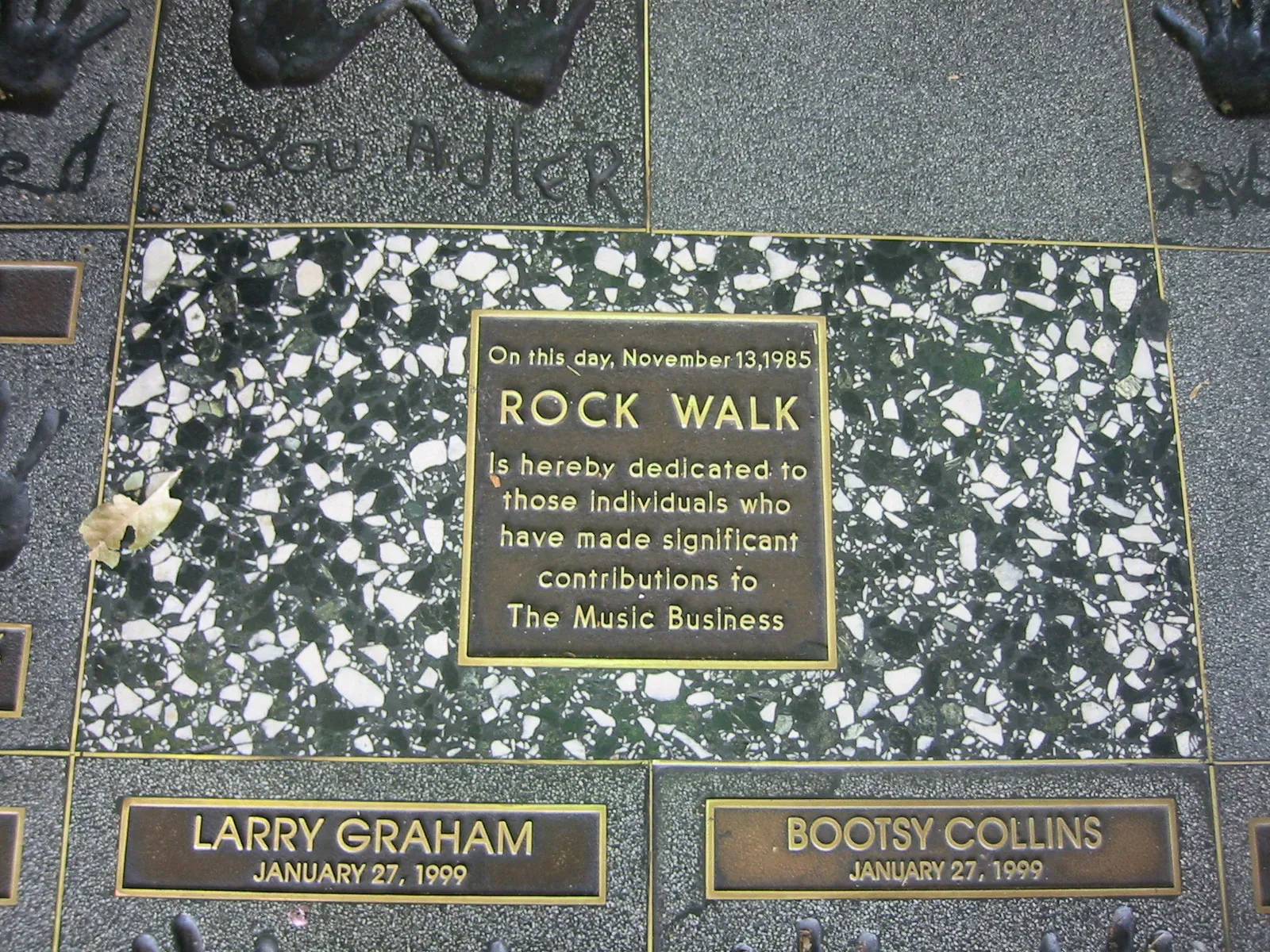
Larry Graham, Sly’s bassist, supplied a technique that defined funk bass: thumb-slapped low notes against finger-popped high ones. In Detroit, a different ensemble was forming around George Clinton, who would soon run two bands at once.
Funk spreads, 1970-1974
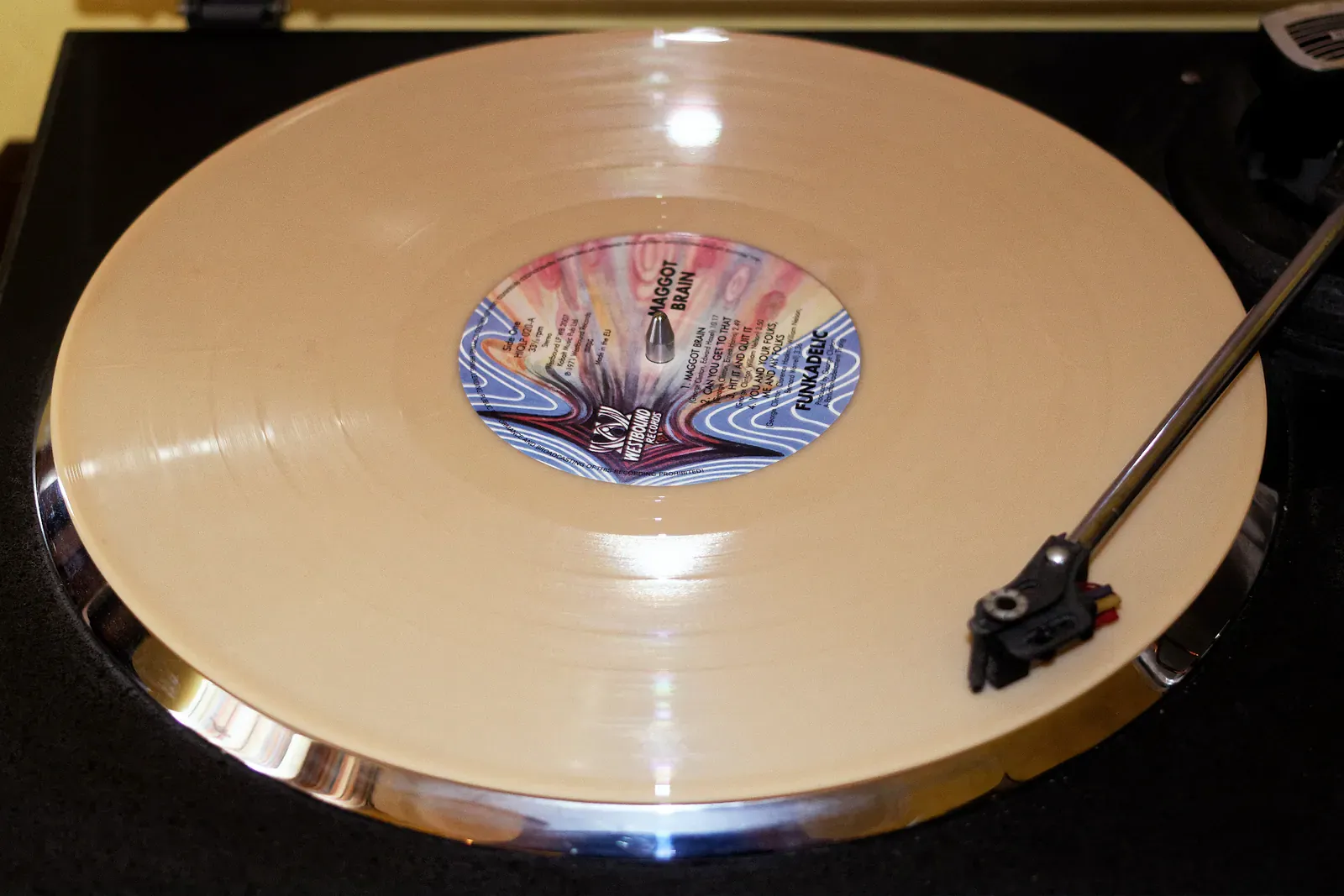
In 1970 most of Brown’s band quit over pay and the Pacemakers, with bassist Bootsy Collins, replaced them; Collins later joined Clinton’s circle. “Funky Drummer”, cut in November 1969 and issued in 1970, carried a drum break by Clyde Stubblefield that became one of the most sampled in hip hop. Funkadelic’s debut album appeared in 1970 on Westbound Records, and “Maggot Brain” (1971) set the band’s guitar side with a ten-minute title solo by Eddie Hazel.
Two other records widened the audience. Sly Stone’s “There’s a Riot Goin’ On” (1971) was slower and darker, and its single “Family Affair” went to No. 1 on the pop chart. Stevie Wonder’s “Superstition”, issued in November 1972, put a clavinet riff at the top of the Hot 100 in January 1973. Kool & the Gang’s “Jungle Boogie” (1973) on De-Lite Records reached the US top 5. In the Bronx in 1973, DJ Kool Herc began looping the breaks of funk records at parties, which started the link between funk and hip hop.
P-Funk and pop funk, 1975-1979
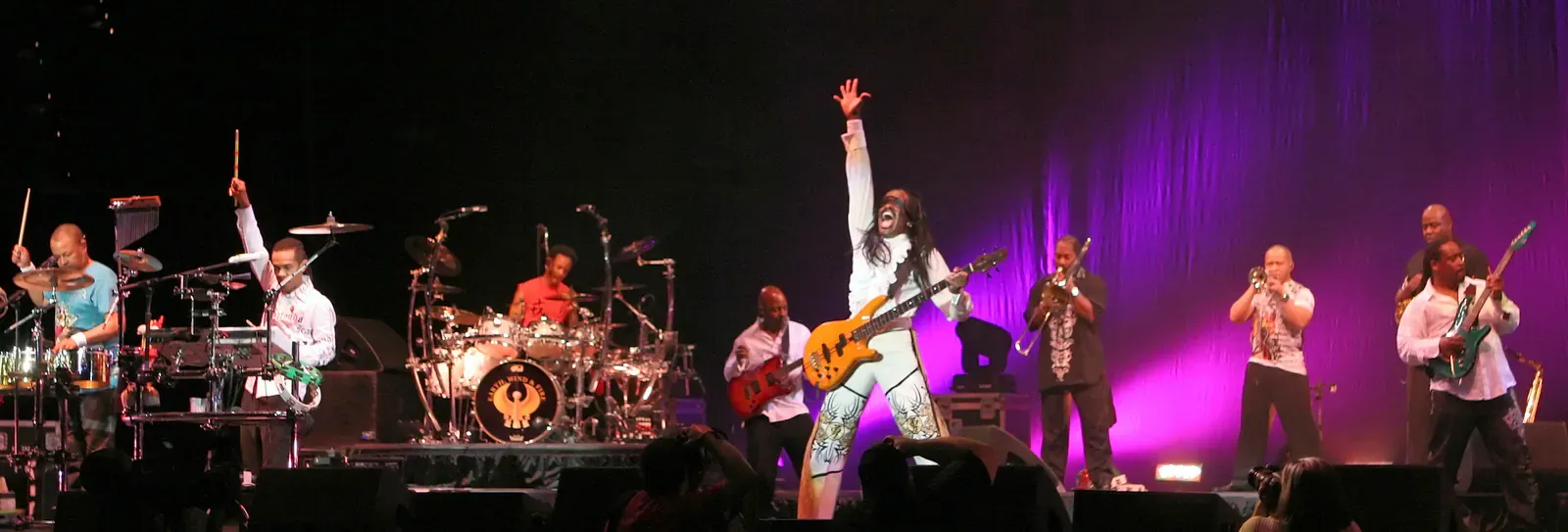
By the mid-1970s funk was a pop-chart genre. Earth, Wind & Fire’s “Shining Star” (1975) went to No. 1 on both the pop and soul charts with horn lines and gospel harmonies. Chic’s “Good Times” (1979), built on Bernard Edwards’ bass line, reached No. 1 on the Hot 100 and was reworked the same year in “Rapper’s Delight”. Disco borrowed funk’s grooves.
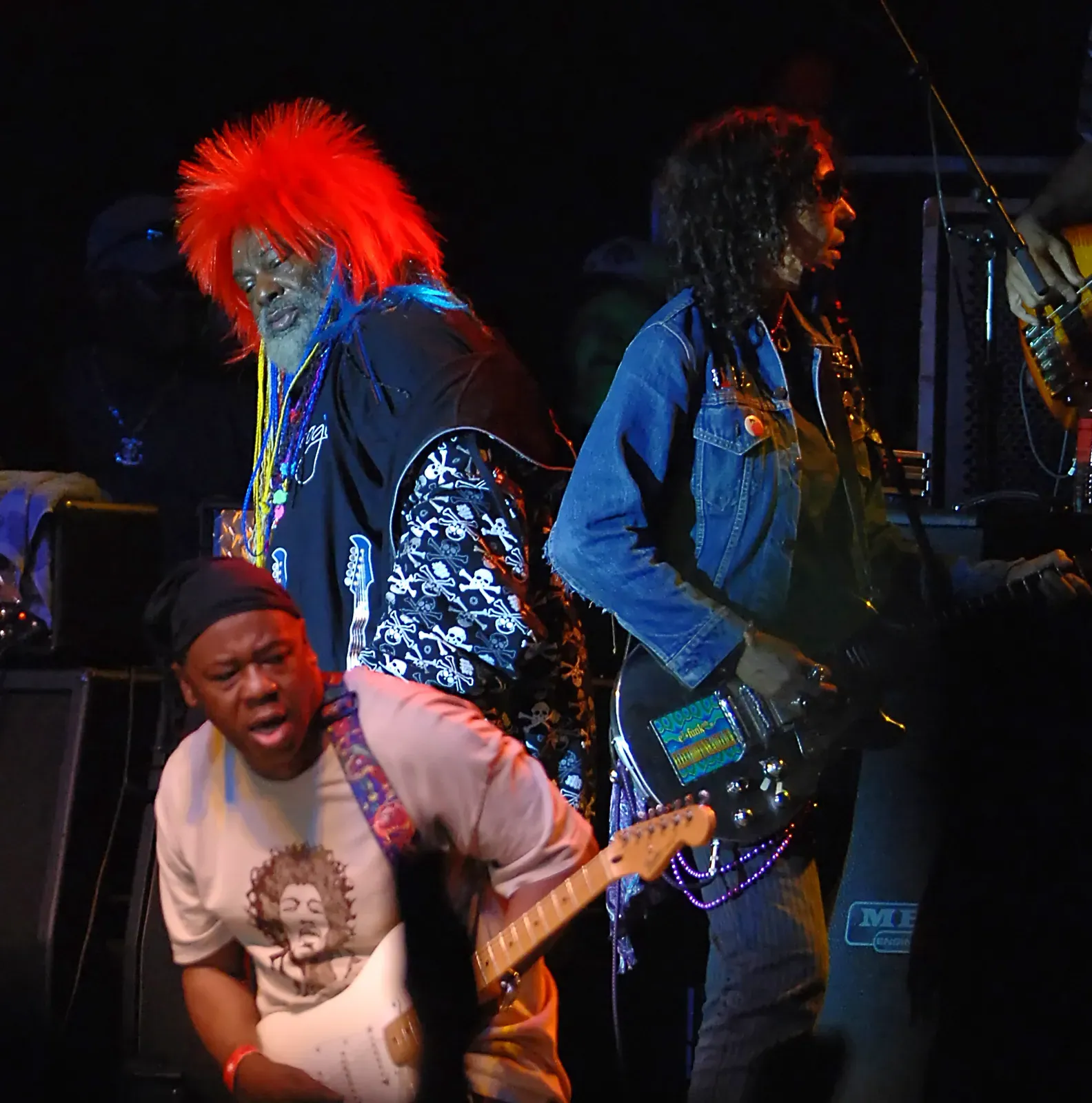
Parliament and Funkadelic made funk into theatre. Parliament’s “Mothership Connection” (1975), released on Casablanca Records, introduced a space-funk concept and a stage show with a descending spaceship. “Give Up the Funk (Tear the Roof Off the Sucker)” (1976) became Parliament’s first million-seller. Funkadelic’s “One Nation Under a Groove” (1978) on Warner Records held No. 1 on the R&B chart for six weeks. In Washington, Chuck Brown and the Soul Searchers’ “Bustin’ Loose” topped the R&B chart into 1979 and set the percussion-heavy go-go sound of that city.
Machines and Minneapolis, 1980-1989
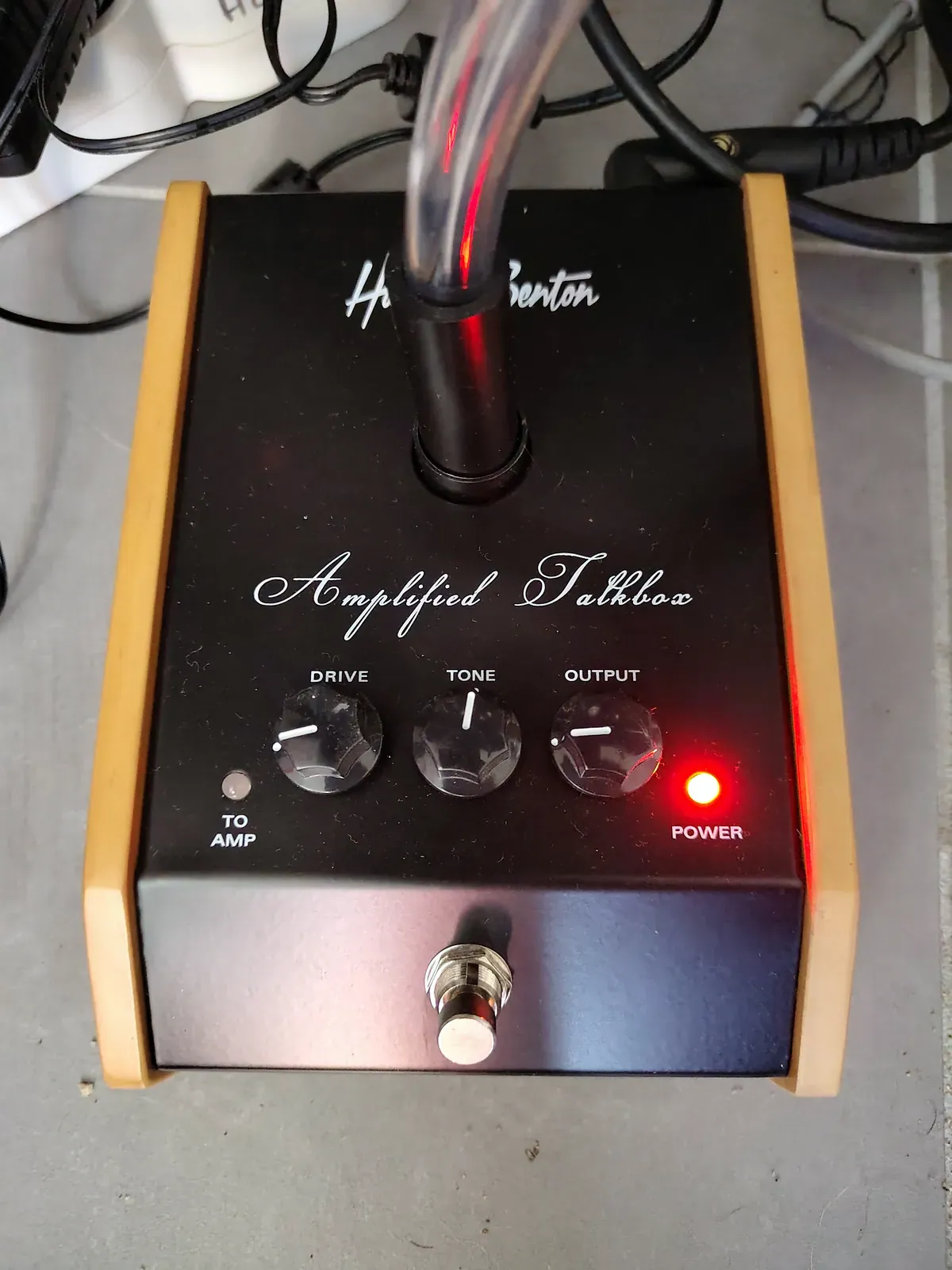
The Roland TR-808 and the Linn LM-1 arrived in 1980 and started to replace live drummers, and synthesizers took over from horn sections. Zapp’s “More Bounce to the Ounce” (1980), built on Roger Troutman’s talk box, reached No. 2 on the R&B chart. Rick James’s “Super Freak” (1981) from Street Songs, issued by Motown’s Gordy label, reached the pop top 20. Afrika Bambaataa’s “Planet Rock” (1982), driven by a TR-808 and influenced by Kraftwerk, launched electro-funk.
In Minneapolis, Prince combined funk with synthesizers and drum machines. “Kiss” (1986), released through Paisley Park Records, has almost no bass line, runs at about 112 BPM and reached No. 1 on the Hot 100.
Samples and revivals, 1990 onward
The 1986 compilation “In the Jungle Groove” and the rapid growth of sampling made Brown the most sampled artist in popular music, and funk breaks became the raw material of hip hop and of the West Coast G-funk sound that followed. “Uptown Funk” by Mark Ronson and Bruno Mars (2014) spent 14 weeks at No. 1 on the Hot 100.
Characteristics
Funk works as a rhythm section first. Songs sit on a single chord or a two-chord vamp, so groove and texture carry five minutes or more. Each instrument plays a short part that locks with the others: a bass line that doubles as the hook, two guitars chopping against each other, drums with few fills, and horns that punctuate like a third guitar. Vocals are shouted and chanted phrases in call and response.
Instruments and production
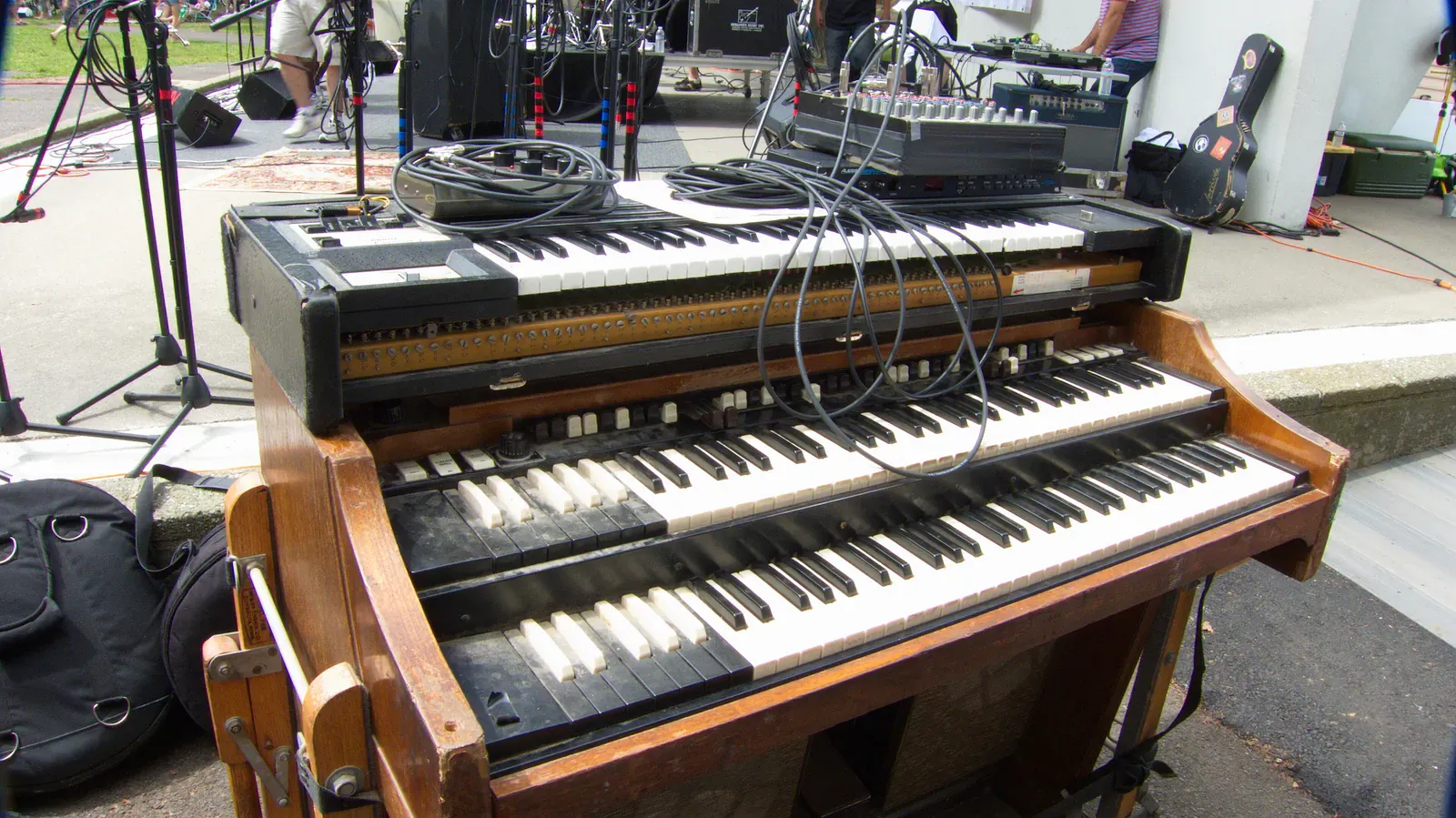
The electric bass carries most of the music’s identity. The Fender Precision Bass was a common choice, and slap-and-pop technique spread from Larry Graham to Bootsy Collins and Bernard Edwards. The Hohner Clavinet and the Hammond organ supplied percussive riffs, and the Minimoog supplied synthesizer bass.
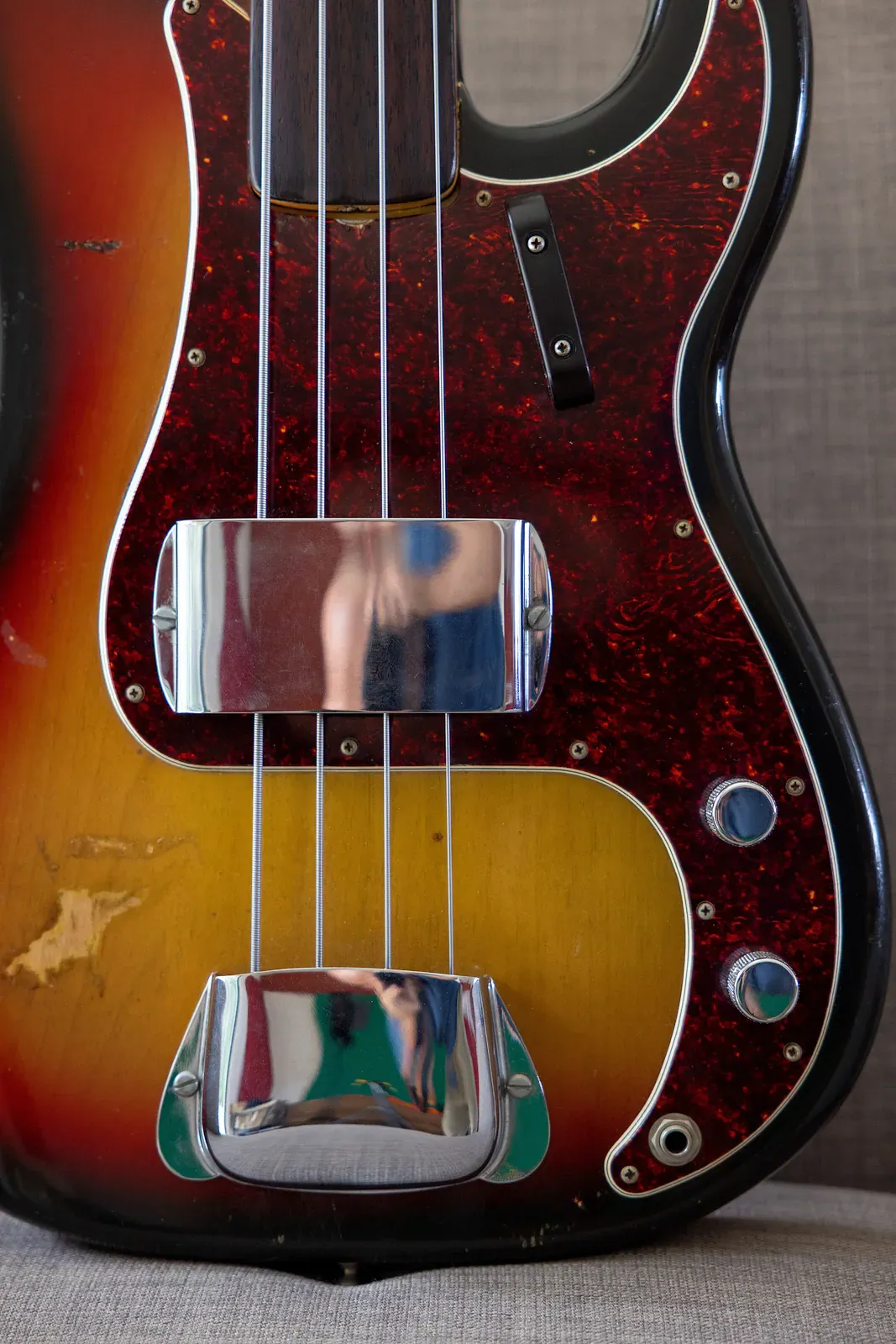
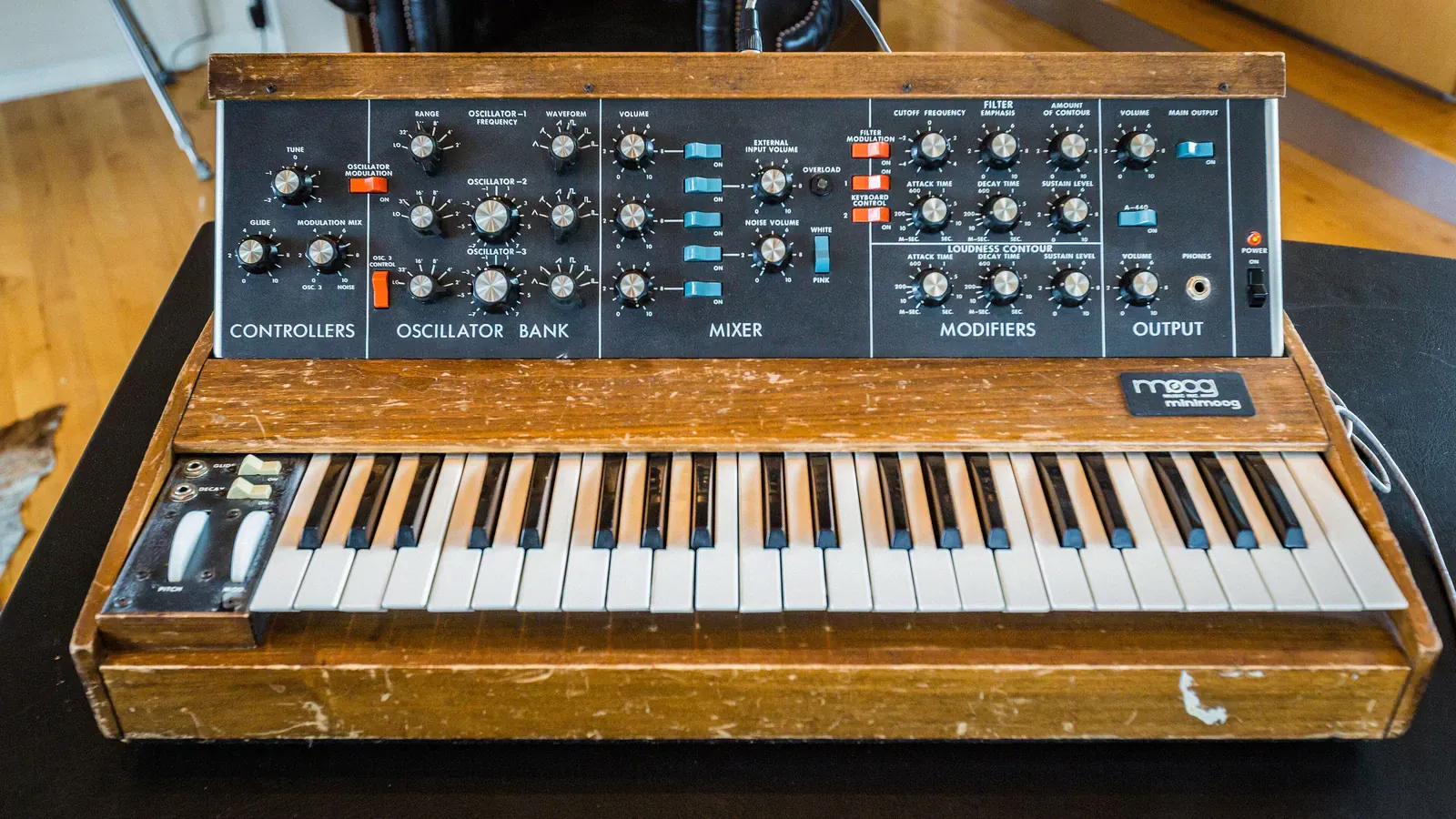
Funk records favour a dry, tight drum sound with a muffled bass drum.
Culture
Funk adopted a freer, African-influenced look against the matching suits of earlier soul groups: bell-bottoms, platform shoes and afros. Parliament-Funkadelic added capes, sheets and costumes in the register of science fiction. The visual language came from the artist Pedro Bell, whose dense marker-pen covers dressed Funkadelic albums from “Cosmic Slop” (1973) onward; in 1981, Warner Bros. objected to his artwork for “The Electric Spanking of War Babies”.
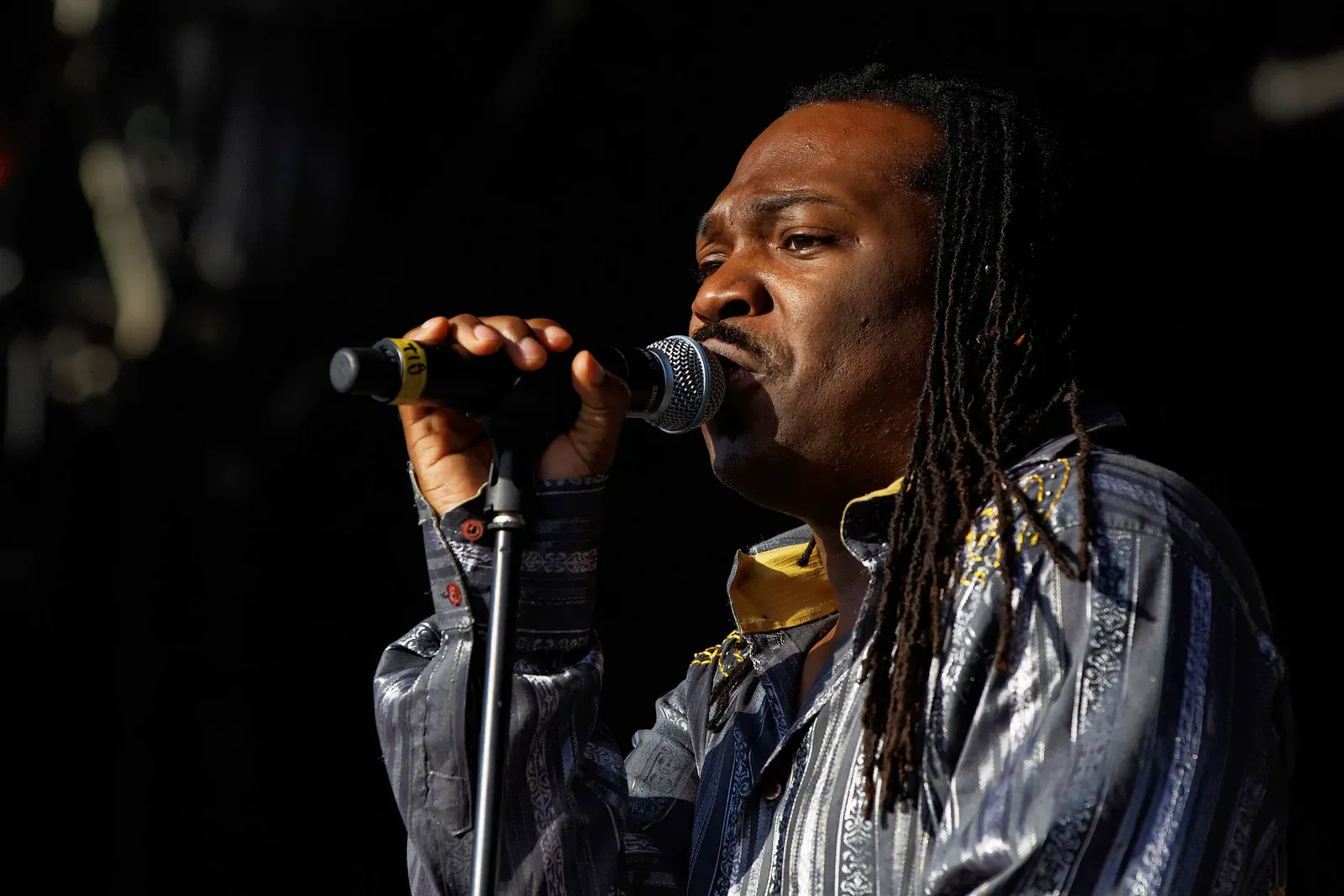
Dance was part of the genre. Locking, created by Don Campbell in Los Angeles, freezes mid-motion and grew up alongside funk and Brown’s records. The phrase “getting on the one” began as Brown’s cue to his players to land the accent on the downbeat, and it became shorthand for the whole approach.
Legacy
Funk is the main source material of hip hop: the breaks of Stubblefield, Brown and the Meters were looped by DJs, then sampled by producers. Its grooves fed disco, electro, go-go, Minneapolis pop and house. Its relatives on other continents include Afrobeat, which Fela Kuti built from James Brown-style funk and West African rhythm.
Misconceptions
One common claim is that funk is simply James Brown. Brown set the template, but the Meters in New Orleans, Sly and the Family Stone in San Francisco and Funkadelic in Detroit were developing their own versions at the same time, which is why funk has a regional map and not a single origin.
A second is that funk requires slap bass. Brown’s early funk was driven by guitar and drums, and “Kiss” reached No. 1 with almost no bass line.
A third is that funk died when disco ended. Rick James, Zapp and Prince had hits in the 1980s, and funk samples filled 1990s hip hop.
Frequently asked questions
What is funk music?
Funk is a style of African-American dance music from the mid-1960s that places the accent on the first beat of the bar. It is built on syncopated bass, muted sixteenth-note guitar, short horn stabs and chanted vocals, usually over one or two chords.
What does “the one” mean in funk?
“The one” is the first beat of the bar. Funk bands land their heaviest accent there, in contrast to soul and rock, which stress the backbeat. James Brown’s cry of “on the one” cued the band to do so.
Who invented funk?
No single person did, but James Brown’s band is credited with the first records that define it, “Papa’s Got a Brand New Bag” (1965) and “Cold Sweat” (1967). The Meters, Sly and the Family Stone and Funkadelic developed it in parallel.
How is funk different from soul?
Soul is song-centred, with gospel-style singing over chord changes. Funk is rhythm-centred: it reduces the harmony to a vamp and gives every instrument a short, interlocking rhythmic part.
Why is funk important for hip hop?
Funk records contain long drum breaks. DJs looped them in the Bronx from the early 1970s, and producers later sampled them, with Clyde Stubblefield’s “Funky Drummer” break among the most used.
Sound
Sound sheet
Anatomy of a track
| # | Part | Bars |
|---|---|---|
| 1 | Intro groove (drums, bass, guitar) | 4 |
| 2 | Vocal vamp on one chord | 16 |
| 3 | Horn stabs and chant hook | 8 |
| 4 | Instrumental solo or breakdown | 16 |
| 5 | Drum break | 4 |
| 6 | Vocal vamp and shouted tag | 16 |
| 7 | Outro vamp | 8 |
Signature sounds
- Accent on the one
- Interlocking sixteenth-note guitar and bass
- Single-chord or two-chord vamp
- Short horn stabs
- Call-and-response chant vocals
- Slap and pop bass or synth bass
Drums and percussion
- Drum kit
- Roland TR-808
- Linn LM-1
Synths and software
- Minimoog
- Yamaha DX7
Techniques
- The one
- Chank guitar
- Slap and pop bass
- Horn stabs
- Single-chord vamp
- Call and response
Keys and modes
Dorian mode. Minor sound with a raised sixth, over one chord or a two-chord vamp, as in Kiss and Uptown Funk.
Minor pentatonic. Bass lines and riffs, as in Superstition, use the minor pentatonic scale.
Vocals
Shouted, chanted and punctuated phrases, call-and-response, grunts and yells, often over a vamp, rather than long melodic lines.
Scenes
Where it happened
Where and when the sound lived: one bar per city on a shared timeline.
North America
Active scenes
Peak 8, 1978-2025
King Records' studio on Brewster Avenue, where Brown's band cut Cold Sweat and Funky Drummer.
The Meters, Allen Toussaint and the Sea-Saint studio carried second-line rhythm into funk.
Funkadelic's home on Westbound and the studios where Parliament cut Mothership Connection.
Sly and the Family Stone's base; the Bay Area also produced Tower of Power in Oakland.
Chic, Studio 54 and the Electric Lady studio; funk met disco and hip hop in the Bronx.
Zapp's home, and a hub for Ohio funk bands built around the Troutman family.
Prince's base; the Minneapolis sound mixed funk with synths and drum machines.
Home of go-go, a percussion-heavy funk offshoot led by Chuck Brown and the Soul Searchers.
Venues and places
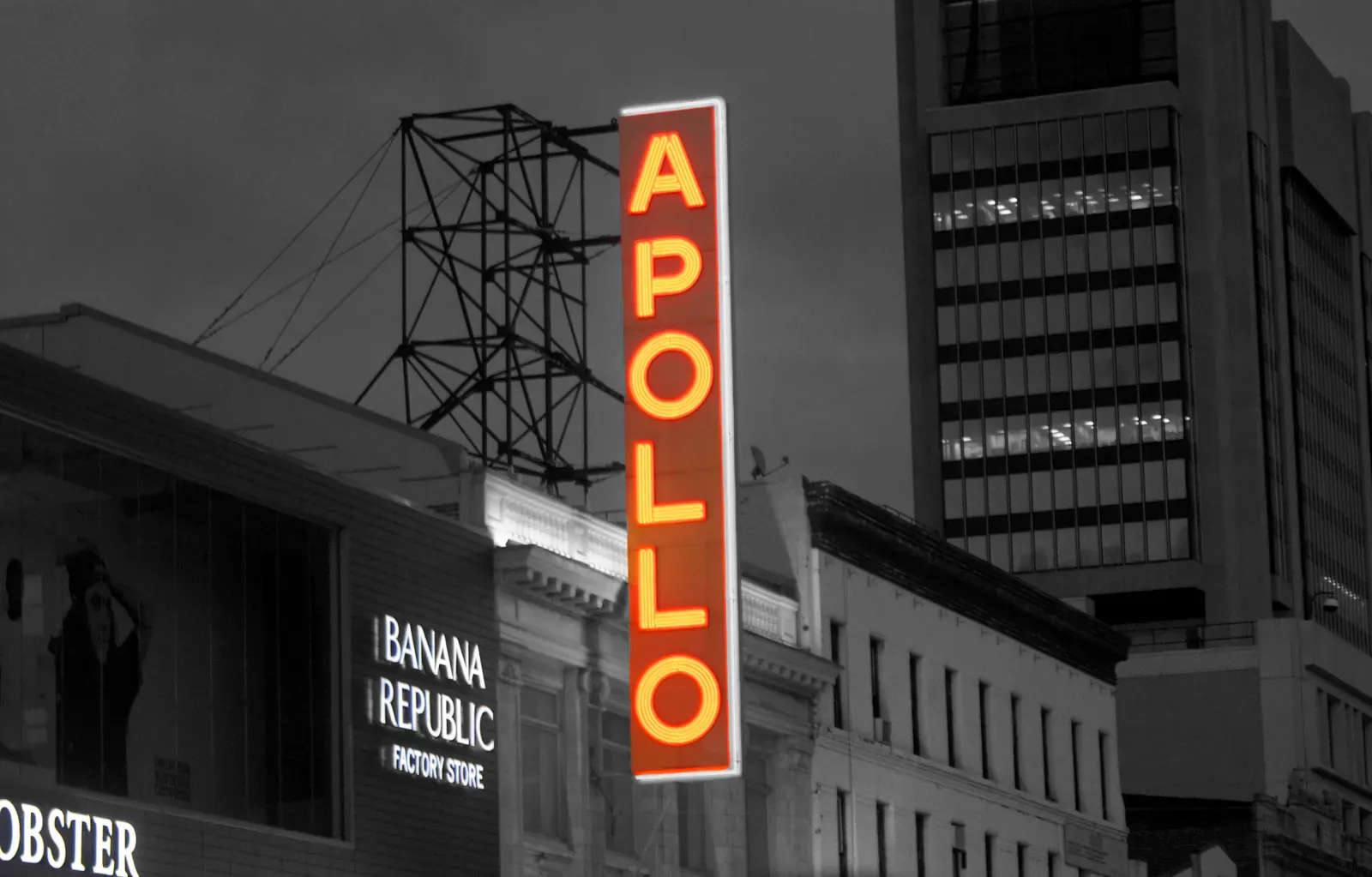
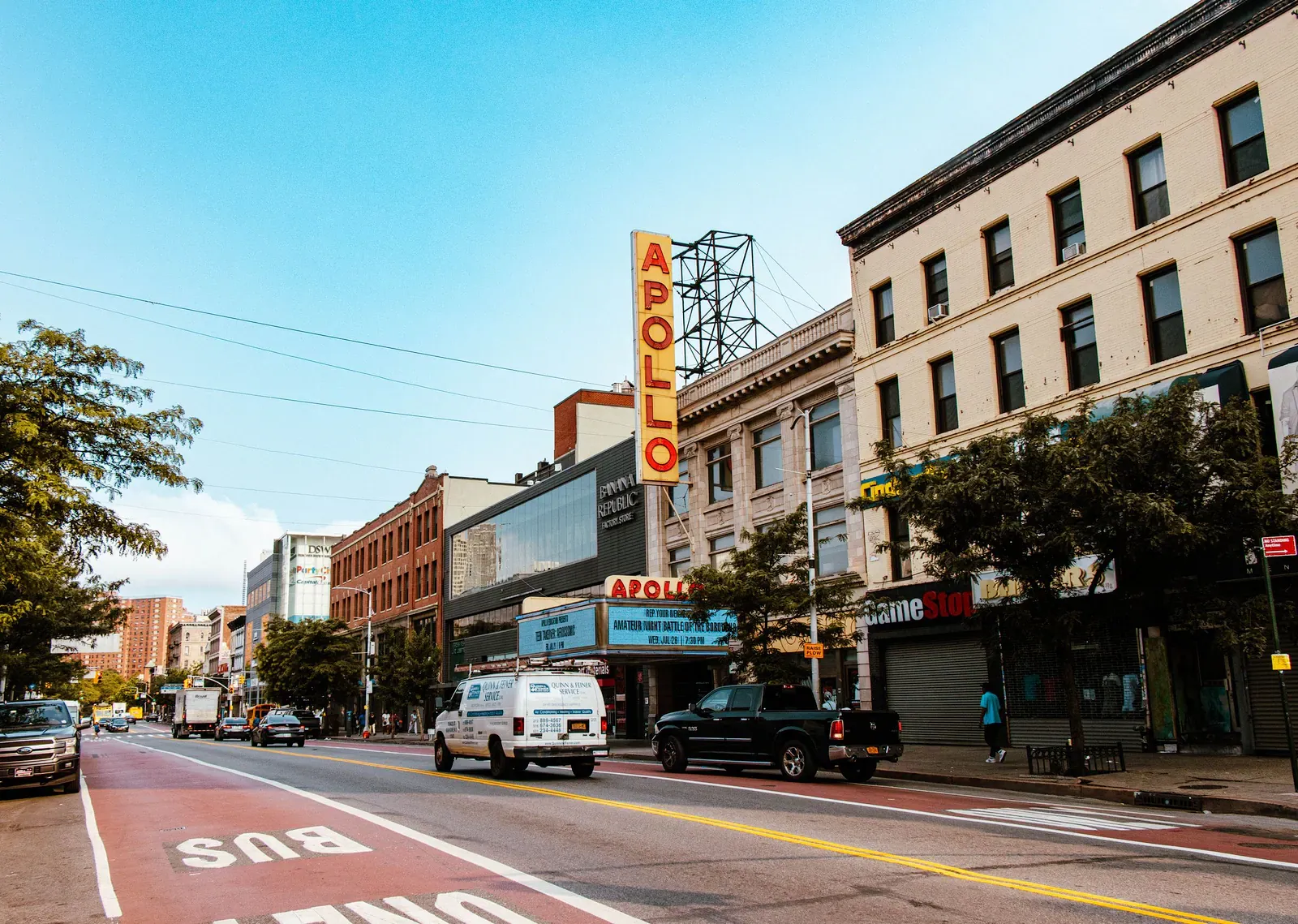
New York, 1934 to today. Harlem hall where James Brown's Live at the Apollo (1963) was recorded.
Cincinnati, 1944 to today. Syd Nathan's Brewster Avenue studio, where Brown's band cut Cold Sweat and Funky Drummer.
New Orleans, 1973 to today. Allen Toussaint and Marshall Sehorn's studio, where the Meters moved to a harder funk sound.
New York, 1970 to today. Greenwich Village studio where Stevie Wonder made Talking Book, with Superstition, in 1972.
Detroit, 1939 to today. Detroit studio used by Parliament, Funkadelic and Bootsy's Rubber Band in the mid-1970s.
New York, 1977 to today. Disco club whose door turned Chic away on New Year's Eve 1977 and sparked Le Freak.
Chanhassen, 1987 to today. Prince's studio complex, opened in 1987, a base for Minneapolis funk.
Culture
Culture markers
- Bell-bottoms, platforms and afros
Funk adopted a freer, African-influenced look against the matching suits of earlier soul groups.
Fashion - P-Funk costumes
George Clinton and Parliament-Funkadelic wore sheets, capes and outlandish outfits on stage.
Fashion - Pedro Bell's Funkadelic covers
Chicago artist Pedro Bell drew Cosmic Slop (1973), Standing on the Verge (1974) and One Nation (1978) in dense marker-pen fantasy.
Artwork - The Mothership
Parliament's stage spaceship, lowered onto the stage during 1970s concerts, grew from the Mothership Connection concept.
Artwork - Locking
Don Campbell's Los Angeles dance, built on a funky chicken move, freezes mid-motion; it grew up with funk and James Brown.
Dance - Getting on the one
Brown's bandleader cry 'on the one!' tells players to land the accent on the downbeat.
Slang
Media
Key media
- 1973Black Caesar
by Larry Cohen. Blaxploitation film scored by James Brown with Fred Wesley, later sampled by hip hop acts.
Film - 1986In the Jungle Groove
by James Brown. Polydor's rarities set holds the first album release of Funky Drummer and fed countless hip hop samples.
Compilation - 1986Ultimate Breaks and Beats
by Various. A 25-volume Street Beat series of funk and soul drum breaks, a staple for hip hop producers and DJs.
Compilation - 1996Funk: The Music, the People, and the Rhythm of the One
by Rickey Vincent. The standard history of funk, from James Brown to P-Funk and funk sampling.
Book - 2012The One: The Life and Music of James Brown
by R. J. Smith. A biography of the man who built the one, covering the bands and records that made funk.
Book
Glossary
Terms on this page
The muted, percussive sixteenth-note guitar stroke, also called chicken scratch.
Originally earthy and sweaty; now the groove-first feel that funk prizes.
A quiet, muted note on drums or guitar that adds rhythmic texture.
Parliament-Funkadelic's blend of funk, psychedelia, sci-fi and humour led by George Clinton.
A drummer and bassist's locked groove that other players sit inside.
Bass technique: thumb-slapped low notes and finger-popped high notes.
The first beat of the bar, which funk accents rather than the backbeat.
A short repeated figure on one or two chords that runs for minutes.
R&B, Soul & Funk family