Old-school hip hop
Old-school hip hop is the first era of rap, from the Bronx block parties of 1973 to the mid-1980s: party rhymes over disco and funk breaks, then the TR-808.
The Bronx, 1973
Hip Hop family
Born
1973
The Bronx
Subgenres
5
Documented branches
Links
21
Genres it drew on or shaped
Tempo
105-125 BPMLineage
Family tree
Derived from
Derived from
Influenced by
Spoken wordElectro
The Bronx, 1973
Old-school hip hop
Led to (15)
Timeline
Era by era
From the first sparks to today. Select a dot to read the story behind it.
- Bronx block parties, 1973-1979
1973 to 1979
- Disco rap on record, 1979-1982
1979 to 1982
- The Message and the machines, 1982-1986
1982 to 1986
Eras
Moments
- 1 Bronx block parties, 1973-1979, 1973 to 1979
- 2 Disco rap on record, 1979-1982, 1979 to 1982
- 3 The Message and the machines, 1982-1986, 1982 to 1986
1973
Bronx block parties, 1973-1979
DJs extend funk and disco breaks on two turntables, MCs talk over them, and b-boys dance to them, all live and on cassette, not on record.
- 1973DJ Kool Herc's Sedgwick Avenue partyOn 11 August Cindy Campbell hires a rec room at 1520 Sedgwick Avenue; her brother Kool Herc extends the breaks.
- 1973Universal Zulu Nation foundedAfrika Bambaataa organises Bronx DJs, dancers and writers into a peace-minded community.
- 1975Grand Wizard Theodore invents scratchingMoving a record back and forth under the needle becomes a DJ technique that Grandmaster Flash later refines.
- 1976Disco Fever opens in the South BronxThe Jerome Avenue club turns to hip hop bookings and hosts Grandmaster Flash and Run-DMC's first show.
- 1977Grandmaster Flash perfects the quick mixHe loops and cuts between duplicate records with the crossfader to build a continuous break.
1979
Disco rap on record, 1979-1982
Sugar Hill Records and others press rap onto vinyl, usually with a studio band replaying disco and funk breaks behind party rhymes.
- 1979Fatback Band's King Tim III (Personality Jock)Reaches shops in July as the first rap-style single, weeks before 'Rapper's Delight'.
- 1979The Sugarhill Gang's Rapper's DelightReleased 16 September, it runs about 14 minutes and reaches number 36 on the Billboard Hot 100.
- 1980Kurtis Blow's The Breaks goes goldKurtis Blow is the first rapper signed to a major label and The Breaks the first gold-certified rap single.
- 1981Kool Moe Dee beats Busy Bee Starski at Harlem WorldThe December battle is among the earliest recorded rap battles and favours complex lyrics over crowd-pleasing patter.
- 1981The Adventures of Grandmaster Flash on the Wheels of SteelA single built entirely from turntable cutting brings DJ technique to vinyl.
1982
The Message and the machines, 1982-1986
Rap gains social commentary and a drum-machine sound with 'The Message' and 'Planet Rock', then a harder, sparser style led by Run-DMC replaces it.
- 1982The MessageReleased 1 July, Duke Bootee and Melle Mel's portrait of inner-city stress marks rap as social commentary.
- 1982Planet Rock and the TR-808Arthur Baker and John Robie build a Kraftwerk-inspired track on the Roland TR-808 that becomes the electro blueprint.
- 1983Run-DMC debut with It's Like That and Sucker M.C.'sA bare beat and hard voices start the new school; WBAU is the first station to play it.
- 1983Def Jam is foundedRick Rubin and Russell Simmons start the label that defines the louder sound after old school.
- 1985Sugar Hill Records collapsesFinancial trouble and the sale of its assets end the label that put rap on record.
- 1986Run-DMC's Walk This Way and Raising HellThe Aerosmith cover reaches number 4 on the Hot 100, the first rap record in the top five.
Listening path
Start listening
A short path from an easy way in to the deep end. Thumbnails come from YouTube; the player loads only when you press play.
- 01
The Sugarhill Gang, 1979
The record that took rap to a mass audience and the one most people meet first.
- 02
Kurtis Blow, 1980
The first gold rap single and the first major-label breakthrough.
- 03
Grandmaster Flash and the Furious Five, 1982
The record that made rap a vehicle for social commentary.
- 04
Afrika Bambaataa and the Soulsonic Force, 1982
A signature drum-machine track that defined the electro sound of the early 1980s.
- 05
Whodini, 1982
A scratch and drum-machine record that shows the electro side of old-school rap.
Old-school hip hop is the earliest era of rap, made in New York City between about 1973 and the mid-1980s and first sold as disco rap.
Its rhymes are short and rhythmic, centred on parties, boasting and battles, and they ride on looped disco and funk breaks, live-band replays of those breaks and, from 1982, Roland TR-808 drum-machine beats. It was made by the DJs, MCs and dancers of the Bronx, Harlem and Queens and forms the first chapter of hip hop.
Origins
The music began as a DJ’s trick. On 11 August 1973 Cindy Campbell hired the rec room at 1520 Sedgwick Avenue in the Bronx to raise money for school clothes, and her brother Clive, who had moved from Kingston, Jamaica, as a boy and played as Kool Herc, ran the sound. He noticed that dancers reacted most to the break, the short percussive stretch of a funk record where the singing drops out. By buying two copies of the same record and switching between them, he made the break last as long as the dancers wanted. He called the dancers break-boys and break-girls, and his announcements to them grew into rapping.
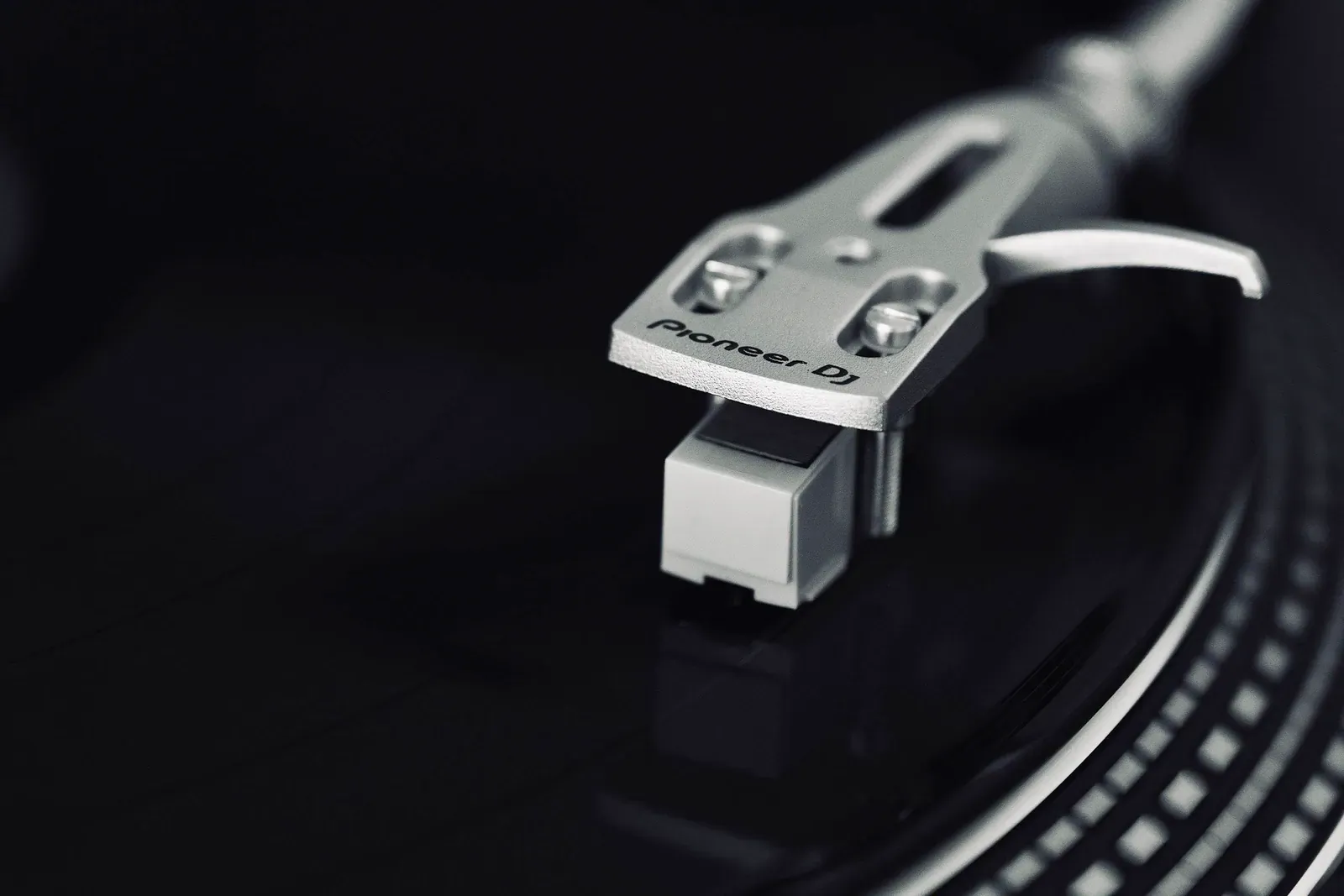
Others sharpened the method. Grand Wizard Theodore is credited with scratching in 1975. Grandmaster Flash, a Barbadian-American DJ, developed the quick mix theory, which uses the crossfader to cut between duplicate records so a break repeats exactly in time. Afrika Bambaataa, who founded the Universal Zulu Nation in the Bronx in 1973, played a record collection that ran from funk to Kraftwerk. Kool Herc, unlike Flash and Bambaataa, never moved into commercially recorded hip hop in its first years.
Bronx block parties, 1973-1979
Cheap entertainment in parks, rec rooms and clubs fed the scene. In 1976 the Disco Fever club on Jerome Avenue in the South Bronx turned to hip hop bookings under Sal Abbatiello, hosting Grandmaster Flash and, later, Run-DMC’s first show. DJs were the stars, and MCs kept the crowd moving with rhymes, shoutouts and chants. The rhymes were simple, with few syllables per bar and a moderate tempo, and the lyrics were secondary to the beat. The era left no commercial records, only party tapes.
Disco rap on record, 1979-1982
The first rap singles reached shops in 1979. The Fatback Band’s “King Tim III (Personality Jock)” arrived in July, followed in September by “Rapper’s Delight” by the Sugarhill Gang, released on Sugar Hill Records. Sylvia Robinson, a former R&B singer, founded the label in Englewood, New Jersey, after hearing rap in a Harlem club. A house band replayed the break of Chic’s “Good Times” behind three rappers, which gave the record its disco feel and the genre its first nickname. The 14-minute single was recorded in one take.
Records followed quickly. Kurtis Blow’s “The Breaks” (1980) was the first rap single certified gold and made him the first rapper signed to a major label. In December 1981 Kool Moe Dee beat Busy Bee Starski in a battle at Harlem World, a contest often read as the moment rap’s lyrics began to matter more than crowd-pleasing patter. Grandmaster Flash put his turntable method on vinyl with “The Adventures of Grandmaster Flash on the Wheels of Steel” (1981), a record made entirely from cutting and mixing.
The Message and the machines, 1982-1986
In 1982 two records pulled old-school hip hop in opposite directions. “The Message”, released by Sugar Hill on 1 July, was written by Duke Bootee and Melle Mel, in part as a response to the 1980 New York transit strike, and described inner-city stress and a young man’s descent into crime. Melle Mel has said the group, used to party rhymes, did not want to record it. It reached number 62 in the United States, yet it set a template for the political rap of Public Enemy and KRS-One.
“Planet Rock”, by Afrika Bambaataa and the Soulsonic Force, went the other way. Producer Arthur Baker and keyboardist John Robie built it on the Roland TR-808 at Tommy Boy, borrowing from Kraftwerk and Yellow Magic Orchestra. The record went gold, replaced the live disco band as the studio default and founded electro. From 1982 to 1986 drum-machine production was the standard sound of New York rap. Run-DMC’s first single, “It’s Like That” with “Sucker M.C.’s” (1983), then stripped the sound to a bare beat and hard voices and is widely seen as the start of the new school.
Characteristics
The vocal style was plain: short lines, strong rhythm, call and response, and shoutouts to the rapper’s borough. Subject matter was parties and bragging, with exceptions such as Brother D’s “How We Gonna Make the Black Nation Rise?” and Kurtis Blow’s “Hard Times”, both from 1980. Science-fiction themes entered with “Planet Rock” and Warp 9’s “Light Years Away” (1983). Rhymes were usually written out rather than improvised.
Instruments and production
Two turntables and a mixer were the first instruments, with Technics direct-drive decks the standard for scratching. Disco rap sessions used a house band, not a sampler. The Roland TR-808, built from 1980 to 1983 and cheap on the used market, replaced the band, with the Oberheim DMX as another early drum machine. Beatboxing spread from 1984 to 1987 through Doug E. Fresh and the Fat Boys’ Human Beat Box. Sampling, which later defined the golden age, was a late-1980s development.
Mainstream success
“Rapper’s Delight” reached the top 40 in the United States, the top three in the United Kingdom and number one in Canada, and rap had a public. “The Breaks” went gold, “Planet Rock” went gold, and “The Message” charted in the Netherlands and Australia. WBAU was the first station to play Run-DMC’s debut single. The mainstream breakthrough came in 1986, when Run-DMC’s cover of Aerosmith’s “Walk This Way” reached number 4 on the Billboard Hot 100, the first rap record in the top five, and their album Raising Hell, on Profile Records, went triple platinum. The films Wild Style (1982) and Beat Street (1984) carried the culture beyond New York.
Notable recordings
“Rapper’s Delight” is as much a story of timing as of music. The band replayed Chic’s “Good Times” without permission, and Nile Rodgers and Bernard Edwards, the song’s writers, threatened to sue. A settlement gave both songwriting credits.
“Planet Rock” also borrowed without asking. Kraftwerk’s music was used without permission, and Tommy Boy’s Tom Silverman agreed to pay the band one dollar for every copy sold, raising the single’s price to cover it. Rapper Emcee G.L.O.B.E. developed a style he called mc popping, rapping off time, to fit it.
Culture
Hip hop was a culture of four arts: MCing, DJing, breaking and graffiti. The Rock Steady Crew helped spread breaking, and graffiti writers such as Lee Quinones and Lady Pink appeared in Wild Style next to the Cold Crush Brothers and Grandmaster Flash. Rhymes advertised the fashion of the day: Adidas shoes, Kangol hats and Lee jeans. The business stayed small. Sugar Hill, the label that put rap on record, collapsed financially in 1985 and sold its assets.
Legacy
Old-school hip hop gave the genre its tools: the break, the quick mix, scratching, the MC as party host and the drum machine. “The Message” led to political rap, and “Planet Rock” to electro. Def Jam, founded in 1983, and Run-DMC defined the style that followed, the new school. Grandmaster Flash and the Furious Five were the first rap group inducted into the Rock and Roll Hall of Fame, in 2007, and Kool Herc followed in 2023.
Misconceptions
“Rapper’s Delight” is often called the first rap record, but the Fatback Band’s “King Tim III (Personality Jock)” reached shops weeks earlier, in July 1979. Rapper’s Delight was the first to reach a mass audience, and Kurtis Blow’s “The Breaks” was the first rap single certified gold.
Old-school rap is also remembered as only party talk, but social commentary arrived with the genre’s earliest records. Brother D and Kurtis Blow addressed injustice and hard times in 1980, and “The Message” followed in 1982.
Finally, the early records were not built from samples. The Sugarhill Gang’s band replayed the break live, and the sound of TR-808 machines dominated from 1982 to 1986. The sampler took over later in the 1980s.
Frequently asked questions
What is old-school hip hop?
Old-school hip hop is the earliest style of rap, recorded and performed from about 1973 to the mid-1980s in New York City. It features simple party and battle rhymes over disco and funk breaks or drum-machine beats.
Who started old-school hip hop?
Kool Herc, Grandmaster Flash and Afrika Bambaataa are the DJs most often named. Herc began extending breaks at Bronx parties in 1973, Flash refined the cutting technique, and Bambaataa built the Zulu Nation community and the electro sound of “Planet Rock”.
What was disco rap?
Disco rap was the first marketing name for old-school hip hop. Records such as “Rapper’s Delight” used a live band playing disco and funk bass lines behind the MCs, which is why the style was first marketed as disco rap.
Where did old-school hip hop come from?
It came from the Bronx, New York City, and the neighbouring boroughs. The roots lie in funk, soul, disco, R&B and Jamaican toasting, and block parties were the first stage.
Sound
Sound sheet
Anatomy of a track
| # | Part | Bars |
|---|---|---|
| 1 | Break or drum intro | 8 |
| 2 | MC verses trading lines | 16 |
| 3 | Call-and-response hook | 8 |
| 4 | Instrumental break or scratch solo | 8 |
Signature sounds
- Looped funk or disco break
- Live band replaying a disco bass line
- Trading MC verses with crowd shoutouts
- TR-808 bass drum after 1982
- Turntable scratching between verses
Drums and percussion
- Roland TR-808
- Oberheim DMX
Techniques
- Merry-go-round
- Quick mix
- Scratching
- Live-band break replay
- Beatboxing
Keys and modes
B (major or minor). Databases list The Breaks, Magic's Wand and the Wheels of Steel mix in B.
Tuning
12-TET, A=440, shifted by the turntable pitch control
Vocals
Simple, few-syllable rhymes with party and battle themes, borough shoutouts and call and response; social commentary from 1982.
Scenes
Where it happened
Where and when the sound lived: one bar per city on a shared timeline.
North America
Active scenes
Peak 4, 1983-1984
Block parties, rec rooms and clubs such as Disco Fever are where DJs, MCs and b-boys develop the music.
Clubs like Harlem World host the MC battles and rap conventions that raise the bar for lyrics.
Sugar Hill Records, based in New Jersey, cuts the first rap hits with a house band.
Run-DMC from Hollis, Queens, make the stripped-down sound of the new school.
Venues and places
The Bronx, 1973 to 1973. Site of Kool Herc's August 1973 party, treated as hip hop's birthplace.
The Bronx, 1976 to 1986. A Jerome Avenue club that booked Grandmaster Flash and hosted Run-DMC's first show.
New York, 1981 to today. Host of the December 1981 Christmas Rappers Convention where Kool Moe Dee faced Busy Bee Starski.
Culture
Culture markers
- Breaking
B-boys and b-girls dance to the break; the Rock Steady Crew spread the style.
Dance - Adidas, Kangol and Lee jeans
Rappers' clothing of the time, which rhymes often mentioned.
Fashion - Subway graffiti
Writers such as Lee Quinones and Lady Pink appear in Wild Style.
Artwork - Borough shoutouts
Records routinely name the rapper's New York borough and call on the crowd to answer.
Ritual
Media
Key media
- 1982Wild Style
by Charlie Ahearn. The first hip hop feature film, with Grandmaster Flash, the Cold Crush Brothers and the Rock Steady Crew.
Film - 1983WBAU
by Adelphi University. The first station to play Run-DMC's debut single.
Radio - 1984Beat Street
by Stan Lathan. A South Bronx drama about DJing, breakdancing and graffiti that carried the culture to a wider audience.
Film
Glossary
Terms on this page
A dancer who performs to the break; Kool Herc coined the word for break-boys.
A neighbourhood event in a park, street or rec room where DJs played and MCs rhymed, the main early venue for hip hop.
The short percussive section of a funk or disco record where the singing drops out, which DJs loop for dancers.
The original marketing name for the earliest recorded rap, which rhymed over disco-style bands and breaks.
Grandmaster Flash's method of cutting between duplicate records to repeat and extend a break exactly in time.
Moving a record back and forth under the stylus to make rhythmic sounds, credited to Grand Wizard Theodore in 1975.
Hip Hop family