West Coast hip hop
West Coast hip hop is rap from California and the Western US, shaped by Los Angeles party records, gangsta rap, G-funk and Bay Area hyphy from the early 1980s.
Los Angeles, 1981
Hip Hop family
Born
1981
Los Angeles
Subgenres
8
Documented branches
Links
15
Genres it drew on or shaped
Tempo
80-110 BPMLineage
Family tree
Grew out of
Derived from
Derived from
Los Angeles, 1981
West Coast hip hop
Led to (10)
Timeline
Era by era
From the first sparks to today. Select a dot to read the story behind it.
- DJ crews and electro party records
1981 to 1987
- Compton and gangsta rap
1988 to 1991
- G-funk and Death Row
1992 to 1997
- Lost ground and the hyphy movement
1998 to 2011
- Ratchet, Black Hippy and Kendrick Lamar
2012 to today
Eras
Moments
- 1 DJ crews and electro party records, 1981 to 1987
- 2 Compton and gangsta rap, 1988 to 1991
- 3 G-funk and Death Row, 1992 to 1997
- 4 Lost ground and the hyphy movement, 1998 to 2011
- 5 Ratchet, Black Hippy and Kendrick Lamar, 2012 to today
1981
DJ crews and electro party records
Los Angeles hip hop grew from mobile DJ crews, radio and electronic dance records, with Uncle Jamm's Army, the World Class Wreckin' Cru, Egyptian Lover and Ice-T, while the Bay Area built a funk-driven party sound.
- 1965Watts riotsThe unrest in Los Angeles is cited as one catalyst for the regional voice that later became West Coast rap.
- 1967Watts Writers Workshop opensBudd Schulberg's workshop produced the Watts Prophets, a spoken-word group often described as proto-rap.
- 1981Rappers Rapp Records startsDuffy Hooks launches the first West Coast rap label, modelled on Sugar Hill, with Disco Daddy and Captain Rapp.
- 1984Egyptian Lover releases On the NileThe album carries the 12-inch Egypt, Egypt, an electro-flavoured party record from the Uncle Jamm's Army circle.
- 1986Ice-T releases 6 in the Mornin'A single cited as a founding statement of West Coast gangsta rap.
- 1987Ruthless Records founded in ComptonEazy-E and Jerry Heller start the label that would release N.W.A.
1988
Compton and gangsta rap
N.W.A and Ruthless Records turned Compton street reportage into national news, and Ice Cube, Tone Loc, Too Short and Tupac Shakur showed how many voices the coast had.
- 1988N.W.A releases Straight Outta ComptonCompton life, hostility toward police and a Dr. Dre production set the template for hardcore gangsta rap.
- 1989Tone Loc's Loc-ed After Dark reaches number oneThe debut tops the Billboard 200 and carries Wild Thing, a number 2 pop single.
- 1989FBI letter over Fuck tha PoliceA warning letter from an FBI agent adds to N.W.A's notoriety, and the album still goes platinum with little radio play.
- 1991Tupac Shakur releases 2Pacalypse NowA debut that attacks racism, police brutality and poverty, with the singles Brenda's Got a Baby and Trapped.
- 1991Death Row Records foundedSuge Knight, Dr. Dre, The D.O.C. and Dick Griffey start the label that dominates mid-1990s West Coast rap.
1992
G-funk and Death Row
Dr. Dre's The Chronic set a slow, synthesizer-led funk template that Snoop Dogg, Warren G and Tupac Shakur took to the top of the charts before the Death Row empire broke apart.
- 1992Dr. Dre releases The ChronicG-funk takes shape, and Nuthin' but a 'G' Thang reaches number 2 on the Hot 100.
- 1993Snoop Dogg's Doggystyle debuts at number oneThe album yields Gin and Juice and What's My Name?, both number 8 on the Hot 100.
- 1994Warren G's Regulate reaches number 2A single from the Above the Rim soundtrack, followed by the album Regulate... G Funk Era from Long Beach.
- 1995California Love tops the Hot 100Tupac Shakur's double A-side with How Do U Want It reaches number 1; Dogg Food also debuts at number 1.
- 1996Tupac Shakur is murderedHis death, Suge Knight's imprisonment and the exits of Dr. Dre and Snoop Dogg start Death Row's decline.
1998
Lost ground and the hyphy movement
The Midwest and South took over the national conversation while Bay Area hyphy, E-40, Too Short and The Game kept a West Coast presence on the charts.
- 2004Mac Dre dies as hyphy risesHis death turns attention to the Bay Area's sideshow and thizz dance culture, which breaks out in 2006.
- 2006Hyphy reaches the chartsE-40's Tell Me When to Go with Keak da Sneak and Too Short's Blow the Whistle bring Bay Area sounds to national audiences.
2012
Ratchet, Black Hippy and Kendrick Lamar
DJ Mustard's ratchet sound and Compton's Kendrick Lamar returned the coast to national attention, culminating in the 2024 Pop Out concert.
- 2012Kendrick Lamar releases good kid, m.A.A.d cityA Compton coming-of-age concept album debuts at number 2 and goes triple platinum.
- 2013First West Coast Album of the Year nominationgood kid, m.A.A.d city is nominated for Album of the Year at the Grammys, a first for West Coast hip hop.
- 2024The Pop Out: Ken & FriendsOn Juneteenth, Kendrick Lamar hosts a concert described as a celebration of the West Coast.
Listening path
Start listening
A short path from an easy way in to the deep end. Thumbnails come from YouTube; the player loads only when you press play.
- 01
N.W.A, 1988
The record that put Compton at the centre of gangsta rap and started the genre's national story.
- 02
Dr. Dre, 1992
The defining G-funk single, a number 2 hit that took the West Coast sound mainstream.
- 03
Snoop Dogg, 1994
The laid-back Long Beach hit that became a signature of the coast's slow groove.
- 04
E-40, 2006
The Bay Area hyphy single with Keak da Sneak that reached national audiences.
- 05
Kendrick Lamar, 2015
A modern Compton voice carrying West Coast rap into protest-era anthems.
Facts
| Family | Hip Hop |
| Origin | Los Angeles, United States |
| Emerged | Early 1980s |
| Status | Active |
| Tempo | 80 to 110 BPM |
| Meter | 4/4 |
| Grew out of | East Coast hip hop, Old-school hip hop, Funk |
| Subgenres | 8 |
West Coast hip hop is rap made in California and the wider Western United States, centred on Los Angeles and the San Francisco Bay Area.
It began in the early 1980s with electronic party records and mobile DJ crews, and from the late 1980s was defined by gangsta rap, the funk-based G-funk sound and Bay Area independence. It is a branch of hip hop that grew up beside, and often in competition with, its East Coast and Southern counterparts.
Origins
The groundwork was laid before rap records existed. The Watts Writers Workshop, opened in 1967 after the Watts riots, produced the spoken-word group the Watts Prophets. In the Bay Area, the activism of the 1960s and 1970s, including the Black Panther Party, founded in Oakland, and a strong funk tradition fed a local hip hop culture with its own dance and graffiti.
Unlike New York, where rapping led, the Los Angeles scene was built by DJs. Alonzo Williams of Compton formed the World Class Wreckin’ Cru, house DJs at the club Eve’s After Dark, while Rodger Clayton’s Uncle Jamm’s Army threw parties for thousands and booked East Coast acts such as Whodini and Run-DMC. The sound that came out of this circuit was faster and more influenced by electronic music than New York’s. The radio station KDAY 1580 AM, the first in the world to play rap around the clock, spread it across the region.
Los Angeles and the Bay Area, 1981-1987
The first West Coast rap label, Rappers Rapp Records, was started in 1981 by Duffy Hooks, modelled on Sugar Hill, and its first act, Disco Daddy and Captain Rapp, released “The Gigolo Rapp” that year. In 1983 Captain Rapp followed with “Bad Times (I Can’t Stand It)”, a politically conscious reply to “The Message”. Egyptian Lover, of the Uncle Jamm’s Army circle, released On the Nile in 1984, and the dance culture around the scene reached a national audience through films such as Breakin’.
Ice-T moved the story toward street reporting. His 1986 single “6 in the Mornin’” is regarded as a founding statement of West Coast gangsta rap. In the north, Too Short built a funky, dance-oriented party sound called pimp rap, a predecessor of hyphy.
Compton, 1988-1991
Ruthless Records, founded in Compton in 1987 by Eazy-E and Jerry Heller, released N.W.A’s Straight Outta Compton in 1988. Produced by Dr. Dre, DJ Yella and Arabian Prince, with lyrics by Eazy-E, Ice Cube and MC Ren, it described Compton life and hostility toward police. A warning letter from an FBI agent over “Fuck tha Police” added to the group’s notoriety, and despite little radio play outside Los Angeles the album became the first gangsta rap record to go platinum.
Compton was not the only voice. Tone Loc’s Loc-ed After Dark reached number one on the Billboard 200 in 1989, with “Wild Thing” at number 2 on the Hot 100. Too Short’s Life Is… Too Short broke through from the Bay Area, and Tupac Shakur’s 2Pacalypse Now in 1991 attacked racism, police brutality and poverty. After N.W.A split, Dr. Dre, Ice Cube, Eazy-E and MC Ren each became solo stars, and Ice Cube made AmeriKKKa’s Most Wanted in 1990 and Death Certificate in 1991.
G-funk and Death Row, 1992-1997
Death Row Records was founded in 1991 by Suge Knight, Dr. Dre, The D.O.C. and Dick Griffey. Its first great release was Dr. Dre’s The Chronic, issued on 15 December 1992 and recorded at Death Row Studios in Los Angeles. It fixed the template of G-funk: slow, hypnotic funk, deep bass, a gliding synthesizer lead and female backing vocals, with Parliament-Funkadelic as the main source. “Nuthin’ but a ‘G’ Thang” reached number 2 on the Hot 100.
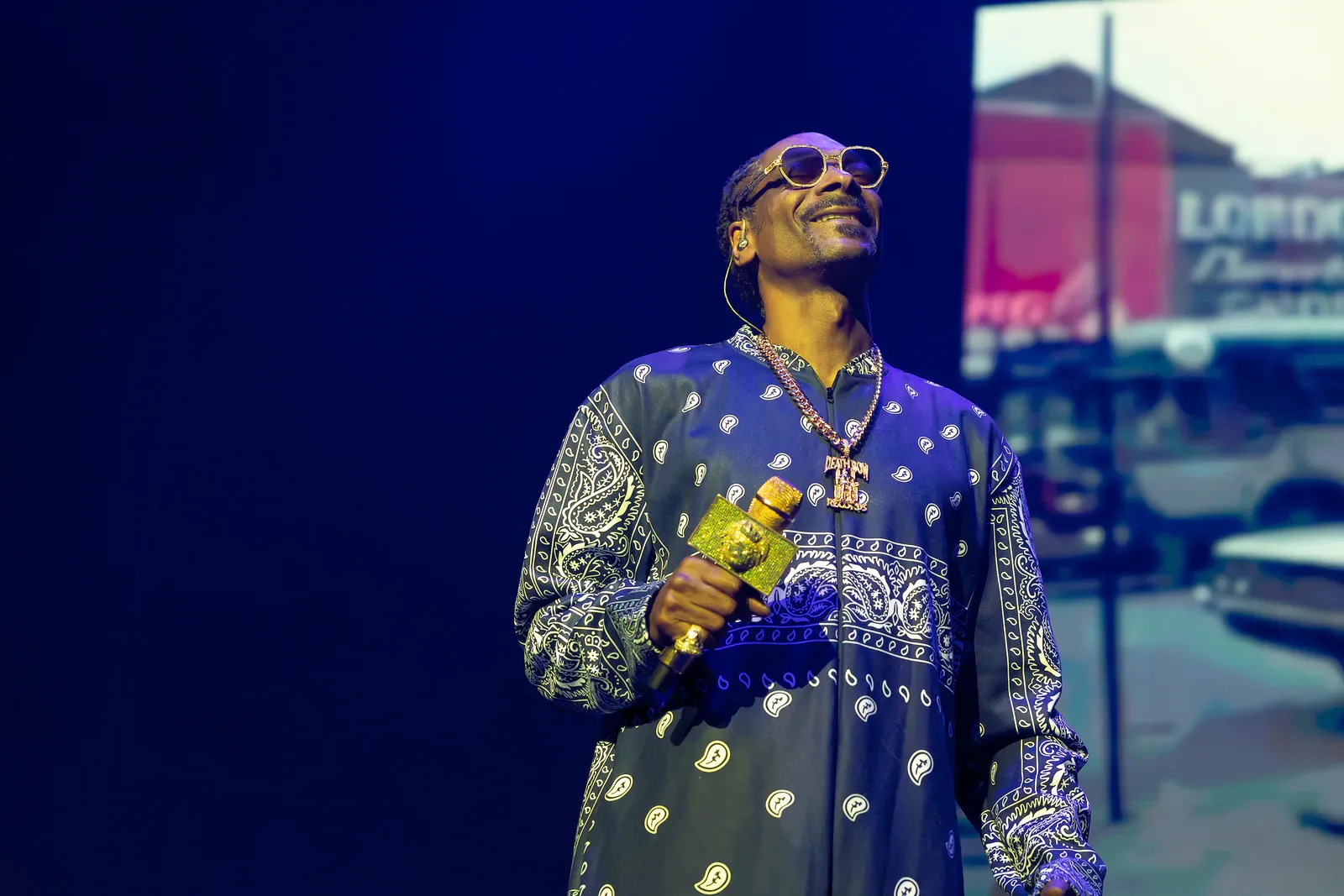
The label then ran the decade. Snoop Dogg’s Doggystyle, from Long Beach, entered the Billboard 200 at number 1 in 1993. Warren G’s “Regulate” reached number 2 in 1994, and Tha Dogg Pound’s Dogg Food debuted at number 1 in 1995. Tupac Shakur joined the label and scored a number 1 with “California Love” in 1995, then released All Eyez on Me in 1996. His murder that year, Knight’s imprisonment and the departures of Dr. Dre and Snoop Dogg began the label’s decline.
Lost ground and hyphy, 1998-2011
By the late 1990s the national centre of gravity had moved to the Midwest and the South, and West Coast rap’s mainstream position dwindled. The Bay Area then supplied a new sound. Hyphy, from the Oakland slang word for hyperactive, was built on gritty, pounding rhythms. The San Jose producer Traxamillion is considered its first producer, and the term was coined by Keak da Sneak.
Mac Dre, whose death in 2004 drew public interest to the music, and E-40 were its best-known voices. E-40’s “Tell Me When to Go”, with Keak da Sneak, was a national hit in 2006, the year Too Short’s Blow the Whistle debuted at number 14.
Ratchet and Kendrick Lamar, 2012 onward
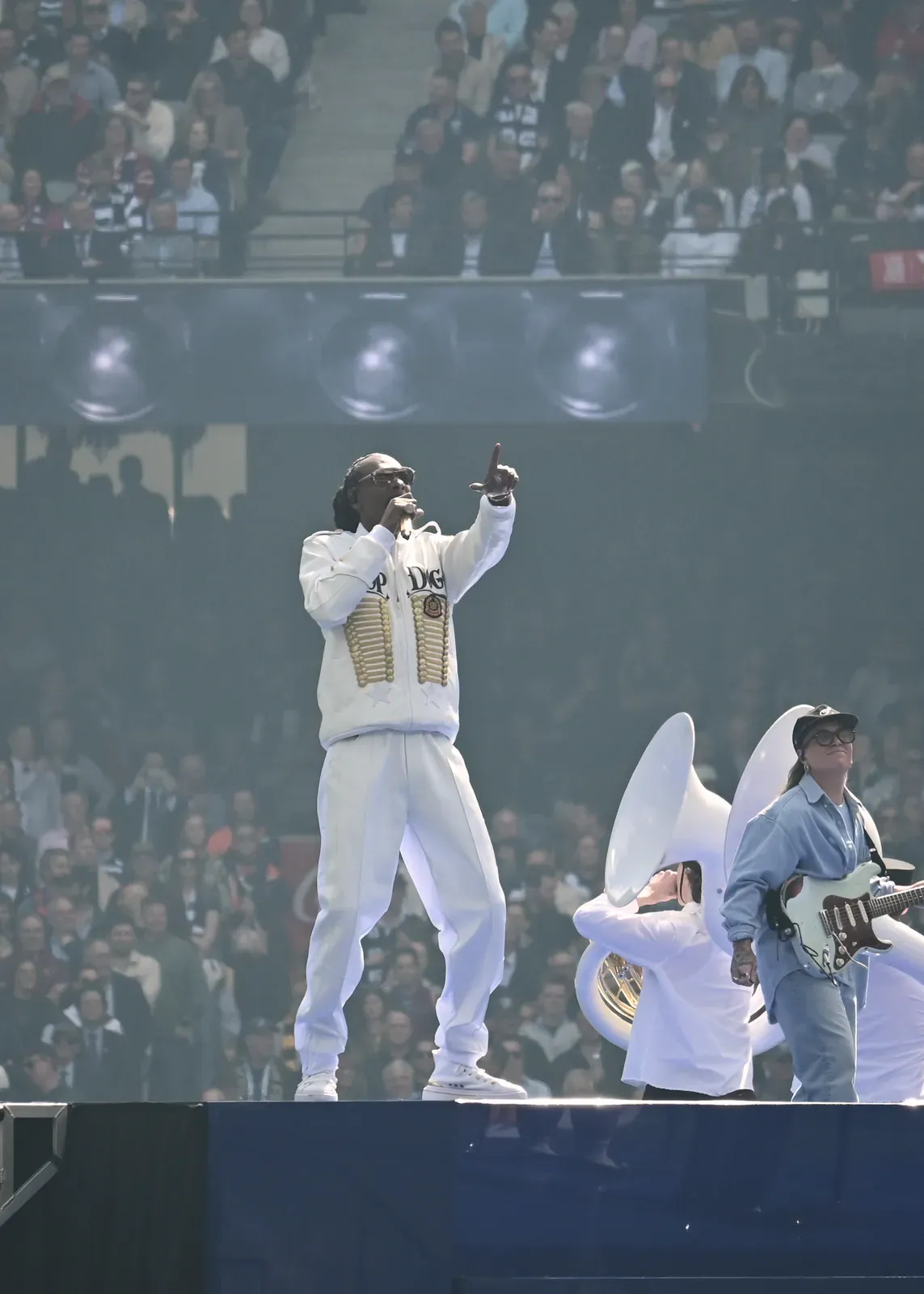
DJ Mustard’s ratchet sound, an uptempo, club-oriented production style, dominated the early 2010s through singles for Tyga, YG and others, and followed G-funk and hyphy as the coast’s next signature production. Meanwhile Kendrick Lamar, a Compton rapper from the Top Dawg Entertainment collective Black Hippy, released good kid, m.A.A.d city in 2012 through Top Dawg, Aftermath and Interscope. It earned seven Grammy nominations, including Album of the Year, the first such nomination for West Coast hip hop. On Juneteenth 2024 Kendrick Lamar hosted The Pop Out: Ken & Friends, a concert described as a celebration of the West Coast.
Characteristics
Most reference recordings sit between about 80 and 110 beats per minute, with G-funk typically between 90 and 100. Bass is deep and the snare heavy. Rapping tends toward a slurred, laid-back delivery, though hyphy is louder and more flamboyant. Lyrics range from street narrative to love of a city, friends and cannabis. The smooth, slow sound matched the laid-back image of Californian life and set the coast apart from the faster East Coast style.
Instruments and production
Early records leaned on drum machines such as the Roland TR-808, turntables and electronic dance rhythms. G-funk changed the method. Rather than looping records directly, Dr. Dre normally used live musicians to replay sampled material, which gave him sounds that were his own, and the style used fewer unaltered samples per song than the New York funk-sampling of the 1980s. Keyboards and bass carry the music, supported by familiar chord progressions and a high gliding saw-wave synthesizer lead.
Notable recordings
Straight Outta Compton arrived with almost no radio support outside Los Angeles. Its confrontation with police drew the FBI letter and media coverage across the country.
The Chronic carried a second story: Dr. Dre’s departure from N.W.A and Ruthless over a financial dispute, and its direct insults toward Ruthless and Eazy-E. It reached number 3 on the Billboard 200, spent eight months in the top ten and went triple platinum.
good kid, m.A.A.d city is a concept album billed as a short film, telling a coming-of-age story in Compton. It debuted at number 2 with 242,000 copies in its first week and later went triple platinum.
Culture
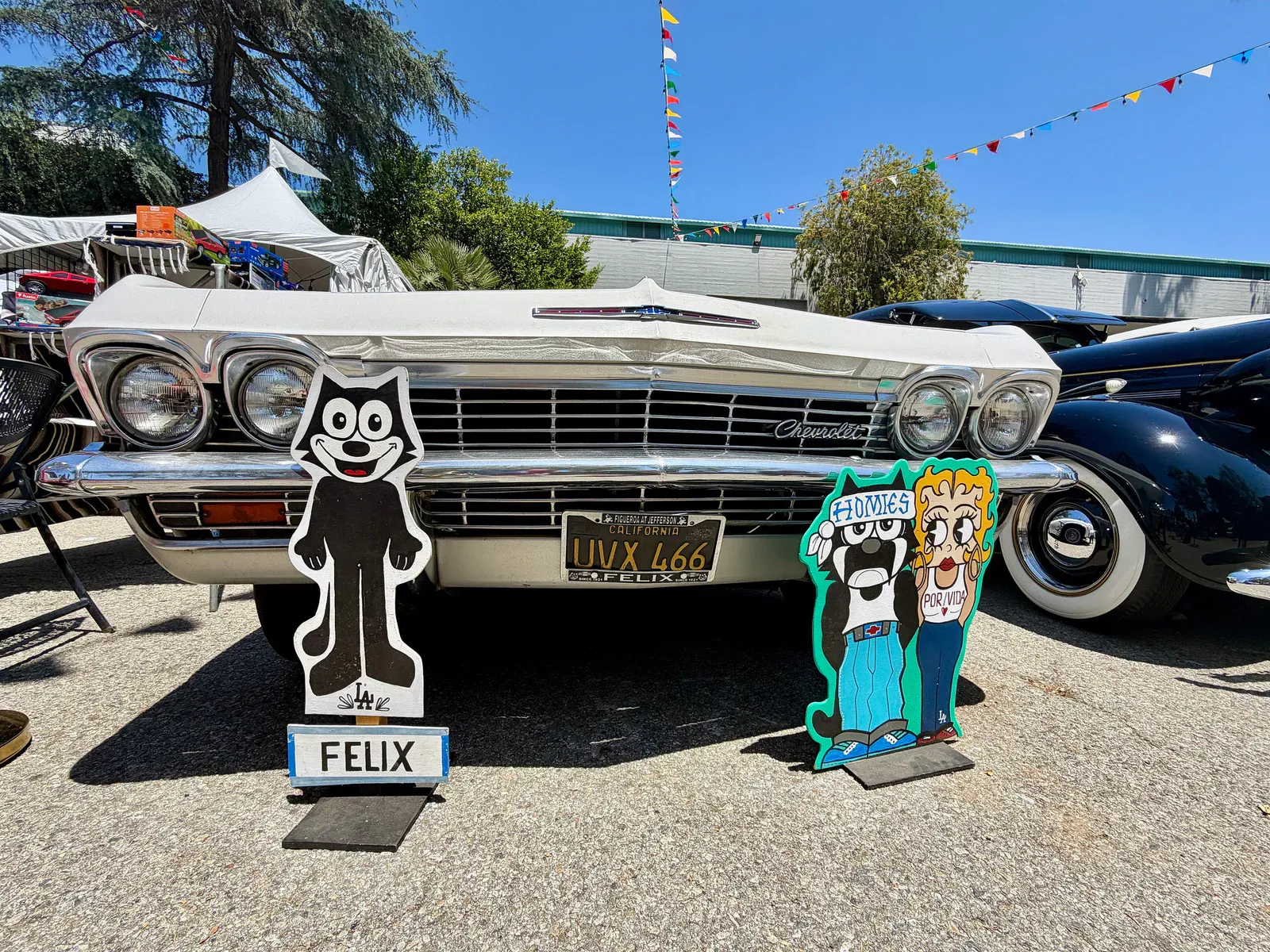
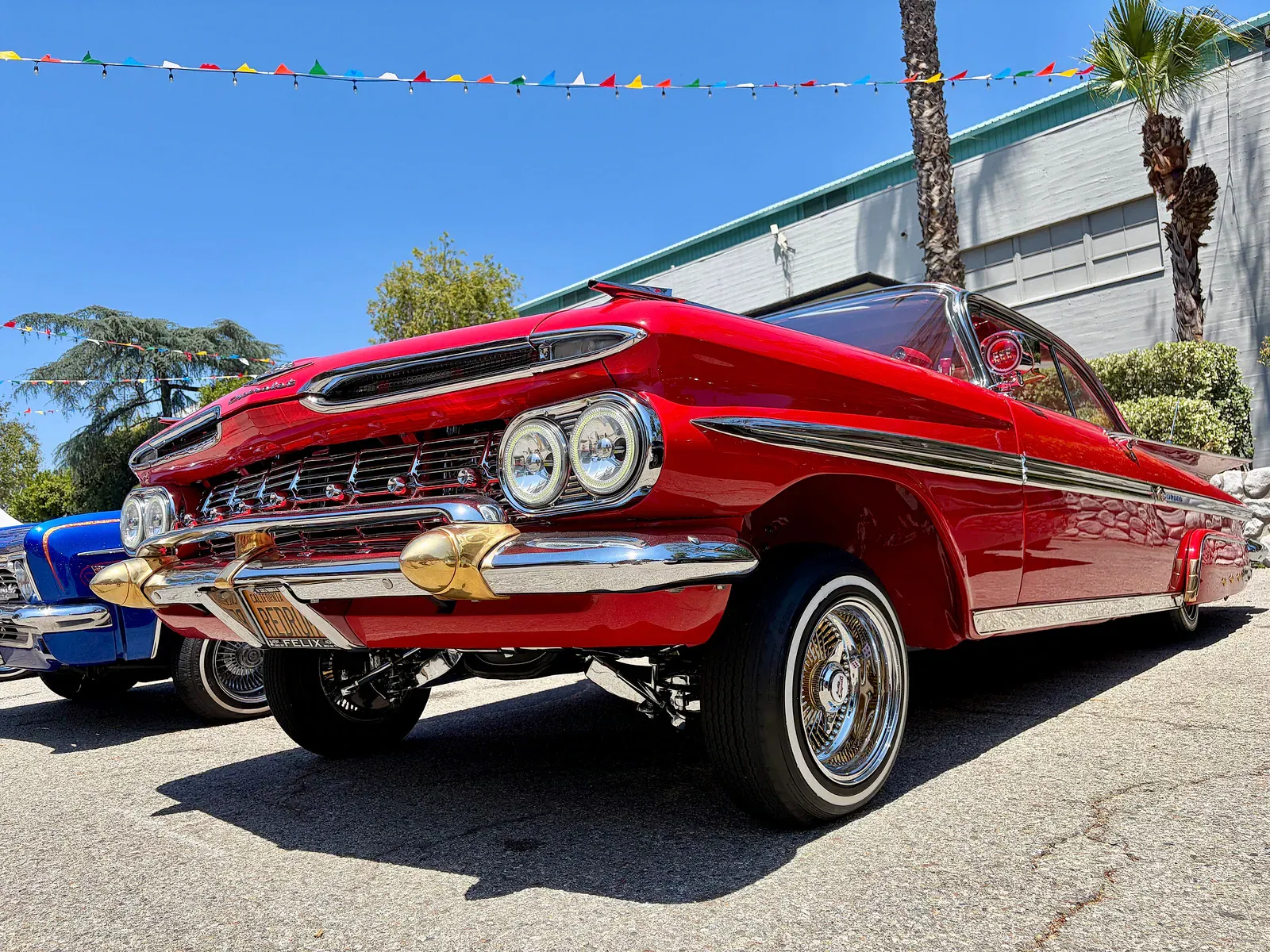
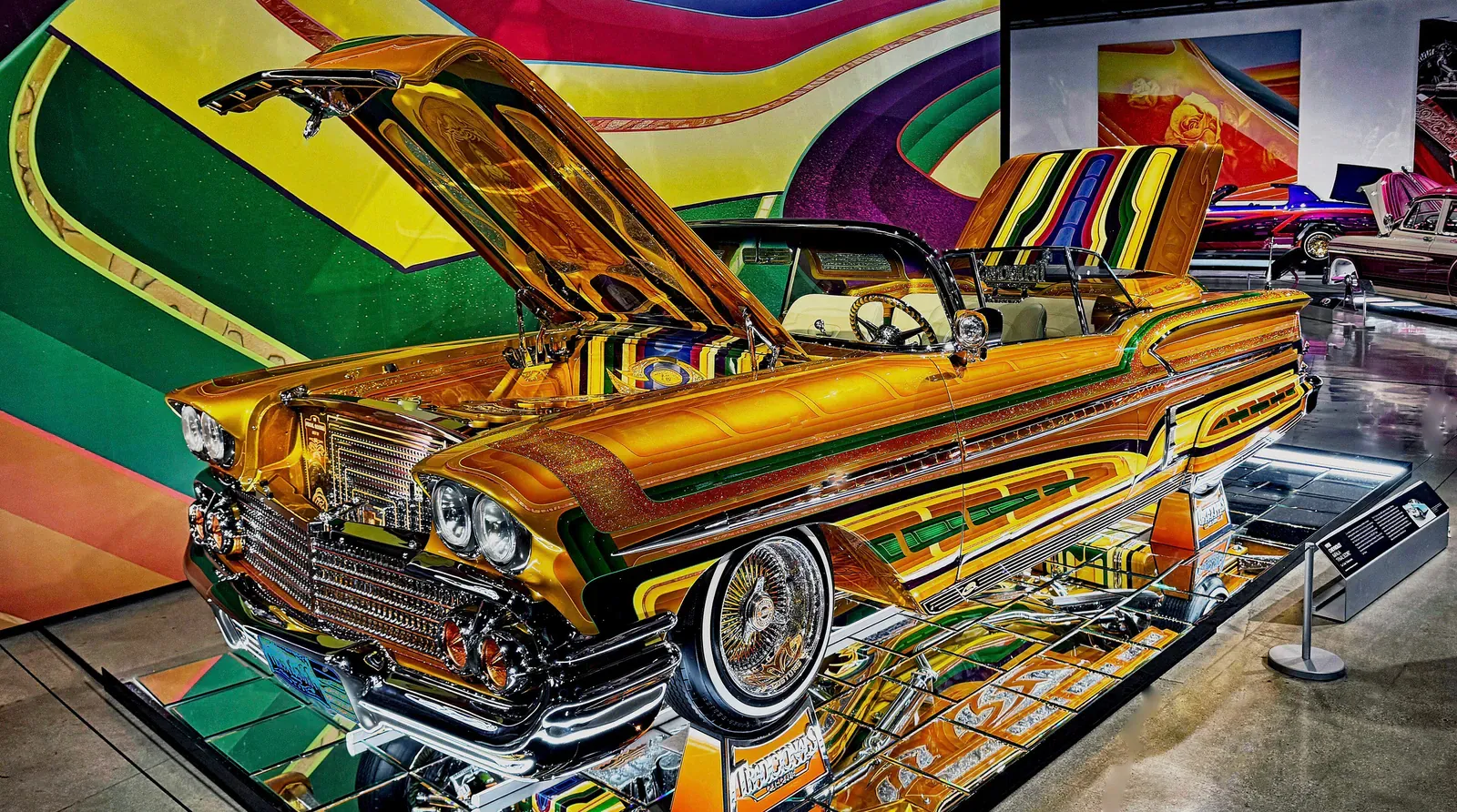
In Los Angeles, mobile DJ crews and club nights came first, then dance styles such as popping and locking, and car culture ran through the imagery. In the Bay Area, sideshows in East Oakland combined illegal car stunts, donuts and ghost-riding with dancing, and moves such as the thizzle dance and going dumb came out of Mac Dre’s circle. The films Boyz n the Hood, in 1991, and the N.W.A biopic Straight Outta Compton, in 2015, gave the scene a wider public image.
Legacy
G-funk’s sound reached beyond California: artists in Georgia, Ohio, Texas and elsewhere used it. Label names from the era stayed in play: Snoop Dogg bought Death Row in 2022 with the aim of reviving it. The coast’s storytelling and production remain a reference point for younger rappers, including Kendrick Lamar of Compton.
Misconceptions
The first myth is that West Coast rap began with N.W.A. In fact Los Angeles had rap labels and records years earlier, including Rappers Rapp Records in 1981 and Egyptian Lover’s On the Nile in 1984, and Ice-T’s gangsta rap predates Straight Outta Compton.
The second is that G-funk is just sampled P-Funk loops. Its producers often replayed the material with live musicians, and the genre used fewer, unaltered samples than earlier funk-sampling rap.
The third is that West Coast hip hop means gangsta rap. The coast also produced the party rap of the Bay Area, hyphy, Tone Loc’s chart-topping pop and the club sound of ratchet.
Frequently asked questions
What is West Coast hip hop?
West Coast hip hop is rap from California and the Western US, especially Los Angeles and the Bay Area. It is known for gangsta rap, laid-back G-funk production and Bay Area styles such as hyphy.
What BPM is West Coast hip hop?
Most West Coast hip hop sits between about 80 and 110 beats per minute, and G-funk is typically 90 to 100.
What is G-funk?
G-funk, short for gangsta funk, is a style of gangsta rap from the early 1990s that combines funk, deep bass, female backing vocals and a high synthesizer lead, as on Dr. Dre’s The Chronic.
Sound
Sound sheet
Anatomy of a track
| # | Part | Bars |
|---|---|---|
| 1 | Intro | 4 |
| 2 | Verse | 16 |
| 3 | Hook | 8 |
| 4 | Verse | 16 |
| 5 | Hook and outro | 8 |
Signature sounds
- Portamento saw-wave synthesizer lead
- Deep bass and heavy snare
- Replayed P-Funk grooves
- Female background vocals
- Slurred, laid-back delivery
Drums and percussion
- Roland TR-808
Techniques
- Live replay of samples
- Sparse sampling
- Tempo-altered funk
- Heavy snare and deep bass
Keys and modes
Conventional funk harmony. Simple, familiar chord progressions with melodic keyboard lines.
Vocals
Smooth, slurred and laid-back rapping, often with female backing vocals; Bay Area hyphy adds shouted, flamboyant delivery.
Scenes
Where it happened
Where and when the sound lived: one bar per city on a shared timeline.
North America
Active scenes
Peak 4, 1992-2025
Home to the mobile DJ crews, radio and clubs that made the first West Coast rap records.
The city behind N.W.A, Ruthless Records and later Kendrick Lamar.
Snoop Dogg, Tha Dogg Pound and Warren G made the city a G-funk centre.
Centre of the Bay Area's funk-driven party rap and later the hyphy movement.
Venues and places
Compton, 1979 to today. Compton nightclub where Alonzo Williams's World Class Wreckin' Cru were house DJs.
Los Angeles, 1983 to today. The first station in the world to play rap around the clock, a key spreader of the early scene.
Los Angeles, 1992 to today. Recording site of The Chronic.
Oakland, 1990 to today. Street gatherings with car stunts and dancing that fed hyphy culture.
Culture
Culture markers
- Popping and locking
Los Angeles dance styles that gave the early scene its first credibility outside the region.
Dance - Thizzle dance
A Bay Area move from the Mac Dre circle, shown alongside going dumb at sideshows.
Dance - Hyphy
Oakland word for hyperactive, coined into a musical label by Keak da Sneak.
Slang - Sideshows
Street gatherings with donuts and ghost-riding where hyphy culture played out.
Ritual
Media
Key media
- 1984Breakin'
by Joel Silberg. A film that showed Los Angeles breakdancing, popping and locking to a national audience.
Film - 1991Boyz n the Hood
by John Singleton. A South Central drama featuring Ice Cube that brought the setting of gangsta rap to cinema.
Film - 2015Straight Outta Compton
by F. Gary Gray. The N.W.A biopic that renewed sales of the group's debut and led to its triple platinum certification.
Film
Glossary
Terms on this page
Short for gangsta funk: slow, synthesizer-led funk with deep bass, female backing vocals and a gliding lead.
Rap built on first-person accounts of street life, violence and conflict with police, popularised by N.W.A.
Oakland slang for hyperactive, and the energetic Bay Area music and dance culture around it.
Club-oriented, uptempo production style pioneered by DJ Mustard in the early 2010s.
An informal Bay Area street gathering where drivers perform donuts and ghost-riding while others dance.
Hip Hop family