Electro
Electro is early-1980s machine funk built on the Roland TR-808, vocoder vocals and science-fiction themes, formed in New York, Detroit and Tokyo.
New York City, 1982
Electronic family
Born
1982
New York City
Subgenres
5
Documented branches
Links
44
Genres it drew on or shaped
Tempo
100-130 BPMLineage
Family tree
New York City, 1982
Electro
Led to (11)
Timeline
Era by era
From the first sparks to today. Select a dot to read the story behind it.
- Robots and drum machines
1977 to 1981
- Planet Rock and the club boom
1982 to 1984
- Samples take over
1985 to 1991
- Detroit electro and the first revival
1992 to 1999
- Revival and legacy
2000 to today
Eras
Moments
- 1 Robots and drum machines, 1977 to 1981
- 2 Planet Rock and the club boom, 1982 to 1984
- 3 Samples take over, 1985 to 1991
- 4 Detroit electro and the first revival, 1992 to 1999
- 5 Revival and legacy, 2000 to today
1977
Robots and drum machines
Kraftwerk, Yellow Magic Orchestra, Zapp and Detroit radio feed a funk-meets-machine sound; the Roland TR-808 appears in 1980.
- 1977Kraftwerk release Trans-Europe ExpressThe album and its title track become a template for rhythmic synthesizer pop that electro producers later sample.
- 1979The Fun House opens in New YorkThe Manhattan club on West 26th Street becomes a testing ground for electro once Jellybean Benitez takes over the decks.
- 1980Roland releases the TR-808Its long, deep bass drum suits club systems and becomes the core sound of early electro.
- 1980Zapp debut with talk box funkRoger Troutman fronts a group whose talk box vocals become a staple of electro-funk.
- 1980Yellow Magic Orchestra and Ryuichi Sakamoto use the TR-808The Tokyo group is among the first to build records on the programmable drum machine, and Sakamoto issues Riot in Lagos.
- 1980Juan Atkins and Richard Davis form Cybotron in DetroitThe duo mixes Kraftwerk, funk and science fiction into the first Detroit electro records.
- 1981Kraftwerk release Computer WorldNumbers, from the album, supplies the beat that Planet Rock later reprograms.
1982
Planet Rock and the club boom
Tommy Boy releases Planet Rock; New York clubs, Los Angeles party crews and UK compilations spread electro as the soundtrack of breakdancing.
- 1982Planet RockAfrika Bambaataa, Arthur Baker and John Robie fuse Kraftwerk melodies with a TR-808 and hip hop chants, setting the pattern for electro.
- 1982The MessageGrandmaster Flash and the Furious Five put a synthesized hook and a social lyric on Sugar Hill.
- 1982Man Parrish releases Hip Hop, Be Bop (Don't Stop)A New York synth-and-vocoder instrumental that becomes a club and breakdance staple.
- 1982Roxy opens its hip hop nightsKool Lady Blue turns the Chelsea roller rink into a multiracial hip hop club where Afrika Bambaataa plays.
- 1983ClearCybotron's Fantasy single sells tens of thousands of copies and links Detroit to electro.
- 1983Rockit reaches the mainstreamHerbie Hancock's turntable-scratch single wins a Grammy and, with its robot video, sweeps the 1984 video awards.
- 1983Street Sounds Electro 1 arrives in the UKMorgan Khan's compilation series brings American electro to British breakdancers.
- 1983Run-DMC release It's Like ThatStripped drum machine and shouted rhymes point hip hop away from synthesizer electro.
- 1984Egyptian Lover founds Egyptian EmpireThe Los Angeles producer launches his label and releases Egypt, Egypt, an 808-driven West Coast electro track.
- 1984Beat Street and Breakin' bring breakdancing to cinemasElectro soundtracks, including Afrika Bambaataa on screen, ride the breakdance craze.
- 1984SurgeryDr. Dre produces World Class Wreckin' Cru's electro single in Los Angeles before N.W.A.
1985
Samples take over
Hip hop turns to sampled breaks and rock guitars; electro splits into Miami bass, freestyle and early techno while Mantronix keeps the machine sound in rap.
- 1985Needle to the GrooveMantronix debut on Sleeping Bag with a hard, cut-up machine groove.
1992
Detroit electro and the first revival
Drexciya, Aux 88 and Dopplereffekt rebuild electro as dark, concept-driven Detroit techno; European producers follow in the late 1990s.
- 1993Drexciya release Bubble MetropolisThe Detroit duo issues its second record through Underground Resistance, opening a darker, aquatic electro concept.
- 1999European producers revive electroAnthony Rother and DJ Dave Clarke lead a late-1990s return to the machine sound.
2000
Revival and legacy
Scenes in Europe and Detroit keep a hard, drum-machine electro going, and a new generation of DJs brings it to wider club audiences from about 2016.
- 2002James Stinson of Drexciya diesThe death ends the duo as a working unit.
- 2016New DJs bring electro to young audiencesHelena Hauff and DJ Stingray lead a new wave of hard drum machine sets.
- 2016Abuse allegations against Afrika BambaataaSeveral men accuse the electro pioneer of child abuse; he steps down from Universal Zulu Nation that May.
Listening path
Anthems
The records that built the sound, grouped by the part they played. Thumbnails come from YouTube; the player loads only when you press play.
- 01
Ryuichi Sakamoto, 1980
Made the genre: an early TR-808 instrumental that anticipates the electro beat.
Origin - 02
Afrika Bambaataa, 1982 · #53 UK Singles, 1982 · Tommy Boy
Made the genre: the Kraftwerk-based 808 record that set the electro formula.
Start hereOrigin - 03
Herbie Hancock, 1983 · #8 UK Singles, 1983 · Columbia Records
Took it mainstream: scratch-led electro that won a Grammy and a run of VMAs.
Start hereBreakthrough - 04
Planet Patrol, 1982 · Tommy Boy
Defined the scene: an Arthur Baker production that carried Planet Rock's sound to pop-leaning electro.
Anthem - 05
Whodini, 1982 · Jive Records
Defined the scene: R&B-leaning electro rap that became one of the first rap records with a video.
Anthem - 06
Jonzun Crew, 1982 · Tommy Boy
Defined the scene: Boston live-played synth electro that was a hit in Germany.
Anthem - 07
Afrika Bambaataa, 1983 · Tommy Boy
Defined the scene: Baker and Robie's follow-up refined the machine sound.
Anthem - 08
Cybotron, 1983
Defined the scene: Detroit electro whose synth loops pointed toward techno.
Anthem - 09
Egyptian Lover, 1984 · Egyptian Empire Records
Defined the scene: West Coast 808 electro and the sound of Los Angeles dance parties.
Anthem - 10
Mantronix, 1985 · Sleeping Bag Records
Defined the scene: hard cut-up 808 electro that bridged to hip hop and breakbeat.
Anthem - 11
Newcleus, 1984
Crossed over: cartoon-voiced electro that entered the Hot 100 and became a breakdance staple.
Start hereCrossover - 12
World Class Wreckin' Cru, 1984
Crossed over: Los Angeles electro that launched Dr. Dre as a producer.
Crossover - 13
Drexciya, 1993 · Underground Resistance
Revived the genre: dark Detroit electro that began its second life.
Revival
Facts
| Family | Electronic |
| Origin | New York City, United States |
| Emerged | Early 1980s |
| Status | Active |
| Tempo | 100 to 130 BPM |
| Meter | 4/4 |
| Grew out of | Funk, Hip Hop, Boogie |
| Subgenres | 2 |
Electro, also called electro-funk, is dance music made on drum machines, synthesizers and vocoders that took shape in the early 1980s in New York, Detroit and Tokyo.
It pairs a syncopated, heavy electronic beat with robotic vocals and science-fiction imagery, and it was the first electronic sound to become the soundtrack of hip hop and breakdancing. It belongs to the electronic family and draws on funk and disco.
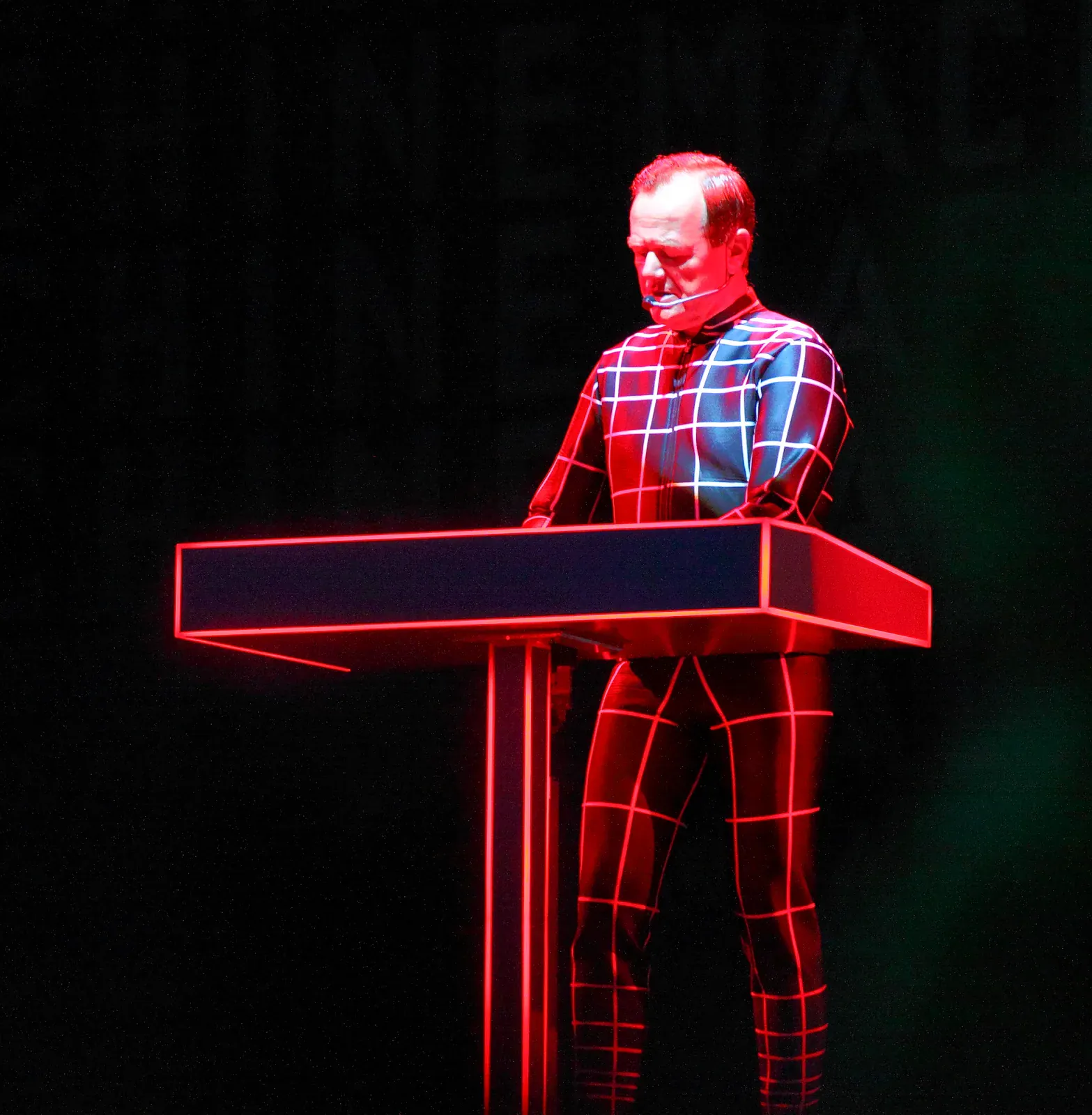
Origins
Electro came from two directions that met in 1982. One was European and Japanese synthesizer pop. Kraftwerk’s Trans-Europe Express (1977) and Computer World (1981) made rhythmic, melodic machine music, and Yellow Magic Orchestra in Tokyo built records on programmable drum machines. In 1980 Ryuichi Sakamoto released “Riot in Lagos”, an instrumental driven by a Roland TR-808 that anticipated the electro beat before the style had a name. The other direction was American black dance music: funk, boogie and the DJ culture of the Bronx. Zapp, led by Roger Troutman, brought the talk box into funk in 1980, and in Detroit the radio host the Electrifying Mojo played Kraftwerk next to funk on WGPR.
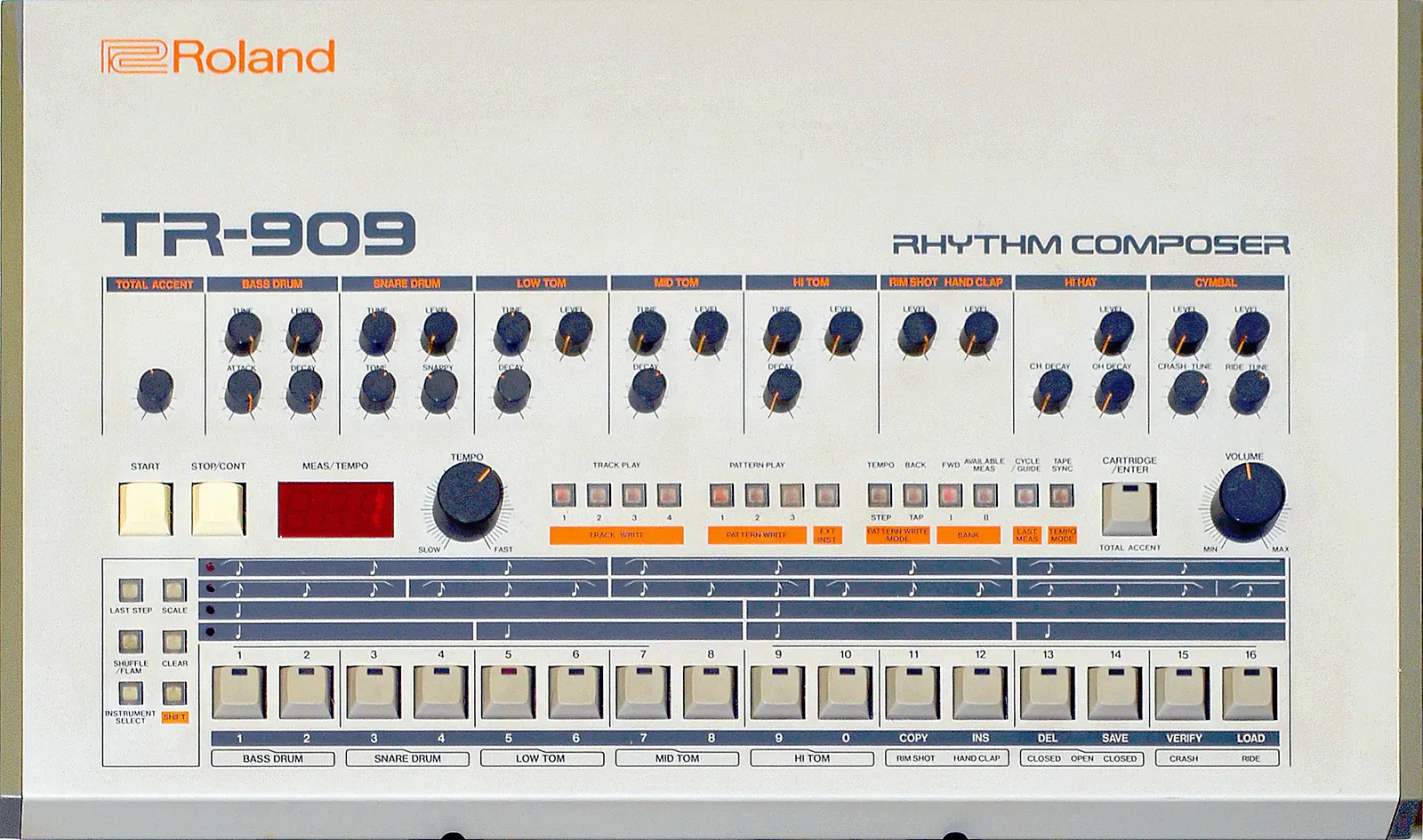
The Roland TR-808 arrived in 1980 as a tool for songwriters to sketch rhythm tracks. It sold modestly, but its long, low bass drum and its clipped handclap suited club systems, and Roland stopped making it in 1983, and used units became cheap.
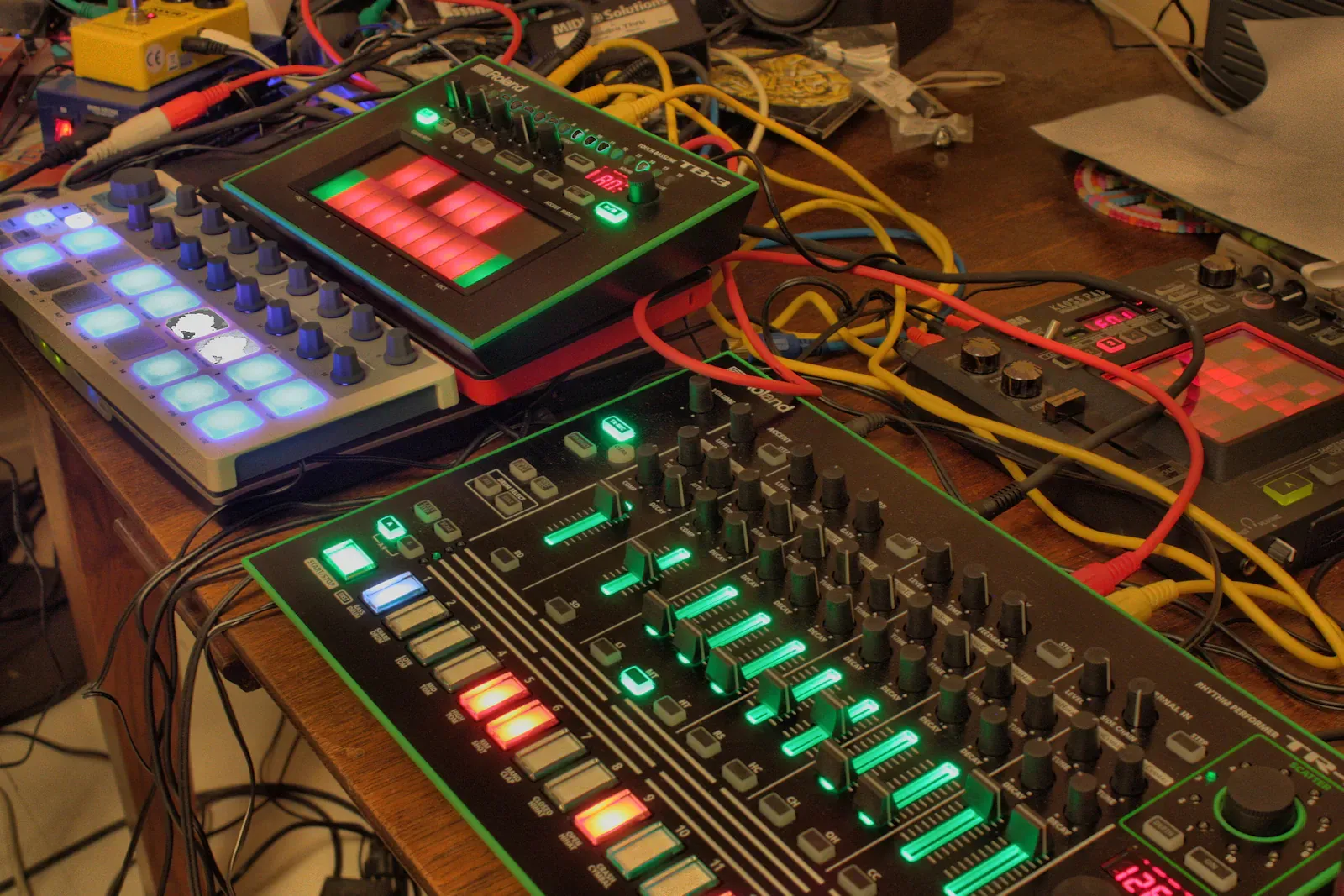
Planet Rock and the club boom, 1982-1984
“Planet Rock” fixed the formula. Afrika Bambaataa, a Bronx DJ and founder of the Universal Zulu Nation, worked with producers Arthur Baker and John Robie and the vocal group Soulsonic Force at Intergalactic Studio in New York. They replayed the melody of Kraftwerk’s “Trans-Europe Express” and the beat of “Numbers”, programmed the drums on a TR-808 and laid hip hop chants over the top. Tommy Boy released it in 1982, and it reached number 53 on the UK singles chart.
Warp 9’s “Nunk” (1982) packed computer-game imagery into hip hop slang, and Man Parrish’s “Hip Hop, Be Bop (Don’t Stop)” put a vocoder over a breakdance staple. Grandmaster Flash and the Furious Five added a synthesized hook to the social lyric of “The Message” on Sugar Hill. Whodini’s “Magic’s Wand”, released on Jive with Thomas Dolby, became one of the first rap records with a video. In New York clubs such as the Fun House, where DJ Jellybean Benitez led long sets from 1981, and the Roxy, which opened its hip hop nights in 1982, the records reached the dancers who made them matter.
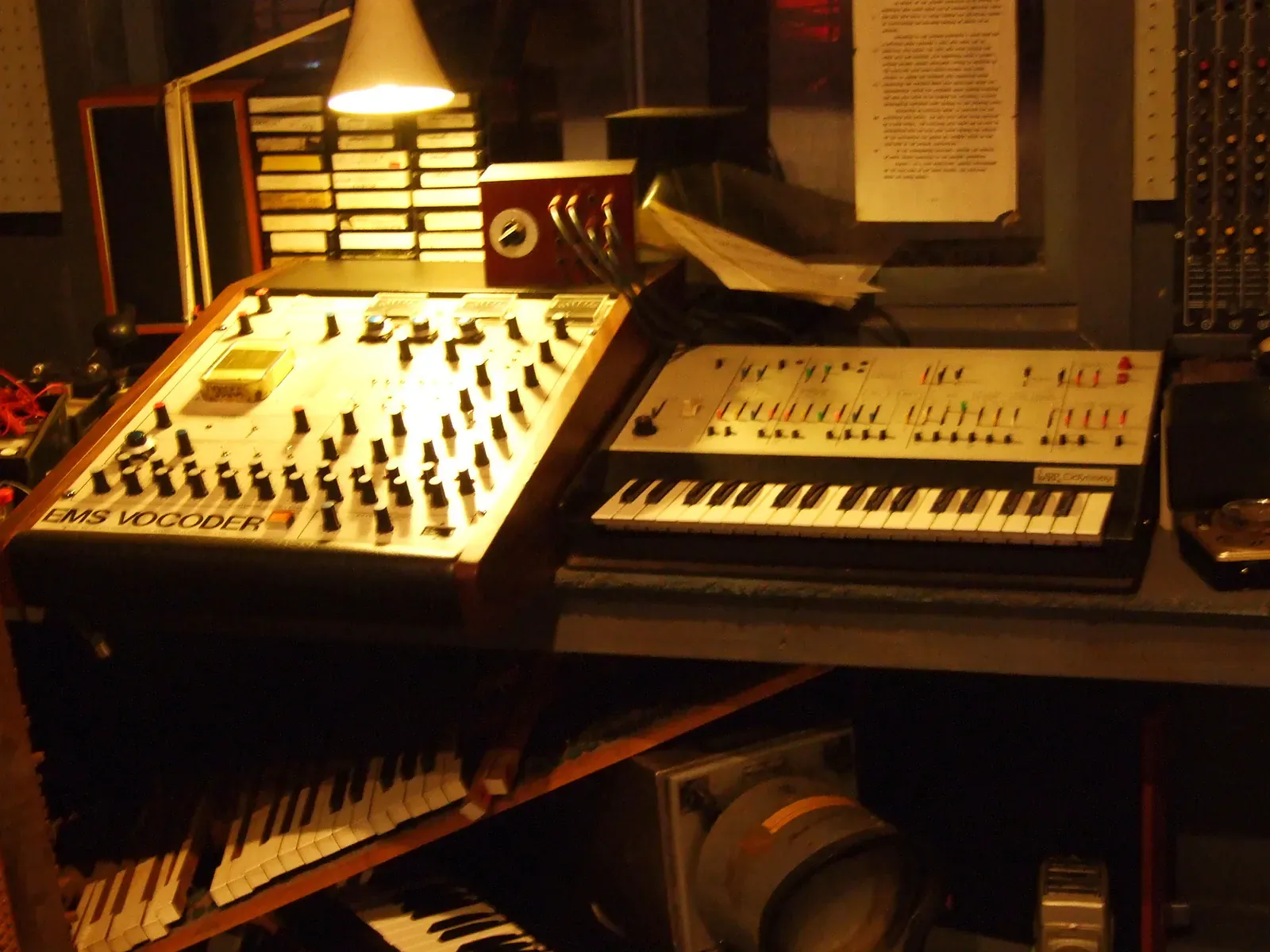
Electro then spread by region. In Los Angeles, Uncle Jamm’s Army dances in arenas drew thousands, and Egyptian Lover released “Egypt, Egypt” in 1984 on his own Egyptian Empire label. World Class Wreckin’ Cru, with Dr. Dre as a producer and DJ, issued “Surgery” the same year. In Detroit, Cybotron, the duo of Juan Atkins and Richard Davis, made “Clear” (1983), whose cascading synth loops pointed toward techno.
Mainstream success
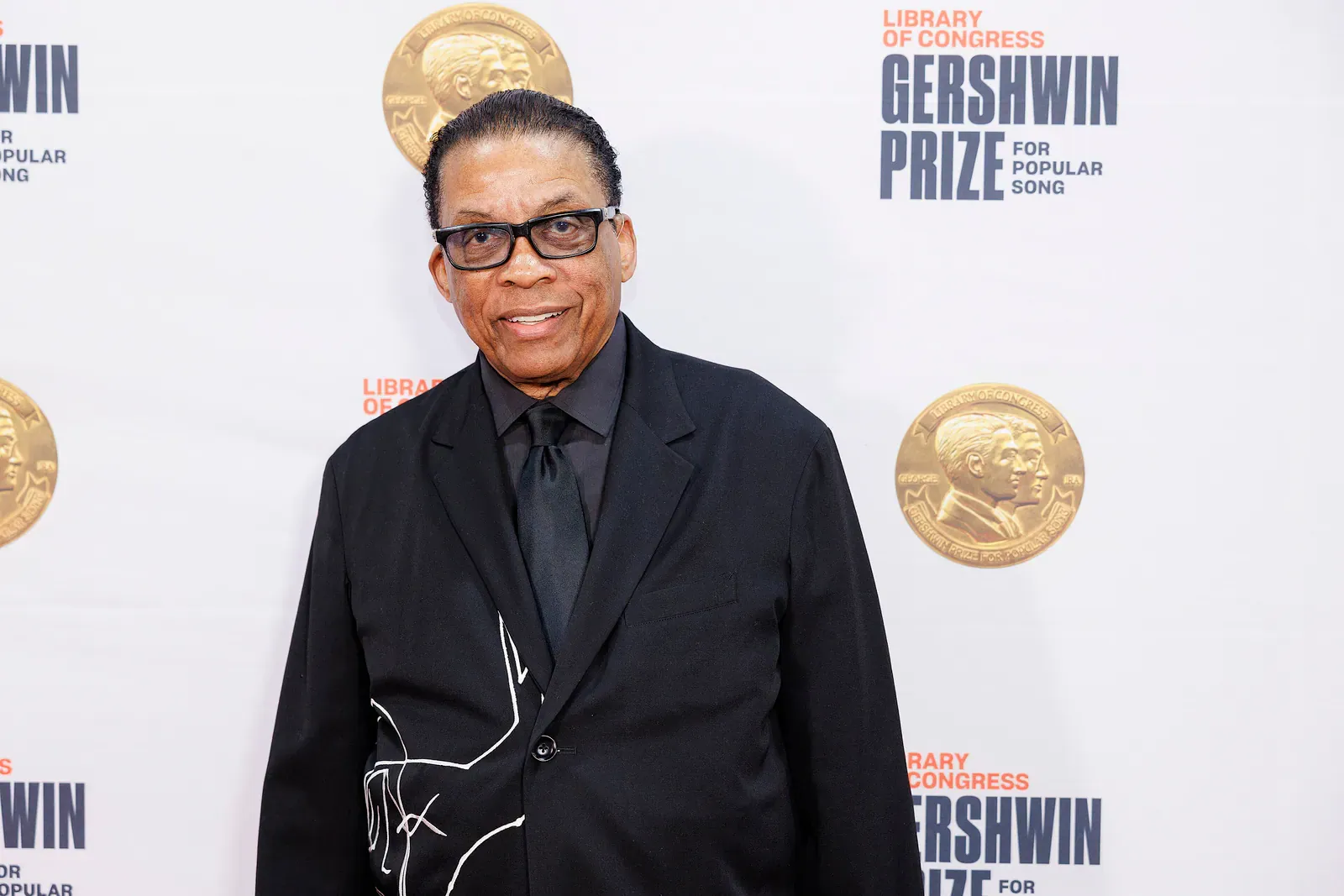
Electro reached pop radio and television in 1983 through jazz. Herbie Hancock, already a major jazz name, recorded “Rockit” with the producers Bill Laswell and Michael Beinhorn, with turntable scratching by Grand Mixer D.ST. The single reached number 8 in the UK, won a Grammy and, with its robot-filled video, collected several awards at the 1984 MTV Video Music Awards.
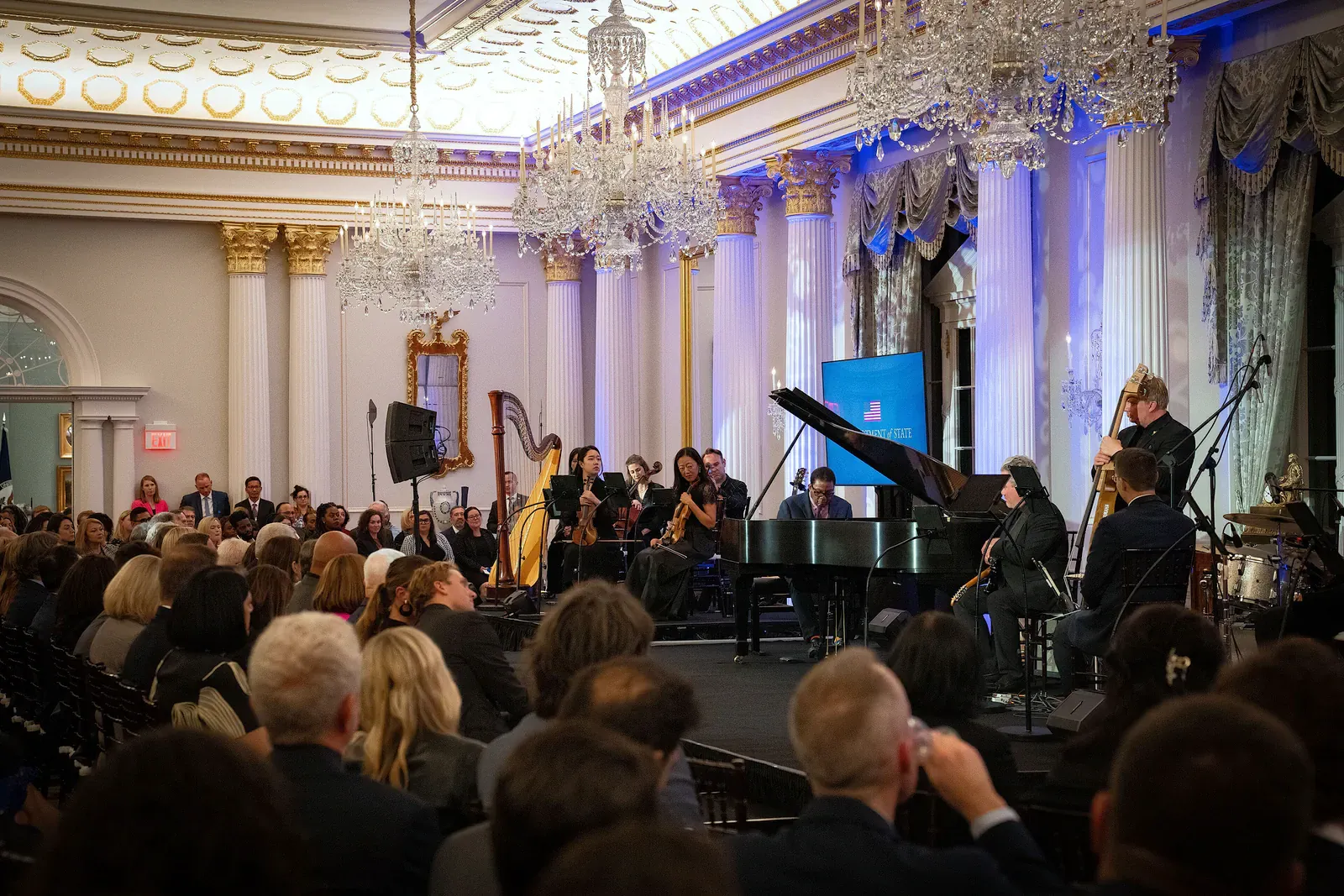
The films Beat Street and Breakin’, both from 1984, put electro soundtracks and Afrika Bambaataa on cinema screens.
Samples take over, 1985-1991
By the mid-1980s hip hop turned away from synthesizers. Run-DMC’s “It’s Like That” (1983) had already shown that a stripped drum machine and shouted rhymes could sell, and sampled breaks and rock guitars soon replaced melodic keyboard lines. Mantronix kept the machine sound alive with “Needle to the Groove” (1985) on Sleeping Bag, a hard, cut-up 808 record. Miami bass kept the 808, and freestyle added Latin melody to the same machines.
Detroit electro and the revivals, 1992 to today
In the 1990s Detroit rebuilt electro as dark, concept-driven techno. Drexciya, the duo of James Stinson and Gerald Donald, released “Bubble Metropolis” (1993) through Underground Resistance and spun an undersea mythology around it. Atkins’s Metroplex label had already linked the sound to Detroit techno. In the late 1990s European producers such as Anthony Rother and Dave Clarke brought the machine sound back to clubs. From about 2016 DJs such as Helena Hauff and DJ Stingray brought hard drum-machine sets to wider audiences.
Instruments and production
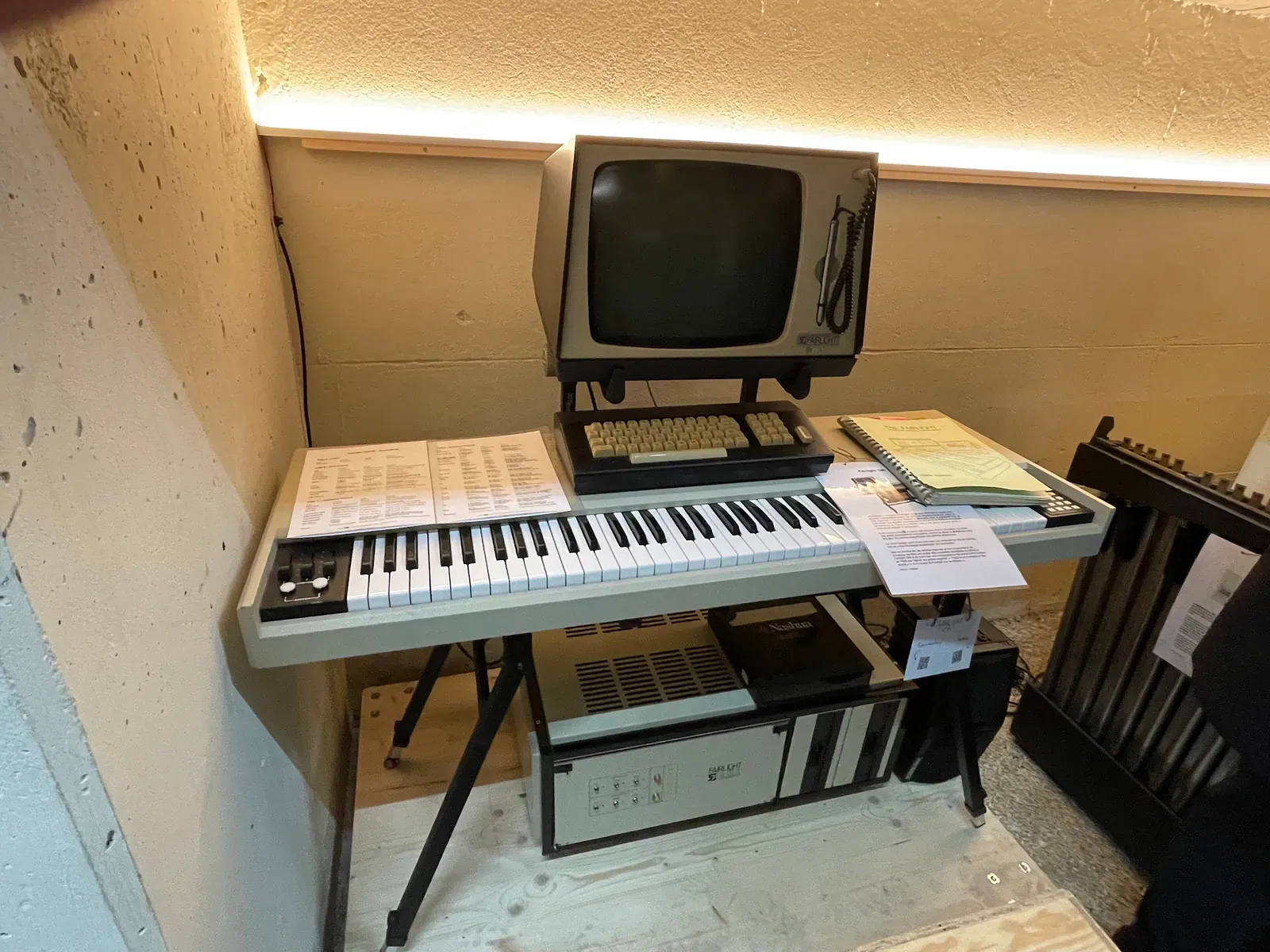
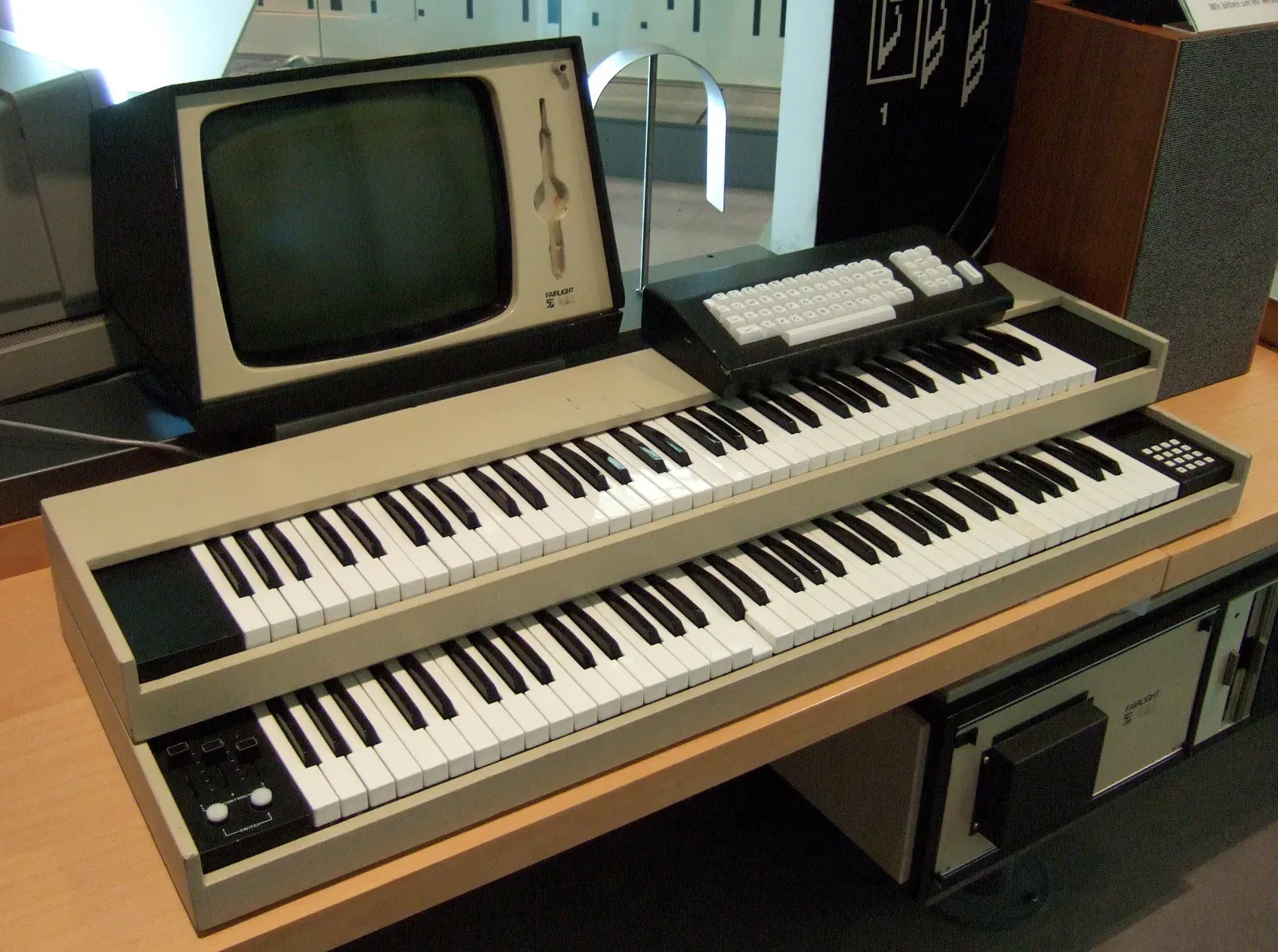
Electro was built from a small set of machines. The TR-808 supplied the drums, and one synthesizer usually carried the low line. Vocoders and talk boxes turned voices into machines, and Hancock’s 1983 sessions added a Fairlight sampler. Producers such as Arthur Baker worked in short, repeated phrases that DJs could extend on 12-inch singles.
Culture
Electro was the music of breaking, popping and the first generation of hip hop DJs. Dancers needed long instrumental passages and hard, clear beats, and the 808 supplied both. Covers and videos borrowed robots, outer space and arcade graphics. The economics were small: independent labels, 12-inch singles, radio mixshows and a handful of clubs.
Afrika Bambaataa’s later history is part of the record. In 2016 several men accused him of sexually abusing them when they were minors, and he stepped down from the Universal Zulu Nation that May; he denied the allegations. In 2025 a New York court entered a default judgment against him in a civil suit. He died in April 2026.
Legacy
Electro gave hip hop its first producer-driven, machine-made records and gave dance music the 808 as a standard tool. Miami bass, freestyle, breakbeat and Detroit techno all trace a line to it.
Misconceptions
Electro is often confused with modern club styles that borrow its name. Electro house and electroclash are separate genres, and neither is the machine funk of 1982.
“Planet Rock” is also often called the first electro record. It fixed the formula and drew the largest audience, but “Riot in Lagos” and Zapp’s talk box funk came in 1980, and Cybotron formed in Detroit the same year.
A third idea holds that the TR-808 was made for hip hop. Roland designed it as a rhythm accompaniment for songwriters; producers in New York, Los Angeles and Detroit found its sound by reuse, after cheap second-hand units reached them.
Frequently asked questions
What is electro music?
Electro is dance music from the early 1980s built on drum machines, synthesizers and vocoder vocals, most of all the Roland TR-808. It began in New York, Detroit and Tokyo and became the sound of early hip hop and breakdancing.
What is the difference between electro and techno?
Electro follows funk and hip hop, with syncopated beats, robotic vocals and breakdance rhythms. Techno, formed in Detroit by the mid-1980s, uses a steady four-on-the-floor kick.
Who made “Planet Rock”?
Afrika Bambaataa and Soulsonic Force made “Planet Rock”, produced by Arthur Baker and John Robie. Tommy Boy released it in 1982.
Sound
Sound sheet
Anatomy of a track
| # | Part | Bars |
|---|---|---|
| 1 | Intro (808 pattern alone) | 8 |
| 2 | Synth riff and bass | 16 |
| 3 | Vocal or vocoder verse | 16 |
| 4 | Breakdown with effects | 8 |
| 5 | Chorus chant | 8 |
| 6 | Instrumental dub and outro | 16 |
Signature sounds
- Syncopated TR-808 bass drum and handclap
- Vocoder or talk box vocals
- Short repeated synth melody
- Sparse bass lines with space between hits
- Chanted or shouted hook
- Science-fiction themes and sound effects
Drums and percussion
- Roland TR-808
- Oberheim DMX
Synths and software
- Sequential Prophet-5
- Roland VP-330
Techniques
- Vocoder vocals
- Talk box
- Scratching
- Drum machine programming
Keys and modes
Natural minor. Common for dark bass lines and Detroit electro, such as Clear.
Dorian and funk minor. Funk-derived minor modes with a repeated bass figure.
Tuning
12-TET, A=440
Vocals
Chants, rapped verses and vocoded or talk box lines, often shouted over sparse tracks.
Scenes
Where it happened
Where and when the sound lived: one bar per city on a shared timeline.
Asia
North America
Europe
Active scenes
Peak 6, 1983
Tommy Boy, Sugar Hill and Sleeping Bag, with clubs such as the Fun House and Roxy, drive the sound.
Uncle Jamm's Army parties, Egyptian Lover and World Class Wreckin' Cru make a West Coast electro scene.
Cybotron, radio host the Electrifying Mojo and later Drexciya and Aux 88 keep electro alive through techno.
Jonzun Crew record live-played synth electro for Tommy Boy.
Yellow Magic Orchestra and Ryuichi Sakamoto adopt the TR-808 early and feed electro's machine funk.
Street Sounds Electro compilations make electro the soundtrack of British breakdance.
Venues and places
New York, 1979 to today. DJ Jellybean Benitez led long sets here from 1981 and pushed Planet Rock.
New York, 1978 to today. A Chelsea roller rink that hosted hip hop and breaking nights from 1982.
New York, 1981 to today. Where Planet Rock was recorded.
Los Angeles, 1983 to today. One of the large venues where Uncle Jamm's Army ran mid-1980s dances.
Detroit, 1977 to today. The Electrifying Mojo's late-night show played Kraftwerk and funk for future Detroit producers.
Culture
Culture markers
- Breakdancing
Floor moves and popping set to electro, a central part of the scene.
Dance - Robot and space imagery
Covers and videos use robots, outer space and computer-game graphics.
Artwork - Party crews and block dances
Uncle Jamm's Army and similar crews ran large club and arena dances in Los Angeles.
Ritual - Planet Rock chants
Call-and-response lines such as the Planet Rock hook become dance floor shorthand.
Slang
Media
Key media
- 1977Midnight Funk Association
by The Electrifying Mojo. The Detroit radio show that fed Atkins, May and Saunderson.
Radio - 1983Street Sounds Electro 1
by Various. The first of a series that brought American electro to British listeners.
Compilation - 1984Beat Street
by Stan Lathan. A dance film with Afrika Bambaataa that spread breakdancing and electro.
Film - 1984Breakin'
by Joel Silberg. A breakdance film whose soundtrack rides the electro boom.
Film
Glossary
Terms on this page
Floor-based street dance that grew up with electro and early hip hop.
Early 1980s funk played with drum machines, synthesizers and vocoder or talk box vocals.
Latin-tinged dance music of the mid-1980s that grew from electro and hip hop producers.
An effects unit that routes a synthesizer's sound into the mouth for shaping words.
The Roland drum machine whose bass drum, snare and handclap define the sound.
A device that imposes the spectrum of a voice on a synthesizer, giving a robotic tone.
Electronic family