Trance music
Trance is melodic electronic dance music at 128 to 150 BPM, formed in Frankfurt and Berlin around 1990, built on arpeggios and breakdowns.
Frankfurt, 1990
Electronic family
Born
1990
Frankfurt
Subgenres
19
Documented branches
Links
19
Genres it drew on or shaped
Tempo
128-150 BPMLineage
Family tree
Grew out of
Derived from
- Acid house
Derived from
Derived from
Influenced by
Frankfurt, 1990
Trance
Led to (19)
Timeline
Era by era
From the first sparks to today. Select a dot to read the story behind it.
- Frankfurt and the first wave
1988 to 1993
- Eurotrance goes global
1994 to 1999
- Superstar DJ era
2000 to 2008
- Festival era and revival
2009 to 2026
Eras
Moments
- 1 Frankfurt and the first wave, 1988 to 1993
- 2 Eurotrance goes global, 1994 to 1999
- 3 Superstar DJ era, 2000 to 2008
- 4 Festival era and revival, 2009 to 2026
1988
Frankfurt and the first wave
German clubs and labels around Omen and Eye Q fuse techno, EBM and hypnotic melody; Age of Love and Cafe del Mar set the template.
- 1988The KLF release What Time Is Love (Pure Trance)An early record to use the word trance for hypnotic dance music.
- 1988Sven Vath opens Omen in FrankfurtThe club became a home for the hypnotic sound that fed German trance.
- 1990Age of Love released in BelgiumAn Italian-Belgian duo issues a track often cited as an early trance record.
- 1990MFS founded in BerlinMark Reeder starts a label that is among the first to use the term trance.
- 1991Eye Q founded in OffenbachSven Vath and Heinz Roth launch the imprint at the centre of the Frankfurt sound.
- 1992Harthouse starts as an Eye Q sublabelA harder, more techno-leaning outlet for German trance.
- 1992Jam & Spoon remix Age of LoveThe Watch Out for Stella remix became the best-known version of the track.
- 1993Energy 52 release Cafe del MarA softer Eye Q single that outlived the early scene.
- 1993Platipus founded in LondonSimon Berry starts a British trance label.
1994
Eurotrance goes global
Robert Miles, Paul van Dyk, Gouryella and Darude reach European charts as trance moves from clubs to radio and compilations.
- 1995Robert Miles releases ChildrenA piano-led dream trance single that crossed over across Europe.
- 1997Eye Q ends operations and Harthouse goes insolventThe first Frankfurt label wave closes as commercial trance labels rise.
- 1997Black Hole Recordings founded in BredaTiesto and Arny Bink start the label that anchors the Dutch scene.
- 1998For an Angel reaches UK audiencesPaul van Dyk's MFS record becomes a trance standard.
- 1998Ferry Corsten and Tiesto form GouryellaA studio project that defined late-90s uplifting trance.
- 1999Delerium release Silence with Sarah McLachlanVocal trance enters pop and film.
- 1999Darude releases SandstormA Finnish instrumental that became a worldwide trance staple.
2000
Superstar DJ era
Tiesto, Armin van Buuren and Ferry Corsten headline stadiums and top DJ polls; radio shows and Dutch labels dominate.
- 2001A State of Trance radio show beginsArmin van Buuren starts a weekly broadcast on 1 June 2001.
- 2003Armada Music founded in AmsterdamArmin van Buuren, Maykel Piron and David Lewis start the label.
- 2004Tiesto plays the Athens Olympics opening ceremonyThe first DJ to perform live on stage at an Olympics.
- 2005Tiesto issues Adagio for StringsA trance take on Barber's Adagio becomes his signature.
2009
Festival era and revival
Melodic and vocal trance lives on through Anjunabeats, Armada and Black Hole while classic sounds return in clubs.
- 2011Above & Beyond release Sun & MoonMelodic vocal trance stays at festival peak.
Listening path
Anthems
The records that built the sound, grouped by the part they played. Thumbnails come from YouTube; the player loads only when you press play.
- 01
Age of Love, 1990
Early Belgian-Italian single often cited as the first widely heard trance record.
Origin - 02
Robert Miles, 1995
Piano-led dream trance that took the genre to mainstream European radio.
Start hereBreakthrough - 03
Darude, 1999
Instrumental that spread worldwide and remains the best-known trance riff.
Start hereBreakthrough - 04
Tiësto, 2005 · Black Hole Recordings
Barber melody on a trance groove; the stadium-era signature.
Start hereBreakthrough - 05
Sven Väth, 1993
Sven Vath's Frankfurt-era track that captured the hypnotic early sound.
Anthem - 06
Energy 52, 1993 · Eye Q
Eye Q single whose piano riff became a scene standard.
Anthem - 07
Paul van Dyk, 1994 · MFS
Paul van Dyk's Berlin classic, a model for the uplifting build and drop.
Anthem - 08
Binary Finary, 1998
UK compilation staple that carried the genre into every club set.
Anthem - 09
Gouryella, 1999
Ferry Corsten and Tiesto's debut that set the uplifting template.
Anthem - 10
Delerium, 1999
Vocal trance with Sarah McLachlan that reached pop, film and radio.
Crossover - 11
Above & Beyond, 2011 · Anjunabeats
Vocal melodic trance that kept the festival crowd singing.
Revival
Facts
| Family | Electronic |
| Origin | Frankfurt, Germany |
| Emerged | Late 1980s to early 1990s |
| Status | Active |
| Tempo | 128 to 150 BPM |
| Meter | 4/4 |
| Grew out of | Techno, Acid house, House |
| Subgenres | 19 |
Trance is a style of electronic dance music built on a steady four-on-the-floor kick at roughly 128 to 150 BPM, with arpeggiated synth lines, long breakdowns and a euphoric return of the beat.
It took shape in Frankfurt and Berlin around 1990, grew out of techno and house, and became one of the best-selling club sounds of the late 1990s and 2000s. A track is designed to lift a room, drop it into near silence, then bring it back.
Origins
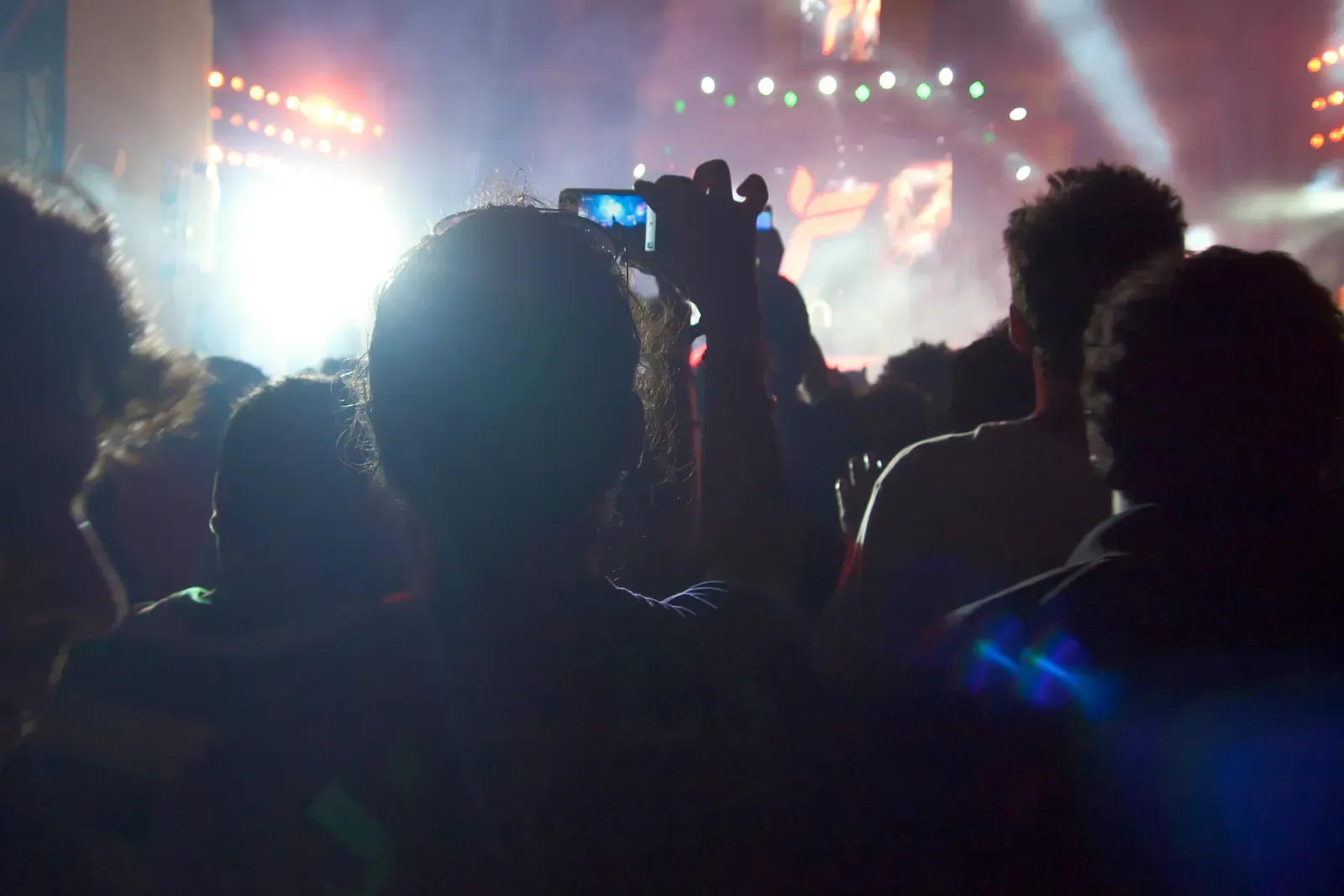
The genre began in the late 1980s, in clubs that wanted dance music to feel hypnotic rather than punishing. The KLF released “What Time Is Love? (Pure Trance)” in 1988, one of the early records to put the word on a sleeve. The same year Sven Vath opened Omen in Frankfurt, a club that gave the German scene a home for repetitive, melodic techno.
The record most often cited as a first landmark is “The Age of Love”, by an Italian-Belgian duo working out of a record-shop studio in Mouscron, released in 1990. It laid a slow-building synth theme over a driving beat and left space for a breakdown, which was close to the whole recipe. In 1992 Jam & Spoon remixed it as the “Watch Out for Stella” version, and that became the best-known form of the track.
Frankfurt, 1988 to 1993
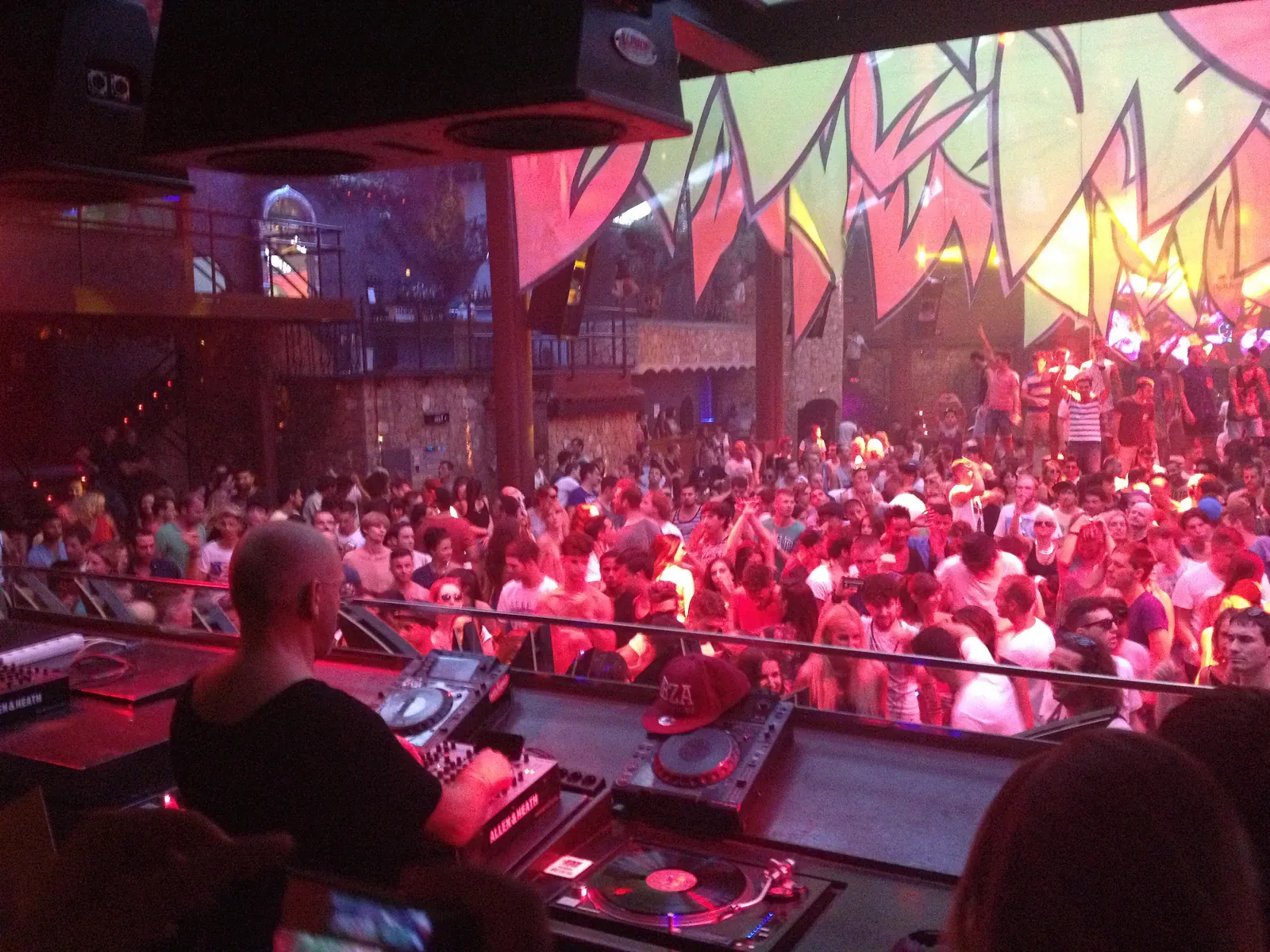
Frankfurt had the clubs, the labels and the person to link them. Vath played at Dorian Gray from 1982, opened Omen in 1988, and in 1991 started Eye Q with Heinz Roth in Offenbach. In 1992 the harder Harthouse followed as an Eye Q sublabel. Energy 52’s “Cafe del Mar”, an Eye Q single from 1993, showed the softer end of the sound and outlived the labels that launched it.
Berlin took a different road. MFS, founded in 1990 by Mark Reeder, was among the first labels to use the word trance, and it gave Paul van Dyk his start. Berlin had cheap space and a young crowd in the years right after the Wall fell.
Characteristics
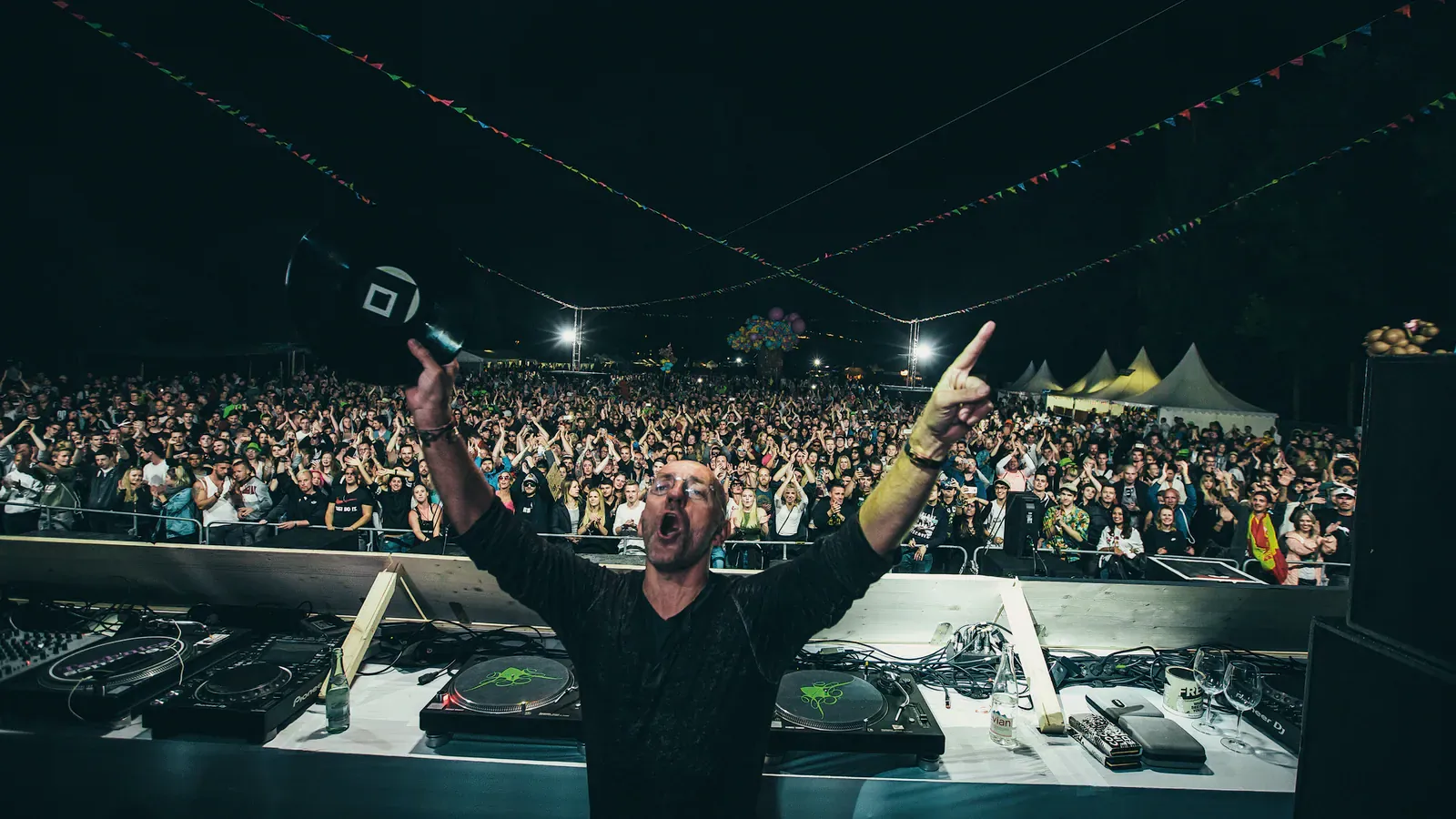
A trance track runs in 4/4 with the kick on every beat and an open hi-hat on the offbeat. One central melody repeats through most of the track, and instruments enter or leave every 4, 8, 16 or 32 bars. Sparse intros and outros let DJs blend one record into the next. The mid-track breakdown removes the beat entirely before a snare roll and the return of the kick. Minor keys dominate, and vocals, when present, are usually sung by female soloists.
Instruments and production
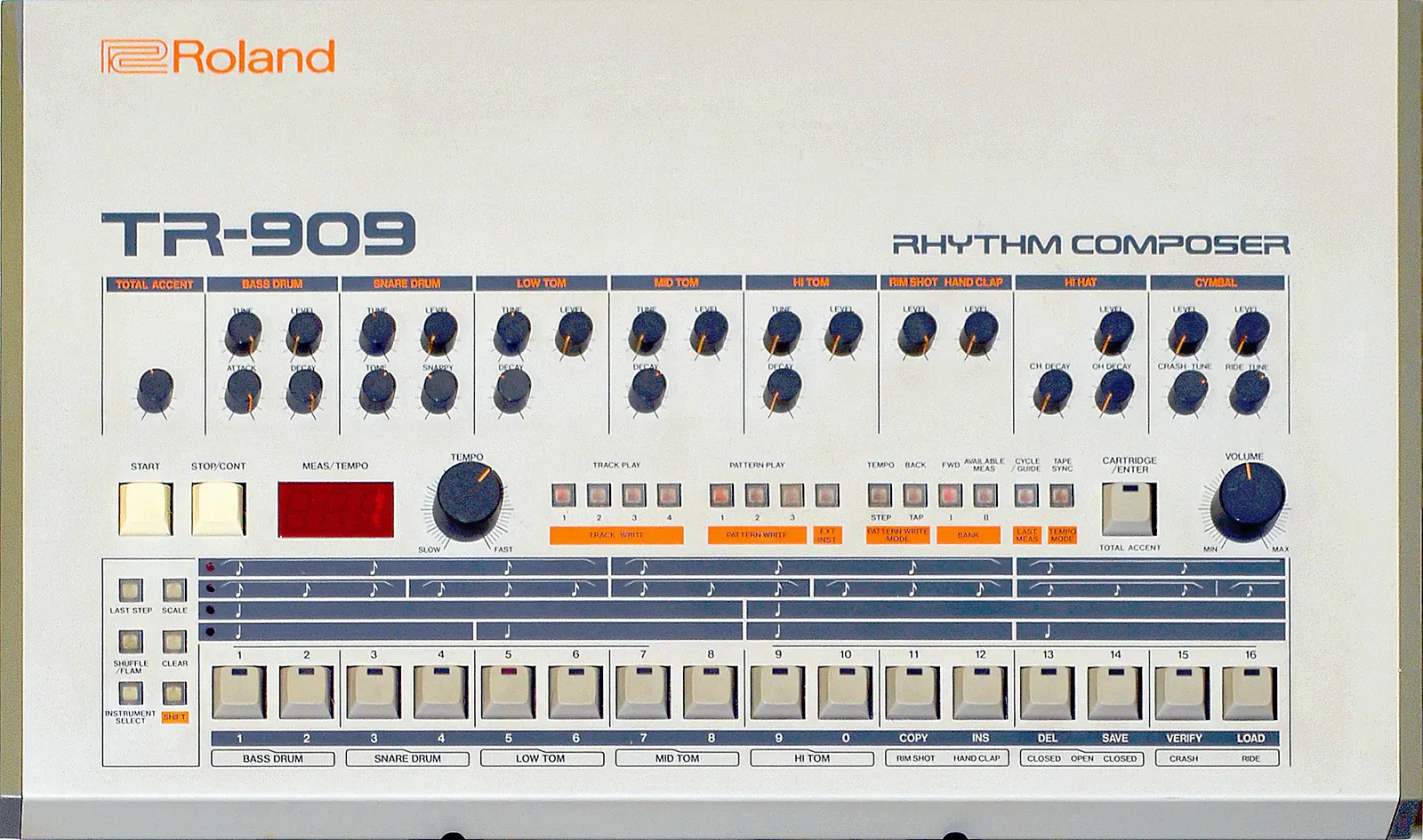
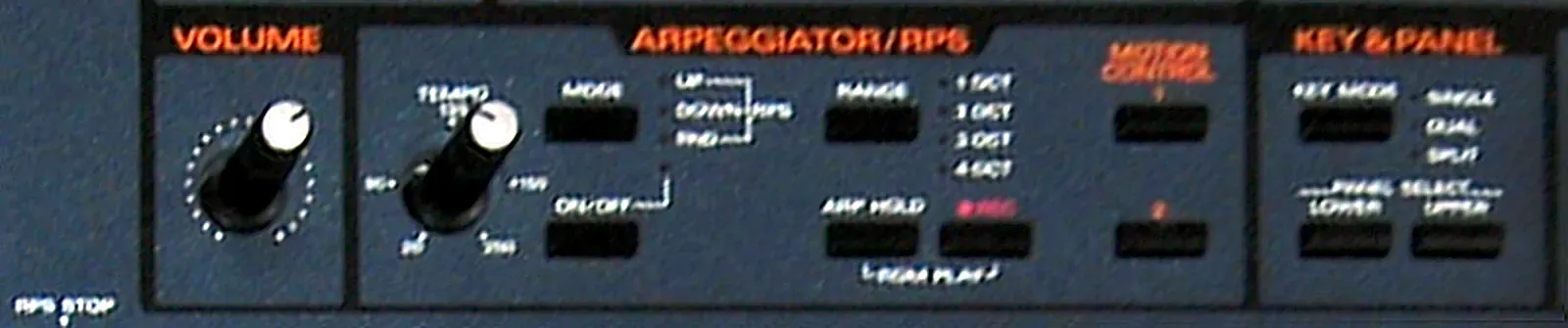
Early trance borrowed the Roland TR-909 kick and hi-hat patterns and the acid lines of the TB-303 from house and techno. What changed the sound for good was the Roland JP-8000, released in 1996. Its supersaw waveform stacks detuned sawtooth oscillators into one huge, shimmering lead, and producers made it the default trance sound.
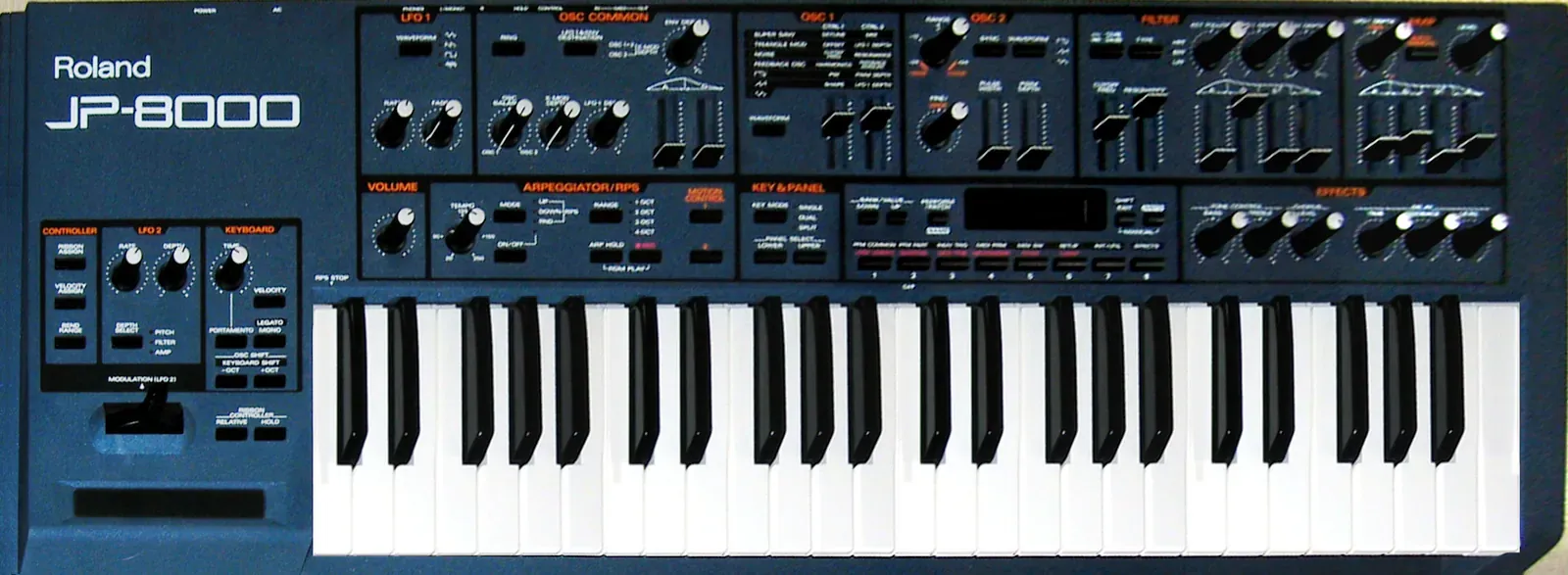
The same synth has a built-in arpeggiator, which suited a genre that runs on repeating note patterns. The Access Virus, arriving in 1997, supplied plucks and pads, and software such as Cubase VST let bedroom producers finish a track without a studio.
Eurotrance, 1994 to 1999
Between 1994 and 1999 trance left the clubs. Robert Miles released “Children” in 1995, a piano-led record that sold across Europe and gave the genre a name for people who never went out dancing. Paul van Dyk’s “For an Angel” reached UK audiences in 1998 in a reworked version (the original dates from 1994) and became a template for the uplifting build. Binary Finary’s “1998” and Gouryella’s debut, a project by Ferry Corsten and Tiesto, followed the same rules. Delerium’s “Silence”, with Sarah McLachlan on vocals, showed vocal trance could sit in pop and film as well.
In the middle of this boom the first wave ended: Eye Q closed and Harthouse went insolvent in 1997, as commercial trance labels took over.
Superstar DJ era, 2000 to 2008
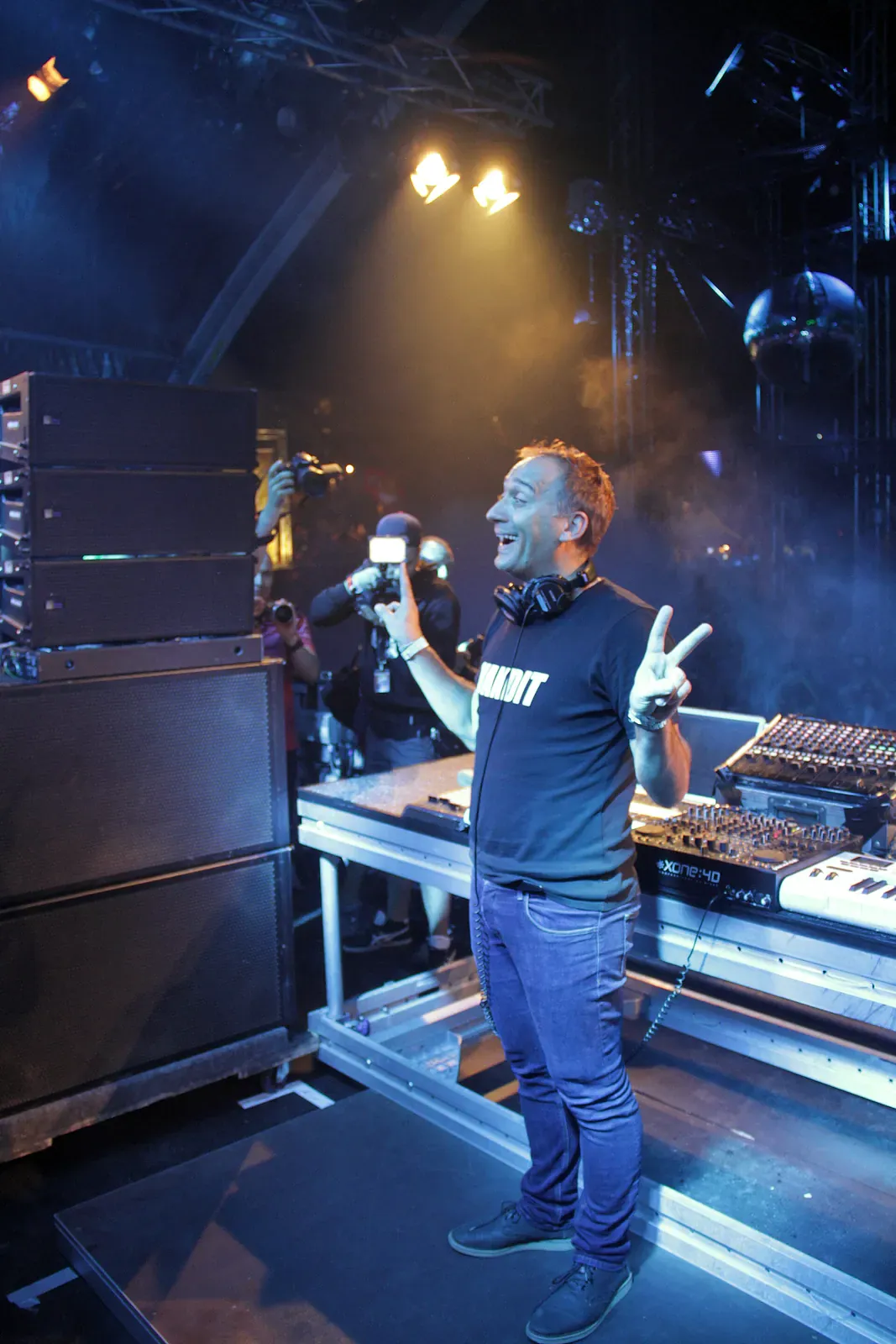
In this phase the DJ became the headliner. Tiesto and Arny Bink founded Black Hole Recordings in Breda in 1997, and Tiesto’s mixes and compilations built an audience that later filled stadiums. In 2004 he played live at the opening ceremony of the Athens Olympics, the first DJ to do so. On 1 June 2001 Armin van Buuren began A State of Trance, a weekly radio show, and in 2003 he started Armada Music in Amsterdam with Maykel Piron and David Lewis. Paul van Dyk took the number one place in the Top 100 DJs poll in 2005 and 2006, and van Buuren won it five times.
Mainstream success
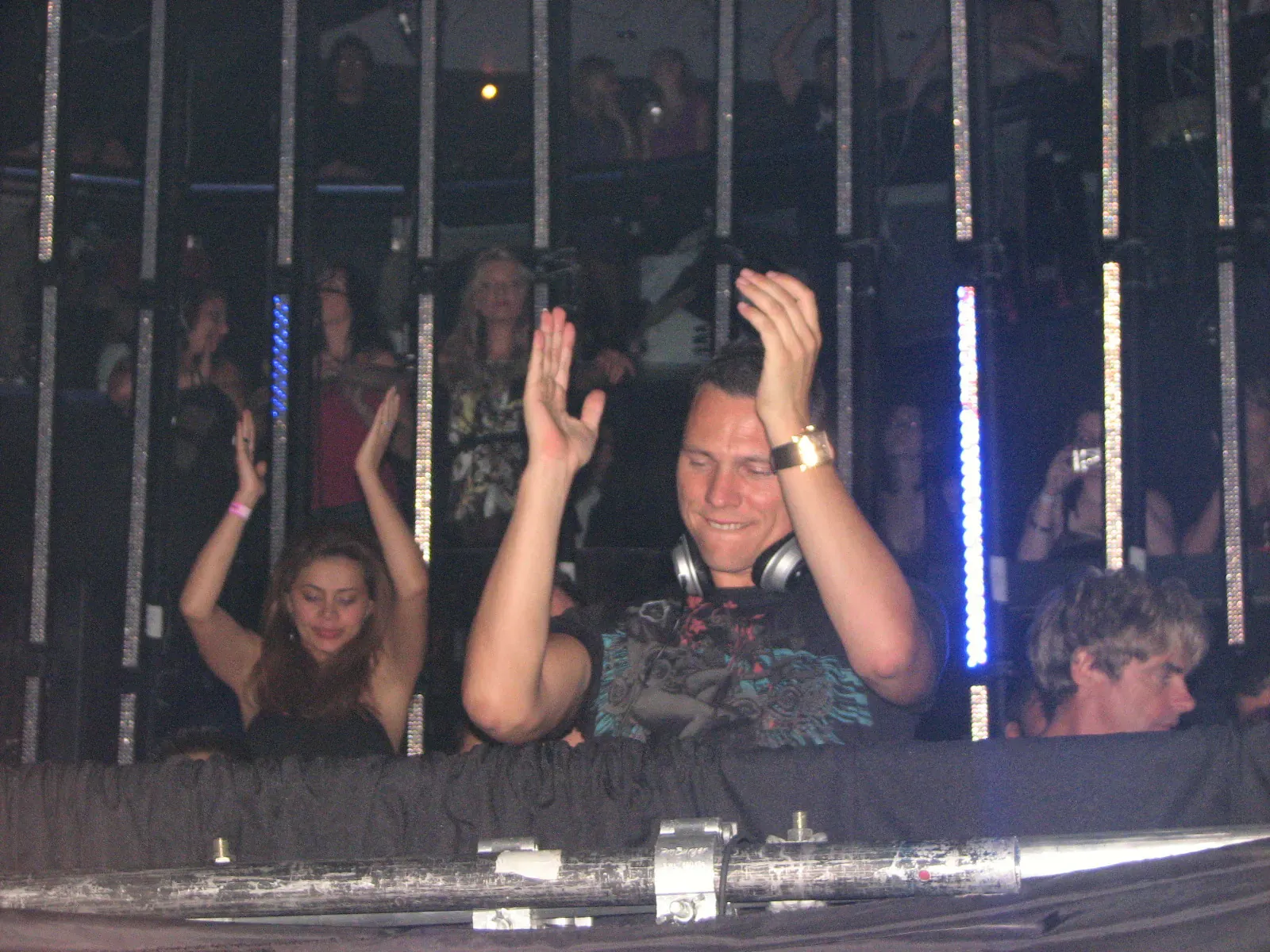
Success came in three steps: radio, then compilations, then spectacle. Miles’s “Children” and Darude’s “Sandstorm” proved an instrumental could sell without a vocal. Delerium proved a vocal could carry the same builds into pop. Tiesto’s trance take on Barber’s “Adagio for Strings” in 2005 pushed the sound further, and the ceremony in Athens a year earlier had put it in front of a global television audience.
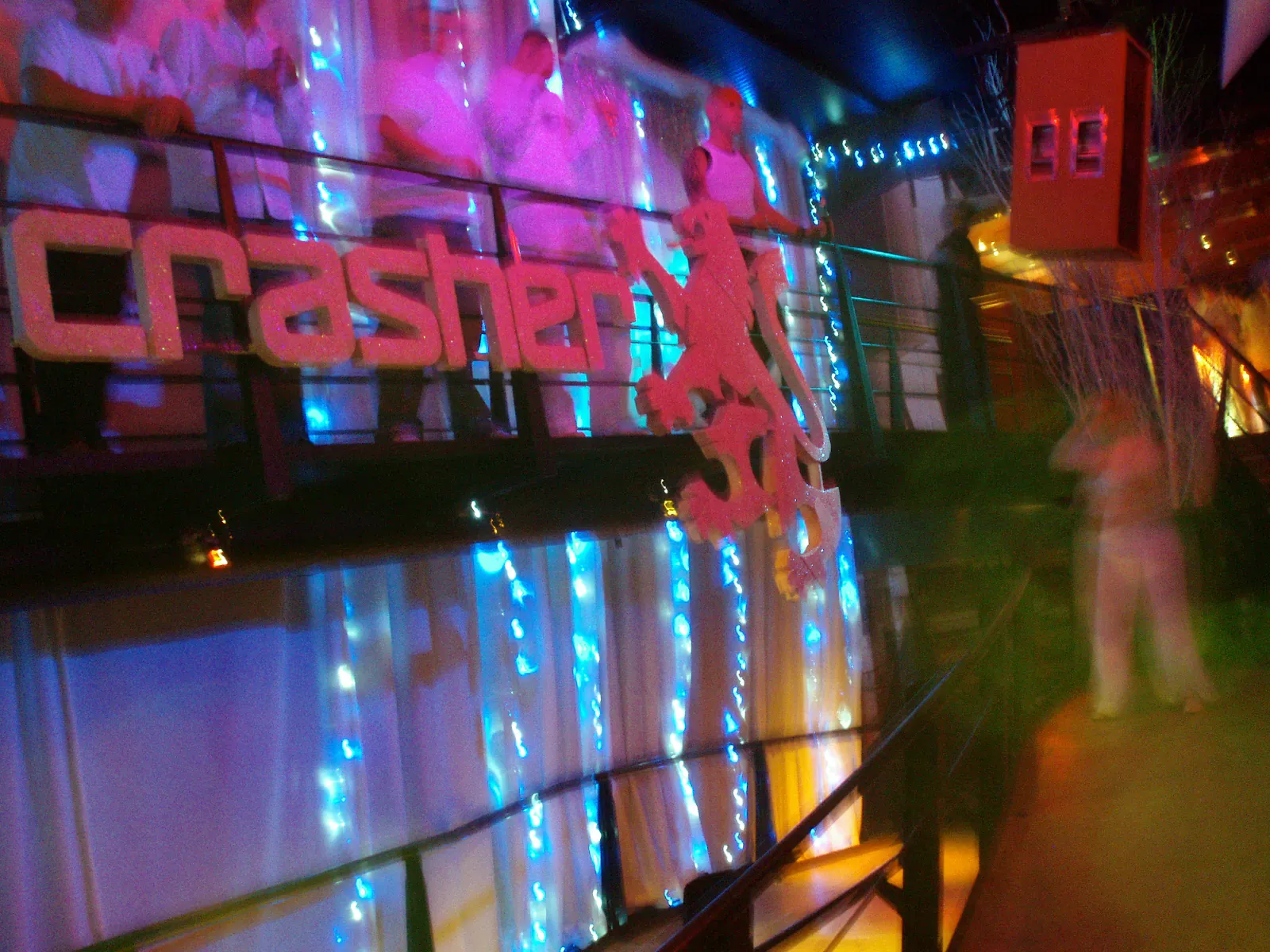
The spread was physical as well as musical. UK nights such as Gatecrasher built a loyal following in the 1990s, with all-white dress codes and lights as part of the show.
The backlash was about sameness: critics said commercial trance had become a formula of build, breakdown and drop.
Festival era and revival, 2009 to now
Since 2009 the sound has lived on in two forms: melodic and vocal trance at the biggest festivals, and older, harder trance in clubs. Above & Beyond’s Anjunabeats carried the first. “Sun & Moon” came out in 2011 and its chorus became a festival singalong. Black Hole and Armada, with the radio show behind it, kept the Dutch scene running. See the label pages for Armada Music and Black Hole Recordings.
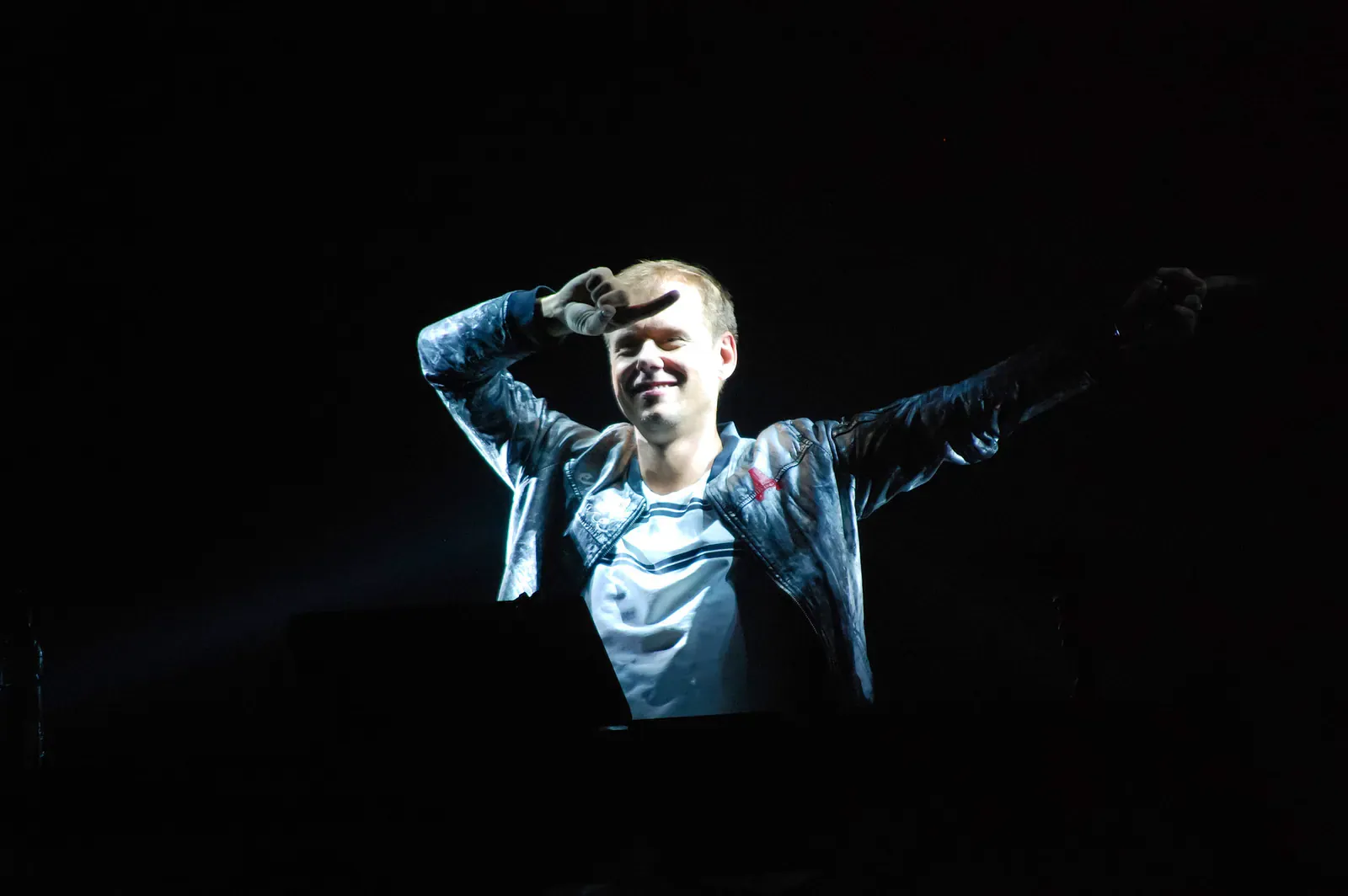
Notable recordings
“The Age of Love” was made in a small studio and picked up in the clubs first. Producers copied its pacing, and the Jam & Spoon remix of 1992 carried it to a bigger audience.
“Children” (1995) is built on a solo piano riff. It crossed over because it did not sound like the loud club records around it, and it opened a strand of the sound that critics named dream trance.
“Adagio for Strings” took a famous 1930s orchestral piece, Samuel Barber’s, and put a trance groove under it. It is the clearest case of the stadium era’s idea: take something everyone already knows and give it a breakdown.
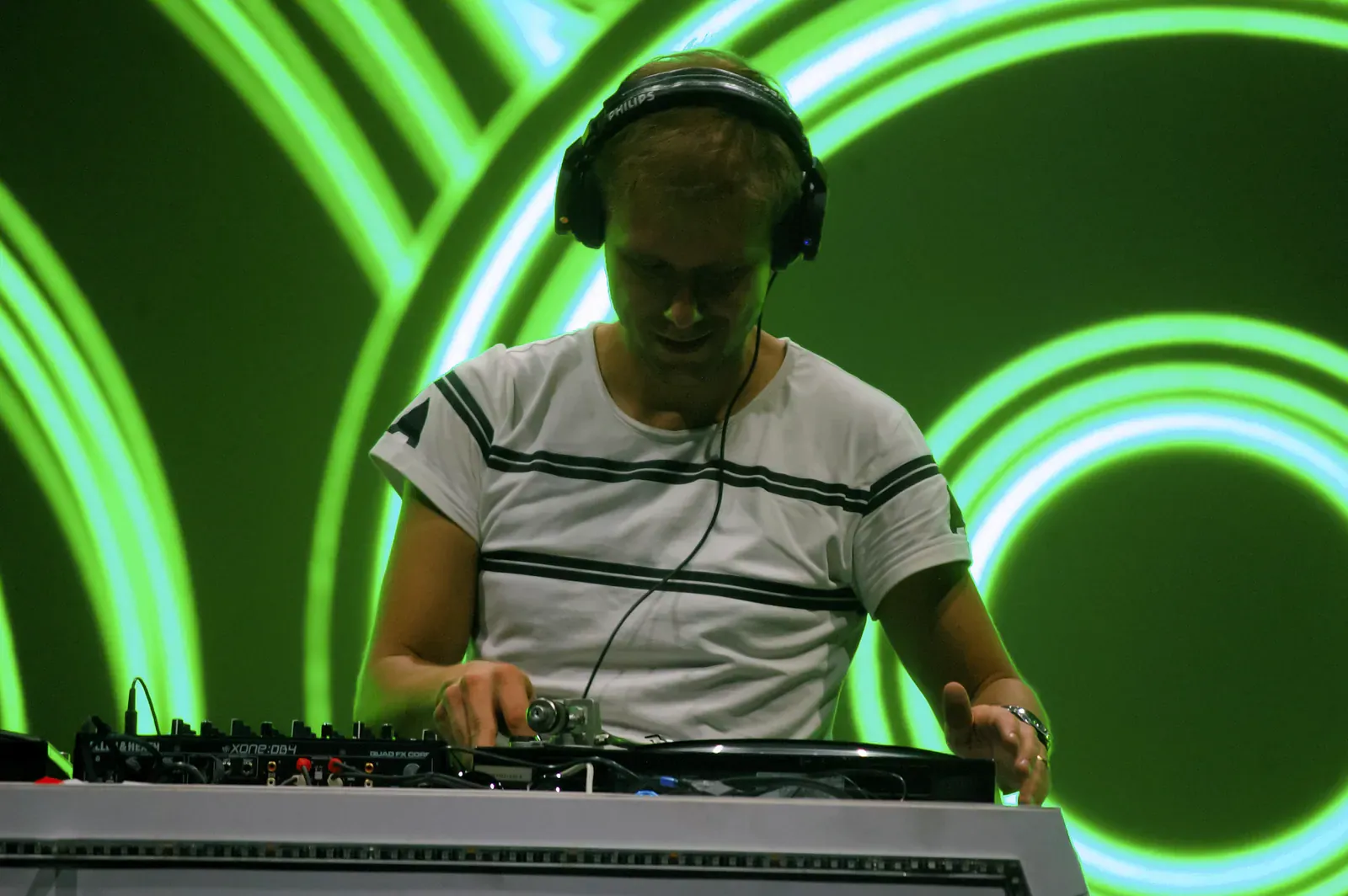
Culture
The ritual is the structure itself. Dancers raise their hands as the breakdown ends and the main melody returns. Some parties set a dress code, such as the all-white of Sensation-style events, and fans keep the weekly habit of tuning in to A State of Trance for new releases.
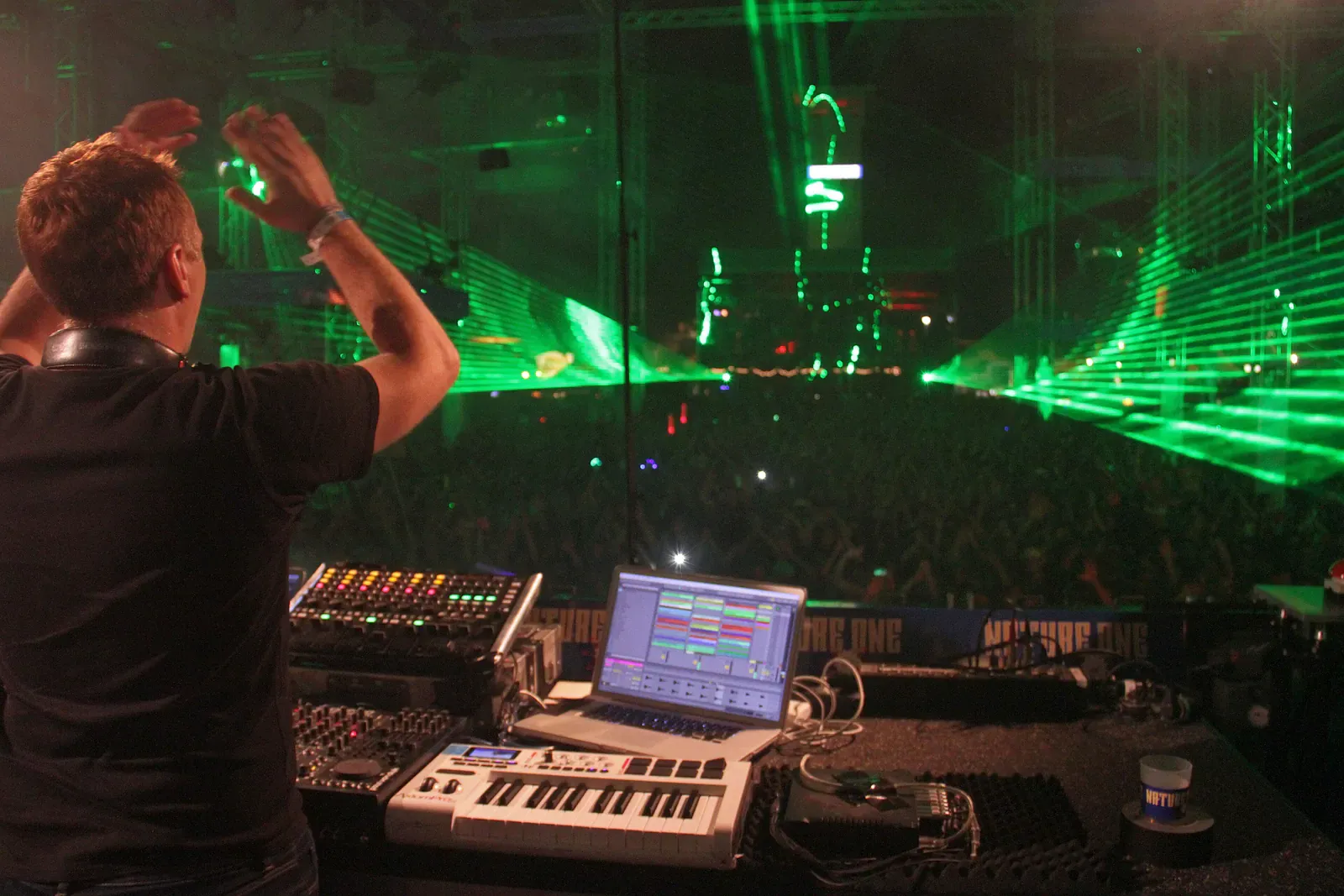
The economics changed with the music. The early 1990s scene ran on small labels and club residencies; by the 2000s a headline DJ could fill an arena, which pushed producers toward the radio edit and the festival drop.
Misconceptions
Trance has always been happy, bright music. It started as hypnotic, driving German club music, often dark. The sweet, major-key uplifting style came later, around the end of the 1990s.
It is a Dutch invention. The Netherlands built its big labels and stars, but the first records and clubs came from Germany, Belgium and Italy years earlier, in 1988 to 1993. Black Hole began in 1997 and A State of Trance in 2001.
Trance is dead. The peak sales of the mid-2000s are behind it, but A State of Trance still airs weekly, and melodic trance still headlines major festivals.
Legacy
Trance supplied much of the vocabulary of later festival dance music: the long build, the breakdown and the melodic lead. Its harder and darker branches fed into hard dance scenes, while melodic trance kept a steady audience at festivals and on weekly radio. The DJ-as-headliner model that Tiesto and Armin van Buuren established in the 2000s still shapes how electronic acts are booked.
Frequently asked questions
What is trance music?
Trance is electronic dance music with a four-on-the-floor beat, usually 128 to 150 BPM, long breakdowns, rising build-ups and melodic synth leads. It began in Germany around 1990.
Who invented trance?
No single person did. Frankfurt’s Sven Vath and the Eye Q and Harthouse labels, Berlin’s MFS and a few Belgian and Italian producers all shaped it between 1988 and 1993. “The Age of Love” in 1990 is often named as an early landmark.
What is the difference between trance and techno?
Techno leans on machine rhythm and texture and can be stripped down. Trance keeps a similar pulse but builds each track around a melody, a breakdown and an emotional peak.
Which trance records are best known?
The best-known trance records include “Children” by Robert Miles, “Sandstorm” by Darude and “Adagio for Strings” by Tiesto, with “The Age of Love” as an early landmark. Trance belongs to the electronic music family and sits close to house.
Sound
Sound sheet
Anatomy of a track
| # | Part | Bars |
|---|---|---|
| 1 | Intro (kick and hats) | 32 |
| 2 | First groove | 32 |
| 3 | Breakdown (no kick) | 32 |
| 4 | Build-up (snare roll) | 16 |
| 5 | Climax (lead and kick) | 32 |
| 6 | Second breakdown | 16 |
| 7 | Outro | 32 |
Signature sounds
- Supersaw lead
- Arpeggiated pluck
- Rolling 16th-note bass
- Gated pad
- Snare-roll build-up
- Vocal hook
Drums and percussion
- Roland TR-909
Synths and software
- Roland JP-8000
- Roland TB-303
- Sylenth1
- Spire
Techniques
- Snare-roll build-up
- Long breakdown
- Arpeggiated hook
- Gated pads
- Sidechain compression
Keys and modes
Minor keys. Minor tonality carries the emotional weight; major keys appear mainly in uplifting styles.
Vocals
Female soprano or mezzo-soprano soloists, often without a verse and chorus structure.
Scenes
Where it happened
Where and when the sound lived: one bar per city on a shared timeline.
Europe
Active scenes
Peak 4, 1997-2025
Omen, Dorian Gray, Eye Q and Harthouse made it the first trance capital.
MFS and Paul van Dyk built the Berlin strand of uplifting trance.
DiKi record shop studio where Age of Love was produced.
Platipus, Anjunabeats and UK club nights carried the sound.
Home of Tiesto and Black Hole Recordings.
Armada Music and A State of Trance are based here.
Venues and places
Frankfurt, 1982 to today. Sven Vath held a residency here from 1982.
Frankfurt, 1988 to today. Sven Vath opened it with Michael Munzing and Mattias Martinsohn.
San Rafael, Ibiza, 1976 to today. Sven Vath held his own night here for 18 years.
Athens, 2004 to today. Tiesto played live at the 2004 Olympic opening ceremony.
Culture
Culture markers
- All-white dress code
Sensation-style parties asked guests to dress in white.
Fashion - Hands in the air at the breakdown
Dancers raise their arms as the climax returns.
Ritual - Weekly radio listening
Fans tune in to A State of Trance for new tracks every week.
Ritual
Media
Key media
- 1997Magik One: First Flight
by Tiesto. Early Black Hole mix that raised Tiesto's profile.
Mix - 2001A State of Trance
by Armin van Buuren. Weekly trance radio show first aired on 1 June 2001.
Radio - 2003Tiesto in Concert
by Tiesto. The DVD that helped Tiesto land the Athens Olympics performance.
Film
Glossary
Terms on this page
A sequence of chord notes played one at a time, repeated.
A section where the kick drops out and melody and pads carry the track.
A rising section of snare rolls and filter sweeps that leads back to the beat.
A bass that plays on every 16th note between kicks.
A lead sound made by stacking detuned sawtooth waves.
A rhythmic cutting of a pad or synth to a fast pattern.
A strand with major-key melodies and emotional breakdowns.
Electronic family