Detroit techno
Detroit techno is a style of electronic dance music created in the mid-1980s by Juan Atkins, Derrick May and Kevin Saunderson, at about 120 to 135 BPM.
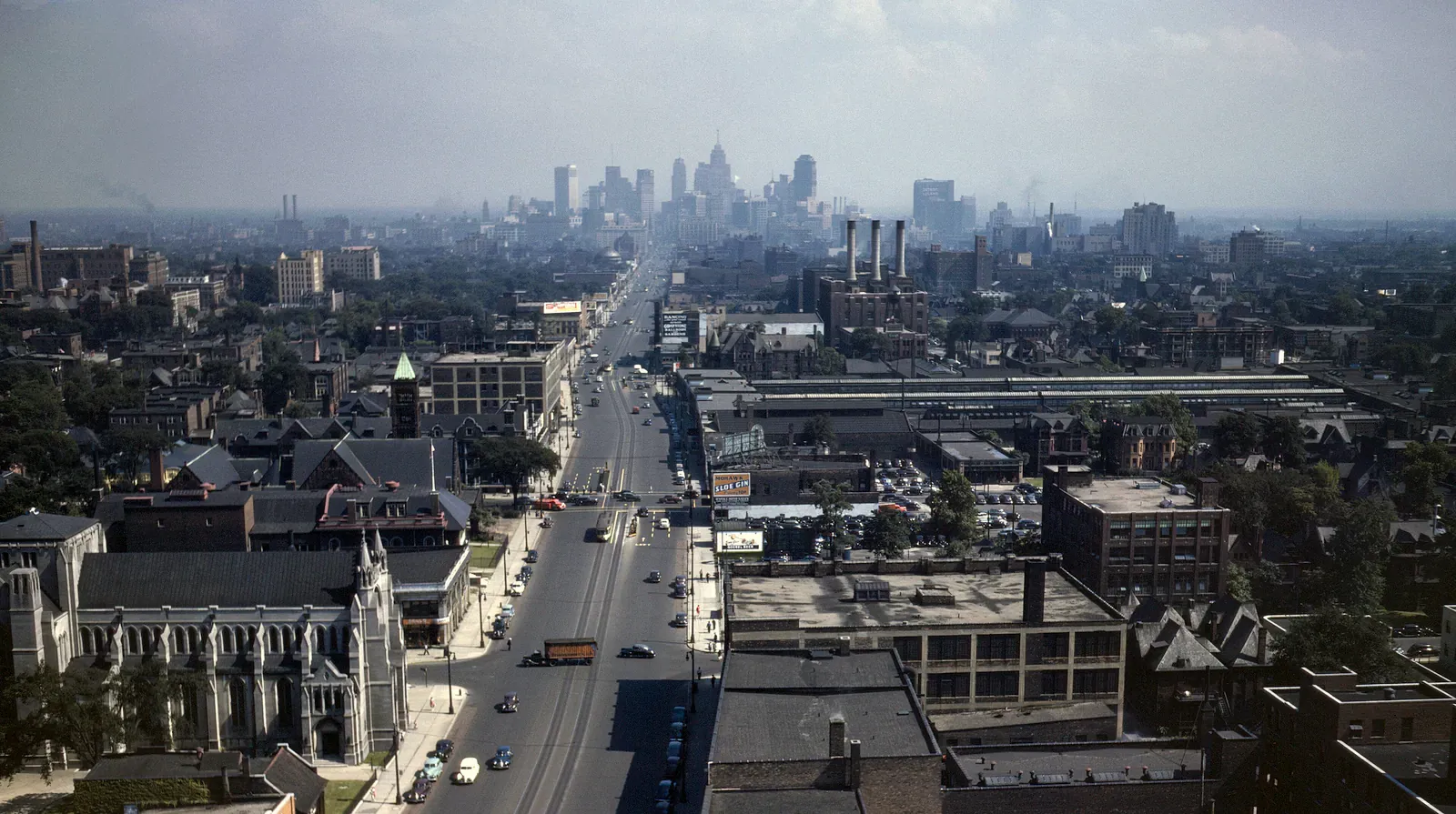
Detroit, 1985
Electronic family
Facts
| Family | Electronic |
| Branch of | Techno |
| Origin | Detroit, United States |
| Emerged | Mid-1980s |
| Status | Active |
| Tempo | 120 to 135 BPM |
| Meter | 4/4 |
| Grew out of | Electro, Chicago house |
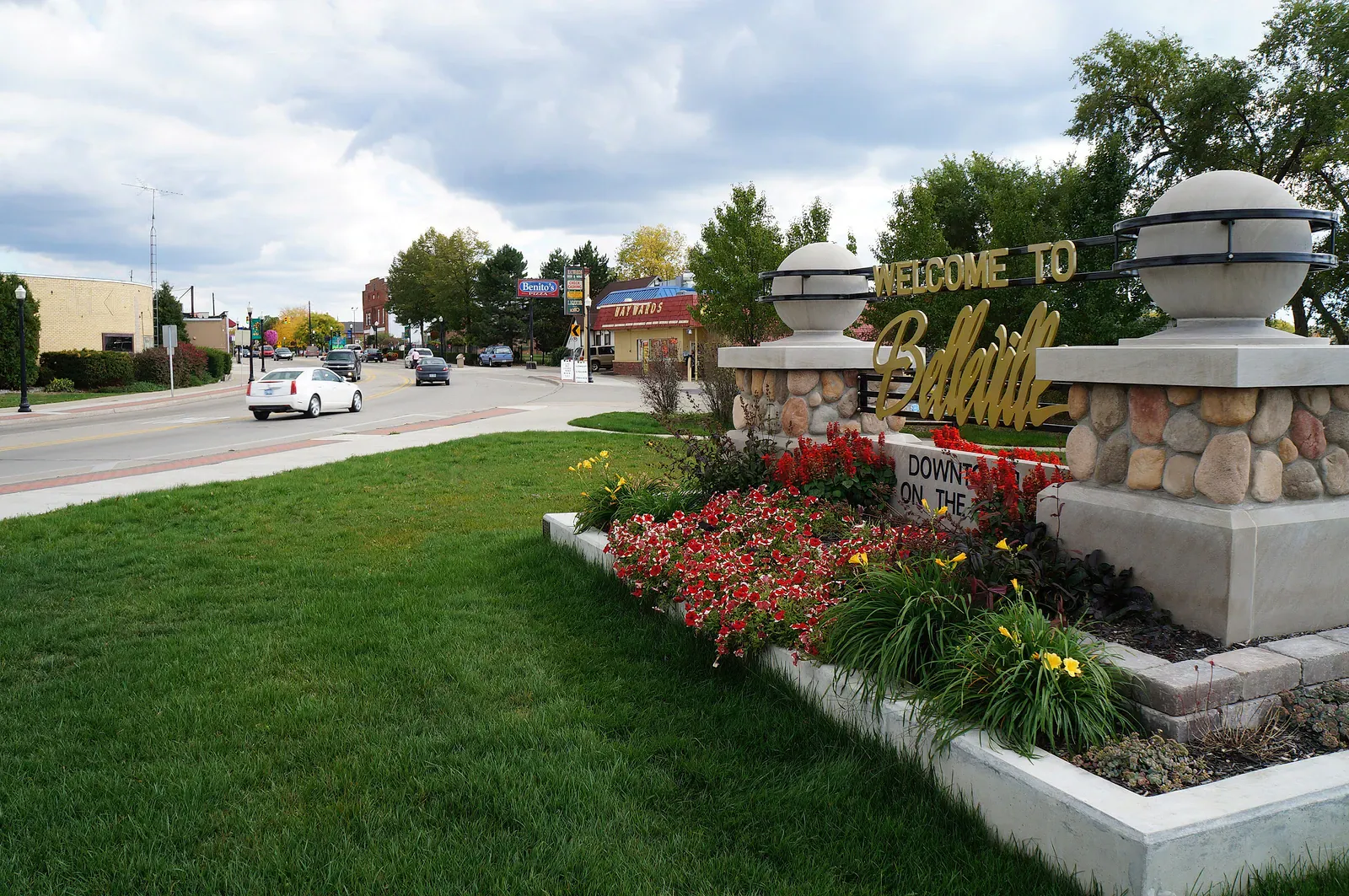
Detroit techno is a style of electronic dance music that emerged in 1985 in Detroit and the suburb of Belleville, Michigan. It was shaped by Juan Atkins, Derrick May and Kevin Saunderson, the Belleville Three, who combined the machine aesthetic of Kraftwerk with the syncopation of funk.
Its defining traits are drum machine grooves with funk accents, warm synthesizer string pads and a tempo of roughly 120 to 135 BPM. Derrick May has described it as “a complete mistake … like George Clinton and Kraftwerk caught in an elevator, with only a sequencer to keep them company”.
Origins
The Belleville Three were high school friends who made music in their basements and named Parliament-Funkadelic, Kraftwerk, Yellow Magic Orchestra and Depeche Mode among their sources. Local radio host Electrifying Mojo, whose broadcasts mixed eclectic music including electro and European synth-pop, was a shared influence.
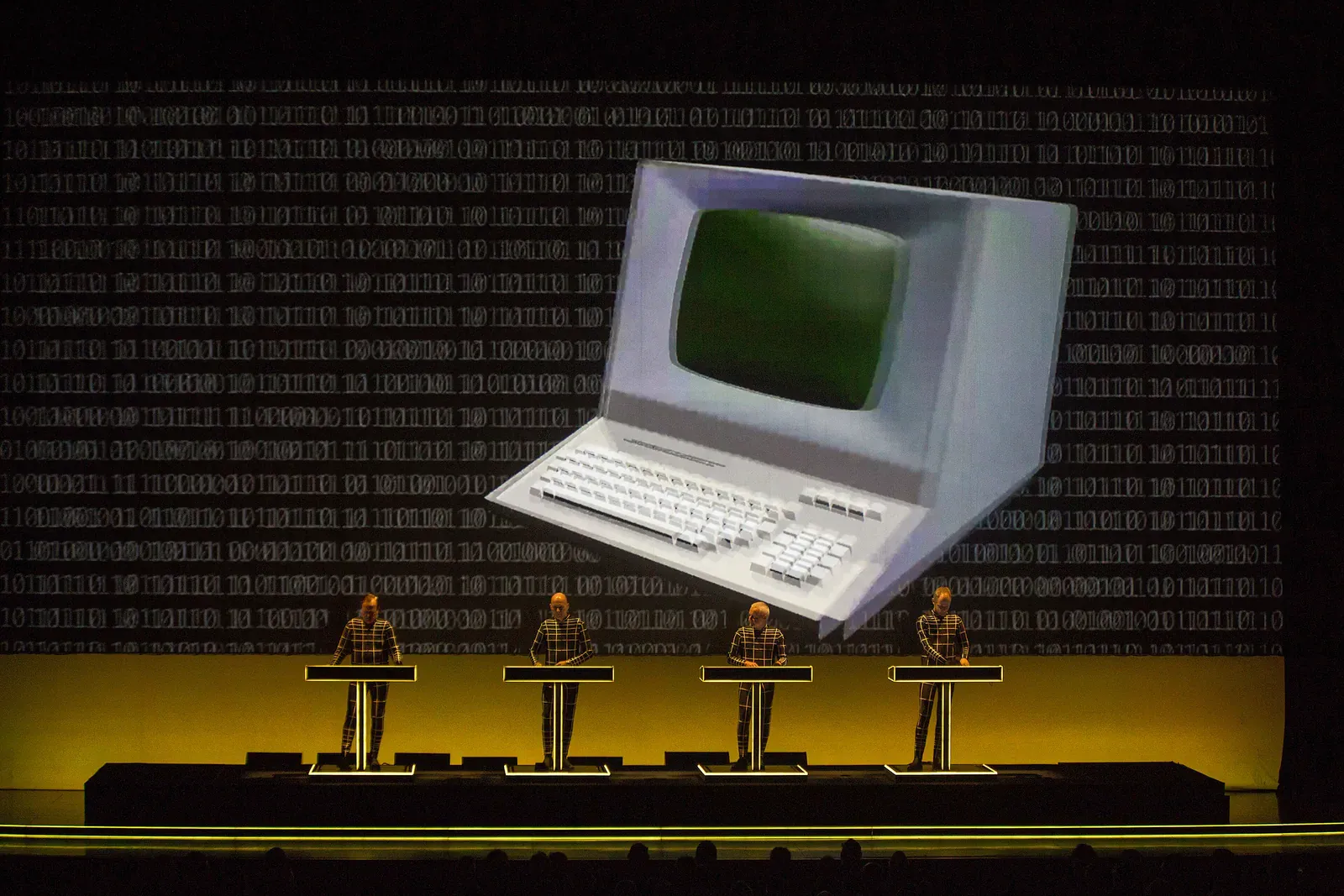
Kraftwerk supplied the cold, clean machine future and funk supplied the swing. The genre sits in the gap between them: a grid of drum machine steps with human accents leaning on it, a quality often summed up as mechanical soul.
Cybotron and Model 500, 1981-1985
Juan Atkins started first. With college classmate Rik Davis he formed Cybotron, whose 1981 single “Alleys of Your Mind” sold 15,000 copies and led to an album deal with Fantasy Records. Atkins was reading the futurist writer Alvin Toffler at the time and was already using the word “techno”.
In 1985 Atkins released solo records as Model 500 on his own Metroplex label, and a new style began to take shape. One of the first of those records was “No UFO’s”. Genrology dates the genre to that year, in Detroit and Belleville.
Naming and the second wave, 1987-1992
Derrick May’s Transmat and Kevin Saunderson’s KMS put out the records that followed, among them “Strings of Life” (1987) and Inner City’s “Big Fun” (1988). Virgin Records scout Neil Rushton contacted May in 1988. Rushton and the Belleville Three settled on “techno”, a word Atkins had used since Cybotron, to set Detroit’s sound apart from Chicago house. The compilation Techno! The New Dance Sound of Detroit (Virgin’s 10 Records, 1988) put the term in front of British journalists.

In the early 1990s Carl Craig and Underground Resistance (Mike Banks, Jeff Mills, Robert Hood) pushed the sound harder. This is the bridge to the faster, harder techno that developed in Europe.
Characteristics
Four traits describe the sound. Mechanical soul means drum machine hits with funky accents: the notes sit on a strict grid, yet the accents push and pull like a band. Syncopated funk shows in bass and percussion that skip around the beat instead of stomping on it. Afrofuturism is the idea of Black artists in an American industrial city imagining a machine future, which is why titles such as “No UFO’s” read like transmissions. String pads are wide, warm synthesizer chords that make a machine sound as if it is remembering something, and Derrick May’s “Strings of Life” is the classic case.
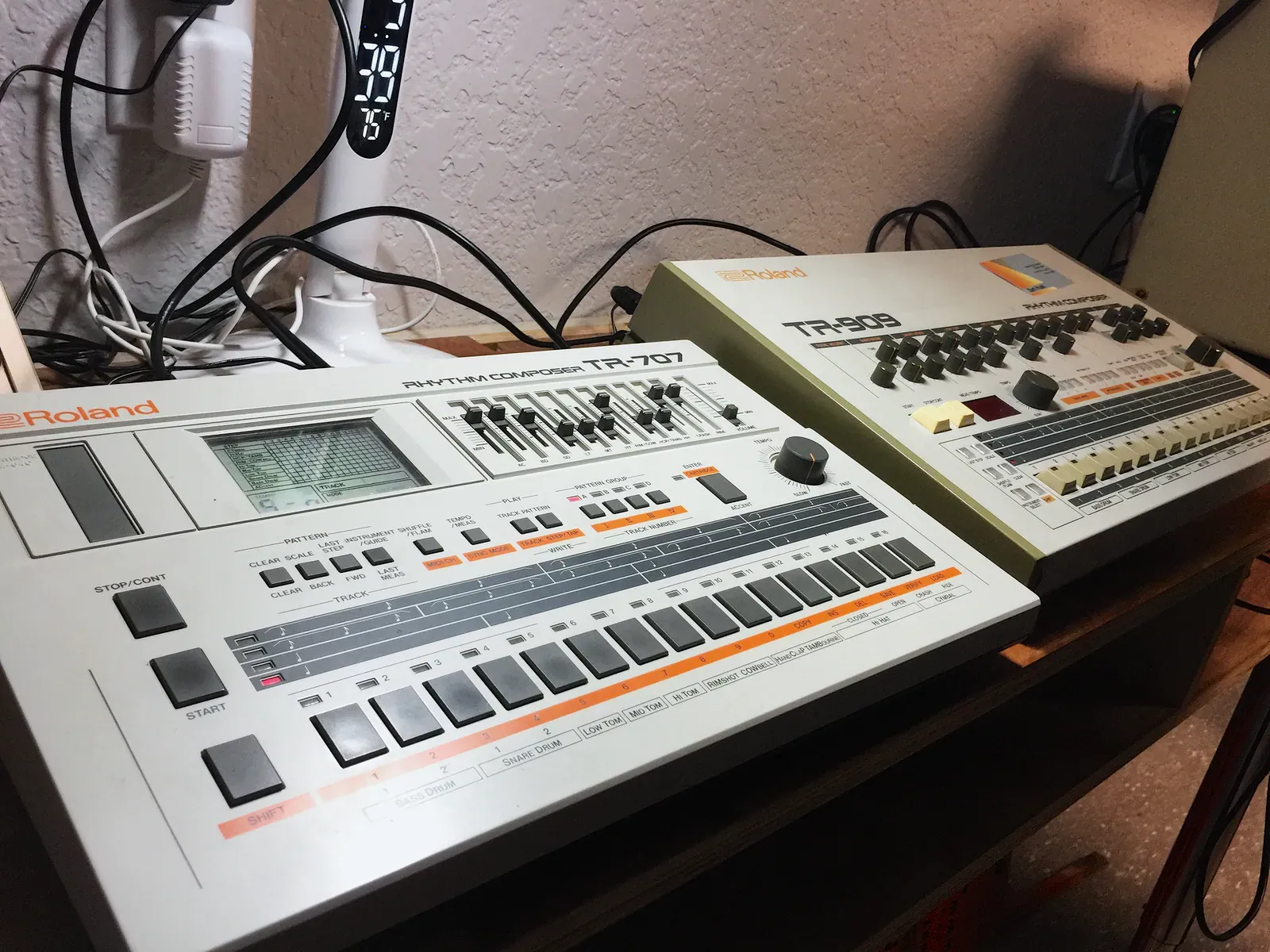
The tempo range is 120 to 135 BPM, slower than the harder techno that came later. The result leaves room for melodies to carry the track.
Instruments and production
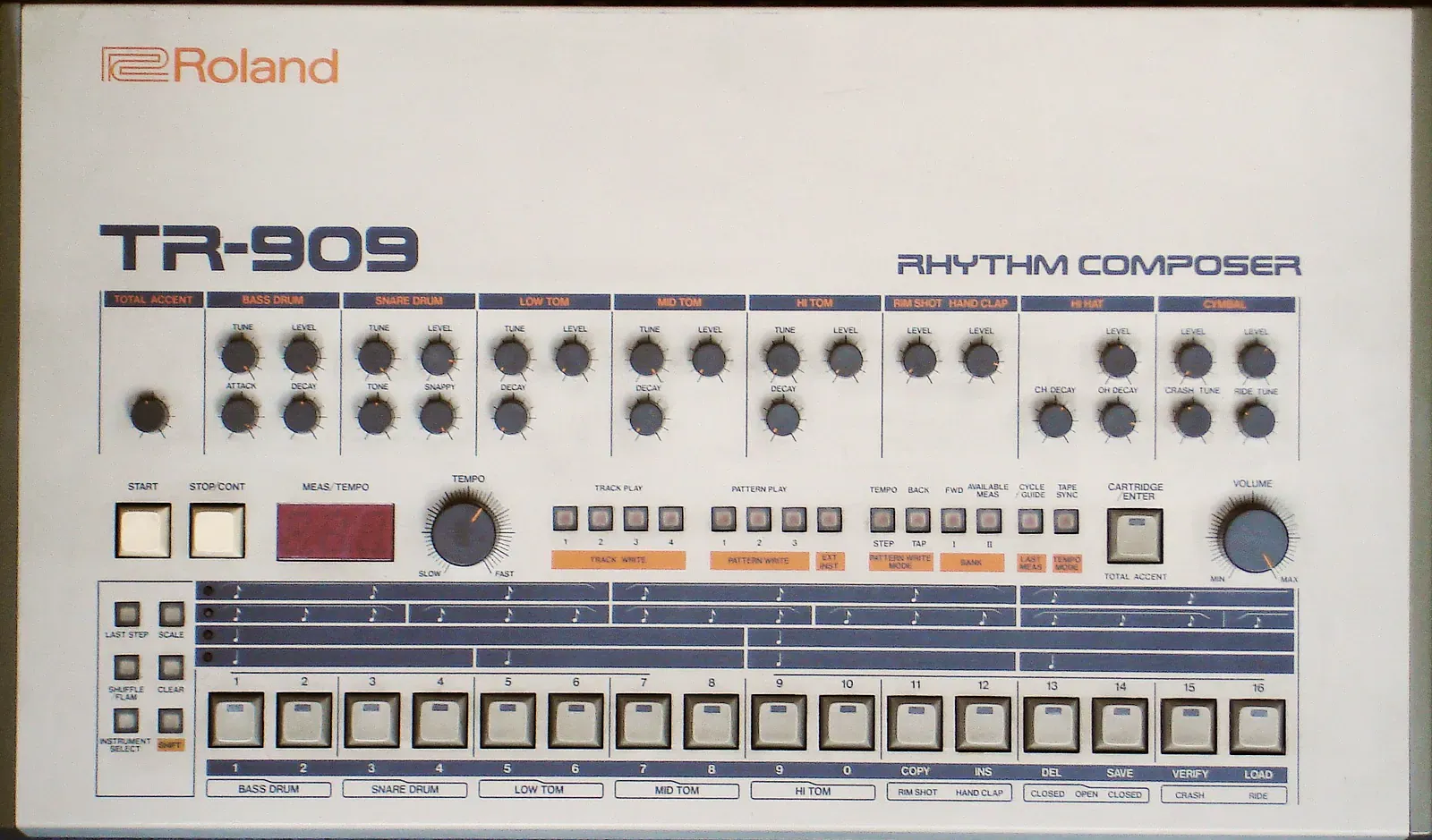
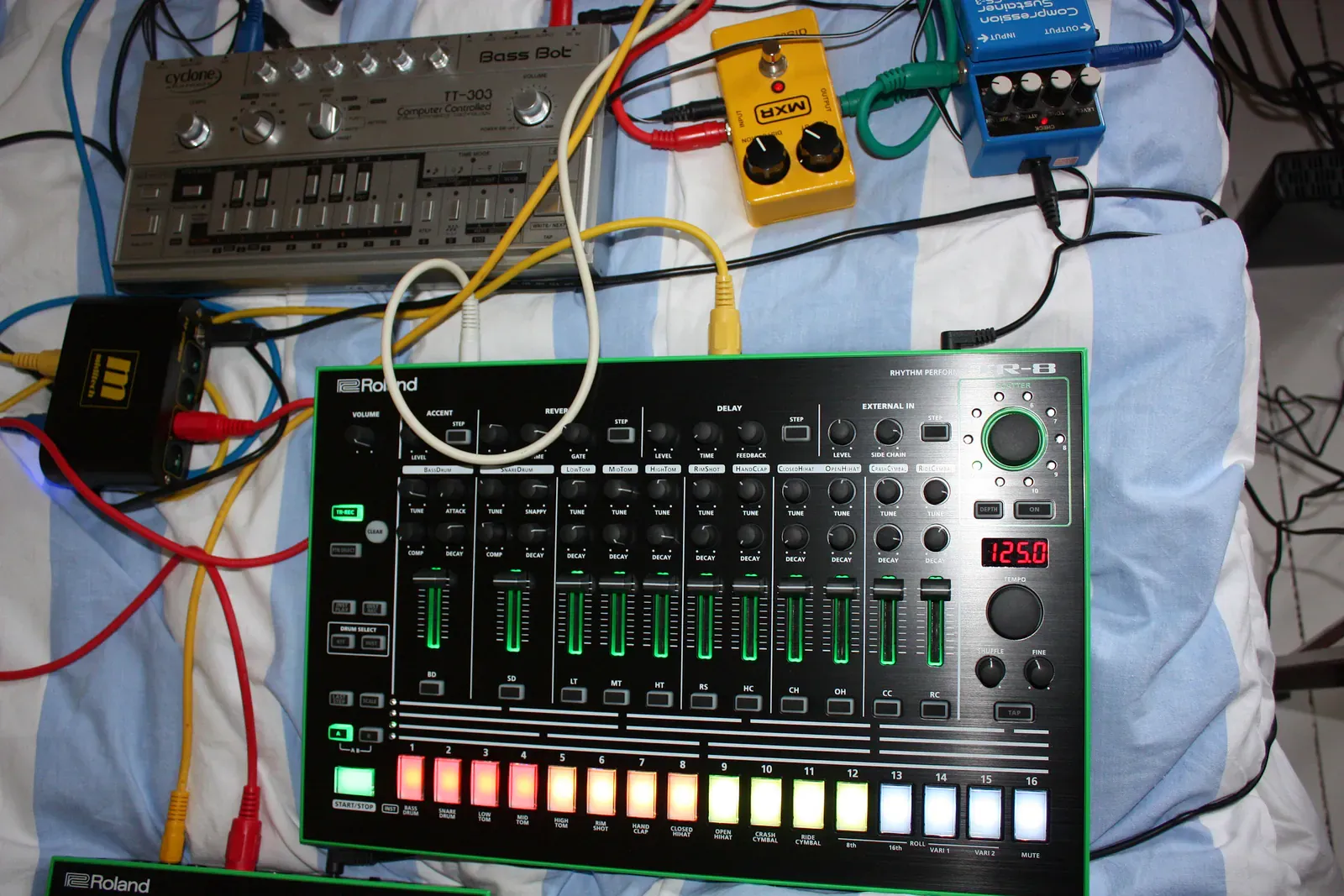
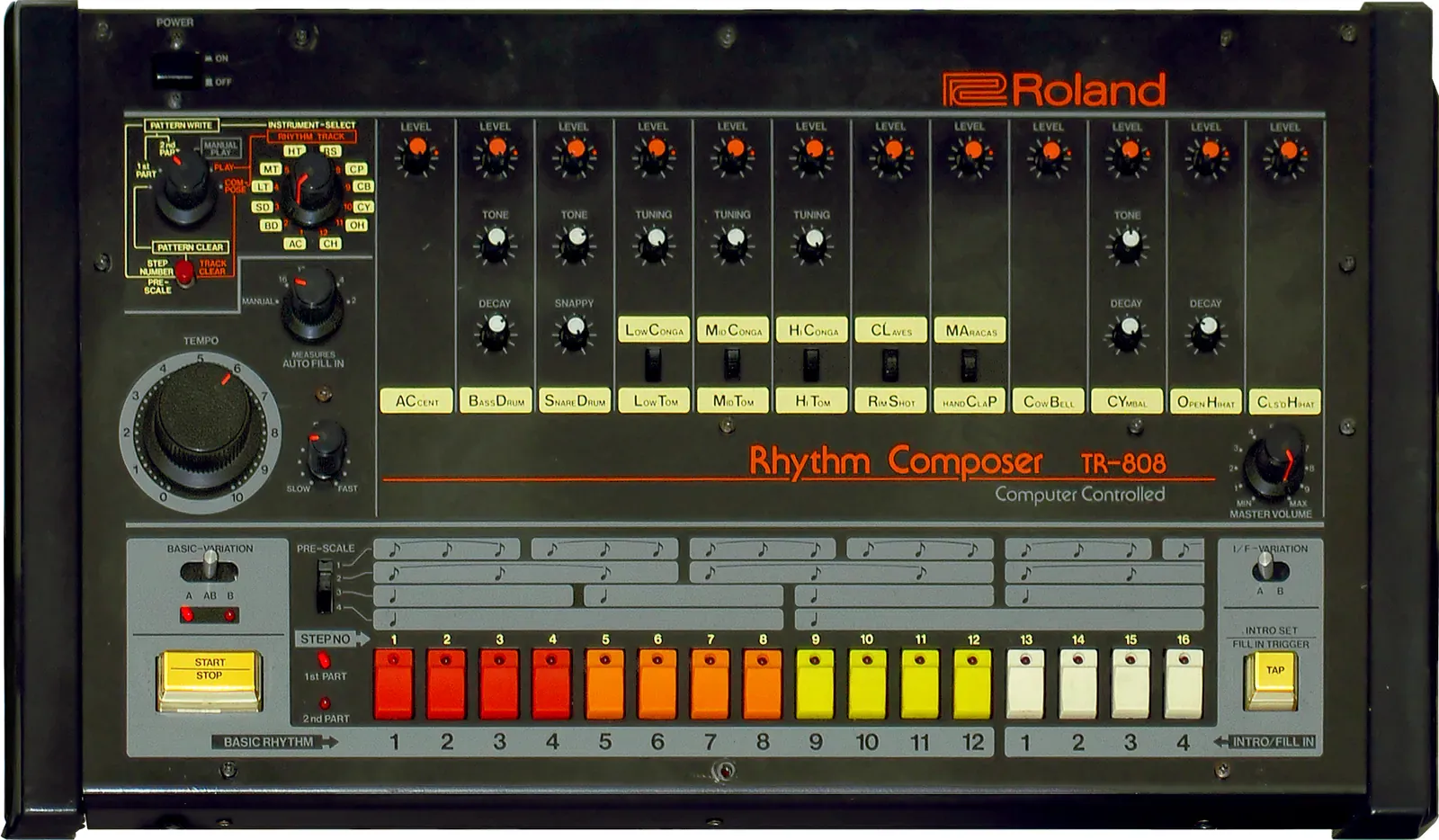
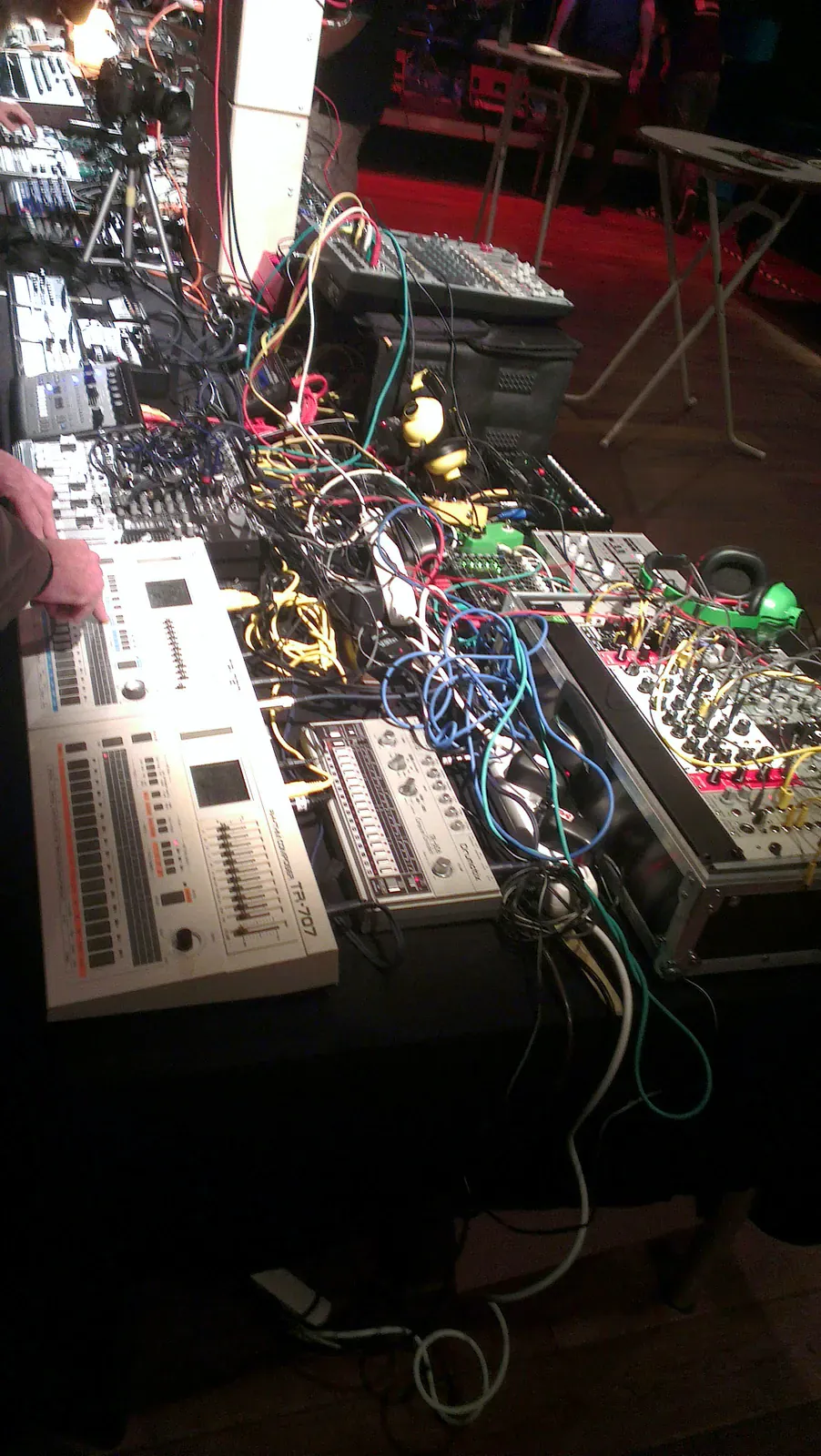
The Belleville Three worked with second-hand drum machines and synthesizers, recording in basements and small home studios. Affordable analog drum machines made it possible to program full tracks without a band, and early MIDI let several machines run in sync. The limits of that gear, sixteen-step patterns and a handful of voices, shaped the stripped-down arrangements.
Mainstream success
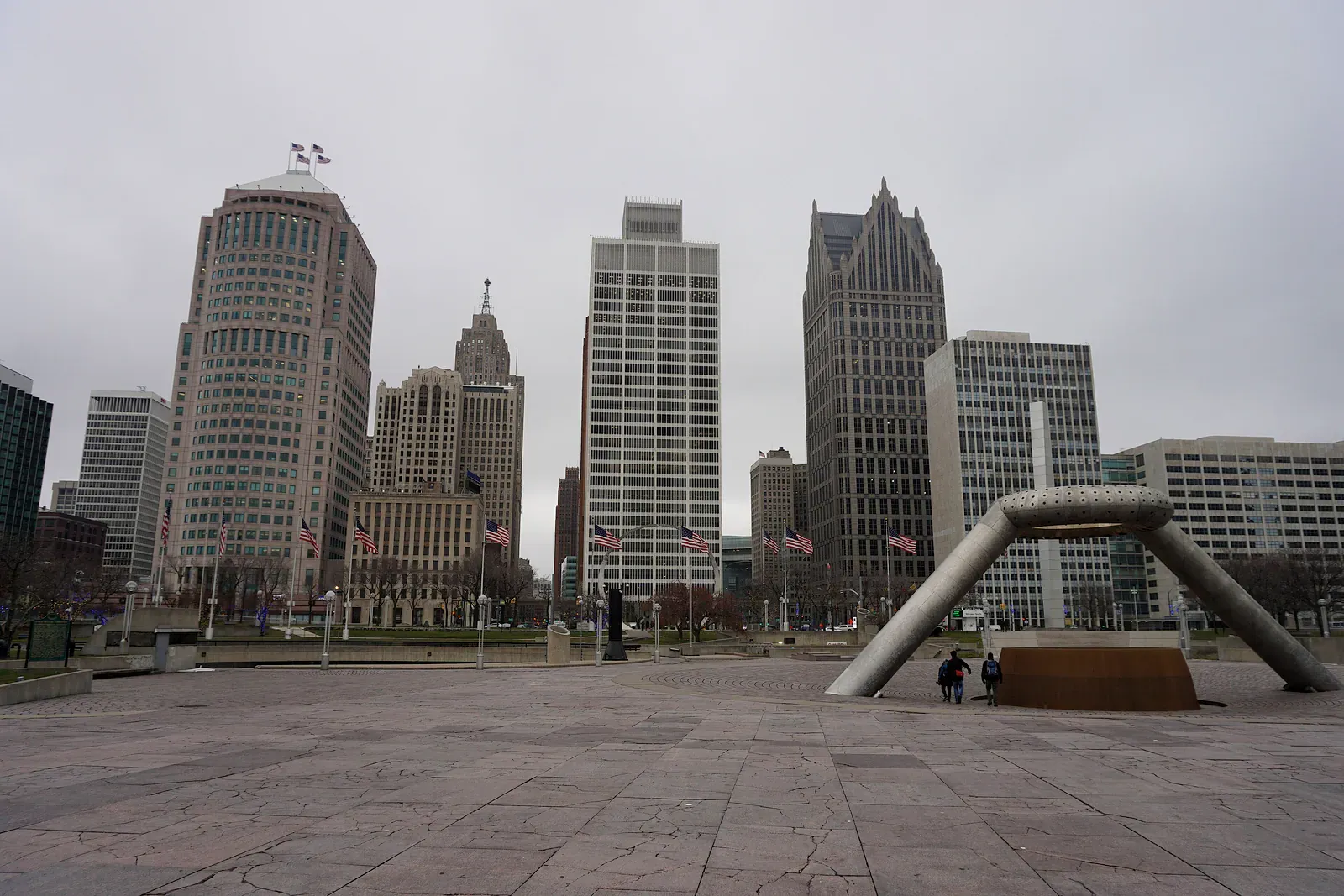
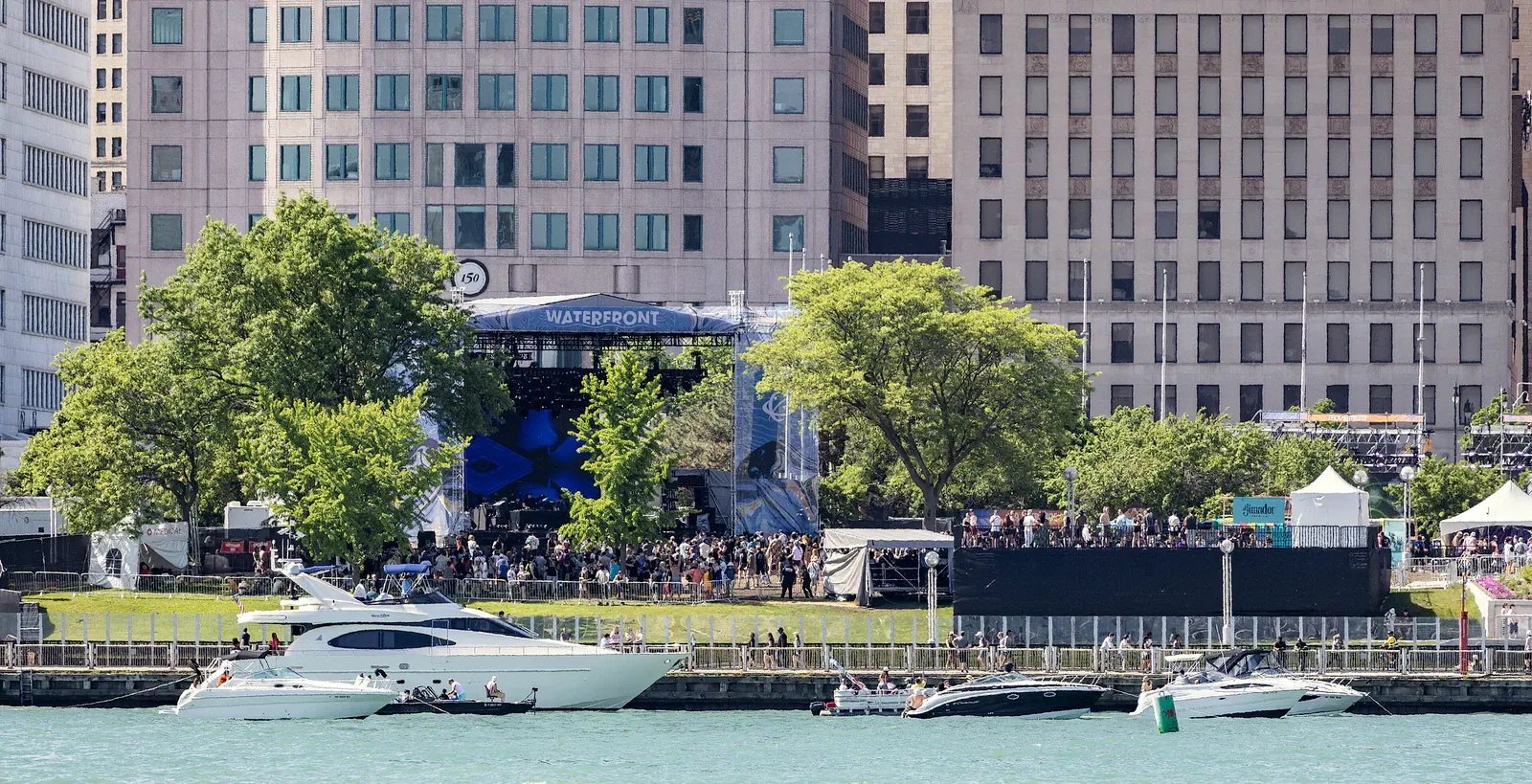
The 1988 Virgin compilation introduced the genre to a British audience, and Inner City’s “Big Fun” brought a Detroit-made record to the dance charts. The Detroit Electronic Music Festival launched at Hart Plaza in May 2000 and was later renamed Movement.
Notable recordings
Cybotron’s “Alleys of Your Mind” (1981) is the prototype, with Atkins already pairing synthesizers with a futurist outlook. Model 500’s “No UFO’s” (1985) is among the first records of the style proper. Rhythim Is Rhythim’s “Strings of Life” (1987) is the genre’s best-known piece, built on piano and string stabs over a drum machine pulse.
Legacy
Detroit techno belongs to Techno, which sits inside Electronic music. Its parents are electro and Chicago house, and Krautrock, P-Funk and Italo disco are listed as influences. It is credited as a parent or influence of Berlin techno, dub techno, minimal techno, hardgroove techno, techno bass and trance. Detroit electro and Detroit hip hop are relatives from the same city.
Misconceptions
Detroit techno is often described as cold and robotic. The records are machine-made, but the funk and soul lineage gives them swing and warmth, which is why they are called mechanical soul.
The genre is also assumed to be fast. Early Detroit techno ran at about 120 to 135 BPM, slower than the harder techno that came later.
A third myth is that the name came from Europe. Atkins used the word “techno” from the Cybotron years, and the 1988 compilation made it a genre label for the British press.
Frequently asked questions
Who created Detroit techno?
Juan Atkins, Derrick May and Kevin Saunderson, three friends from Belleville, Michigan, created Detroit techno in the mid-1980s. Atkins, who released records as Model 500 and earlier with Cybotron, is usually credited as the first of them.
When did Detroit techno start?
Detroit techno began in 1985, when Juan Atkins released the first Model 500 records on Metroplex. “Strings of Life” and “Big Fun” followed in 1987 and 1988.
What is the difference between Detroit techno and house?
Detroit techno came from electro, Chicago house and funk, and the name “techno” was chosen in 1988 to distinguish Detroit’s sound from Chicago house. Both are four-on-the-floor dance music, but Detroit techno is generally more futurist and synthesizer-led.
What is the best-known Detroit techno record?
Rhythim Is Rhythim’s “Strings of Life” (1987), by Derrick May, is the best-known Detroit techno record.
Sound
Sound sheet
Tempo
120-135 BPMInstruments
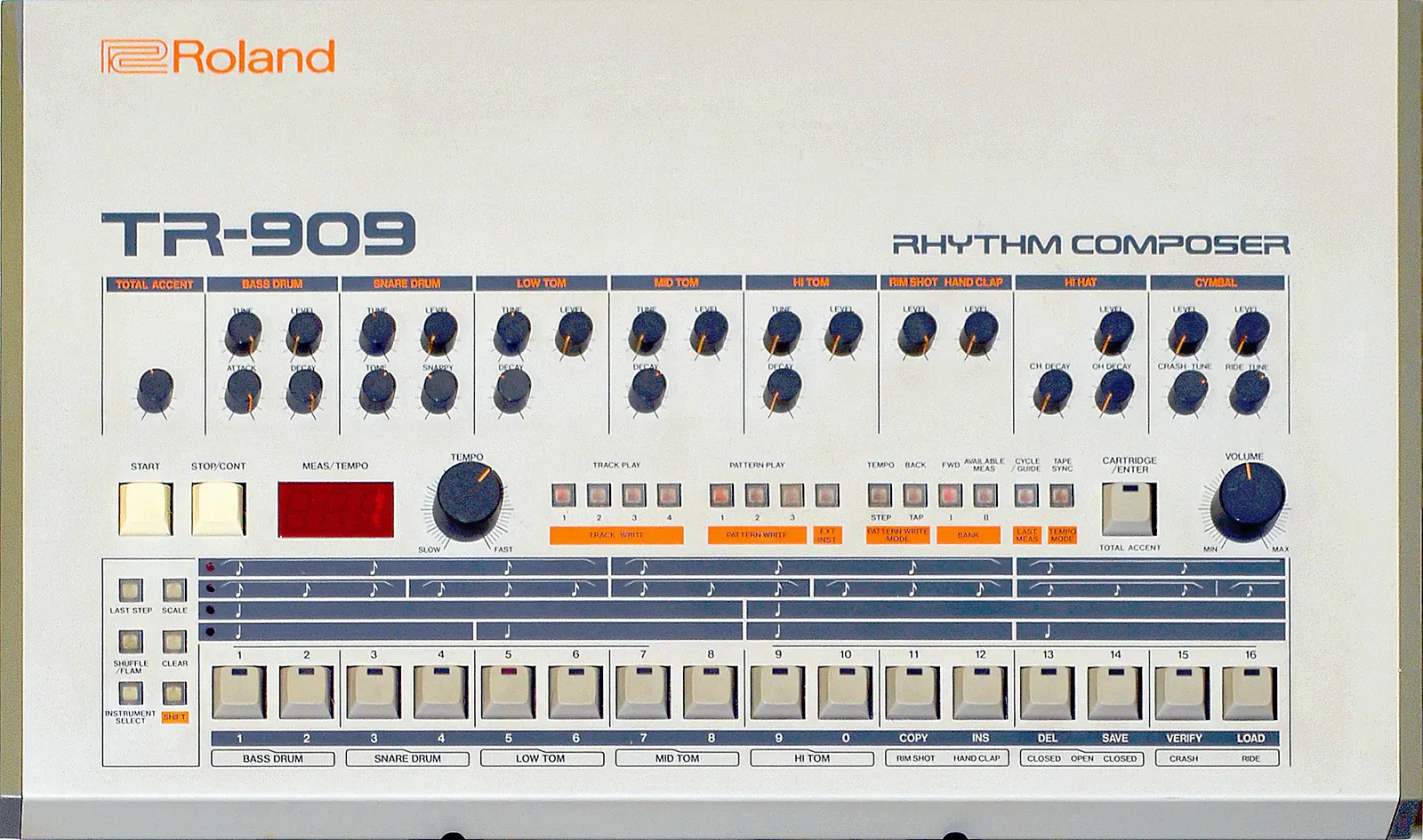
- Roland TR-909
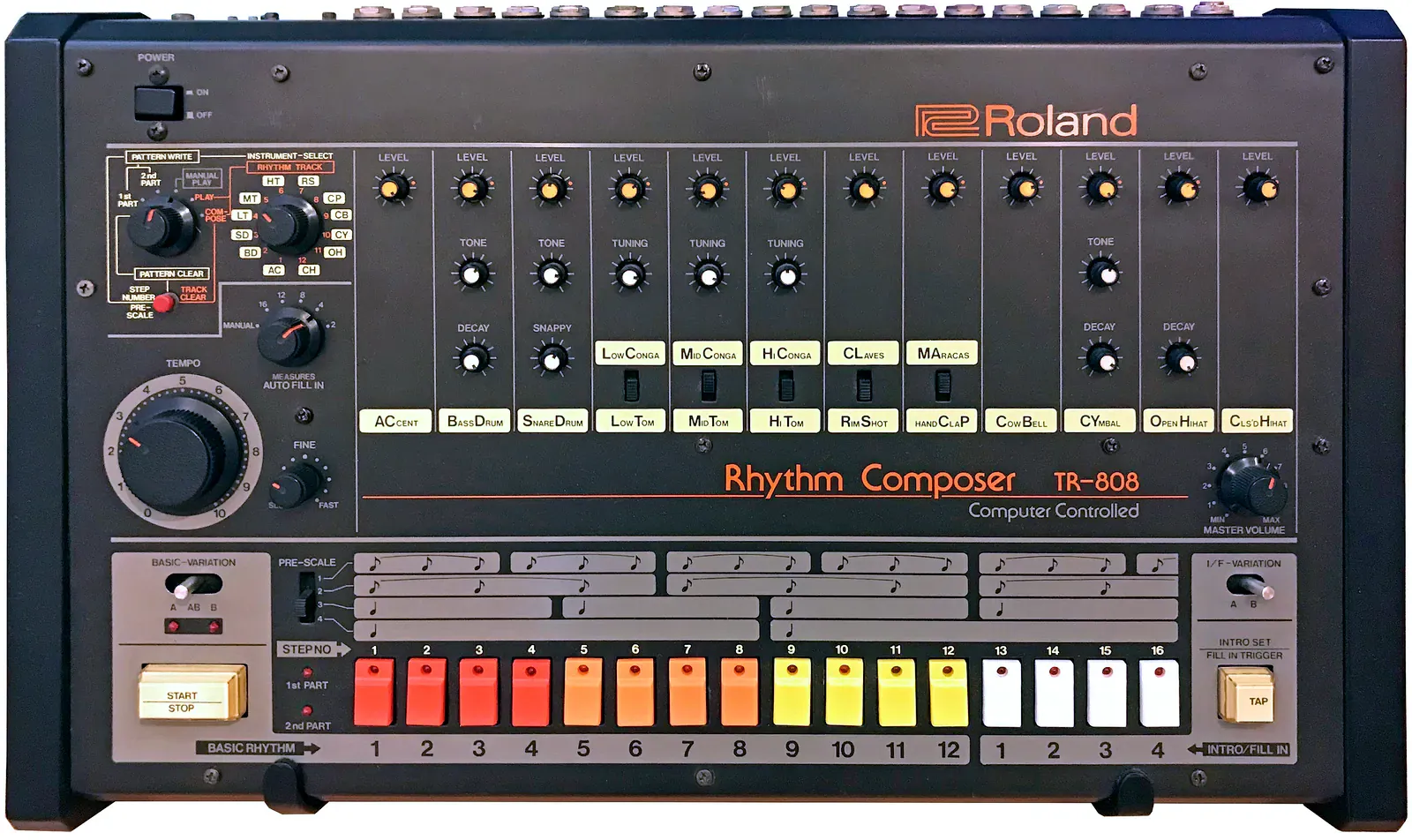
- Roland TR-808
- Yamaha DX100
- Ensoniq Mirage
Drums and percussion
- Roland TR-909
- Roland TR-808
Synths and software
- Yamaha DX100
- Ensoniq Mirage
Techniques
- Syncopated funk bass lines
- String pads and chord stabs
- Swung drum programming
Lineage
Family tree
Grew out of
Derived from
- Chicago house
Derived from
Influenced by
Detroit, 1985
Detroit techno
Led to (5)
Electronic family