Drum and bass
Drum and bass is fast breakbeat dance music built on chopped drums and heavy sub-bass, formed in London and Bristol in the mid-1990s out of jungle.
London, 1994
Electronic family
Born
1994
London
Subgenres
22
Documented branches
Links
24
Genres it drew on or shaped
Tempo
145-180 BPMLineage
Family tree
Grew out of
Derived from
- Breakbeat hardcore
Derived from
London, 1994
Drum and bass
Led to (23)
Timeline
Era by era
From the first sparks to today. Select a dot to read the story behind it.
- Breakbeat hardcore to jungle
1991 to 1993
- From jungle to drum and bass
1994 to 1996
- Mercury Prize and splintering
1997 to 2001
- Liquid, neurofunk and the world scene
2002 to 2009
- Chart crossover
2010 to 2019
- Streaming-era revival
2020 to today
Eras
Moments
- 1 Breakbeat hardcore to jungle, 1991 to 1993
- 2 From jungle to drum and bass, 1994 to 1996
- 3 Mercury Prize and splintering, 1997 to 2001
- 4 Liquid, neurofunk and the world scene, 2002 to 2009
- 5 Chart crossover, 2010 to 2019
- 6 Streaming-era revival, 2020 to today
1991
Breakbeat hardcore to jungle
Pirate radio and raves in London push breakbeat hardcore from about 130 BPM to 155-165 BPM, with Amen break chops and reggae bass.
- 1969The Winstons record Amen, BrotherGregory Coleman's drum break on the B-side becomes the most sampled break in jungle and drum and bass.
- 1988Reese's Just Want Another ChanceKevin Saunderson's bassline becomes the template for the reese bass of later jungle and drum and bass.
- 1988Rage opens at Heaven, LondonThe Thursday night, which Fabio and Grooverider join in 1991, becomes a testing ground for breakbeat records.
- 1990Moving Shadow foundedRob Playford starts the label from his Stevenage home.
- 1991Kool FM begins broadcastingThe London pirate station is among the first to play hardcore jungle and gives the scene its radio voice.
- 1992Terminator by MetalheadsGoldie's pitch-shifted darkcore release is a pivotal early record.
- 1993Renegade Snares by Omni TrioReleased on Moving Shadow; the Foul Play remix is as celebrated as the original.
- 1993Full Cycle founded in BristolKrust and Roni Size start the label that will carry Reprazent's sound.
1994
From jungle to drum and bass
Metalheadz, Moving Shadow and Good Looking give the music a studio-led, bass-heavy sound; tempos settle around 170-180 BPM by 1996.
- 1994Metalheadz foundedGoldie, Kemistry and Storm start the label in London.
- 1994Inner City LifeGoldie's FFRR single, out 21 November, sells over 15,000 copies on vinyl and leads to Timeless.
- 1995Metalheadz Sunday Sessions startThe weekly night at the Blue Note in Hoxton begins in July and becomes a showcase for new records.
- 1995Pulp Fiction by Alex ReeceA Metalheadz release whose two-step breaks shape the jazzy side of the music.
- 1995Goldie releases TimelessThe debut album, a joint Metalheadz and FFRR release, is a breakthrough for the music with a wider audience.
- 1996Tempos settle near 170-180 BPMBy 1996 the usual drum and bass tempo has risen from the 155-165 BPM of early jungle.
- 1996Hospital Records foundedTony Colman and Chris Goss start the London label.
1997
Mercury Prize and splintering
Roni Size and Reprazent win the 1997 Mercury Prize. Techstep, jazzstep, hardstep, jump-up and liquid styles split off.
- 1997New Forms by Roni Size and ReprazentThe album, out 23 June, mixes jungle beats with live drums and bass.
- 1997Reprazent win the Mercury PrizeNew Forms takes the 1997 Mercury Prize, early critical recognition for the music.
2002
Liquid, neurofunk and the world scene
Hospital and RAM grow; liquid and neurofunk mature, and scenes take root in continental Europe, North America, Australia and Brazil.
- 2002True Colours by High ContrastHospital's October 2002 album, home of Return of Forever, helps define liquid drum and bass.
- 2005Pendulum's Hold Your Colour and SlamThe Australian-formed band brings rock energy and a live show to drum and bass.
- 2008Pieces by Chase & StatusRAM Records single with Plan B, out 29 September, tops the UK Dance Chart.
2010
Chart crossover
DJ Fresh, Rudimental and Sigma take drum and bass to UK number one between 2012 and 2014, and festivals and streaming widen the audience.
- 2012Hot Right Now is the first drum and bass UK number oneDJ Fresh and Rita Ora top the UK Singles Chart on 19 February.
- 2012Feel the Love goes to number oneRudimental and John Newman top the UK Singles Chart in June.
- 2014Nobody to Love is Sigma's first UK number oneReleased 6 April, it sells over 121,000 copies in its first week.
2020
Streaming-era revival
A younger audience and viral tracks bring new attention, including Kenya Grace's 2023 UK number one Strangers.
- 2023Strangers by Kenya Grace reaches number oneA self-produced drum and bass single tops the UK chart in October.
Listening path
Anthems
The records that built the sound, grouped by the part they played. Thumbnails come from YouTube; the player loads only when you press play.
- 01
Omni Trio, 1993 · Moving Shadow
Orchestral pads over fast, chopped breaks; a Moving Shadow classic that showed what the new sound could be.
Origin - 02
Goldie, 1994
Strings, a soul vocal and heavy breaks; the first single from Timeless and an early wide-audience hit.
Start hereBreakthrough - 03
Roni Size, 1997
A live-feeling single from the Mercury Prize-winning New Forms with a looping upright bass line.
Start hereBreakthrough - 04
DJ Fresh, 2012 · #1 UK Singles, 2012
The first drum and bass record to reach UK number one, with Rita Ora's vocal.
Breakthrough - 05
Alex Reece, 1995 · Metalheadz
A Metalheadz release whose two-step drums defined the jazzy, melodic side of the scene.
Anthem - 06
High Contrast, 2002 · Hospital Records
A Hospital Records favourite whose rolling bass and warm strings became the liquid reference.
Anthem - 07
Pendulum, 2005
A heavy, rock-edged track that made Pendulum a live act and spread drum and bass to rock crowds.
Anthem - 08
Adam F, 1997
A 1995 Section 5 record that reached the UK chart on its 1997 Positiva re-release.
Crossover - 09
Chase & Status, 2008 · RAM Records
A RAM Records single with Plan B vocals that mixed drum and bass with hip-hop and topped the UK Dance Chart.
Start hereCrossover - 10
Rudimental, 2012 · #1 UK Singles, 2012
A soul-vocal drum and bass single by John Newman and Rudimental that topped the UK chart.
Crossover - 11
Sigma, 2014 · #1 UK Singles, 2014
A pop-leaning drum and bass track; Sigma's first UK number one.
Crossover - 12
Kenya Grace, 2023 · #1 UK Singles, 2023
A self-produced vocal drum and bass single that topped the UK chart and reached a streaming-age audience.
Revival
Facts
| Family | Electronic |
| Origin | London, United Kingdom |
| Emerged | Mid-1990s |
| Status | Active |
| Tempo | 145 to 180 BPM |
| Meter | 4/4 |
| Grew out of | Jungle, Breakbeat hardcore, Darkcore |
| Subgenres | 21 |
Drum and bass is electronic dance music built on fast, syncopated breakbeats and deep sub-bass, with most records sitting close to 170 BPM.
It took shape in London and Bristol in the mid-1990s as jungle became more studio-led, and it grew into a large family of styles from the liquid to the neurofunk.
Origins
The rhythm comes from a 1969 B-side. The drum break on The Winstons’ “Amen, Brother”, played by Gregory Coleman, was sampled across hip-hop and rave records, then sped up and chopped into new patterns by jungle producers. The bass came from Jamaican sound-system culture and from Kevin Saunderson’s 1988 record “Just Want Another Chance” as Reese, whose detuned bassline gave the reese bass its name.
London supplied the rooms. The Rage night at Heaven opened in 1988 and became a testing ground for breakbeat records once Fabio and Grooverider joined in 1991. Pirate station Kool FM began broadcasting the same year and carried the new sound to listeners who never entered a club. In Stevenage, Rob Playford founded Moving Shadow in 1990 and ran it from his home.
Breakbeat hardcore to jungle, 1991-1993
Breakbeat hardcore sped up from about 130 BPM to between 155 and 165 BPM as producers added reggae basslines and Amen-break chops, and the music was renamed jungle. Goldie’s “Terminator”, released as Metalheads in 1992, used pitch-shifted samples and a dark, technical edge that marked a turn away from rave brightness. Omni Trio’s “Renegade Snares” followed on Moving Shadow in 1993, laying orchestral pads over fast breaks. In Bristol, Krust and Roni Size founded Full Cycle in 1993, seeding a second scene outside the capital.
From jungle to drum and bass, 1994-1996
Metalheadz, started in 1994 by Goldie, Kemistry and Storm, gave the music a studio-led, bass-heavy identity. Its Sunday Sessions at the Blue Note in Hoxton began in July 1995 and became a weekly showcase for new records. Goldie’s “Inner City Life”, released in November 1994, sold over 15,000 vinyl copies and led to the album Timeless in 1995, a long-form debut that showed the music could work as an album. Alex Reece’s “Pulp Fiction” set the two-step, jazz-leaning template.
By 1996 tempos had settled near 170 to 180 BPM, up from the 155 to 165 BPM of early jungle, and the name drum and bass replaced jungle for the new, smoother records. Hospital Records was founded in London that year.
Mercury Prize and splintering, 1997-2001
Roni Size and Reprazent’s New Forms, released on 23 June 1997, mixed jungle beats with live drums and upright bass, and won the 1997 Mercury Prize. The award was early critical recognition for a music then still treated as underground. Adam F’s “Circles” reached the UK chart on its 1997 re-release.
The sound split into recognisable styles in these years: techstep took on a harder, industrial edge, jazzstep leaned on live musicianship, hardstep and jump-up emphasised heavy basslines and crowd response, and liquid funk drew on soul and warm strings.
Liquid, neurofunk and the world scene, 2002-2009
High Contrast’s debut True Colours, released on Hospital Records in October 2002, supplied the reference sound for liquid drum and bass. Noisia’s Vision Recordings made Groningen, in the Netherlands, a hub of neurofunk, a precise, dark style built from intricate sound design. Pendulum brought a rock-edged live show to the dancefloor with “Hold Your Colour” in 2005, and Chase & Status’s “Pieces”, on RAM Records in 2008, mixed drum and bass with hip-hop and Plan B’s vocals and topped the UK Dance Chart.
Scenes took root well beyond Britain during this period, in continental Europe, North America, Australia and Brazil, where producers developed sambass by fusing the music with samba.
Chart crossover, 2010-2019
On 19 February 2012 DJ Fresh’s “Hot Right Now”, with Rita Ora, became the first drum and bass record to top the UK Singles Chart. Rudimental and John Newman’s “Feel the Love” reached number one in June of the same year, and Sigma’s “Nobody to Love” followed on 6 April 2014, selling over 121,000 copies in its first week. Festivals and streaming widened the audience, and the pop-facing records brought heavier club styles with them.
Streaming-era revival, 2020 onward
A younger audience and viral tracks brought new attention to the music in the 2020s. Kenya Grace’s self-produced “Strangers” reached UK number one in October 2023, built on the same breakbeat grid as the 1990s records.
Characteristics
A typical track is built on a drum pattern with the snare on the second and fourth beats at about 170 BPM, broken up by chopped and layered breaks, over a sub-bass or reese bass line. Many tracks run in 16-bar and 32-bar phrases: drums and atmosphere first, then a build, a first drop, a breakdown and a second drop, before mixable drums close the track. MCs add vocal hype in club sets, and melodic styles bring in pads and strings. Halftime records, which place the snare once every two beats of the same grid, feel slower while keeping the tempo.
Instruments and production
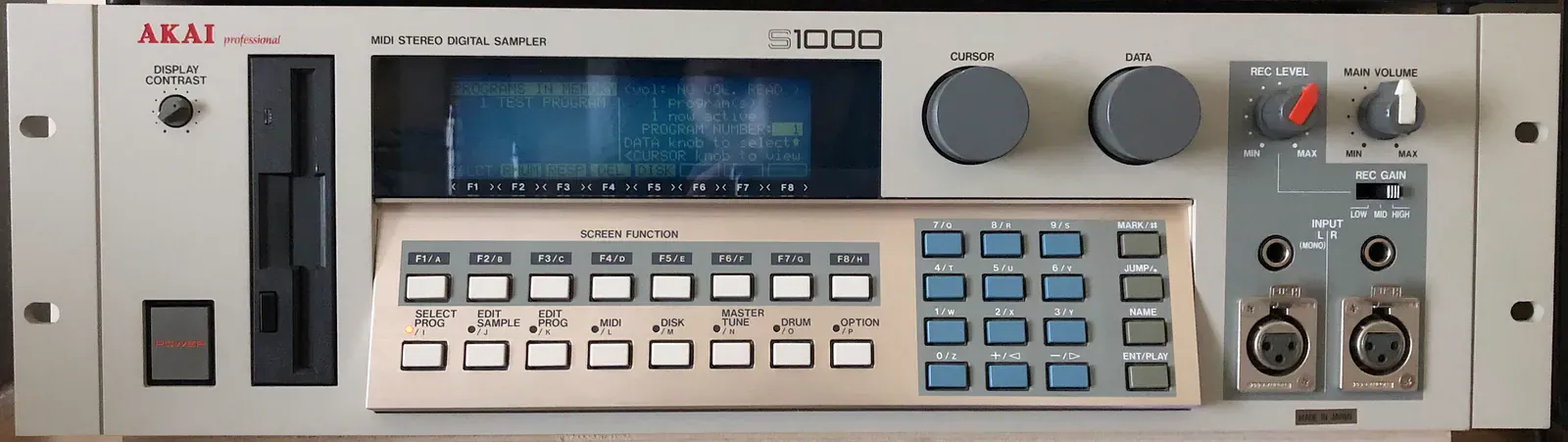
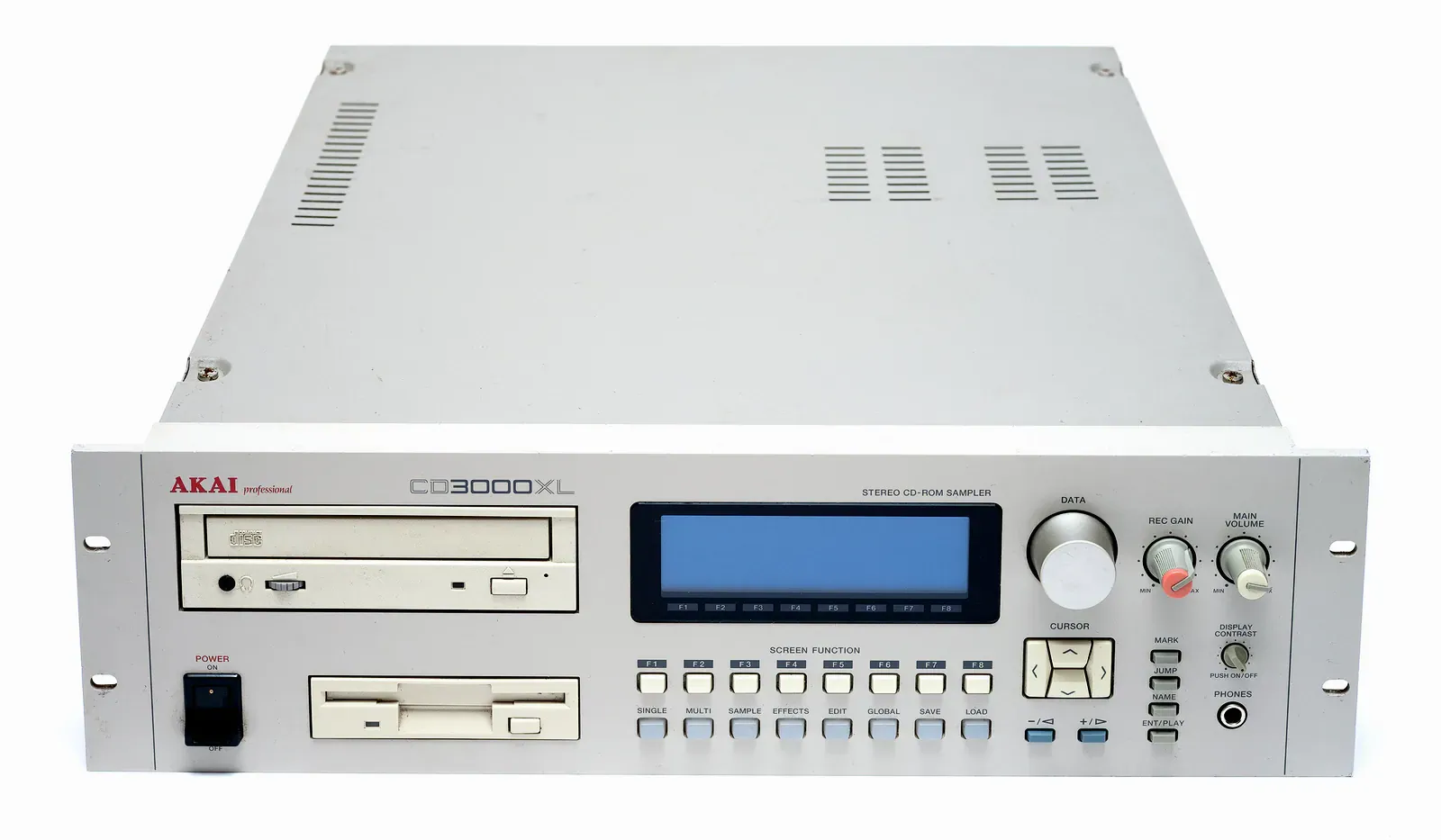
Early jungle producers worked with samplers such as the Akai S950, which could time-stretch breaks to fit a faster tempo without changing their pitch. Sequencing and sampling moved onto computers through the late 1990s, and software synthesisers such as Massive and Serum later supplied most bass sounds. Reprazent’s live drummer and double bass player showed an alternative route, with musicians playing against programmed beats.
Notable recordings
“Renegade Snares” by Omni Trio shows the early formula: strings and pads over a break that never sits still. Goldie’s “Inner City Life” put a soul vocal and strings on top of heavy breaks and became an early wide-audience hit. “Brown Paper Bag” by Roni Size, from New Forms, rests on a looping upright bass line that makes the record feel played rather than programmed. “Return of Forever” by High Contrast gave the liquid style its rolling bass and warm strings.
Culture
The “rewind” is the music’s own applause: a crowd shouts for the DJ to pull the record back and play it again from the start. DJs line up the big moments of two tracks to land together in a double drop. Photographer Eddie Otchere documented the Metalheadz Sunday Sessions for Goldie, and the Blue Note, Kool FM’s Jungle Fever nights at the Astoria from August 1993, and Rage at Heaven are the rooms most tied to the music’s early history.
Legacy
Drum and bass fed directly into dubstep and breakcore, and its tempo and sub-bass habits spread into the wider bass music scene. Its techniques of chopping and layering breaks became standard in electronic production, and its DJ vocabulary of the rewind and the double drop is known well beyond the genre. It shares roots with techno, house and reggae, and sits in the wider electronic family.
Misconceptions
One common belief is that jungle and drum and bass are two names for the same music. The two overlap in history, but jungle ran at 155 to 165 BPM with ragga vocals and heavy sampling, while drum and bass settled near 170 to 180 BPM by 1996 and moved toward studio-led, smoother production.
A second belief is that the music is purely machine-made. New Forms by Roni Size and Reprazent used live drums and an upright bass, and won the Mercury Prize.
A third is that drum and bass never reaches the pop charts. Records by DJ Fresh, Rudimental, Sigma and Kenya Grace all reached UK number one between 2012 and 2023.
Frequently asked questions
What BPM is drum and bass?
Most drum and bass sits near 170 to 175 BPM, with the snare landing on beats two and four. Halftime and slower liquid records feel lower, and the genre’s wider range runs from about 145 to 180 BPM.
What is the difference between jungle and drum and bass?
Jungle came first, at about 155 to 165 BPM, with reggae basslines and Amen-break chops. Drum and bass followed from 1994, with faster tempos, cleaner studio production and a heavier focus on sub-bass.
Where did drum and bass start?
Drum and bass started in London and Bristol in the mid-1990s, growing out of jungle and breakbeat hardcore, with pirate radio and clubs such as Heaven and the Blue Note as the main platforms.
What was the first drum and bass number one in the UK?
“Hot Right Now” by DJ Fresh featuring Rita Ora reached number one on the UK Singles Chart on 19 February 2012, the first drum and bass record to do so.
Sound
Sound sheet
Anatomy of a track
| # | Part | Bars |
|---|---|---|
| 1 | Intro (drums and atmosphere) | 16 |
| 2 | Build | 16 |
| 3 | First drop | 32 |
| 4 | Breakdown | 16 |
| 5 | Second drop | 32 |
| 6 | Outro (mixable drums) | 16 |
Signature sounds
- Chopped Amen break and other sampled breaks
- Sub-bass or reese bass line
- Snare on beats 2 and 4 at about 170 BPM
- MC chat over the track
- Atmospheric pads and strings in liquid and intelligent styles
Drums and percussion
- Akai S950
Synths and software
- Massive
- Serum
Techniques
- Break chopping
- Time-stretching and pitch-shifting
- Reese bass
- Sub-bass design
- Alternating two breaks per bar
Keys and modes
Minor keys. G minor, B-flat minor and F-sharp minor appear in typical tracks; major keys occur in melodic records.
Vocals
Often instrumental; MCs add hype on the mic, and crossover tracks feature soul and pop singers such as Plan B and John Newman.
Scenes
Where it happened
Where and when the sound lived: one bar per city on a shared timeline.
Europe
Latin America
Active scenes
Peak 6, 2003-2025
Pirate radio, Kool FM, Heaven and the Blue Note made the capital the centre of the music.
Full Cycle and Reprazent built a live, jazz-leaning scene around Roni Size and Krust.
Rob Playford ran Moving Shadow from his home here.
LTJ Bukem's Good Looking Records, base of the atmospheric intelligent style.
Home of Noisia and their Vision Recordings, a hub of neurofunk.
Brazilian producers and DJs developed a local scene and mixed drum and bass with samba in sambass.
Venues and places
London, 1988 to today. Rage ran Thursdays from 1988; Fabio and Grooverider joined in 1991.
London, 1995 to today. Home of the Metalheadz Sunday Sessions from July 1995.
London, 1991 to today. Pirate station called the most important in jungle; also ran the Jungle Fever club nights.
London, 1993 to today. Host of Kool FM's Jungle Fever nights from August 1993.
Culture
Culture markers
- Rewind
Crowds shout for a record to be pulled back and replayed, the sign of a hit.
Slang - Sunday Sessions photography
Eddie Otchere photographed the Metalheadz Sunday Sessions for Goldie.
Artwork - Double drop
DJs line up the big moment of two tracks to land together.
Ritual
Media
Key media
- 1996Logical Progression
by LTJ Bukem. A mix of the atmospheric intelligent style on Good Looking.
Compilation - 1998Energy Flash
by Simon Reynolds. A history of rave music that covers jungle and drum and bass.
Book - 2004All Crews
by Brian Belle-Fortune. Interviews with producers, DJs and pirate radio crews; first issued in 1999 as All Crew Muss Big Up.
Book - 2021Who Say Reload
Oral history of the classic 1990s jungle and drum and bass records.
Book
Glossary
Terms on this page
A drum break from The Winstons' 1969 Amen, Brother, chopped and sped up in jungle and drum and bass.
Two tracks mixed to land their big moments together, a signature of Andy C's three-deck mixing.
A drum pattern whose snare lands once every two beats of the 170-ish grid, so the groove feels half as fast.
A thick, detuned bass sound named after Kevin Saunderson's 1988 Reese record.
A crowd call for the DJ to pull back the record and replay a track from the start.
Very low bass felt as much as heard, a core part of the music on large sound systems.
Changing a sample's length without changing its pitch, used to fit breaks to a faster tempo.
Electronic family